Mast Down – Doing It Differently
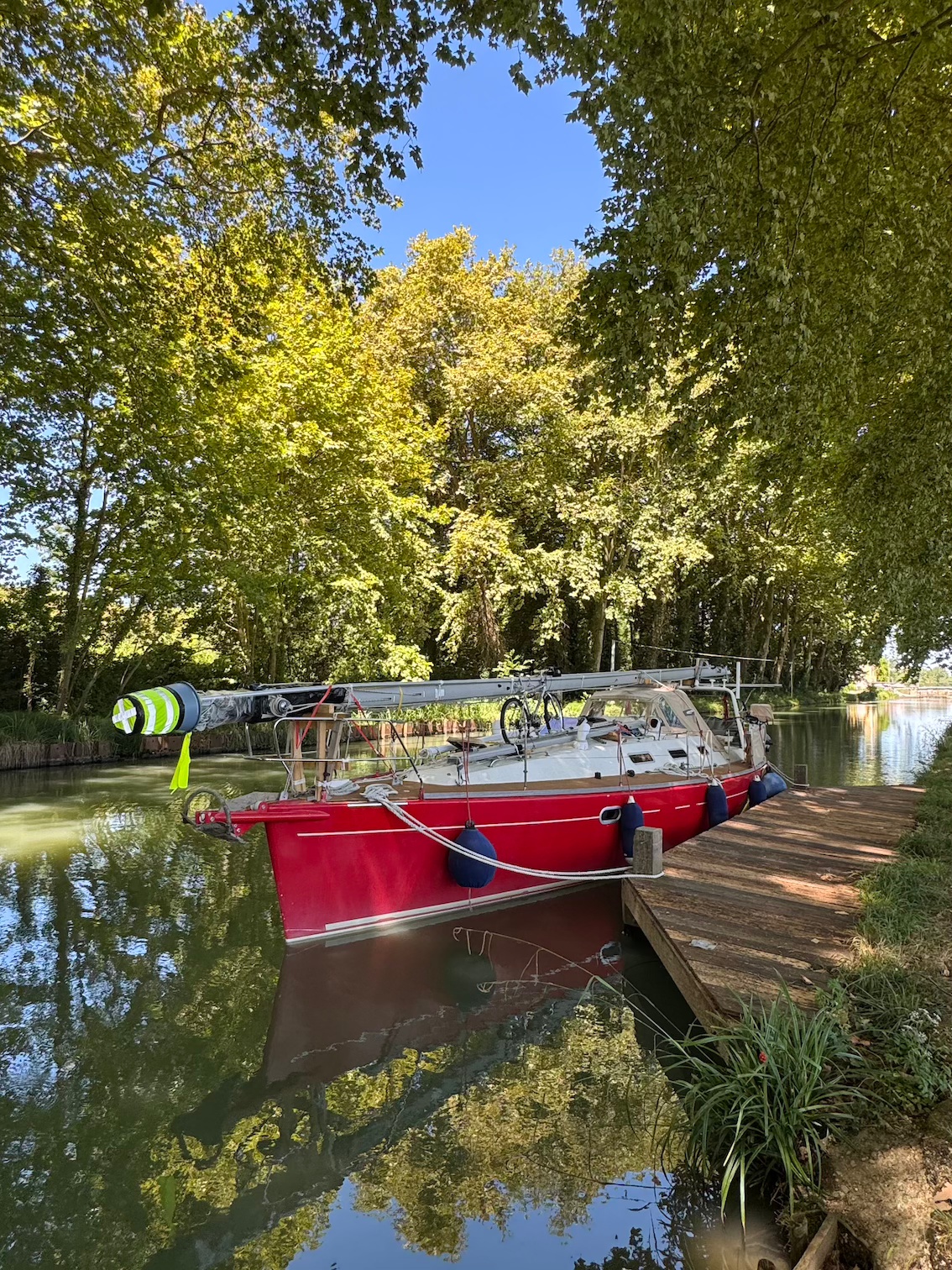
The journey recommences.
The plan is to sail to Norway.
The route – doing it differently.
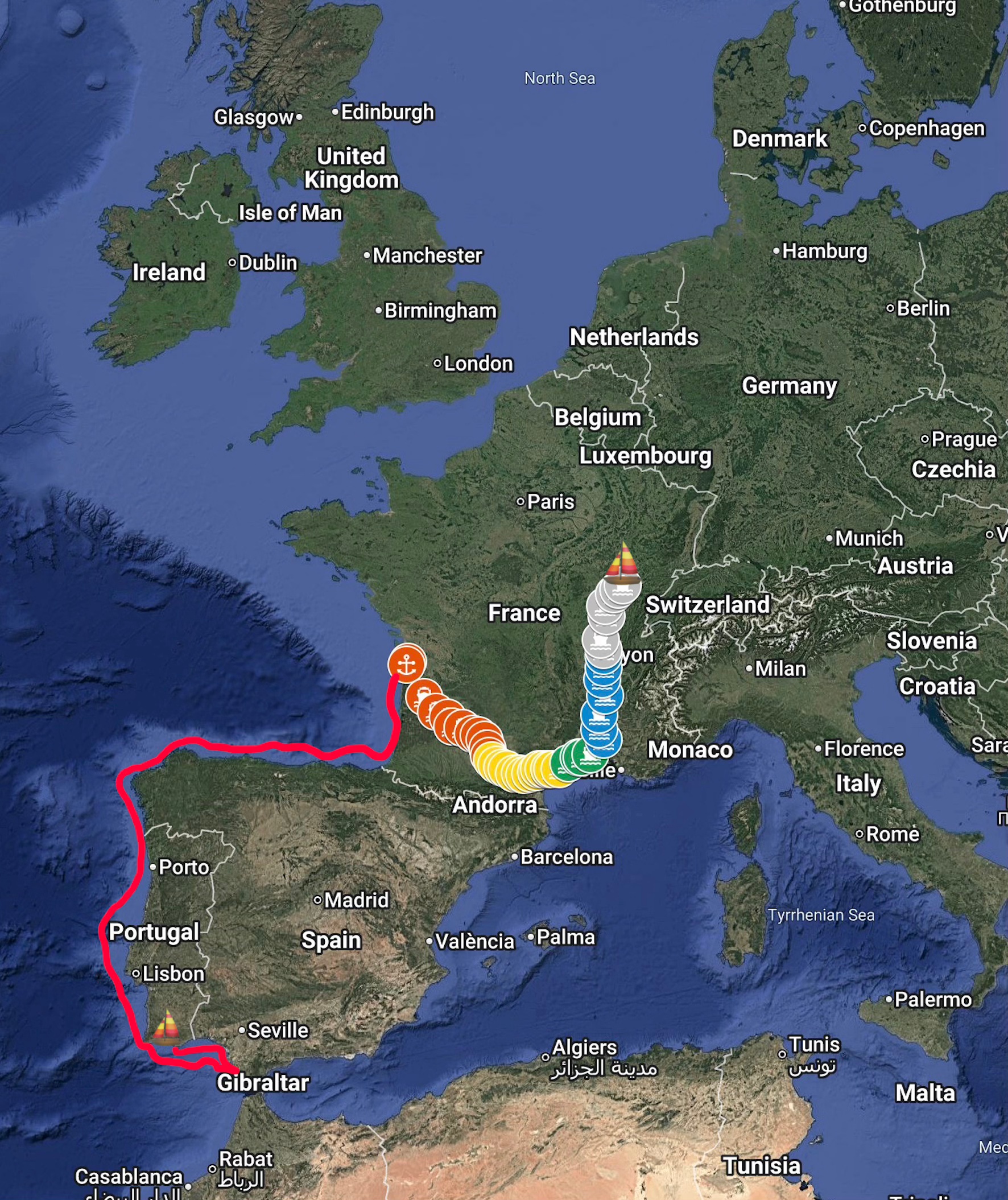
Since getting back to Europe, Phil had relaunched the boat and already sailed the boat 1400 nautical miles (from Portugal to Gibraltar for some equipment upgrades, then back to Portugal and further north to Spain along the Atlantic Ocean). Whilst Maree was finishing up at work and packing up the house, getting ready to return to the boat (June 2025). Phil had now reached Galicia (the north west of Spain). It was here that the waiting for a suitable weather window to cross the Bay of Biscay to Brittany in France began. Without any weather for a Biscay crossing appearing on the forecasts, Phil day sailed eastwards along the Spanish north coast, still in anticipation of suitable weather arriving. But as he sailed further along the coast into the southeast corner of Biscay, the weather to cross still didn’t arrive however a new plan began to form in Phil’s head.
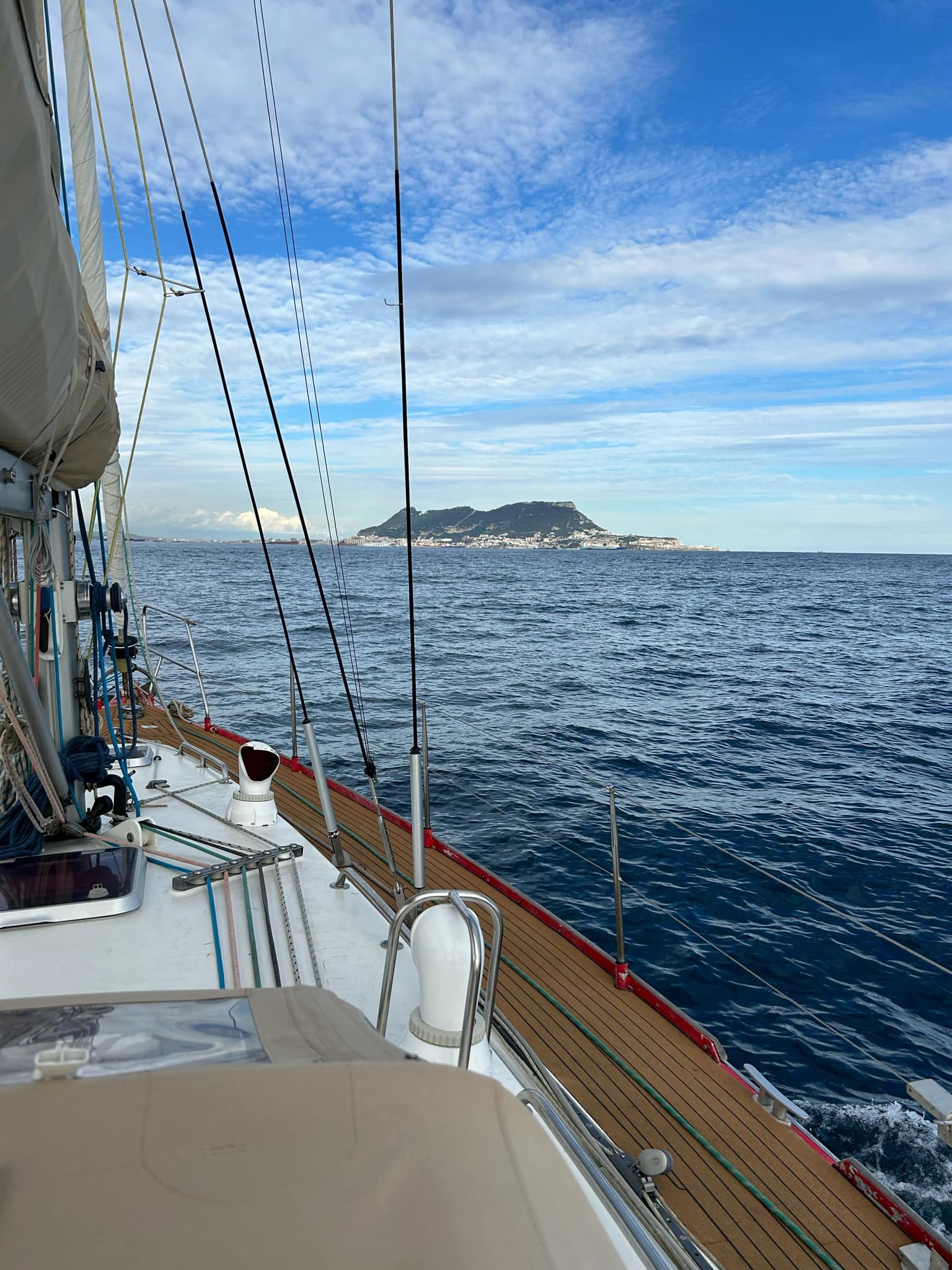
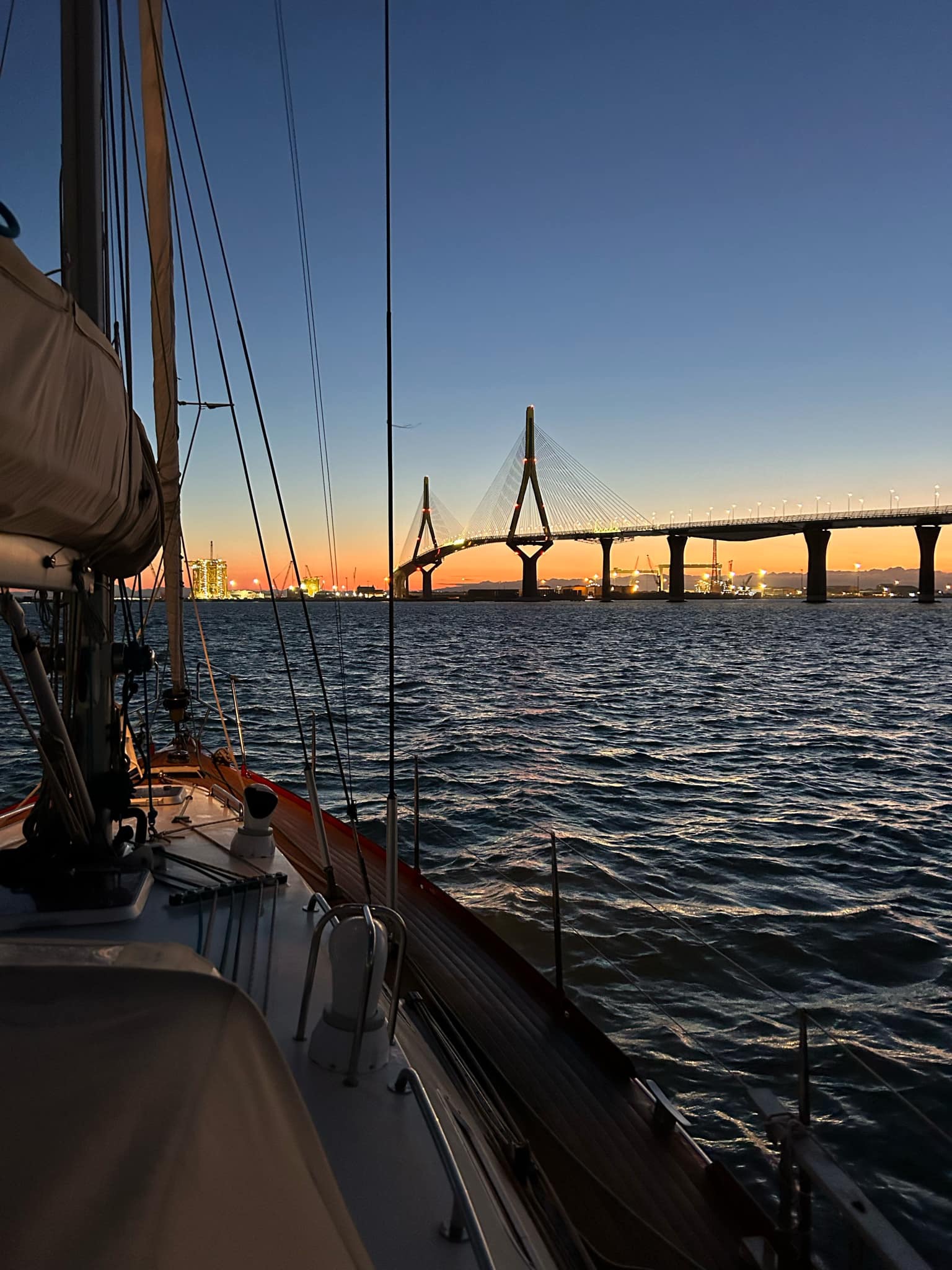
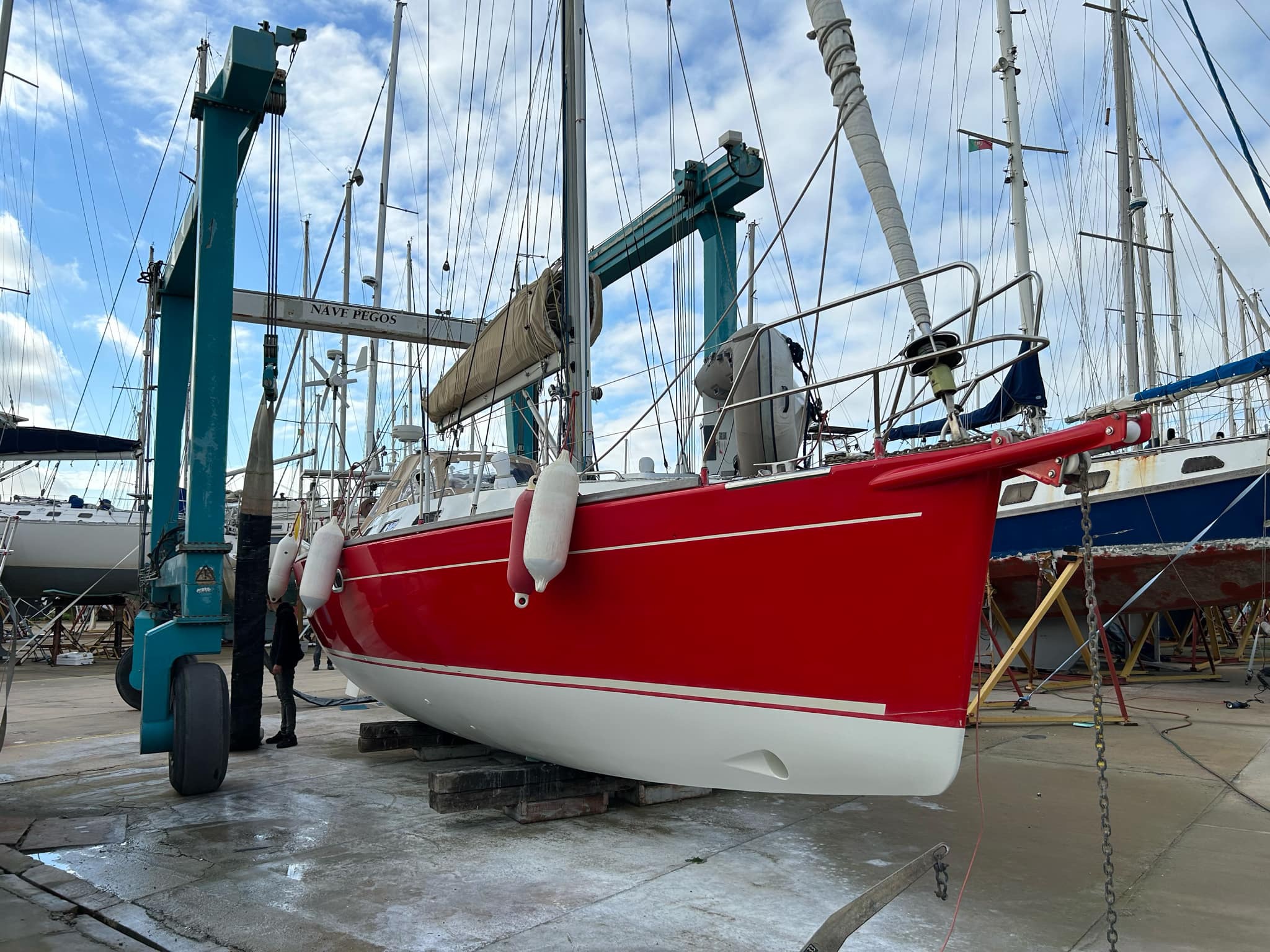
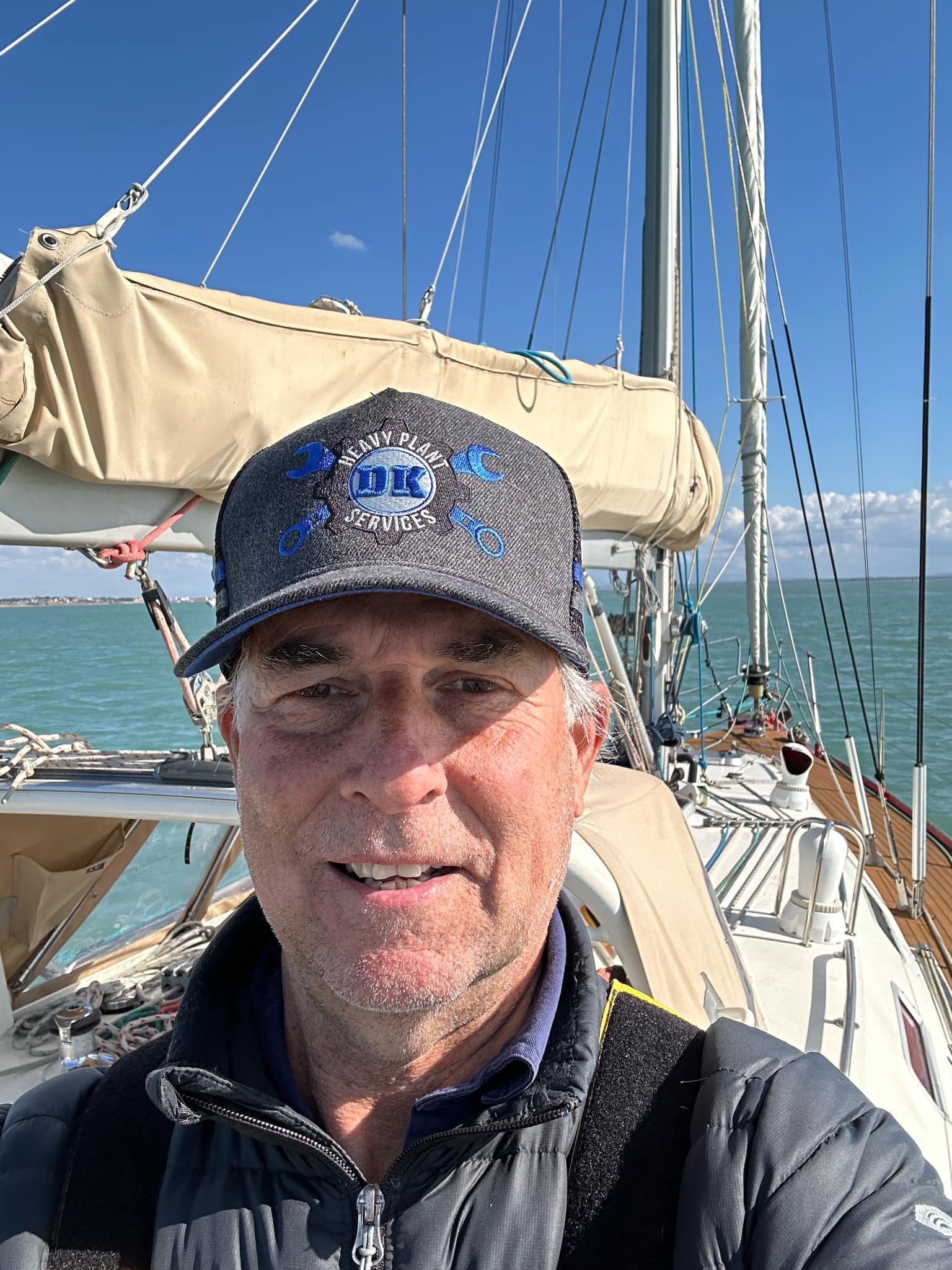
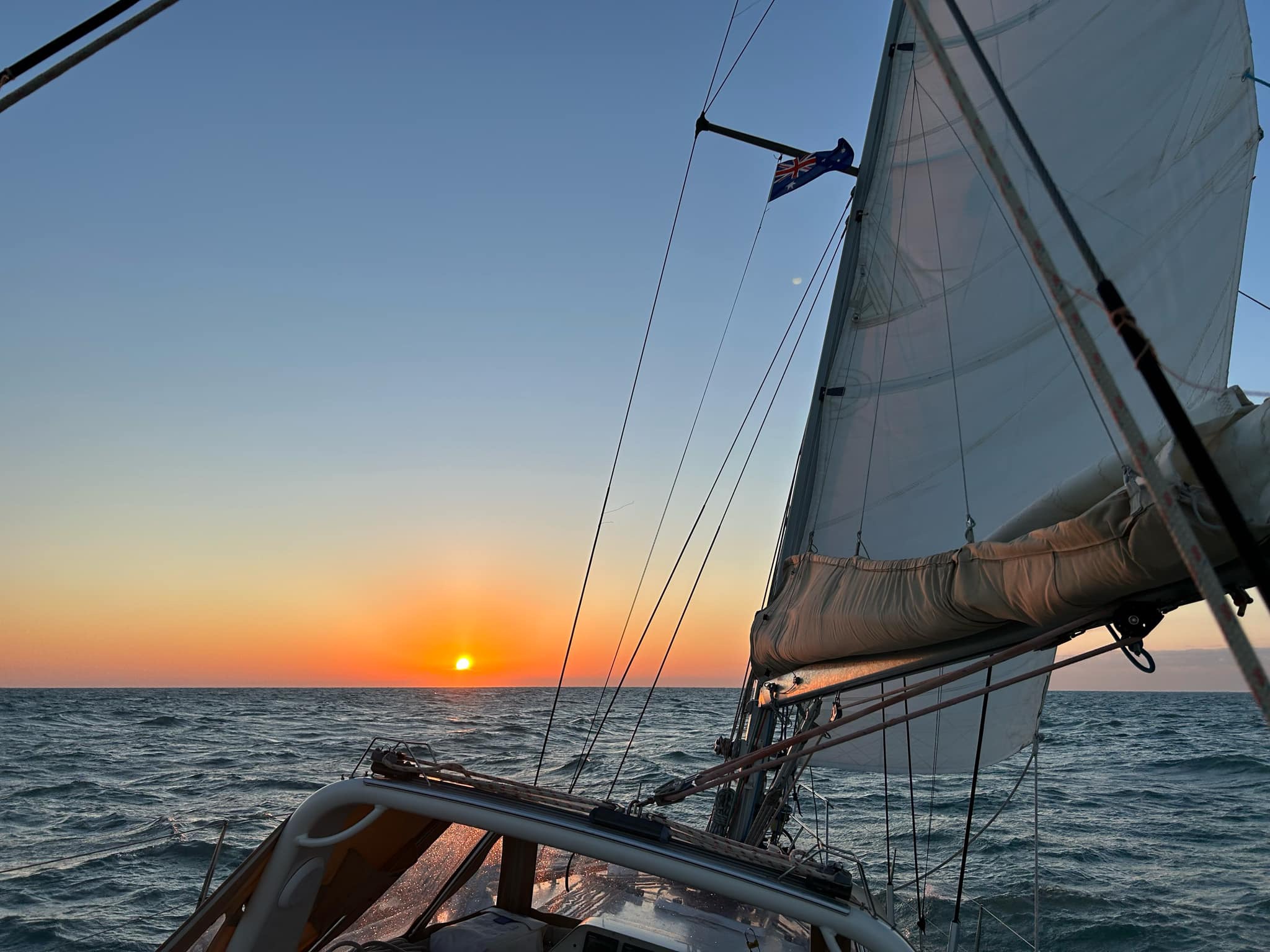
Red Roo’s standing rigging (the metal cables and turn buckles that hold the mast up) was now 10 years old and the insurance company requires this rigging to be replaced when 10 years old so we need to factor this into our journey soon – maybe this was the time to replace it ???
Hmmmmm …. As we have previously sailed down the coasts of Netherlands, England, France and not liking to backtrack too much we could drop the mast, arrange for the new rigging, leave the mast down and take the European inland canals to the Baltic Sea – something different!
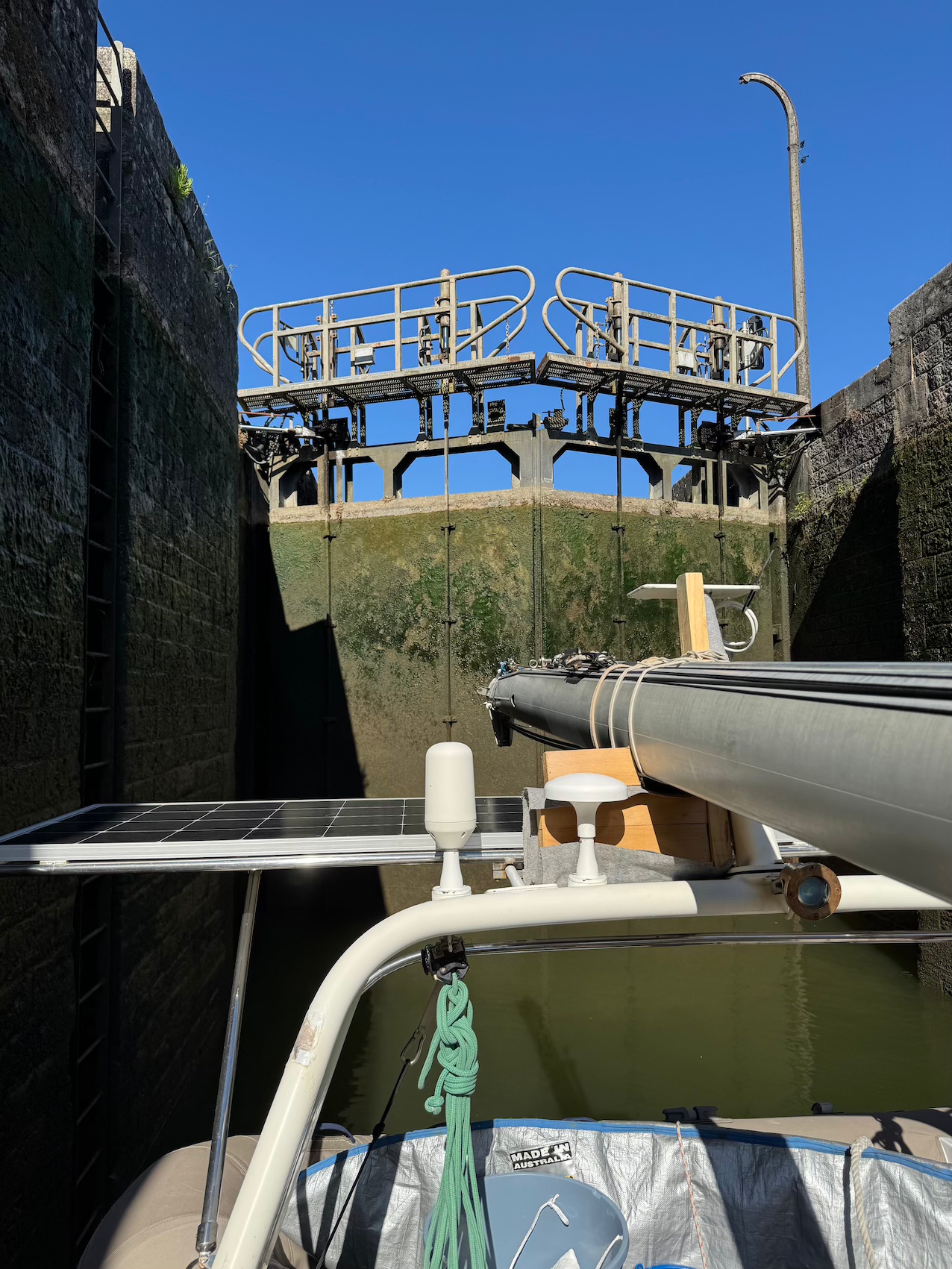
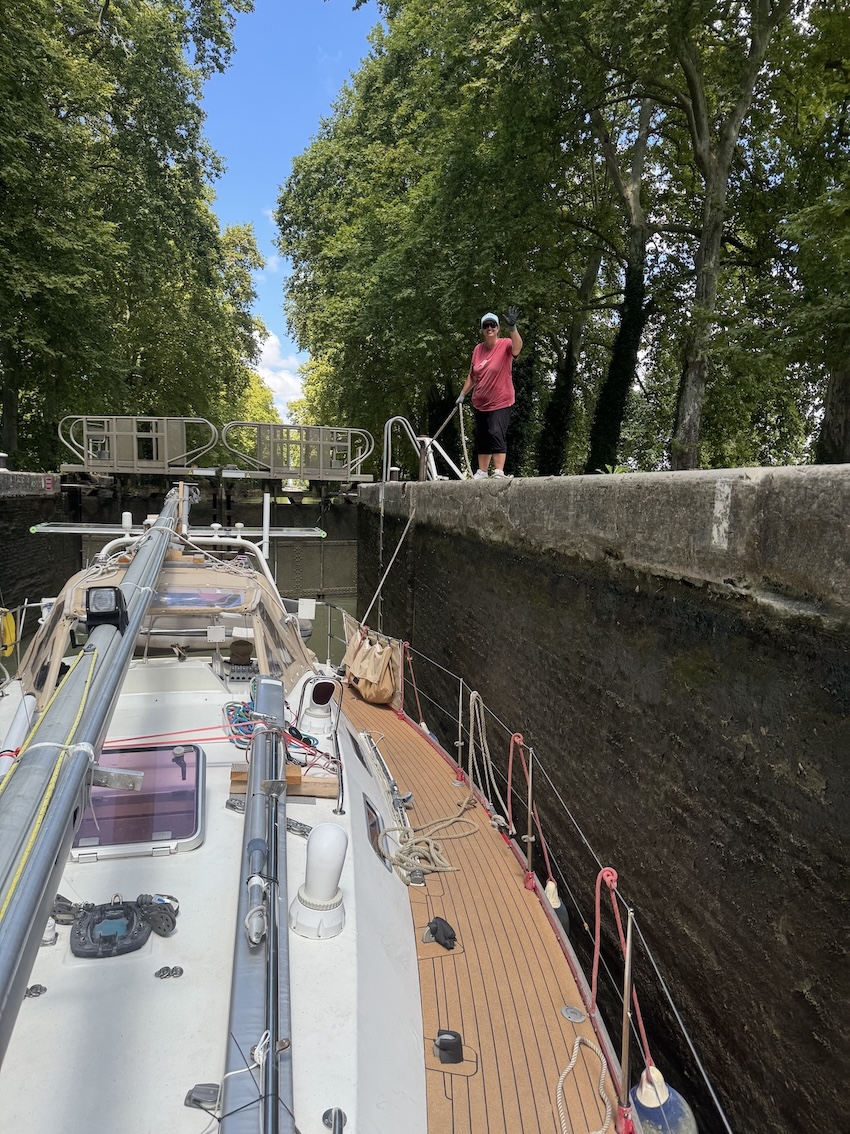
This idea became more attractive the longer he thought about it and finally the decision was made – locked in. We were going to be become a canal boat (temporarily). Most sailing yachts cannot travel the smaller canals of France due to their draft being too deep. Red Roo has a lift keel (centre board) and draws only 1 metre when the keel is up so is suitable for the canals where minimum depth are as low a 1.3 metres. We also had to ensure our height above the water would allow canal travel with some of the lowest bridges we needed to pass under being just 3 meters high … could we carry the mast on top and still be under 3 m from waterline, and what about width, we knew the width of the boat was OK, but the solar panels at the back are both high and wide, we must ensure we will fit! We measured once, we measured twice and we researched (A LOT) about the min/max dimensions – we will fit !
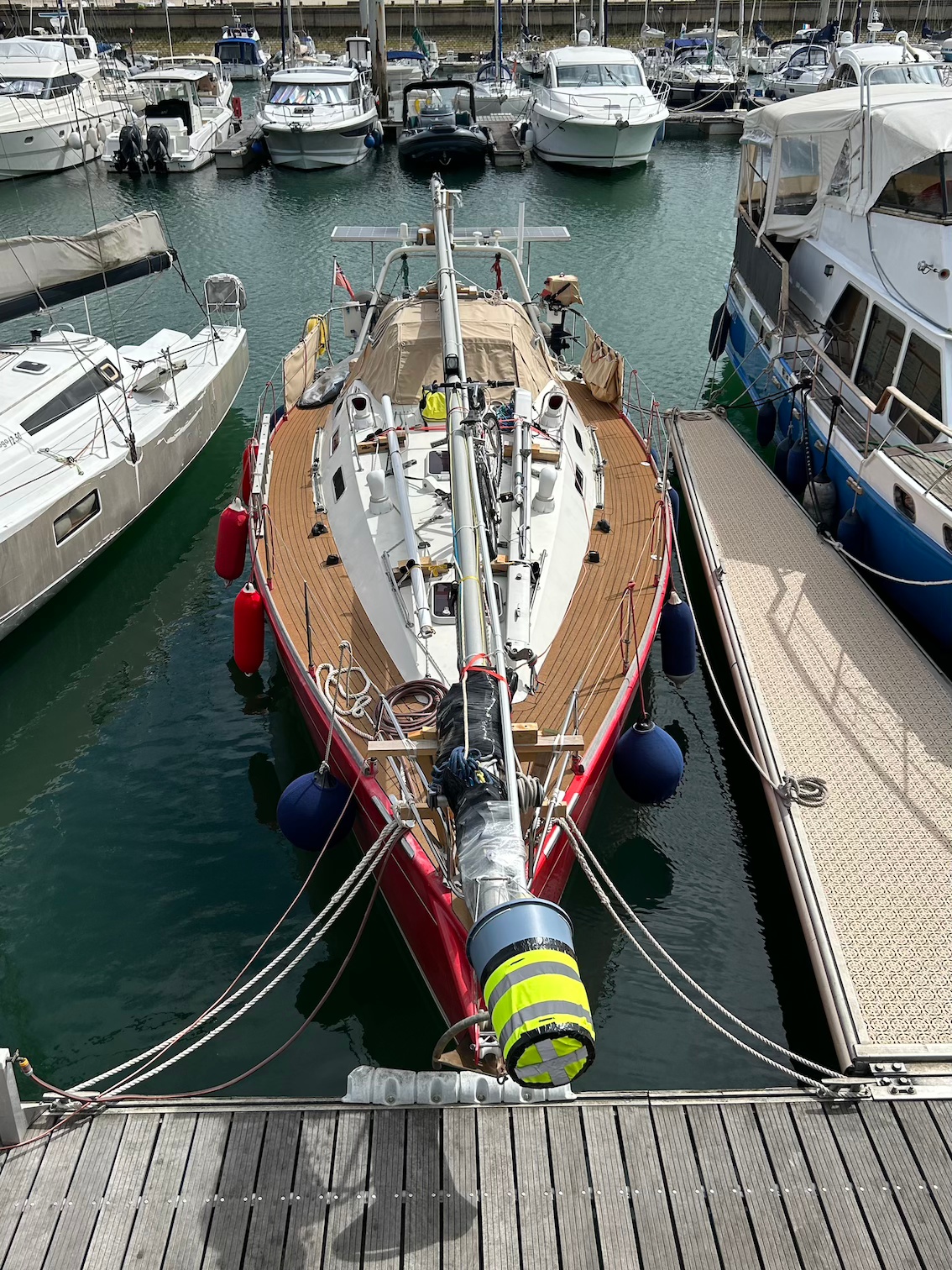
Five days after Maree arrived the boat was booked in with a rigger and the port crane to remove the mast – scary, exciting, a challenge – all these wrapped into one. We had a real win with our rigger Bastien Tomasino, whom came recommended from the port captain. Bastien had met with us in the days leading up to this and he was a real calming influence and a true professional. He brought timber and other accessories to the boat in preparation and built us a custom frame/cradle for the mast to sit on whilst on the boat for the journey north to the Baltic Sea. He also works closely with the original rigging manufacture of Red Roo and arranged to send the old rigging directly to them for the replacement new rig to be built. So on the appointed day and time we drove the boat around to the crane and the mast was lifted off and then within in a matter of an hour the stripped mast was lowered back on the boat, this time horizontally rather than vertically. An hour later all the removed rigging (hardware and components) was coiled labelled and driven away with Bastien in his van.
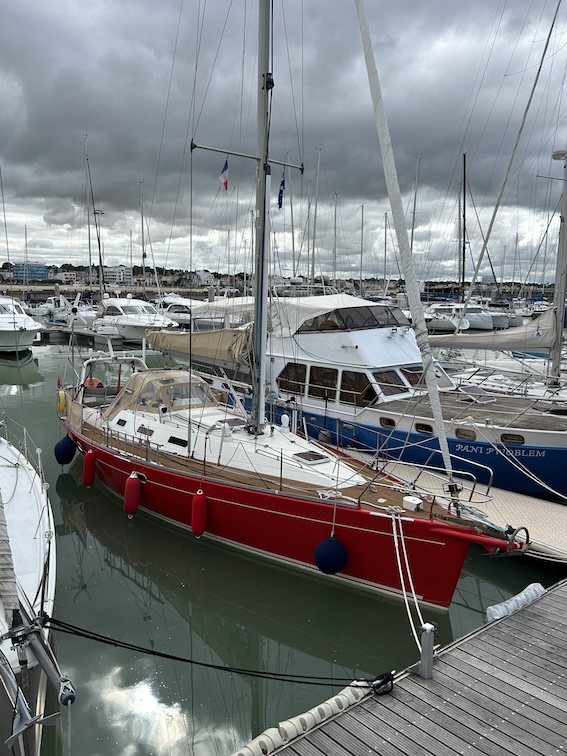
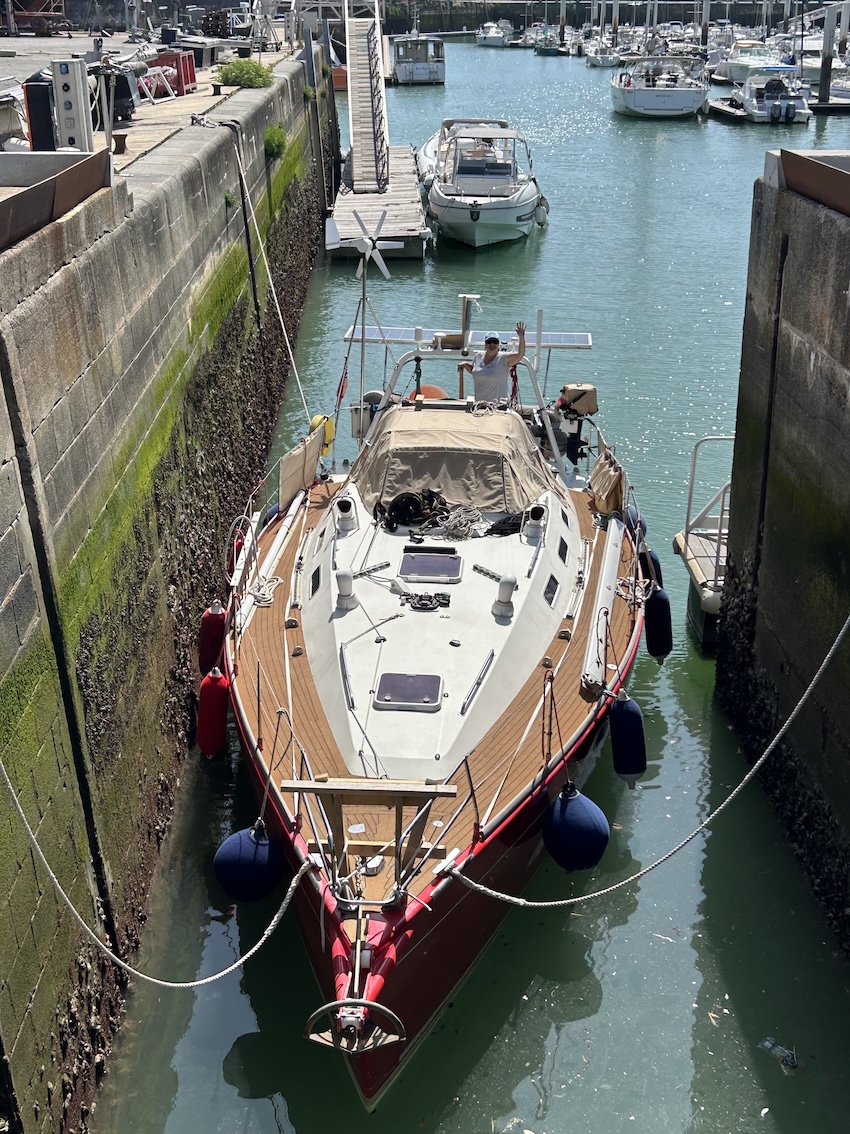
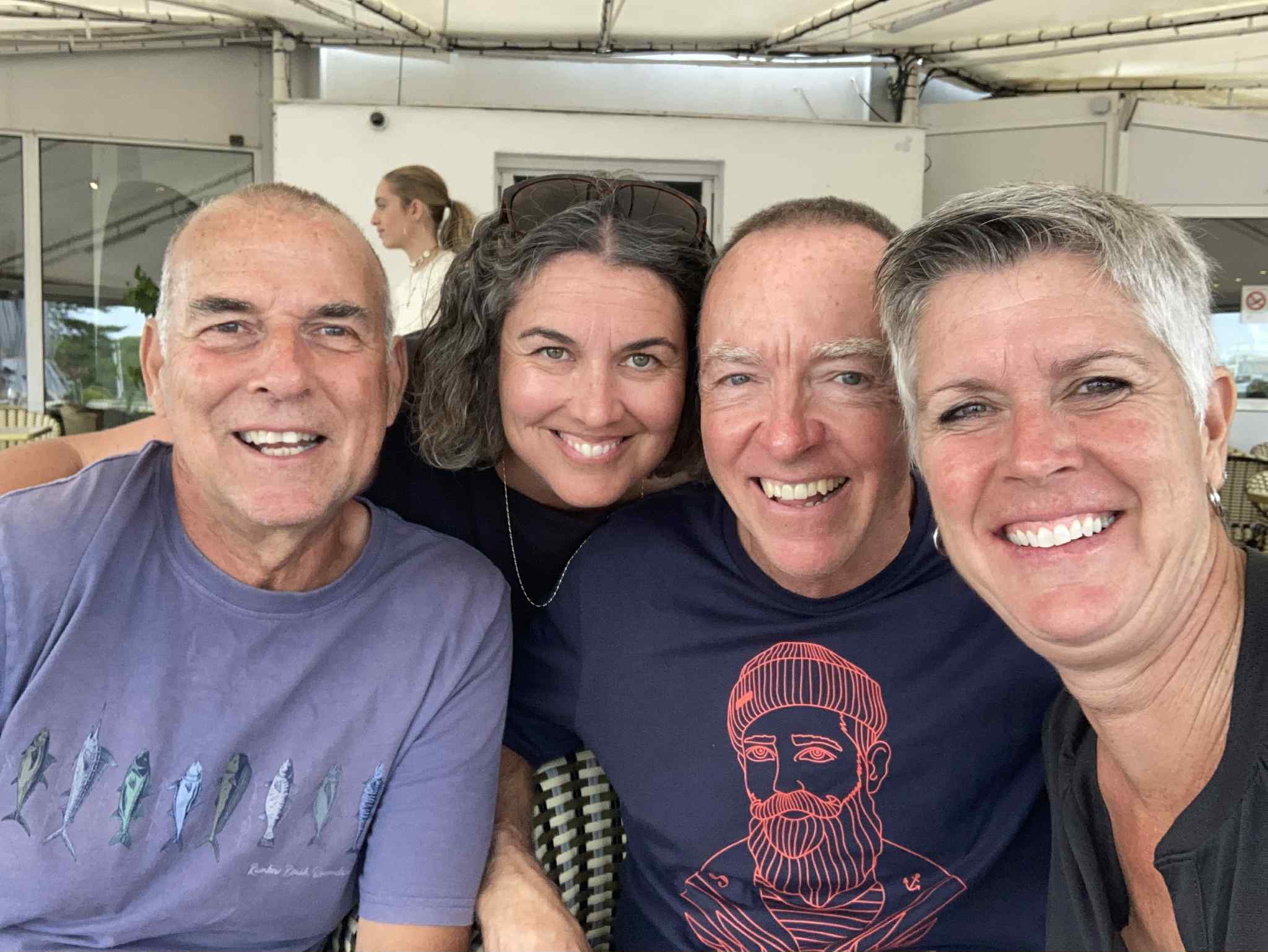
Whilst in Royan we also had the most lovely surprise visit from Jean and Yolene off Caffe Latte whom we had spent a lot of time sailing with in the Mediterranean. They knew our location and were on holiday in France (their boat is now back in Canada). We had the most wonderful day together!
A day or so later our canal journey began.
We had three months to get as far as we could before we would need to leave the boat and Europe (due to Schengen visa restrictions). We would then serve our exile time out of Europe (3 months) before continuing and hopefully making it to the German Coast in the Baltic Sea to put the new rigging on and stand the mast back up. Little were we to know that is was not just time and bureaucratic rubbish that would impact how far we could get but also the severe summer drought in France and low canal water levels in the canals were to impact us, but more on that later.
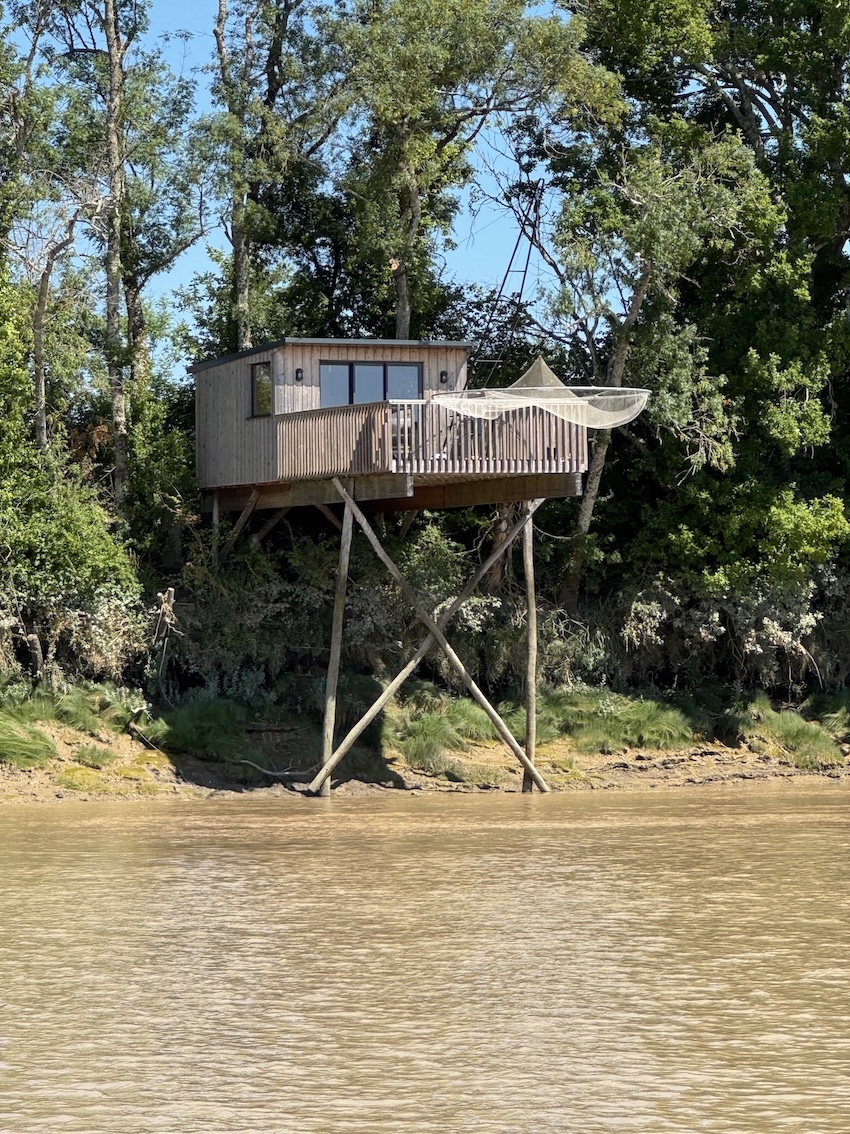
The first leg was the Garonne River up past Bordeaux. This river is tidal and has serious current and flow, and it was important to time our passage with the tides. We would do it in 3 legs.
1 – First, leave the marina and anchor as close to the river mouth for the night as possible.
2 – The next morning take the incoming tide up the river as far as Bordeaux, overnight there while the tide changes and goes out.
3 – The third leg, we would take the next incoming tide change to take us further inland to the start of the canals.
A total of 80 nautical miles over two days – a great way to ease into this new way of moving, the new boat set up, weight distribution and balance and operating of Red Roo.
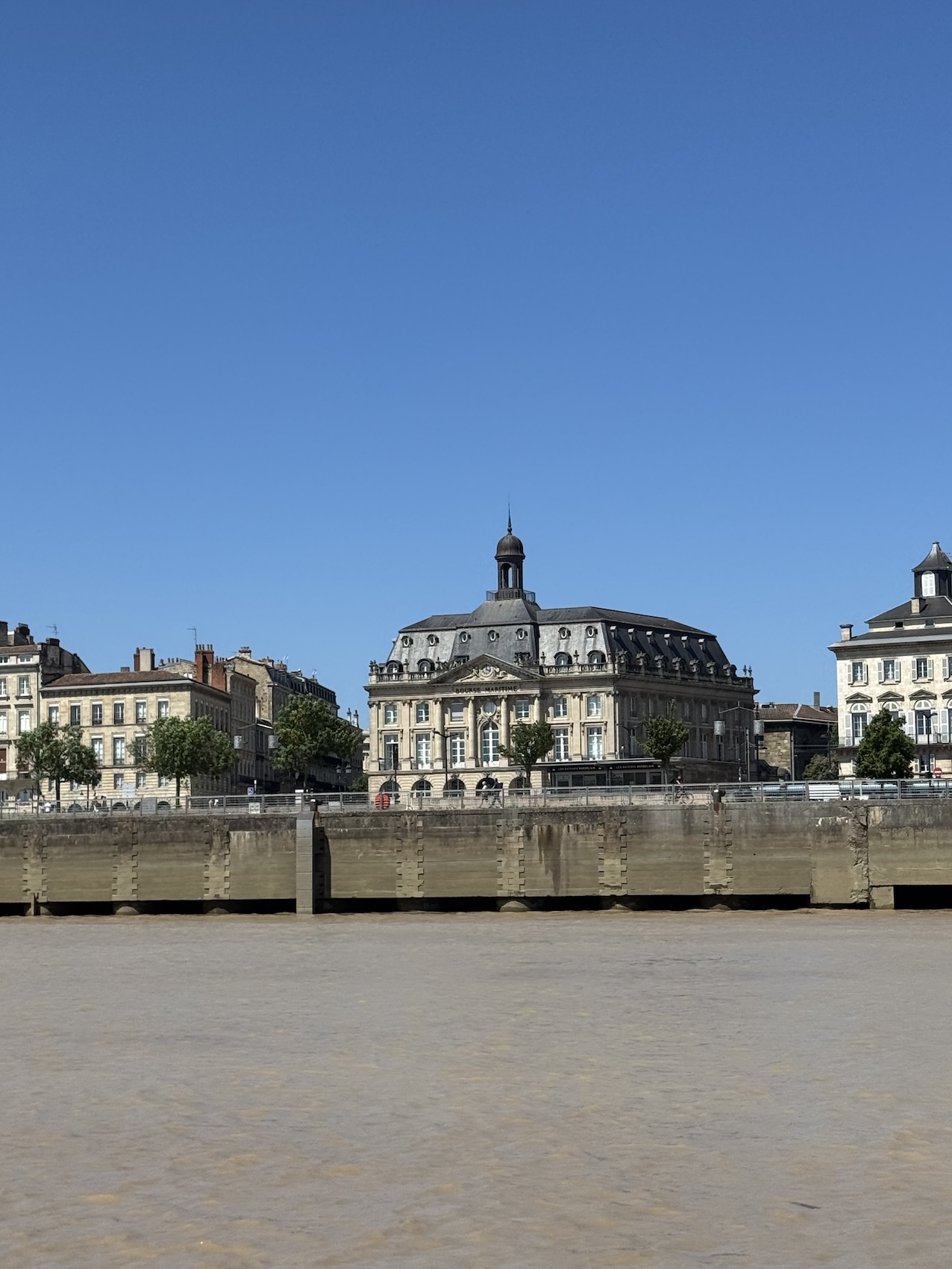
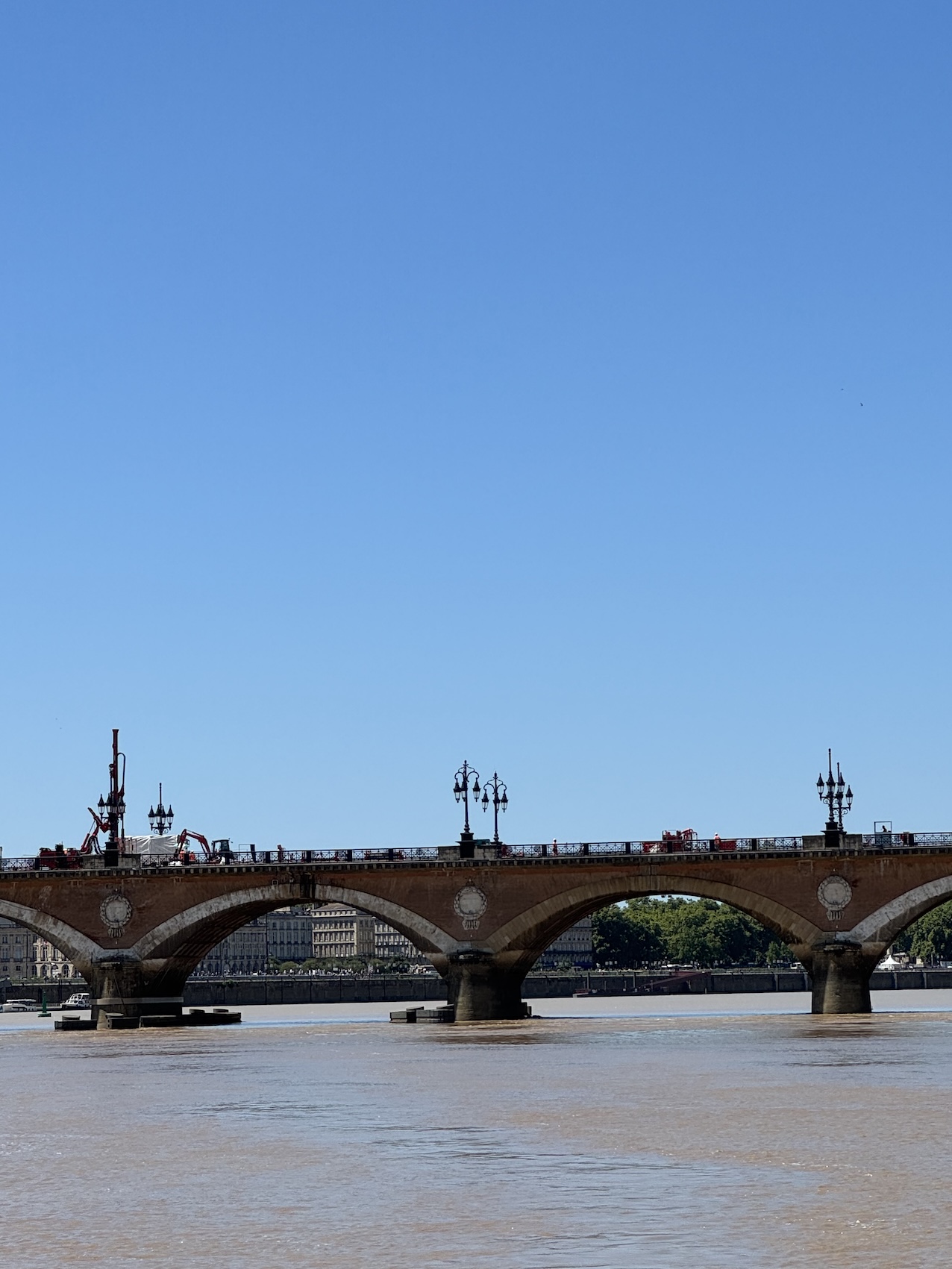
We hit our first challenge in Bordeaux when we arrived at what is now referred to as “THE BRIDGE”, admittedly we were trying to sneak off the dock a little early, maybe an hour before scheduled time of the tide change (usually at this time the water is pretty slack – not coming out or going in), however this wasn’t the case with the Pont de Pierre bridge. A bridge with many small spans, not giving a lot of room either side of the boat and interrupting the river flow causing strong currents. Our first attempt we aborted well clear of the bridge as the patterns in the water gave us a clear impression of the swirl and unsettled state of the current under the small archways in the bridge. We pulled off to the ferry jetty to the side to wait for half an hour. Whilst waiting we watched a motor boat come through the bridge towards us (with the last of the out tide), and it was obvious whilst they were coming with the current they didn’t necessarily have a lot of control of the boat under the bridge, they came through quickly and the current overpowering their steering. They pulled up in front of us at the dock, and agreed we should wait a while. We went for another look about 45 minutes later and got quite close before putting the boat in reserve and going back to the dock again. Eventually another hour later and on our third attempt we were through and on our way.
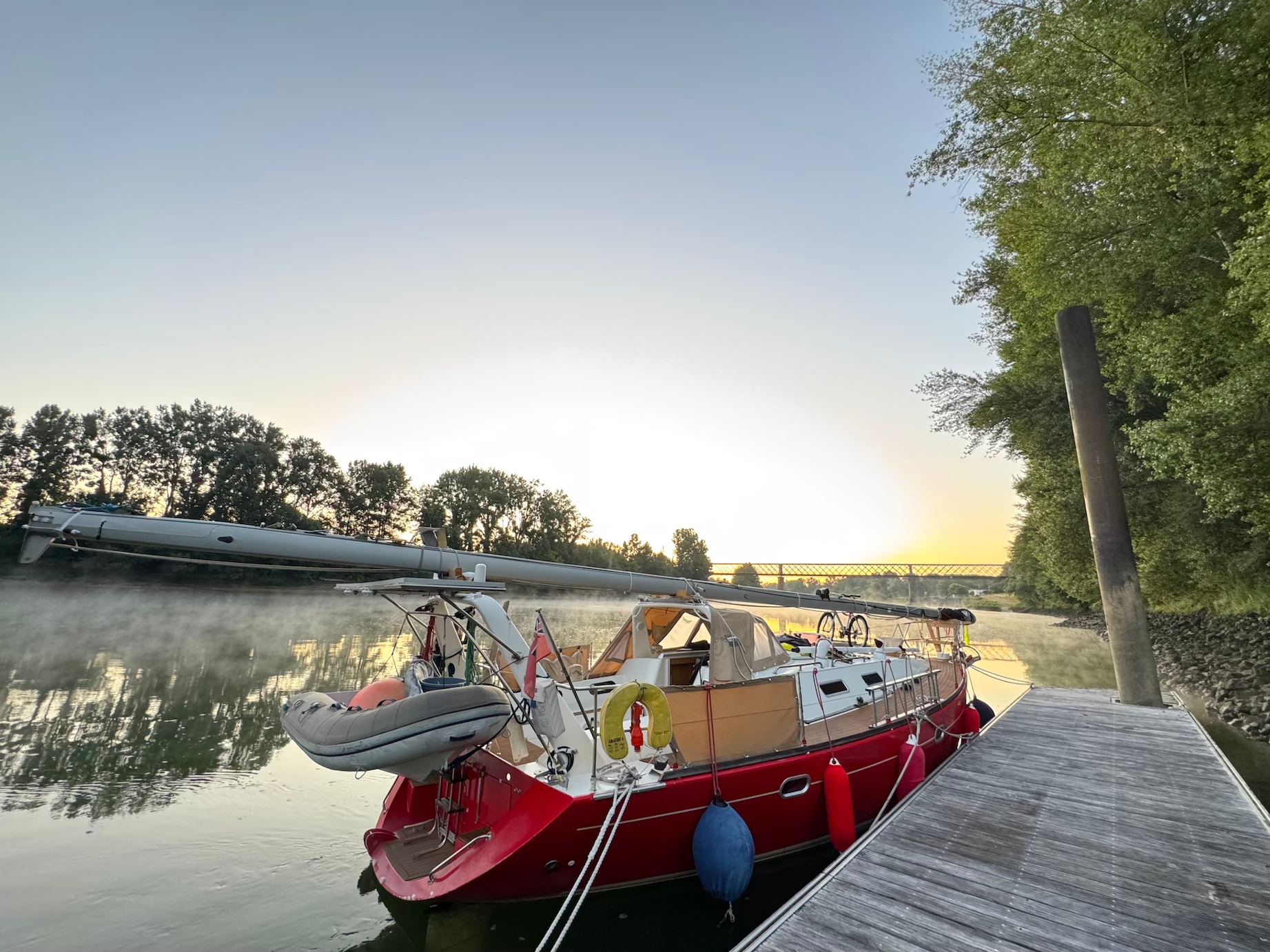
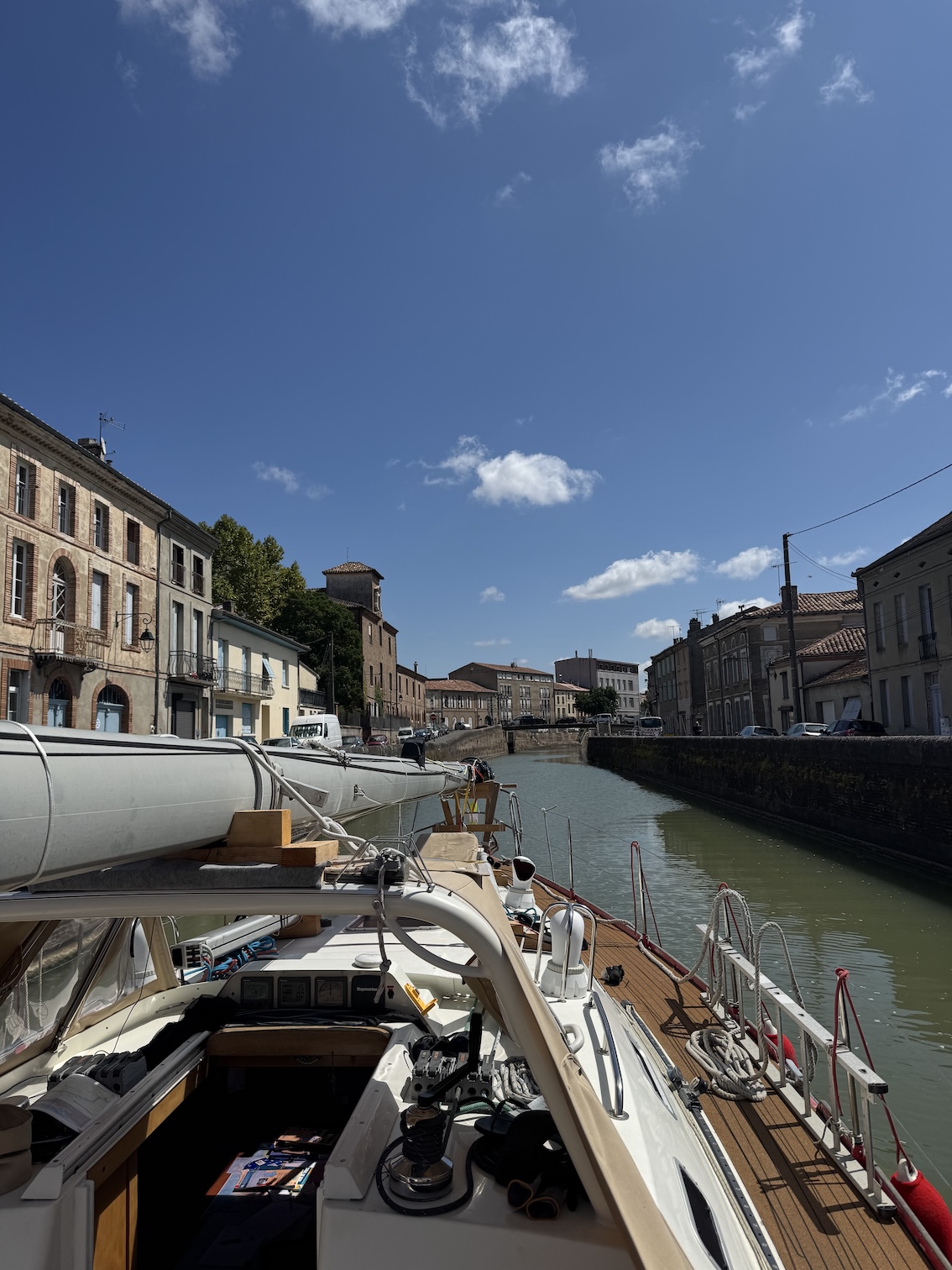
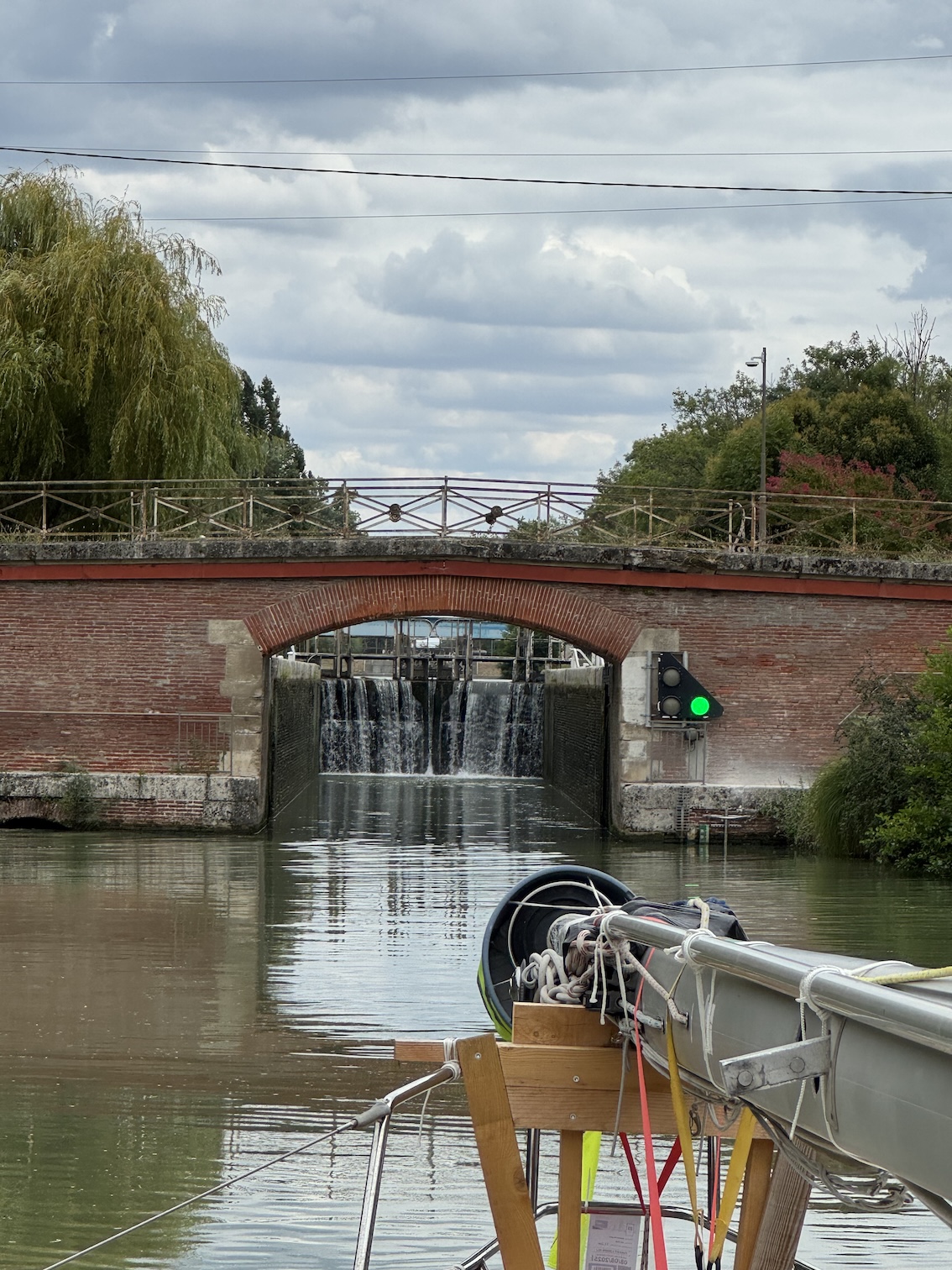
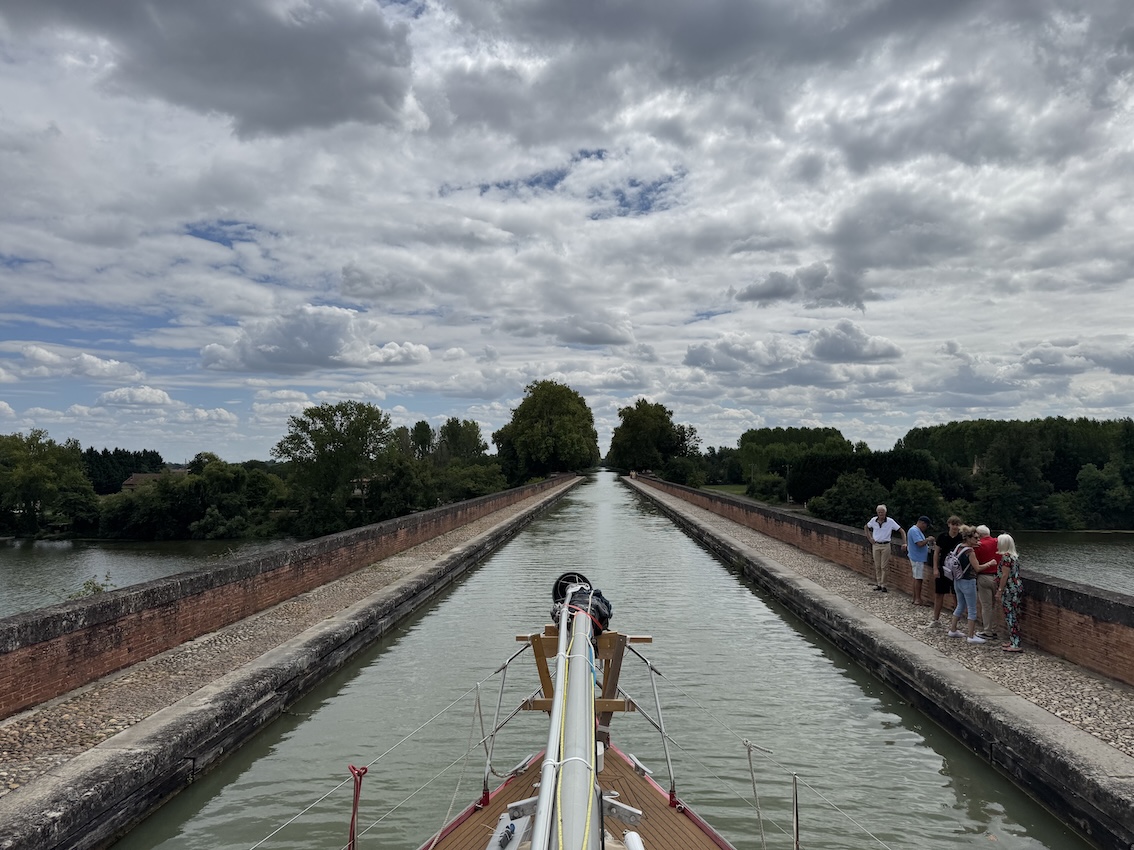
It was on our third morning we took our first lock and entered the Le Canal de Garonne, this would take us 193 km from Castets-en-Dorthe to Toulouse through 53 locks and up to 141 meters above sea level.
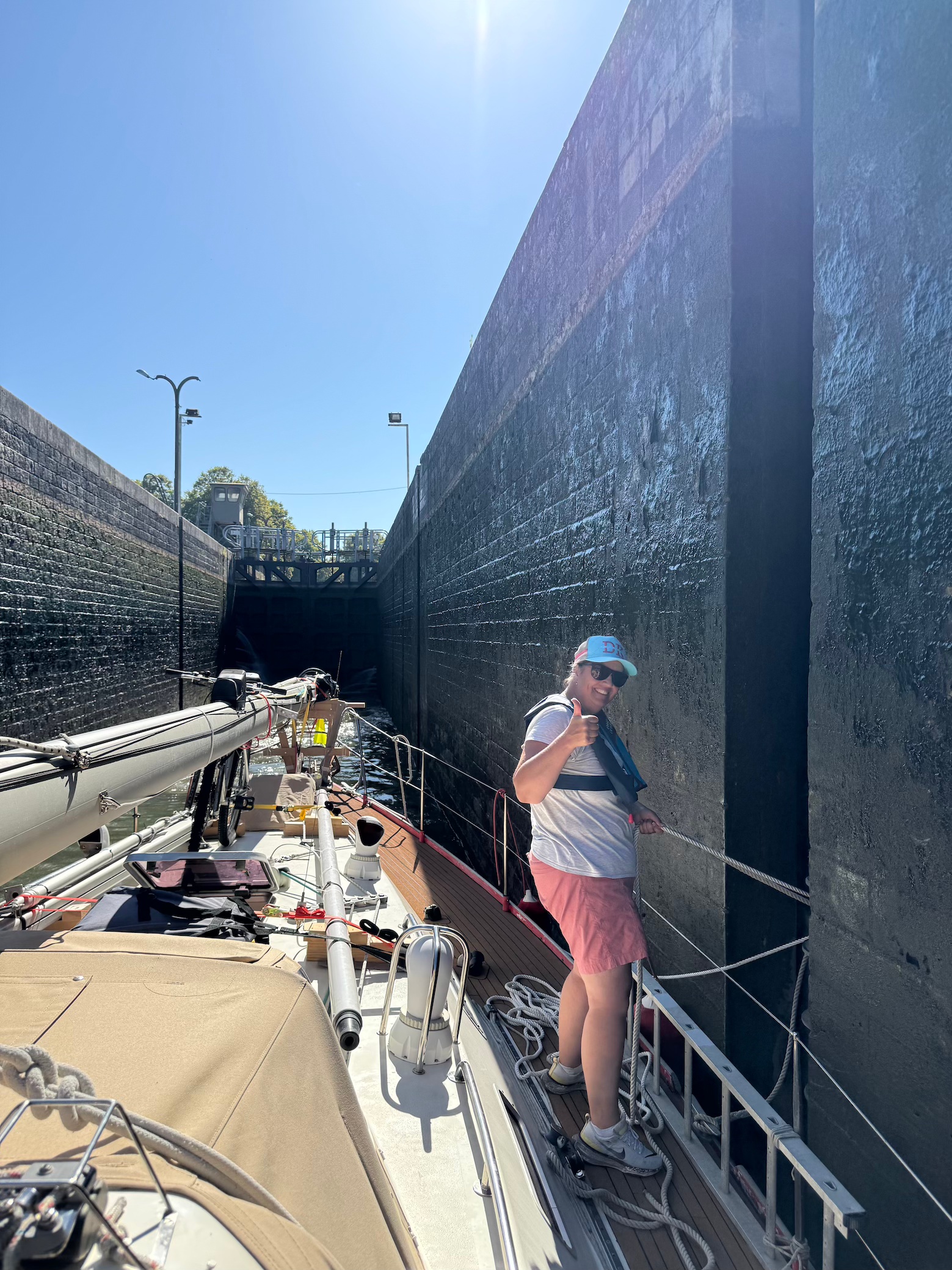
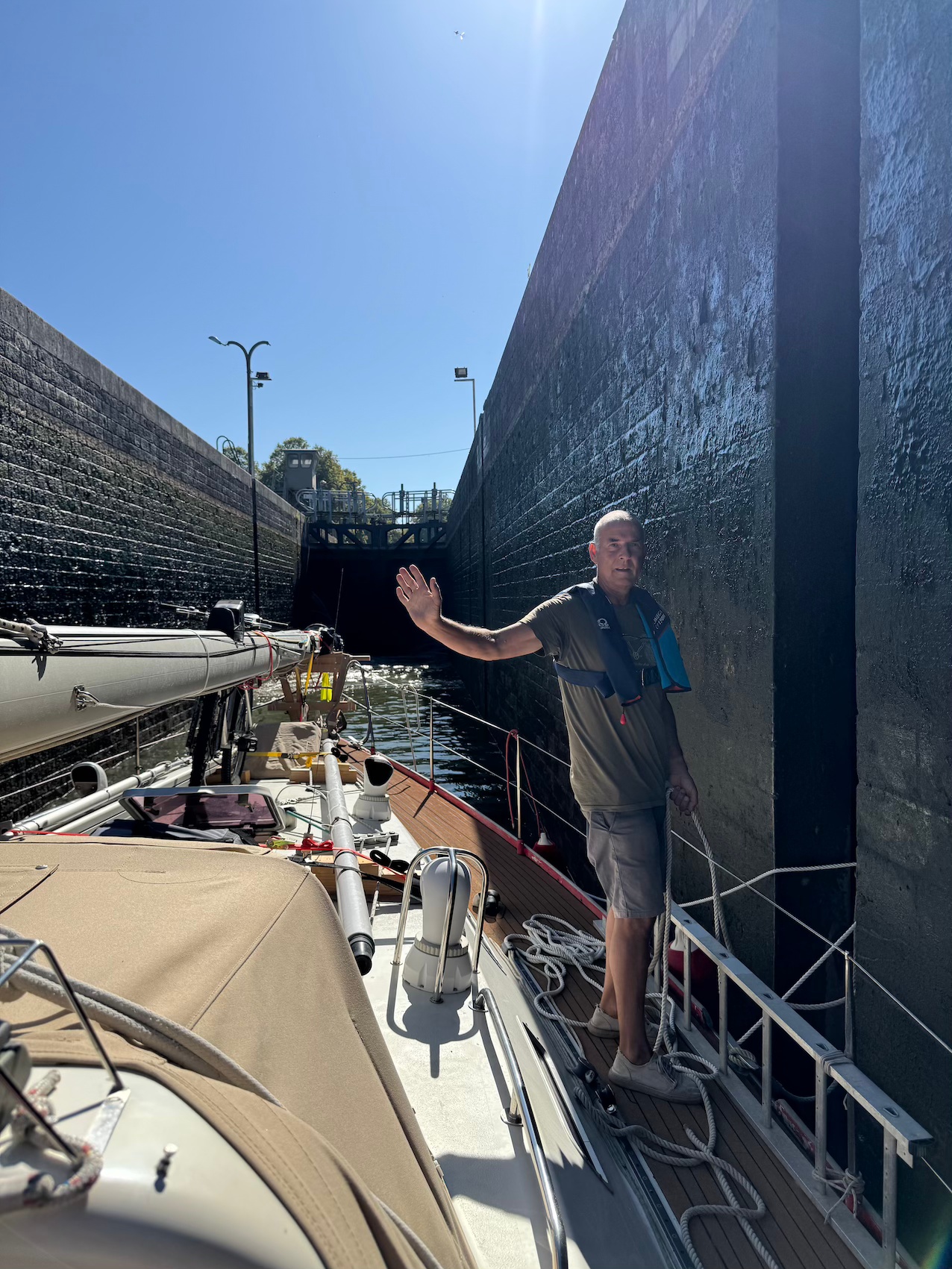
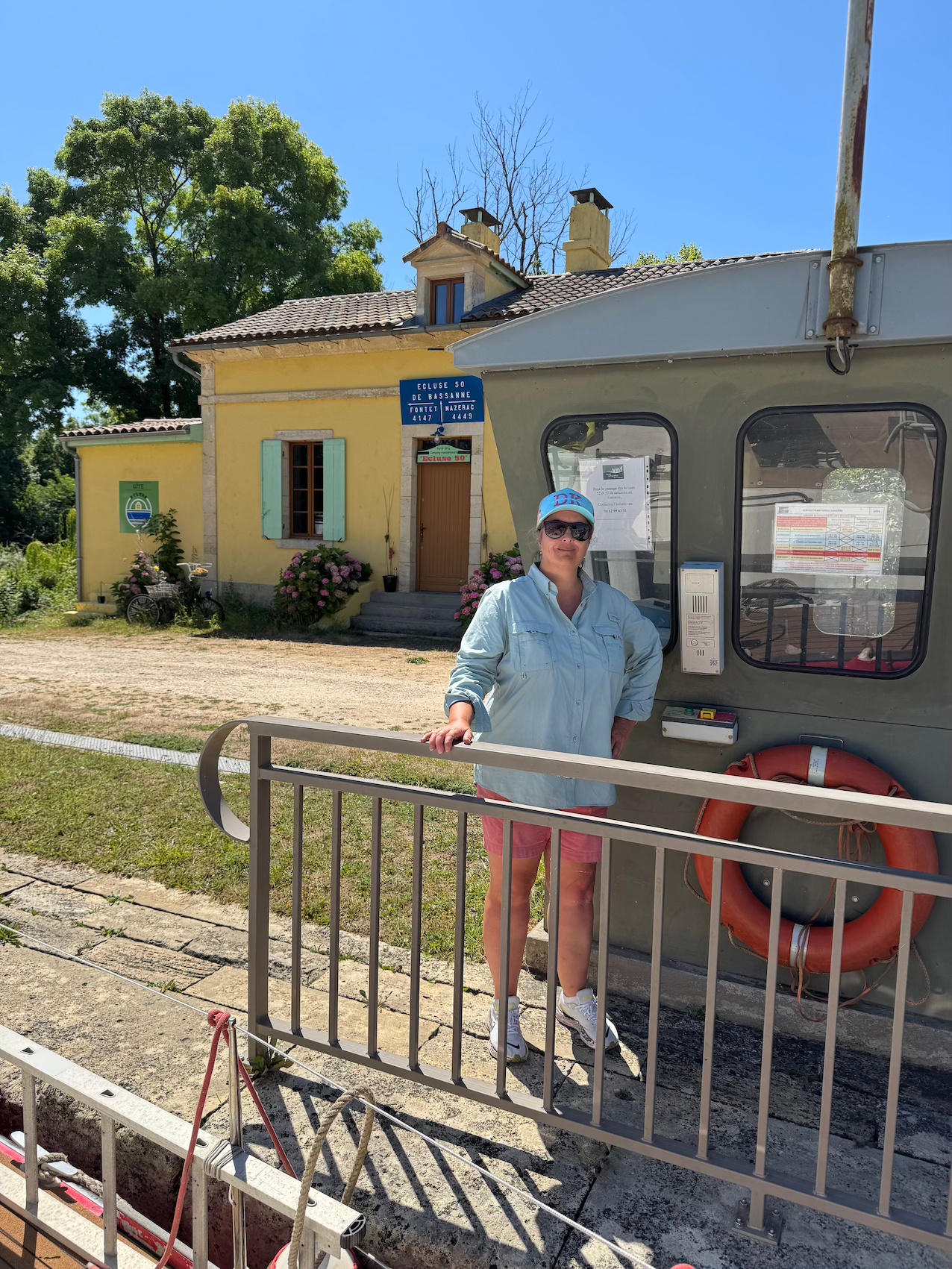
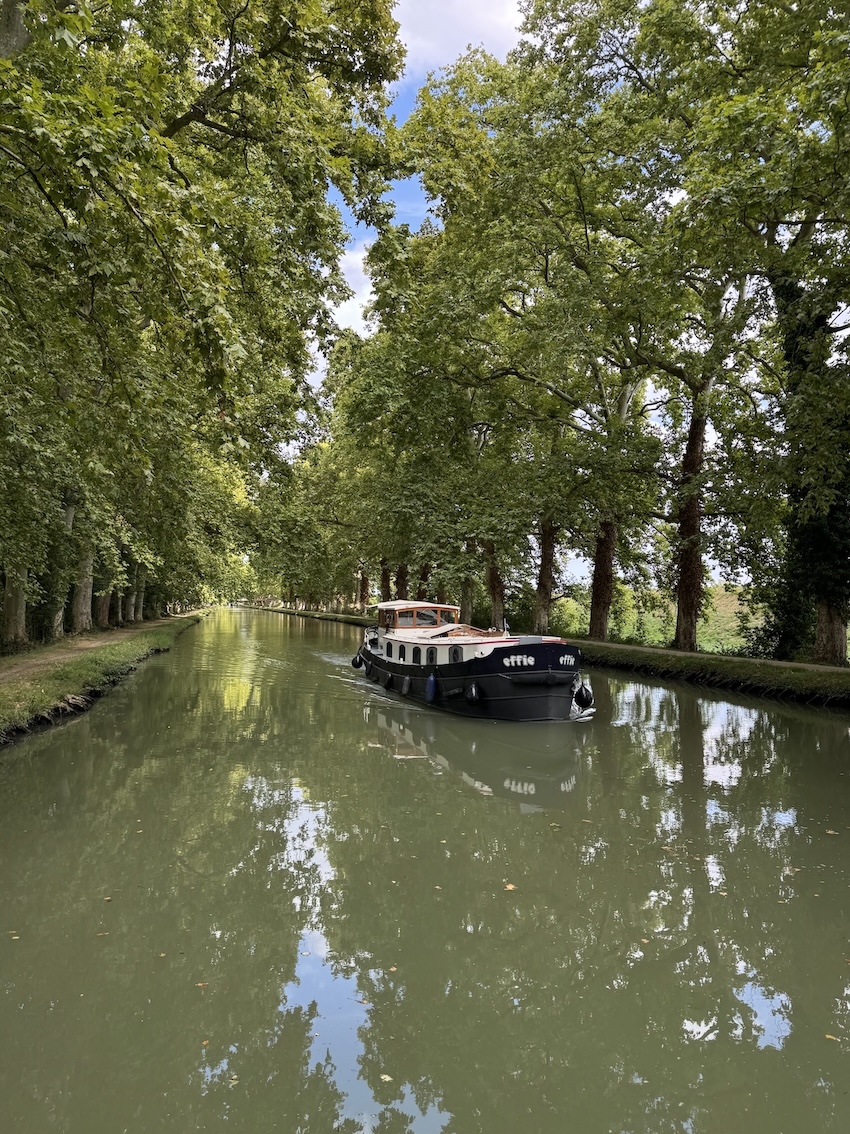
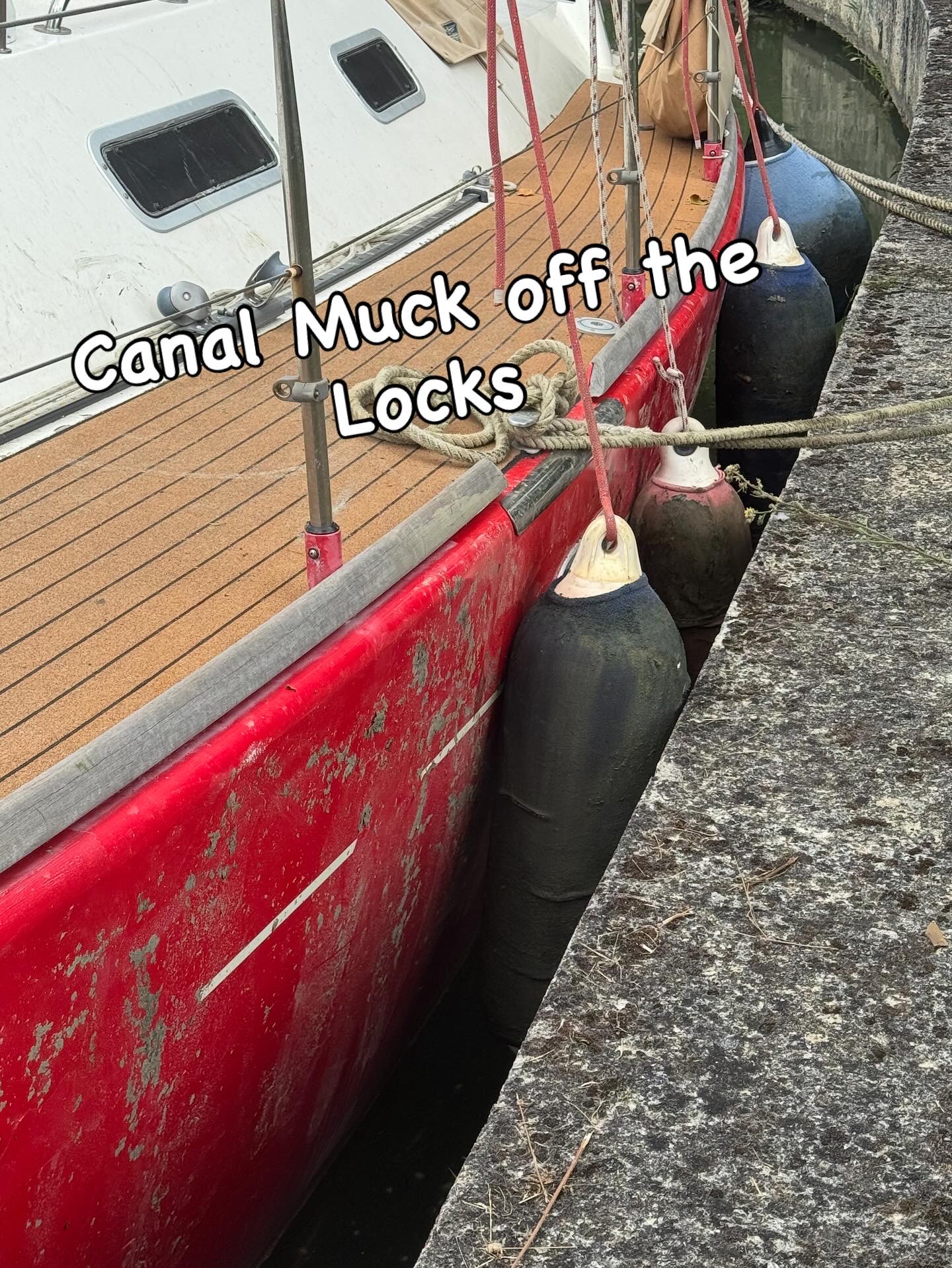
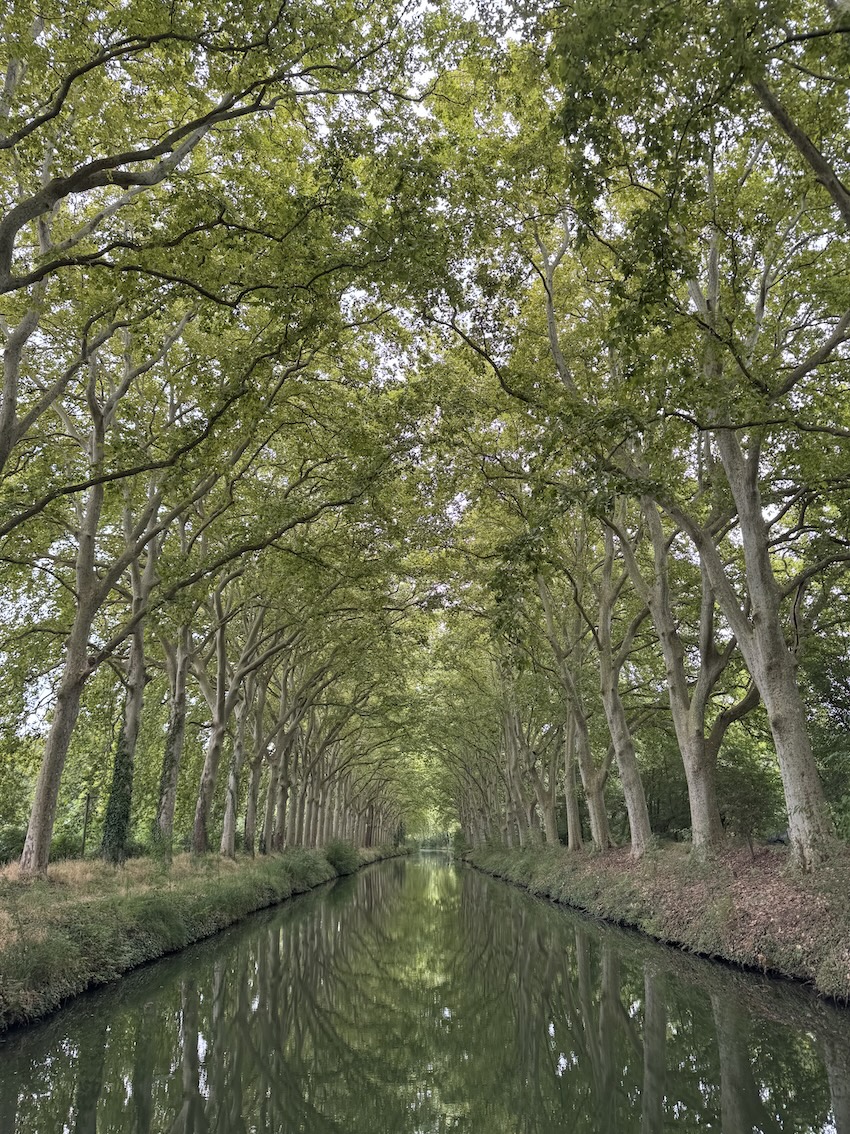
Reflecting back now Le Canal de Garonne was our favourite of the canals in France. It was very quiet with few boats moving around, and it was so very beautiful being lined almost all the way with beautiful big green leafy trees – although they did drop a lot of sap on the nice white paintwork on the boat.
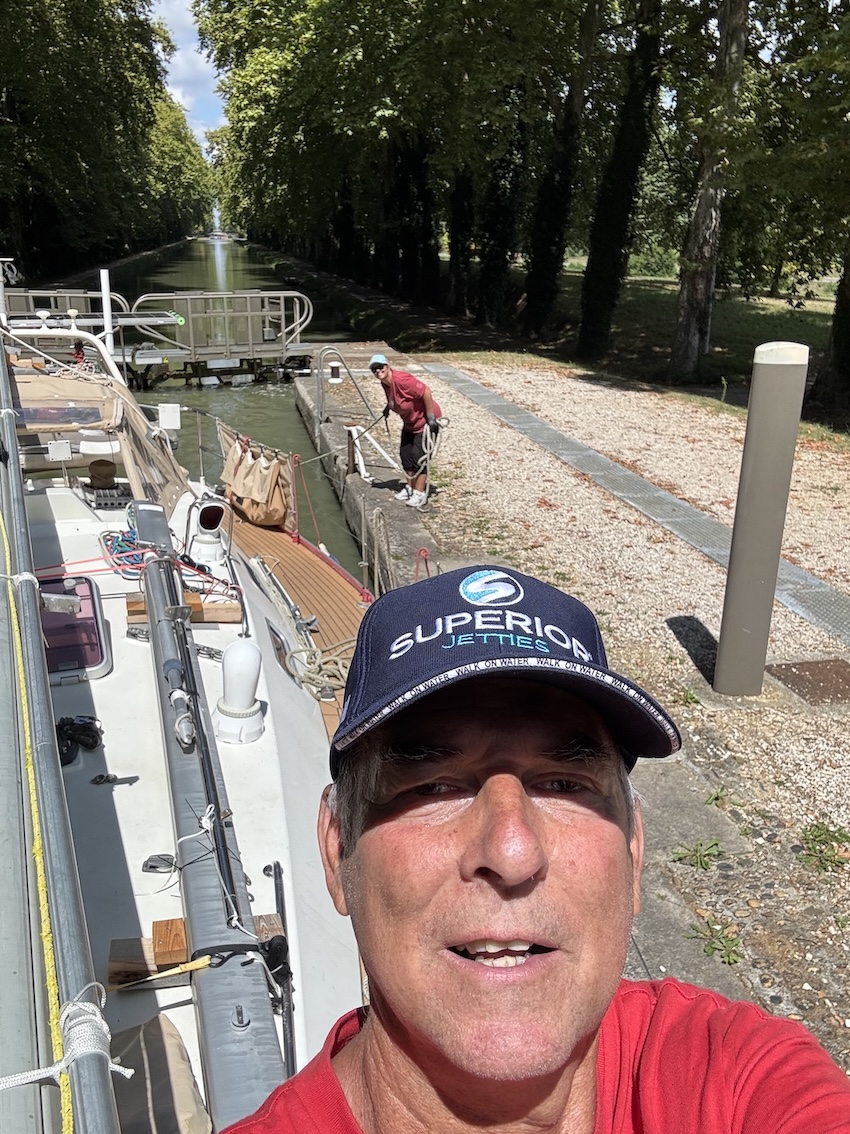
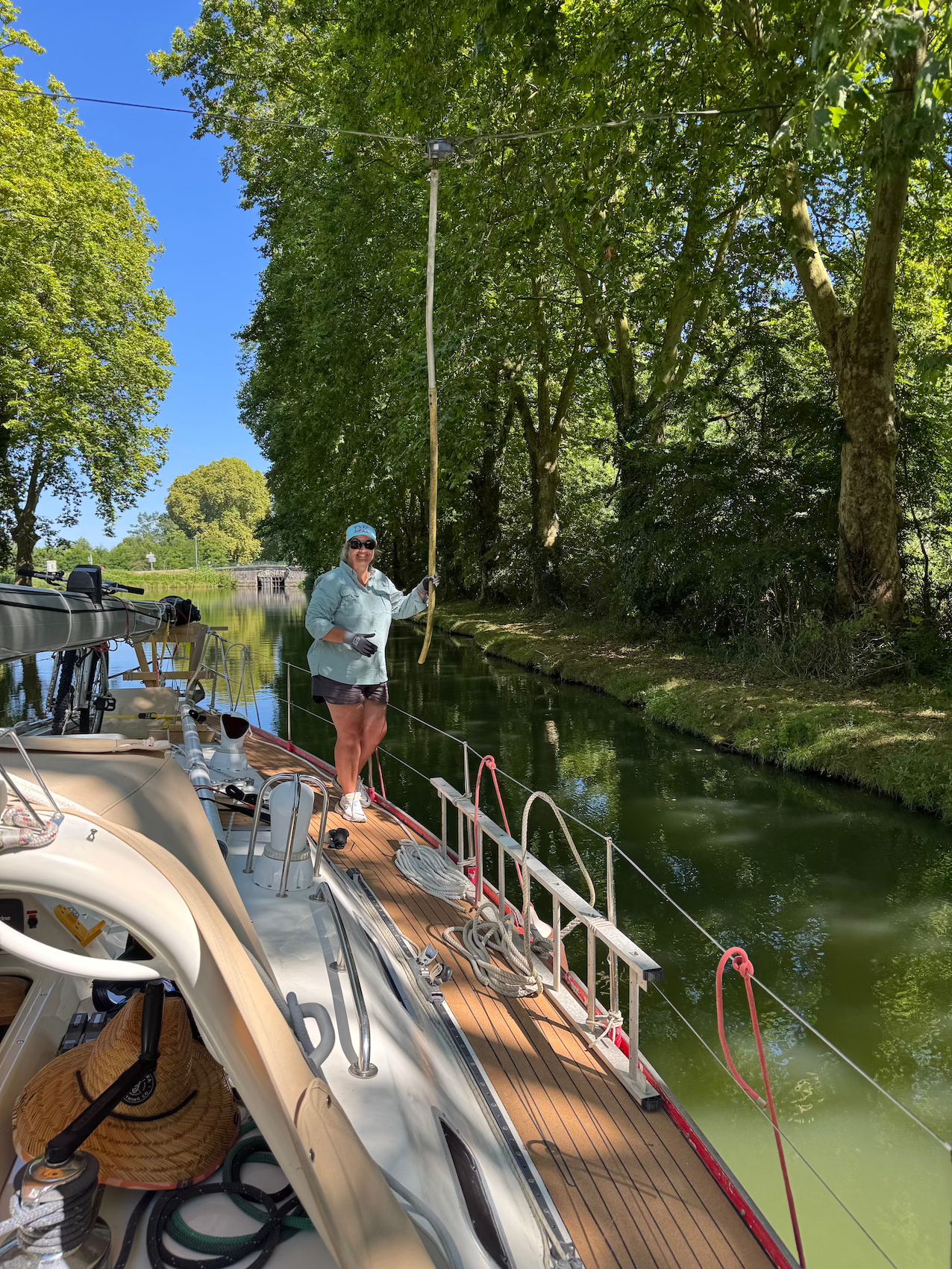
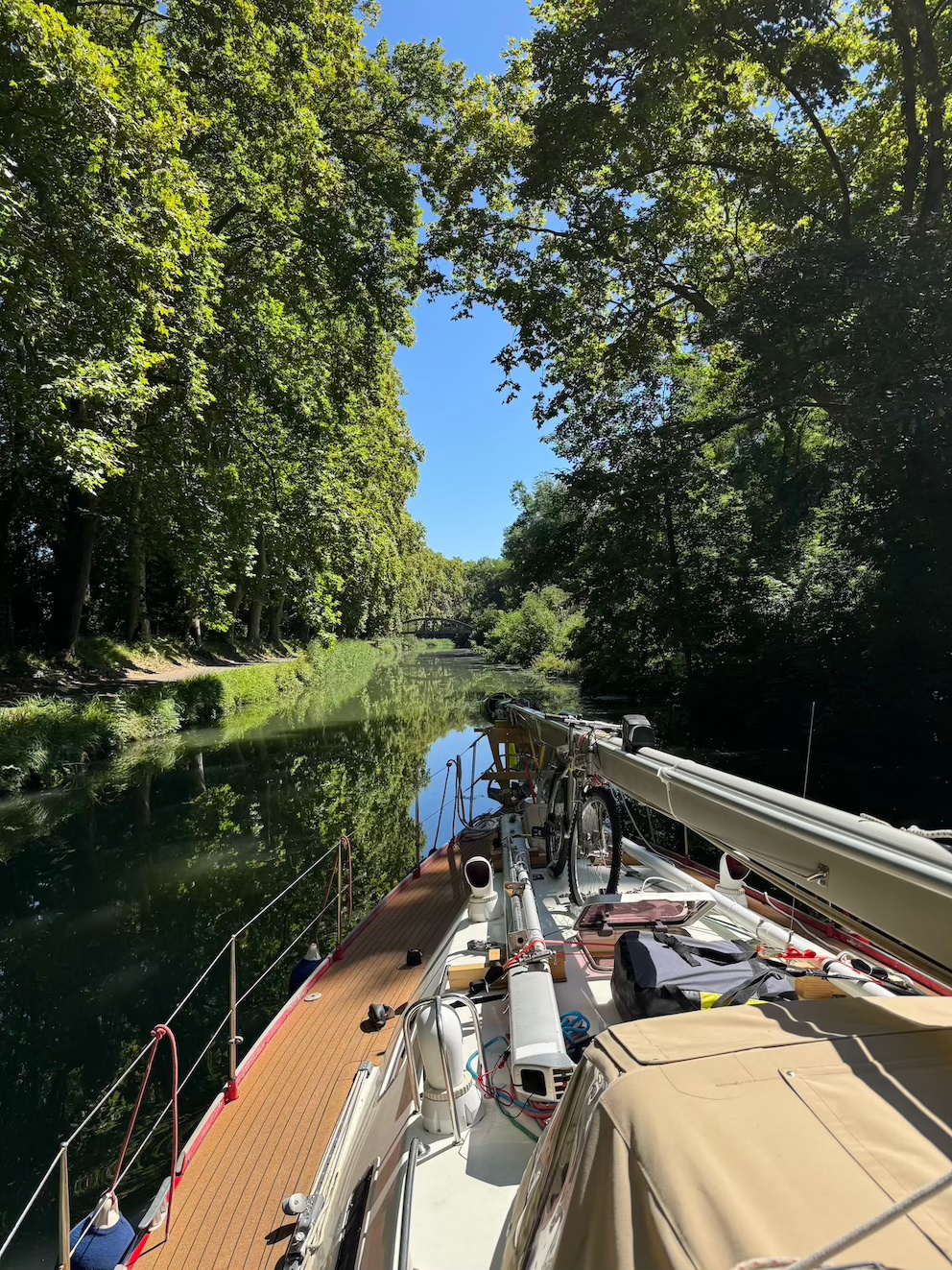
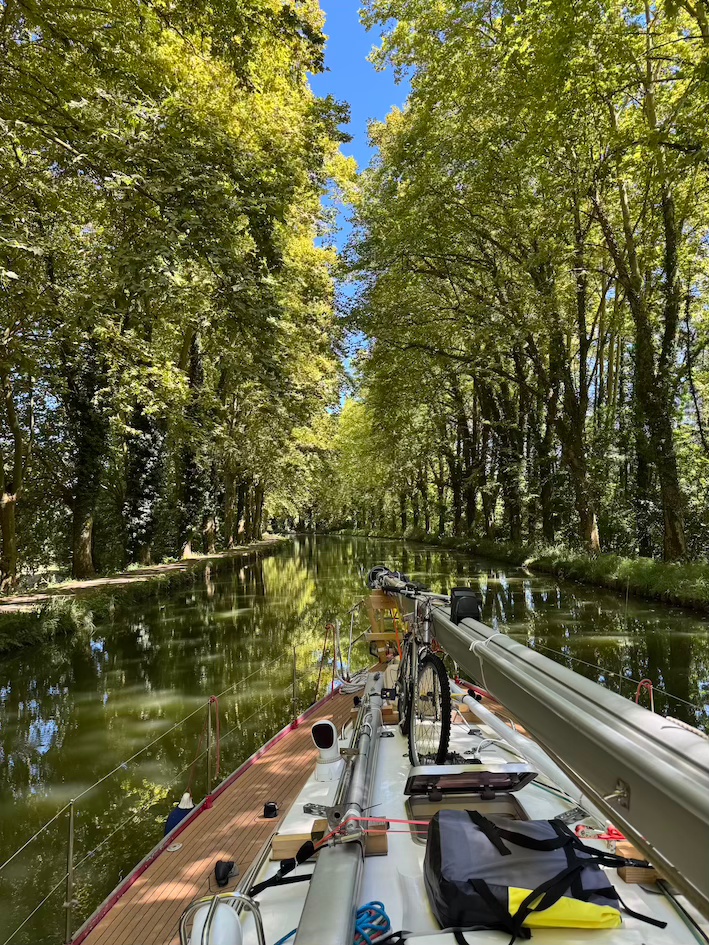
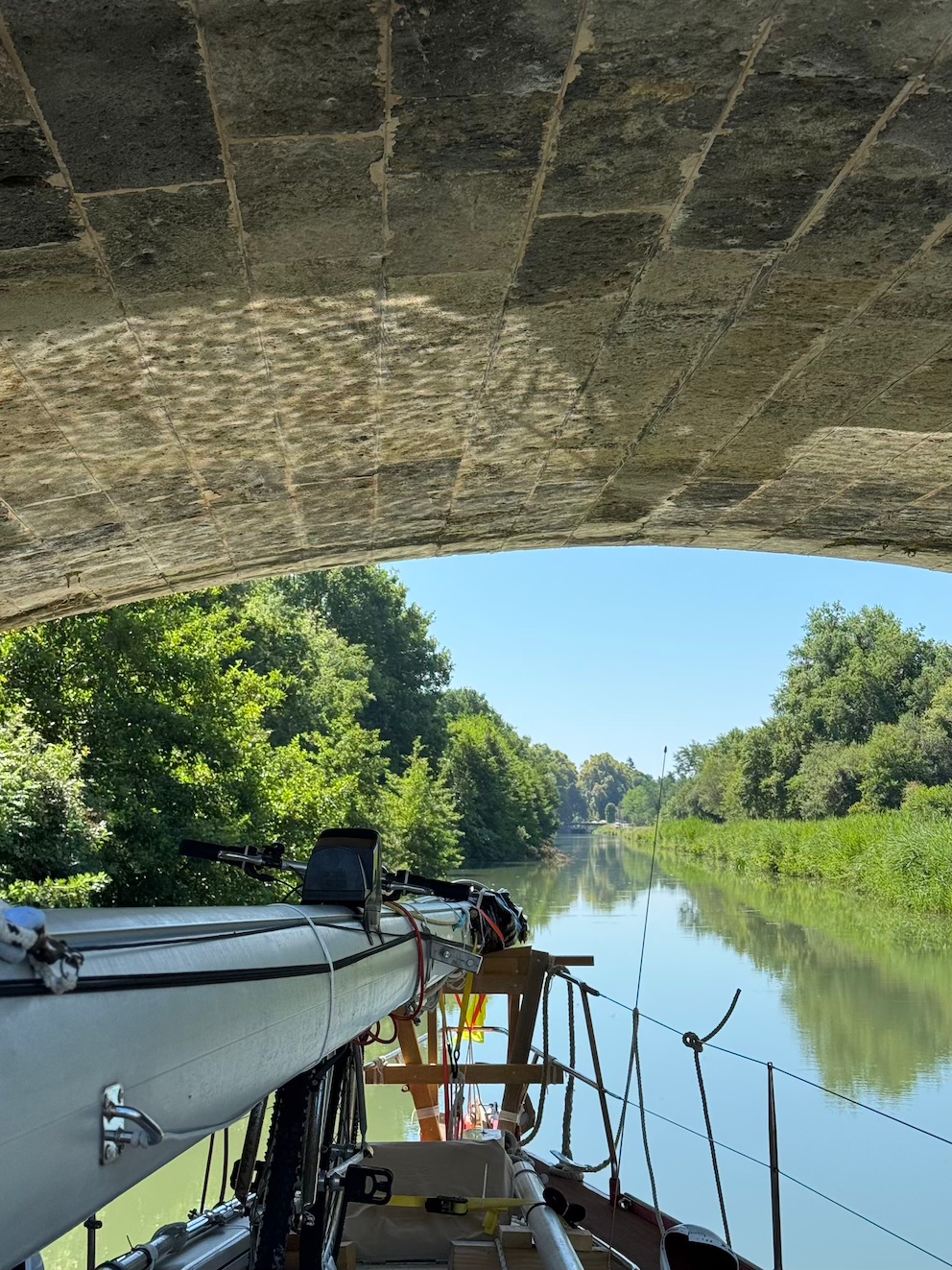
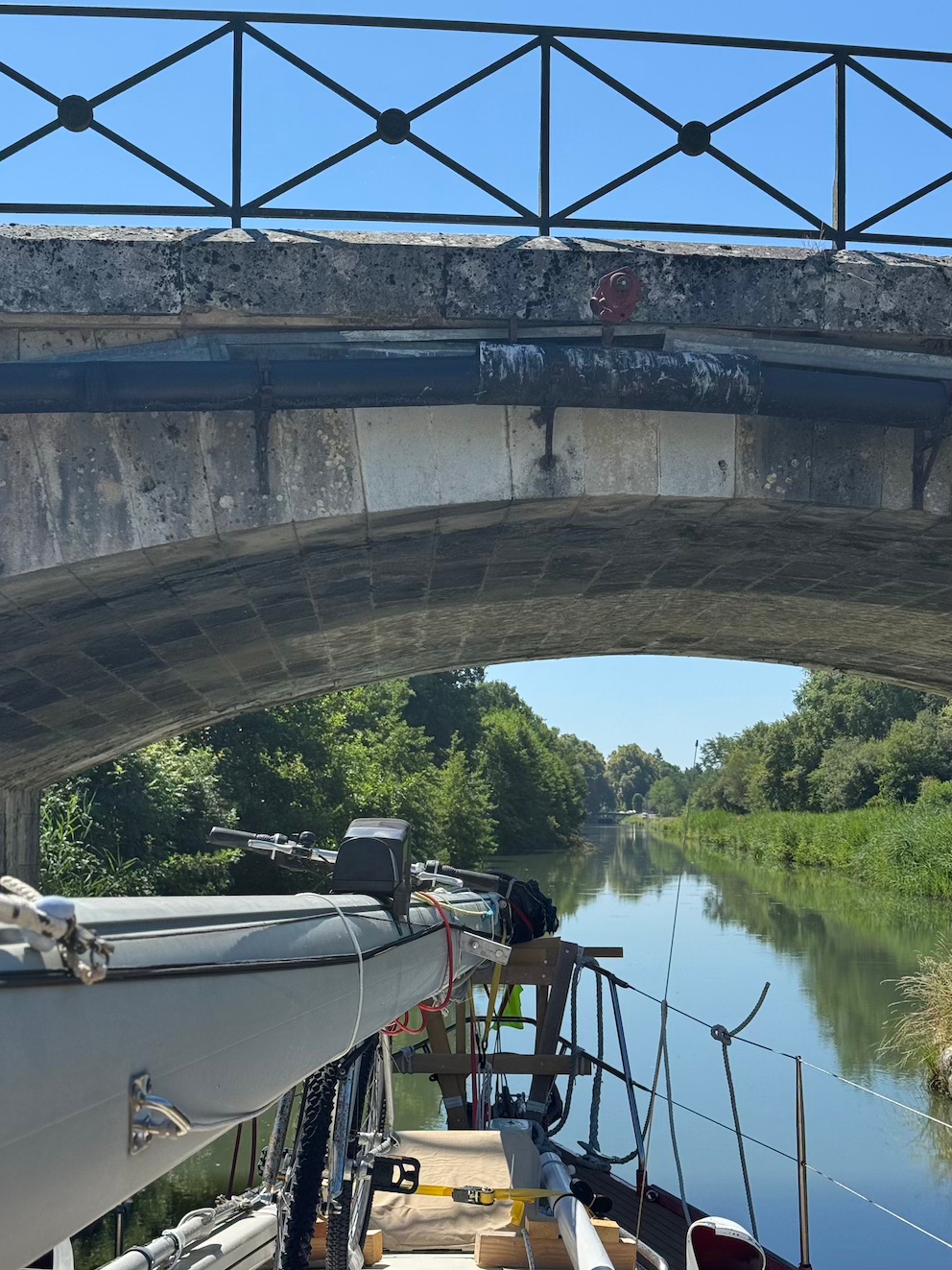
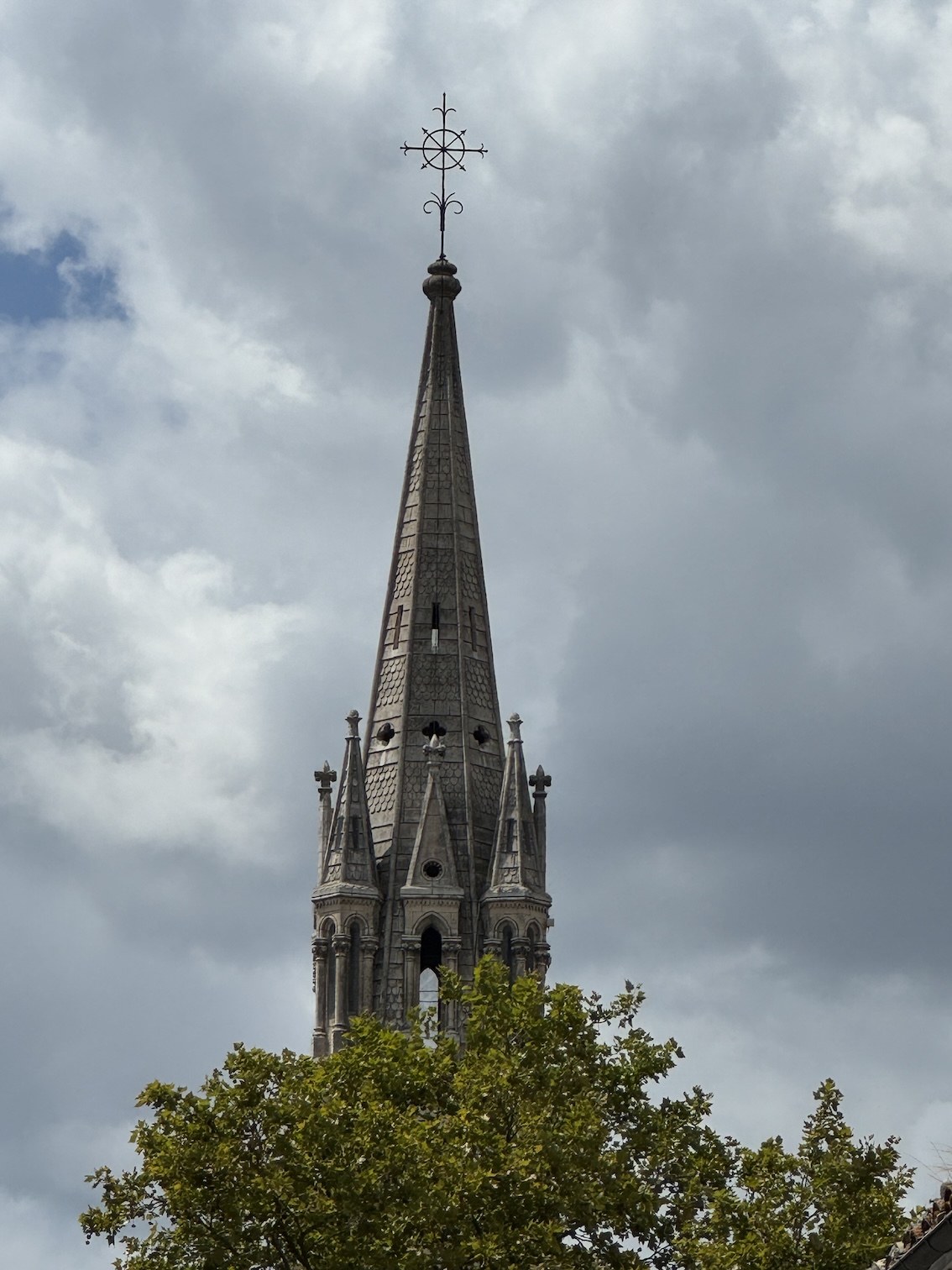
During our time on the Garonne canal we actually parked Red Roo up for 2 weeks and flew home to Australia to farewell our dear brother in law Steve. A very sad farewell to a lovely man, husband, father and grandfather – we will miss you Steve and forever grateful for the times we all shared together and your support of our journey, and will forever treasure the time you spent on the boat in Croatia and Italy.
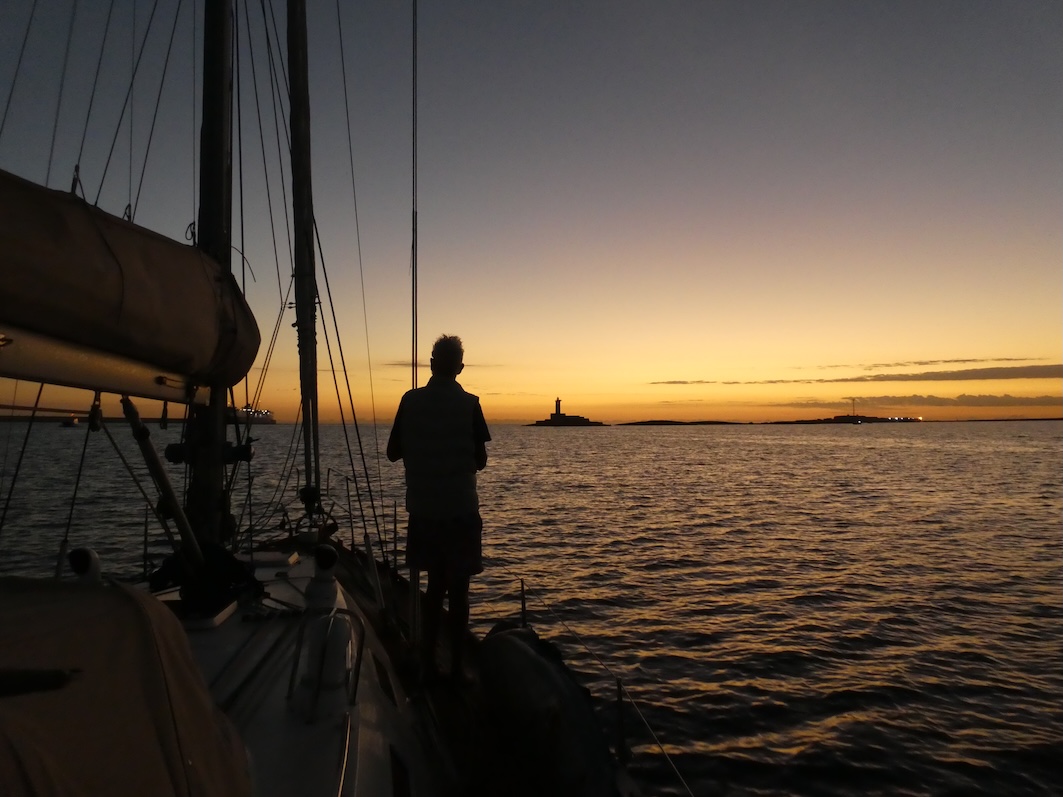
Also on the Garonne we met the wonderful crew of Kowabunga (canal cruiser boat) and formally Cowabunga (sailing yacht). Janis & Michel are pioneers of sailing – living the dream (the hard way), in the 1980’s they give up traditional life in their lates 20’s with two young children aged 3 & 1 and sailed away for 10 years exploring the world. This is in the times before gps navigation, mobile communications and all the tools that make it very much easier and safer for us today. Whilst we only spent a couple of hours together on the canal, we continue to stay in contact and value their friendship and knowledge shared with us of the canals (they gave us the BEST spots for free moorings further along the canals). They were also kind enough to gift us their book written about their sailing adventures.
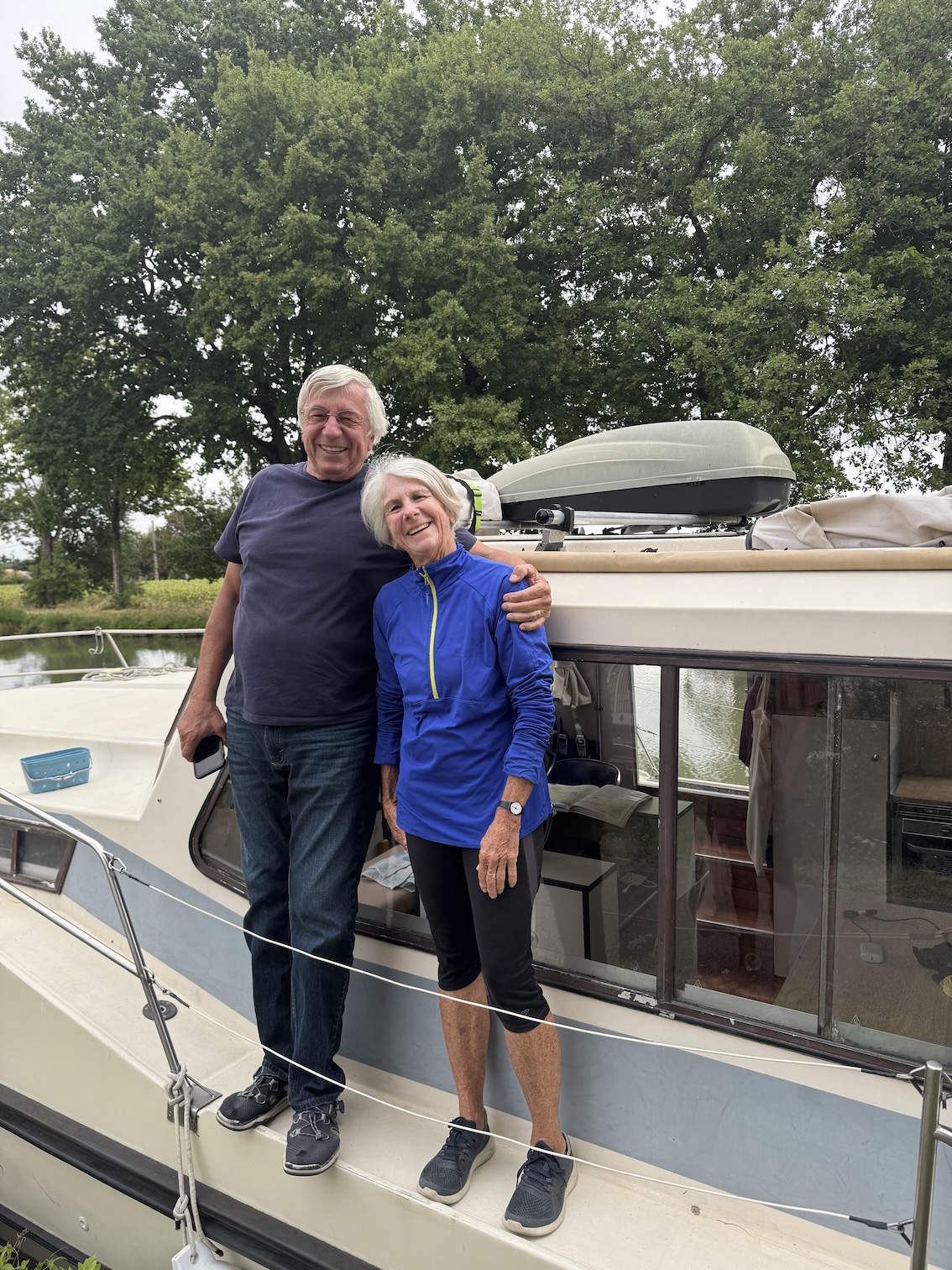
They were not the only new friends we made in the canals, we saw lots of Aussie and NZ expats who had secured themselves long term French Visa’s and were living either full time over here or at least ½ the year on the canals. Thanks to Barge Cleo, Sandra and Ross, along with Aileen and Grahame and the many others who shared a drink and information with us.
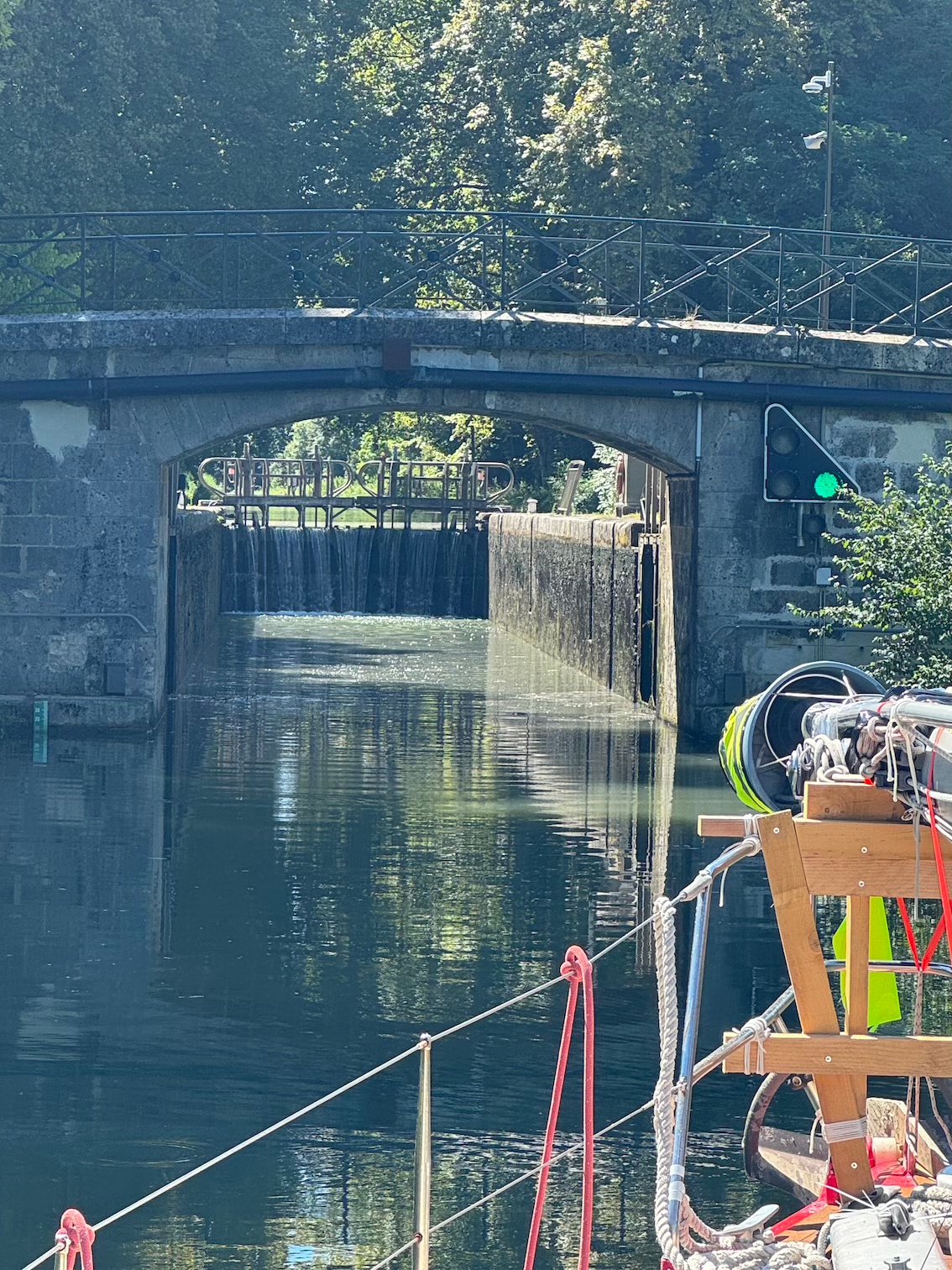
Next was the Canal du Midi from Toulouse to Étang de Thau which is 240 km and 91 locks, including a staircase of 7 consecutive locks at Fonserannes (Béziers). Ending with us back down to sea level. Here we could have re-entered the Mediterranean Sea (should that have been our wish) but no it was North for us. The Canal du Midi is more well know than the other canals, and has many lovely quaint small French villages along its banks, but unfortunately a disease has spread along the trees on the bank and almost all have been cut down leaving it quite stark and bare. It is also very popular with hire boats (known as bump boats – you can guess why!), so a lot busier with people driving boats (many with little to no experience) which can be rather stressful when sharing a lock with them.
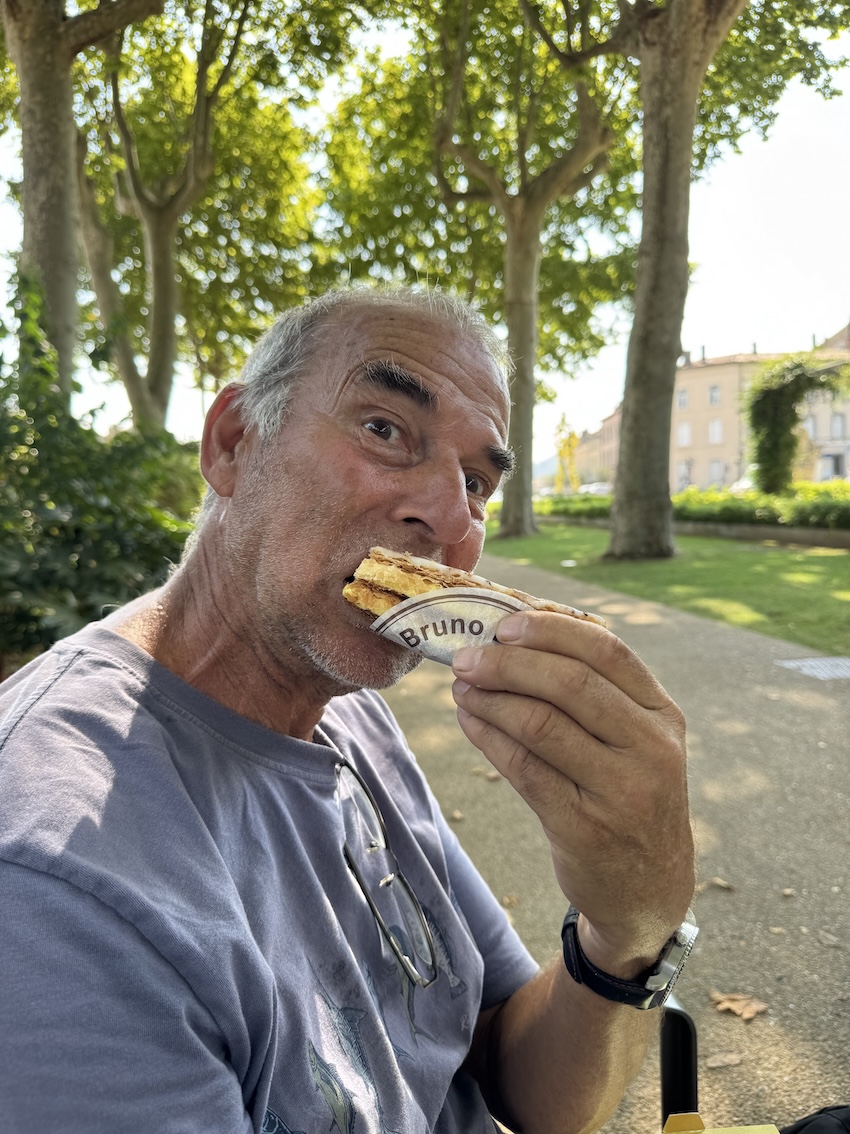
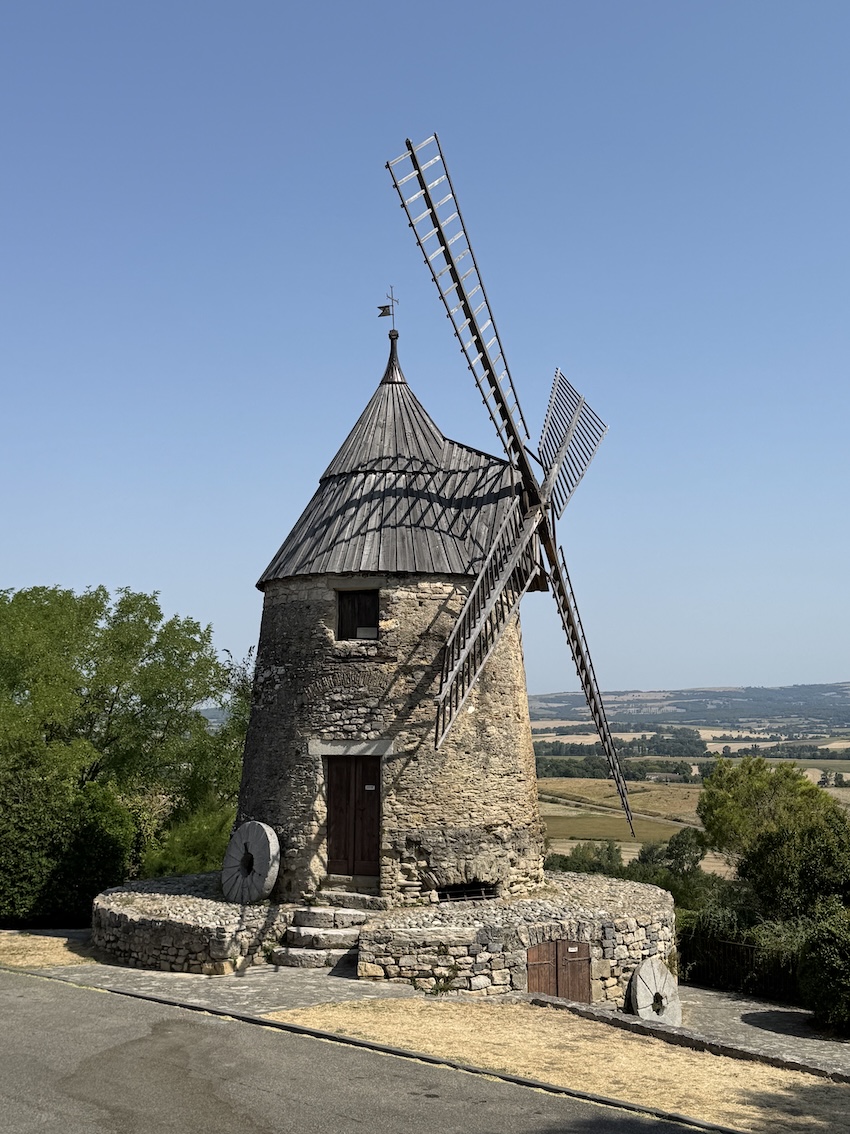
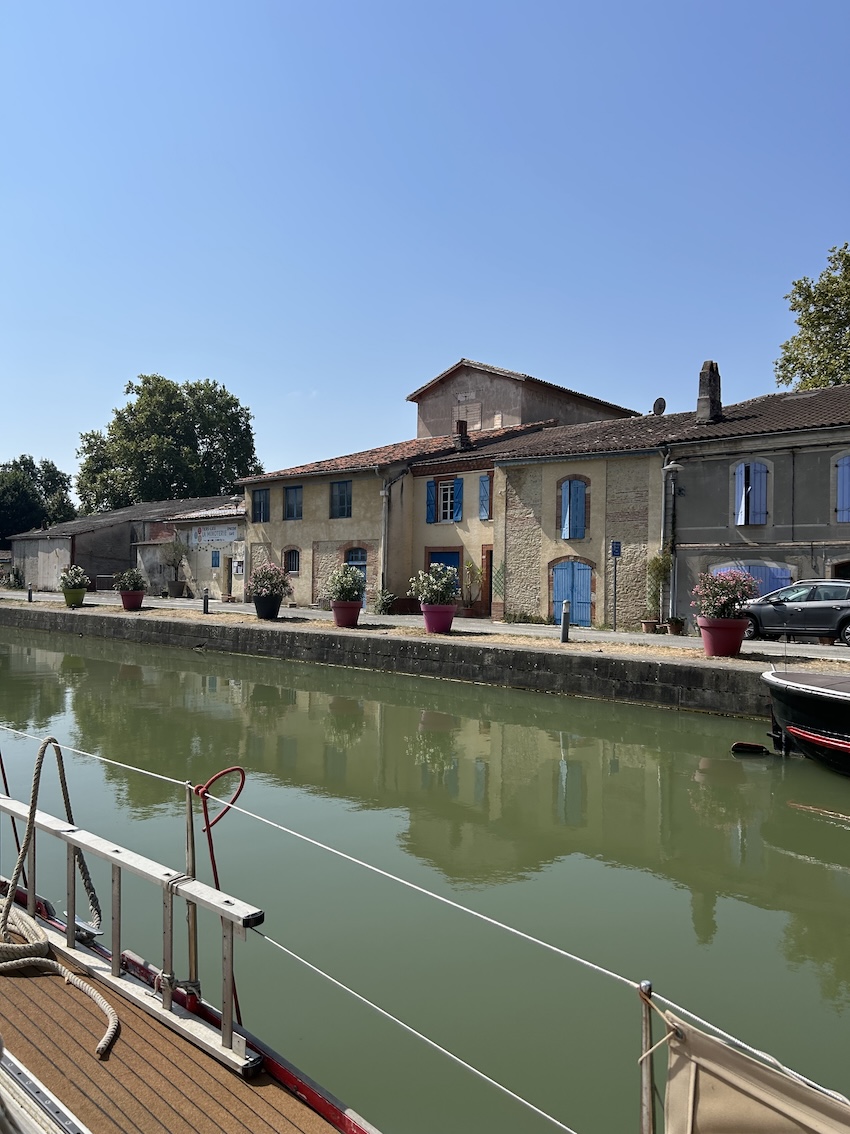
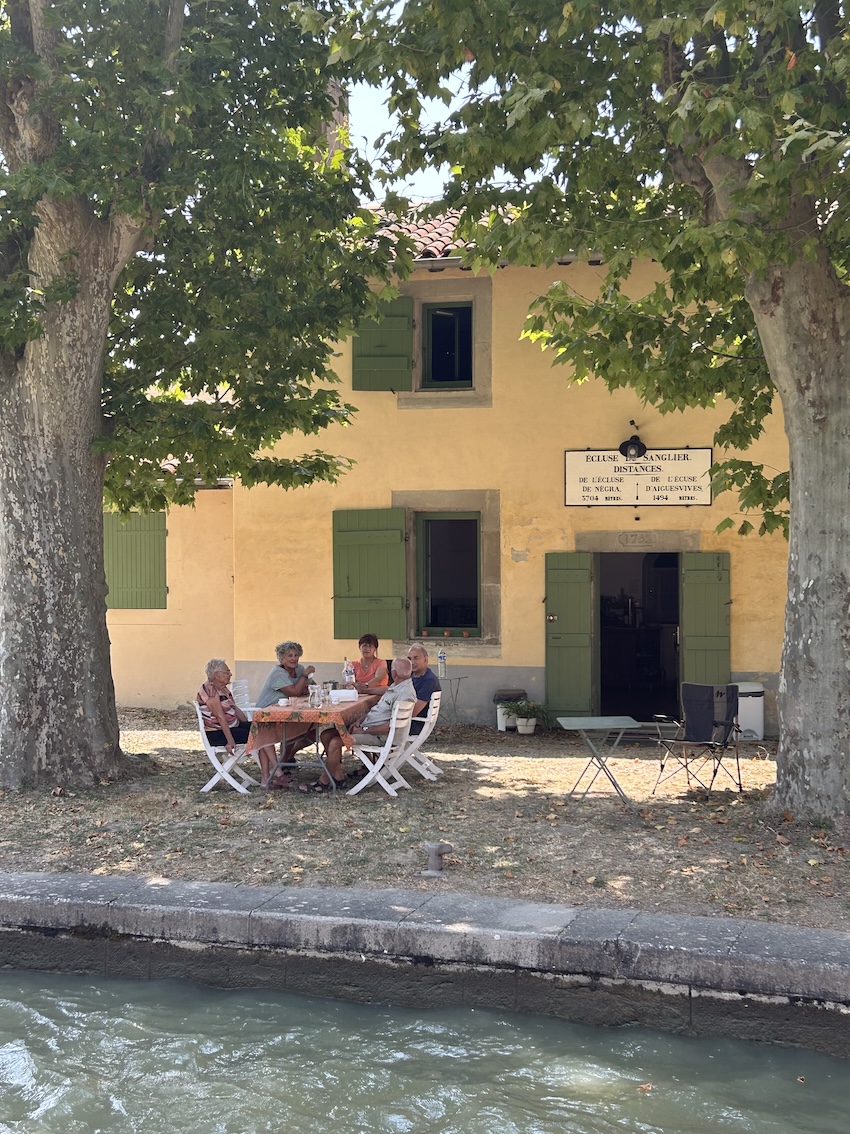
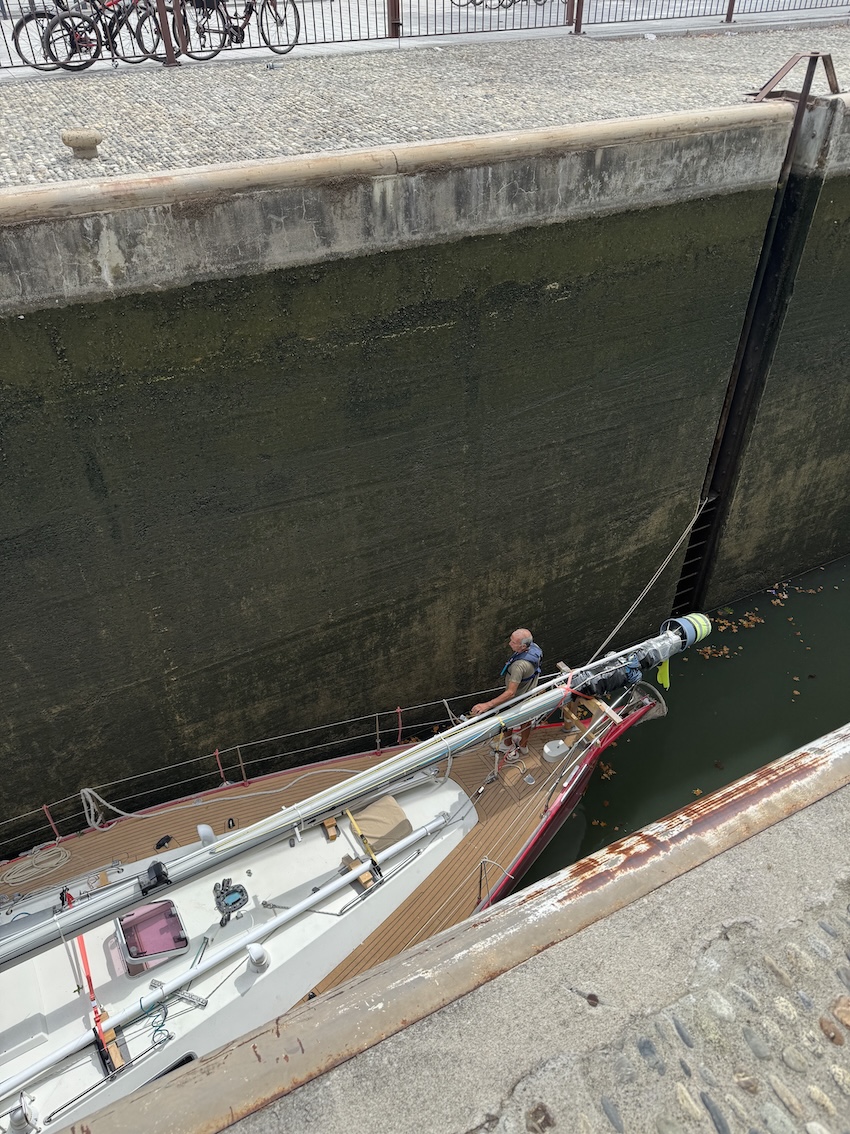
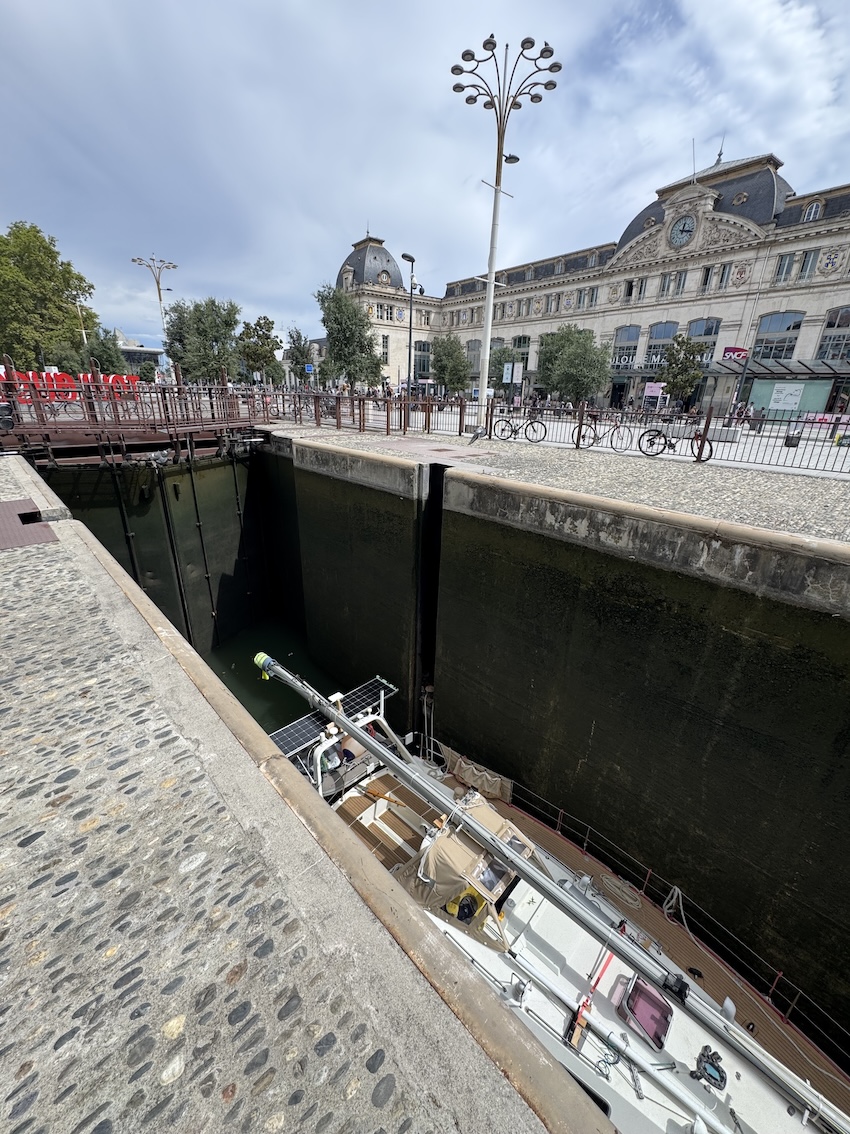
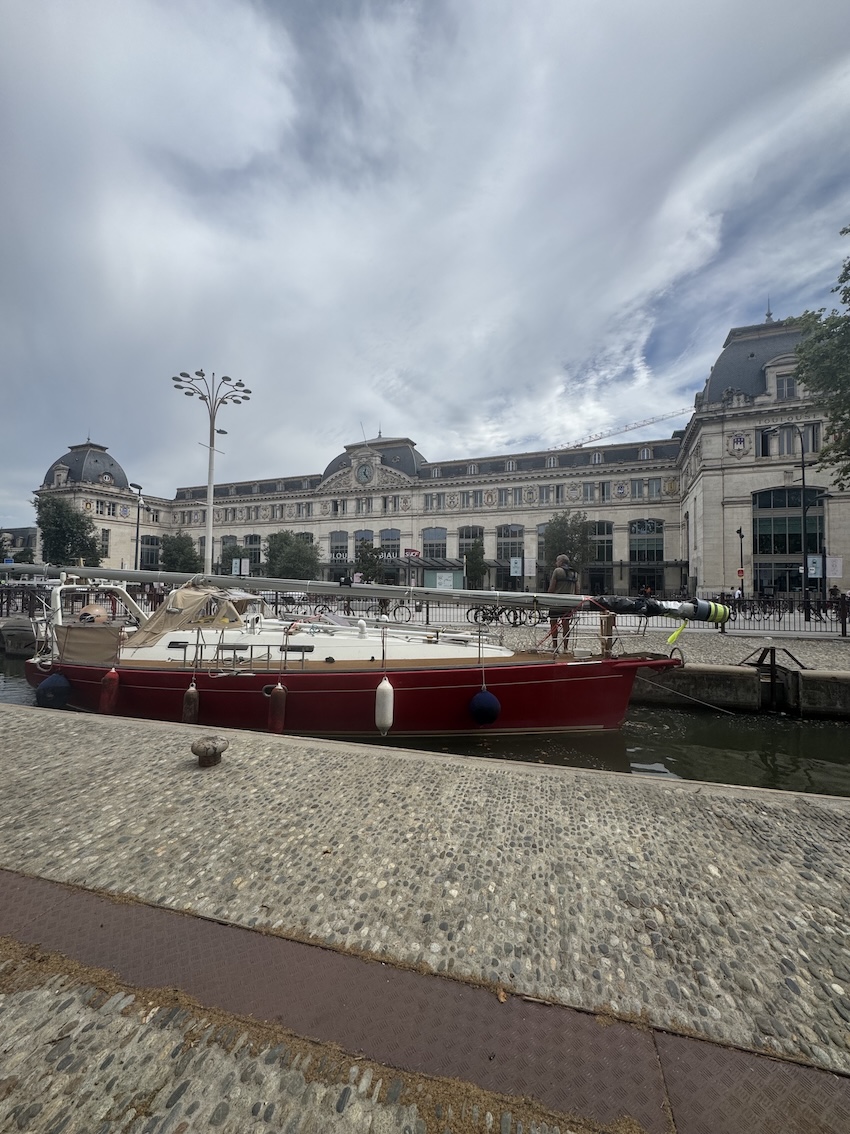
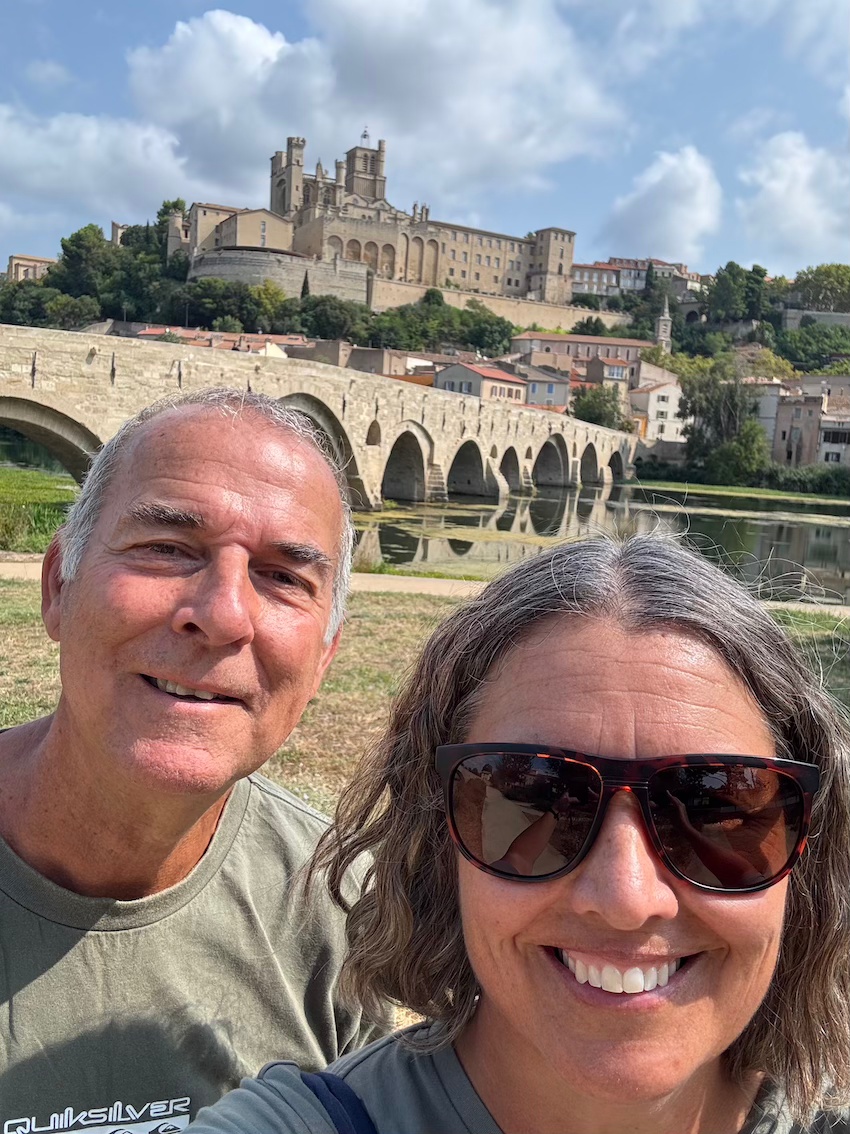
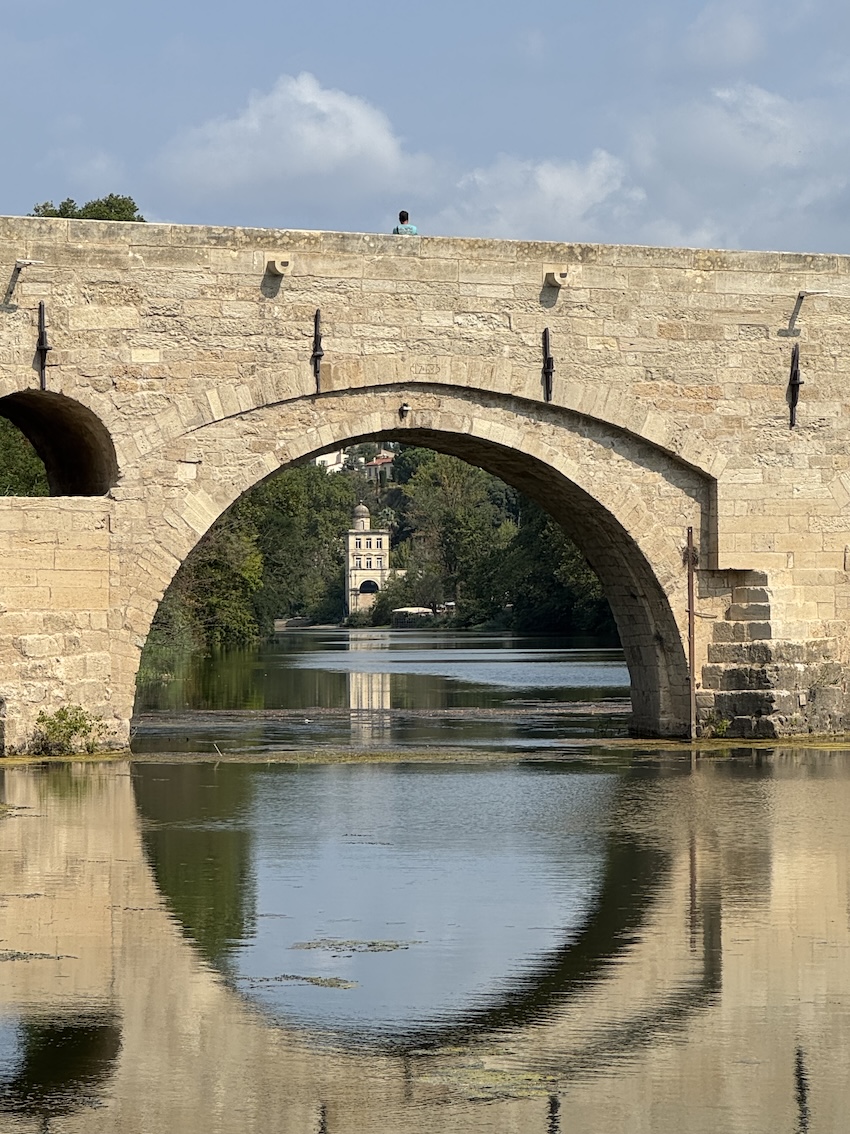
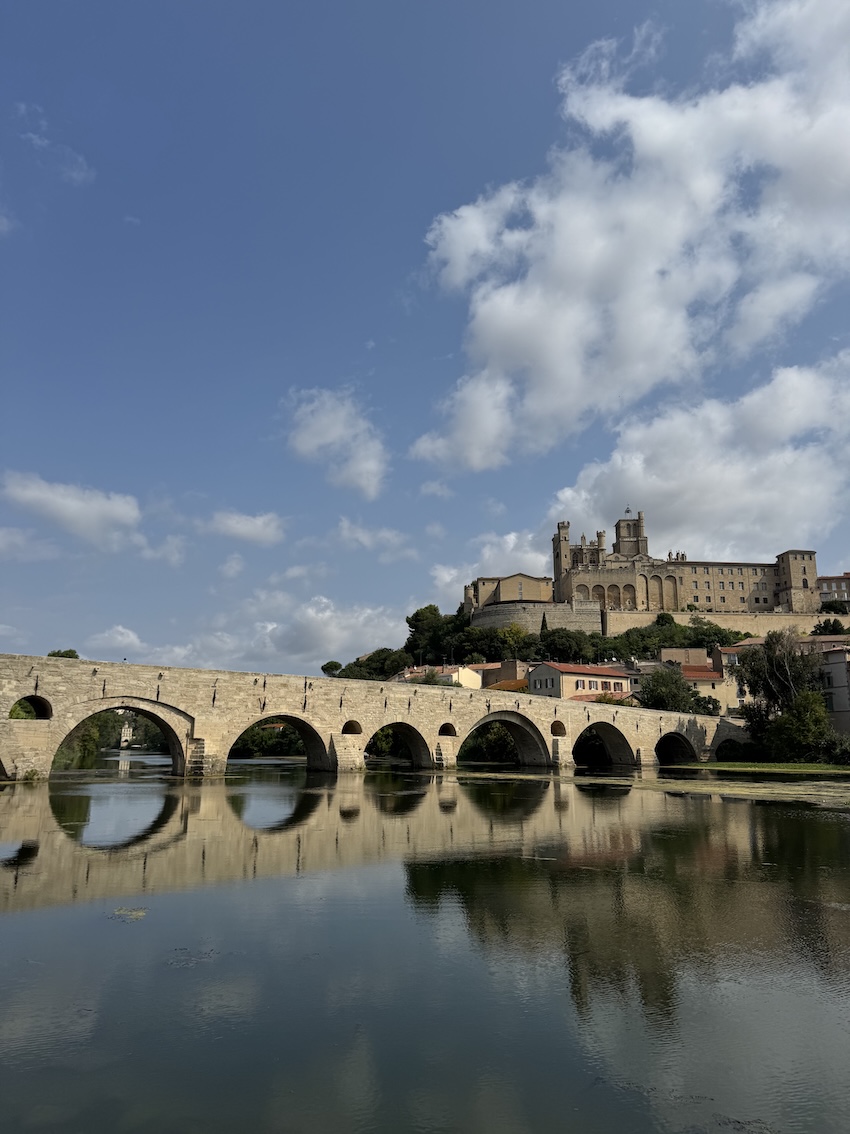
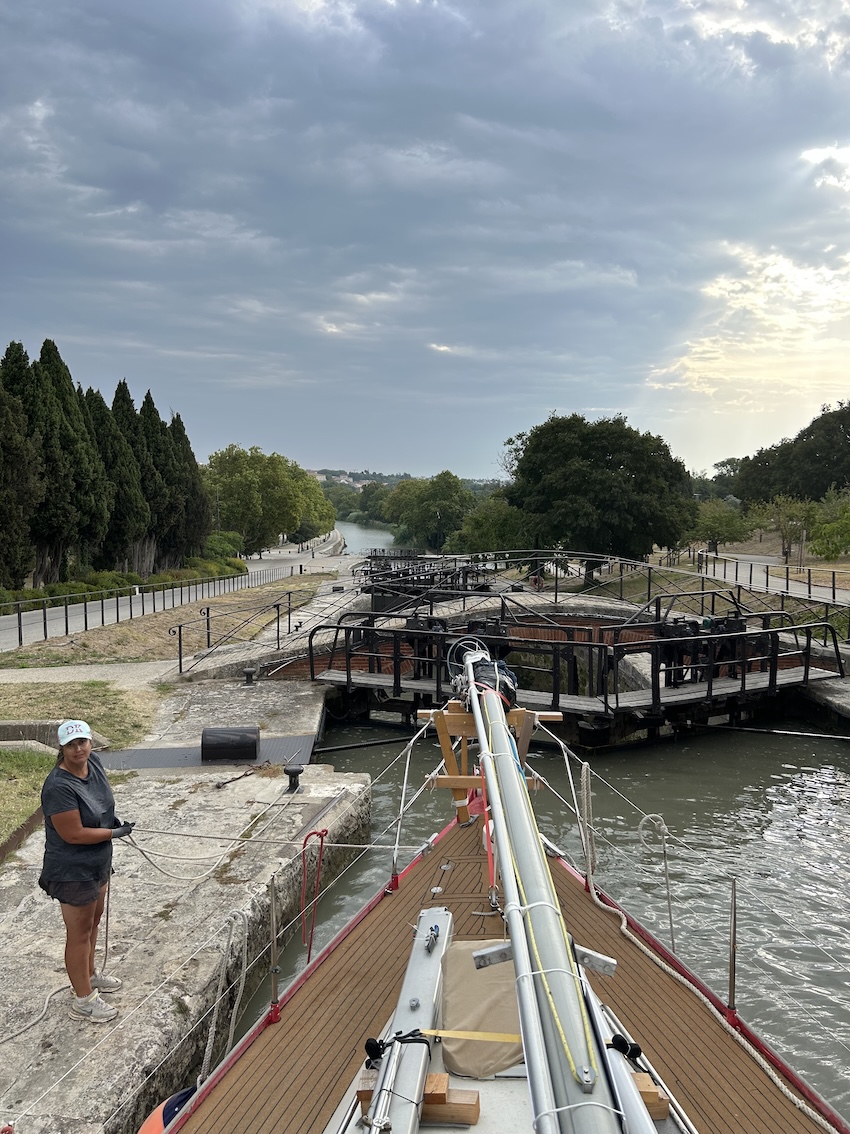
It was around this time we started becoming more and more aware of the dry summer that France had been experiencing. No rainfall for a record period. Water restrictions were in place across the country. We certainly knew how hot it was, there were days we only travelled a 20-30 km as it was just too damn hot to continue and we took shelter in any shade we could find. Each time we spoke with other canal users and lock keepers the conversations were continually ending in discussions over which route people were taking as canals were now starting to close due to low water levels. Our plan, get as far as we can as quick as we can in the time we had while our preferred route was open. We were not far off joining two of the biggest rivers in France which are used by commercial shipping , the Rhône and and Saône, so these we knew these would be ok, even if we couldn’t get any further than them.
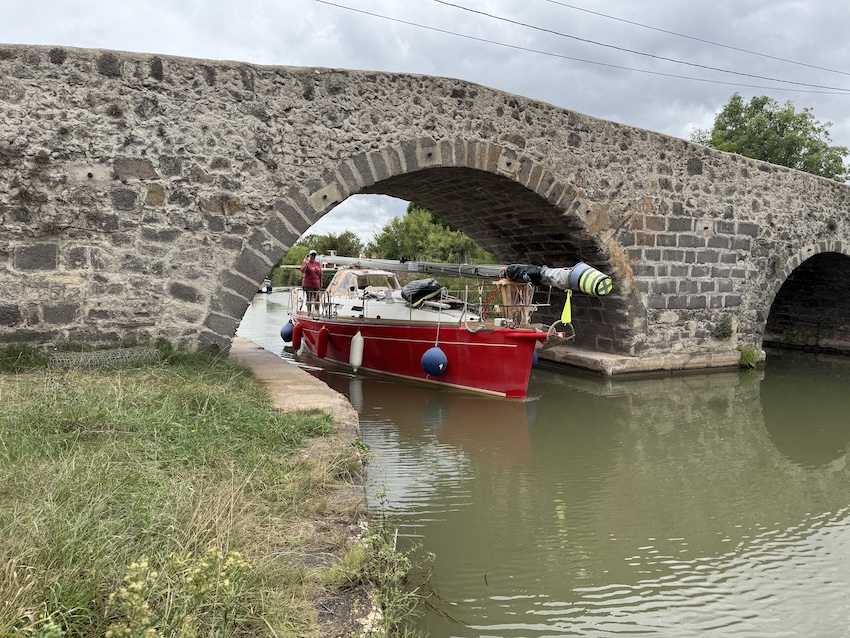
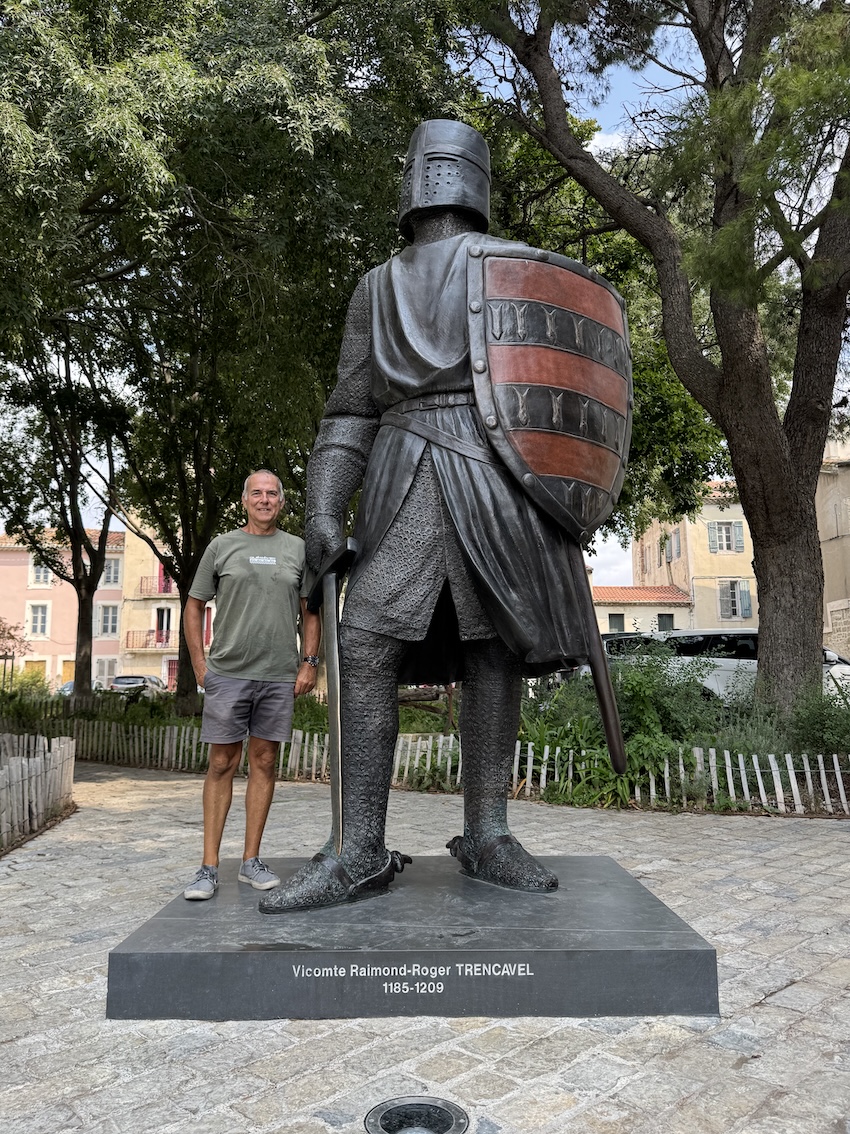
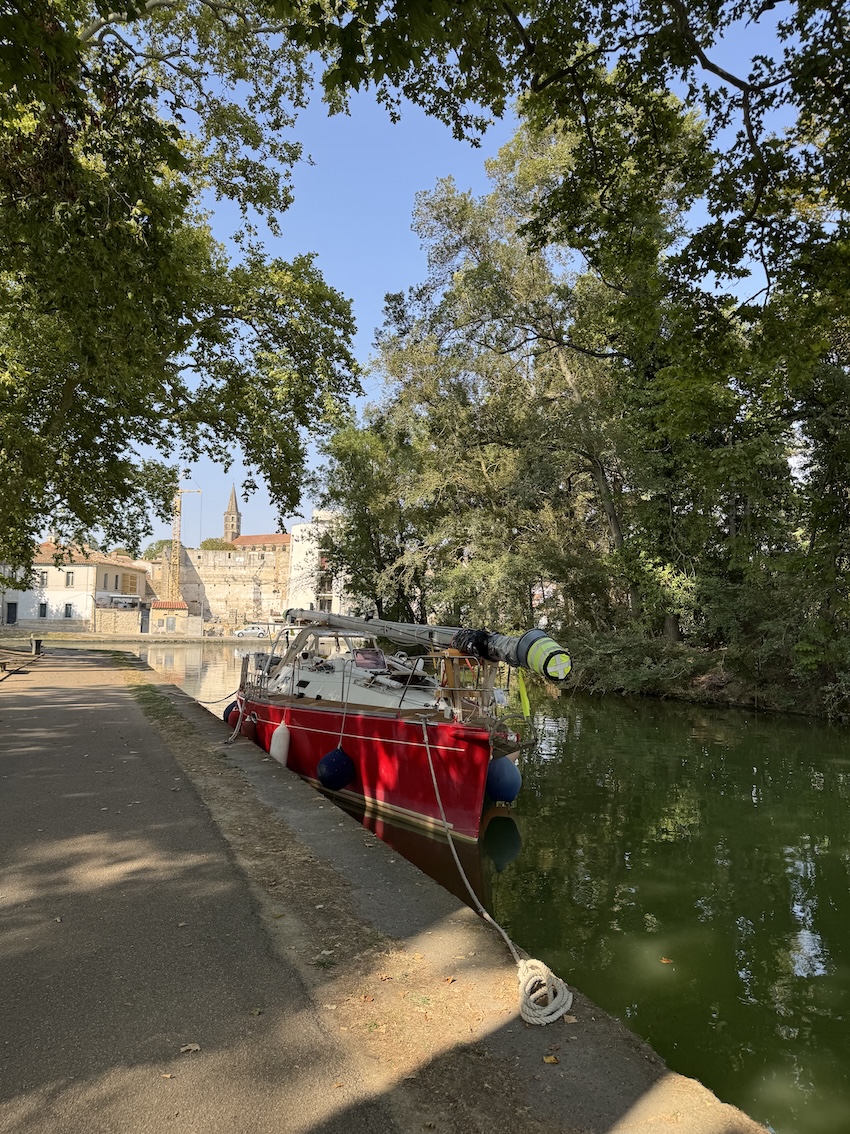
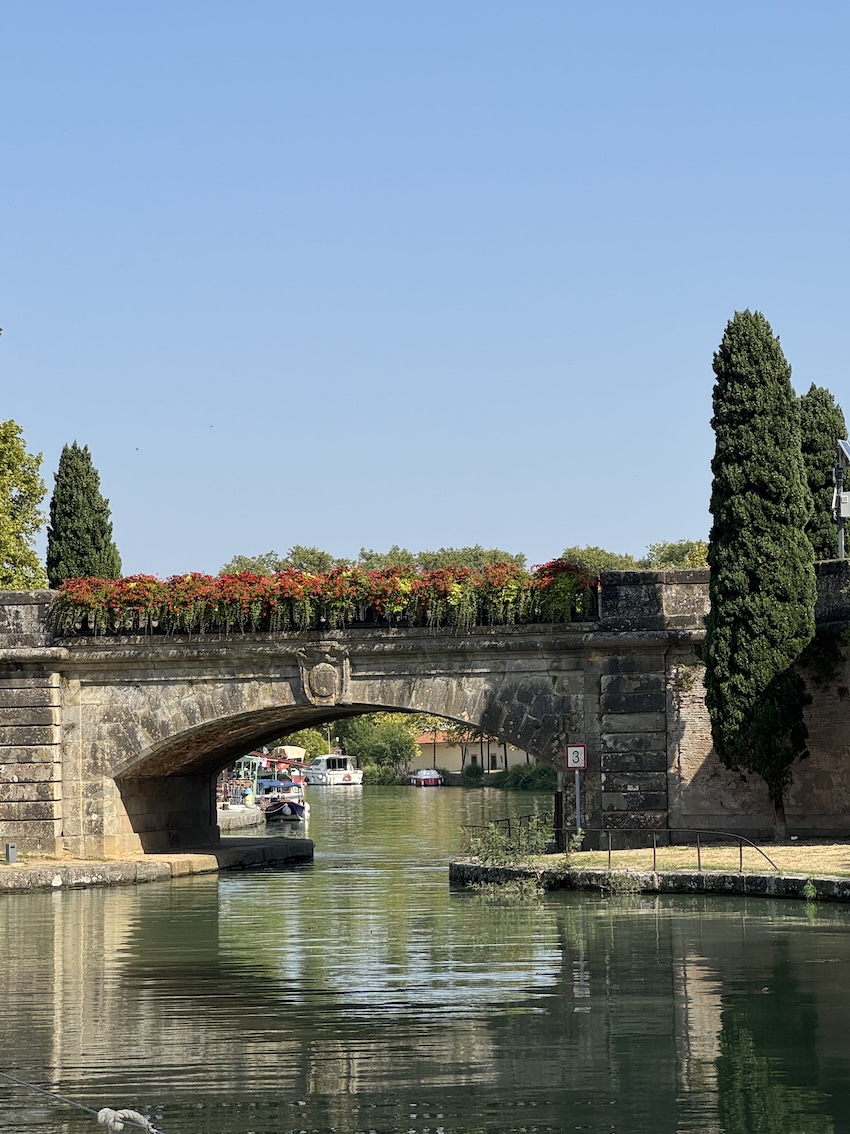
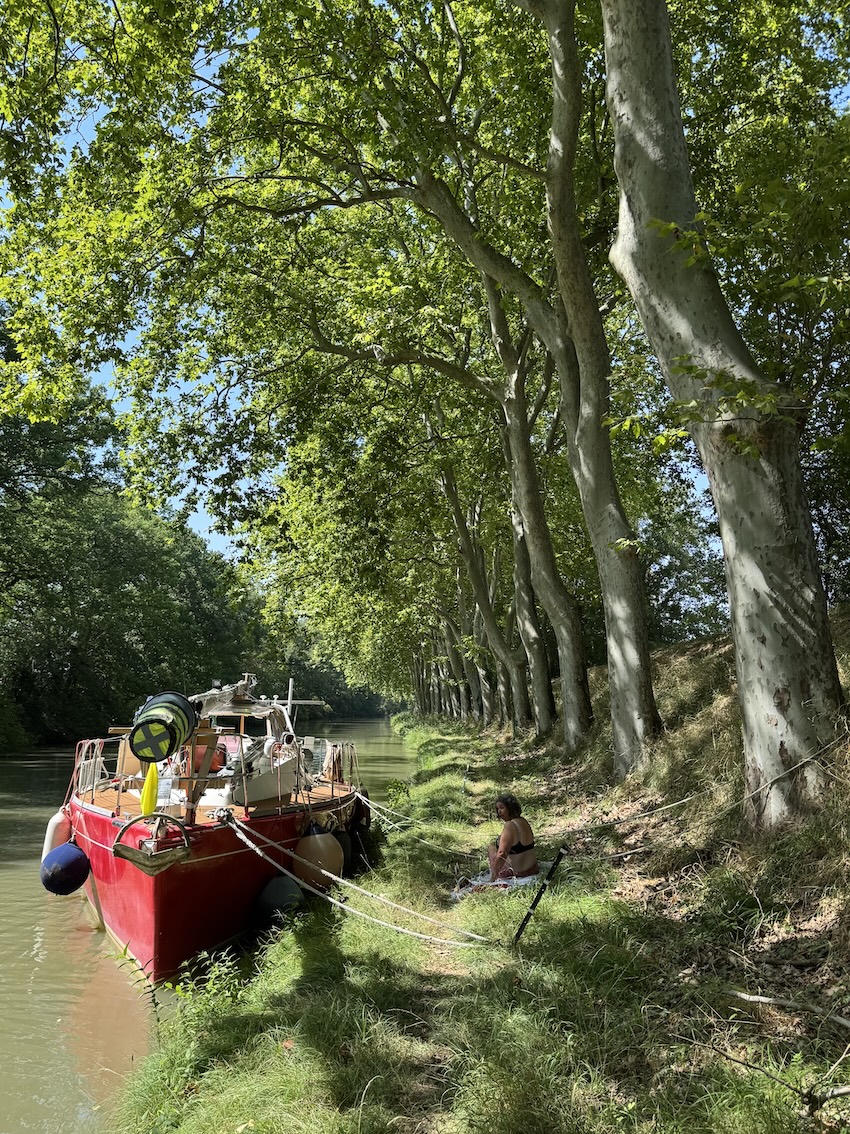
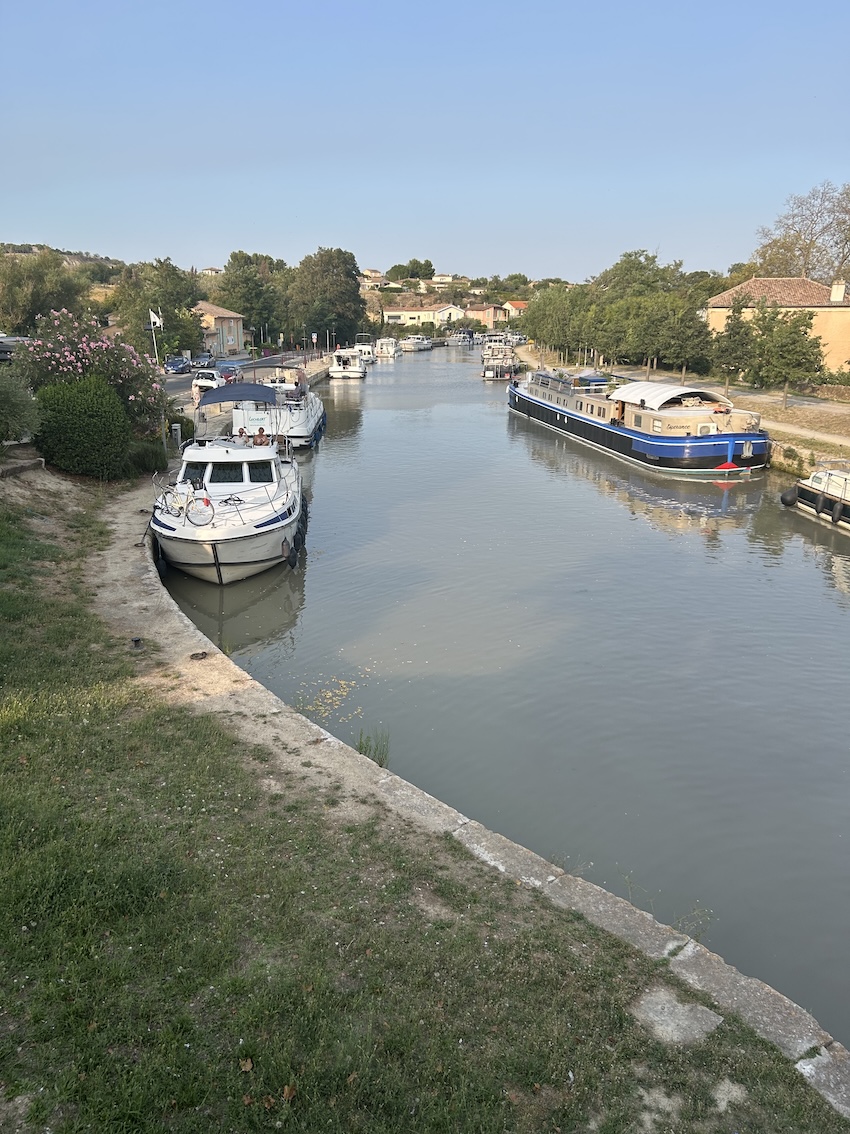
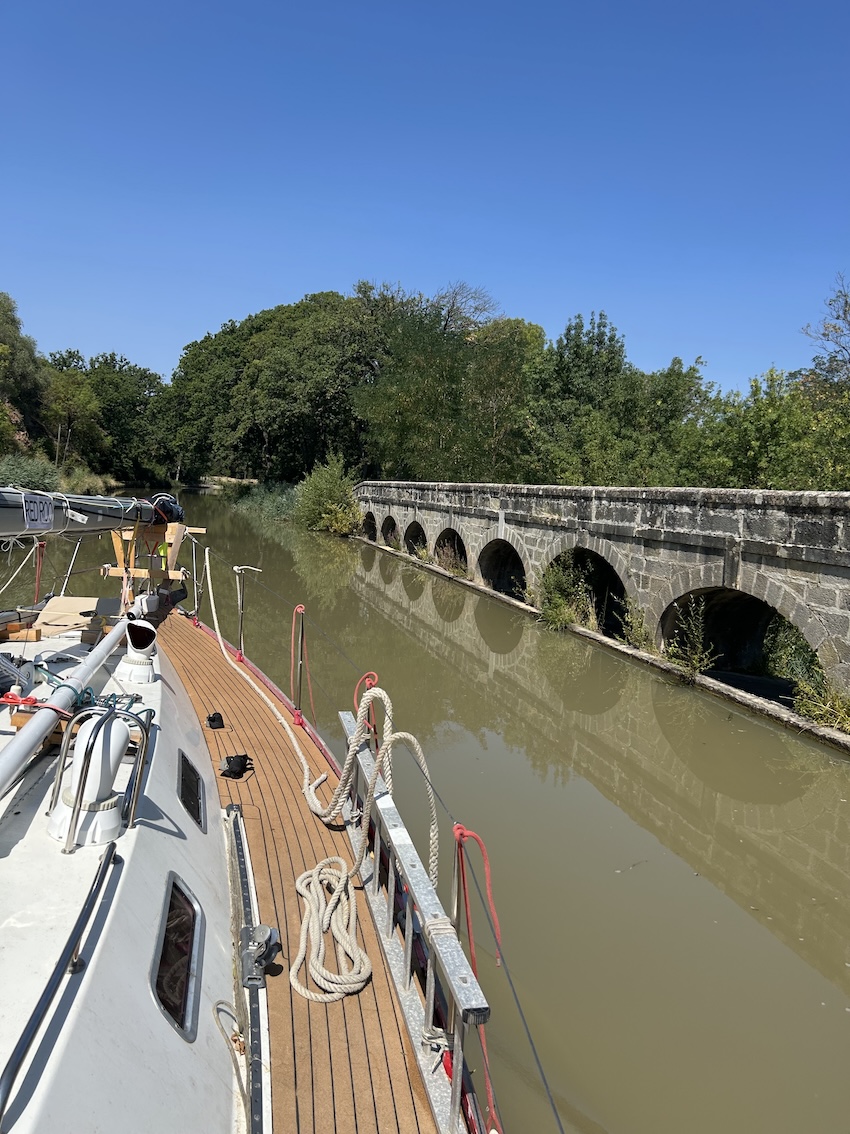
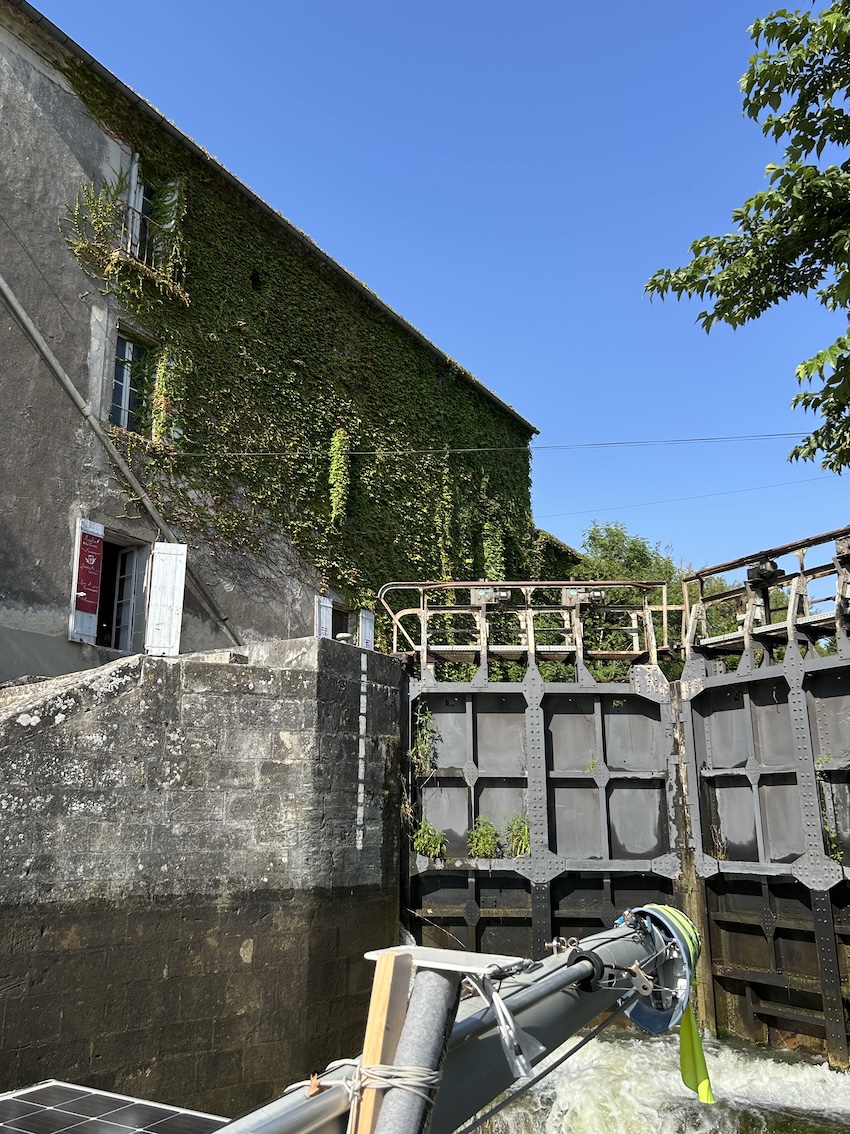
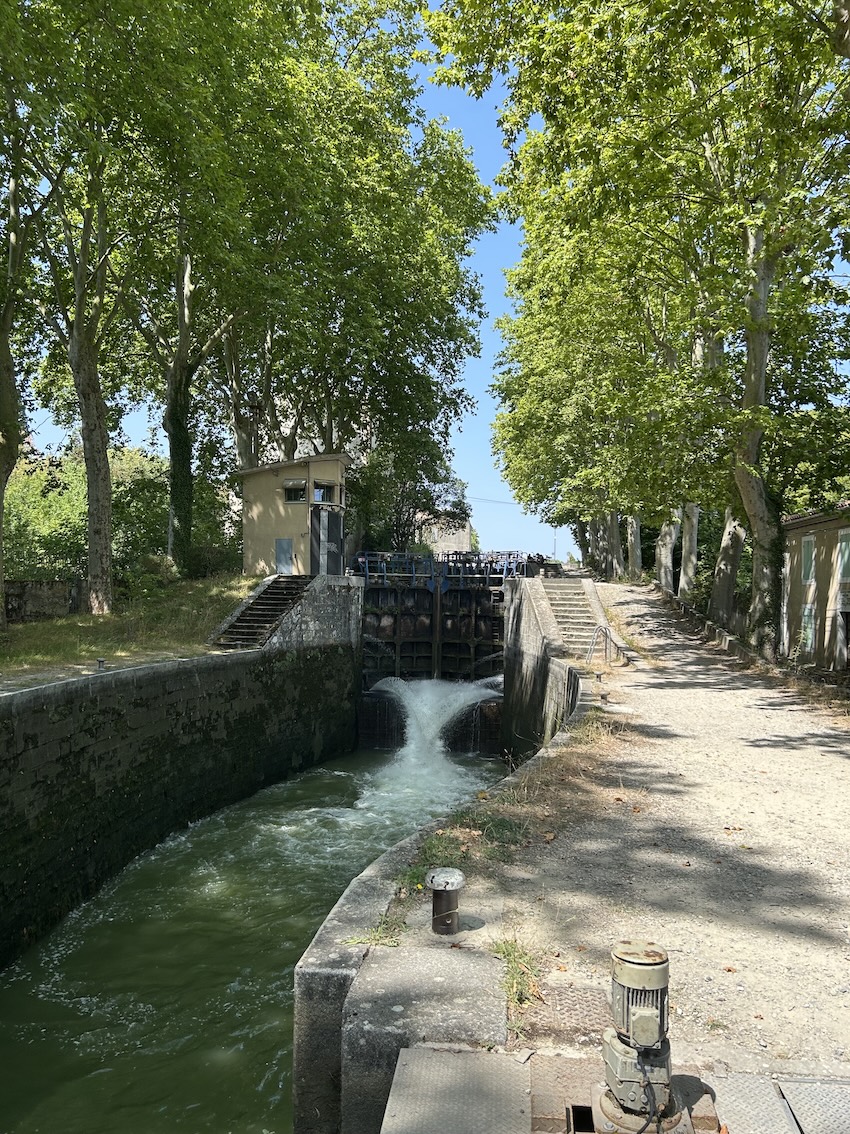
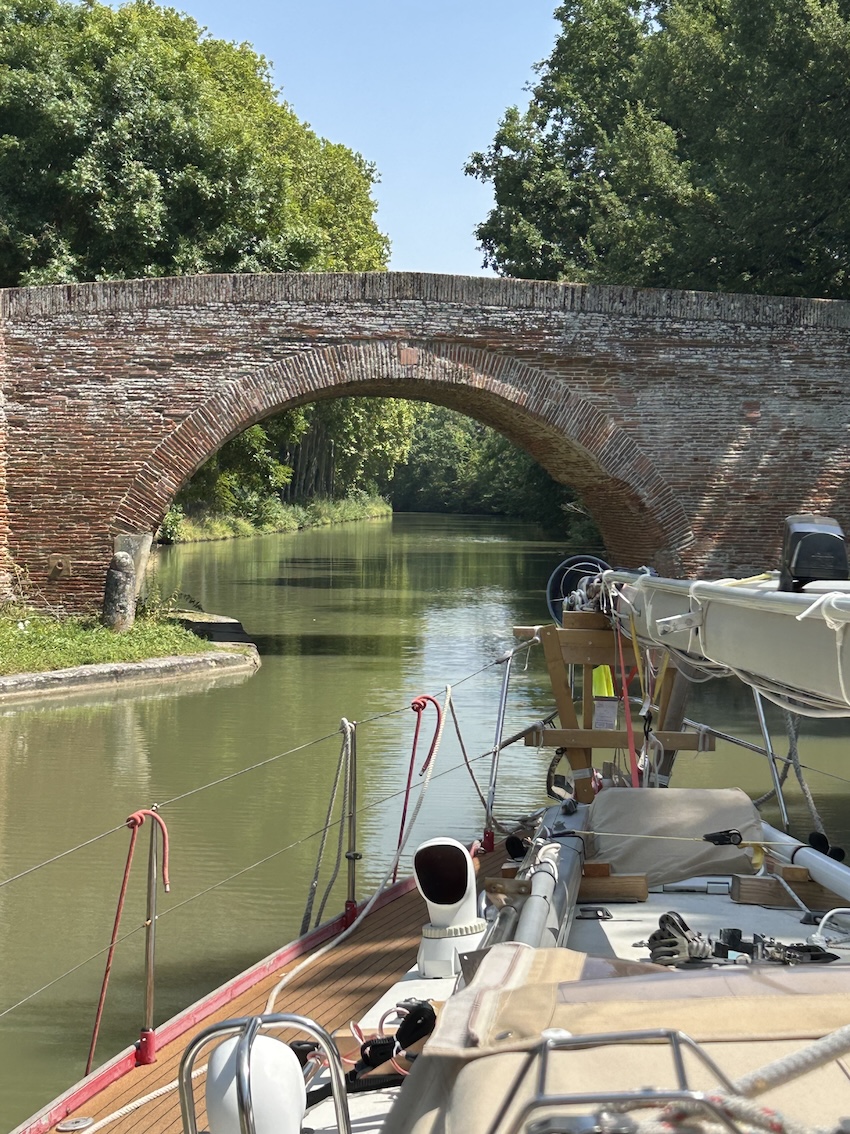
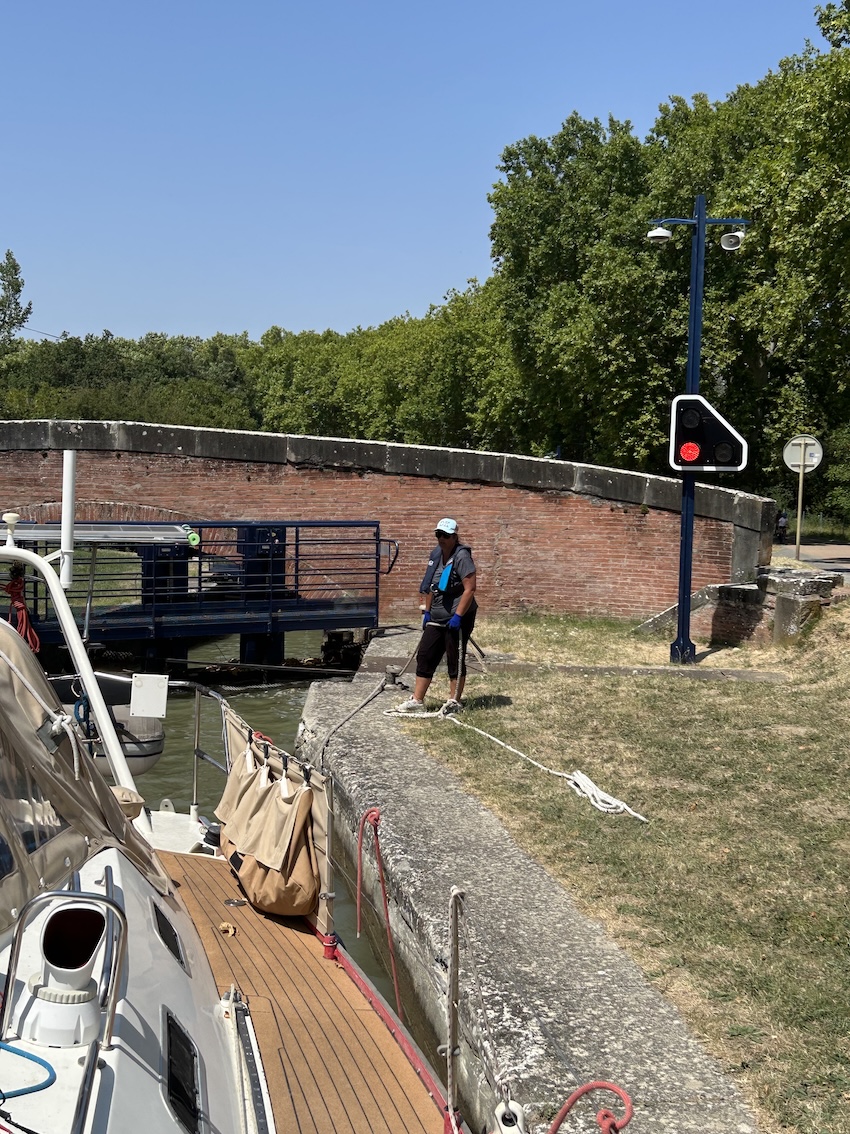
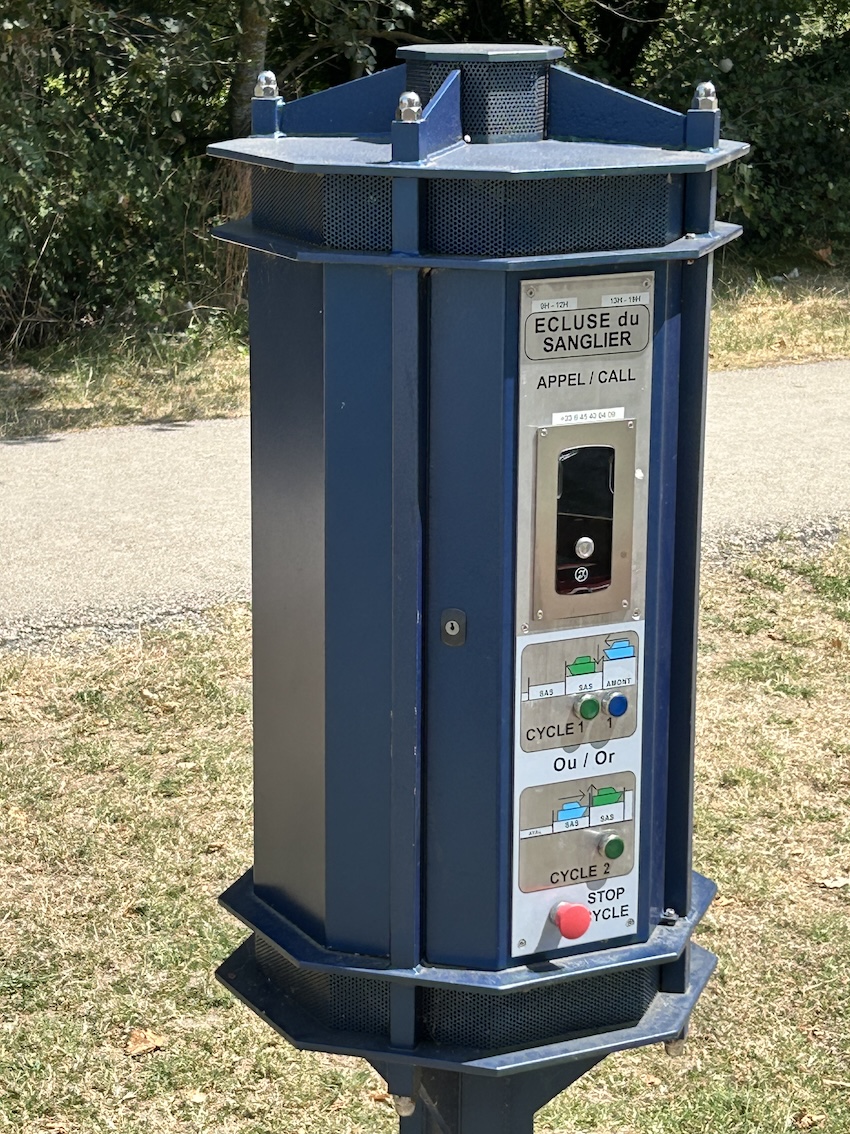
It was two shorter canal links to get us there, the Canal du Rhône à Sète 97 km and just the 1 lock plus a lifting bridge and 2 swinging bridges (foot + railway), and the Petit Rhône just a mere 20 km brought us to the Rhône River.
Reaching the mighty Rhône River felt like we had achieved something, and a good milestone. But it also brought changes, we were now on a river not small quiet canals. No longer were nature moorings available (where we peg a pole into the bank and tie up for the night). Now there was current, real current to push against, commercial industrial traffic (ships), and limited opportunities of mornings, we really had to time each passage and plan our overnight stops, and also hope like hell there was a free place to tie up at the dedicated berths which were few and far between.
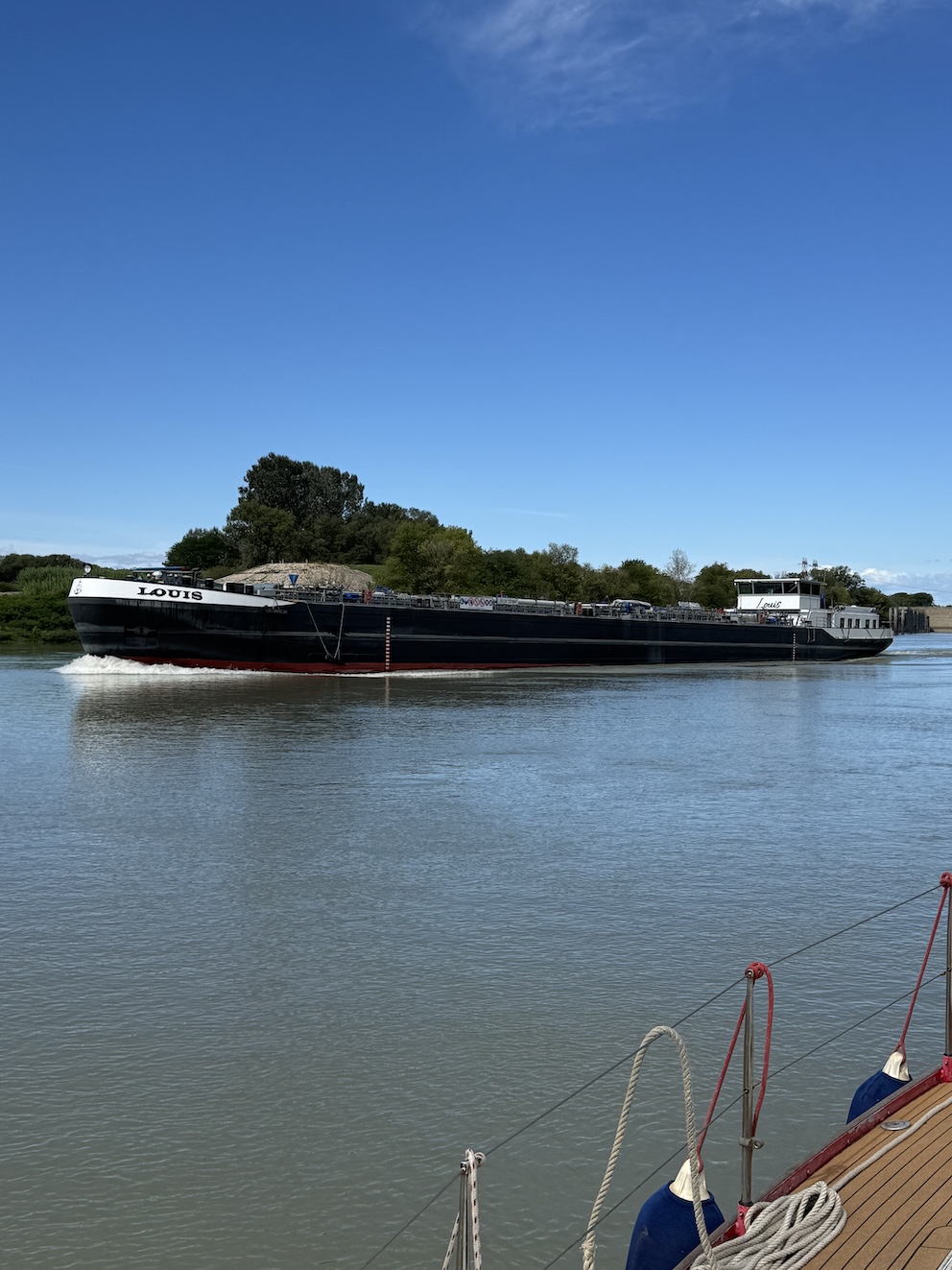
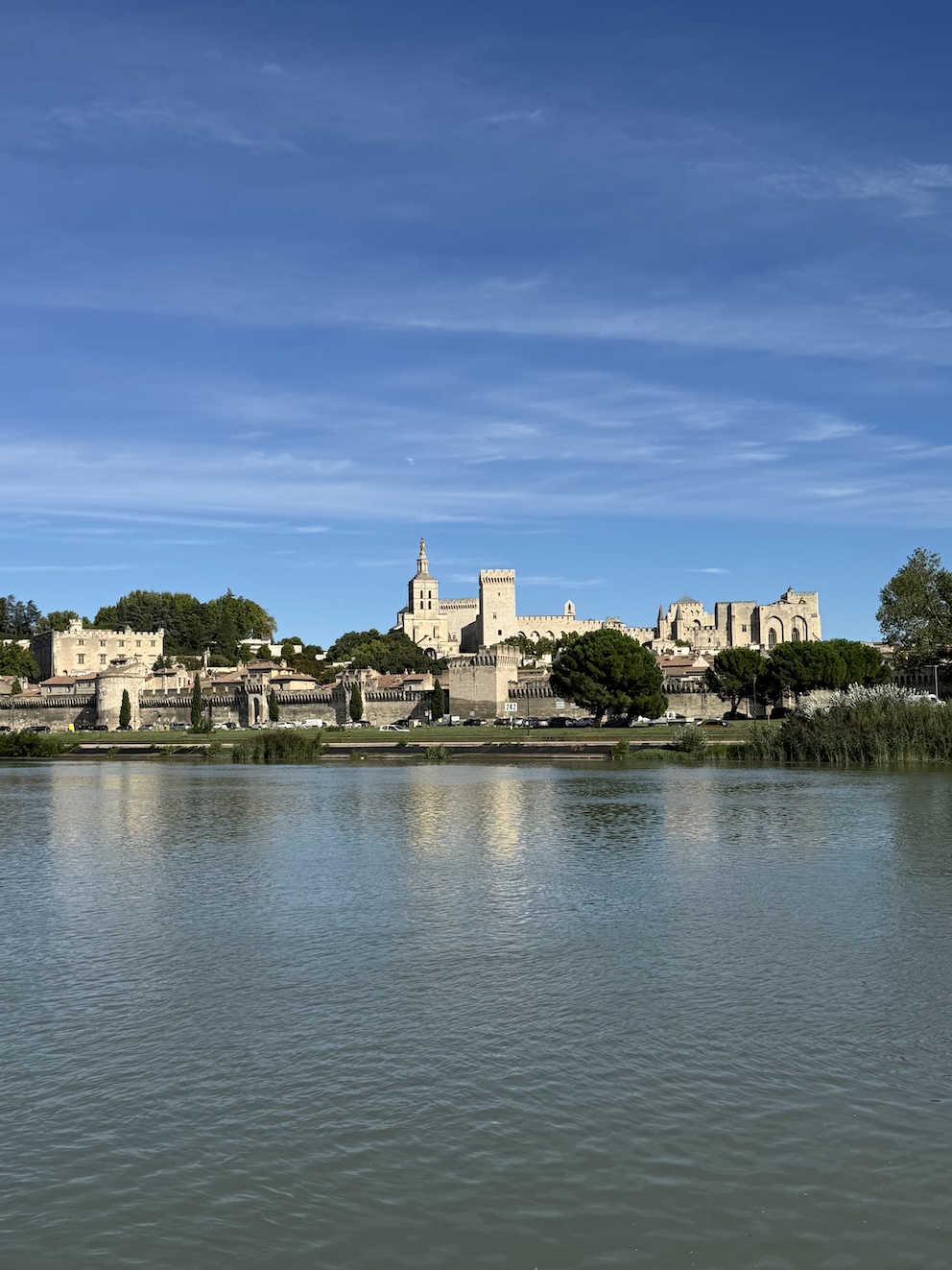
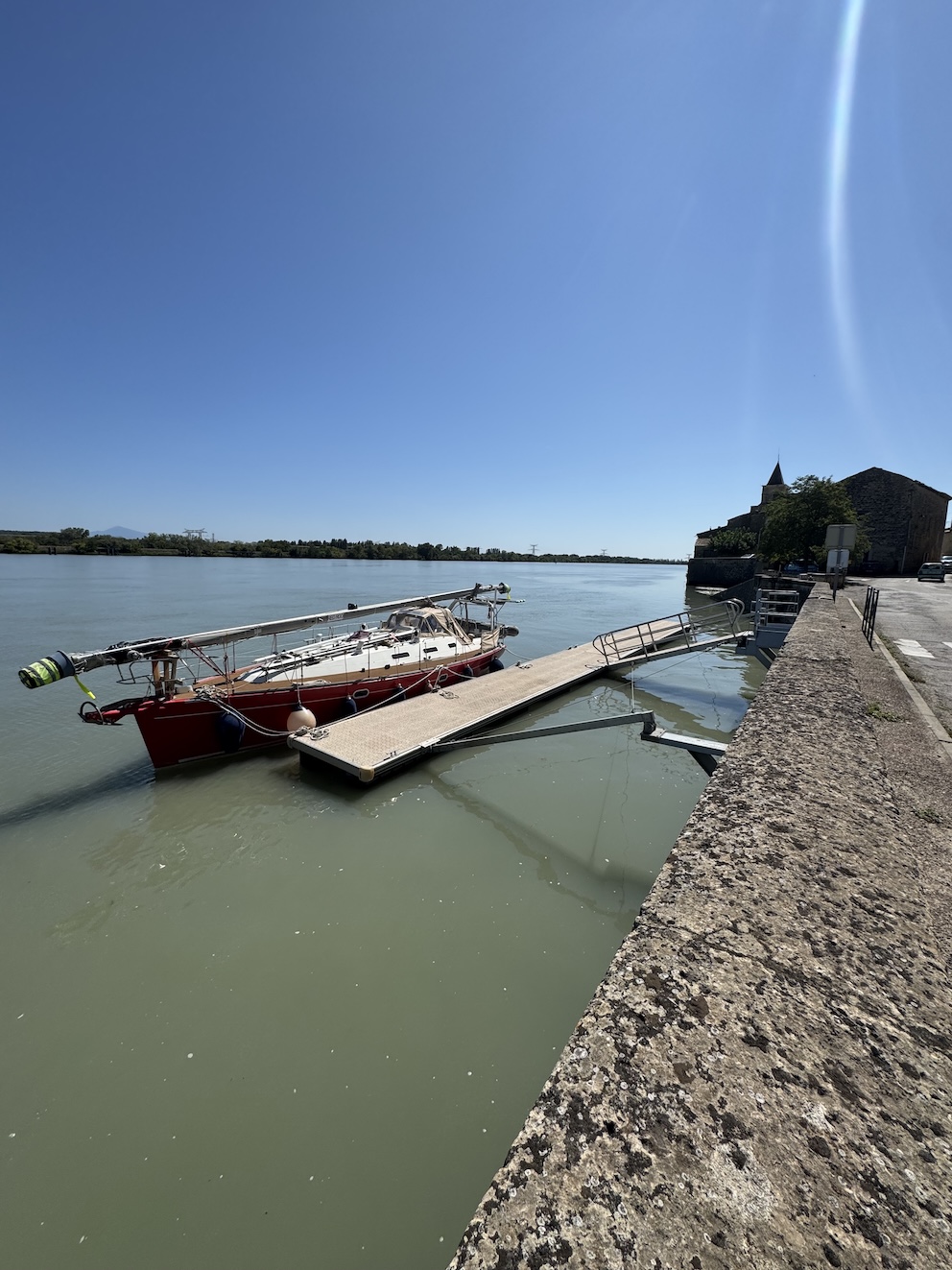
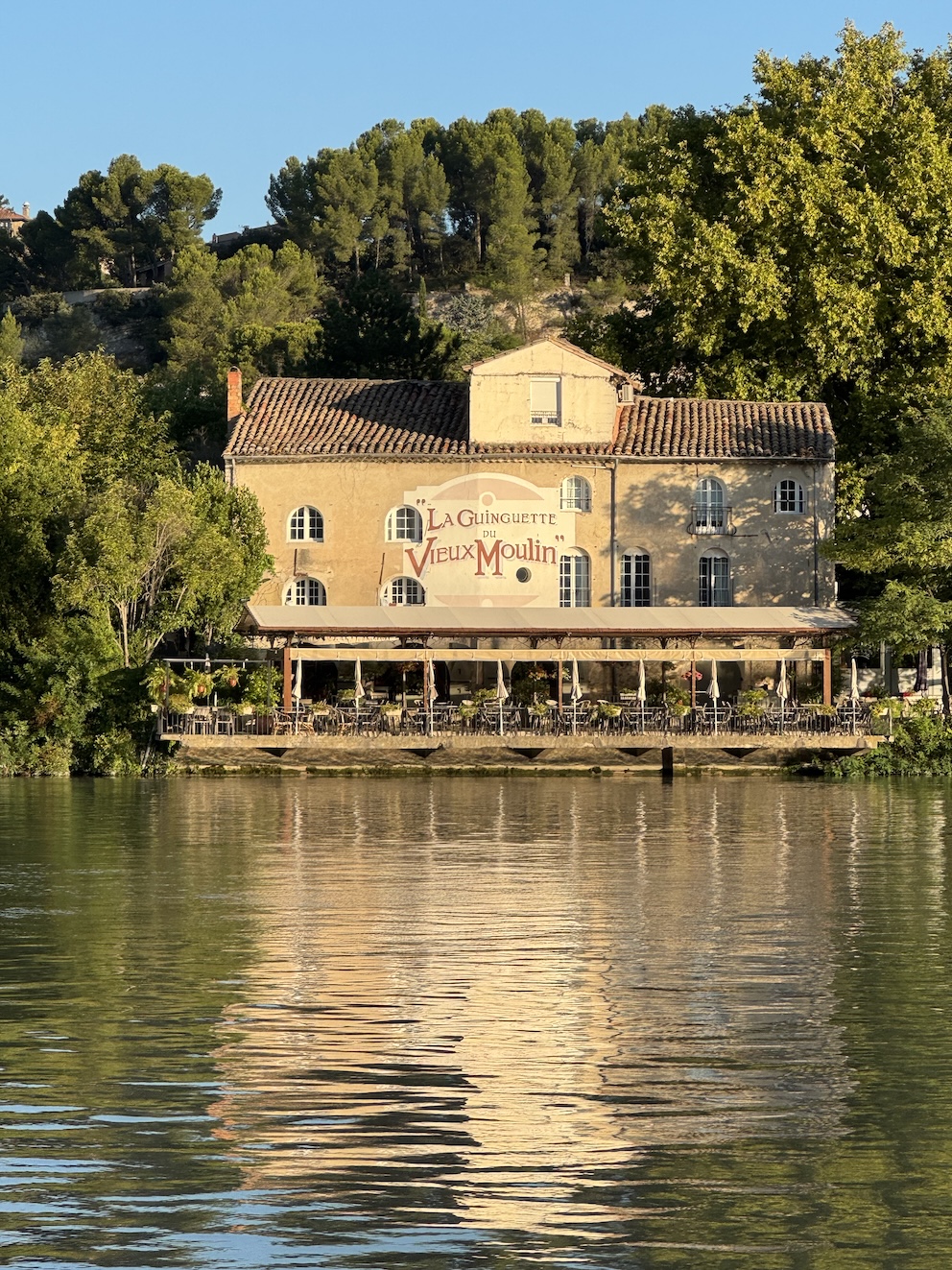
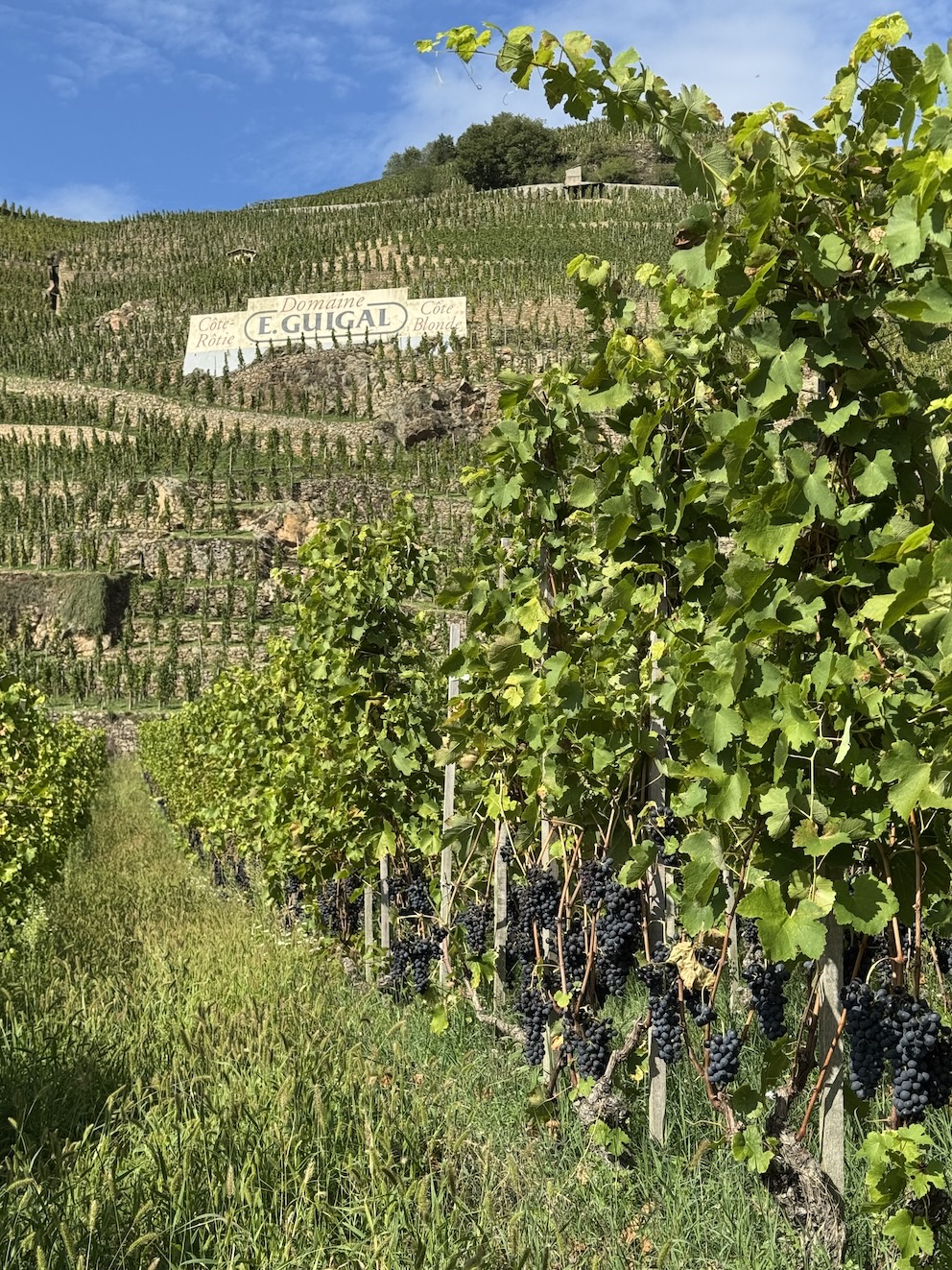
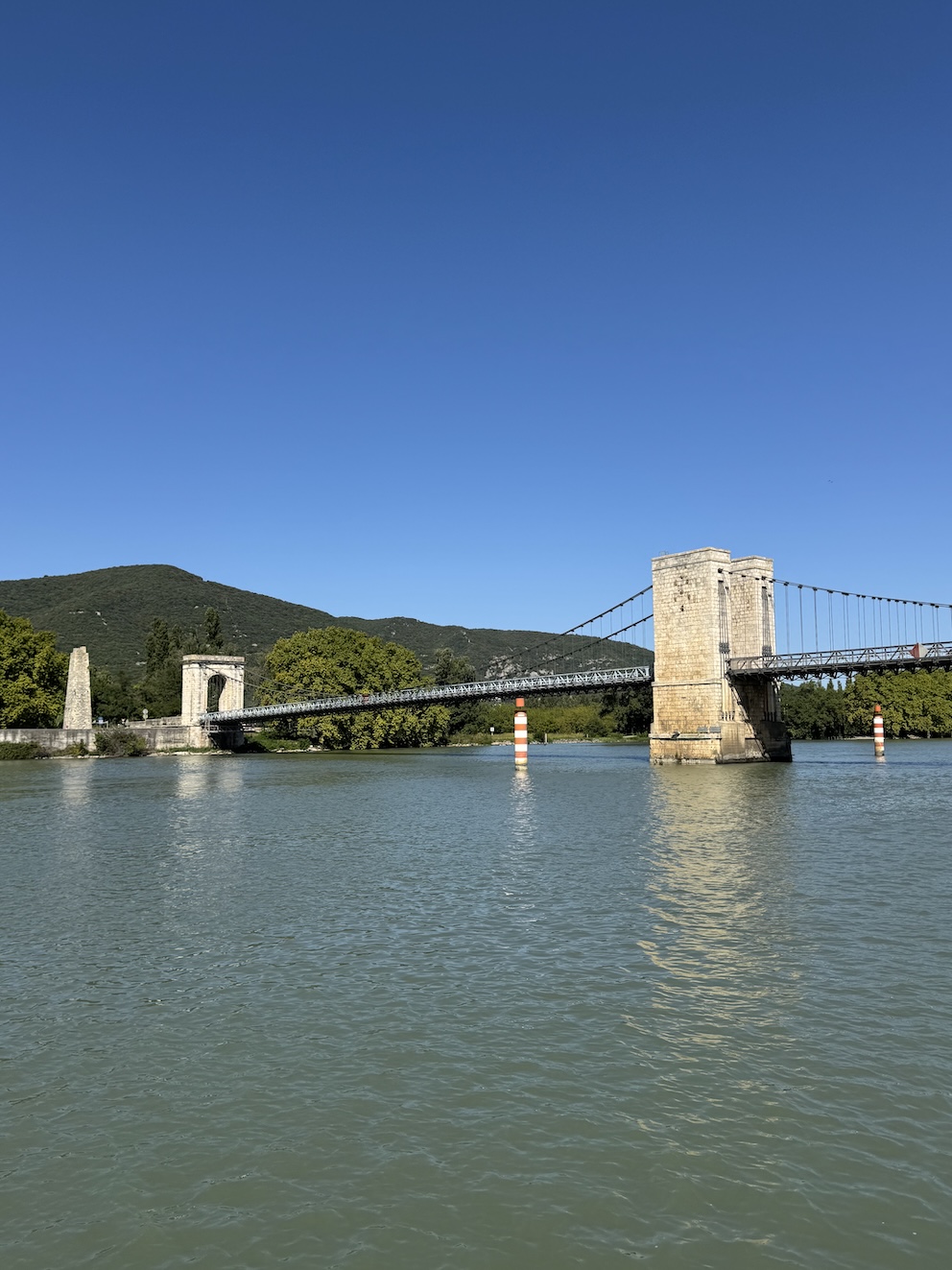
The first two days we pushed a few knots of current but Red Roo did it well, the reliable Nanni Diesel engine doing good work. Once we got a couple of locks up, the current dropped off and became less noticeable. But we always checked the offical website daily, along with any rainfall further north which would impact the river flow. It took us 5 (travelling) days to cover the 279 km and 12 locks (Rhône locks are large commercial locks) and we were going up again, this time peaking at 237 m above sea level. Our largest lock was on the Rhône River and this one lock was a 22 meter elevation gain at the Bolene Power Station.
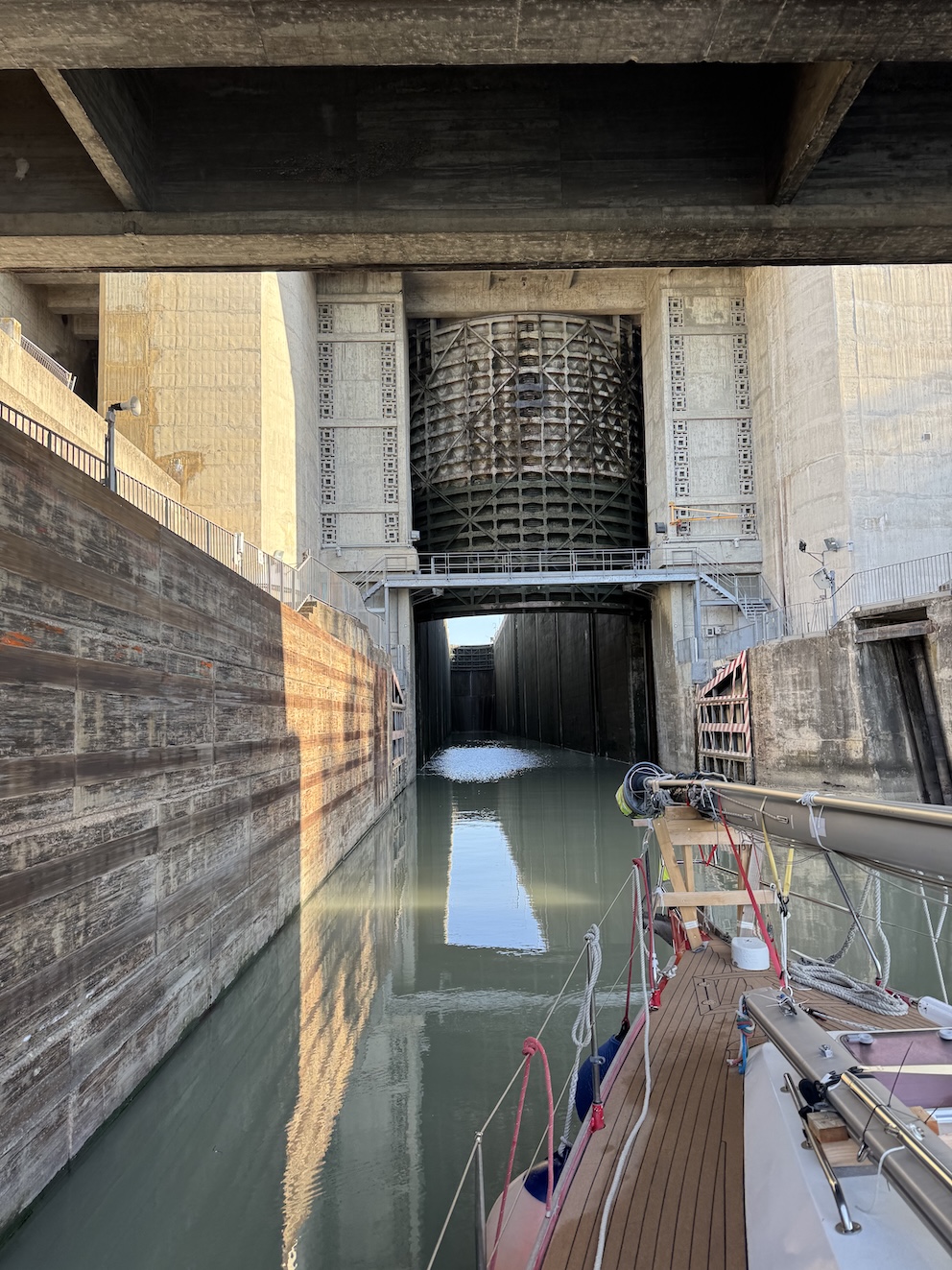
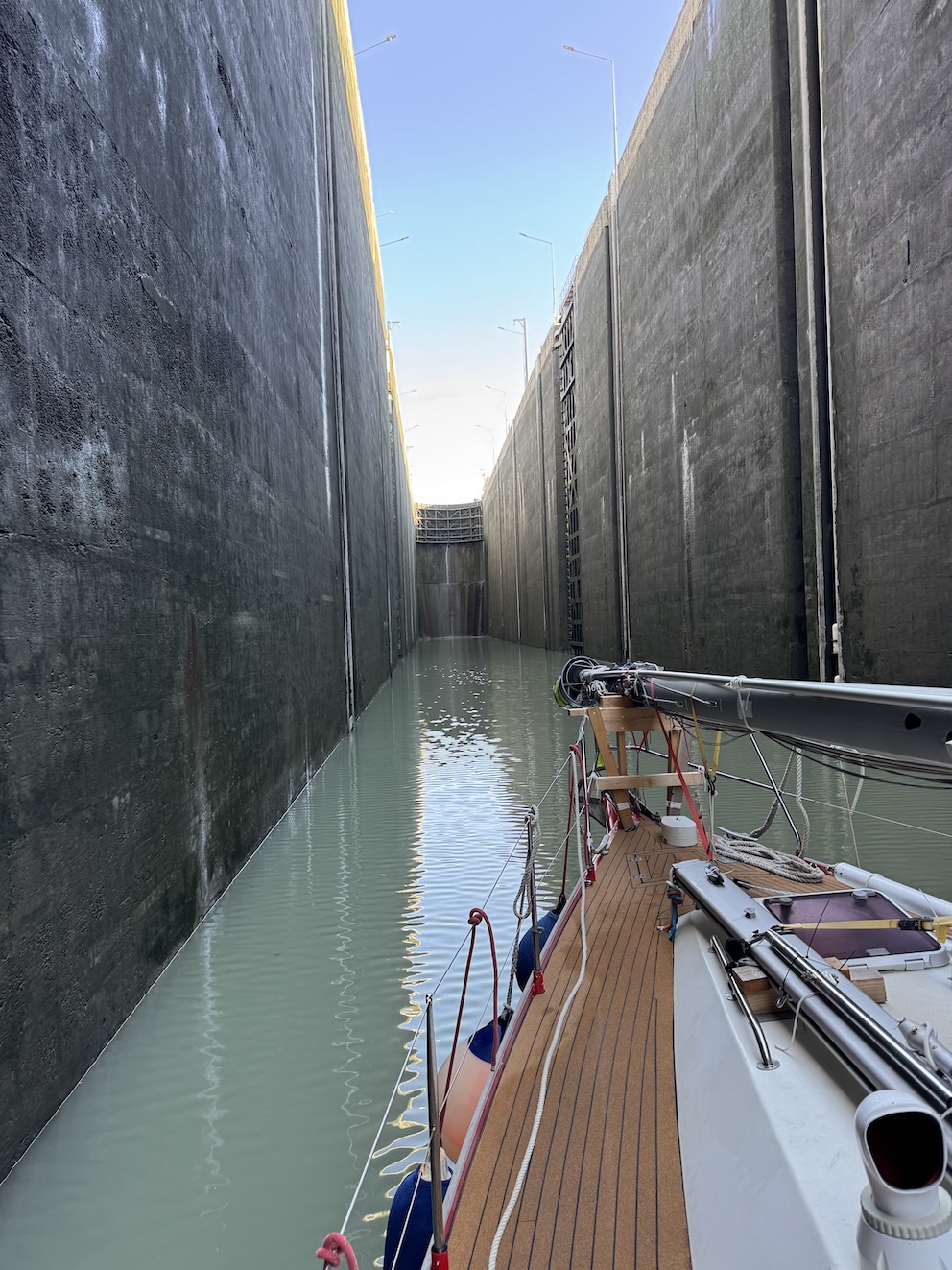
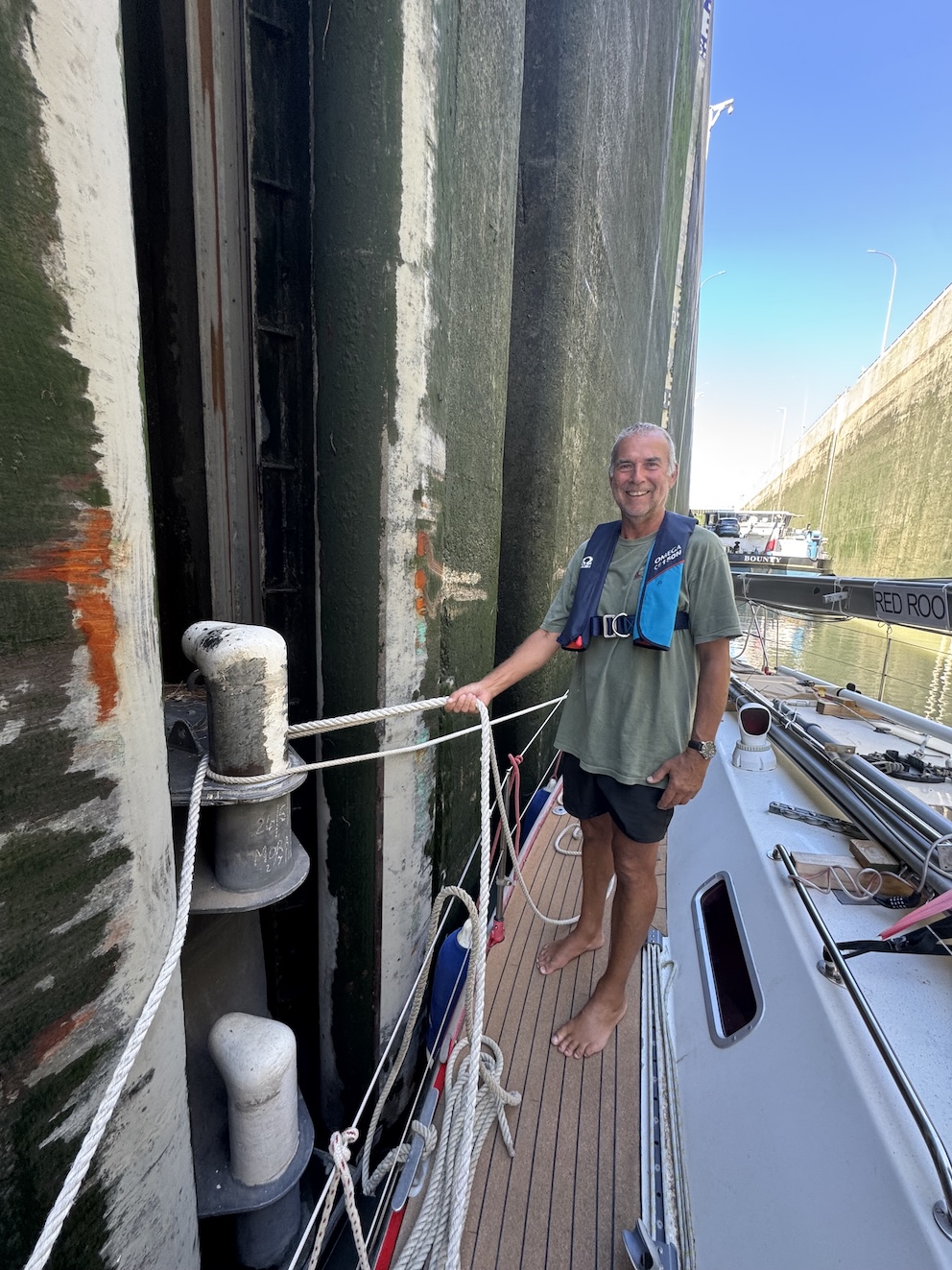
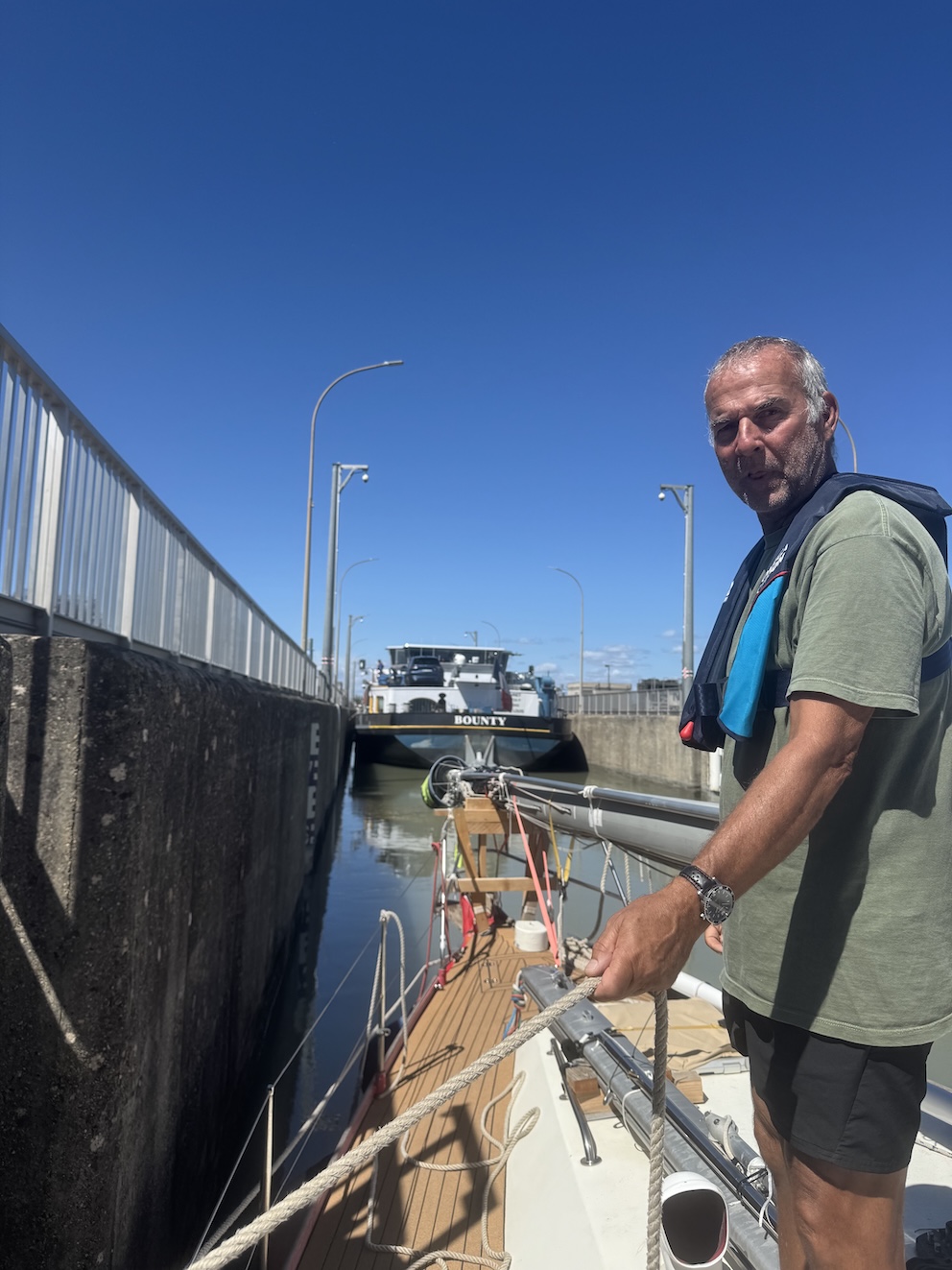
We did stop for 4 days in Avignon due to upstream rain, river flow/current and having a free dock. During which we took the opportunity to travel and see the Pont du Gard & Nimes.
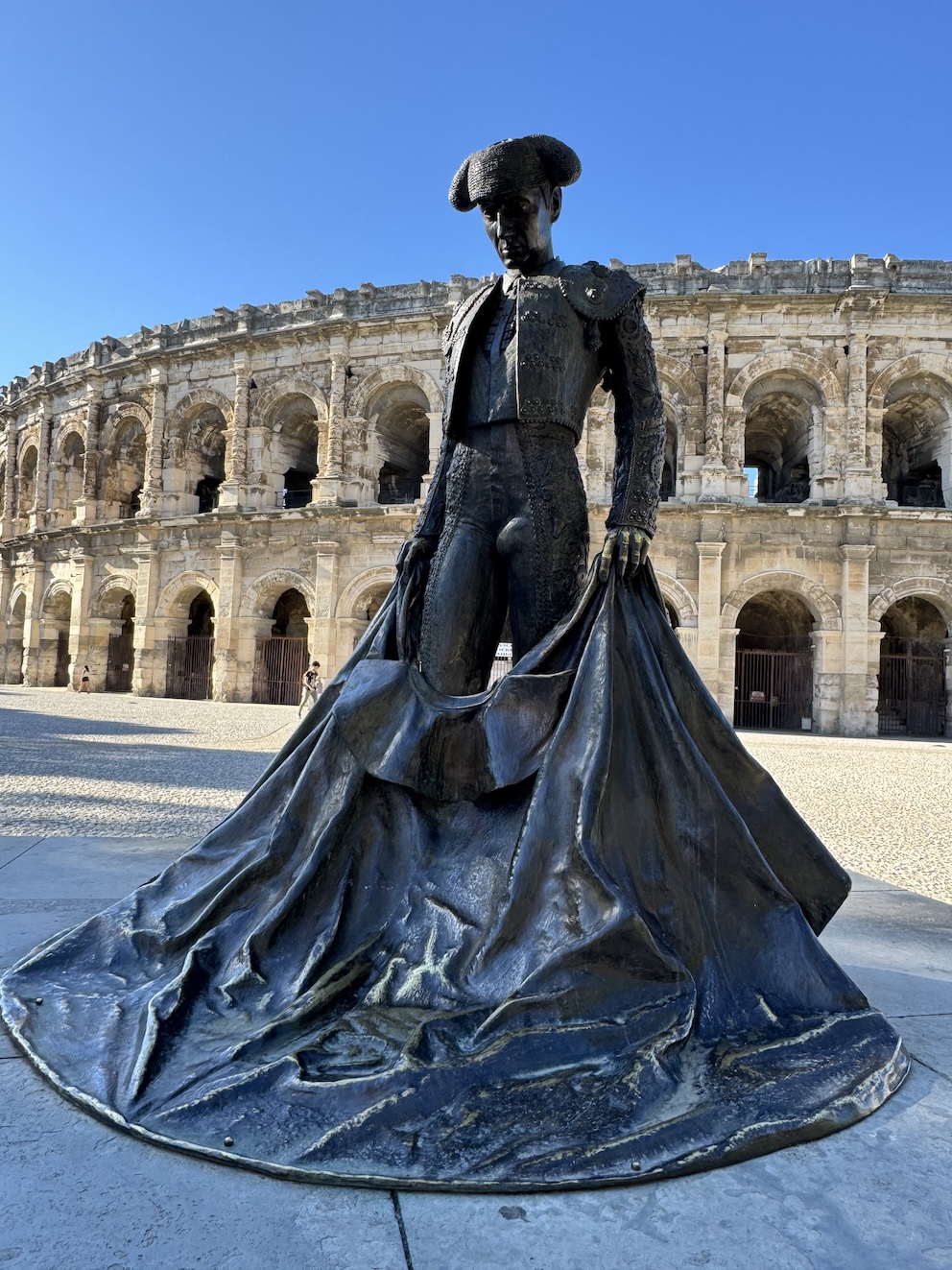
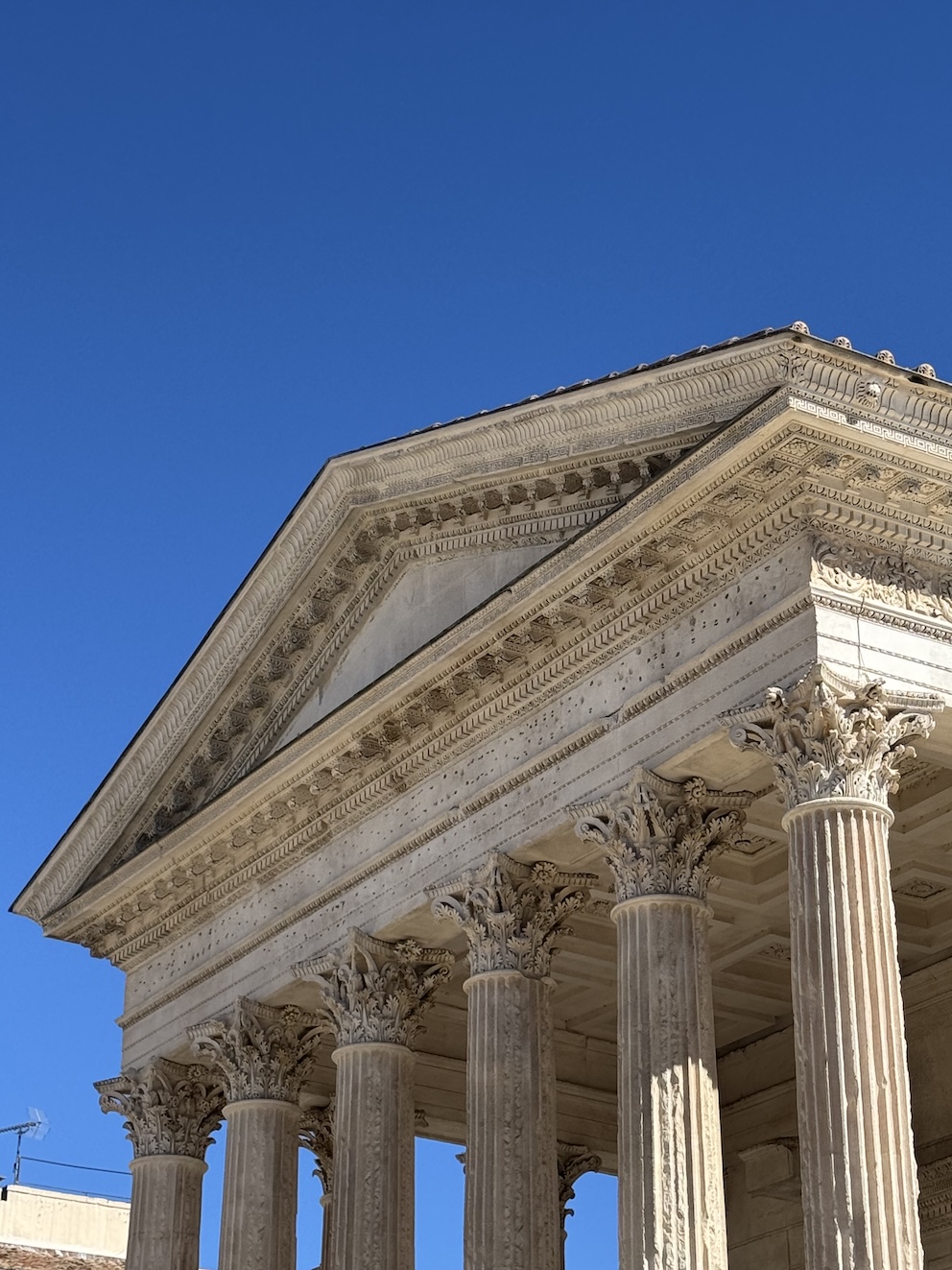
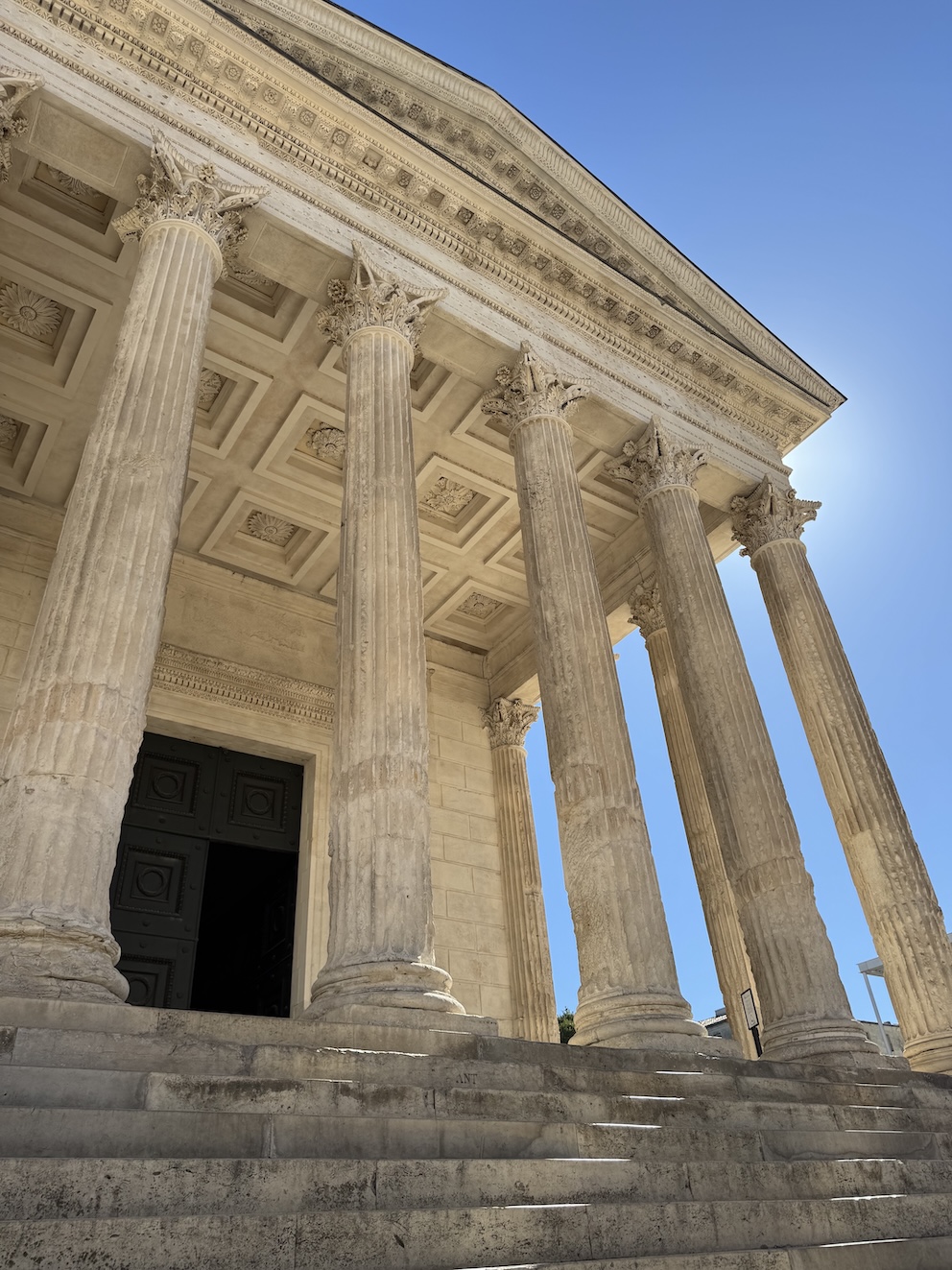
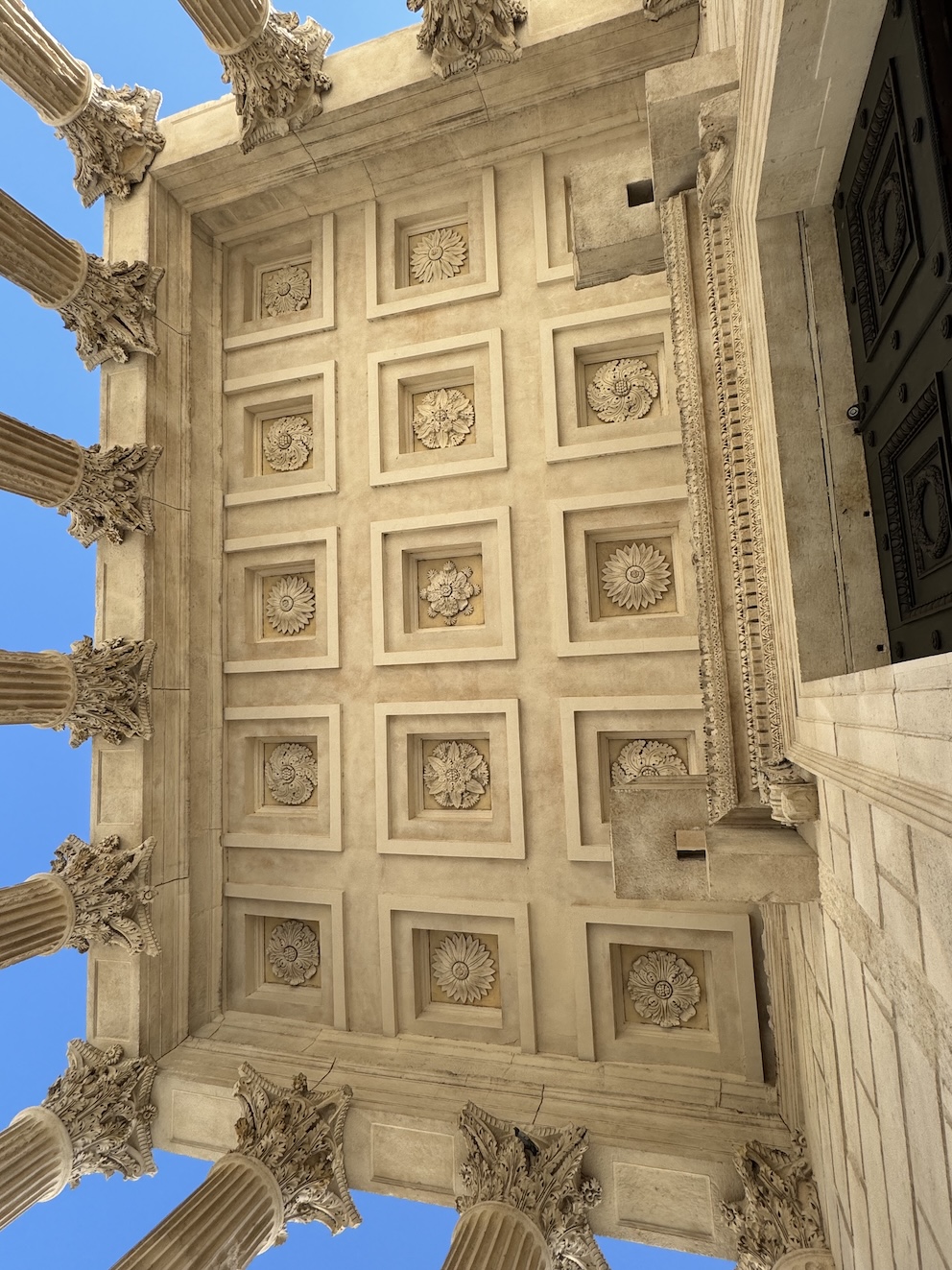
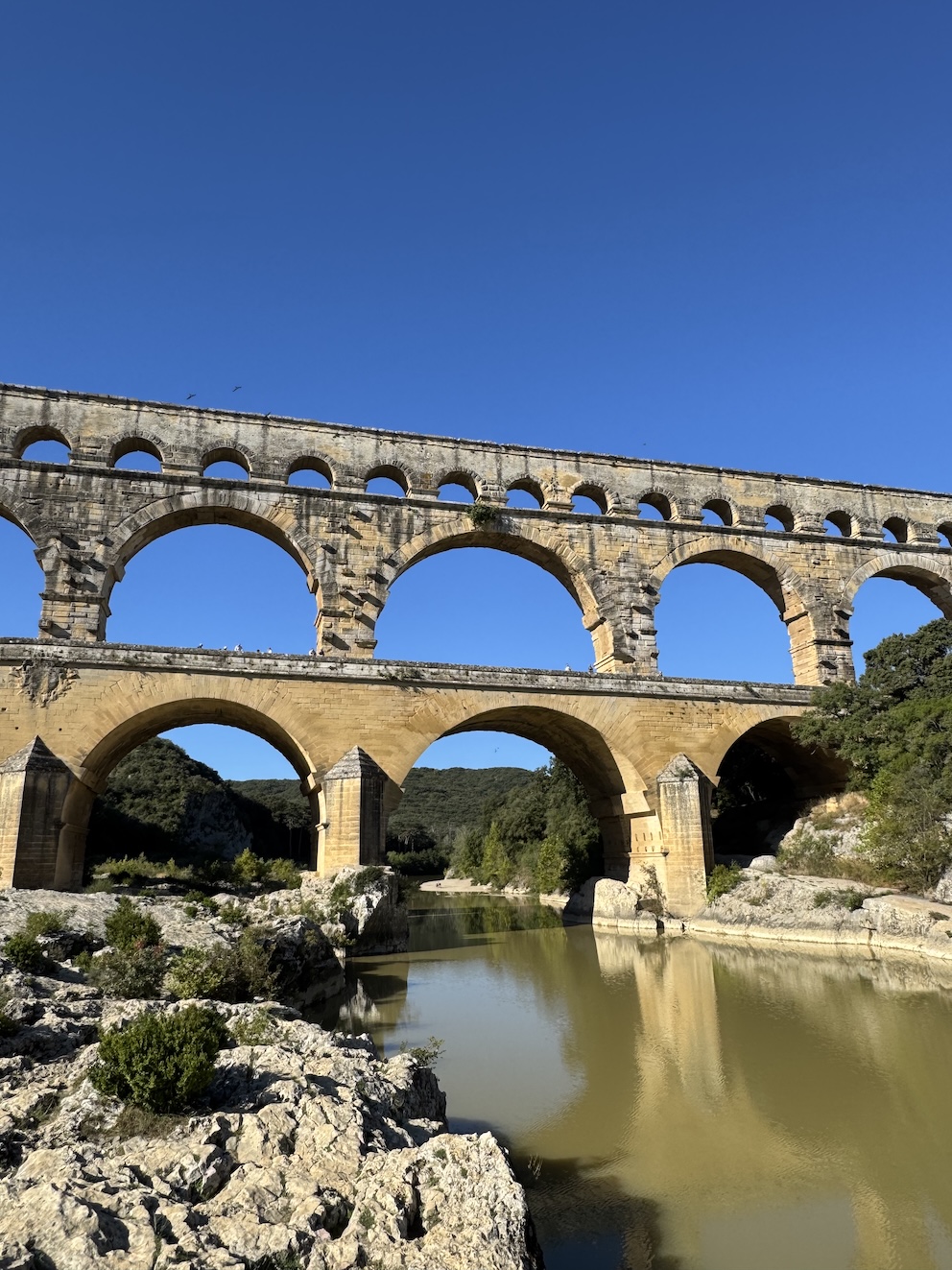
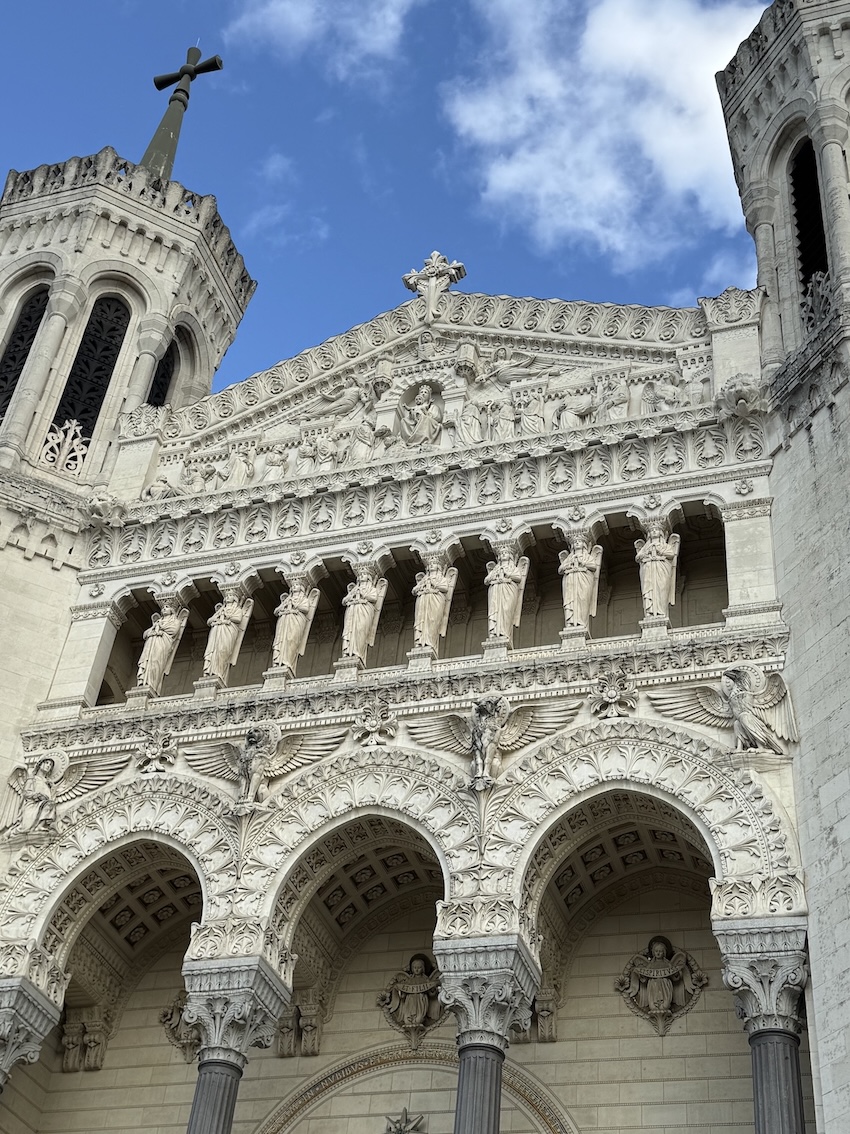
Reaching Lyon meant we said goodbye to the Rhône and we joined the la Saône River which would take us the next 234 km with just 5 locks to bring us down to 184 m above sea level, before we had to stop and leave the boat for the winter.
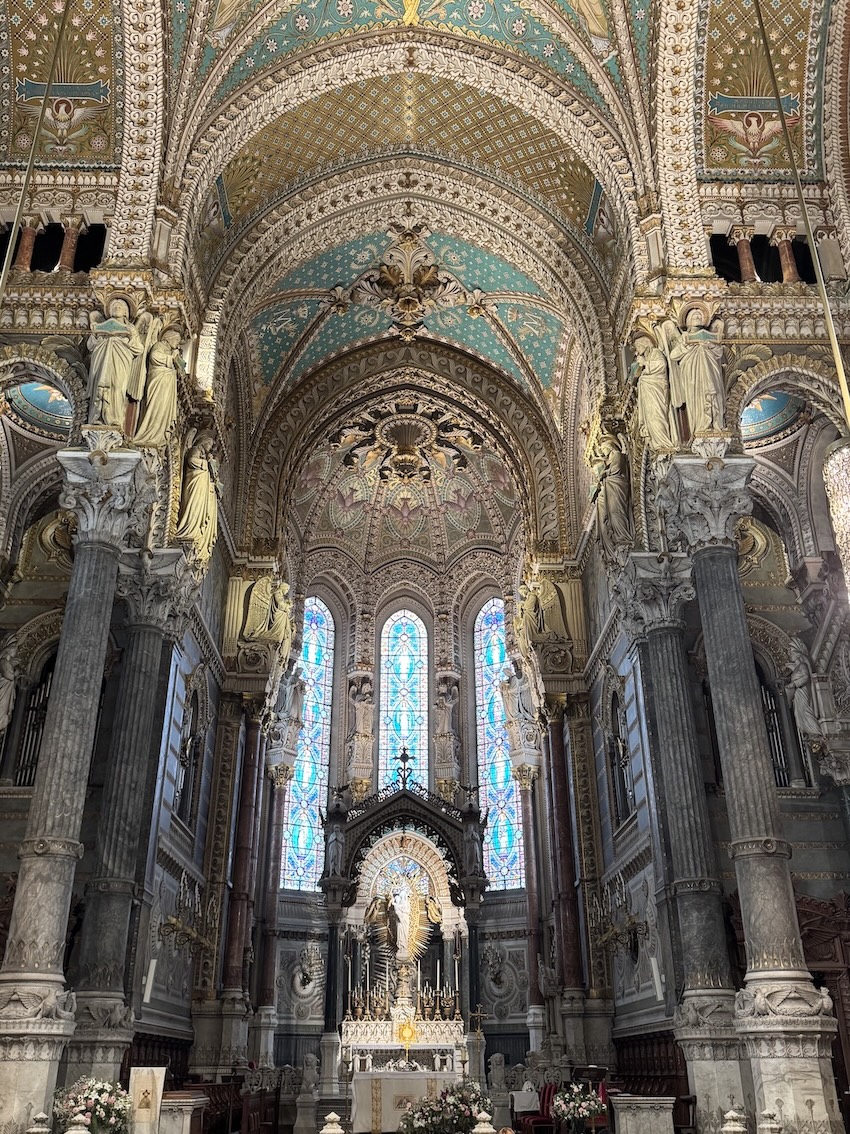
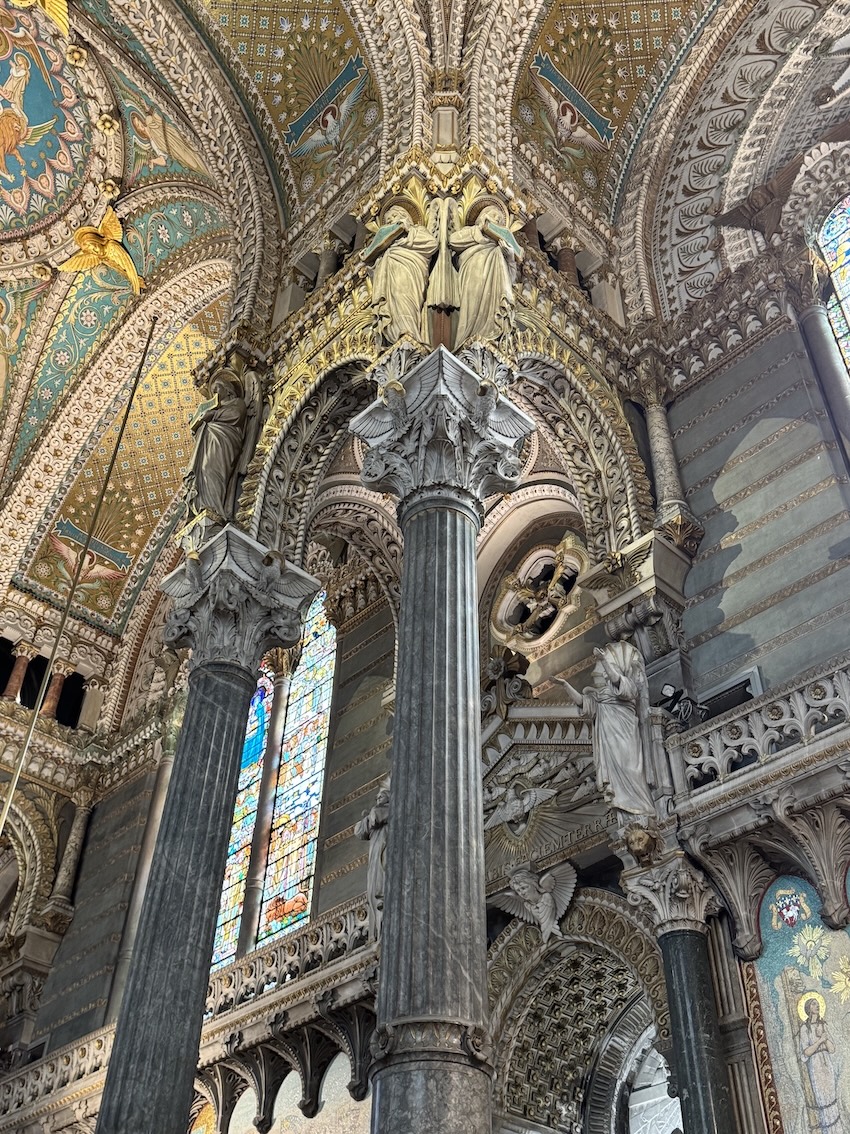
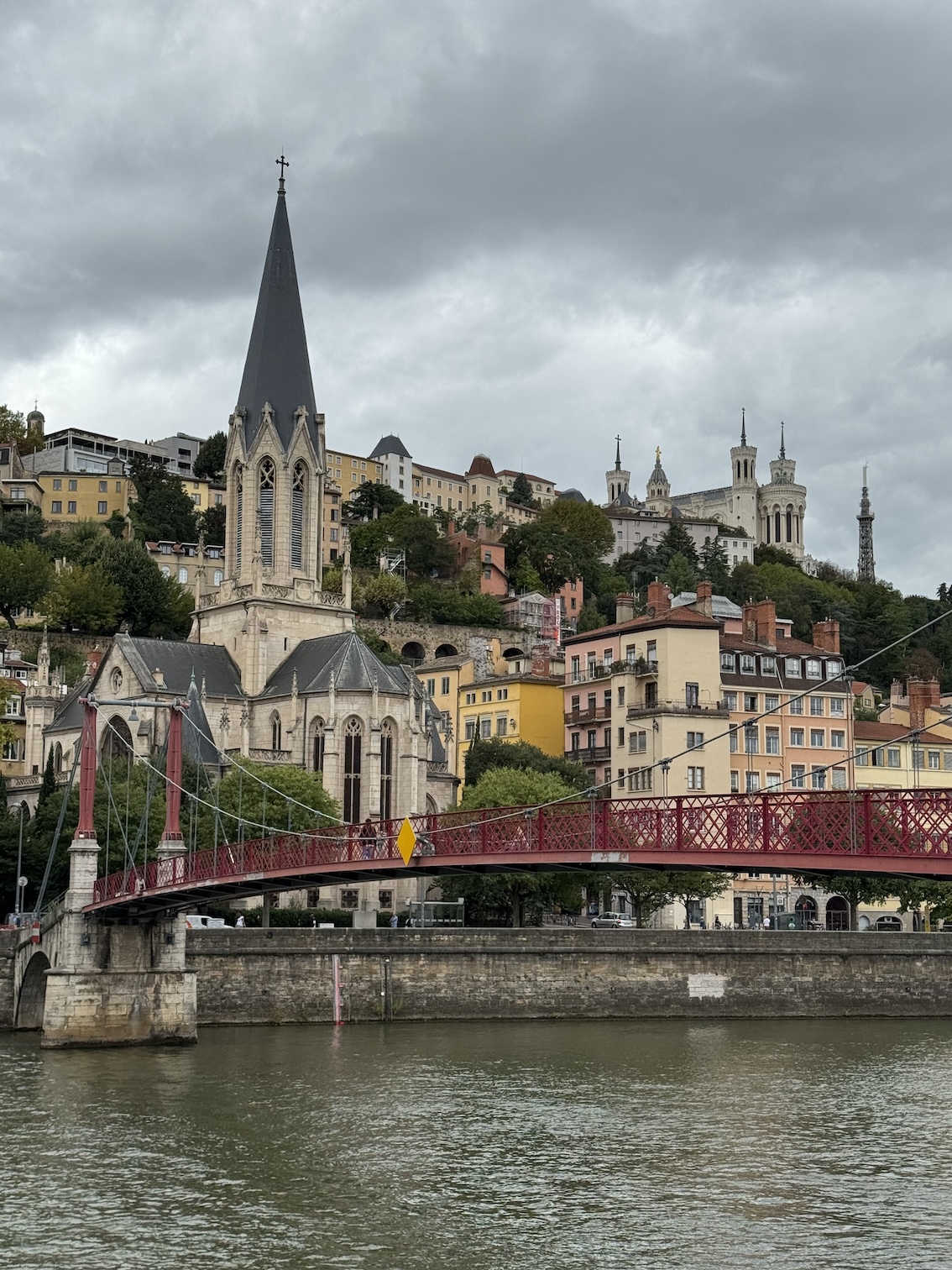
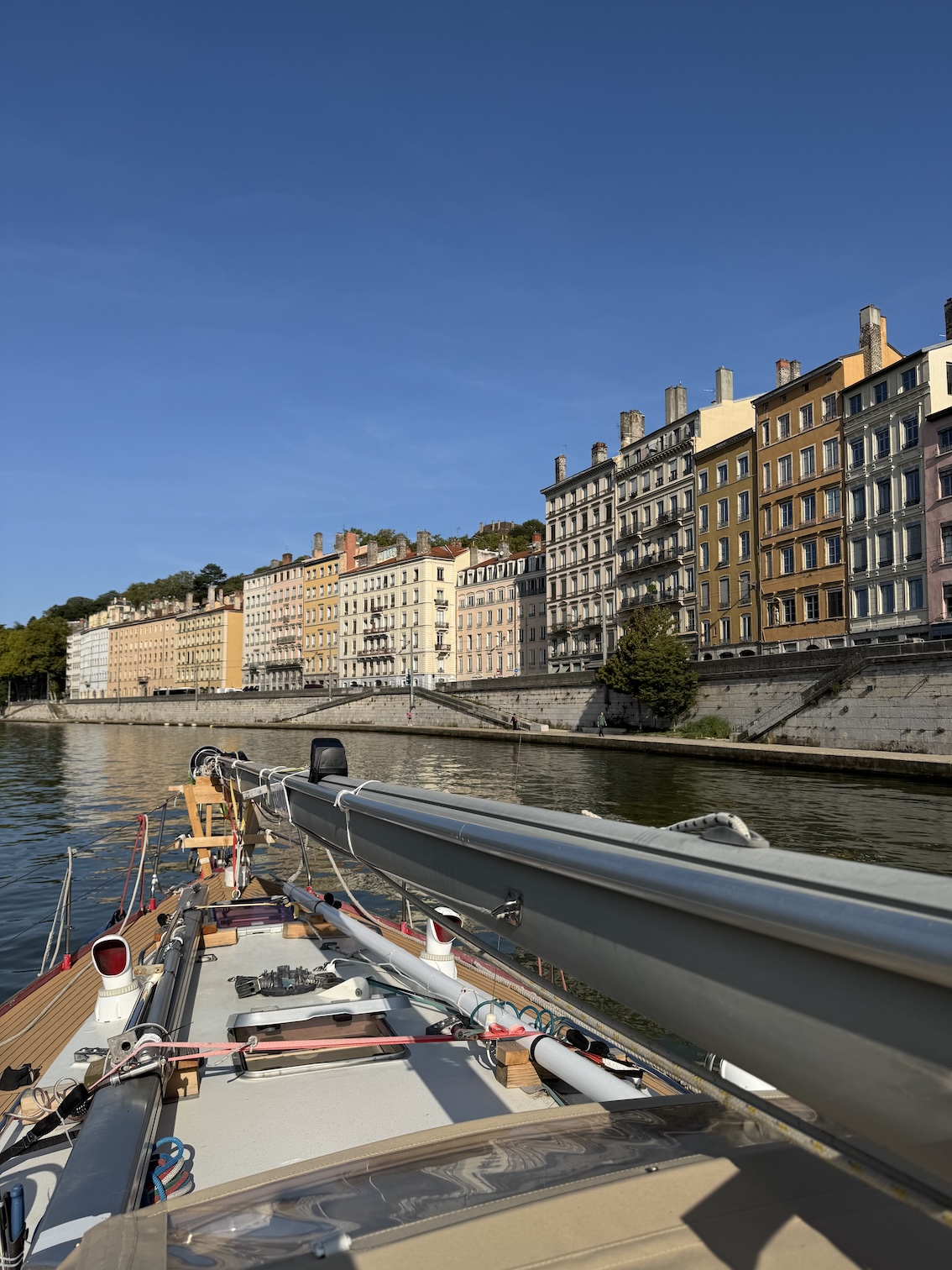
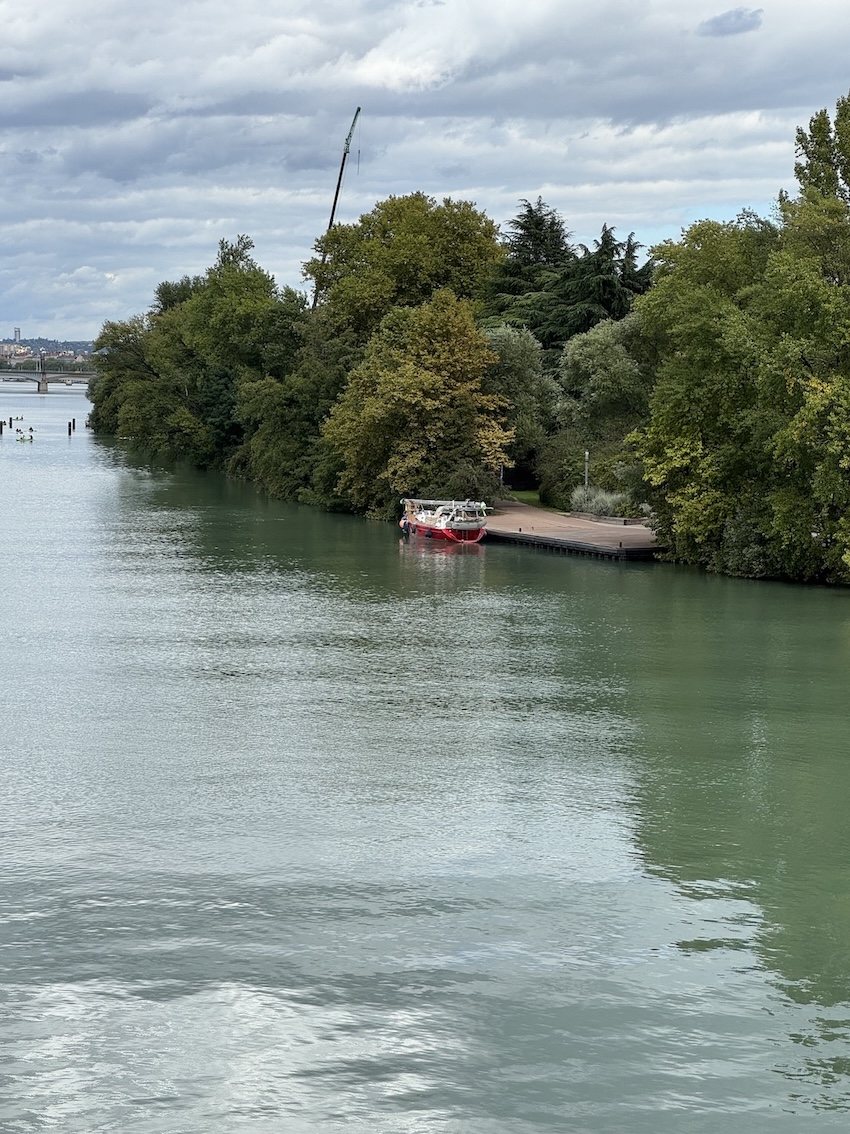
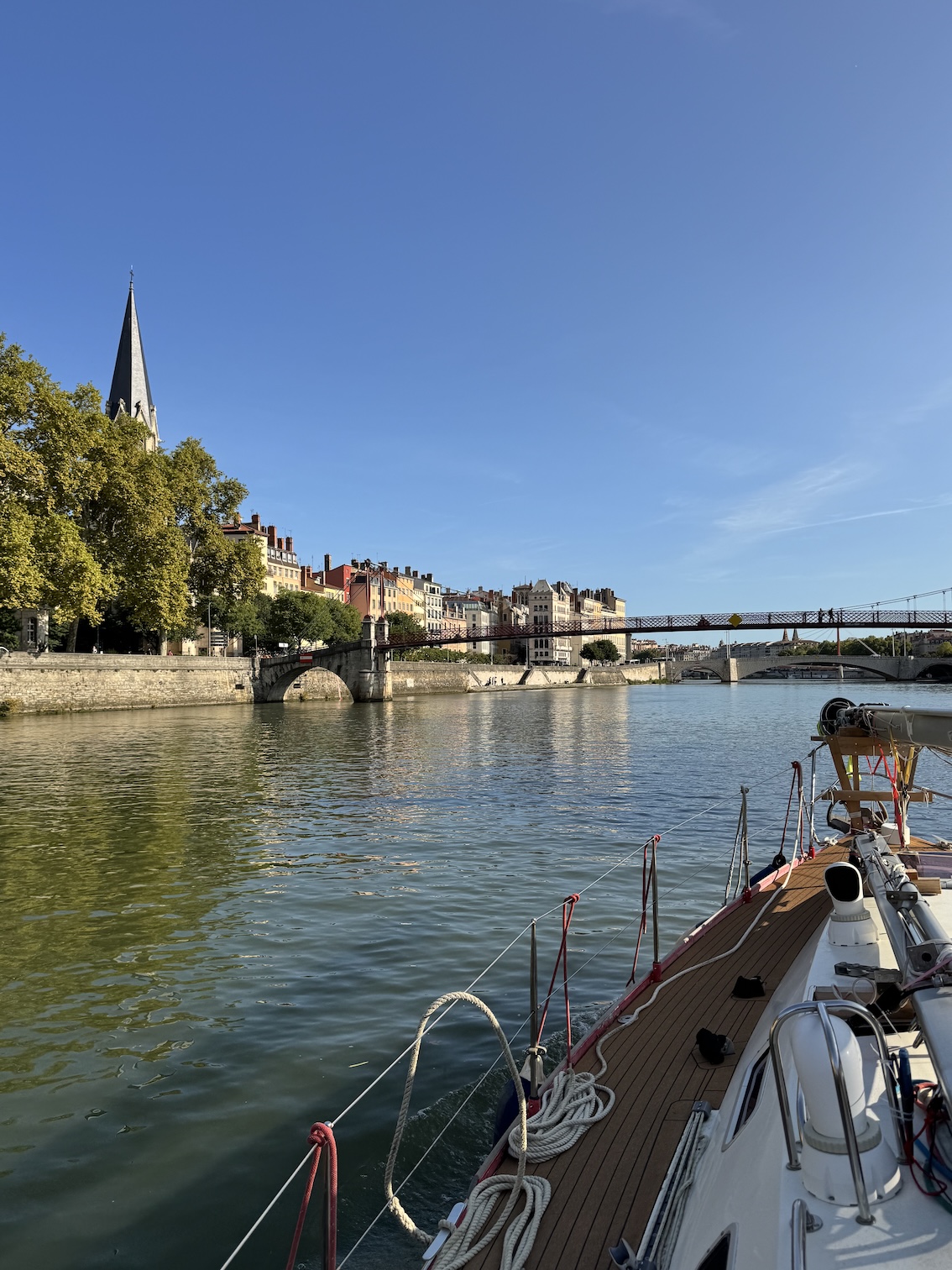
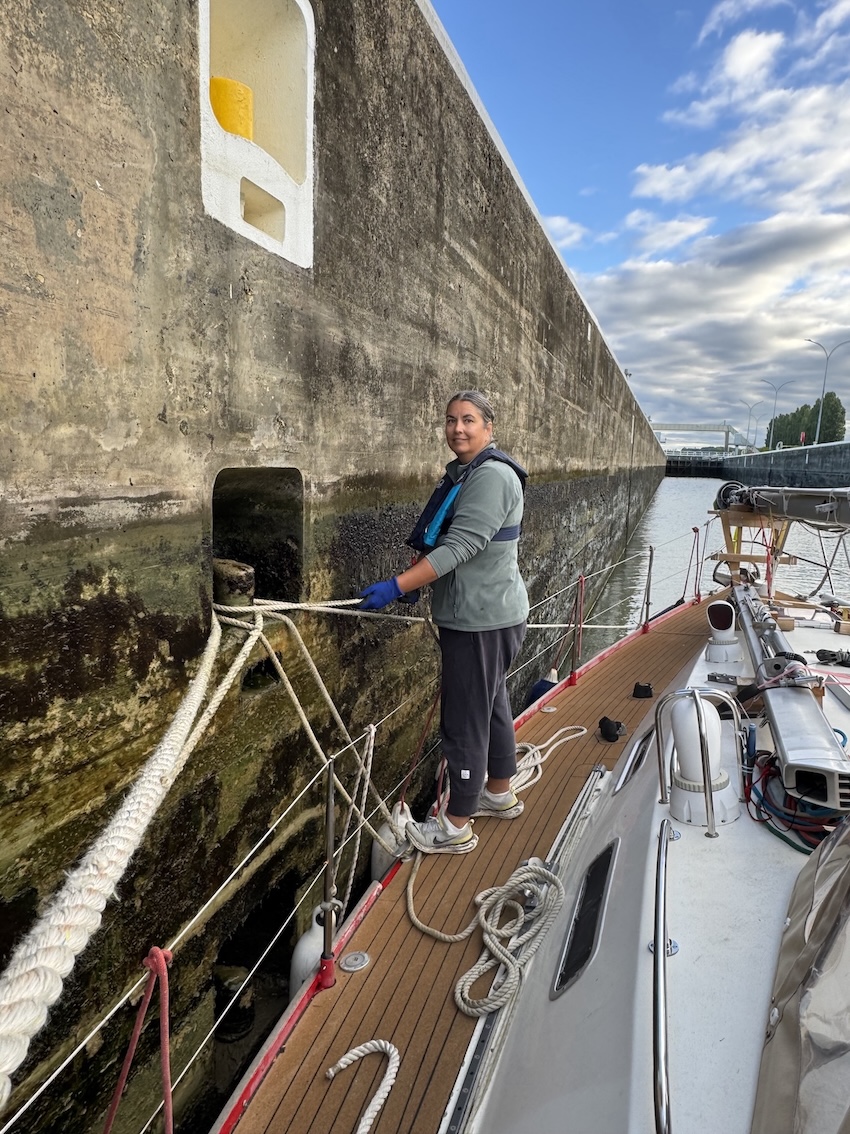
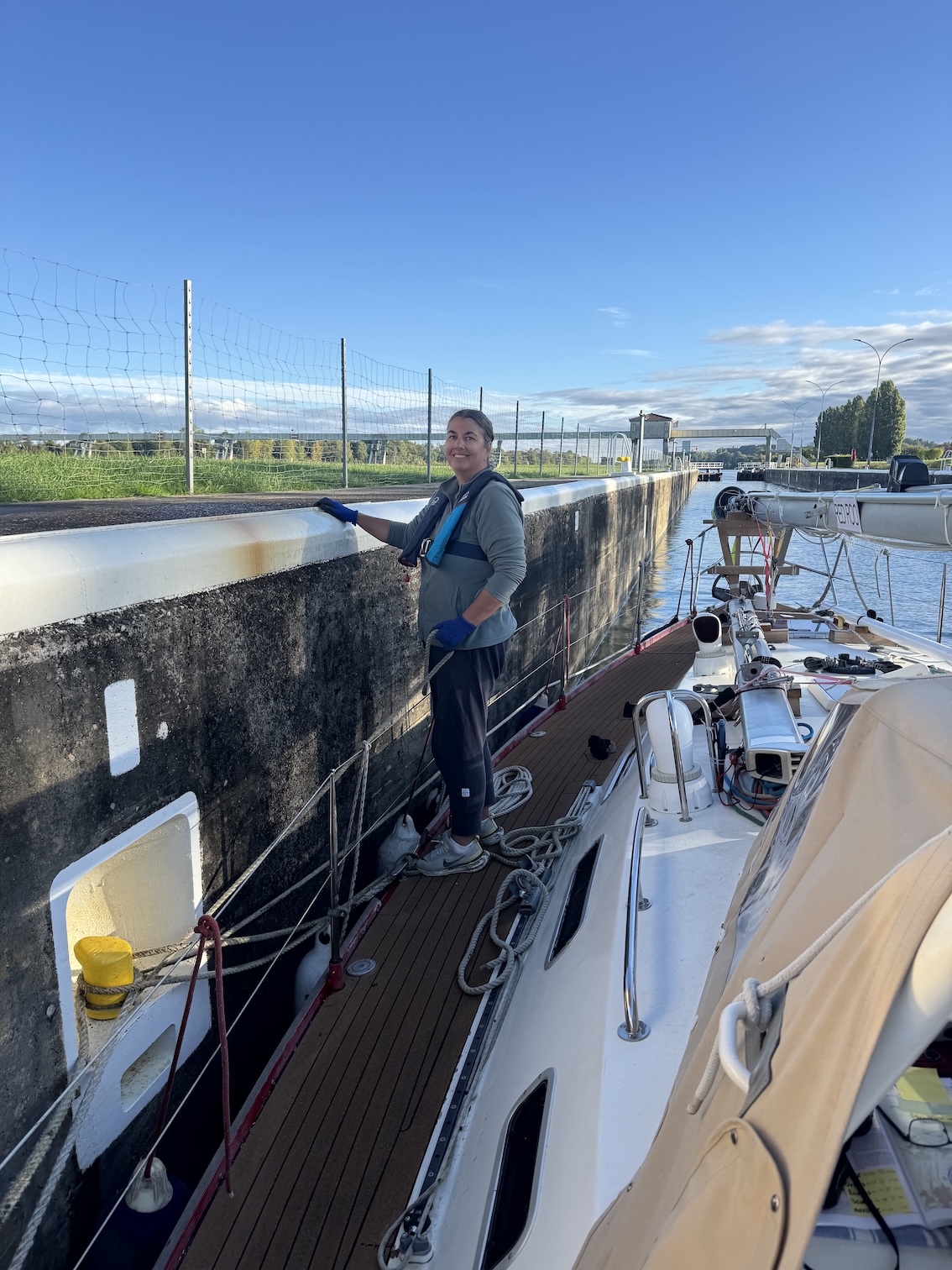
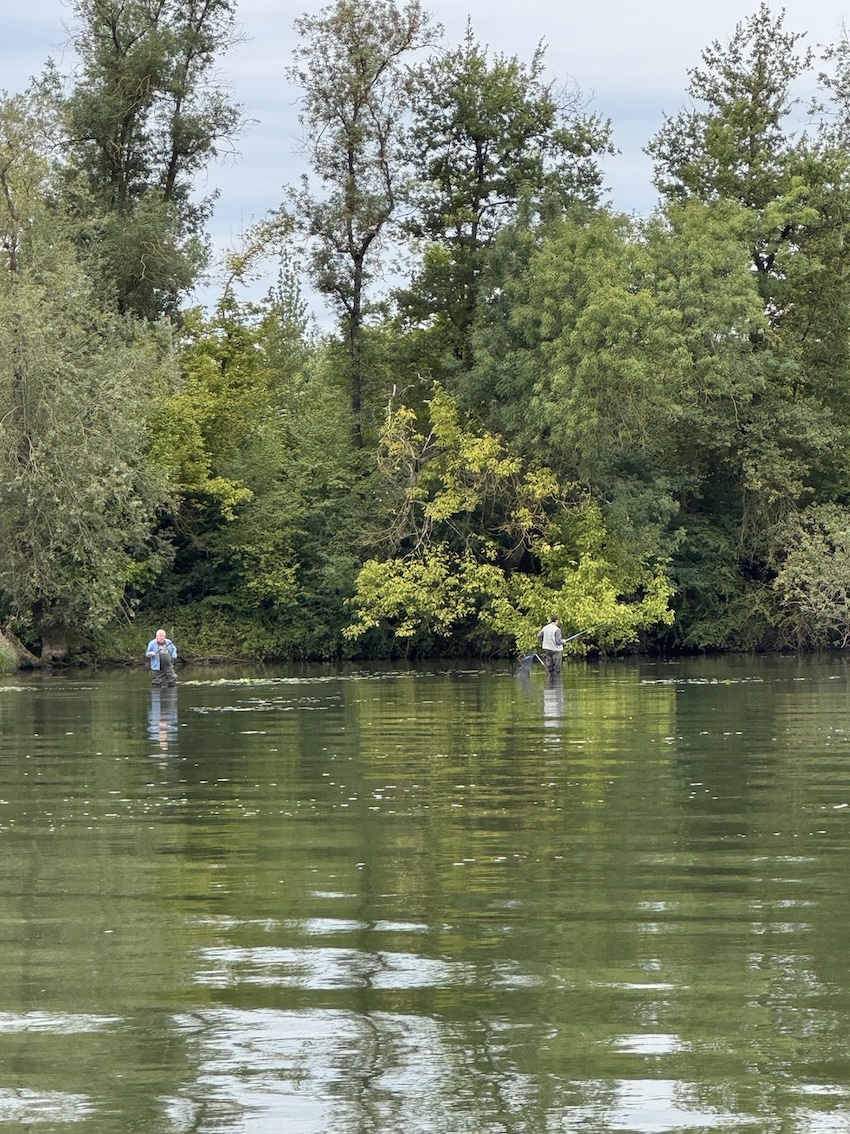
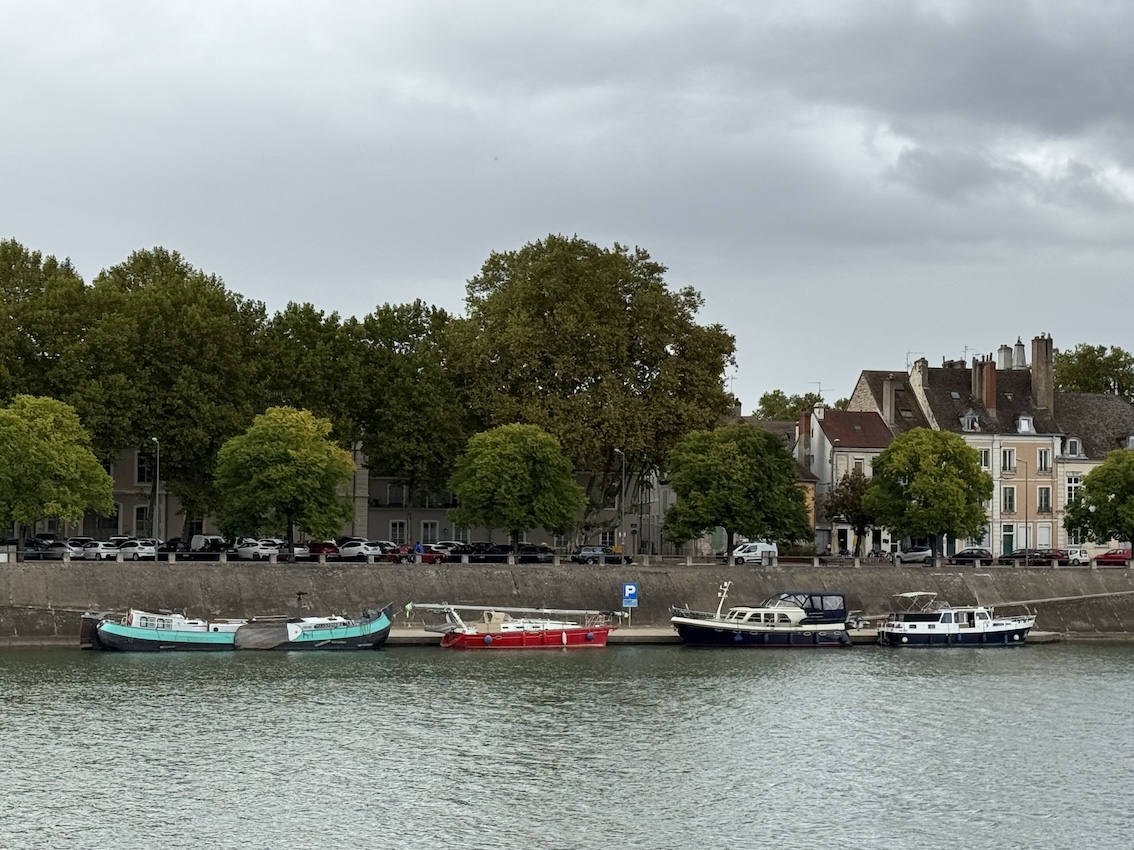
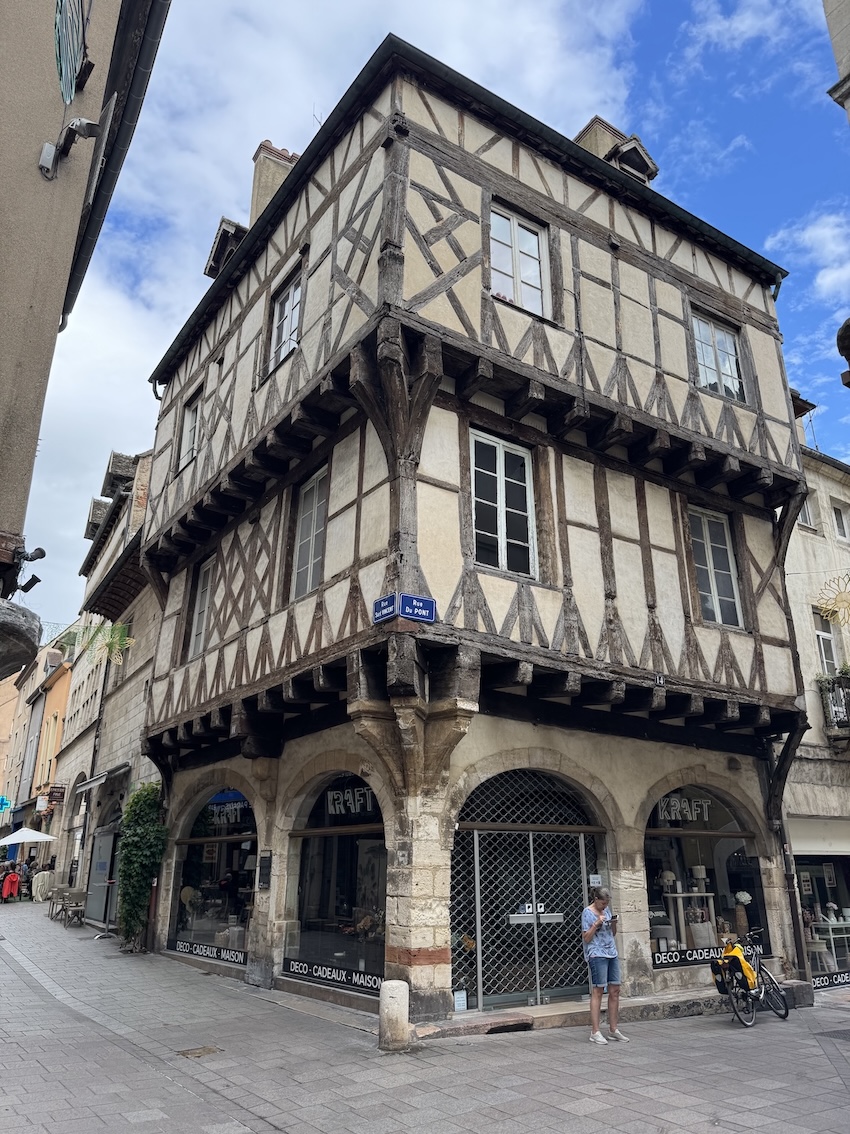
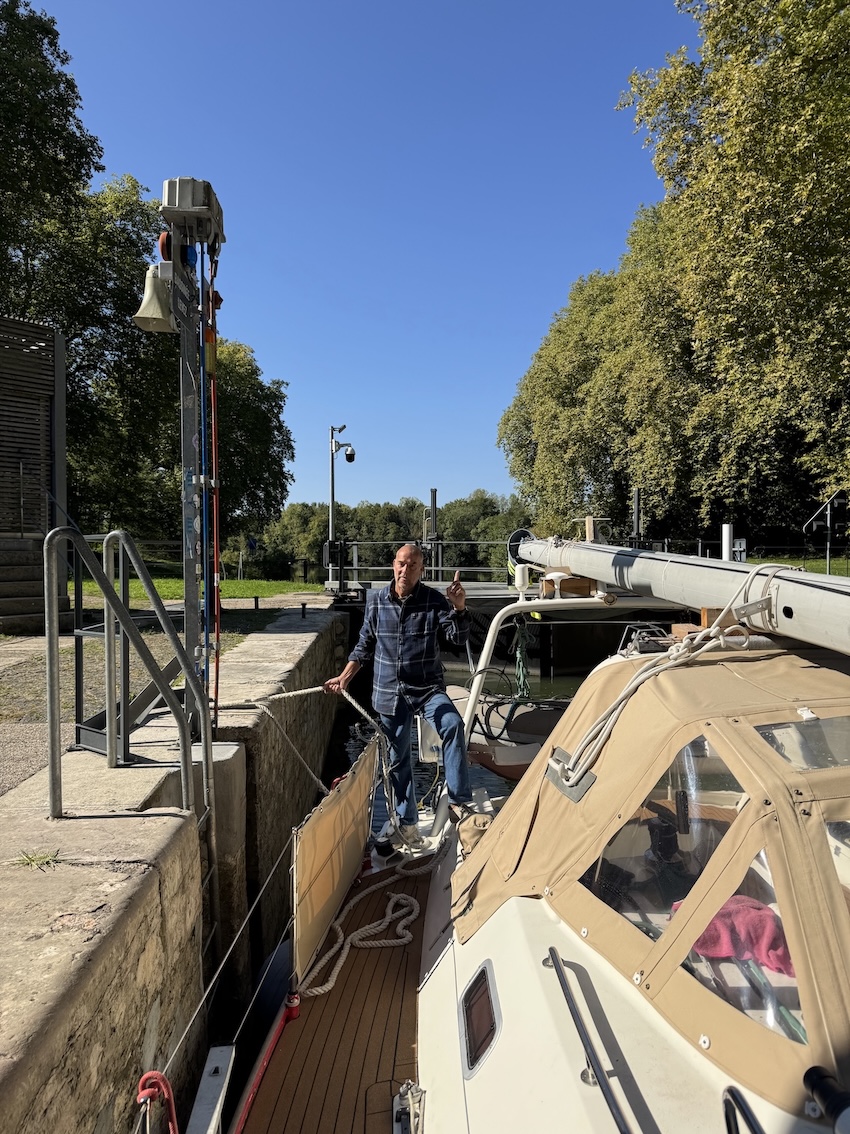
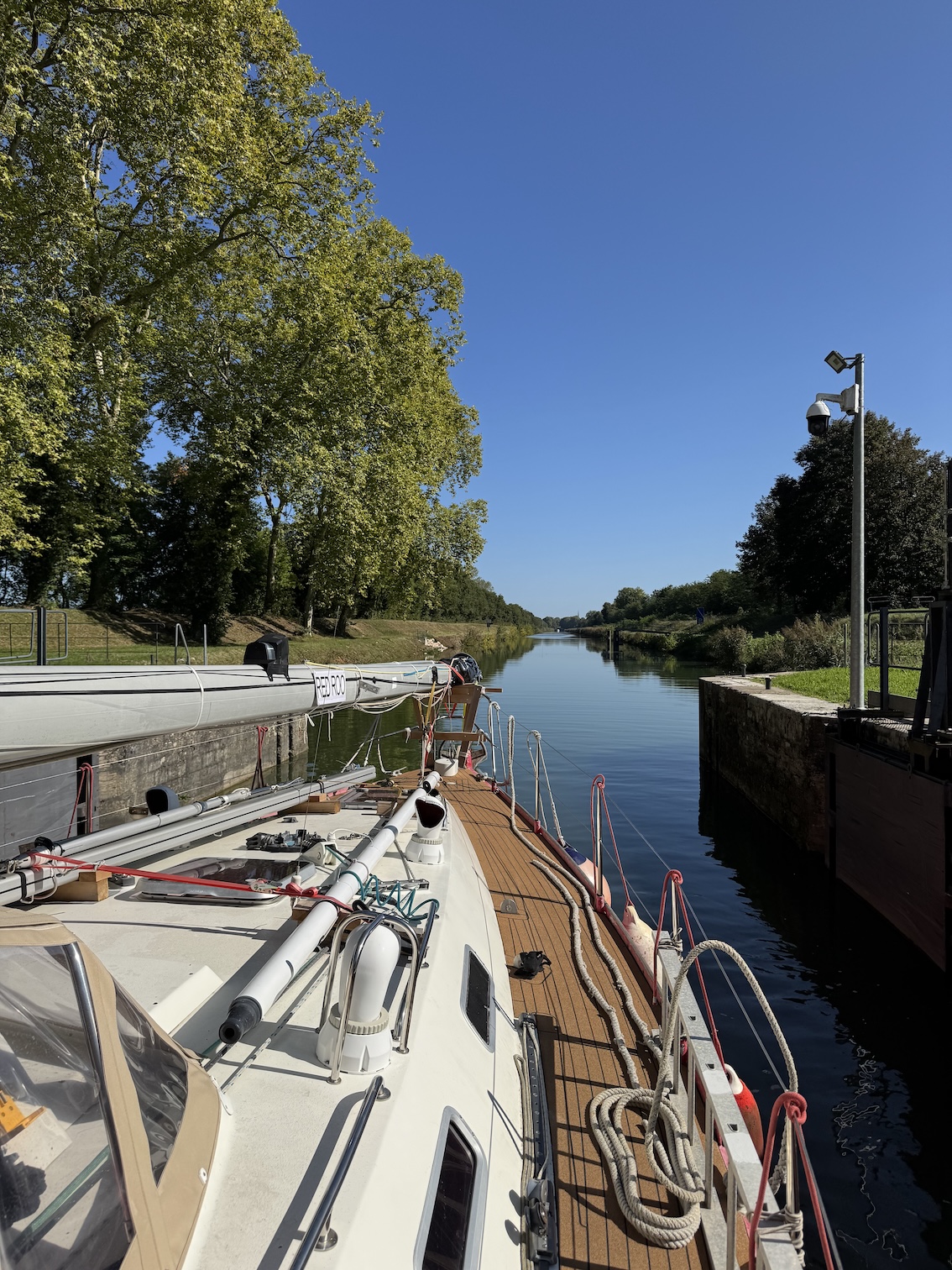
We were happy with the progress we had made within our time allowed in Europe, it coincided with the canals further north from our location being closed, so we had timed it well and were not actually impacted by that. We had found, thanks to word of mouth recommendations from other boaters a really great place to leave Red Roo in Port Royal – Auxonne (near Dijon) for our Europe exile of 3 months, which would actually be more like 6 months due waiting out winter along with our exile, as the canals are often closed in winter for maintenance and also due to floods and too much water after winter snow melt from the alps.
So 2025 saw Red Roo travel 3 countries; Spain, Portugal & France, and complete 1,400 nautical sea miles, plus 1,065 km in the canals along with 163 locks!
4 Comments on “Mast Down – Doing It Differently”
Leave a Reply
RECENT COMMENTS
 | earnie64 on Waiting Out Winter & Schen… |
 | James on Waiting Out Winter & Schen… |
 | Melanie Egginton on Mast Down – Doing It… |
 | Kris on Mast Down – Doing It… |
 | Janis Couvreux on Mast Down – Doing It… |



Awesome stuff👍
Regards,
Scott Jackson
LikeLike
Such a great account! And thank you so much for the Cowabunga/Kawabunga plug! Some day we’ll run into you again, I know it. Take care. Bisous!
Janis & Michel
LikeLike
so jealous!! What a fantastic adventure. We loved the Dutch canals we did Keep up the great blog posts! Your legends!!❤️❤️❤️
LikeLike
So glad the blog is back and great pics as always! Love the map so I understand where you both are. Hoping and praying for a visit this year 🤗
LikeLike