Dropping in on some Danish Dirt
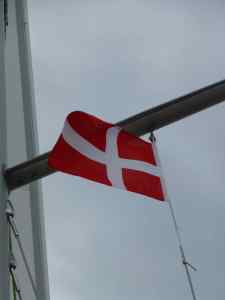
Jeg kan ikke tale ret maget dansk (I don’t speak much Danish) so you will have to make do with English.
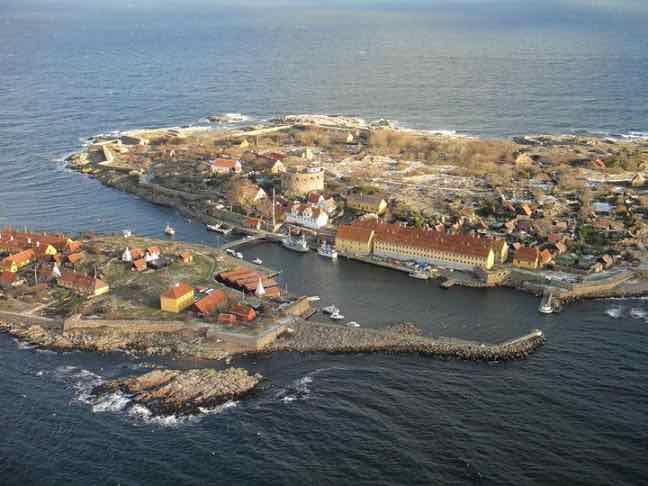
Christiansø
After our day off waiting out strong winds on Utklippan we headed 43 nautical miles south west to the Danish Island of Christiansø, the journey was about 1/3 sailing and 2/3 motor sailing in light winds, yes it had gone from blowing a hooley to virtually nothing!
Christiansø (and Bornholm our next stop) are Danish islands off the south coast of Sweden – meaning we will be stopping along more of Sweden’s coast again before actually arriving full time in Denmark.



There are actually two islands here joined by a small bridge. The western island being Fredriksö and the eastern being Christiansø, neither of them are very big in-fact the day ferry suggests that tourists should enjoy walking the circumference of both islands the inland garden paths, climb the tower, have a swim and lunch at the pub and be more than ready to return to mainland Sweden or the larger Danish island of Bornholm after 3 hours – and we can confirm that 3 hours is plenty of time to complete all those activities. However we were here for 24 hours so were going to make the most of it and have a real good look around, maybe even see somethings twice!
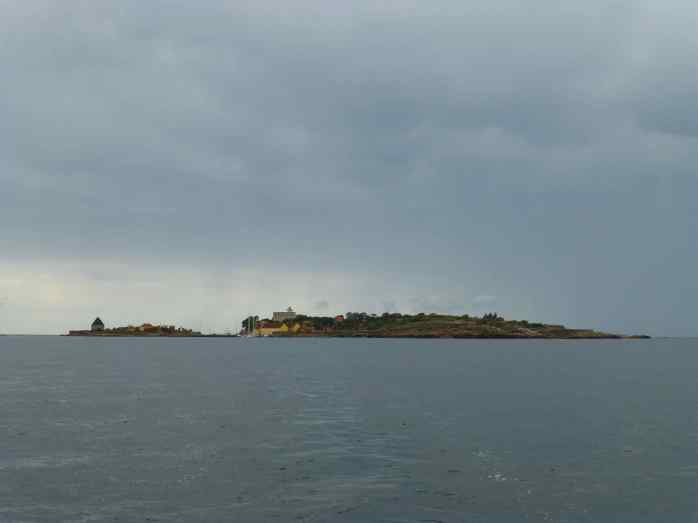
To put the size into perspective Fredriksö is 440 meters long and 160 meters wide with the highest point being 8 meters above sea level, Christiansø being the bigger island boasts a length of 710 meters by 430 meters wide and rises to a height of 22 meters above the sea.
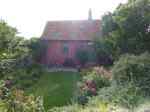
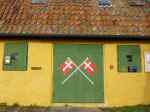
The islands were fortified in 1684, and include a stretch of over 2,500 meters of continuous masonry – impressive. The fortress walls, bastions, towers, half timbered building and stone huts still remain today and little has changed since the last soldiers left the island in 1856.
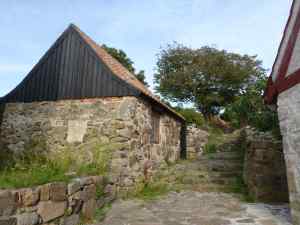
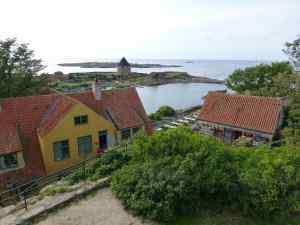
There are around 100 full time residents here and the homes are all very old, traditional and very endearing to the surroundings.

We walked the huge and largely intact defence walls, saw the local protected green toad, climbed the tower, visited the old prison, looked at the swimming hole and old dwellings.


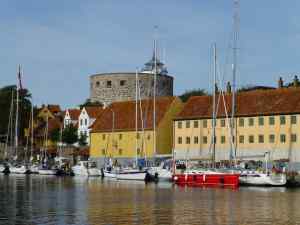
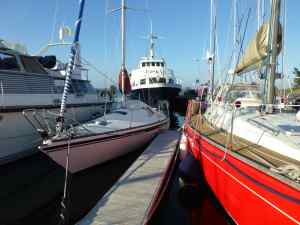
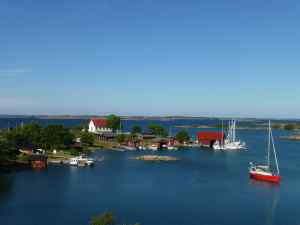
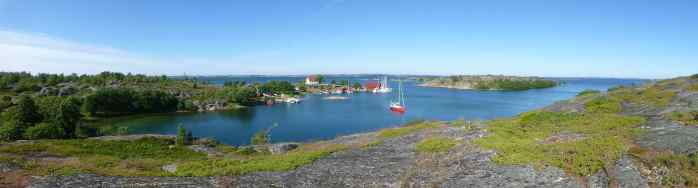
It was a popular spot for boats and boats were rafted two deep all the way along the quay. Phil impressed himself by taking a great picture suitable for the cover of a sailing guide he thinks!!

Svaneke (Bornholm)
 The next morning we awoke to rain, and we let it do it’s thing waiting for it to clear before we slipped the lines and sailed downwind the short 12 nautical miles to the island of Bornholm stopping at Svaneke. Why are all the nice down wind sails only on short legs??
After securing to the wall in the basin we took a stroll and immediately were both impressed by this little village. Almost every place we visit is nice but we both really liked this place it had a really nice feel.
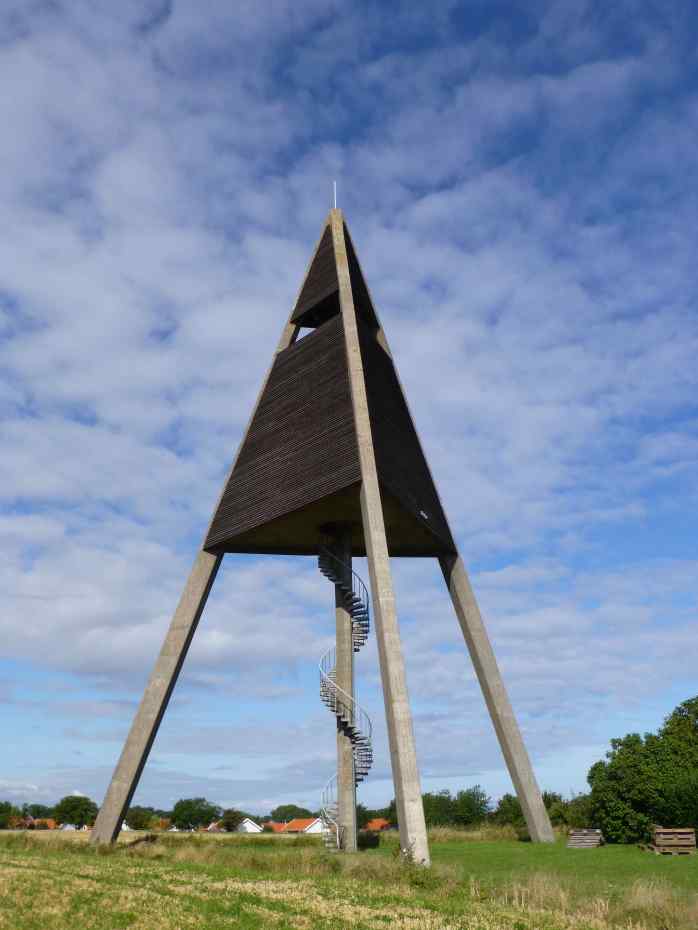
We immediately set off to visit an attraction having a heavy link back to Australia that being the Svaneke Water Tower designed by Danish architect Jørn Utzon in 1951 and built in 1952, what is the connection I hear you asking, well in 1957 Jørn Utzon went on to design the Sydney Opera House! Whilst the two buildings couldn’t be any more different (although both largely use concrete) it is obvious that Jørn was very creative and thought outside the box. The water tower for example is the only one of its kind being three sided – a pyramid shape. The surprisingly shaped water tower was inspired by the old sea marks used for assisting the navigation of ships at sea. The marks were used in the west of Jutland and in the Swedish archipelago from the end of the 16th century in cases when there were no other distinguishable markings along the coast. It really is quite striking and very visible from the sea, we certainly used it as a navigation point when approaching land.
We also stopped in at the 5 sisters smoke house, easily recognisable by the 5 smoke house chimneys that stand proud and distinct along the coastline. We shared and enjoyed a freshly smoked herring.


The village has many a tourist drawcard but because there were very few visitors/tourists in town it was easy to enjoy. They had a boiled sweets shop where they make the lollies, a brewery, locally made fudge and chocolate shops, lots of ceramic crafts and glass art, we enjoyed watching them doing the glass blowing (which we were to later lean the Queen is coming to see also this week).


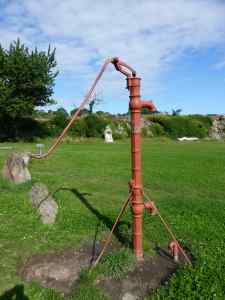
Our second day we decided to catch the bus across the island to the capital Rønne 30 km due west, but of course we chose the bus route that was the longest pretty much sticking to the coast line north to enable us to see as much of the island as we could.

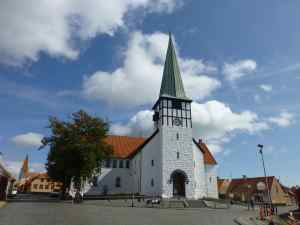
Rønne had a big busy commercial harbour and the required new look city and shops fitted into old cobblestone streets. We armed ourselves with a map of the old town and historic sites and went off walking to see it all. It wasn’t long after we reached the old town that we noticed a bit of activity in the streets in the form of police and what looked like defence force personnel, turns out we were in for a treat and watched the Danish mounted forces band performing. We asked a local policeman what was behind the parade and he explained they were practising their route and parade for when Queen Margrethe II arrives on the island on Wednesday, she is bringing the Royal Yacht over as part of her summer holiday. We inquired as to if Princess Mary (and Freddy) would be with her but seems not. Very unfortunate as if Mary “my old mate” being a fellow Tasmanian was visiting I have no doubt she would have invited us back on board the royal yacht for a refreshing beverage!!!


Queens mounted band, note the offical boot polisher! They rush in when they stop to polish up boots – Dream Job!
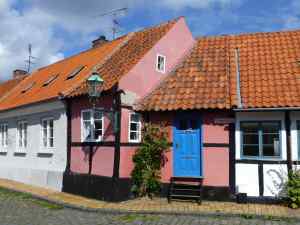
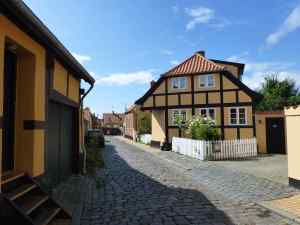

We arrived back at Svaneke after taking the bus back via the southern coast to find the harbour that was the night prior very empty (four boats including us) to be rather full and boats milling around looking for a space. They ended up being rafter 2, 3 & 4 deep in places but we were pleasantly surprised that nobody rafted against us, the red boat must have put them off!! Turns out they were all German charter boats so each had 5-8 people on board for a sailing holiday.
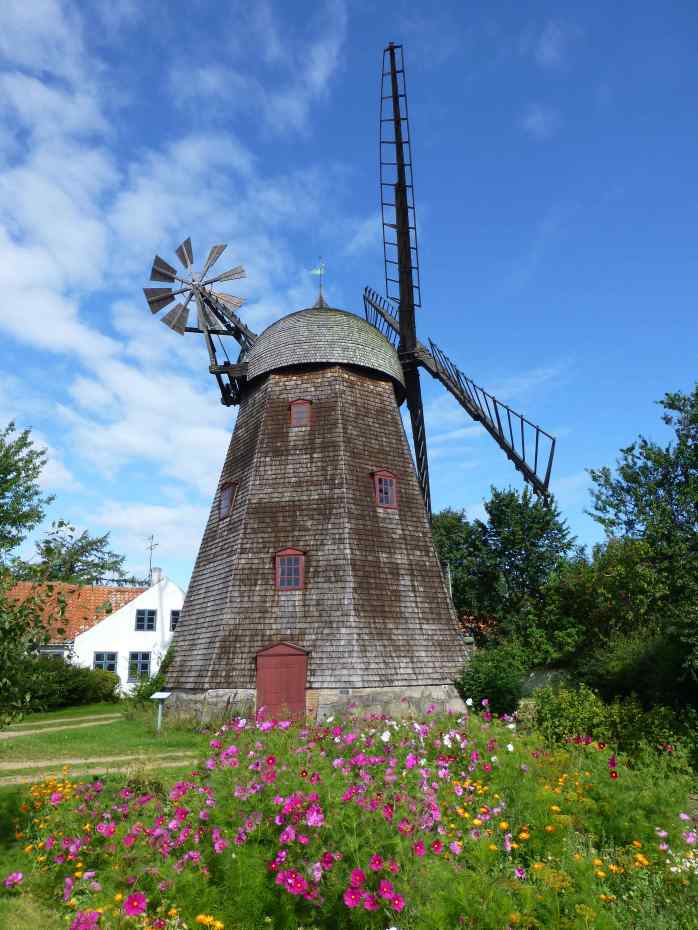
Allinge (Bornholm)
All the German charter boats left pretty early and we had a lazy start leaving the harbour around 11am for the short but good sail 15 nautical miles sail north to Allinge.

Allinge is pretty much at the northern tip of the island and we had read about some bronze age rock carvings/drawings that are on the coast line that we wanted to visit. They turned out to be a little underwhelming, but not to worry a nice walk to see them.


After the picturesque Svanke, Allinge isn’t as attractive but we got around the major sites during the afternoon, those being the church, the shoreline, a couple of fish smoke houses, the rock drawings and walked north to the next village of Sandvig to see the beach.


We depart tomorrow back mainland Sweden, originally we thought we might bus back to Rønne or Svaneke to see the Queen, the parade and her yacht but the winds look good for sailing so will take them while they are there.
Still Sailing Sweden
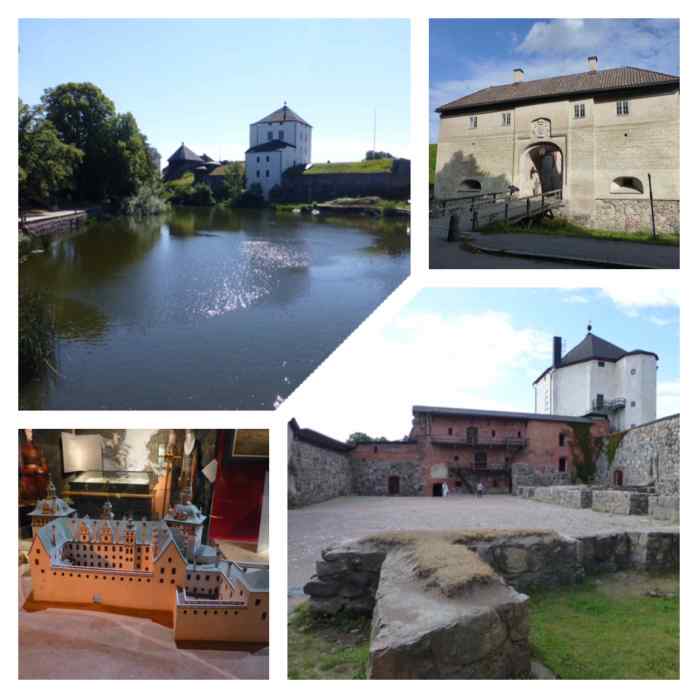
Carrying on from our last post we were in Nykoping and had enjoyed a fantastic sail in from the archipelago and were most excited about refilling our English gas bottles. I feel in all that excitement I may have neglected Nykoping a little as it has a lot going for it, although it is hard to beat filling those gas bottles.
We enjoyed two nights in the marina and anchored our last night in the estuary outside the channel (with the marina in site, saving those Krona $$).
Nykoping in the day was an important shipping and trade centre as location wise it was a major cross road/junction in Sweden, we learnt this during our free tours! Yes free, and two of them. The first tour was of the Castle (or what’s left of the castle) and the second was a free city walking tour. Any way back to the story about trade and shipping with the land rising, (or water disappearing) it is no longer a commercial port as the channel into the city is both a long way in/out as well as being very narrow and quite shallow. Road transport is much easier these days.
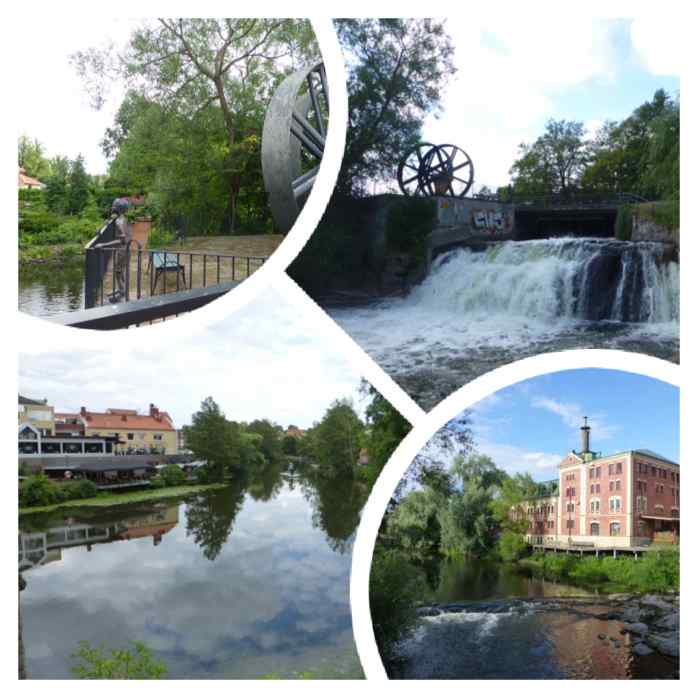
There are some great historical buildings that remain despite the city fire (seems every city, castle and church in Europe has had a fire) and some very pretty street scenes with a mixture of well redeveloped waterfront and historically retained buildings along town river.

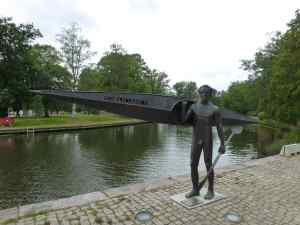
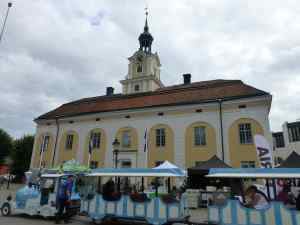

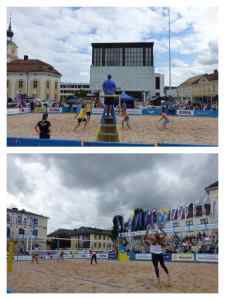
We were also lucky enough to be in town for the weekend of the Swedish Beach Volleyball tournament (in the town square not at the beach). We watched a couple of great games both days including a well fought our Womens Final.
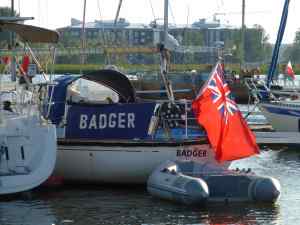
“Badger” also arrived home to Nykoping whilst we were there, these are our new English friends Kirstin and Roger whom we met in Stockholm and told us about the place (and the gas), so was great to share a sundowner drink with them before leaving.
So we left Nykoping happy – full of gas as well as water & boat diesel.
Riso
One hours sailing and a whole lot of motoring with a dash of motoring sailing towards the end brought us the 27 nautical miles to Riso.
This was just an overnight anchoring spot, so we didn’t go to shore however enjoyed a tranquil evening in a lovely protected bay with a couple of other boats, one of them bringing a smile to our faces as it was named Odin. Why the smile, well Odin was one of Phil’s ship mates (aged 4 at the time) on Midnight Sun during the sailing adventure from Tasmania to Alaska.

Harstena
An uneventful short journey under motor (damn wind seems to always be on our nose) the 14 nautical miles to Harstena.
Having left Riso fairly early we arrived before lunch and was the 4th yacht on anchor (we assume some of the others had been there overnight). Come nightfall there were at least 12 on anchor but a big bay with plenty of room.

We noticed as we approached Harstena the water came alive with thousands and thousands of Jelly Fish. The small kind with the purple heart in the middle, we couldn’t find a patch of water without them they were absolutely everywhere.
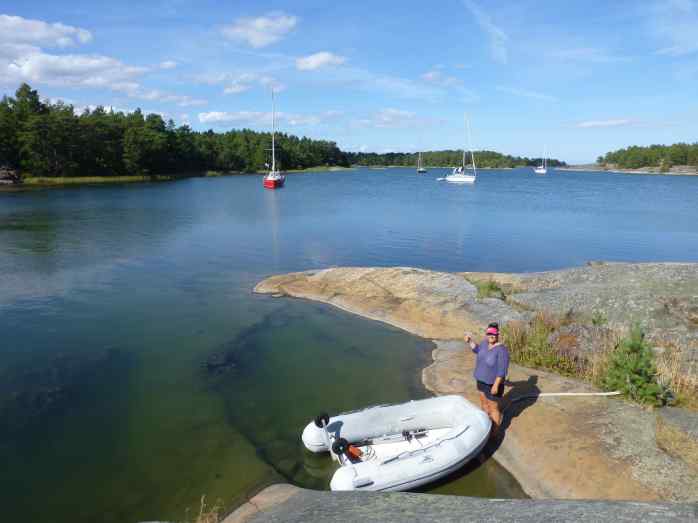
The dingy was launched to go ashore and explore – no way was I swimming with those little stingers in the water.
We had read in the guides about the pond of red water lilies which we found but there were only a few in flower on the far side, but agree that they were very pretty.
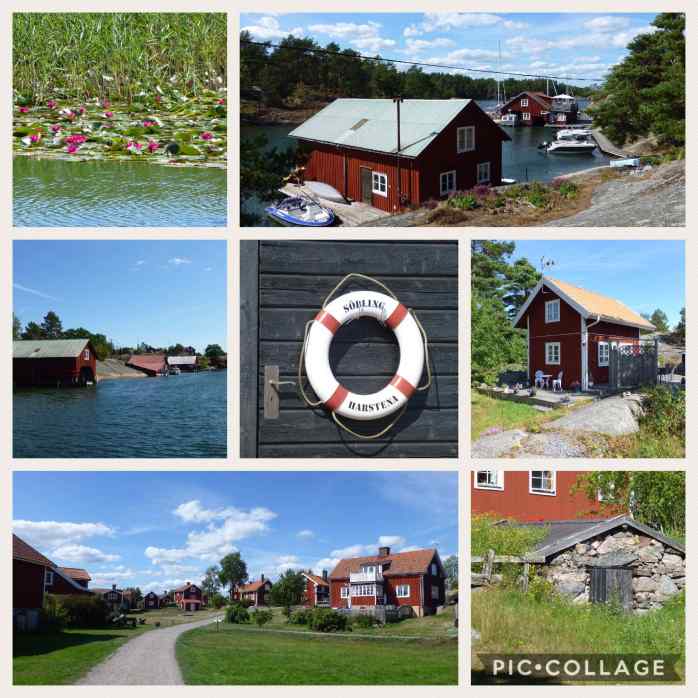
We walked across the island from the bay to the settlement. It is a summer settlement only with no-one residing on the island in the winter months. The summer homes very sweet and very well maintained (different from the kind of standard you see in Australia for shacks).
Visby – Gotland
We were in for a full day on the water so a 5:30am alarm got us out of bed and lifting anchor just before 6am slowly and quietly weaving our way out past all the other sleeping boats in the bay.
Gotland was just shy of 60 nautical miles away so potentially a 12 hour day, being so early there was zero wind and hardly a ripple on the water so we started out under engine. I was dreading it . . . the noise of the engine for 12 + hours (being fuel conservative, we go slower under engine) it would drive anyone insane, so when the wind started to develop mid morning so did my smile. By 10:30am we had the main sail and head sail up with 10 knots of wind 40 degrees off starboard – we cut the engine … bliss!!
It had also been quite some time since we had been out with a complete 360 degree view of water on the horizon – no land in site!
By 11:15 we were doing over 6 knots speed over ground and climbing, the wind was strengthening. We soon made up for our slow start at times cracking over 7.5 knots SOG and by 15:30 in the afternoon we actually had to put a reef in the main (reduce the size of the sail) as it was blowing over 22 knots of wind.
We sailed into the bay, packed up our sails and were secured to the pontoon (via stern buoy) just a wee bit over 11 hours after leaving anchor. A good days sailing.

We were in Visby on the island of Gotland. Gotland has a land area 176 km long by 52 km wide, 800 km of coastline with a population of 57,391.
Our first priority was to check out the city walls that we had heard so much about, so we did – first walking the outside circumference and then the inside. It is in amazing condition and very humbling to see, touch and feel something built so long ago – the Gunpowder tower being built in 1150 and the remainder built in the 1200s WOW. The wall is 3.44 km long and very much still standing, with a lot of it forming back yard fences in private homes. It is 11m high and has 27 turrets (originally 29).


We also visited the Visby Cathedral built 1225 and still in use today. The botanical gardens which although not overly formal in regards to structure and layout were very beautiful (sometimes natural is best). We also saw the whipping post (luckily we had both been behaving so were just tourists not invited guests).


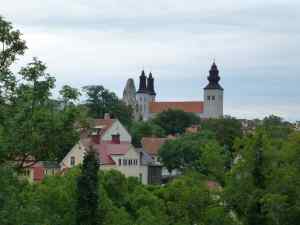
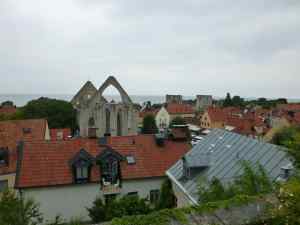
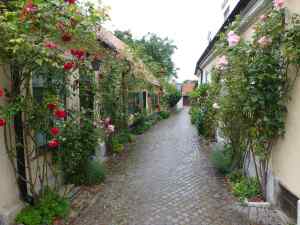

As well as Fishermans Alley, which is featured on many of the city’s postcards due to the famous climbing roses which were planted in the early 1940’s resulting in Visby being named the “City of Roses and Ruins” (having many many church ruins – there were 96 churches on the island in viking times). Whilst we did see roses they were not at their absolute best – still pretty however.
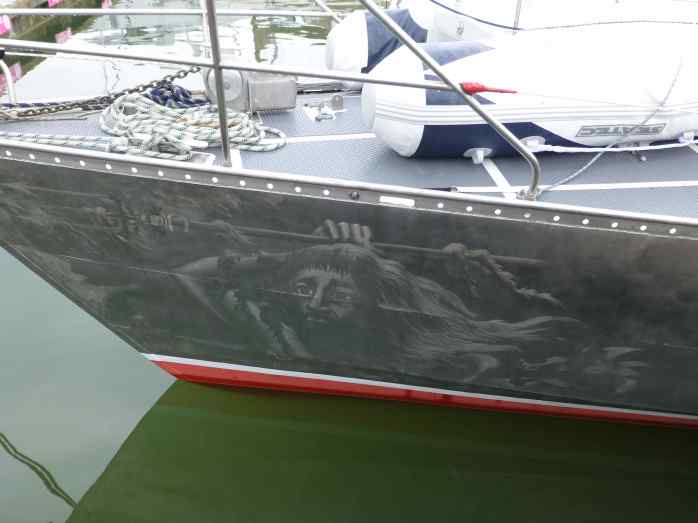
The Gotland flag features a Sheep and it is definitely the islands mascot, it was everywhere, all the concrete bollards were shaped into sheep even a lot further south in the small harbour of Klintehamn where we overnighted after leaving Visby (20 nautical miles south under motor in the late afternoon – zero wind).
Byxelkrok – Öland
From Gotland it was west to Öland (another island) and this time we had favourable winds to take us the 40 nautical miles. We hoisted the sails whilst in the harbour at Klintehamn as it has a large basin for ships which come to ship out logs and wood chips and managed to sail out of the buoyed channel.
Half an hour after throwing the lines off the wall we were doing over 6 knots under the main and genona with F4 winds from the south. We averaged 6.5 – 7 knots over the journey despite the wind changing for an hour meaning a couple of tacks to stay in the wind under sail (but taking us further from our destination).
It wasn’t a smooth journey we had a small but very annoying swell on the side of the boat making it a little lumpy, and I was looking forward to arriving in the harbour however little was I to know that the harbour was more exposed than we predicted (from the S/W) and that strong winds would blow continually for the for the next three days and nights meaning the boat didn’t settle at all, we continued to get jerked around on the lines when tied up alongside the wall. I will confess to sending a message to my sister along the lines of “FFS this damn boat hasn’t stopped rocking and rolling for days….”
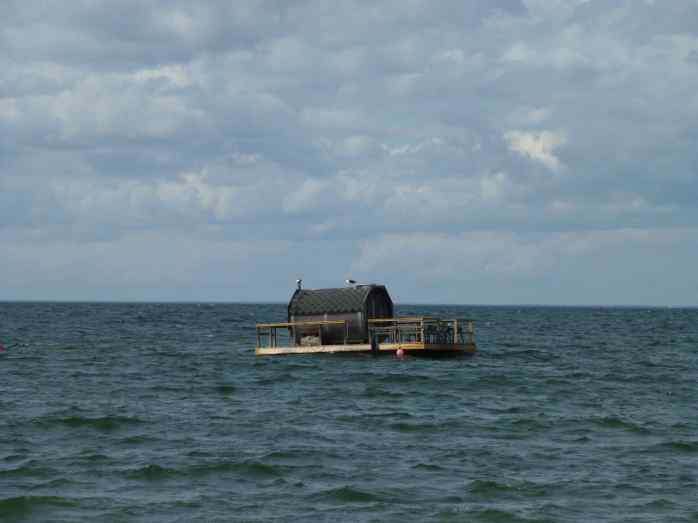
Coming into the harbour we spotted a floating sauna off the beach, and I can certainly say we didn’t see anyone using it in the time we were there – it wouldn’t have been the most comfortable sauna experience in the swell and wind!
The next morning we awoke to see a yacht in the harbour flying an Aussie flag 🙂 registered in Cairns QLD most exciting. Bert and Gisela had snuck in just before midnight the night before and it was great to meet them and share a few drinks, tales, and Swedish tasting plates and sympathise with each other over the wind, the bouncing around and the totally unreliable weather forecasts over the next couple of days.
There we were four Australian citizens; myself Tasmanian born and bred, Phil born in UK grew up in Victoria, Bert born and raised in Sweden (travelled the world in the merchant Navy), Gisela born in Germany, grew up in South Africa. To go a step further with the mix Bert and Gisela met and married in South Africa their first child was born in Botswana and their second in Papua New Guinnea – so a family of 4 with 4 different passports and nationalities I can only imagine the logistics of that, with led to them eventually settling in Australia and all four of them became residents (many, many years ago). What a wonderful world we live in and we are all proud to call Australia home – even with our French and Swedish yachts respectively.
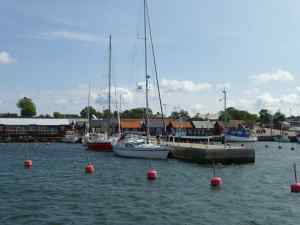

Our second day on Öland saw us get the bikes out and assembled and off we set to explore the norther end of the island. The entire island is one giant piece of limestone rock. The island is long and skinny (140km long and about 8km wide in most places) and has 25,000 permanent residents, this figure increases dramatically during the summer months.
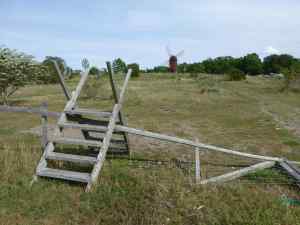
Speaking of summer, the last two weeks we have noticed that the Swedish summer vacation time seems to be over, lucky the weather hasn’t gone and we are still enjoying lovely days, but what was recently full harbours and boats everywhere has suddenly become very quiet (and lovely) with only a very few Swedish boats still to be seen on the water. There are a few German and Holland boats still out (most whom we know know and see every couple of days and we mostly travelling a similar route) but the Swedish schools have gone back and it seems so have the people, back to work.
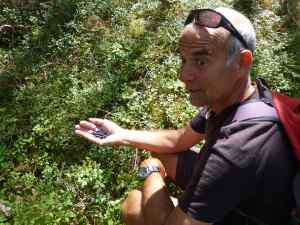
On our way north we stopped for Phil to pick berries (a favourite pass time of his), the blueberries are just coming on now as well as the native lingonberries, the blackberries however are still a week or two off being ready to pick.

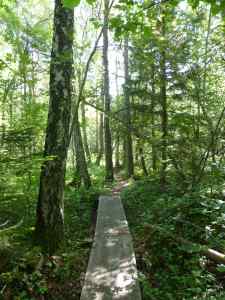
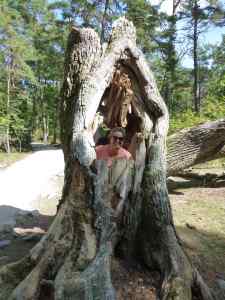
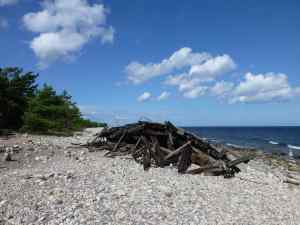
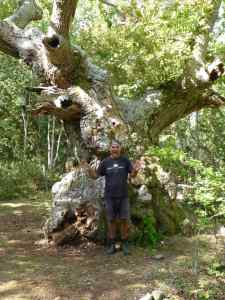
We parked the bikes once we arrived at Trollskogen Nature Reserve and completed the 5km walking trail through the native forest and along the shore line. Whilst we didn’t spot any Trolls we are sure they exist, some of the tree’s were so tangled into the most amazing shapes.
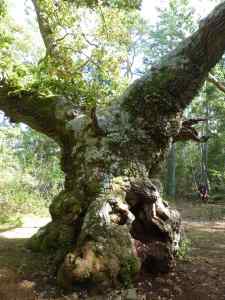
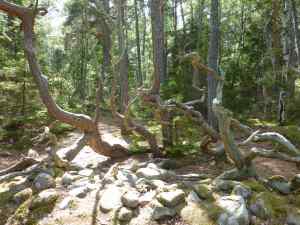


Borgholm – Öland
You wouldn’t believe it after days of constant motion tied up in the harbour we left Byxelkrok at 06:30 and had to motor in flat calm seas the 30 nautical miles south to Borgholm. We did get a little assistance from the sails (probably about a 1-2 knots) so we can call it motor-sailing.
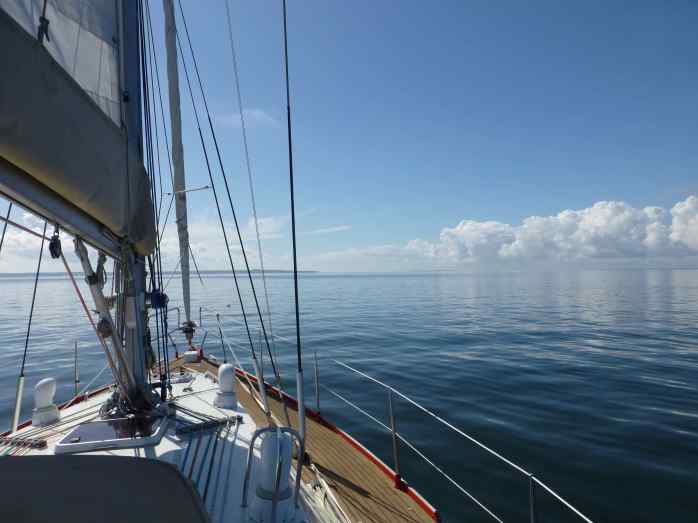
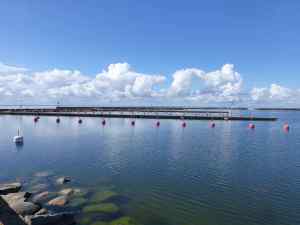
We arrived at lunch time to an empty harbour, it must hold at least a few hundred boats but we were the second boat in and come night time there were only 5 in total, we all came along side rather than having to use the stern buoys. Can’t understand it with the stunning weather why everyone has packed up and gone home – but I am certainly not complaining, especially after recently hearing from the Cyclones who are on their way home to UK that in Amsterdam marina (we were there earlier in the year) they were rafting 4-5 deep and also rafting along the sterns of boats in pontoon berths, the marina would have been at 250% capacity – over full.
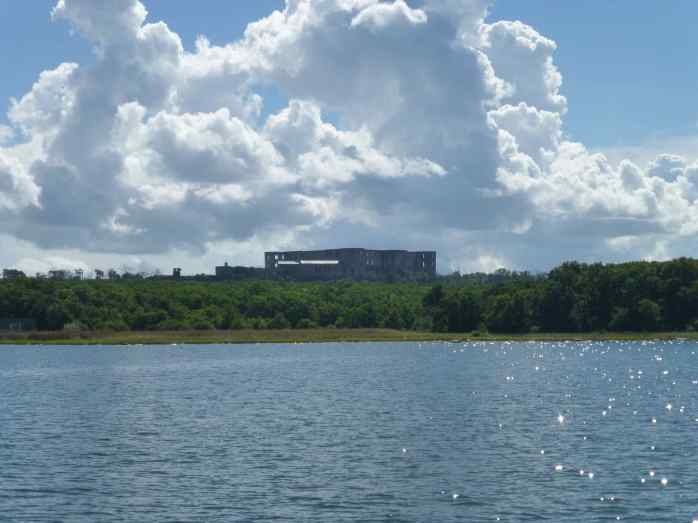
Coming down the west coast of Öland you can’t miss Borgholm due to the “Castle on the Hill”. Someone should tell Ed Sheran about it, as I have seen his castle on the hill in England and this one is much bigger!
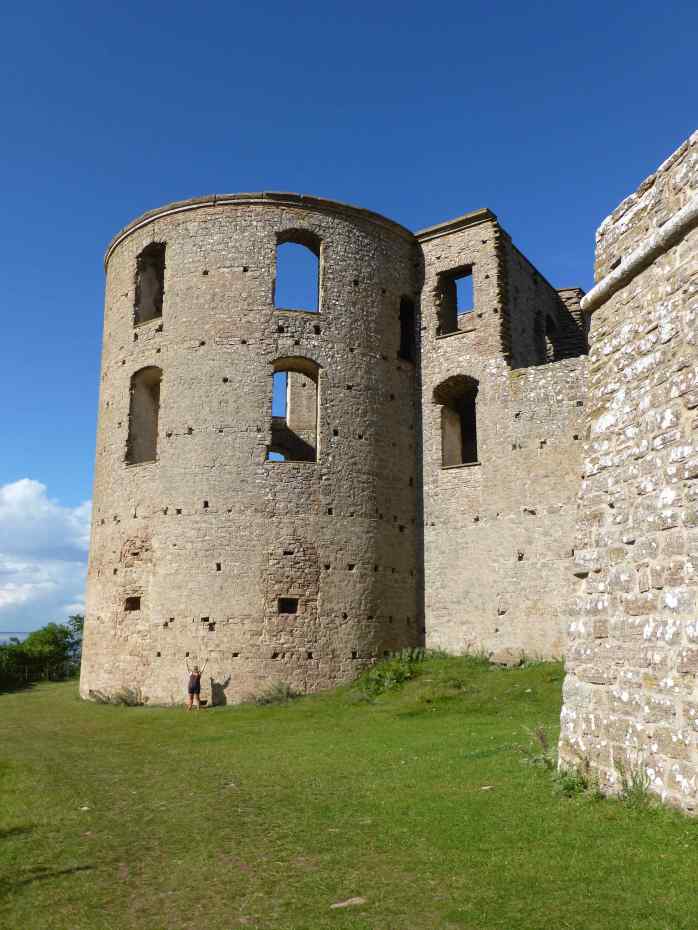
The former palace is HUGE, and magnificent even as a ruin. The Royal Summer Cottage is also nearby and still used by the Royal Family – furthermore the water in front of the cottage has an exclusion zone which we had to adjust course for to clear around when we left the following day.


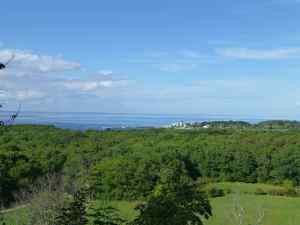

The marina here is associated with the adjoining hotel and we were able to use their facilities during our overnight visit, this included the use of a gigantic swimming pool which I thoroughly enjoyed all to myself for nearly two hours in the afternoon – just wonderful.
Kalmar
Down Wind Sailing – Love It
That uncomfortable swell is a distant memory, how can anyone think that any kind of transportation or travel beats sailing – its magical . . . well today it is anyway.
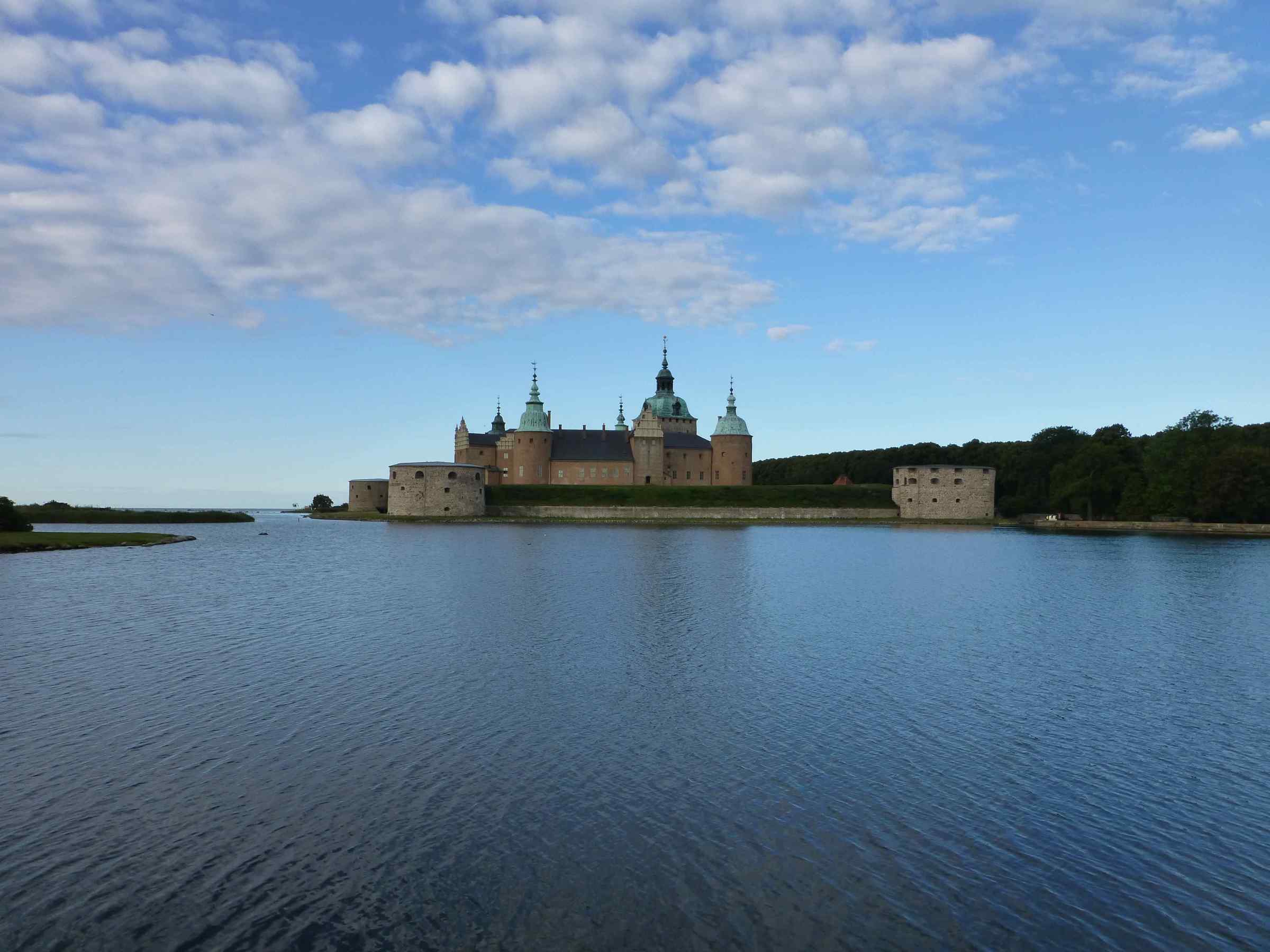
The only down side was it was a short journey only 17 nautical miles, so around 4 hours as winds were ever so gentle we were only just doing 4 knots but oh what a lovely 4 knots it was, smooth, the sun was shining, it was peacefully quiet, main sail out at 90 degrees to port and the gennaker (light wind sail) down the starboard side. This is sailing . . . it was very tempting to not actually stop at Kalmar and carry on another 30 n.miles to our next destination but no we stopped as planned as we had been told the Kalmar Castle was a must see/visit.
Kalmar is actually back on the mainland of Sweden but is linked to Öland via a 6km bridge, it is one of the longest bridges in Europe, it is supported by 156 pillars and has characteristic hump at the Western end where is rises to give shipping a 36 m clearance under the bridge – that’s us thanks!
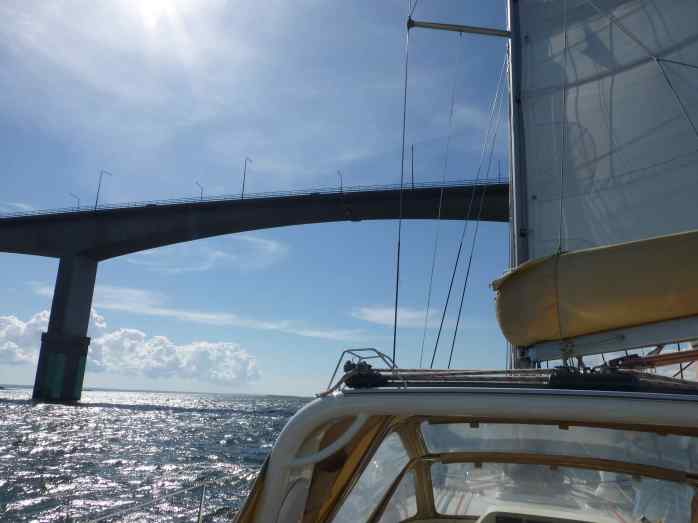
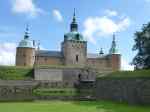
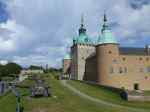
Around 1180 a defence tower was built on the site where Kalmar Castle now stands, the intention was to protect the area from pirate attacks and other enemies. During the rein of King Magnus additional towers and a ring wall were built on the site and it eventually became a castle. For several hundred years the castle was a mighty fortress, strategically it was very important as it was situated close to the Denmark border.
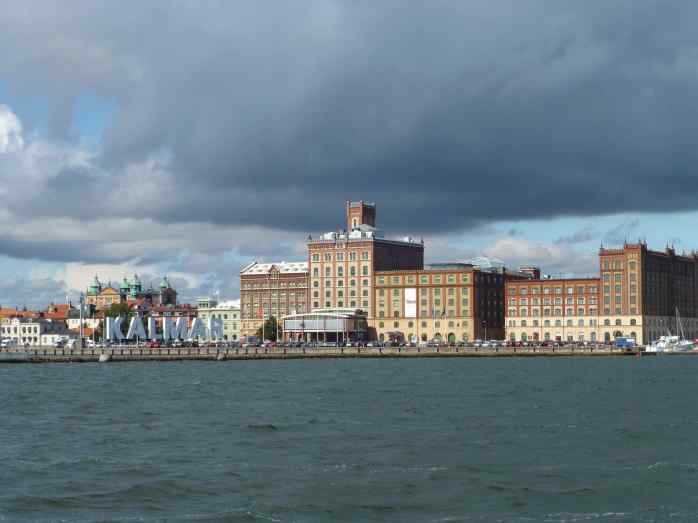
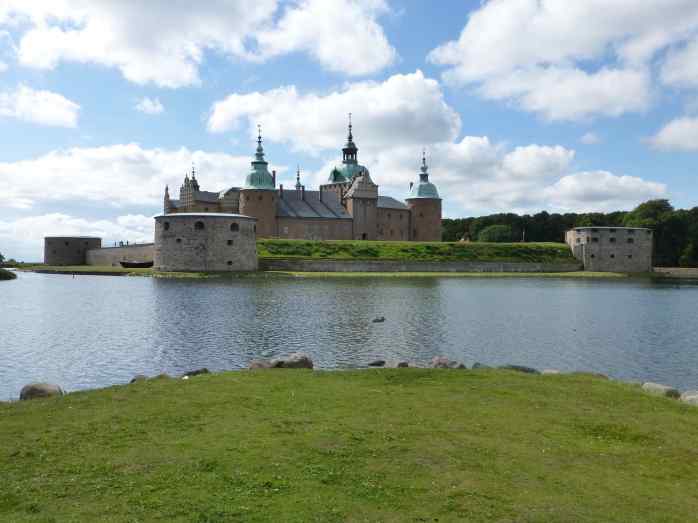
Accordingly to what we have read about the castle it’s most significant event was during the medieval period when Queen Margaret formed the Kalmar Union inside the castle walls with representatives from Denmark, Sweden and Norway, the idea was that a single monarch and a common foreign policy would bring the three kingdoms closer together.



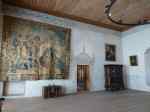
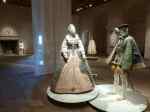
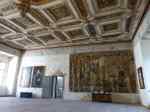
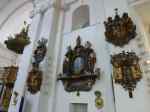
We also visited the Kalmar Cathedral which differs from many churches as it doesn’t have a bell tower or dome, from the outside it looks more like the town hall or government building, but inside it is most definitely a church. Complete with HUGE organ which was playing very gothic type music during our visit. Phil is again taken by the plaques, or personal coats of arms hanging in the church, these are from people whom have passed and are sign of wealth to have it on the wall in the church (no doubt the church being a benefactor of some money for this privilege), some in Kalmar dated back to 1773.


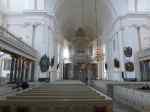
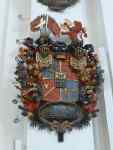
We went off the bed accompanied by the music from the nearby bar, which wasn’t all that unpleasant until about 11 o’clock when it went from bar music to disco dance music and was turned up to full volume, whom may I ask goes to a disco on a Tuesday night?? Who ever they were had a great night and partied hard until 02:30am.
Kristianopel
We were really hoping the wind was still out there the same as the day before to get us 30 nautical miles further south to Kristianopel, but no it had weakened despite having the main sail up and gennaker (light wind sail) it was collapsed most of the journey and the motor did the work. On the bright side however the sun is still shining.
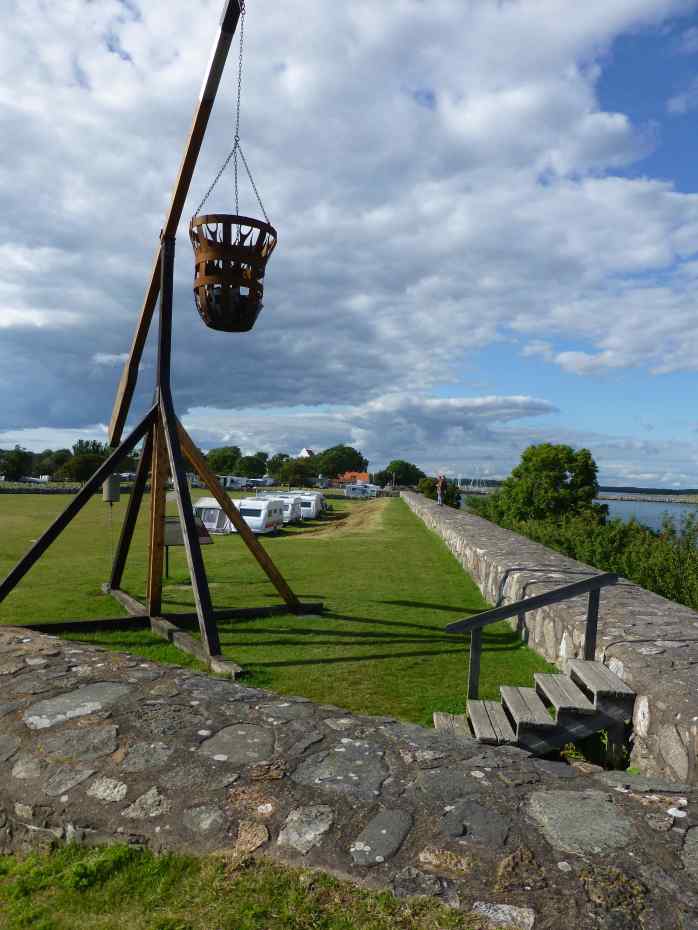
Phil took a walk out and about this small village however I took advantage of the free washing machine and did some domestic duties. It was a quick visit arriving around 3pm and departing at 7am the following morning.
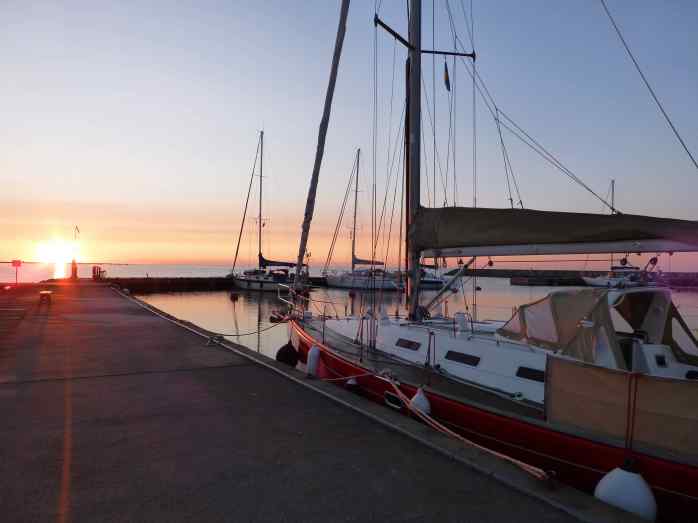
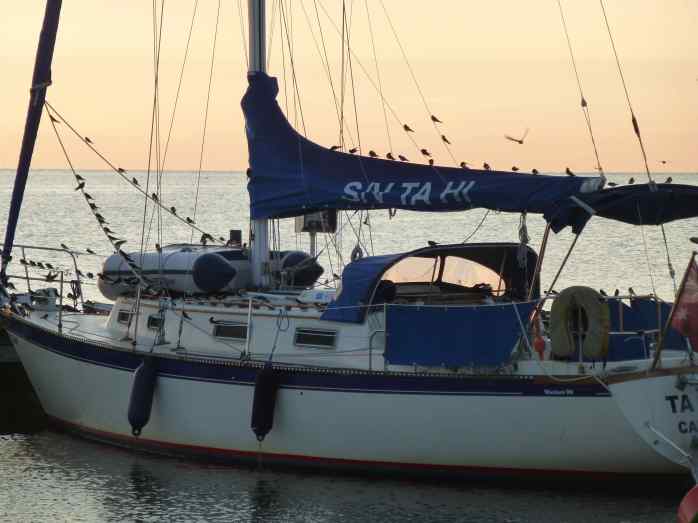
Utklippan
Two small islands 12 nautical miles from the coast of the mainland and 23 nautical miles south of Kristianopel which we again completed by motor-sailing.
The islands are almost completely barron and are very popular with sea birds and seals. A lighthouse was built on the island in 1840 and the island became home to the lighthouse keeper and families until the lighthouse was made autonomous in 1972 and the islands were no longer habited.
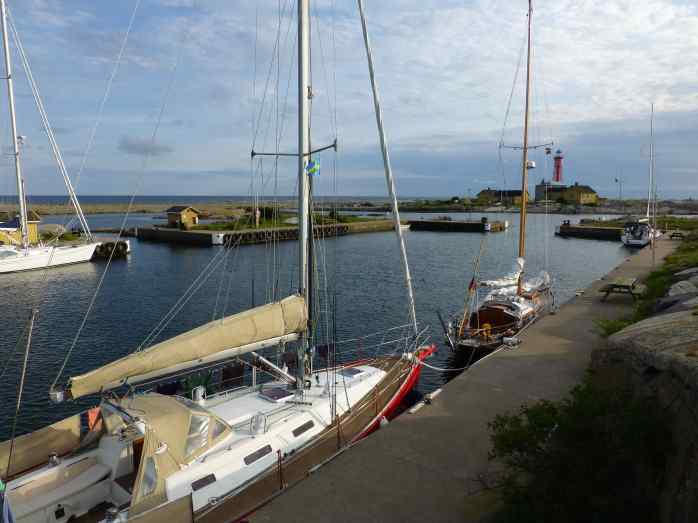
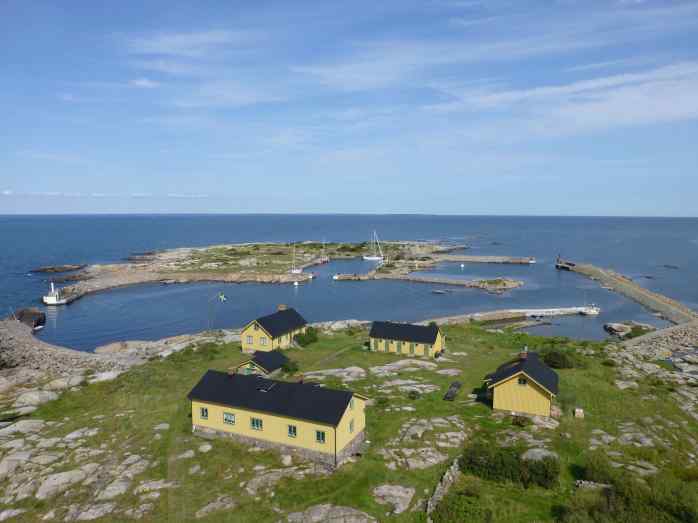


It is now set up for yachts and day trippers from the mainland, and the local ornithological society ring up to one thousand birds a day here in season. The yacht basin in on the North island and the Lighthouse on the South island, there are two impressive breakwaters one on each island creating a pool in the middle access to the sheltered basin however it means you actually need to dingy between the islands as they are not joined – we were please to learn that there are small row boat provided for this, meaning we didn’t have to launch our own.

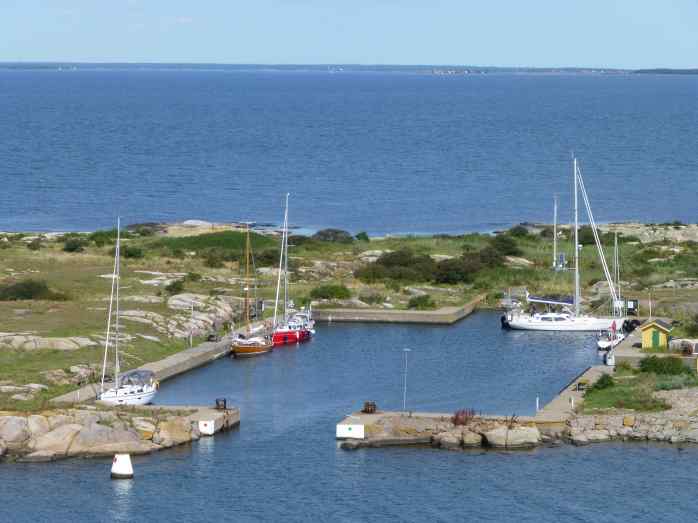
The wind that has been non existent (or directly on the nose) and forcing us to use the motor for the last few days is now expected to blow and blow hard from the direction we want to sail, it’s expected to blow overnight and all the following day so we are bunkering down here for a day off. A day off may sound luxurious (whom to you, are on a long holiday) but I have to say this sailing business can be very exhausting. We are both feeling quite fatigued, days and days in the sun and wind, constant concentration navigating strange waters with thousands of rocks, physically demanding raising sails etc and the list could go on. Basically we are tired, most of sailors have been out on the water for the months June and July having a great time but now packed up back home, we however set out in the first week of March and haven’t stopped longer than 3 nights anywhere. I have done the calculations and since leaving the UK we have sailed 93 out of the last 170 days. A day off sounds great, and it is actually really nice for that day to be her at Utklippan where there is literally nothing to do – bliss. I will however attempt to finish this blog and get it up for you to read. Also thinking for both your benefit (as well as my own) more frequent but shorter posts might be in order!
Singing in the Sauna – Sweden
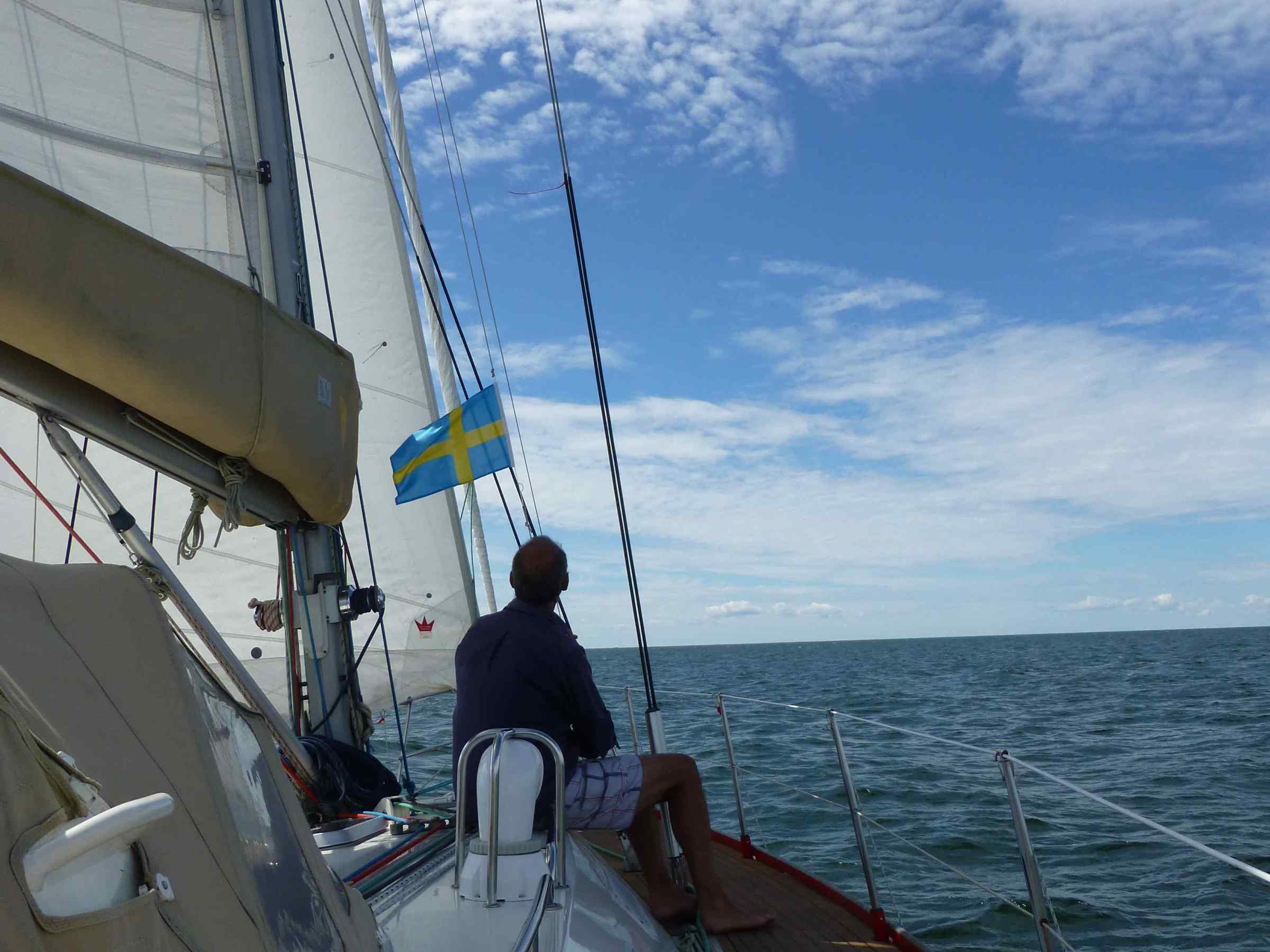
Snaking our way to Stockholm via the archipelago
… and suddenly we are in Sweden – don’t you love it when a plan comes together, we knew heading West would work.
The first hour out of Aland Islands was motor sailing to get around the last few islands before the water opened up and allowed full sails and good cruising all the way to Sweden – a mere 32 nautical miles (about 6 hours).
This day hopping, coastal sailing in a sea without tides is pretty damn attractive and dare I say quite easy!!
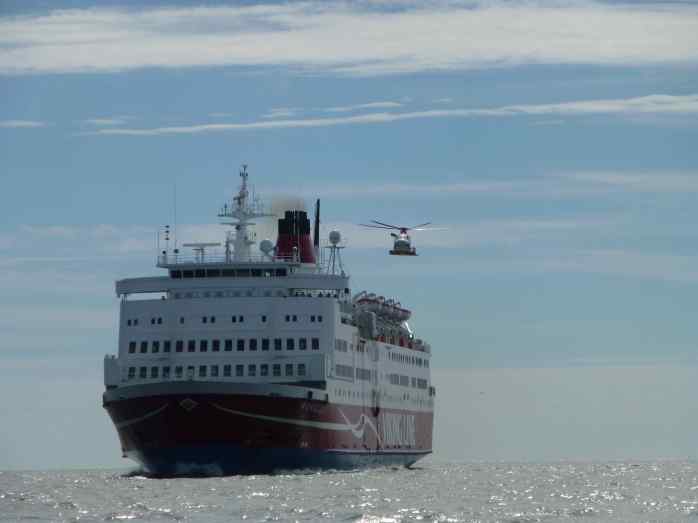
There were other yachts in sight pretty much the entire journey, with it being such a popular sailing area and the middle of the sailing season as well as multiple large passenger ferries in sight most of the passage. In fact I called Phil up on deck when a ferry that had passed us on a parallel heading (about 2 miles away) suddenly slowed and turned heading straight towards us (still a fair distance off), but a very strange thing for him to change his course so dramatically by 135 degrees when he was so obviously heading towards Stockholm (south of our heading). It all became obvious when the search and rescue helicopter buzzed overhead, the ferry had turned directly into the wind to allow for the helicopter transfer to take place (we assume an evacuation from the ship). The helicopter then peeled off and headed towards Stockholm, the ferry by then had passed our stern and then completed a full circle around us crossing our bow (at a fair distance out) to resume his course.
We were arriving North of Stockholm and dropped anchor in a sweet little bay off the island of Idofladen, with 4 other yachts. It did take us two goes to get the anchor to set (still wishing for a Rocna) in the soft bottom before we cracked a cold drink and toasted “skål” (cheers) to our new host country Sweden.
The next day again proved good for sailing under both main and head sail in gentle but consistent winds and was fabulous to sail amongst the islands (they were not as restrictive as they had been in Finland), so much to look at as we made our way south.
We stopped for a hour on the island of Blido for a few grocery essentials before continuing on and anchoring in a sheltered bay off Storfladen. Again very popular with about 12 boats (yachts and motor boats) secured to the rocks with stern anchors out and another 5 yachts already at anchor in the bay, but we were arriving pretty late (just after 7pm) so didn’t expect it to be empty. There were holiday homes in the rocks all around and above us also hidden amongst the lovely lush vegetation.
The next morning we had a specific destination planned, which was different to our last few weeks where we marked all possible anchorages on route and then pulled into one when it looked really nice or when we had had enough for the day – so many options.
Our plan was to meet up with a local Swedish friend Jonatan (made via my brother Scott in Tasmania). However, it was quite a shock when we were all prepared to leave the anchorage and the engine didn’t start?
An hour and a half later, after some great work by Phil in swapping the engine start battery with the windless battery (thats the one that winds in the anchor) the engine started and we were off. Further investigation since has revealed the battery is fine but is being drained somehow by something when not in use – strange as it’s a single function battery (so until we can figure what exactly that is when we stop we disconnect the battery to keep it’s full charge – working well so far).
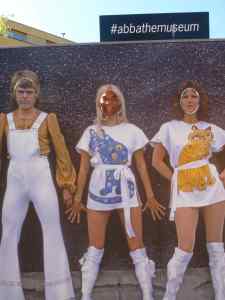
We arrived at the island of Galtholmen where Jonatan’s family have a summer house, and anchored in the sheltered lagoon at the back of the island (just a short walk from the house). That evening we enjoyed a fantastic meal with Jonatan and Anne at the summer house and discussed everything Swedish. So many iconic companies/brands; Volvo, Scania, Atlas Copco, Sandvik, Ikea, Roxette, Abba, Ericsson, Electrolux, Swedish Furniture Design. As well as two words that we can credit to Swedish origins; Smorgasbord & Ombudsman.

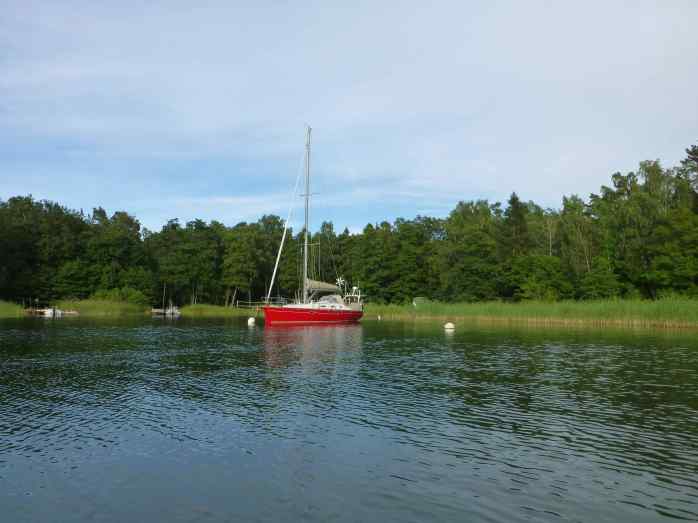
Jonatan had planned on spending the week sailing his own small yacht but unfortunately his mast had broken spoiling his plans, but turned out great for us as he was then able to come on board and sail with Red Roo, showing us all his favourite local secret spots – fantastic!
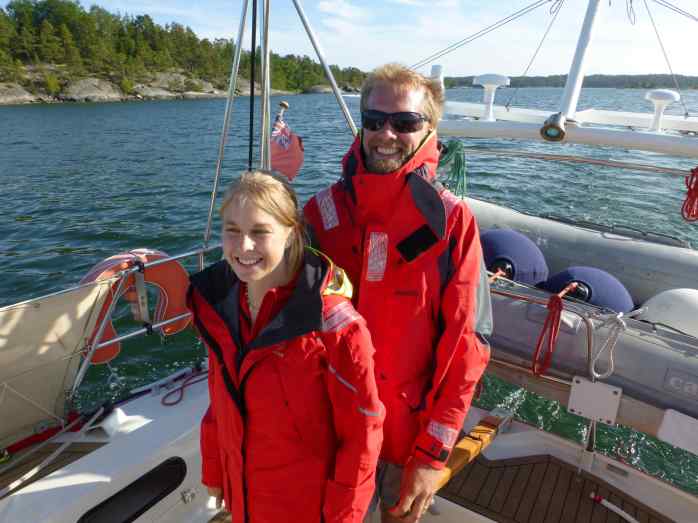
This is the first time we have sailed with anyone else on board and we really enjoyed the few days & nights Jonatan and Anne spent on board with us, and they also turned up in uniform – wearing Red Roo Corporate Red!
Our first night was a place called Storö-Bockö which under no circumstances would anyone who wasn’t a local attempt to visit. It is riddled with rocks just under the surface (many uncharted) and we were happy to have Jonatan onboard as our local pilot to steer us in. It was worth it, a great spot. A BBQ on the rocks for dinner and the next morning enjoyed swimming and relaxing in the sun. We actually felt like we were on summer vacation.


Eventually around lunch time, we set off again sailing, and really enjoyed Jonatan’s local knowledge allowing us to sail where normally we may not have (in the narrower channels), it was great having a third set of hands to allow smooth, quick tacks through the channels criss crossing our way forward.
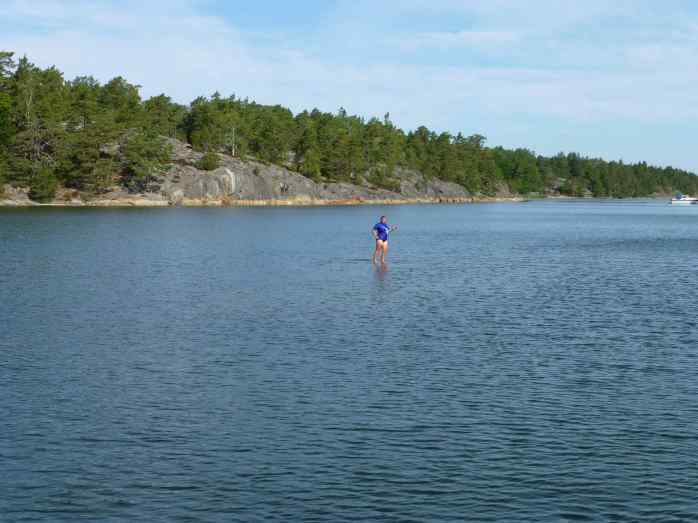

A second day of perfect wind with loads of sunshine gave us another fantastic day on the water, enjoying the scenery, the company and of course the sailing.
We later met up with some of Jonatan’s friends at a spot called Ostholmen. We were in for a treat with summer celebrations well underway and loads of new people to meet and socialise with.

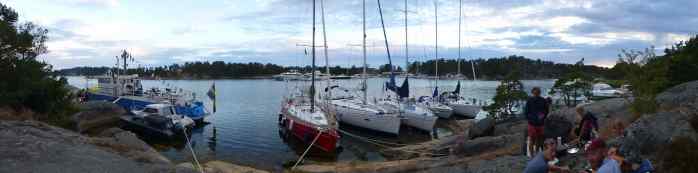
We were also next to another group of summer vacation holidayers (mostly University Students) on a real party boat. They had a great set up moored along the rock, a great bbq spot, a huge deck, great music with large speakers and a sensational inflatable tube, which as someone jumps on one end – it launches someone off the other end into the water – great fun!
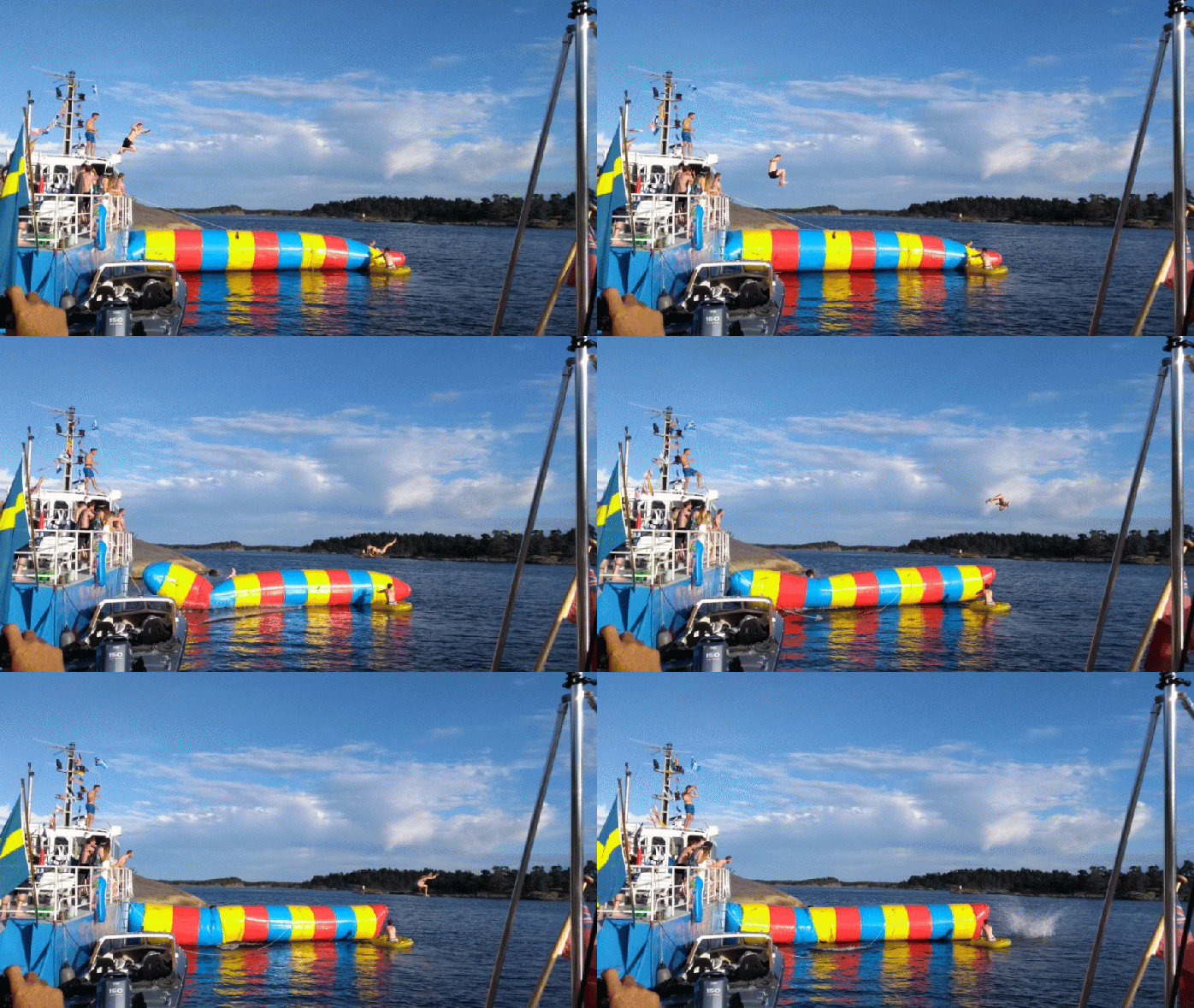
We enjoyed the afternoon drinking, eating and socialising on the rocks with all our new friends, so much so that when the invitation came at around midnight to join them in the sauna on the island, we were happy (or drunk enough) to join them.

The sauna was an electric sauna, a short walk through he bush in the next bay of the island. With about 25 of us, we were taking turns cycling through the sauna, the dressing room outside the sauna (which itself was really quite humid and hot) and also jumping off the jetty into the cool Baltic Waters to complete the experience.
The temperature inside the sauna was a little over 70 degrees and obviously very very humid. Once the clock hit 1am it was time to enjoy some traditional Sweedish drinking songs inside the sauna and although we didn’t know the words, we certainly joined in the choruses.
You may remember a few blogs back in Estonia and then also mentioned in Finland how it didn’t get dark at night, well, it does now, and I found that out when I attempted to get back to the boat from the sauna alone, once into the trees I found it very very dark, any how I eventually made it with a little help from a local and Phil appreciated the fact that once I made it back I turned our deck light on to assist him in his return.
The next day rain set in for most of the day, which worked well as we lounged around the boat reading and doing (recovering). It brightened up for the evening allowing more BBQ’s and socialising but not being as young as we once were, we gave the sauna a miss on the second night (the booking being from 10pm – we were ready for bed by then).
We stopped back at Galtholmen in the Lagoon for a night and a final meal with Jonatan and Anne at the summer house before heading into he big smoke of Stockholm.
Stockholm
We motored into Stockholm with hardly any wind to be of assistance. The passage takes you past Vaxholm an island famous for its fort. Originally built by the King in 1548, he also filled in all the sounds expect one with stones and poles (meaning any enemy ships could only take the one passage past the fort). The Danish fleet failed to break through to Stockholm and even the Russian were deterred from passing Vaxholm after they had burned most of the archipelago in 1719. The Swedish navy guarded it as the last line of defence and no enemy has ever got past the fort.
It was demolished in 1833 when declared out of date and the present fort was built over a period of 30 years by convict labour, it was hardly completed before it was again outdated. By then the grooved bullet had been invented and was considered a major threat to the fort, and this was tested by the ship Hildur anchored at Vaxholm who were ordered to fire a single shot from their brand new 24 cm cannon with grooves inside the barrel, the result – the outer and inner walls collapsed! Whoops!!
Jonatan told us another funny story regarding the fort, that being the stern general field marshal von Moltke who visited Vaxholm in 1881 is said to have laughed only twice in his life; once when we saw the Voxholm fort and then when is mother in law died!!
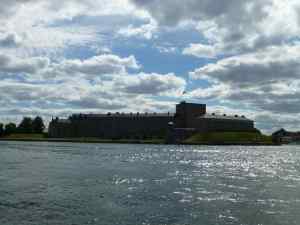

We didn’t stop at Vaxhom we continued on into Stockholm and secured ourselves at the Wasahamnen Guest Harbour. A great location close to everything. It is right in front of the famous Vasa museum (more on that shortly), about 100 meter walk to the ferries taking you to the old town or into the city centre, and beside the big amusement theme park. Alternatively if you are like us and too cheap to pay for the ferry it is a brisk but pleasant 20 minute walk into town.


We visited that very afternoon the Vasa museum, Phil having visited many many years ago when he was backpacking the world and remembers being very impressed by it.
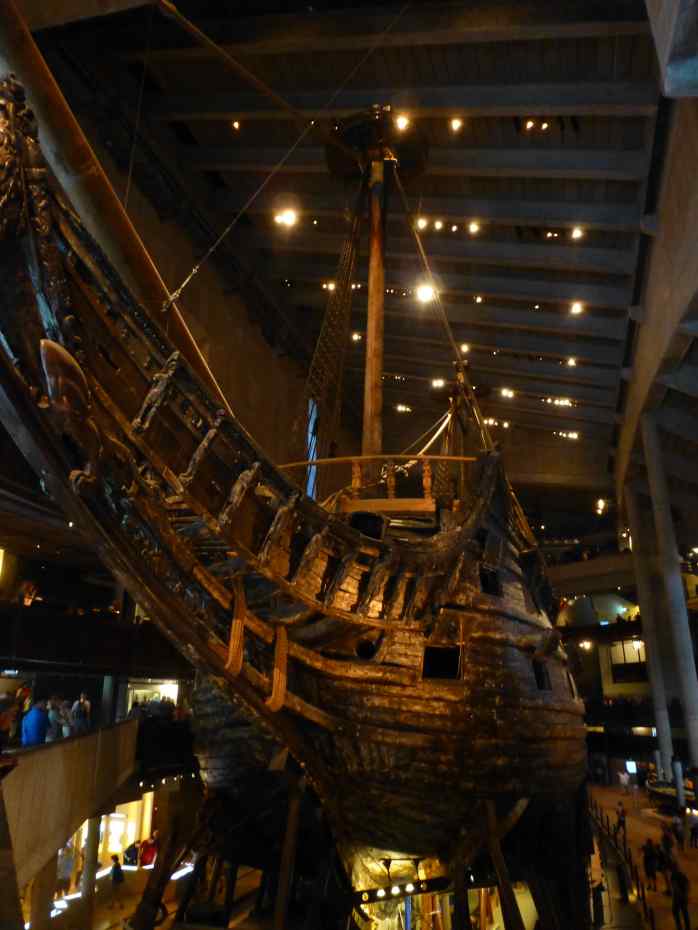
For those who are unfamiliar with the Vasa (this was me) the Vasa is a Swedish Ship built in Stockholm and on the 10th August 1628 it set out on her maiden voyage and sunk 20 minutes later about 1100 meters from the dock in the Stockholm harbour.
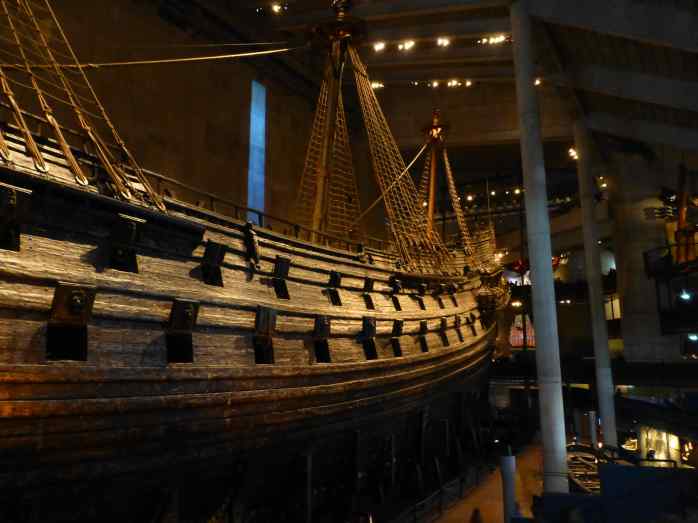
Not exactly a success story for what was to be the Kings flagship. It sunk simply when a very slight breeze filled the sails (they were only using 4 of the 10 on the ship) and the ship heeled over and water came in the gun ports (cannon hatches) which were open and on display for launch celebrations. Basically to keep it short and simple the boat had been built too narrow and didn’t have enough ballast (weight) in the bottom or depth to balance her, especially as she was carrying more cannons than any other ship had ever carried before this time a total of 64 heavy solid cannons.
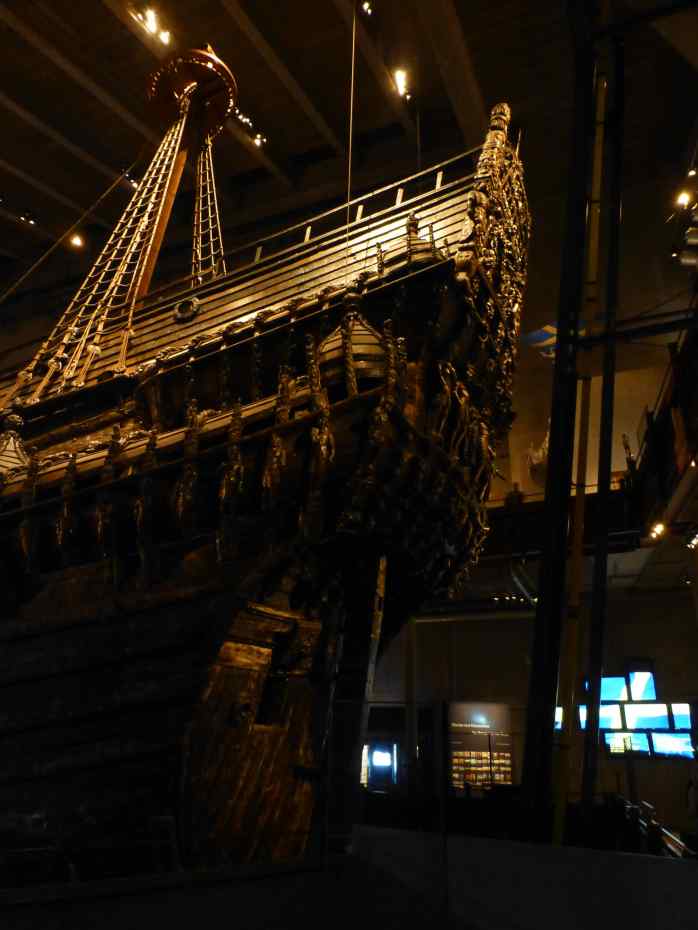
Remember this in the years before they ever had things such as drawings or plans, or engineers for ships construction. The ships architect actually died during the first year of construction so it was finished by the captain and others (who were not ship builders) to the Kings orders/specifications (the King also not being a ship builder or engineer). The captain did however suspect that the ship was unstable and duly performed a stability test (men running back and forth across the deck) which was stopped after only three runs back and forth as the ship was rocking wildly and in danger of capsizing. They however proceeded on with the build and launch.
The inquiry into who was to blame for the failure and ship sinking didn’t find anyone at fault (as mentioned the ship builder had died during construction), however they did order his widow to reimburse the king for the cost of the lost ship – which over many years she actually did!


The wreck was salvaged in 1961 after 333 years under the sea, at a depth of just 30 meters. The reconstructed vessel is 98% original and is adorned with hundreds of caved sculptures. It really is both an amazing story and an absolutely fabulous museum. It is preserved so well due to unique water that is the Baltic Sea and the lack of salinity (salt) in the water being neither fresh or salty a unique mix meaning it isn’t an environment that normal parasites (namely shipworm, that would have eaten the wood and leather and everything else) can survive in. Furthermore the other astonishing fact that helped with preservation is that the water around Stockholm was heavily polluted until the late 20th century, the highly toxic and hostile environment meant that even the toughest microorganisms that break down wood had difficulty surviving. This along with the fact that Vasa was had been newly built (mint condition) when she sank contributed to her conservation.
Incidentally we have now visited three very famous ships, two which have sunk and been salvaged and of course the wonderful Victory (still floating) and Phil’s vital statistics put it into perspective in relation to size weight and build, with the Victory being able to handle double the weight due to the extra width and ballast.
- Mary Rose (built 1511) 32 m long x 12 m wide – 800 tonnes
- Vasa (built 1628) 69 m long x 11.7 m wide – 1,210 tonnes
- Victory (built 1765) 69 m long x 15.8 m wide – 3,500 tonnes
The pictures below show a scale model of the Vasa depicting her original colour – very bright for a ship of that time!


Day two in Stockholm we spent the majority of the day at Skansen which is Sweden’s outdoor living museum founded in 1891, it covers an area of about 300,000 meters squared. It has traditional original houses and building salvaged from all over the country preserved and reset in traditional environments. They also have traditional craft and skills at work in the homes and on the farms as well as native nordic animals on display; Wolverine, Wolf, Bison, Lynx, Wild Boar, Brown Bear, Gotland Ponies, Grey Owls, Elk, Reindeer and Seals. For those Australian’s reading it is very similar (but much bigger) than Sovereign Hill in Victoria – the same concept.


That evening we walked over to Stockholm old town (which although an island is connected by bridges) and explored the old buildings, the windy cobblestone hilly streets, government house and the royal palace. Such wonderful sights and nice to do it without the day time crowds of tourists!


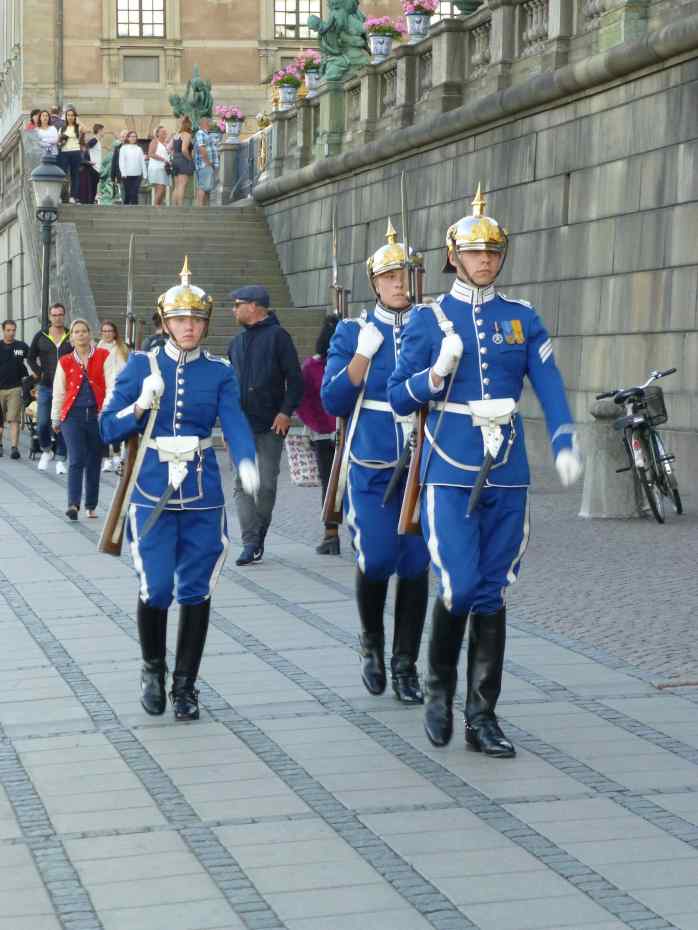
Our third and final day we walked into the “new city” and caught the free bus from central station out to the worlds largest IKEA store. It certainly looked big and took up a lot of space. We didn’t browse the store however but just headed straight into the market hall to get some of the items on our shopping list and also had lunch in the restaurant – yes, Swedish meatballs.

We left Stockholm the following afternoon after a huge grocery shop and a cup of tea and big chat with two very delightful English sailors aged in their 80’s (so inspiring), whom we met when we assisted them moving berths the day before. Roger and Kristin obviously having a lot more experience than us ‘young one’s’ (yes even Phil!) and were a wealth of information for cruising Sweden. They keep their beloved yacht “Badger” in Sweden and come out sailing each year – however they confessed that this may in fact be their last season as they are getting on in years and their health isn’t what it used to be.
Ägnö (Tvättfatet)
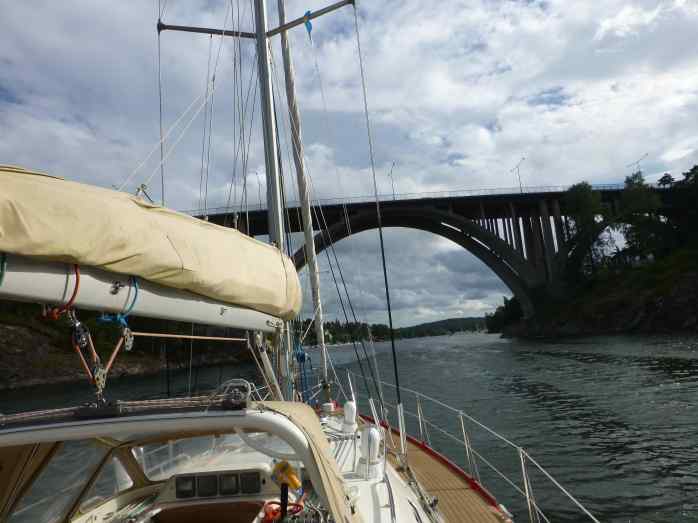
We anchored overnight 15 nautical miles from Stockholm (done under motor) at Ägnö (Tvättfatet), a sea scouts camp island and being summer holidays the camp was in use.
It was nice to have entertainment whilst enjoying dinner up on deck, that nights after dinner activity for the scouts was water rescues; how to throw a life buoy ring, how to assist a casualty in the water and how to get your casualty out of the water. Despite the evening cooling off there seemed to be many volunteers to be the casualty in the water – oh to be young again! Phil discussed how Scouts was very much a boys only environment when he was young (and LOVED Scouts, endless mischief in the bush with his mates), where as this day and age it’s open to the fairer sex, he decided the lads must love the girls being there, especially those in bikinis.


Ornö (Kolnäsviken)
We motor sailed the following day to anchor at Ornö (Kolnäsviken) a very sheltered little bay tucked in behind a narrow entrance. Again very popular with about 8 boats tied to rocks/tree’s at the shoreline and we were second to anchor, by nightfall that had increased to 7 on anchor and 12 tied to shore.
Utö
The next day the wind was blowing up and of course right on the nose for the heading we wanted. It was stronger than we have had previously meaning really good for sailing (but not on the nose) and also really a bit too strong to be motoring head on into unless absolutely necessary so it was an easy decision to increase our journey distance (still going to the same destination) but heading out at an angle (adding miles) but giving us a good angle to sail on, and sail we did. Of course when we reached our furthest point before tacking back in the wind dropped completely but by the look of the clouds not for long, there she was in the distance the clouds giving notice of the incoming squall, the wind swung around a bit then proceeded to blow from anything from 6 knots (nothing) to 27 knots (a lot) and of course from various directions as well as a torrential rain downpour to top it off. The heavy rain and squalls continued on and off for the remainder of the journey and the remainder of the day. Phil had to hand steer through most of it to keep it in the sails correctly due to the wind direction and force constantly changing (well . . . there is no use both of us getting saturated – I stayed below and offered moral support, encouraging words and handed up rain jackets, beanies and towels).
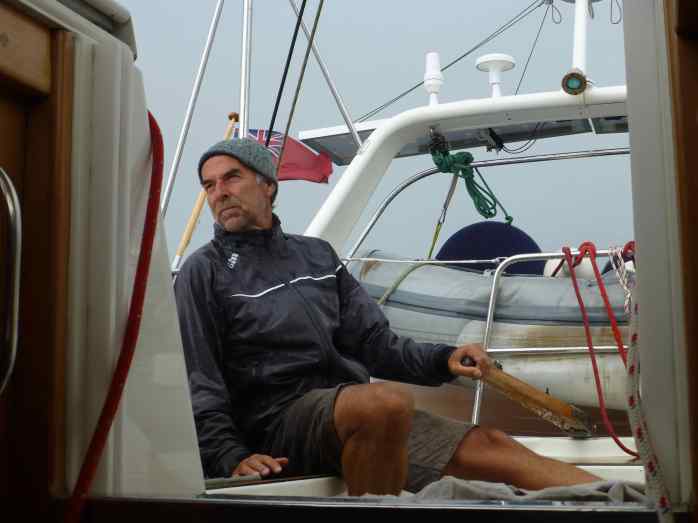
We arrived at Utö and lucky enough managed to berth between downpours (stern anchor and bow to pontoon). We bunkered down for a few hours waiting for the ongoing downpours to finish doing there thing before exploring the island.
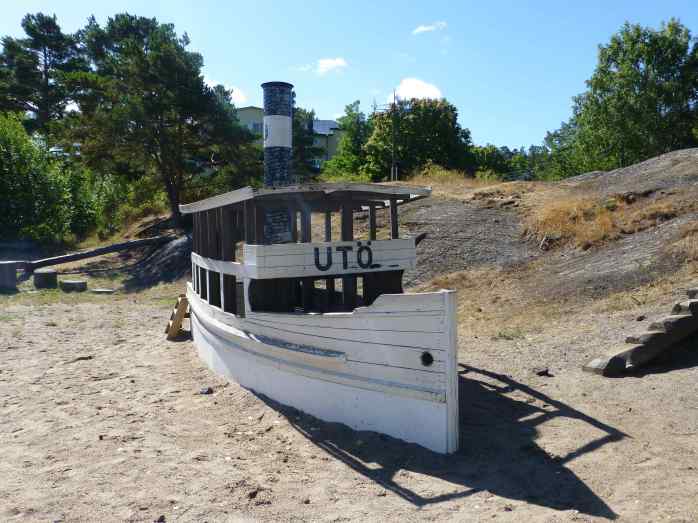
Utö is 10km long and has a population of around 245 residents. We also read that it is the most popular island destination in the archipelago with over 300,000 visitors each year. We however noticed that since the weekend the numbers of yachts has really dropped off – we think this is the week most return to work after their summer vacation. There was certainly a lot of space for boat but actually not so many which suited us. The reasons we wanted to call at Utö was to learn more about its mining history (and we were pleased this coincided with the rough weather and a pontoon to secure to).

We learnt that they began mini iron on the island around 1150 and over two million tonnes of ore had been extracted by the time the mine closed in 1879. Times were hard and the mining company forced children under the age of 10 to start working down the pit. Miners reached the pit via two, hundred meter long wooden ladders clamped to the rock wall. Ore and water were brought up in baskets pulled by horses. Workers received part of their salary in spirits that the mining company produced locally (8,000 litres per year). Many say each day started with a drink to instil some courage into body and soul before descending into the mine. Very different to what Phil and I from a life working in the mining industry. After the mining came to an end the islands next life was one for logging and saw mills before eventually becoming a tourist holiday destination for people out of Stockholm.

Rȧnö (Skutviken)
The following nights anchorage on off Rȧnö in the bay of Skutviken offered great protection from an unusually choppy and lumpy Baltic Sea, the chop and swell being a reminder of the wind and wilds we encountered yesterday (that continued to blow all night). Our explorations on Rȧnö turned up (as the sailing guide had told us) Russian ovens left over from occupation and also we discovered (not in the guide) signs of some very active beavers on the island. They are very ambitious with the sizes of tree’s they were knowing at and bringing down – they must have a major construction in progress.


Landsort
Our next stop was largely just one of convince to set us up to sail the following day to Nykoping (back on the mainland), we were waiting on the winds promised to come the following day to allow us to sail there so did the short motor of 15 n.miles to arrive at Landsort on the island of Öja (the southern most island in the Stockholm Archipelago).


We walked the entire length of the island (4km) and back from where were berthed at the northern end to the Lighthouse at the southern end of the island. The island is listed as the first pilot station and oldest lighthouse (lit in 1651) in the Sweden, controversially however as the Kullen lighthouse in Skåne was lit 100 years earlier but Skåne was Danish at the time!
Nykoping
A fantastic day on the water, firstly a lot further than we have been doing for a while with a little over 30 nautical miles travelled and all under sail – fantastic!
We started with a F5 (17-21 knots of wind) from the south east (port side of boat) and were cracking along between 6.5 and 7.5 knots (a very good speed). Still a fair bit of swell on the water making it a bit lumpy but we were at a place where the water is exposed – being nothing between us and Poland on the other side of the Baltic Sea.
When we adjusted course for the second part of the journey the wind was dropping to a F3 (7-10 knots) directly downwind (behind us) so we set up the spinnaker pole and put the main and head sail out in a goose-wing configuration (one sail out each side at 90 degrees to the boat) catching all the wind and travelled along very comfortably at 3.5-4.5 knots (and the swell no longer on our port side – yippee!).
We arrived very happily after our day sailing in Nykoping . . . now let me ask you a question, how would you pronounce it? Myself being very Australian would attempt to pronounce each letter this is very wrong in any European language but I still do it every time. However let me enlighten you it is pronounced “knee-sherping”.
And the GREAT thing about Nykoping is we have Gas – not the smelly kind from Phil’s backside but the cooking kind for the stove and hot plates YAY!! We have been heading for Nykoping (regardless of the pronunciation) since leaving Stockholm on the very good advice from the “Badgers” that we would be able to refill our English (and maybe even our French) gas bottles here.
We left the UK with two full English bottles in the first week of March and were able to refill them late in March in Holland (we had only used one by then) but nothing since. Every country has a different bottle and there is an upfront contract and investment in buying a bottle and then you of course need a new (expensive) connector to fit to the boat all adding up, as well as them all being differently shaped and not fitting in the gas locker. We haven’t ran out yet (but could anytime now) and we must credit the Cyclones of Langstone for sharing their smart solution (ever so obvious now) of buying a plug in electric hotplate for use when in a marina with a power connection. This worked very well across the south coast of the Baltic where we had to be marina’s almost every night due to the coast. We have also hardly used any gas in Finland and Sweden as we have lit the BBQ almost every night either on land or our special (cold to touch) portable bbq on deck. However we were ever so pleased to be able to fill them up considering this summer bbq weather won’t last much longer.
Note:
For those of you following along at home that are interested in our photos, I have just completed two more photo slide-shows (you can click here to view “our photo’s” or find them via the Our Photo’s on the Home Page menu). There is one for the Baltic States of Poland, Lithuania, Latvia & Estonia as well as the second being of our time in Finland 🙂 (view them full screen to remove the annoying adverts and pictures in the app)
Åland Islands – Sandö, Kobba Klintar & Mariehamn
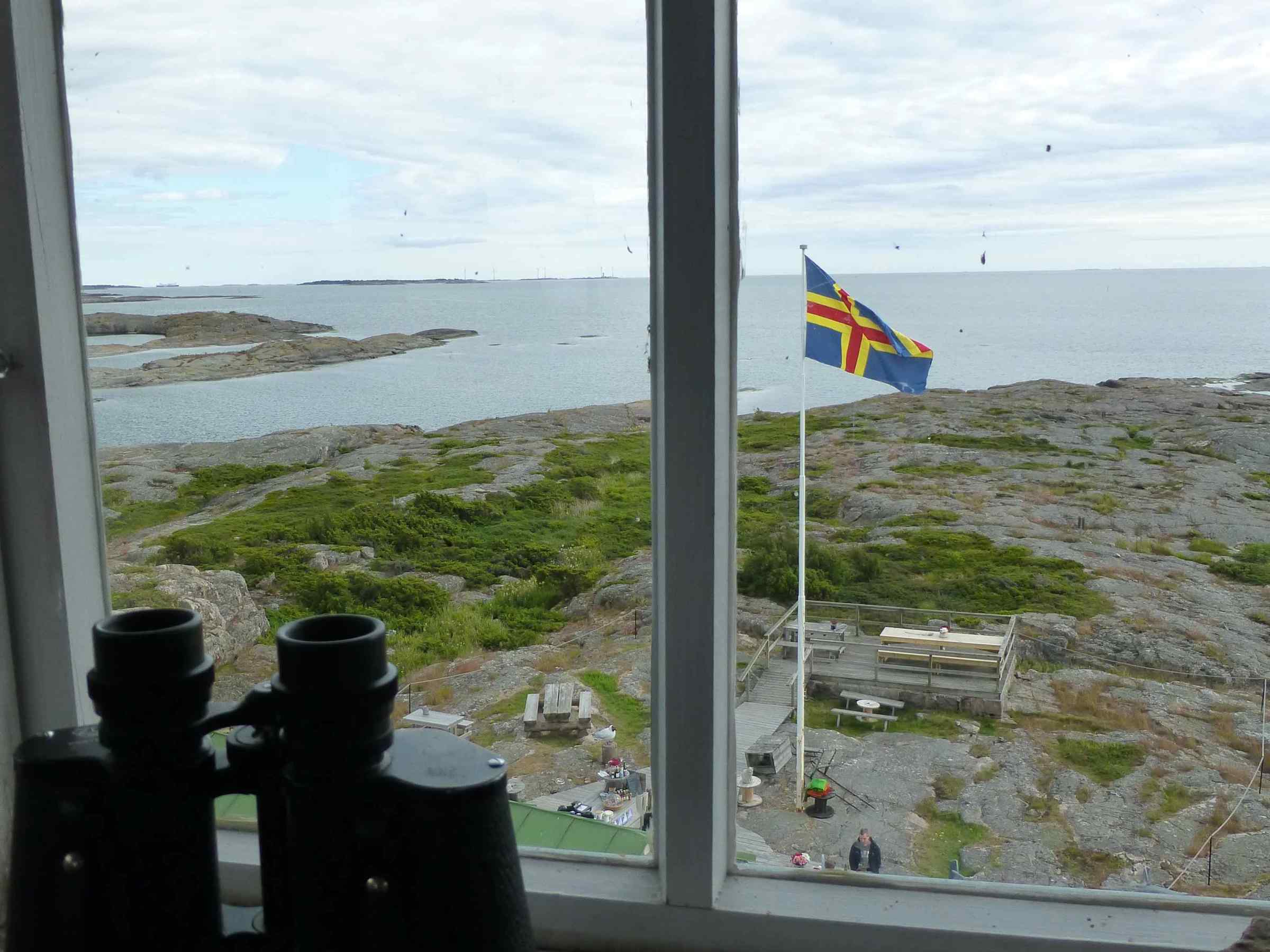
West we must travel, we need to get to the Åland Islands and onto Sweden, we could easily spend another month in in these Finish islands (visiting every sauna – not), but we really should save some sunny days for the Swedish Archipelago, which we are sure will be just as great – so on we go.

Sandö
22 nautical miles covered with only 1.5 hours of the 5 hour journey done under sail – small victories. When sailing, it was blissfully peaceful (no engine noise) and felt great with 17-20 knots of winds we were cracking over 6 knots speed and on quite a reach as we were sailing close to the wind. Fantastic.
However due to the many islands and narrow channels and constant directional changes around the islands it only lasted that first 90 minutes before making it impossible to sail, but hey better some than none.
We dropped anchor in the N/E bay off Sandö Island in 2.5 meters of water. Quite weedy, which makes us nervous about rocks but good holding and sheltered. We didn’t go to shore, just enjoyed the tranquility.

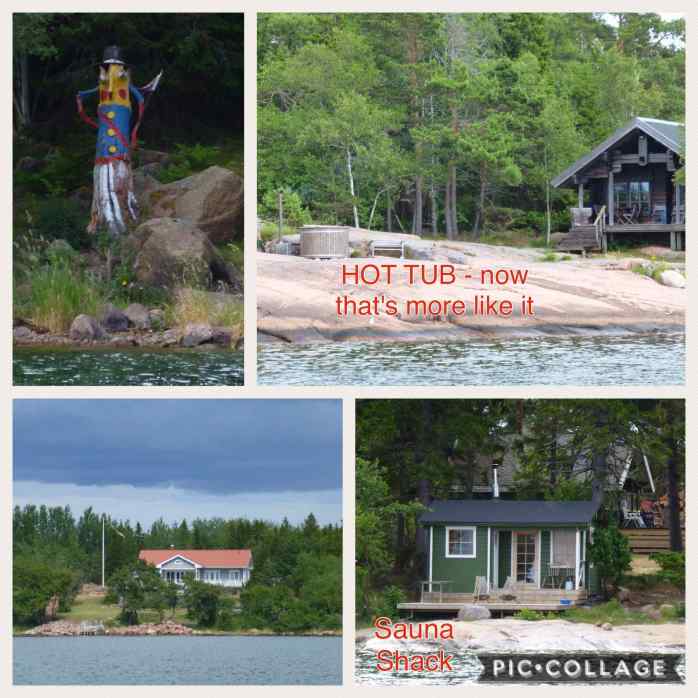
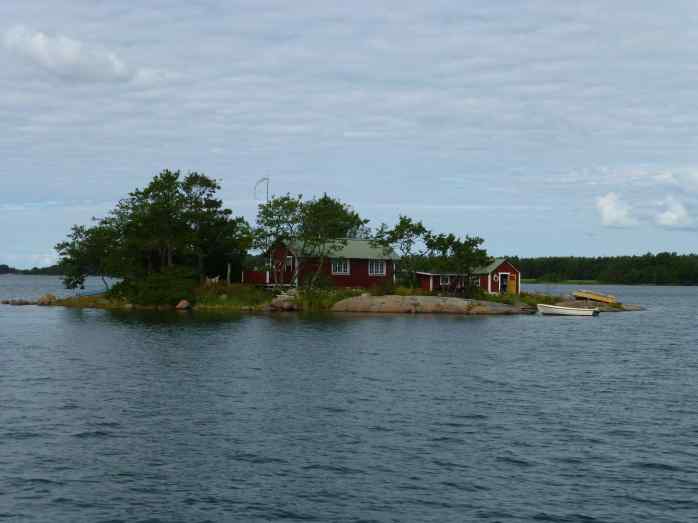
We were now in the Aland Islands, whilst officially Finland it is an autonomous province, they have their own governing body (separate of Finland), their own flag and they actually speak Swedish. The Aland Islands consist of 6,700 islands (don’t stress, we are not going to visit them all). We are really just going to gather ourselves re-stock with water, food and power (been off the grid for 20 days now) then head to Sweden.
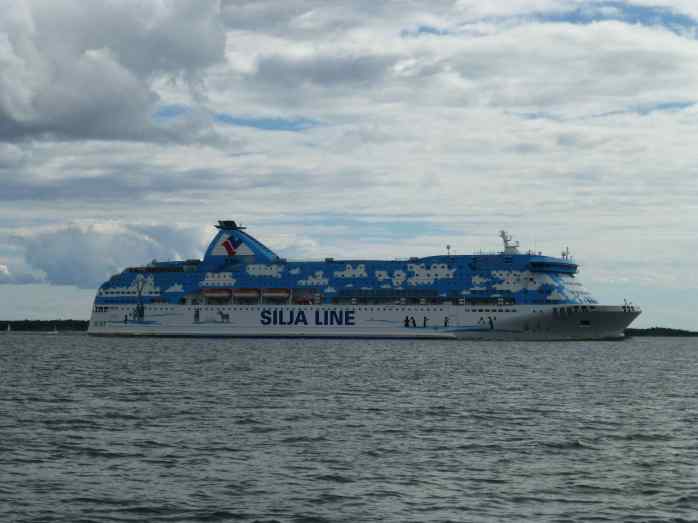
Kobba Klintar
We lifted anchor and spent the day motoring with some patches of motor-sailing with the genoa helping us along the 23 nautical miles to the capital of the Aland Islands that being Mariehamn. Soon enough it was 4pm and we thought (being tight arses such as we are, without any income) that rather than go into Mariehamn now (late in the day) and have to pay for a nights marina fee’s we should stop at a nearby nature island (free) and then go into Mariehamn early in the morning, therefore getting bang for our buck (a full day & nights worth of services). Good plan – and that is how we ended up at Kobe Klintar 4 nautical miles from Mariehamn.


Kobba Klintar (island) was a great spot to pick as it is an ex-pilot station, meaning that it used to house the pilots for the boats coming in and out of Aland Islands. The old pilots cottage built in 1862 is now a cafe and next to it stands the newer bigger, taller pilot house built in 1910 to house a very large foghorn. The pilots left the island in 1972 and then in the early 2000’s a society was formed to restore the island and open it to the public. It is small, cute and loved by a precious few committed people who run it as a tourist attraction. A very popular day trip (or evening BBQ location) for locals out of the capital.


We had one very excited Captain as we were securing to the wall in the harbour as he excitedly pointed out some wildlife “there is seal in the harbour” he declared….turns out this seal is a cleverly disguised buoy! Whoops! (see picture above – the ring in his mouth might have been the giveaway, they don’t normally take your lines for you)
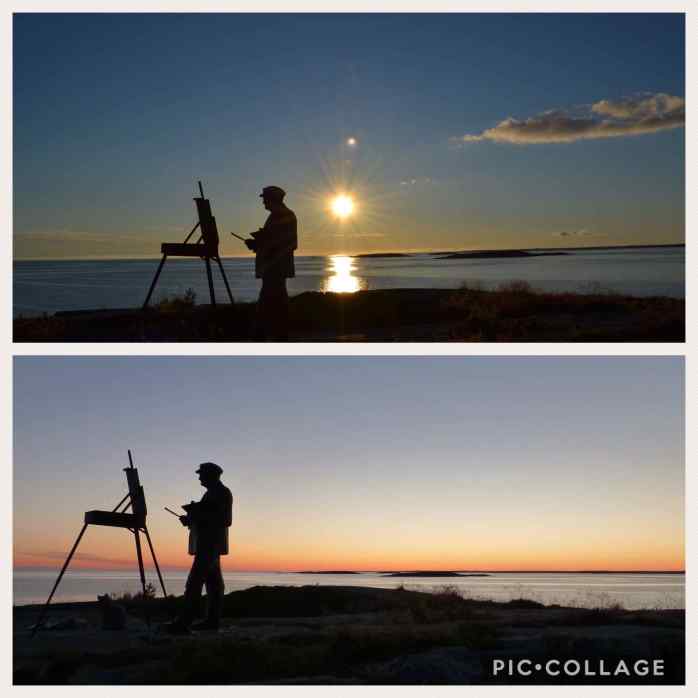
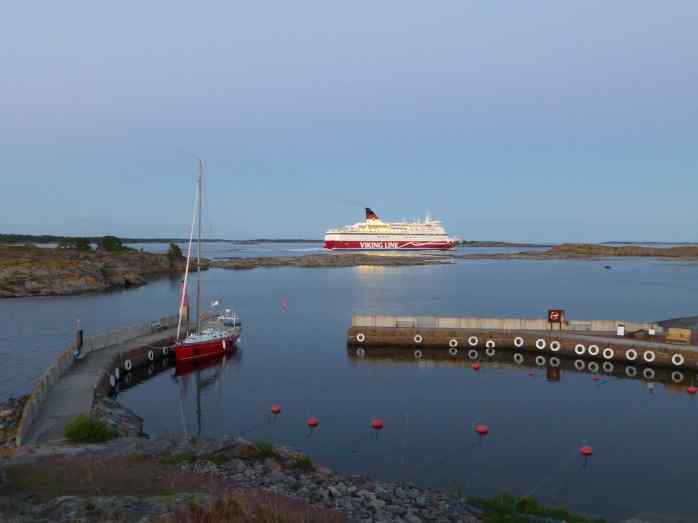
Mariehamn
We motored into Mariehamn the next morning a very short journey (less than an hour) and made ourselves at home in the large marina. Twice. By this I mean we cruised the marina looking for the ideal spot, found it, set up (stern buoy & bow to pontoon) and in we went, perfect – for a while. We secured and let the boat settle for a while (read here plugged into electricity and had a cuppa tea) then noticed being on the end of the pontoon we were pulling fairly sideways in any boat wake. That’s ok we will just tighten the stern line out the buoy, excellent, nope not quite enough, tighten it some more – well hang about a minute the buoy is now pulled tight right onto the stern of the boat (under the dingy which hangs on the back deck on davits). Hmmmm…… ideally we would be fine if another boat came beside us and blocked us in square but that’s not going to happen if they can’t reach the stern buoy under our dingy. OK, move we must (sigh…..) so a quick walk around the marina to check out other spaces and we moved over to the other pontoon for the big boats (most a bit bigger than us), well this time, wouldn’t you know it the buoy was so far out that we had to join another line to our stern buoy line to reach! Sigh….. Anyway we were good, a lot better than the first spot.
We filled the water tanks and plugged into mains power, to cook electric rather than use any of the precious little gas we have remaining (it being a real challenge to get gas bottles refilled as each country has their own type, connection and set up – and we visit a LOT of countries making it too expensive to change bottles each country so we are very much gas misers) we also plug in to recharge the house batteries, which didn’t really need it but hey we were paying for it – after being off the grid for 20+ days we still had over 80% in the battery/power bank.

The washing machines were also appreciated, and we had a couple of indulgent (longish) shore showers (gave the attached saunas a miss tho). I should explain that we have a shower on the boat and it is a very very good shower, hot and lots of pressure – we both love showering on the boat, however to conserve water (and minimise using the grey water holding tanks) we tend to only use it when ‘shore’ showers are not available.
It was a great weekend to be in Mariehamn as they had lots on (being mid summer). Firstly we knew of the Aland Sea Day’s event which was on the other side of the town at the other marina, a short 10 minute walk away. There were maritime activities, kayak excursions, sailing cruises, bark boat building, demonstrations of old boat engines, lots of wooden older boats, a museum and live music (old folk music and reggae).


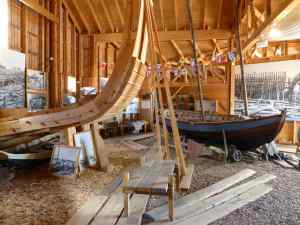
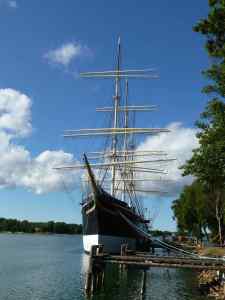
After walking into the town centre we also discovered that is was the first weekend of “Rock Off” a two weekend local Rock Festival. We got ourselves a copy of the program and decided to go to to the concert that night as although the program was written in Swedish or Finish (not really sure which – but definitely wasn’t English) we could pick out that tonights band were playing 70’s rock classics by; Status Quo, David Bowie, Creedence Clearwater Revival, Deep Purple and others.
Now when I say we decided to “go to the concert” I of course mean sit in the park outside the concert and listen. We were not the only ones however (many others also had the same idea). Anyway our piece of grass was fantastic, and had a stage view (via the long zoom using the camera – see picture below).
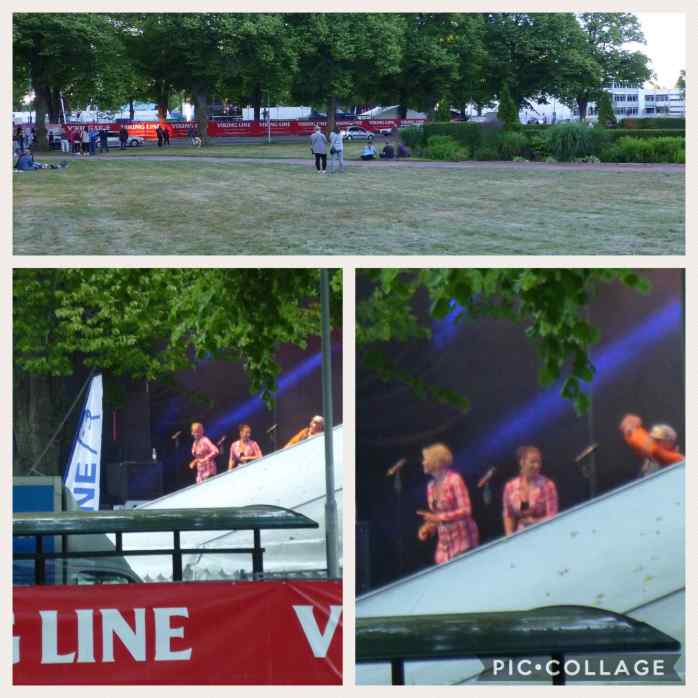
It was a great night for our picnic (pizza) in the park with the music despite the fact that they were not singing in English we knew each song via the tune. The following weekend of the festival (we would be long gone) had the headline acts (well bands we knew of) with Europe (The Final Countdown, Carrie, Superstitious) and Toto (Africa, Hold the Line, Rosanna).
The other attraction whilst we were there was the Car Show with many of those on display being American or “Yank Tanks” as our mate Rob would say! At least a hundred or more older, restored, mostly low riding classic cars. They were actually on display right behind the marina (giving us direct and free access). So many great looking vehicles, I will try not to bore you with hundreds of pictures.


We certainly got our money’s worth of our overnight stay in the marina, having arrived 10am on the Friday, we stayed that night and didn’t leave until 7pm on the Saturday night! We left and went out onto anchor (free) a stones throw from the marina (opposite the ferry terminal). Our friends from “Bunny Bee” (another English Boat) tagged along to anchor beside us. They had been even thriftier than us and had come into the marina around 11am that morning leaving with us at 7pm so a day visit without overnight marina fees! Smart!! We had a few drinks on-board Bunny Bee listening to the Rock Concert as background music.
And that my friends is Finland and the Aland Islands done! It was pretty special, especially the sun shine (it’s been a long time) and the nature islands allowing us to BBQ and explore. It gave the West Coast of Ireland (Republic Of) a run for it’s money of our favourite so far …. still in discussions as we don’t fully agree – yet.
Next we are off to Sweden (it’s not far, just half a day’s sail…. IF the winds are kind). We will spend a few days in the northern archipelago before heading into Stockholm to explore all it has to offer. We will then head back out and to the southern archipelago on our way towards Denmark.
Finland Archipelago Part II – Did you know there are cows in heaven?
Örö, Hummelholmen, Björkö, Jurmo, Aspö, Österskär & Jungfruskär
Örö
After two nights in Hanko the winds had abated and we were off again destination Örö.
Örö was a closed military zone for over one hundred years and only re-opened to the public in 2015. Again very popular for cruisers and we were lucky to take the last spot on the pontoon (although they managed to squeeze a few more into any sort of gap that could be found).


The journey of 26 nautical miles (with the wind again right on the nose) motoring into it for almost 7 hours (averaging about 4 knots) seemed to contain all seasons in one day, even mist & fog as the visibility reduced down to 0.5 miles as we were approaching Örö, always the way when coming into a high traffic area and ferry route path – sigh.
This island has regular ferries running day trippers or people staying in the accomodation available to the island, back and forth to the mainland. It is set up with a cafe on the rocks above the harbour, flushing toilets, a sauna (of course), a couple of great walks as well as a restaurant located a short walk inland (housed in the old military barracks).

The wonderful combination of nature and history on this island make it so interesting. Displays in the large warehouse buildings and two 5+ km walks around the island take you to all the significant military sites including its historic barracks and different kinds of defence stations from the days of Tsarist Russia until present day, as well as the other drawcard being its preserved natural forests which are now home to concentrations of threatened species and habitat types.
The island still has some closed zones as it still has surveillance equipment operating on the island and on occasion is used for military exercises. We did spot a couple of defence personnel while on the island, they were riding black bicycles that looked as old as the island itself, but ideal for getting around on.
A little snippet of the military history on the island; a system of naval fortifications was constructed along the Bay of Finland in the 1910s, the reason for this massive building project (at the time the worlds largest) was the fear of a German attack on St Petersburg Russia situated at the end of the gulf of Finland.
What makes Örö unique is its four heavy Obukhovskii 12 inch (305 mm) guns that are a historic rarity even in international terms. The guns were first fired in 1916 and each shell weighs almost 500kg, with a firing range of nearly 45km. The gun barrels needed replacing after 200 shells were fired from it, as each shell wore away some of the metal on the inside surface – this is no easy task given the each barrel weighed 50,000 kilograms and is almost 36 meters long.
The period of Russian occupation was short lived and the Russian soldiers left Örö in 1918 and it then became the property of Finland Coastal Artillery Regiment.
As the threat of war grew imminent again in 1939 several hundred men were stationed on Örö. The fortress was attacked by the enemy on several occasions during the years of war and it also played a role in battles against the Soviet naval base in Hanko at the beginning of the Continuation War. The fortresses heavy guns were often used to distract the enemy by directing artillery fire towards the Hanko Peninsular which had been leased to the Soviet Union. Örö’s guns also contributed to the Battle of Bengtskar in July 1941.
The second battery on the island is the 6 inch gun battery built on the southern tip of the island. It was home to four 6 inch guns and was used for training until the Second World War when it contributed to battles during both the Winter War and the Continuation War. The battery was dispersed towards the end of the 1960s and the four guns were modernised and relocated to various points on the southern part of the island. Advancements in artillery technology and time have made these guns obsolete but they still remain in position albeit deactivated. The latest addition to the islands artillery are the 130 mm turret guns which are still in use.
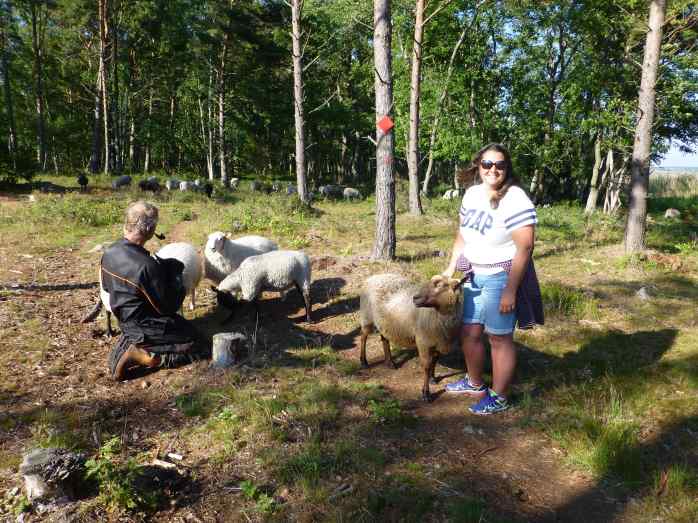
Anyway back to our adventures, the afternoon/evening cleared nicely and we walked the northern walking route (about 6km) and were delighted to meet the locals – sheep, who took a liking to Maree as well as stopped for the obligatory photo of Phil with his 12 inch gun – in his dreams! (what the pictures don’t show is that he took a few goes to mount, I mean climb up on the gun).

The island has a very diverse landscape with dense bush, grazing paddocks, large granite rock beaches and on the other side small pebble beaches as well as a rifle range shooting gallery which the path walks straight through, lucky there was no practise that day.


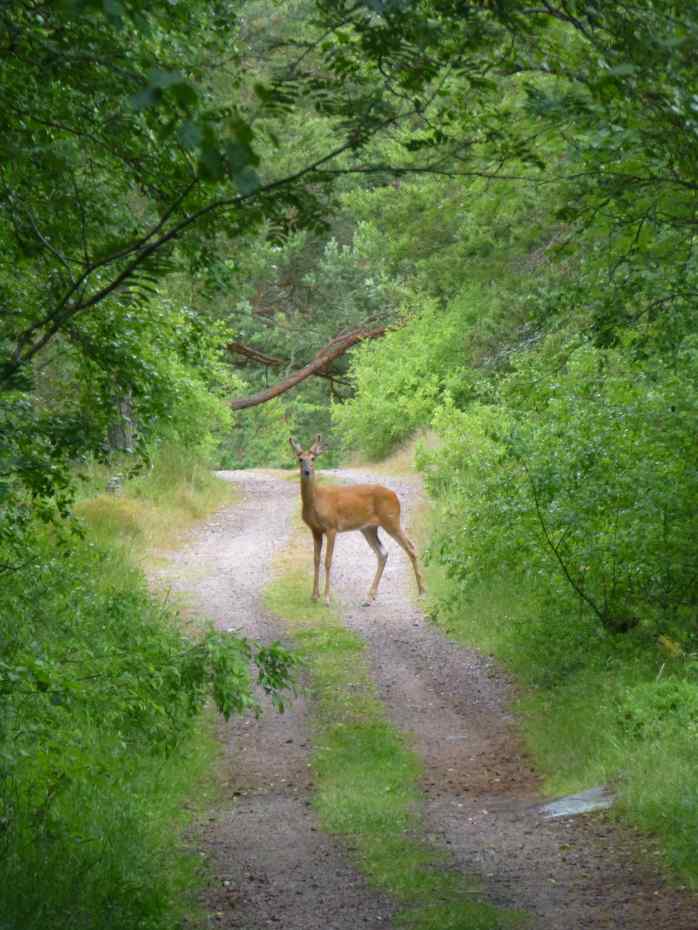
The next morning we woke to drizzle but it didn’t put us off doing the southern (5km) walk of the island. We were the only people up and about walking and got a peak at a local deer on our walk. We also found native sea kale growing on the foreshore which tasted delightful – very fresh. (Well, Maree enjoyed it, and Phil’s comment was “I am not a rabbit”). This walk also took us past the 6 inch barracks and guns where Maree posed for a “Cher” photo on the gun! (If I could turn back time … I would not have let him take that picture!)

Björkö
We didn’t leave Örö until the afternoon and only motored a short 12 n.miles and spent the night on anchor off Hummelholmen which is still part of the national park (we didn’t go to shore).
The following morning we motored another short leg of 16 n.miles, again into the wind, but also with the added bonus of choppy seas to the mix (the wind had been building overnight) however it was fine and sunny and not too bad at all. We were heading to Björkö where we knew there would be shelter.

Björkö was also to test us with yet another first, a stern anchor berth, this being where you drop a stern anchor out the back of the boat as you motor into the shore and then tie the bow off to rocks on shore (usually with metal rings embedded in the rocks) then tighten the line out the back to the anchor holding you straight in line to the rocks.
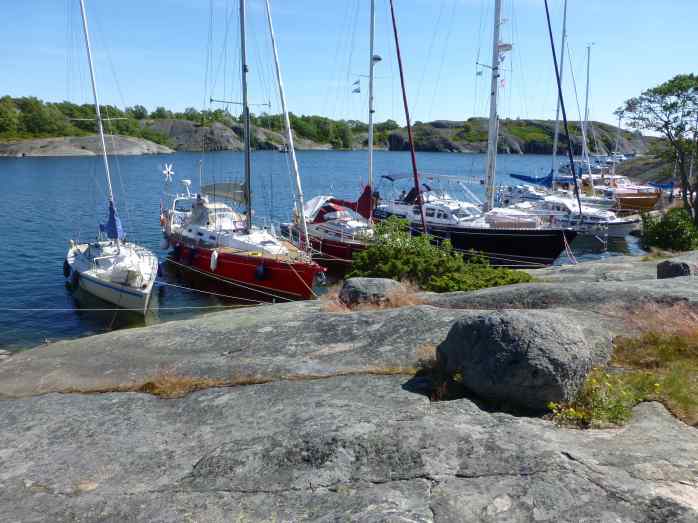
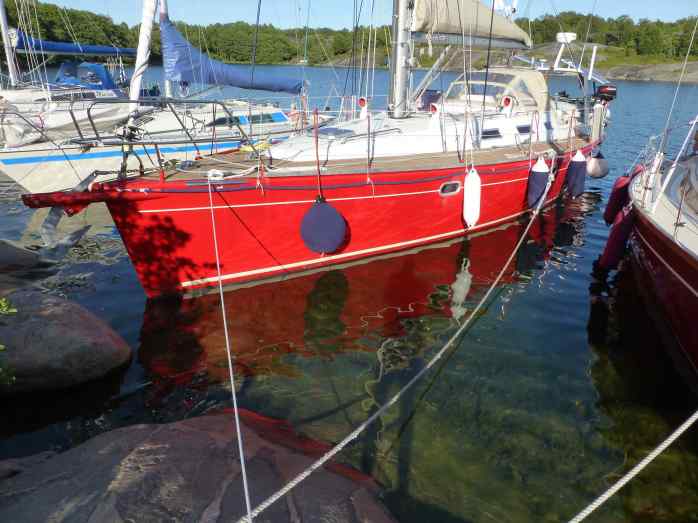
All the Baltic Boats are set up to do this (just as they are well set up for Stern Buoys), however we are only visiting for a short time and rather than investing a few hundred euros to get the kit (almost like a snatch strap tape on sleek hose reel arrangement secured to the stern of the boat, that you attach either your anchor or stern buoy hook to and which then feeds out very nicely) we have chosen to make do with what we already have and use heavy duty line (two lengths joined) shackled to chain and spare anchor (for stern anchor) and a floating line with a hook for stern buoys) it works fine, but looks a very home made (it is) and it can be quite busy in the cockpit setting it up threading it each time we use it around the dingy which is attached to our stern. You will however be pleased to read that we nailed it! Anyone watching for sure would have thought we had done it before (nice!). Maree steered in while Phil dispatched the anchor over the stern and fed out the line slowly (trying to set it but give us enough length to reach the shore), then Maree went forward to throw some bow lines to shore – very thankful to the neighbouring boats who took those lines and tied us off as it was a couple of meters jump straight down off the bow either into the water or onto the rocks – not something she was totally keen on (after many, many knee operations). Again all the Baltic Boats have a bow ladder to assist, but not us. After securing we angled the boat to ensure we had a largish rock to help assist the climb up and down from from the boat and also dropped the anchor 30 cm or so to act as a step/climbing point. Nice Work!
Björkö is unique as it is an island with a lake in the middle (taking up the majority of the island) and the lake sits higher than sea level. We did the obligatory walk around the island/lake and even used our “Every Australian’s right in Finland” to pick some wildflowers to take back to the boat.
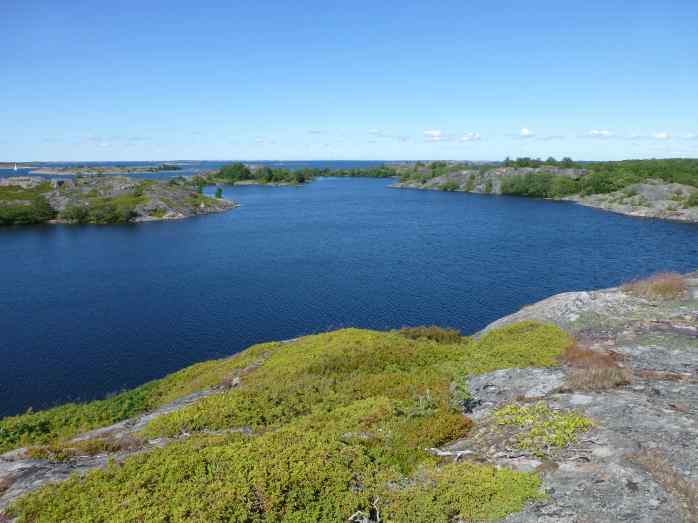

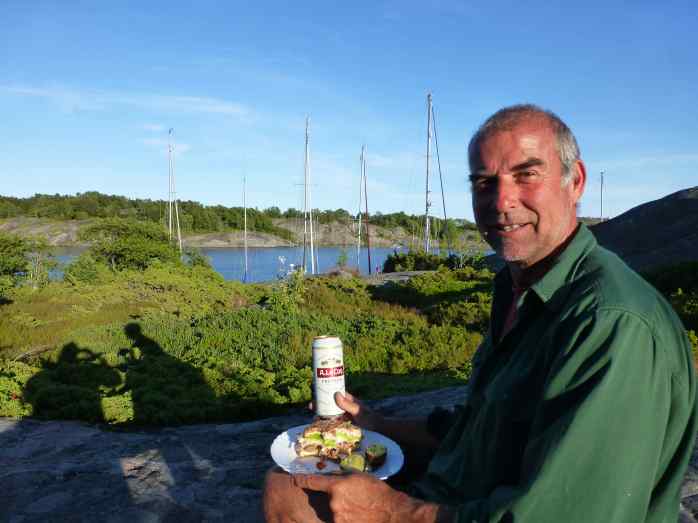
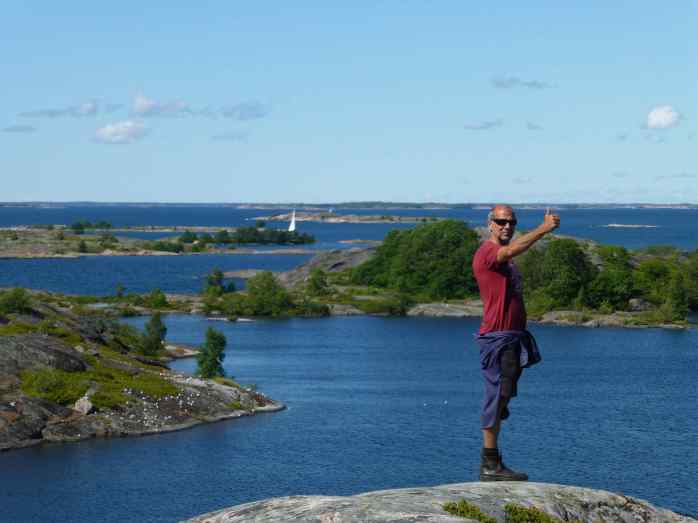
One of the things we have noticed and is of concern, especially to Phil is the lack of critters (other than tic’s). With all the walking and exploring we have been doing on these isolated islands we have yet to see any lizards, small mammals, or any sea critters in the pools of water around the island edges. To us it seems very strange, as both of us as children (and even now) see a rock pool and immediately set to picking up the rocks looking for critters. However not here, and we guess it does make sense, as there is no tide in the Baltic Sea so any rock pools are the result of rain (freshwater) or boat wake washing up onto shore. So not a living habitat. Its a shame really. Oh, and we can’t seem to catch a fish either! We have been told that we won’t unless we use a net, so at least its not us doing anything wrong. They catch Perch and White Fish (both fairly small) but have to use nets to get them.
Jurmo
The highlight of the journey from Björkö to Jurmo was that the wind wasn’t on the nose, because there wasn’t any! Not to worry, getting quite used to the motor boat we have with a big useless mast attached! Can’t complain as it was a very tiny journey of 7 n.miles (could have swam it really) but it had been recommended by multiple people as an island with a very different landscape to the other islands in the archipelago, well that was enough for us to take a look – diversity is always a good thing.


As we made our way towards the island we passed a dozen boats coming out, so at least we were confident there would be room for us. We entered an almost empty harbour at noon, but come 4pm it was absolutely full to bursting. Boats even started to park in the ferry berths (they had finished running for the day), so a very popular spot. From what we can gather the reasons for its popularity may be because the island had a very small little shop and cafe. It sold beer, coffee, fresh smoked fish and had a couple of shelves with pasta, cereal and some stables, as well as milk, cheese, butter etc. The shop also handle the bookings for the sauna, as we found out when inquiring about showers. We were informed that you can only use the showers when the sauna isn’t booked (as they are part of the sauna) and the sauna is currently booked out all day until 2am in the morning – I told you they love their saunas!! I really just don’t get it.

The landscape was very different to any of the other islands we had visited, very flat and low lying, hardly any trees just shrubby vegetation and thousands of rocks, but not the huge boulders we have been used to, these were pebbles, you know the kind that are really hard to walk on. We did a lap of the island on foot, and being a very warm day Maree duly carried her towel along in the hope of finding a good swimming spot – not to be however too pebbly and uncomfortable. We did get ourselves a picture of the other kind of Finish snake however, the black one (don’t worry he isn’t poisonous, unlike the adder which we saw on one of the first islands).
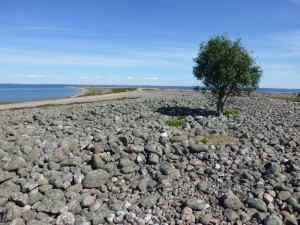
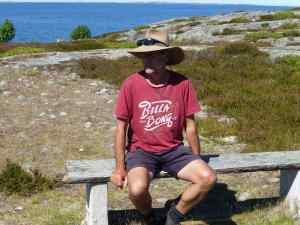
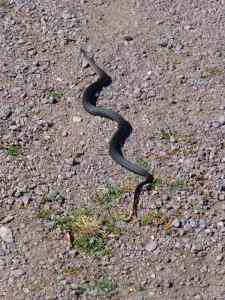
It turned into one of the hottest days we have had so far, hot enough for us to get the sun shade out and erect it over the cockpit during our afternoon lounging.

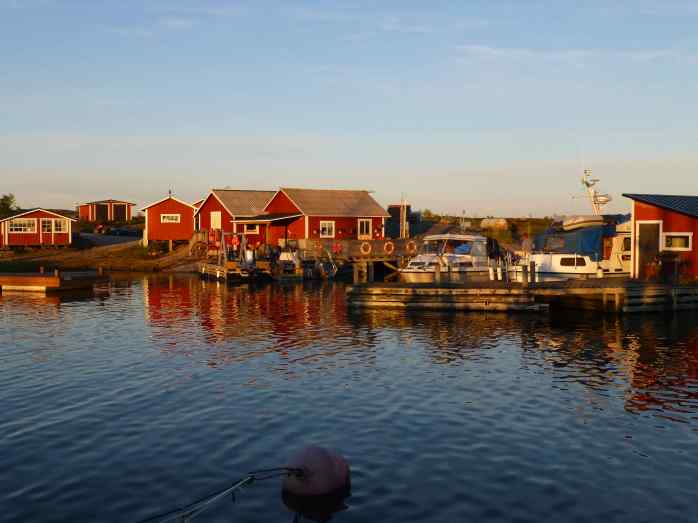
Aspö
The following day brought gentle winds, but enough to sail – very exciting! Shame we were only moving 11 n.miles, but an enjoyable 11 n.miles it was with the main sail and genoa taking us along at a very leisurely enjoyable pace. In our magic Baltic book Aspö was detailed to have spaces for 20 boats on stern anchor to the dock, and on approach it already looked very full (couldn’t see the dock at all) yet there was a beautiful bay 300 meters off, sheltered and picture perfect just waiting for us to drop the anchor in 6 meters of water – lovely (we are most comfortable on anchor anyway and it is SO MUCH easier).

We really enjoyed Aspö and is one of the places we would recommend to others. It is a small functioning fishing village and we met a couple of the local fisherman, one of them was even kind enough to give us a white fish from his days catch, he even filleted it for us while we were chatting, he said (via his wife who could speak english) that we had travelled a long way to visit Aspö so we were welcome to the fish – so kind.
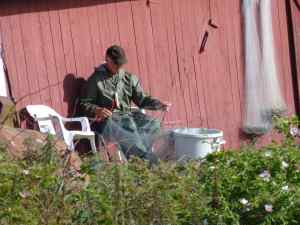
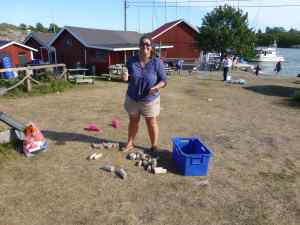
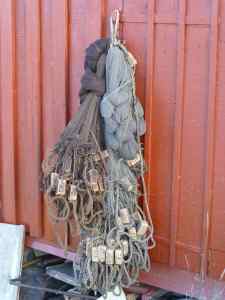

The other local fisherman (responsible for a family of 5 and therefore half the islands population) works as a pilot for the commercial boats passing through the region, one week on one week off. They all enjoy the 6-8 week sailing season as it brings many visitors to their island. They smoke fish daily and sell them to visitors as well as having a very small kiosk (beer, coffee, daily pastries, ice-creams and crisps). Of course the sauna on the island is popular also (most of the islands visited since the first one have a charge for the sauna, usually around 15 Euro for an hour – needless to say we haven’t bothered).
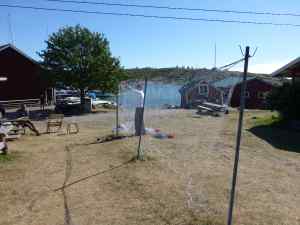

We spent a good hour or so talking to a lovely elderly local lady (her husband gave us the fish) who was telling us about life on the island, in her words she has “only lived there for 40 years” but we considered her enough of an expert. There are 11 residents who live on the island all year round, and there is a public ferry running 5 days out of 7. The children on the island leave on a Sunday to go to school and return on a Friday. Winters involve a lot of snow and ice, and when the ice gets 20cm thick they are able to drive their cars on it across to other islands! Incidentally it hasn’t been thick enough the last two years.
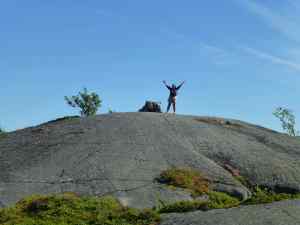
We of course went off and and did their island nature walk, which for Aspö was a case of follow the white dots painted on the ground, rocks or trees, which as one would expect lead to the can on the highest point of the island. It should be noted that Maree got there first, however Phil stood on top of the can and crowned himself king of the castle.

At both Jurmo and Aspö we have seen the islands midsummer maypoles, they are as tall as a flagpole and decorated with colourful crowns, flowers and foliage (albeit a little brown now). Old records/documents about local midsummer poles are date back to the 1700s. The villages used to compete with each other about the title of the tallest and the most glamorous pole. The maypoles are always raised on Midsummer’s Eve and they remain standing all year, until the next midsummer when it’s taken down and dressed for the new celebration. Such a shame we were a week late getting to Finland as I imagine these summer celebrations would be really great, especially on one of the small community islands.
Österskär
A great sunny day made it hard to pull up anchor as it was picture perfect in Aspö’s little anchorage but West we must travel so off we went. Österskär another small fishing village that was recommended to us was 12 n.miles away and once out of the bay we enjoyed F4 (17 knot winds) from the South East meaning we could sail (you little ripper) and sail we did, zooming along averaging 5 knots. Felt like we were flying after all the motoring we have done lately.

But all good things must come to an end, and the wind which was so fantastic in allowing us to sail wasn’t so helpful when coming into berth at Österskär, we were blown a little off the approach and the boat hook was needed to grab the stern buoy to get the hook on it, and the stern buoy then decided to keep the boat hook – it was well and truely stuck fast, at least on the positive side so was our hook and line, so in we went and tied off to the dock. Once secured you can guess who got the job of going swimming to retrieve the boat hook – yep! I must admit despite the wind and overcast weather the water was actually an ok temperature and it wasn’t at all unpleasant. (Don’t tell Phil that however).


Also as a side note, when we were leaving the next morning the gentleman on the motor boat beside us, was on deck watching us leave (code for standing on his deck to protect himself incase the wind blew us into him) and after we got clear, pulling off the perfect extraction from the dock he commented “you two are professionals – well done!” If only!


After the fishing village of Aspö being so enjoyable due to talking with the locals, we found quite Österskär not such a highlight. We explored and enjoyed the stunning views and spoke to other boaters who arrived but didn’t see any signs of life on the island. There were houses and of course a working sauna (leave your money in the box) but seemingly no persons about. Not to worry our next destination were are told is a must visit location and has been described to us as “heaven on earth” now that has us intrigued…
Jungfruskär – Heaven on Earth
A 14 nautical mile passage (motoring into the wind) was to take us to the described “Heaven on Earth” giving us plenty of time to ponder what we could expect in such a place. Phil was adamant that there would be free ice-creams I was a little more realistic in that there would be beds and pillows made of fluffy white clouds and pony rides for everyone, with Johnny Cash playing his guitar and singing. We were both excited to say the least.
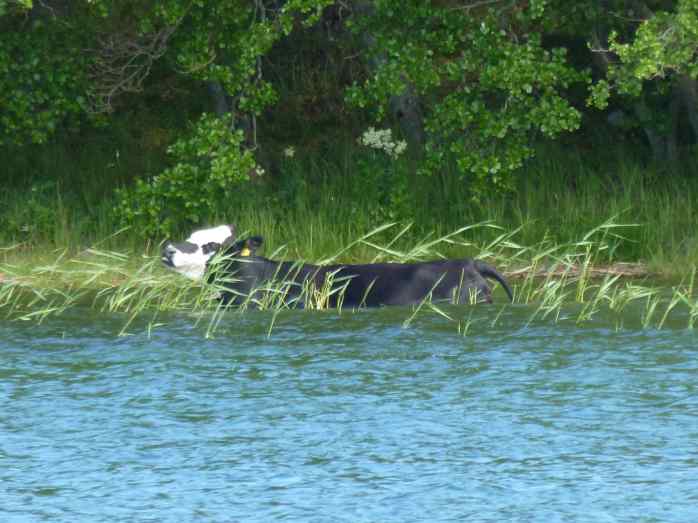
We arrived and again preferred to anchor in the end of the bay rather than stern anchor to a rather full pontoon. Our anchoring location was very pleasant, and before launching the dingy to head to shore to explore we heard some wildlife, well that was exciting in itself as we really think that is what the islands are missing – wildlife.
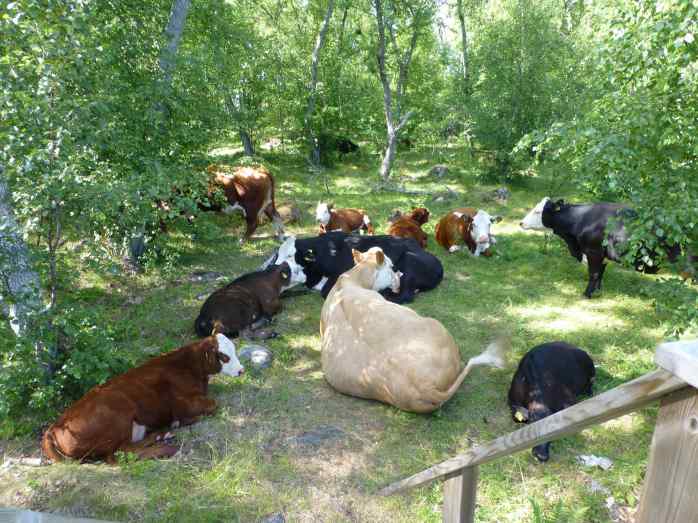
When I say heard wildlife, we actually head some cow’s moo-ing. It sounded pretty close however and upon investigation turns out the local heard had wandered into the water to freshen up and grab a snack of green vegetation from the shallows. Well of course we shouldn’t have been surprised that there are cows in heaven – after all there are free ice-creams aren’t there, so of course they need cows for the milk, to make the ice-cream!
We launched the dingy and explored. It is a decent size island, that must be said and it certainly lends itself to being more sustainable than other islands as we discovered large granite boulders into the water, bush and vegetations, crops, and grassland, cattle (both cows and sheep), orchard like areas (growing birch trees), currently being mowed then grass raked by hand, as well as beaches on the other side of the island.
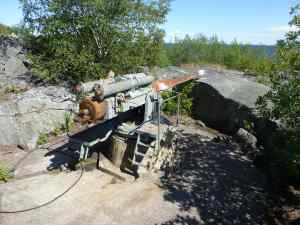
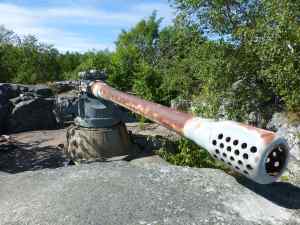
The shock was yet to come, as we also found not one but two artillery guns – now that we were not expecting to find in heaven. Research told us that the island declared its self as neutral (during world war II) but just as a back up installed these as self defence.
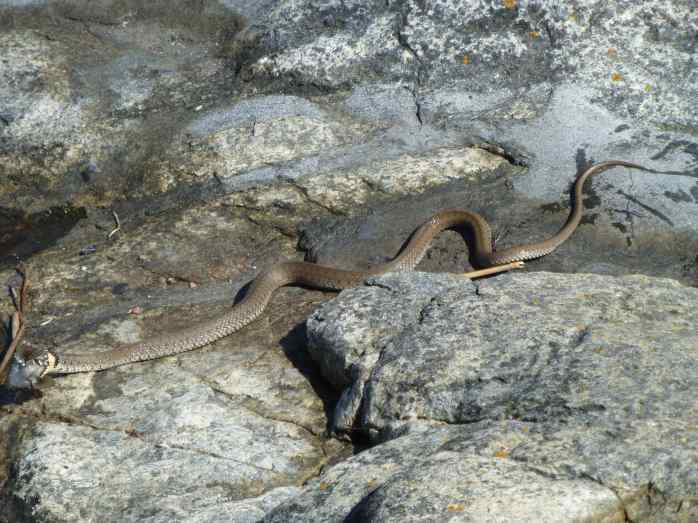
More wildlife was to be found, just as we were fluffing around the shoreline near the beach contemplating a swim we spotted a couple of locals (snakes) that were just returning from the shallows with a fresh catch for lunch! Bit sad when the snakes are catching more fish than we are, not a bad size either!

What did we think of heaven on earth, well it was nice, pretty and enjoyable but in all honestly we could think of other places we have visited that better suit the title, after all there were no ice-creams to be found.
Finland Archipelago Part I – 5 Locations, 6 Nights & 7 BBQ’s
Gåsgrund, Stora Svartö, Elisaari / Älgsjö, Alglo Island, Älgö Rödjan & Hanko
Warning; this is going to be a long one (in fact it is so long I have decided to split it into two parts, purely to make it less taxing on you). You will still however need to get yourself a cuppa or a cold one to help you get through this marathon, or of course you can always skip the text and just look at the pictures!
Having departed Helsinki we are delighted to be heading into the Finish Archipelago for a few weeks. We left the big smoke with just the first nights island destination picked and a very solid plan thereafter, that plan being in full detailed listed here: “Head West”.
Gåsgrund
Off we set with the wind on the nose so motoring into it for a short 7 nautical miles before we stopped for our first night on Gåsgrund (Island). We can’t believe this is basically on Helsinki’s doorstep and yet how far away from everything it felt.
We hooked onto a stern buoy and secured the bow to the dock joining two other boats already berthed at the island. This island looked and felt amazing, very green, very vegetated, rocks, trees, shrubs, narrow bush paths, a long drop toilet, sauna and best of all an AMAZING BBQ set up – complete with chopped wood ready for burning! No dwellings/houses on the island, the BBQ, long drop, rubbish bins and traditional wood sauna all provided and maintained by the mainland council!
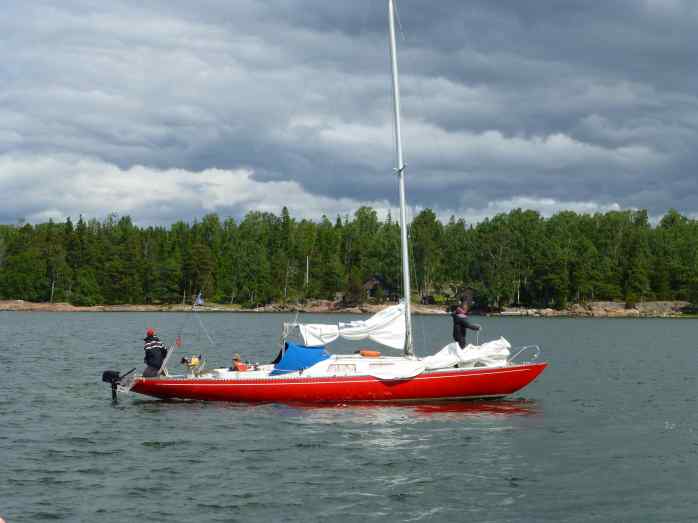
The young people on a small (red!) yacht beside us told us it is one of the best islands in the archipelago because the sauna is a traditional old wood fired sauna. We explained that being Australian sauna’s weren’t really the going thing for us, and they said “but this is a traditional one – you must try, we will show you” so Phil promised to join them later for a lesson and appreciation of the Finish sauna experience.
Maree….well, not so keen to commit (fearing nudity) as all the showers in the marina’s in Estonia and Finland (all boasting attaching saunas) have been communal and a very sharing (naked) experience (the normal I am told for most mens locker rooms with 6 shower heads in a room together, no curtains or dividers). All a bit much for an innocent Tasmanian such as I, more than happy to send Phil in to do the research. They promised to come calling when they had it ready about 10pm – don’t these people sleep??? At least it will be dark I hear you thinking, well no, not at all actually – we are currently in the Scandinavian summer meaning it doesn’t get dark the sun goes down around 11:30pm or later and starts to come up again about 01:00 giving around an hour and a half of twilight – you would definitely not call it dark, or even dusk, you could seriously still be sitting outside reading a book with no need for a light to see by. It’s very enjoyable!
In the mean time, we were both overly excited about the BBQ, pretty much like kids at Christmas, it has been a long time since leaving Australia and having a real BBQ in the bush! We were joined by two Finish Families in the hut who had come over after work from Helsinki for a BBQ dinner on the island before returning home again that night (that’s how close it is).
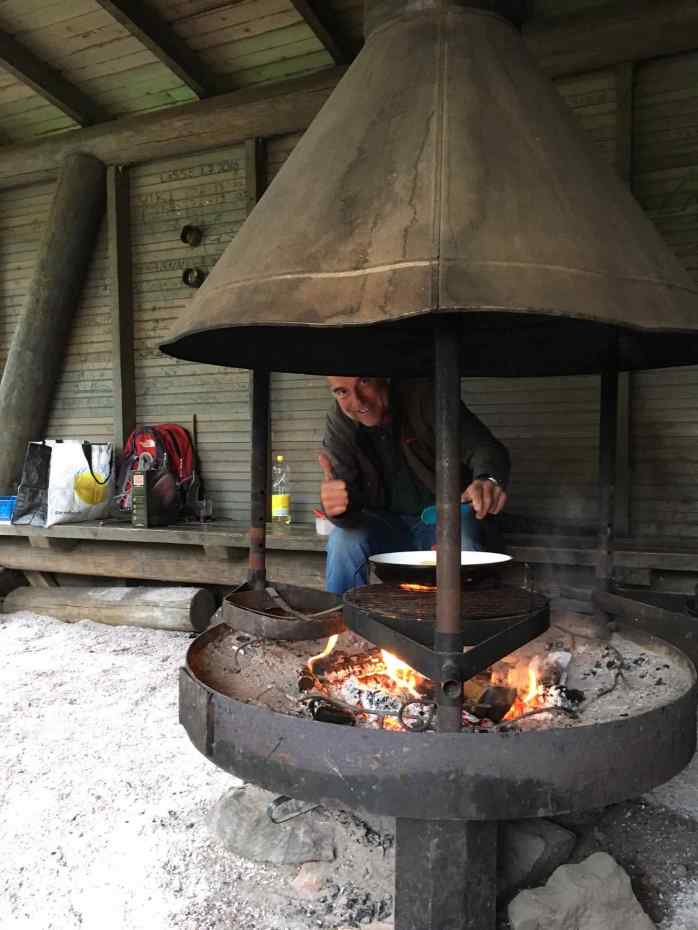
They were great to talk to and explained to us something we had vaguely heard of which is “Everyman’s Right In Finland” from now on to be known as “Every Australian’s Right in Finland”.
This is actually law and to quote the official published literature on this “…everyman’s right gives everyone the basic right to roam freely in the countryside, without needing to obtain permission, no matter who owns or occupies the land . . . everyone is entitled to walk, ski, cycle or ride freely in the countryside as long as this causes no harm to property or nature . . . As well as guaranteeing free right of way in the countryside, everyman’s right also allows everyone freedom to stop and rest, swim, sunbathe or enjoy a picnic on private land. Camping for a weekend or short period is also covered. Berries, mushrooms and flowers as long as they are not a protected species may be picked freely wherever everyman’s right applies” “Everyman’s right does not cover gardens or the immediate vicinity of people’s homes or plantation (crop) fields”.
How good is that! And from what we have seen and witnessed it actually leads to people taking a lot more pride and ownership and we are yet to see ANY litter on any of the islands and nature walks that we have seen.
Anyway back to the BBQ, and in appreciation of great conversations we shared with these Finish people, I hunted up a packet of marshmallows out of the boats stores and taught their children (4 kids under 6 year of age) the Australian tradition of marshmallows on bush sticks over the BBQ – needless to say it was a huge success, and now embed in the Finish BBQ experience.
So later in the evening Phil headed off with his new friends to get the low down on “how to sauna” the first step before even getting there being to gather some young birch tree branches with leaves to take into the sauna to – in their words “spank yourself with” yep definitely made the right decision in not going myself.
Well, it turns out the Finish are totally addicted to Sauna’s, almost every island we have visited since has had a sauna even if they have nothing else and no people living there. We are yet to get much of an answer in regards to why, but they have been doing it since forever, and I must admit that they all look very healthy (skin wise) and rather young.
The methodology that was imparted to Phil that evening was to stay in the sauna for as long as you can, brushing (spanking/whipping) yourself with the birch leaves, then go outside for respite from the heat, either just outside into the cooler air or even better for a dip in the water (they are all built on the water’s edge) then back inside again and repeat the process. Phil obliged although only braved the water at the end to freshen off, and it was more of a splash than a submerge. He also reported that any kind of dress is suitable, from shorts/bathers, or just a towel to nudity – it was all fully acceptable and a someone in every state in the sauna. OMG where would one look??? Anyway Phil’s new friends also gave us lots of information in regards to great places to stop on our way West, many of which we have stopped at and loved, so thanks Phil for taking one for the team! (He loved it…he got to see some boobs!).
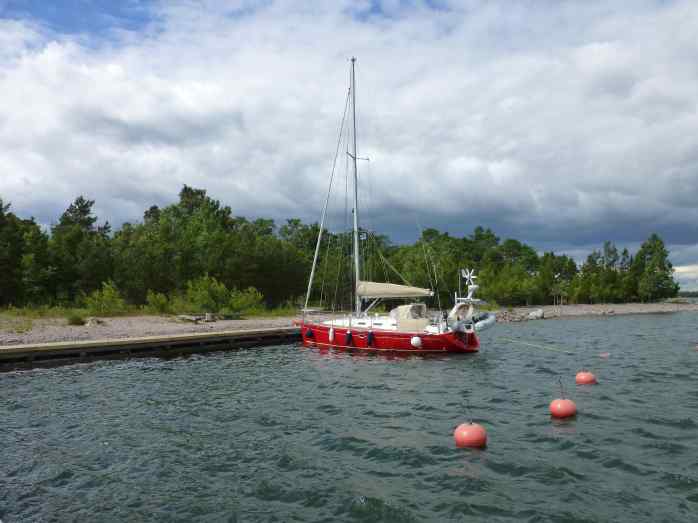
Anyway new day new location but first things first and it turns out getting onto a stern mooring can be easier than getting off. There was quite a bit of wind blowing and after releasing the bow lines and pulling back onto the buoy to remove our line the buoy next to ours went under the stern EEEKKKKKK! Phil turned the motor off immediately as we didn’t want chain wrapped around our propeller, and everything was fine, however without the engine going and with the strong winds we then proceeded to get blown into the dock (sideways) lucky all the other boats had left. Why can it never be easy?? Anyway, we had fenders out and we quickly tied off across the dock, reassessed our exit strategy and nailed it on the second attempt.
Stora Svartö
The wind was again against us pretty much on the nose for the 14 nautical miles passage, however we were motor sailing – getting some assistance from the sails, although the angle was very slight. As mentioned above decent winds F3/F4 (10-16 knots) but a good journey overall and again secured via a stern buoy, bow to pontoon.

Stora Svartö was a much bigger island than Gåsgrund with a lot more variety in the landscape. A good hour and a half to get around the island, mostly just exploring both the rocky shoreline and the interior bush as the northern side of the island didn’t have any defined tracks. I was astounded by the diversity of the flora I found, with seemingly hundreds of different kinds of moss covering the big granite rock boulders all very different, yet in close proximity. I could step from crunchy dry grey moss breaking off as I step on it, straight onto wet dense thick moisture retaining green moss.
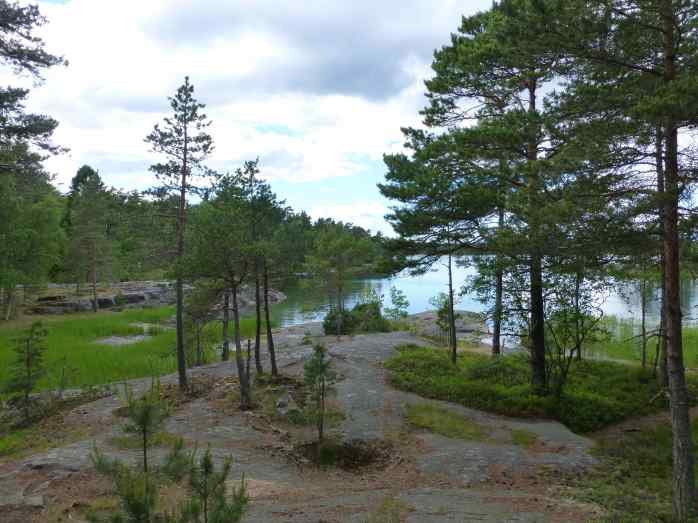

I was also more successful in seeing some local wildlife than Phil and came home trumps with not only a deer and snake sighting but a cracker picture of the adder in question – evidence!

This island again had long drops provided as well as BBQ’s as wood (although I did have to split some logs – but they did provide a decent axe so that was ok), and why me rather than Phil I hear you ask – simple, I am Tasmanian and therefore (according to Phil) must be related to David Foster the wood chopping champion! (FYI I am not related, but I do know how to swing an axe).

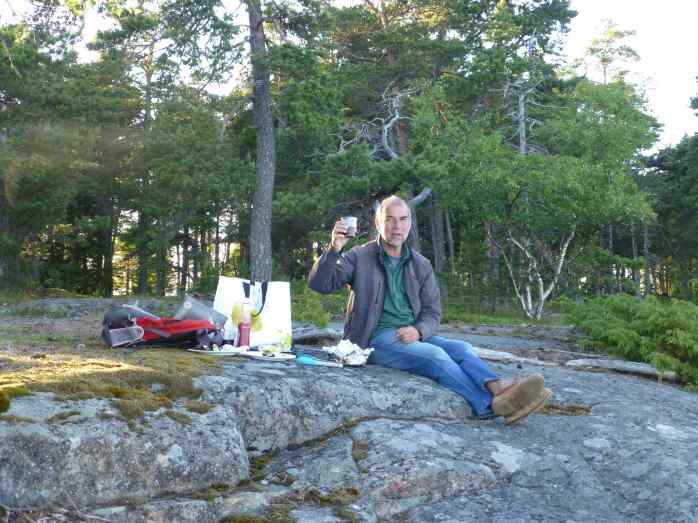
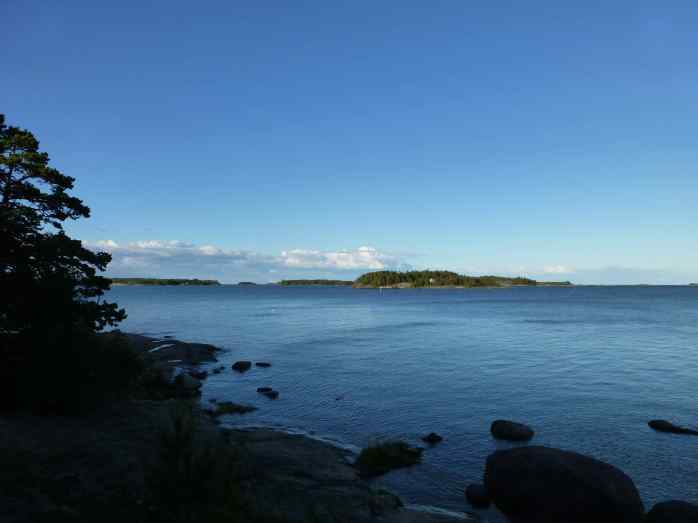
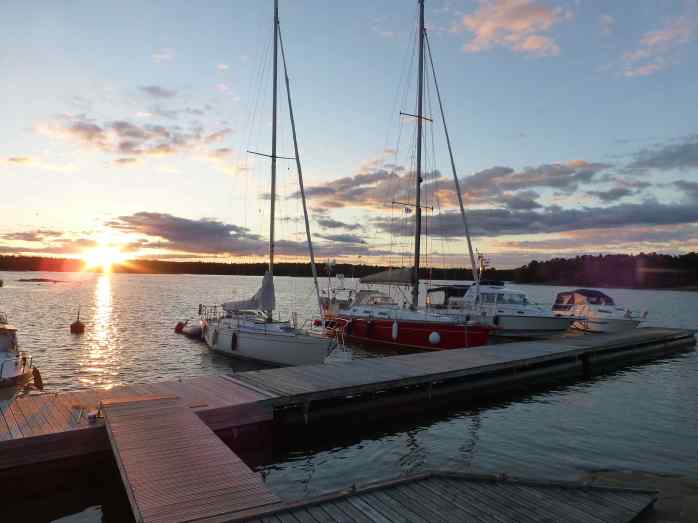
Elisaari / Älgsjö
The next day brought wind and occasional showers during our 22 nautical miles of motoring (does the wind always blow from the West in Finland? – we think it might!).


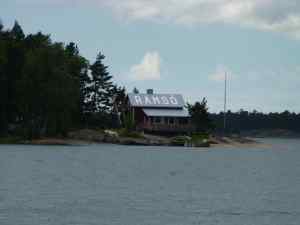

The day cleared as we approached the entrance into Elisaari / Älgsjö which had been recommended to us by a couple of different people. The approach is pretty special as it is almost a creek, complete with trees and rocks on the banks as well as reeds in the water, nothing like going up the creek in a yacht (don’t worry we have a paddle). It looks shallower than it is, and in-fact we found at least 3 meters of water almost all the way in, although we did wind the keel up just to be safe.
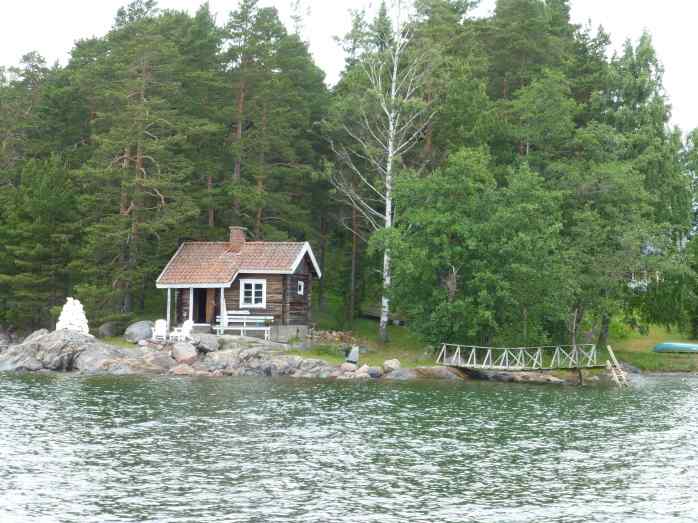
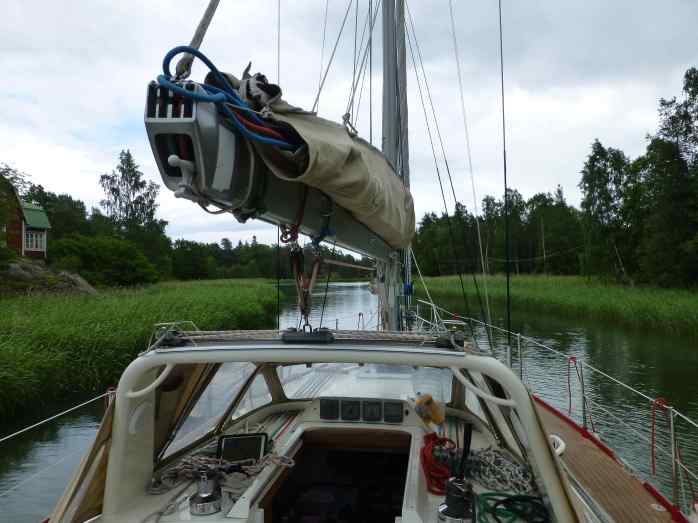
We admit the mooring (again stern buoys) is very spectacular with shelter from every direction and lots of yachts nose into the rocks against a hidden dock, very magical, although we must be honest and as beautiful as it was, there were so many boats in there (advertised to fit at least 130 boats) which really took away from it’s beauty for us.
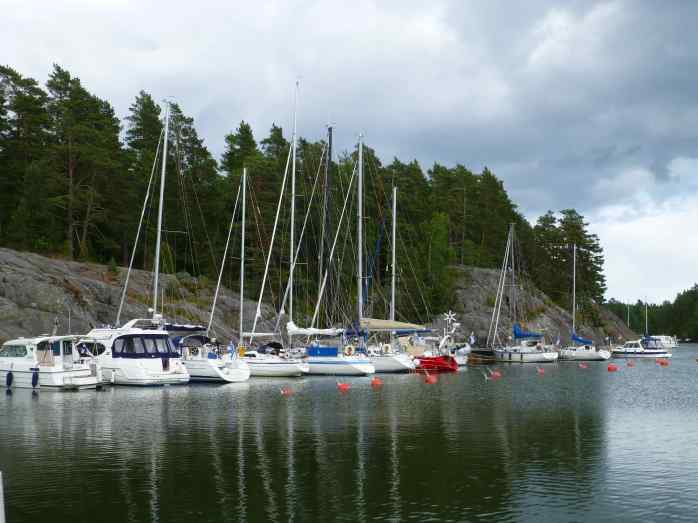
Yes, call us greedy, we want the beautiful spots and we don’t want to share them. They have pretty much turned a lovely nature spot into a marina along with a cafe and not one but two sauna’s for all the visitors. There was also a charge to berth (fair enough with the buoys and dock provided – but in our opinion the other islands offered more, were less populated and were free). There was power available (additional fee, so we passed on that), and also you had to book and pay for the use of the saunas (needless to say we didn’t use those either).
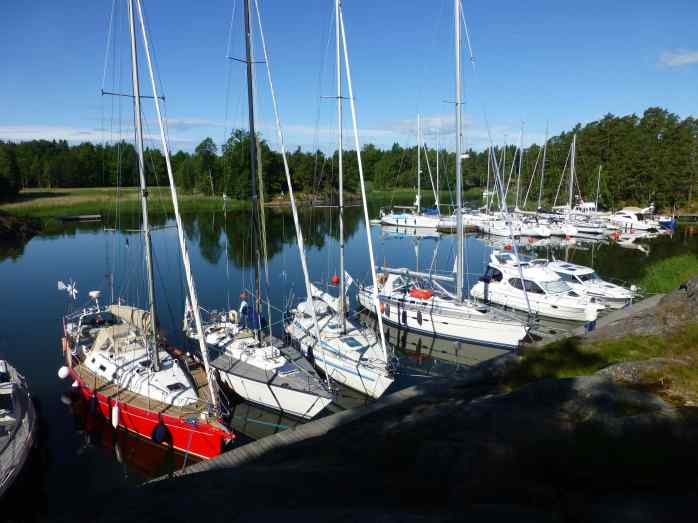

In wrapping up there is no mistaking the beauty of the setting and even more so the journey past many private summer holiday homes snaking our way into this spot through the sheltered waters but once in with all the other holiday makers our highlight was being able to BBQ again, the third night running 🙂

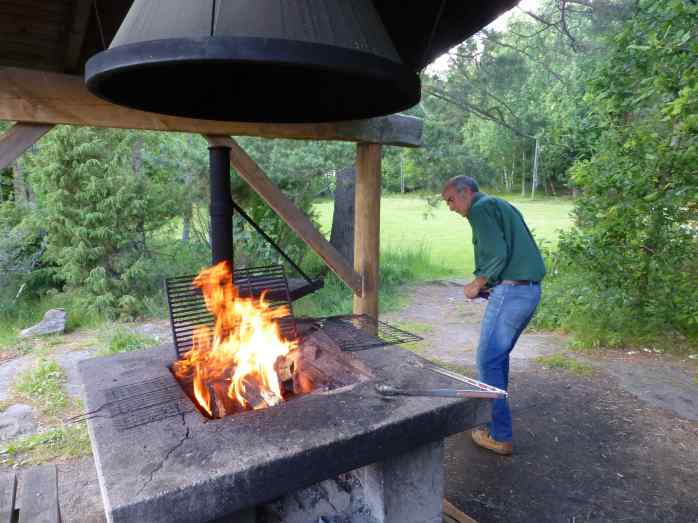
Note: In Phil’s defence we have learnt that Finland soft wood (Birch) doesn’t burn down into great cooking coals like Australian hard wood does, therefore big is best if you want enough coals to last you to cook.
Alglo Island
We set off relatively early the next morning as we had been given directions and coordinates to what we hoped would be a pretty special spot that apparently not many people know about and there is only room for one boat, so off we set hoping the early bird gets the worm, or the spot in this case.

Alglo is an ex-military island only recently being released for public use and therefore untouched (just the one building/dwelling on the far side that wasn’t in use whilst we visited).
The directions we were given told us we could take the boat right up to the rocks as the water was deep and side tie off to the pegs embedded in the rock.
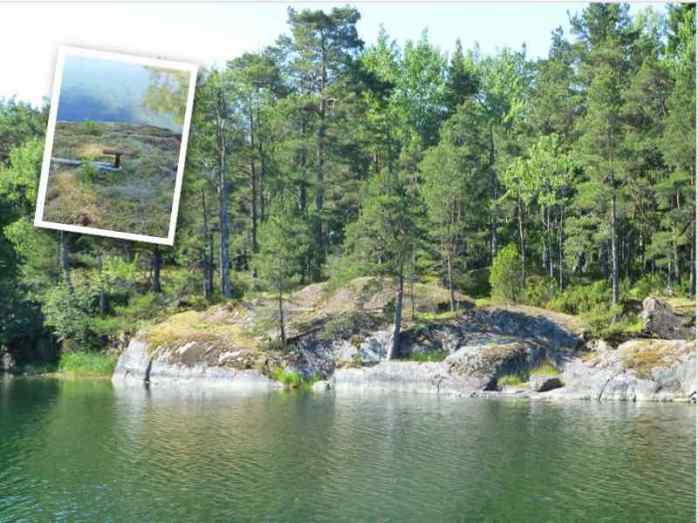
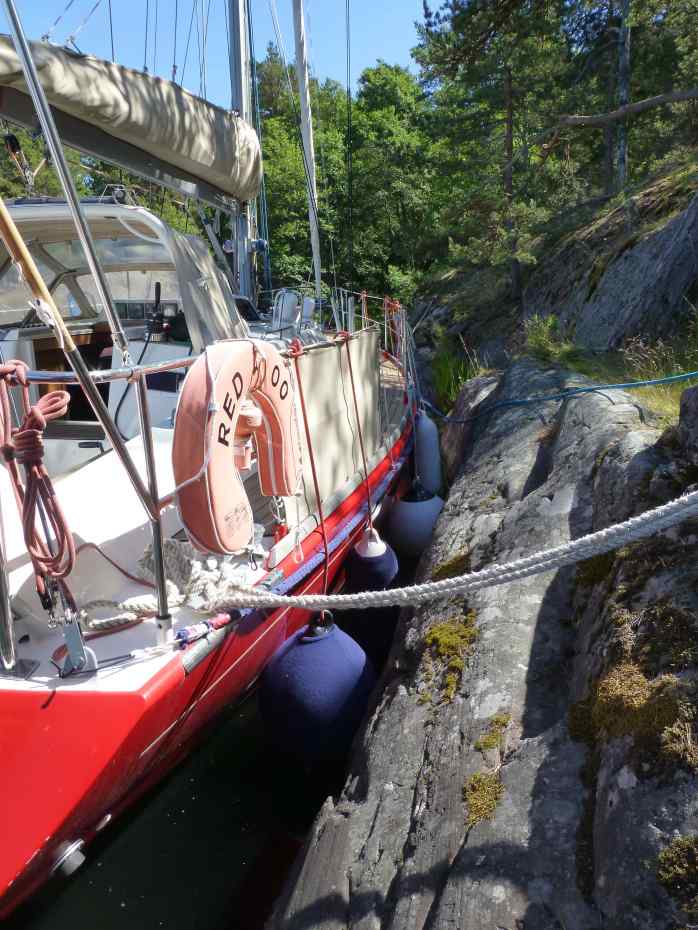
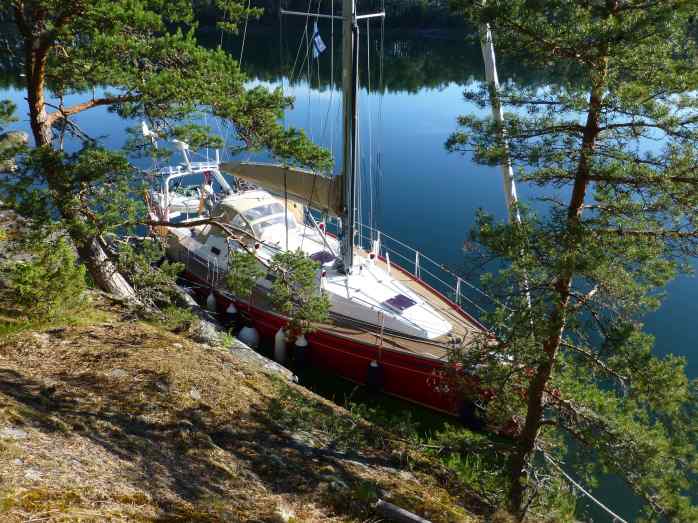
To say we approached cautiously would be an understatement, we went very slow with eyes peeled to the water for rocks and also eyes in the binoculars searching the rock face for the embedded pegs. We found the spot – the pegs were very well hidden and took some spotting, but we found it and it was just as described, deep water right up to the side of the rocks almost like a cliff into the still calm waters.
Whilst the island was fairly small it was magical to have it all to ourselves, and the scenery was magnificent, a picture perfect view no matter which way you looked. Enough to make us stay for two days and two nights, totally undisturbed no other people around, and of course BBQ’s on the rocks each night (this time our own portable COBB bbq/oven as there was no designated fire spot on the island).

Now I wouldn’t want you to all be under the impression that living on a yacht is all beaches, bikini’s and champagne every afternoon with cheese and nibbles – no this is definitely not the case for us (not everyday anyway, and champagne yuk!), our two days in paradise included doing a couple of weeks of hand washing in a bucket then pegged out to every available surface on the boat to dry, as well as airing out all the bedding to get some airflow through the sheets and duvets (I won’t gross you out and embarrass myself by telling you when they were last washed…)
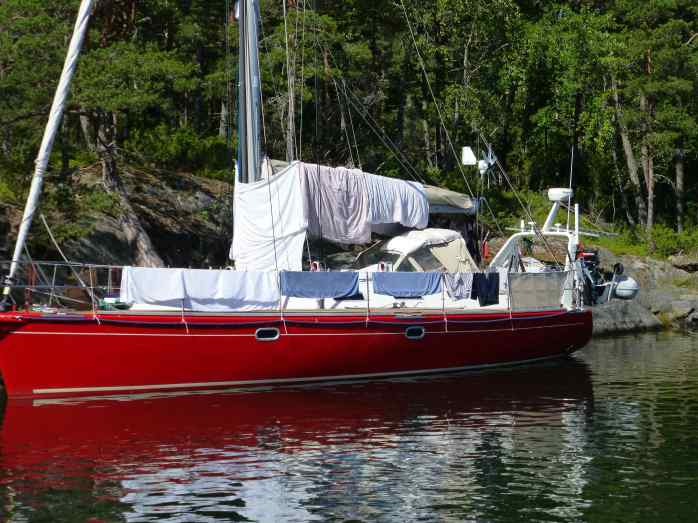
There was however a slight downside as although we were not disturbed by anyone, we did pick up some unwelcome opportunists that were to become a theme over the coming weeks . . . tic’s . . . and as we were to learn they are rife in the islands. This isn’t the first time we have encountered these little blighter’s, we also got ourselves a couple in Scotland last year when exploring inland, and luckily invested in a tic-removal-tool which is now is use in Finland. They are teeny-weeny little buggers, juveniles we believe, the smallest we have every seen, but after every walk we are like a pair of monkeys checking each other over for tics!
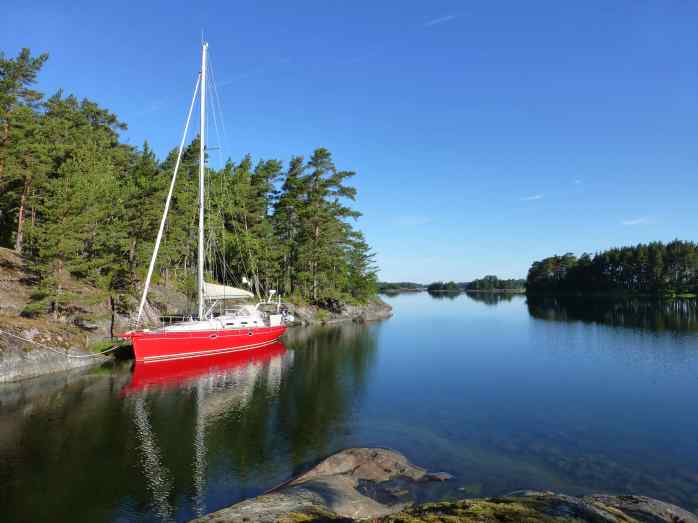

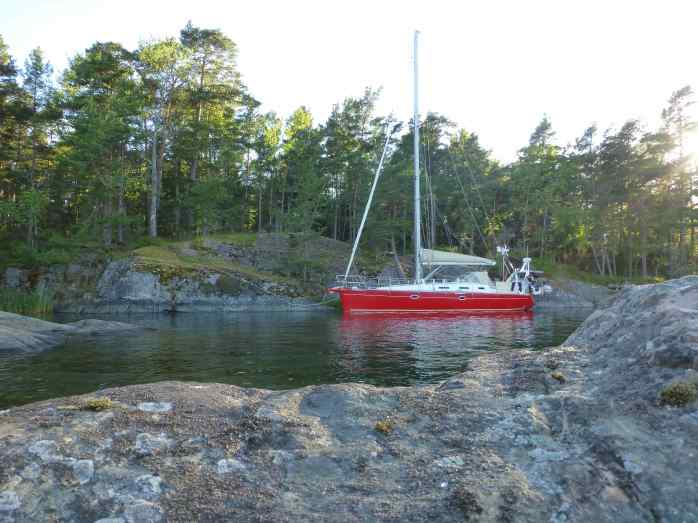

Älgö Rödjan
Next stop was Älgö Rödjan part of the National Park, again stern buoys and bow to the dock. It wasn’t very far from last nights spot so we were there before lunch and took the last spot. Within half an hour all the other boats had left (turns out they were last nights crowd), then within another 30 minutes all the spots were full again, jammed full, just when you thought no more could fit, someone, somehow squeezes in, the remainder of the late comers ended up on anchor out from shore in the bay.
We are really noticing the amount of boats and people, very unusual for us! Although we have been doing this full-time for almost two years and are currently in the middle of the official sailing season (our second) and it is the Finish Summer and vacation period, there are more boats that we have ever seen.
This time last year in the middle of the sailing season we were off the west coast of the Republic of Ireland and heading north-west towards Scotland and we were one of very few boats taking on the wilds of Ireland. We would be lucky to pass 5 boats in a week where as here we are passing at least 50 in a day and each anchorage is full every night.

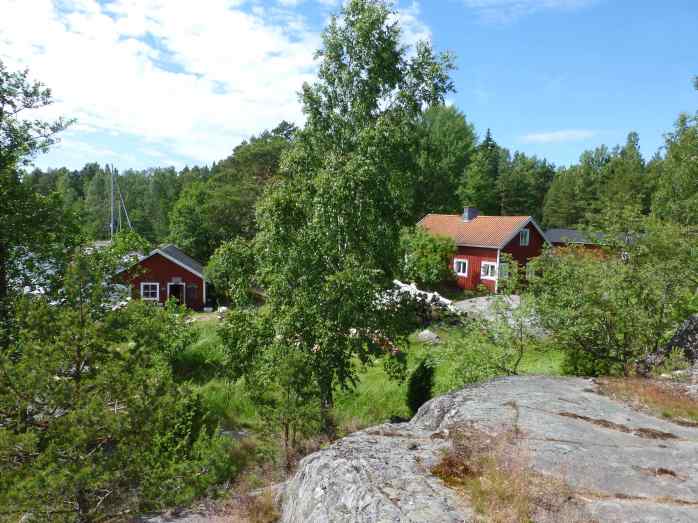
Lots and lots of families, or small yachts with 6-8 adults on them, the boats arrive and secure to the dock then all of sudden, 2, 3, 4 sometimes more kids (and a couple of dogs) pop up out of the boat onto shore with their butterfly nets and spend the rest of the afternoon chasing tidily fish around the boats, then come 7pm they strip off and jump in the drink with mum and dad throwing the soap in after them.
The nights are very quiet however, which surprised us as we assumed being on holiday and summer they would have music and be very social (loud) at night, but it is very, very quiet. We are yet to hear any music from any boats, they all go inside by 9ish despite it still being light outside until 11-12 at night. Very different from Australian holiday culture (or maybe it is the kids thing?) another factor may also be the fact that alcohol is ridiculously expensive so no body seems to over indulge . . . don’t stress, we were warned of the expense and stocked up in Germany and Estonia where it was a lot cheaper, so we have plenty to see us through (although having bbq’s every night has increased our drinking – you can’t have a bbq without a drink!)
The people are all very friendly however, and we are getting lots of recommendations on places to visit on our way West. The winds however are not being so kind and always seem to be coming from the West making it hard to sail with the wind on the nose, and it isn’t easy to get an angle off the wind as the channels are rather narrow around all the islands and rocks.
Älgö Rödjan was lovely and had a really nice national park walk around the island, however Maree managed to get rather lost. Phil had done the walk earlier and said it was good, so off Maree set and within 5 minutes had seen a rather large snake, and of course being Aussie, the walk was being done in safety thongs and shorts, so therefore eyes were then kept down on the track (checking for snakes) rather than up at eye level where the little blue tree signs and arrows were for the walk, and as such managed to take a secondary track that lead to a small lean-to shack and a marsh – well off the designated track! After re-orinentating back (an adventure in itself) the track was picked up again and eventually completed the designated circuit. Upon return to the boat and before the confession of losing the track Phil piped up saying “they overdid the blue signs didn’t they” which yes, they did (once one kept an eye out for them) but still . . . could have happened to anyone.


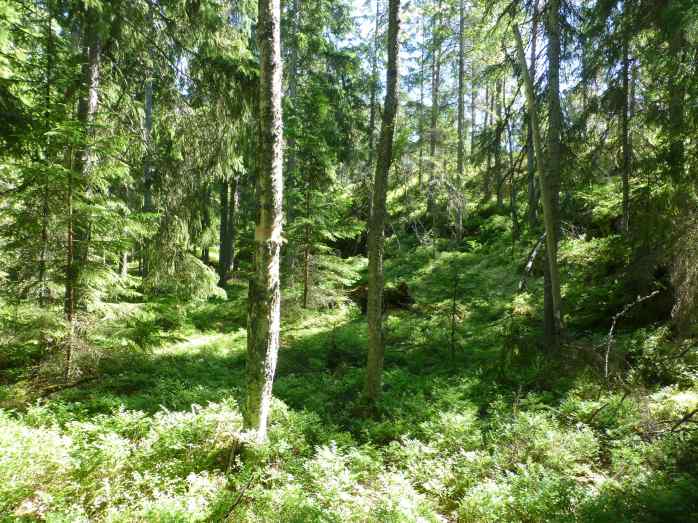
So far in the Finish Archipelago we have visited 5 locations, stayed 6 nights and enjoyed 7 BBQ’s 🙂 life is good (or if you were Finish you would be interested the fact that 3 of the 5 locations we have stopped at had sauna’s, in-fact one place had two saunas).

Hanko
The next day the wind again was coming directly from our intended destination and it was starting to build into a front, so we headed to Hanko (the mainland rather than an island) primarily to re-supply with BBQ meat as well as to wait out the unpleasant weather (along with every other boat in the Baltic) which was expected to really only last 24 hours.
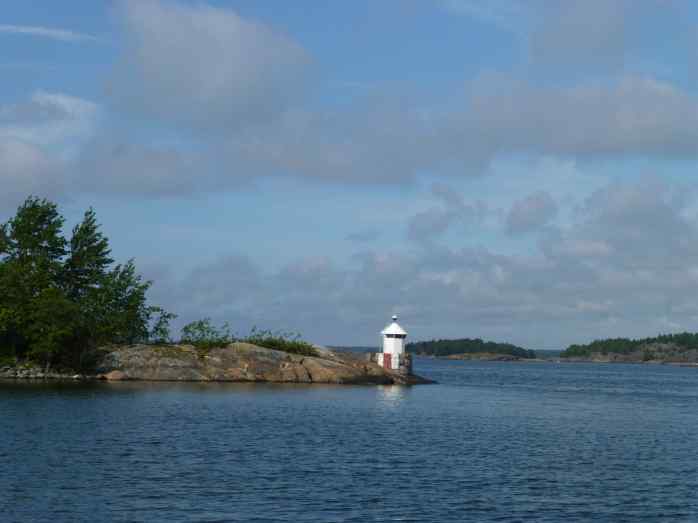
We ballsed up our first attempt at berthing which at the time was the only available space and a crappy one at that (as it was a really dicky corner spot, and not a great angle with the forecasted winds we were expecting). But thanks to missing the stern buoy we had to do a take two and whilst reversing back out we met another boat reversing out of a better spot (when I say met, I mean collided with, but all slow speed and he was tiny so wasn’t going to hurt us, therefore we just bumped him out of the way with the dingy at the back – it is just like a big soft fender really). Anyway once we came around again we lined up and took his spot which was much much better and came in and executed a perfect berth.
Hanko served both the above purposes well but really wasn’t a lot more to write home about. They had just hosted the wooden boat festival and races and the marina was hung over from that, with evidence everywhere that a good time was had by all (litter, cans and very untidy).
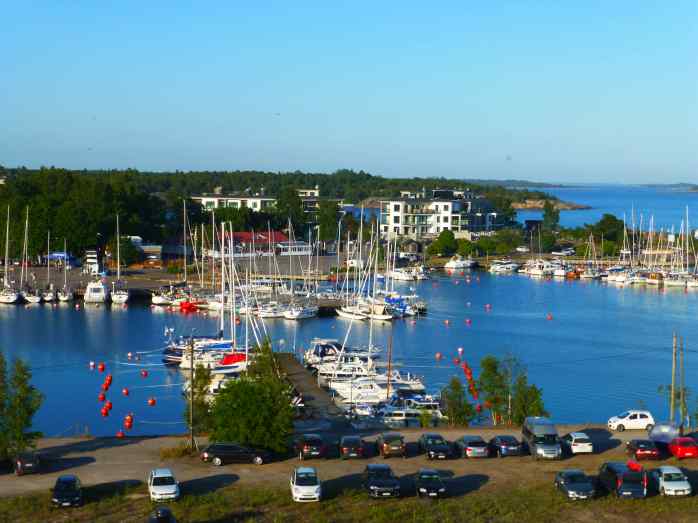
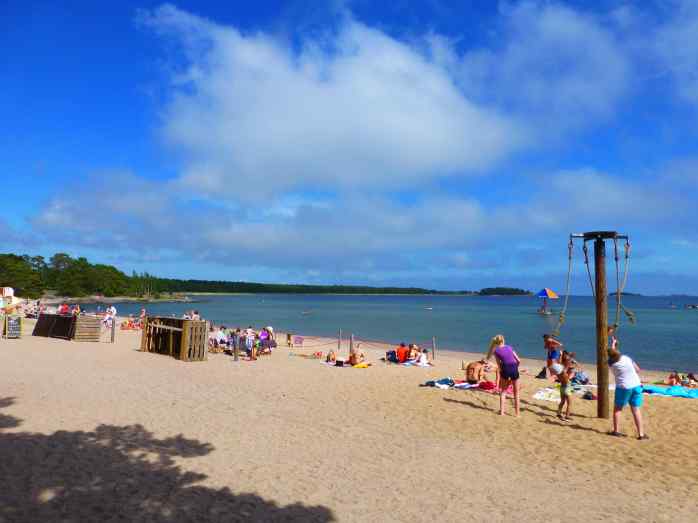
It is a summer holiday village, with again more stunning wooden houses, a couple of good beaches, the big marina, a street of restaurants (for the holiday boaters) and that’s about it.
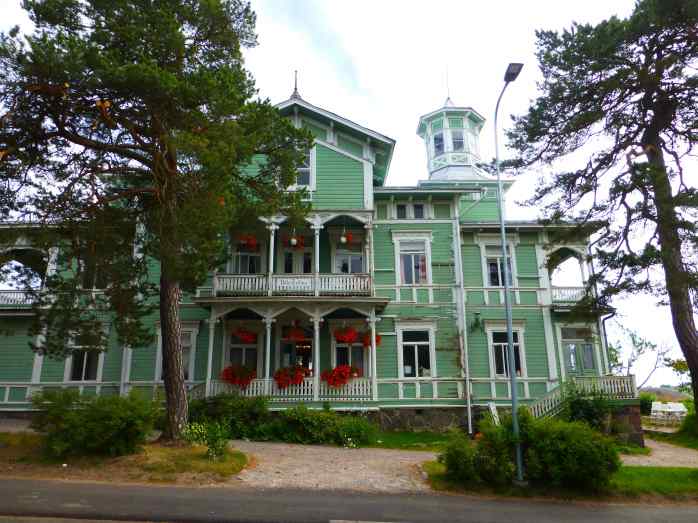

They did however have a great bit of kit in the water off the main beach that in our opinion should be installed in every kids beach in the world. It was out off the beach in about shoulder hight water and was basically a large umbrella with ropes off it that had a motor keeping it constantly spinning around. There was a small platform under it for the kids to get up on then grab a rope and have a swing around before letting go for the big splash – looked like loads of fun!!
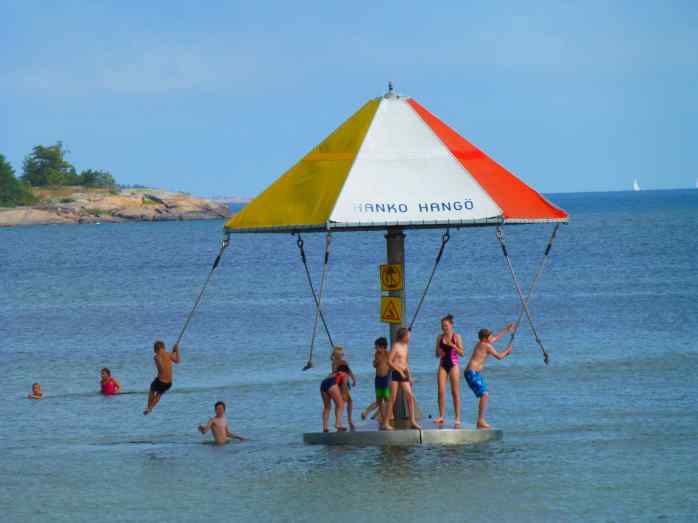
Phew . . . Thanks for sticking with us and reading this one – I know it was long. Keep tuned for Part II.
24 Hours in Helsinki
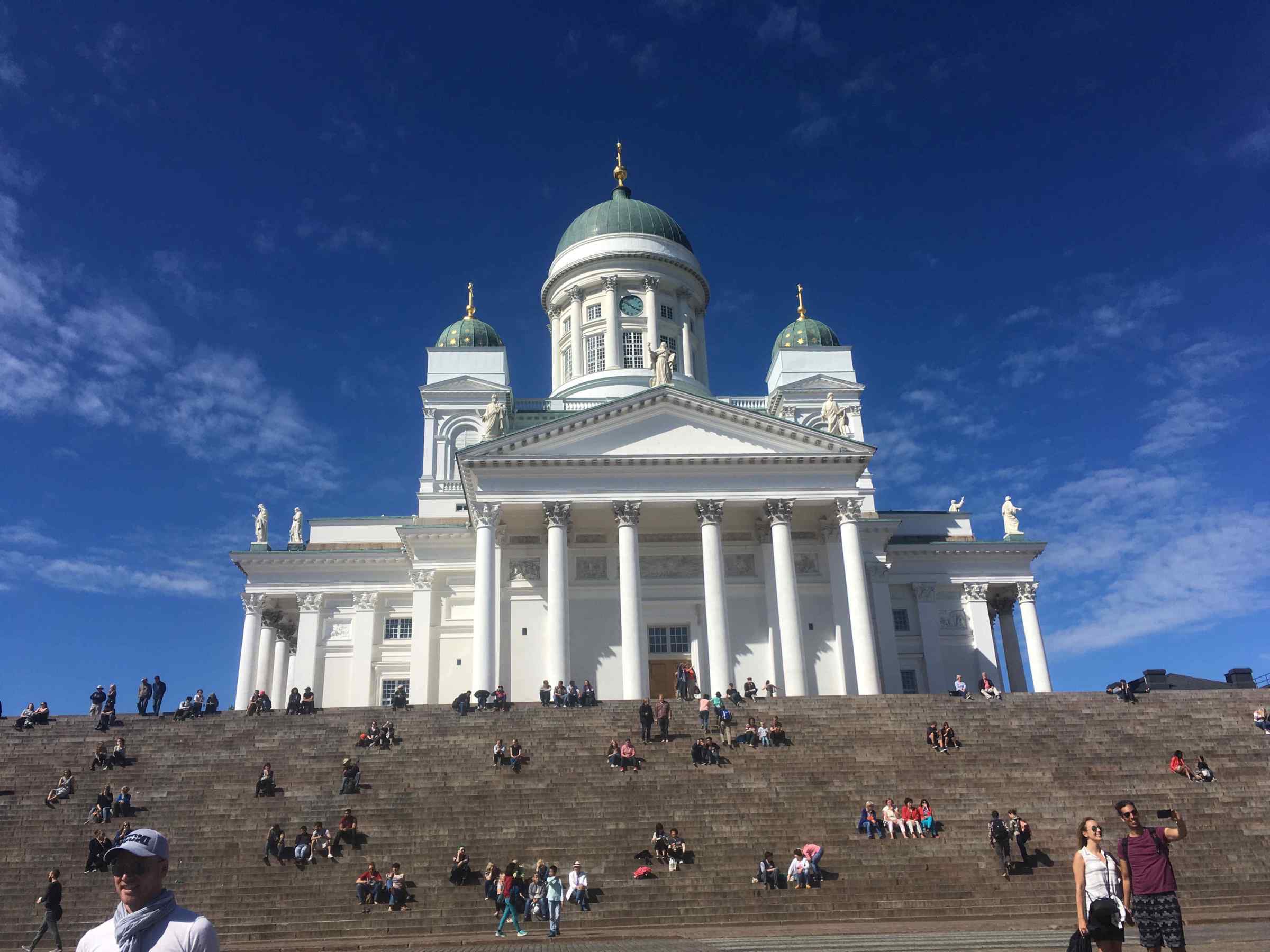
Well actually 2 nights & 1 day but the title above works better, regardless of the time and title we thought Helsinki was great!
A day sail from Tallinn (Estoina) across to Helsinki of 45 nautical miles, with two very distinct halves in the journey. Departing Tallinn in drizzly weather beating into the wind with slight seas which developed into force 5 (17-21 knots) of wind on the nose and a sea swell of 1.5 meters creating a rough and messy slop which wasn’t that comfortable. However around the 1/2 way mark the wind dropped to F4, the sun came out, layers of clothes came off, the swell dropped and the seas calmed and the best thing was the wind allowed a good angle filling the sails for the remainder of the journey.
A quick visit from the customs launch just prior to arriving into Helsinki confirmed that we made a good decision in Maree crossing on the public ferry (a very smooth and cheap 2 hour journey without need for visa control).
We secured the boat in the Helsingfors Segelklubb about a 20 minute bicycle ride out of Helsinki at Lauttasaari (an island connected by roads and bridges). The next day after spending the morning scouring the chandleries for all the things on Phils list we cycled into town and touched on the big “must see” icons (more below) and also spent and enjoyable 4 hours out on Suomenlinna Island know as the Suomenlinna Sea Fortress.
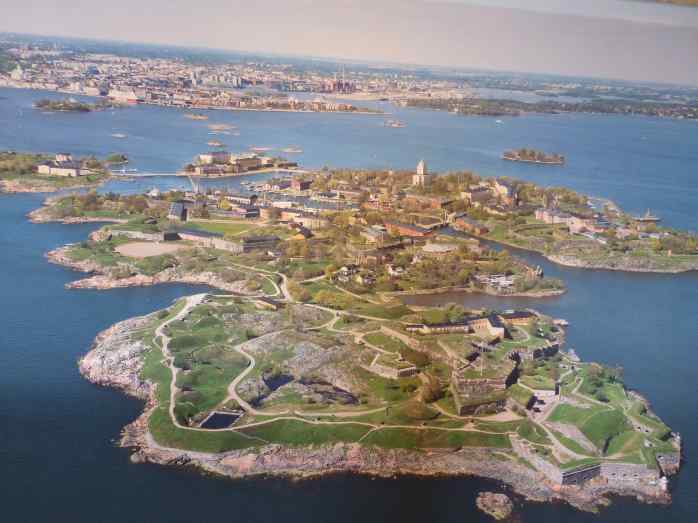

The must see features being; Helsinki Cathedral & Senate Square – very impressive, Uspensky Cathedral – from a certain angle looks like it is built on the rocks (needless to say that is the angle we took pictures from), the Presidential Palace, Market Square – loads of elk, deer and wooden souvenirs for sale, the Tori Quarter and City Hall.
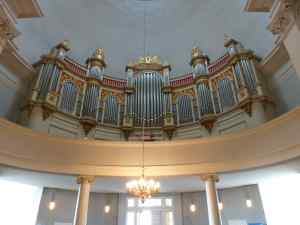
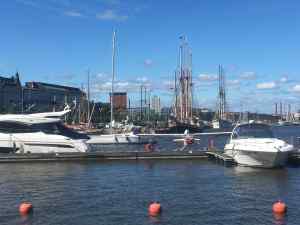
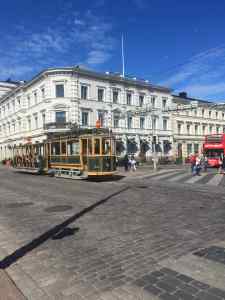
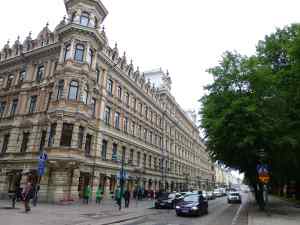
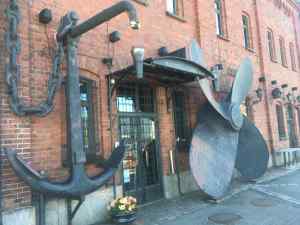
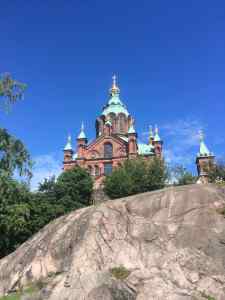
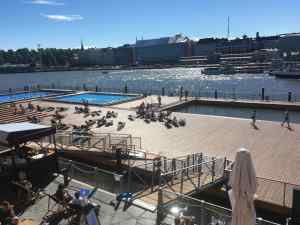
We also popped into the “Magnum (Ice Cream) Shop” just in case they were giving away free samples (Phil insisted) only to find it was a custom Magnum shop where they start with the plain ice-cream on the stick and you choose what chocolate they coat it in and the what kind of nuts/sprinkles/etc to dip/coat it in – a bit too fancy (and expensive) for us and sadly no samples.
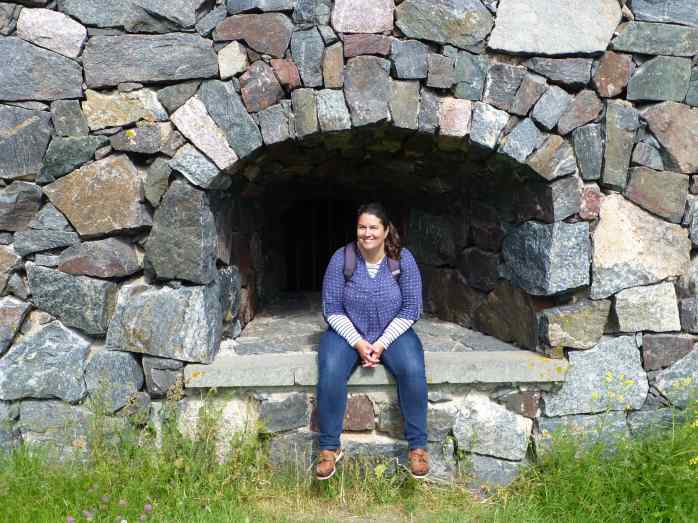
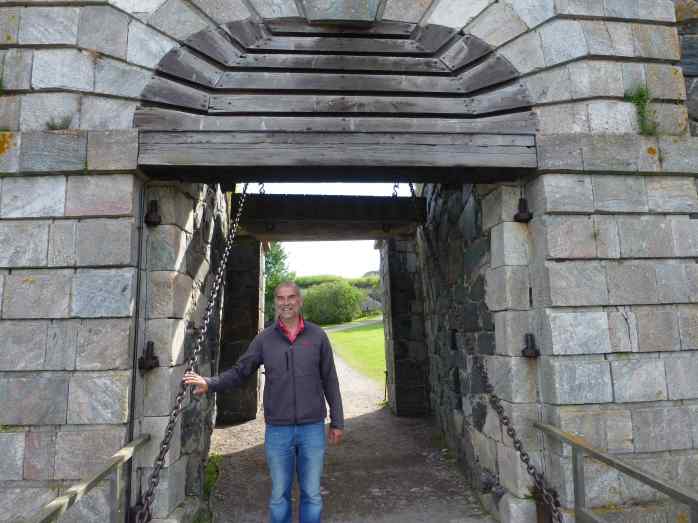
We enjoyed our day in the country’s capital although we are both really, really, really looking forward to getting away from marina’s, cities and people into some secluded anchorages in untouched beautiful locations. The plan from here is to spend 3-4 weeks cruising the Finish Archipelago’s heading west to arrive in Stockholm – Sweden.
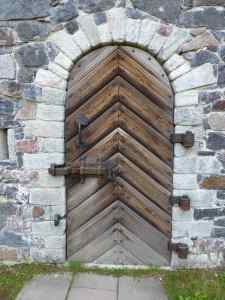
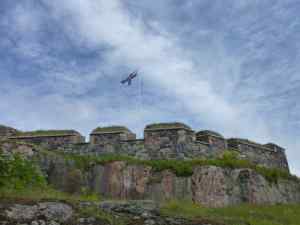
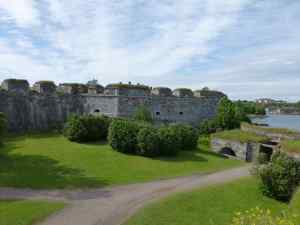
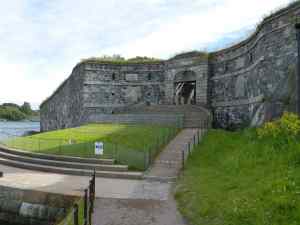
Red Roo Team Reunited – Tallinn, Estonia
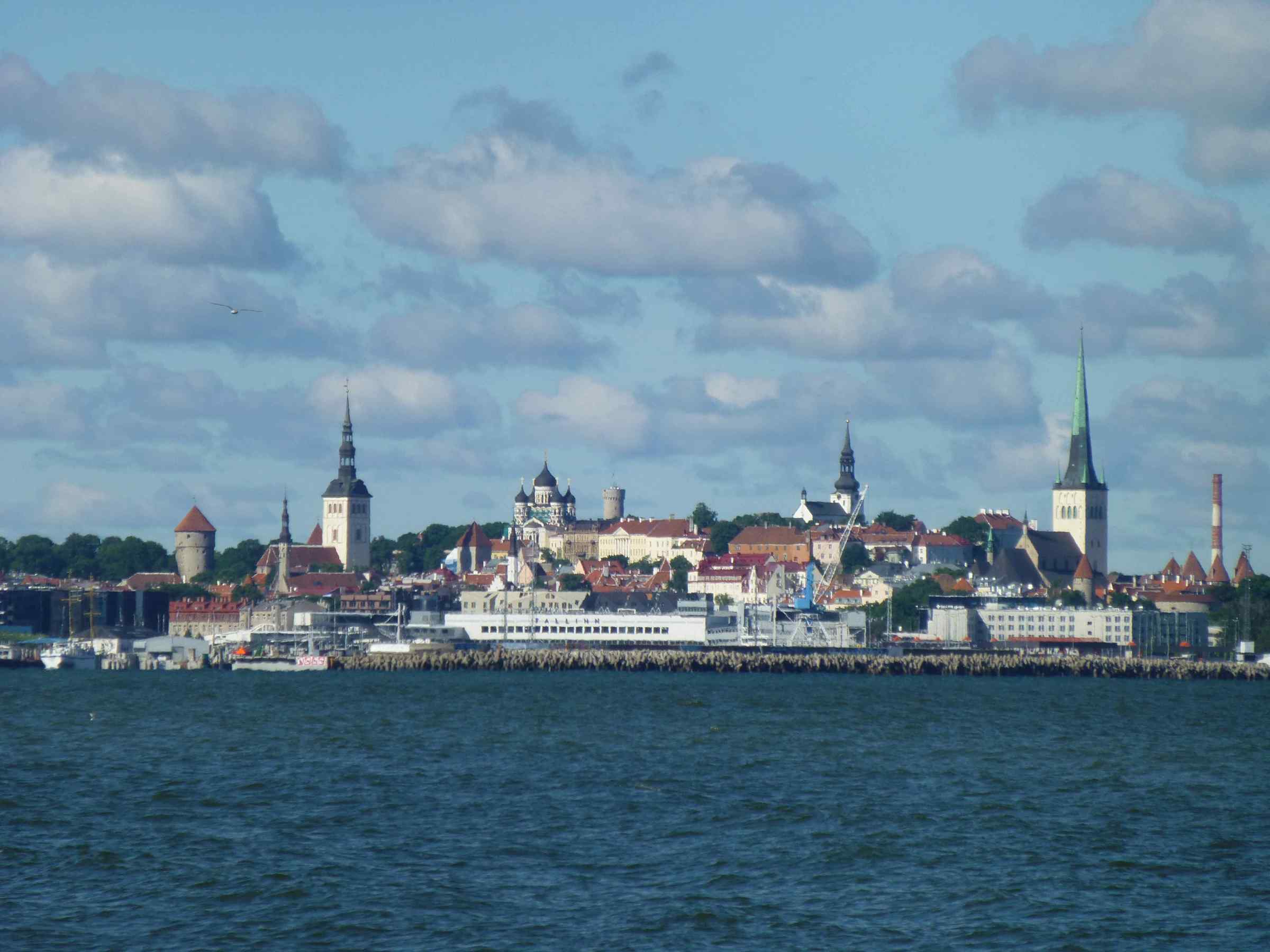
Maree returned to Red Roo in Tallinn – Estonia (many, many, many thanks to Pat, Sam, Honey, Clare, Wendy and Michael in the UK who made me welcome whilst waiting to return to the boat). So we are now back on track to continue our summer exploring the Baltic Sea.
I was greeted at the airport by Phil holding a small sticky note with my nickname on it as he stood smiling amongst the offical chauffeurs with whiteboards containing passenger names – most amusing!


Moscow Olympic Harbour – Icons and Olympic Flame Dish
Red Roo was berthed in the Pirita Marina home of the 1980 Moscow (Russian) Olympic sailing events. Russia I hear you say . . . aren’t you in Estonia . . . yes we are. Let me attempt to break it down for you (very briefly).
For centuries Estonia has been a battleground with Denmark, Germany, Russia, Sweeden and Poland all fighting many wars for the all important geographical position of Estonia as a gateway between East and West.
Around 1227 Estonia was conquered and ruled by Denmark.
From 1418 to 1562 Estonia formed part of the Livonia Confederation and all was well until the Livonia War of 1558 – 1583 after which Estonia then became part of the Swedish empire. This lasted until 1721 when the Swedish ceded it to Russia as a result of the Great Northern War.
In the aftermath of World War I (1914-1918) and the Russian revolutions of 1917, Estonia declared independence in Feb 1918, they had fought off the Russians to the east and Germans to the south, however this was not to last.
During world war II Estonia was then occupied by by the Soviet Union in 1940 and by Nazi Germany a year later and then yet again by the Soviets in 1944.
Skip forward another forty years to 1988 during the “singing revolution” the Estonian Sovereignty Declaration was issued in defiance of Soviet rule and independence was finally restored on 20th August 1991 (not really so very long ago), and happy to say this continues until this day.
So, that explains how we are in Estonia the home of the Russian Olympic Sailing events as in 1980 Estonia was under Russian rule.

I mentioned above the “singing revolution” and this is something that really makes me smile. It is the name given to the events between 1987 – 1991 that lead to the restoration of independence to Estonia. The events were MASSES (300,000+) of Estoinans in Tallinn singing national songs and hymns that were forbidden during soviet occupation. How is that for a peaceful way rather than fighting a war.
This also leads into the “The Baltic Way or the Baltic Chain” which again was a peaceful political demonstration where in 1989 approximately TWO MILLION people joined hands to form a human chain spanning 675.5 km across three Baltic States – Estonia, Latvia & Lithuania. So Good!! Singing is still very, very big in the country and no wonder. We visited the Estonian Sound Shell in Tallinn which you can imagine is much loved and treasured by the people and very beautiful.
Whilst we were staying in the Olympic Marina at the Kalev Jahtklubi (love the Yacht Club spelling) it was hosting the 41st Spinnaker Regatta. It was optimist class dingy sailors (they are the teeny weeny little boats that are very light, fast and unstable). The name is easy to remember as you would be optimistic if you thought you wouldn’t fall in when trying to sail one! Anyway, it was fantastic to watch them coming and going, as it was for young sailors – all 229 of them (all under 13 years of age at a guess) and no doubt the best of the best, future Olympians I am sure. Countries represented were; Estonia, Finland, Sweden, Russia, Belarus, Latvia, Lithuania and Turkey. We even spotted one wearing a life jacket with an Australian flag and “Australian Sailing Team” printed on it, however he was from Turkey and he told us he swapped life jackets last year when he was down under sailing in the world championships in Adelaide Australia!!
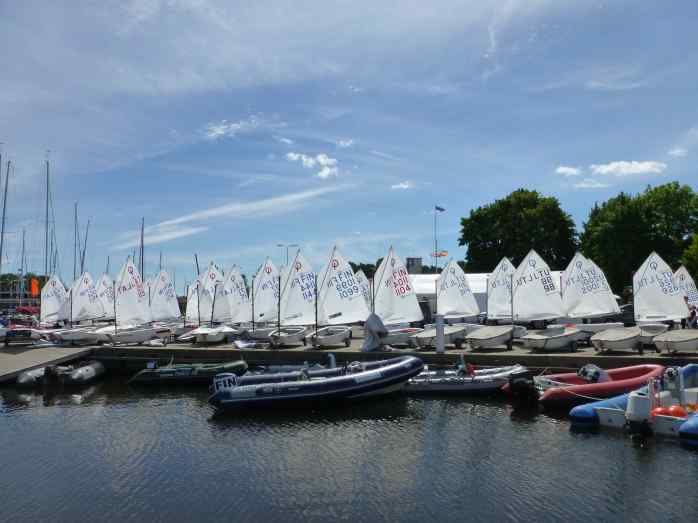

A few more Estonian facts for you, with a population of 1.3 million (consisting of 65% Estonians and over 25% Russians as well as some others to make up the numbers) it is one of the least populous Baltic States. Phil was astounded to learn in the Guild Hall Museum that in 2009 over 60% of the countries births were born out of wedlock! Outrageous!! (I am not sure how that figure compares to other countries). Also for those interested the land size is 350 km East to West & 240 km North to South.


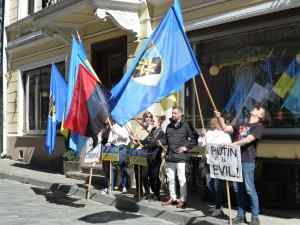
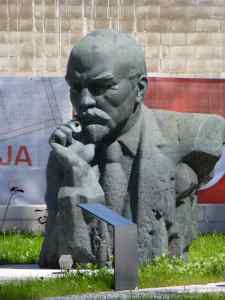
Anyway we had a great couple of days exploring Tallinn, the new city is exactly as most modern city are …. ugly, tall, grey and busy however the old city still within many of the original city walls is magnificent. Steep cobblestone streets, amazing buildings and stunning views. The city had endless museums, more than we have ever encountered before, but lucky for me Phil knows everything so was able to brief me on all I needed to know without having to spend days in the museums.
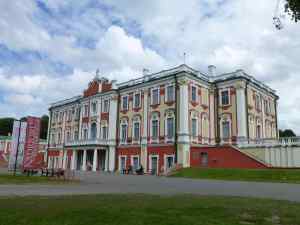


Wooden houses of every colour and shape


Old city walls and towers


Old city certifications & Streets
Rob and Jo from Cyclone of Langstone also arrived in Tallinn while we were there and it was fantastic to have a last hoorah with them before they headed back home (Tallinn being their furtherest point for this season) and we continued onto Finland. They were lucky enough to also be given a “Phil’s Special Cycling Tour” from the Marina into the old city, as well as enjoying a last supper with them on Red Roo during their stay, then a departing shot of Russian Vodka onboard Cyclone the night before they left ….. yes any excuse for a few drinks.
Next stop Finland!
Solo Sailing Poland, Lithuania, Latvia & Estonia

Since taking Red Roo single handed while Maree went out on R&R (forced due to visa restrictions in the EU) Phil has successfully sailed Poland, Lithuania, Latvia and into Estonia where we met up again.
Poland
From Swinoujscie in Poland he stopped at Kolobrzeg, Darlowo, Leba, Hel (yes it does exist and funny enough it’s in Poland) and Gdansk.
Gdansk is also the place Phil said that was most similar to a normal westernised country as we would expect, not quite as poor as he had seen in the earlier places.
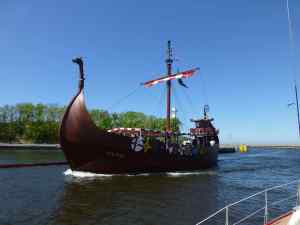
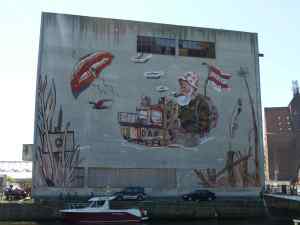

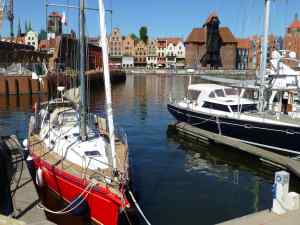
Lithuania
He departed Gdansk (Poland) and set out on a big 24 hour overnight sail (solo) to Lithuania and arrived safely in Klaipeda. Klaipeda is the only port to stop in Lithuania with the coast line for the country being rather small.


Latvia
Next stop is the country of Latvia where he arrived in Liepaja and also stopped at Pavilosta as well as Ventspils – again not a big coast line so only 3 stops in Latvia.
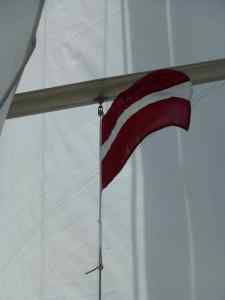
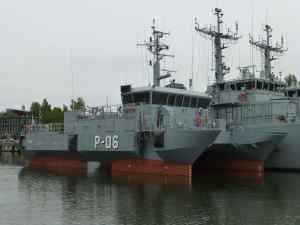
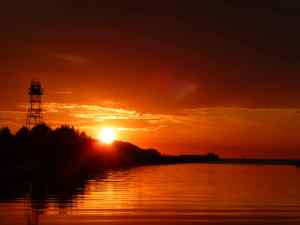
Estonia
Estonia however has more coast to offer and his first arrival port was Kuressaare. This is where we began to make plans for myself to return to Red Roo having been out of the EU for just over a month. With flight locations and travel costs taken into consideration we decided on Tallinn (Estonia’s capital) but between Kuressaare and Tallinn he boat hopped and stopped at; Kuivastu, Sviby & Happsalu.
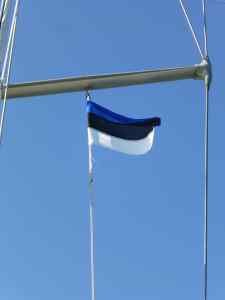
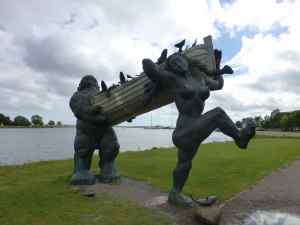
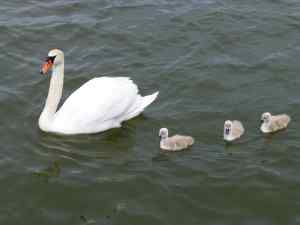
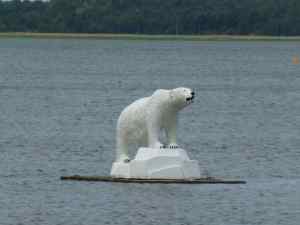
Phil has loosely promised to write a couple of blog posts about his time in Poland, Lithuania and Latvia solo sailing and looking around, however these things take time, so don’t hold your breath (I am still waiting two years down the track for a post he has promised to write about his story of buying Red Roo). I will however leave a bookmark here in the hope that this happens and will also alert you in the normal blogs if and when he gets around to it and link back for those that want to read 🙂
Wind taken out of our sails in Swinoujscie – Poland
I am sure you have all heard the saying “when you can’t say anything nice don’t say anything at all” well perhaps I should stop now and not write anything about Poland.
I will declare now that we are both a little tainted in our opinion, as this is where I (Maree) was forced to leave the boat and return to the UK for a while to ensure I didn’t overstay my 90 days in the EU Schengen area as per Australian passport holders are allowed.
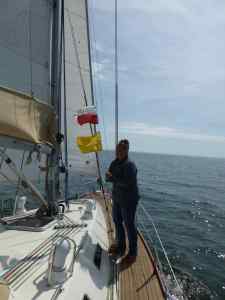
Having done nothing wrong, knowing I hadn’t either overstayed the number of days allowed in the EU and Cfurthermore having declared our arrival at each and every new country/port it was a shock when we were severely chastised due to not getting stamps in The Netherlands and Germany (where customs officials had welcomed us, told us we were not a threat and that they didn’t want to limit my time in the EU therefore required no stamp). We were expecting the Polish to not be as casual and give me a stamp in – essentially starting my 90 day clock (which was fine and we new would happen sooner or later) but NO I was taken to the customs office by the officers whom visited the boat (when we contacted them to declare our entry) and was sat in a meeting room with a guard (who didn’t speak English) and left there for over 4 hours before they came back with a stamp that had been backdated to the entry date in the Netherlands and therefore leaving only 13 days in the entire EU Schengen area. Very upsetting and quite a shock.
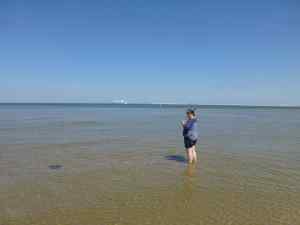
The next day was spent making plans for Maree to leave the EU and we are extremely grateful once again to Pat and family for providing a place for me to stay in the UK (the UK are not in the Schengen area). With travel arrangements made we had one more day together to look around Swinoujscie before I was due to depart. Surprisingly it turned out to be a hot one, the temperature reaching 31 degrees!
Neither of us could find a whole lot to like (even when putting the customs issue behind us), going by this town Poland is seemingly a rather poor country or at least the northern towns certainly are. Lots of apartment blocks, lots of raw concrete, supermarkets not particularly clean nor organised. It was also the first time that English was not spoken by those whom you would think may be able to.
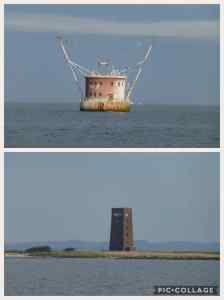
When we visit a country we in no way expect them to speak English as we are in their country and should speak their language, this can be challenging trying to learn so many languages so quickly whilst we are travelling but we always get the basics down (please, thank you, hello, goodbye, numbers etc).
Poland however was the first place where the people in customary “tourist or international” type roles were not able to speak any English, for example, the customs men (making my whole scenario quite difficult), the people in the marina, the staff at the airport and train stations also didn’t speak english. They could speak German, not surprising I guess with them sharing a land border close by but English was very foreign to them.
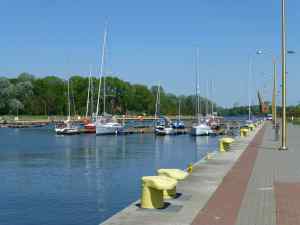
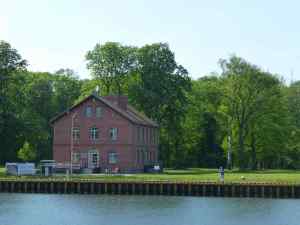
It is also the first country where I actually noticed that the people looked noticeably Polish (notice my tact . . . writing Polish rather than saying they look different), what I mean is they all look similar. I was asked if I noticed the girls in Holland or Germany being particularly tall, blonde or beautiful but I couldn’t say that I did, they were normal with some tall, some short, some beautiful some ordinary and so on. But in Poland men, women and children were all considerably short (I was feeling tall) had dark hair, (blonde was very very rare), and all quite round or thick set – made noticeable because they were short. They all looked like cousins, very similar faces. We felt very different, and felt we stood out and we haven’t felt like that anywhere else.
From what we can gather Poland is still developing following it’s years under soviet control. We can only hope they continue to grow and develop.
So all good things must come to an end – a temporary glitch (definitely not a permanent end). It was soon time for me to board my train to the airport.
Here in starts another tale, having to take three local trains to get to the airport – see picture below of one of the stations where I waited ALONE for 1 hour and 22 minutes for a connecting train to the airport ……errrrrr, yes a very long 1 hour 22 minutes and I didn’t see another person, car or building.
I then had a direct flight from Szczecin (Poland) to Stansted (England). We are calling it Crew being out on R&R and leaving Phil to sail Red Roo out of Poland and east thru Lithuania and Latvia (the tricky countries for EU passport control) where after some time in England I will be able to re-join him.
It is no mean feat sailing a yacht alone, the actual sailing part not being so hard but berthing can be quite the challenge, however as expected he did fabulously with the tactic of arriving at a harbour and picking the most expensive looking boat around and declaring very loudly that you are solo berthing along side of them – funnily enough they always rush to assist …. he he he.
No seriously, jokes aside, he did great and there were usually fellow sailors around to assist him to berth in most locations. Incredible that he only got it sideways once (that he has told me about) in a very tricky situation of a stern buoy, bow to pontoon berth in cross winds – that was never going to be easy no matter how much help he had.
Writing this retrospectively, I can declare that he did let it slip a week after I left that “the second set of hands is useful” and that “someone to talk to is nice” I am taking those words to be interpreted to “I miss you” but of course he would never actually say that…

 Red Roo
RECENT COMMENTS