Tunisia – Red Roo Is Back In Africa
Arriving in Bizerte, Tunisia on the 15th December 2020, we really didn’t know what to expect as far as checking into a foreign country in these new Covid times. To our pleasant surprise it was easy and we received a most warm and sincere welcome to Tunisia.
We tied the boat up at around 4pm and were instructed to stay on the boat. By 6pm we had a laboratory technician at the boat in full PPE (white paper overalls, gloves and mask) ready to shove a stick up our nose for a Covid test. The next morning the results were in – we had passed the test (and didn’t even have to study!). The officials then came on board one after the other; Customs, Port Police, Guard National, then finally the Marina all with paperwork to process us and the boat into the country. Last to visit was the Government Doctor who assessed our Covid results, our previous travel and our health before determining that we would need to quarantine for 4 days, complete a second Covid test then (as long as we pass again) we would be fully cleared in and free to leave the boat and explore Tunisia. We passed the second test too and for the benefit of those who haven’t been covid tested it doesn’t get easier the more you do, whilst it is painless it is anything but pleasant. We didn’t have it too bad however as we learnt that the poor technician who tested us has to complete a test at the end of every work day (due to his exposure risk in testing people all day everyday), he told us he has now had 321 tests …. ouch – I don’t think his nose will ever recover!!!
The 4 days confined to the boat in quarantine passed very quickly as we were certainly exhausted from our lively passage across from the Balearic Islands, so we took the time to recover, and enjoyed being plugged into power and water (no limits on consumption of these was welcome after 6 weeks of anchoring along the Spanish coast). Long hot showers, electricity for laptops/movies and cooking, water to hand wash our clothes (in a bucket) and plenty of food stores we were happy.
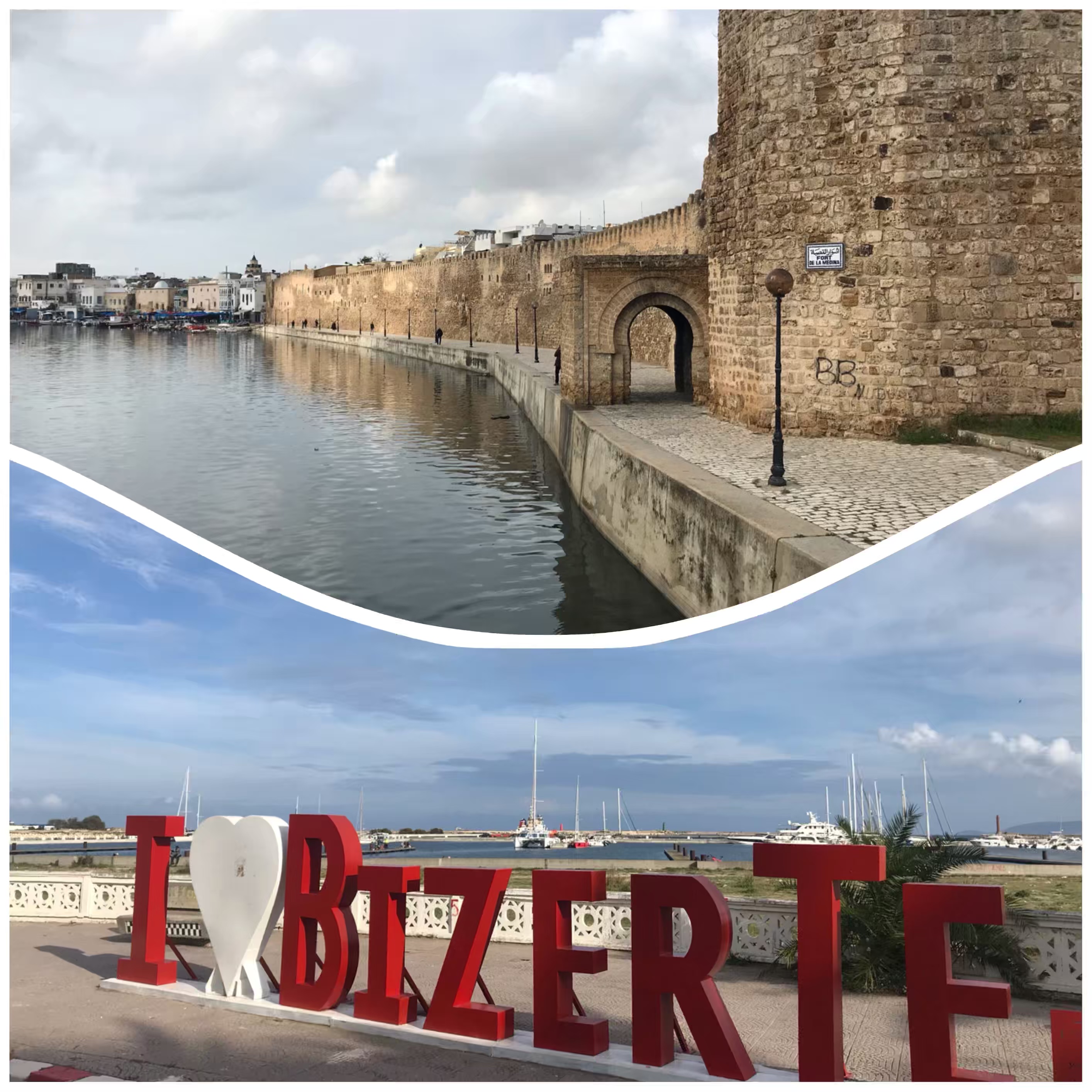
Red Roo in the marina above the “E” in the I Love Bizerte sign.
In total we spent two weeks in Bizerte, during this time we found our feet in regards to understanding the people, customs, language, money, food and the way of life in Tunisia. The Tunisians are very welcoming. This is one of the many pleasures we get to experience each time we land in a new country.
Whilst in the North of the country we took the opportunity to hire a car and see further afield than the city.

We toured a large aluminium boat building factory (Red Roo is aluminium) in Menzel Bourguiba owned and operated by our new friend Claude (a lovely Frenchman who had a 22 meter aluminium catamaran next to us in the marina).
We drove to Ichkeul National Park expecting to be able to get close to Flamingo’s only to get to the gate and be told the park was shut due to Covid.

A local Shepard with his cows on the road (you know they are true Shepards when they have a stick!).
The aluminium boat factory & the Ichkeul National Park (closed)
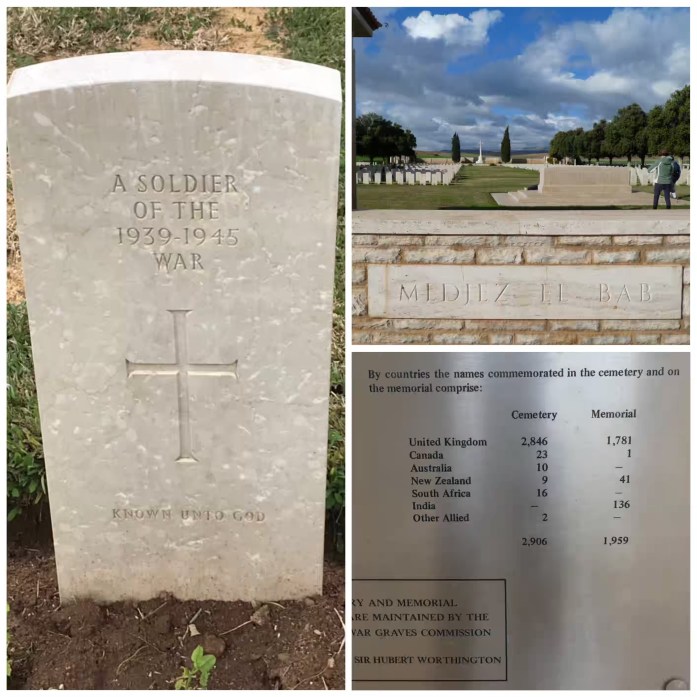
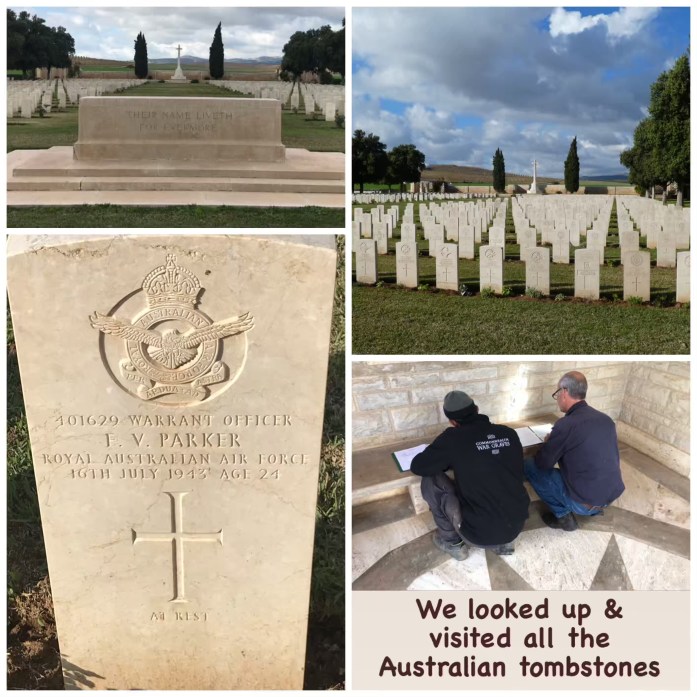
On our travels we came across the Medjez-El-Bab Commonwealth War Cemetery, where 2903 Commonwealth Servicemen from the Second World War North Africa campaign (1942-1943) are buried or commemorated, 385 of which are unidentified. A very sombre place that is maintained to a very high standard by the local staff.
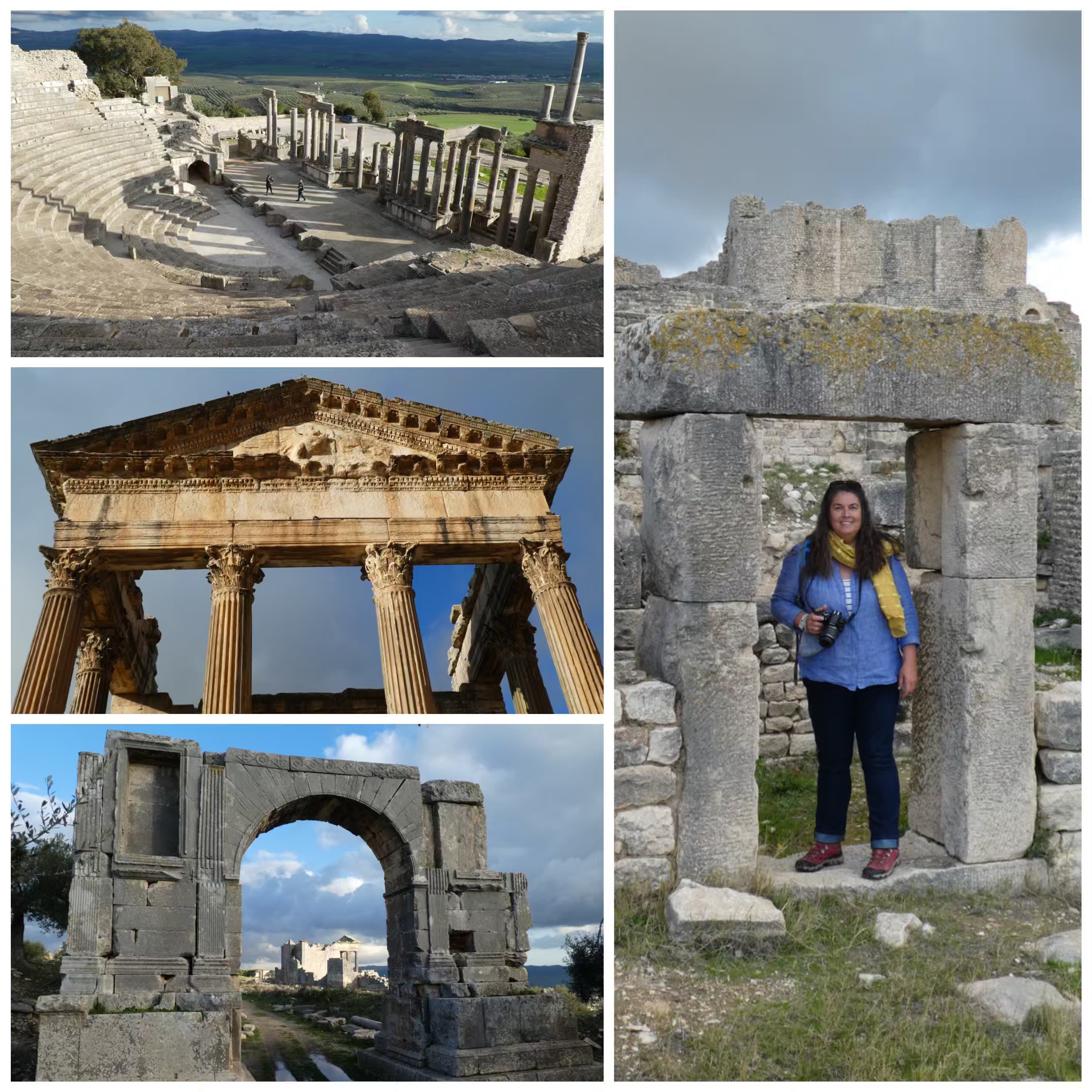
We stopped at Dougga, a Roman settlement that peaked around 400 AD. The ruins of the complete city cover an area of approximately 75 ha. It became a UNESCO site in 1997. We really enjoyed exploring this place, we were 2 of 4 people wandering the ruins and there is no such thing as out of bounds, guide ropes restricting access or even occupational health and safety in a place like this. You are truely free to roam and explore, even fall down open un barricaded holes in the structures, or pick up the stones from mosaics dated 1400 years old.



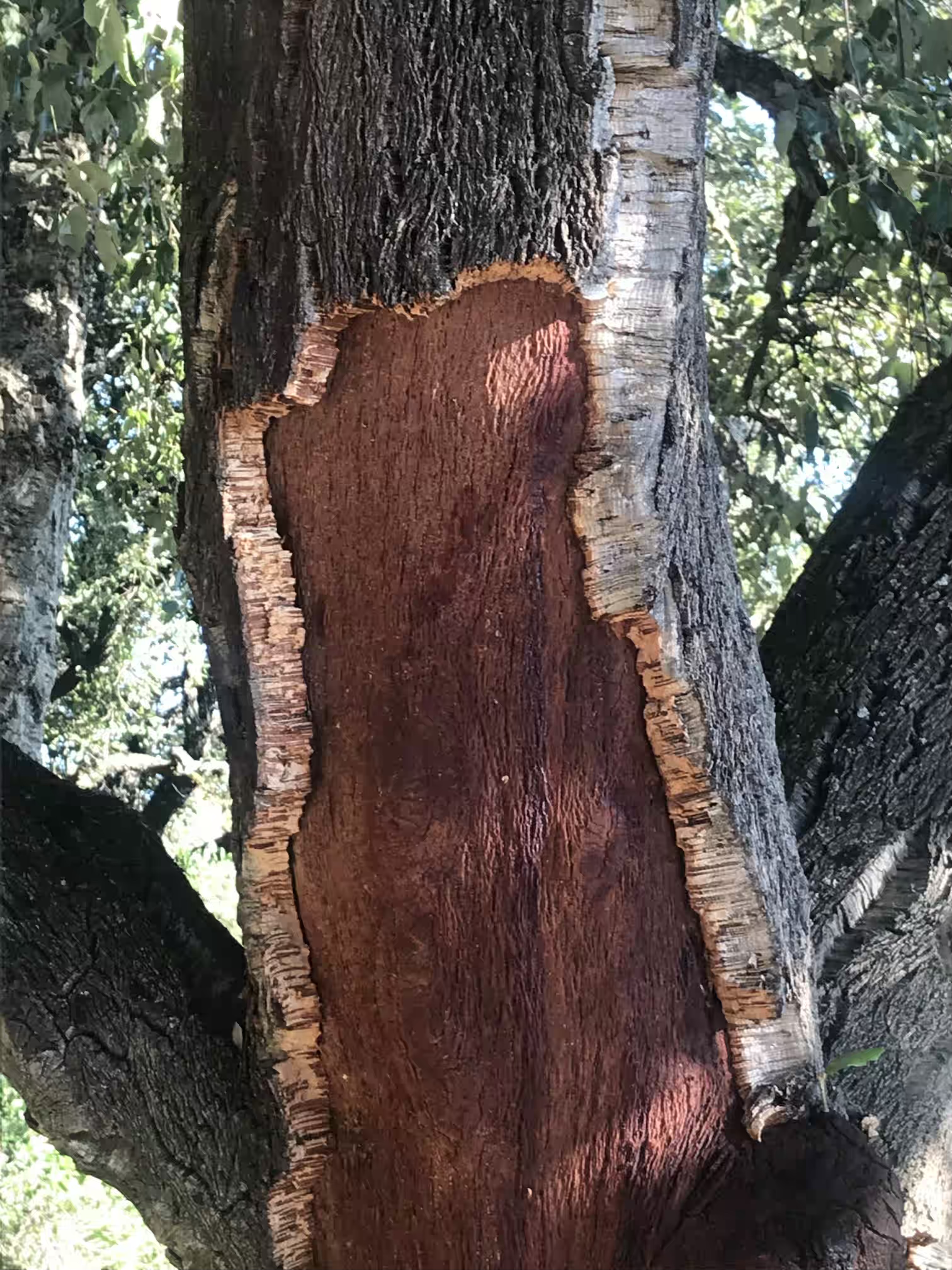
We visited Le Kef and toured the Rabat which overlooks the city, as well as drove through the cork forests and the Ayn Darahim Mountains on route to Tabarka, a northern coastal town. During our time on the road we passed some magnificent rich farming country with the winter crops emerging. Northern Tunisia was the breadbasket of the Roman Empire with an estimated 60% of the empires wheat coming from the region.
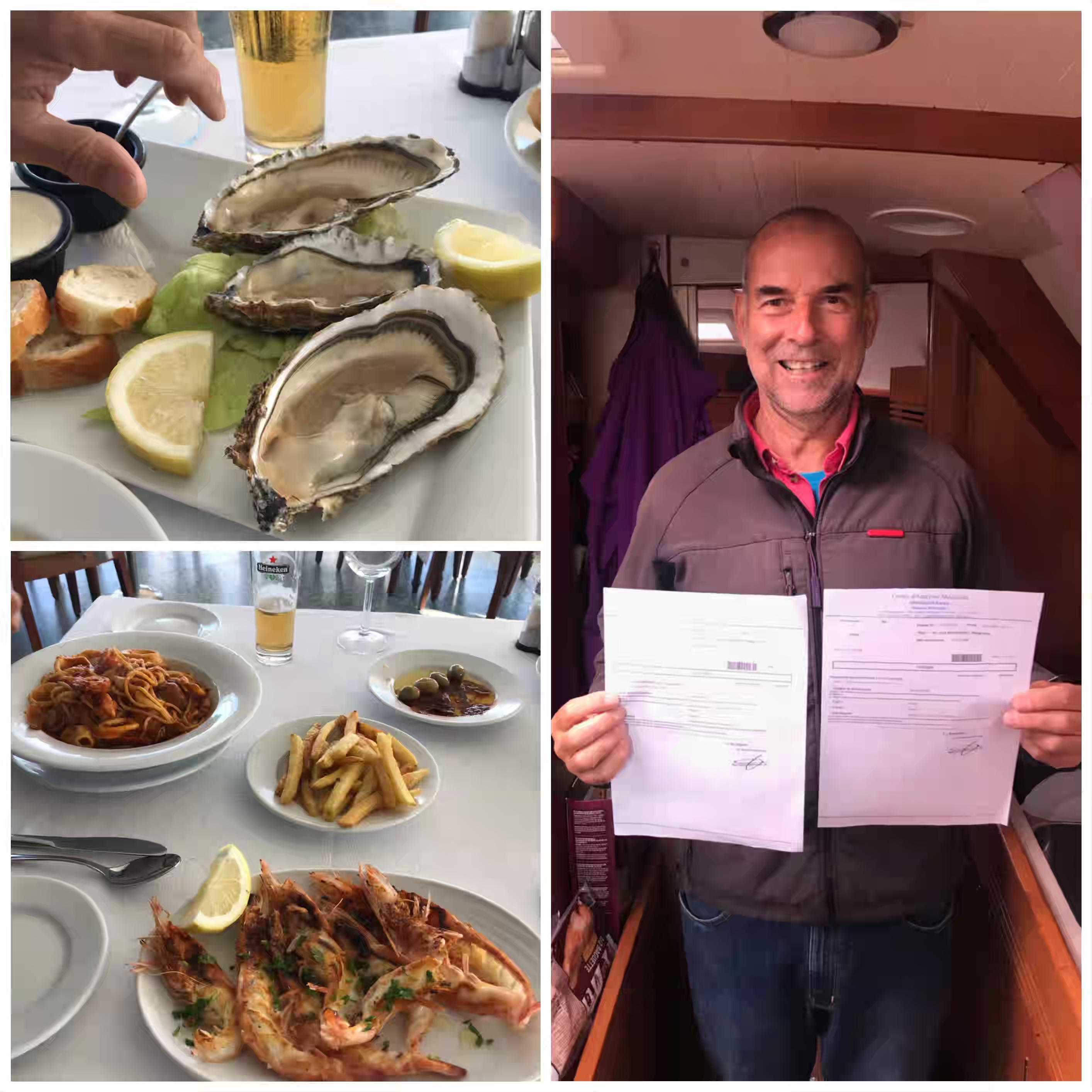
We were the only cruisers living on our boat at Bizerte so we enjoyed a quiet Christmas together. We ate out at a restaurant for lunch (the one in town that sold alcohol – remember we are in an Arabic/Muslim country now and alcohol isn’t a common thing). We treated ourselves to ½ a dozen oysters for an entree, only to be told they had just three oysters, however they were so big I am not sure we would have managed any more than that. We strolled back to the boat and drank away the afternoon and evening making a good dent in our ships stores of grog – it was Christmas after all!!
Once the correct wind and weather arrived we set off again for the 145 nautical mile passage which took us east across the Gulf of Tunis, around Cape Bon and then south to our winter berth at Monastir.
We had a great sail making good speed in pleasant conditions (a relief after the previous passage). We left Bizerte and arrived in Monastir a little over 24 hours later, anchoring off the beach outside the marina.

Night sail from Bizerte to Monastir 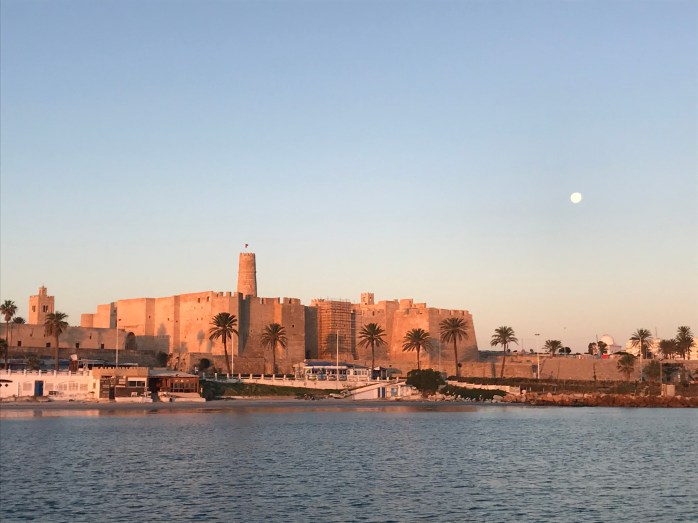
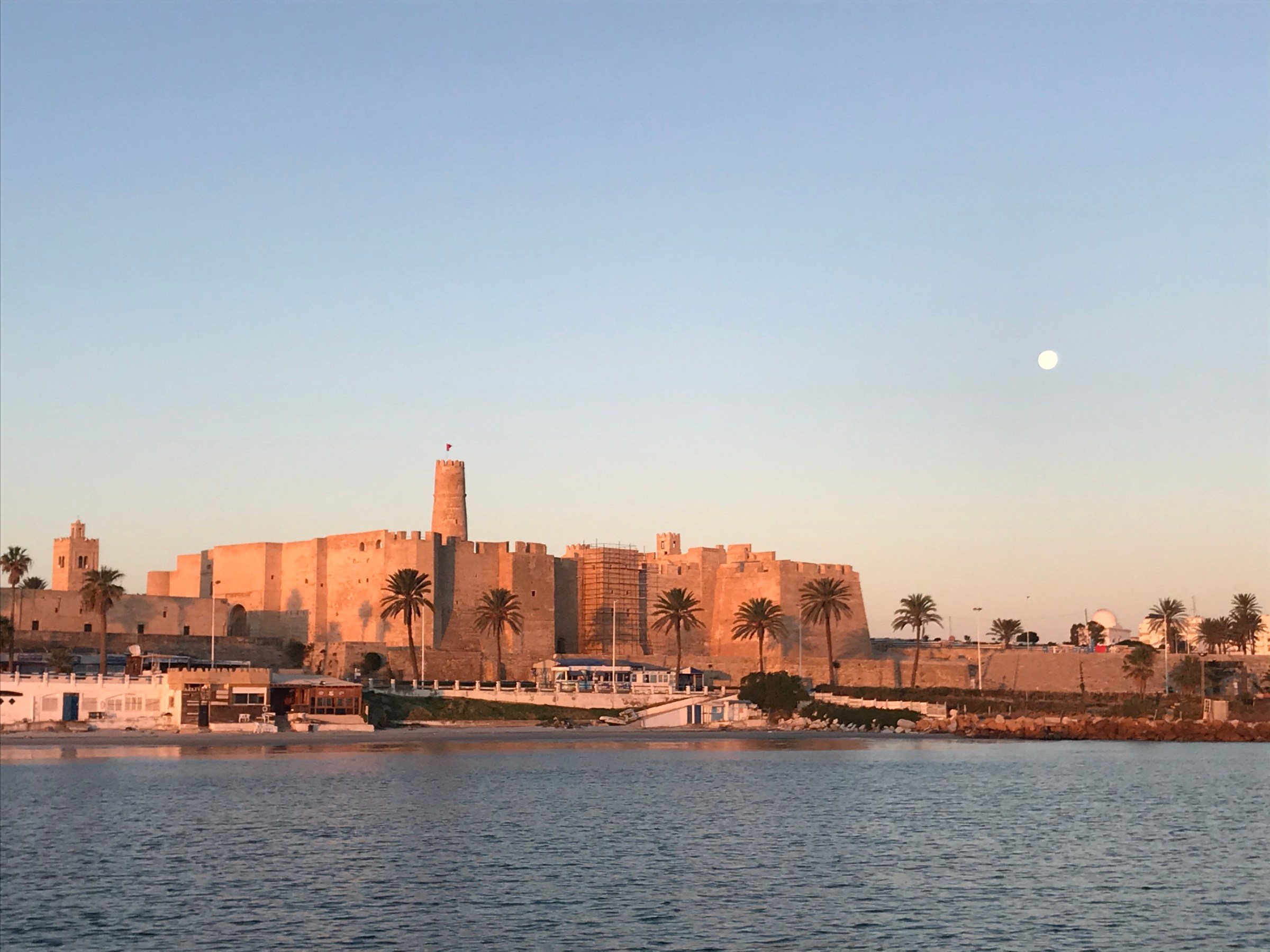
Anchoring off the Rabat in Monastir upon arrival
The next morning we entered the marina (with a little touch of anxiety) for our first ever Mediterranean berth. This may not mean much to many of you, but every region of the world has a different way of “parking” your boat, and we were about to learn yet another. Previously we have become practiced and skilled in normal finger pontoon berths, then in the Baltic Sea we learnt to deploy a stern anchor and nose into the rocks or docks to tie off, we have also perfected the box berths or pile berths but of course they do it different here in the Med. We had done our research but it is always a bit “exciting” actually executing something new in a boat. Especially when you have a great cruising boat for sailing and anchoring but one which isn’t quite as responsive on steering in small tight cramped marinas, or going backwards at low speed, which of course is what is required to berth here. In short they don’t have pontoons (to side tie onto) you need to back into a berth in between other boats and tie off your stern (rear) to the quay, then pick up “slime lines” from the water that are secured underwater on the bottom (usually to concrete blocks) to tie off your bow. Then secure a “plank” to get on and off your boat from the stern to the quay. We managed this quite well (or some would say fluked it), but it was a relief getting the first one done, we now know what to expect next time.
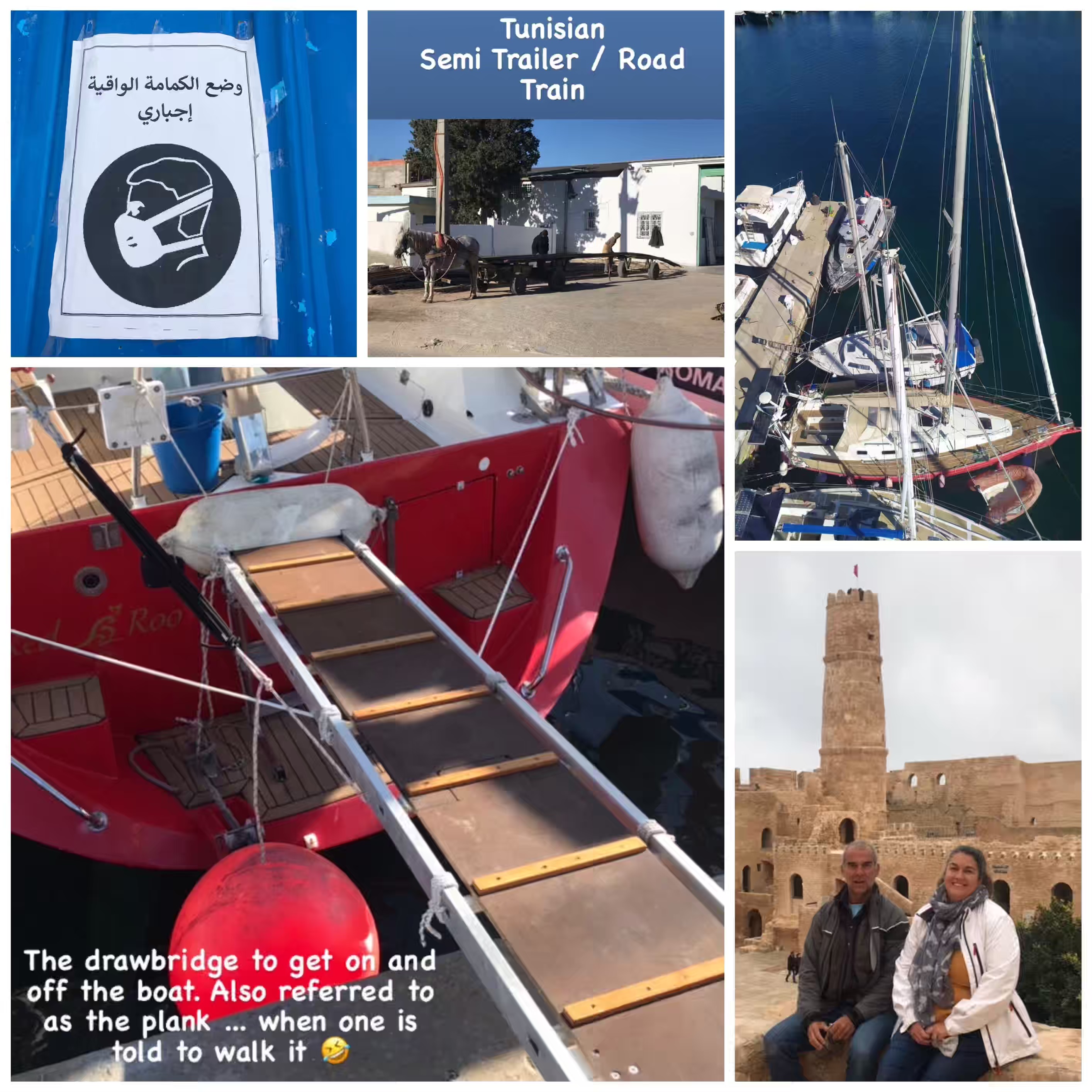
Red Roo in her winter berth, picture taken by our neighbours from the top of their mast.
The “plank” to get on and off the boat.
Monastir Rabat.
We were welcomed in Monastir, arriving New Years Eve to be greeted by fantastic friends who we had previously met and wintered with in Morocco 2 years prior, and have since made many new ones too. Monastir has a great winter sailing community with around 20 boats all with people living on them from many countries; USA, Canada, Germany, France, Italy, Switzerland, Brazil, The Netherlands, as well as other Australians!
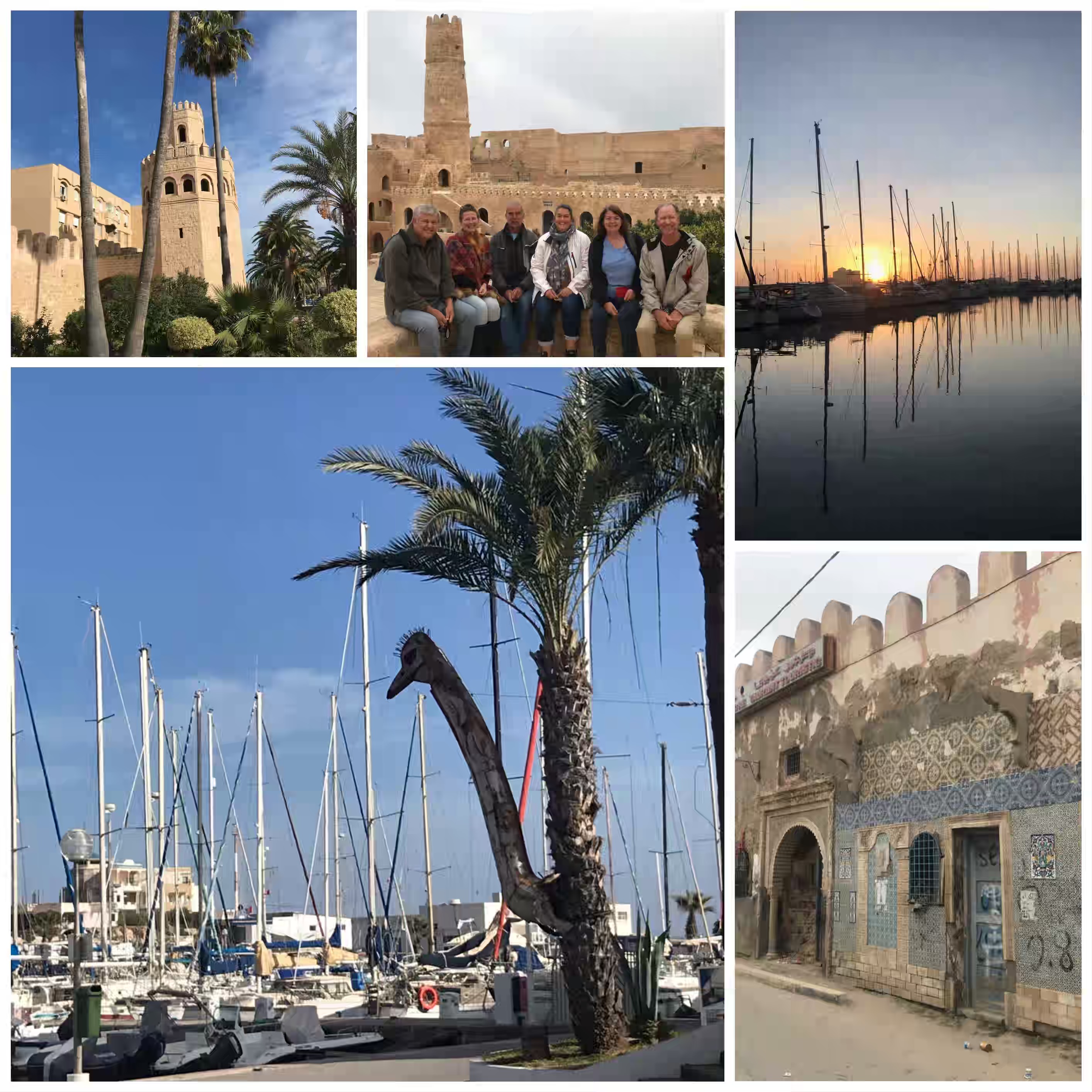
Friends old and new in Monastir.
Sunrise in the marina.
Our pet Ostrich at the marina.
Street buildings Monastir.
We will be here for a few months to wait out winter, haul out the boat and anti-foul the bottom and then be ready to head off sailing and exploring as the pandemic and weather allows.
We WON!
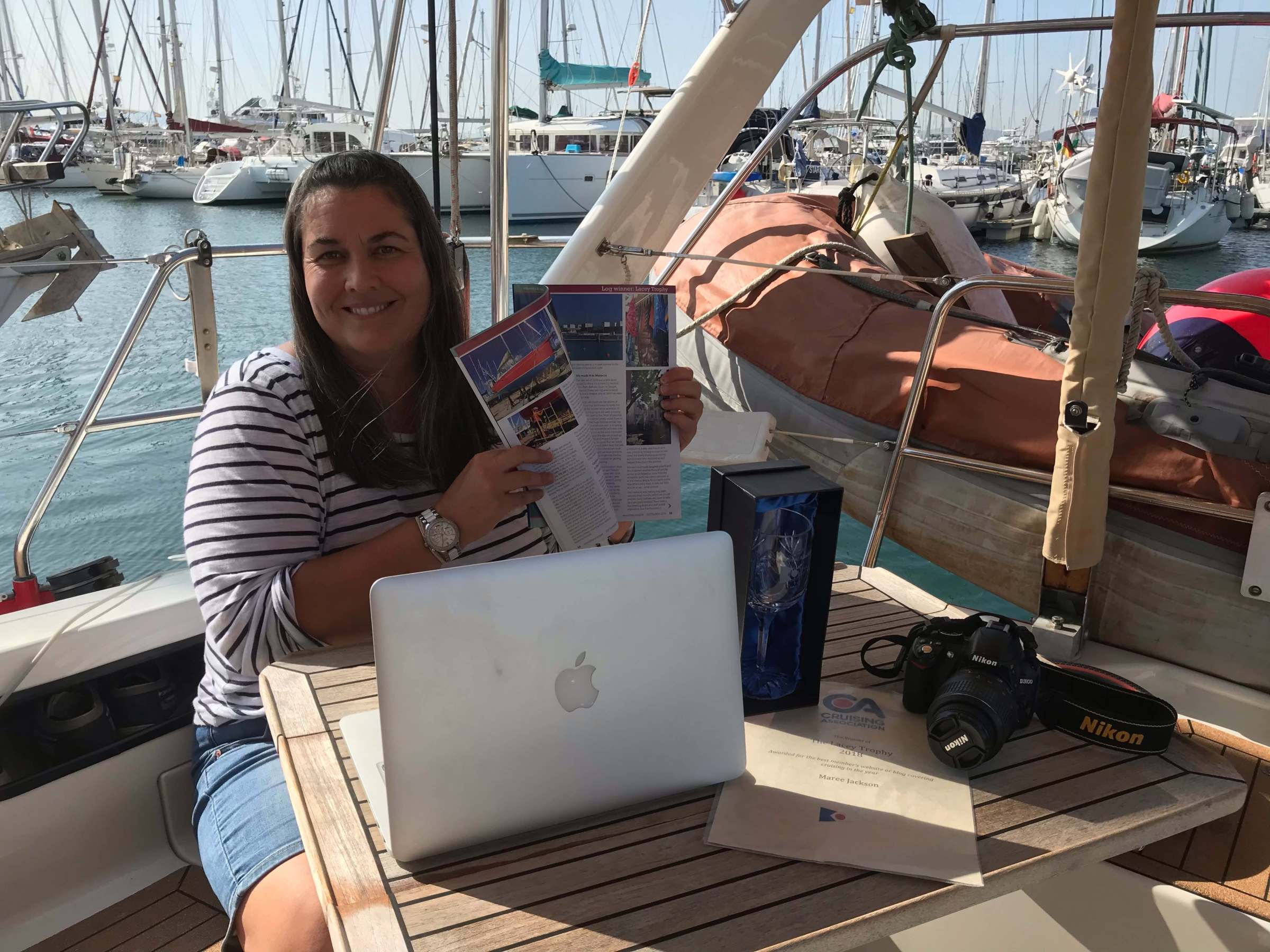
🏆😊 Early in 2019 Red Roo was awarded the “Lacey Trophy” from ‘The Cruising Association’ for Best Blog & Website Covering a Cruising Year – 2018 … Yay Us!
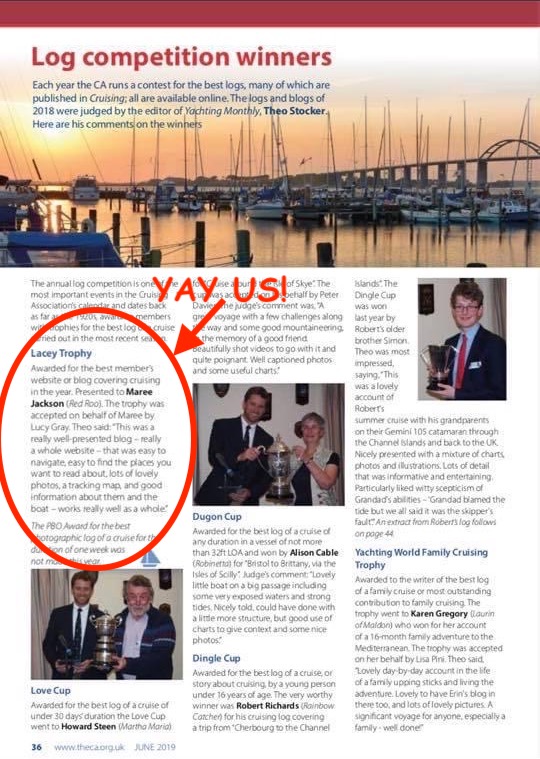

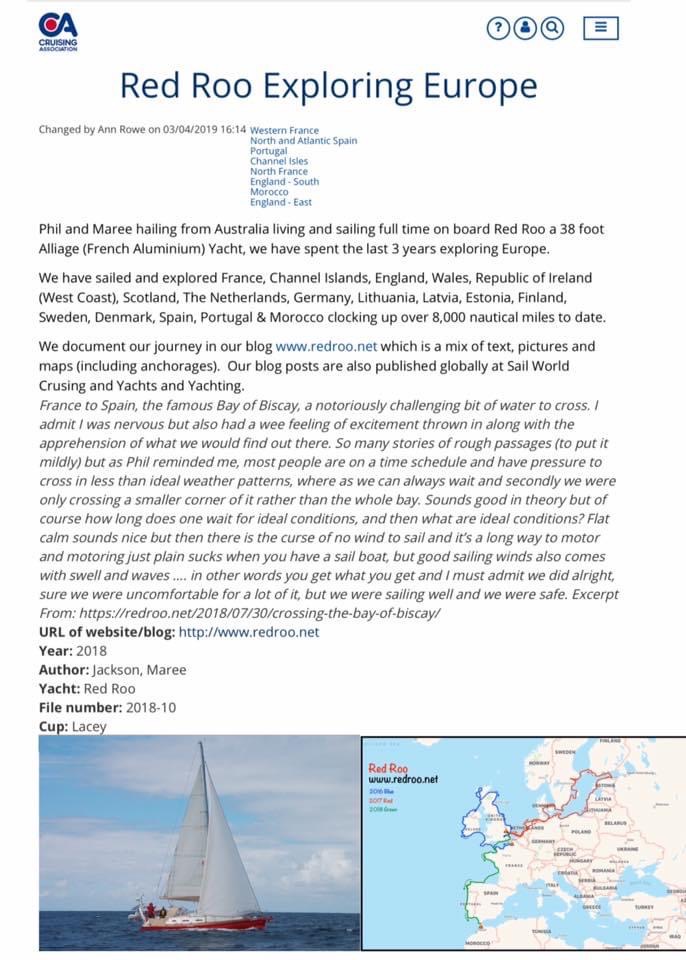
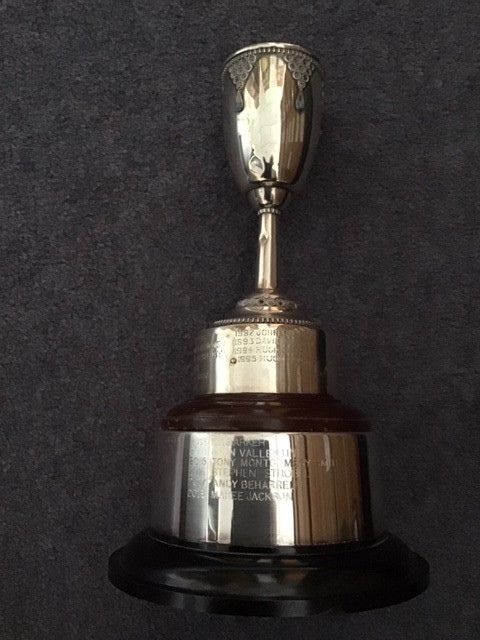
As a result we have been published/featured (a whopping 5 page spread!) in “Cruising” magazine – edition September 2019.
A big thank you to all our friends and followers both known and unknown to us, we are delighted that enjoy following our adventure.
Following what has turned out to be a lengthy hiatus (more to come on that soon) we promise to resume the blog in the very near future, bringing you more sea miles and adventures from Red Roo in the Mediterranean.
Below is the 5 page article featured in “Cruising” Magazine. It is an extract of the following blog posts which you can view on our webpage. #135 Crossing the Bay of Biscay. #140 Our First Haul Out. #142 We Made It To Morocco.

The Cruising Magazine we are featured in – a mention on the front cover “From France to Morocco” 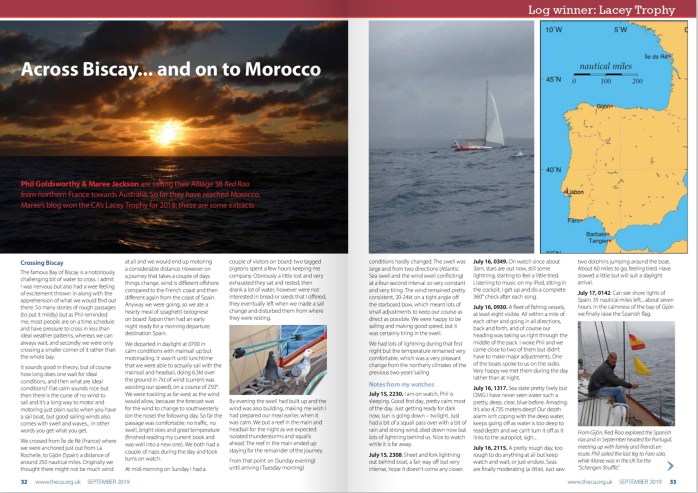
The article which contains extracts from our blog and my watch diary … if I had of known it would be published I would have put more thought and care into it! 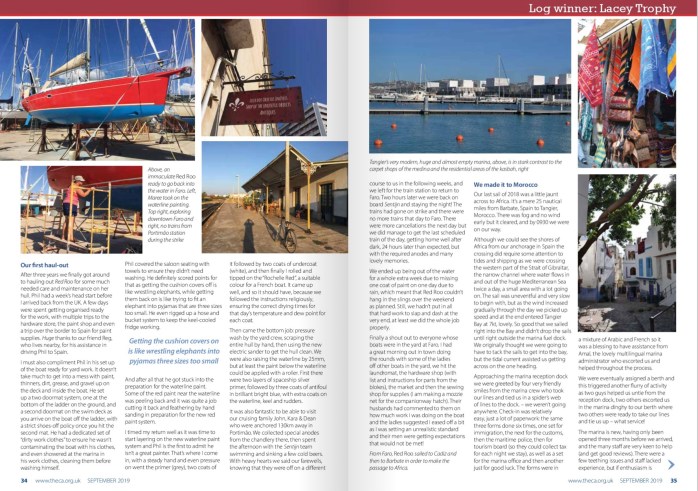
Pages 3 & 4, glad they picked a good picture of me … oh well! 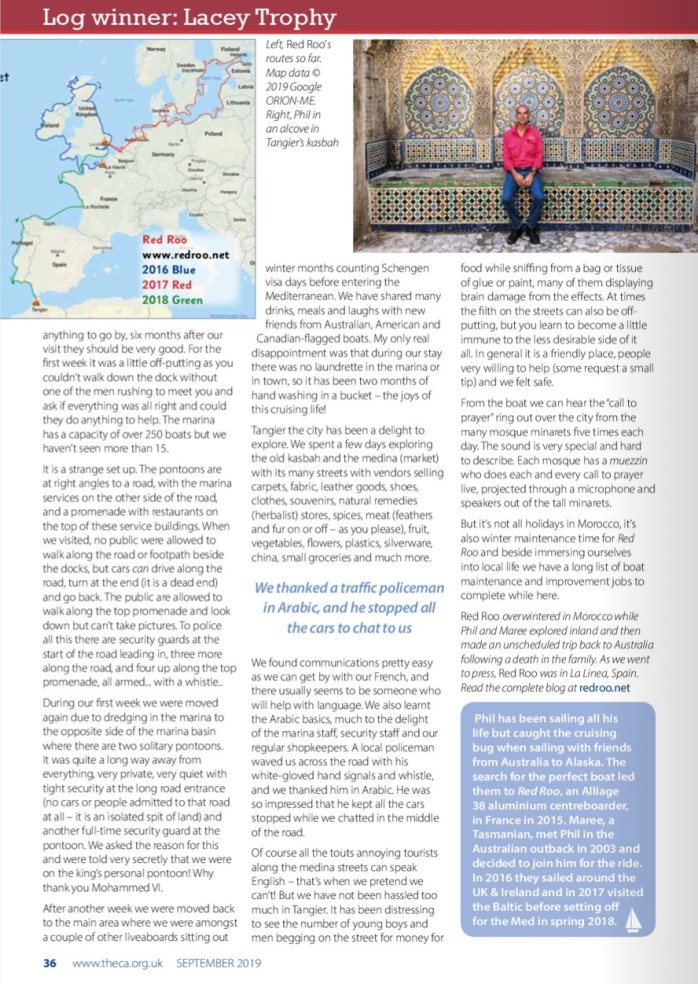
The final page showing our route map and the Captain in Morocco
Finland Archipelago Part I – 5 Locations, 6 Nights & 7 BBQ’s
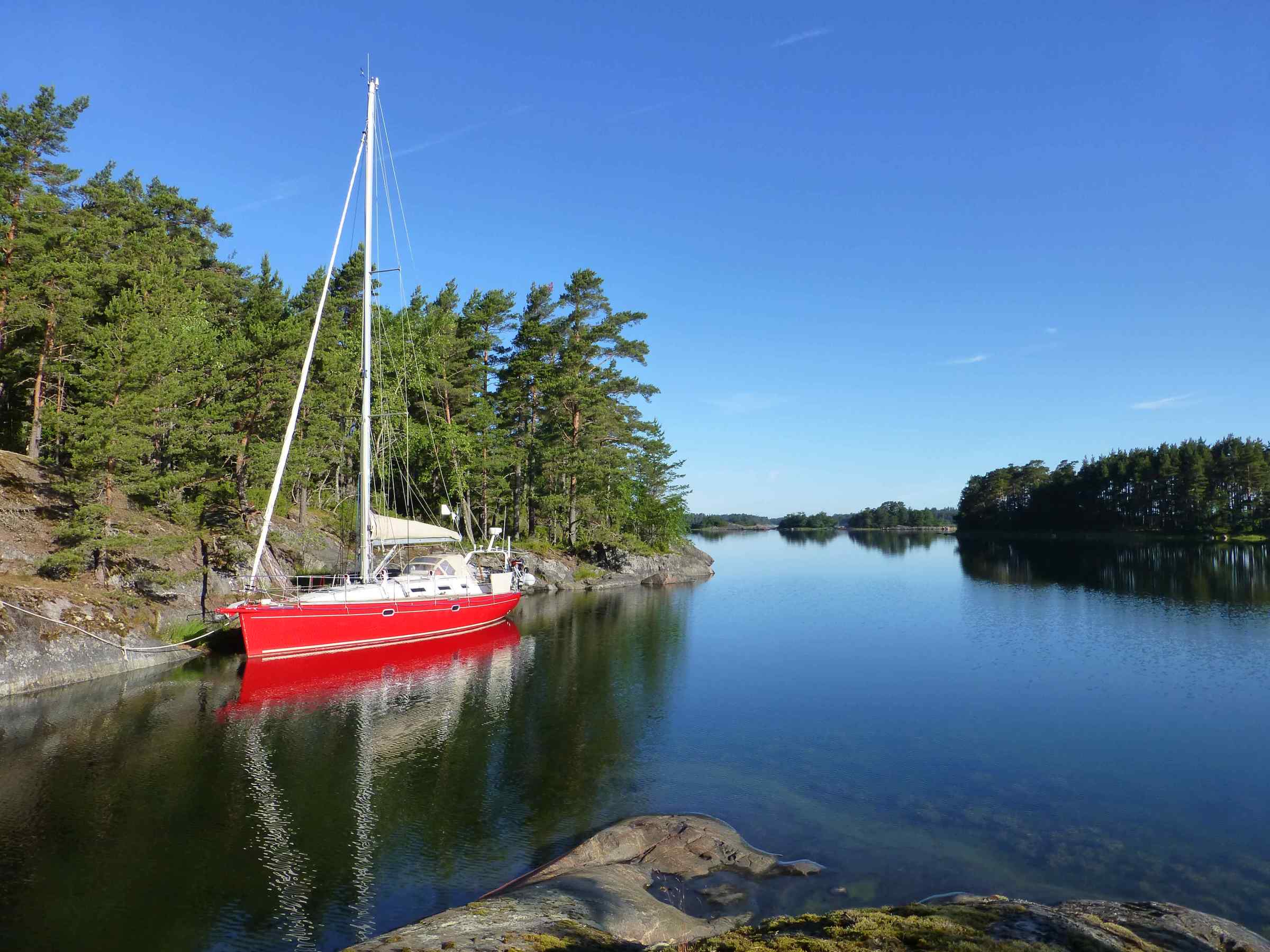
Gåsgrund, Stora Svartö, Elisaari / Älgsjö, Alglo Island, Älgö Rödjan & Hanko
Warning; this is going to be a long one (in fact it is so long I have decided to split it into two parts, purely to make it less taxing on you). You will still however need to get yourself a cuppa or a cold one to help you get through this marathon, or of course you can always skip the text and just look at the pictures!
Having departed Helsinki we are delighted to be heading into the Finish Archipelago for a few weeks. We left the big smoke with just the first nights island destination picked and a very solid plan thereafter, that plan being in full detailed listed here: “Head West”.
Gåsgrund
Off we set with the wind on the nose so motoring into it for a short 7 nautical miles before we stopped for our first night on Gåsgrund (Island). We can’t believe this is basically on Helsinki’s doorstep and yet how far away from everything it felt.
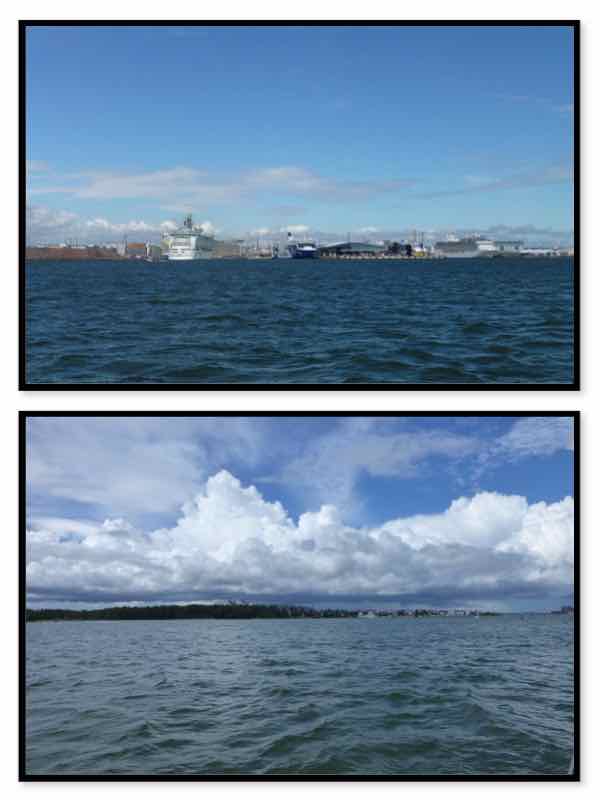
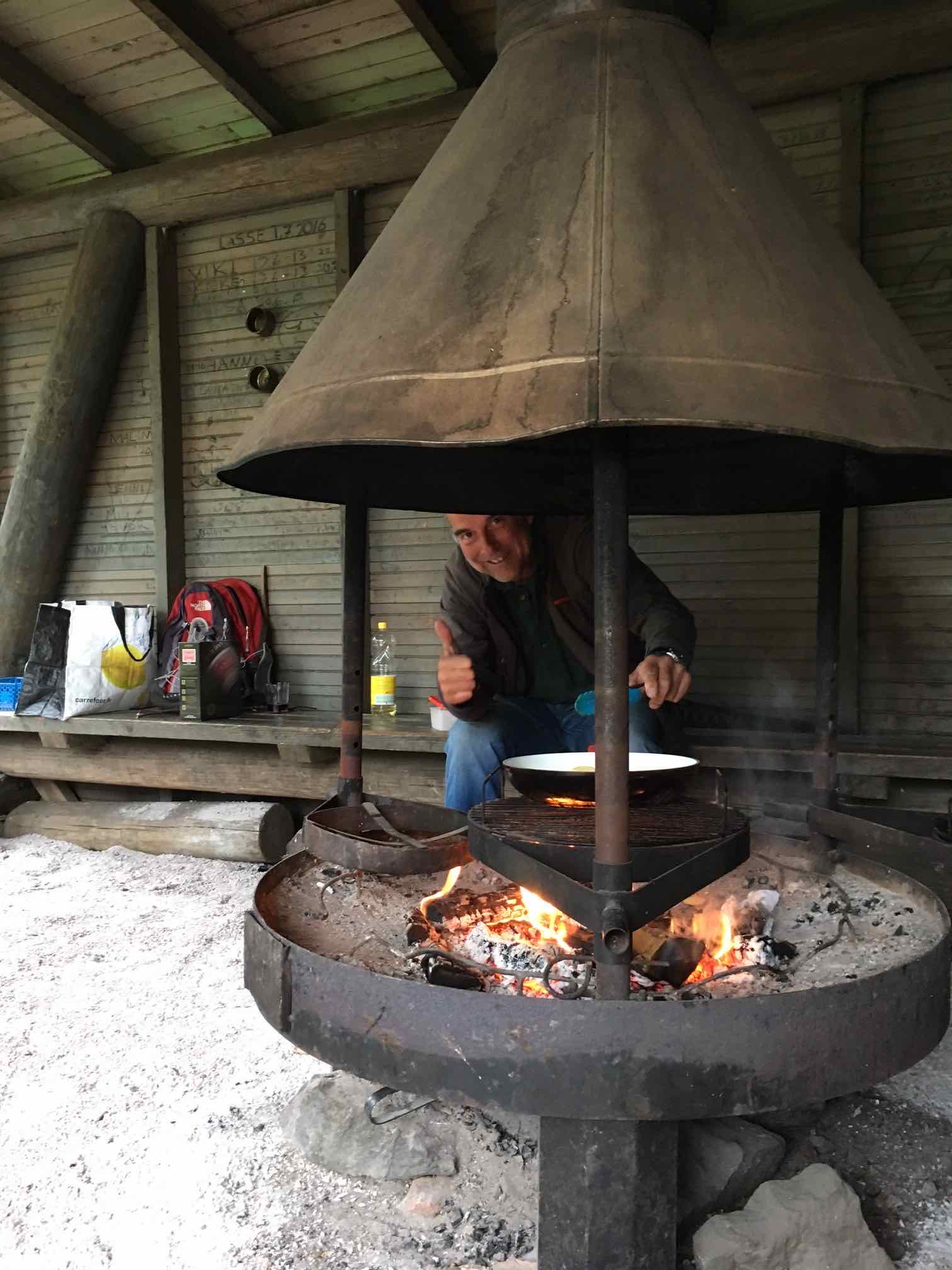
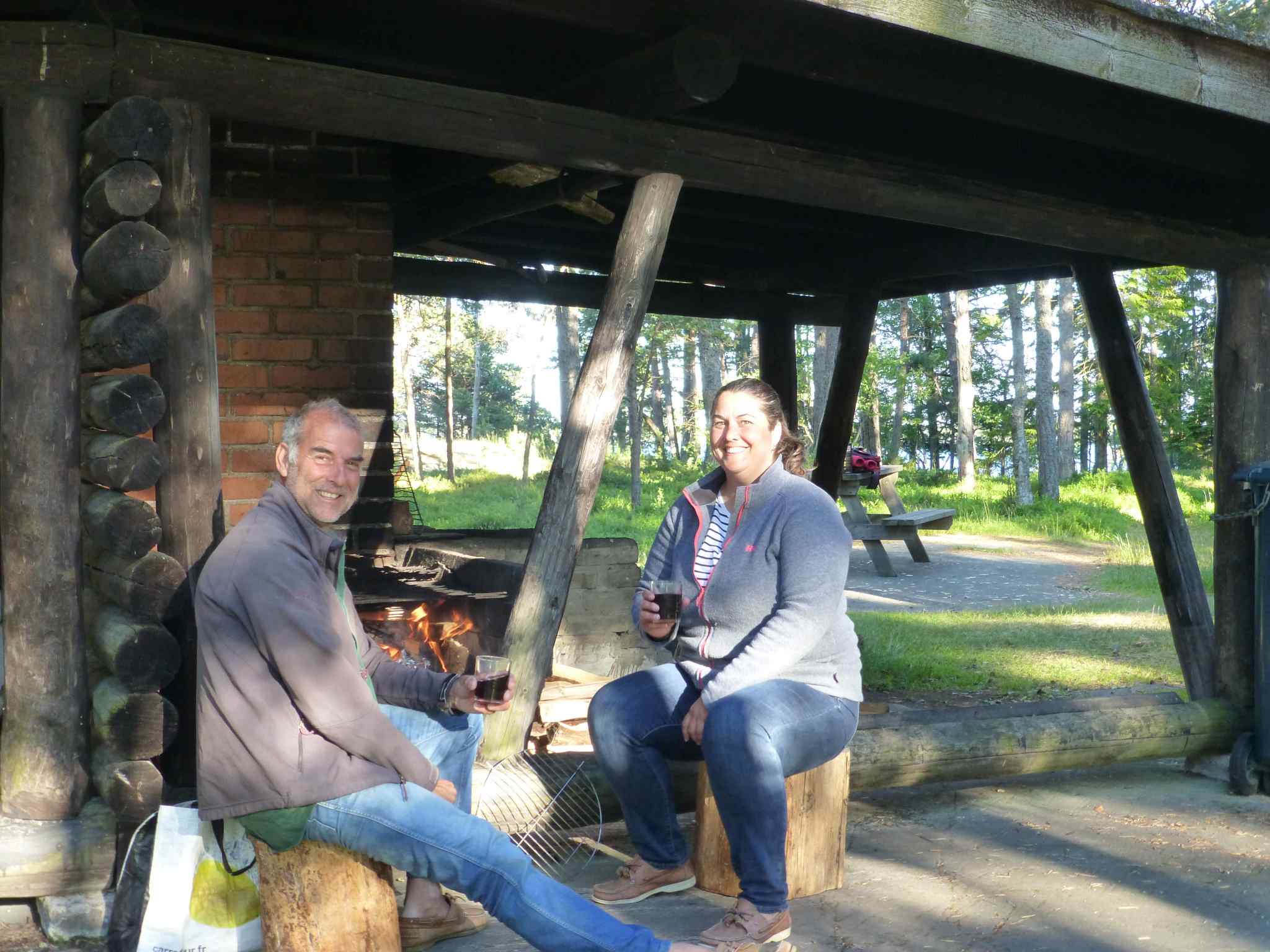
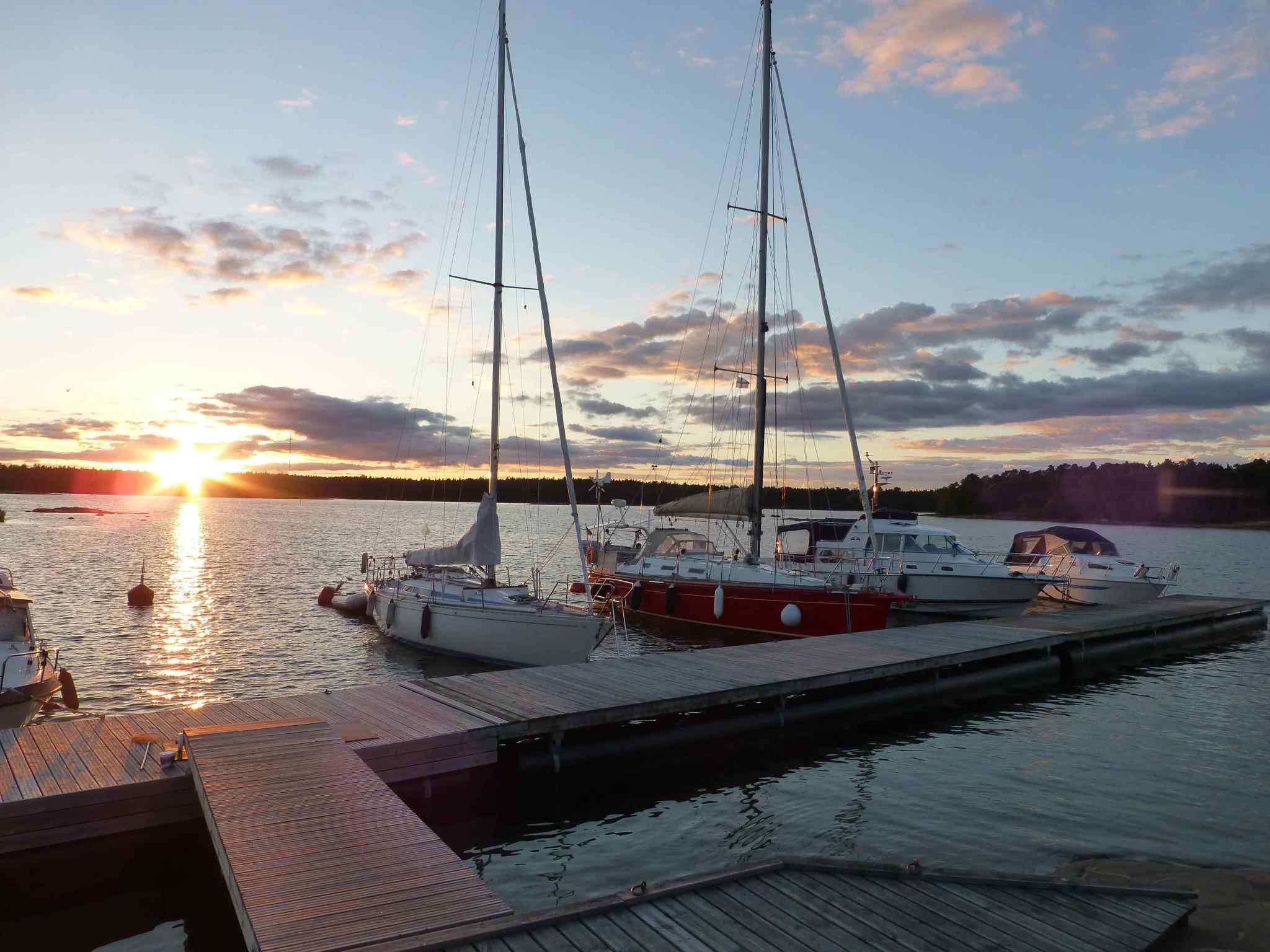
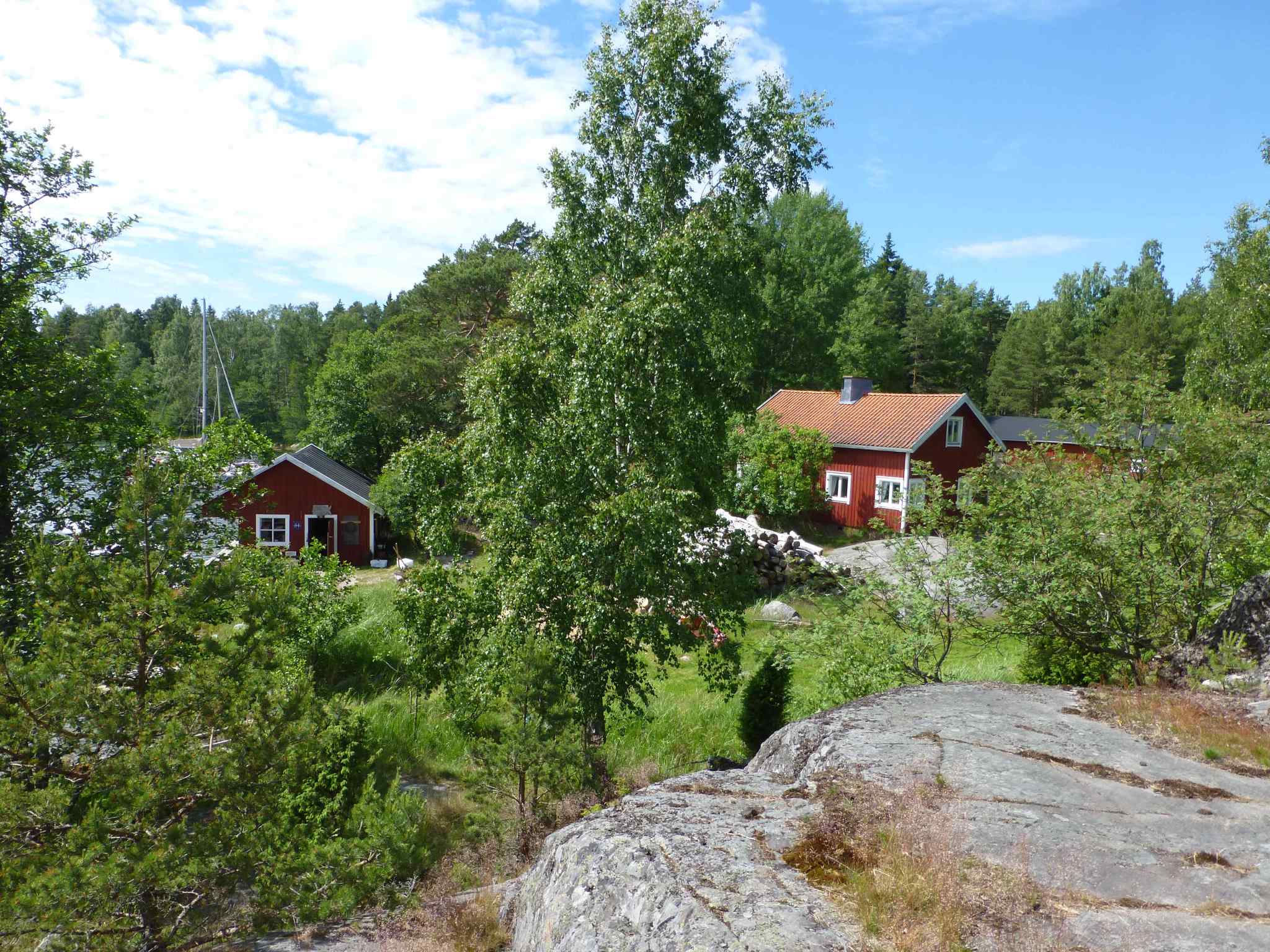
We hooked onto a stern buoy and secured the bow to the dock joining two other boats already berthed at the island. This island looked and felt amazing, very green, very vegetated, rocks, trees, shrubs, narrow bush paths, a long drop toilet, sauna and best of all an AMAZING BBQ set up – complete with chopped wood ready for burning! No dwellings/houses on the island, the BBQ, long drop, rubbish bins and traditional wood sauna all provided and maintained by the mainland council!
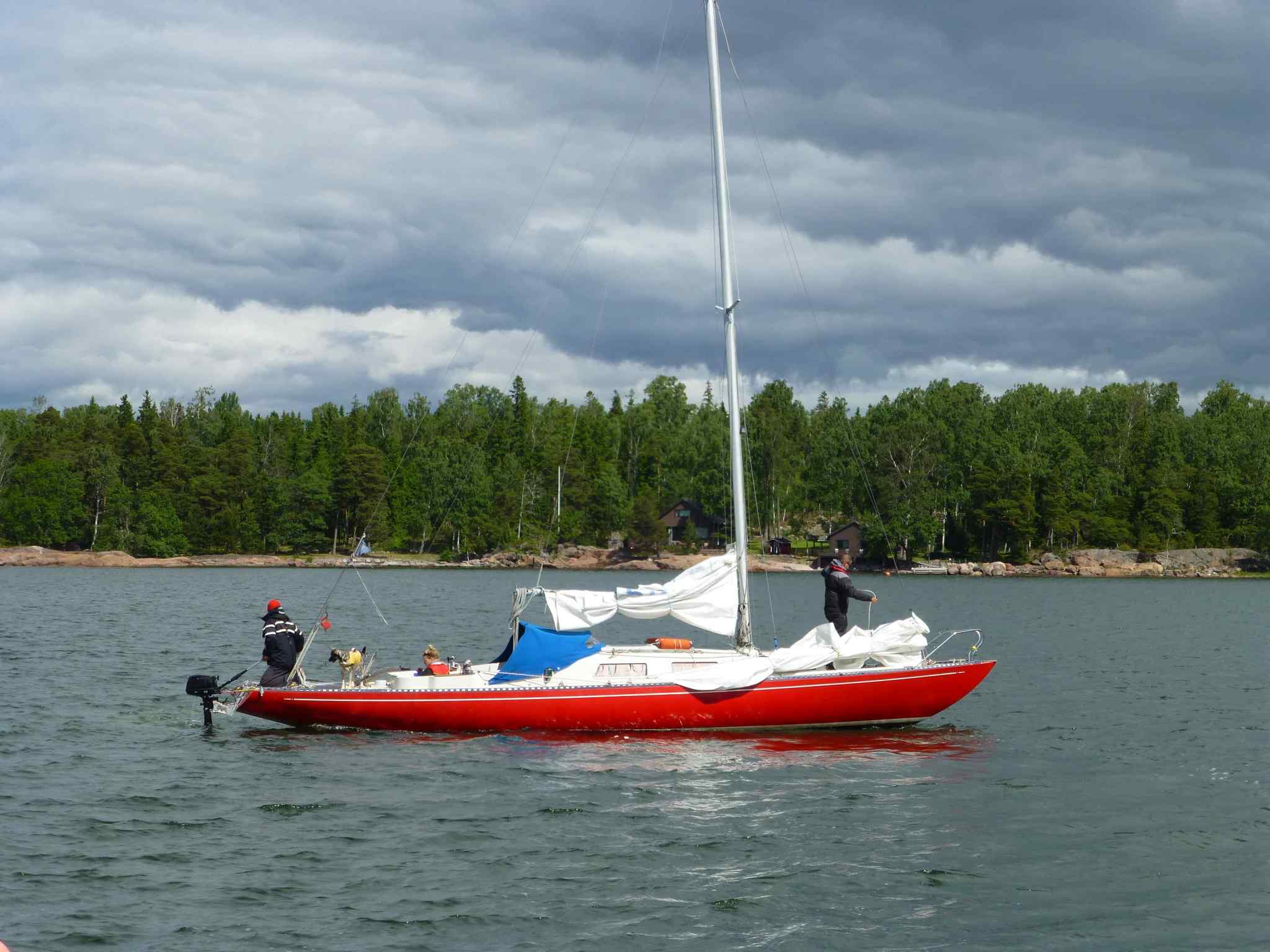
The young people on a small (red!) yacht beside us told us it is one of the best islands in the archipelago because the sauna is a traditional old wood fired sauna. We explained that being Australian sauna’s weren’t really the going thing for us, and they said “but this is a traditional one – you must try, we will show you” so Phil promised to join them later for a lesson and appreciation of the Finish sauna experience.
Maree….well, not so keen to commit (fearing nudity) as all the showers in the marina’s in Estonia and Finland (all boasting attaching saunas) have been communal and a very sharing (naked) experience (the normal I am told for most mens locker rooms with 6 shower heads in a room together, no curtains or dividers). All a bit much for an innocent Tasmanian such as I, more than happy to send Phil in to do the research. They promised to come calling when they had it ready about 10pm – don’t these people sleep??? At least it will be dark I hear you thinking, well no, not at all actually – we are currently in the Scandinavian summer meaning it doesn’t get dark the sun goes down around 11:30pm or later and starts to come up again about 01:00 giving around an hour and a half of twilight – you would definitely not call it dark, or even dusk, you could seriously still be sitting outside reading a book with no need for a light to see by. It’s very enjoyable!
In the mean time, we were both overly excited about the BBQ, pretty much like kids at Christmas, it has been a long time since leaving Australia and having a real BBQ in the bush! We were joined by two Finish Families in the hut who had come over after work from Helsinki for a BBQ dinner on the island before returning home again that night (that’s how close it is).
They were great to talk to and explained to us something we had vaguely heard of which is “Everyman’s Right In Finland” from now on to be known as “Every Australian’s Right in Finland”.
This is actually law and to quote the official published literature on this “…everyman’s right gives everyone the basic right to roam freely in the countryside, without needing to obtain permission, no matter who owns or occupies the land . . . everyone is entitled to walk, ski, cycle or ride freely in the countryside as long as this causes no harm to property or nature . . . As well as guaranteeing free right of way in the countryside, everyman’s right also allows everyone freedom to stop and rest, swim, sunbathe or enjoy a picnic on private land. Camping for a weekend or short period is also covered. Berries, mushrooms and flowers as long as they are not a protected species may be picked freely wherever everyman’s right applies” “Everyman’s right does not cover gardens or the immediate vicinity of people’s homes or plantation (crop) fields”.
How good is that! And from what we have seen and witnessed it actually leads to people taking a lot more pride and ownership and we are yet to see ANY litter on any of the islands and nature walks that we have seen.
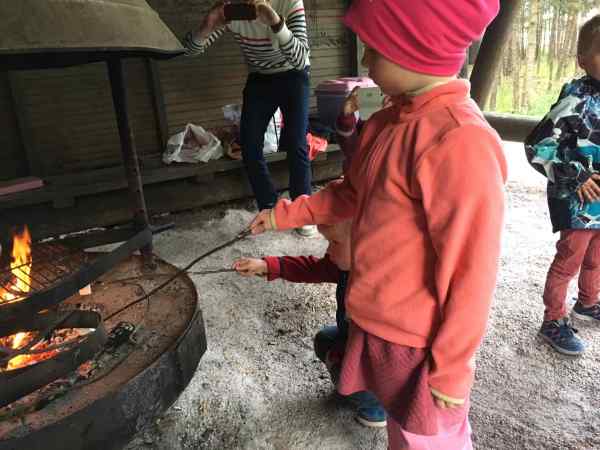
Anyway back to the BBQ, and in appreciation of great conversations we shared with these Finish people, I hunted up a packet of marshmallows out of the boats stores and taught their children (4 kids under 6 year of age) the Australian tradition of marshmallows on bush sticks over the BBQ – needless to say it was a huge success, and now embed in the Finish BBQ experience.
So later in the evening Phil headed off with his new friends to get the low down on “how to sauna” the first step before even getting there being to gather some young birch tree branches with leaves to take into the sauna to – in their words “spank yourself with” yep definitely made the right decision in not going myself.
Well, it turns out the Finish are totally addicted to Sauna’s, almost every island we have visited since has had a sauna even if they have nothing else and no people living there. We are yet to get much of an answer in regards to why, but they have been doing it since forever, and I must admit that they all look very healthy (skin wise) and rather young.
The methodology that was imparted to Phil that evening was to stay in the sauna for as long as you can, brushing (spanking/whipping) yourself with the birch leaves, then go outside for respite from the heat, either just outside into the cooler air or even better for a dip in the water (they are all built on the water’s edge) then back inside again and repeat the process. Phil obliged although only braved the water at the end to freshen off, and it was more of a splash than a submerge. He also reported that any kind of dress is suitable, from shorts/bathers, or just a towel to nudity – it was all fully acceptable and a someone in every state in the sauna. OMG where would one look??? Anyway Phil’s new friends also gave us lots of information in regards to great places to stop on our way West, many of which we have stopped at and loved, so thanks Phil for taking one for the team! (He loved it…he got to see some boobs!).
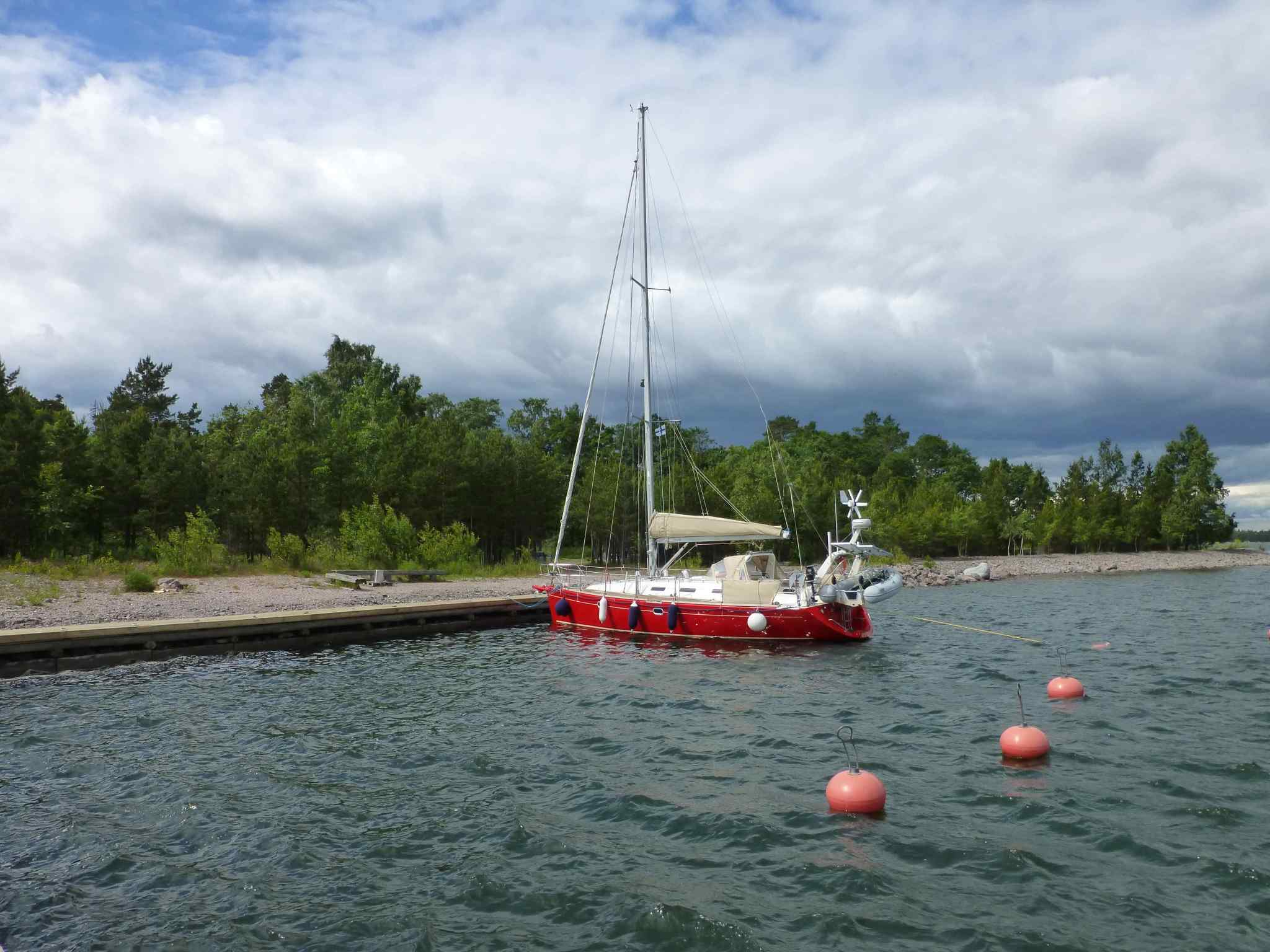
Anyway new day new location but first things first and it turns out getting onto a stern mooring can be easier than getting off. There was quite a bit of wind blowing and after releasing the bow lines and pulling back onto the buoy to remove our line the buoy next to ours went under the stern EEEKKKKKK! Phil turned the motor off immediately as we didn’t want chain wrapped around our propeller, and everything was fine, however without the engine going and with the strong winds we then proceeded to get blown into the dock (sideways) lucky all the other boats had left. Why can it never be easy?? Anyway, we had fenders out and we quickly tied off across the dock, reassessed our exit strategy and nailed it on the second attempt.
Stora Svartö
The wind was again against us pretty much on the nose for the 14 nautical miles passage, however we were motor sailing – getting some assistance from the sails, although the angle was very slight. As mentioned above decent winds F3/F4 (10-16 knots) but a good journey overall and again secured via a stern buoy, bow to pontoon.
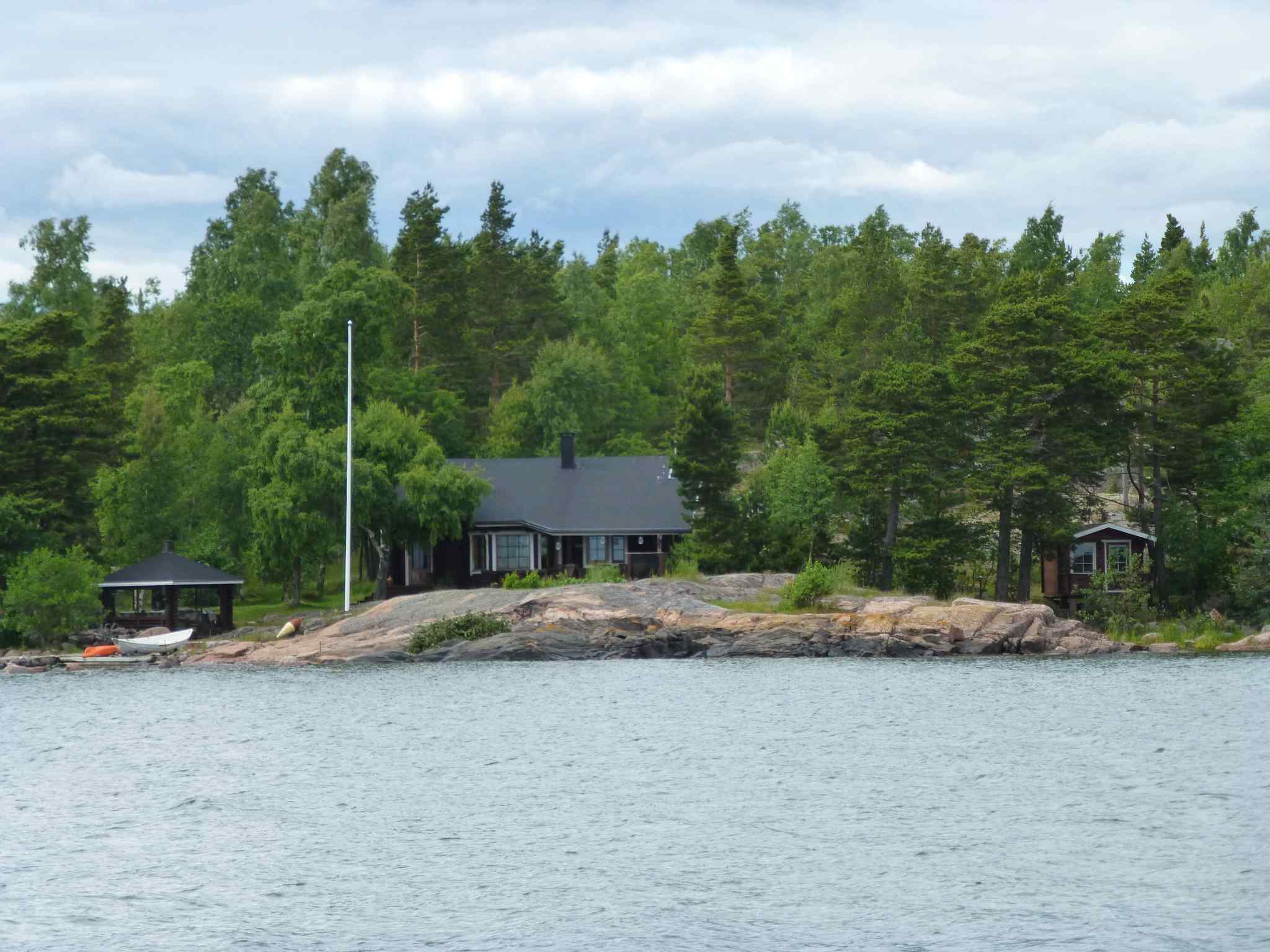
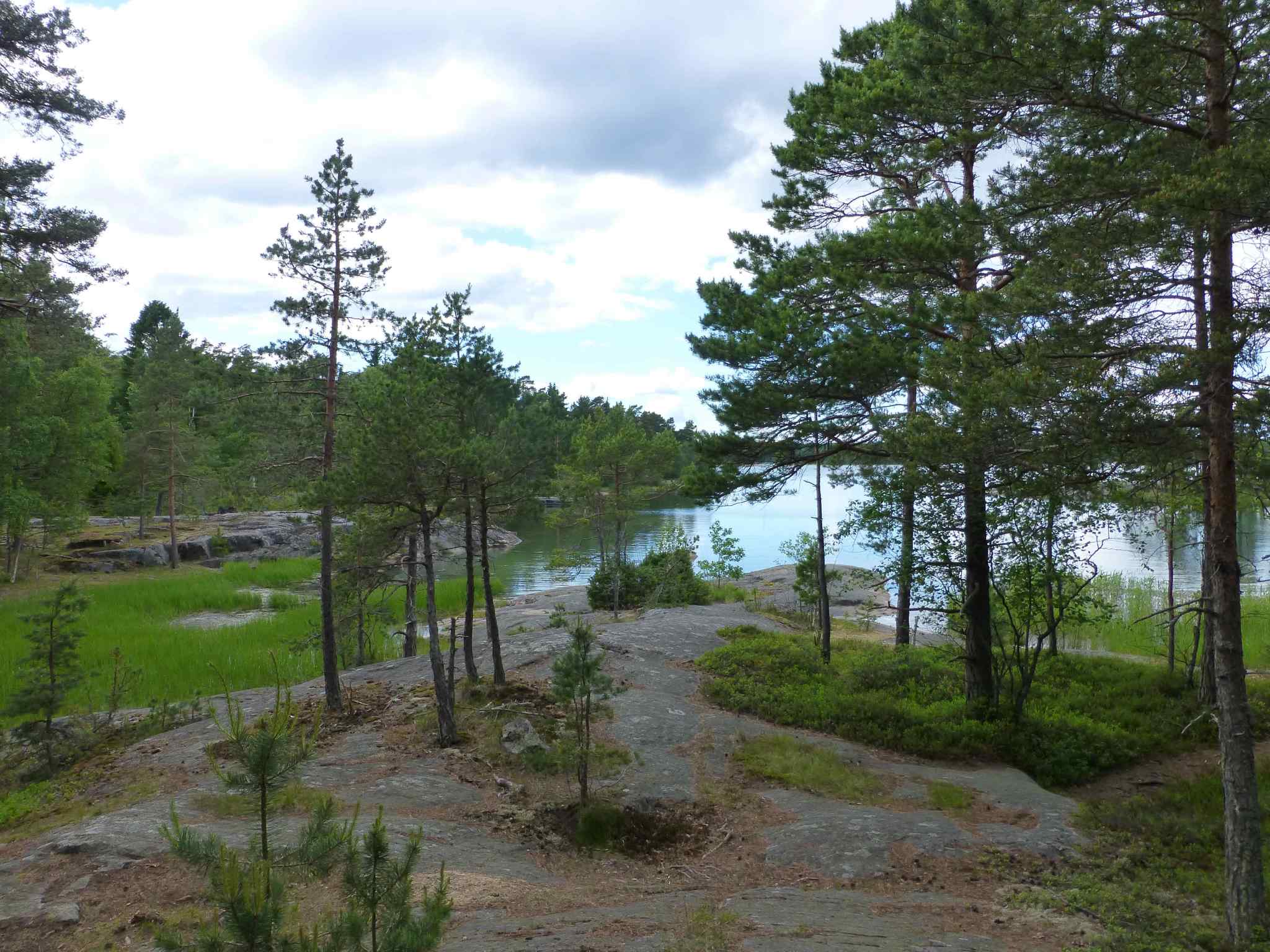
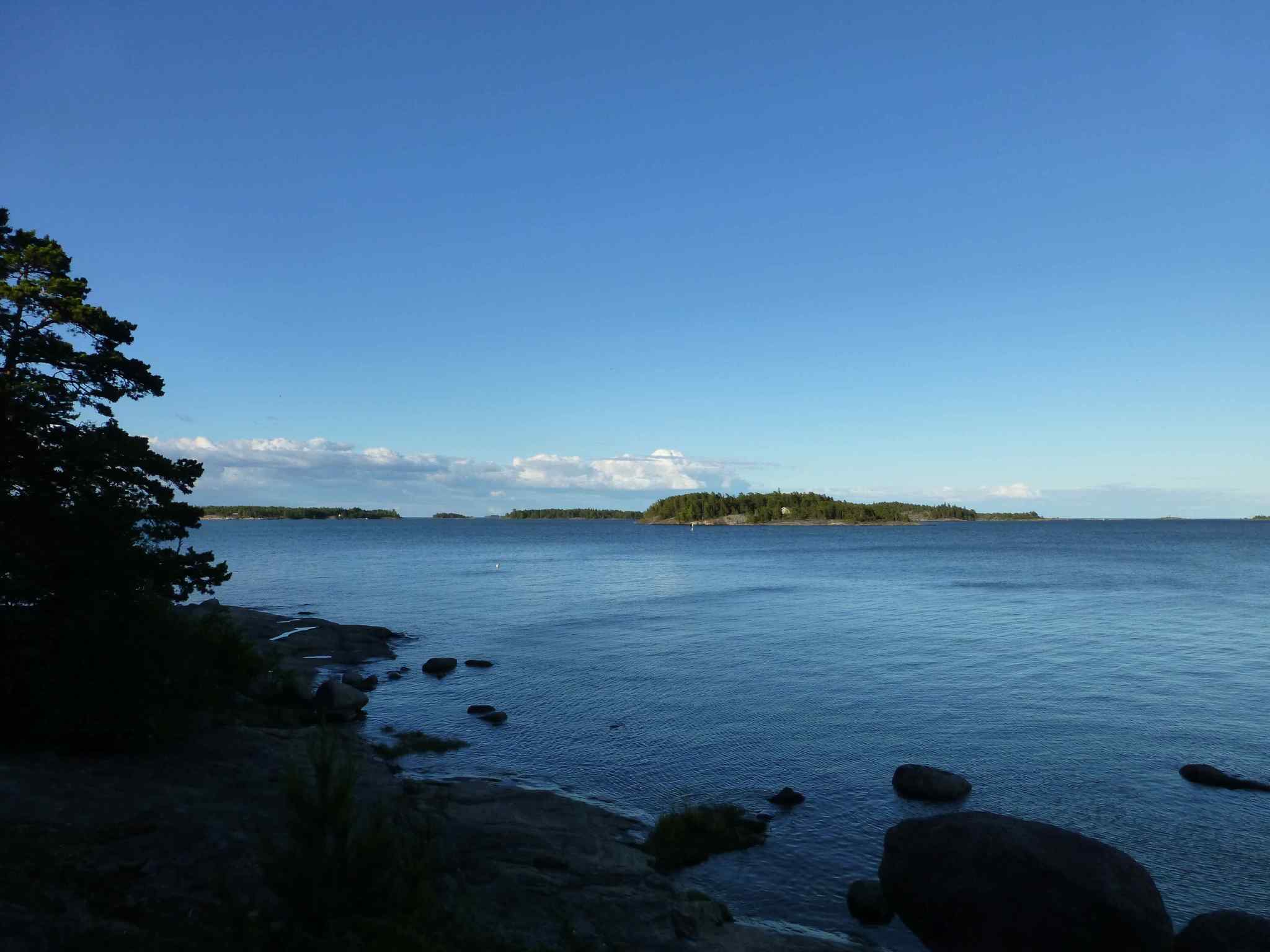
Stora Svartö was a much bigger island than Gåsgrund with a lot more variety in the landscape. A good hour and a half to get around the island, mostly just exploring both the rocky shoreline and the interior bush as the northern side of the island didn’t have any defined tracks. I was astounded by the diversity of the flora I found, with seemingly hundreds of different kinds of moss covering the big granite rock boulders all very different, yet in close proximity. I could step from crunchy dry grey moss breaking off as I step on it, straight onto wet dense thick moisture retaining green moss.
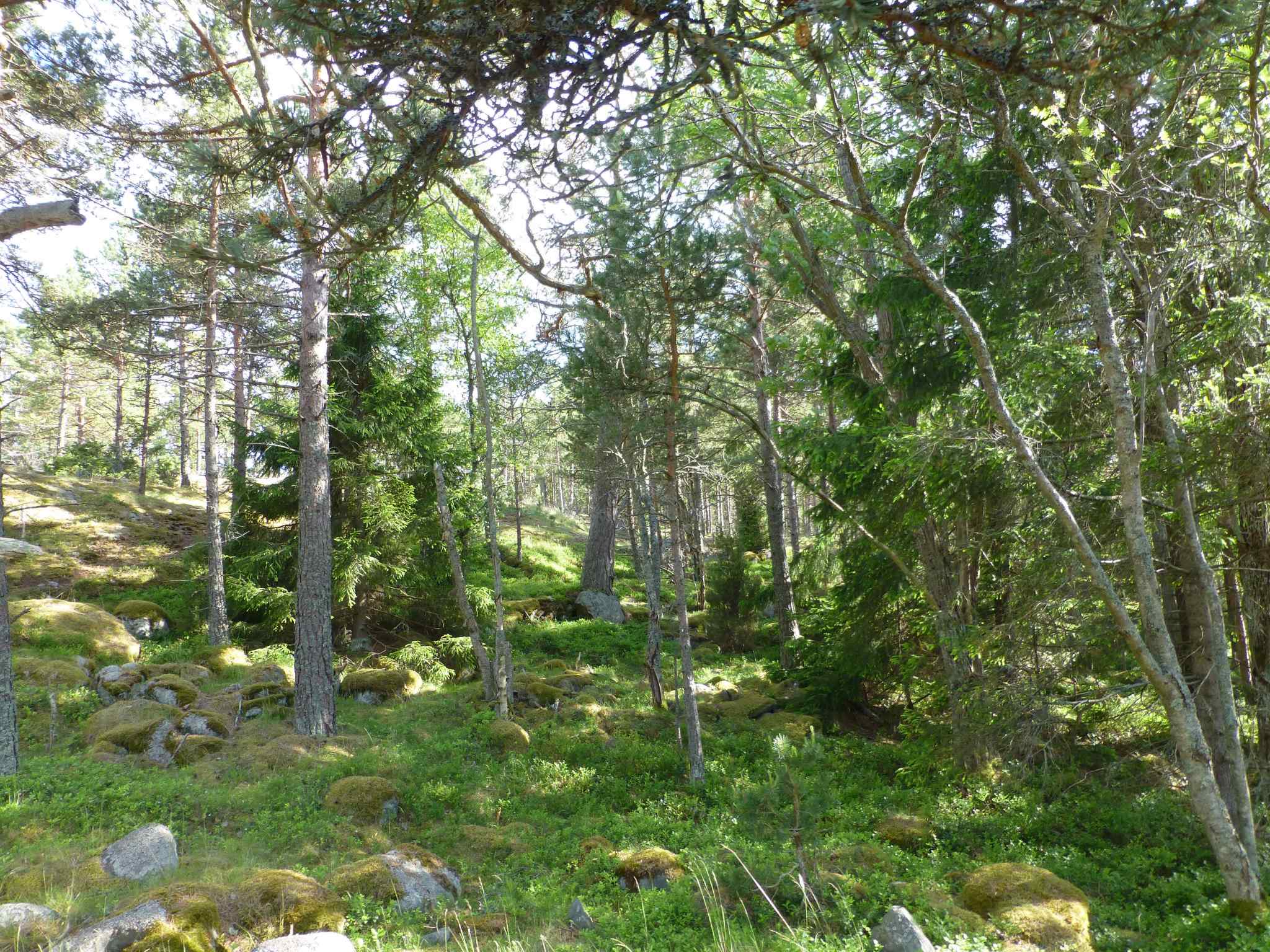
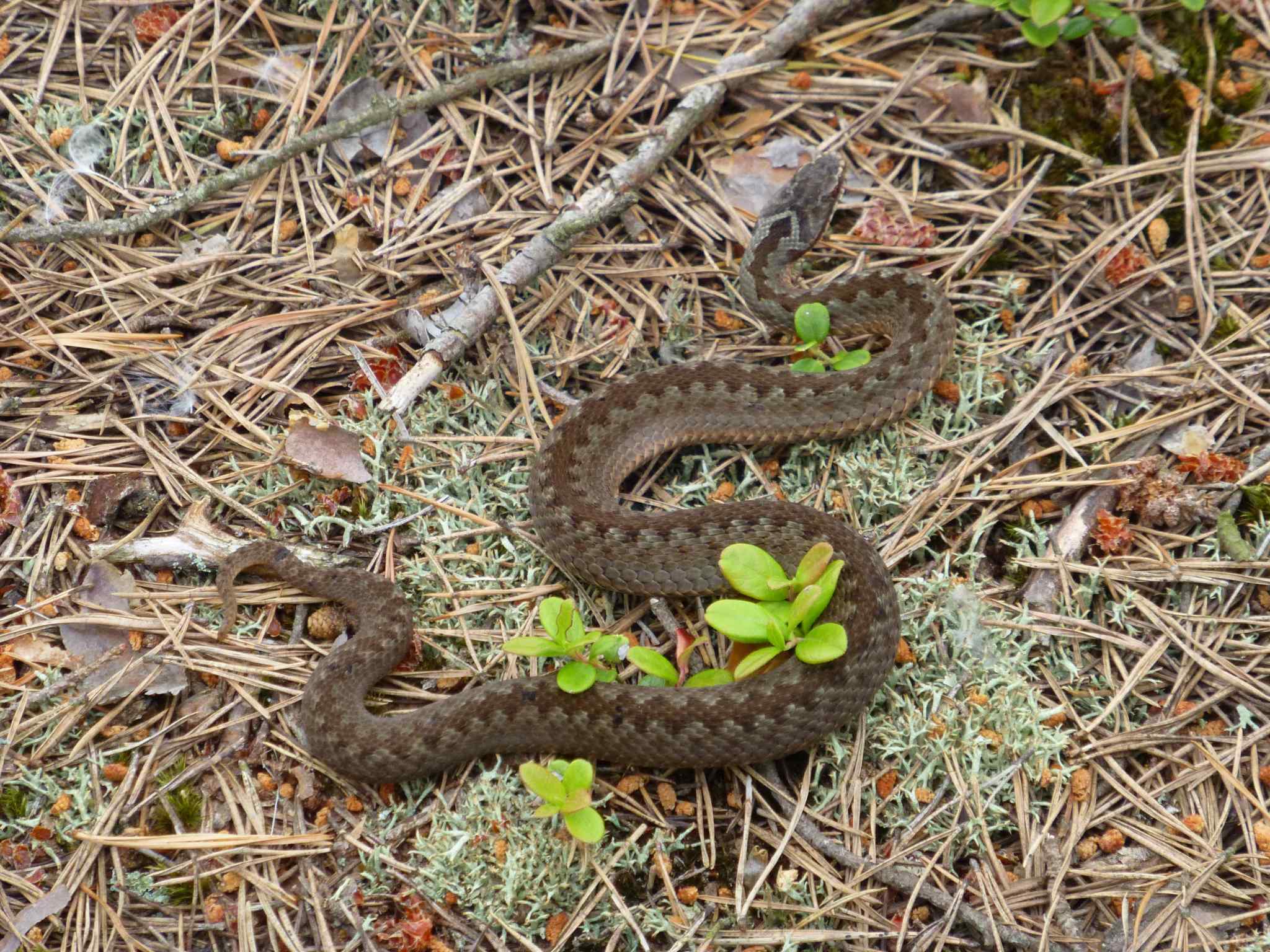
I was also more successful in seeing some local wildlife than Phil and came home trumps with not only a deer and snake sighting but a cracker picture of the adder in question – evidence!
This island again had long drops provided as well as BBQ’s as wood (although I did have to split some logs – but they did provide a decent axe so that was ok), and why me rather than Phil I hear you ask – simple, I am Tasmanian and therefore (according to Phil) must be related to David Foster the wood chopping champion! (FYI I am not related, but I do know how to swing an axe).
Elisaari / Älgsjö
The next day brought wind and occasional showers during our 22 nautical miles of motoring (does the wind always blow from the West in Finland? – we think it might!).



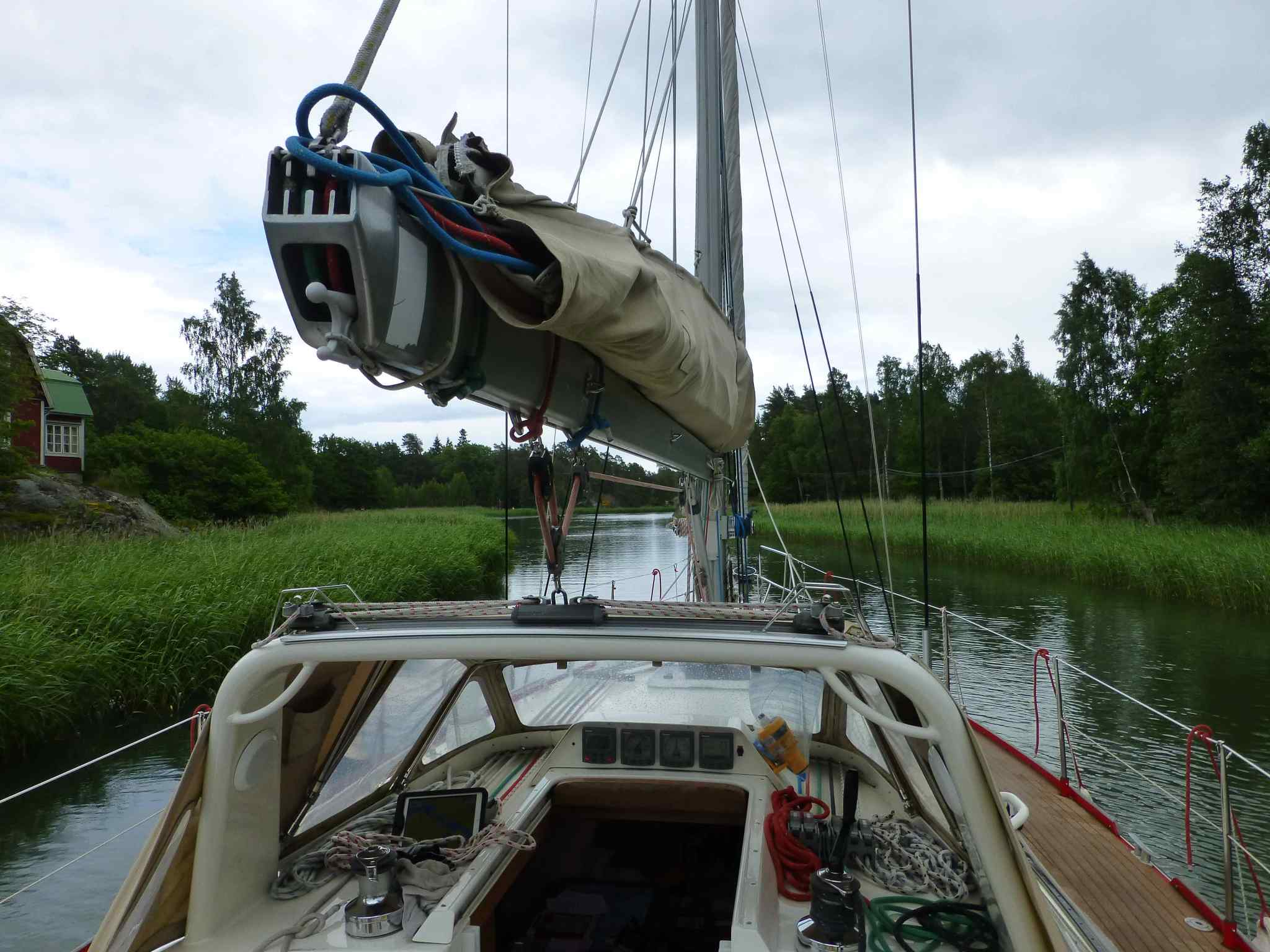
The day cleared as we approached the entrance into Elisaari / Älgsjö which had been recommended to us by a couple of different people. The approach is pretty special as it is almost a creek, complete with trees and rocks on the banks as well as reeds in the water, nothing like going up the creek in a yacht (don’t worry we have a paddle). It looks shallower than it is, and in-fact we found at least 3 meters of water almost all the way in, although we did wind the keel up just to be safe.
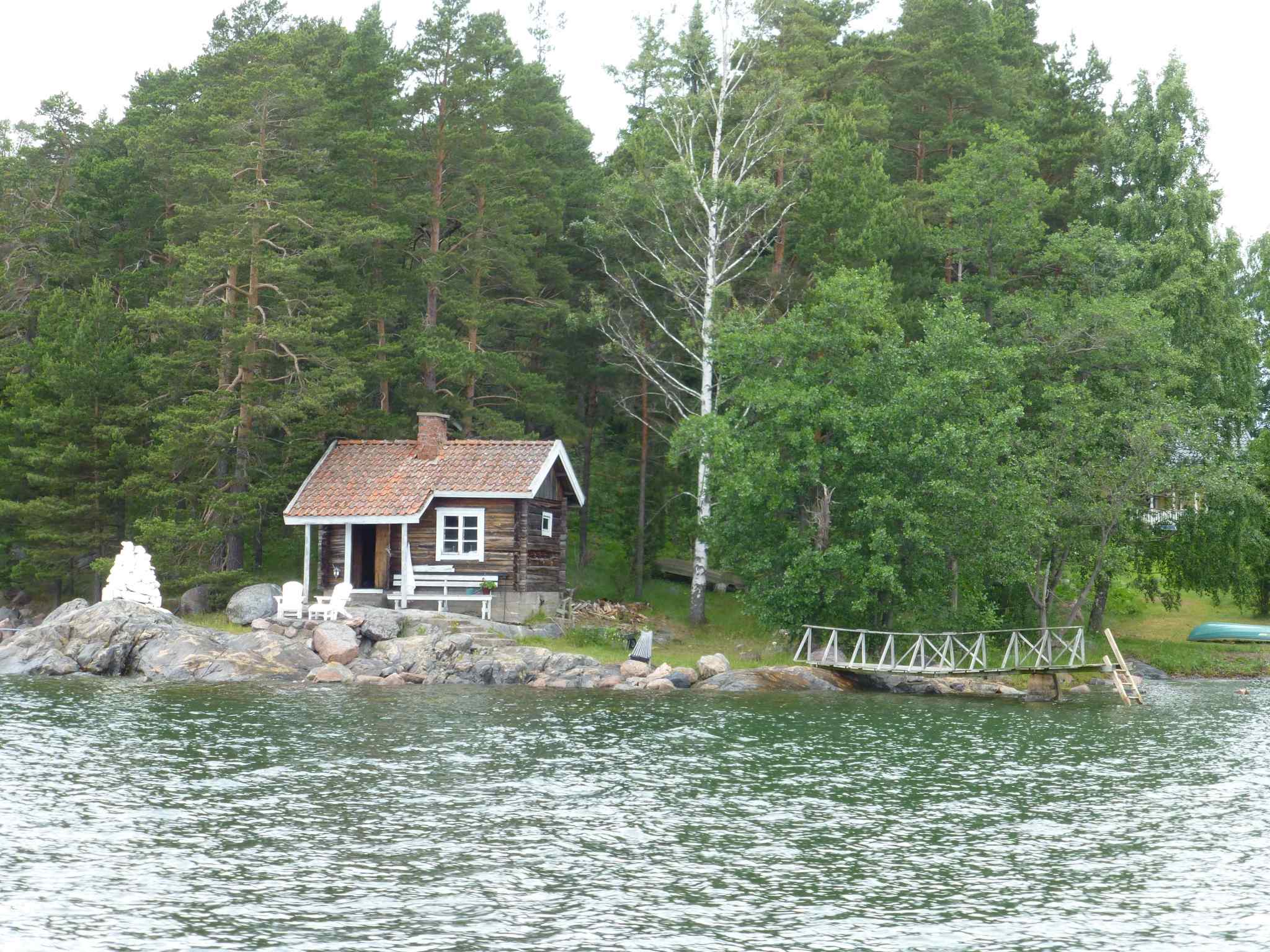
We admit the mooring (again stern buoys) is very spectacular with shelter from every direction and lots of yachts nose into the rocks against a hidden dock, very magical, although we must be honest and as beautiful as it was, there were so many boats in there (advertised to fit at least 130 boats) which really took away from it’s beauty for us.
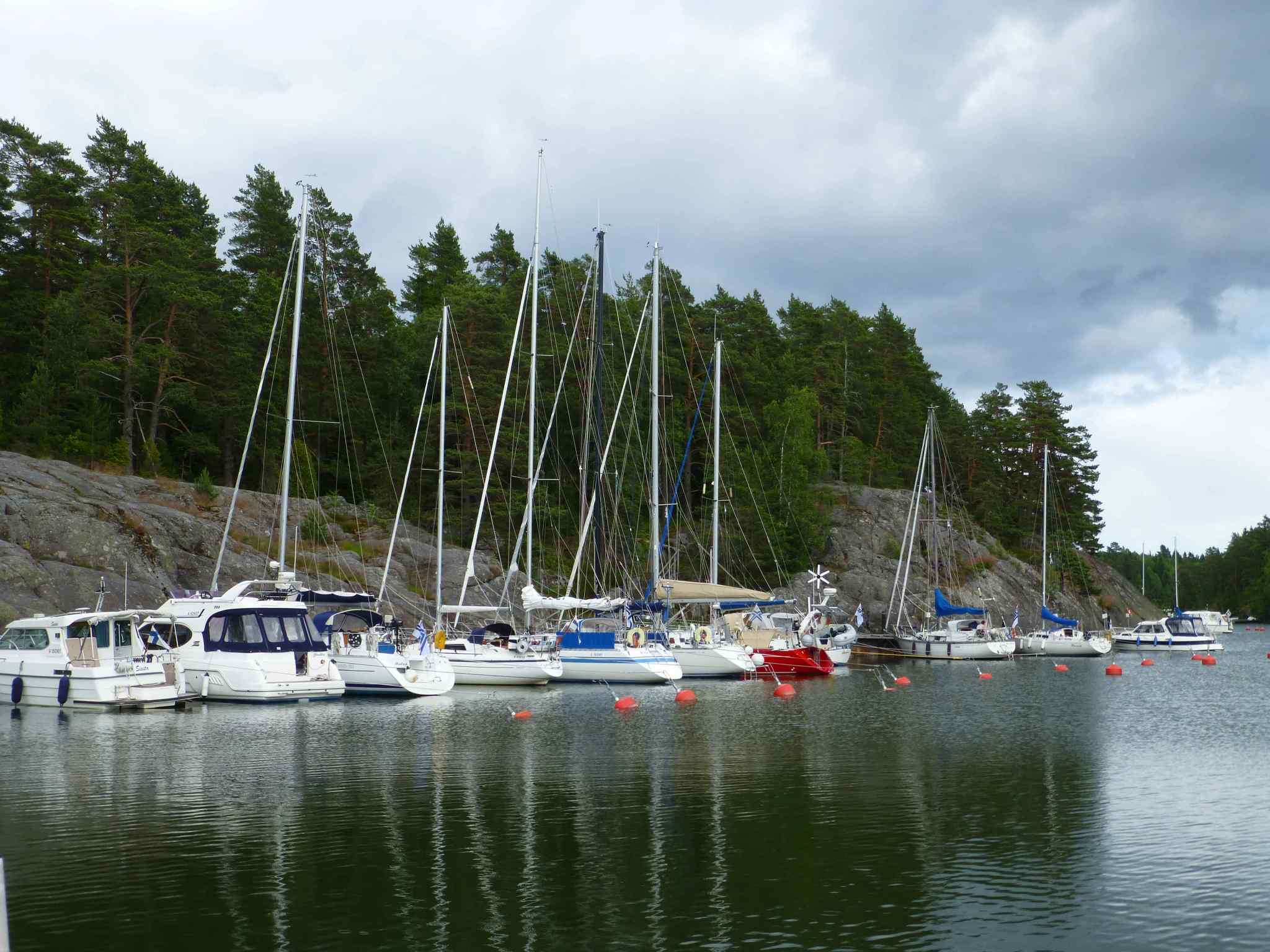
Yes, call us greedy, we want the beautiful spots and we don’t want to share them. They have pretty much turned a lovely nature spot into a marina along with a cafe and not one but two sauna’s for all the visitors. There was also a charge to berth (fair enough with the buoys and dock provided – but in our opinion the other islands offered more, were less populated and were free). There was power available (additional fee, so we passed on that), and also you had to book and pay for the use of the saunas (needless to say we didn’t use those either).
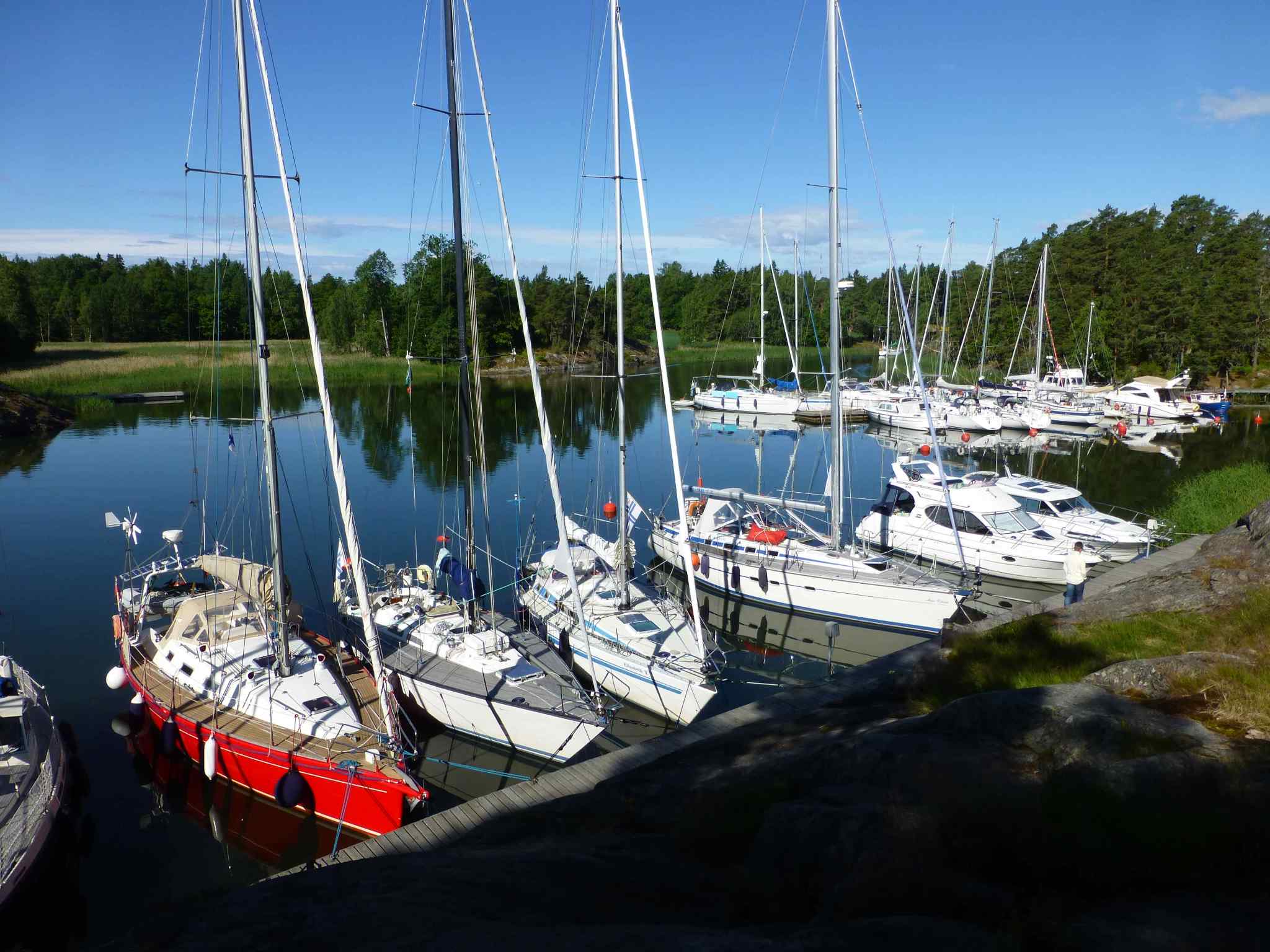
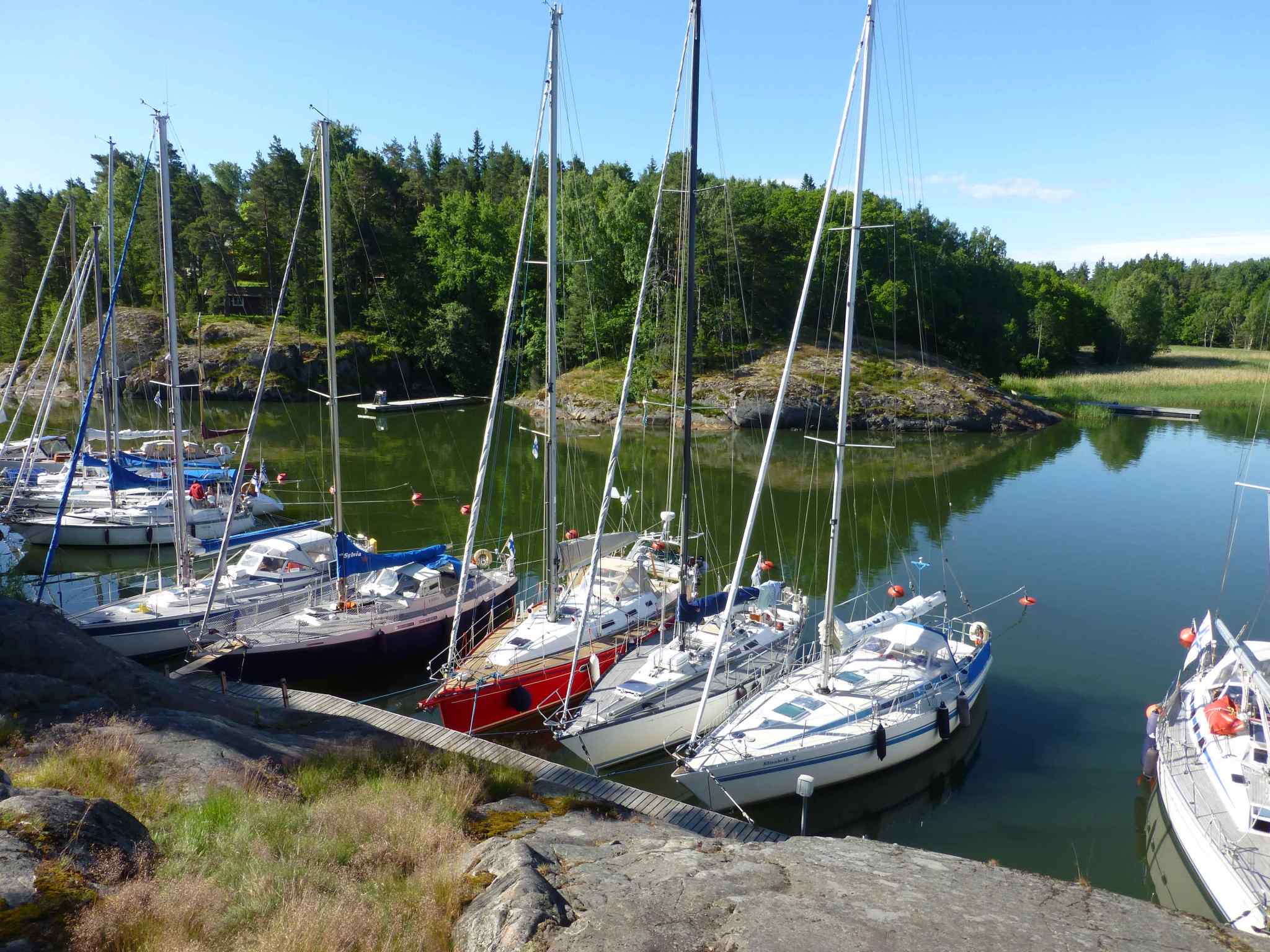
In wrapping up there is no mistaking the beauty of the setting and even more so the journey past many private summer holiday homes snaking our way into this spot through the sheltered waters but once in with all the other holiday makers our highlight was being able to BBQ again, the third night running 🙂
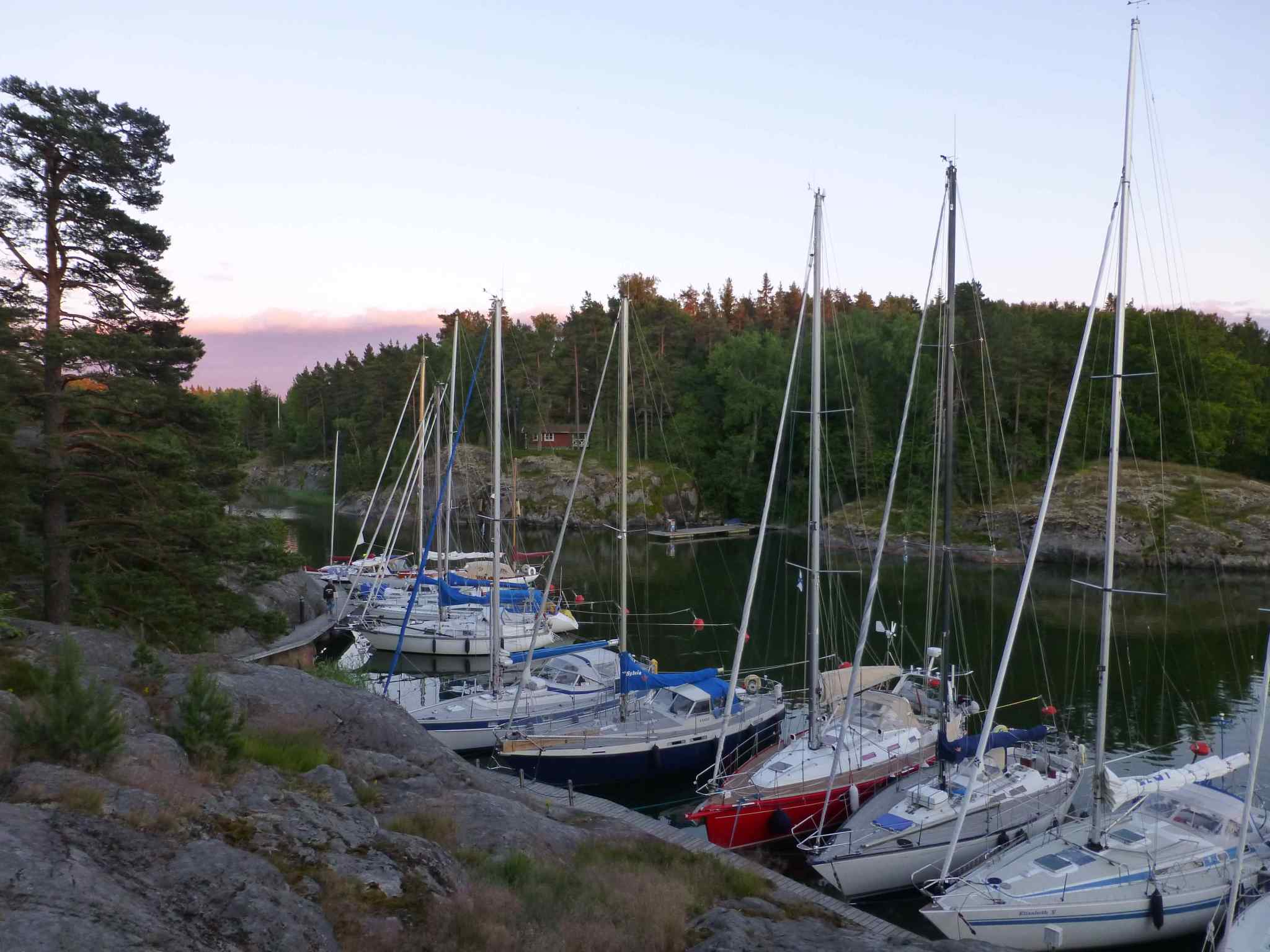
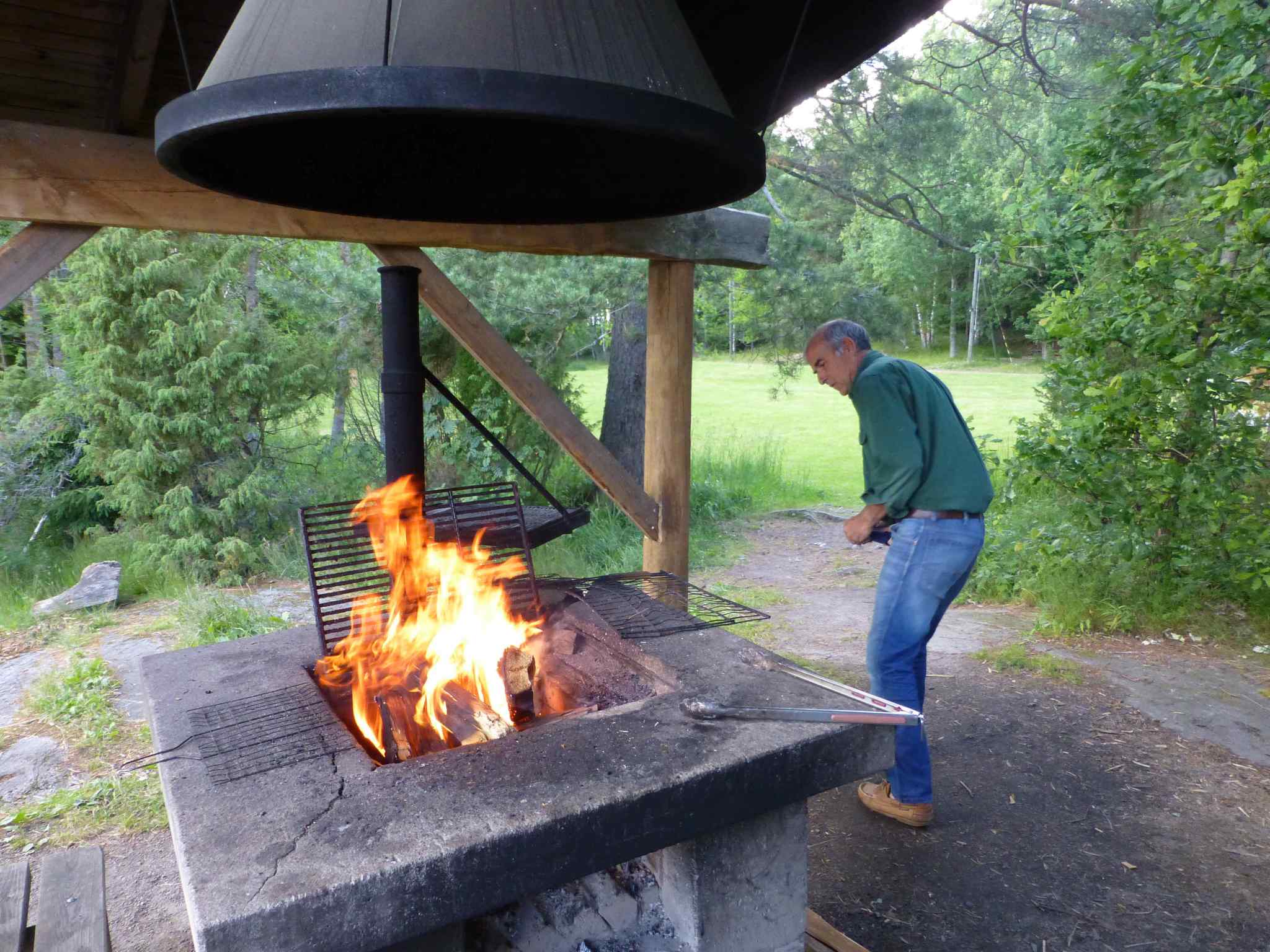
Note: In Phil’s defence we have learnt that Finland soft wood (Birch) doesn’t burn down into great cooking coals like Australian hard wood does, therefore big is best if you want enough coals to last you to cook.
Alglo Island
We set off relatively early the next morning as we had been given directions and coordinates to what we hoped would be a pretty special spot that apparently not many people know about and there is only room for one boat, so off we set hoping the early bird gets the worm, or the spot in this case.
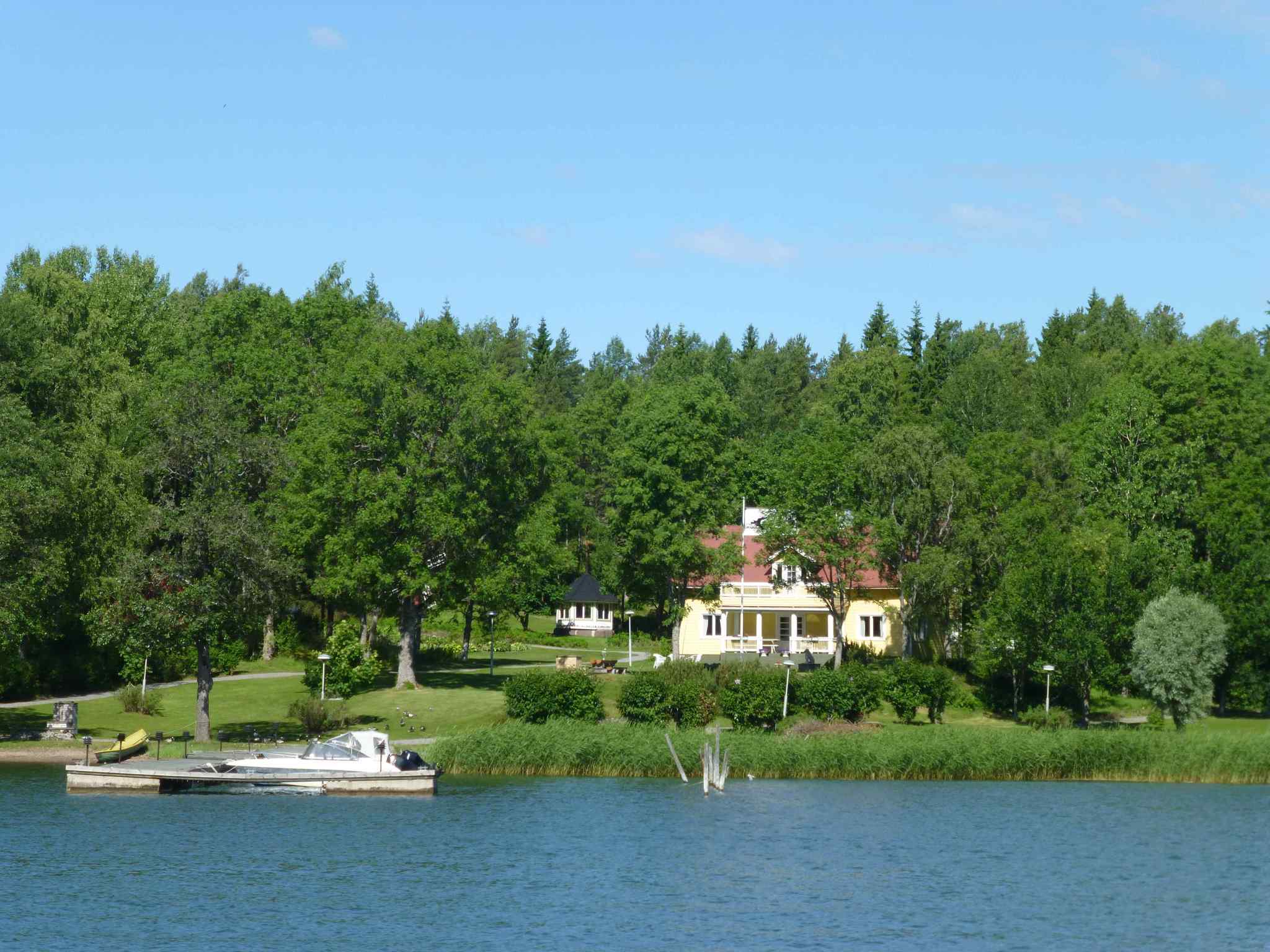
Alglo is an ex-military island only recently being released for public use and therefore untouched (just the one building/dwelling on the far side that wasn’t in use whilst we visited).
The directions we were given told us we could take the boat right up to the rocks as the water was deep and side tie off to the pegs embedded in the rock.
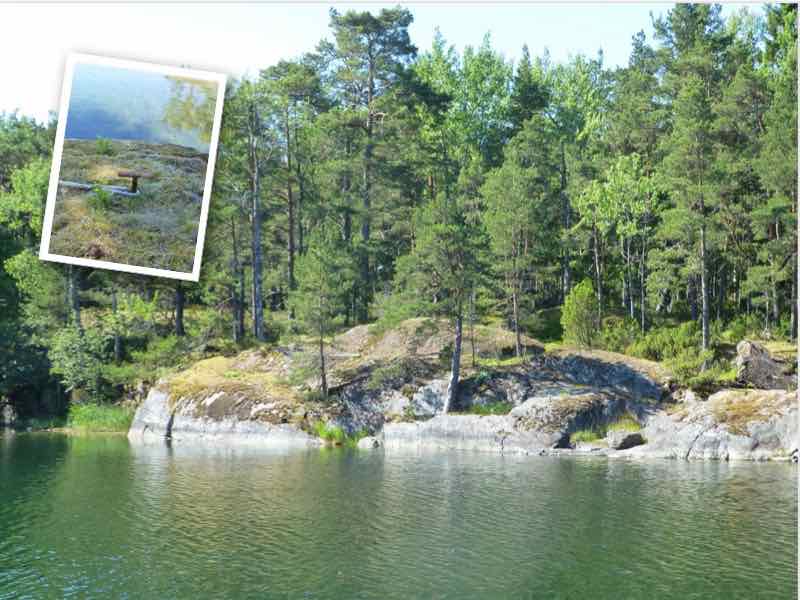
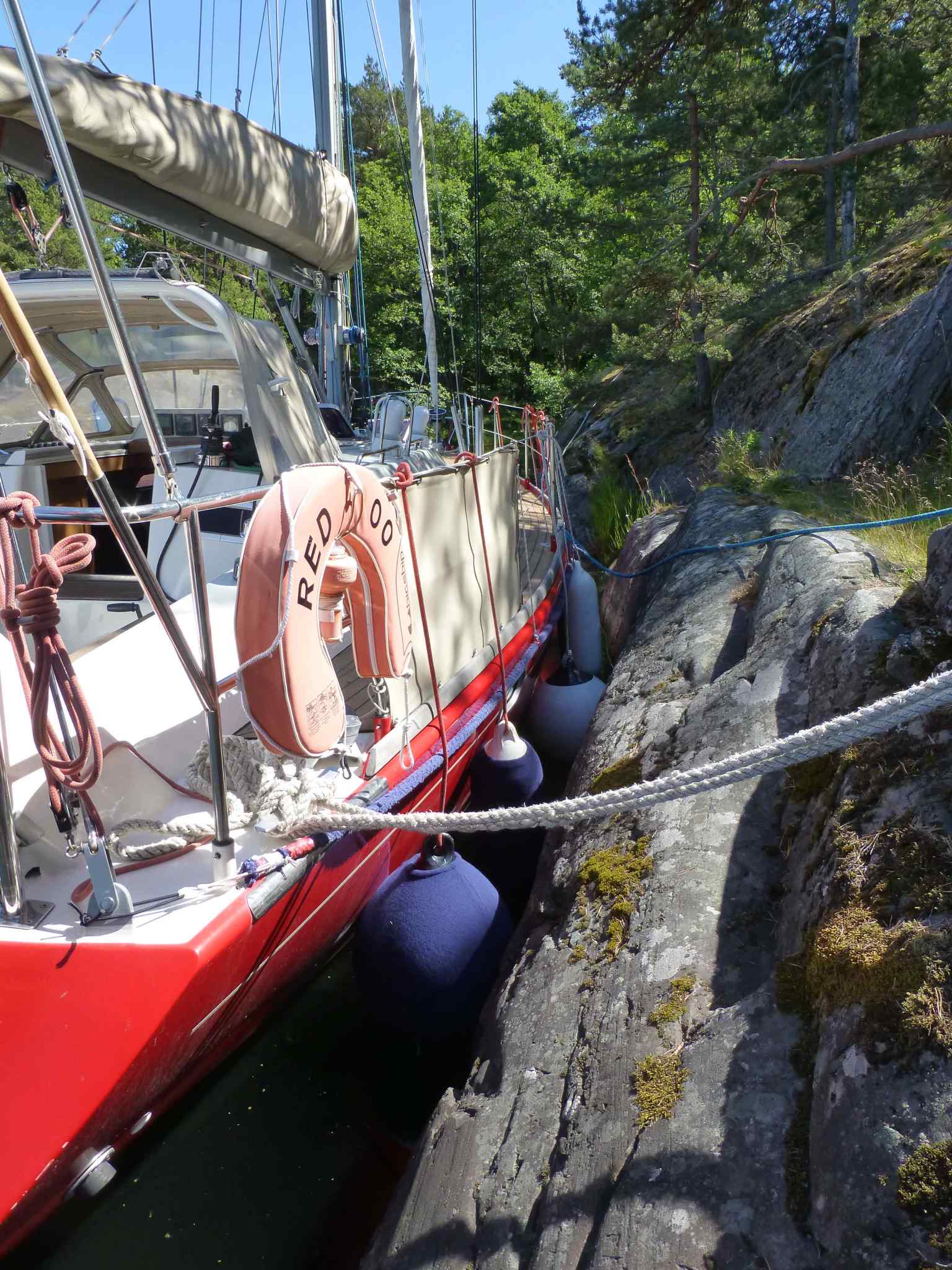
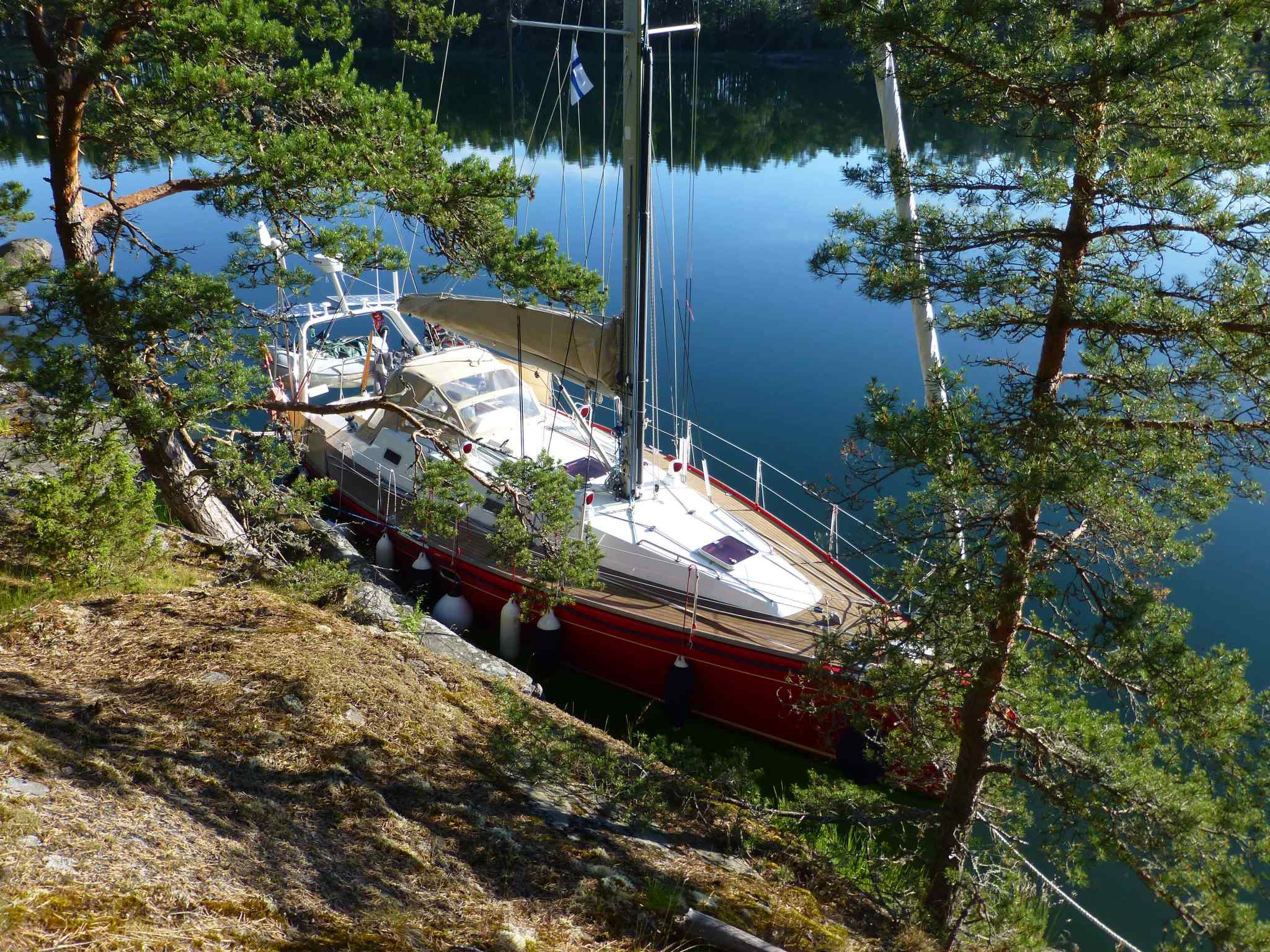
To say we approached cautiously would be an understatement, we went very slow with eyes peeled to the water for rocks and also eyes in the binoculars searching the rock face for the embedded pegs. We found the spot – the pegs were very well hidden and took some spotting, but we found it and it was just as described, deep water right up to the side of the rocks almost like a cliff into the still calm waters.
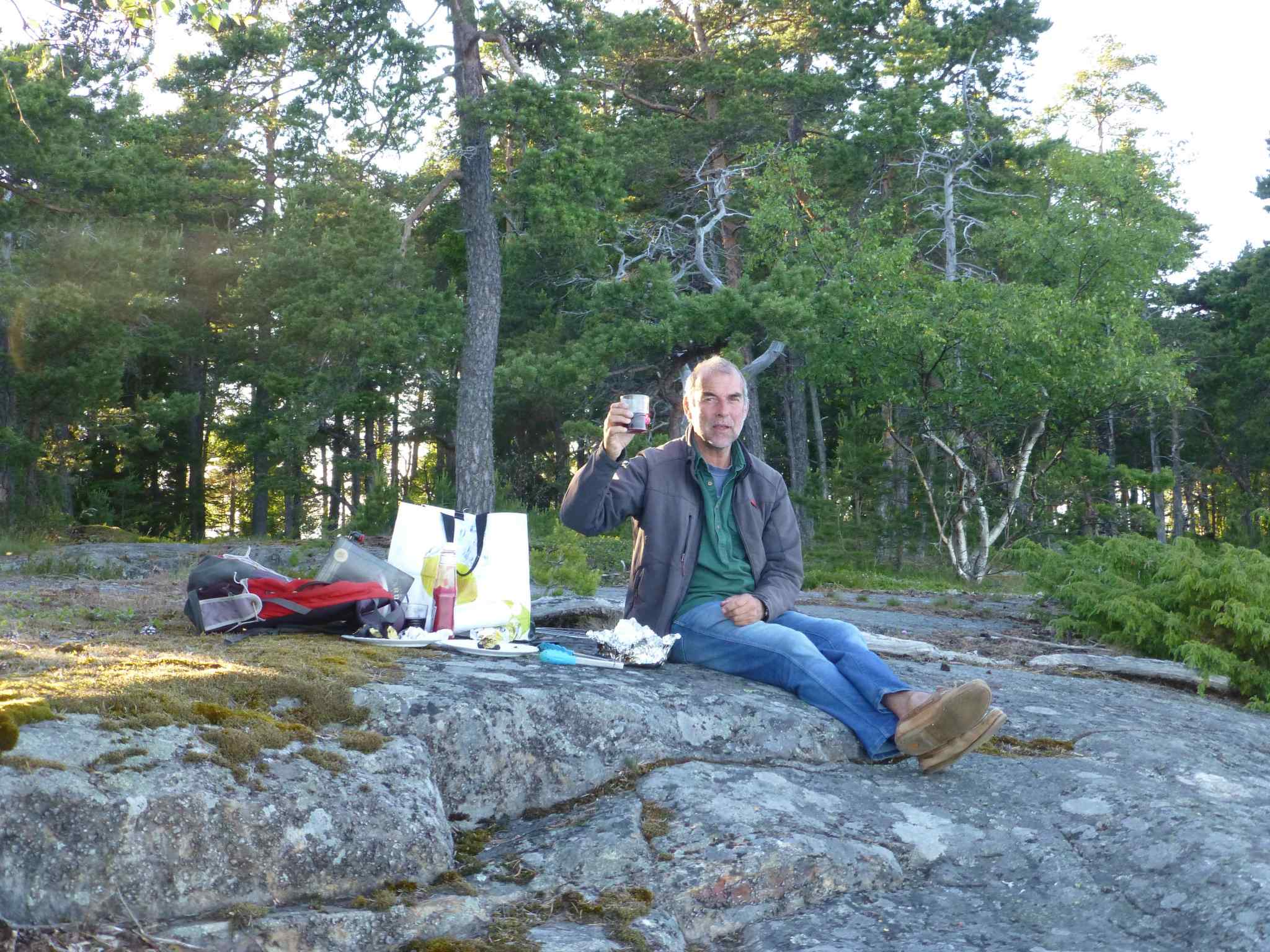
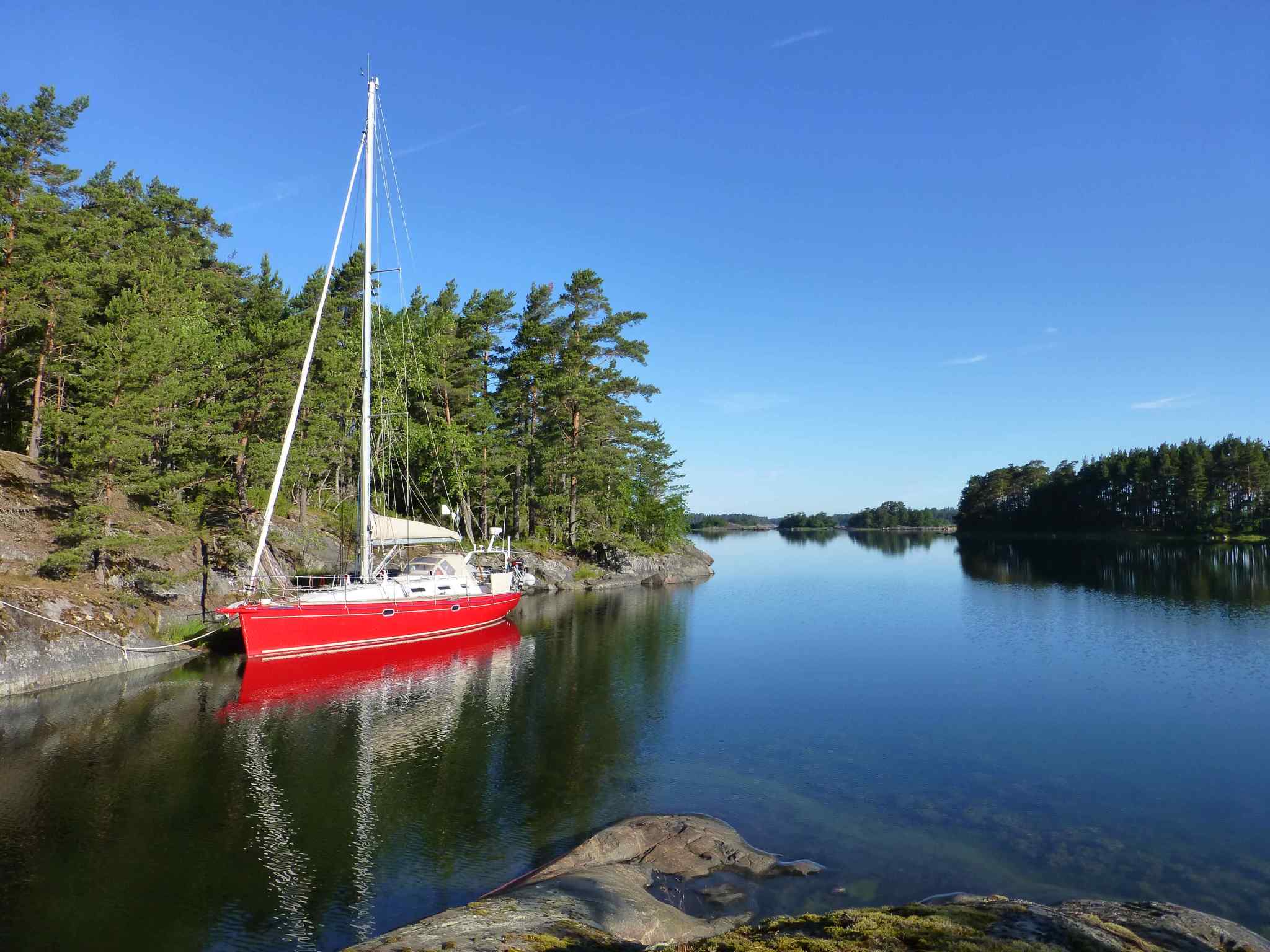
Whilst the island was fairly small it was magical to have it all to ourselves, and the scenery was magnificent, a picture perfect view no matter which way you looked. Enough to make us stay for two days and two nights, totally undisturbed no other people around, and of course BBQ’s on the rocks each night (this time our own portable COBB bbq/oven as there was no designated fire spot on the island).
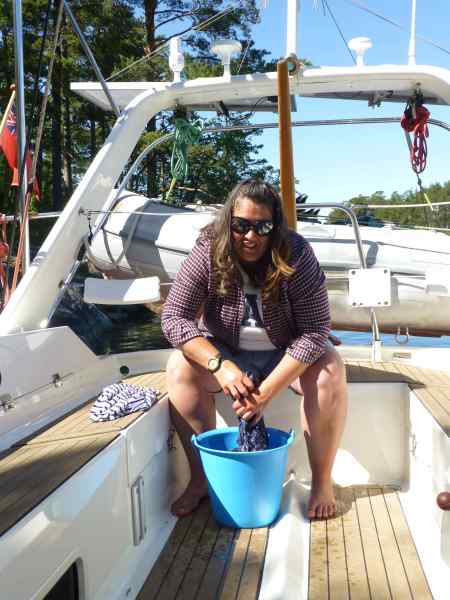
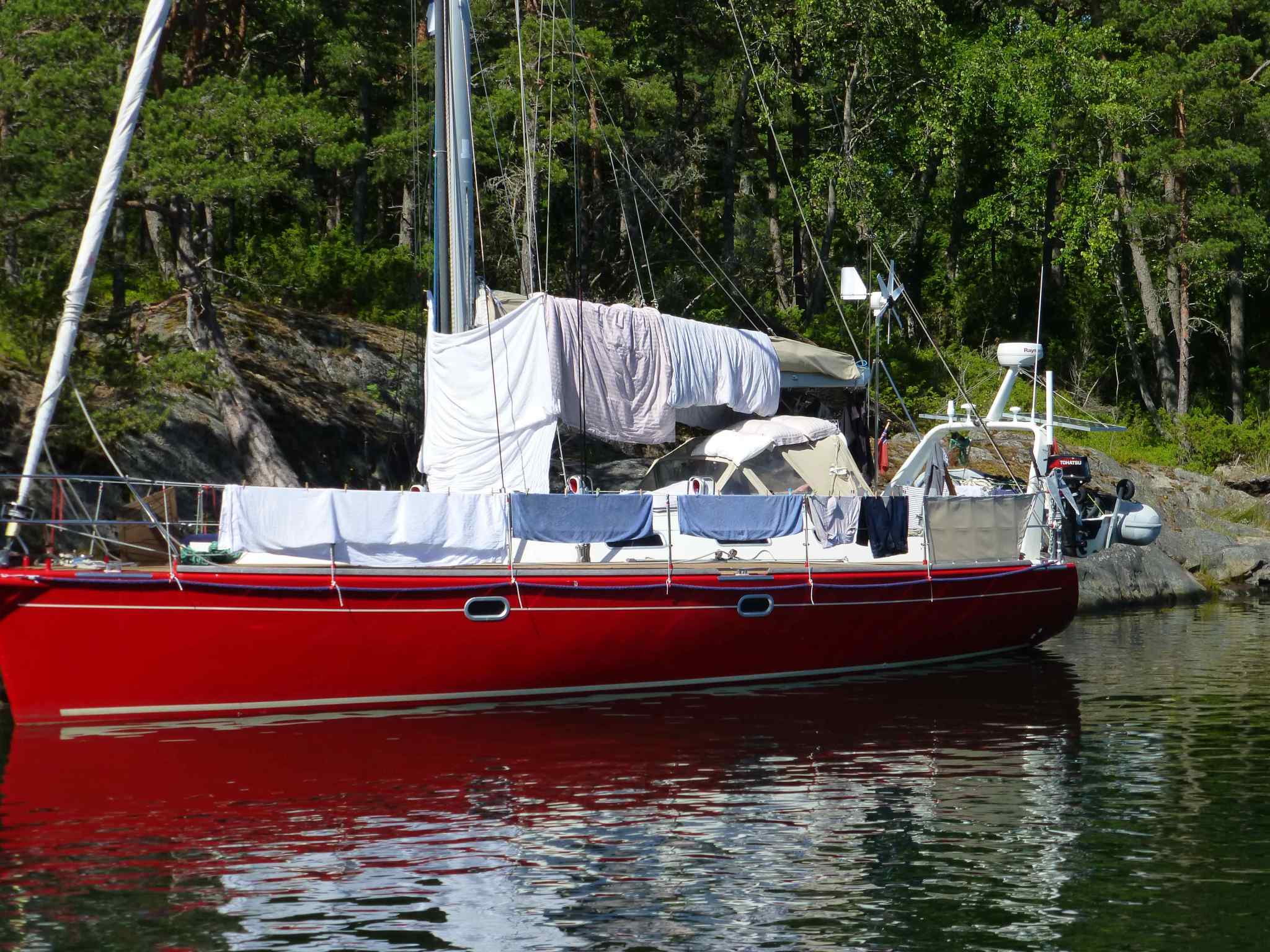
Now I wouldn’t want you to all be under the impression that living on a yacht is all beaches, bikini’s and champagne every afternoon with cheese and nibbles – no this is definitely not the case for us (not everyday anyway, and champagne yuk!), our two days in paradise included doing a couple of weeks of hand washing in a bucket then pegged out to every available surface on the boat to dry, as well as airing out all the bedding to get some airflow through the sheets and duvets (I won’t gross you out and embarrass myself by telling you when they were last washed…)
There was however a slight downside as although we were not disturbed by anyone, we did pick up some unwelcome opportunists that were to become a theme over the coming weeks . . . tic’s . . . and as we were to learn they are rife in the islands. This isn’t the first time we have encountered these little blighter’s, we also got ourselves a couple in Scotland last year when exploring inland, and luckily invested in a tic-removal-tool which is now is use in Finland. They are teeny-weeny little buggers, juveniles we believe, the smallest we have every seen, but after every walk we are like a pair of monkeys checking each other over for tics!
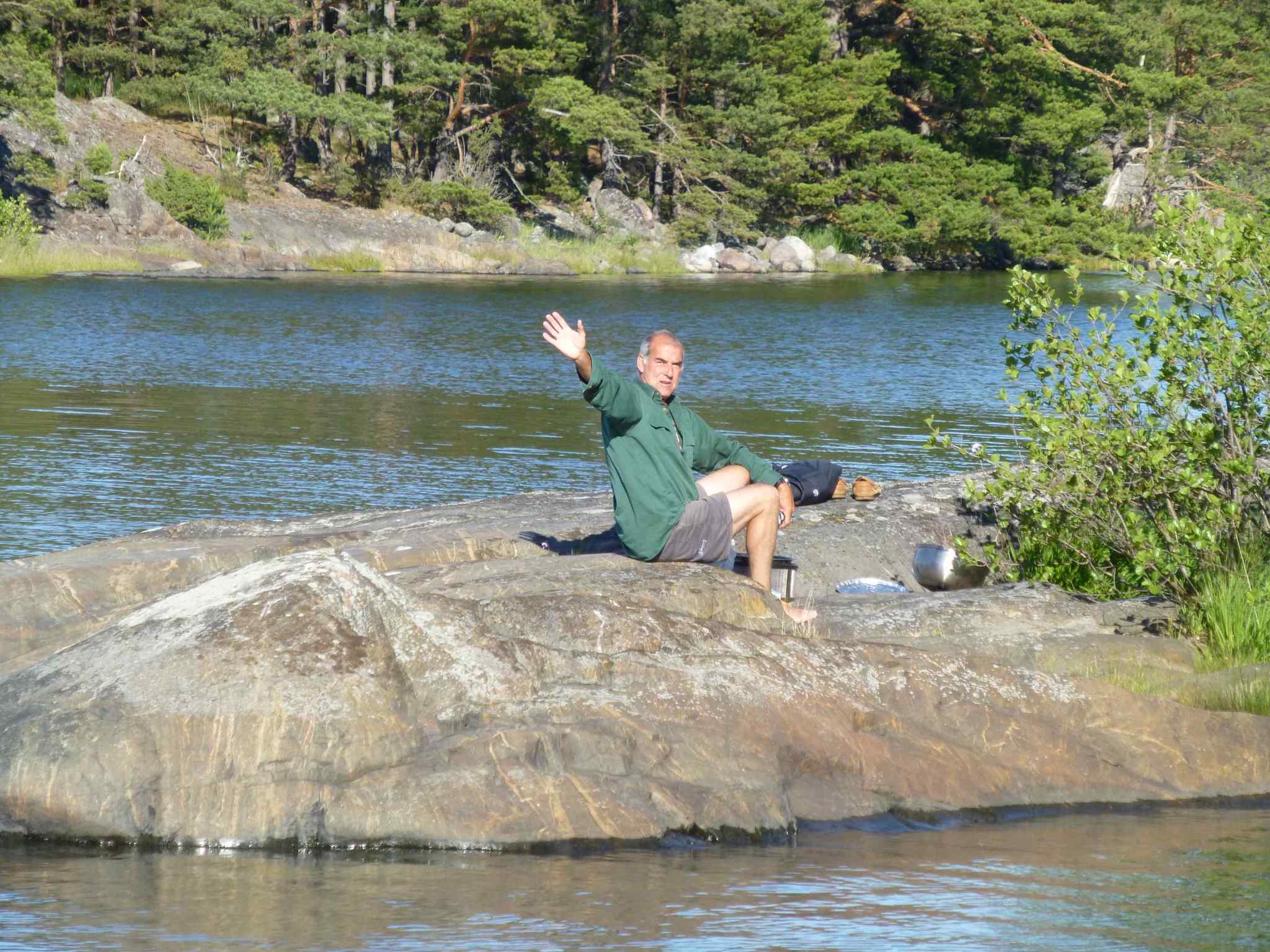
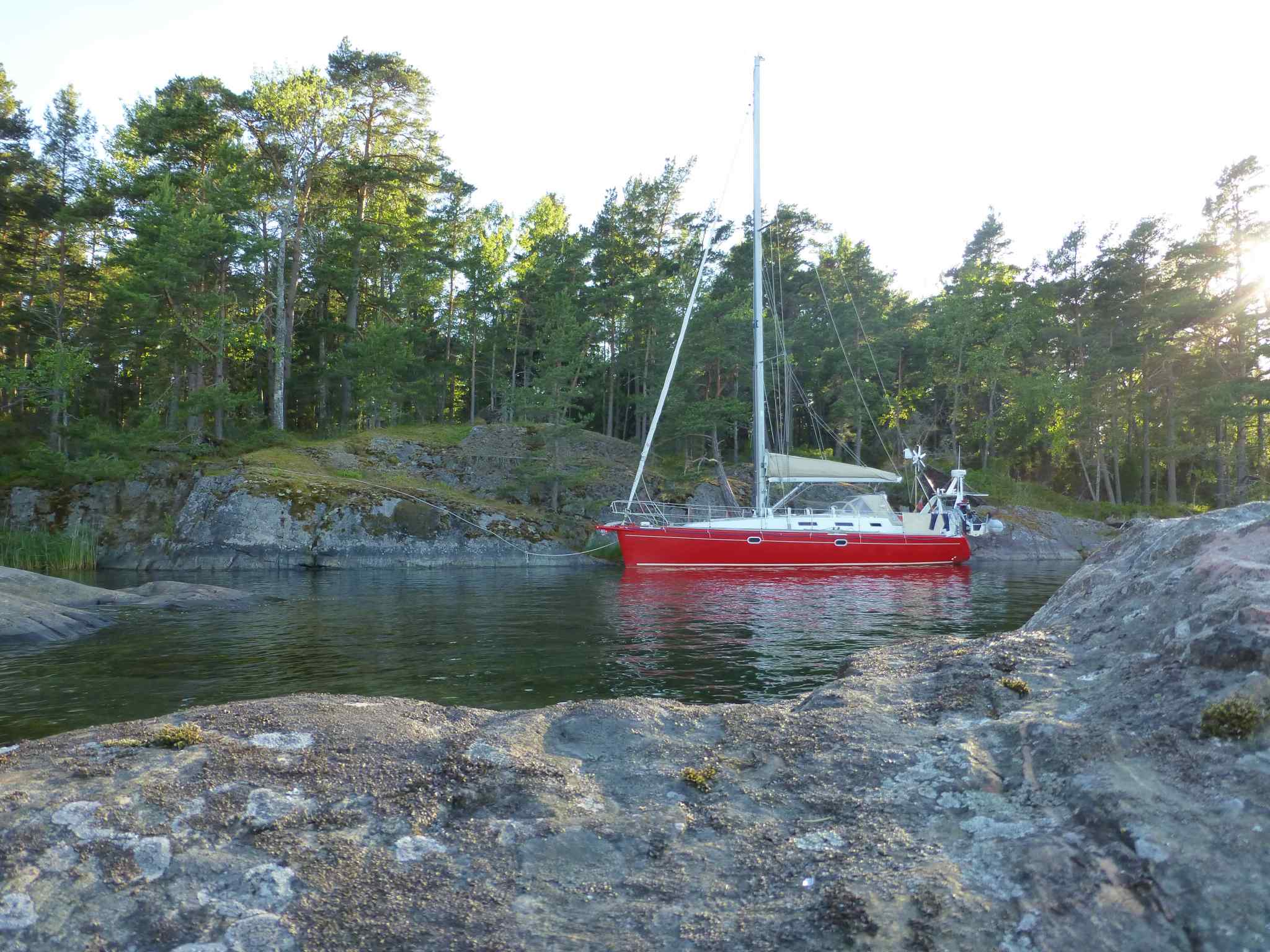
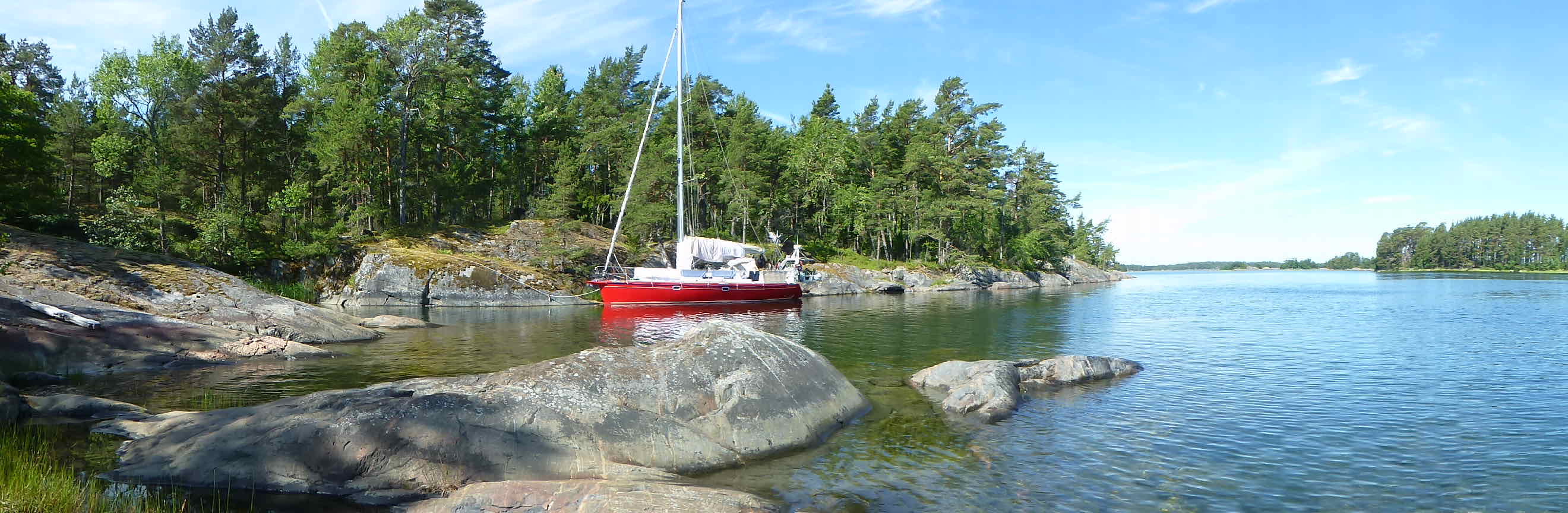
Älgö Rödjan
Next stop was Älgö Rödjan part of the National Park, again stern buoys and bow to the dock. It wasn’t very far from last nights spot so we were there before lunch and took the last spot. Within half an hour all the other boats had left (turns out they were last nights crowd), then within another 30 minutes all the spots were full again, jammed full, just when you thought no more could fit, someone, somehow squeezes in, the remainder of the late comers ended up on anchor out from shore in the bay.
We are really noticing the amount of boats and people, very unusual for us! Although we have been doing this full-time for almost two years and are currently in the middle of the official sailing season (our second) and it is the Finish Summer and vacation period, there are more boats that we have ever seen.
This time last year in the middle of the sailing season we were off the west coast of the Republic of Ireland and heading north-west towards Scotland and we were one of very few boats taking on the wilds of Ireland. We would be lucky to pass 5 boats in a week where as here we are passing at least 50 in a day and each anchorage is full every night.
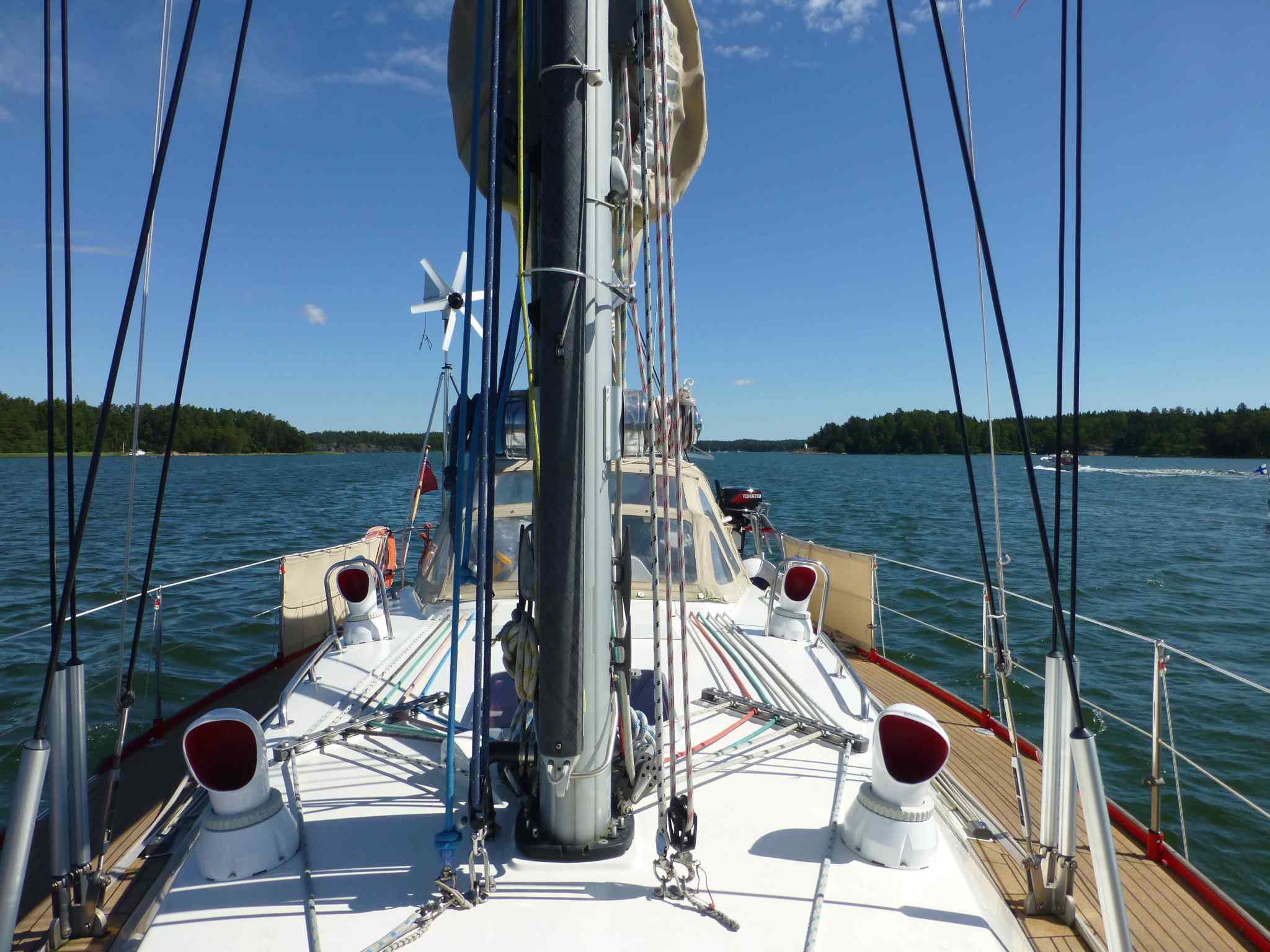
Lots and lots of families, or small yachts with 6-8 adults on them, the boats arrive and secure to the dock then all of sudden, 2, 3, 4 sometimes more kids (and a couple of dogs) pop up out of the boat onto shore with their butterfly nets and spend the rest of the afternoon chasing tidily fish around the boats, then come 7pm they strip off and jump in the drink with mum and dad throwing the soap in after them.
The nights are very quiet however, which surprised us as we assumed being on holiday and summer they would have music and be very social (loud) at night, but it is very, very quiet. We are yet to hear any music from any boats, they all go inside by 9ish despite it still being light outside until 11-12 at night. Very different from Australian holiday culture (or maybe it is the kids thing?) another factor may also be the fact that alcohol is ridiculously expensive so no body seems to over indulge . . . don’t stress, we were warned of the expense and stocked up in Germany and Estonia where it was a lot cheaper, so we have plenty to see us through (although having bbq’s every night has increased our drinking – you can’t have a bbq without a drink!)
The people are all very friendly however, and we are getting lots of recommendations on places to visit on our way West. The winds however are not being so kind and always seem to be coming from the West making it hard to sail with the wind on the nose, and it isn’t easy to get an angle off the wind as the channels are rather narrow around all the islands and rocks.
Älgö Rödjan was lovely and had a really nice national park walk around the island, however Maree managed to get rather lost. Phil had done the walk earlier and said it was good, so off Maree set and within 5 minutes had seen a rather large snake, and of course being Aussie, the walk was being done in safety thongs and shorts, so therefore eyes were then kept down on the track (checking for snakes) rather than up at eye level where the little blue tree signs and arrows were for the walk, and as such managed to take a secondary track that lead to a small lean-to shack and a marsh – well off the designated track! After re-orinentating back (an adventure in itself) the track was picked up again and eventually completed the designated circuit. Upon return to the boat and before the confession of losing the track Phil piped up saying “they overdid the blue signs didn’t they” which yes, they did (once one kept an eye out for them) but still . . . could have happened to anyone.
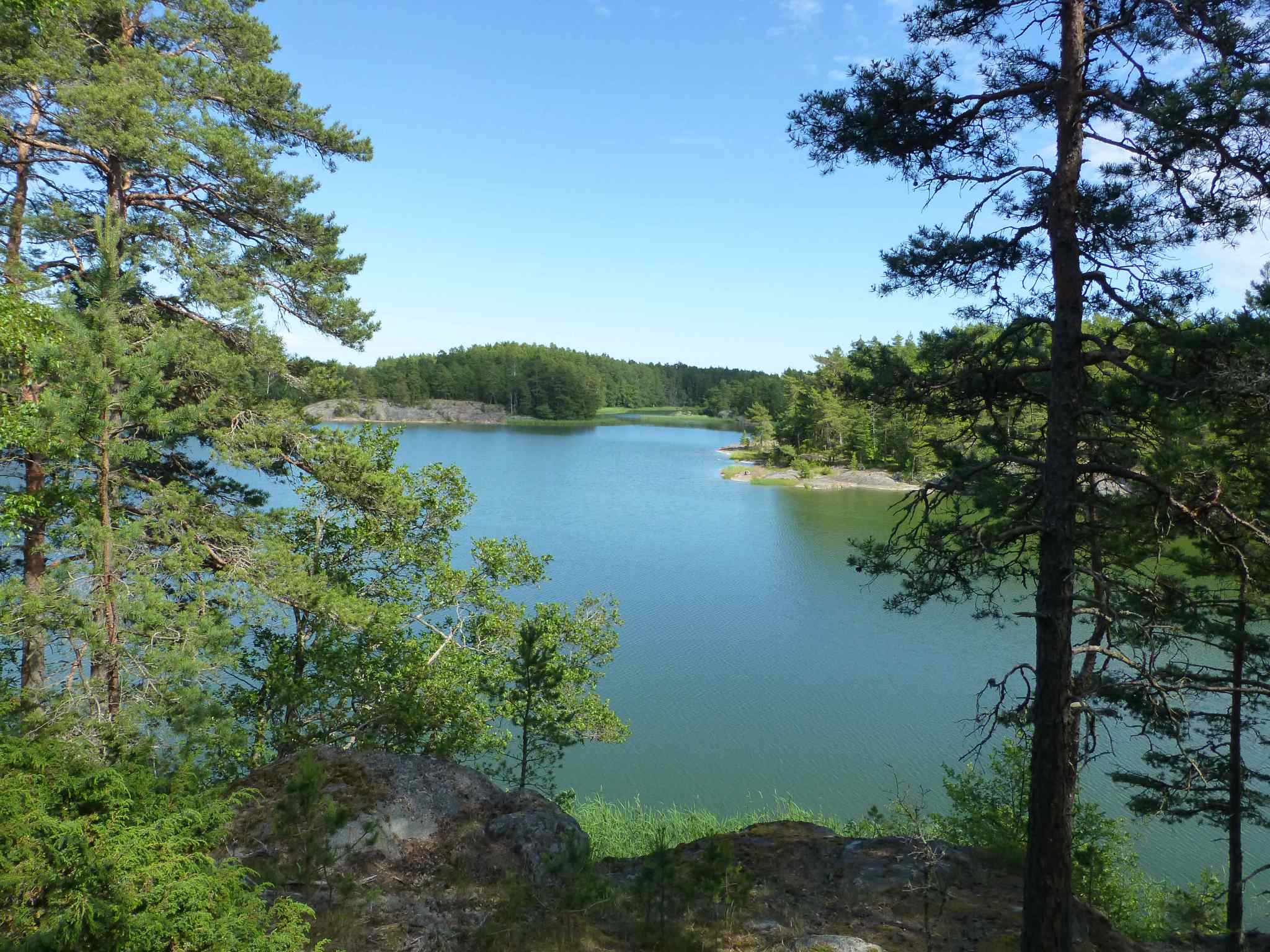
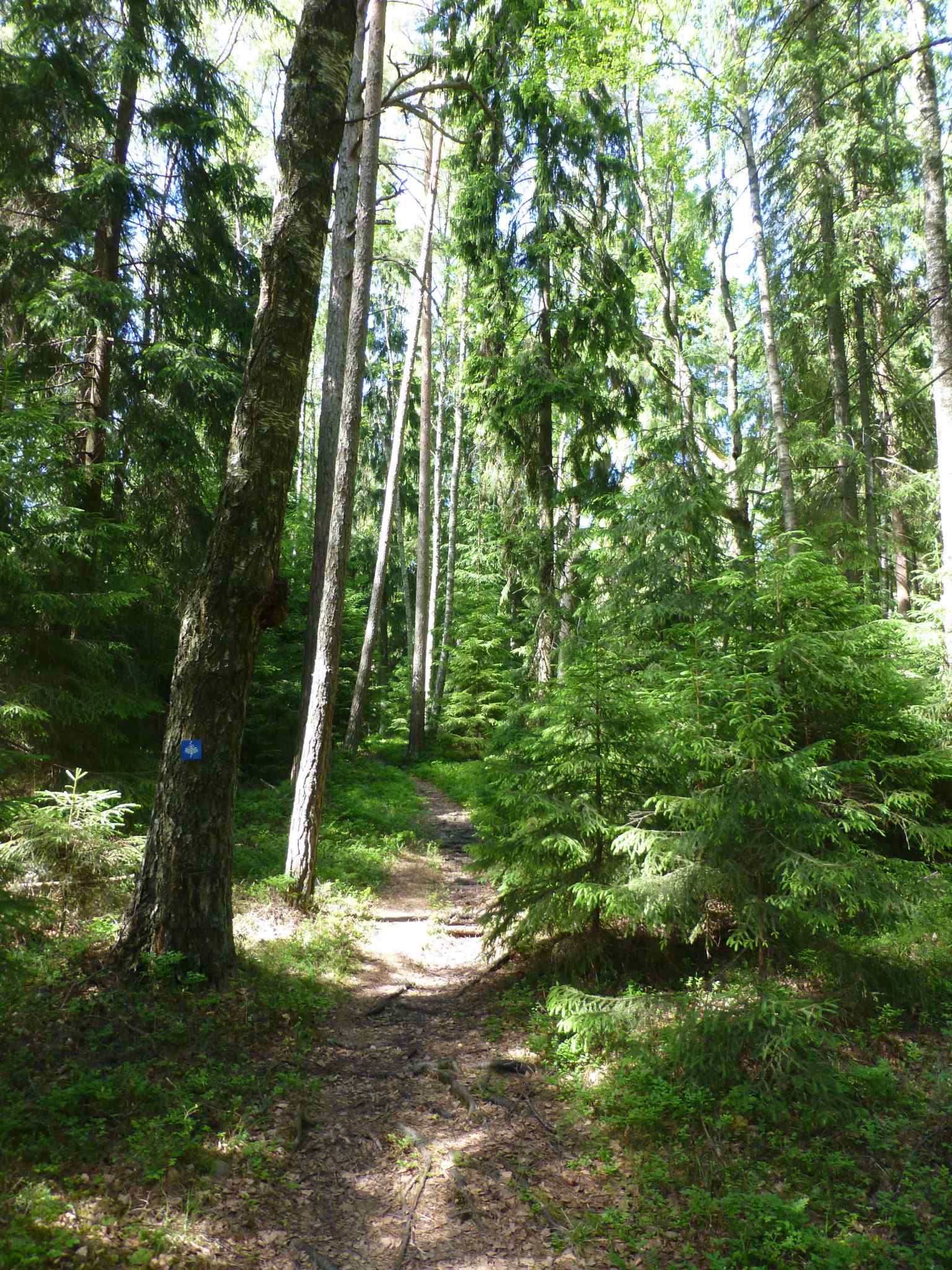
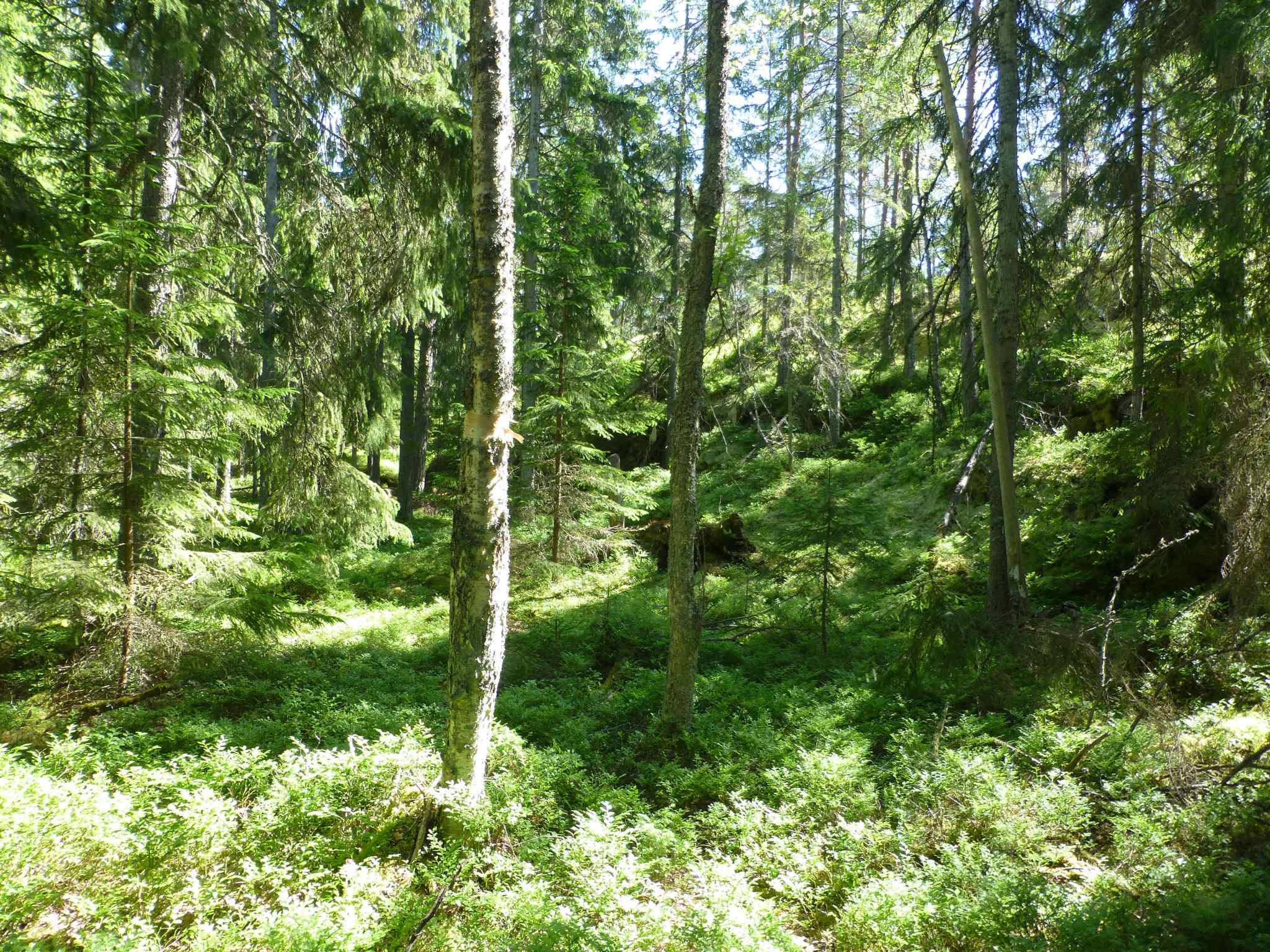
So far in the Finish Archipelago we have visited 5 locations, stayed 6 nights and enjoyed 7 BBQ’s 🙂 life is good (or if you were Finish you would be interested the fact that 3 of the 5 locations we have stopped at had sauna’s, in-fact one place had two saunas).
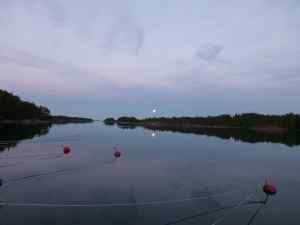

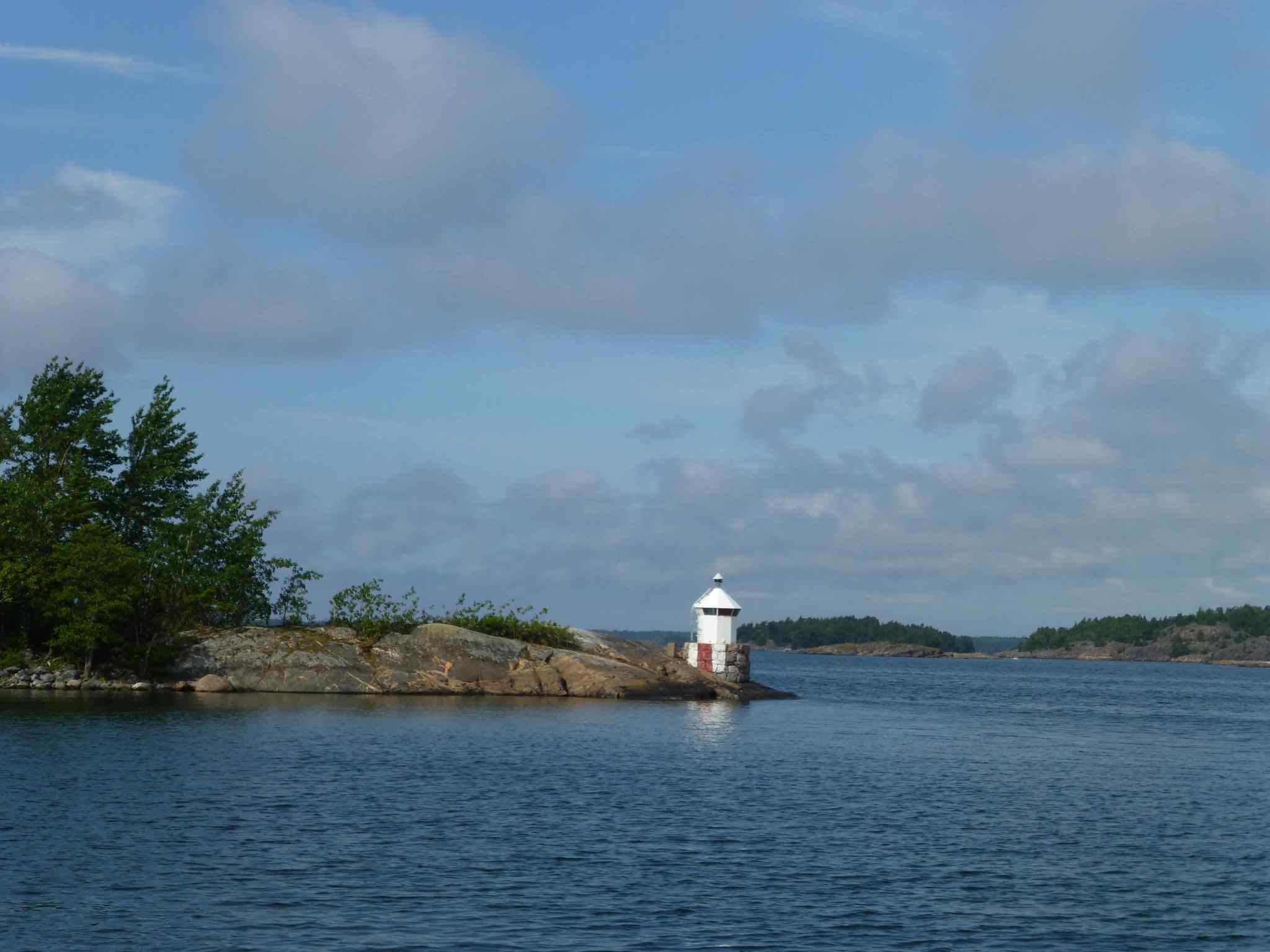
Hanko
The next day the wind again was coming directly from our intended destination and it was starting to build into a front, so we headed to Hanko (the mainland rather than an island) primarily to re-supply with BBQ meat as well as to wait out the unpleasant weather (along with every other boat in the Baltic) which was expected to really only last 24 hours.
We ballsed up our first attempt at berthing which at the time was the only available space and a crappy one at that (as it was a really dicky corner spot, and not a great angle with the forecasted winds we were expecting). But thanks to missing the stern buoy we had to do a take two and whilst reversing back out we met another boat reversing out of a better spot (when I say met, I mean collided with, but all slow speed and he was tiny so wasn’t going to hurt us, therefore we just bumped him out of the way with the dingy at the back – it is just like a big soft fender really). Anyway once we came around again we lined up and took his spot which was much much better and came in and executed a perfect berth.
Hanko served both the above purposes well but really wasn’t a lot more to write home about. They had just hosted the wooden boat festival and races and the marina was hung over from that, with evidence everywhere that a good time was had by all (litter, cans and very untidy).
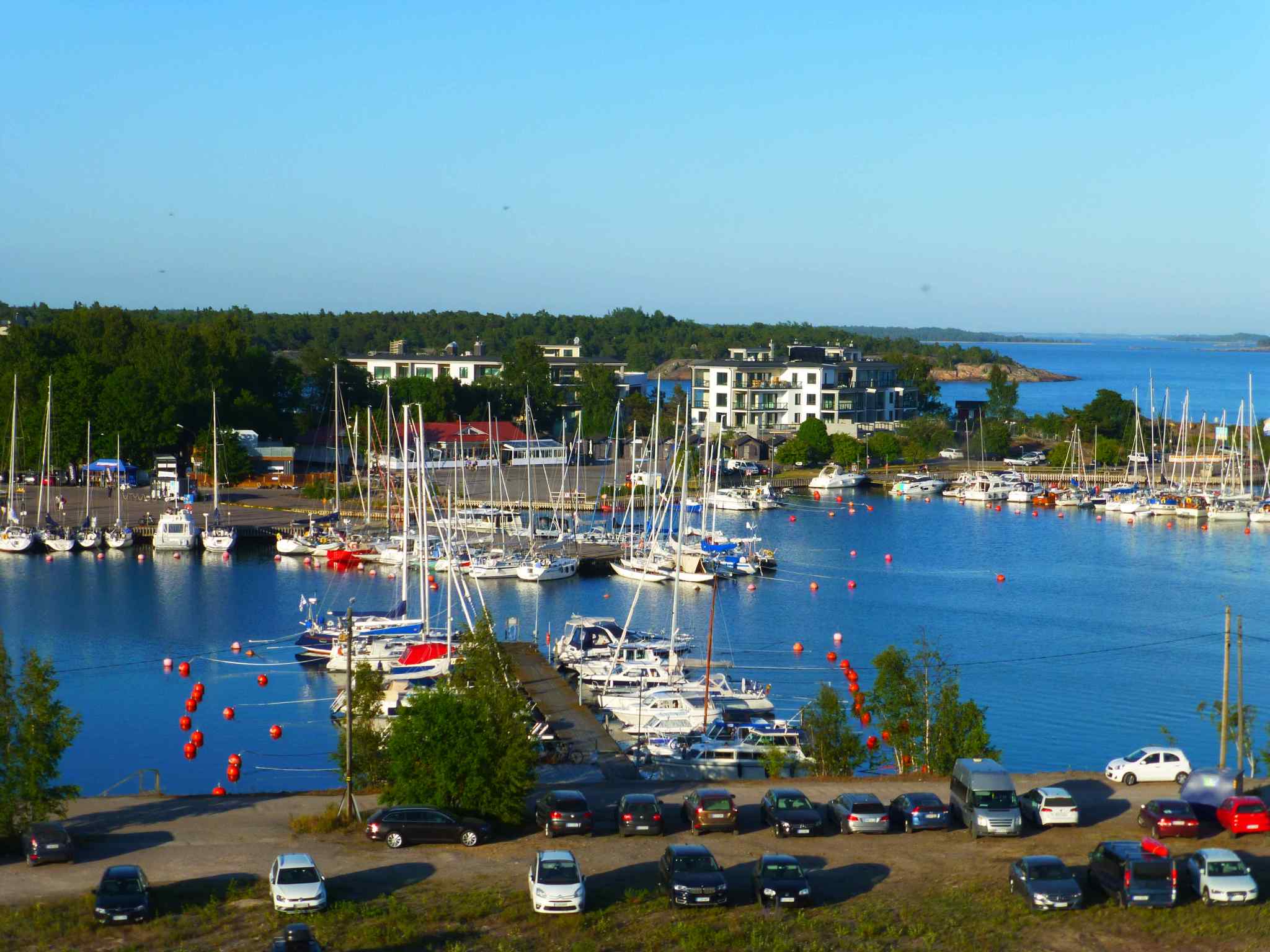
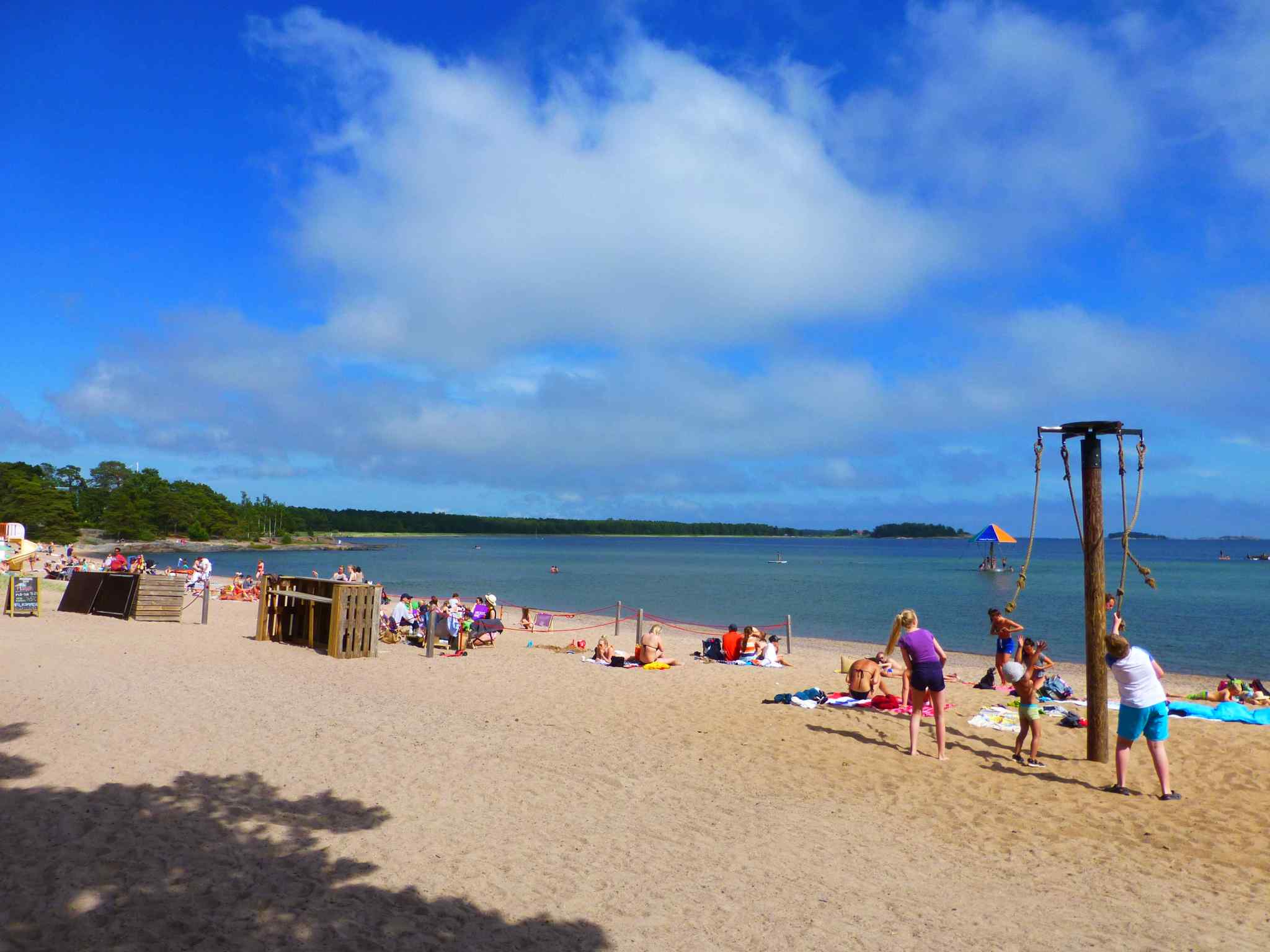
It is a summer holiday village, with again more stunning wooden houses, a couple of good beaches, the big marina, a street of restaurants (for the holiday boaters) and that’s about it.
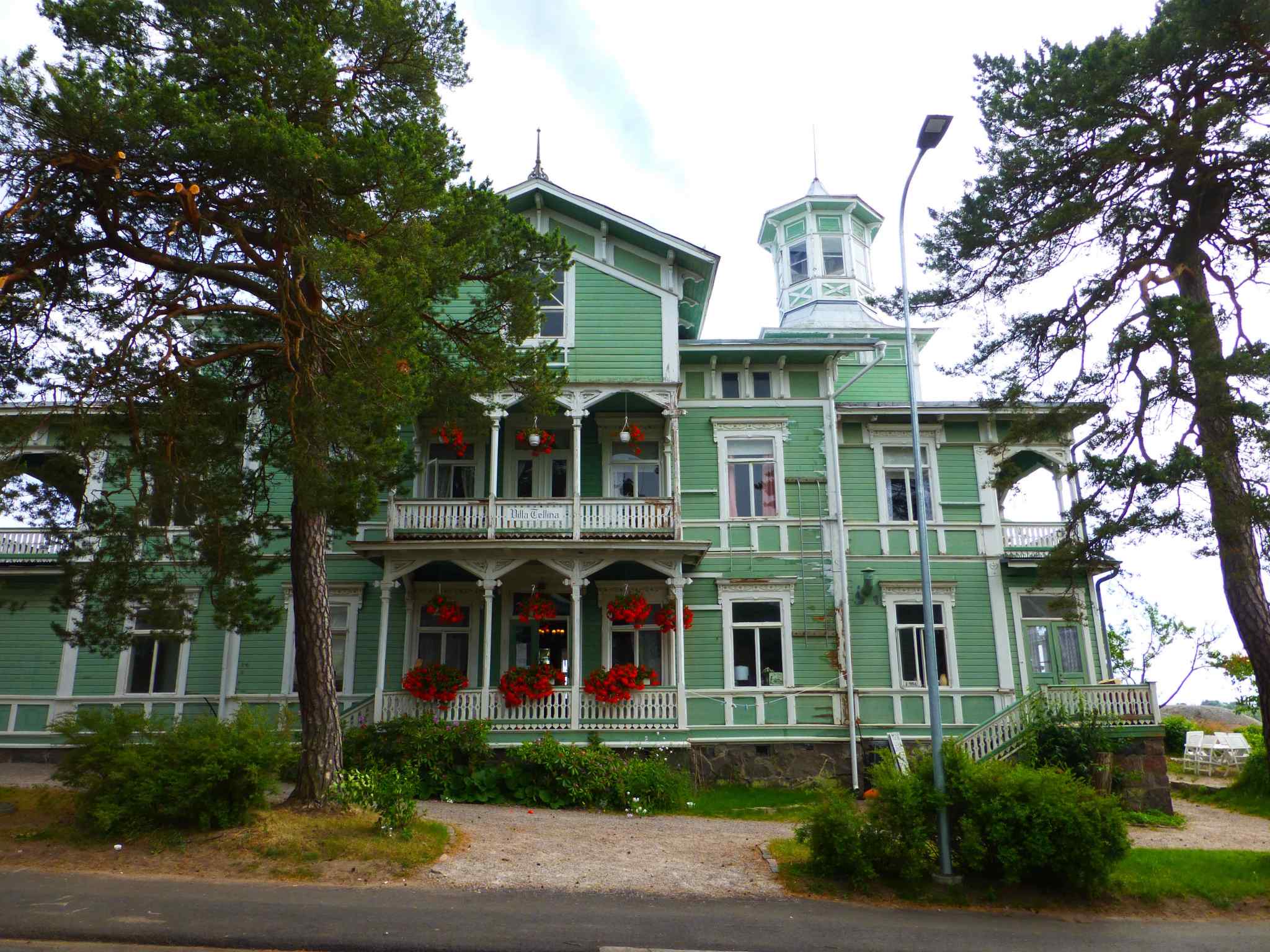
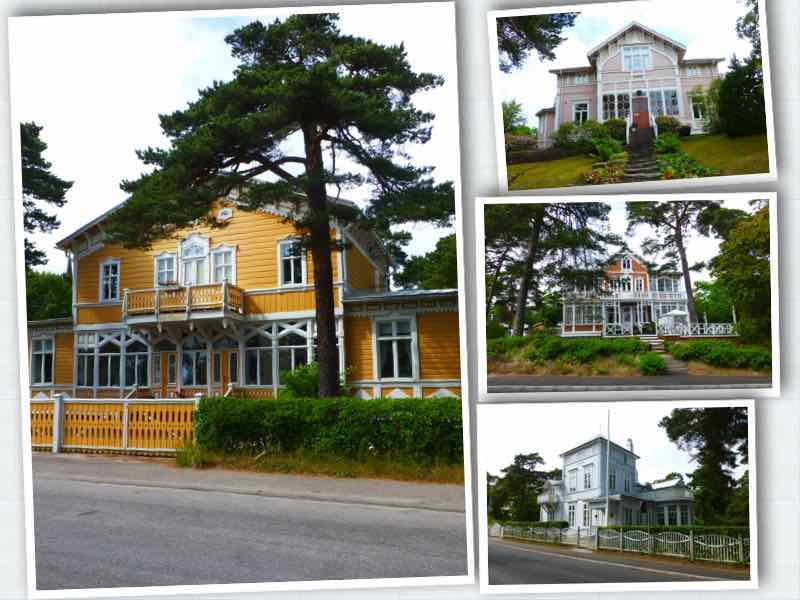
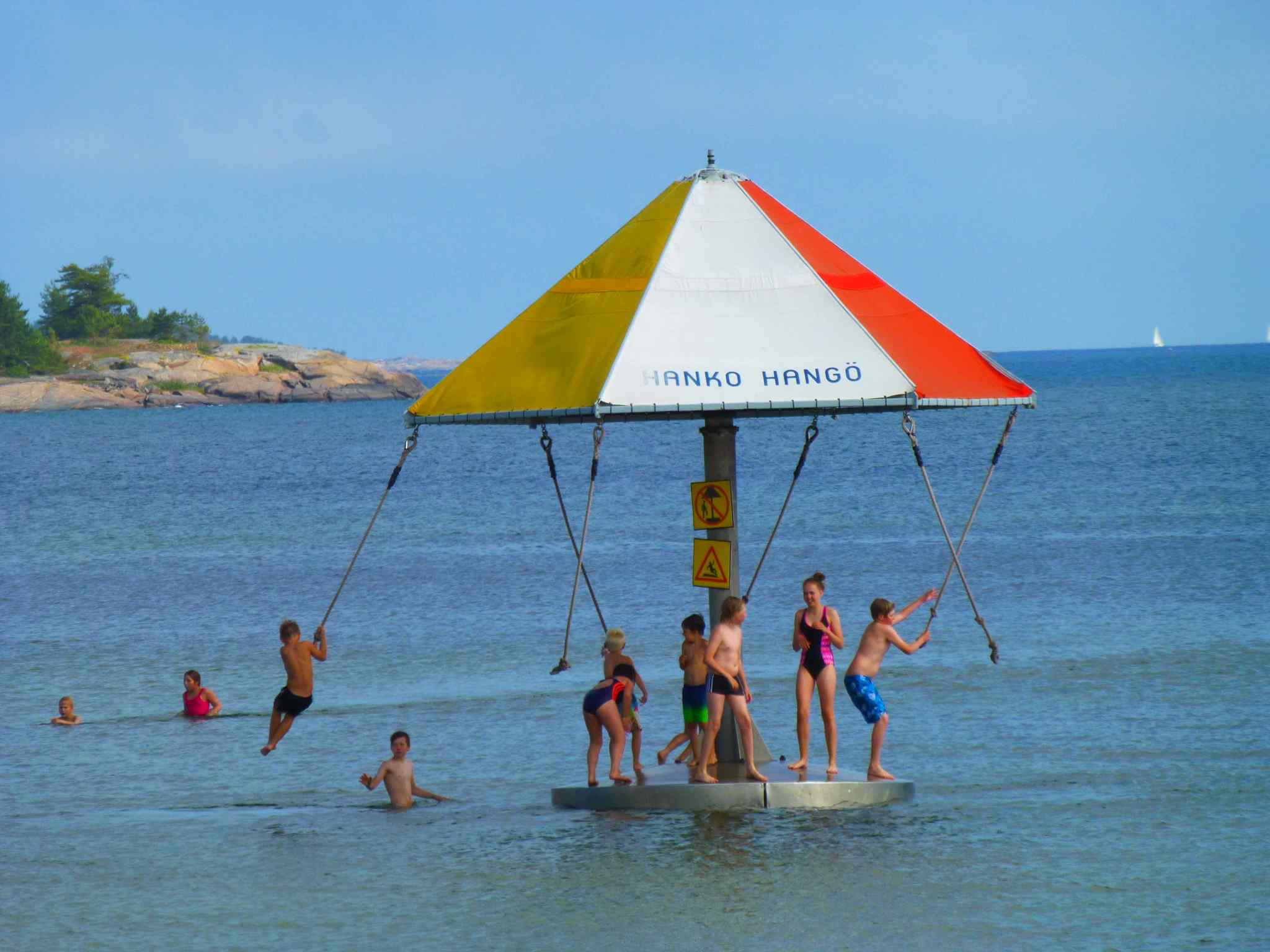
They did however have a great bit of kit in the water off the main beach that in our opinion should be installed in every kids beach in the world. It was out off the beach in about shoulder hight water and was basically a large umbrella with ropes off it that had a motor keeping it constantly spinning around. There was a small platform under it for the kids to get up on then grab a rope and have a swing around before letting go for the big splash – looked like loads of fun!!
Phew . . . Thanks for sticking with us and reading this one – I know it was long. Keep tuned for Part II.
Marvellous Montenegro (June/July 2022)
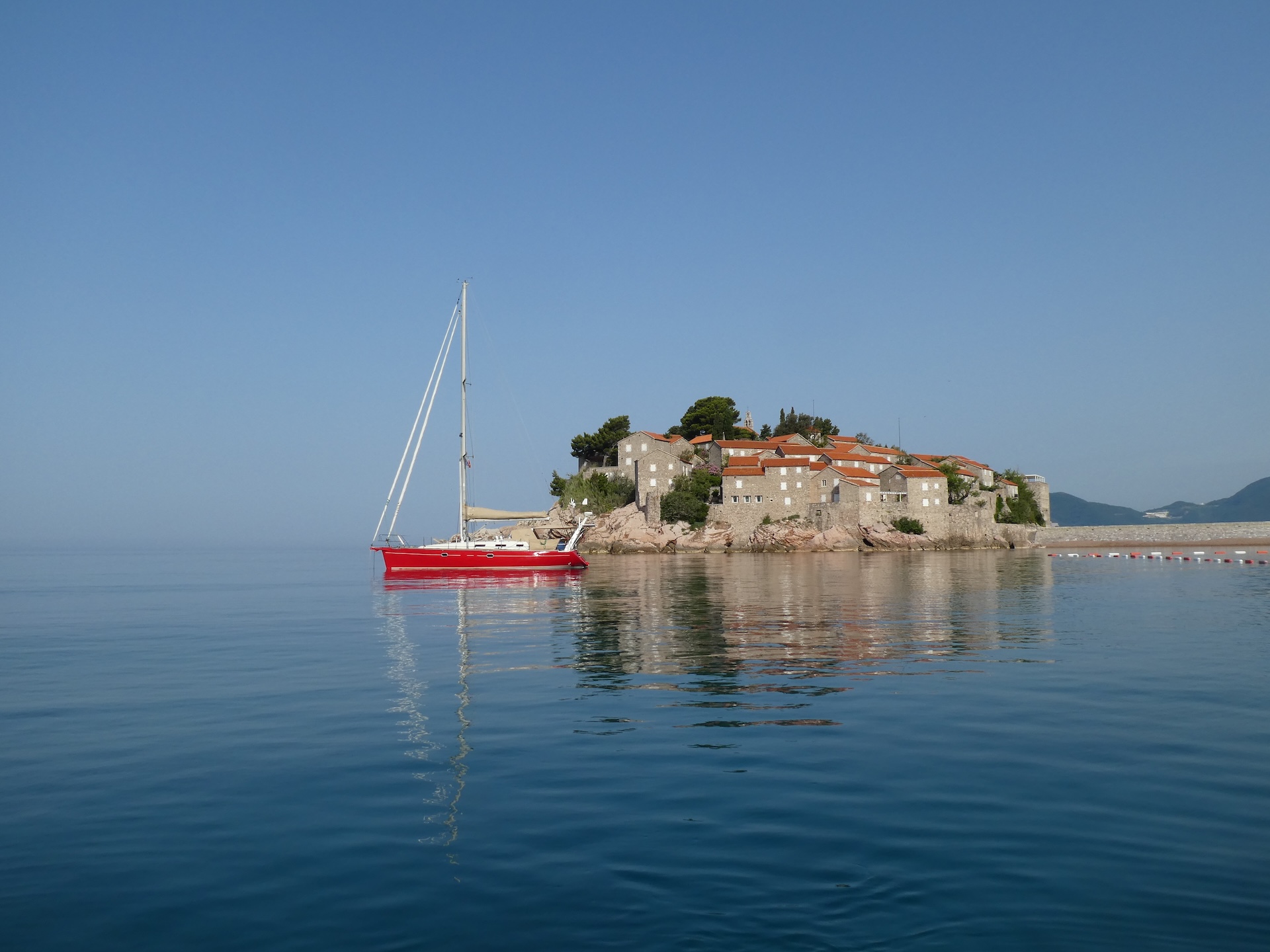
After lifting anchor it was approximately 10 minutes before we entered Montenegro waters, we had anchored on the border with Albania setting ourselves up for an early, easy (we hoped) check-in to our 25th country on Red Roo.
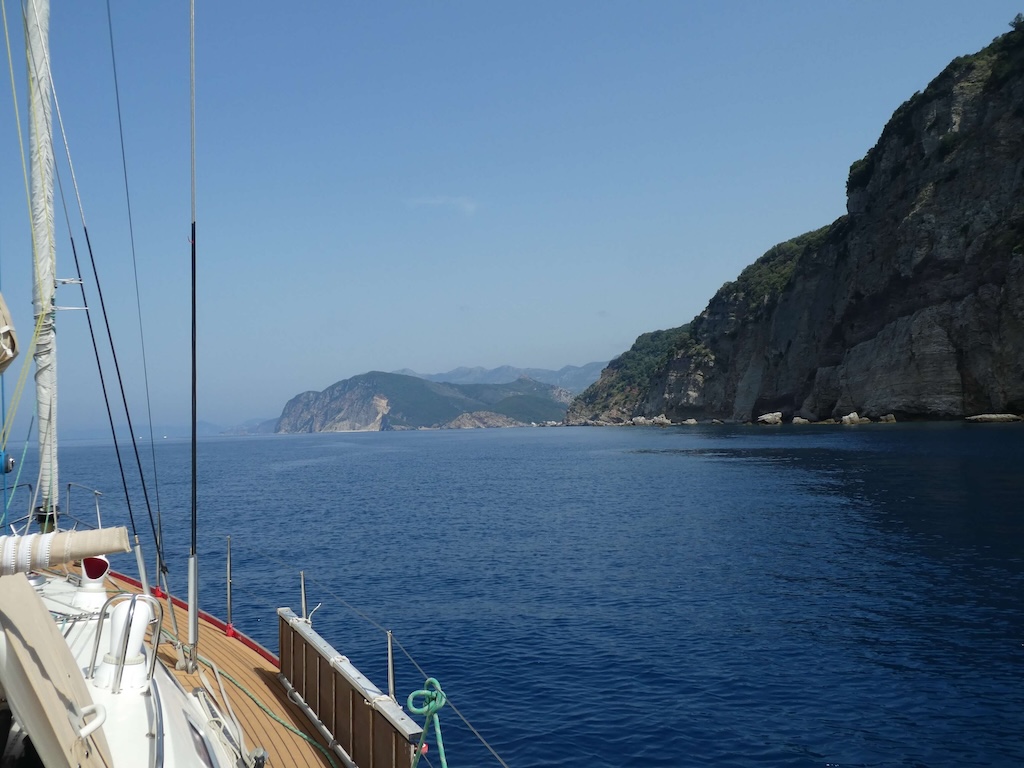

We had VHF contact with Bar Radio announcing our entry into their waters and were given permission to proceed to Bar – our port of entry to complete formalities around 25 nautical miles away, roughly 5 hours.
We arrived at a very quiet port of Bar, it took 4 calls on VHF before getting a response from the harbour masters office, there was no other water traffic movement, an empty customs dock (which made berthing along side very easy). We secured the boat and presented to the customs/police building where the kind police officer had to turn on the office lights and computer to assist us, she told us there were no boats expected today or tomorrow so things were quiet, we had picked a good day to arrive.

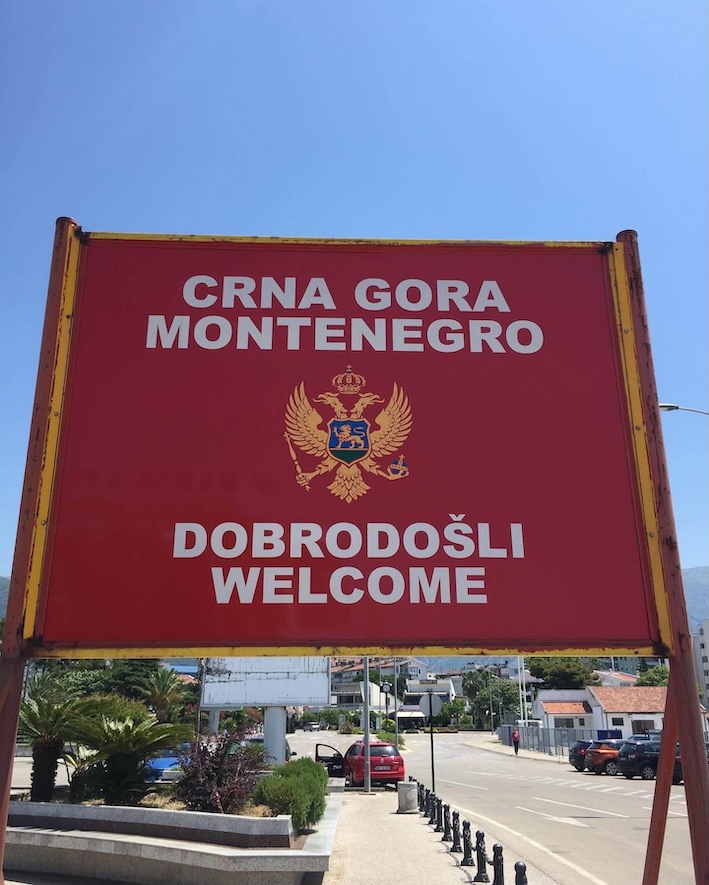
Formalities were easily completed, it was a passport stamp from the Police booth, a short walk to the harbour masters office to submit crew list paperwork and of course make a payment for a cruising permit (vignette), then back to drop a copy of the paperwork with the port police again, and finally a copy to customs (the cubicle next to the police) and we were done – welcome to Montenegro.
We spent two hours in Bar, picking up a local sim card, a quick browse of the local supermarket (to check out beer and food prices) a walk around town, a beer at the bar over looking the harbour (just to make sure Montenegro beer was to our liking), then back to the boat to move onto our anchorage for the night, just 3 short nautical miles to the beach at the other side of the bay.
The following day we travelled just 12 nautical miles north to the breathtaking beautiful anchorage of Sveti Stefan. We were particularly taken by this picture perfect location, we felt very relaxed and enjoyed 2 nights here, the beach was beautiful and only at about 30% capacity with beach goers, also there was no loud music, the water was crystal clear, it was just lovely. We also enjoyed a walk along the foreshore to Kings Beach and Queens Beach in the next two northern bays.
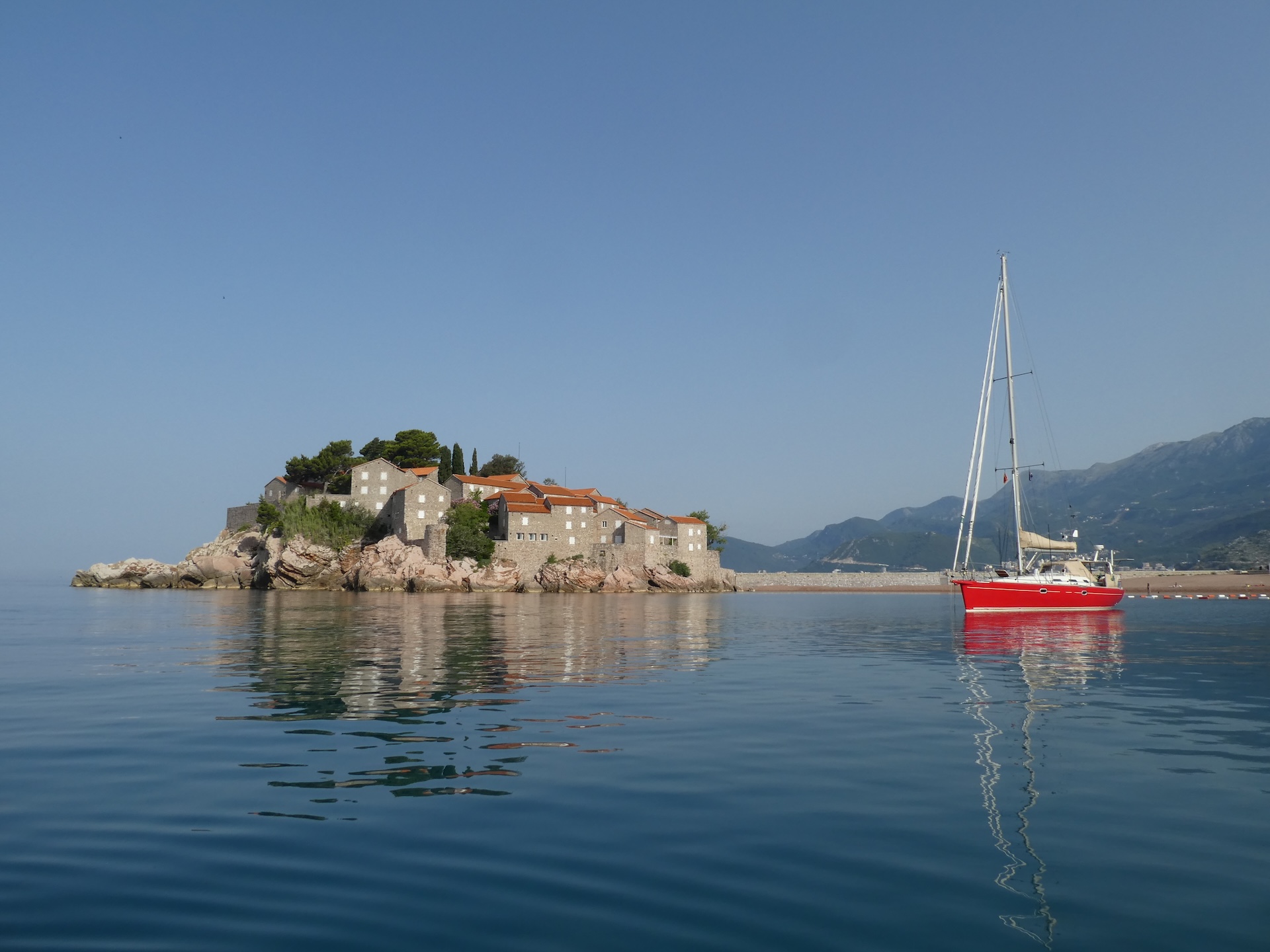
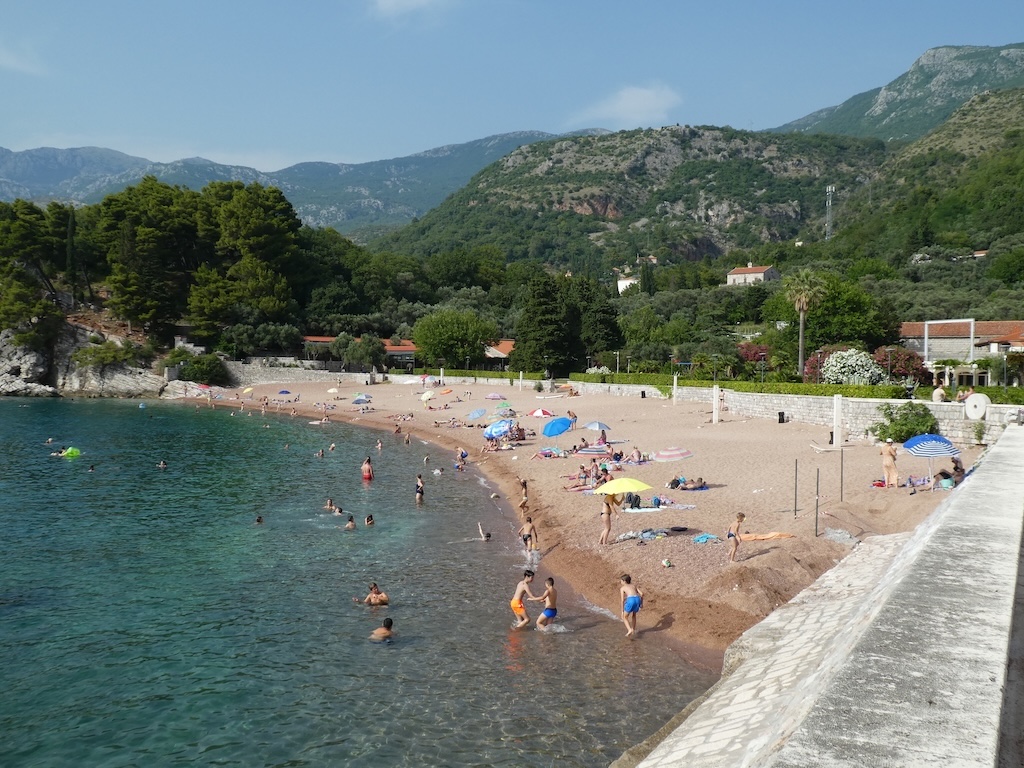
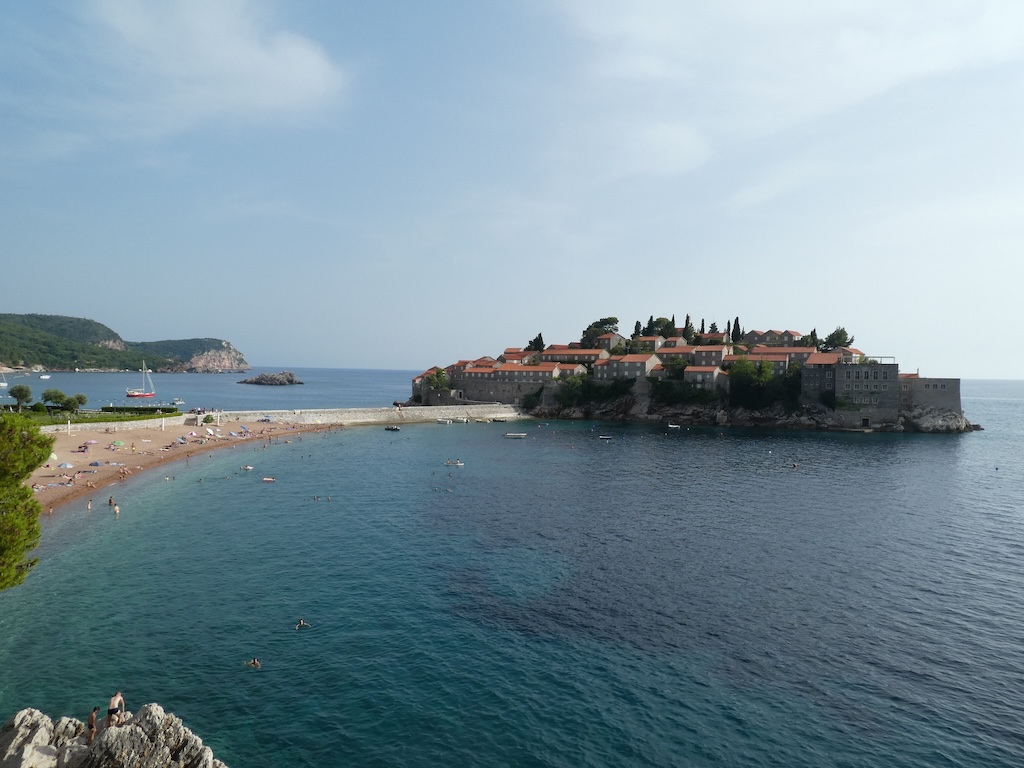
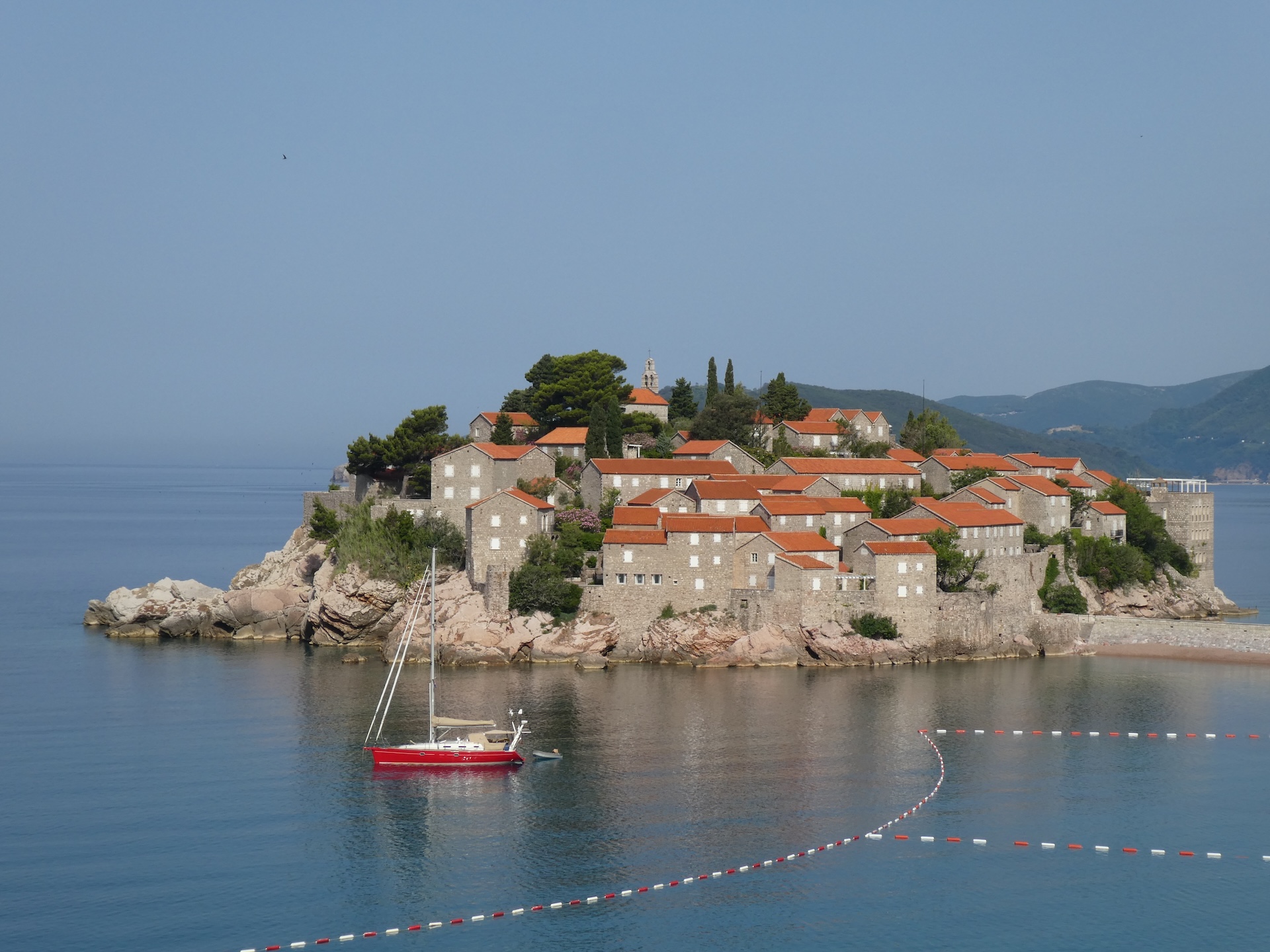
To give you an idea of the size of the country, Tasmania is 5 times bigger than the country of Montenegro. Tasmania = 68,401 km2 & Montenegro = 13,812 km2. Montenegro’s population is larger at 628,223 and Tasmania’s being just 526,386.
Next stop was 4 nautical miles north (it’s a small country), to the bigger town of Budva. Here was a bit of a highlight as we actually went to the movies and saw Top Gun Maverick, there was just 4 of us in the cinema (us and Kevin & Dee from the boat “Kestral” (UK) whom we had met in Albania. We also enjoyed walking around the old fortified town both during the day and after dark.
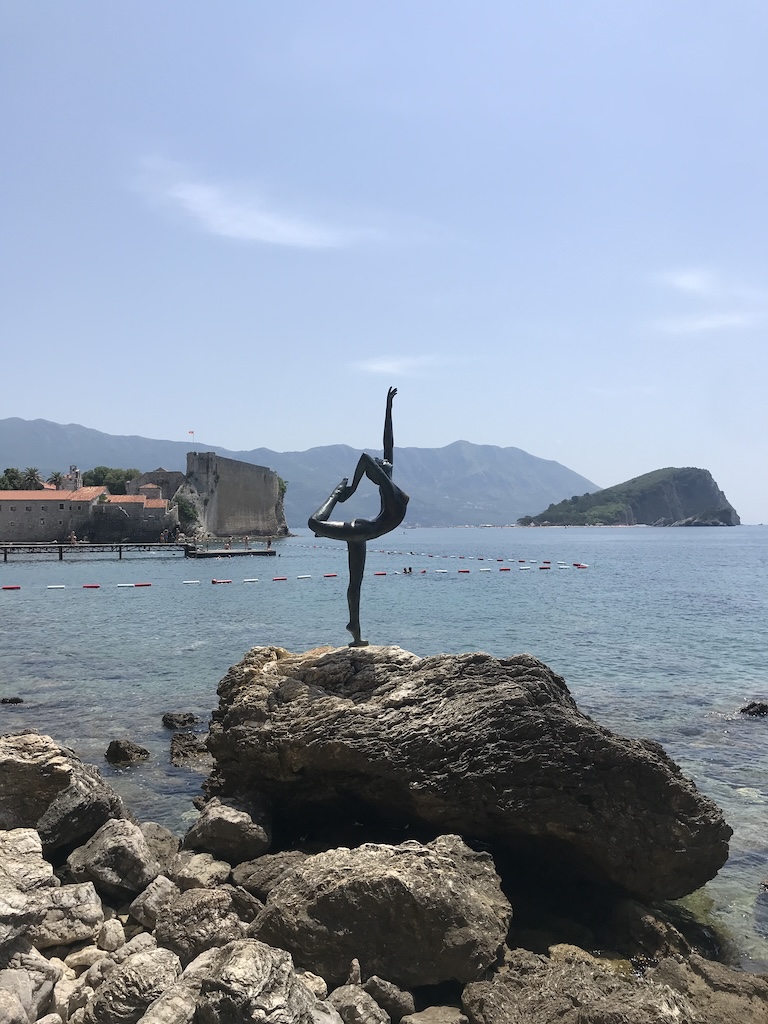
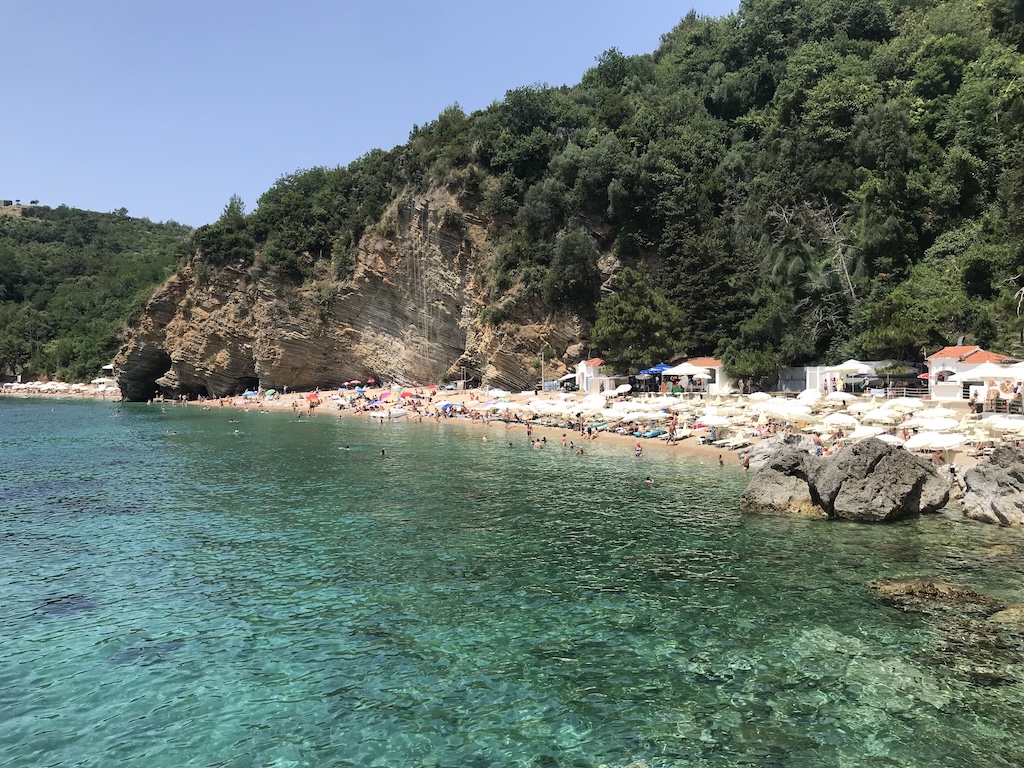
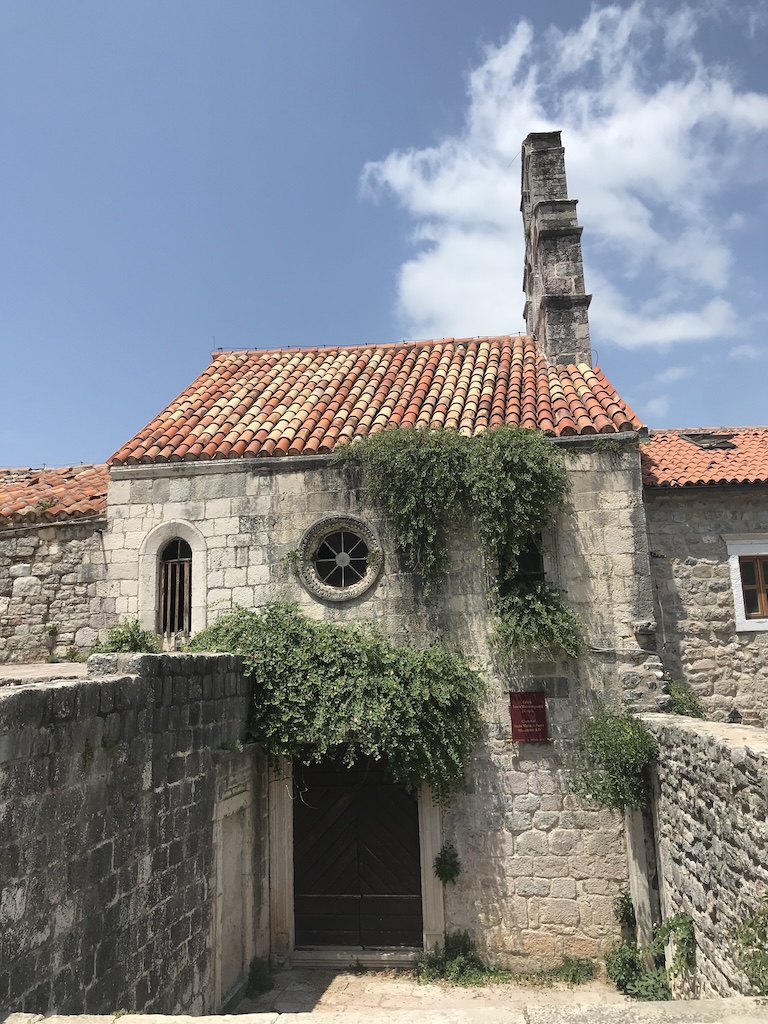
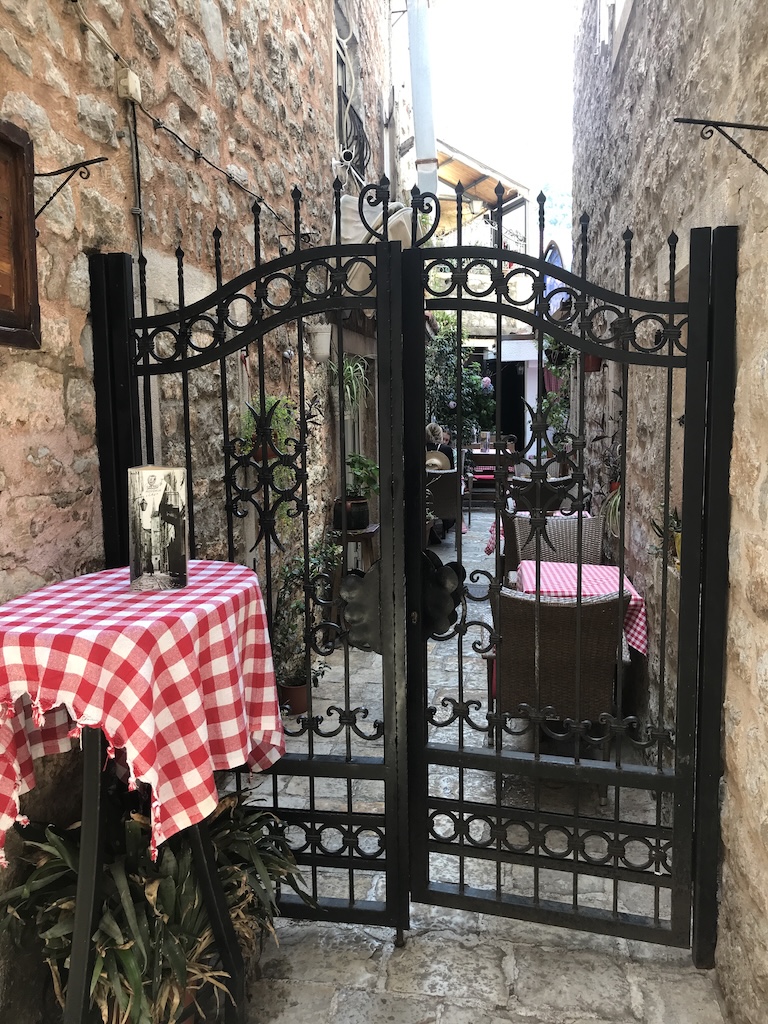

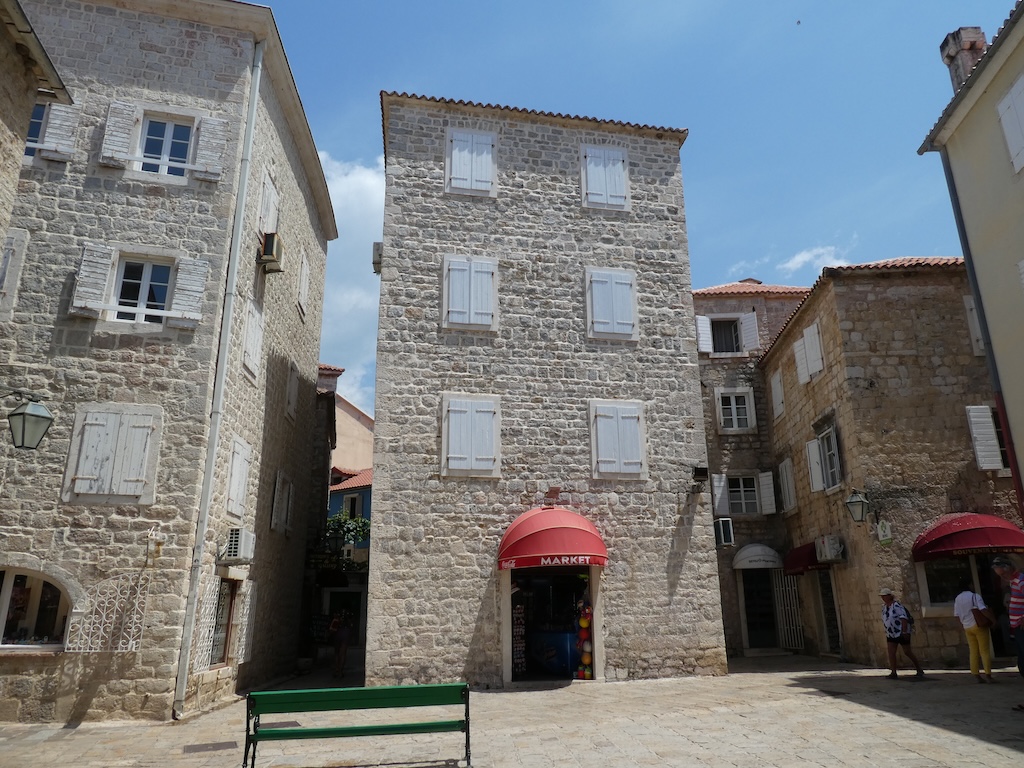
Next hop was 13 nautical miles to a larger bay, which contained a smaller bay with a small beach in which we dropped the anchor and swam, walked, brought ice-cream and generally relaxed.
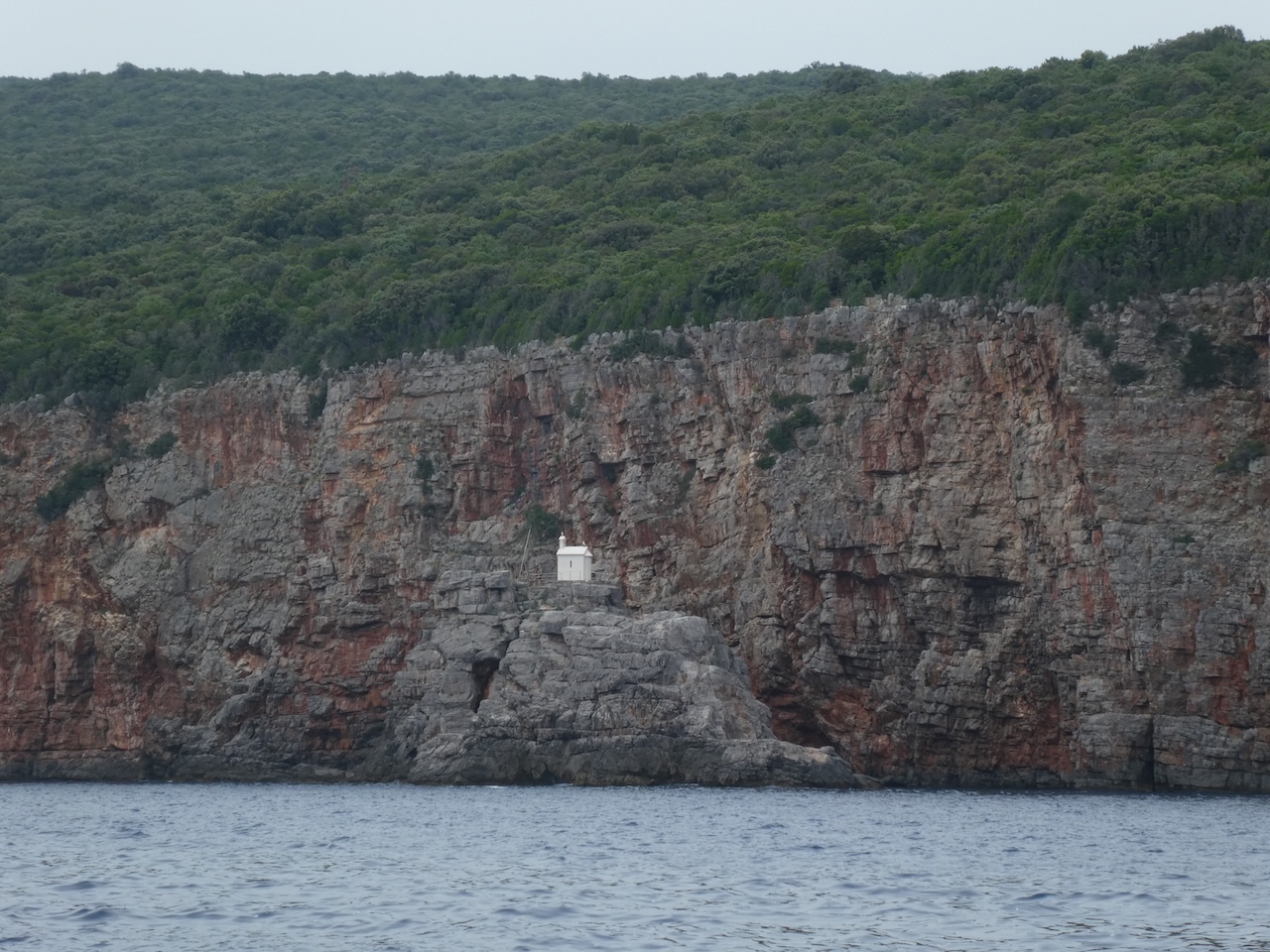

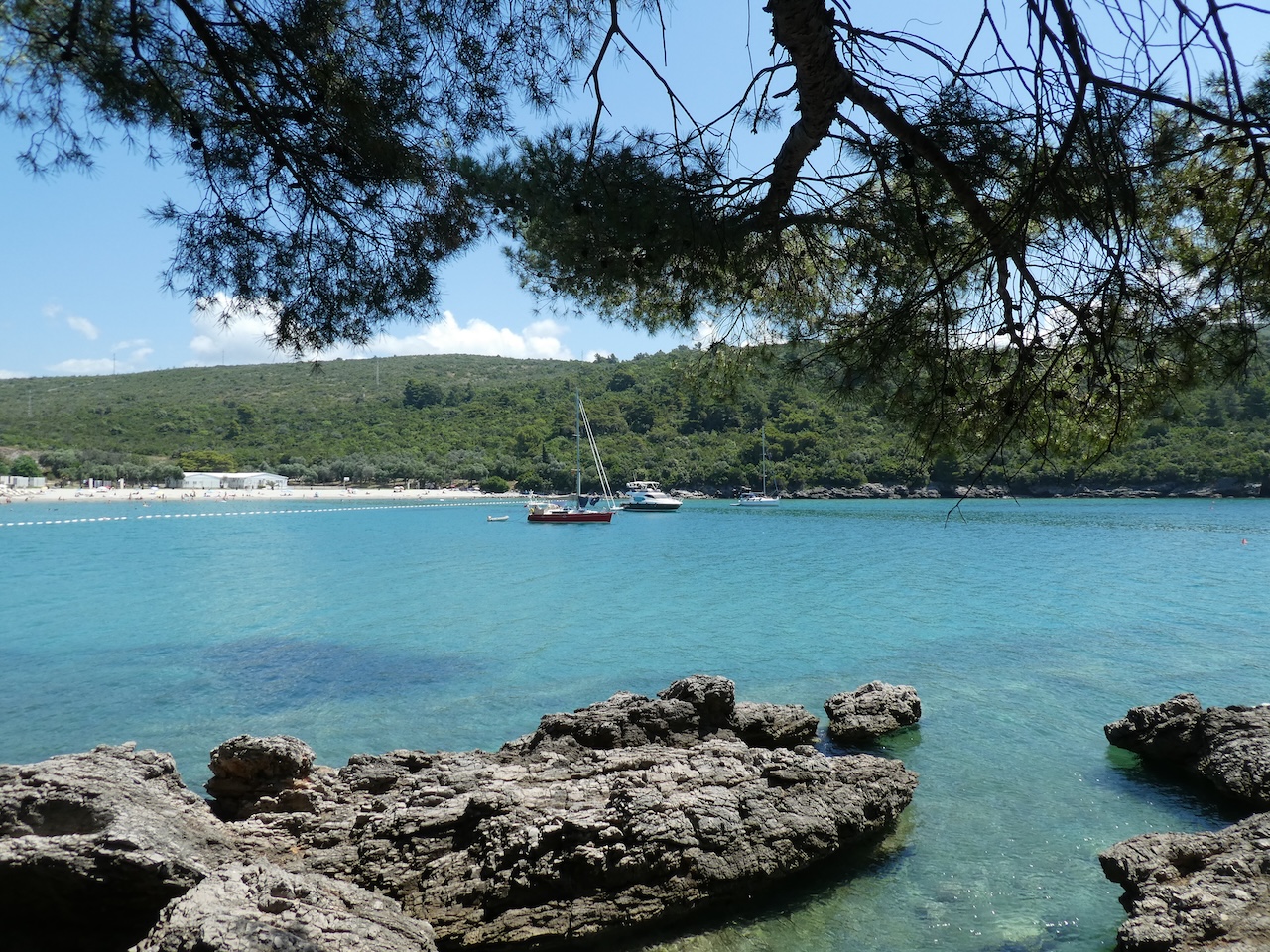
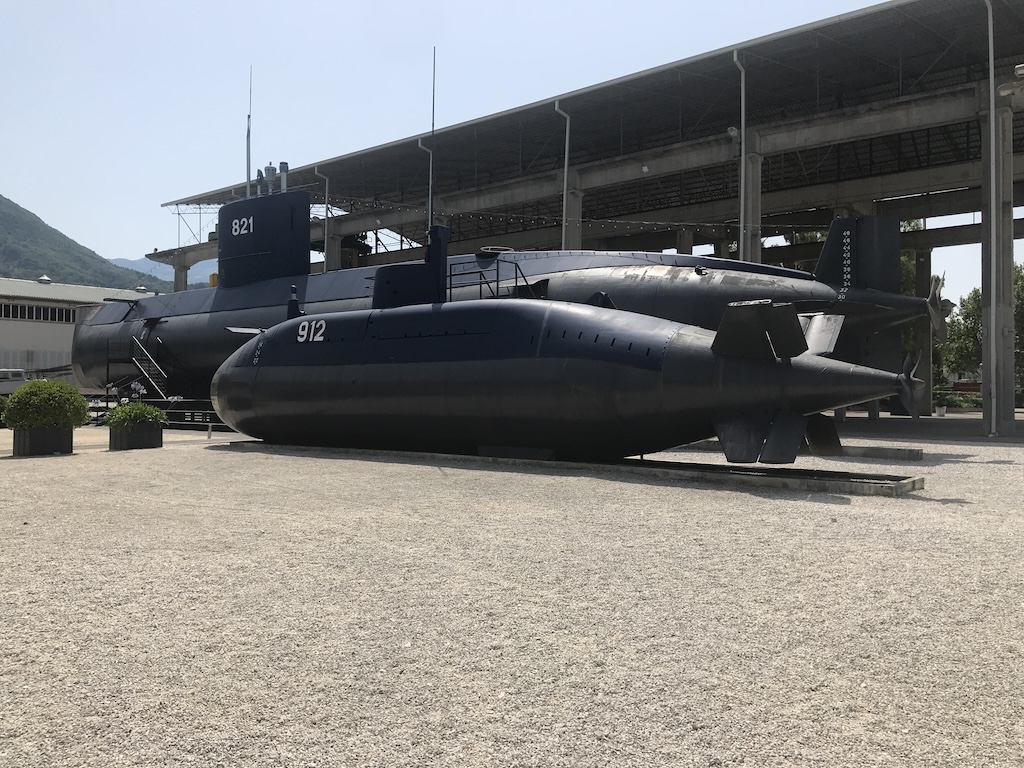
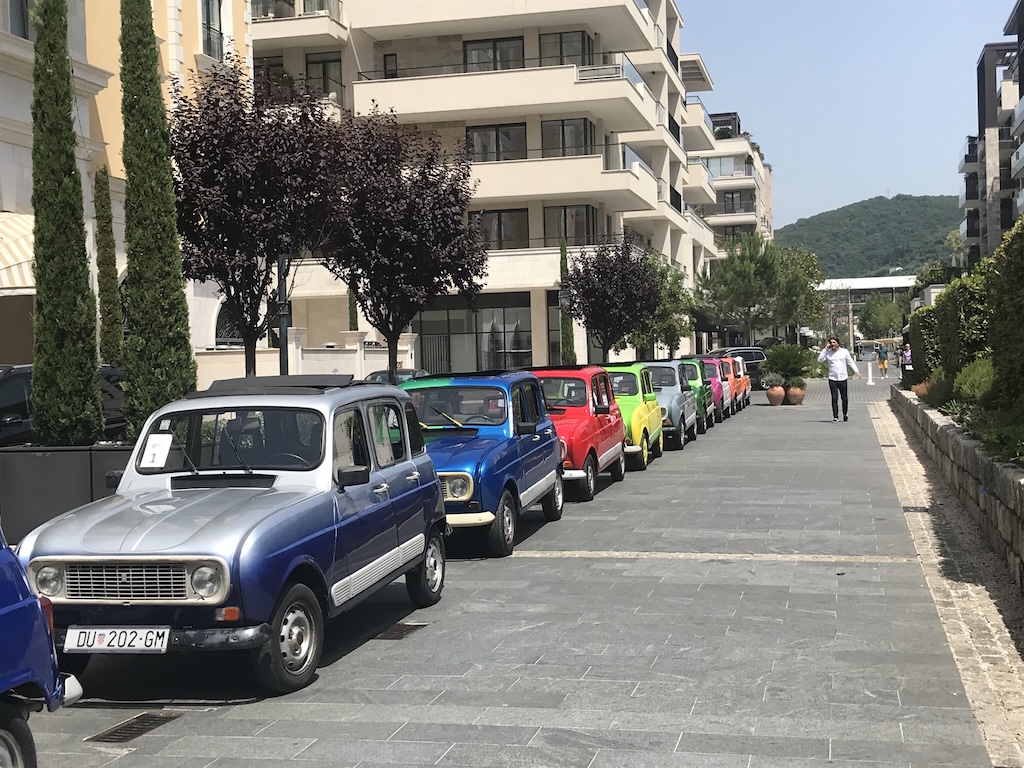
Two days later we made the 16 nautical mile passage north and entered the Bay of Kotor. We were impressed! Gorgeous mountains right down to the water, submarine caves along the foreshore, green trees, it was really beautiful. We didn’t head straight for the main town of Kator but for a smaller town in the south eastern arm of the inlet near Tivat (due to winds forecast and looking for a protected anchorage). As we circled around the anchorage looking for a spot to drop the hook we were hailed “Are you Red Roo, the Aussies?” it was a couple of fellow Aussies on their catamaran “Gumtrees” who follow us on social media and were excited to see us. Naturally drinks followed later that evening. Pictured below are some sites from Tivat, including drinks we had one lunch time in town where the soft drink (coke) was more expensive than beer, Phil declared this a great country!

We motored around further into the bay to actually anchor outside the walled town of Kotor. The small journey was visually very beautiful, we passed many small islands in the water only accessible via boat, made entirely of stone and beautifully maintained.
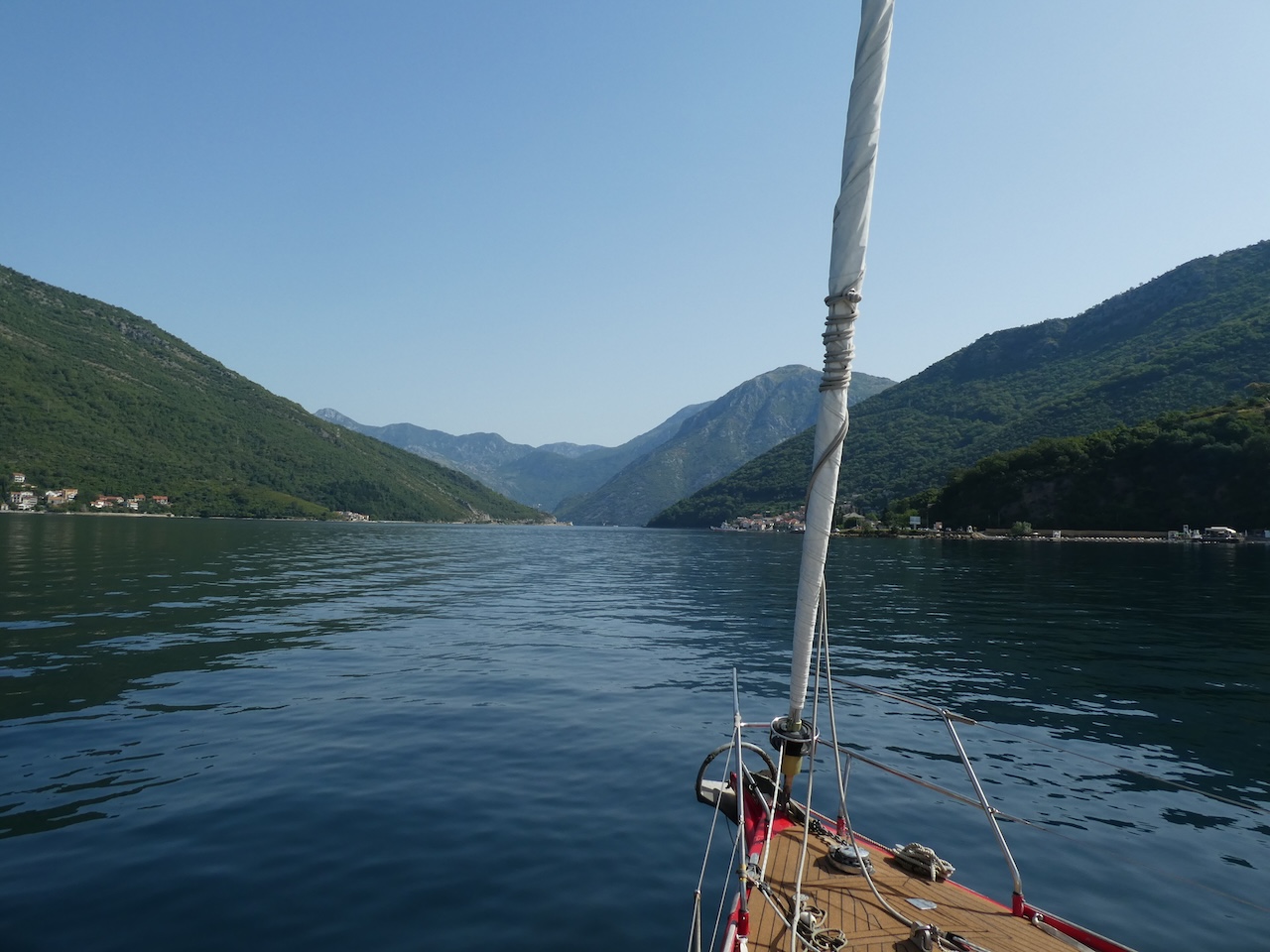
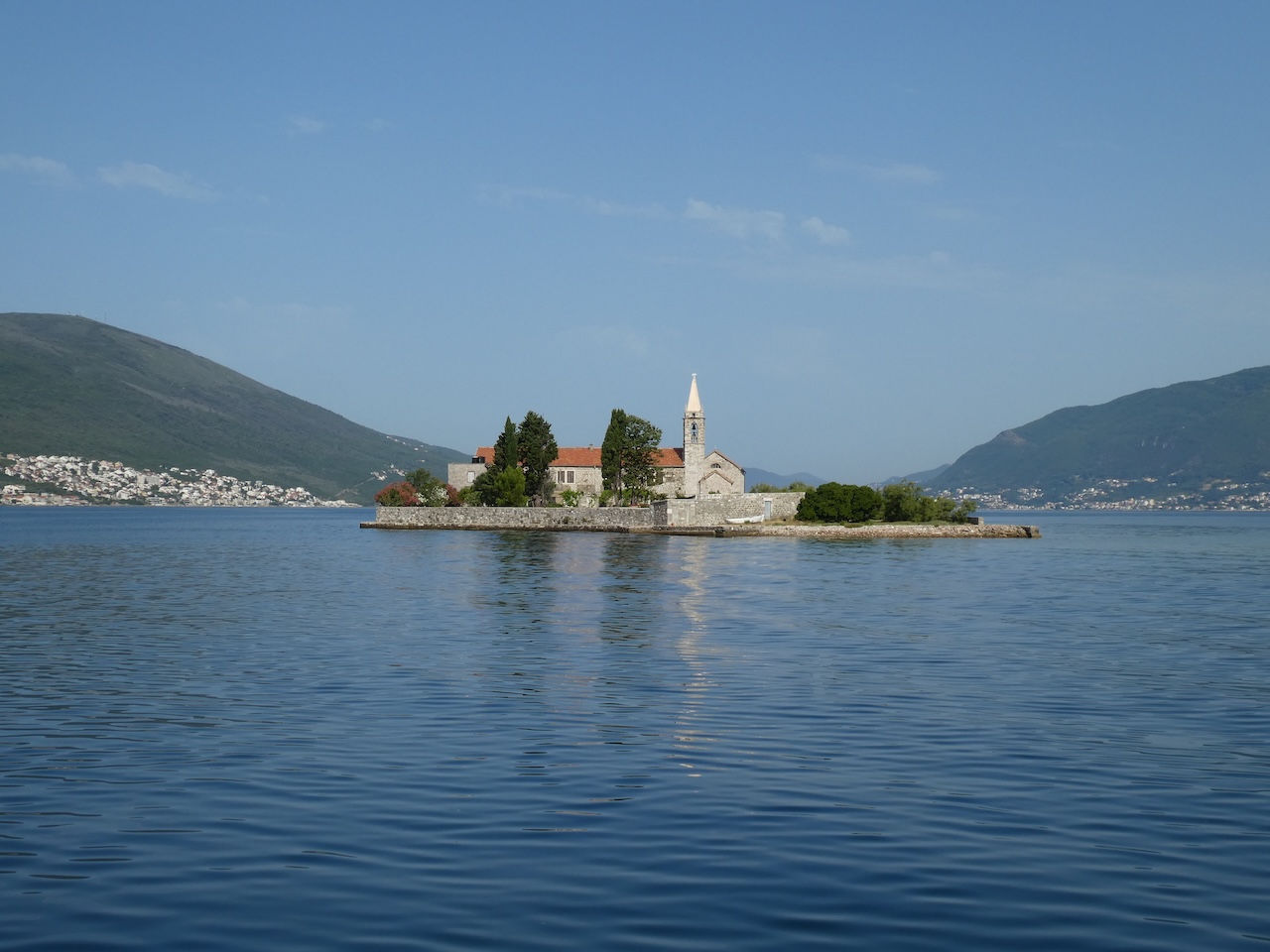
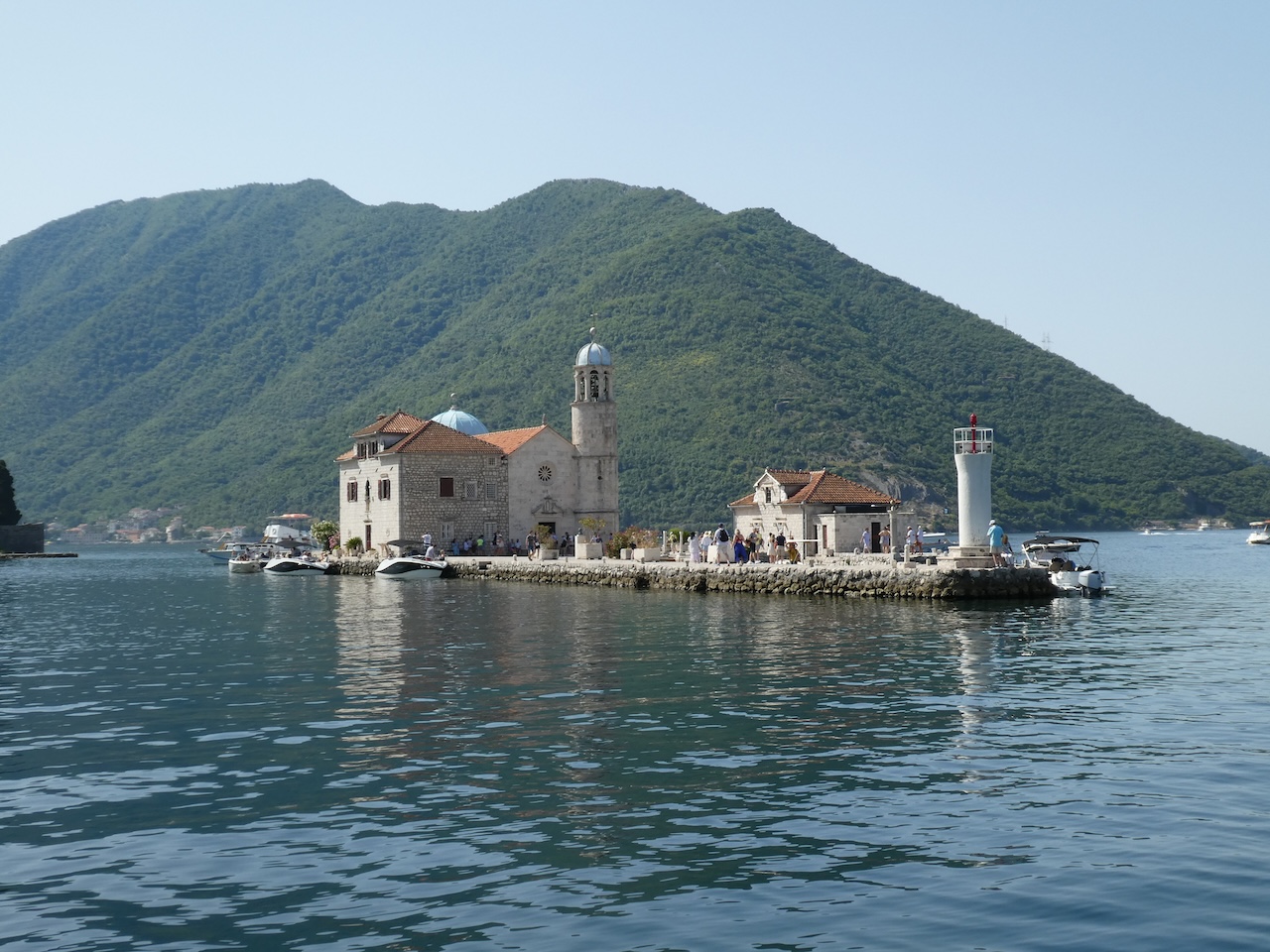


It is really only suitable to anchor right outside Kotor when the wind is quiet as when it blows it creates tremendous katabatibc winds due to the steep hills surrounding the anchorage which funnel down the huge mountains creating havoc in the anchorage. Kotor is the main tourist town in the whole area, a gorgeous bay surrounded a small ancient walled village right on the water which immediately goes up into the steep green hills.


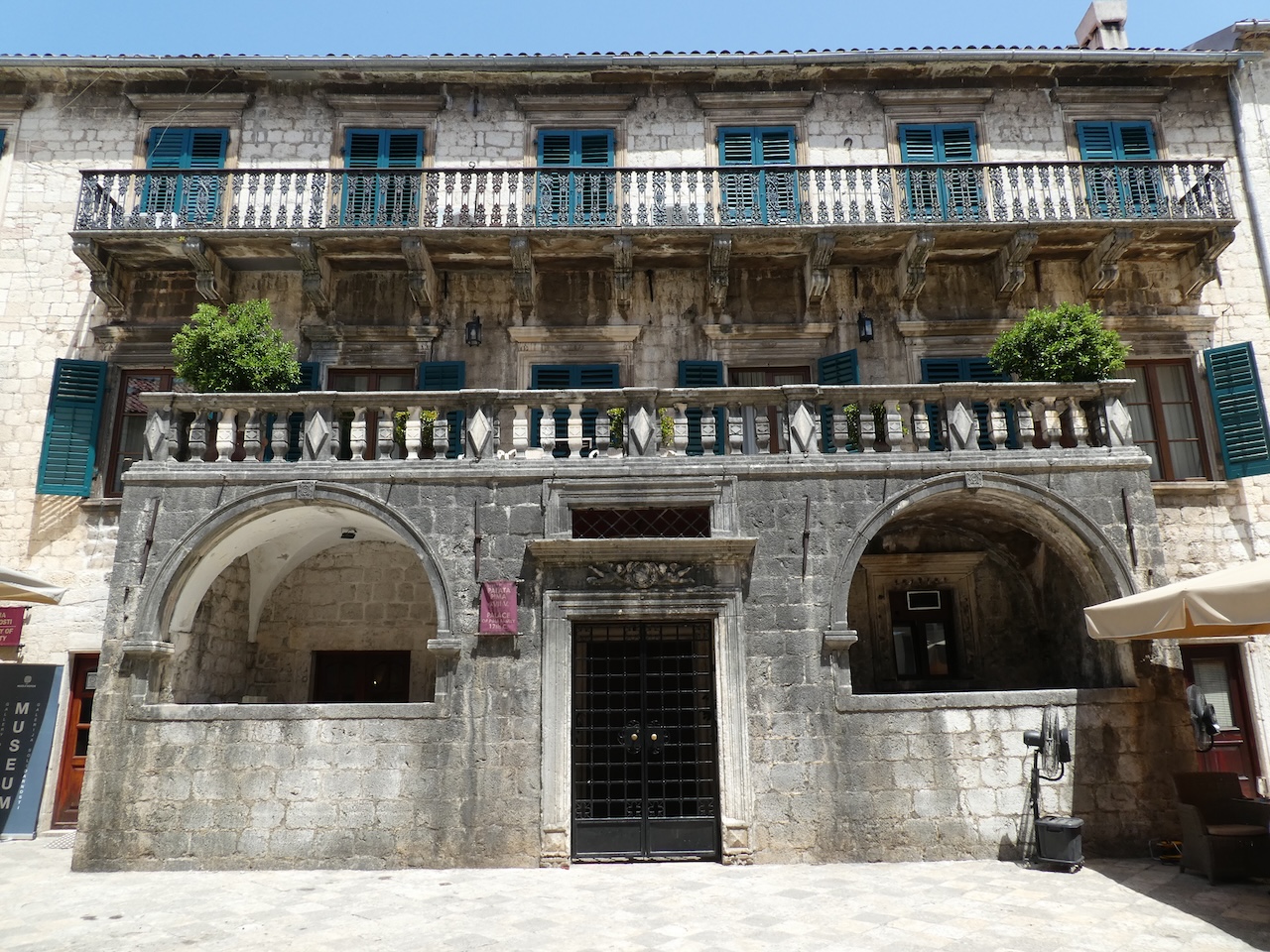
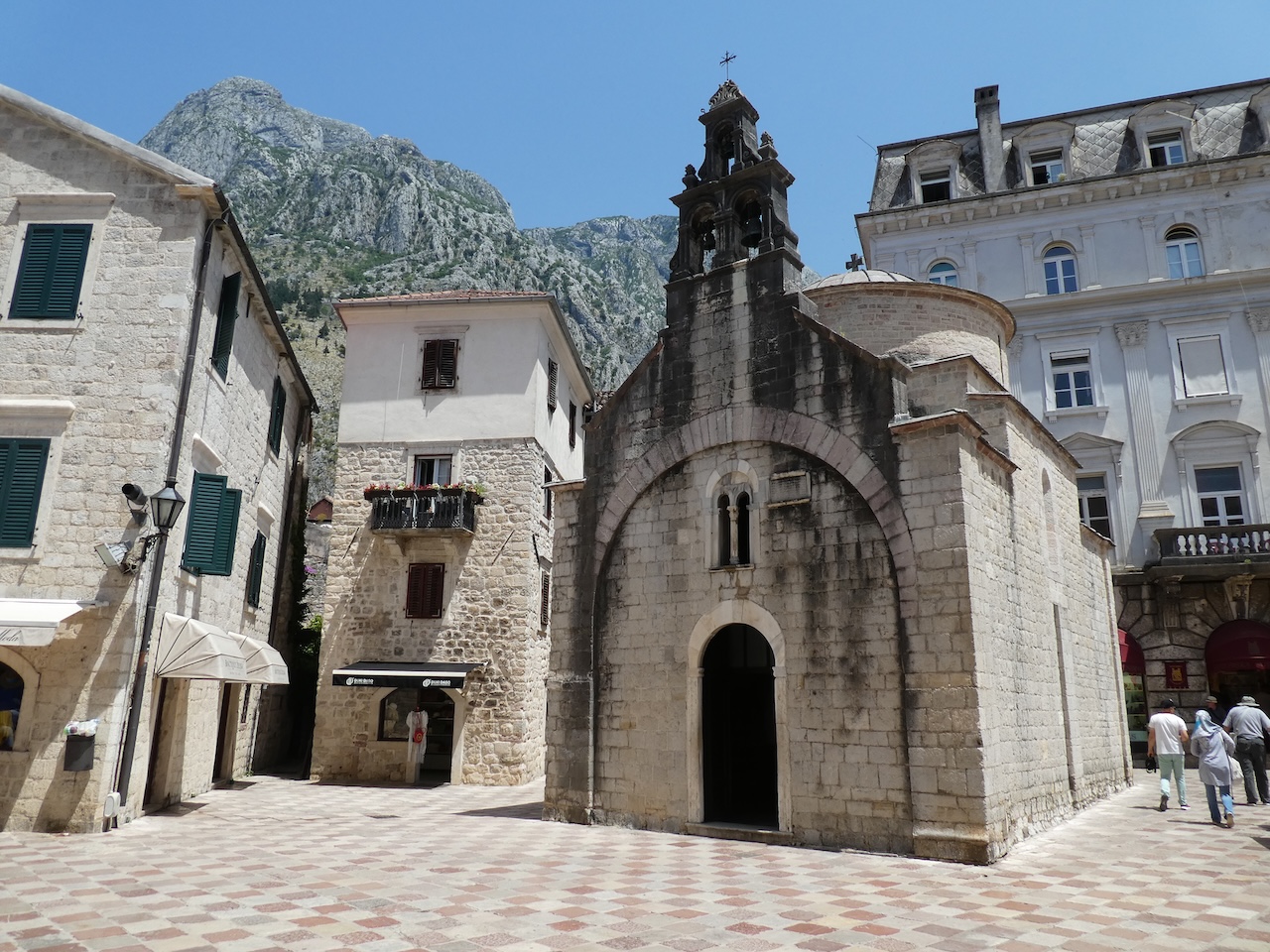
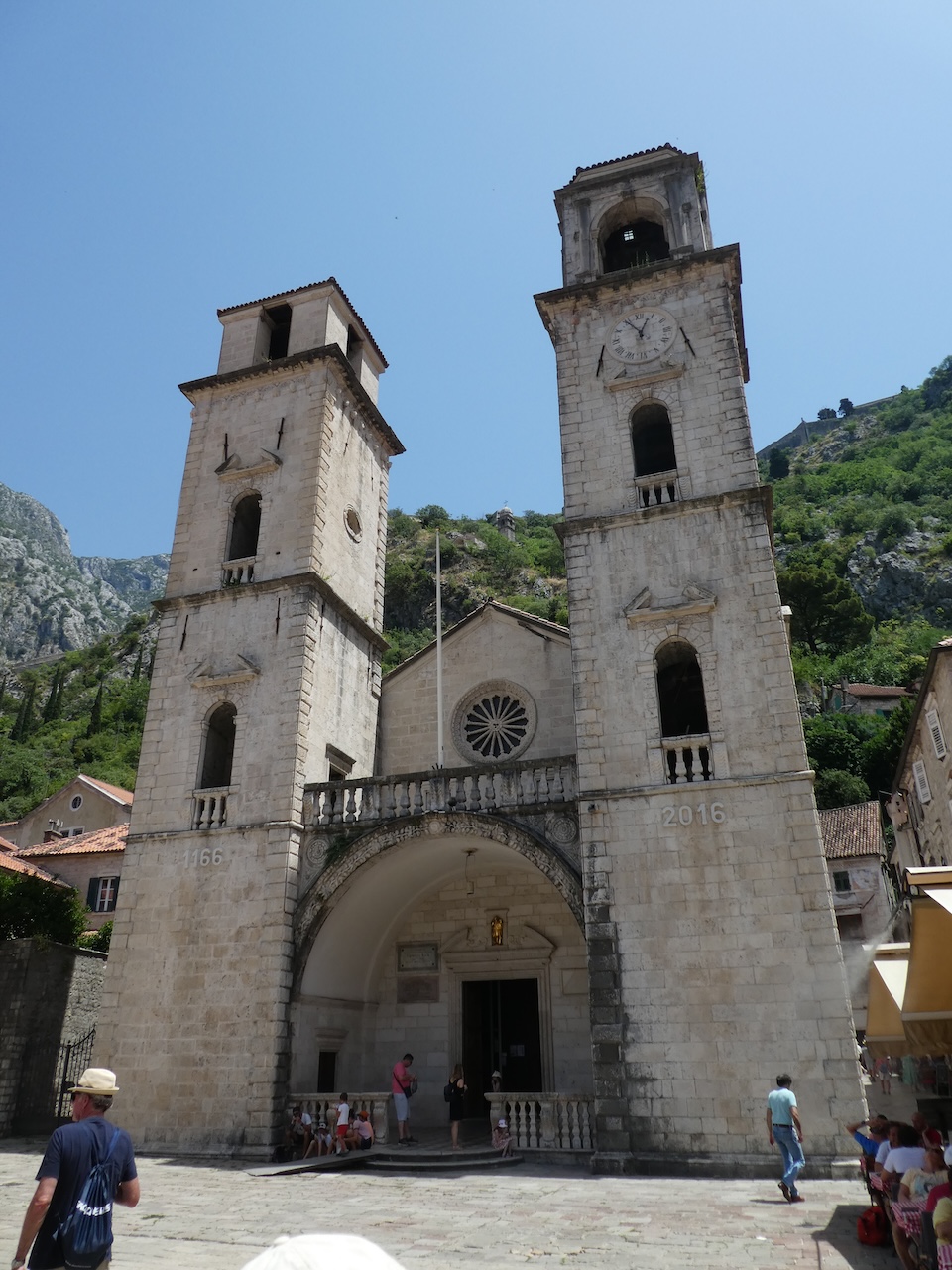
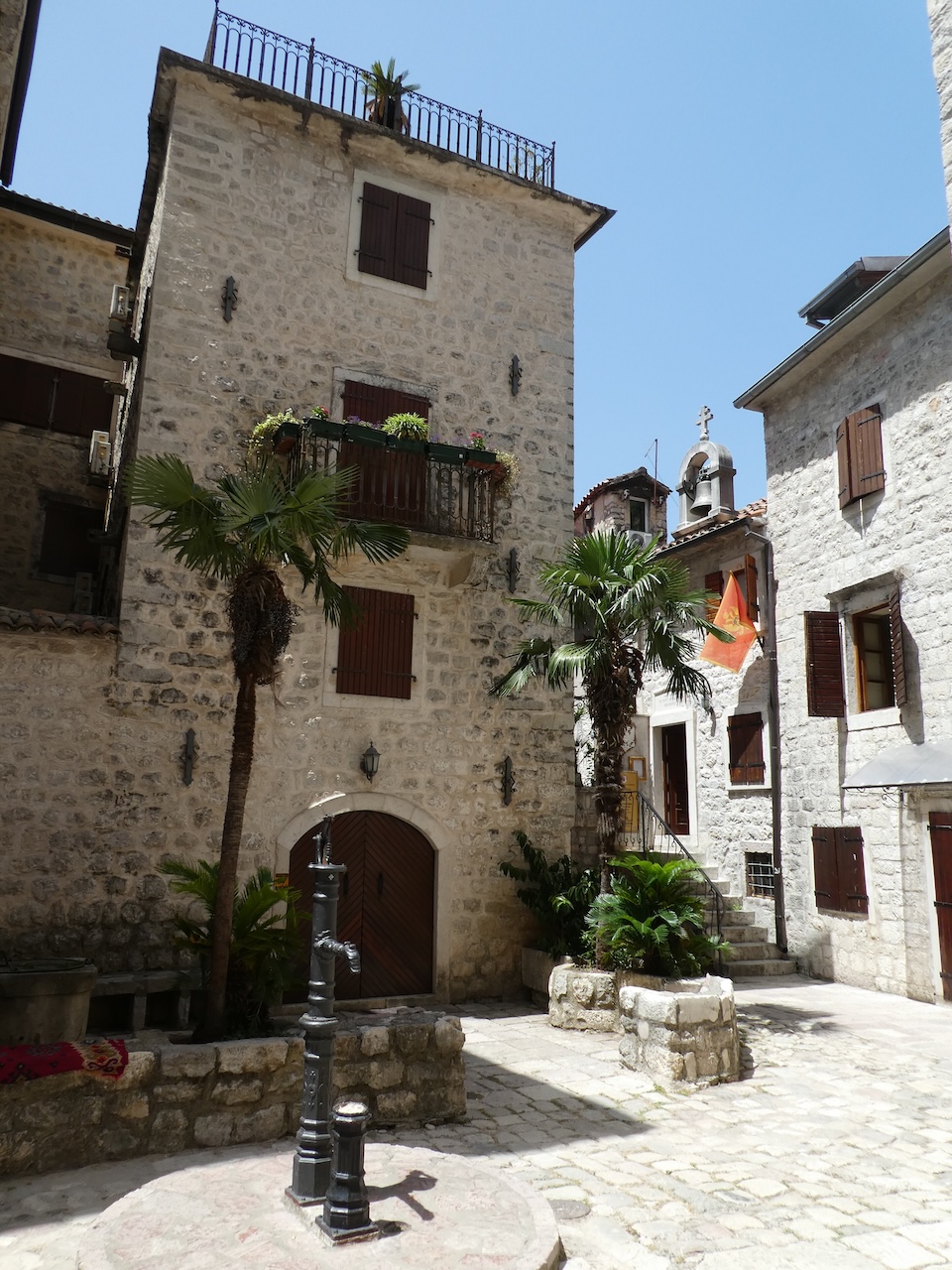
We were in for a few days of no wind, so set the anchor and caught up with fellow Aussies Debi & Jono off “Taka Oa” who we met in southern Greece and had arrived the day before. They had done the research and had arranged an inland trip the following day with a car and driver, did we want to join them “yes, please”.

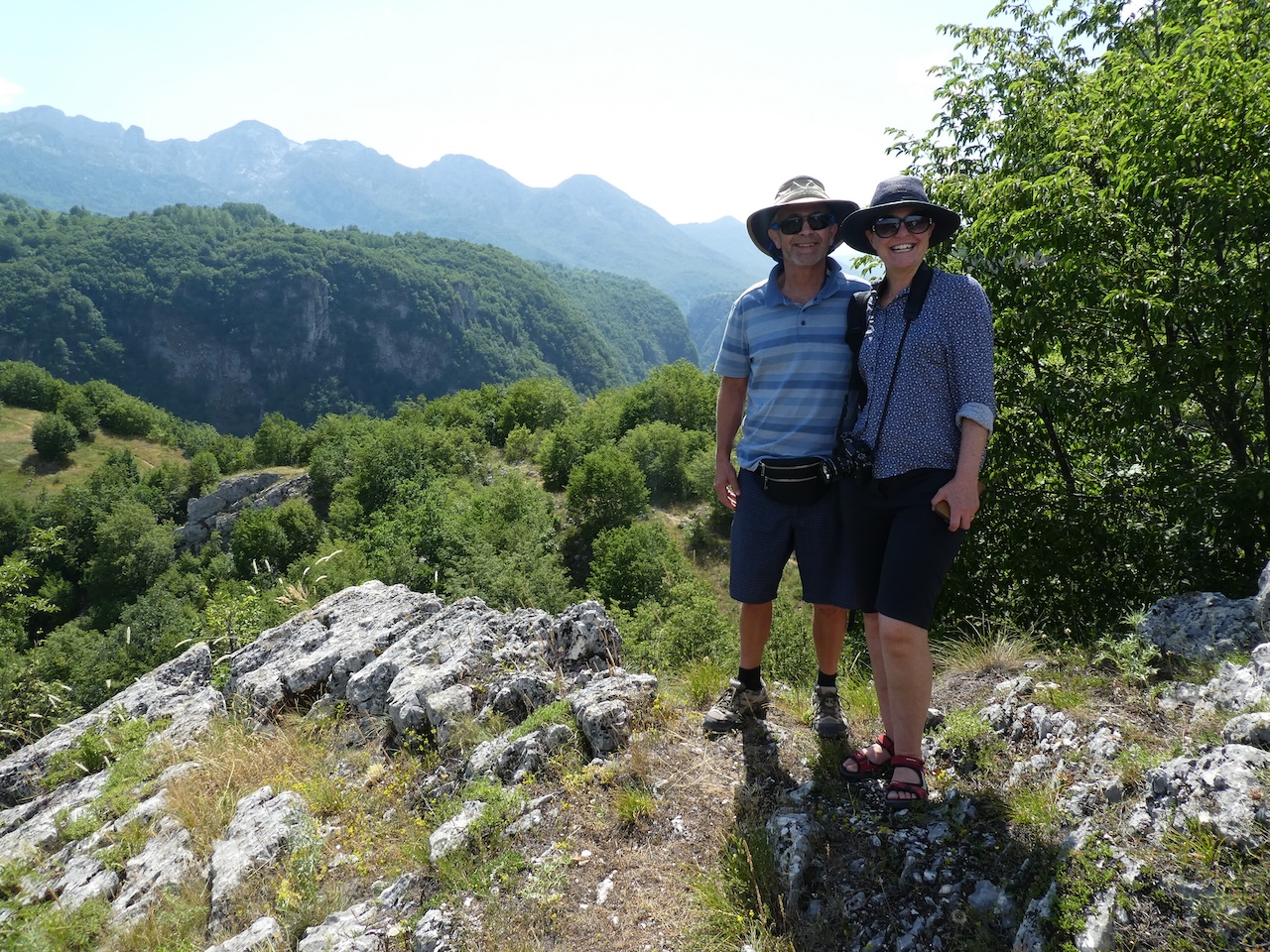

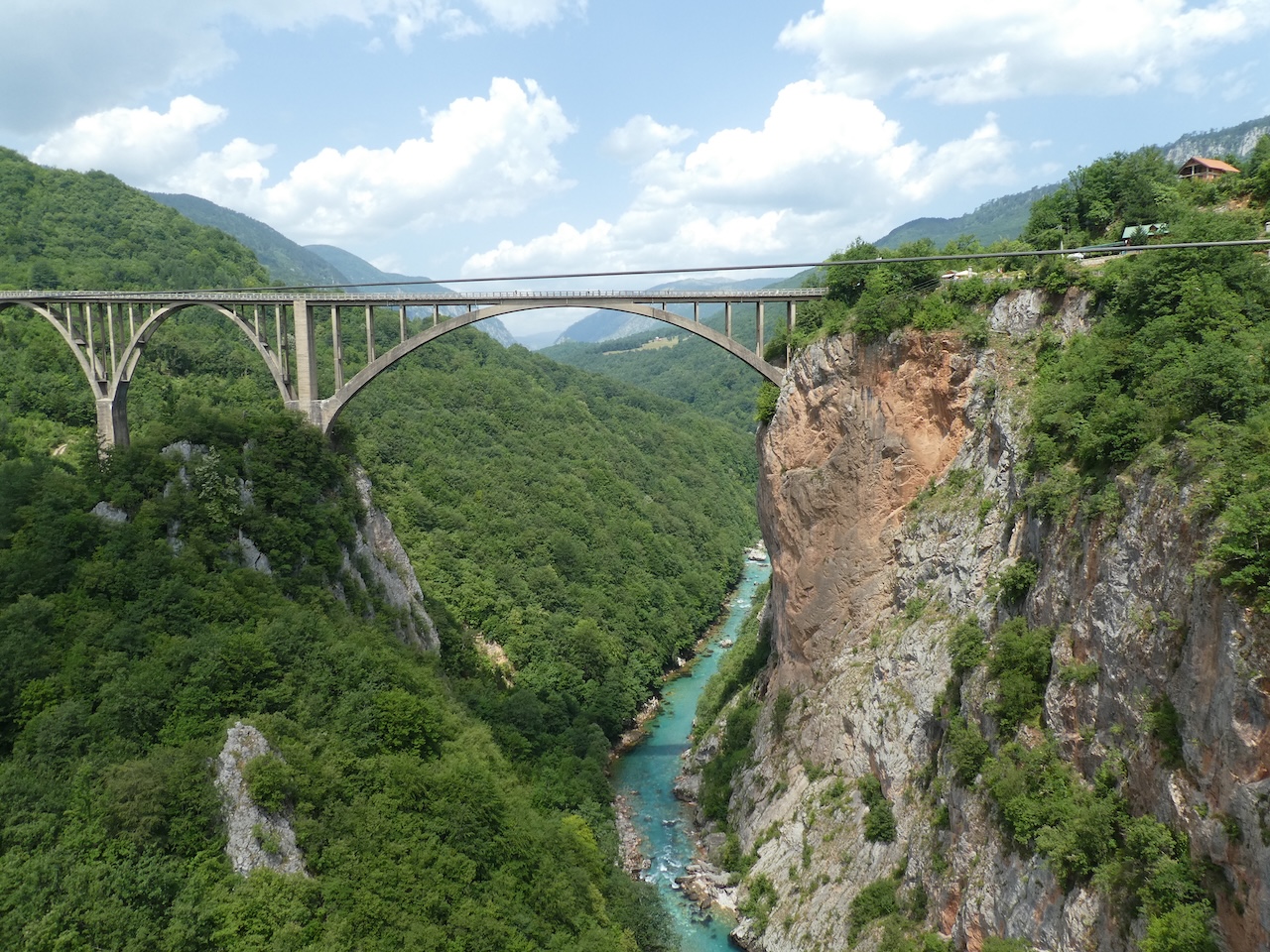
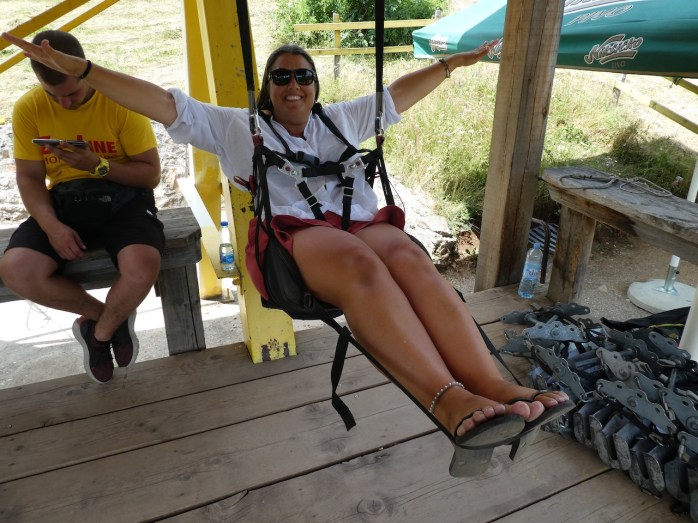
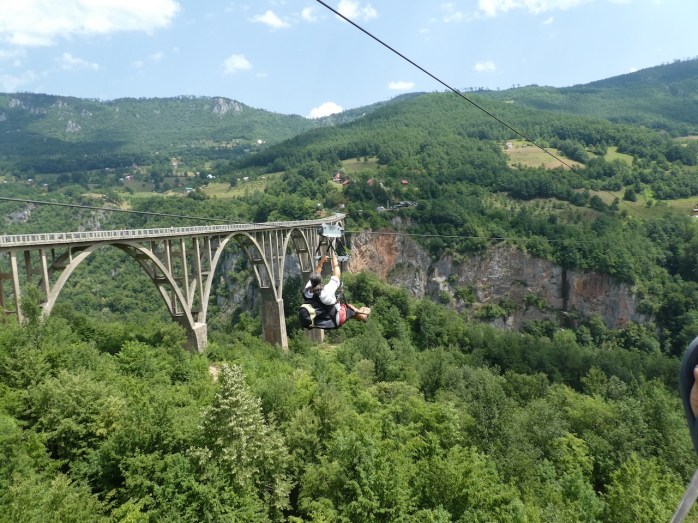
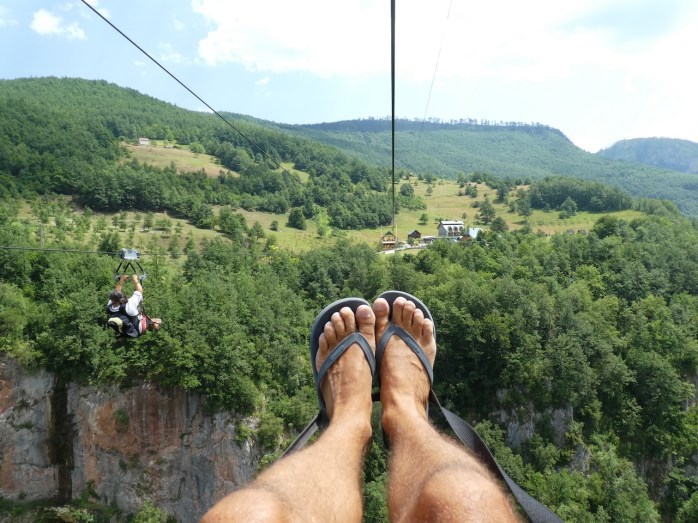
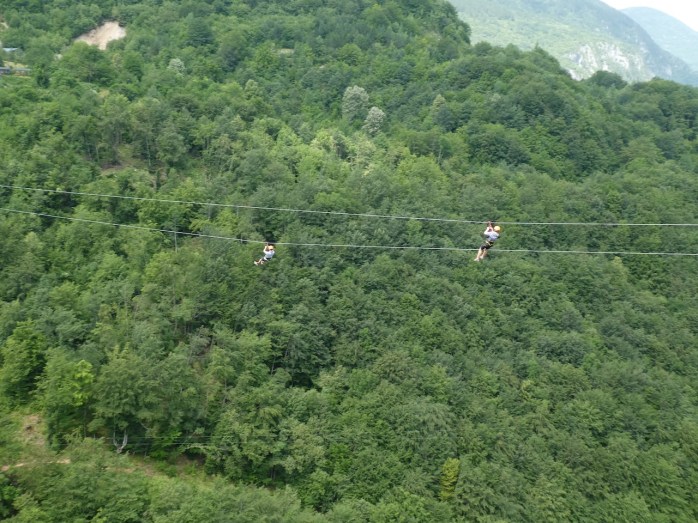
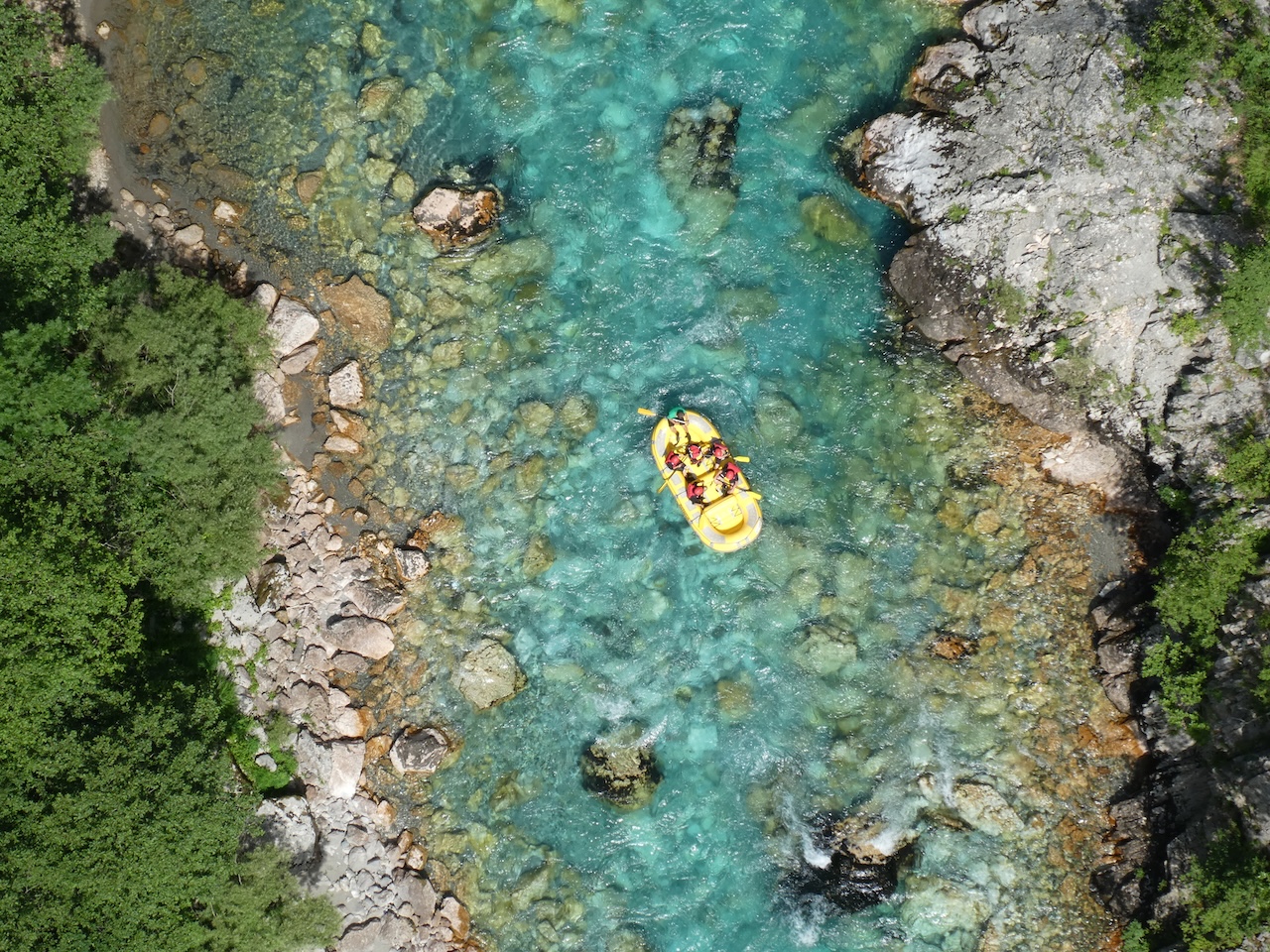
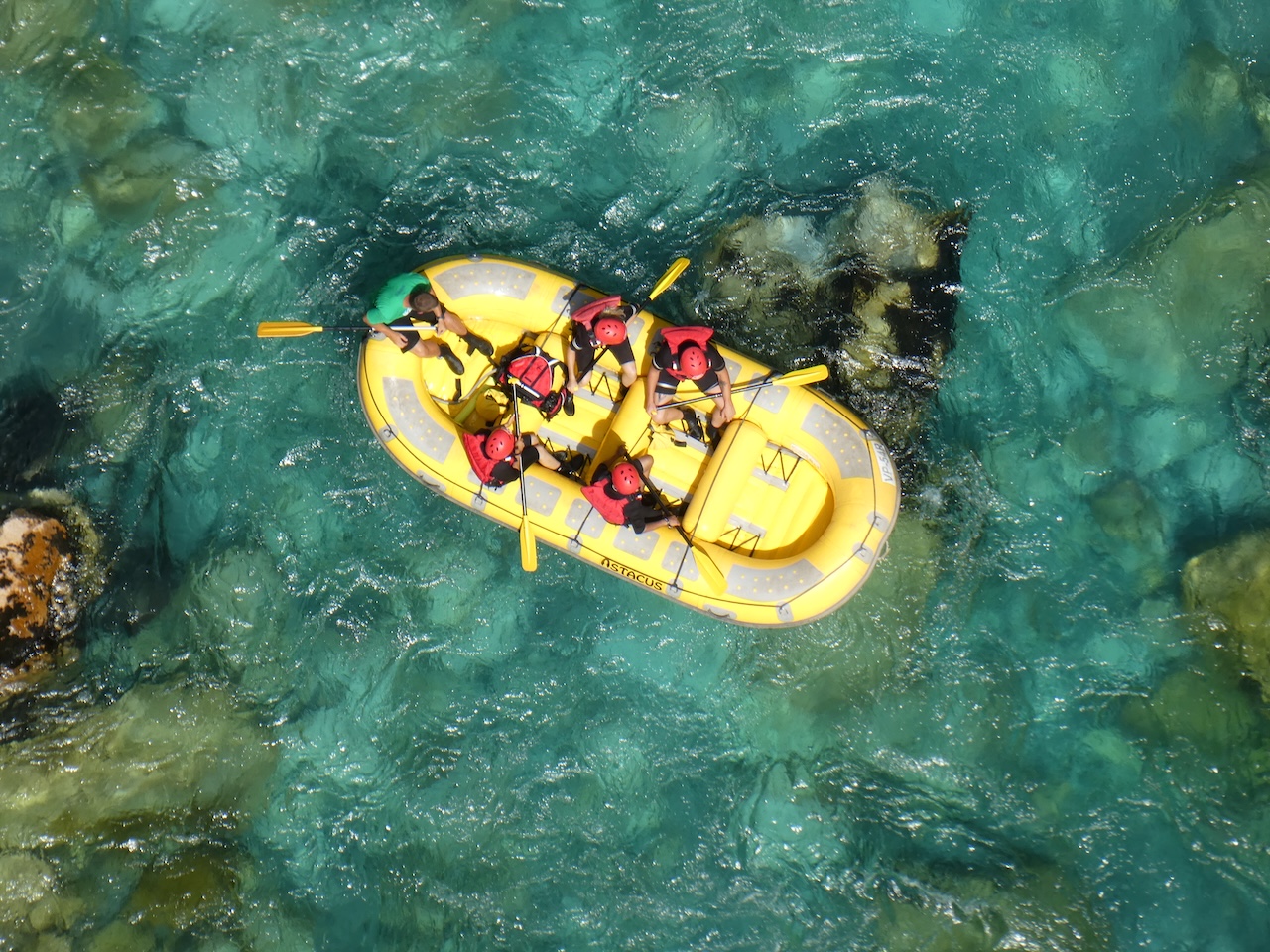
We climbed up and out of the ditch between the mountains and across some highlands before going both up and down, around and around again (glad I wasn’t driving) and eventually arrived at Tara River Canyon – the largest and deepest canyon in Europe. Google tells us the canyon is 1333 meters deep. Simply breathtaking, a huge beautiful bridge crosses the expanse along with numerous zip lines whilst white water rafting goes on below, and greenery fills in all the gaps. All four of us zip lined across the valley. Video Below.
What fun that was! 1.5 km of zipline, 1.3 km drop to the river/canyon floor travelling between 80-120 km/ph. Phil took some great pictures (featuring his feet, and I am pleased to report no thongs were lost).

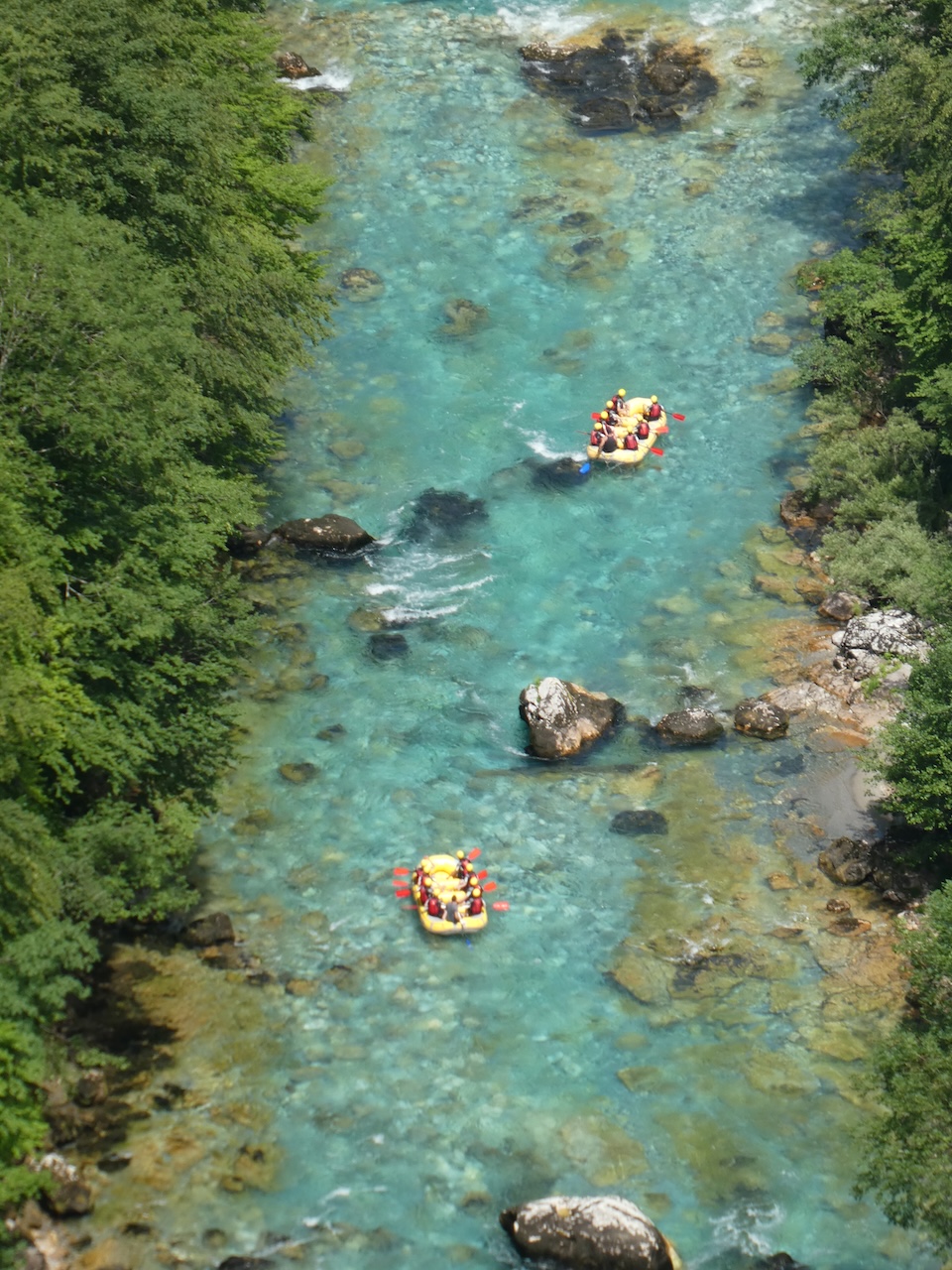
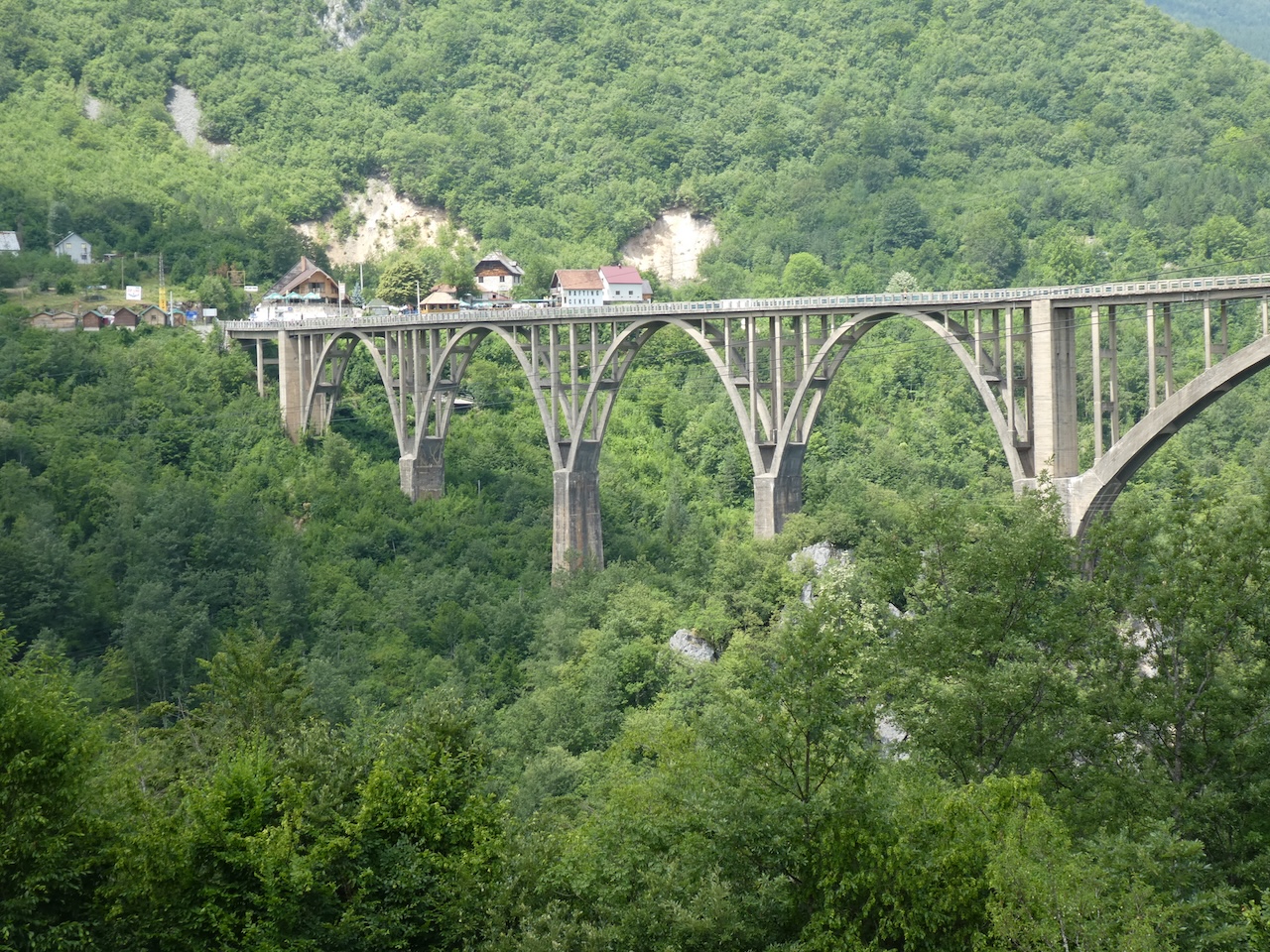
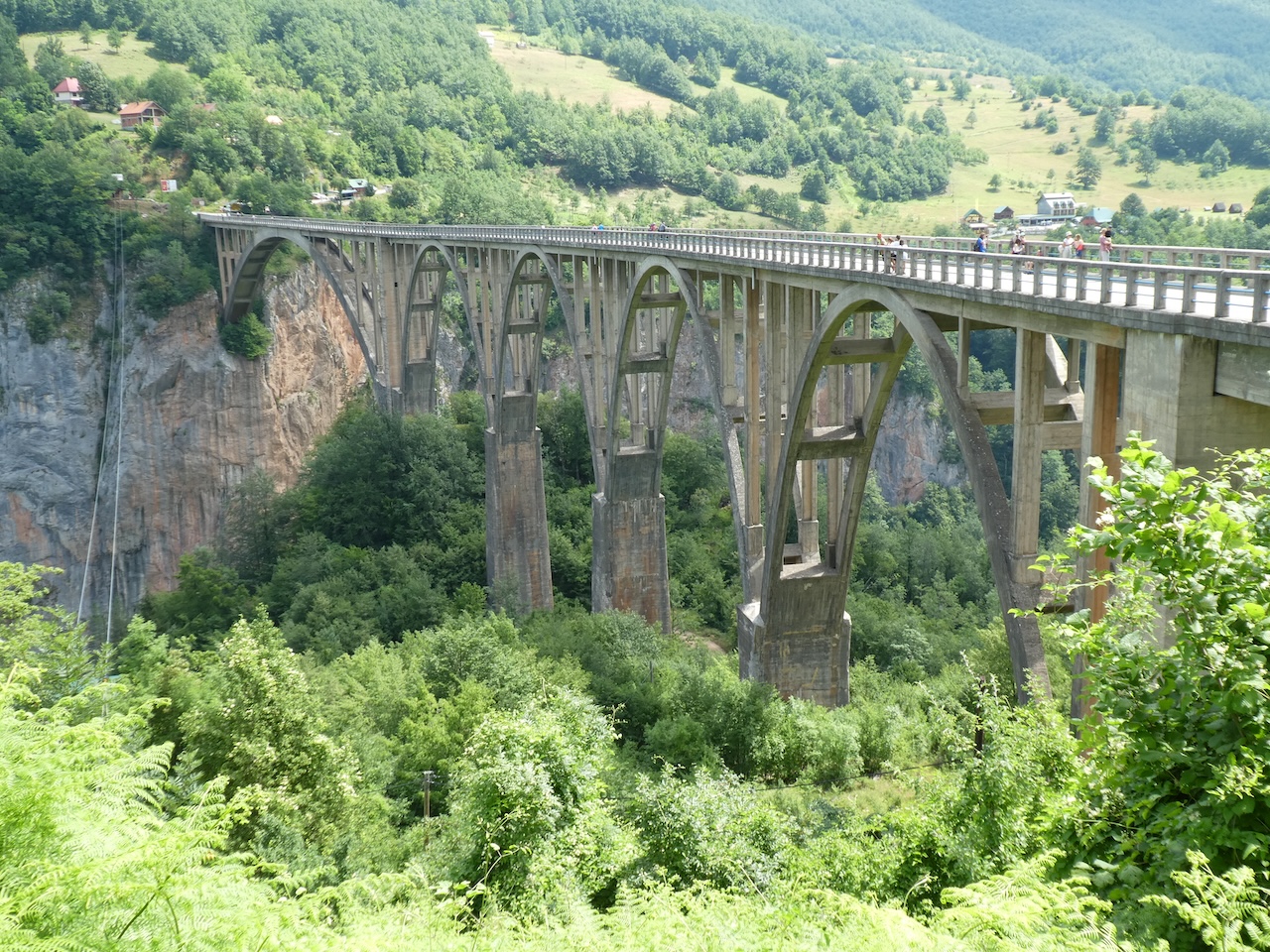
Next stop was Black Lake. The Black Lake is the largest of Durmitor National Park’s glacial lakes, known as ‘mountain eyes’. It sits at the bottom of Međed Peak and was formed by glacier action in the Pleistocene era. The setting was again so beautiful and calming – it just felt really nice to be there. Beautiful walks along the lake, trees, water, birds, this world is a beautiful place.

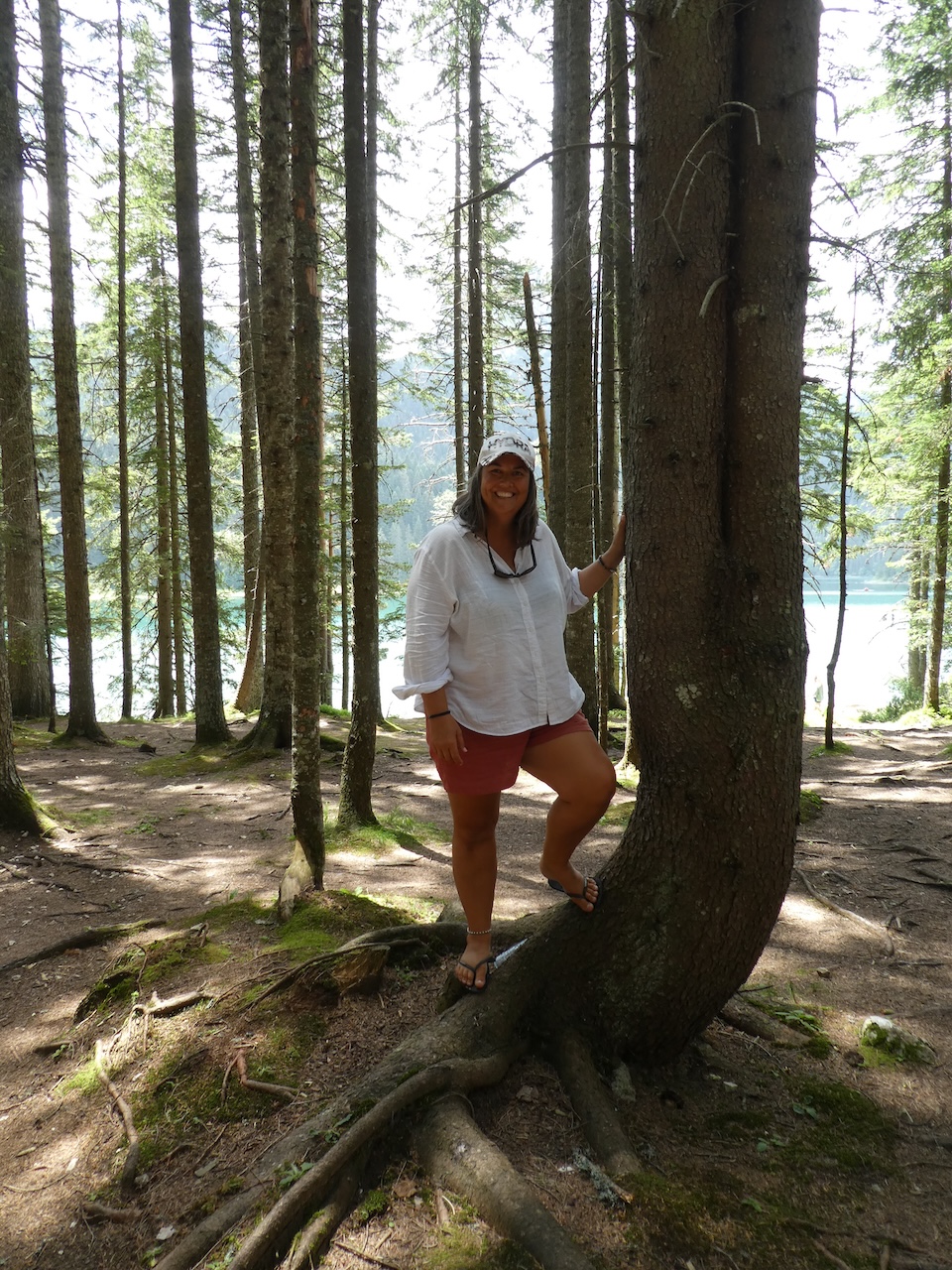
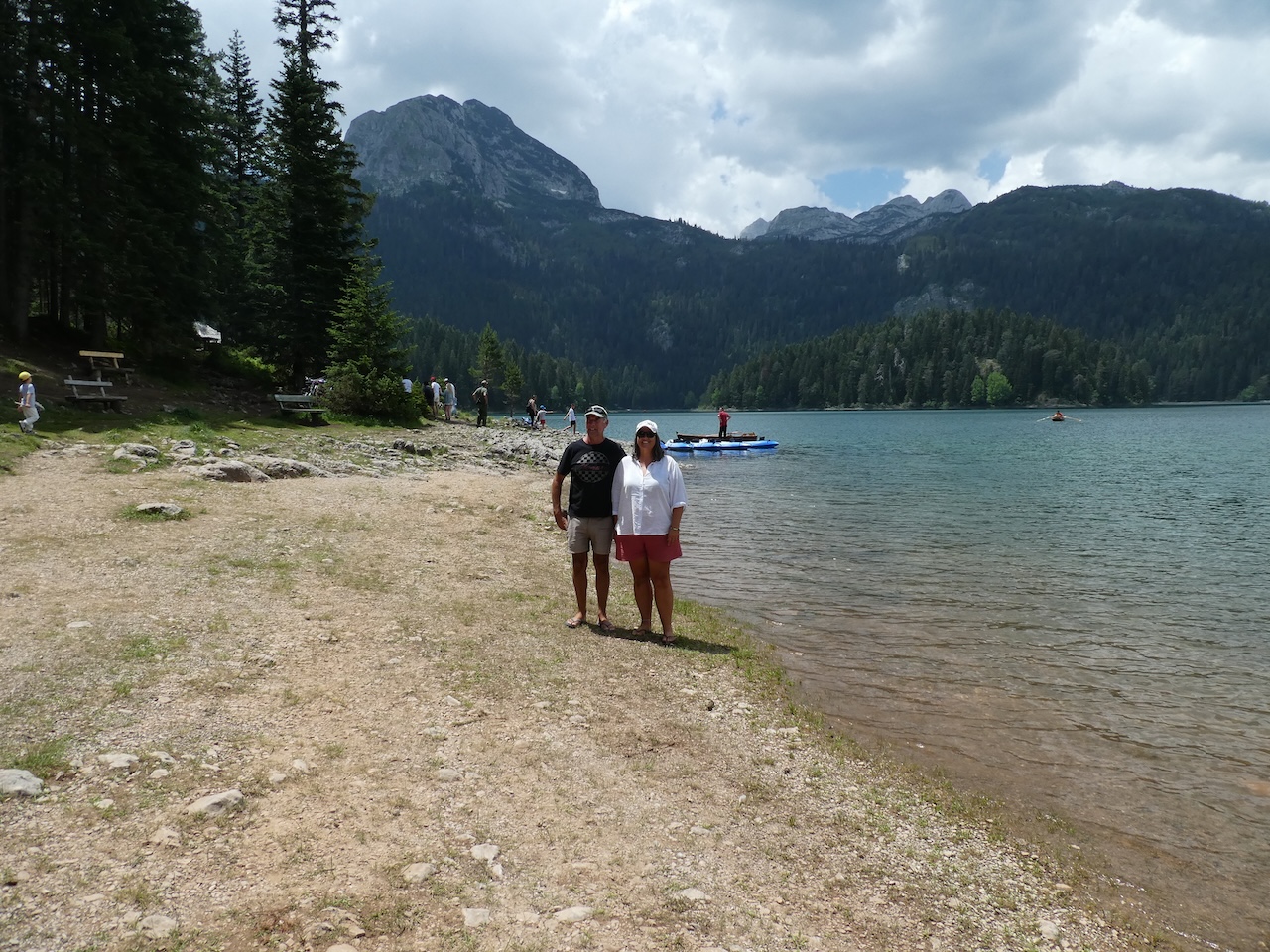
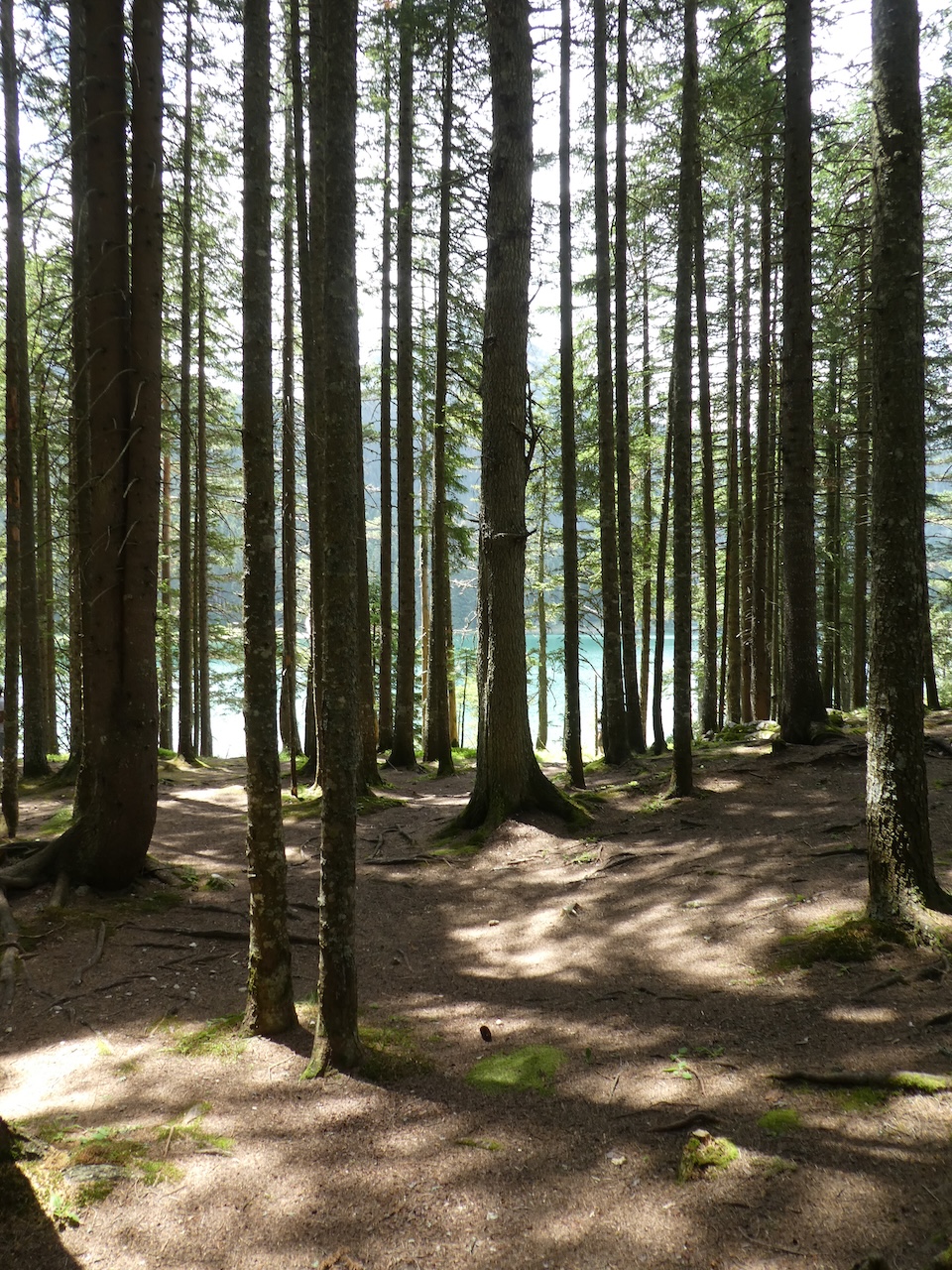
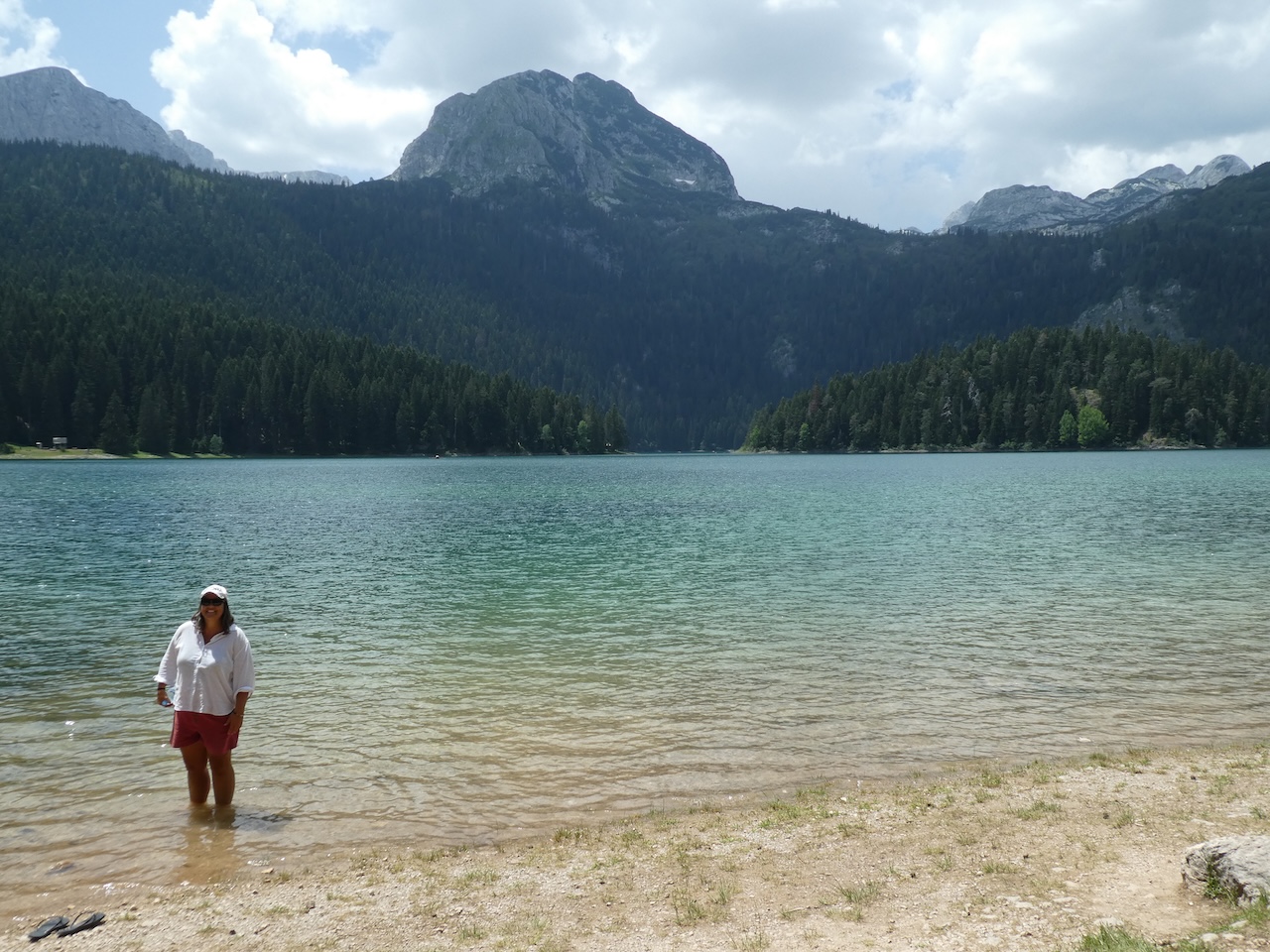


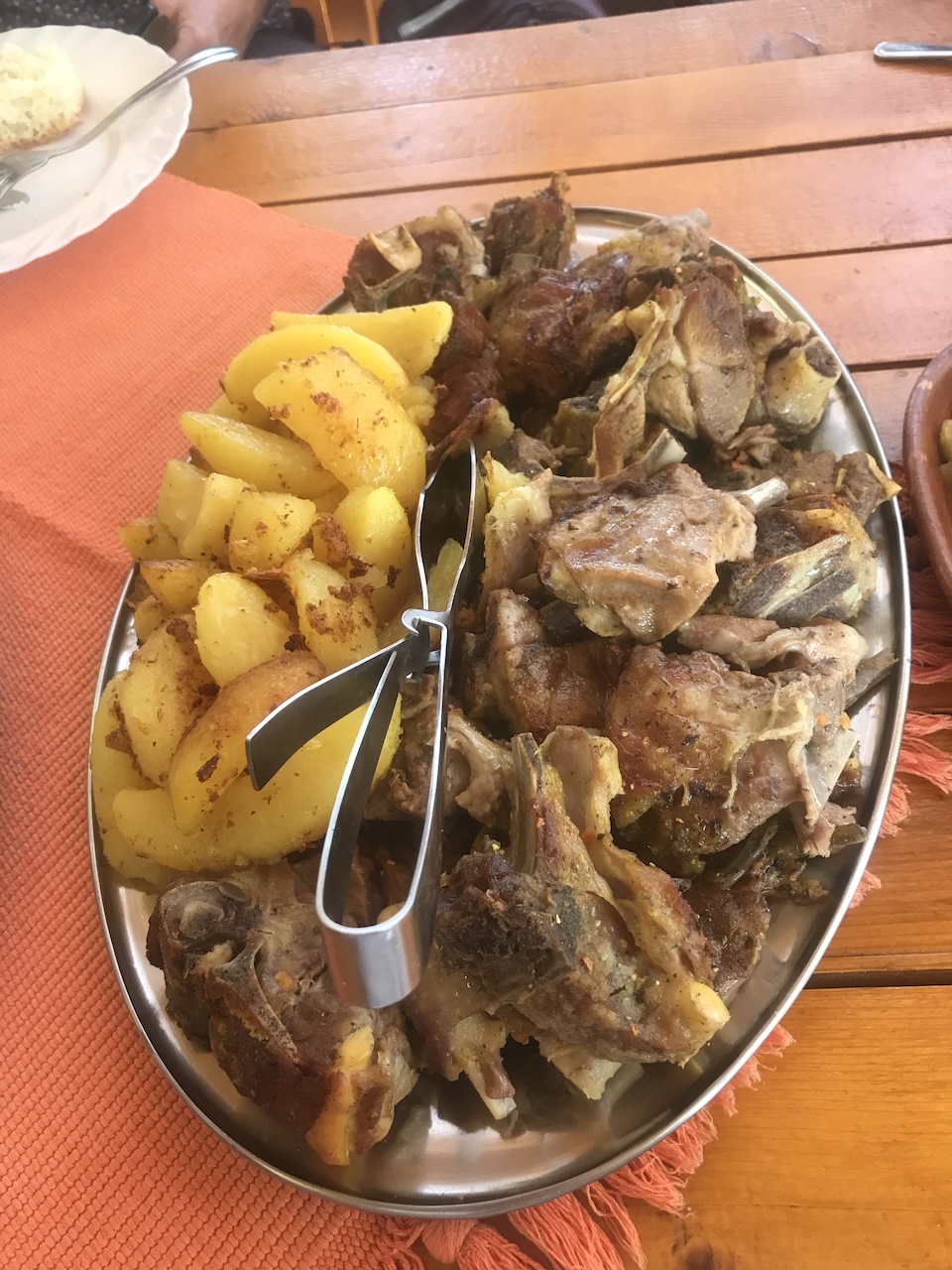
After the lake we stopped nearby for a traditional Montenegro meal for lunch. We tasted a variety of homemade milk cheeses as well as dried meat that they smoke for 4 months!! Our main dish was lamb and vegetables done in a special cylinder dish over charcoal – delicious.


The drive back was less than easy as our driver was tired and his eyes taking long blinks, we stopped, we offered to drive, and then I just constantly chatted with him asking him question after question – I was less than impressed.
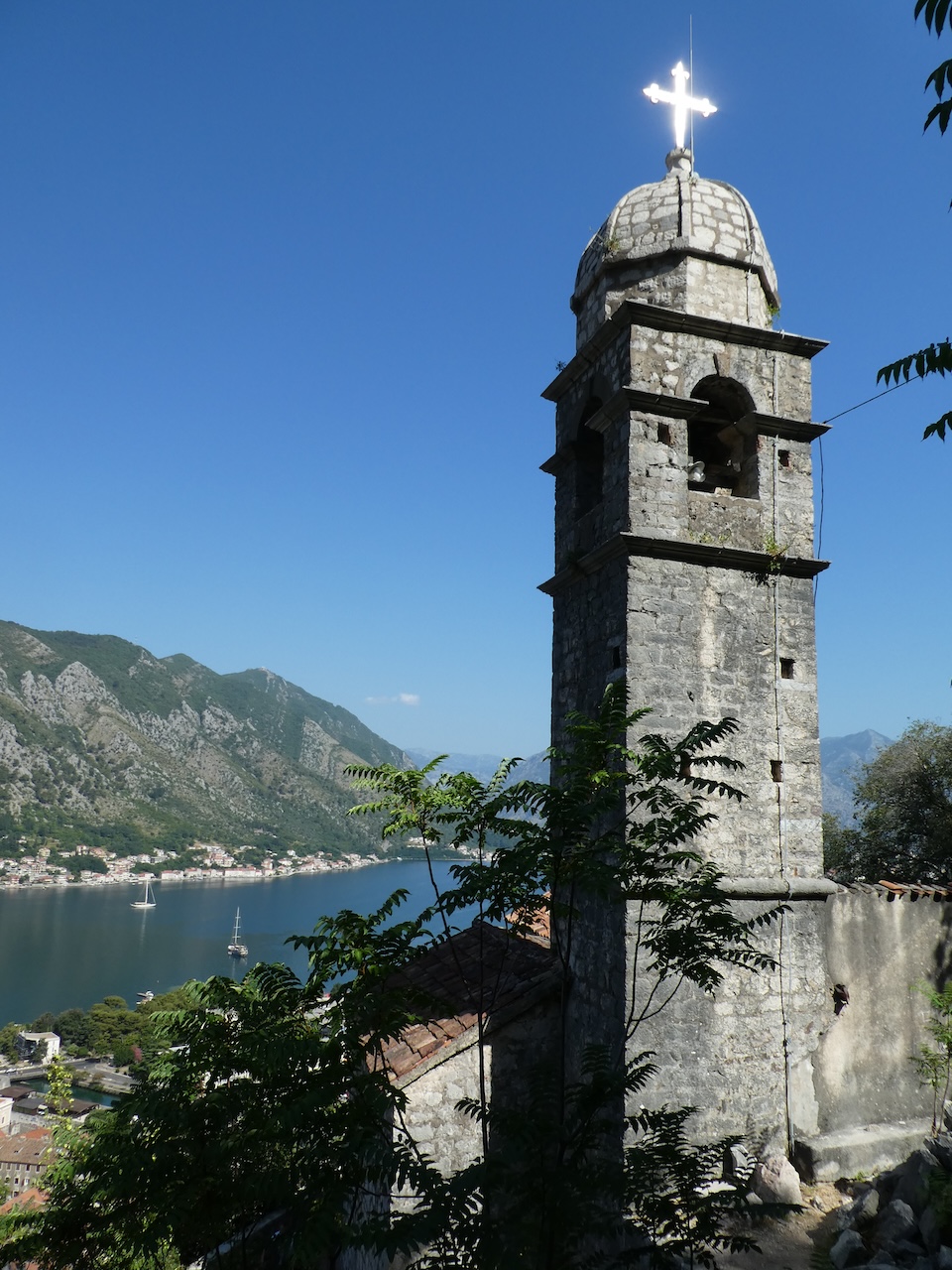
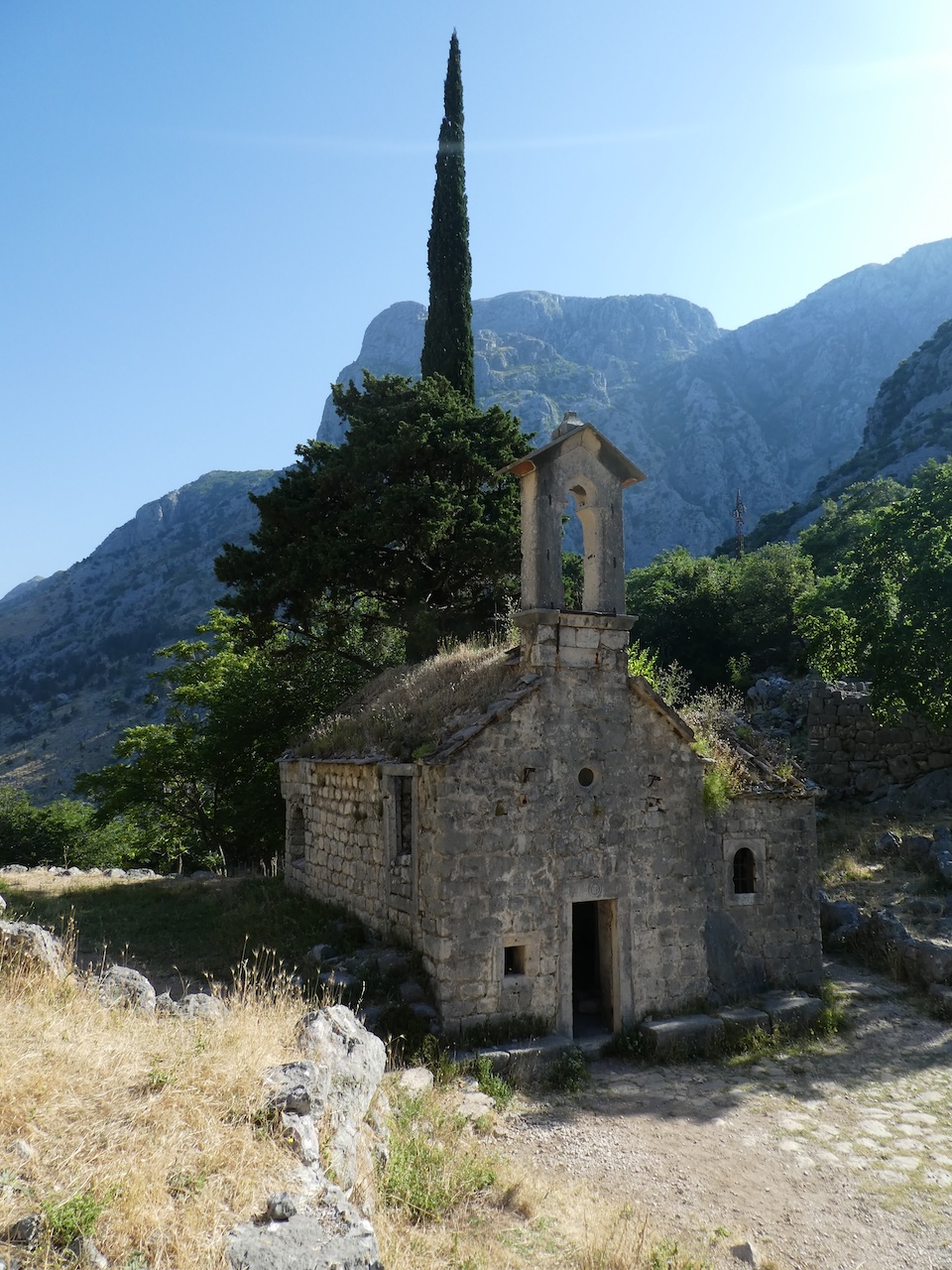
Kotor Old Town was beautiful as was the view from the top of the town, Phil walked up the steps to visit the church and take the photo.

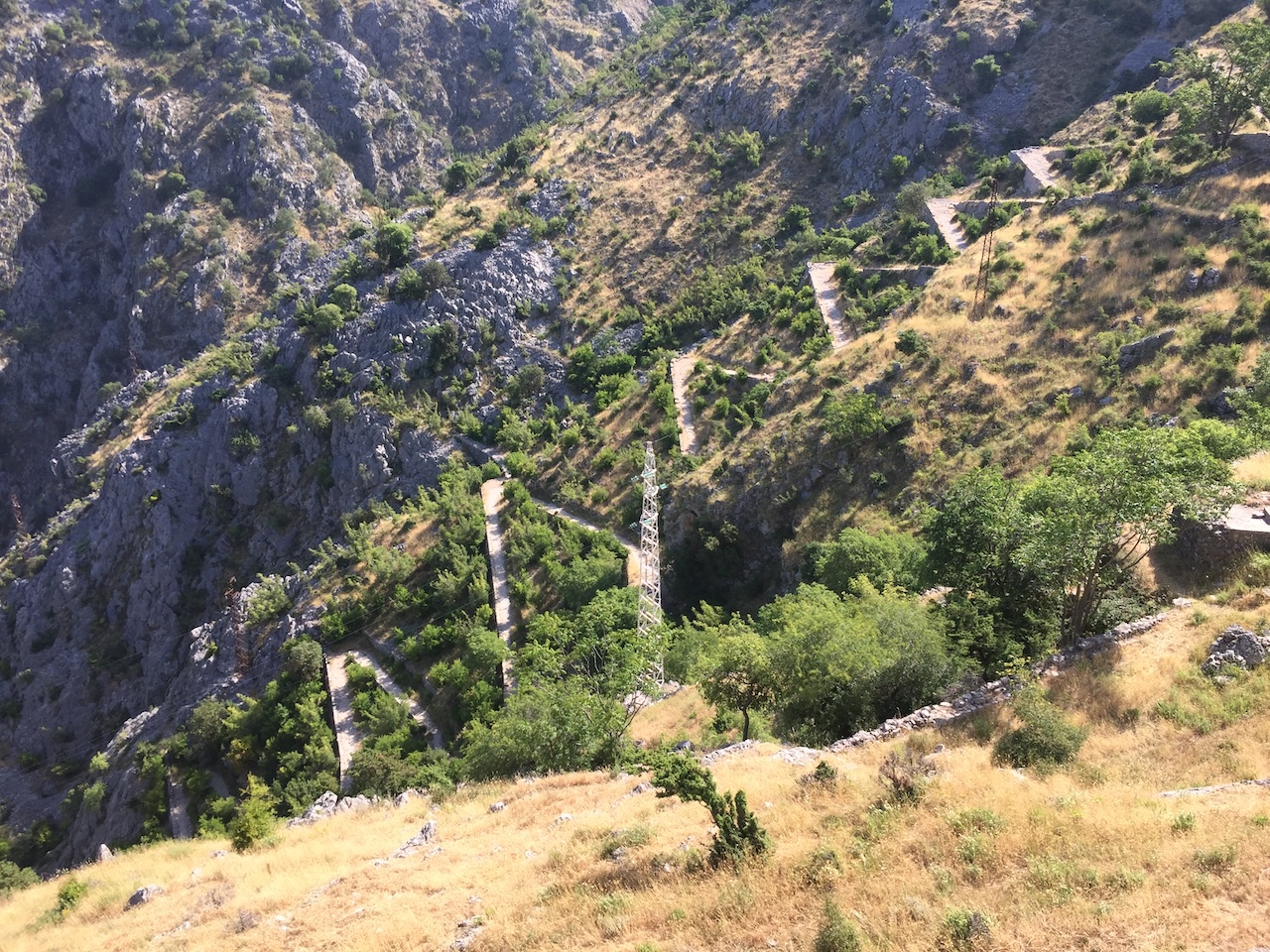

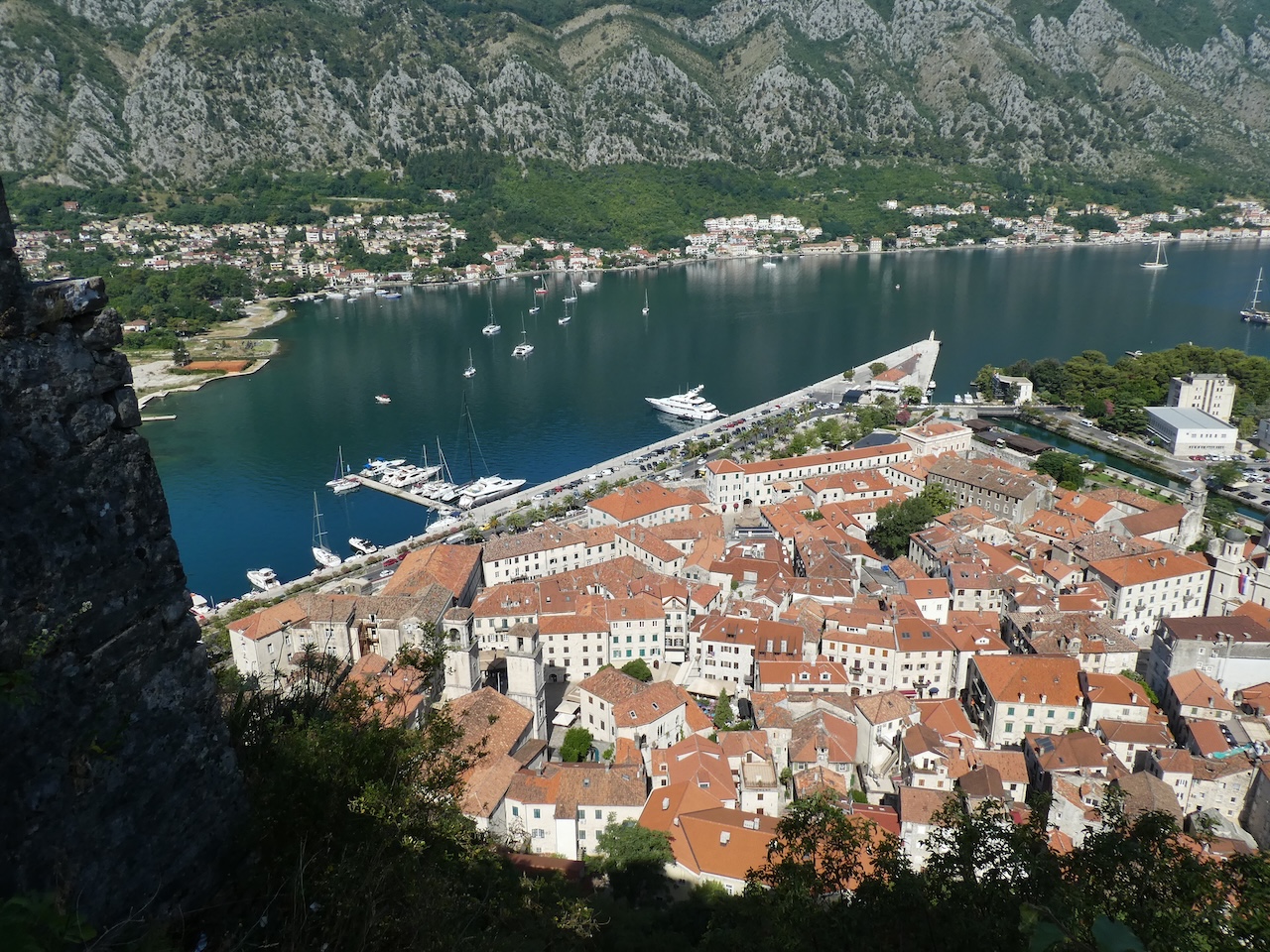
It was time to make plans to leave Montenegro for Croatia, but looking at the weather there were strong Bora winds blowing in Croatia, so the decision was made to wait back at ‘Gumnuts’ anchorage until they finished before leaving (we named the anchorage gumnuts after the Aussie boat Gumtrees who had been anchored there for nearly 3 months). We ended up here for a week, with a couple of nights of stronger winds but very mild and very safe compared to other places. We enjoyed another catch up with the Gumtrees and another Aussie boat Craig & Zena on “SV Adriana I”. The week passed quickly with both Jono and Debbi and Kevin and Dee anchored there as well.
Next stop Croatia!
9 Days & 155 Nautical Miles in Albania

We could see Albania from our final anchorage at Corfu in Greece and it took us just over 3 hours to arrive. Albania is country number 24 on the great adventures aboard Red Roo. We called the Sarandë Harbour Master on the VHF and were given permission to anchor in the bay and instructed to contact our agent to arrange the formalities of checking into the country.


After dropping anchor and securing the boat, our agent met us at the dinghy dock and took care of all formalities for us, all we had to do was pay her! We didn’t even have to show our faces at customs, our agent took our passports and returned them to us with an Albanian entry stamp in them. So Easy.
We took the afternoon to have a casual stroll around our arrival town Sarandë, we changed some money (Euro’s to Lek), got a new internet SIM card and we were all set for Albania.
We didn’t have a set agenda for Albania, it really depended on the weather. It isn’t a huge coastline (155 nautical miles), but it is exposed to any south or west winds, so our plan was to keep an eye on the wind and swell and time so we didn’t end up uncomfortable or exposed at anchor whilst making our way north.
Before arriving we knew very little of Albania. In the last month we had been researching a lot about sailing, customs formalities etc but more generally the country remained a mystery for us to explore.
Size wise Albania is small it is about 340km long and 150km wide (Tasmania is twice the size of Albania). The terrain we witnessed both exploring inland (in the south) and sailing along the coastline is that it is very green and lots of rocky mountains.
Doing some google research I learnt that Mother Theresa was Albanian.
From speaking with locals we learnt that many of them speak perfect English.
The main tourists to the country are Italians, as Italy lies just 80km west across the Adriatic Sea with regular ferry services. The supermarkets & beach front restaurants are also influenced by Italian flavours.
Speaking with our check out agent in the north of the country he told us how Albania is known worldwide (backed up by google) for its religious tolerance. The two main religions are Islam and Christianity, and it is a country which respects all religions. He also told us that the average income for Alabians is around €400 a month, and a good quality rental apartment in a town/city is €300 a month, that doesn’t leave a lot for them to live off.
After checking in we arranged a hire car for the following day to allow us to explore a little inland whilst in the south of the country. We had a great day with some very picturesque scenery and great stops.
First stop was “Blue Eye” a natural water spring near the village of Muzinë. Parts of the clear blue river and springs can be seen to a depth of more than 50 meters. It is the initial water source of the Bistricë river which ends in the Ionian Sea south of Sarandë. The source of the spring is at 152 meters above sea level as has a discharge rate of up to 18,400 l/s. Surprising to us in the summer of 2004 the source temporarily dried up. The photos don’t do the water justice, it was SO CLEAR. We were looking at very deep patches that felt like you could touch the bottom. The other thing to note was that the water was cold, very cold, the information board said a constant 12 degrees but I am pretty sure it wasn’t that warm.
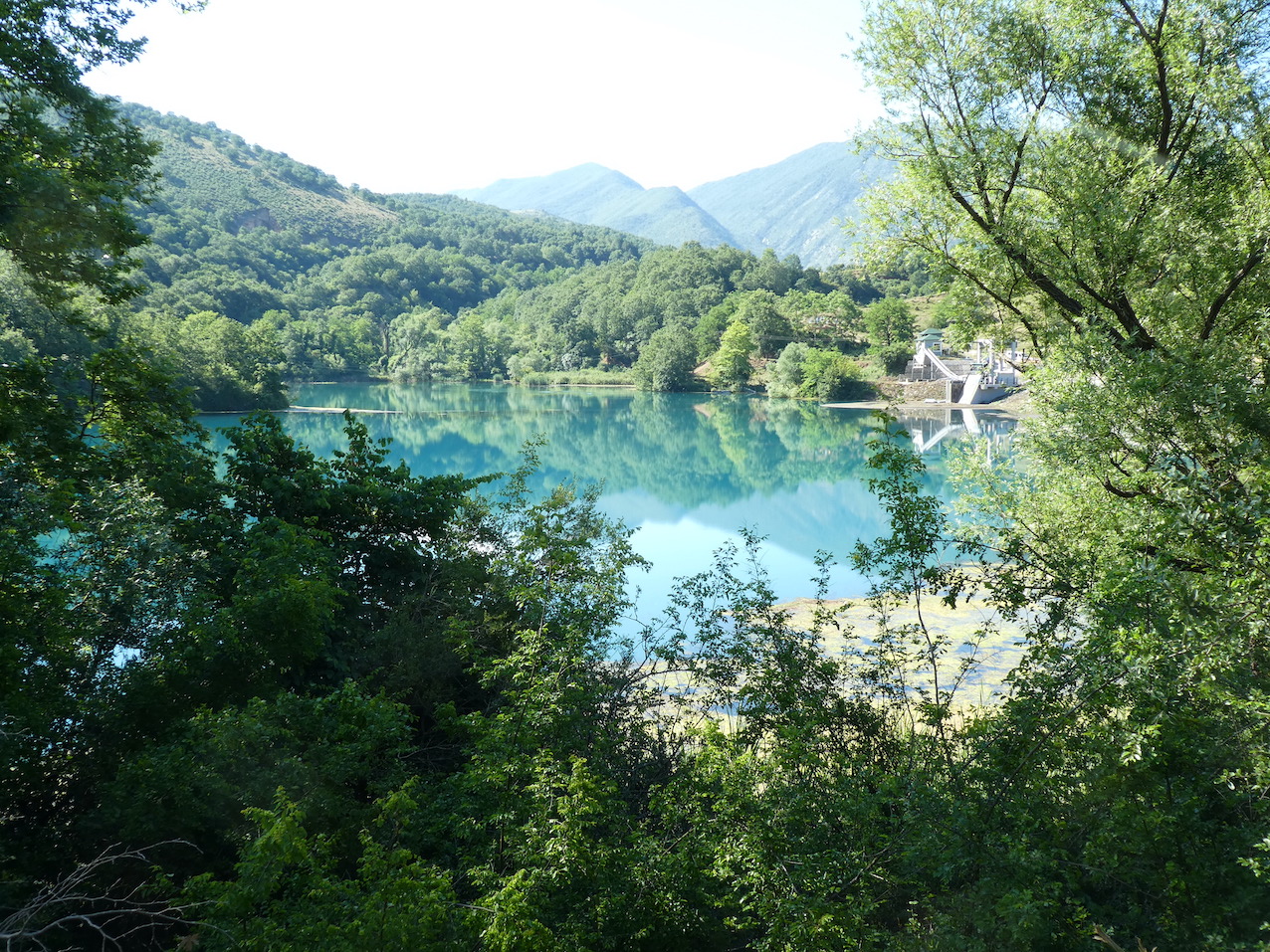
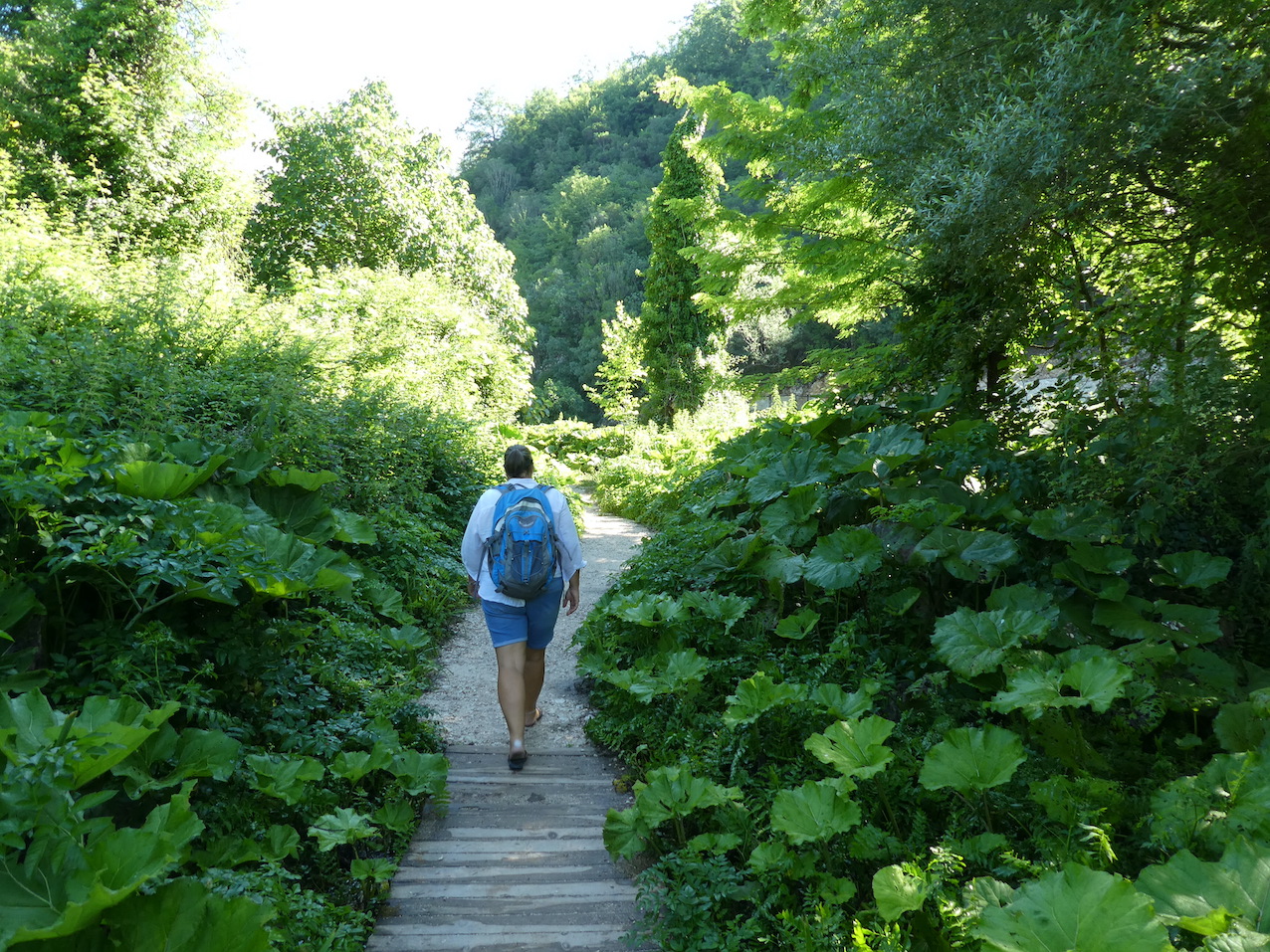
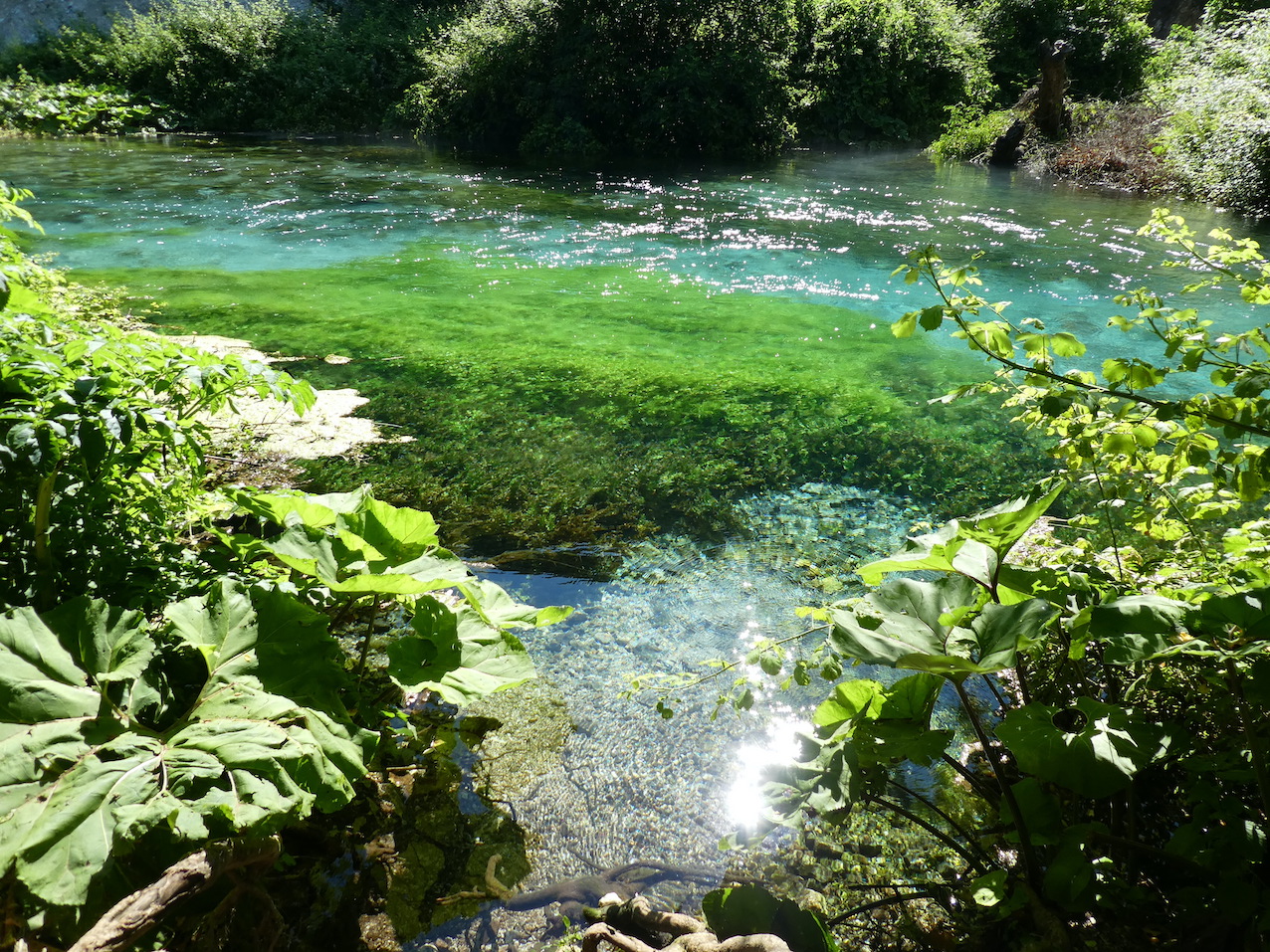
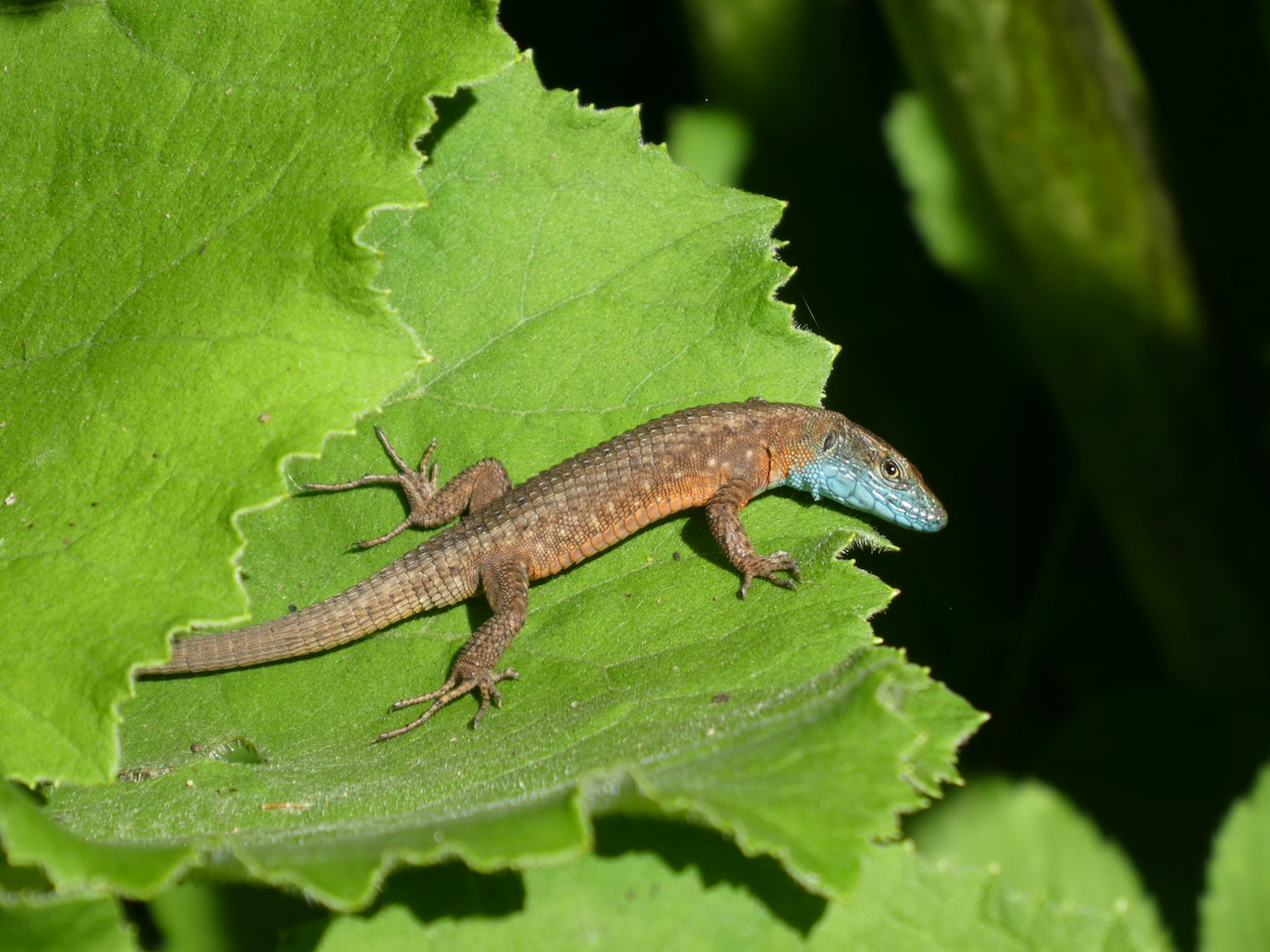
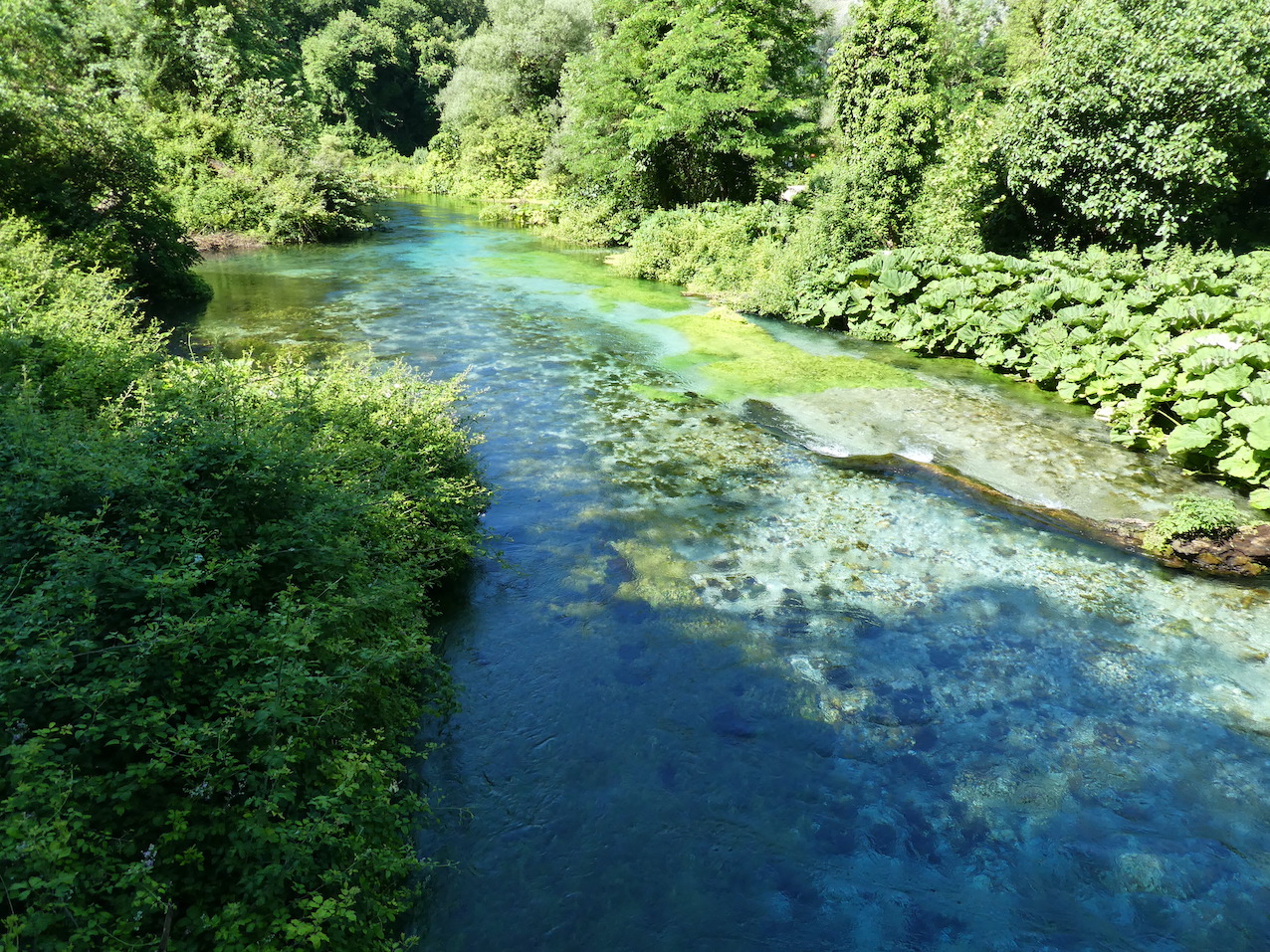
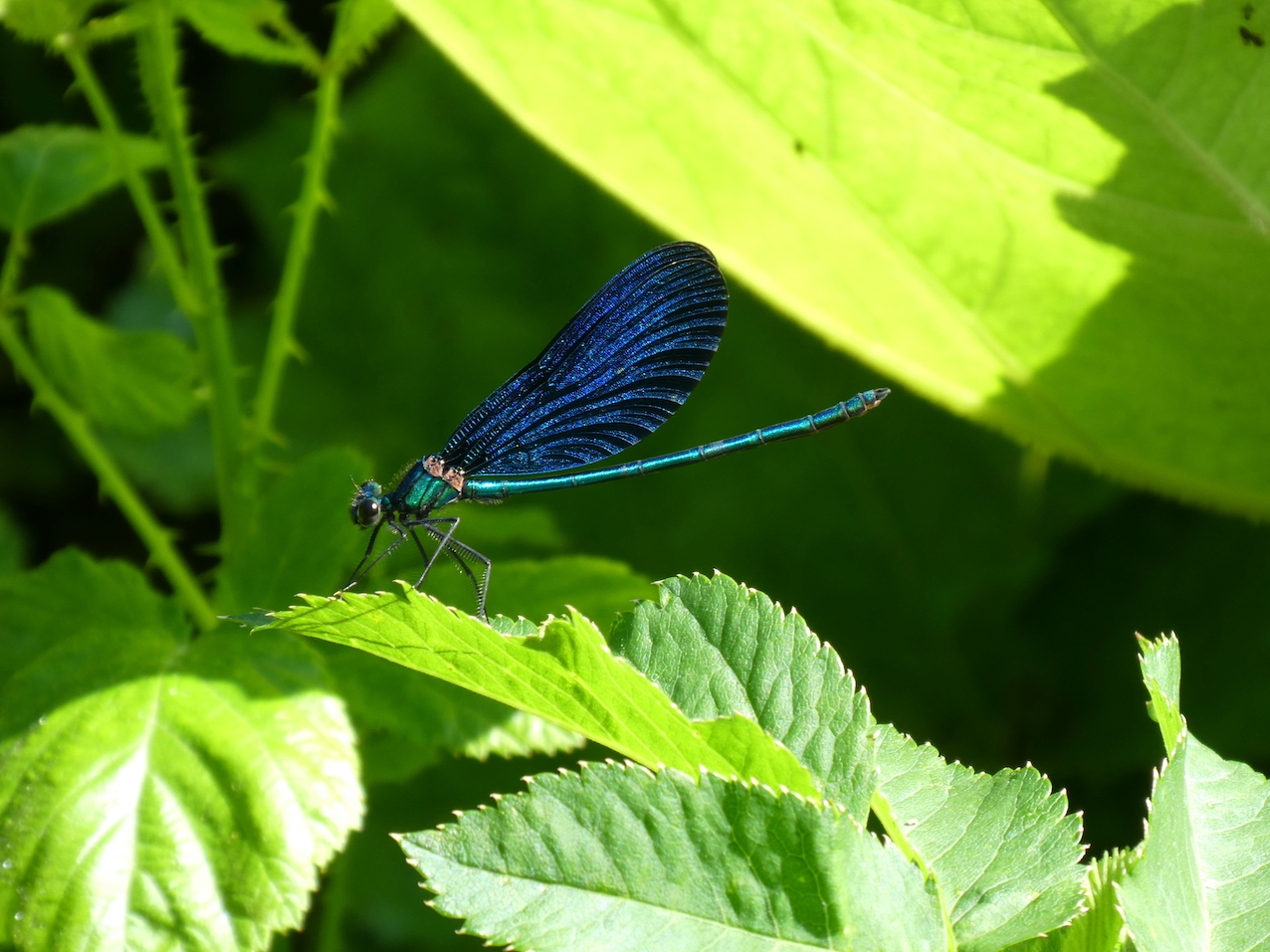
Next we drove up and over the mountains (and down the other side) on a rather old windy road to read the old town and castle of Gjirokastra a UNESCO world heritage site. It is described as a rare example of of a well preserved Ottoman town built by farmers of a large estate. The town is overlooked by the Gjirokastër Fortress (castle). The first offical record of the city appears back in 1336 in Greek records. The city’s wall date from the third century and the high stone walls of the citadel were built from the six to the twelfth century. Looking down from the castle over the old town it was beautiful to see all the old slate tile roofs. Still to this day laid by hand without using any type of glue or adhesive and often having to be moved around a little in winter when it rains to stop a leak penetrating the roof.
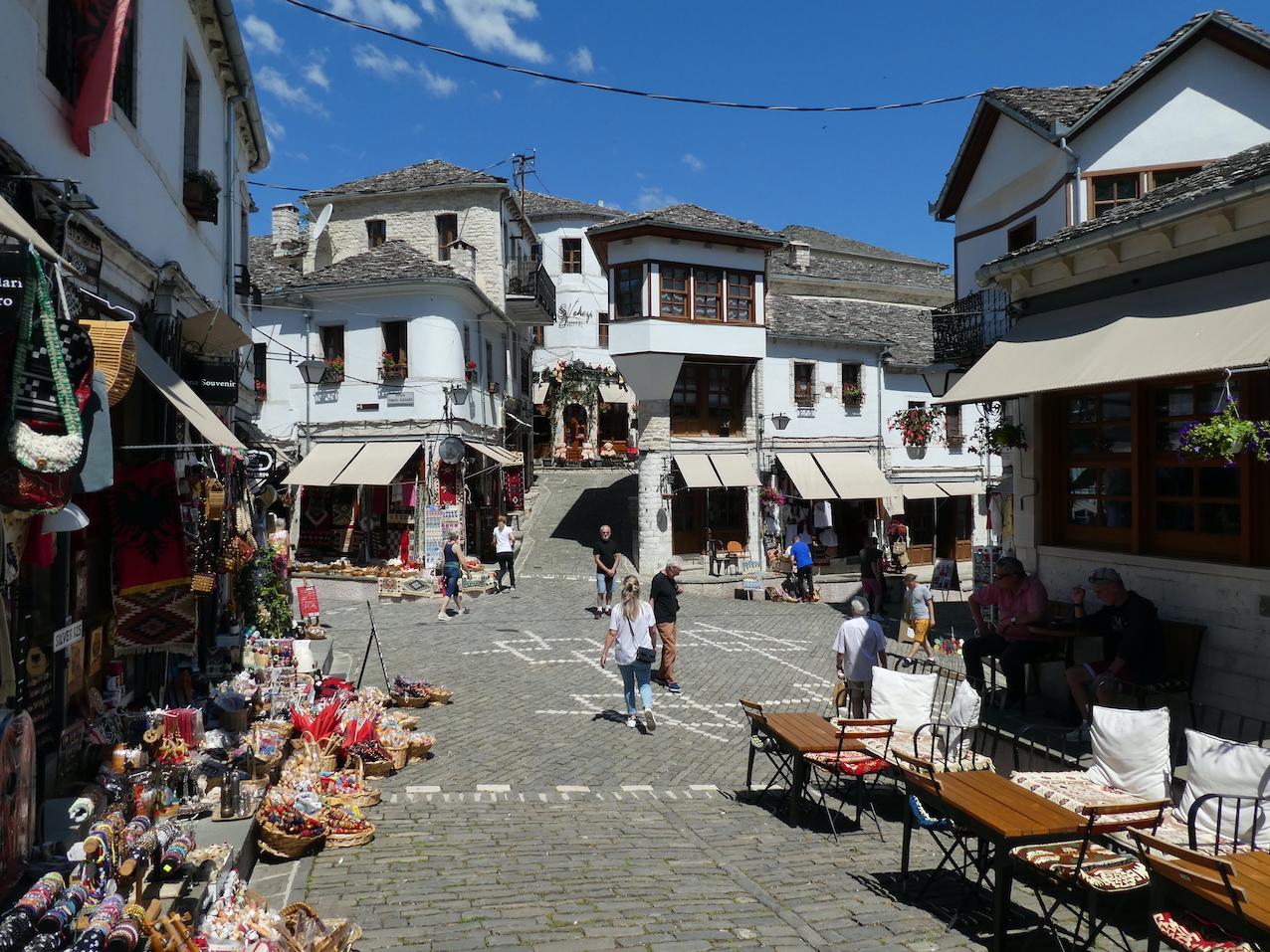
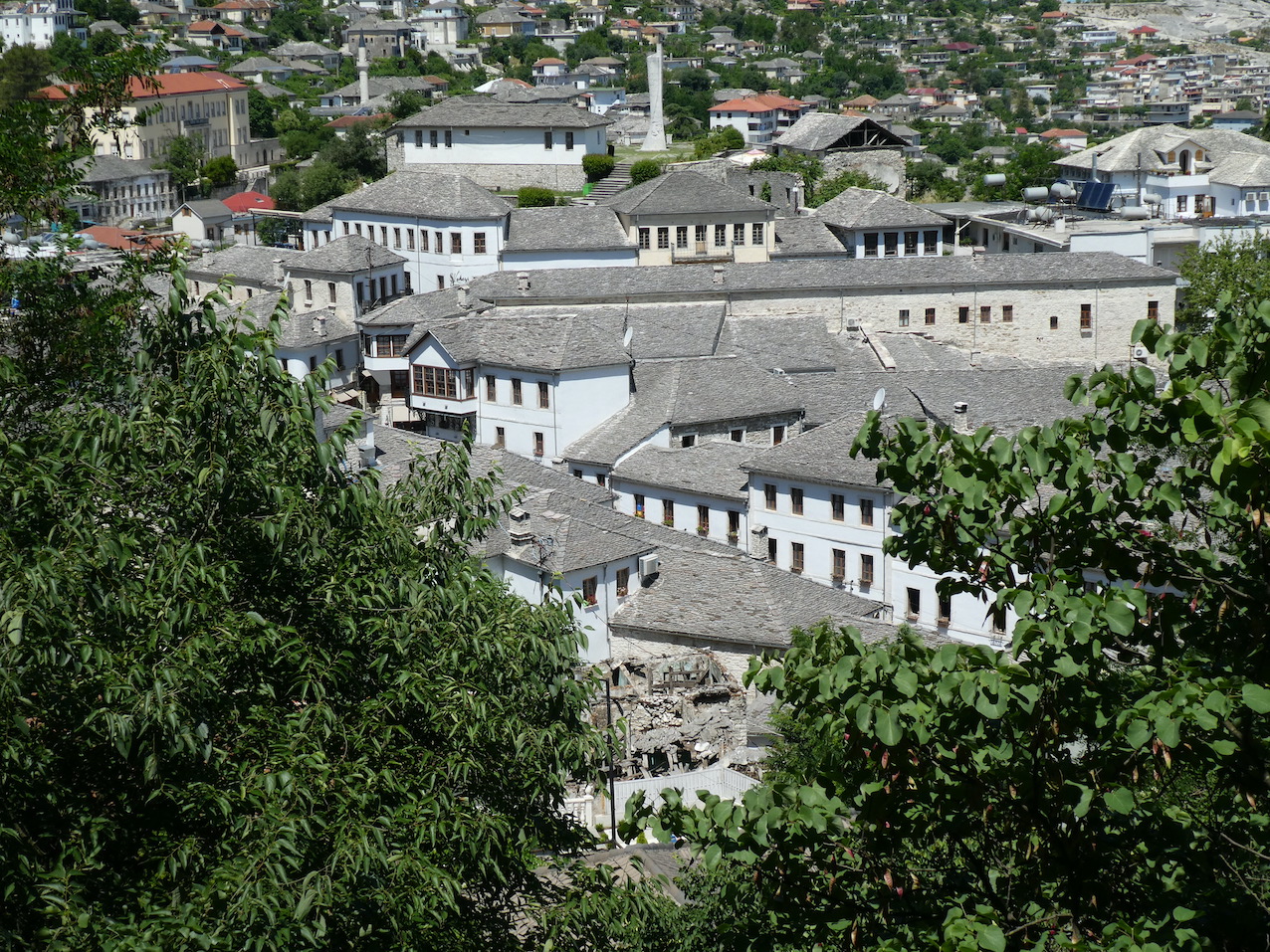


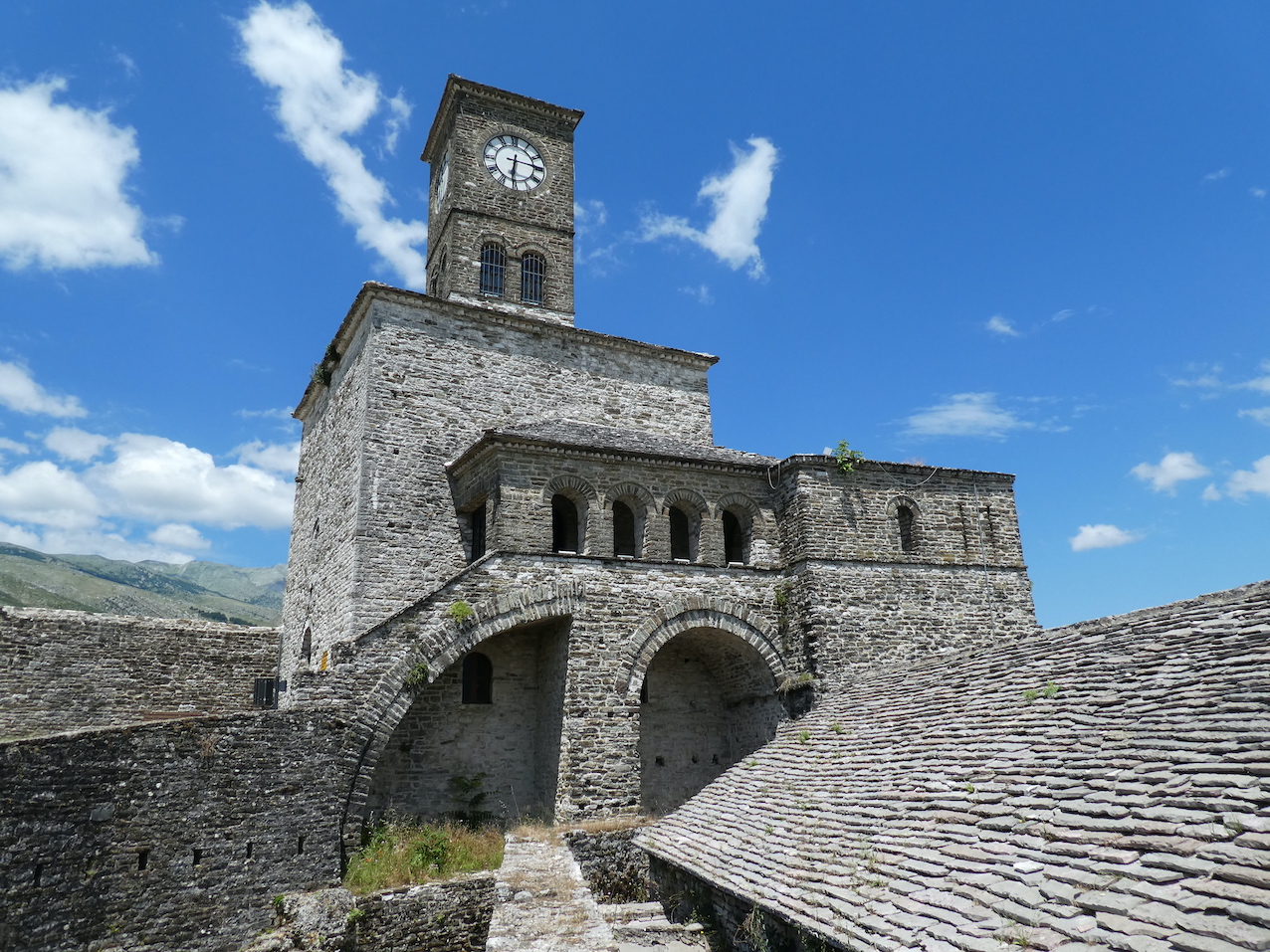
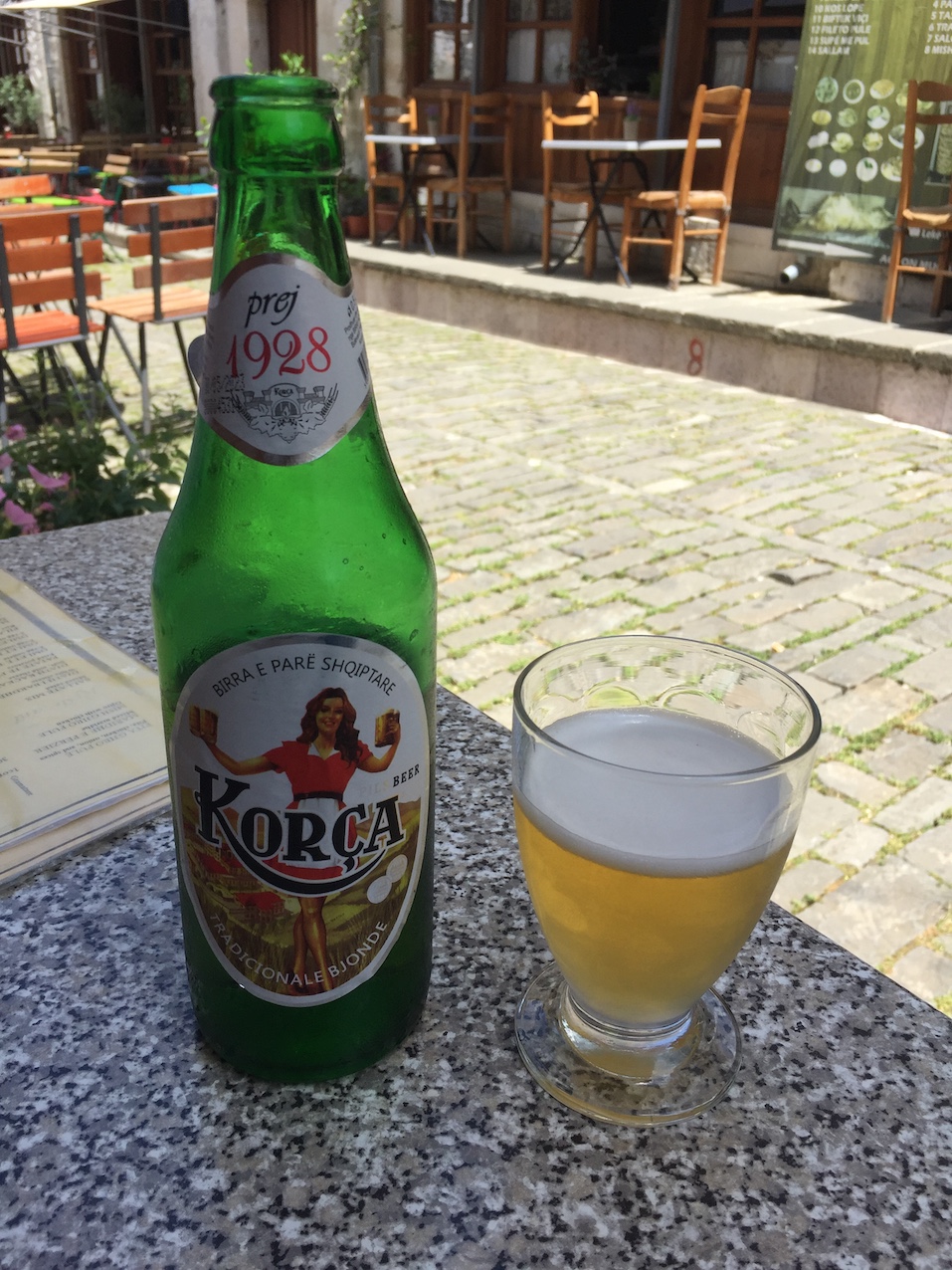
We enjoyed a traditional Albanian lunch in the old town here, we searched out the least touristy place, finding a lovely small “Grandma and Grandpa” run place in the back streets. Through broken English and Albanian we told them we wanted traditional food, Chef Grandpa insisted we sit at the table he was at as “it was the best in the house” (we were the only customers), and Grandma selected our dishes; “Qifqi” (rice balls with herbs in a chicken broth) & “Tasqebap” (goluash) and of course Phil also drank his first Albanian beer. The meals were traditional, small, delicious and cheap perfect for lunch. And of course we forgot to photograph (taking pictures of food doesn’t come naturally to us, but somehow we ended up with a picture of the beer?).
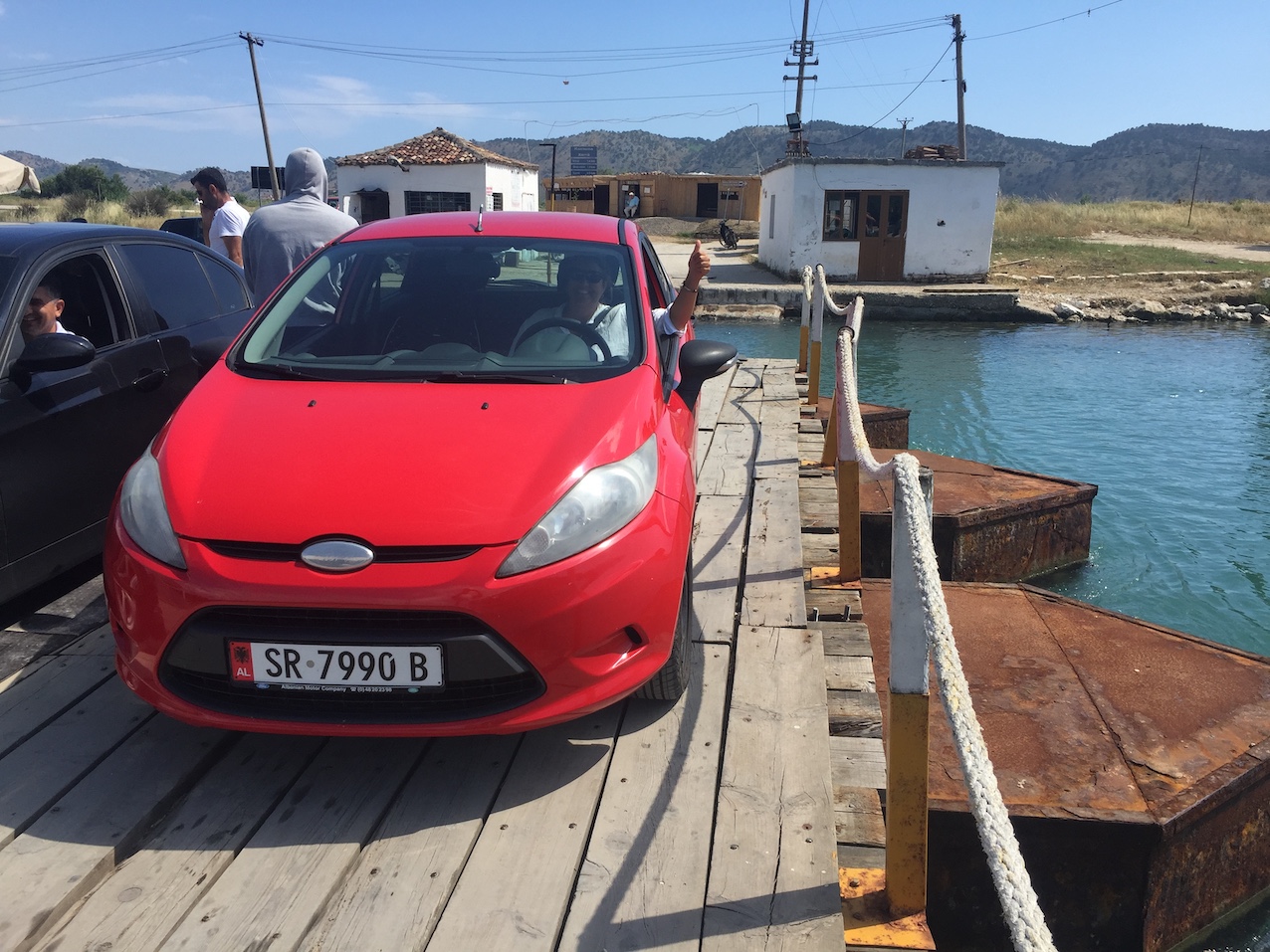
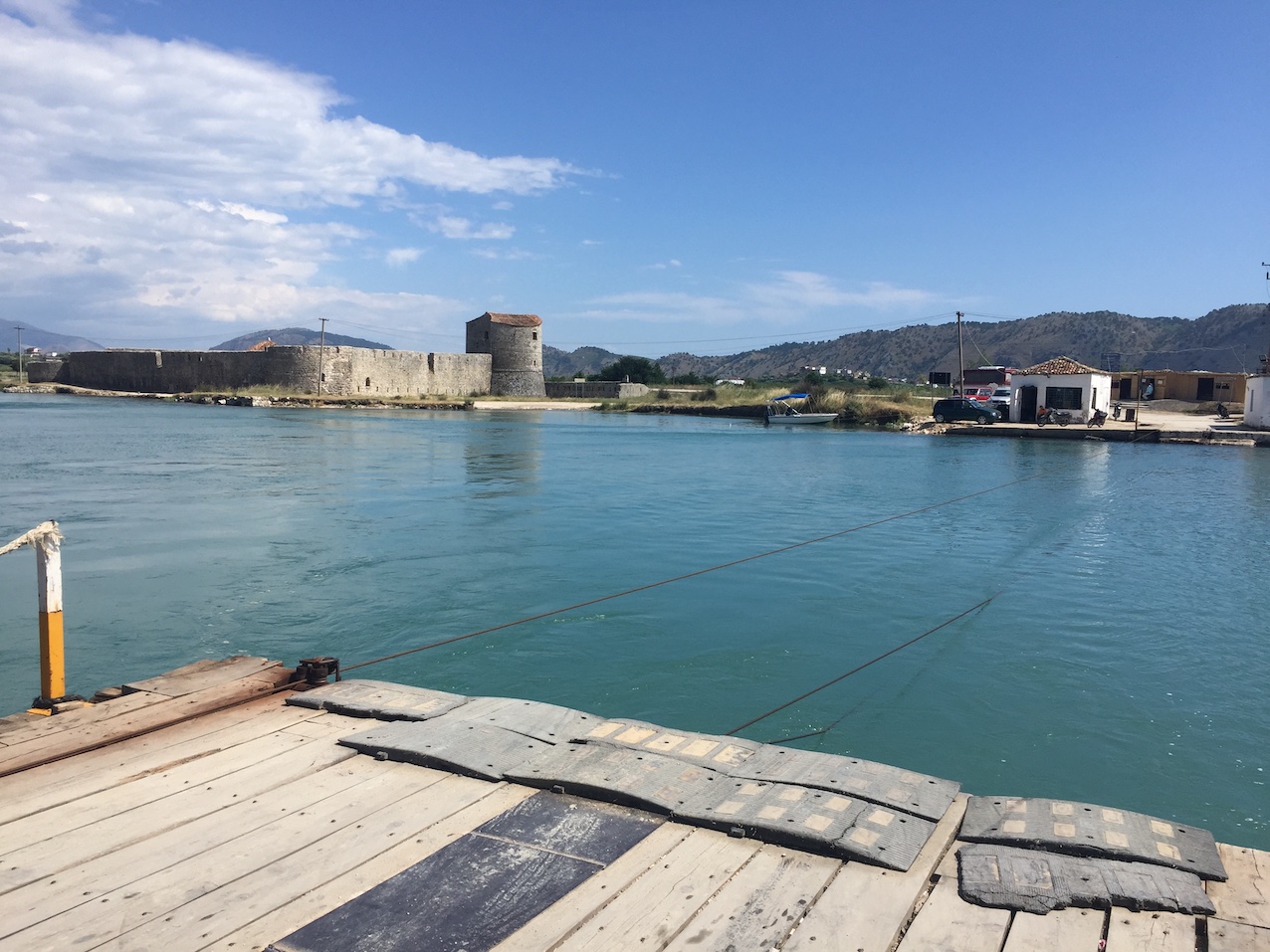
On our return to Sarandë we went via the Butrint National Park, castle, ruins and old ferry to cross the river and finally via the beach town of Ksamil.
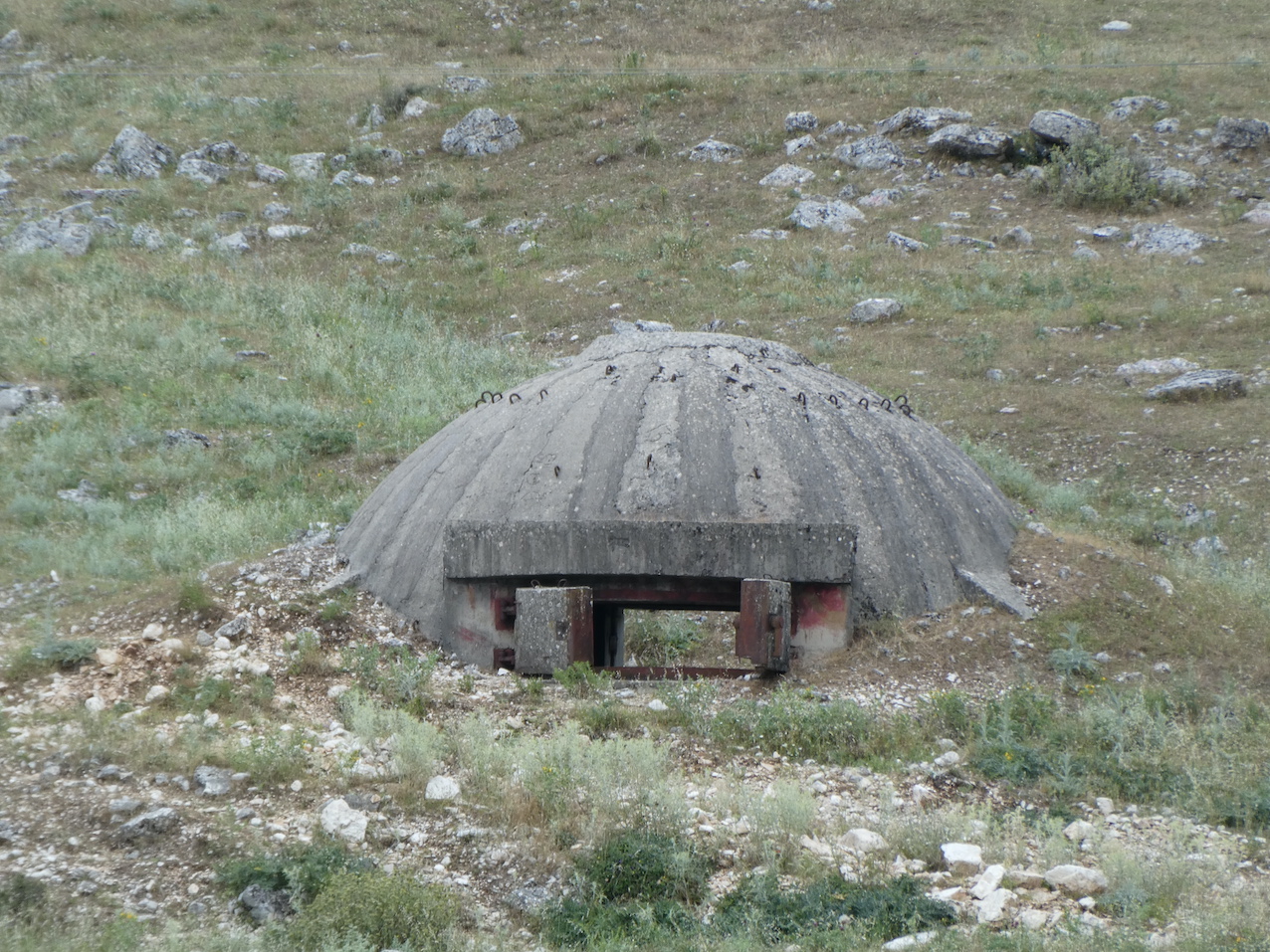
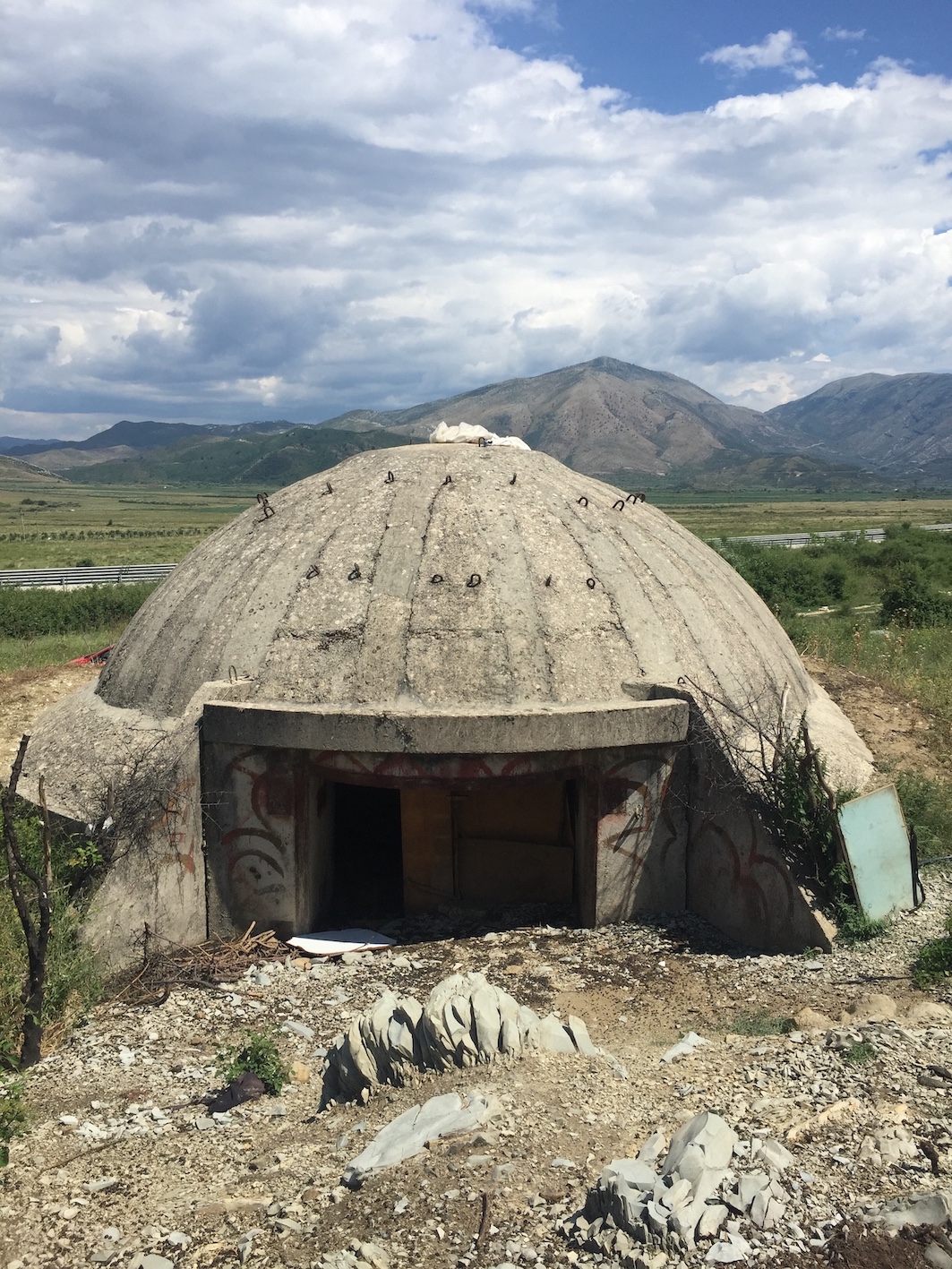
During our day in the car we were playing a lot of “spot the bunker”, which continued once sailing north in Red Roo all along the coast. Albania has over 750,000 concrete bunkers spread out across the land. They were built during the dictatorship of Enver Hoxha to protect the country from an invasion – which thankfully never happened. They are a reminder to all of the 50+ years of Albanian isolation.


Lifting anchor on day three, we moved 20 nautical miles north to the smaller beach town of Himarë. We dropped anchor and were then visited by the local police boat who kindly asked us to move anchor further out from the beach, we most certainly could and did. The water here was absolutely lovely, clear and blue and the beach very attractive.
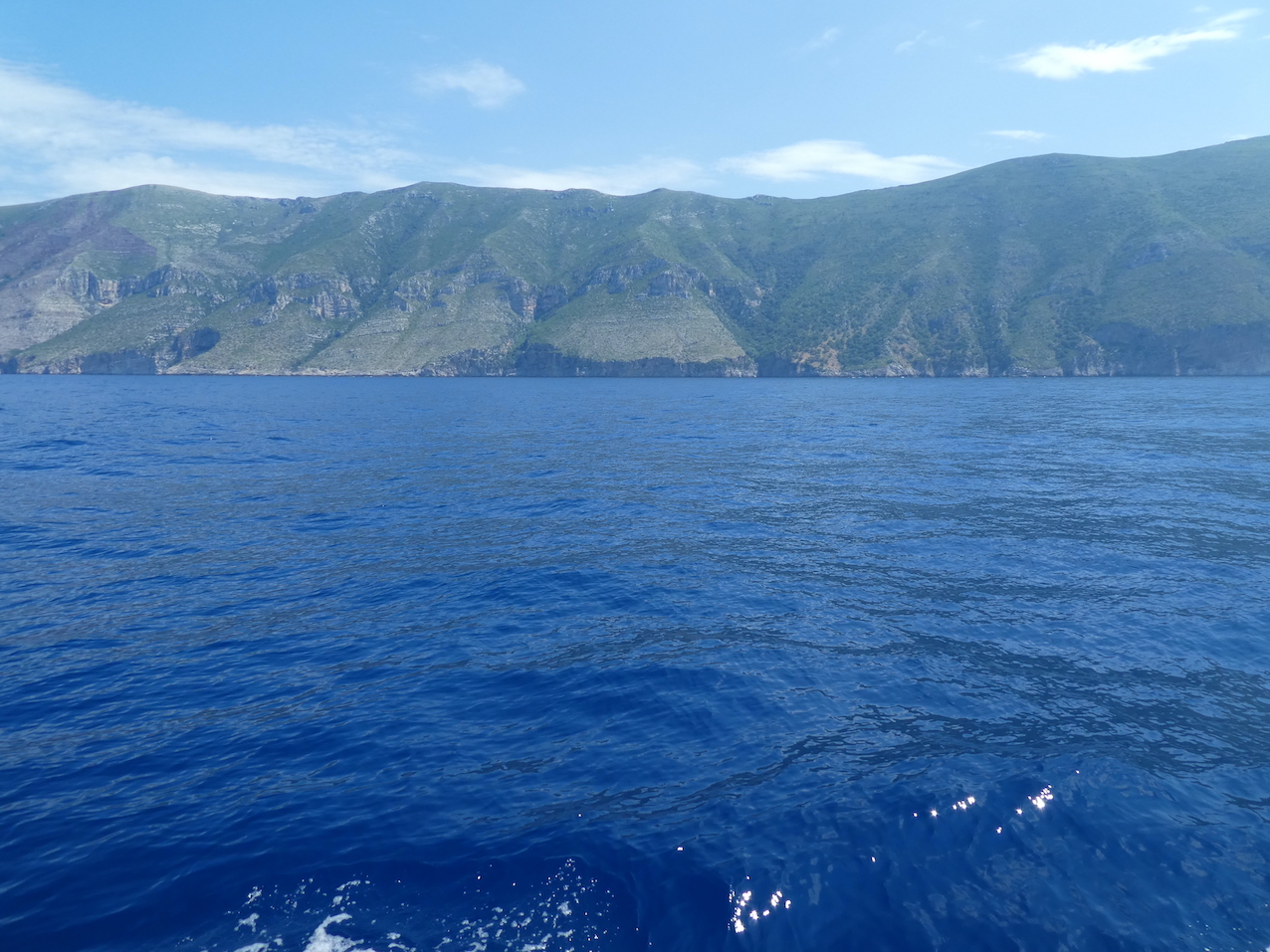
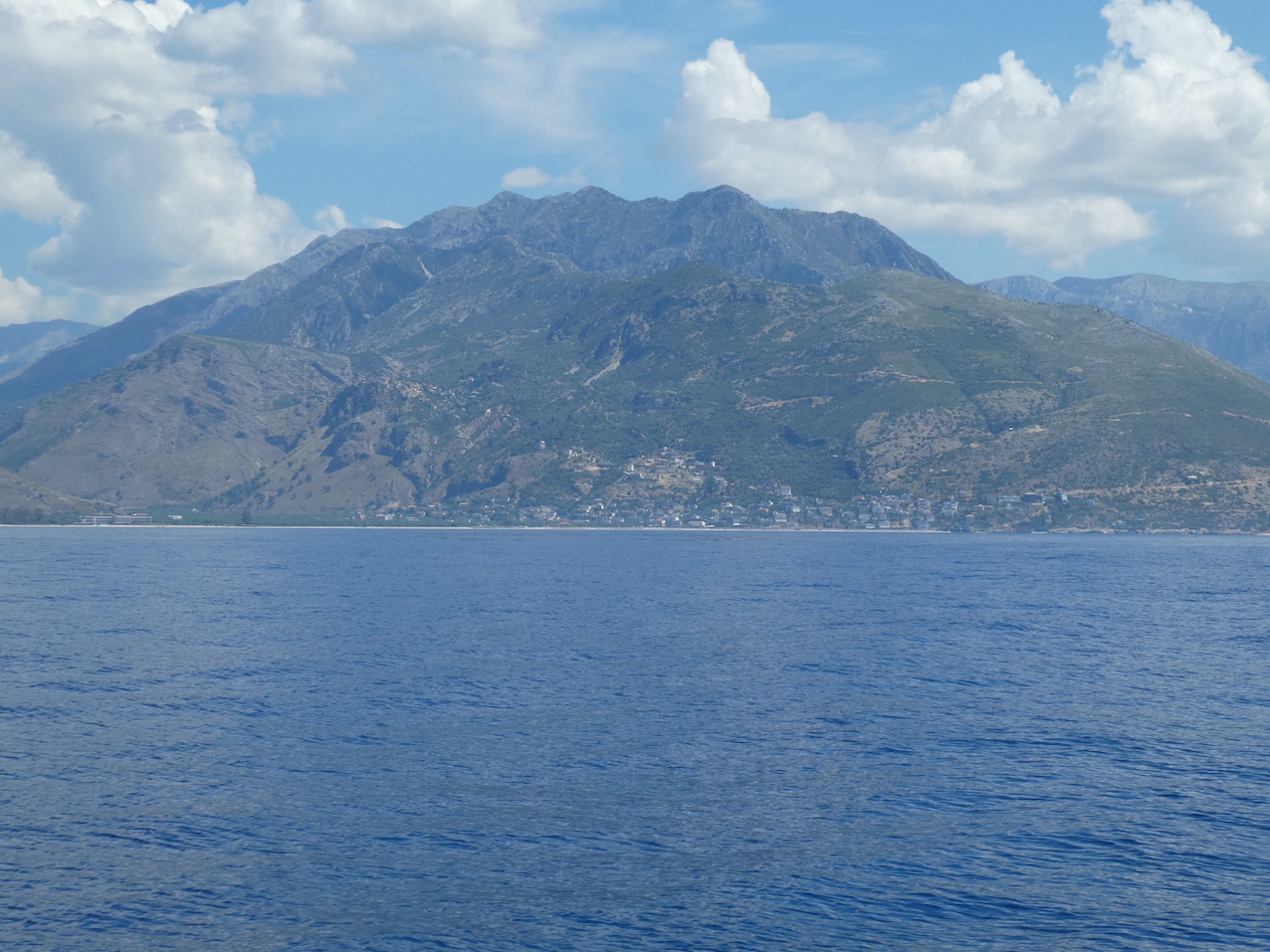
Day four was onto Vlorë 40 nautical miles north. Vlorë is a bigger town and the following day (day five) we walked 12km along the promenade and up the main street to the Square of Independence. On our return we found a small Greek Gyros place and paid 200 Lek (€1.68) for a gyros. It was delicious and it made up for the last one we had in Corfu which was both expensive and not overly nice.
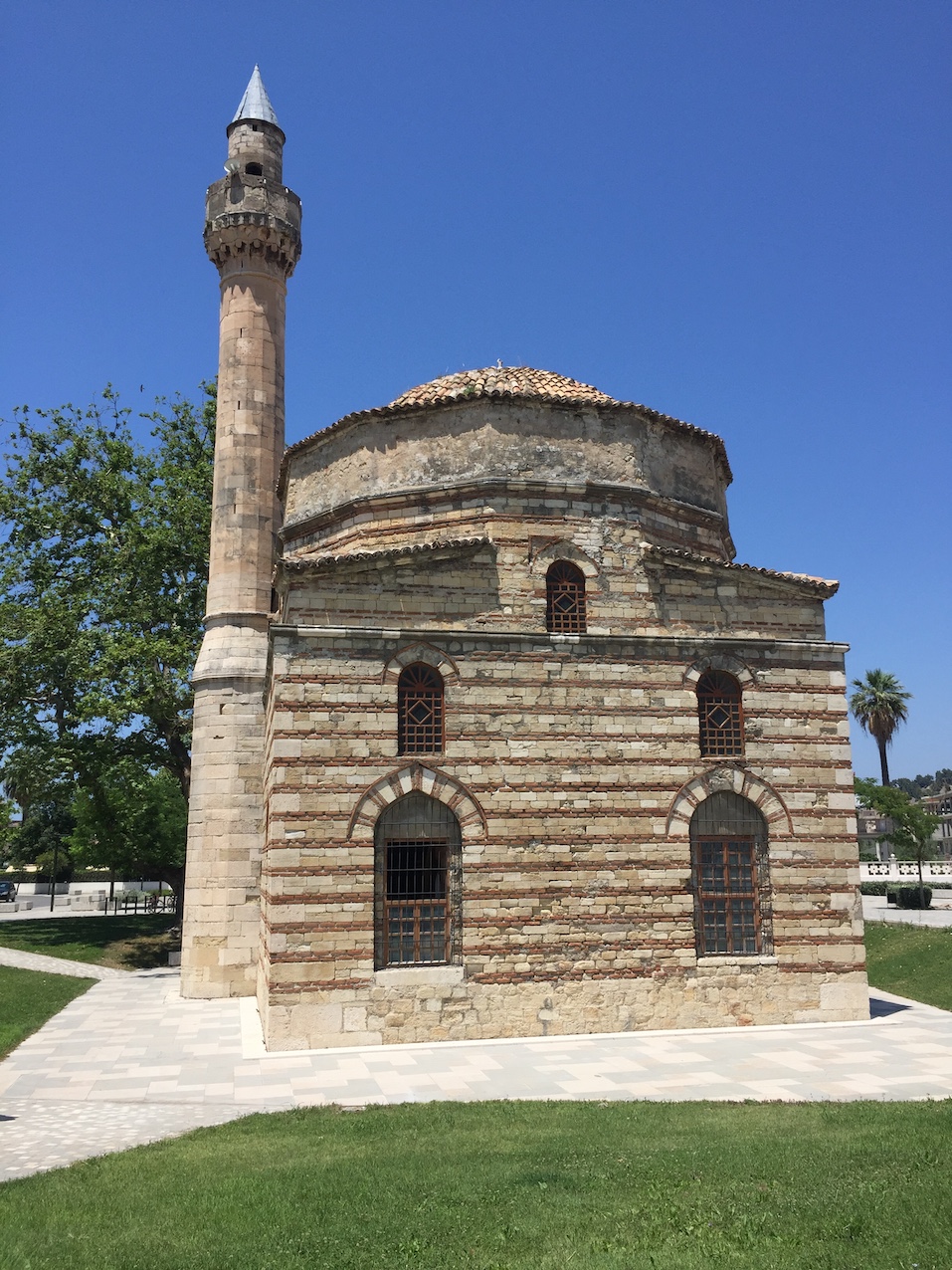

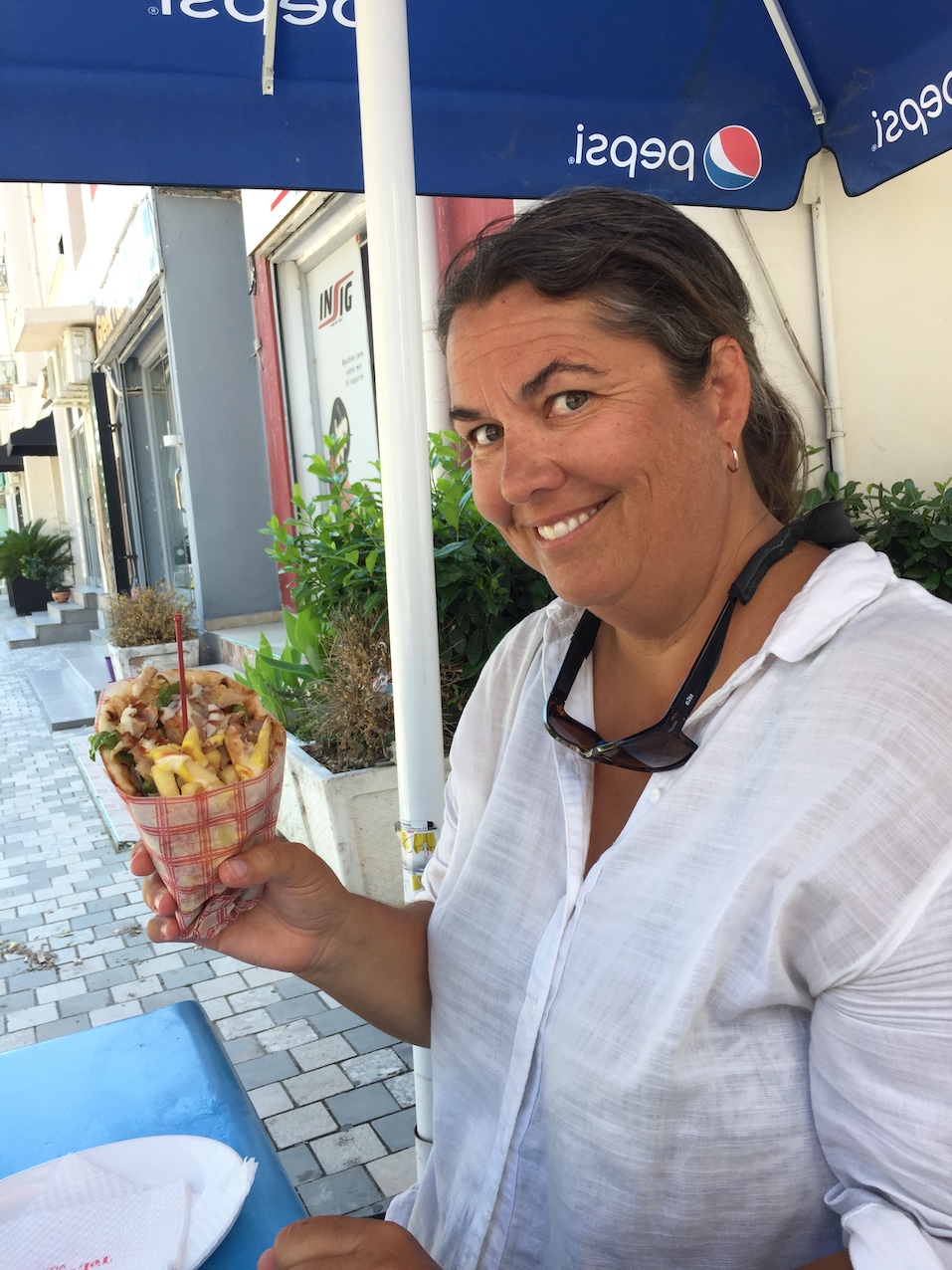
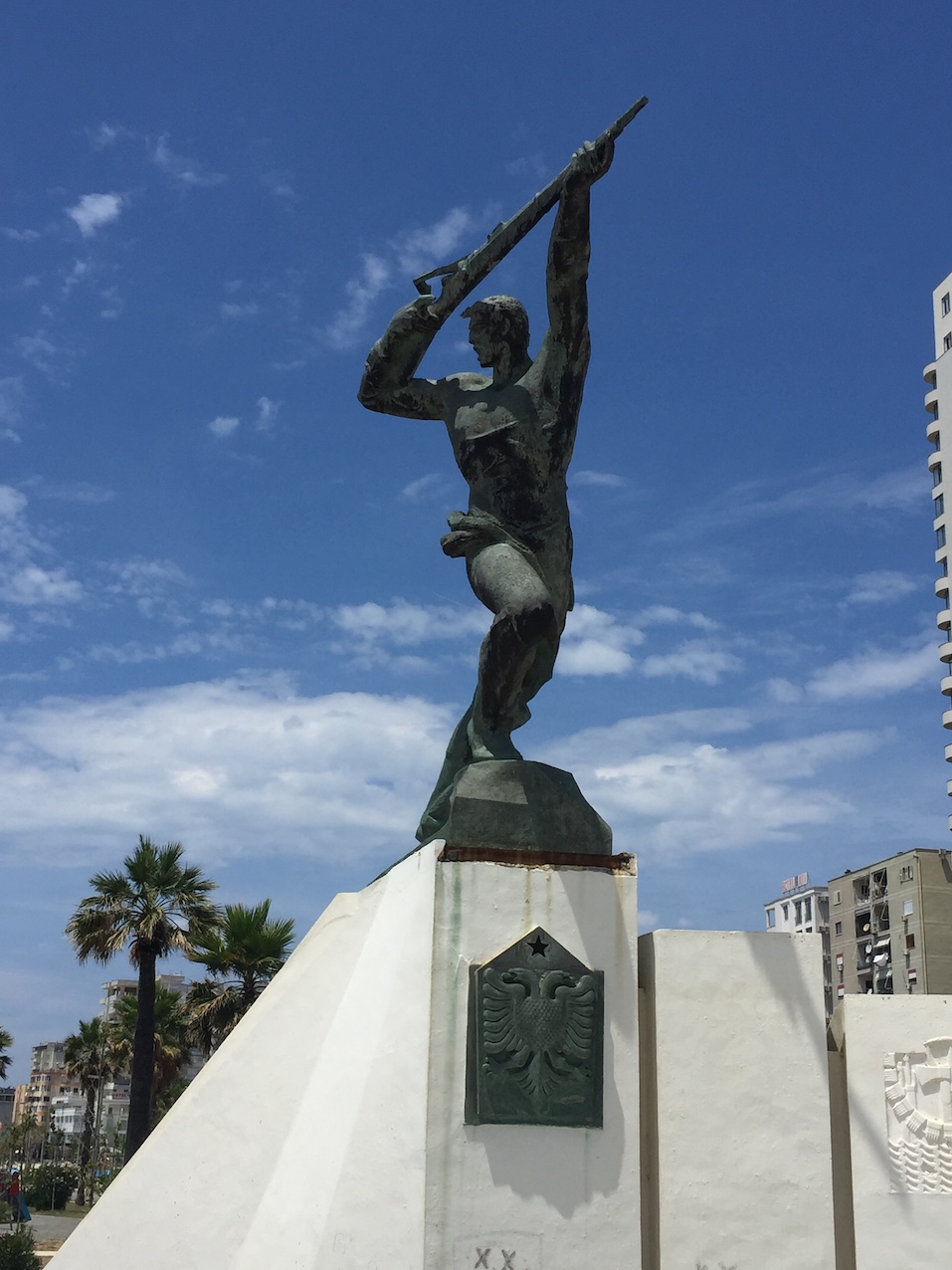
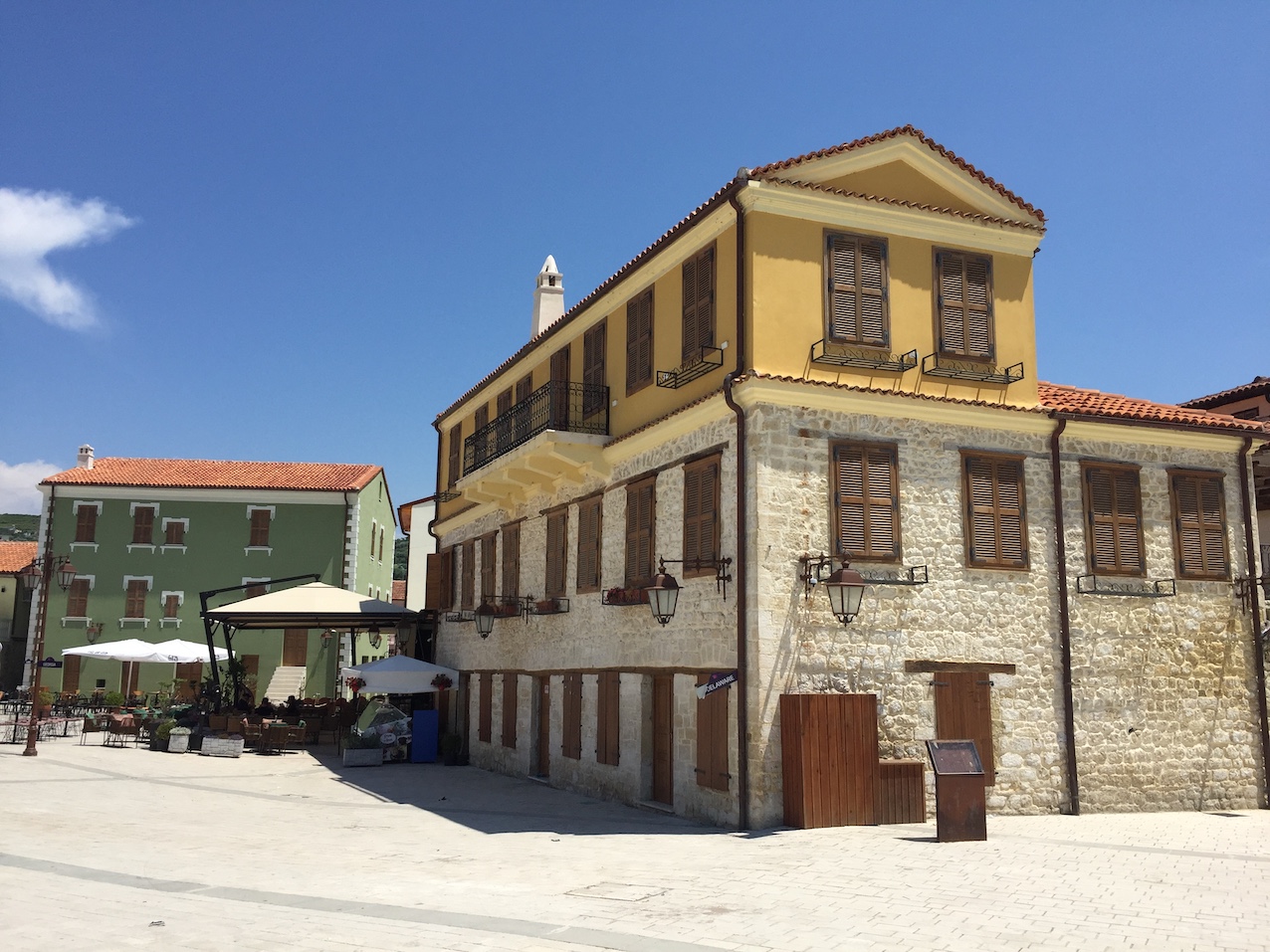
I commented to Phil that in many countries that we visit it is quite obvious who the locals are, they genetically tend have similar body shape, hair colour, stance, skin colour etc but in the few days we had been in Albania I was seeing such a diverse range of people I wouldn’t be confident in describing or picking out the typical look of a Albanian.
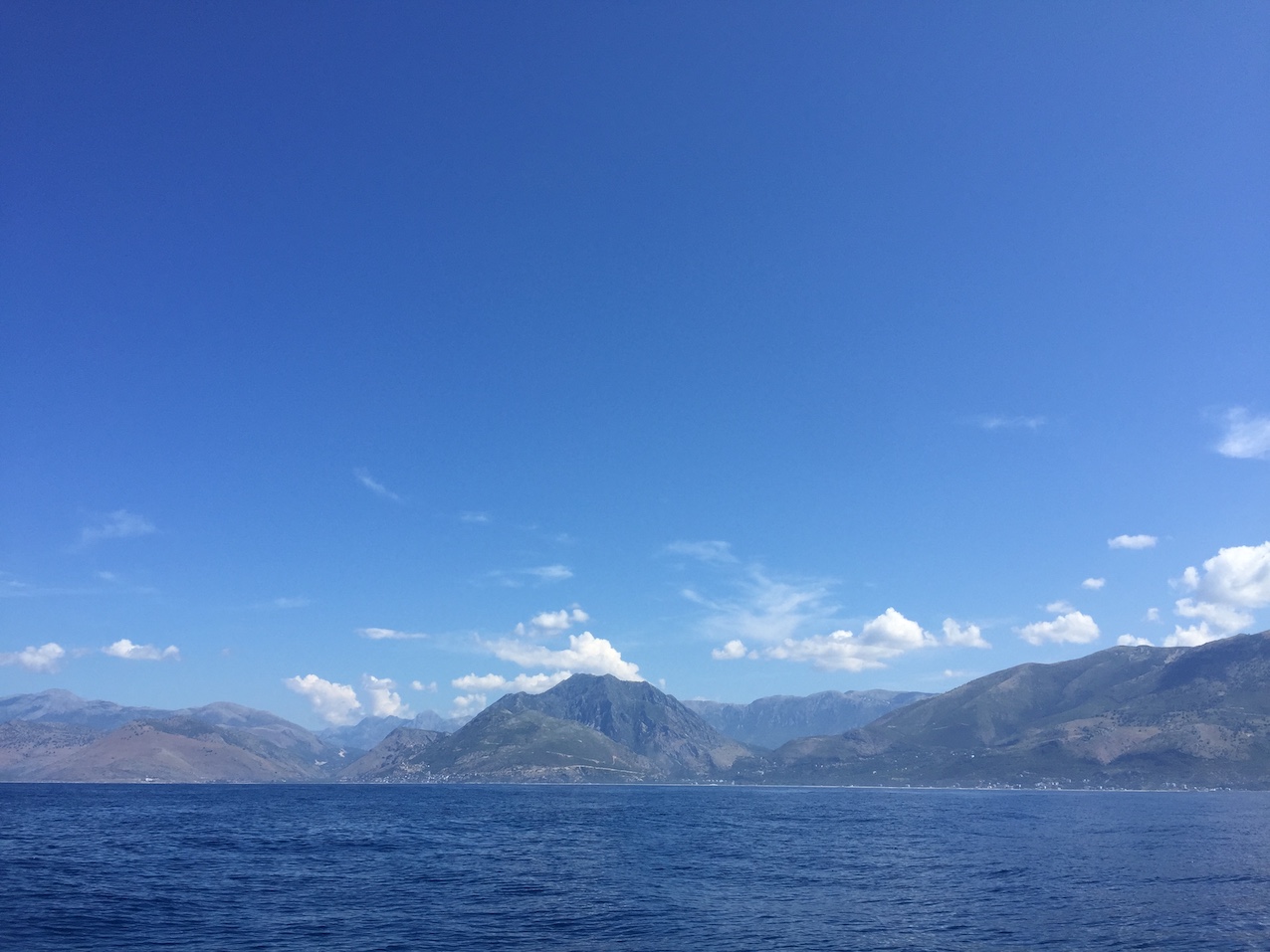
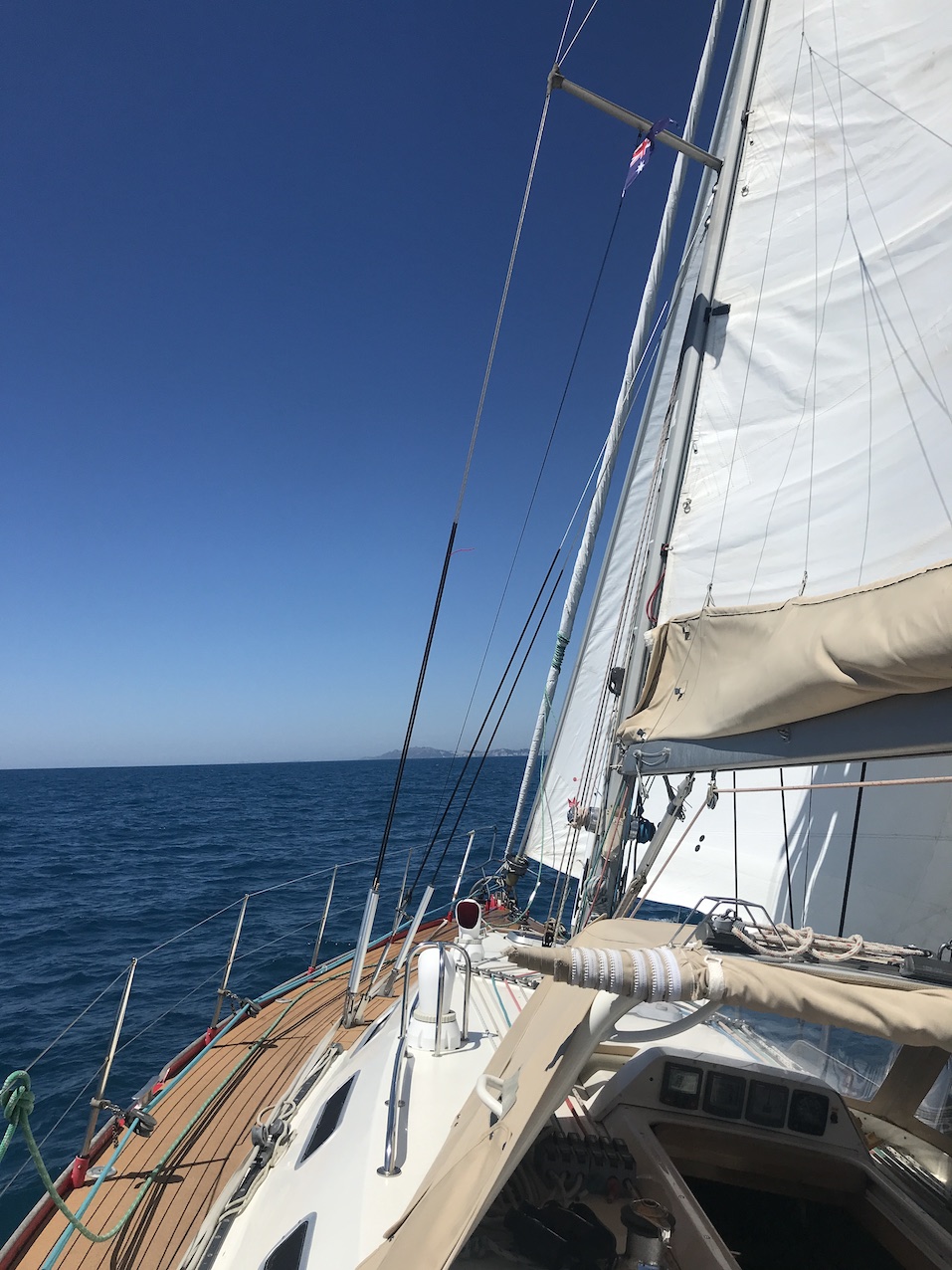
The next day (day six) was a full 10.5 hours on the water to cover 58 nautical miles to Durrës. It was nice to have a good sail for some of that passage and motor sail the rest. In fact we were sailing into Durrës so hot (aka fast, well it felt fast after all the recent motoring) we were doing about 6.5 knots over ground that the harbour master called us on the VHF and warned us that the water is shallow, (aka, slow down) well his english words were “not much water” but we knew what he meant. We were watching the depth gauge and had read on the charts about the shallow bay.

The bay of Durrës is large and very shallow for a long way out. We have a lifting keel so when it is up we only need 1 meter of water to float, which allowed us to go in a lot further than many other boats. We anchored in 2.5 meters of water at high tide, which at low tide was little under 2 meters. I was surprised to find a tide up here, it hasn’t been evident anywhere else in the Mediterranean. Even being in 2 meters we were still a long way out from the beach. Another boat anchored the following day and he was at least a nautical mile off the beach.
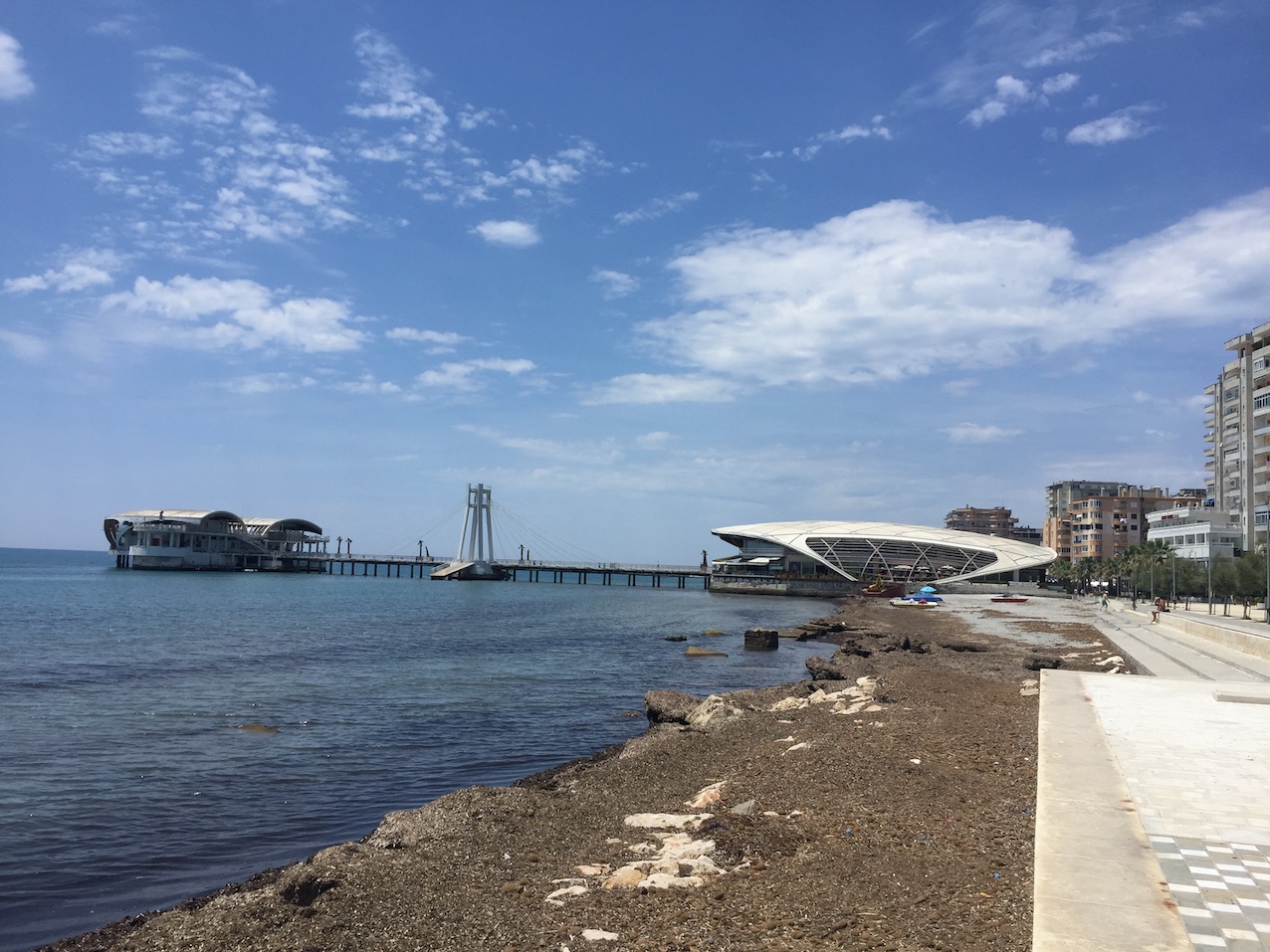

We ended up staying 4 nights in Durrës, not because it was the best place, (the other places we had stopped were all a lot nicer as Durrës is an industrial port town), but we stayed due to the influence of the weather (no wind to sail), and we didn’t want to check out of a country and into another on a weekend as it can be hard getting officials in some countries on the weekends. We again took to the streets walking and exploring and found a very strong Italian influence in the town in regards to menu’s and supermarket offerings. Then speaking with our agent at checkout he informed us there are three ferries running daily, 2 to Italy and 1 to Montenegro. So the main tourism is influenced by the Italians. On our last day we took the dinghy into the commercial port to meet our check out agent. We tied our little dinghy up beside the police boats and tugs (we felt very small), then climbed the 2 meter wall (lucky there were old tyres and ropes hanging) to get to the dock. Within an hour we had our clearance certificate from Durrës Port Control and our passports stamped and we were approved to leave the following morning, and to anchor one more night in Albanian waters as long as we stayed on the boat and didn’t go to shore.
It was 37 nautical miles to the Albania/Montengro border which is defined by a river, and we anchored just inside the Albanian side off Velipoje Beach for our last night in the country. Again the water was shallow a long way out so it felt like we were anchored out to sea.
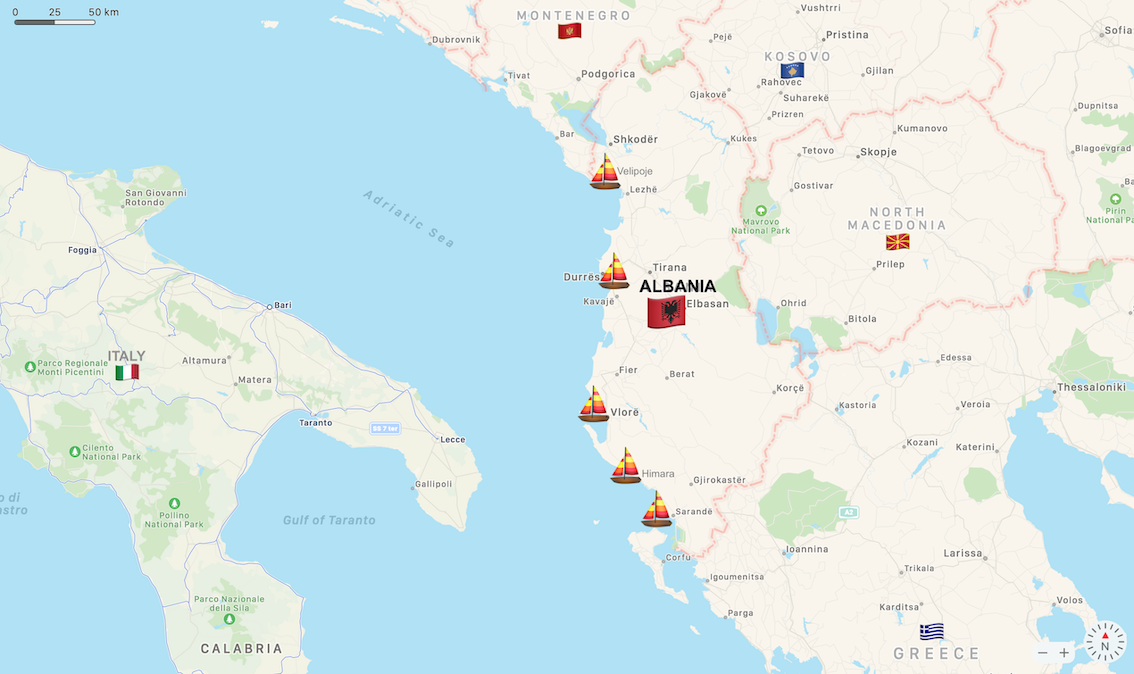
During our time in Albania the only real word we managed to master was “faleminderit” which is thank you. Faleminderit Albania for having Red Roo and crew visit your country.
Tomorrow we enter Montenegro (country number 25).
Off Again, Sailing into 2022

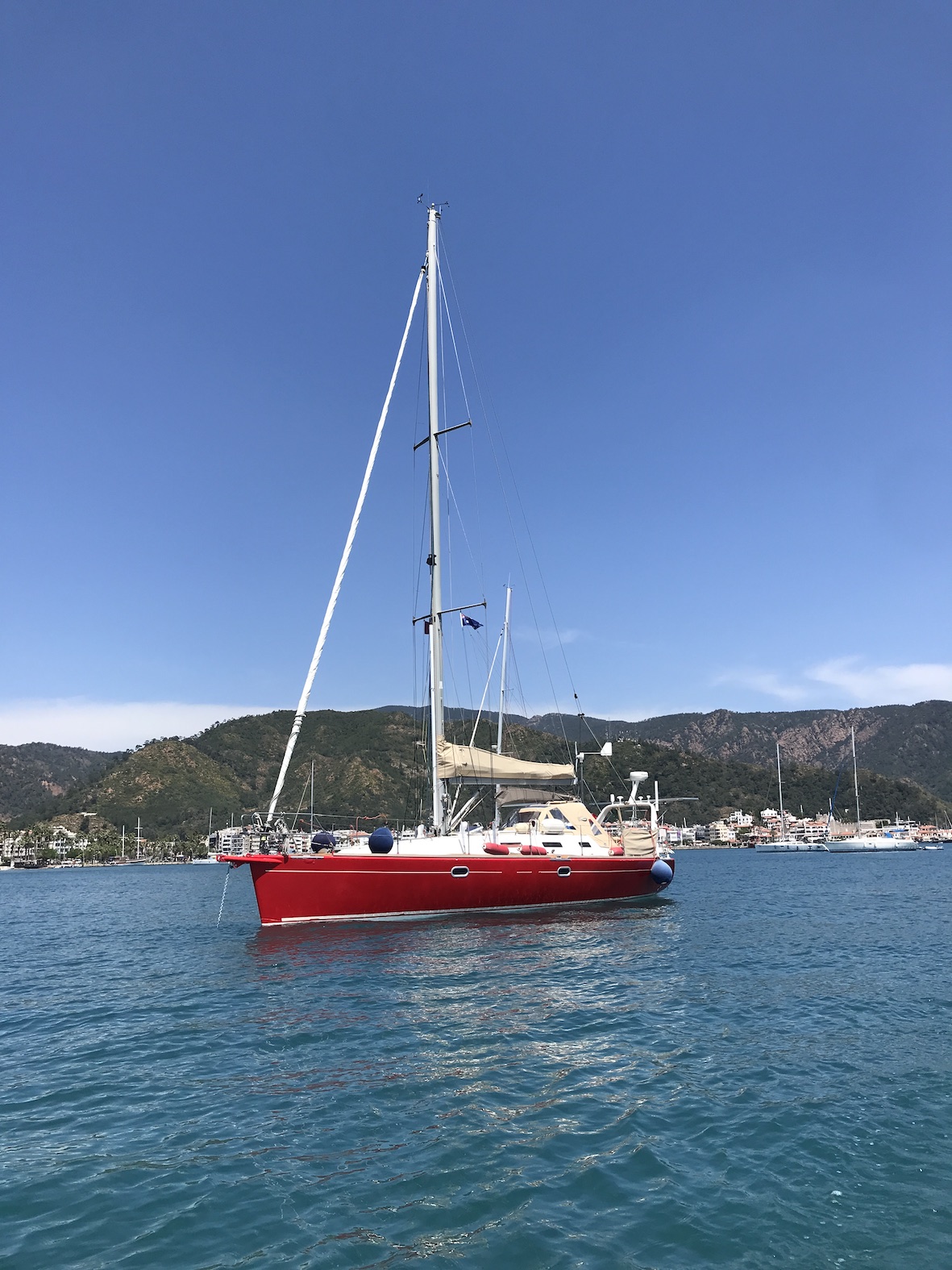
We couldn’t believe it was May already, and we are only just leaving the marina. Well I guess we didn’t park up until November last year and the winter flew by with so much work on the boat and lots of travel in Turkiye.

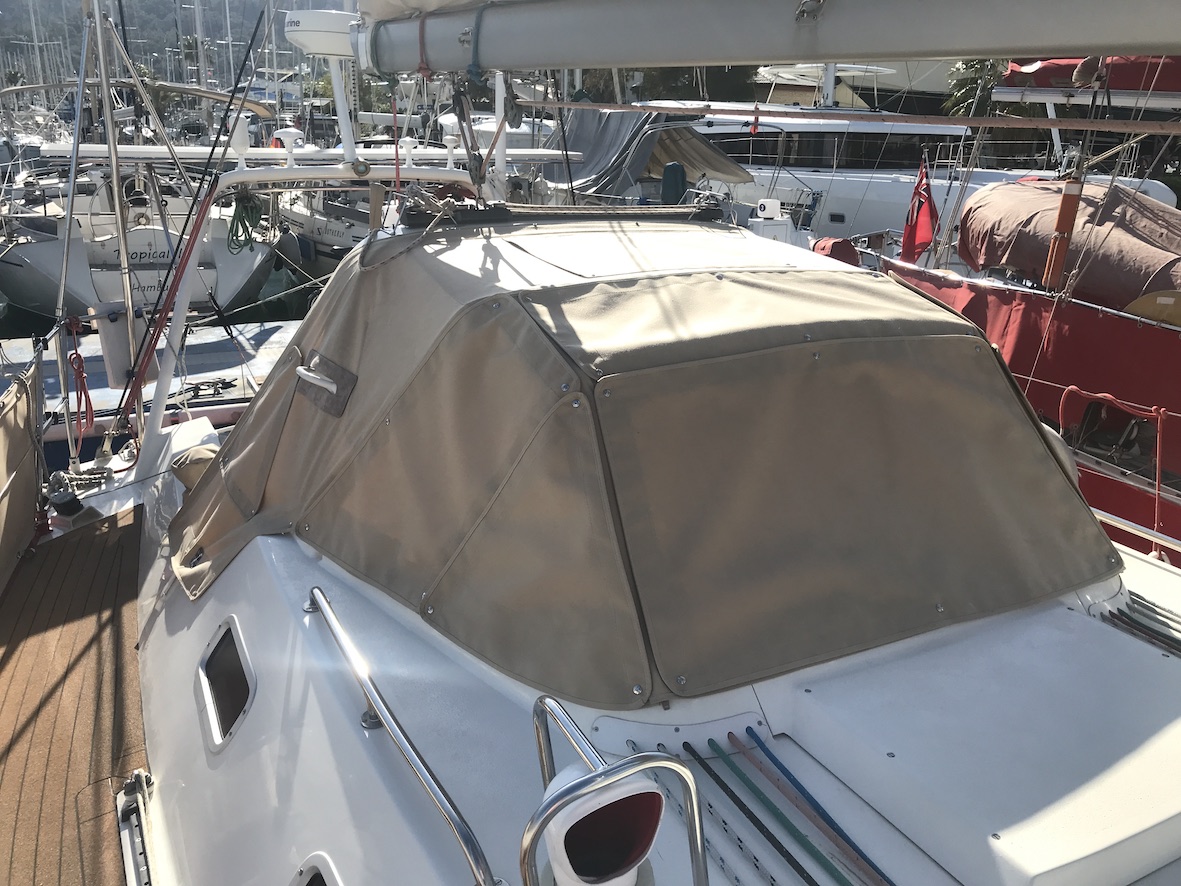


Anyhow, we did indeed untie the lines and sail off, but of course not without a couple of false starts.
The first one being in the minutes before we left the marina. We had done full boat and system checks the few days prior but upon starting the boat on the morning of our departure Maree noticed the wind instrument display wasn’t reading. A glance straight up the mast confirmed the anemometer (spiral wind stick) wasn’t spinning. Doh! This meant hoisting Phil up the mast twice in the hour before we left. He went up and unscrewed the instrument, brought it back down to the boat, cleaned it (full of mud rain that we had experienced in the past few days), then hoist Phil again up the mast to re-install. All fixed.
Next was a visit to the town fuel dock where we put 9,284.93 turkish lira ($880 AUD) worth of fuel in the boat (417 litres). If only we had of know of the fuel increase in price between Nov 21 and May 22 we would have filled the tanks before winter for 8 lira a litre ($0.67 AUD per litre) and not 28 lira ($2.33 AUD per litre) DOH!!! But we wanted empty tanks to clean over winter.
We then anchored off town for the night with an appointment booked the following day at the customs dock to depart Turkey at 10:00am.
When we went to pull anchor a little after 9am the following day to get to the customs dock by 10am the anchor windlass didn’t work. We have a manual option to retrieve the anchor but thought it best to fault find the actual problem with the unit. There was no immediate problem found (ie: battery, solenoid etc all tested ok). So we rescheduled our check out 24 hours later the following day and then pulled the anchor windlass completely apart. Again nothing seemed to be wrong. We reinstalled it and it worked? Great but not comforting. It worked on and off during the day, frustrating – it seemed to just want a tap with a hammer when it played up. Anyway it has worked ever since so it will get written up to check/service/get motor rewound etc at our next opportunity.
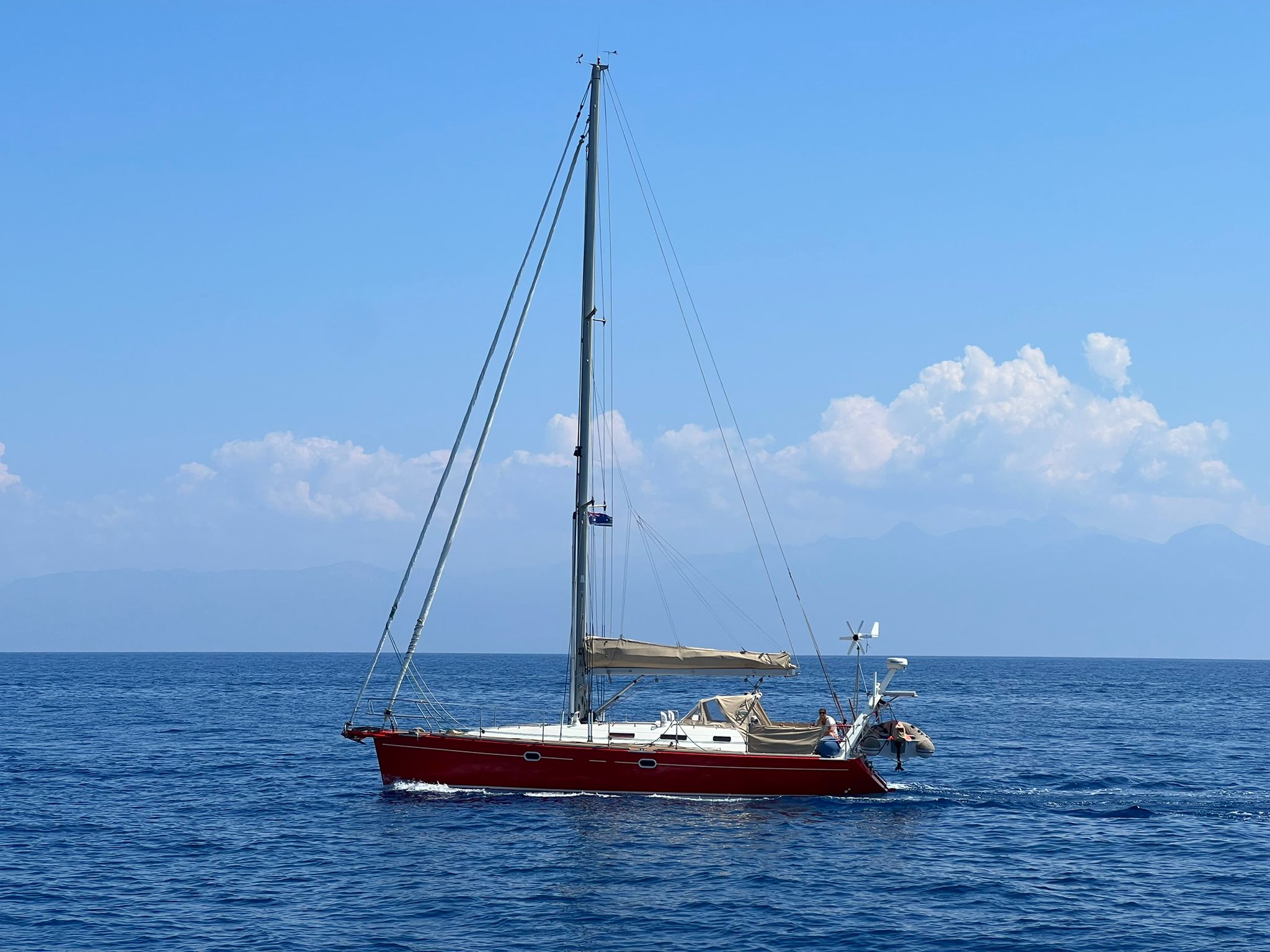
The story continues (I don’t think Turkiye wanted us to leave) as the following day we go to raise the anchor (now working) to check out and we pulled up a large outboard engine from the seabed with the anchor chain! We were able to get it off the chain with he help of a neighbouring boat who came over in his dinghy to help. We finally checked out of Turkiye and sailed to Greece, well actually motored as there was no wind!

This was to become an unfortunate pattern … motoring!
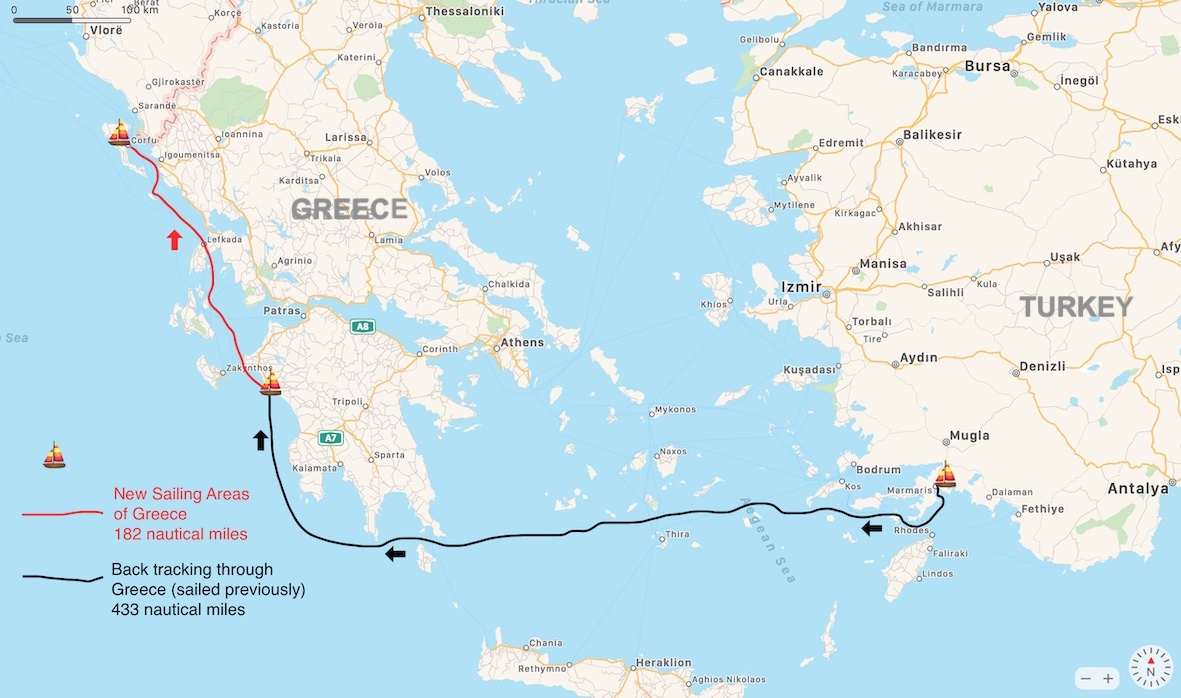
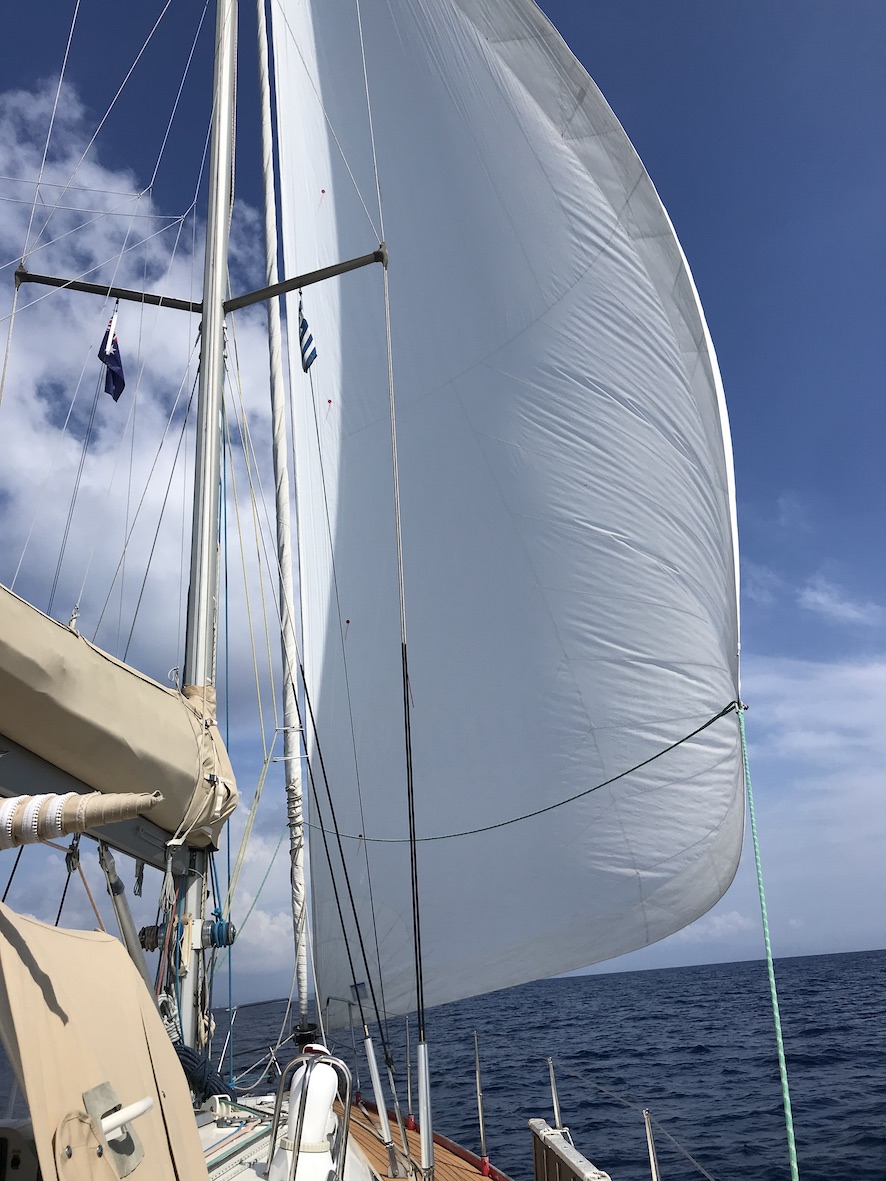
Either no wind or wind directly on the nose. But we wanted (needed) to make as many miles west and north as quickly as possible to limit our time in Greece to around a month. (Its about managing our time in ‘Schengen’ countries so later in the year we have our full 90 day Schengen/EU time available.) This meant we had to sail west back across the Cyclades Islands of Greece and then north up the Peloponnese peninsula retracing previous miles sailed last year. We then spent 3 weeks moving a lot slower in new sailing grounds – the Ionian islands (north west Greece).
Overall our first month out results in some pretty horrid statistics for us (it wasn’t much fun either).
GREECE (again)
33 days – 18 anchorages – 615 nautical miles
15 hours sailing – 101 hours motoring!
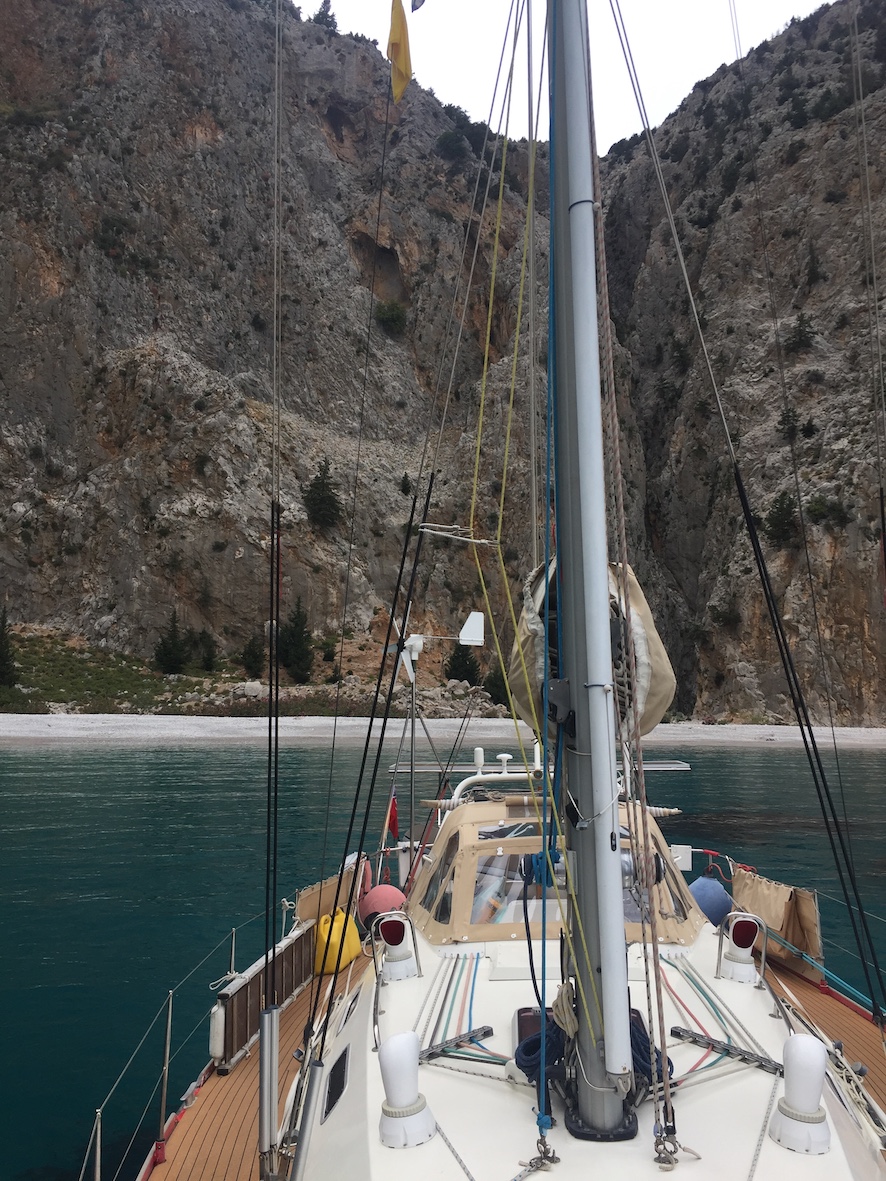
There were some highlights, so let’s concentrate on them.

We caught a fish, a BIG fish! There is still some conjecture as to whom caught the fish … so lets stick with “we”. It was an 8kg Albacore Tuna – delicious. We gave 1/3 away and the remainder we ate for 7 meals straight (we have a fridge but no freezer).

We waited out a Meltimi (strong north winds) in a previously visited anchorage, and picked really well as we didn’t even notice it, the winds didn’t reach us as we were so well protected. And whilst we waited we visited the lovely town bakery daily for ice-cream or sweets (well it was a walk each day!).
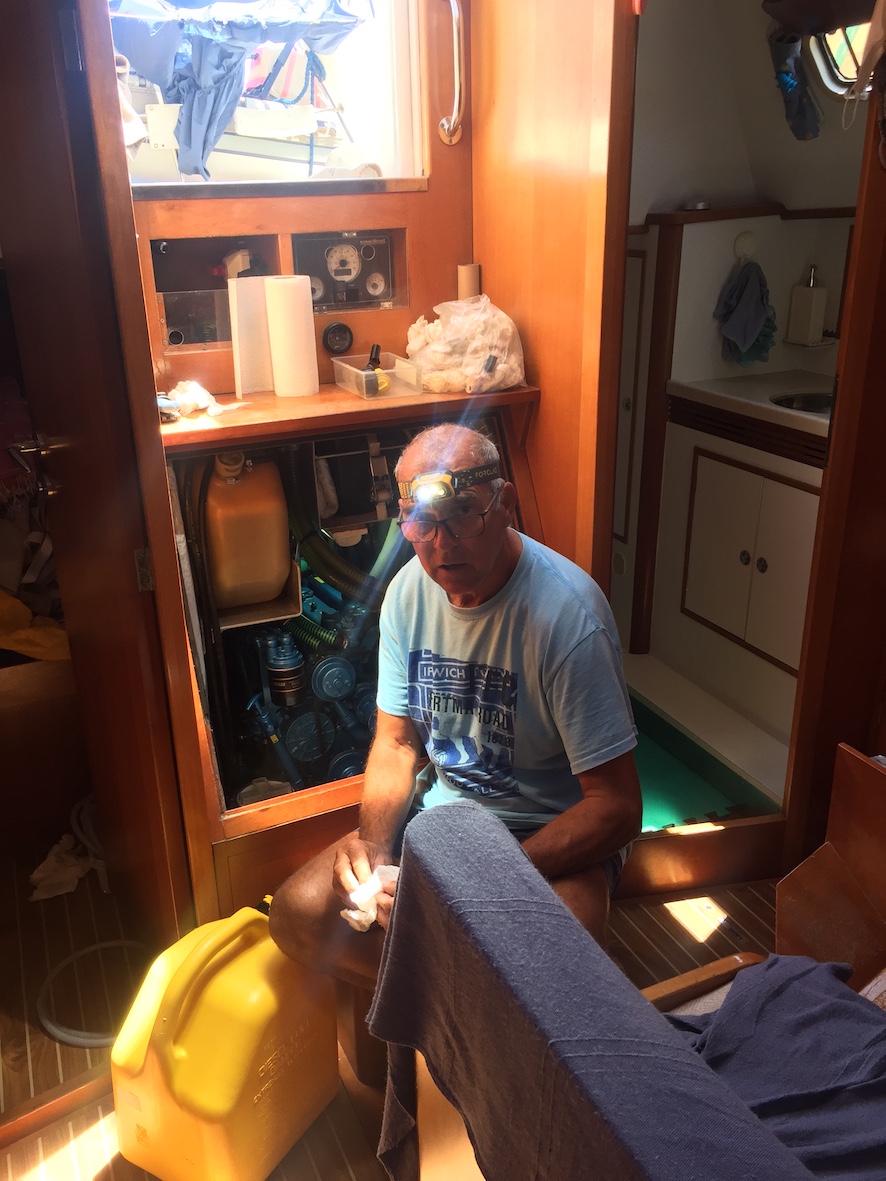

We were able to get parts delivered overnight at Nydri, well actually the truck broke down so it took 2 nights to arrive, and we ended up staying for 4 nights but we got what we needed whilst waiting in a very safe anchorage, with a pleasant town attached. The only downside was the water wasn’t good for swimming and the weather was starting to get hot.
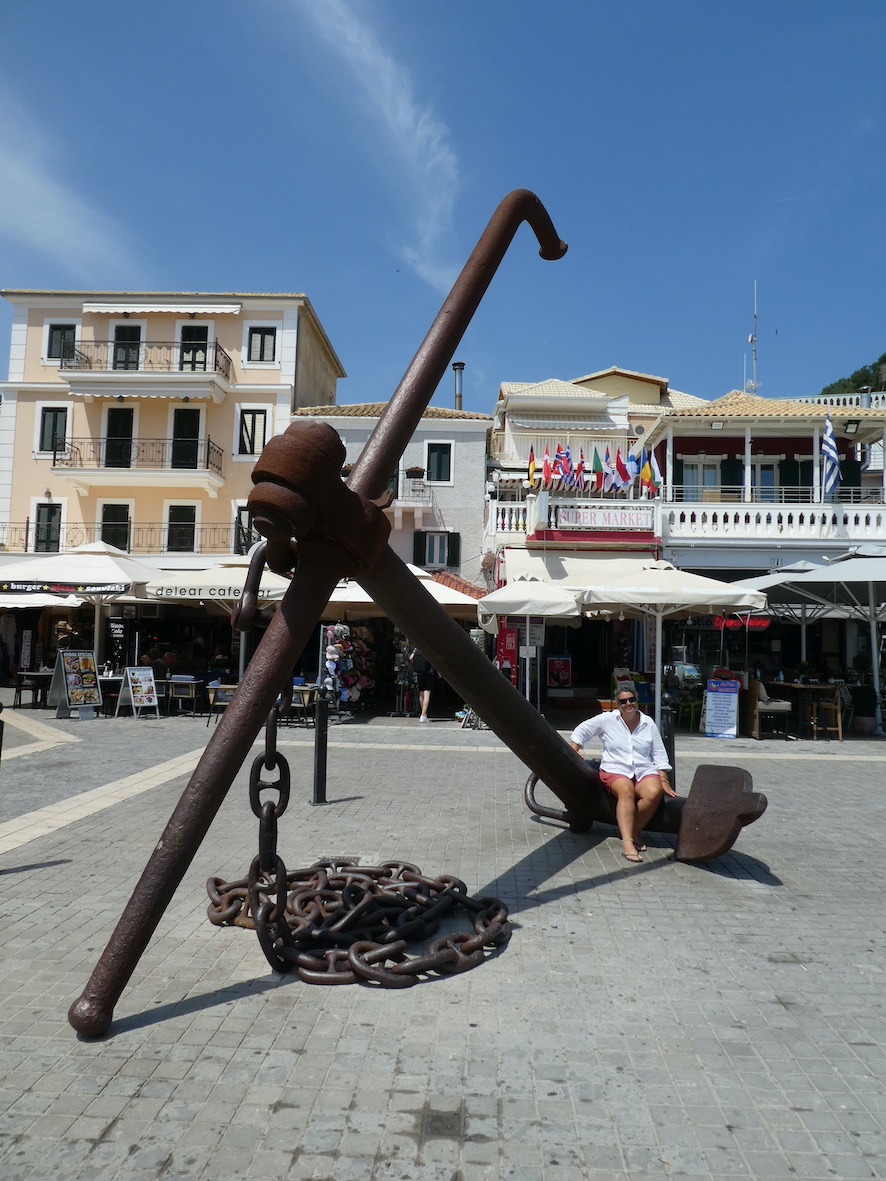

It has reached the point where it is so hot we are starting to cover up and hide from the sun at every opportunity. We are both very brown, not something we aim for but spending so much time, basically living outside does this to us. During a recent video call with family back home, we were told we look like racoons or pandas with white eyes from sunglasses and very brown faces! Most days we swim at least 3 – 4 times.
We have again expanded the sailing network family and met some more lovely people on the water, including more Aussies, some Irish and some Welsh. We also got to visit the boat Mutiny, friends we made during winter in Turkey at their home anchorage in Greece, it was great to re-connect.

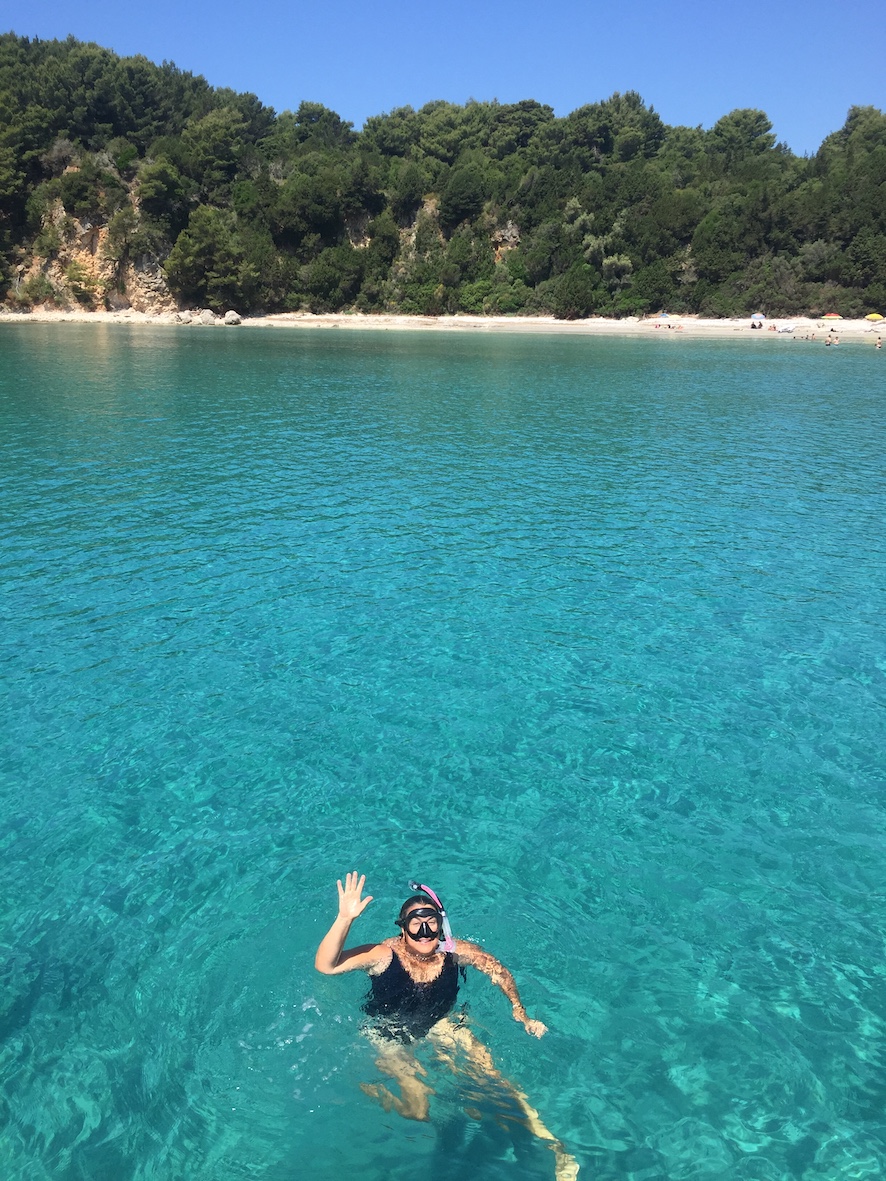
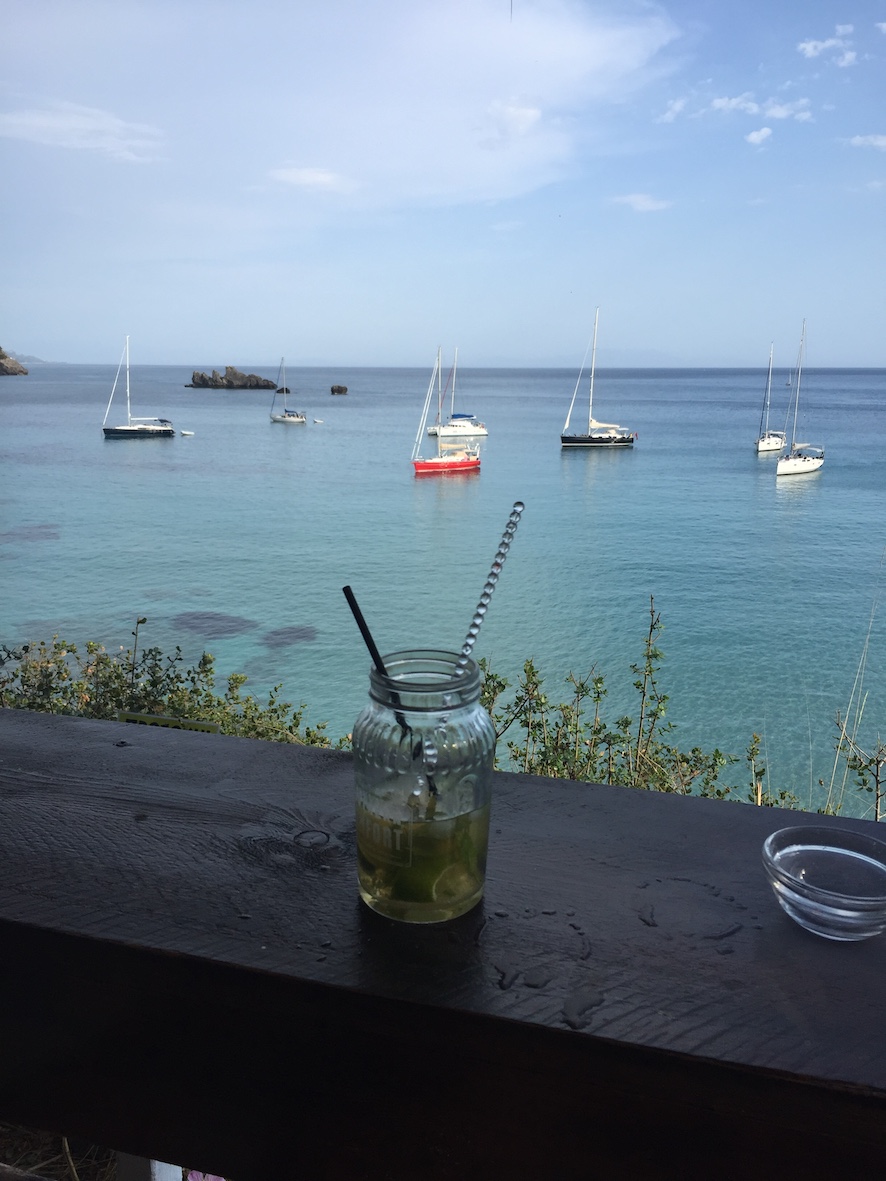
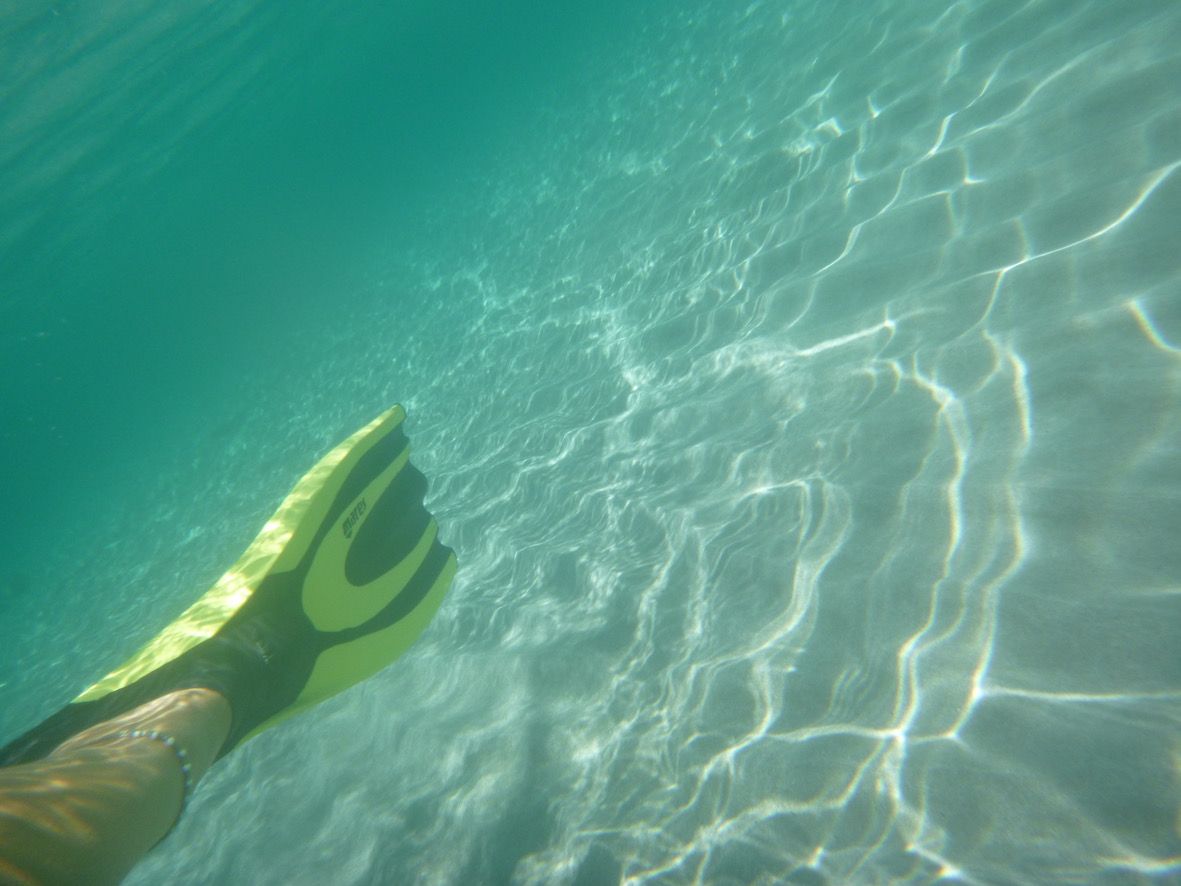
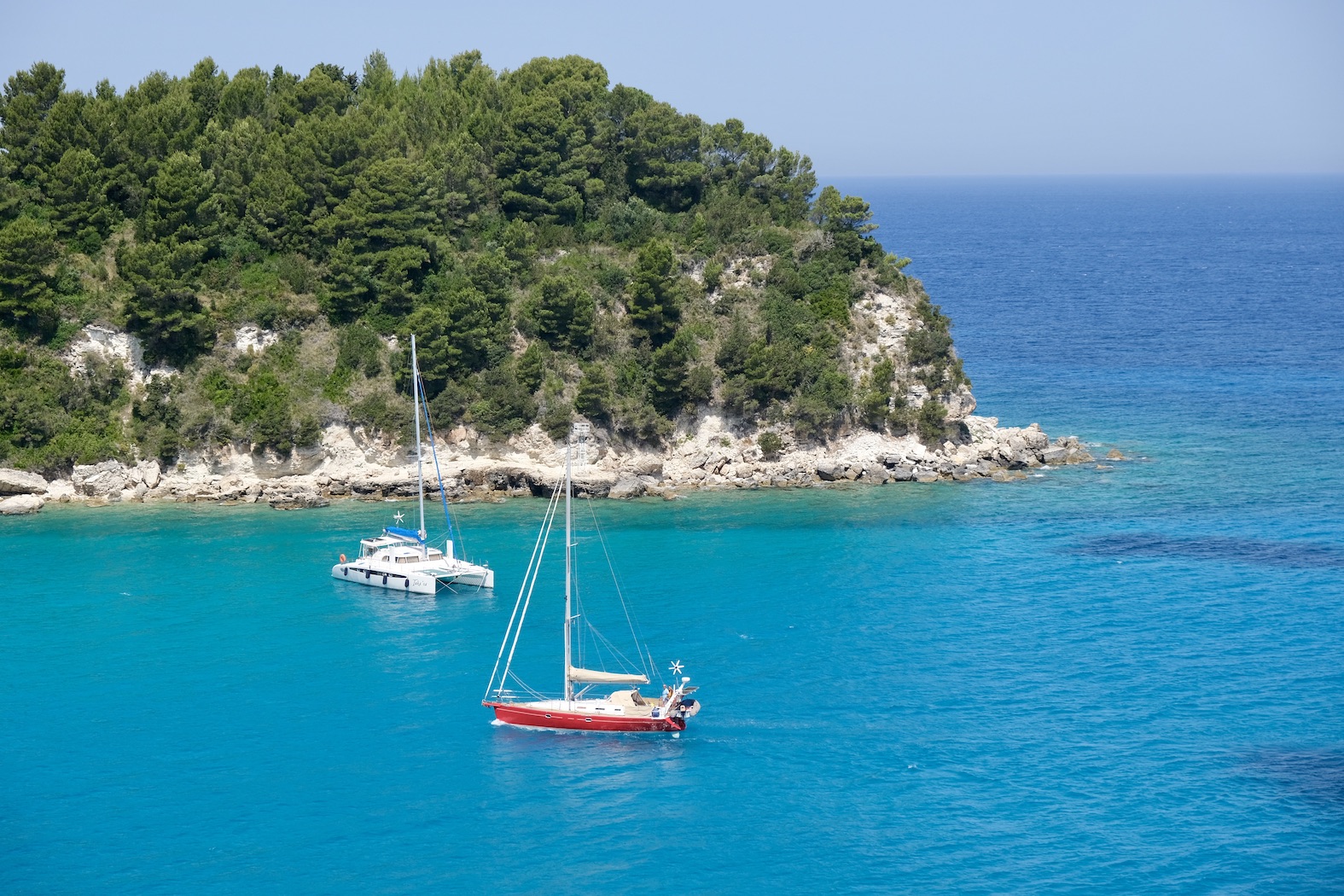
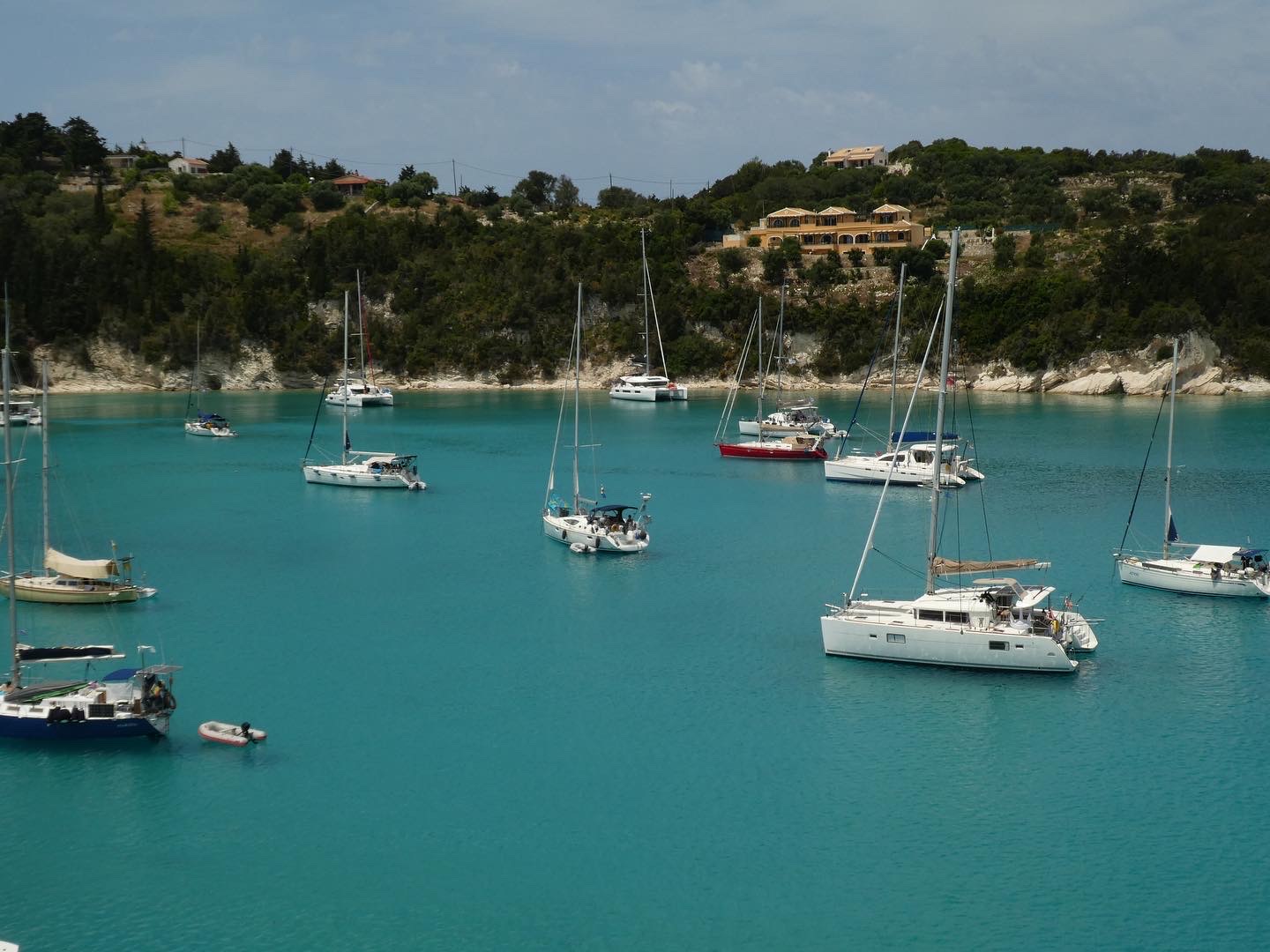
We found two new (to us) anchorages in Greece that would rate in our top 3 anchorages in Greece full stop. Two Rock Bay and Lakka. We were hand feeding fish in Two Rock Bay (but didn’t catch any). Lakka was slightly spoilt by the shear numbers of boats in the anchorage, it was crazy full and everyone was super close. But we couldn’t complain we are all looking for the same thing … Paradise.




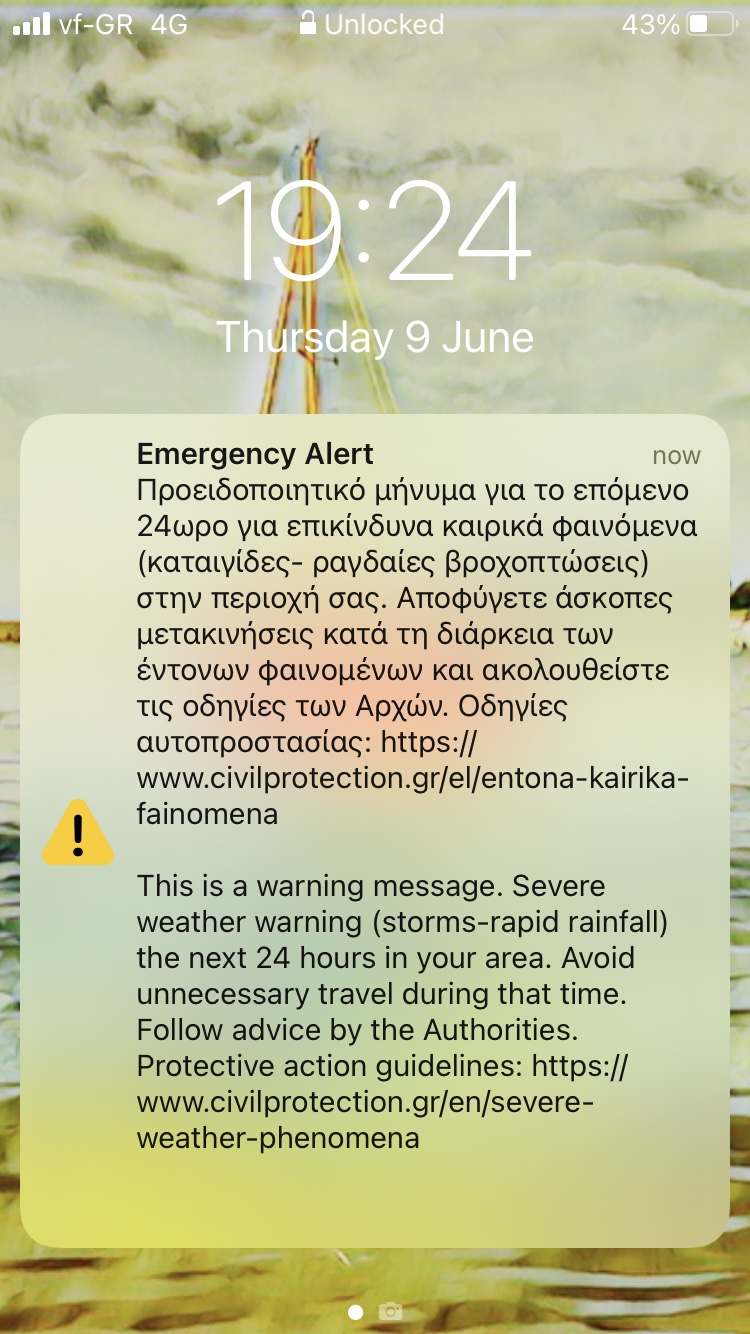
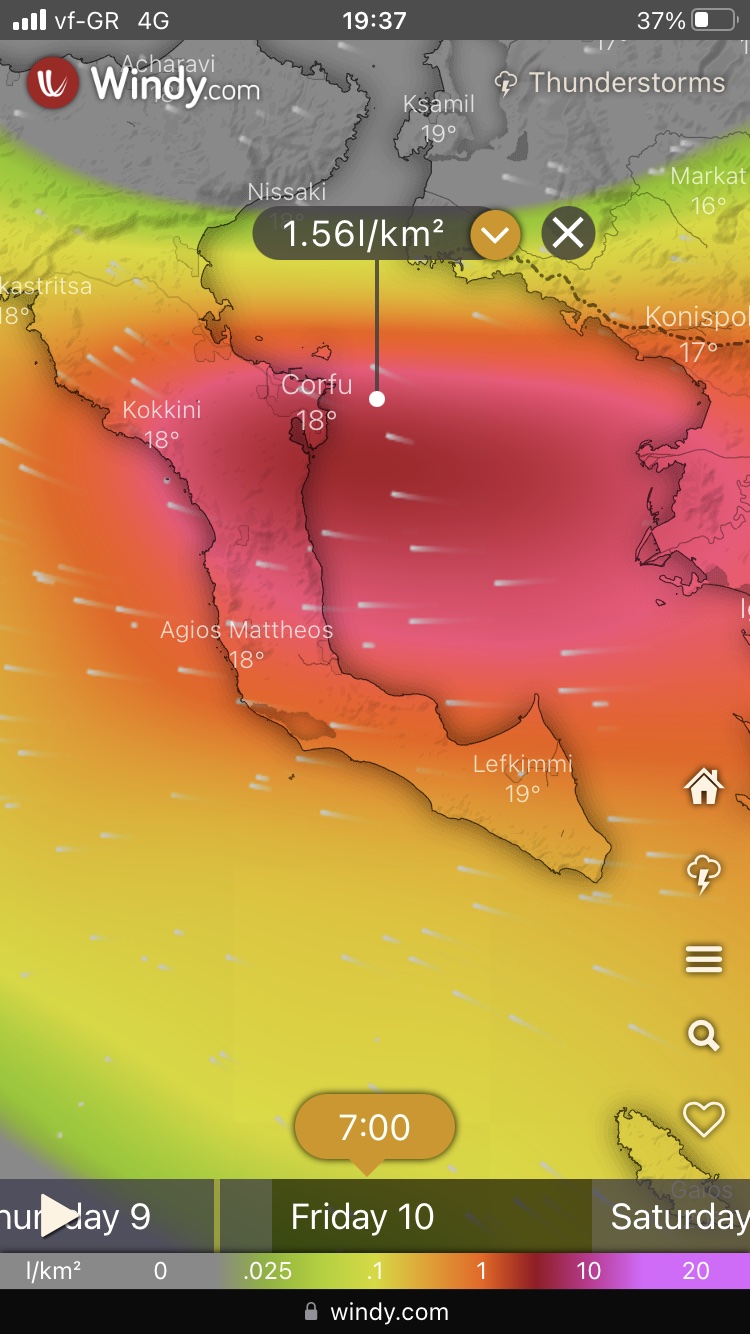
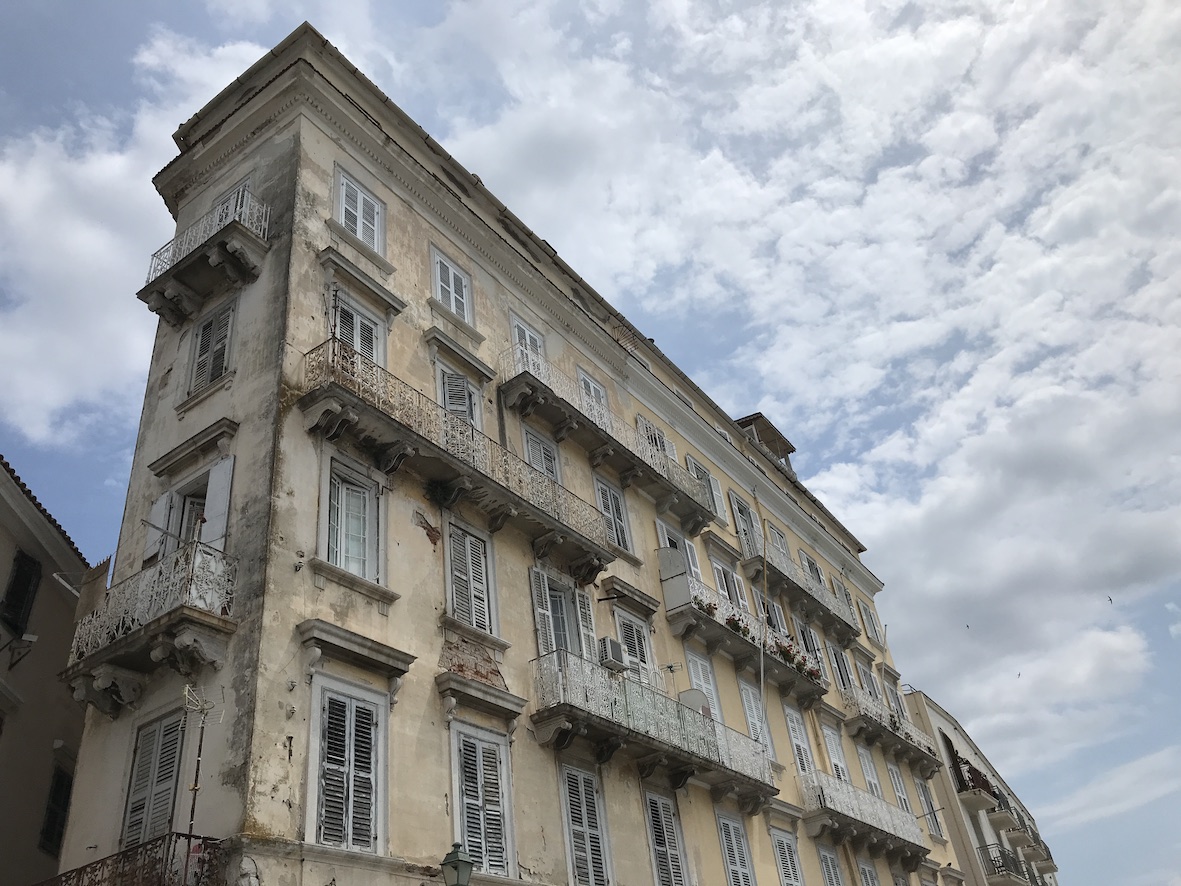
Our last stop in Greece was the island of Corfu, where we anchored off the main town. We spent three nights here before checking out of the country. We enjoyed visiting the town and looking at the old buildings which are magnificent, but mostly in disrepair. We shopped at Lidl (always a bonus, especially when it is walking distance to the boat). And we also waited out a severe weather warning for Greece. So severe that the Greek Government sent an audible alert & warning to every mobile phone. This did get our attention and I am especially glad to report that the thunderstorms seemed to be north and south of us and we didn’t actually get any real impact. A little swirly wind, which apparently dragged a few boats around in the anchorage but we were dug in well and secure and didn’t move an inch. The lightening meant we isolated all electrics on board for a few hours and that was about it. Happy to have dodged it.




Next stop Albania!
Travelling Turkiye III – Gallipoli

After two weeks touring the Black Sea, North East, Central Turkey & Istanbul, we headed back to the boat to catch our breath for just 3 days before heading off again (just ourselves this time) on our final Turkey adventure in a hire car to explore the West Coast and the North West, specifically three top sites we wanted to see being Ephesus, Pamukkale & Gallipoli.
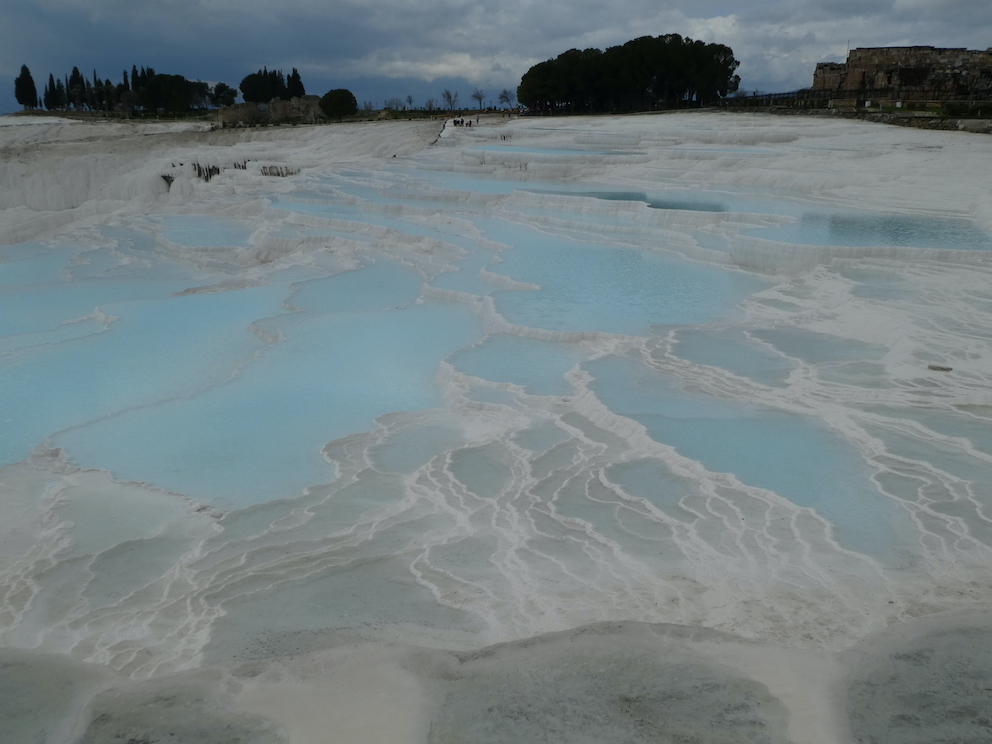
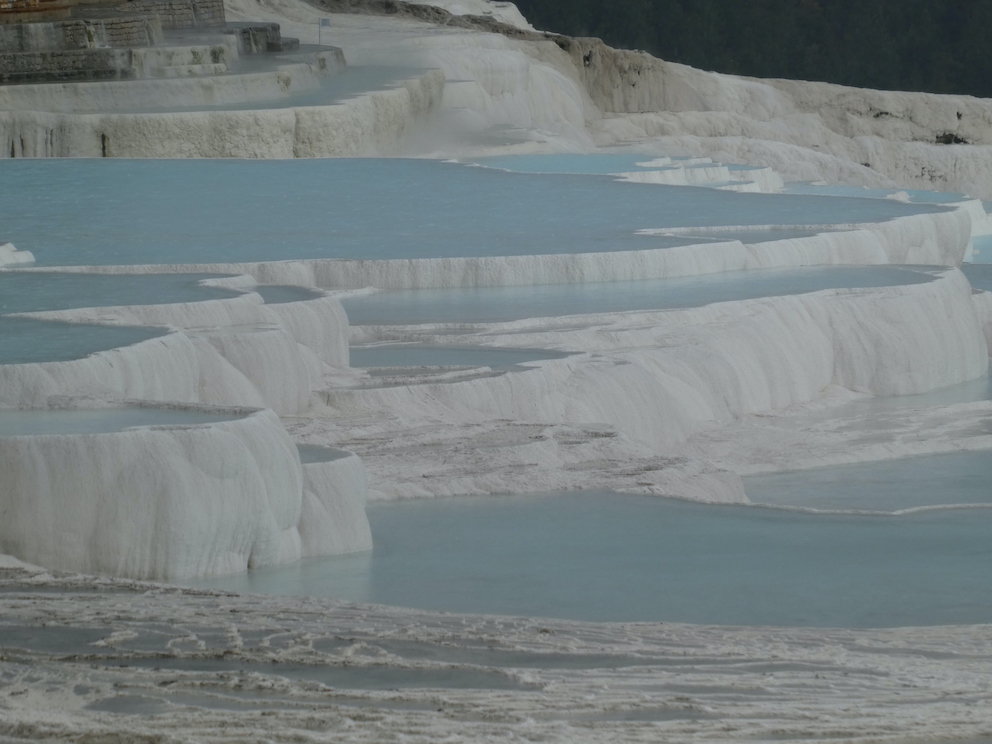
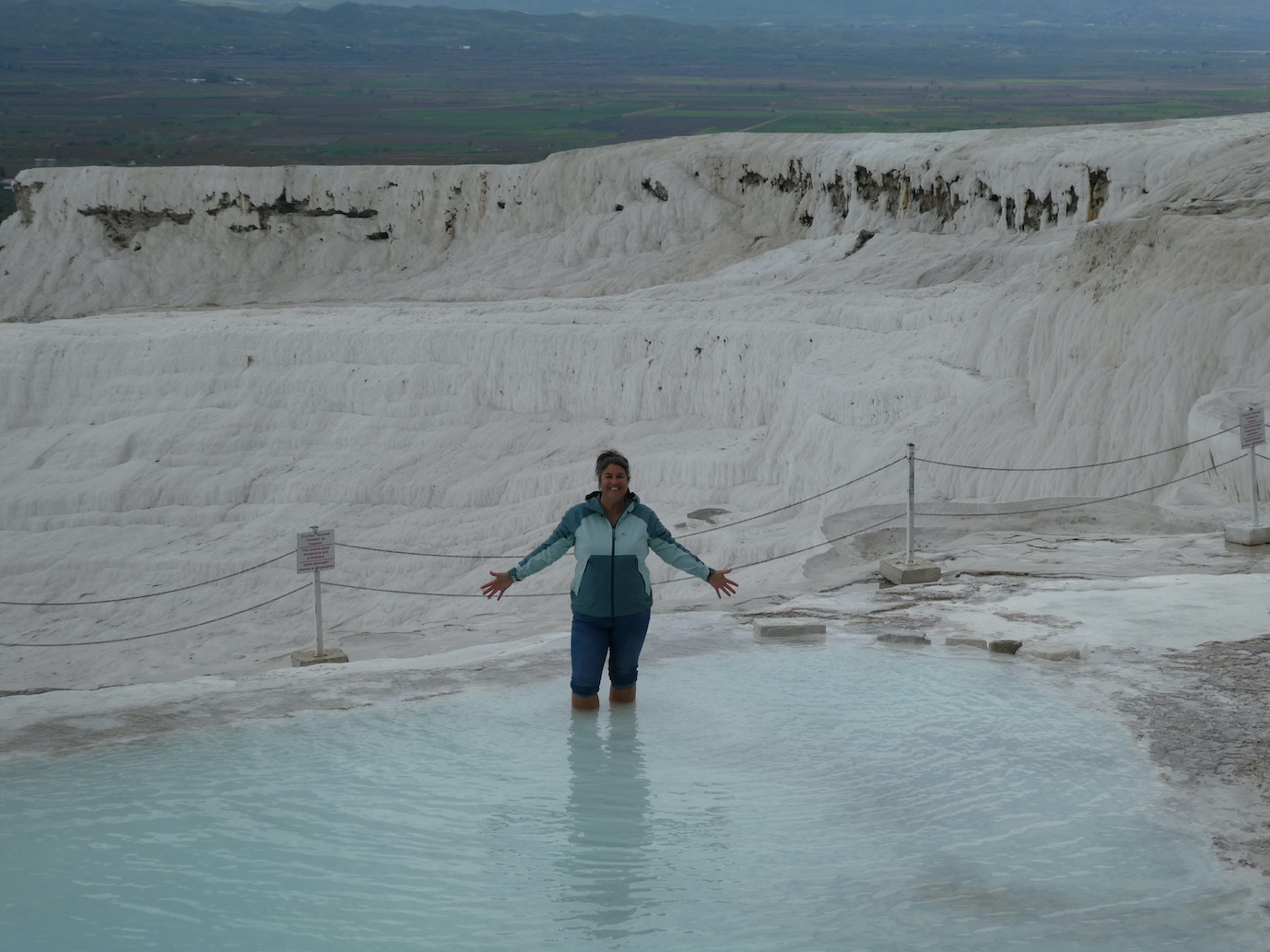
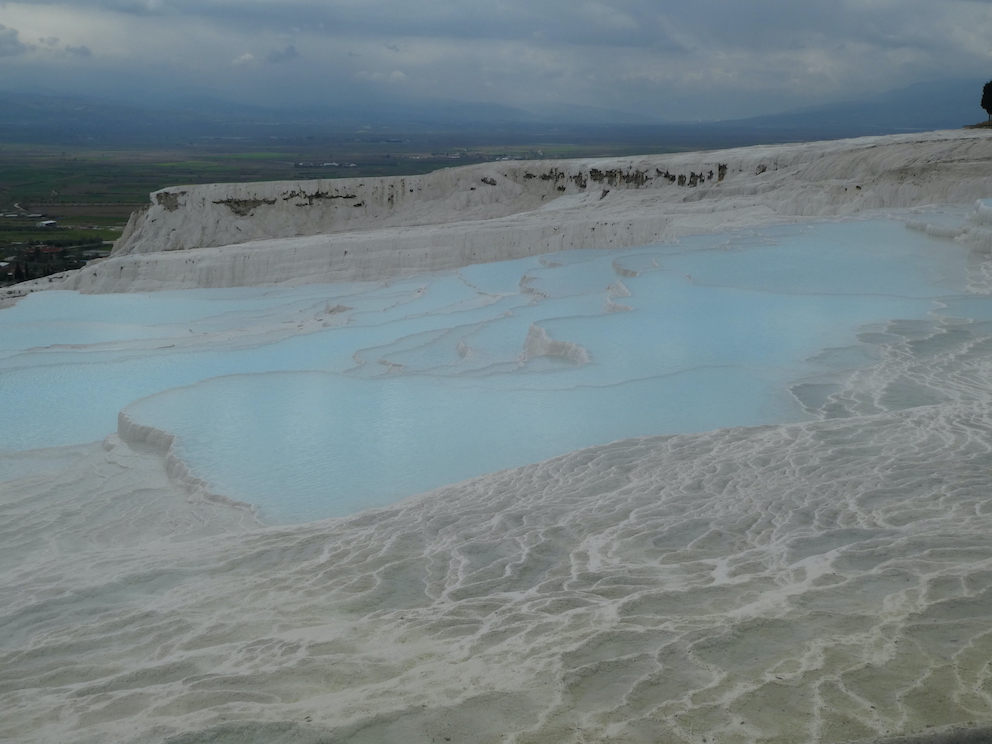
Pamukkale meaning “cotton castle” in Turkish is a natural site famous for carbonate mineral left over from flowing thermal spring water. These thermal pools on the side of a hill are huge and impressive, the area is almost 3 km meters long by 600 meters wide, it can be seen from 20km away. The surface is shimmering white limestone shaped over thousands of years by the calcite rich springs dripping slowly down the mountainside. Turkish legend has it that the formations are solidified cotton (which is the areas main crop) that giants left out to dry. We also explored the ruins of Hierapolis an ancient Greek city located on the same site.

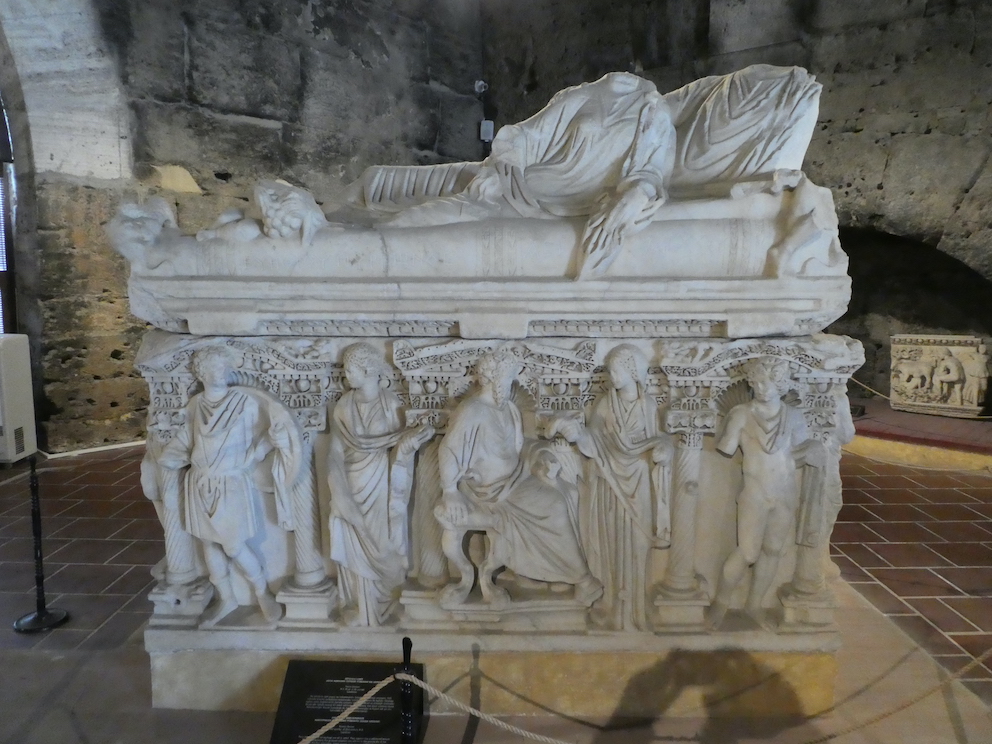
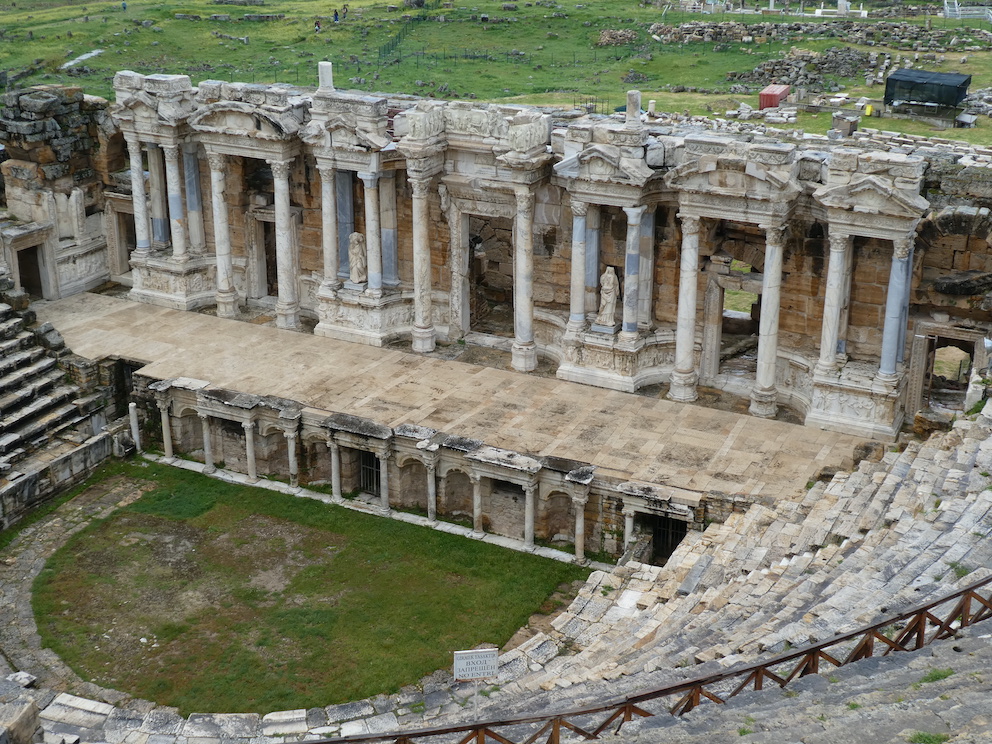

Phil (the history loving ruins specialist) had been looking forward to visiting Ephesus since we arrived in Turkey back in November 2021.
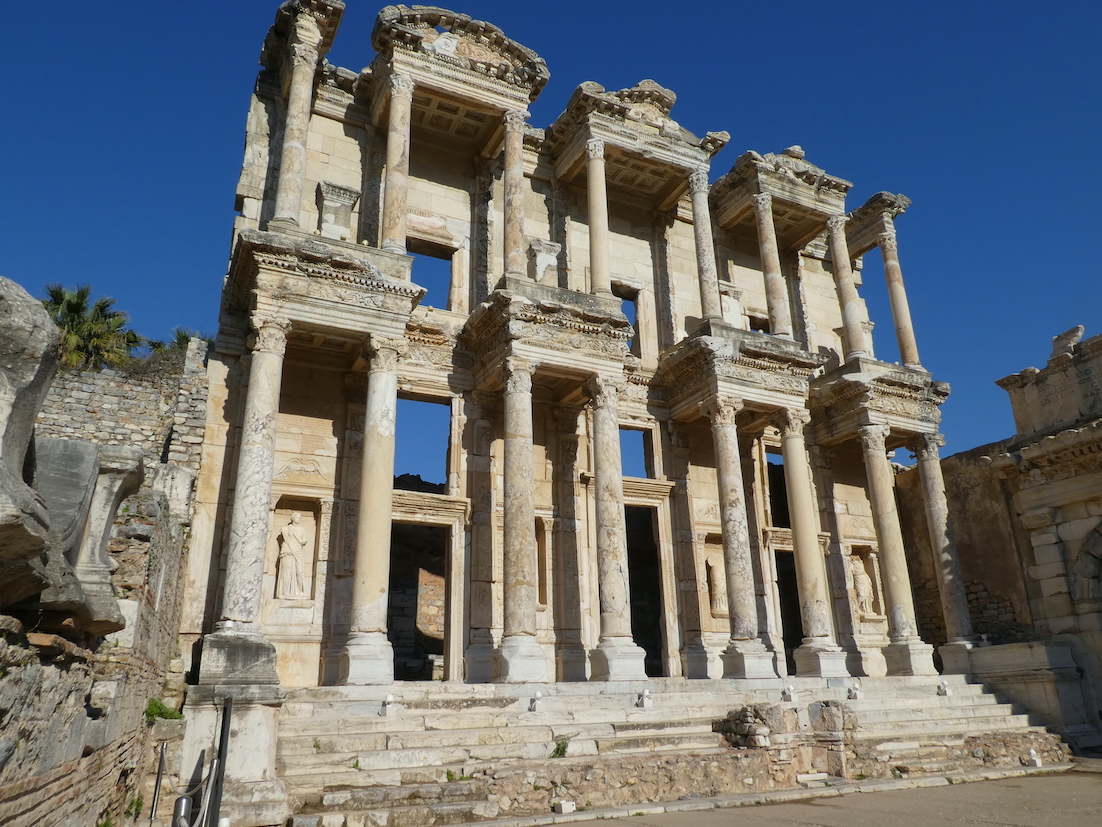
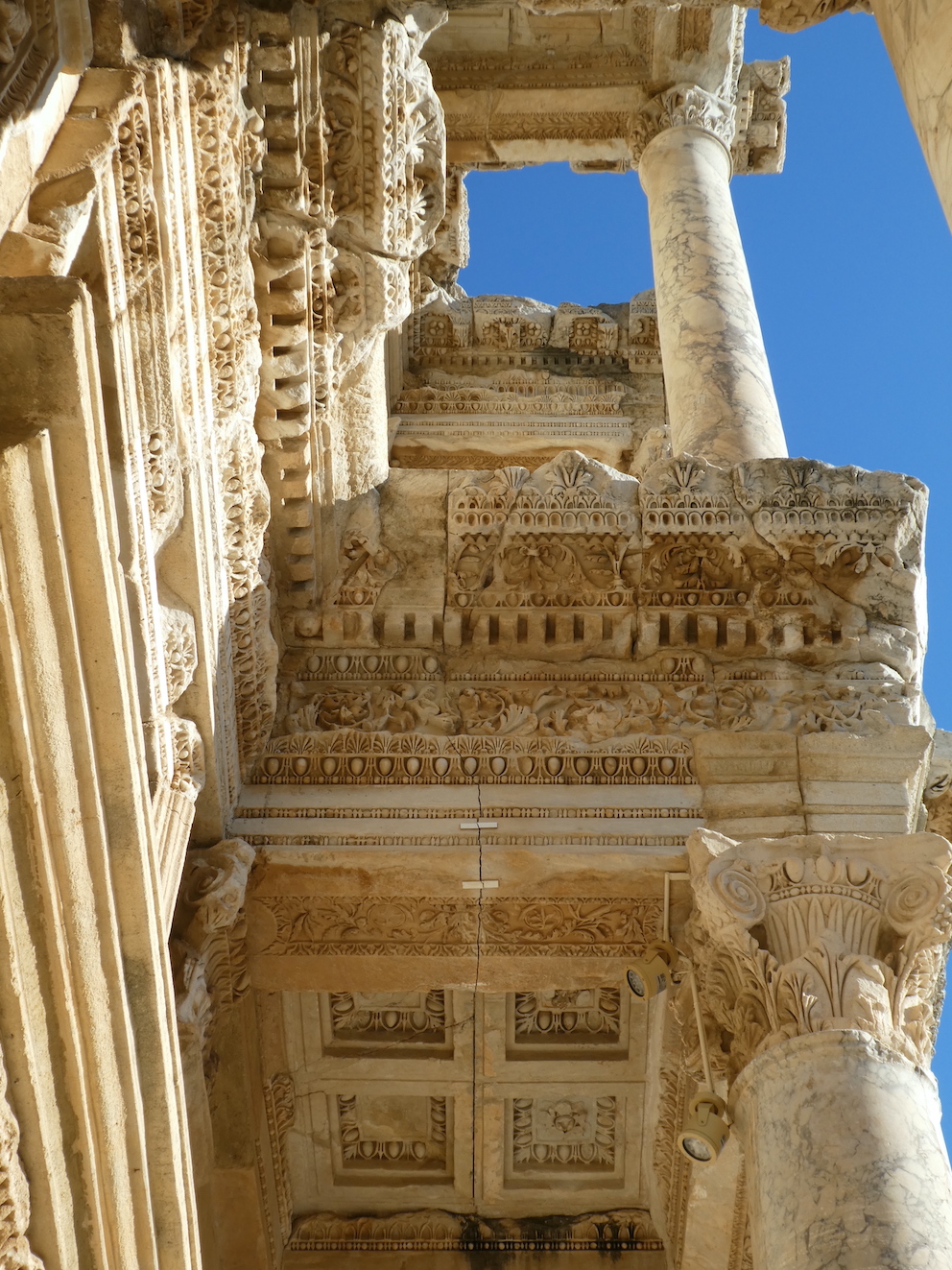
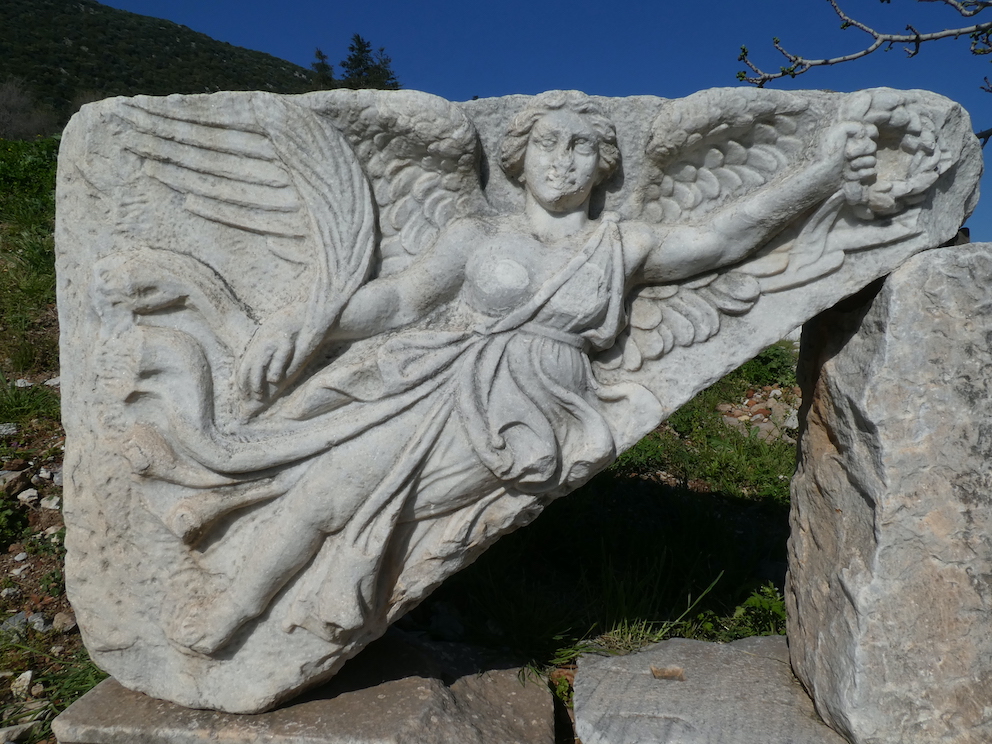
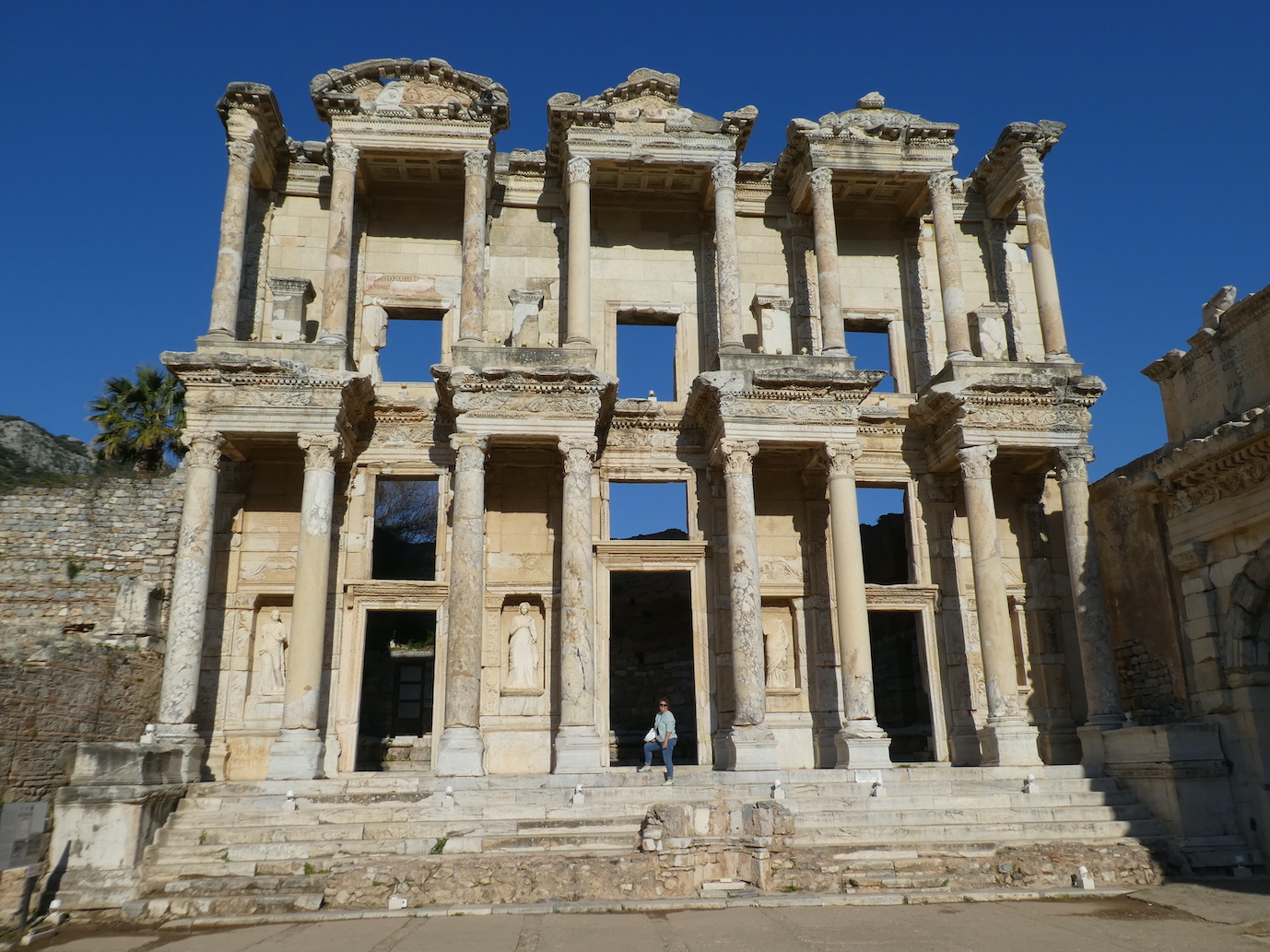
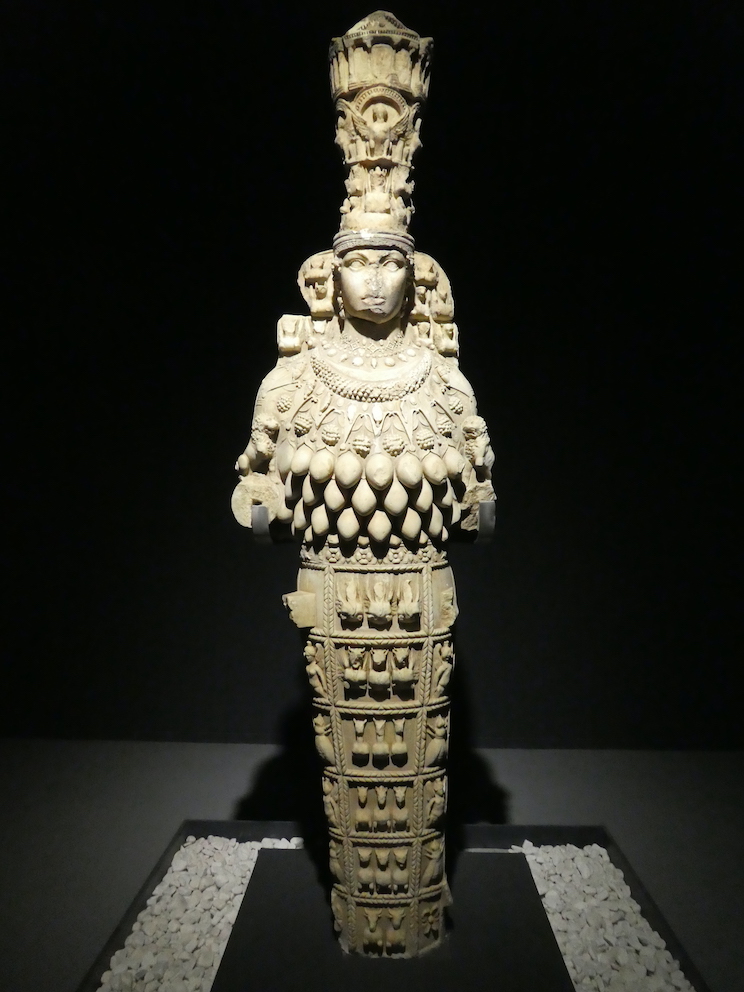
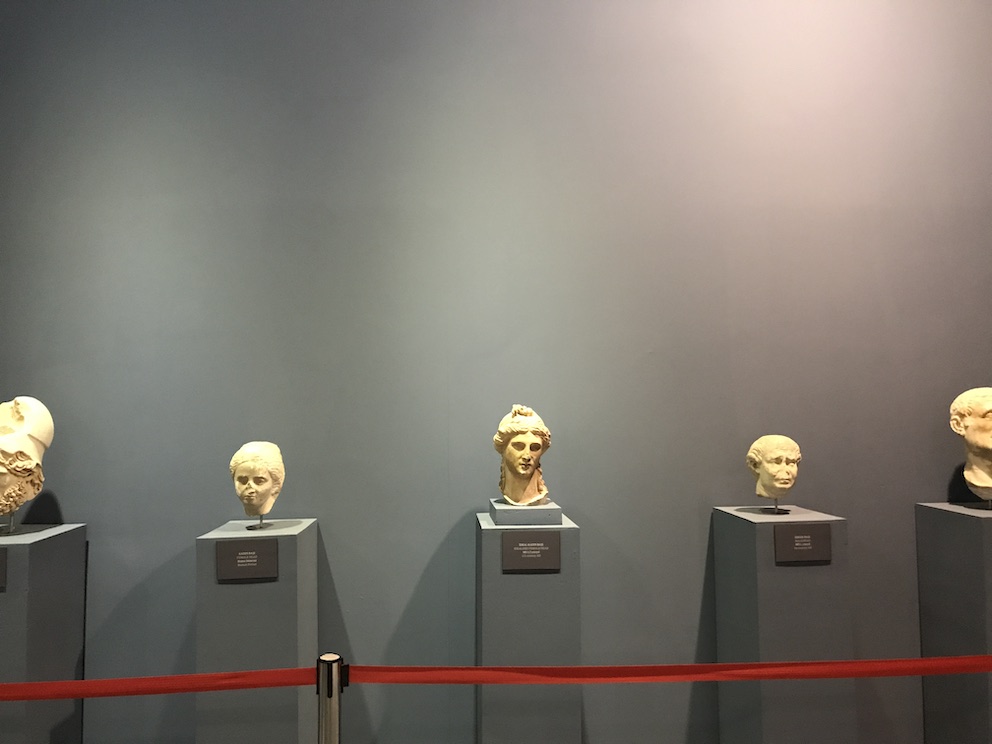
Ephesus excavated remains reflect centuries of history, from classical Greece to the Roman Empire, when it was the Mediterraneans main commercial centre, and where they spread the religion of Christianity. Paved streets wind past squares, baths and monumental ruins. Records of this city exist dating back to 129 BC. One of the most outstanding remains are that of the Library of Celsus commissioned in 110 AD. The library and its contents were destroyed in a fire that resulted from either an earthquake or a gothic invasion in 262. The facade was damaged by an earthquake in the tenth or eleventh century. It lay in ruins for centuries until it was re-erected by archaeologists between 1970 and 1978.

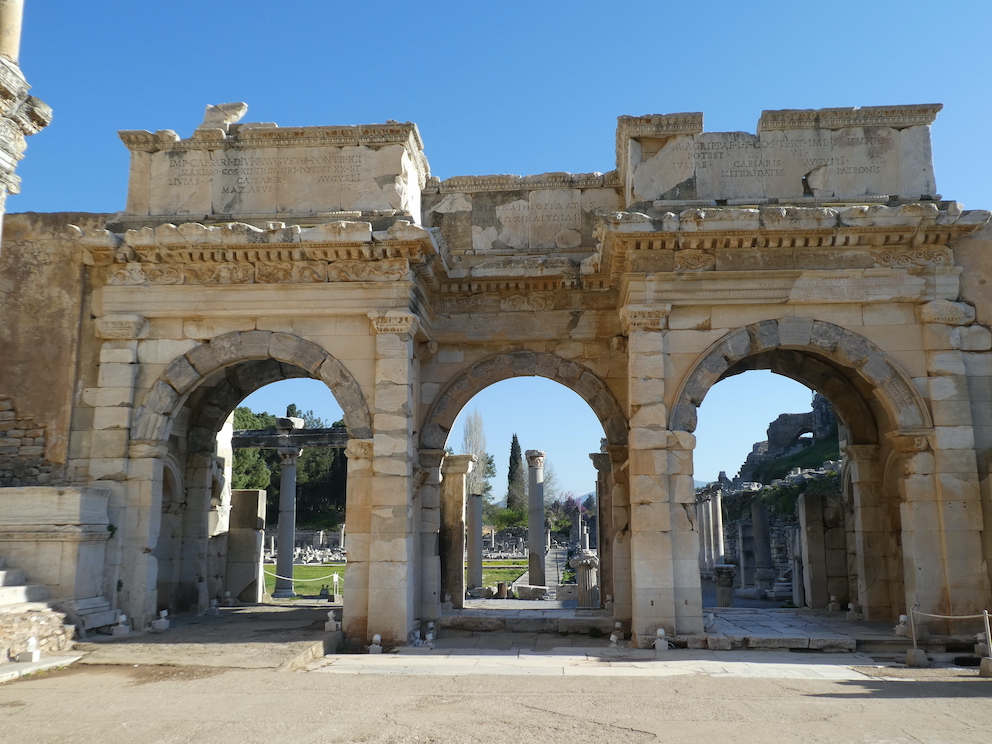




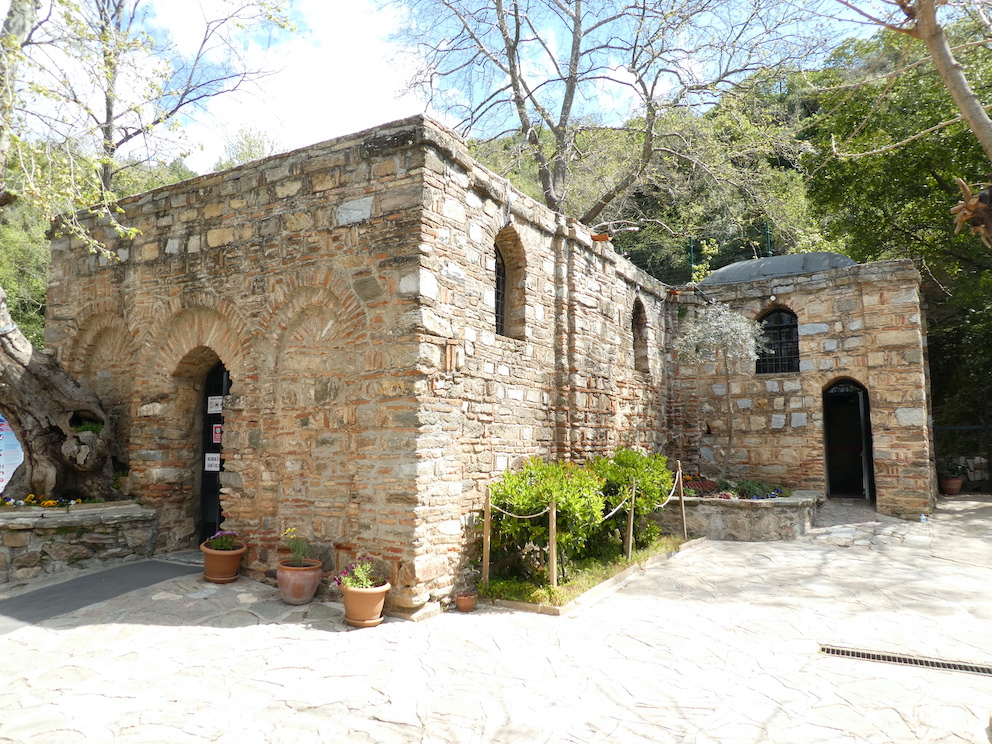
Nearby was also the House of Virgin Mary. It is often questioned how the Mary came to be living in Turkiye and there was some signage which attempted to explain this. Apparently it is written in gospel that before dying on the cross Jesus entrusted his mother to Saint John, who was to care for her for the remainder of her life. St John was then issued to spread the word of the bible across Asia and it is assumed he would have taken Mary with him. The evidence then is given that the tomb of St John is in Ephesus, assuming he lived and died here and therefore Mary lived here also. There was some other so called “facts” also written to attest to her living here, but will we ever really know?

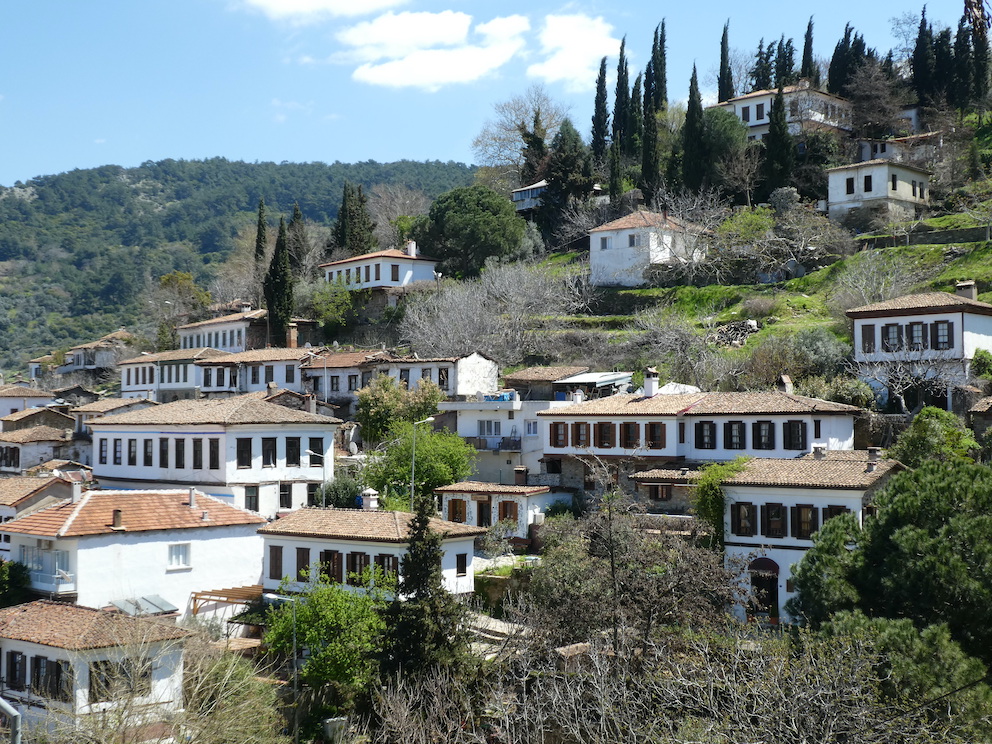
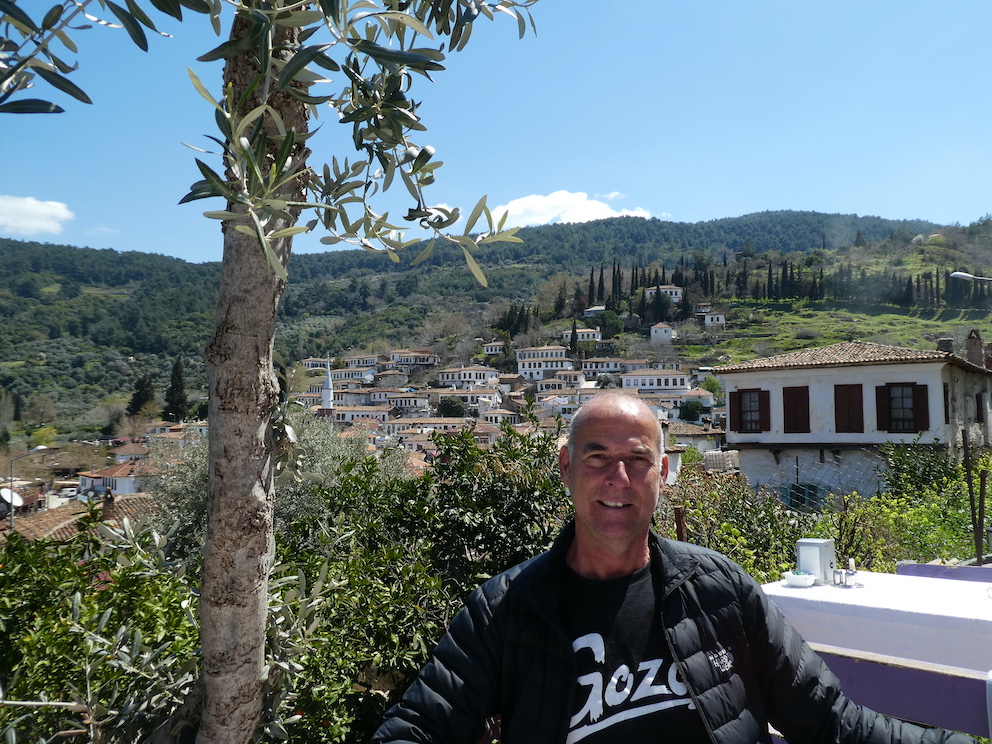
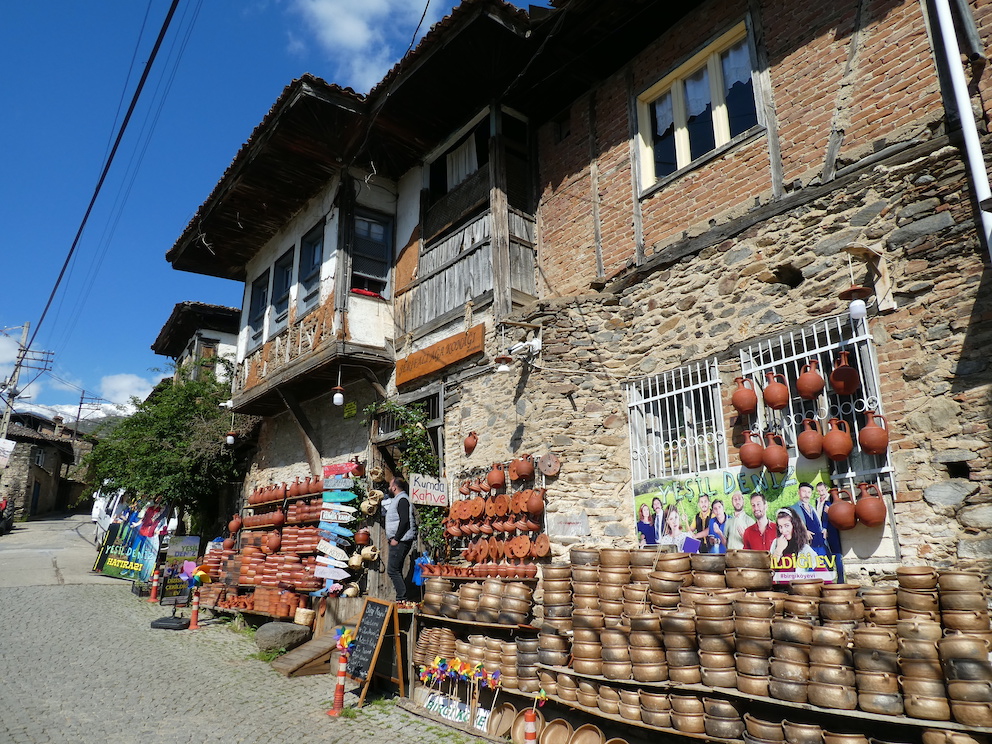
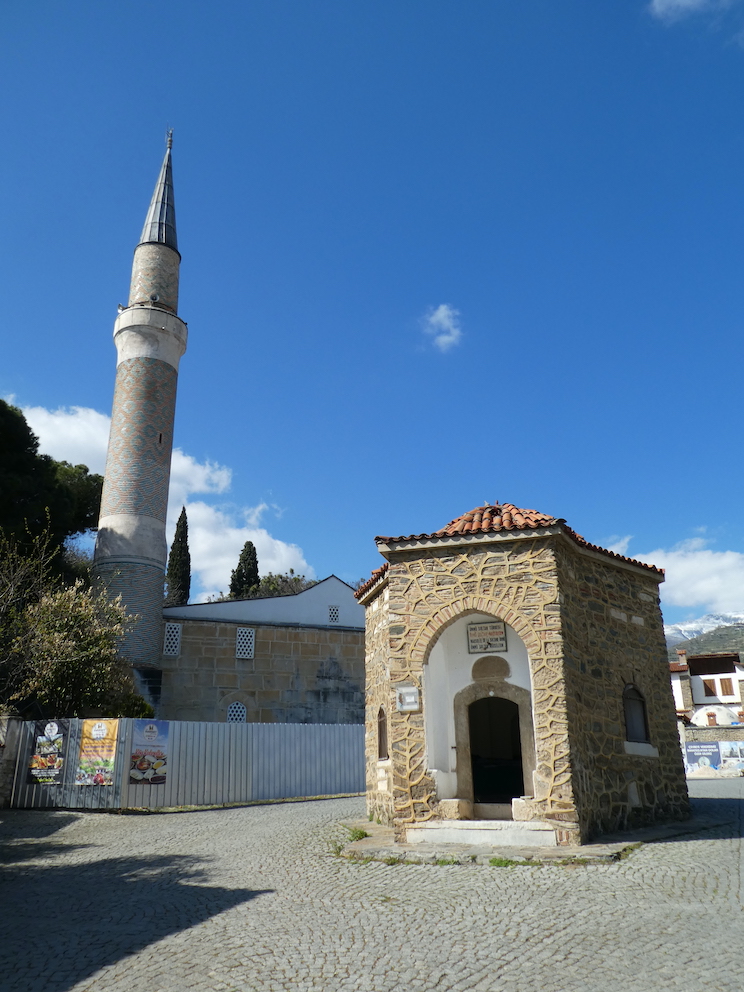
In the 500 kilometres between Ephesus and Gallipoli we visited the small villages of Sirince and Birgi, both very Turkish and whilst Sirince had been taken over and turned into a tourist trap (with not much authenticity left), Birgi was an absolute untouched delight.
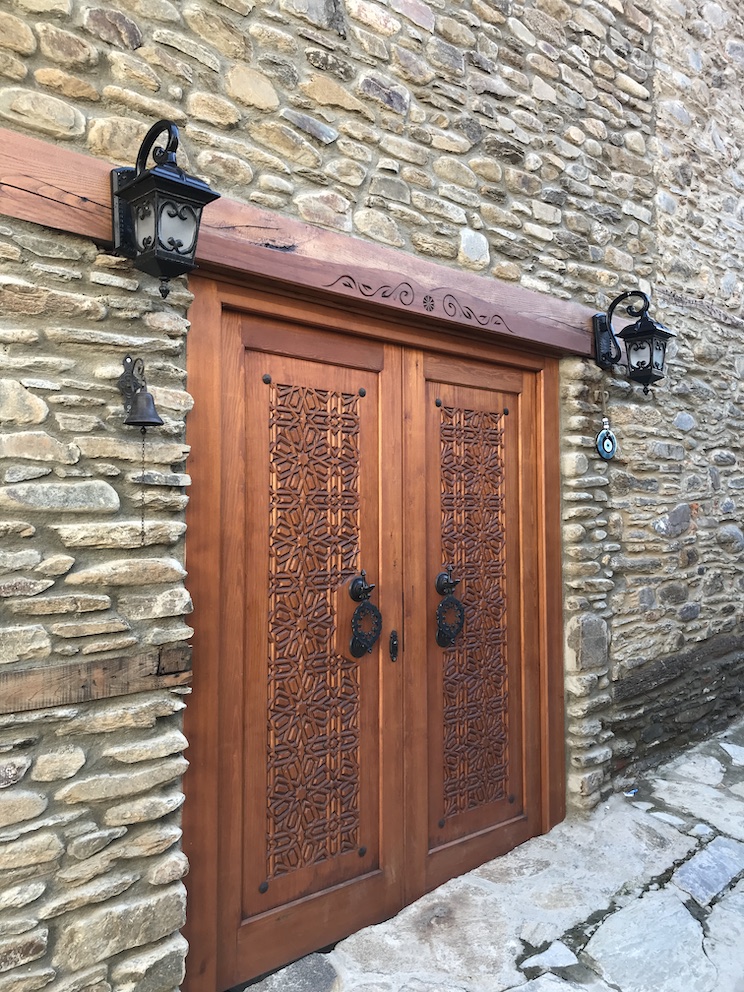


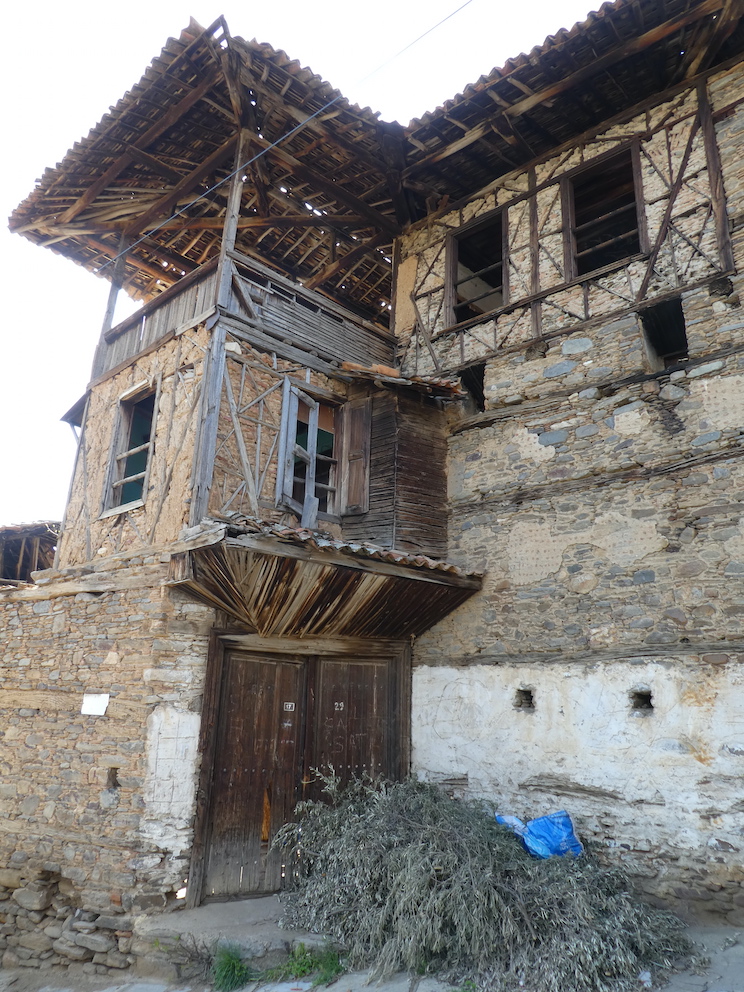

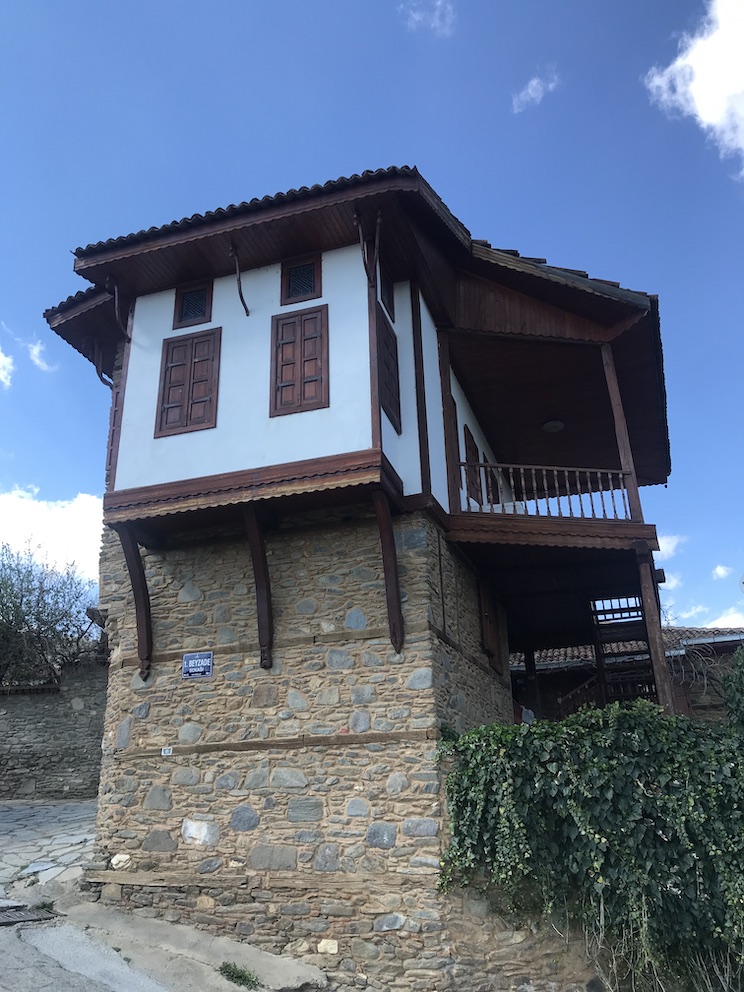
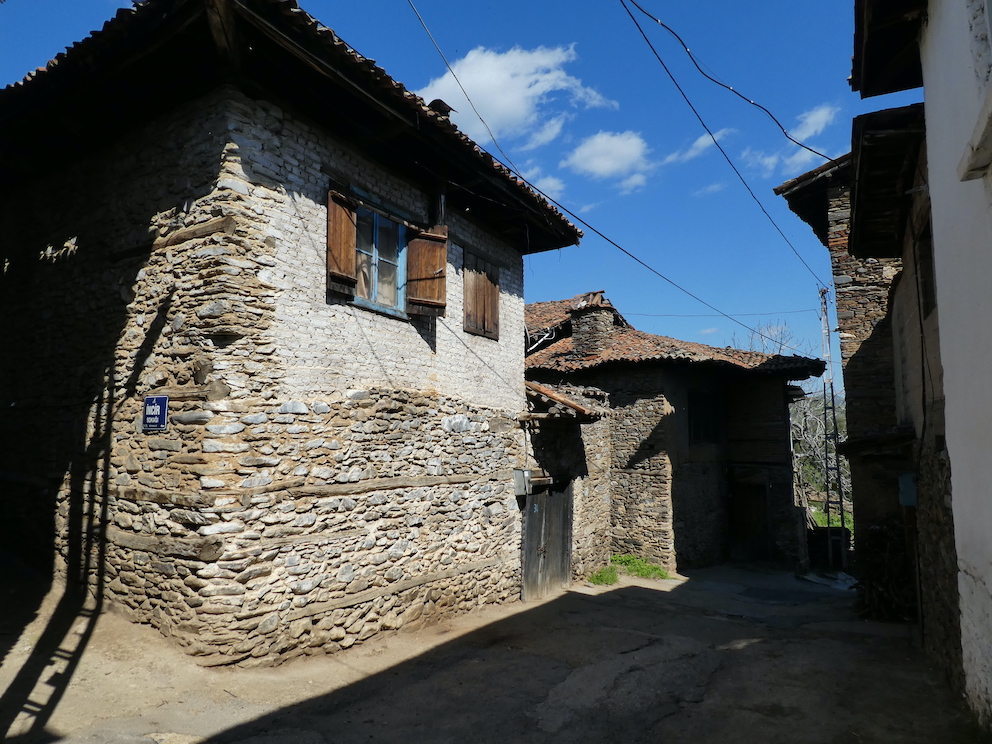
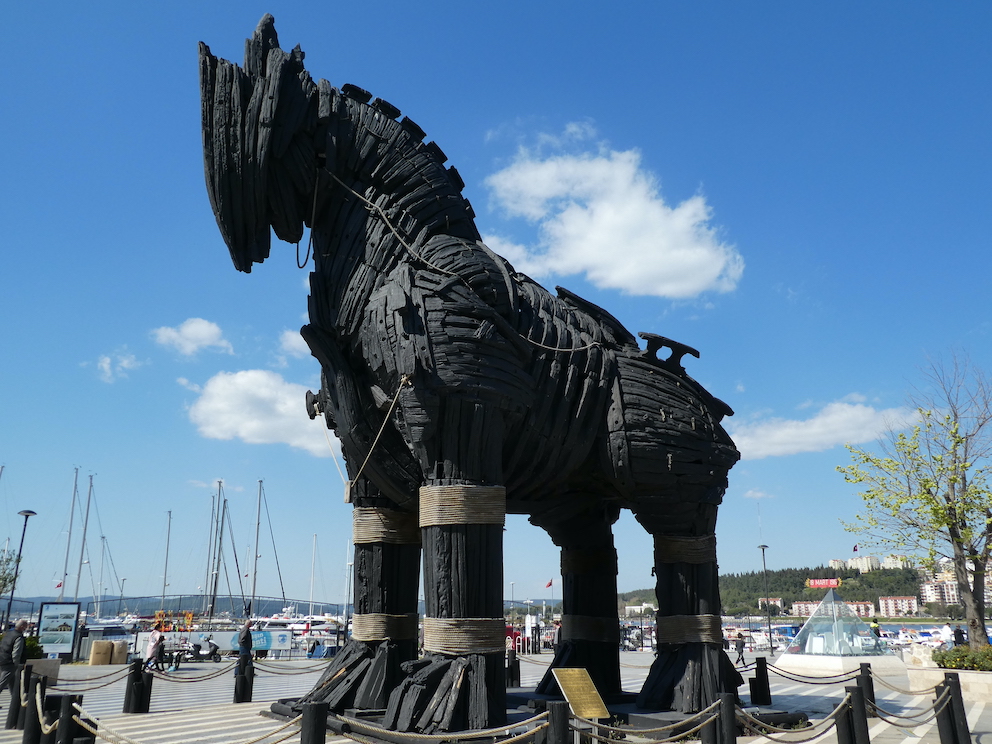
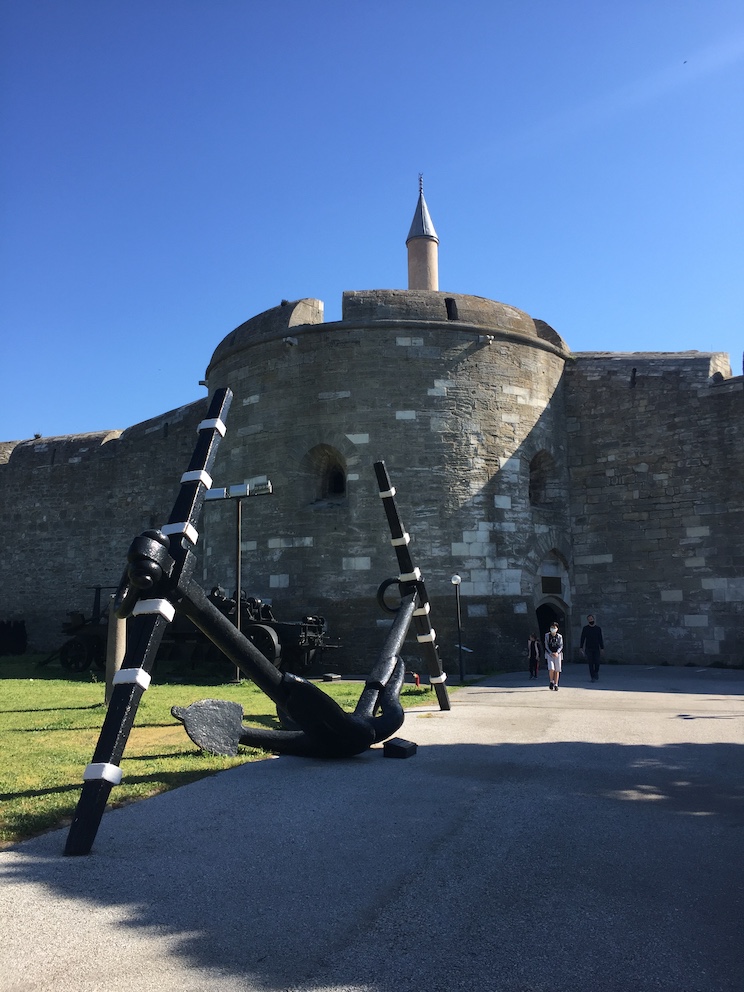
Cannakale is where you take the ferry over to the Gallipoli Peninsular. Whilst waiting for the ferry we visited the Trojan Horse Statue, which was built for the 2004 movie Troy (the village of Troy is located near by), we also visited the museum in the fortifications on this side of the water, including a replica of the Nusret Mayin Gemisi Mine Layer Ship.


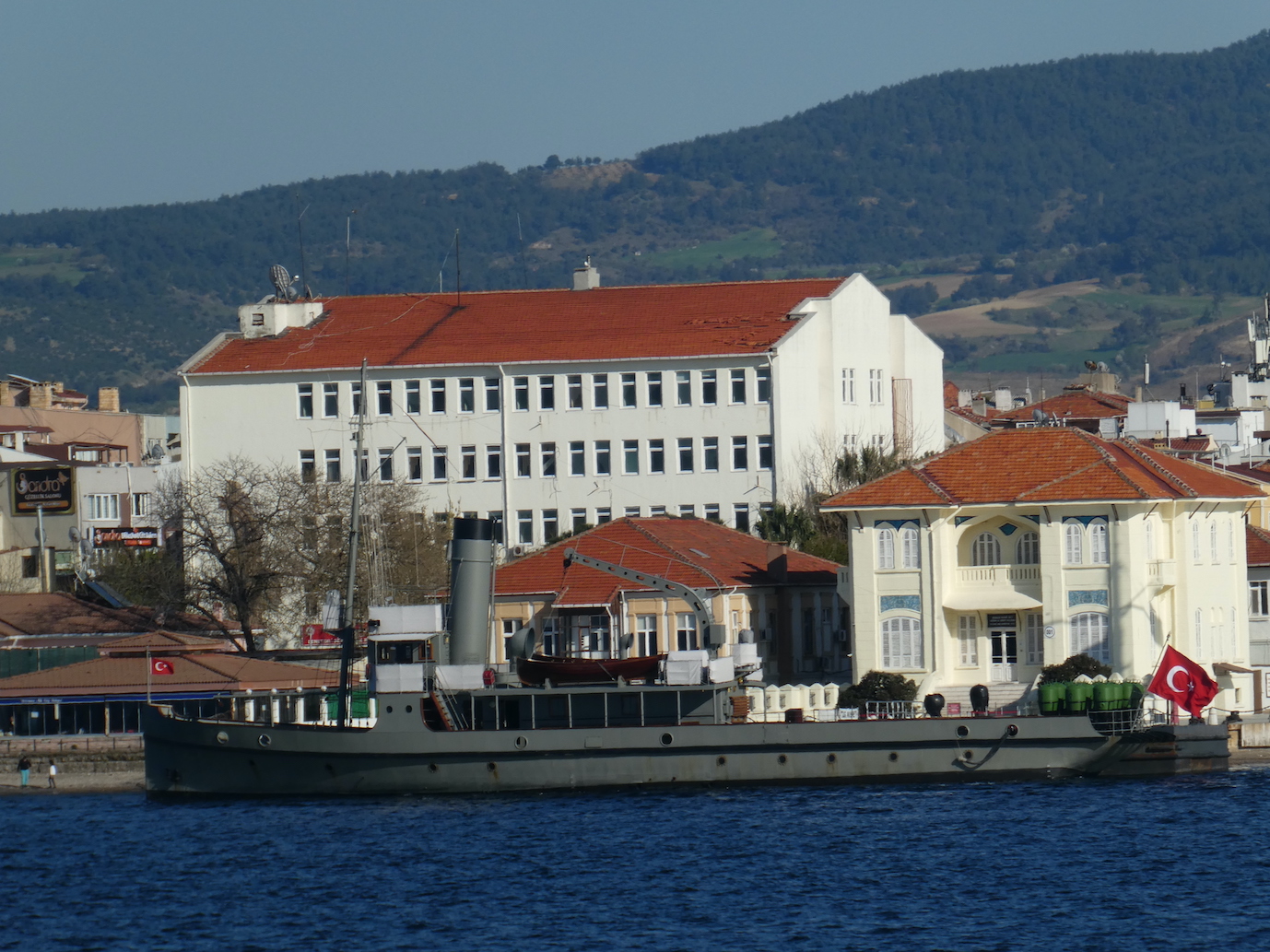
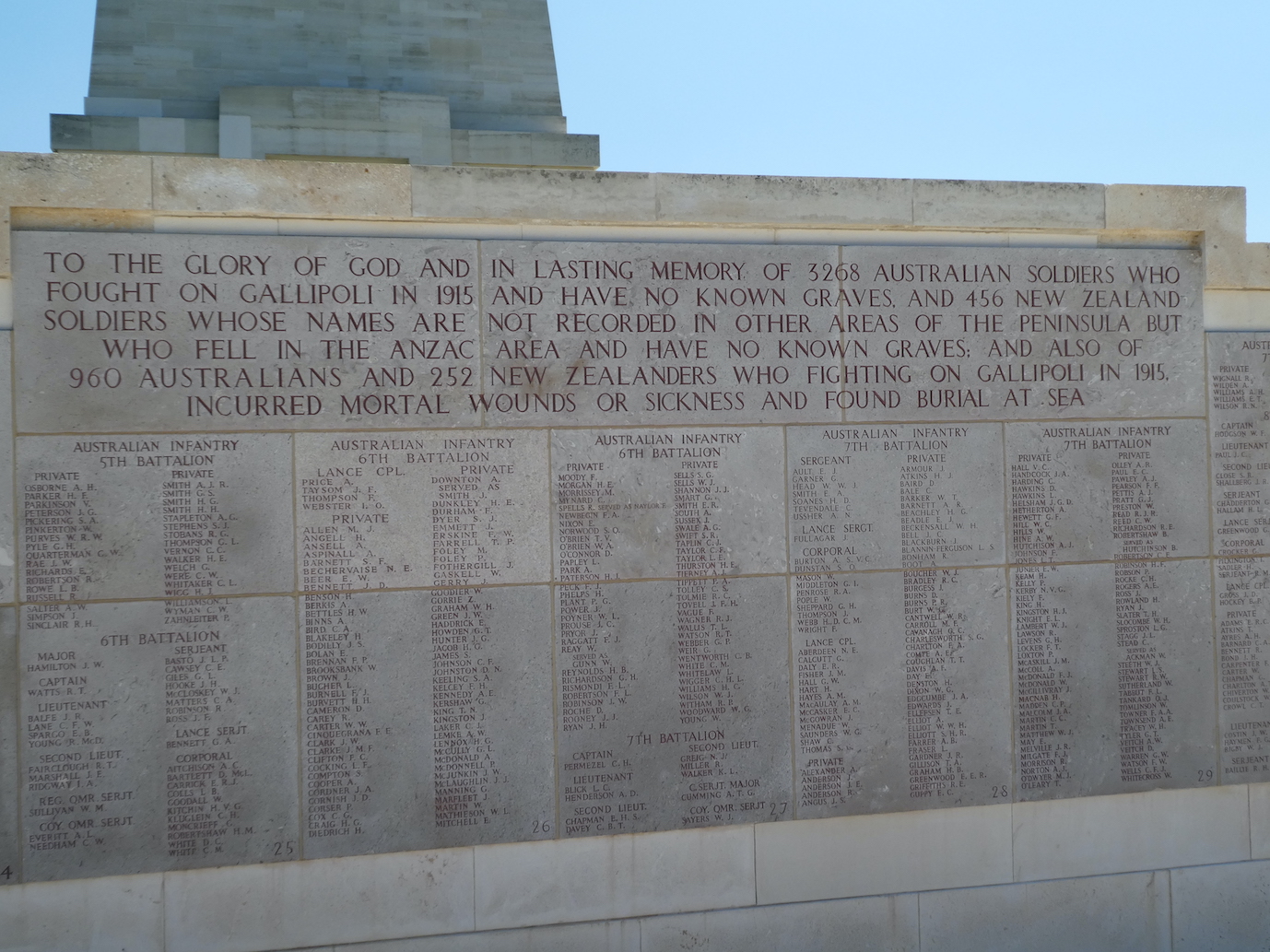
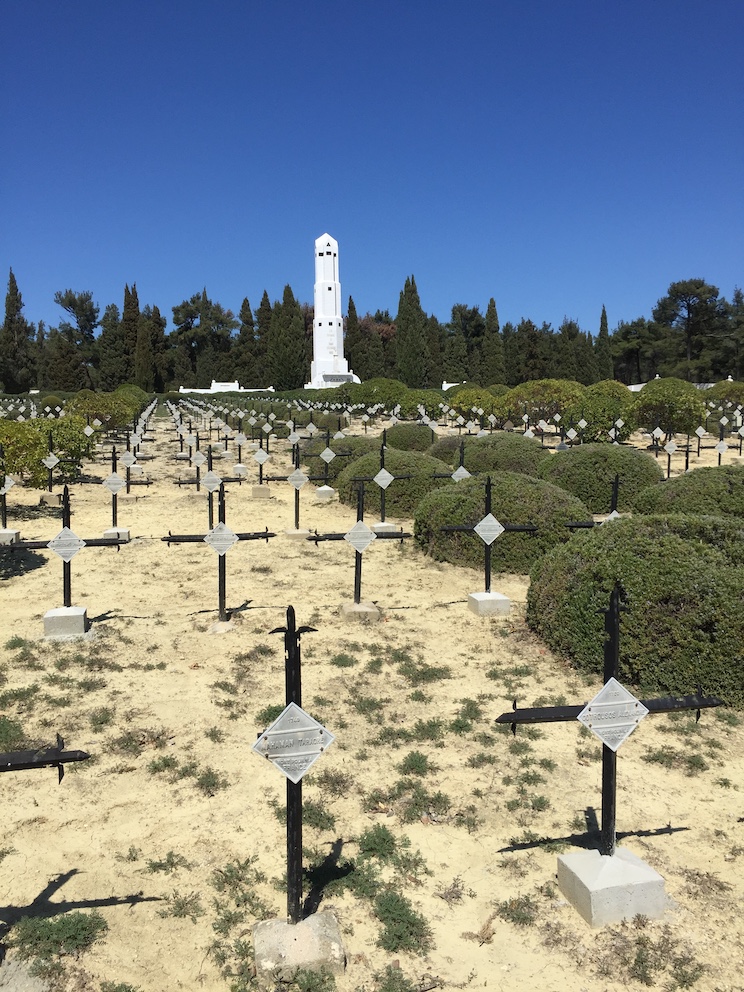
The final site of importance for us to visit was the Gallipoli Peninsular. The site of the failed World War 1 military campaign in 1915. This place was not only hard to visit but I also struggle to write about it. I in fact didn’t take any pictures (however Phil did), I just tried to absorb all that was around me.
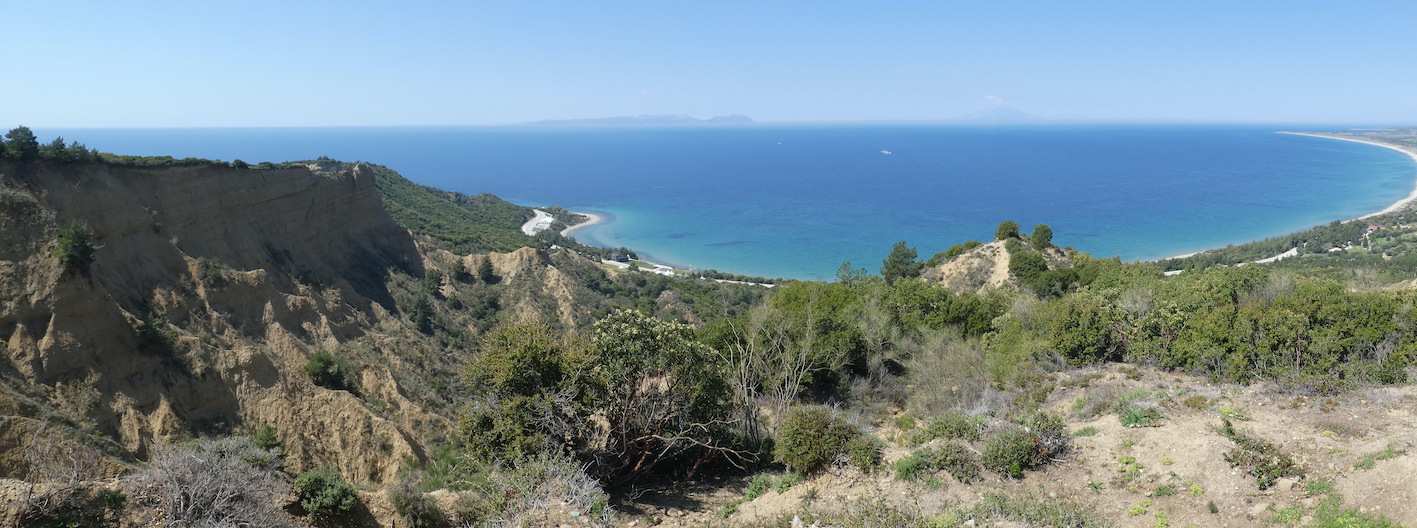

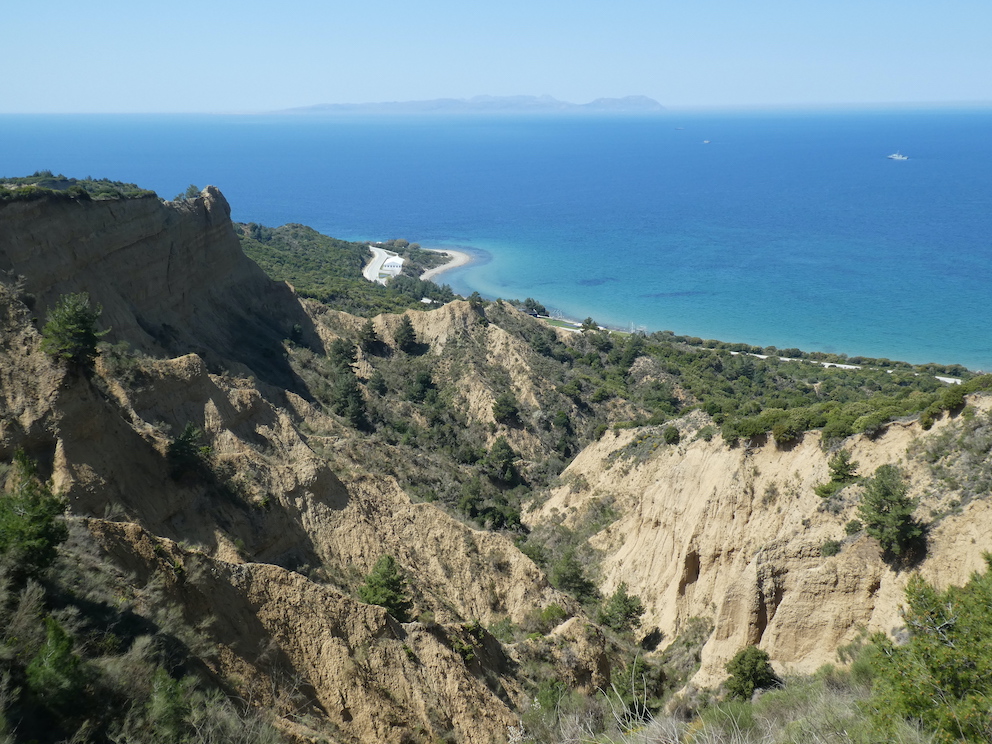
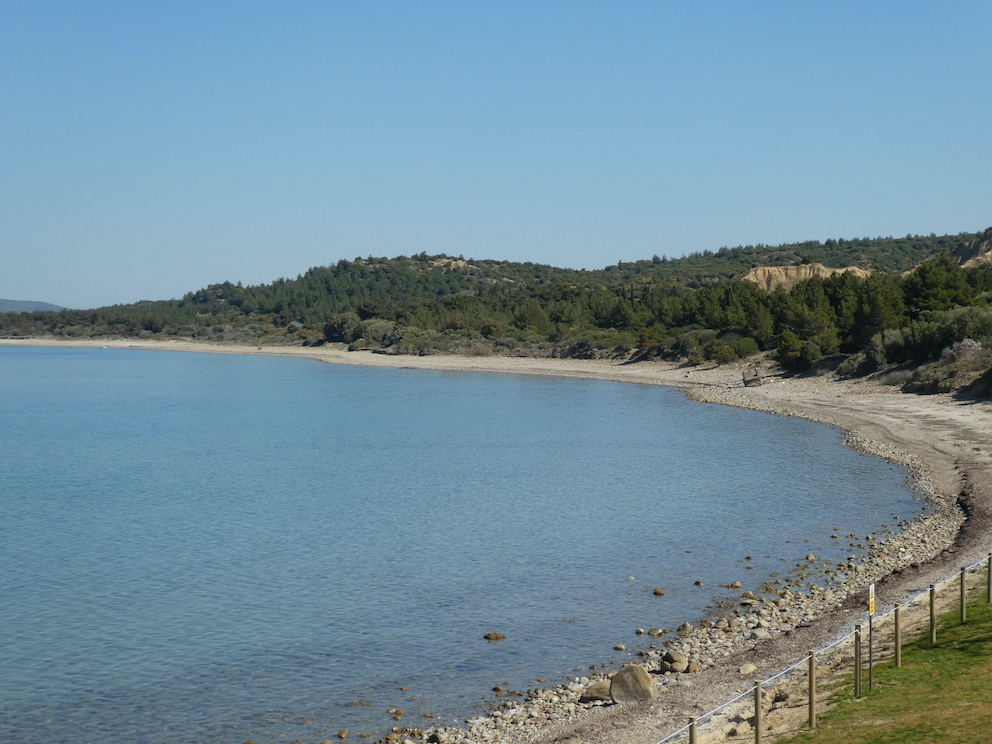
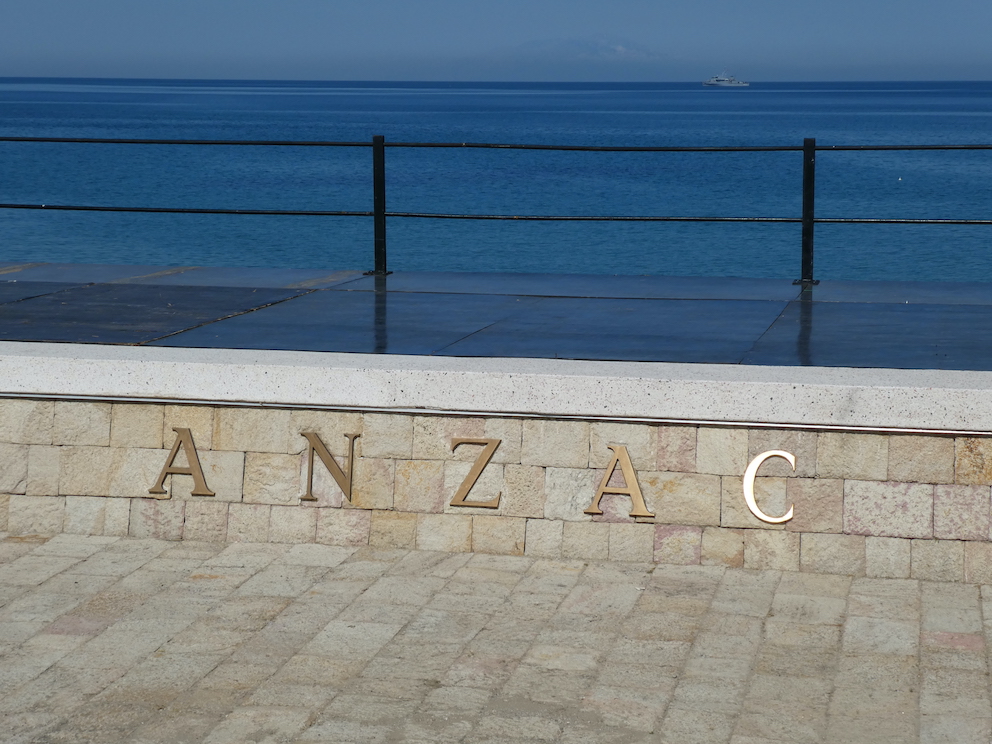
We certainly went through many emotions in visiting the area, it is very beautiful and peaceful, yet it makes you very very sad, it also made me extremely angry – especially that humans are still fighting wars today (so very close by). We were out of sorts during the visit, it is hard to describe, there were a few tears shed.

Australians – Anzac Cove
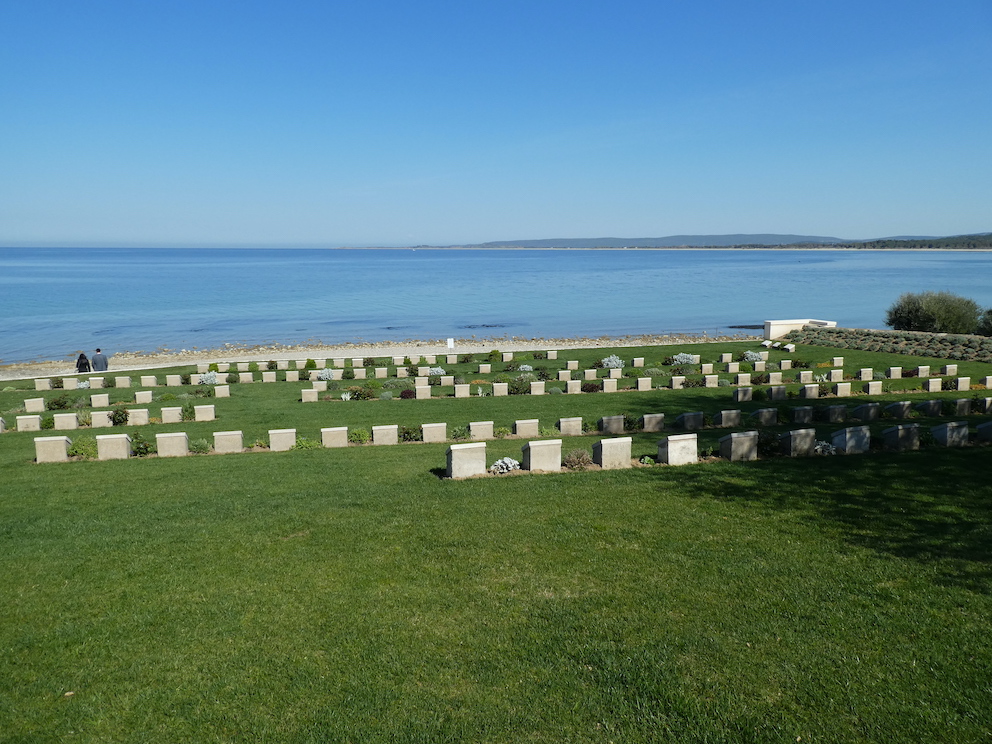
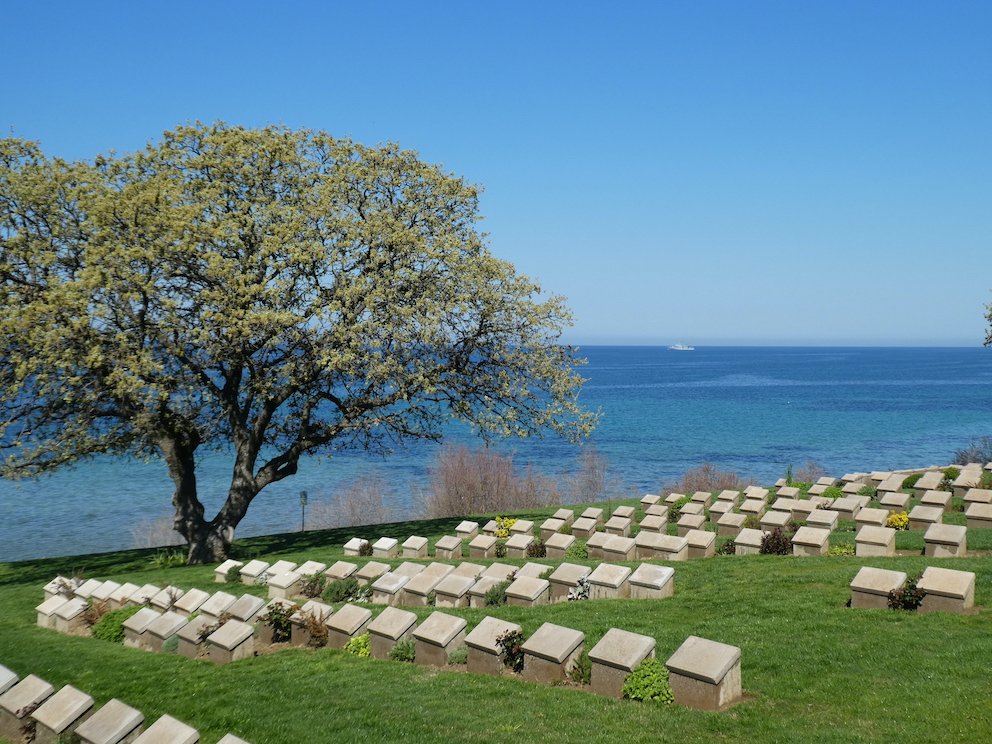
Australians – Anzac Cove
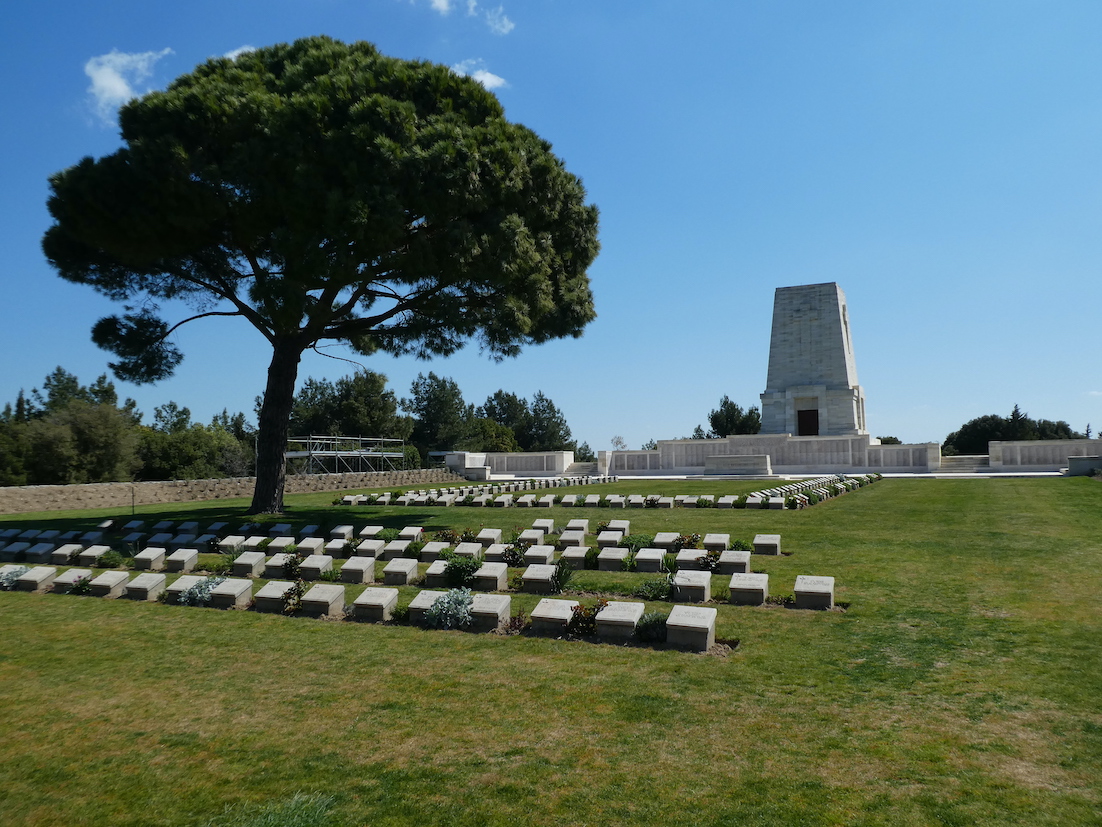
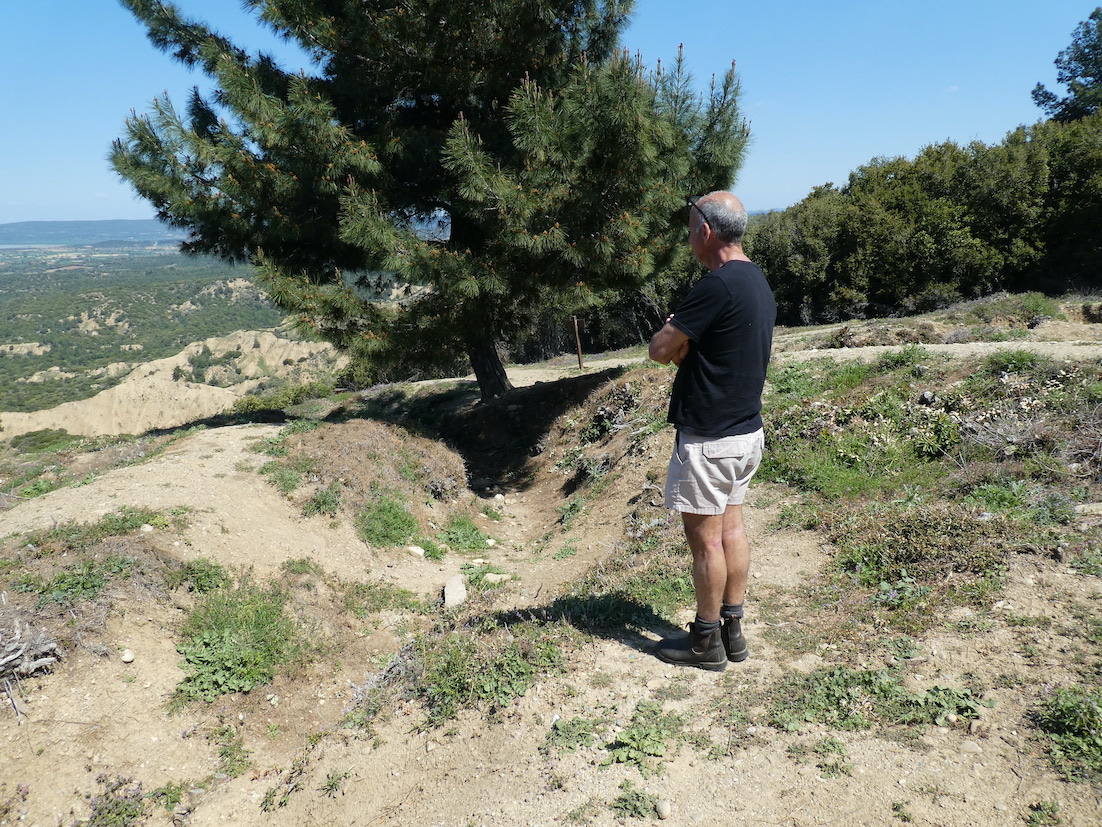
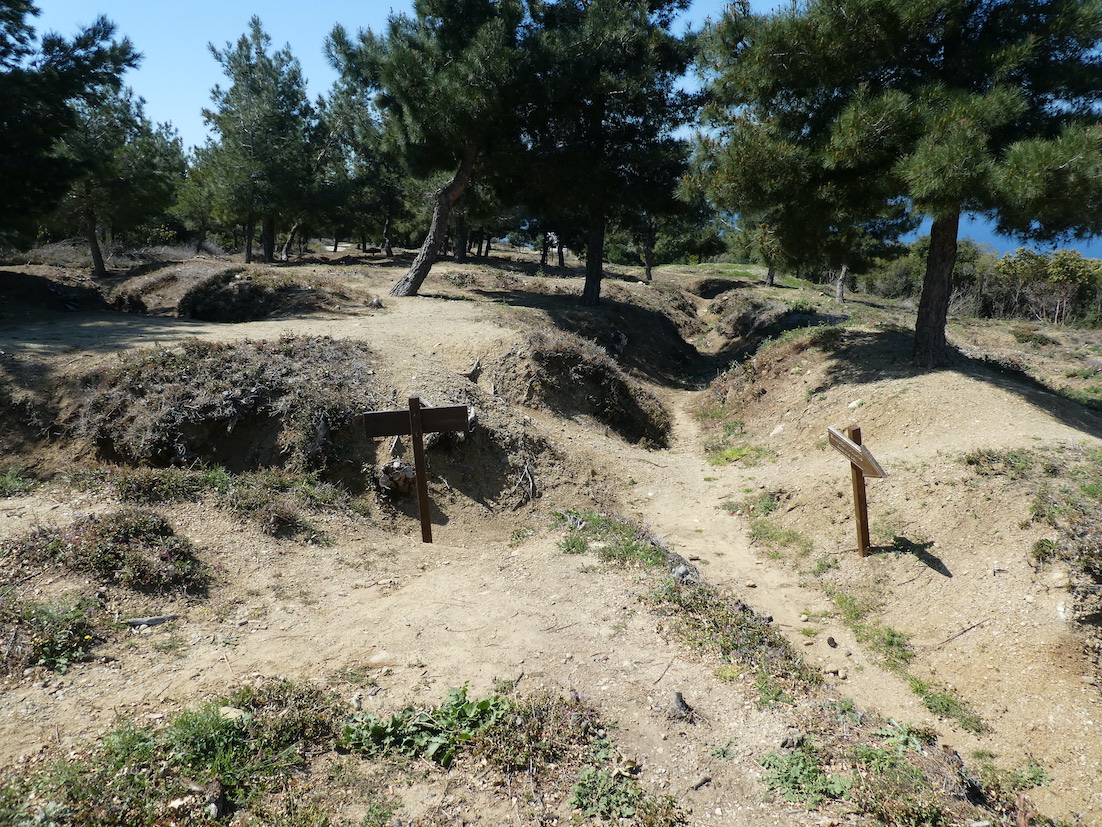
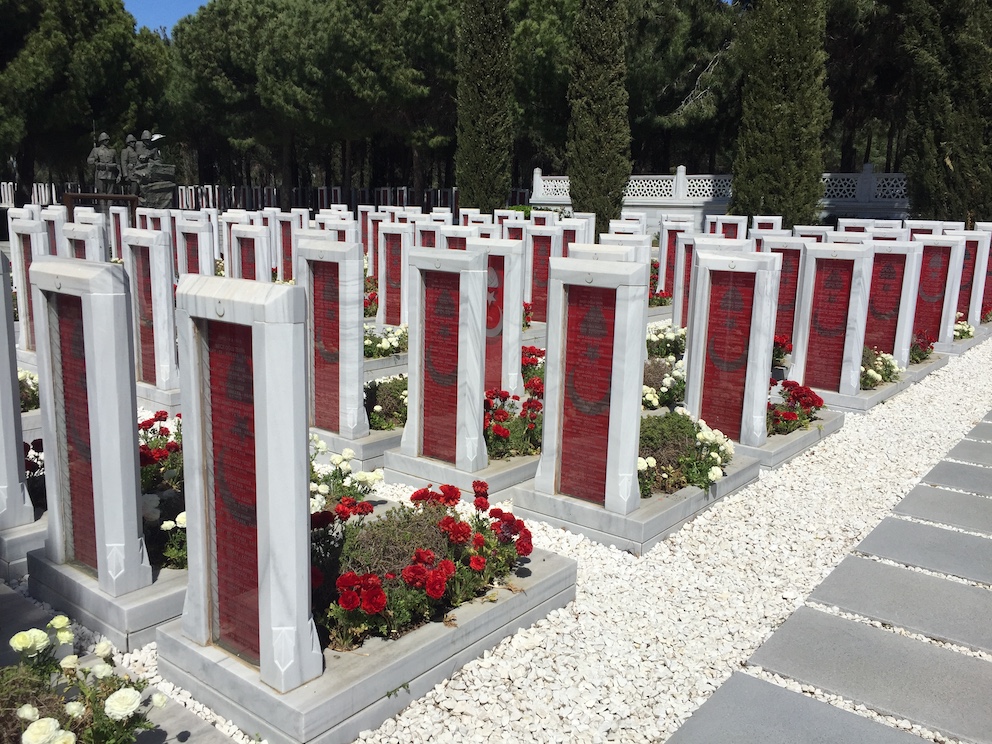
I can’t get the images of the trenches out of my head. The trenches are still there today, easily seen and in some places the opposing front (enemy trenches) are only 8 meters apart. Suicide – fighting in a foreign country!
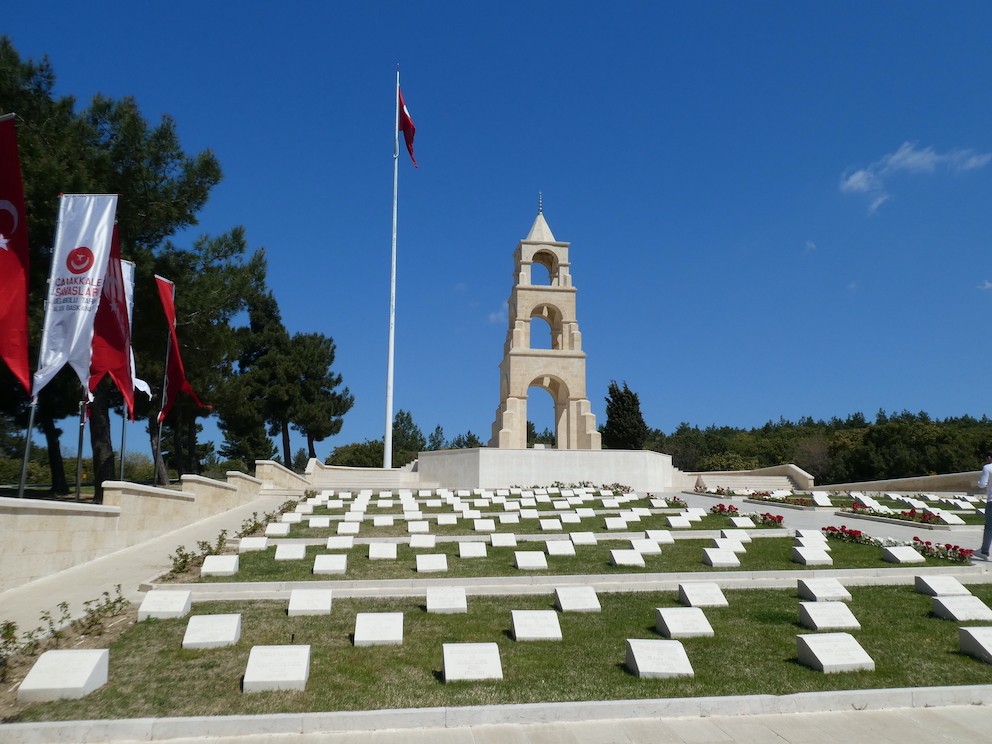
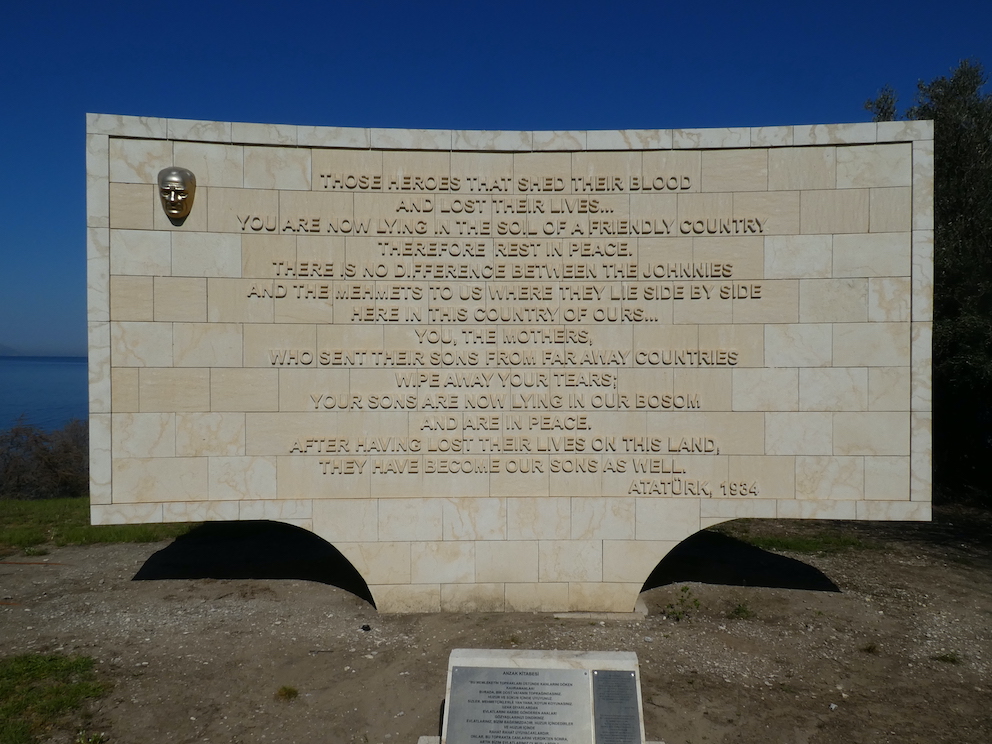
Ataturk gets another mention here as one of the large monuments at Gallipoli are his words “Those heroes that shed their blood and lost their lives … you are now lying in the soil of a friendly country. Therefore at peace. There is no difference between the Johnnies and the Mehmets to us where they lie side by side here in this country of ours … you, the mothers, who sent their sons from far away countries wipe away your tears, your sons are now lying in our bosom and are in peace. After having lost their lives on this land they have become our sons as well” Ataturk 1934.

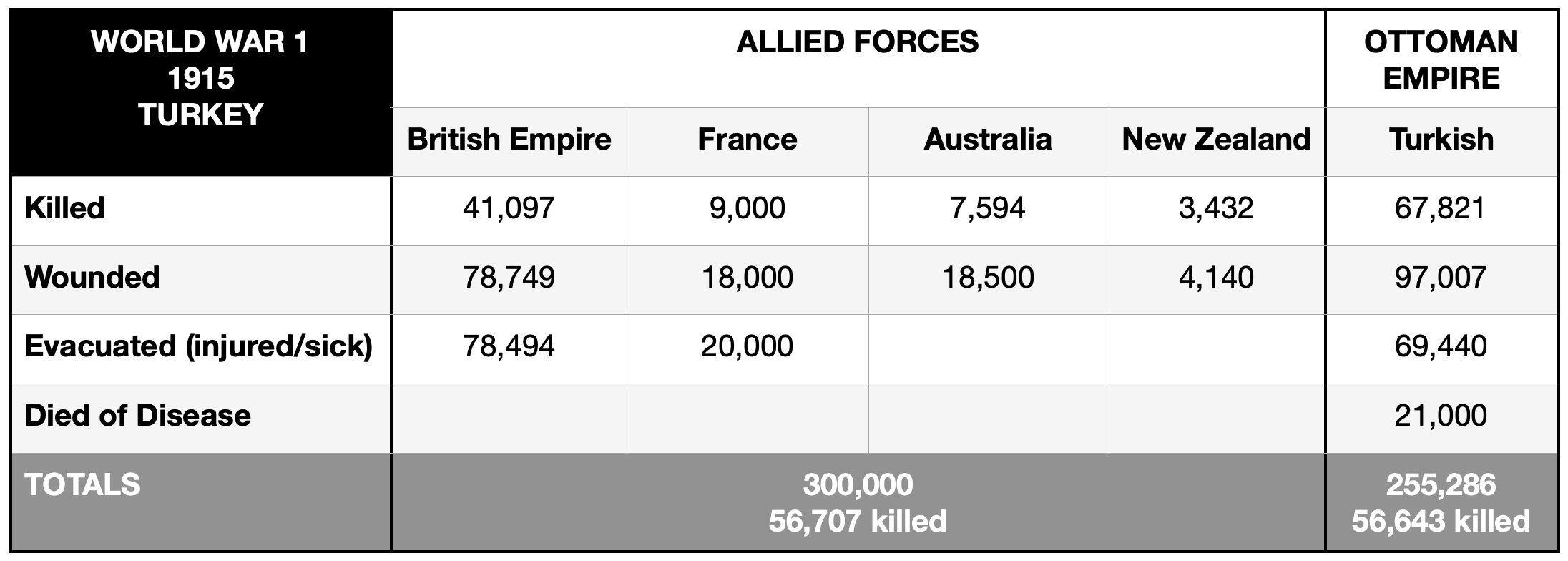
I won’t give any history lessons here, just few horrific casualties and loss numbers below as I am sure we all know the fate of many Australian, New Zealand, English, French, Indian and also Turkish troops. The evidence of thousands and thousands of headstones spread over many cemeteries on the peninsular tell the story well enough. Lest We Forget.
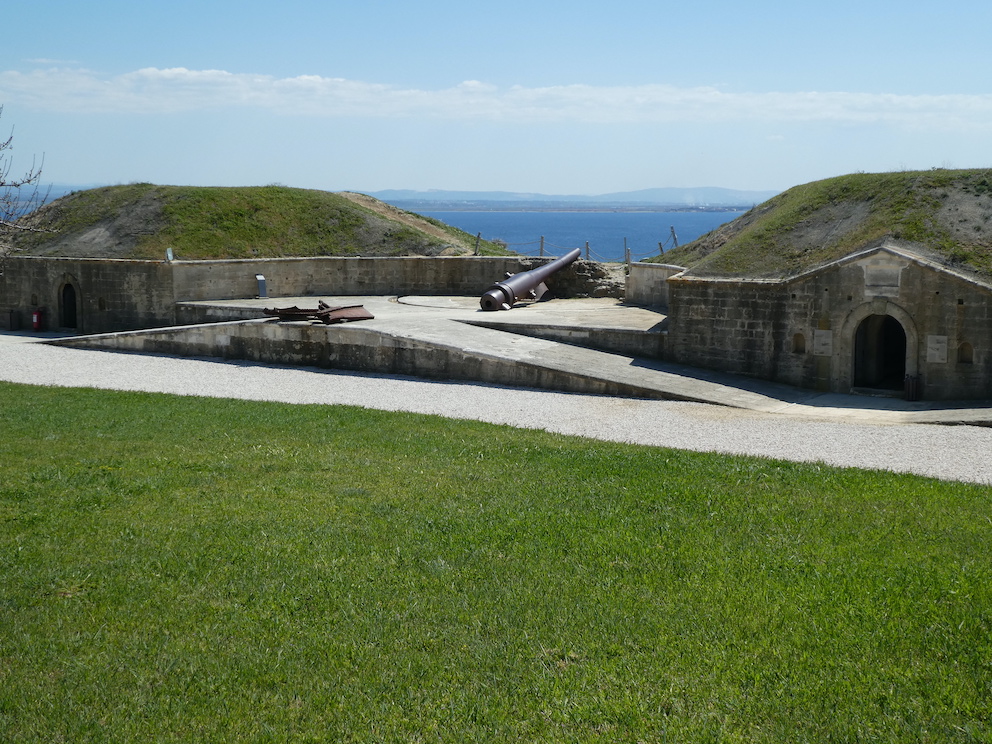
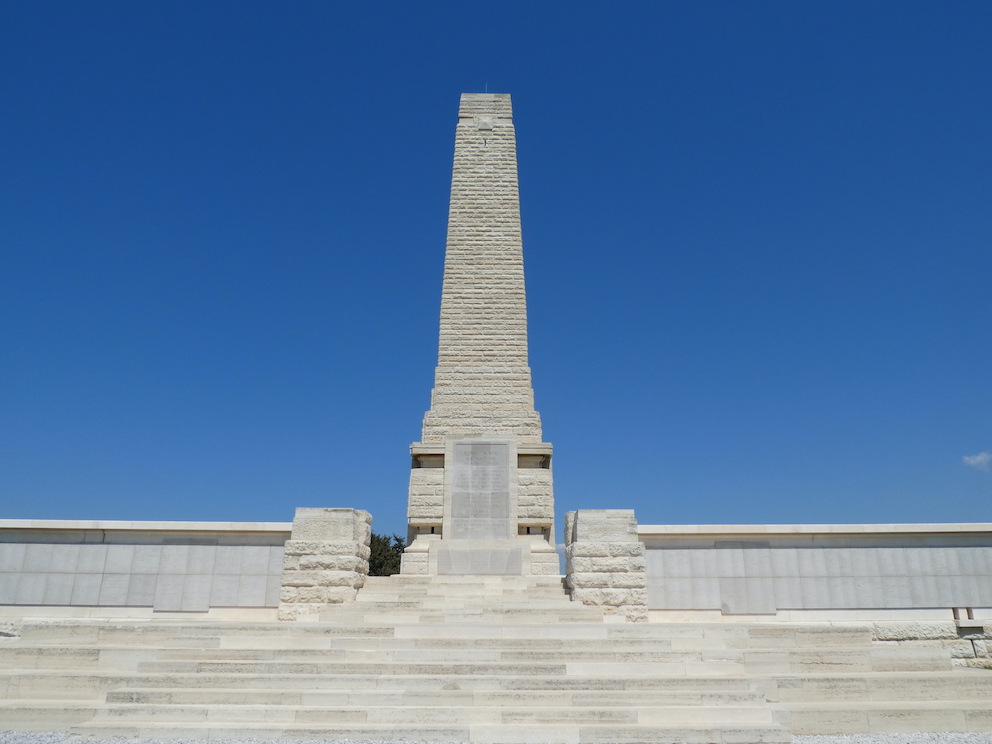


Before leaving the peninsular we drove up to the “1915 Canaille Bridge” which recently opened in March this year. The bridge is 4.6km long and has 6 lanes of traffic and is currently the longest suspension bridge in the world and is the first fixed crossing over the Dardanelles. The longest span is 2023 meters. We didn’t cross it in the car however as being so new the toll is quite expensive, it was a lot more economical for us to catch the ferry back across.

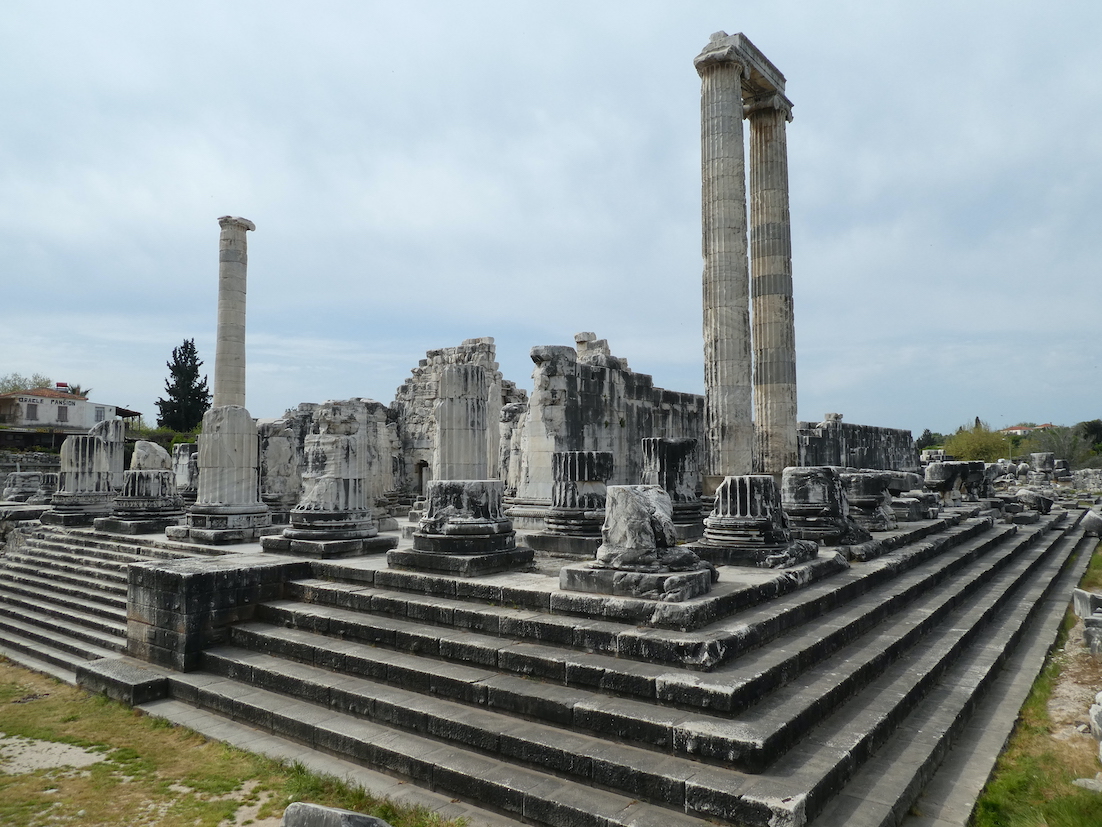
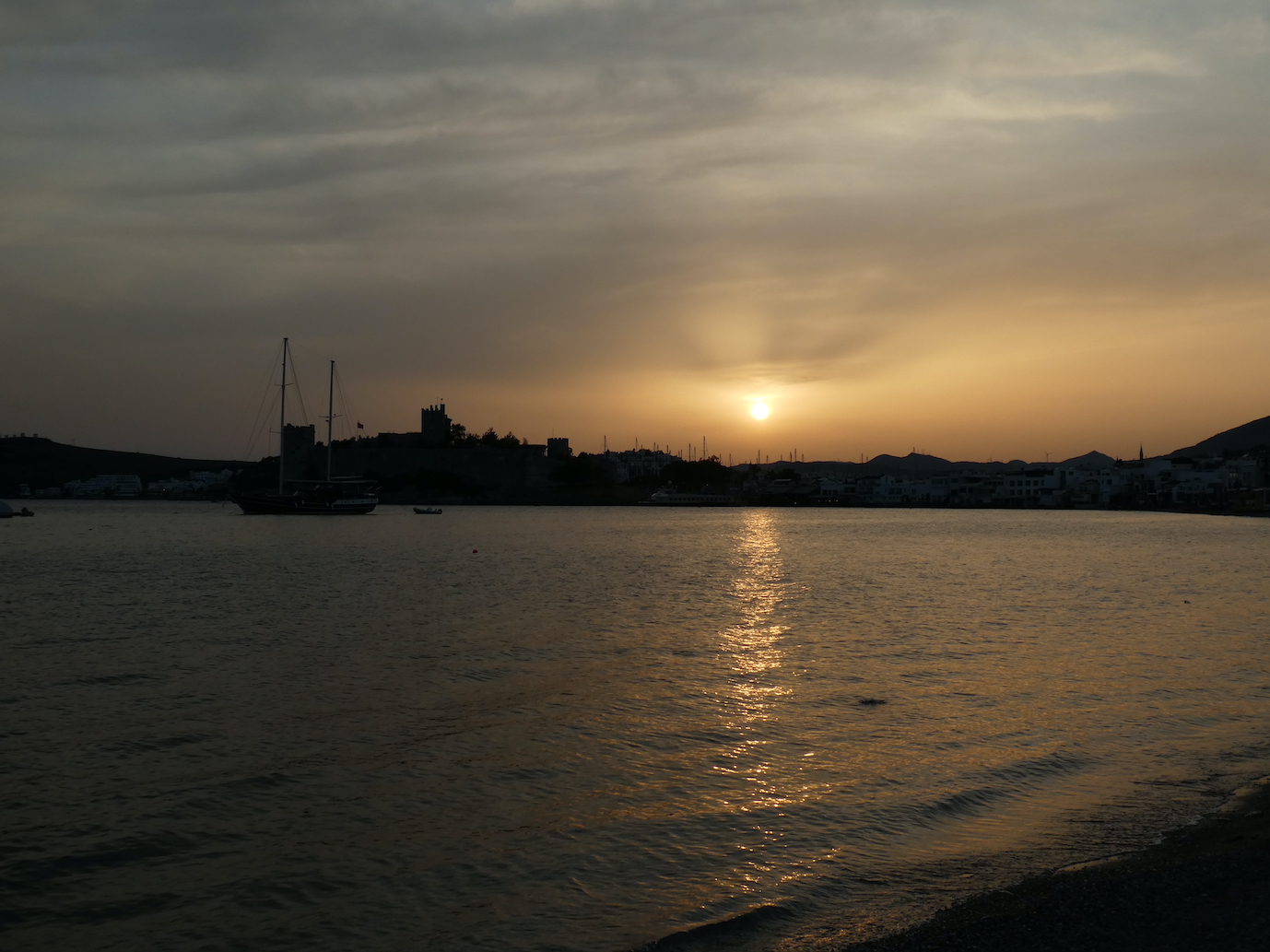
On our return drive south we had planned to spend one night in Izmir, a large city on the west coast, big enough for an IKEA & Decathlon (massive sports store) etc. But once we arrived we changed our minds – city’s are just not for us. We lasted an hour before deciding to drive on and ended up stopping in both Didim & Bodrum, smaller seaside towns with a castle. Many of our boat friends had visited Bodrum last year in their yachts and we hadn’t so it was nice to see and enjoy the summer vibes that were well underway.
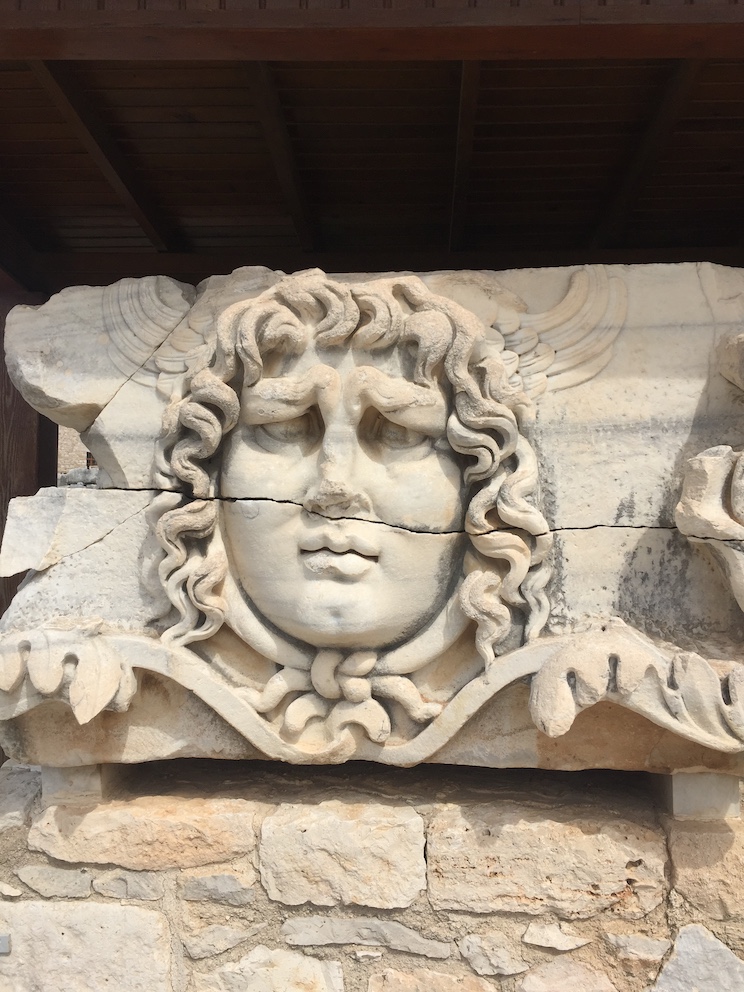

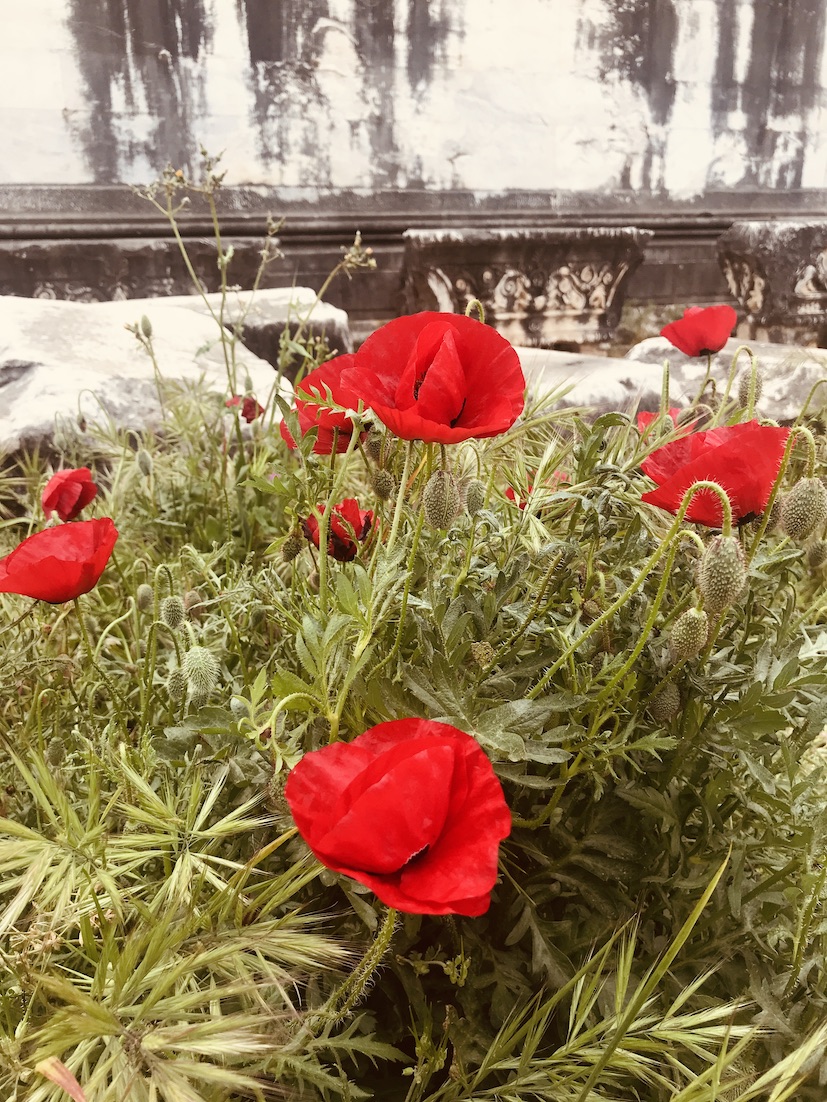



Despite the last three posts I assure you all our life isn’t one big holiday, this was an unusual and most welcome treat for us to do this much travel. A few things combining to allow it, one being the length of the marina contract (which was the most economical for us), secondly the Turkish vs Australian dollar and thirdly we were able to do all the travel on a very strict budget. We didn’t pay more than $30 Australian dollars a night for accomodation anywhere and the air travel was all around the $60 dollar mark. Car hire was also very cheap, however we did see a significant increase in the cost of fuel (same as the rest of the world) between our travels in Dec/Jan and the later travel in March/April.
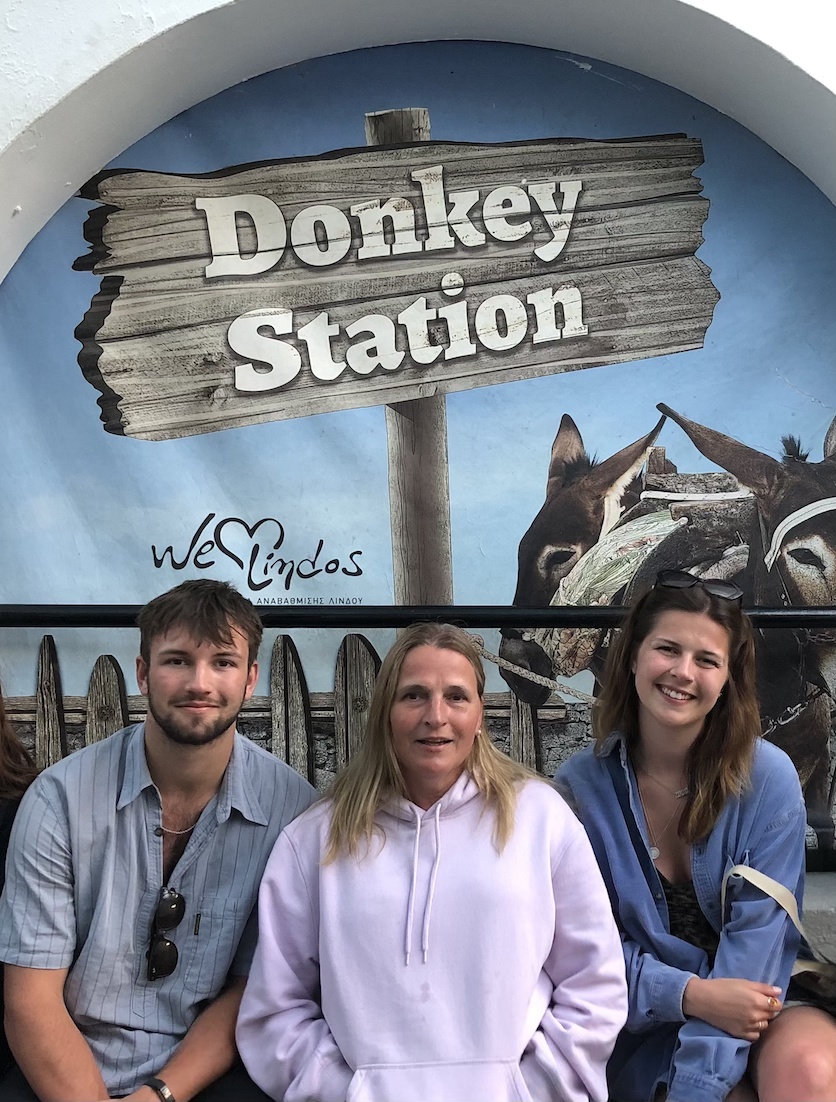
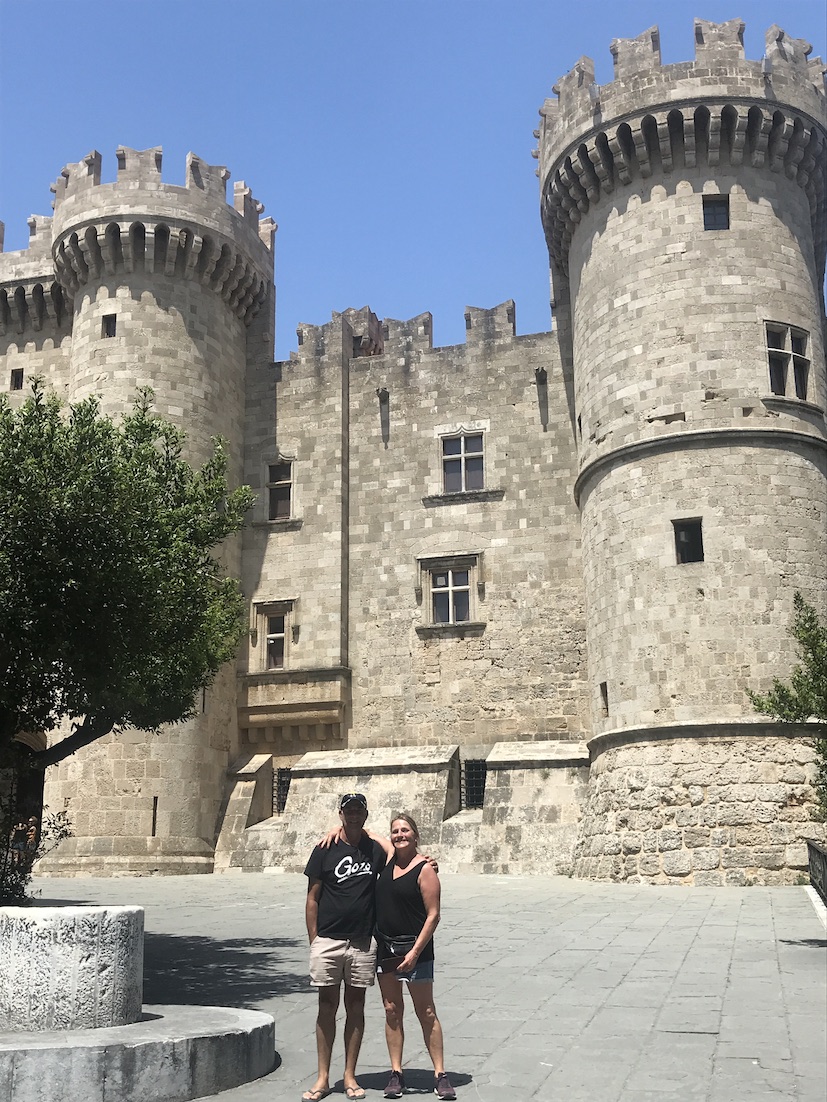
Our final bit of travel was 5 days out of Turkiye and across to Greece – just a short one hour ferry ride to meet up with family from the UK who flew out to the island of Rhodes to spend some time with us (after two years in lockdown it was their first time leaving their village in the UK since covid began). We had a lovely time together at Lindos the perfect Greek village/island/beach holiday stay. Thanks to Clare, Annabel, William, James & Sophie for sharing your holiday with us. With us being so far from home, spending time with family means so very much to us and really lifts our emotional wellbeing filling our hearts with love, (nothing beats hanging with cousins, such a great relationship), it was a great start to summer for us.
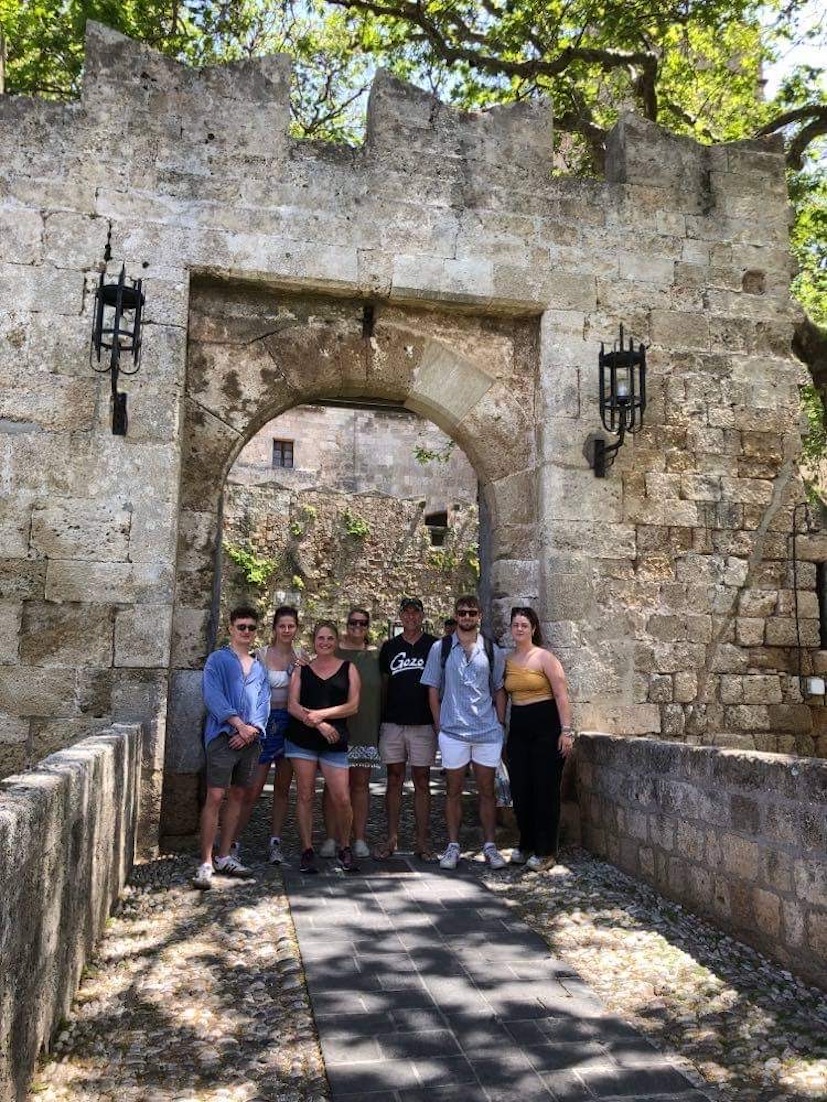
Travelling Turkiye II – Istanbul
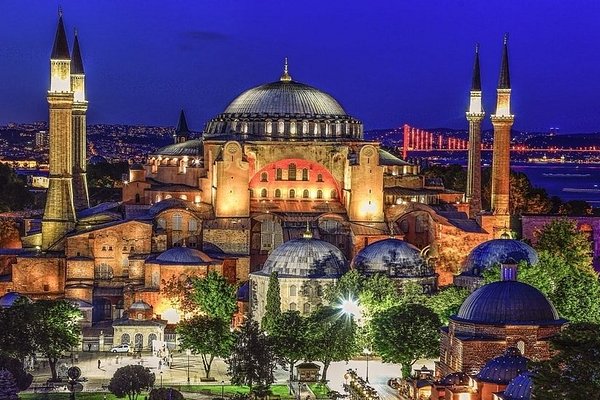
We spent three full days in Istanbul and thoroughly enjoyed it. For a city with a population of 15.6 million the old central historical area, whilst busy wasn’t too overwhelming for us in regards to people or bustle. Our accommodation was in ‘Sultanahmet’ the old area just 500 metres from both the Blue Mosque and Hagia Sofia, and about the same distance in the other direction from the Grand Bazar. This old town area is admittedly just a small part of the bigger metropolis of Istanbul, however it was what we wanted to see, not the modern aspects that every city has.
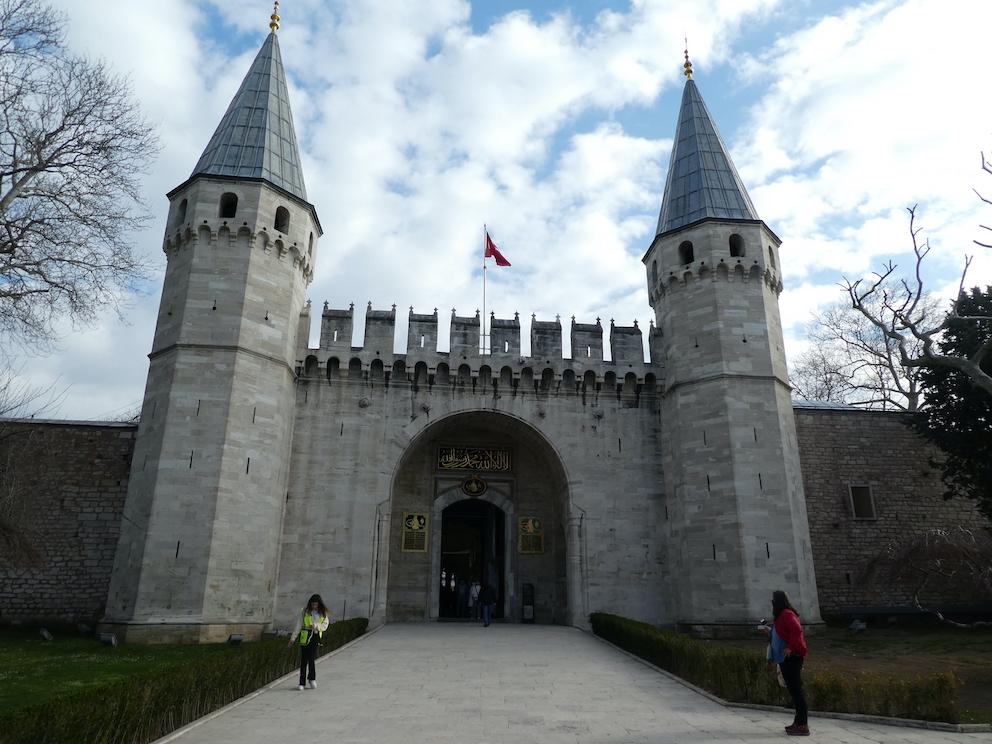
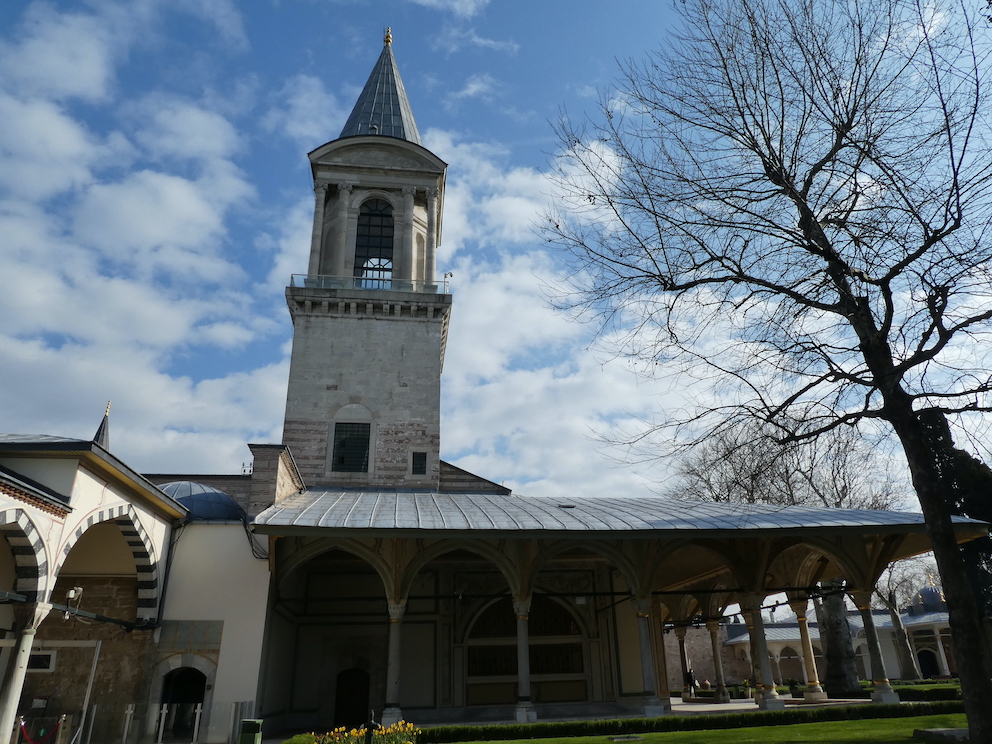
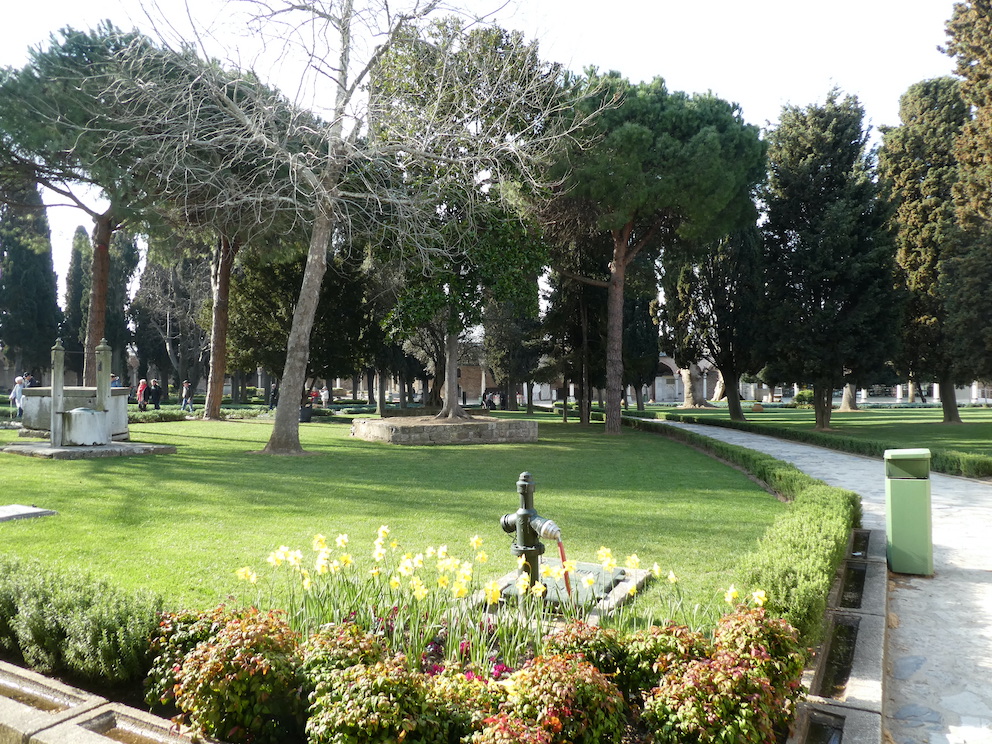
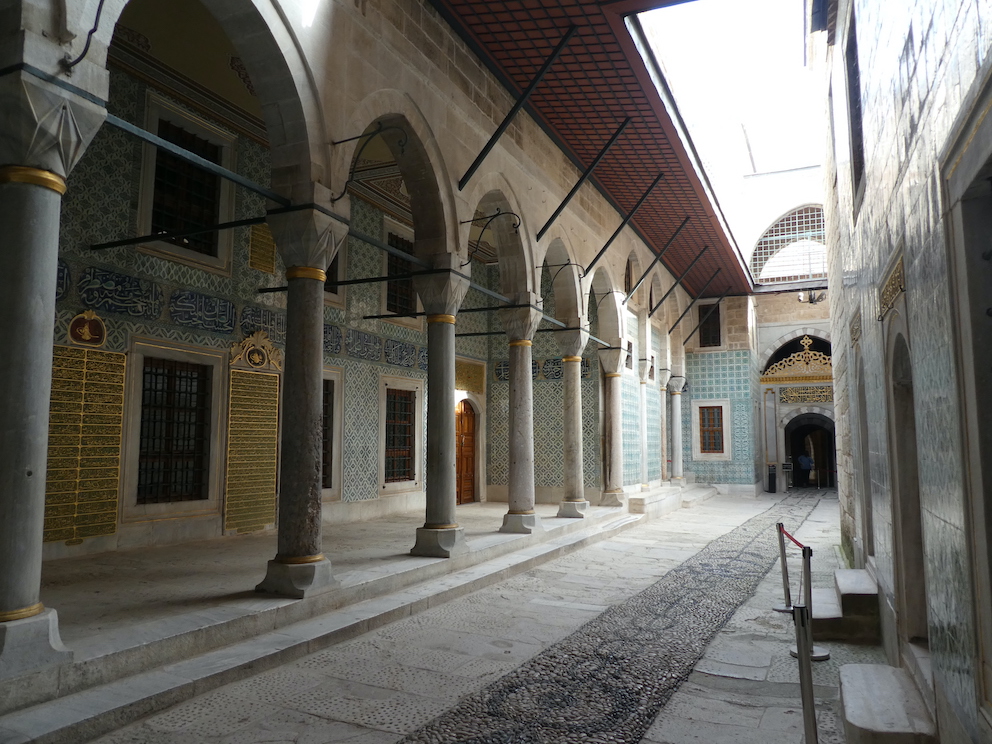
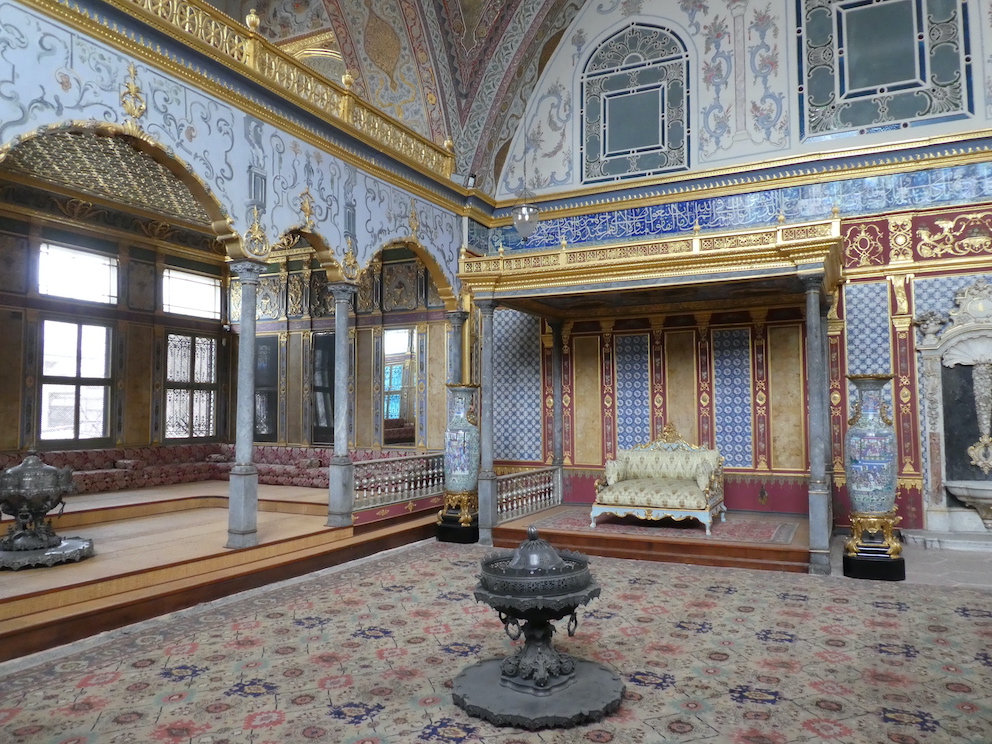
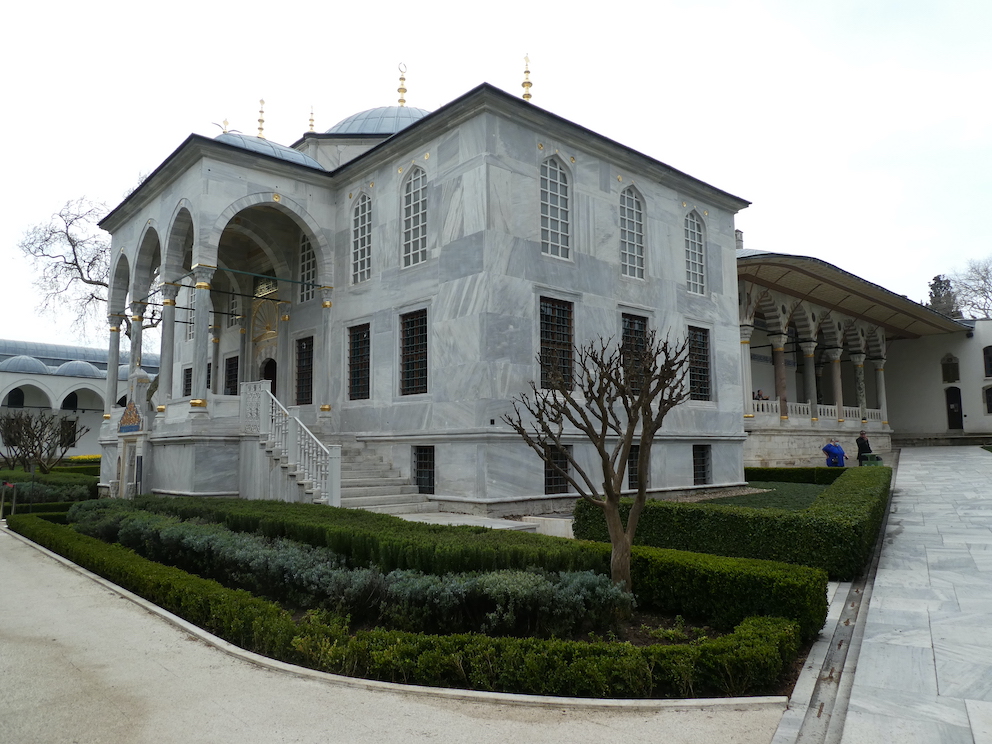
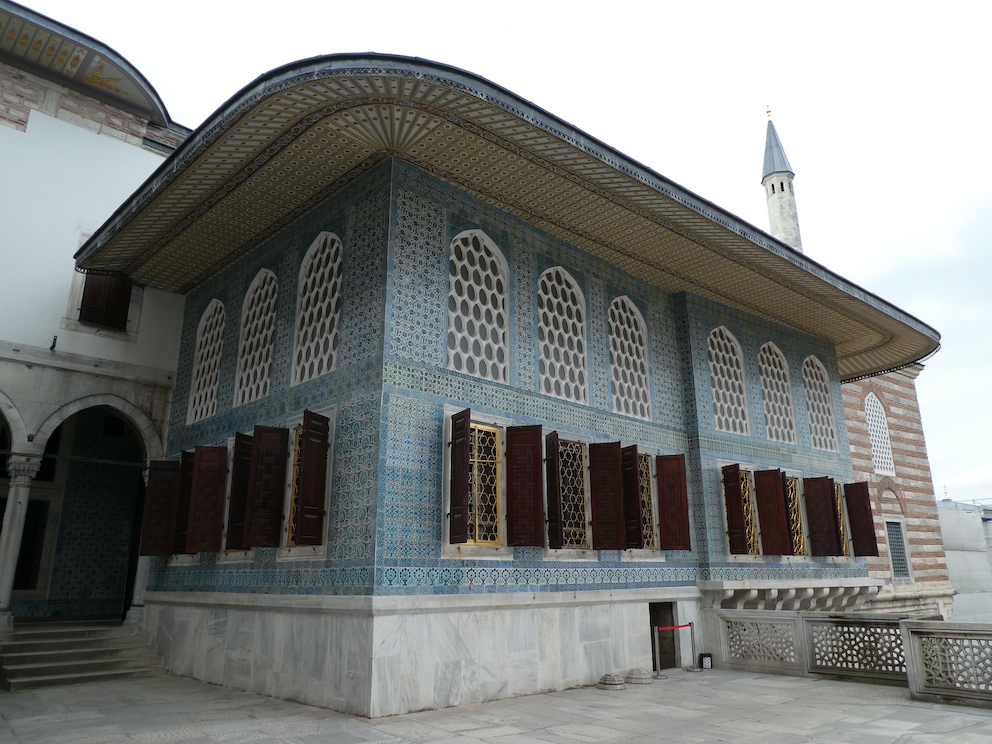
We spent most of the first day at Topkapi Palace & Harem which in the 15th and 16th centuries served as the main residence and administrative headquarters of the Ottoman Sultans. Construction of the palace started in 1459, six years after the conquest of Constantinople (now Istanbul). After the 17th century Topkapi gradually lost its importance with the Sultans preferring to spend more time in their new palaces along the waterfront of the Bosphorus Strait. It did however retain the function of being the imperial treasury, library and mint. After the end of the Ottoman Empire in 1923 a government decree (dated 1924) transformed Topkapi into a museum.
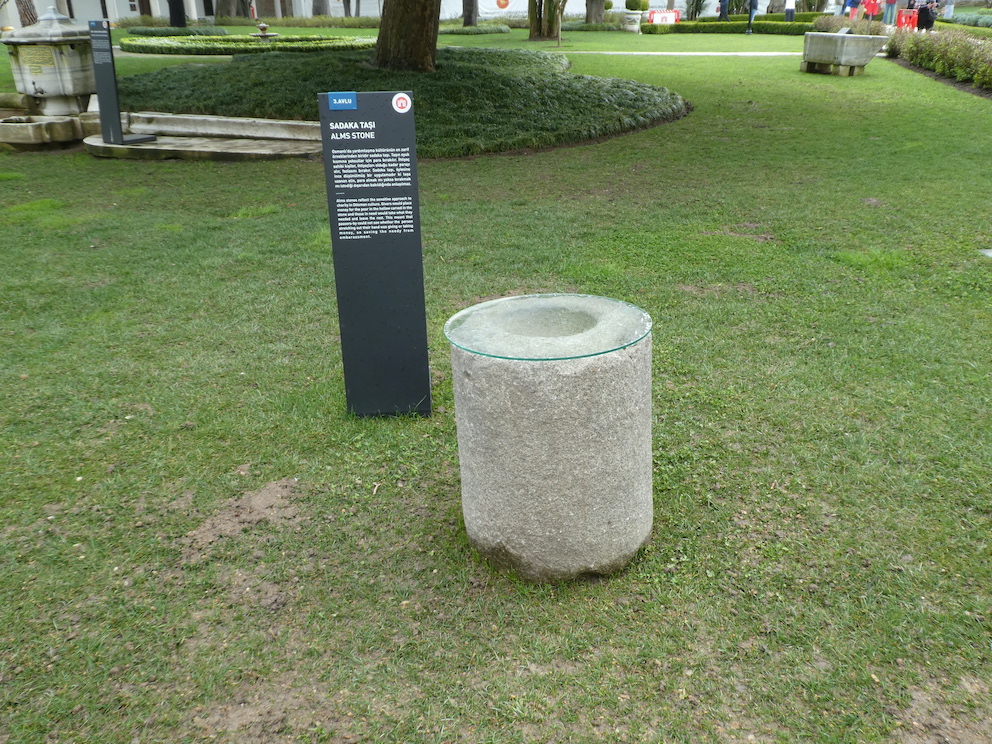
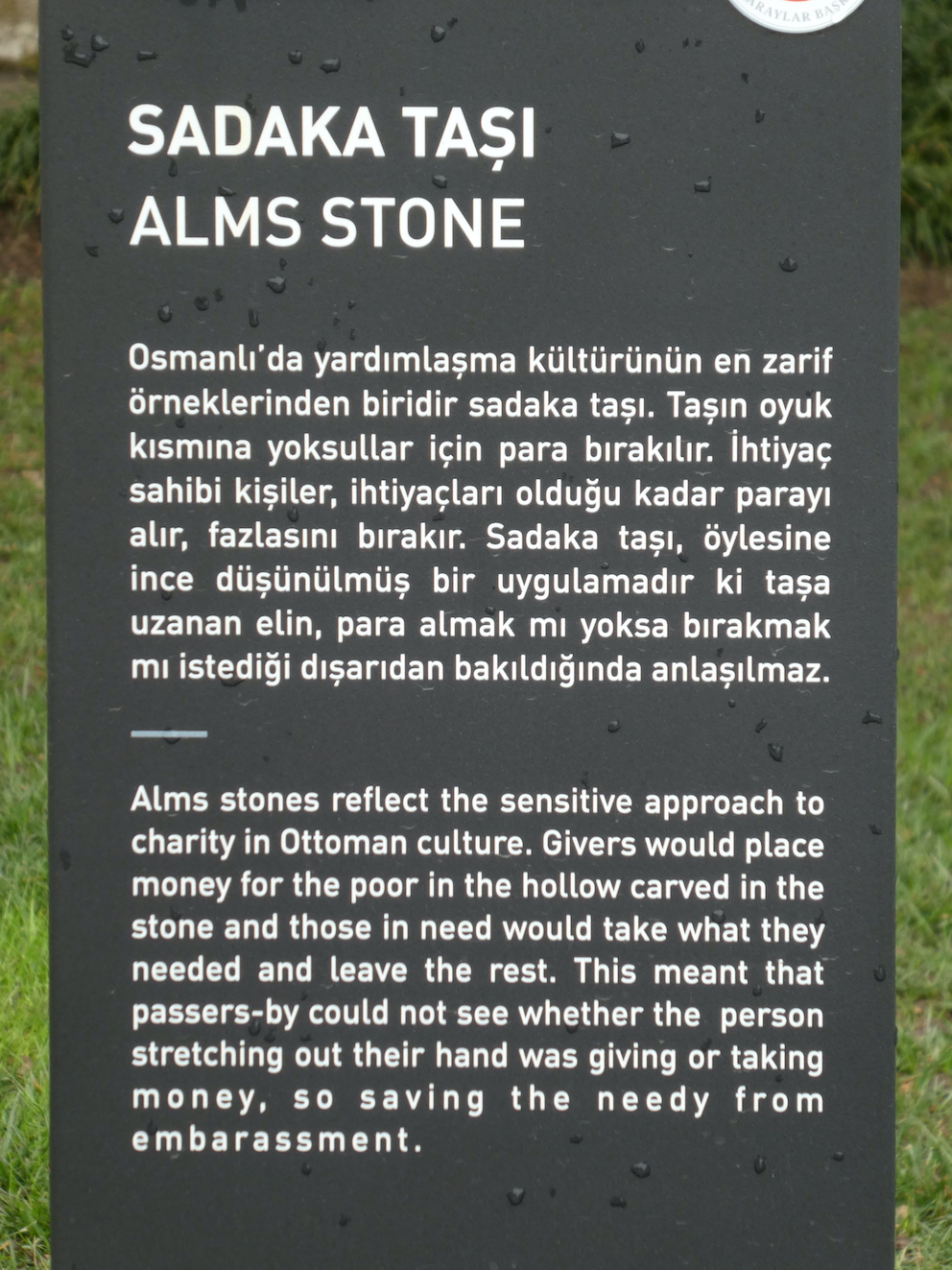
The palace complex has hundreds of rooms and chambers most of which are accessible to the public including the Ottoman Imperial Harem (where the Sultans female family members lived), and the treasury which displays the Spoonmaker’s diamond (the worlds 4th largest diamond = 86 carat). Collections also include Ottoman clothing, weapons, armour, religious relics and manuscripts. The palace became a World Heritage UNESCO site in 1985.
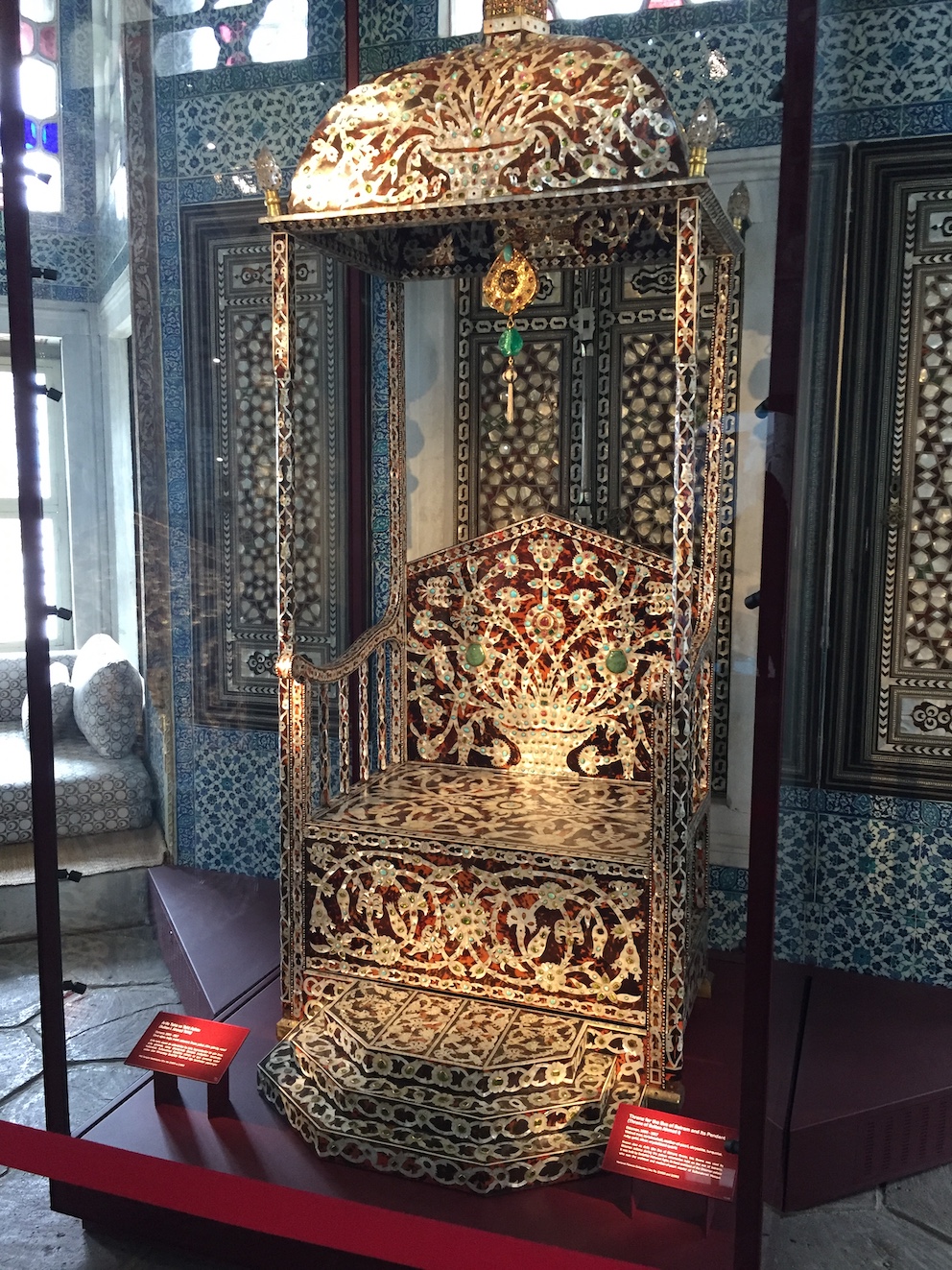
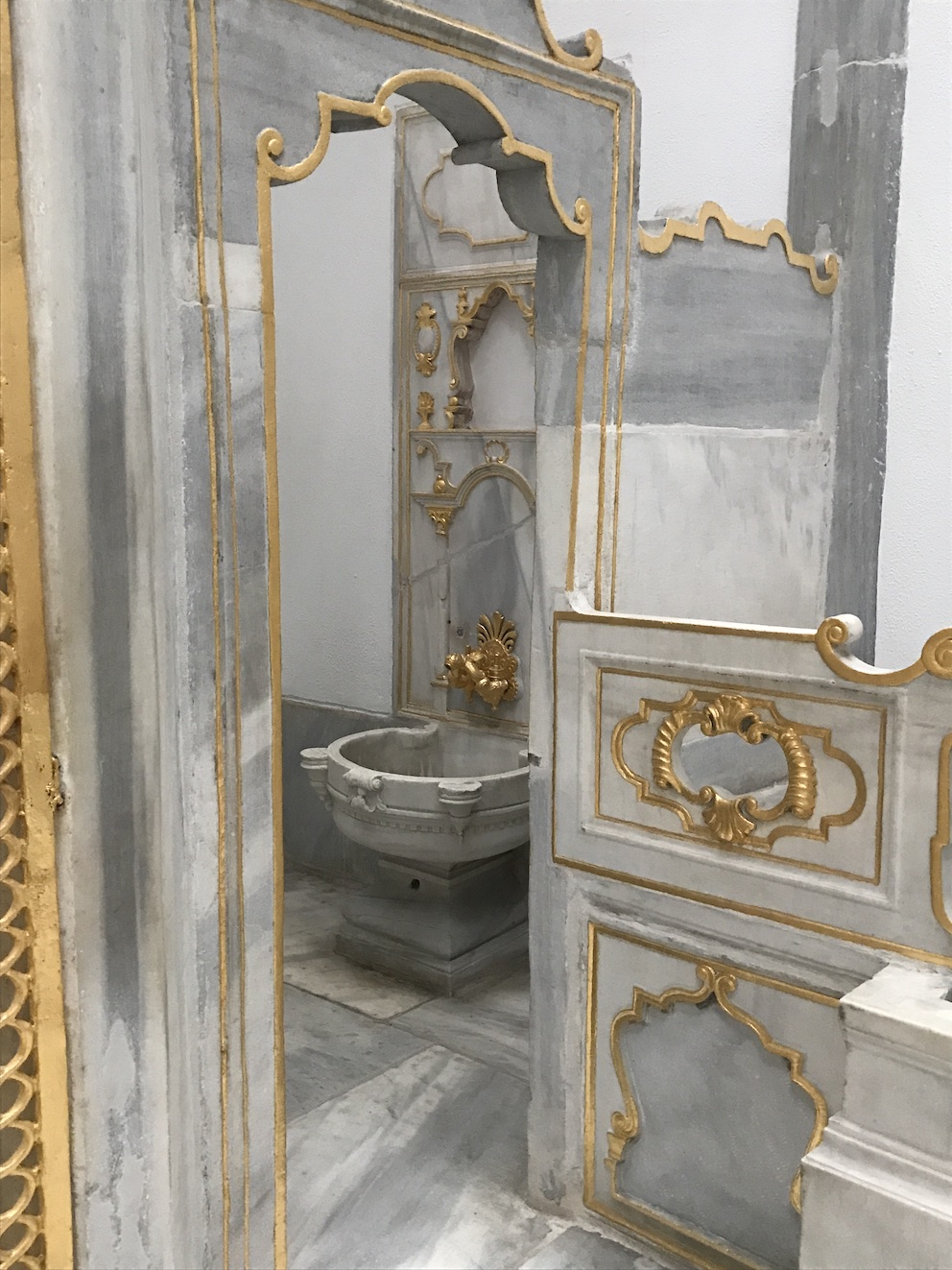
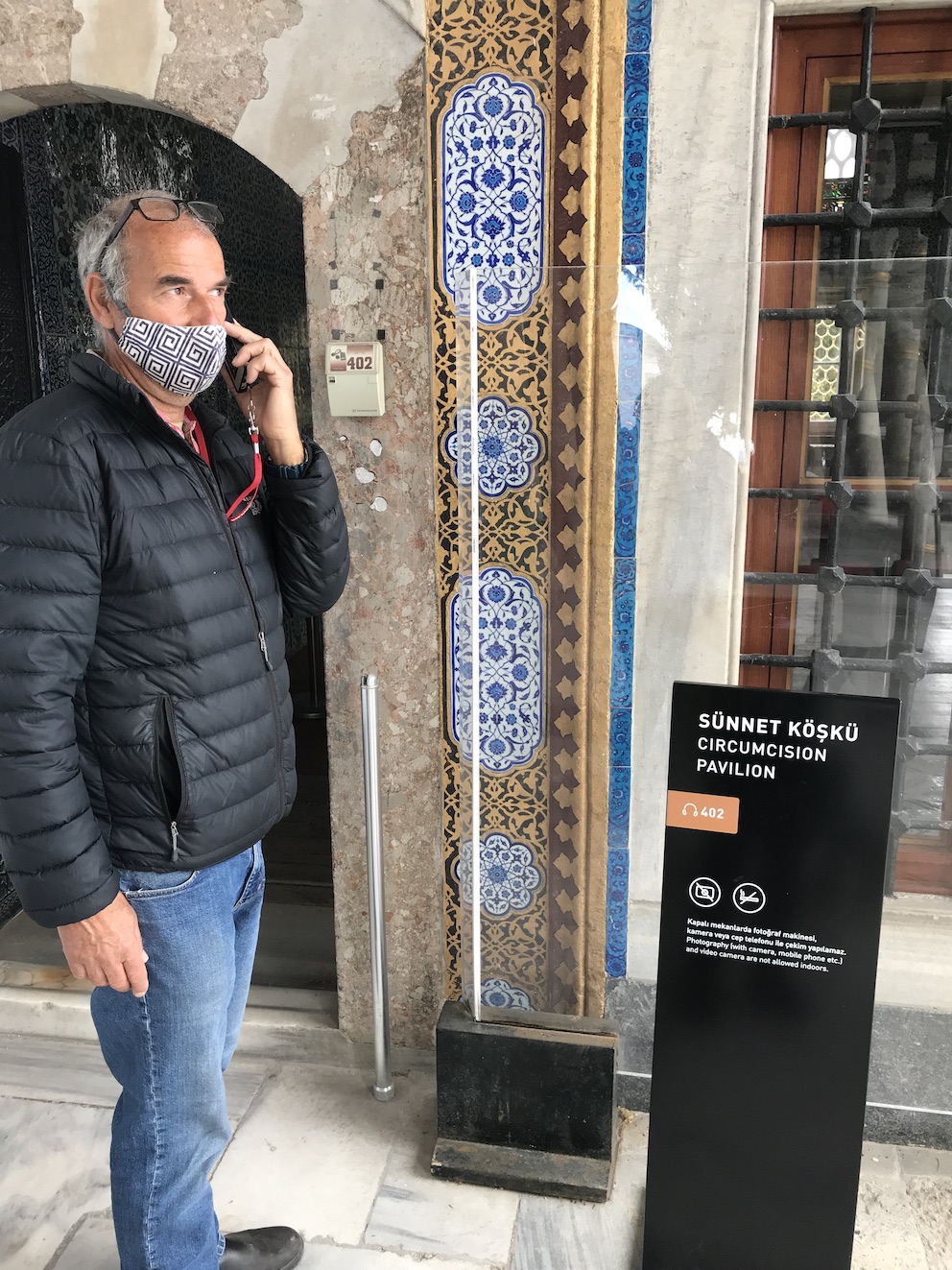
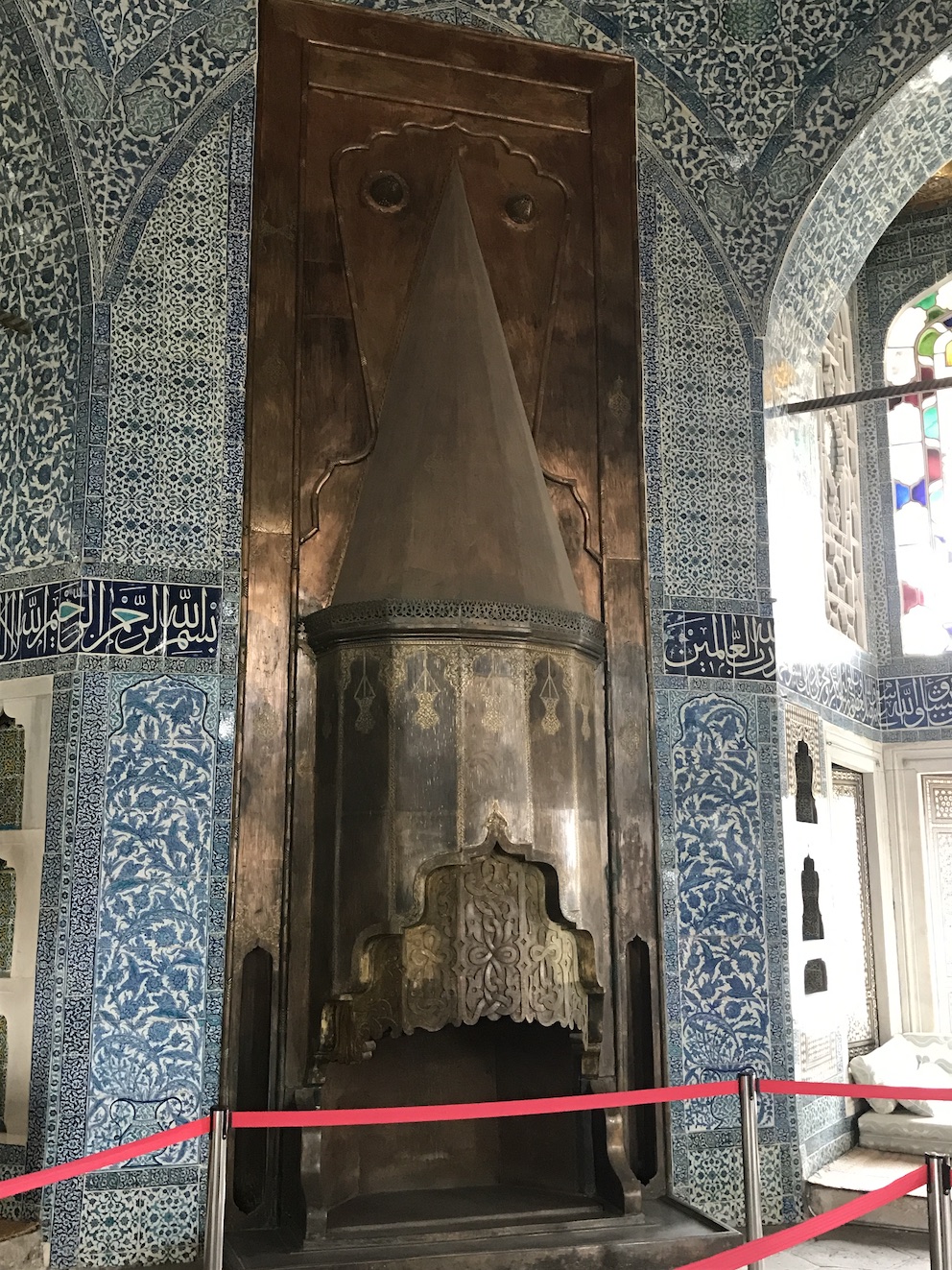
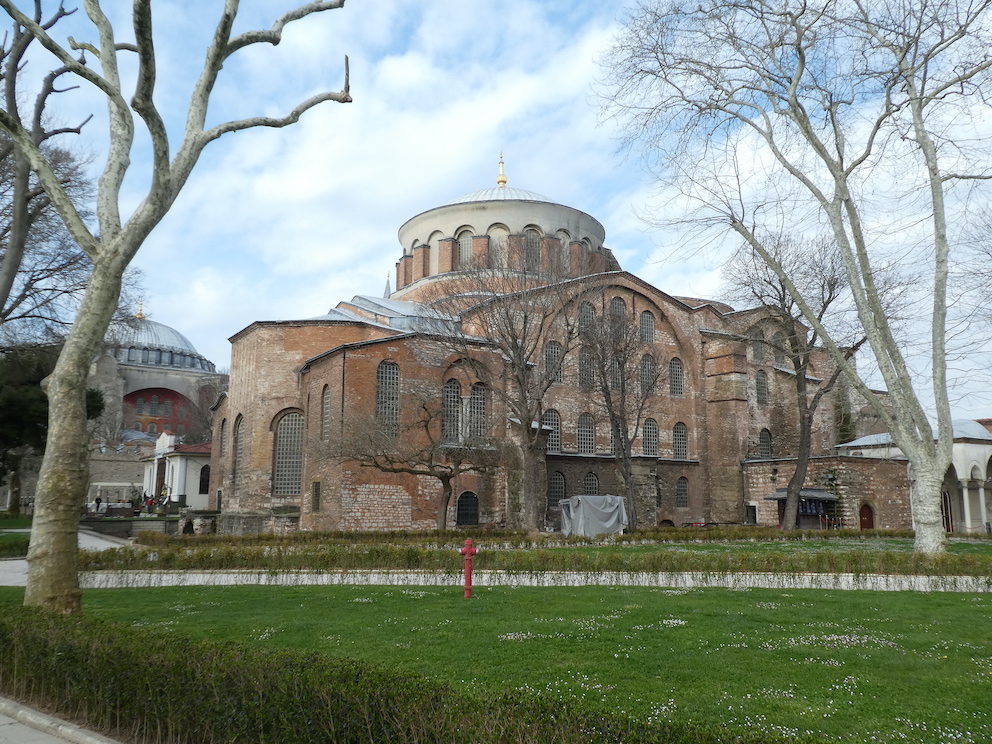

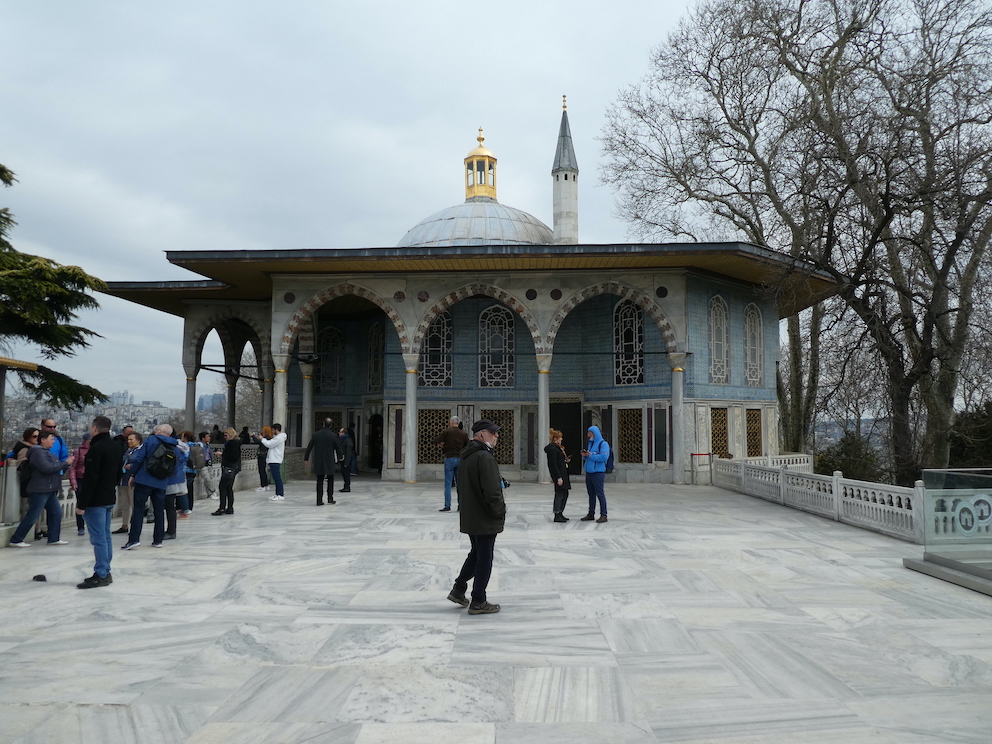
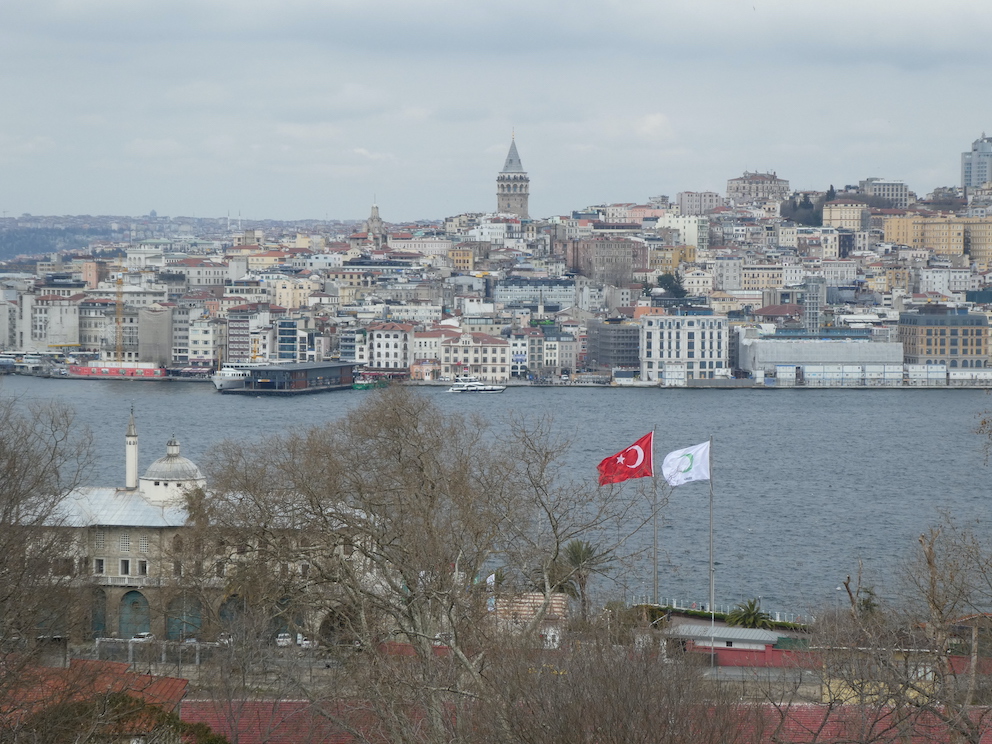
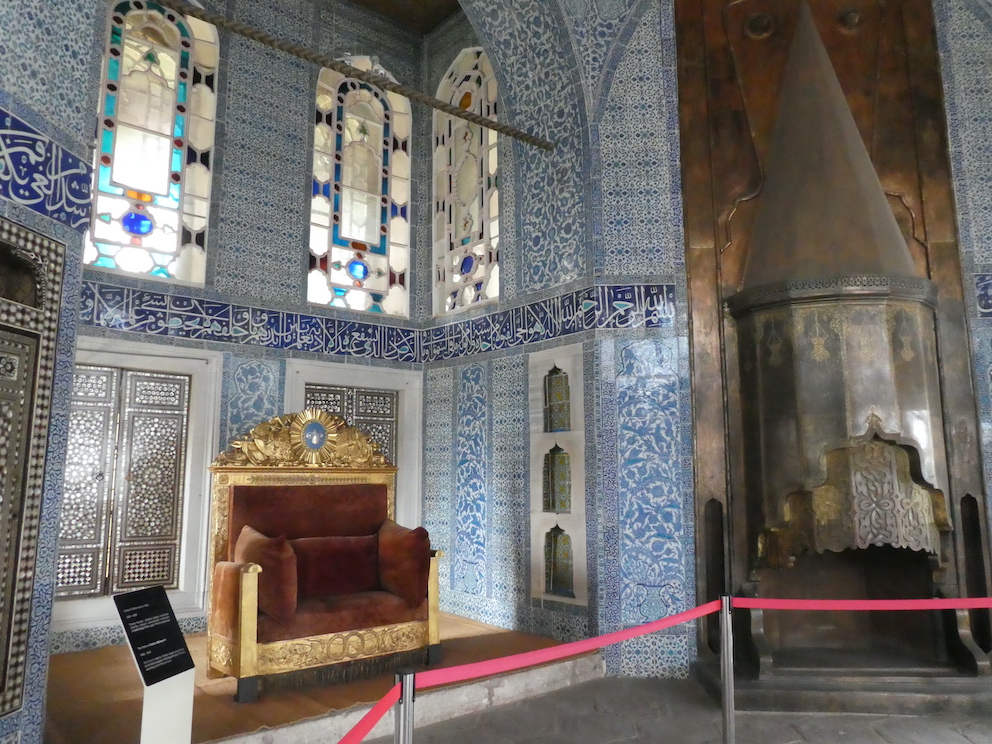
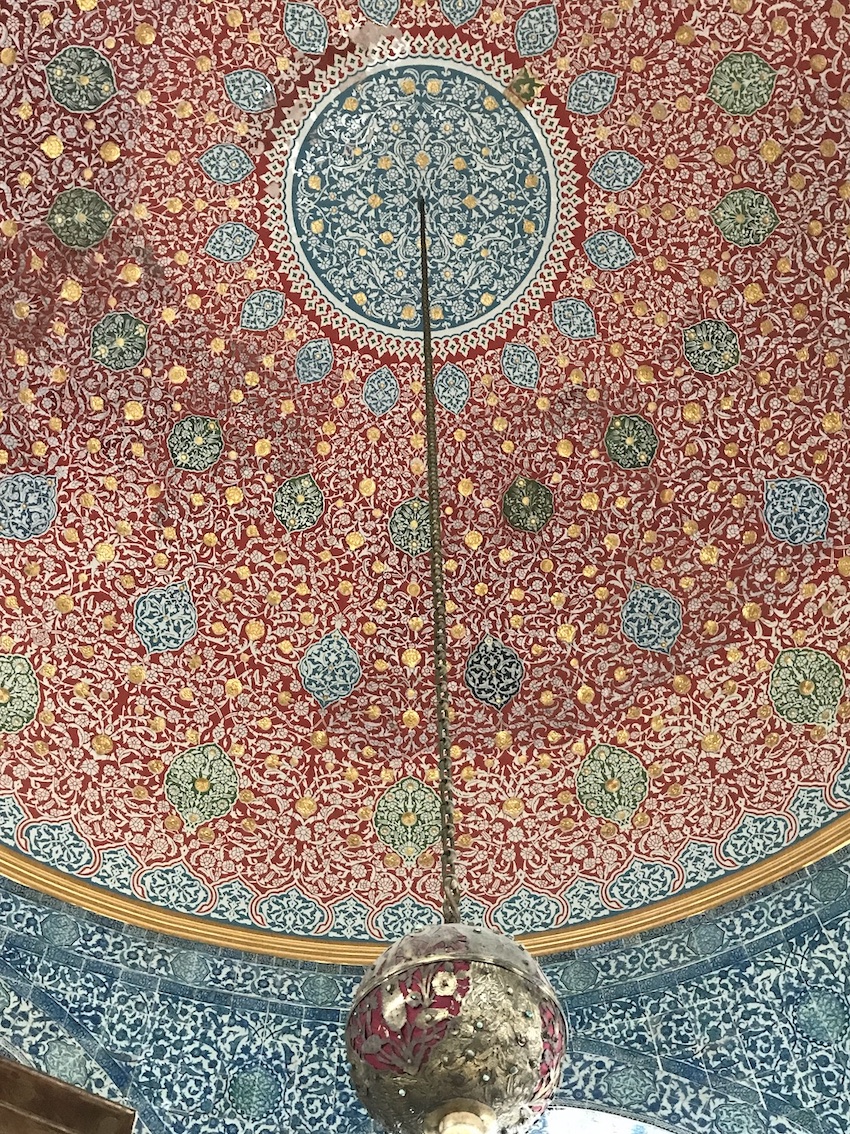
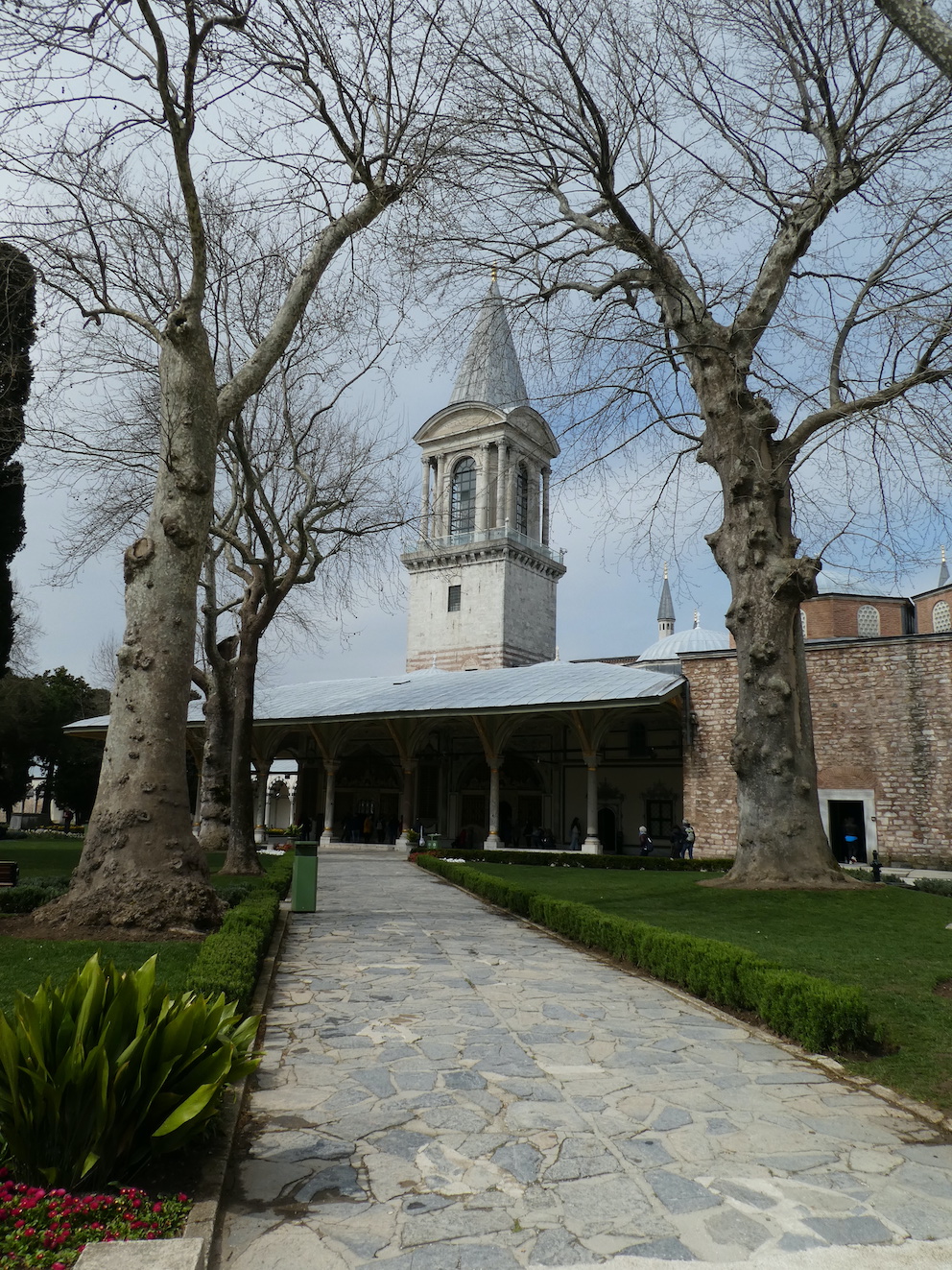
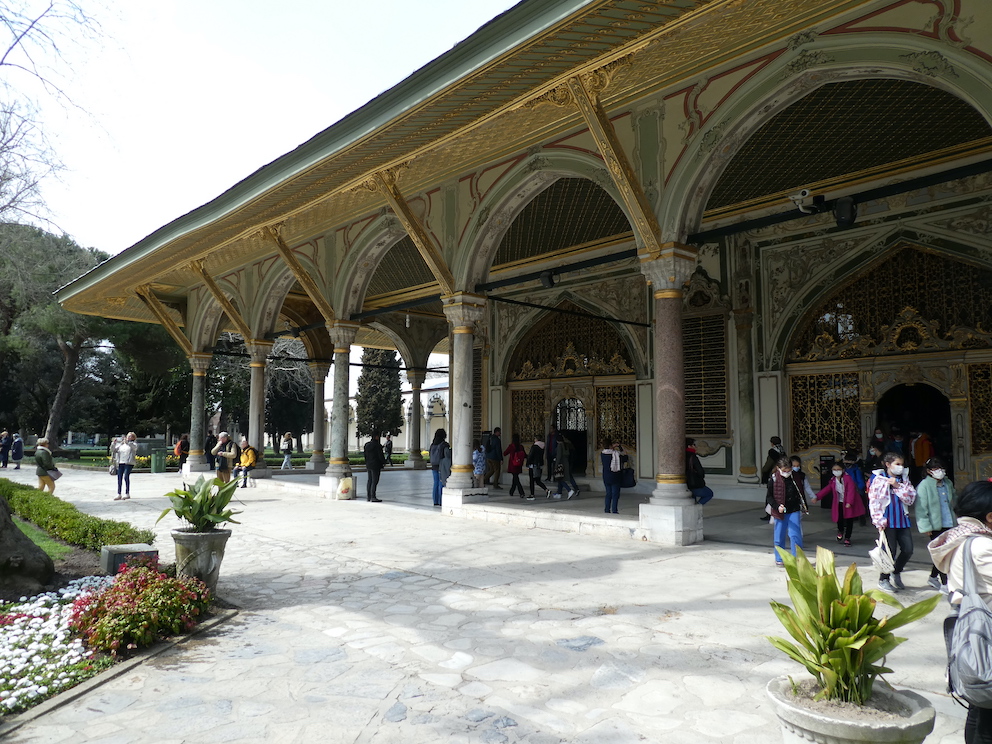
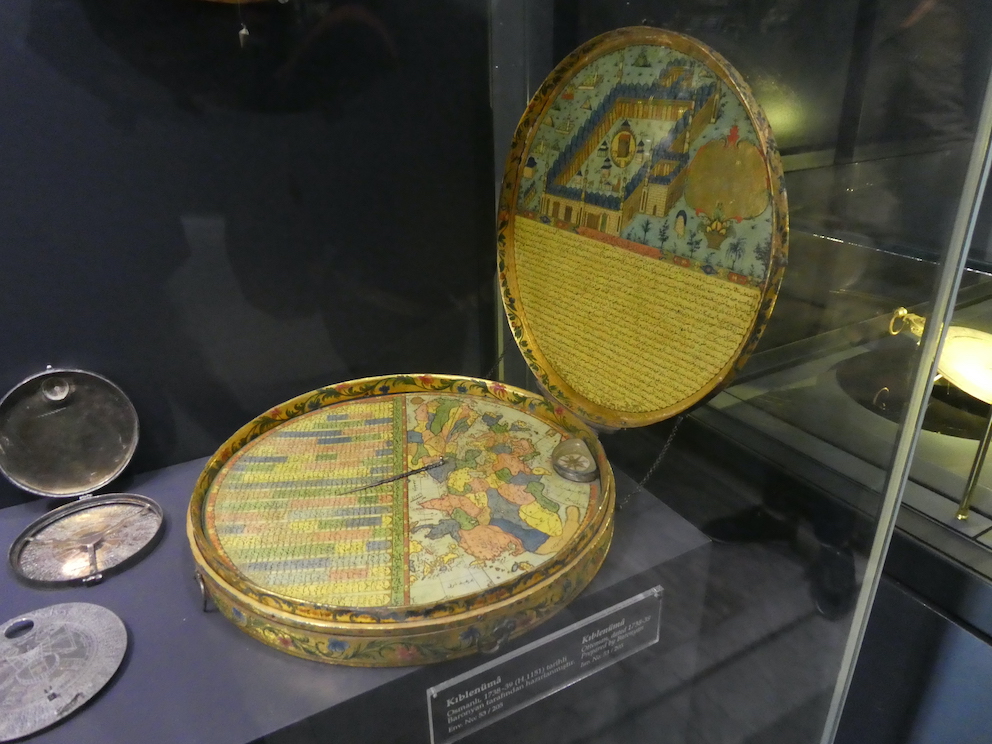
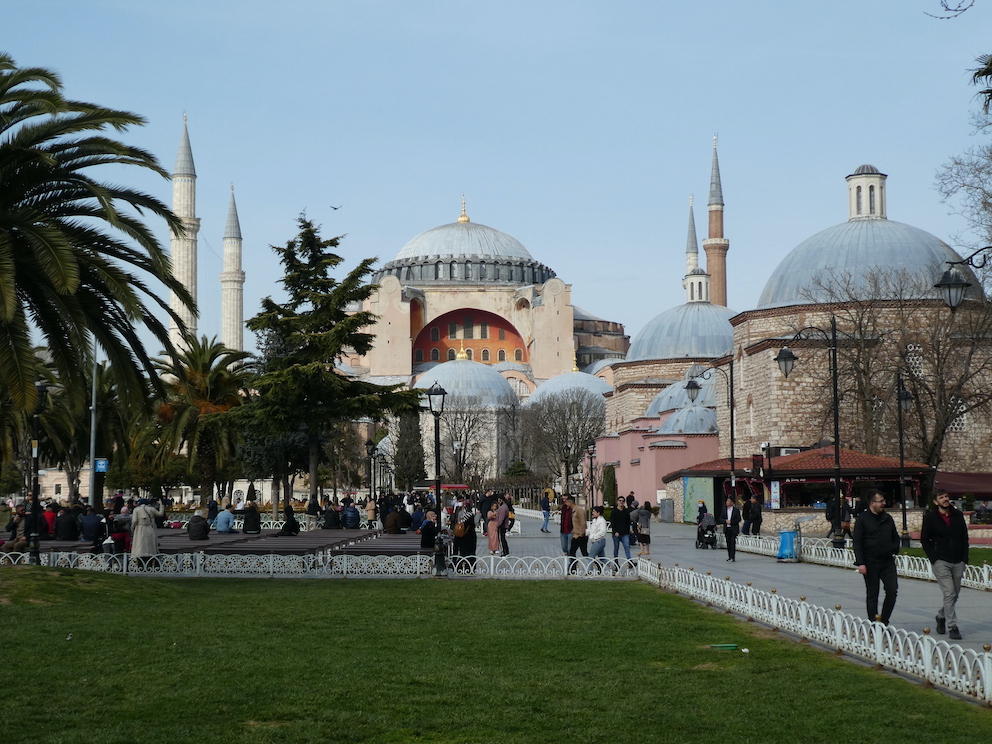
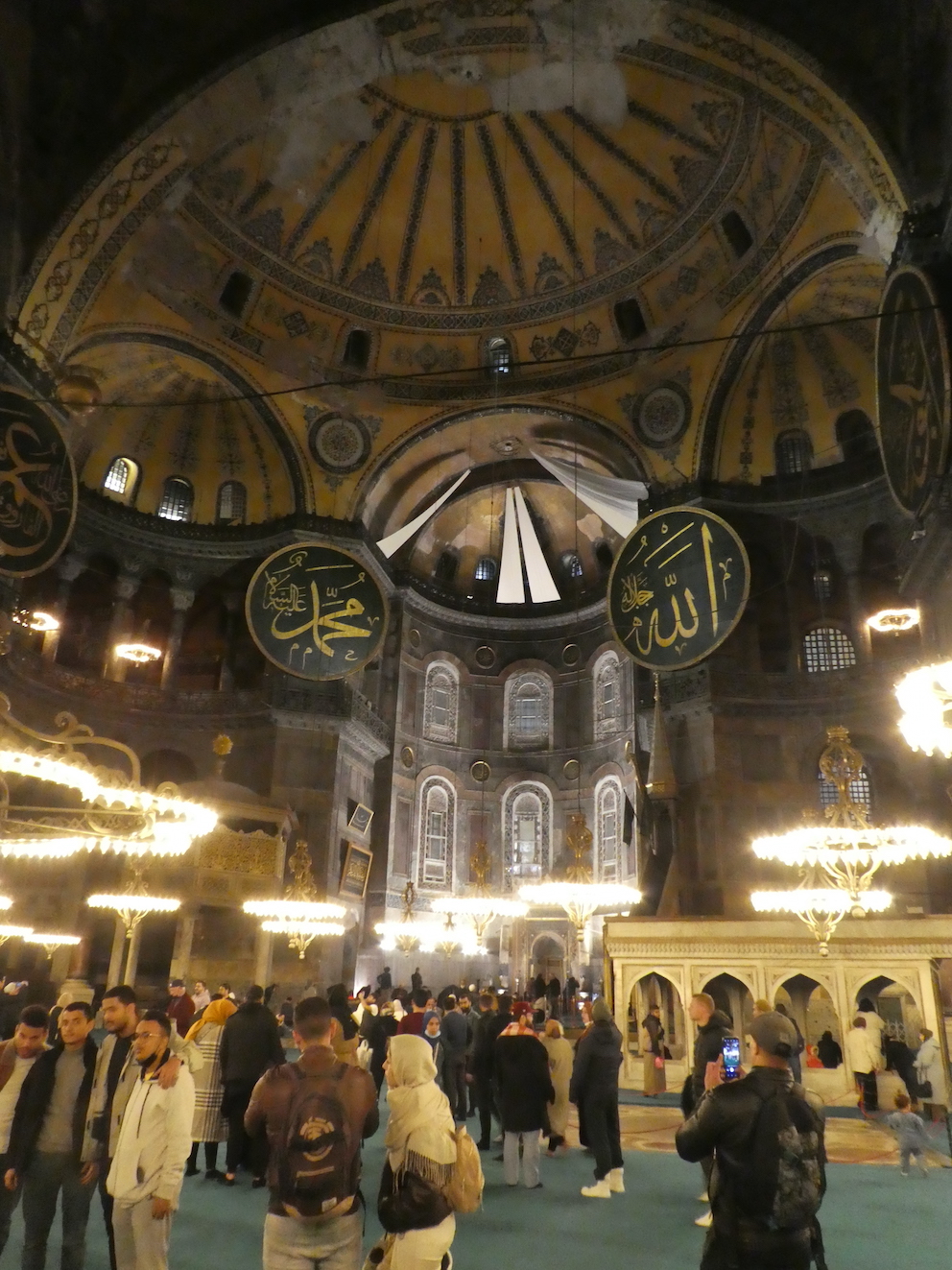
We circled the outside of the Hagia Sofia Grand Mosque during the day but the huge line up to visit inside put us off until later in the evening after dark when we wouldn’t have to queue to visit. Built in 537 it was the largest Christian church of the eastern Roman (Byzantine) Empire, during the Latin Empire from 1204-1261 it temporarily became a Roman Catholic cathedral. In 1453 after the fall of Constantinople (Istanbul) to the Ottoman Empire it was converted to a Mosque. In 1935 the Republic of Turkey established it as a museum. In 2020 it was reconverted back into a Mosque.


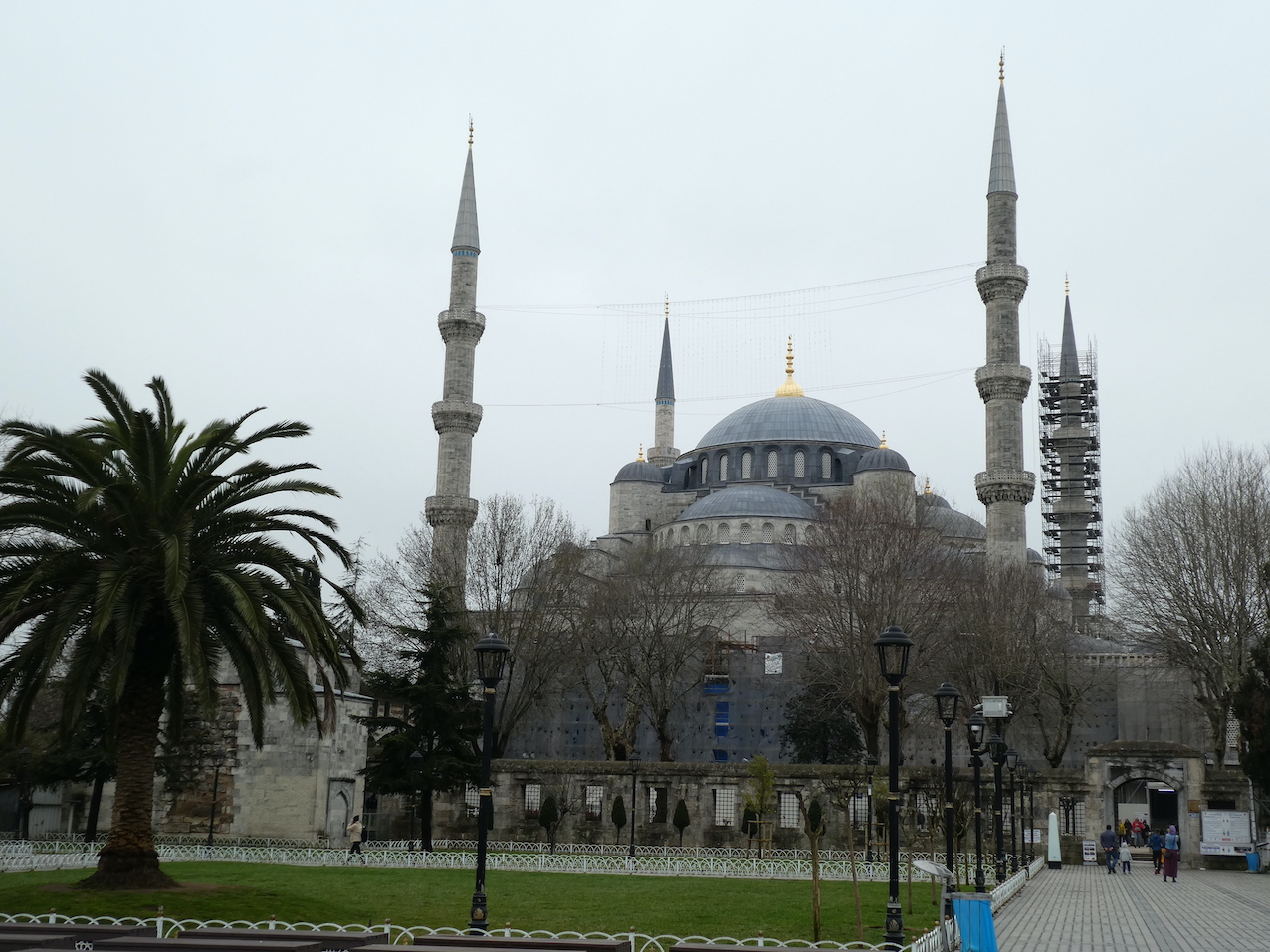
Across from the Hagia Sofia is the Blue Mosque. It was constructed from 1609-1616 during the rule of Sultan Ahmet. It contains the Sultans toomb. Ahmet I was the Sultan of the Ottoman Empire from 1603 until his death in 1617. Ahmed’s reign is noteworthy for marking the first breach in the Ottoman tradition of royal fratricide; henceforth Ottoman rulers would no longer systematically execute their brothers upon accession to the throne. It remains a functioning mosque although was under extensive renovations and repairs during our visit. Hand painted blue tiles adorn the mosques interior walls and at night the mosque is bathed in blue as lights frame the mosques five main domes. It also became UNSECO in 1985.
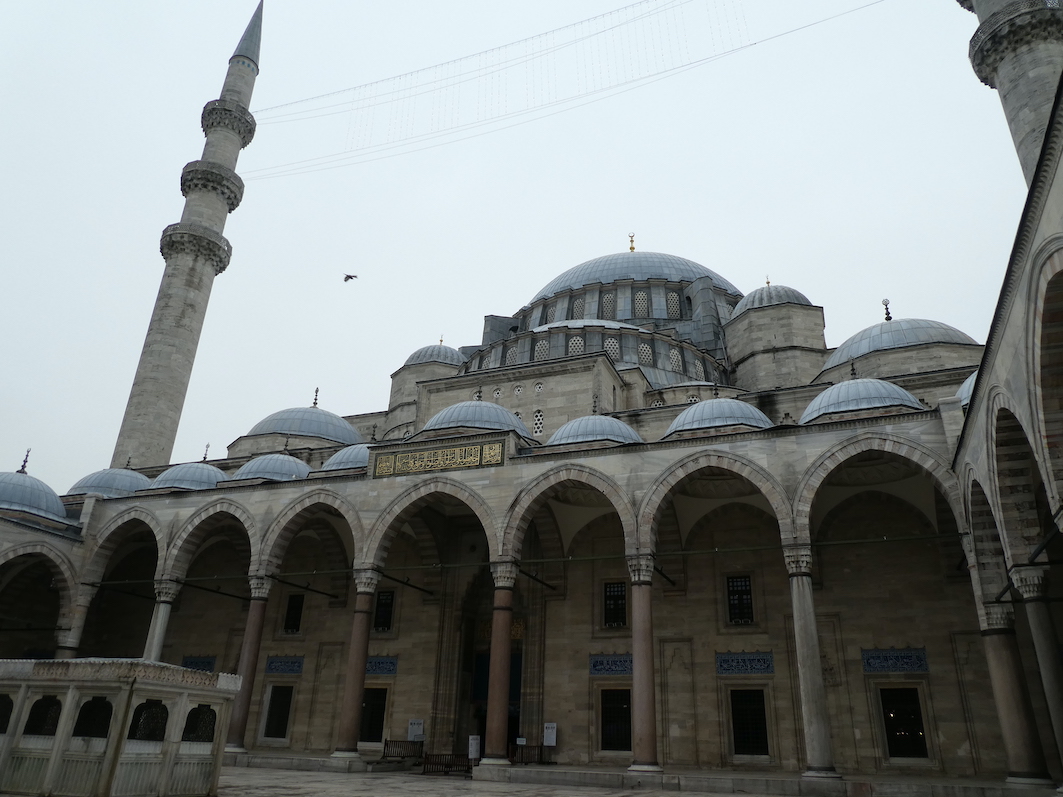
Suleymaniye Mosque – the largest mosque in Instanbul for 462 years until it was surpassed by the Camlica Mosque in 2019. The view of the city, the Golden Horn and the Bosporus Strait from Suleymaniye Mosque is magnificent.

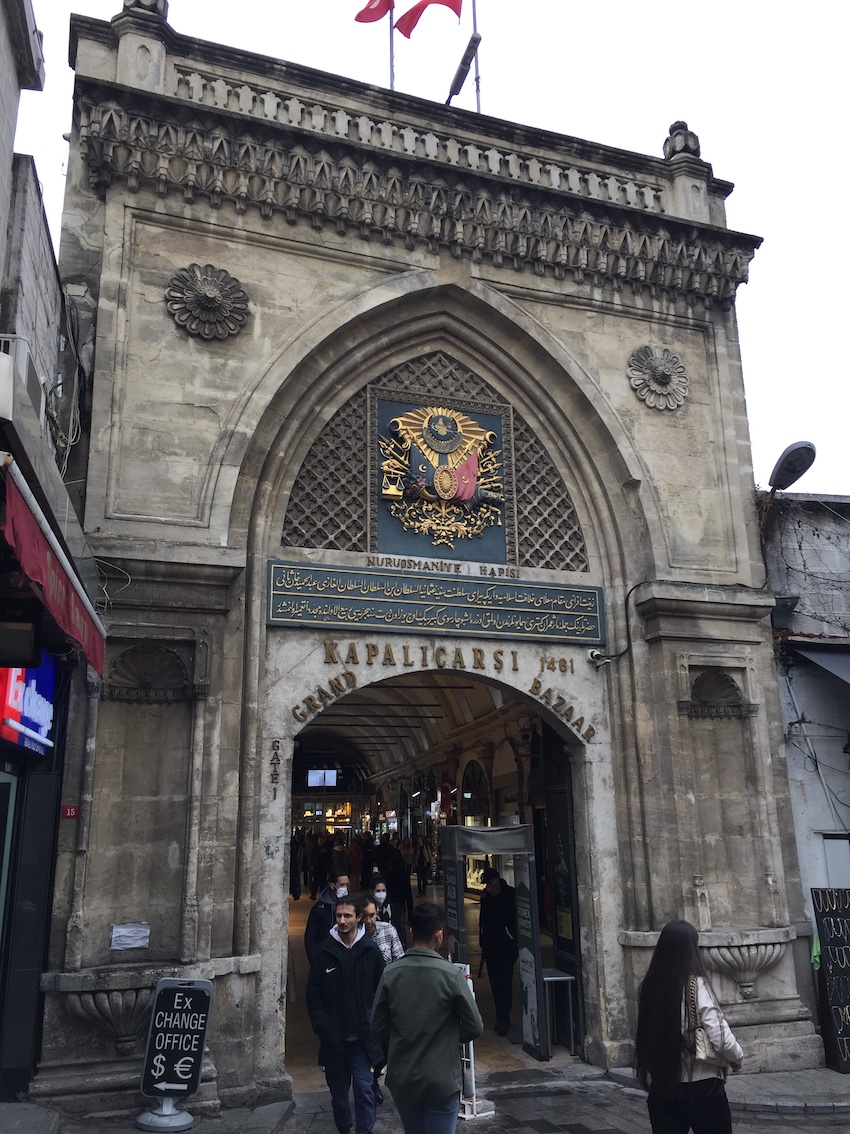
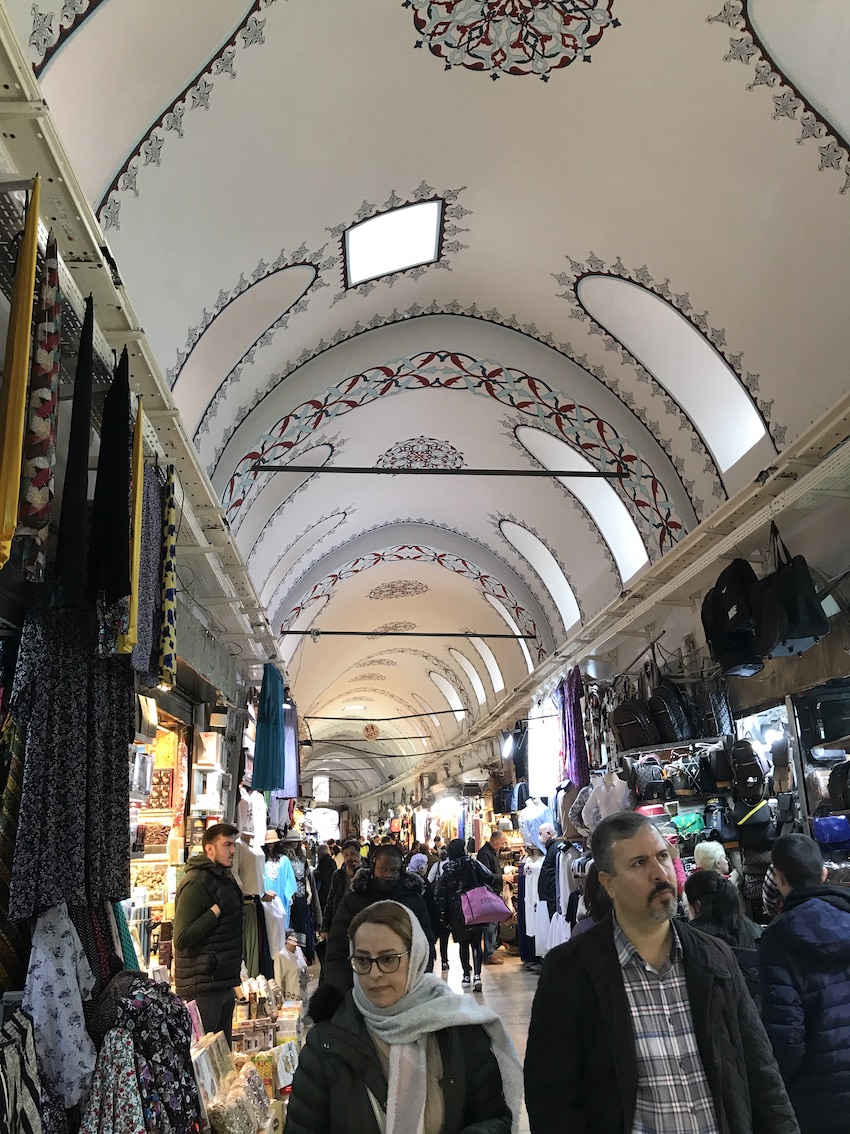
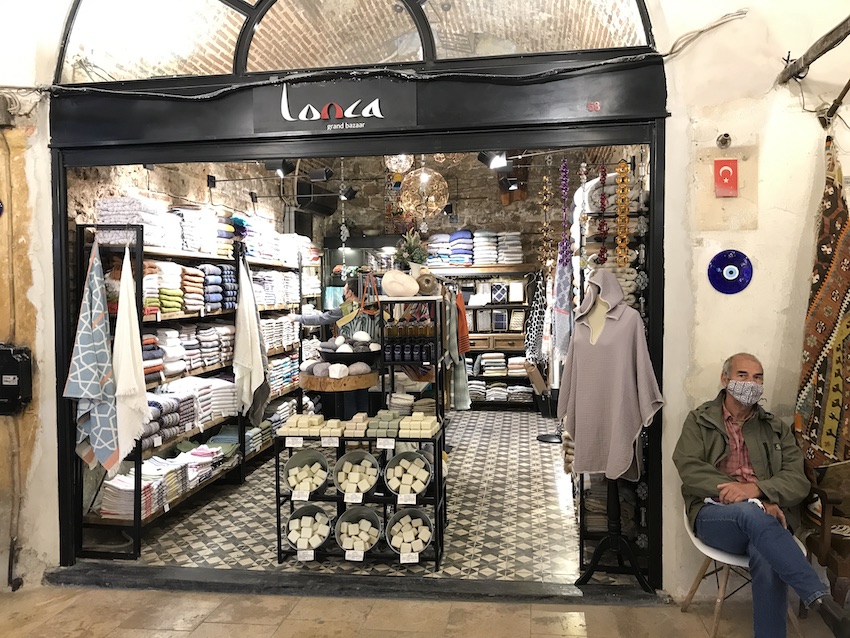
We visited the Grand Bazar twice and are confident that we didn’t even see half of it. It is one of the largest and oldest covered markets in the world, with 61 covered streets and over 4,000 shops. I really need to improve my shopping skills as from 4,000 shops I managed to buy just two items. We spent more time trying to find the one shop I wanted to go back to, than anything else. However it was most enjoyable spending time just taking it all in. I am pleased it wasn’t very busy (due to being winter and covid still impacting tourists). We have visited a few of the worlds biggest markets and this had a distinctively modern feel to it, it was very clean and almost felt like an indoor mall rather than a market/bazar. There was no rubbish, smell, stray animals etc. This is largely due to recent extensive renovations that began in 2012. Previous to these renovations there was no toilets in the whole of the bazar, and moreover previous lack of control allowed many traders to remove columns and walls in their shops to gain space, this together with the substation of concrete on the roofs rather than lead which was stolen from the structure over the years had created a huge hazard.
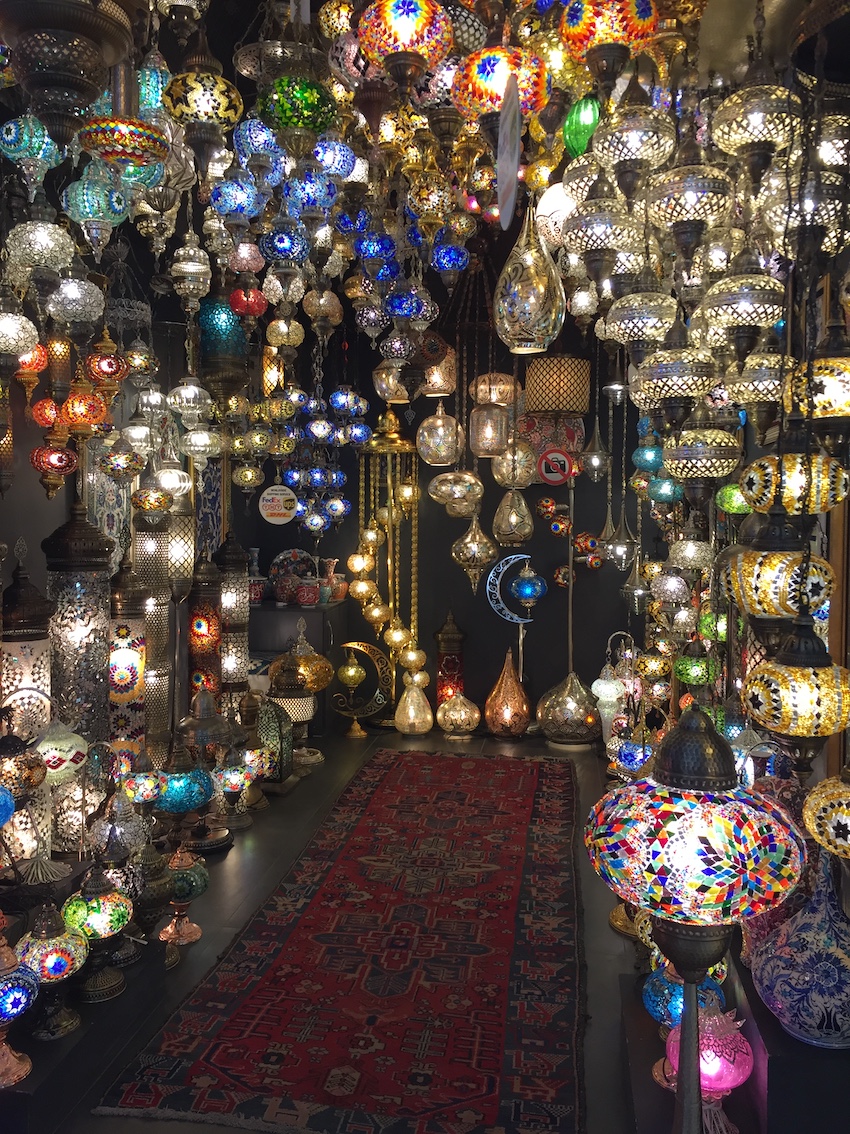
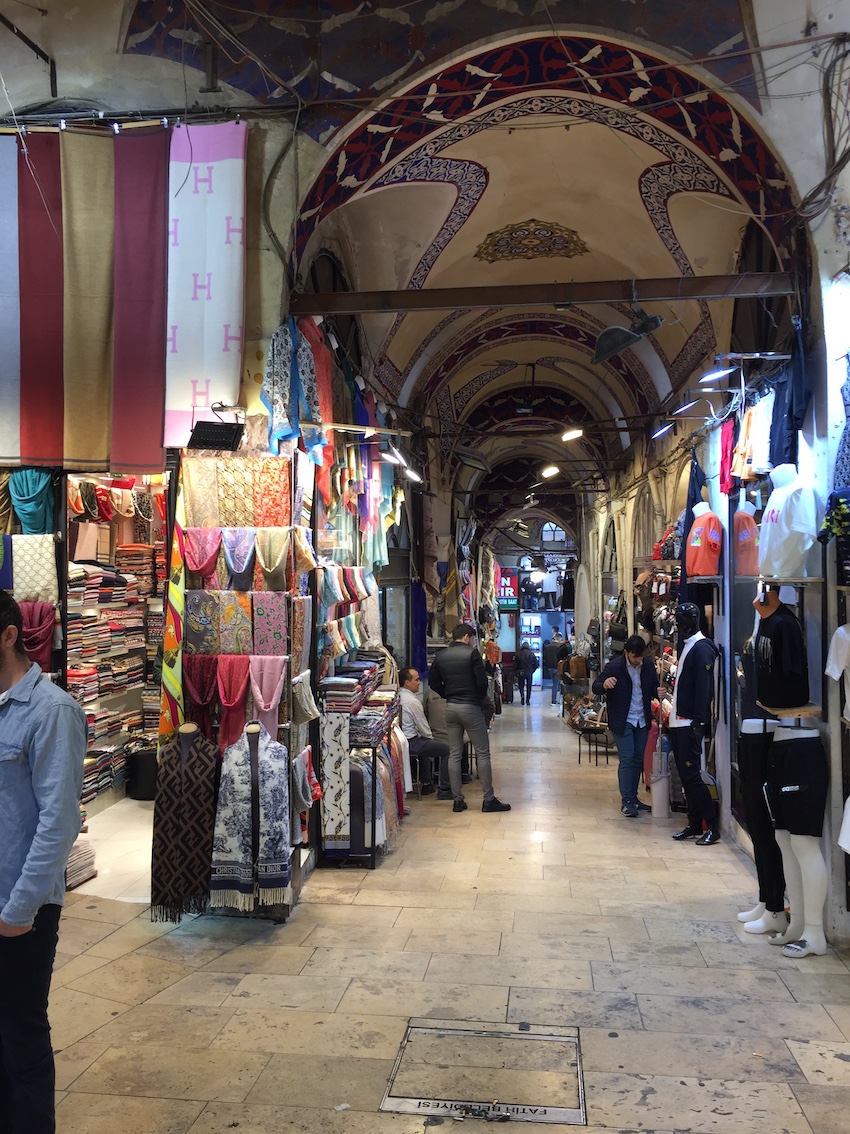
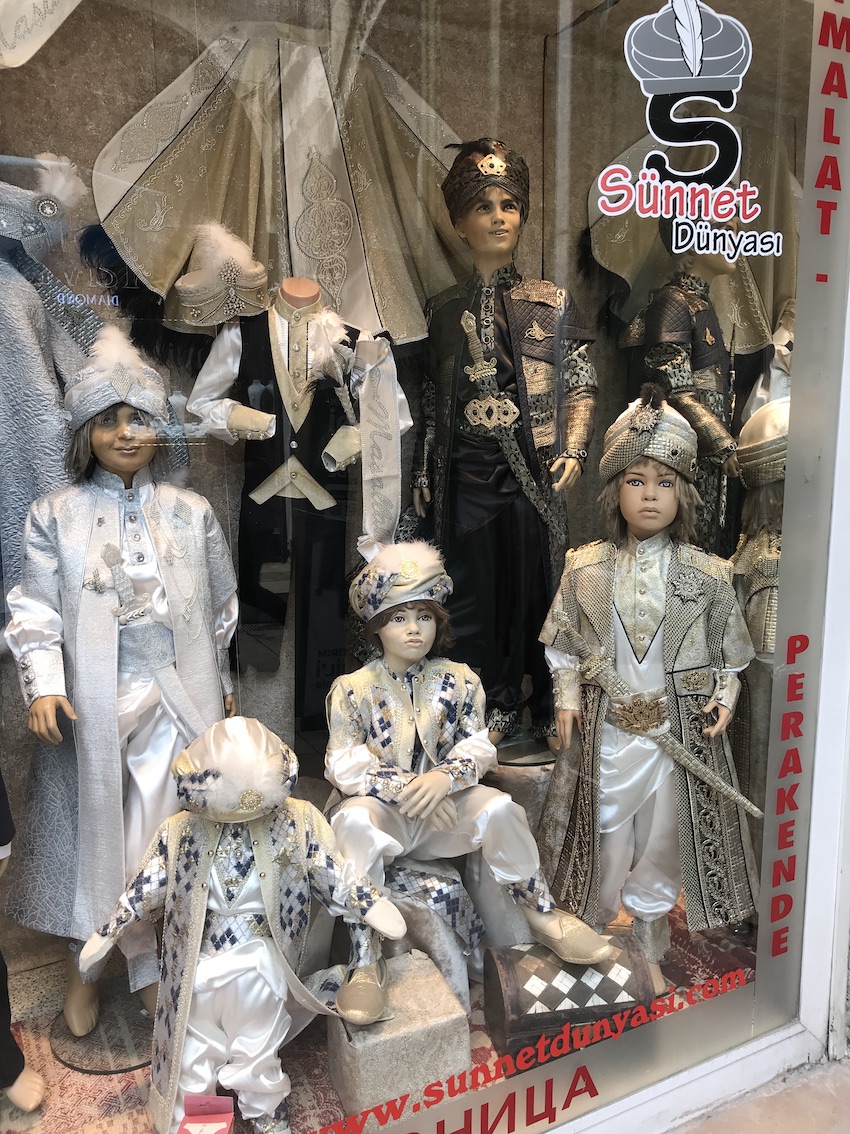

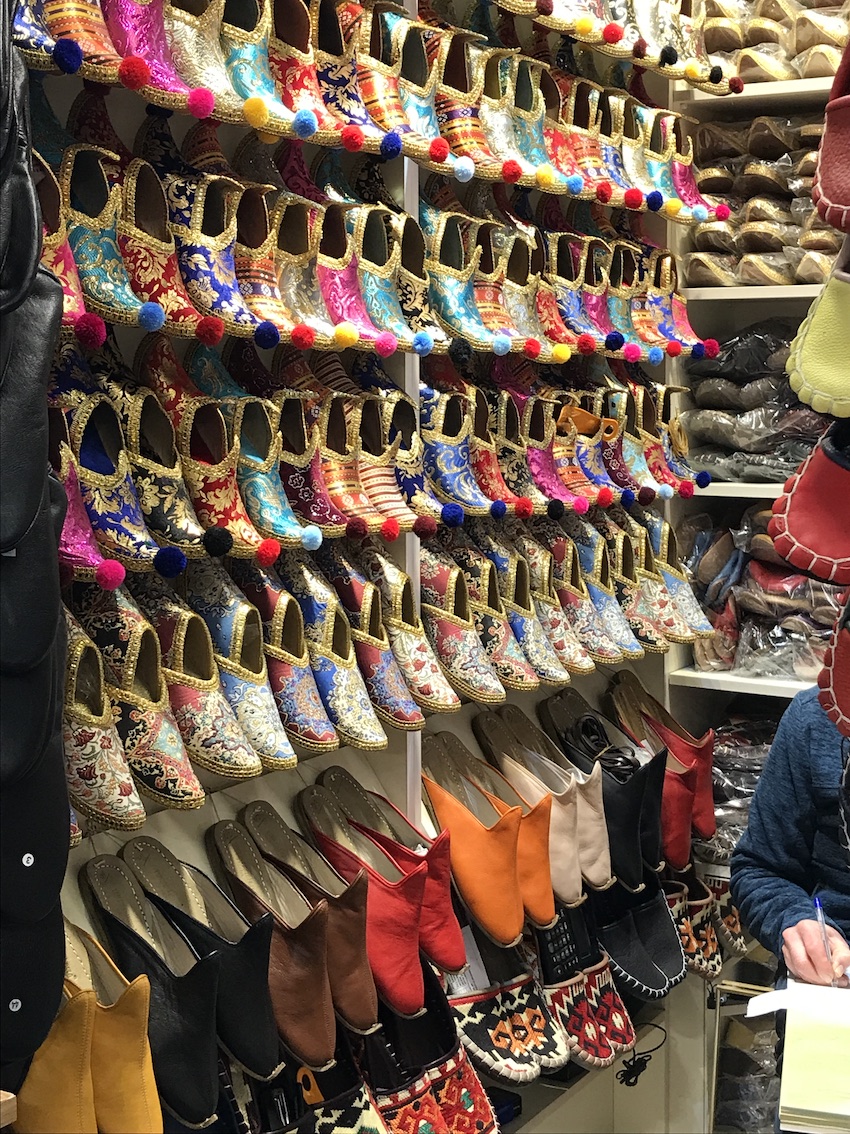

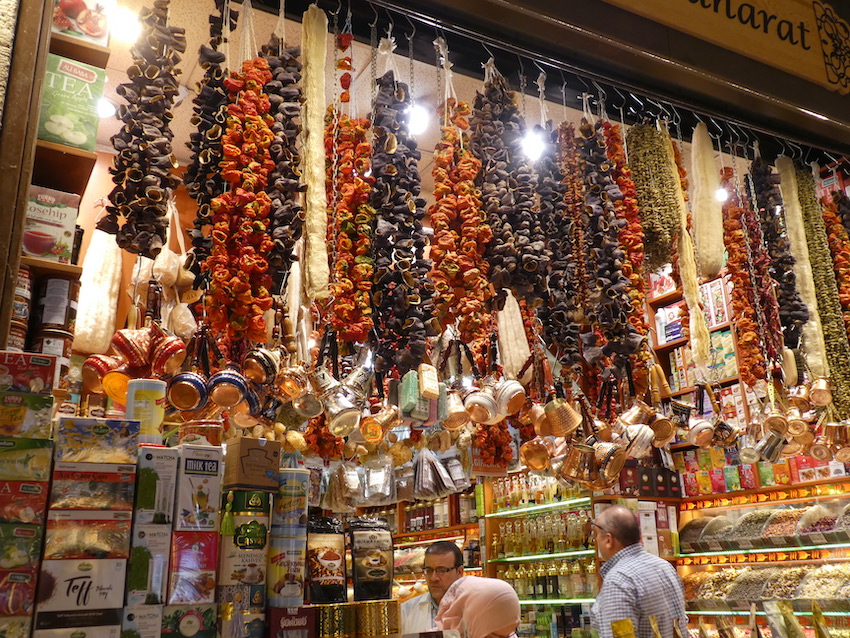
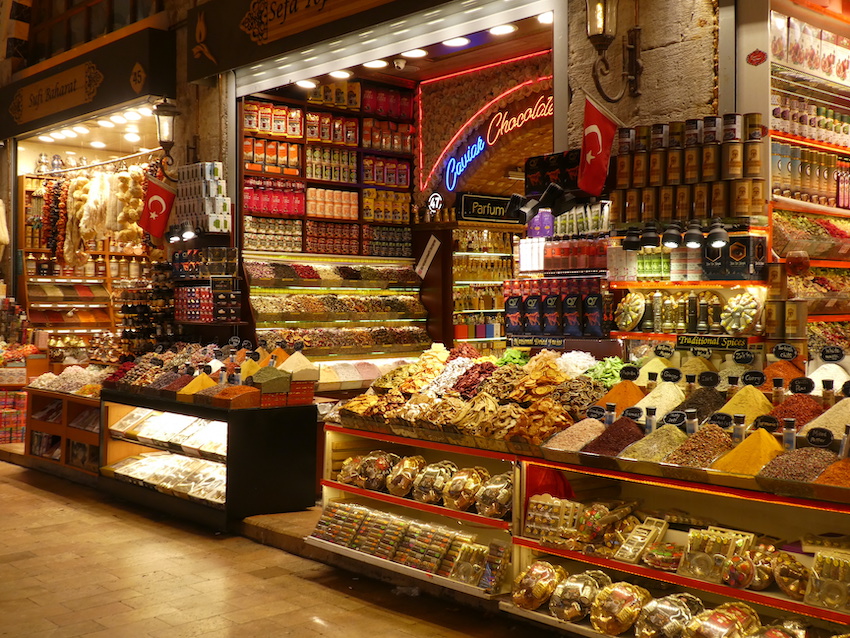
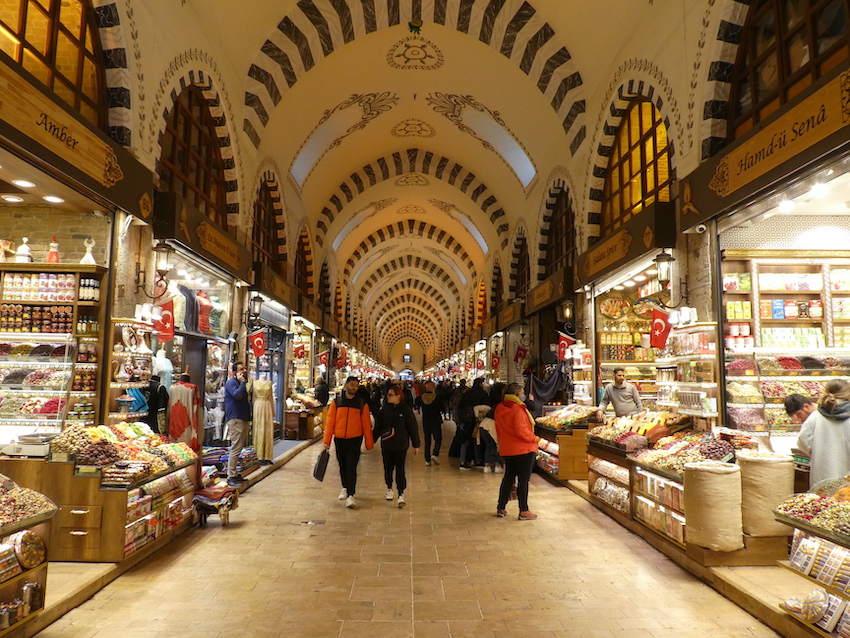
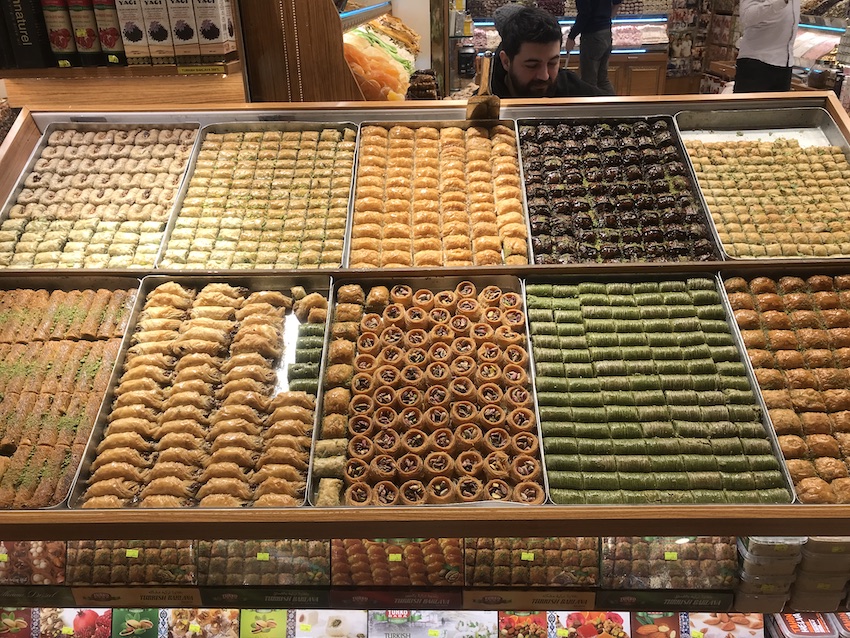
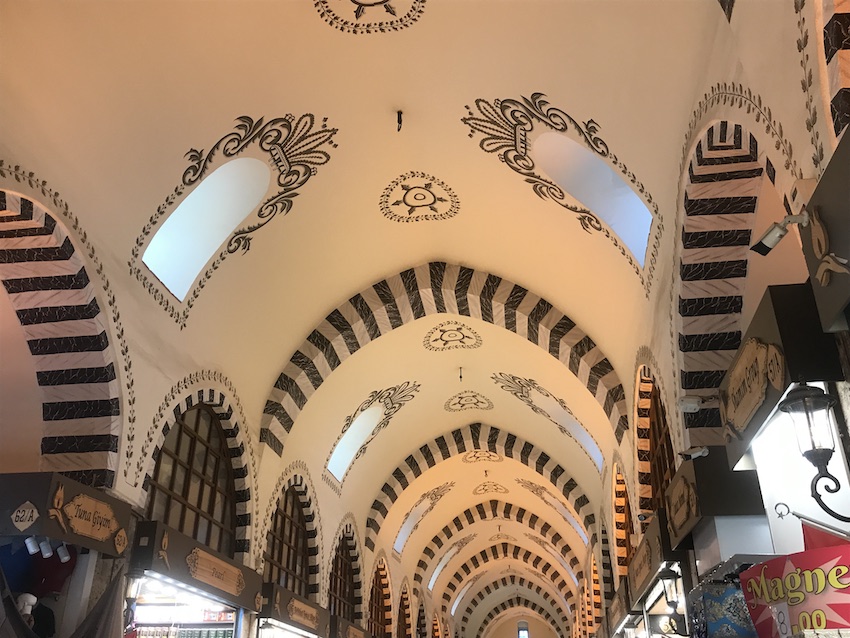
To our delight we accidentally passed through the Egyptian Spice Bazar, (dated 1597- 1664) this place has your eyes and senses on high alert. The spice bazaar served as a bridge between East and West and was is an important pillar of the Silk Road trade in Istanbul. The bazar which served as the pharmacy of the Ottoman Empire for many years, was given the privilege of selling coffee, tin and spices with the Sultans edict. These days the majority of shops in the Spice Bazar are herbalists and spices. In addition there is also Turkish delight, baklava, nuts and delicatessen products, souvenirs, jewellery shops, antiques and dowry shops in the bazar. It has survived two major fires in 1691 and 1940 and was restored further to its current state in 2013 – 2018 by the municipality.


Down by the river we were surprised by how many people were fishing right off the bridge and furthermore by how much they were catching. Of course the size of the fish are all small but you see them continually catching.
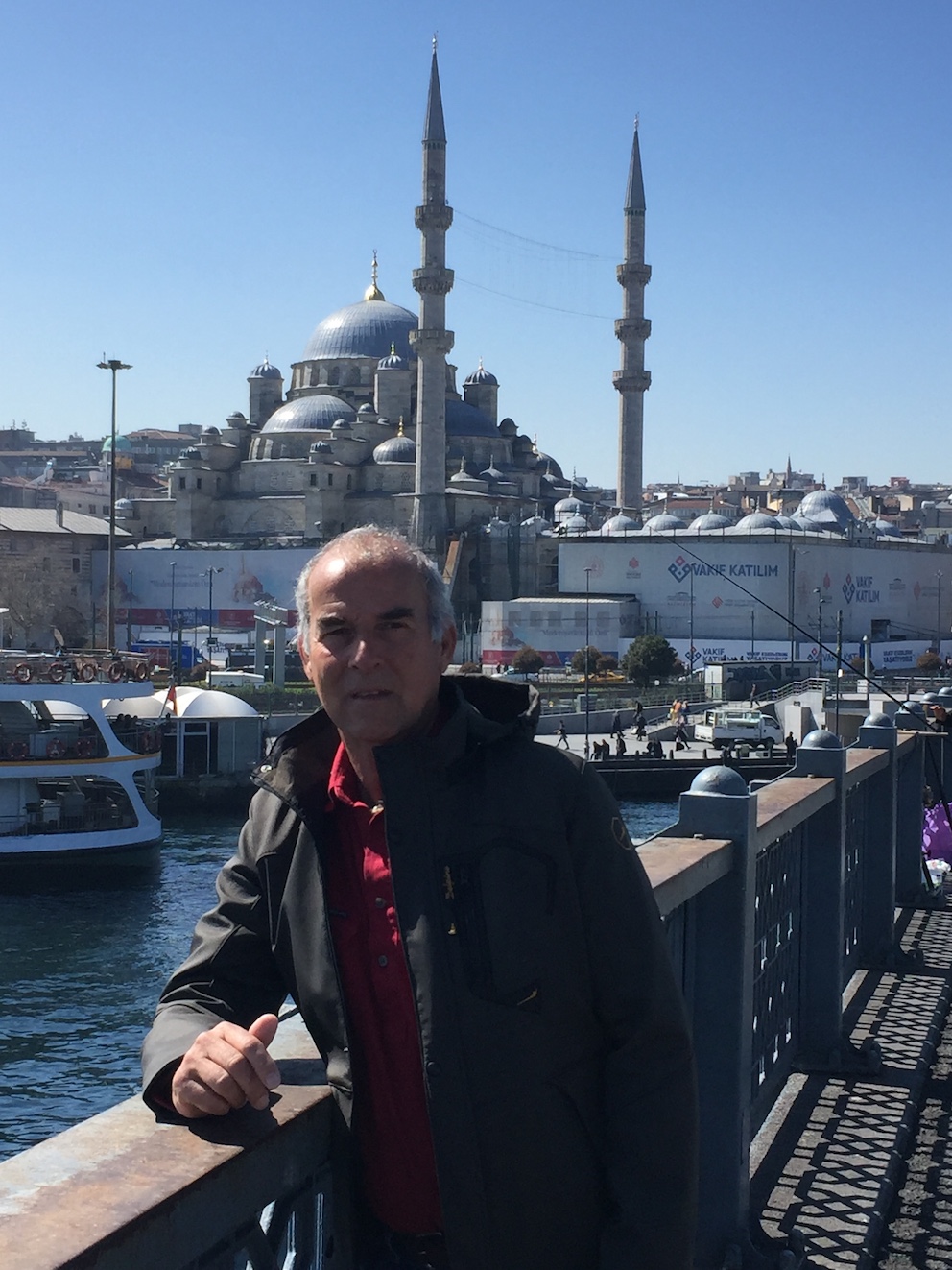
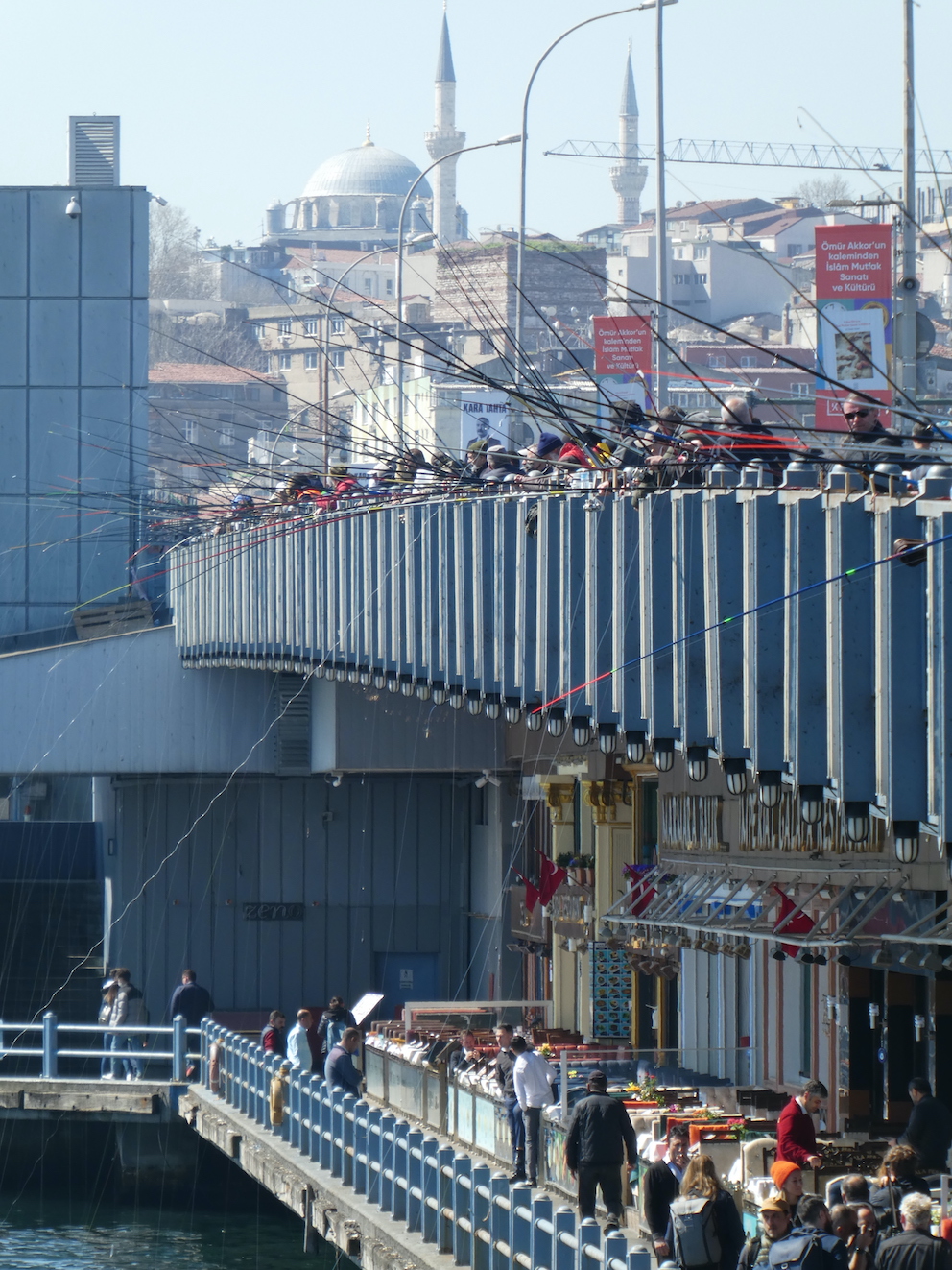
We took a river cruise on this famous stretch of water including the Golden Horn, and the Bosporus Strait that separates Europe and Asia. The bridges and the shore buildings were spectacular.
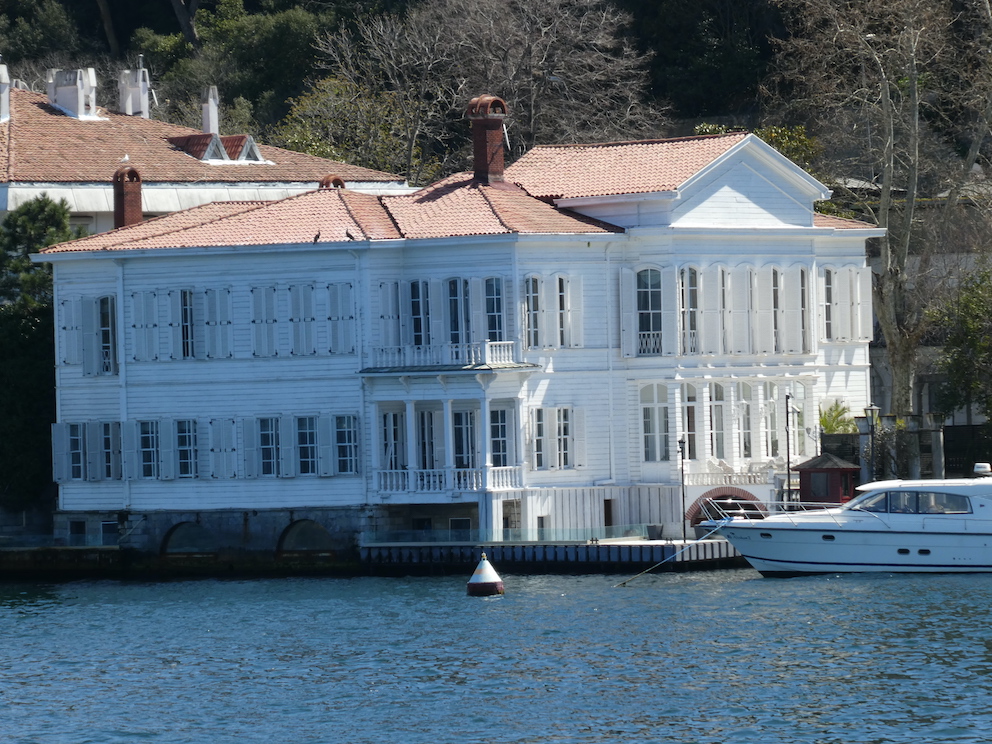
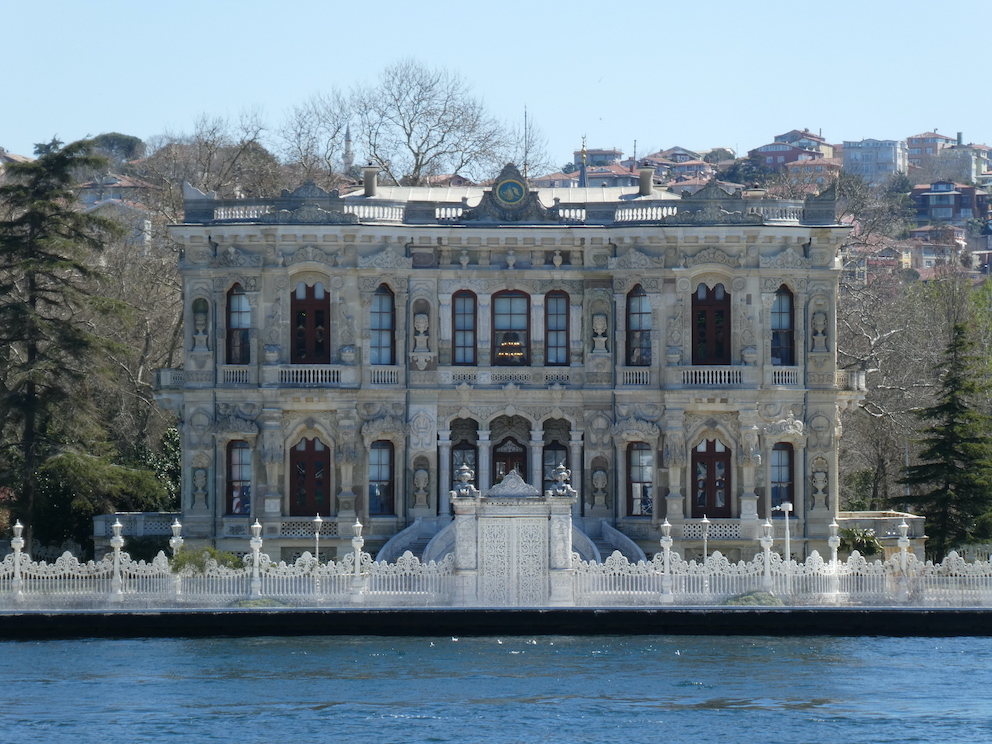

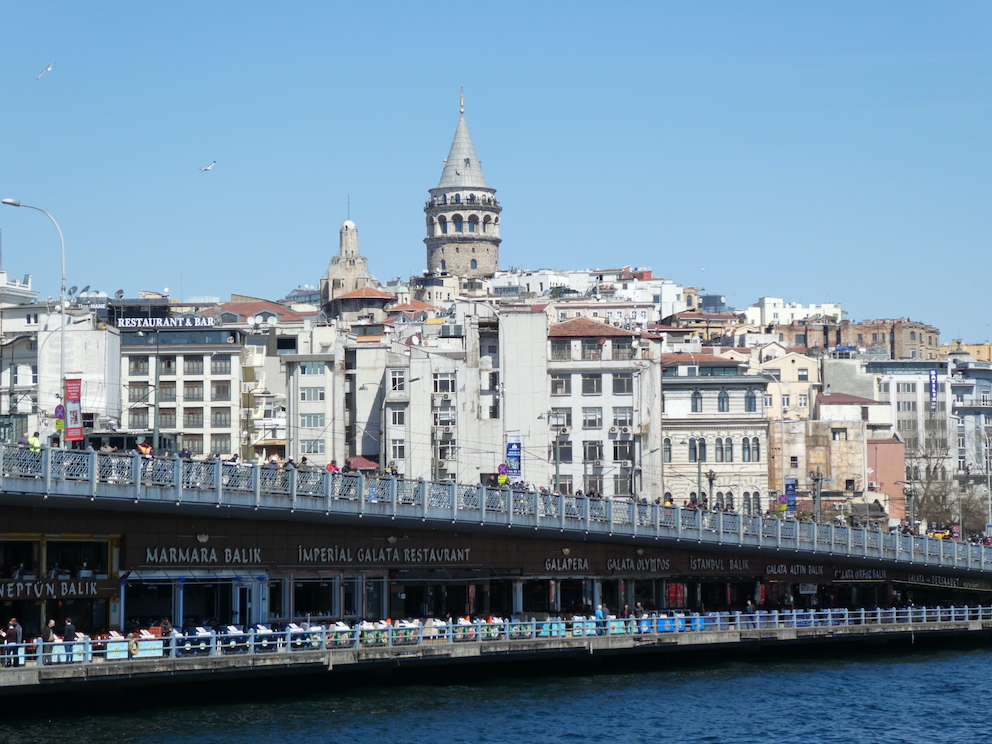
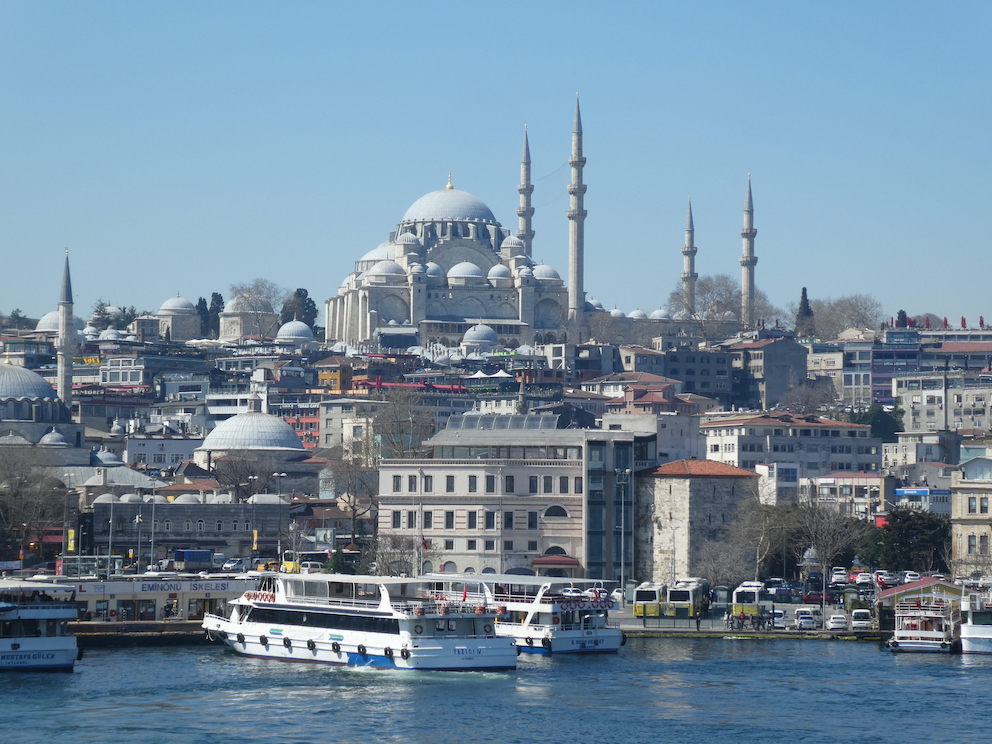
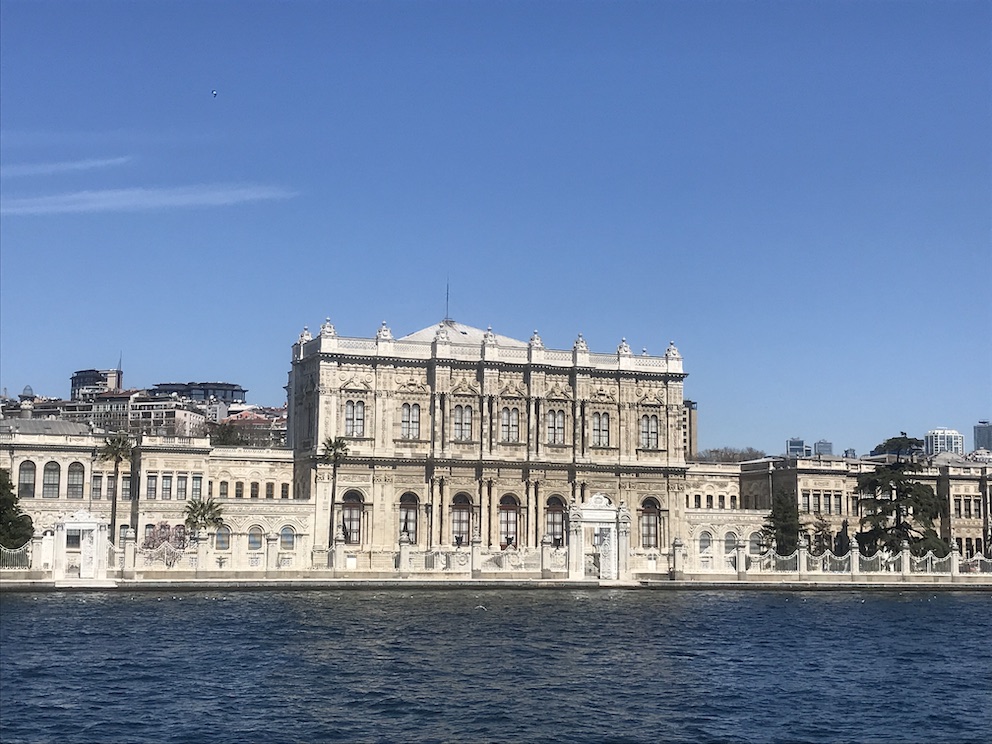
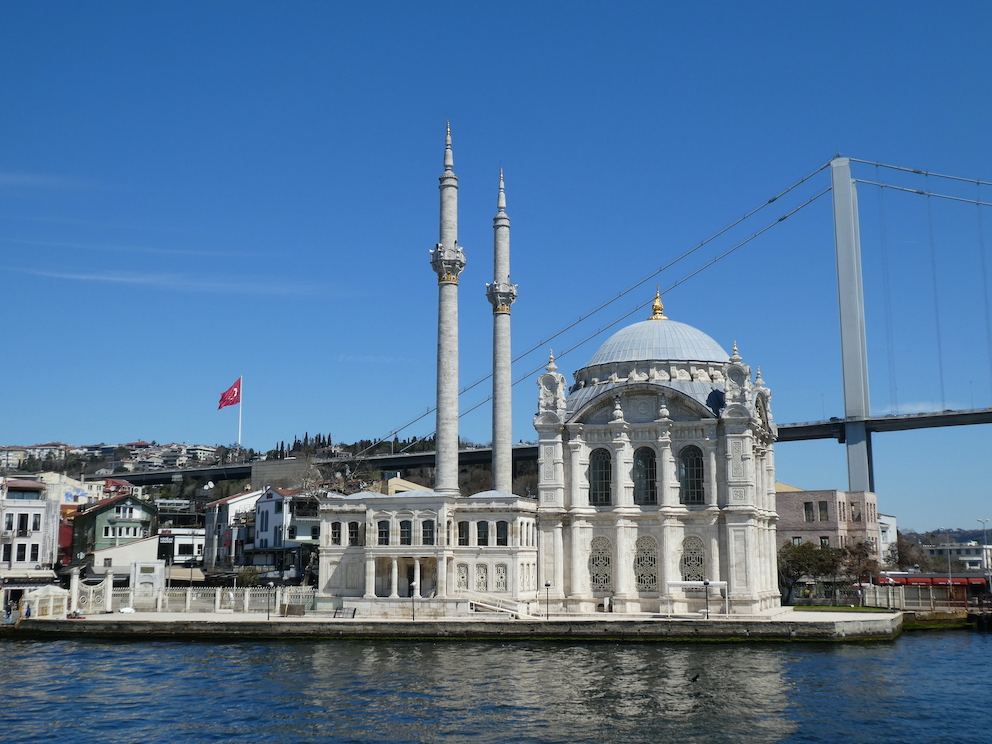
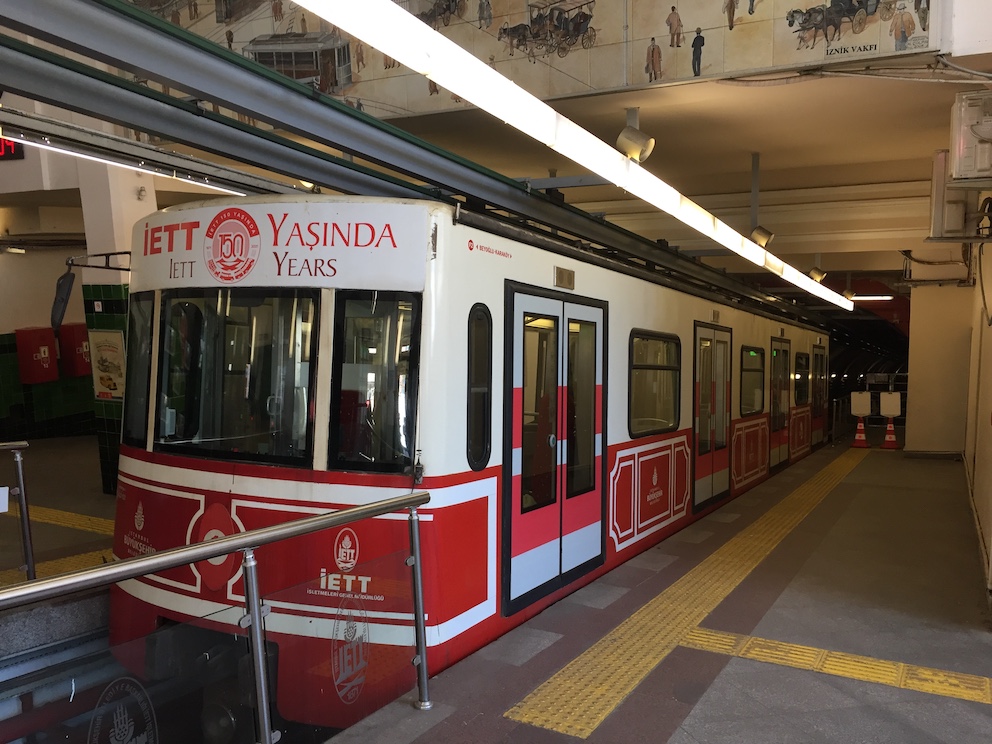
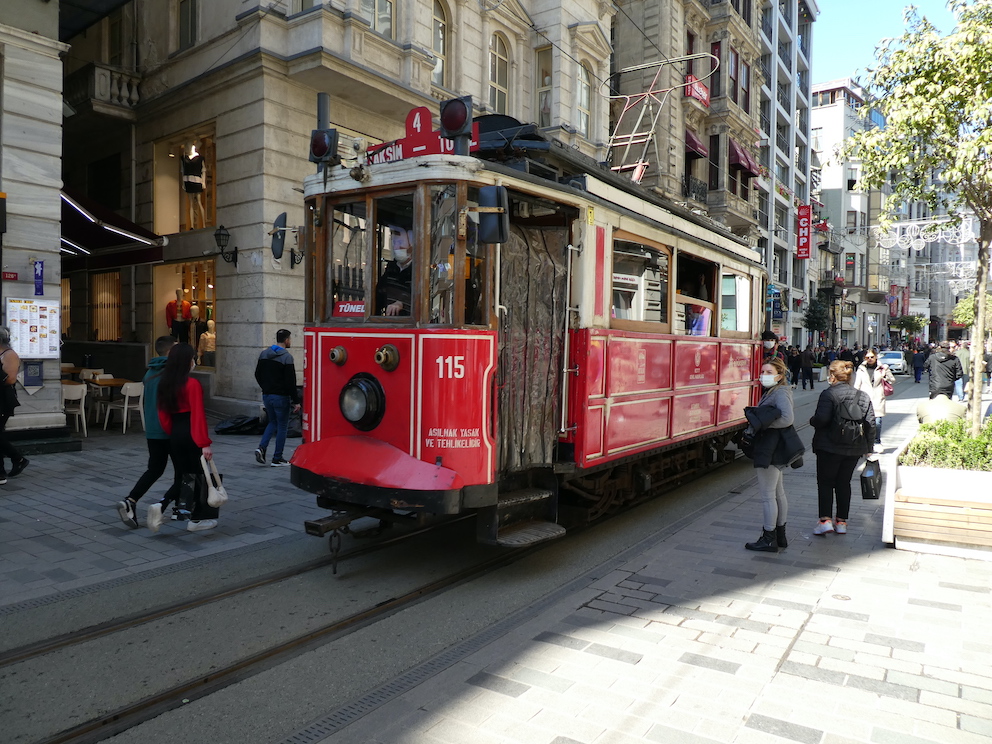
Across the other side of the bridge (north) we took the Tunel Train up to above the Galata Tower. The Tunel is the second oldest subway in the world, it opened for passengers in January 1875 and still runs today (although it has been updated to include new technologies such as electricity for propulsion and lighting rather than steam engines and gas lamps).
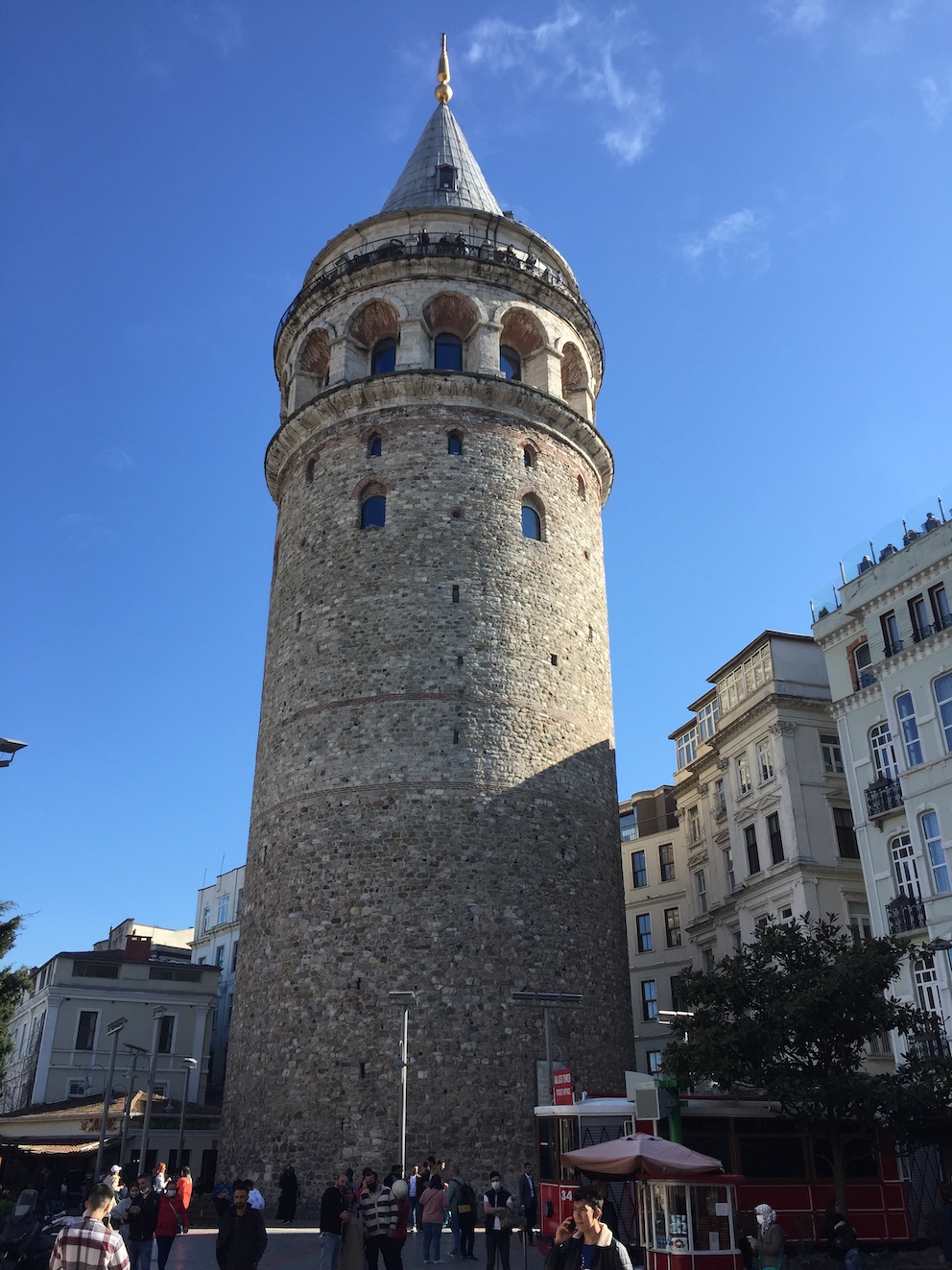
The Galata Tower – originally an observation watchtower and now a museum stands almost 63 meters high on the hillside embankment of Galata. When built in the year 1348 it was the tallest building in Constantinople (originally 67 meters tall). In 1717 it played an important role in the city as it was the watch tower for spotting city fires, only to be damaged itself from fire in the years 1794 and again in 1831.
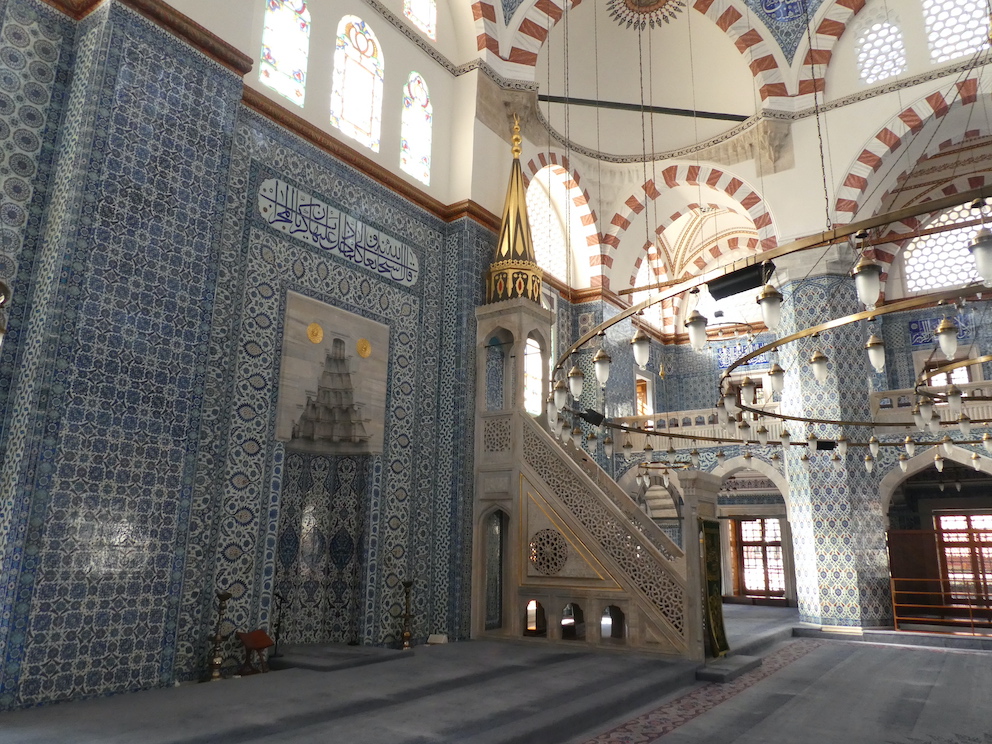
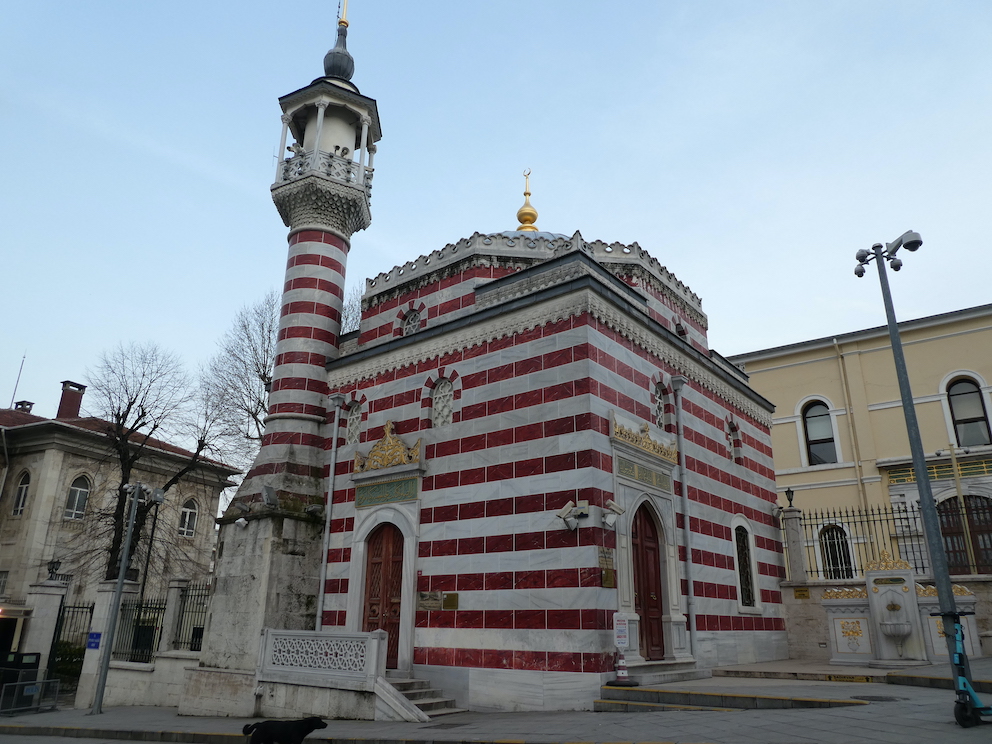
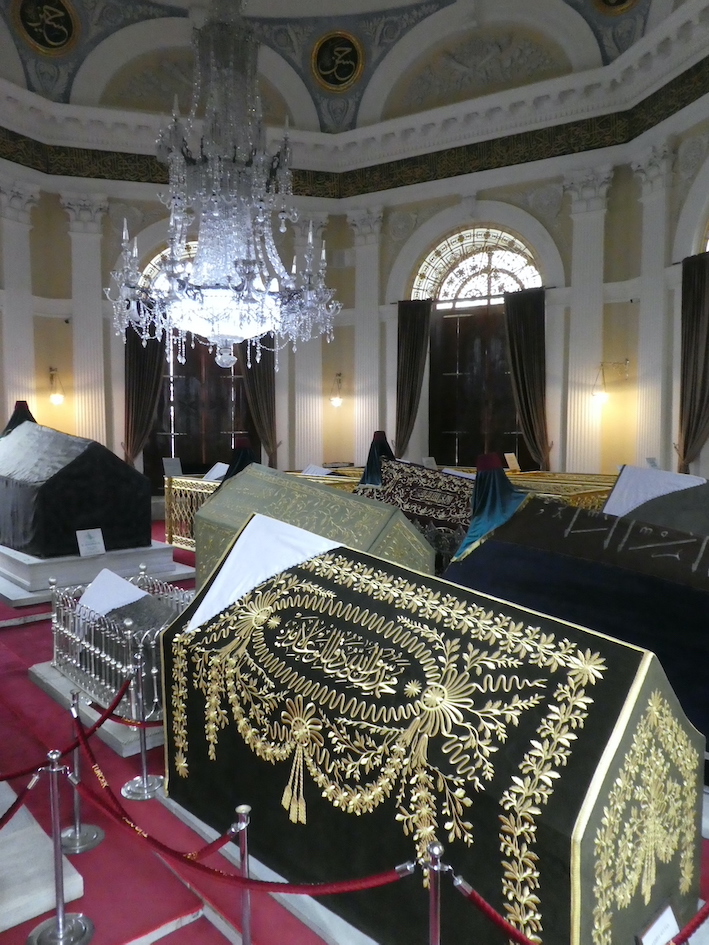
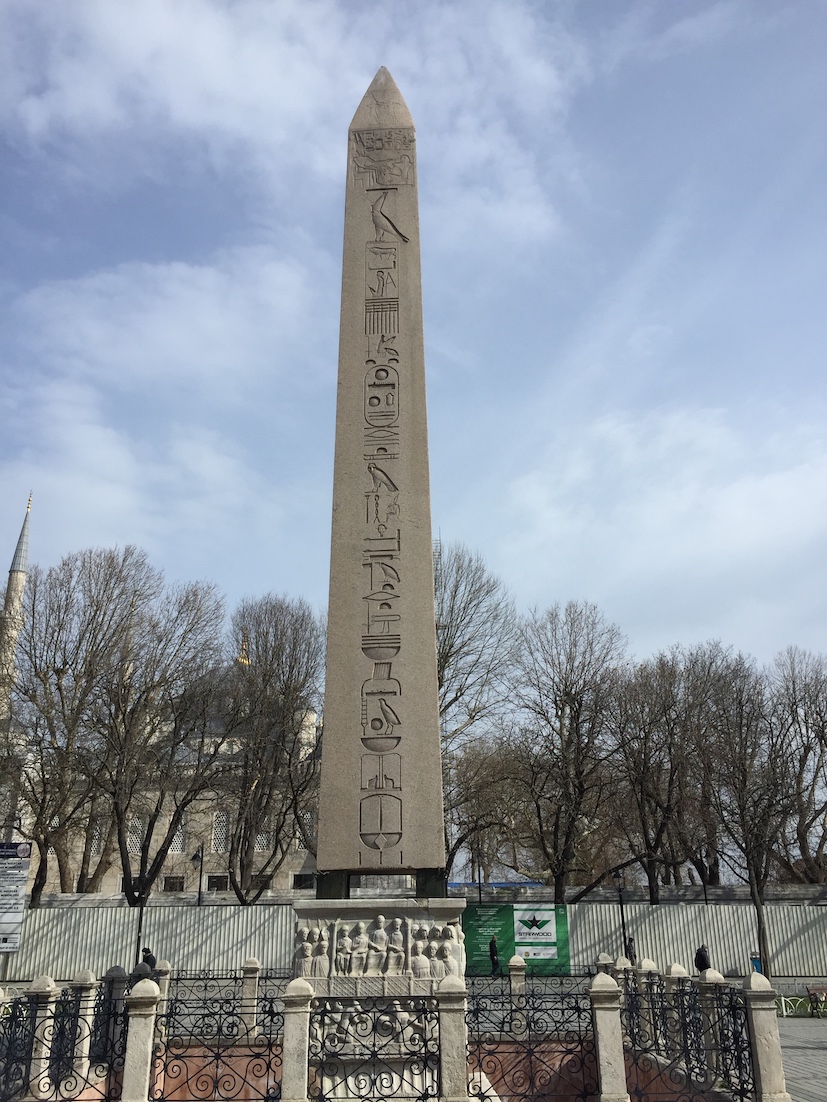
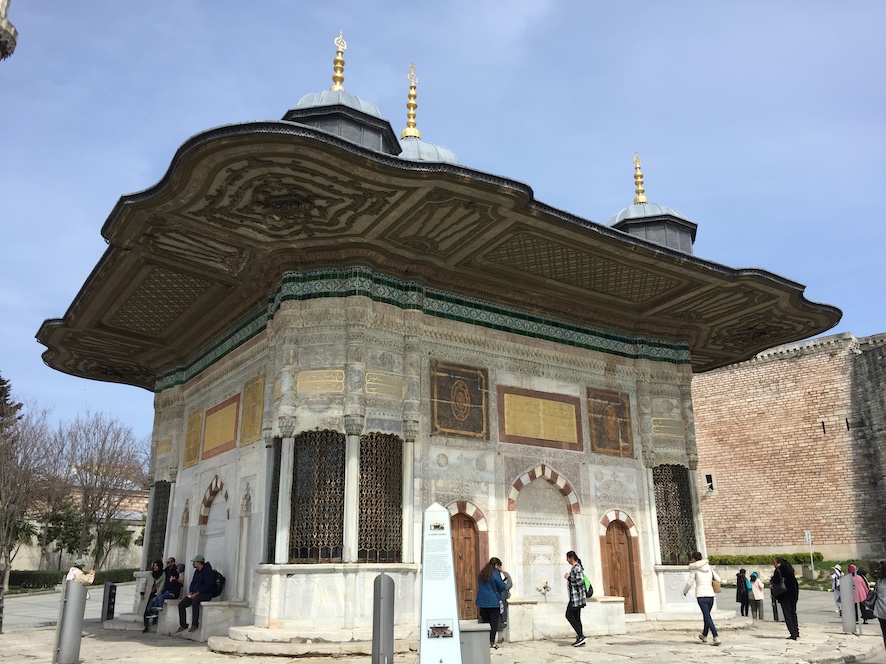

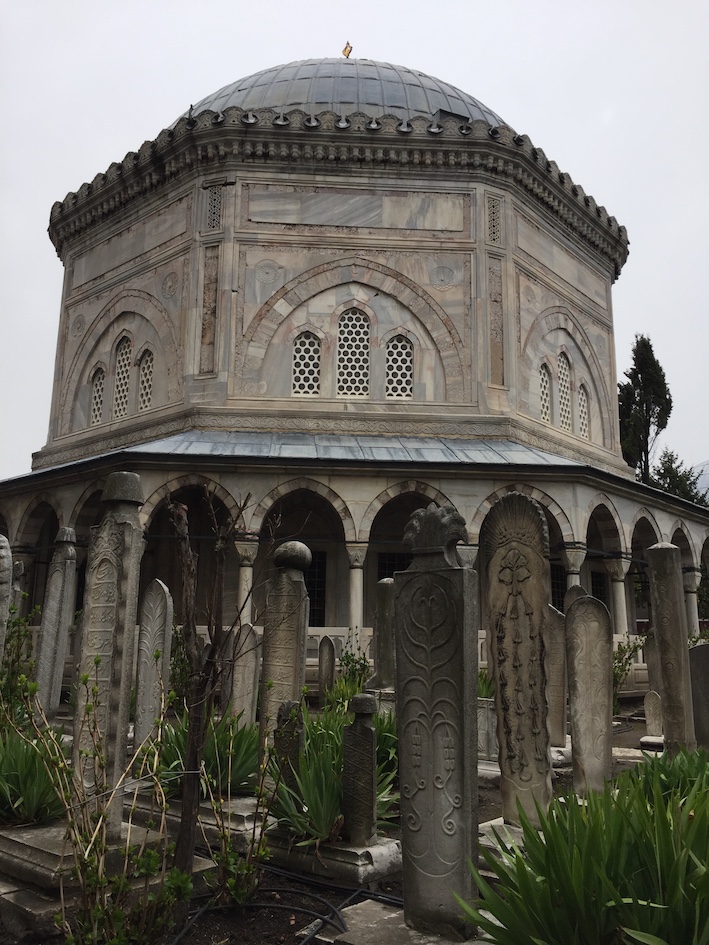
The following day we flew back to Marmaris, a 1.5 hour flight to Dalaman airport and an hour transfer back to the boat. Travelling is lovely but there is nothing like coming home to your own house and sleeping in your own bed. We were to enjoy it for just 3 days before our next travelling expedition!
Travelling Turkiye – The Black Sea & Inland Train

With Red Roo having been booked and paid into the marina for a six month stay (which was our most cost effective choice given we needed to haul out and and to also get Turkish residency for the winter), we took advantage and used the time after winter and after all the boat jobs were done to travel Turkey.
Oh, yes that reminds me … Turkey has had a name change since we have been here and it is now Turkiye (apparently abandoning the anglicised name its held for almost 100 years to more accurately represent the Turkish culture and civilisation, however some have reported it is purely to differentiate themselves from the bird Turkey).
Regardless, we have certainly made the very most of our time here and have done a lot of travel in Turkiye and have much to share with you. Three blog posts in-fact so stay tuned over the coming weeks.
To put things into perspective Turkiye is a similar size (a bit smaller) to the Australian state of New South Wales. Offical measurements being Turkiye 783,562 km² and New South Wales being 801,150 km².
We previously explored the South Coast and Cappadocia regions with our Canadian friends from SV Caffe Latte in December and late January (see old blog posts) and now we are off on our next (but not last) adventure to explore the north coast – The Black Sea, inland Turkiye on the tourist train, the capital Ankara and the well known city of Istanbul.
The first part of the journey we were joined by our Aussie mate Noel who also has a boat here in the Marina, and our itinerary was planned with great assistance from our other Aussie/Turkish mate Adnan from Outback Travel & Tours. Adnan spent 30 years living and working in tourism in Australia and is now back living in Marmais running his own company, a huge shout out to both Adnan and his son Goksel for their invaluable input into making our adventure awesome, they ensured we hit the best spots each day as well messaging daily with the local speciality menus we should look for and also which places would serve alcohol (very important information for two Aussie males travelling the country during Ramadan!!).
We flew from Marmaris (Dalaman) to Trabzon (via Istanbul) on the northern coast of Turkiye and the southern coast of the Black Sea … spoiler alert “it isn’t black” – well actually it is at night! Upon arrival in Trabzon we picked up our hire car and finished our travel day by driving a couple of hours west to set us up for the next day when the adventure really began.
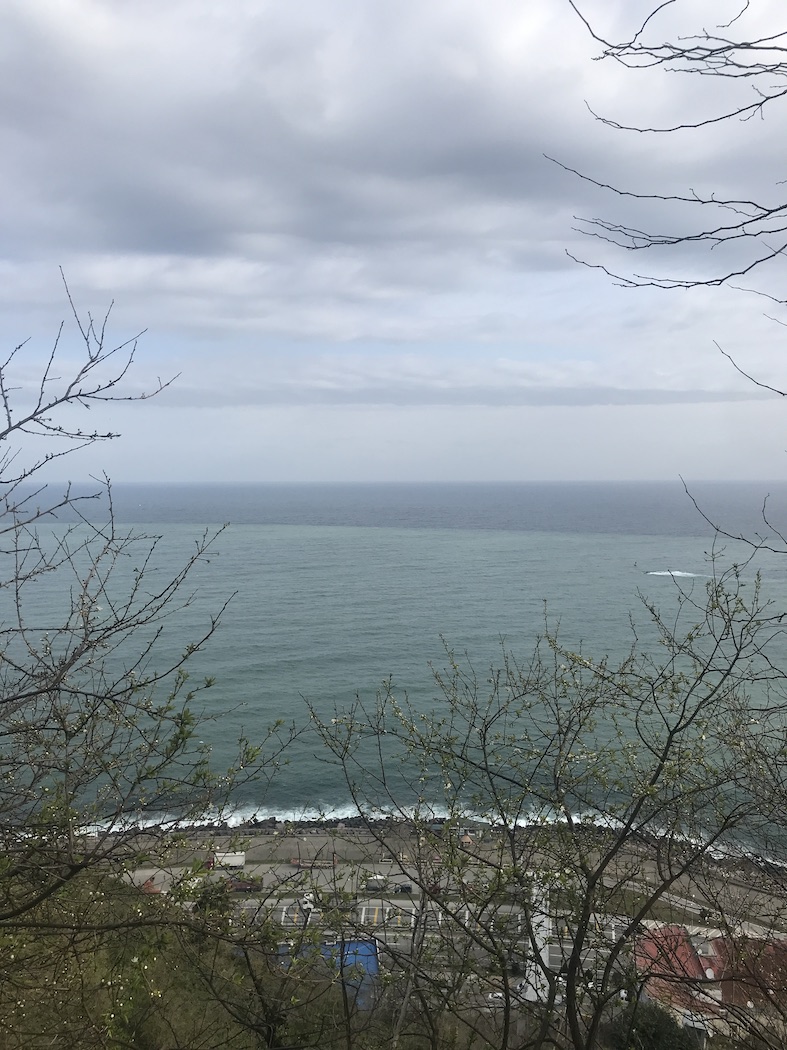
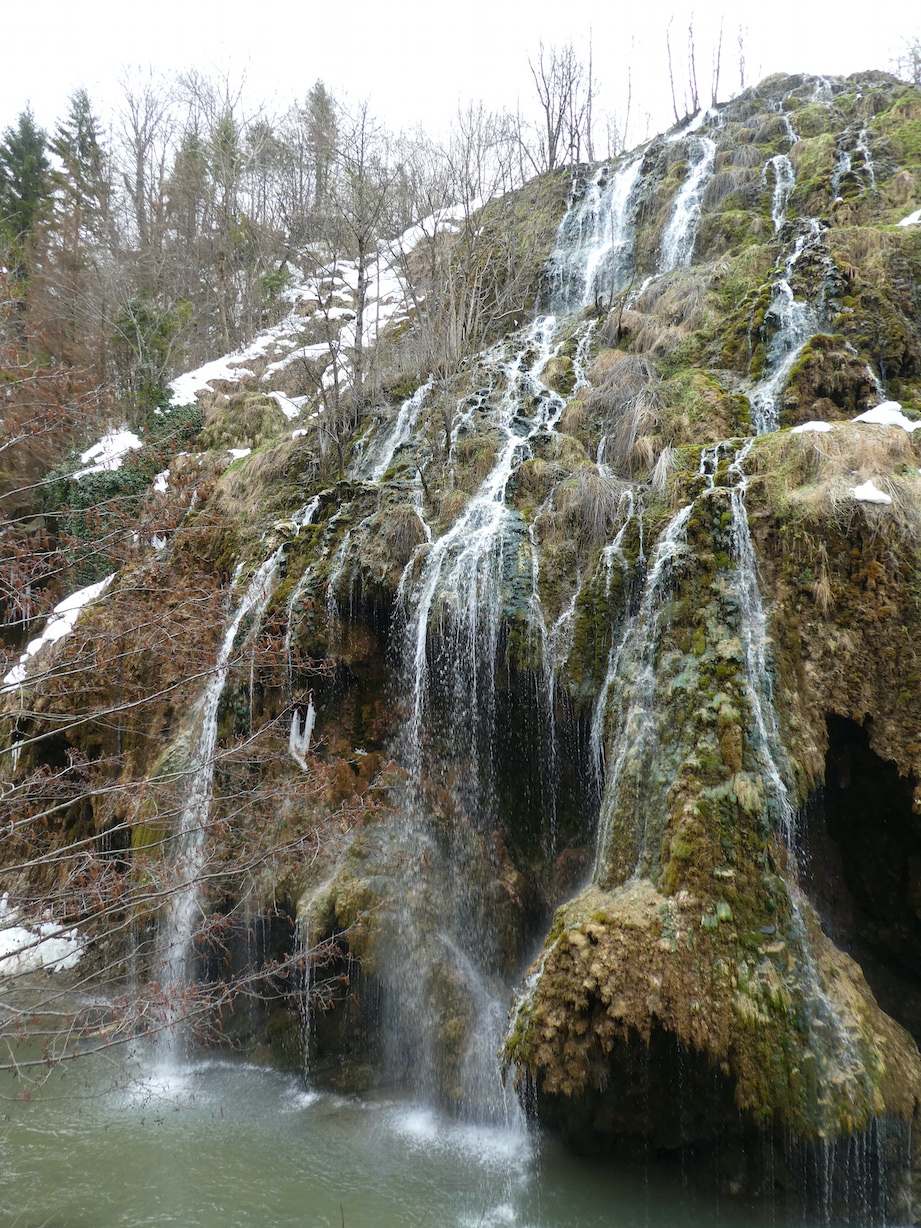
Day one saw us visit the historic quarter and castle at Giresun, the view from the castle gave us our first good look at the Black Sea. Noel summed it up “look at that brown river which runs into the Black Sea that is actually green and blue”. We then headed inland up into Kuzalan Falls Natural Park to see the waterfalls and visit the natural travertines (terrestrial limestone mineral springs).
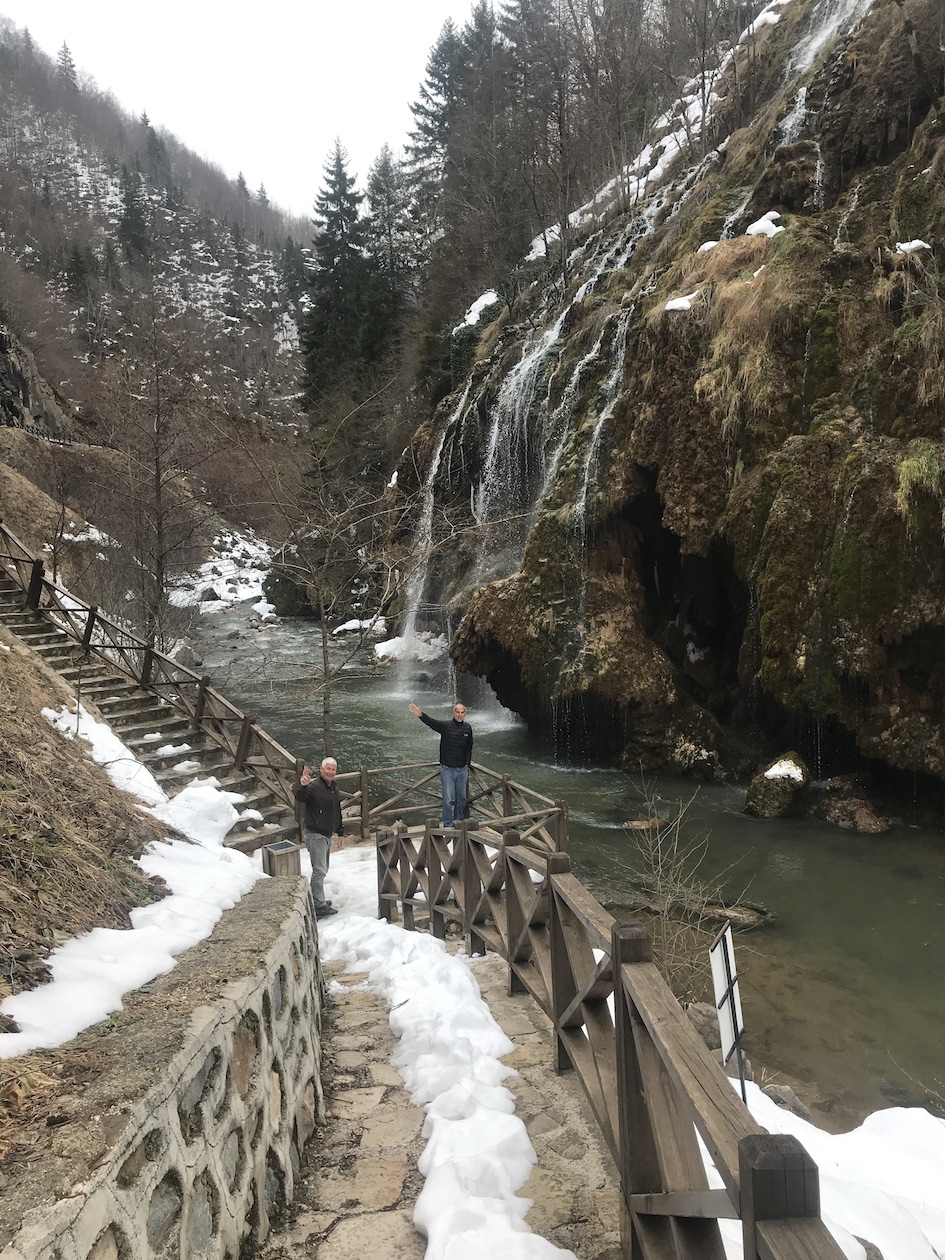
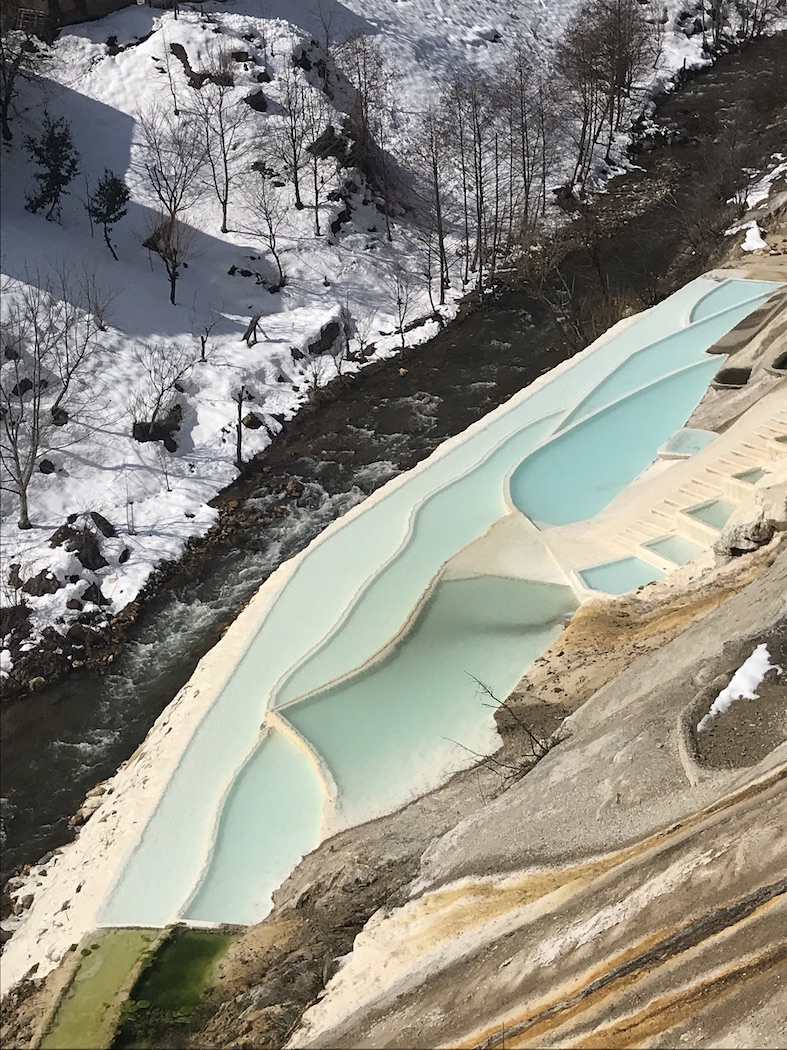
Our next stop was the Sumela Monastery. This had been on Maree’s list to visit since arriving in Turkey and although it was closed and we weren’t able to go inside the visit did not disappoint.
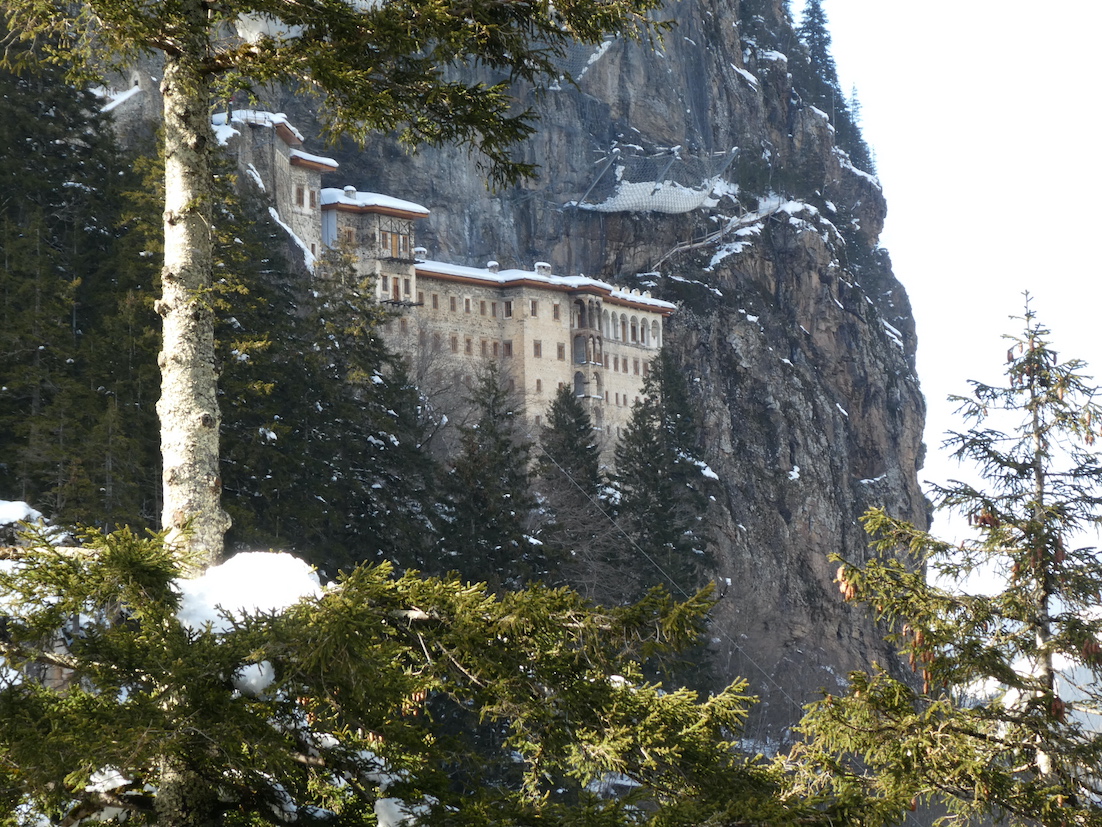
This Greek Orthodox Monastery dedicated to the Virgin Mary is believed to be have been built around 386 AD. It is nestled in a steep cliff (some may say clinging to) at an altitude of 1,200 meters. Over the centuries the monastery has been abandoned and in ruins several times and then restored by a new ruling Emperor. It was also abandoned following the Greek/Turkish population exchange in 1923 and then in 1930 the wooden parts of the monastery were destroyed in a forest fire on the mountain. The name if the monastery is believed to have been derived from the word “mela”, meaning “black” or “dark” in Greek as it is built around a natural cave on the steep slope of Karadag (Black Mountain). According to legend, Virgin Mary appeared in the dreams of Athenian priests named Barnabas and Sophronios who lived in the 4th century AD and told them to find her icon painted by Saint Luke, and to do that they must follow the path she would show them to reach the Mela Mountain. They arrived in the region after a long journey where they found the icon Virgin Mary in a cave and built the monastery there. Today it is a restored UNESCO World Heritage Site.
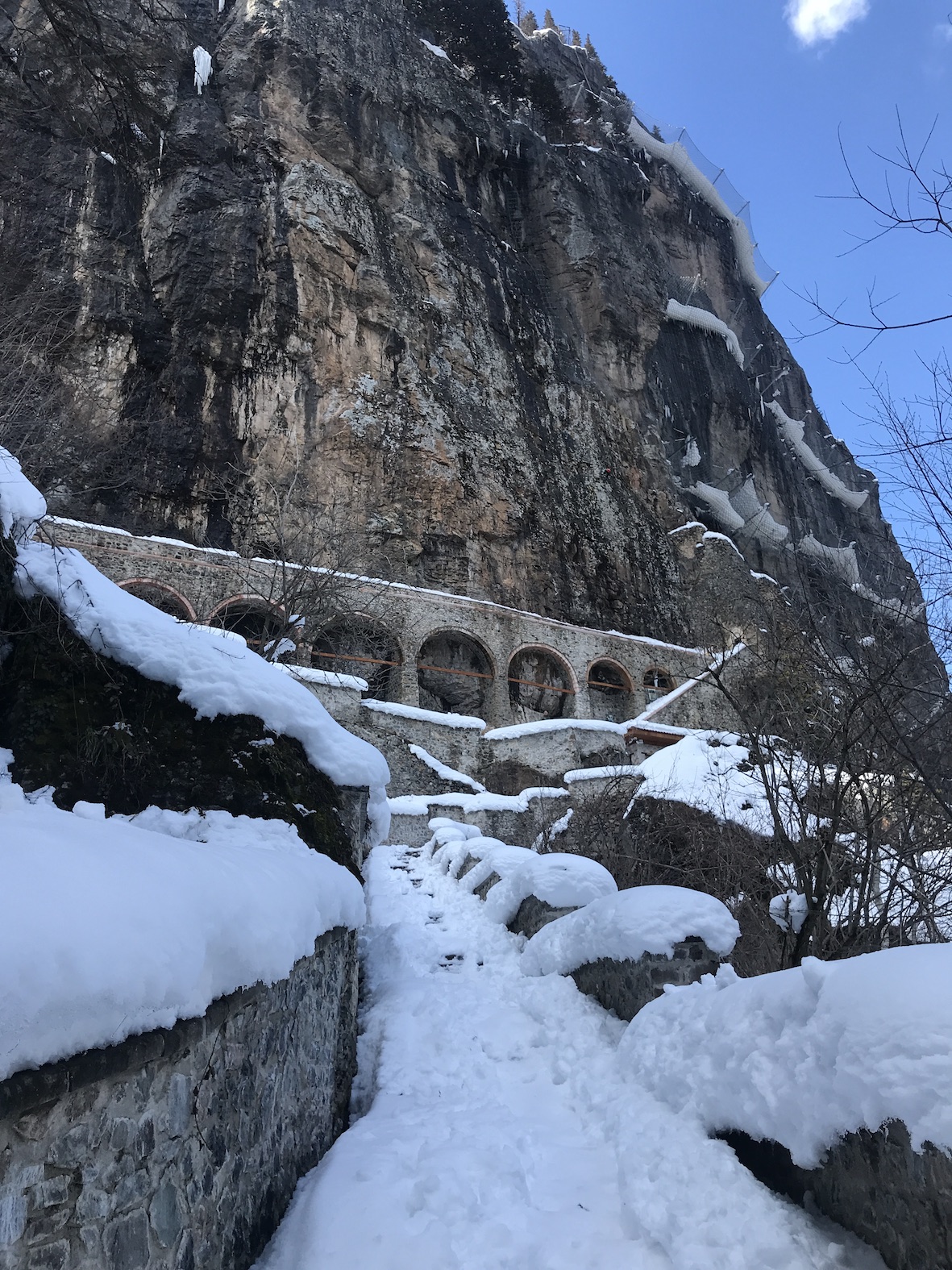
This picture is the easy bit at the end.
A shuttle bus takes you from the car park to the site, then there is a 1km walk to the actual monastery, and with the heavy snowfall in the region still very deep on the ground the climb up to the site was quite treacherous, actually it was enough for Noel to abandon his attempt and turn around not wanting to break a leg or wrist by falling. Phil took off like a mountain goat and made it quite quickly to the site and Maree also managed to get to there although it took her a while longer, being very cautious on the climb, we returned to Noel with a bit of sliding down on our bums in the snow, I think coming down was actually harder. Rather than take the shuttle bus back to the car park we asked if we were able to walk (about 3 km) and we told this was OK (although they couldn’t understand why anyone would want to walk) but this was where we got the best views as up close you couldn’t see the face of the buildings in the cliff – magnificent!
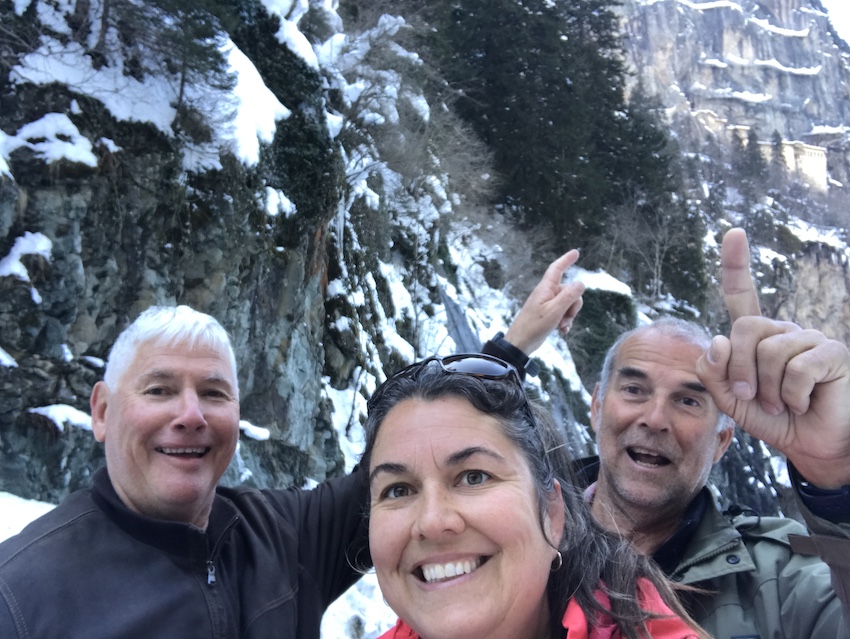


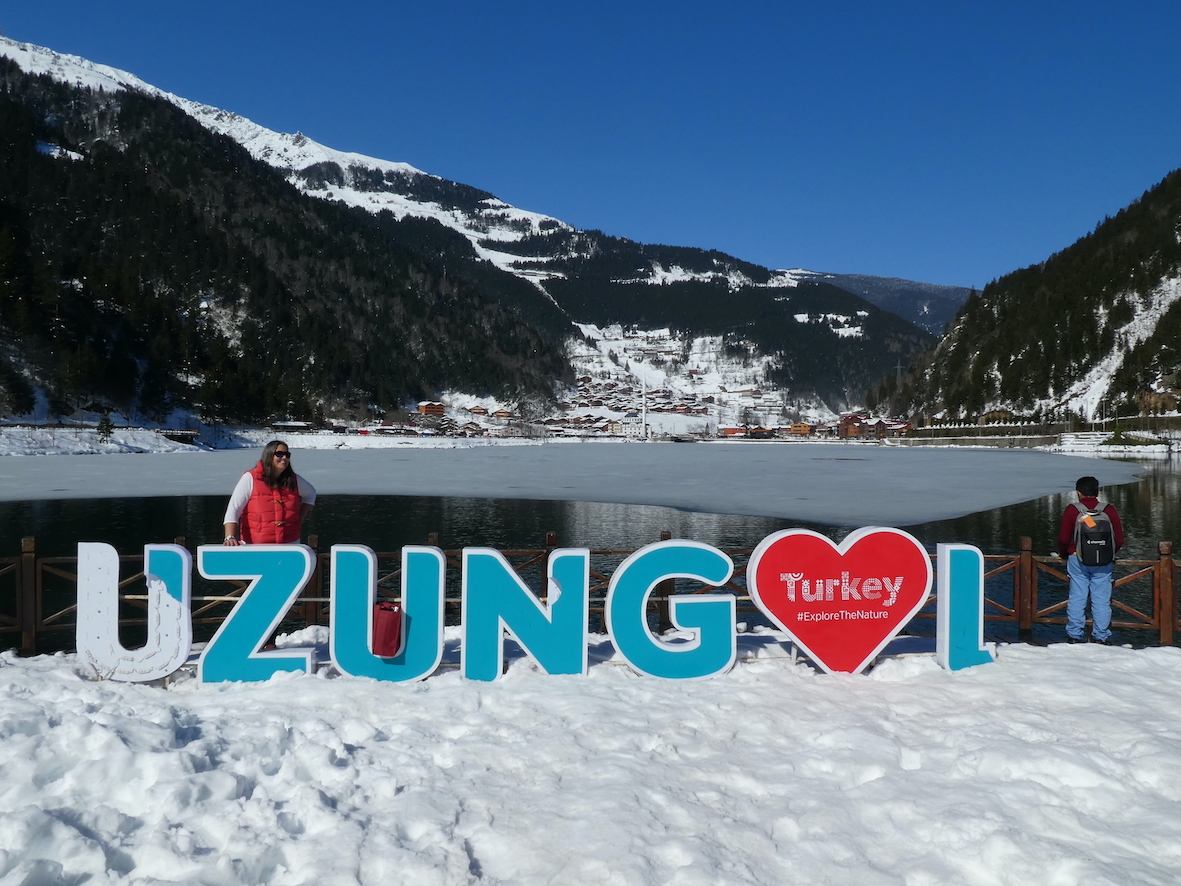
The following day we awoke in a winter wonderland at Uzungol, meaning Long Lake. The 1km long lake was formed by a landslide in the valley. With the snowfall on the ground it was a very appealing view. Having arrived after dark the evening prior we took time to enjoy the view and walked around the lake.
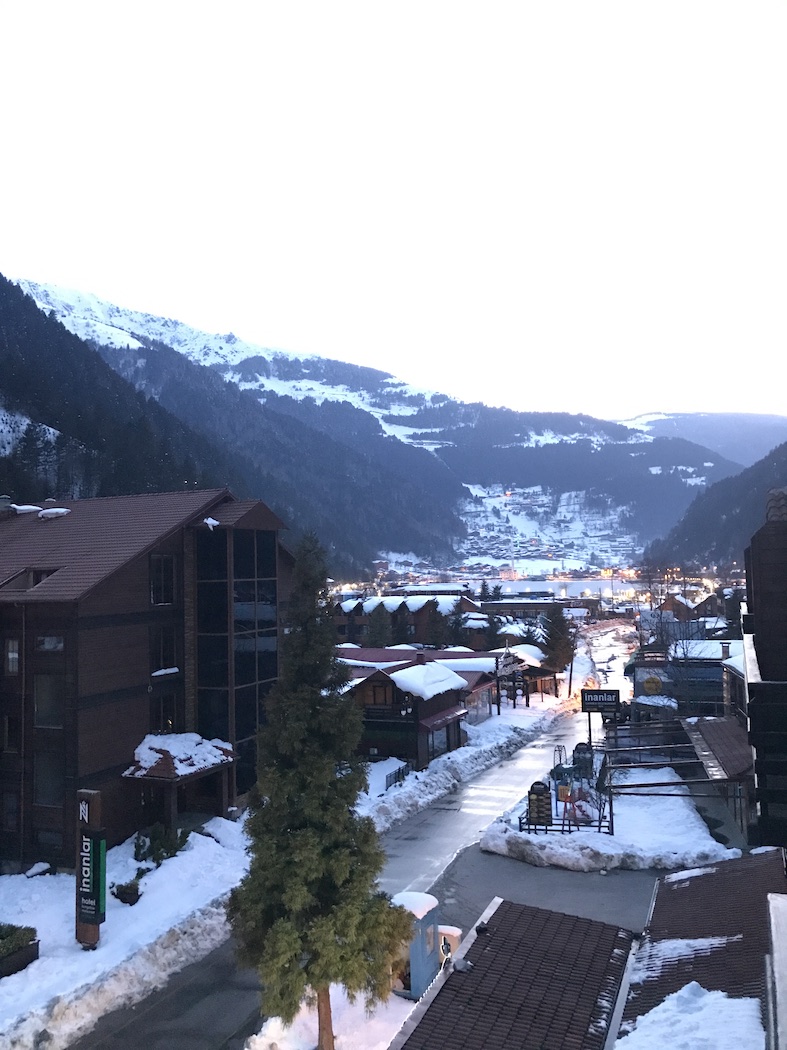


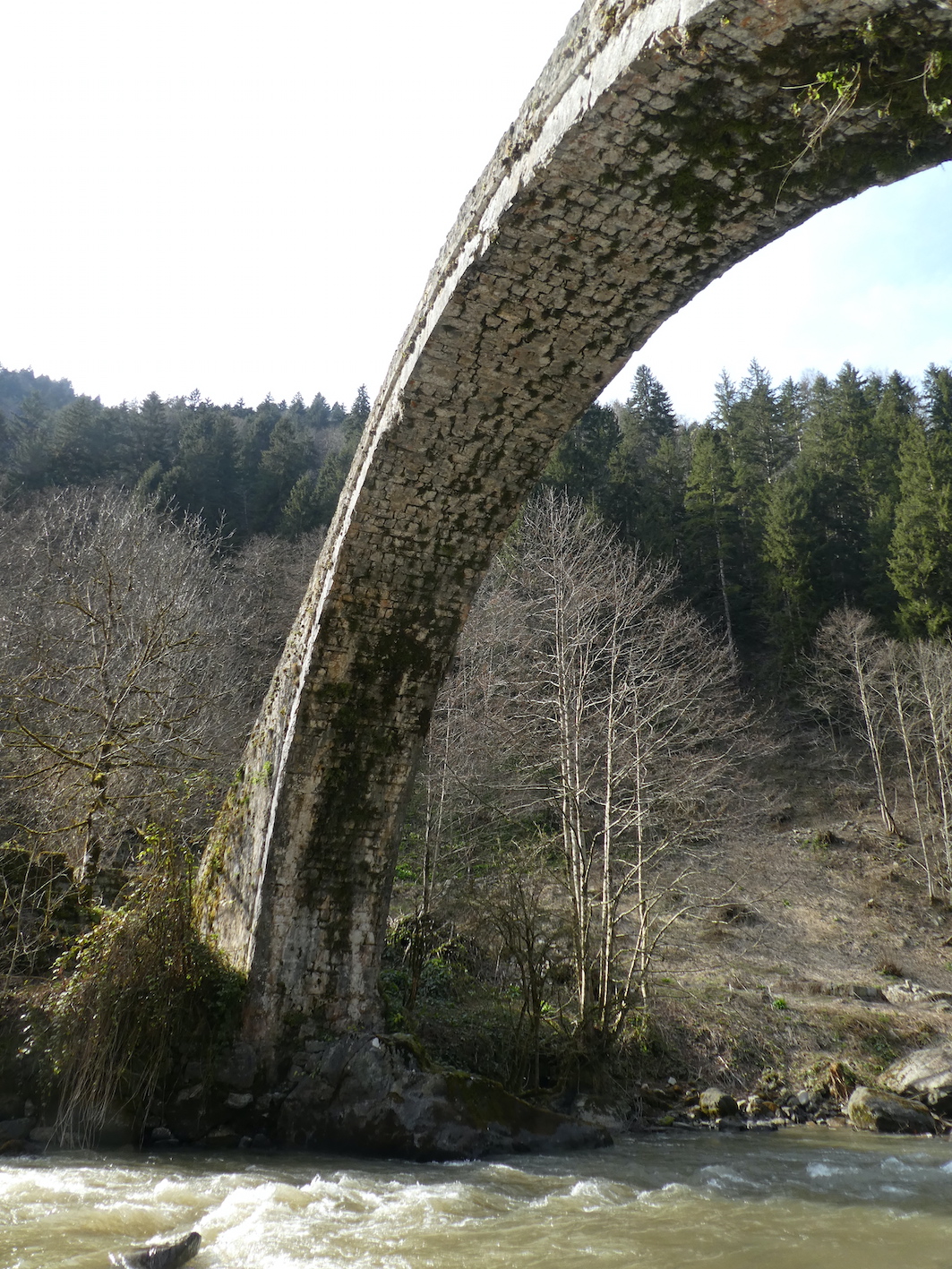
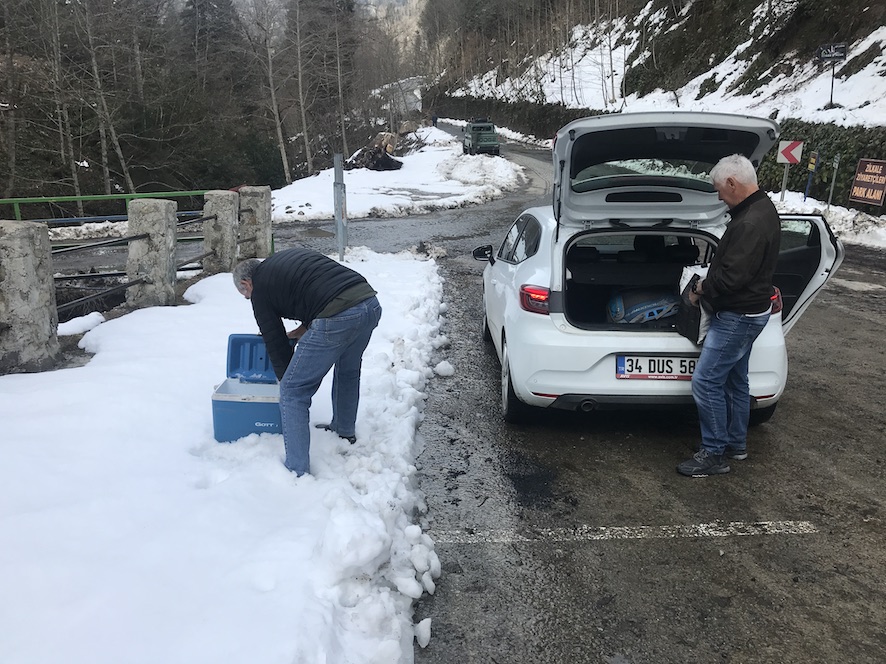
On the drive back down to the coast was along the valley and river which is very popular withe zip lining and white water rafting. We passed some interesting old stone and wooden bridges, in fact at one bridge we found an abandoned esky which we soon claimed and filled with snow to keep our drinks cold. It was a case of us bringing our own drinks everywhere as it was the month of Ramadan meaning those following muslim faith were fasting and alcohol wasn’t to be found the further out east we went.


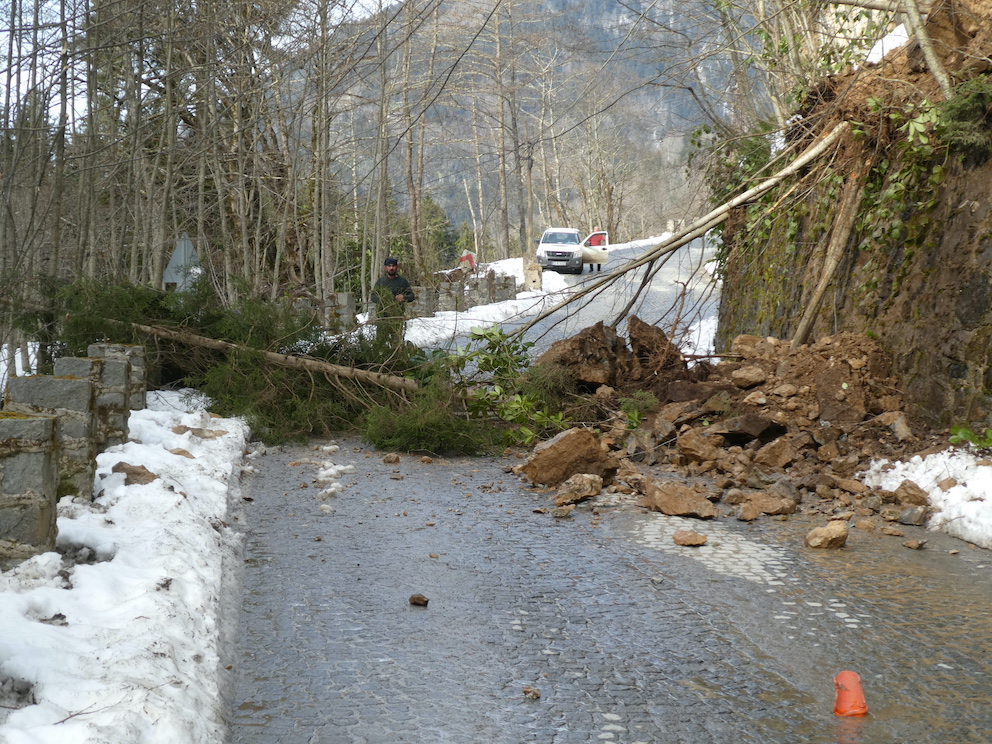
Driving along on our way to visit Zil Kale (an Armenian Castle & Chapel) we witnessed a small landslide fall across the road in front of us, so had to walk the last little bit to the castle. By the time we visited the castle they had cleared the trees away that had fallen and we were able to walk back past the area and cars were now driving through. When we reached the car (that was parked clear on the other side) we turned back hearing a loud noise and the side of the road embankment had now collapsed causing a much larger more significant land slide and road blockage.

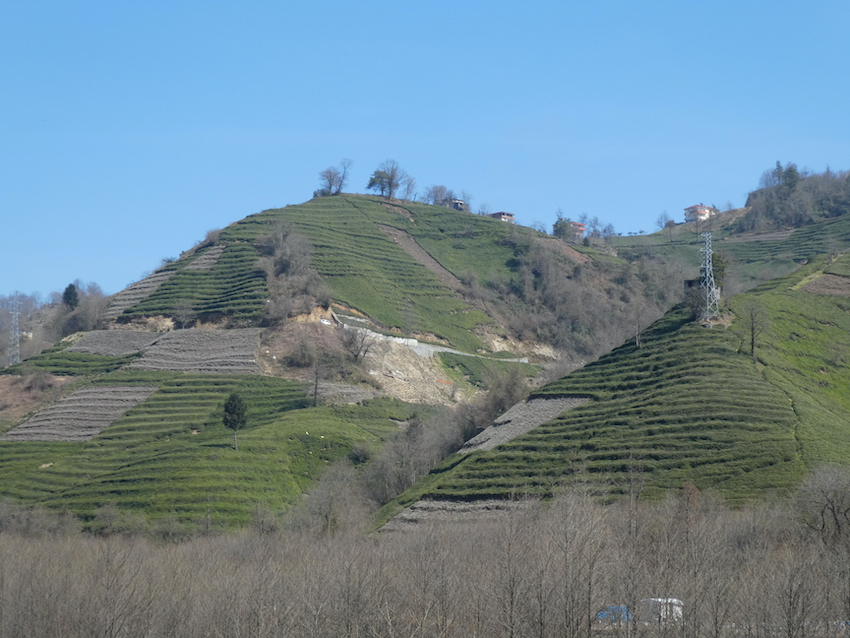
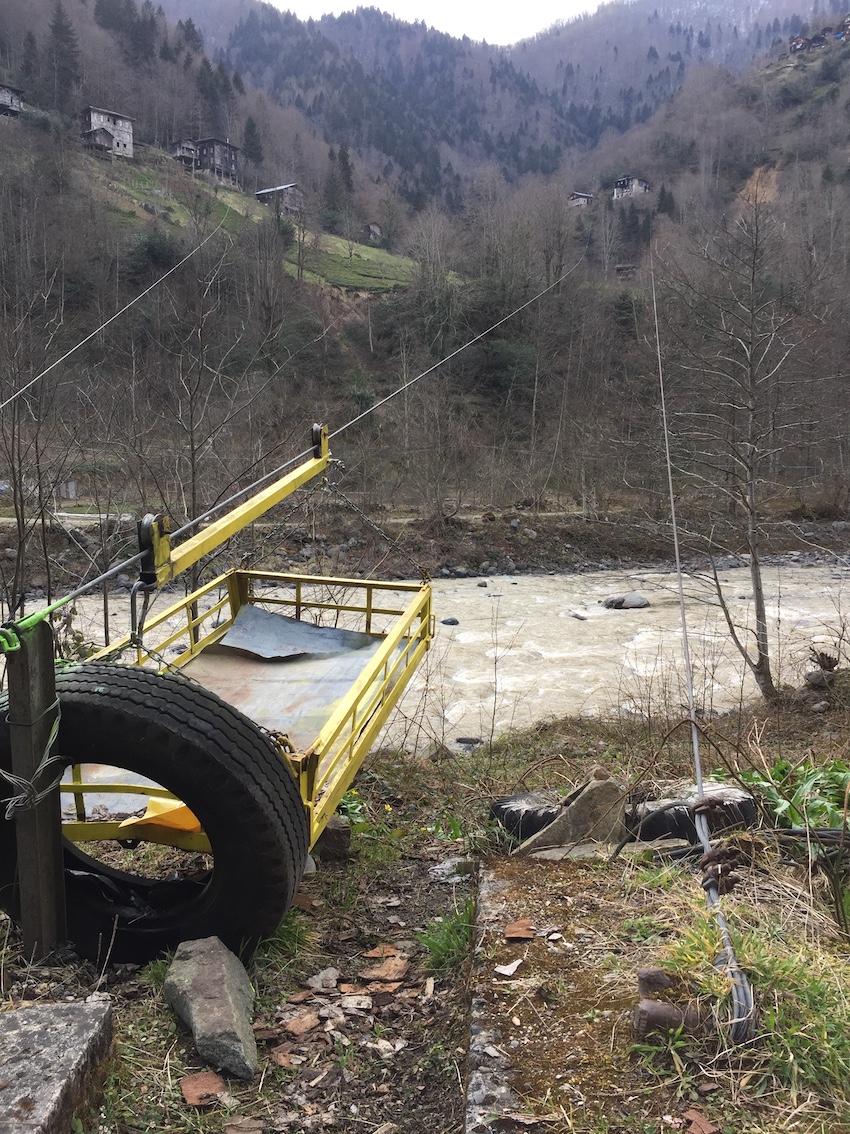
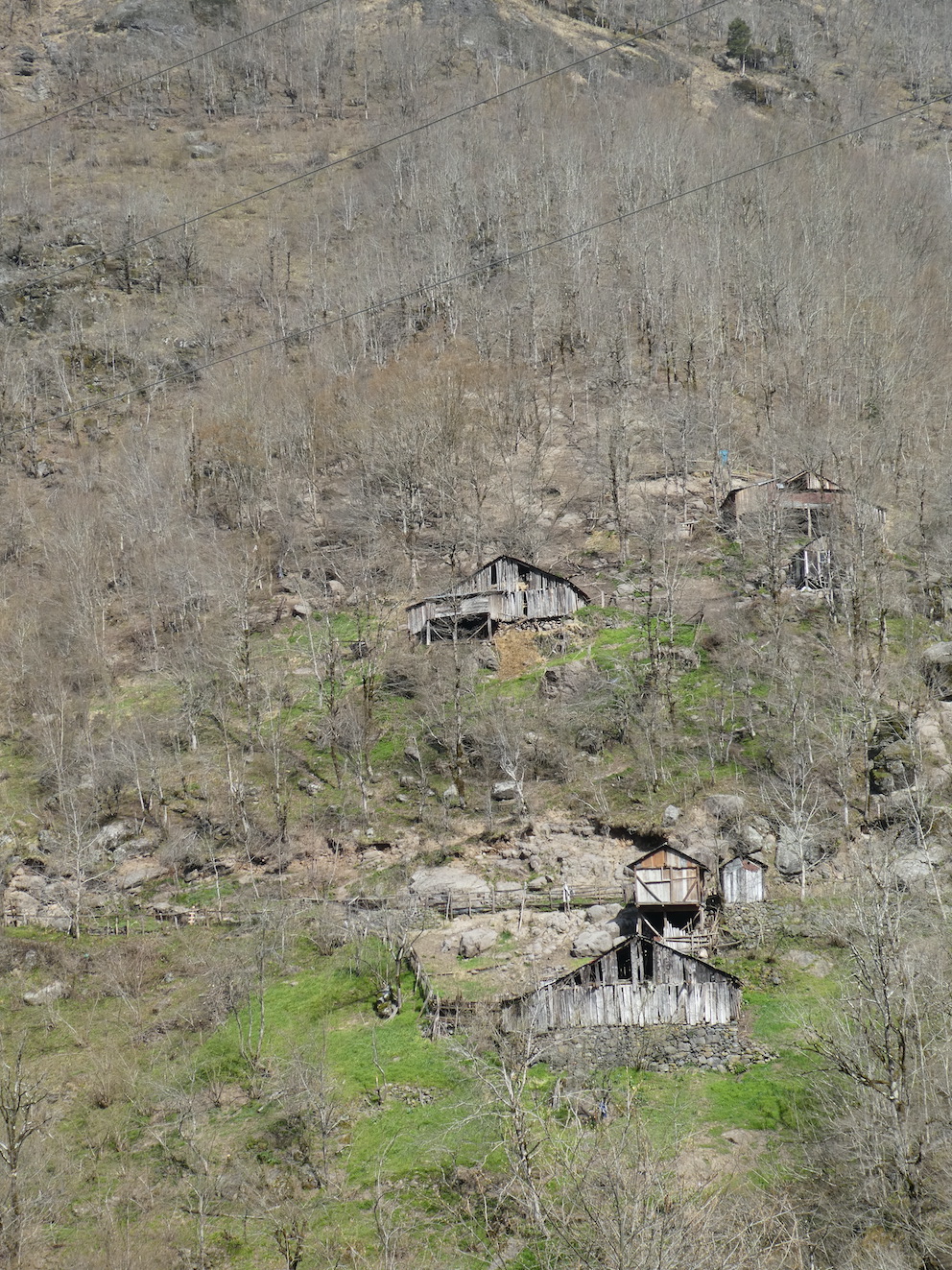
Back down on the Black Sea, the coast and foothills is know for its Hazelnuts. The area produces 70% of the worlds Hazelnuts. We stopped and tasted both the chocolate coated and the natural nuts. They also grow a lot of tea in the area, and we passed kilometre after kilometre of tea plantations on the side of hills squeezed into any space. Such inaccessible and steep hillside plots that it must be harvested by hand. The houses up in the hillsides of the valleys also seemed to be stand alone structures with no roads into them. This mystery was soon solved when we found the cable trolleys along the roads that went up to the houses! The area also noted for handcrafted knives and we purchased a new fish filleting knife.
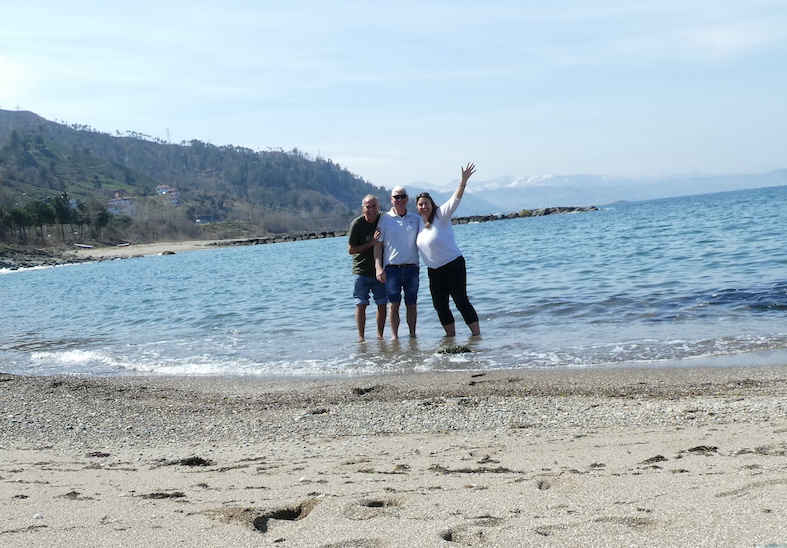
We also dipped our toes into the Black Sea, and it was cold!!
We were all kind of excited by Day three as after some advice from Marina friends Mike and Carol we were leaving Turkey and crossing the border to enter the country of Georgia.
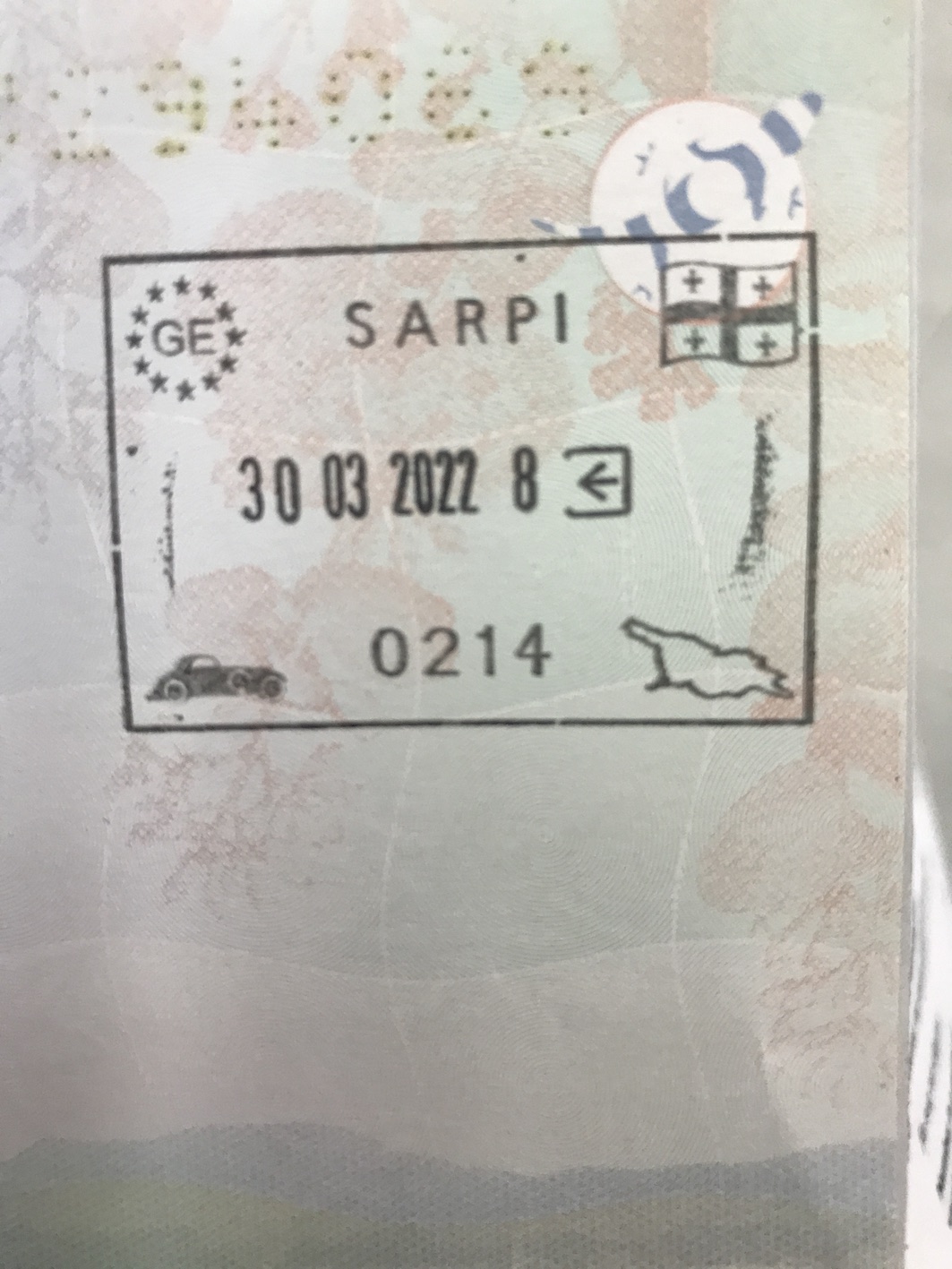
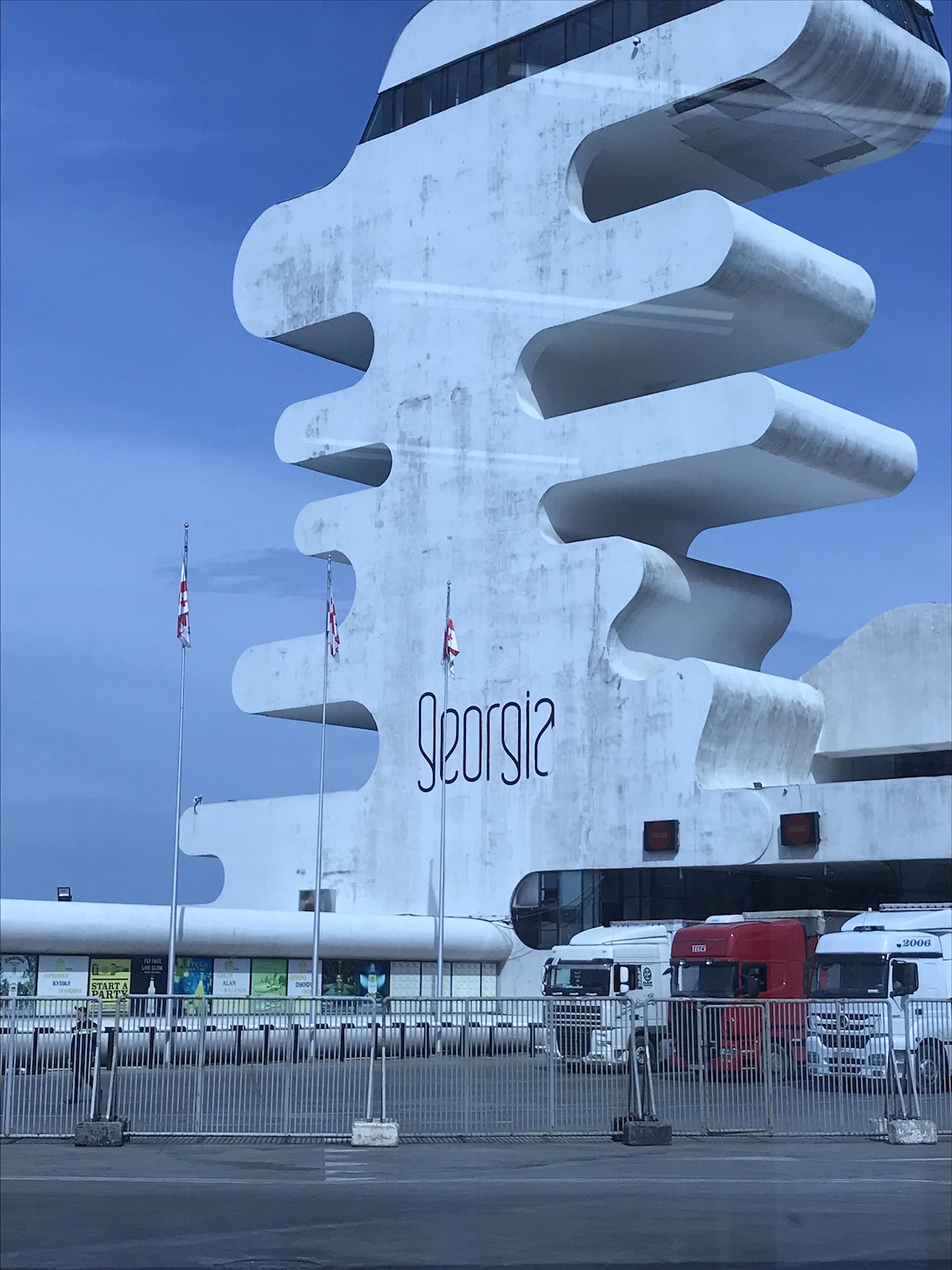
We parked the hire car at the border, and walked across stamping out of Turkey and into Georgia, we changed some money from Lira to Lari in the car park outside customs and took a taxi to the nearby town of Batumi.

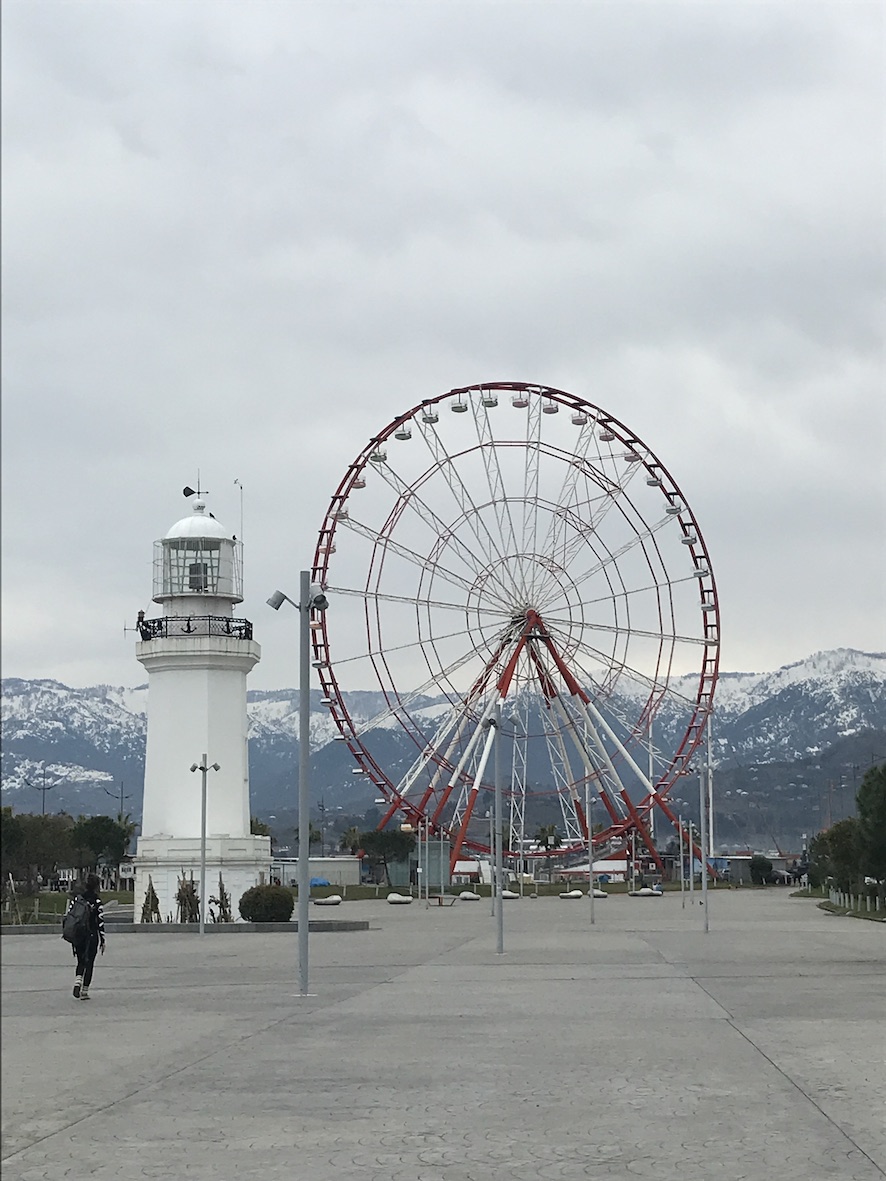
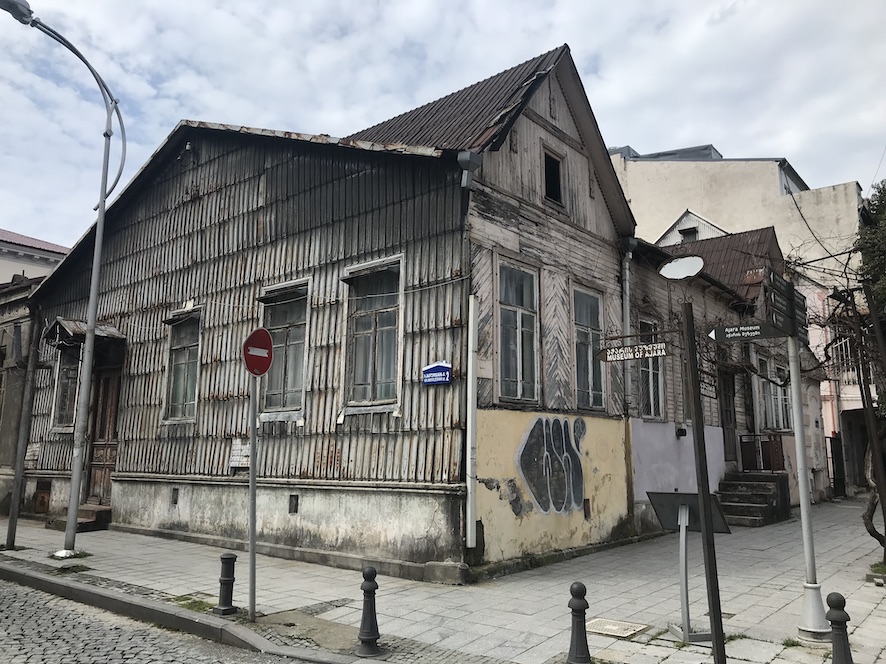
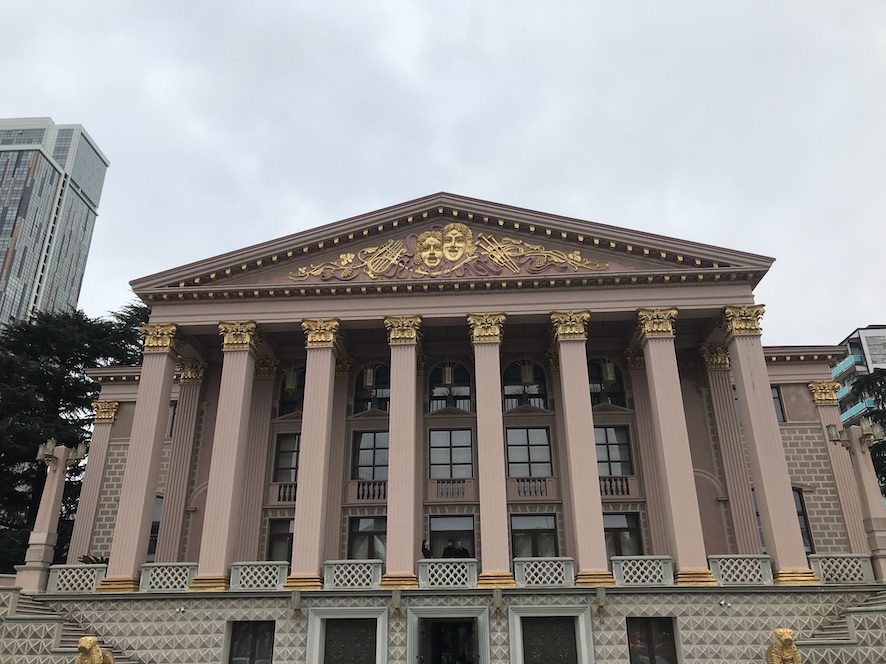
What a wonderful day we had, Batumi the city of contrasts and immediately different from the neighbouring Turkey. There were casino resorts on the foreshore, a gorgeous old town district full of wooden buildings and old tree lined streets, golden statues and theatres with neighbouring slum apartment accomodations.

We also stumbled across “The Quiet Woman’s Pub” which brought cries of absolute disbelief from both Phil and Noel, they just had to have a beer in there, and like the good woman I am, I was quiet whilst they drank their beer!

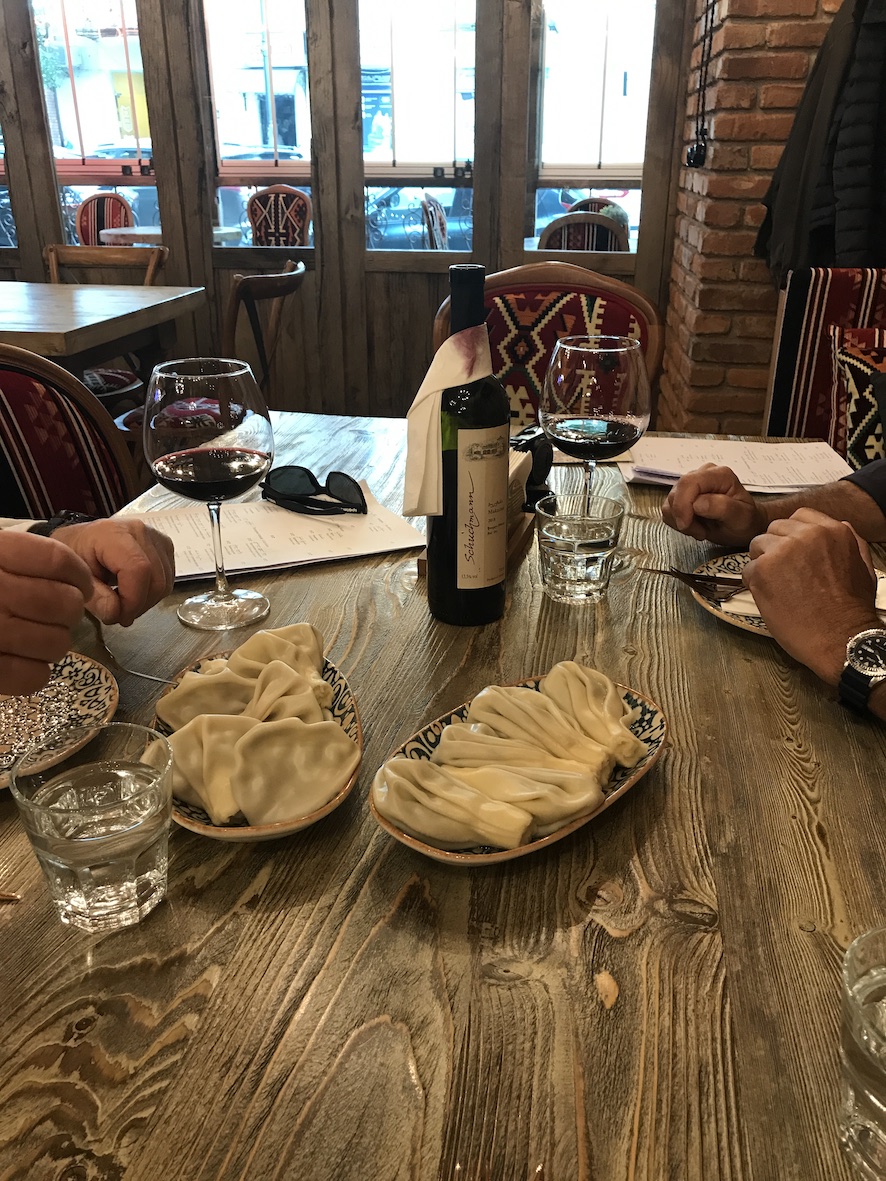
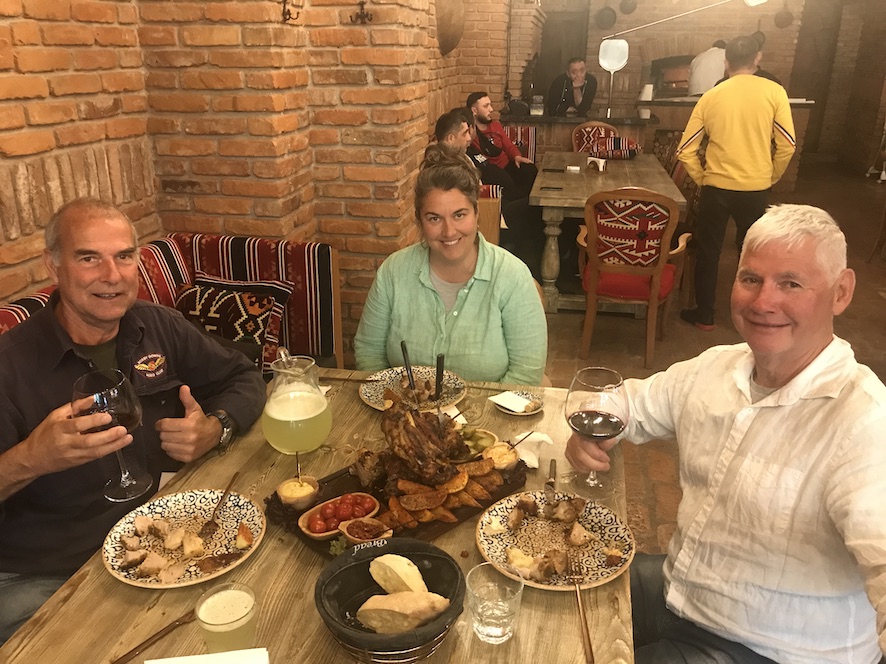
We found Georgia architecture impressive and the vibe was fantastic. We walked the old town and the foreshore and hit on the major buildings/sites to see before finding a nice restaurant to enjoy a Georgian wine (or 2 … bottles) and some pork (it had been 5 months living in a pork free country). To start with we tried the local specialty dish which is like a large dumpling, stuffed with various fillings, then indulged in the small serving of pork knuckle for three which was HUGE and we hardly made a dent in it. We took it home takeaway and carried it back across the border with us to Turkey and kept in the much loved esky for lunch for the following day.
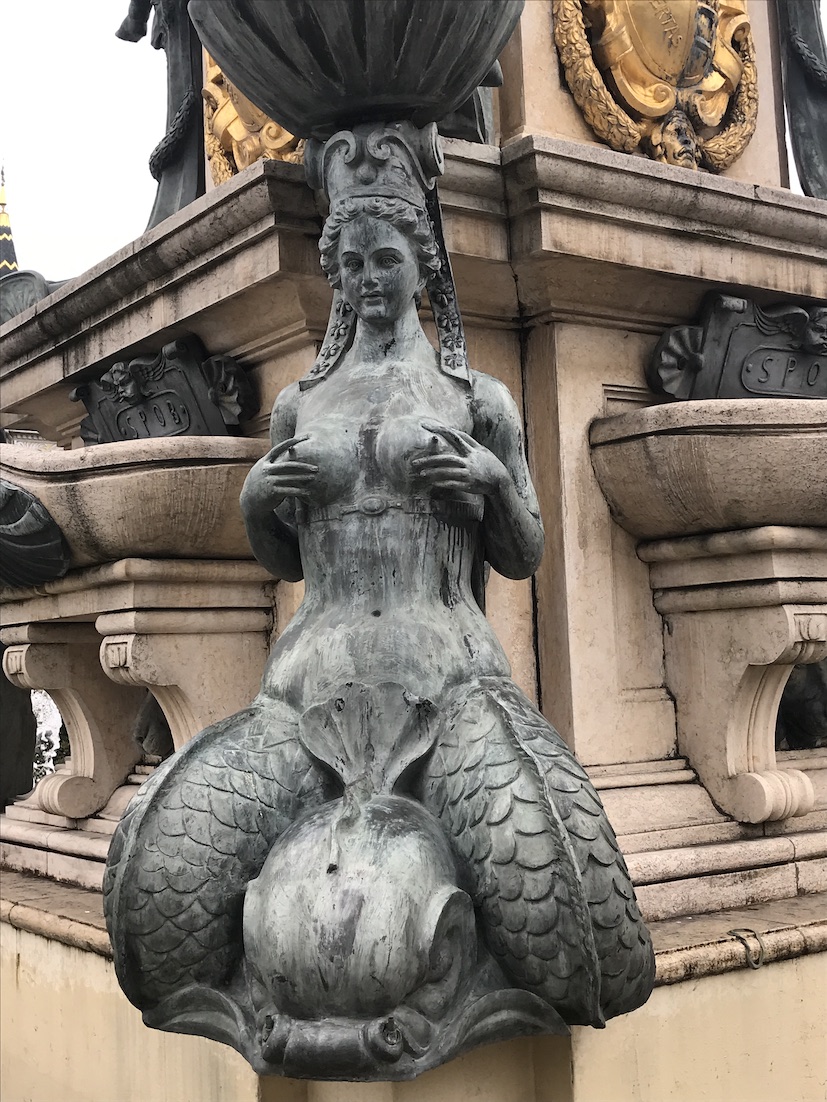
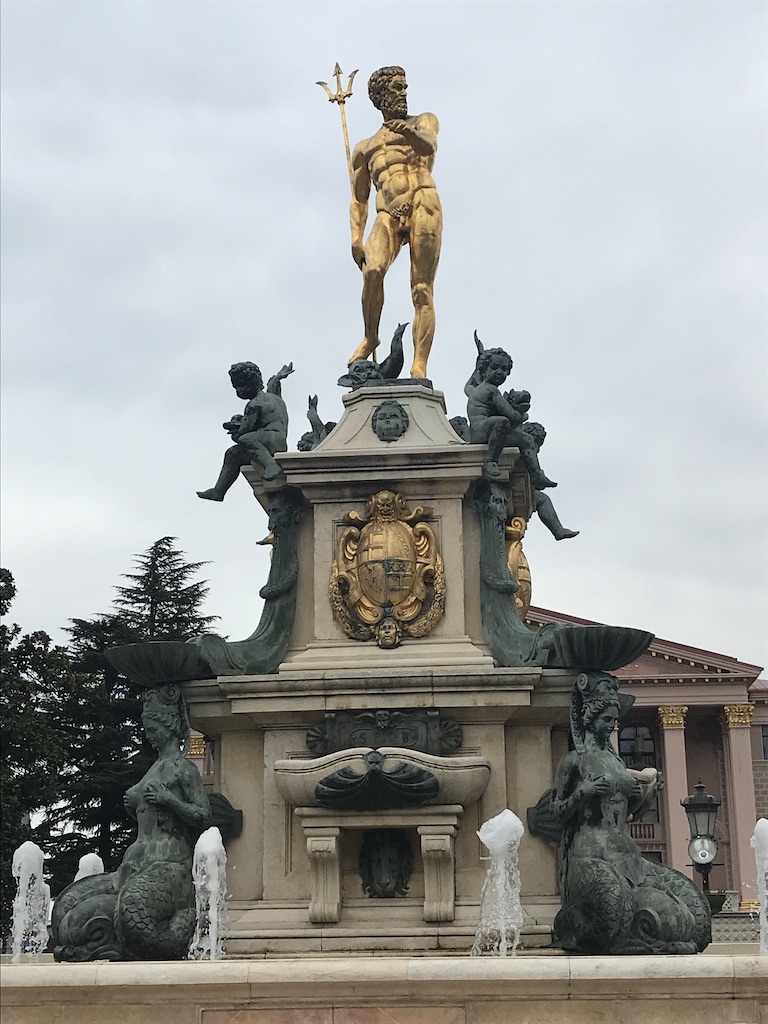
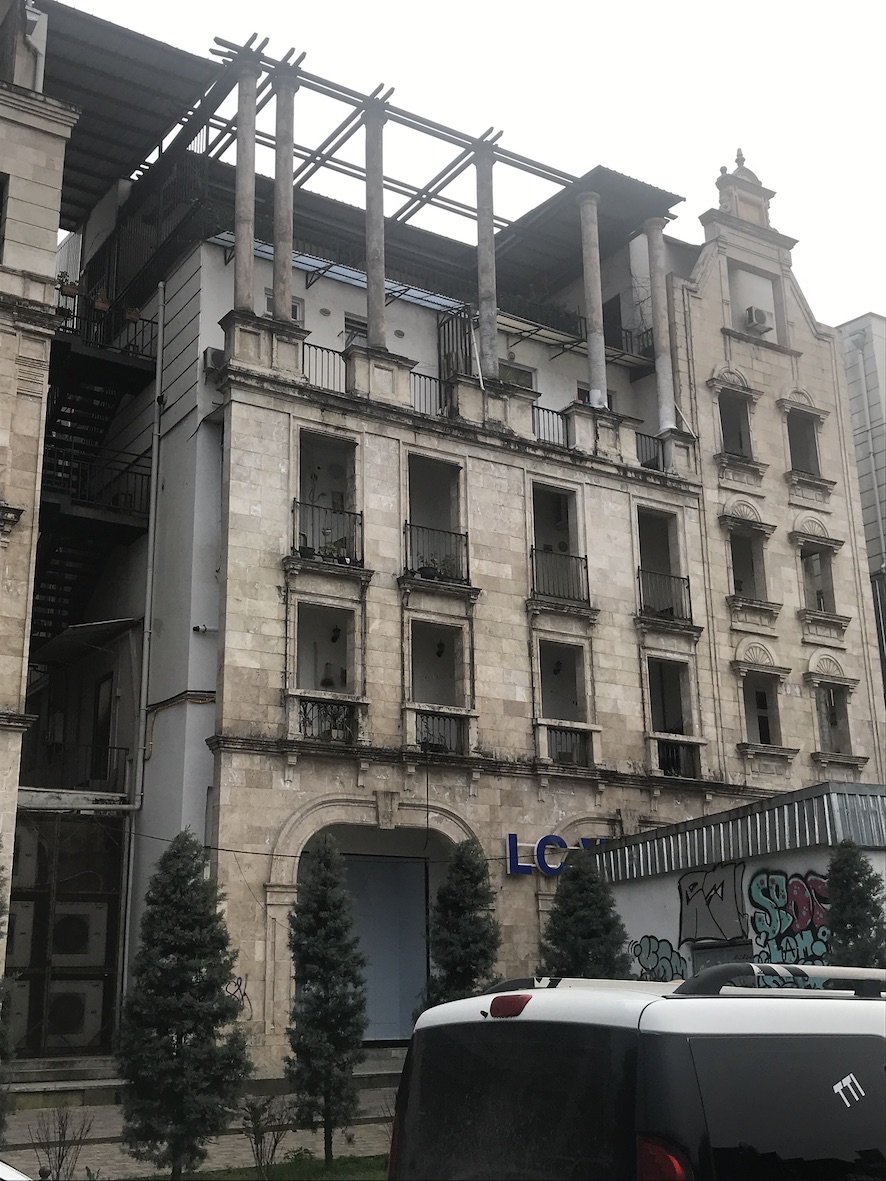
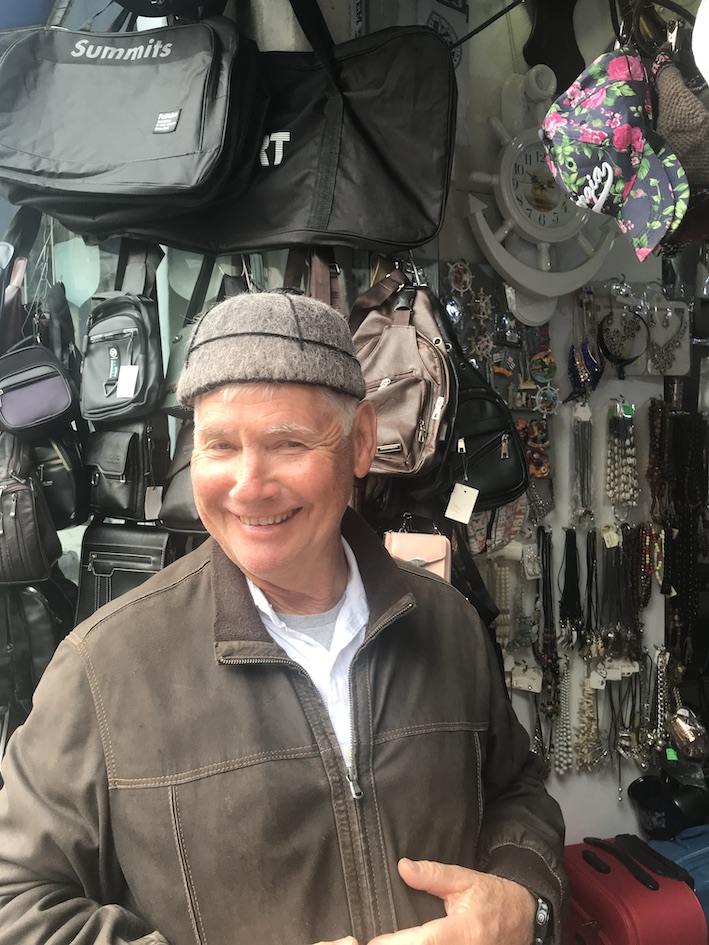
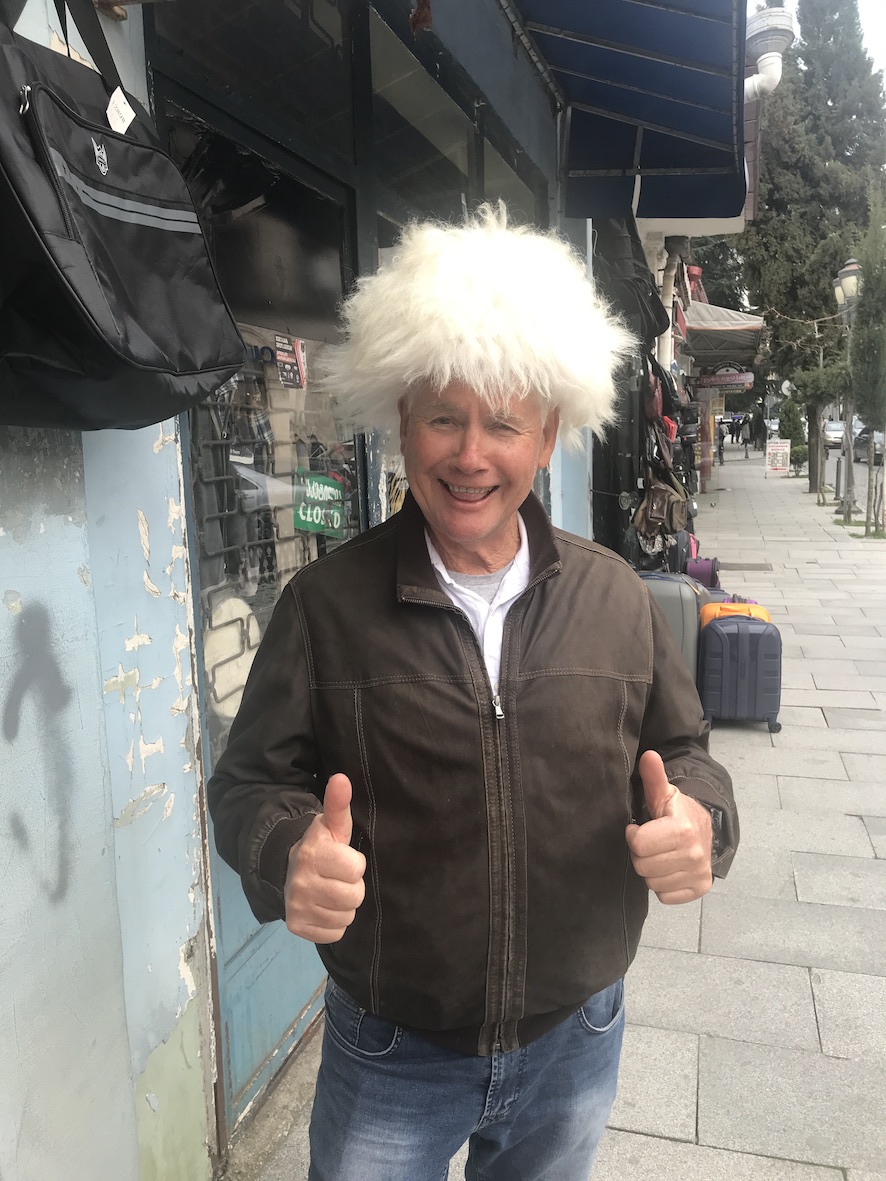
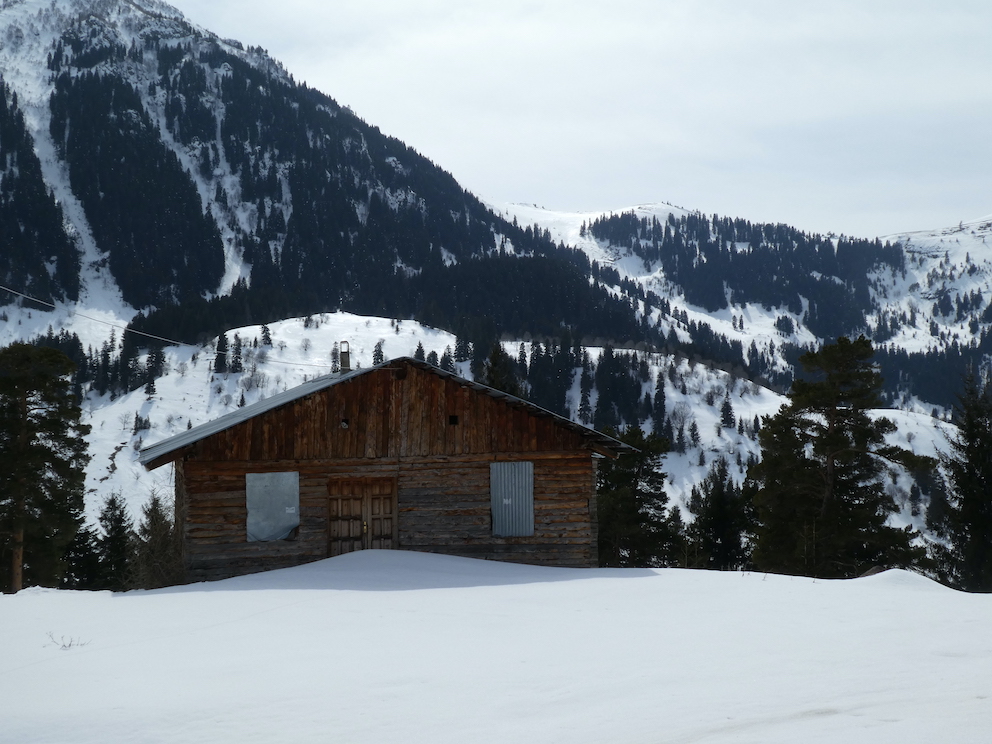
Day four saw us leave the Black Sea coast and head inland (south), we were in the Borcka Karagol Nature Park with an aim to visit Dark Lake, the main road had been ploughed and we climbed and climbed the mountain roads with stunning views of the snowy winter wonderland, when we were almost at the peak a local ute stopped and advised us we wouldn’t get much further and he was right, at the turn off to the lake (about 7k shy of the lake) the road became a two wheel track with snow lined up either side of the road much higher than our little rental Clio. We weren’t going to make the lake.
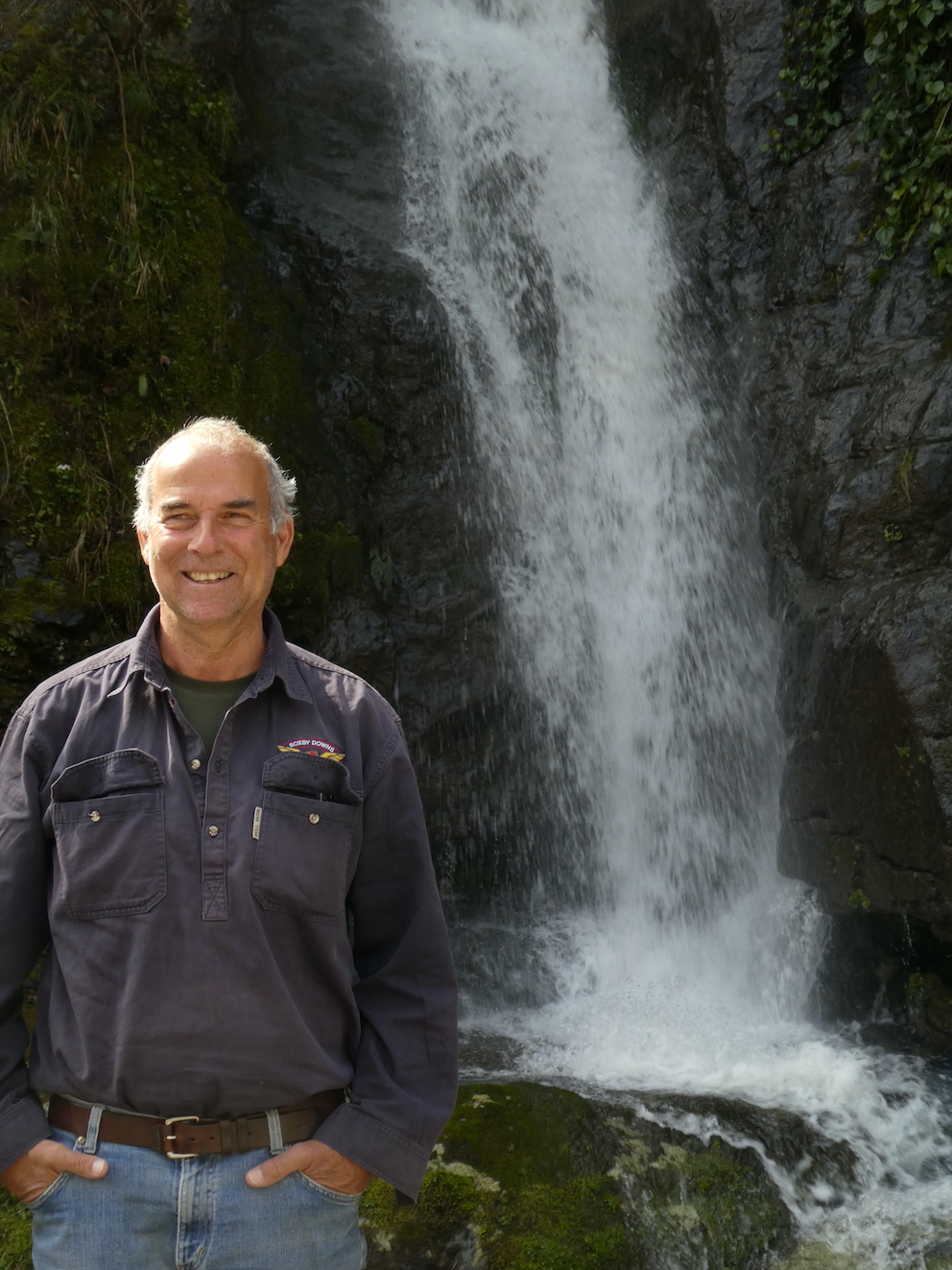
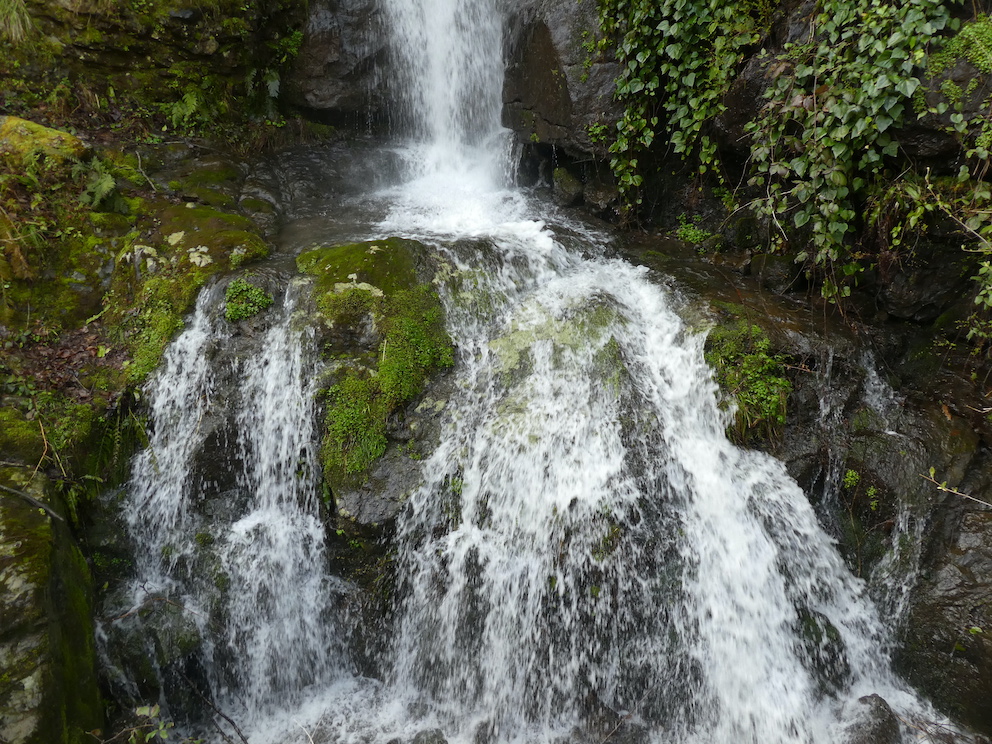
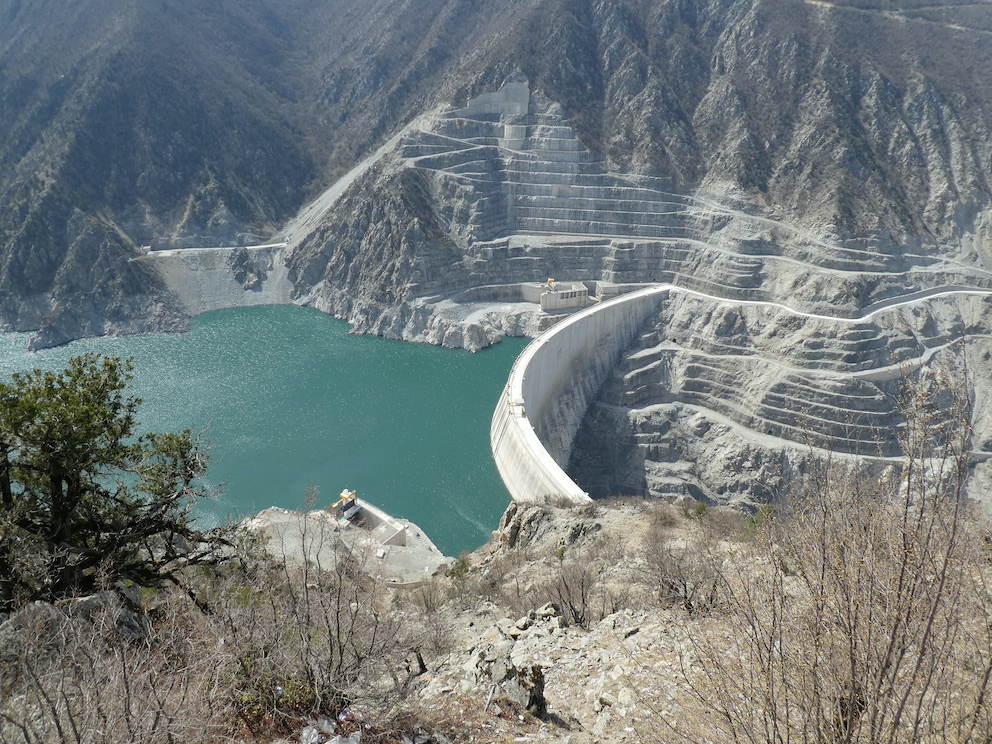
We continued inland and up through the valleys passing impressive infrastructure of massive walled dams, huge road tunnels through the mountain and all kinds of landscape, from dry dusty stone/rock, to green hillsides, to fields of snow.
We arrived in the afternoon to Lake Cidir (frozen lake) and it was exactly as described – a frozen lake.
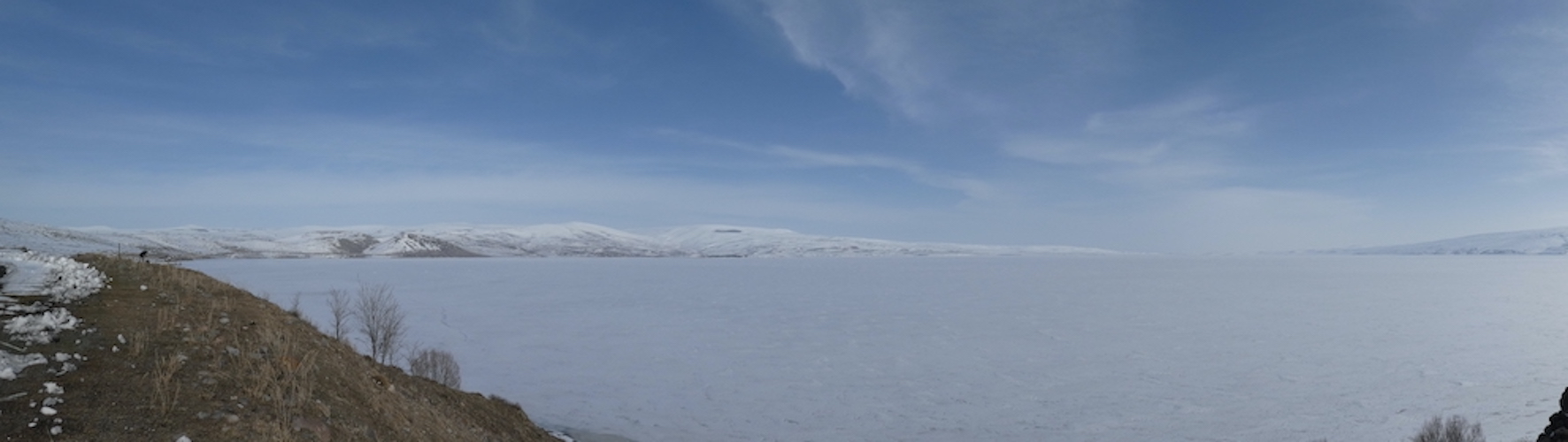
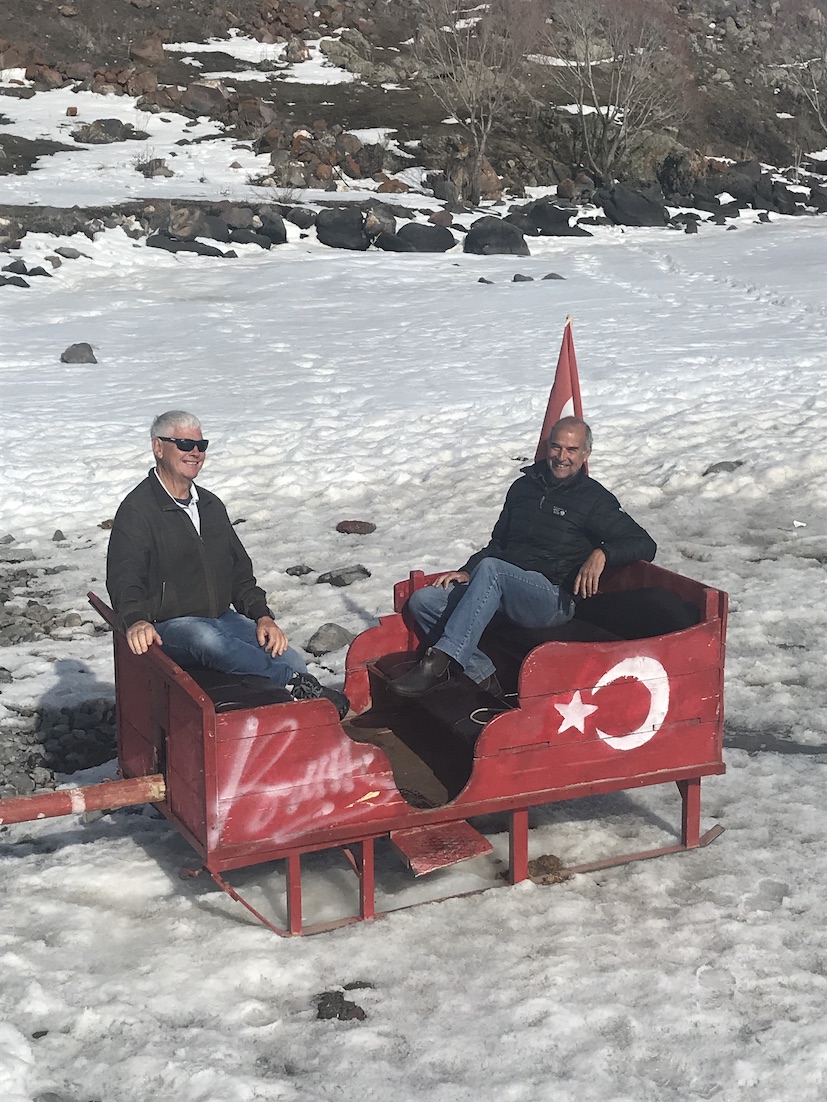
There was some remains of an ice statue and the boys walked out some way on the lake. During winter they often race on the lake and also offer horse pulled sleigh rides. Whilst the horses were not there when we visited (although some small steaming piles of evidence did suggest we only just missed them) we were able to pose for photographs on the sleighs.


Day five we spent at the Ani Ruins and in Kars before handing the hire car in and boarding the Dogu Touristic Train for a two days / two nights adventure.
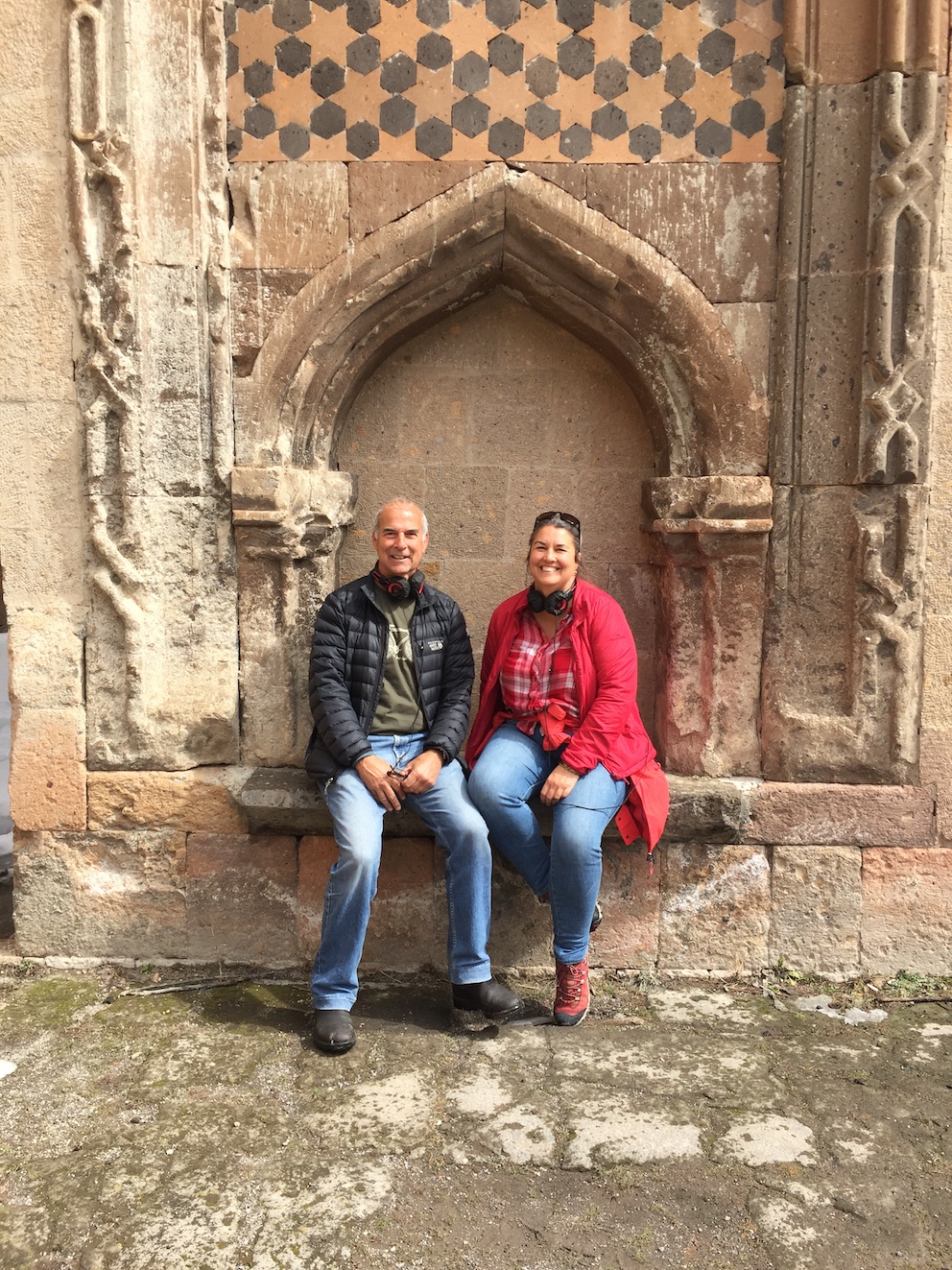
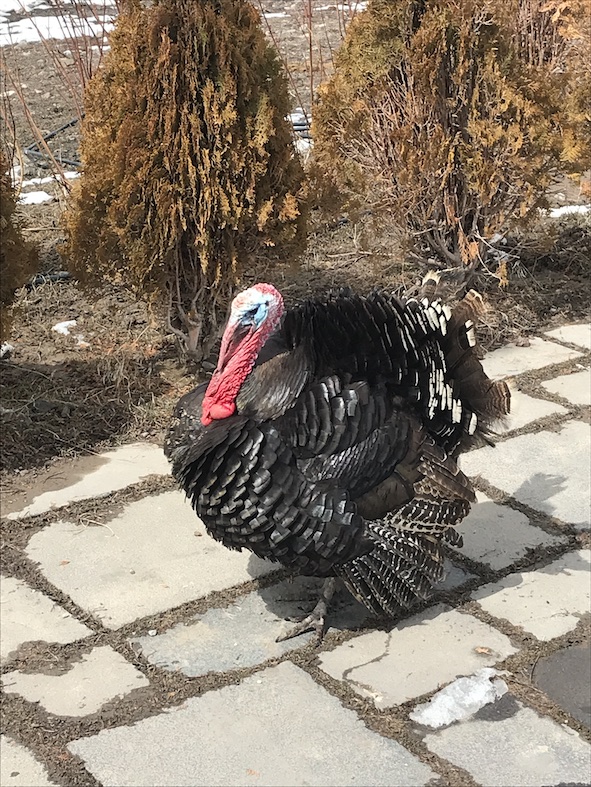
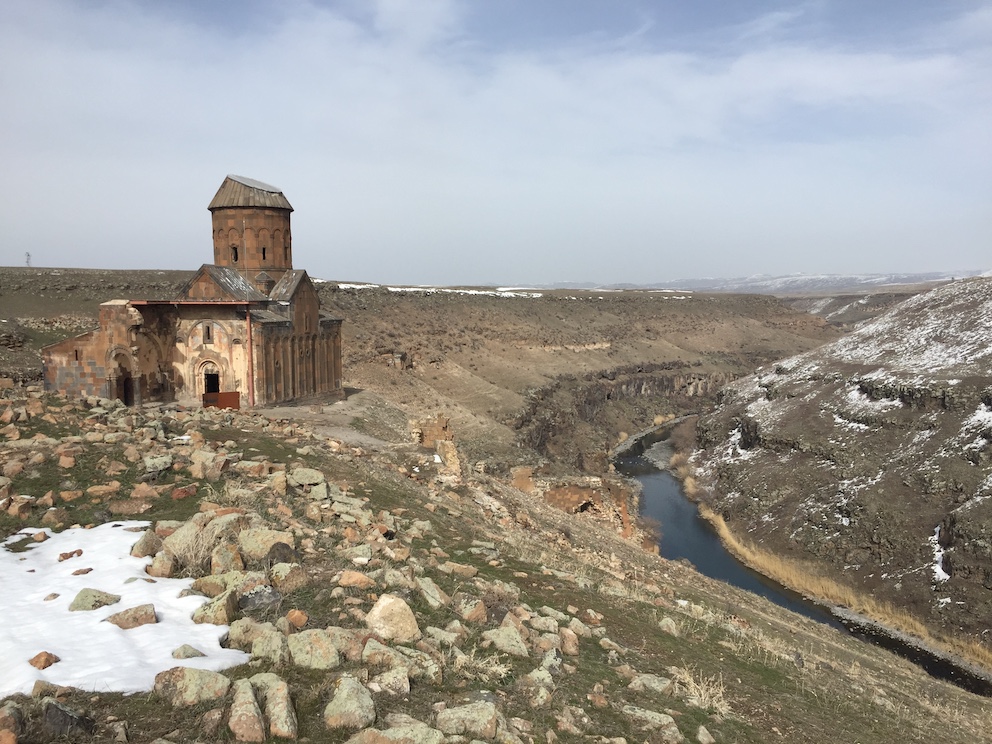
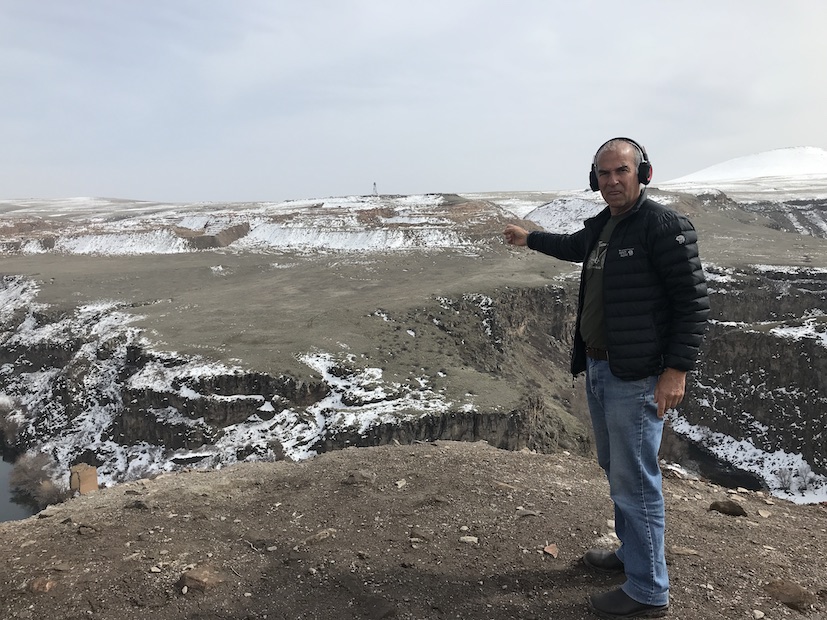
The Ani ruins were a pleasant surprise as all though the Mediterranean we had been visiting Roman and Greek Ruins but the ruins at Ani are Armenian and significantly different to any we have previously visited. It is the remains of a Medieval Armenian city and was the capital of the Armenian Kingdom between 961 and 1045. It is often referred to as the city of 1001 churches. There were quite a few church ruins. We paid extra for the headset audio guides and spent about 4 hours at the site visiting each building/ruin. We had clear views of Armenia across the river/gully and could see the border patrol and watch towers. The famous Silk Road trading route from the Far East Asia to Europe ran through Ani, today you can see the remains of the bridge over the river and a the ruins of what was the main commercial street. Maree and Noel were excited to shop on the silk road, however neither purchased anything! Maree also snapped the picture of the trip taking a picture of a Turkey in Turkiye.


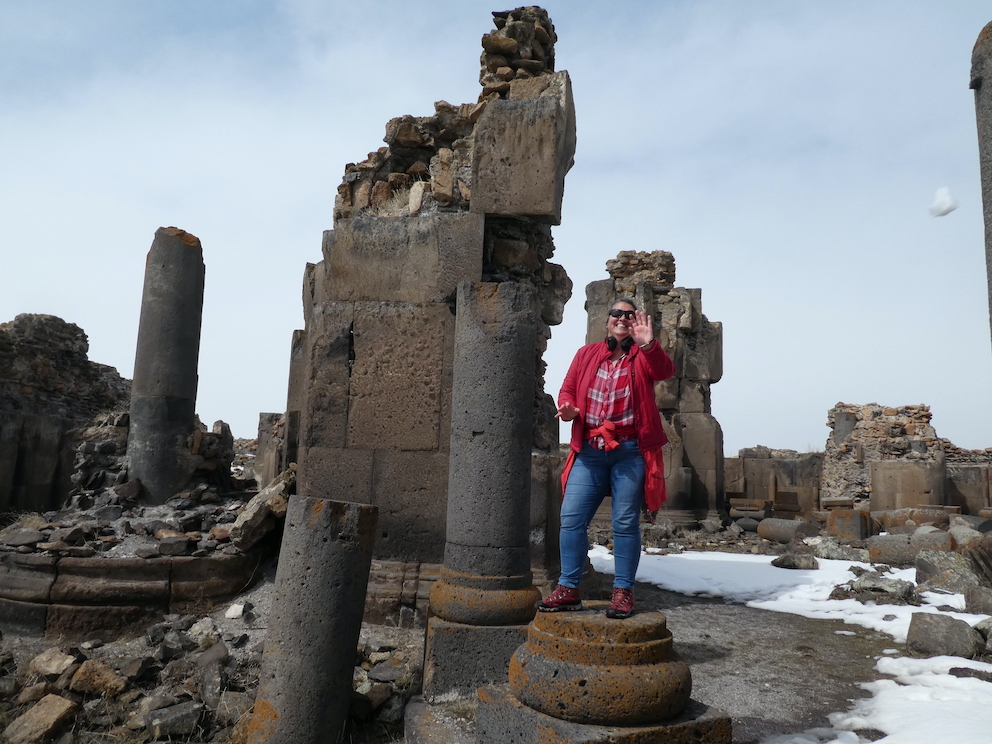
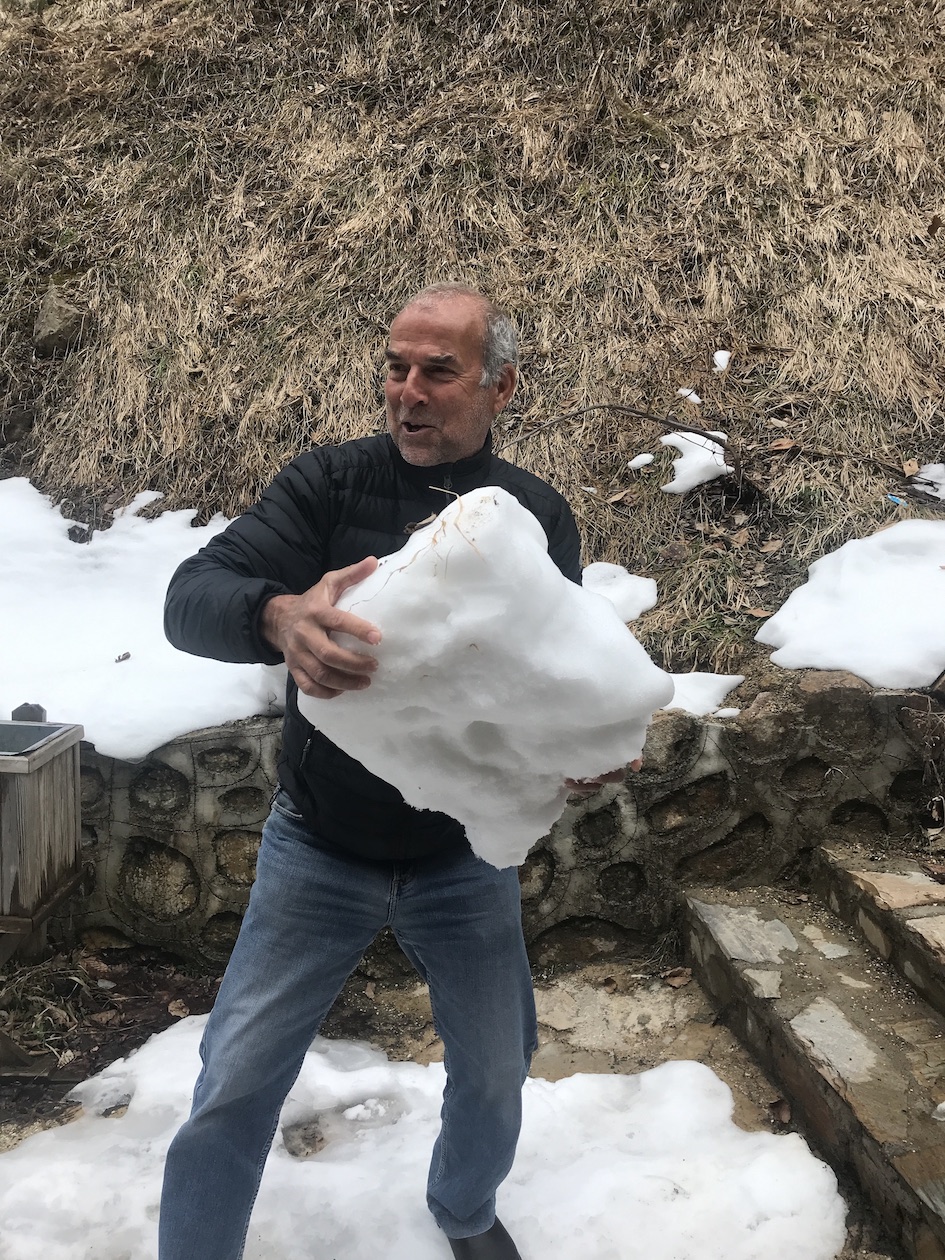
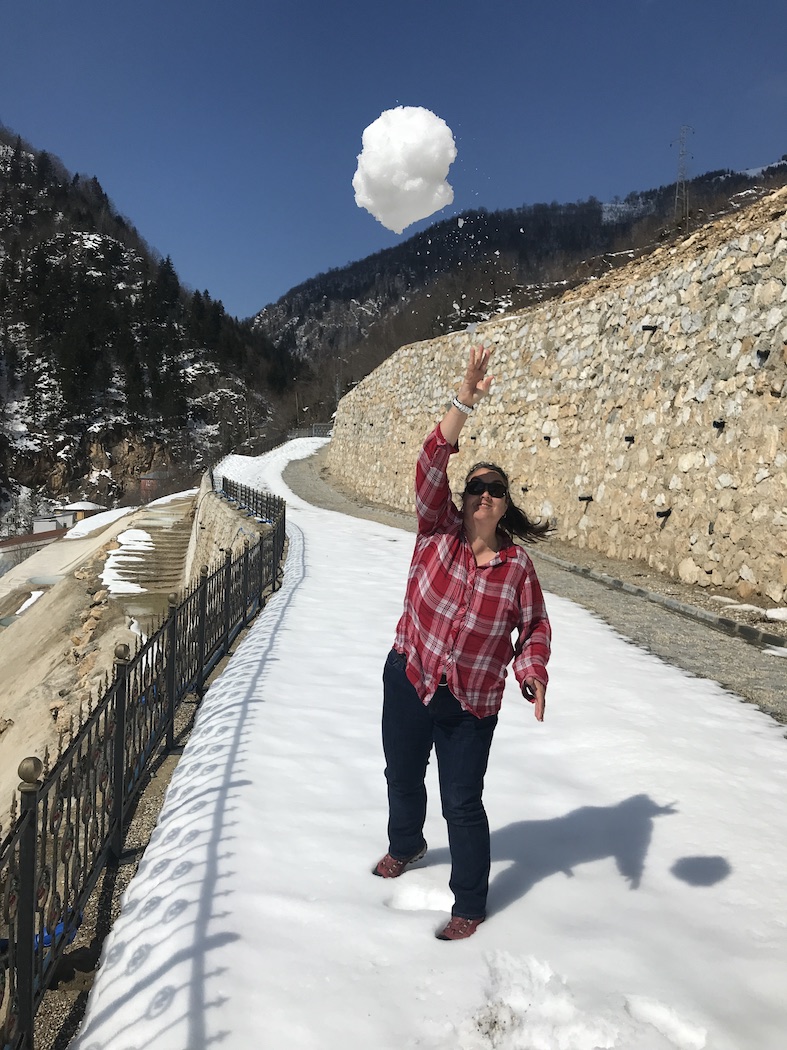
Noel: Launches Snow Ball (right of photo)

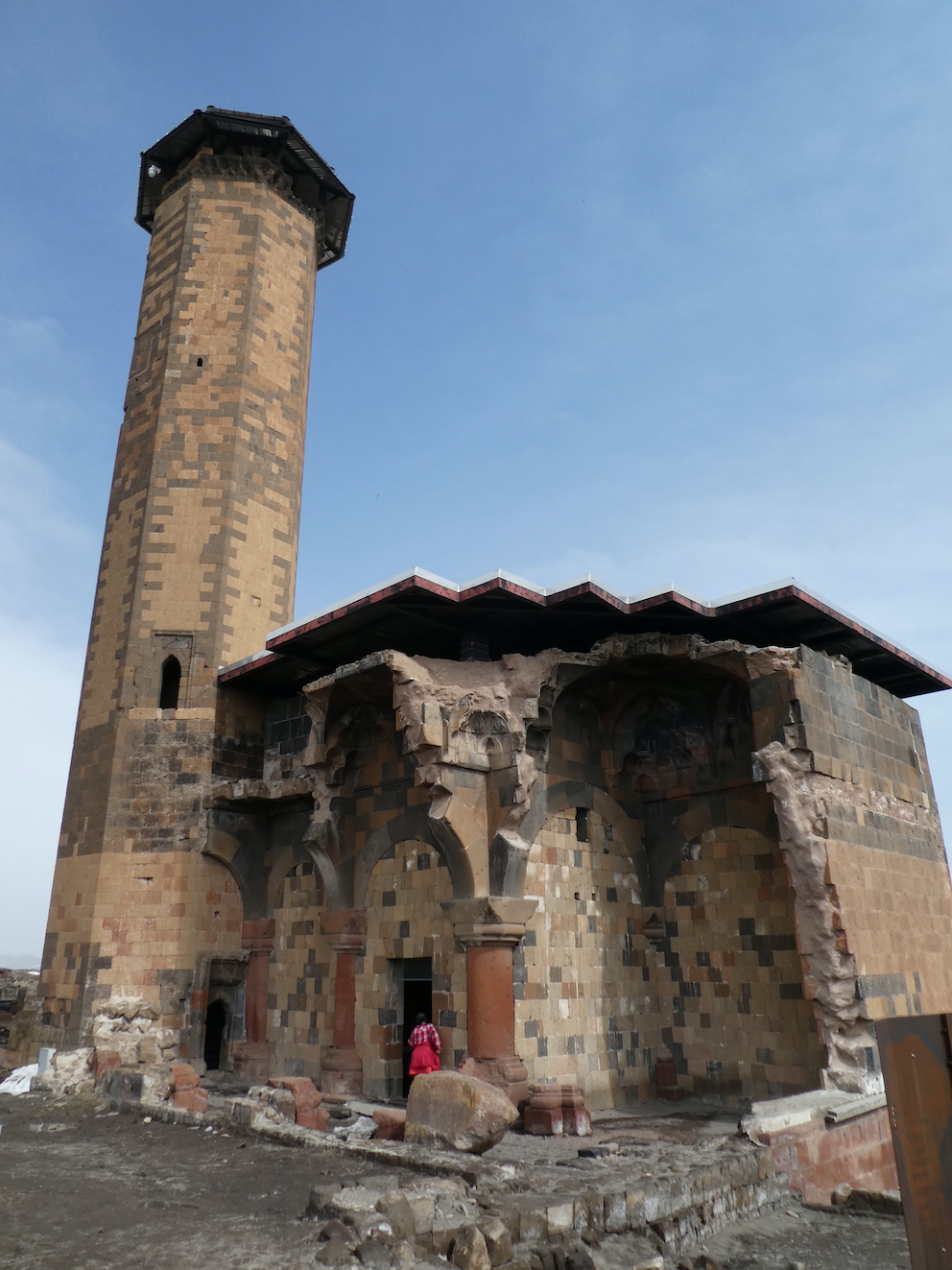
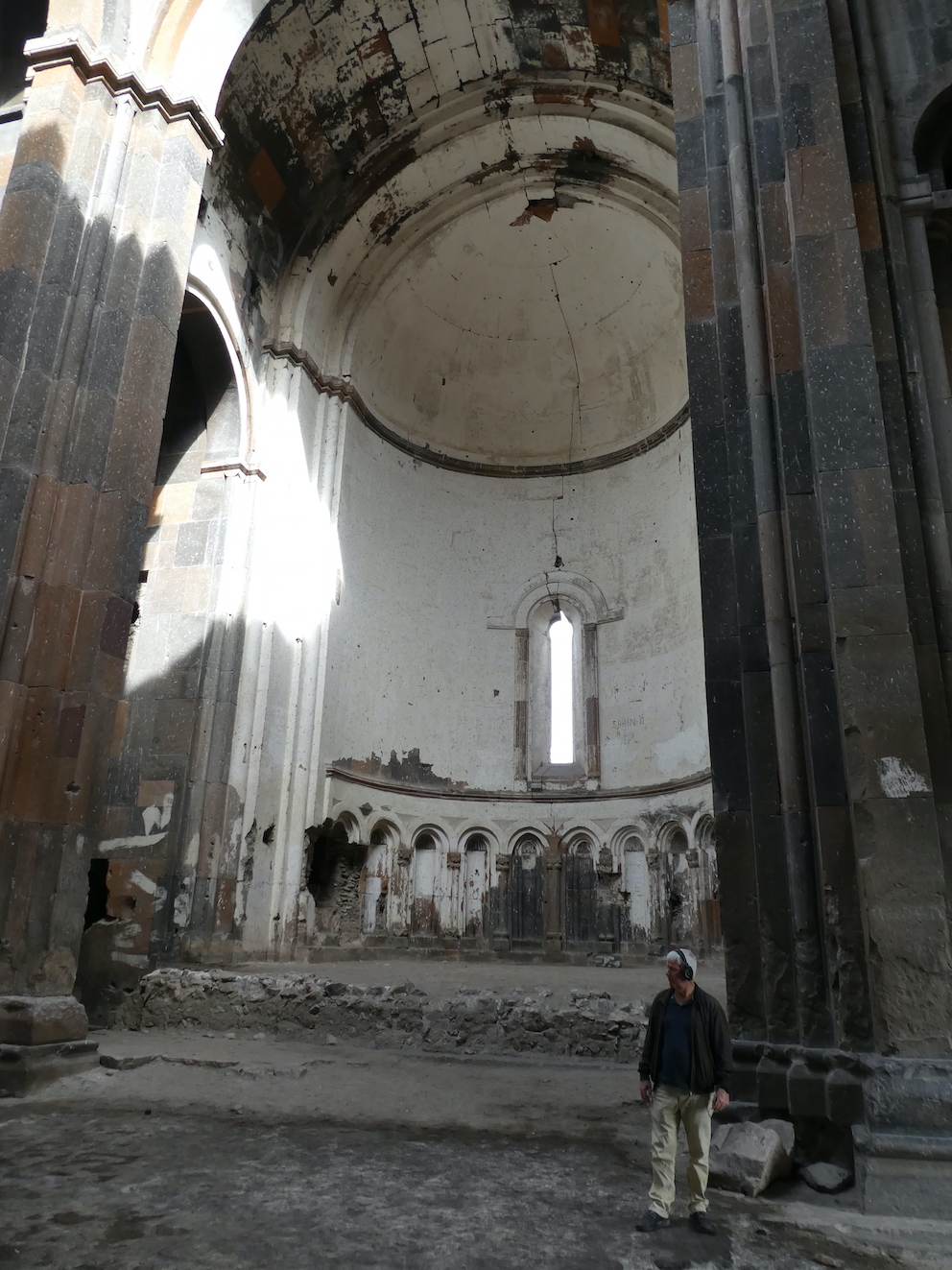
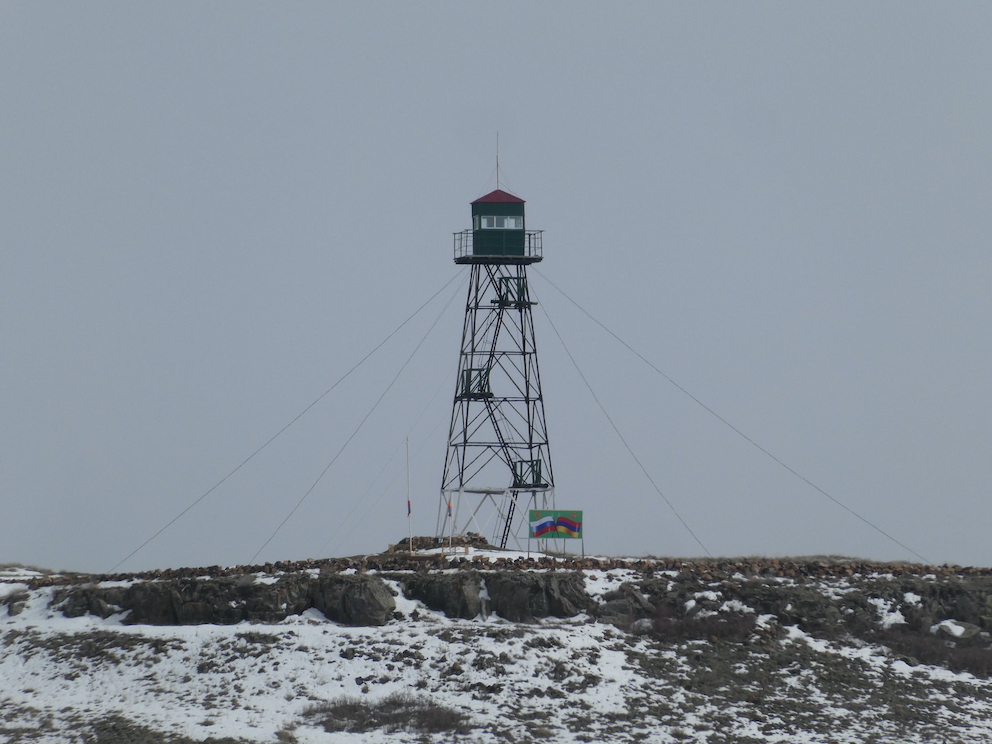

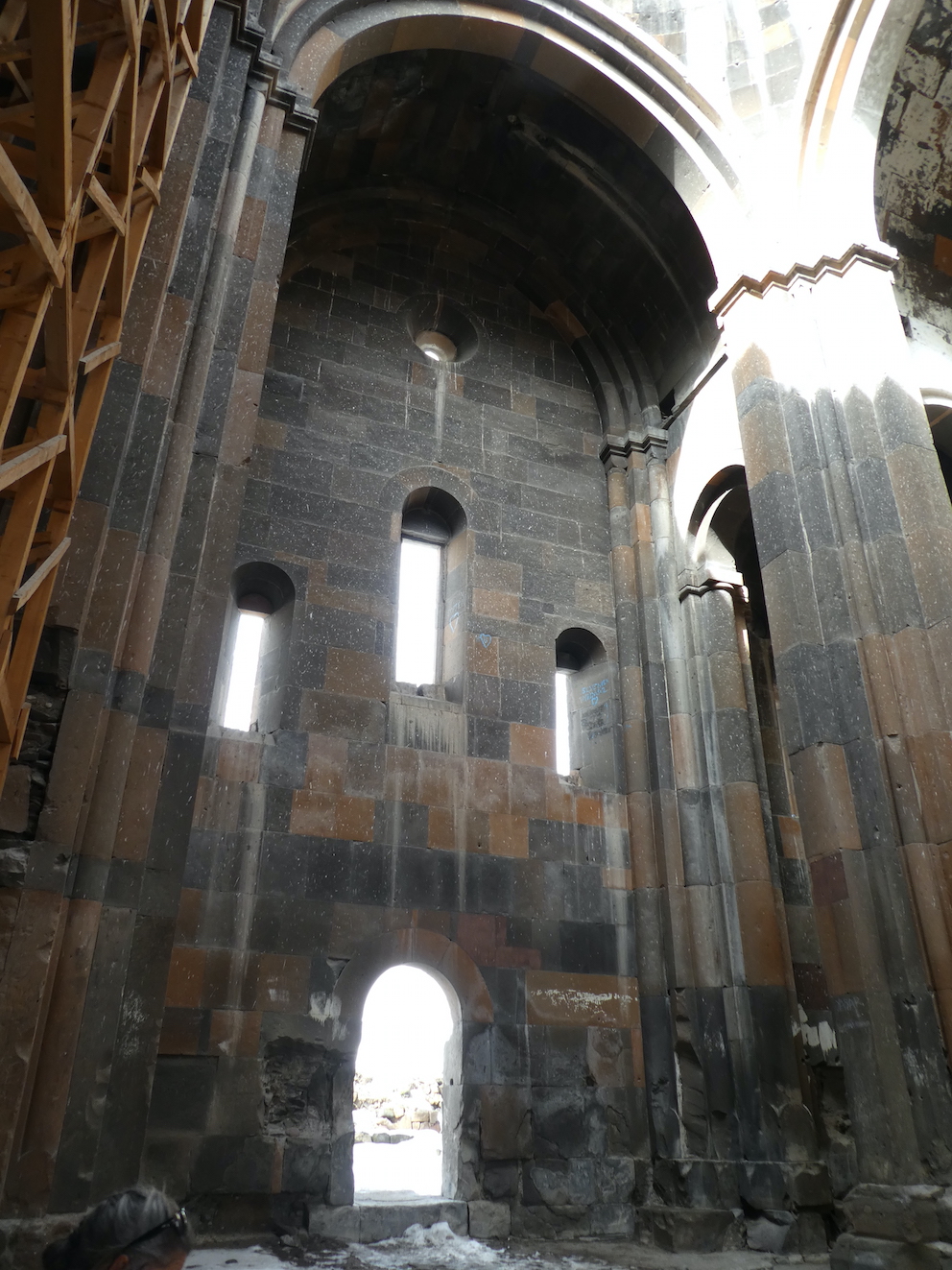

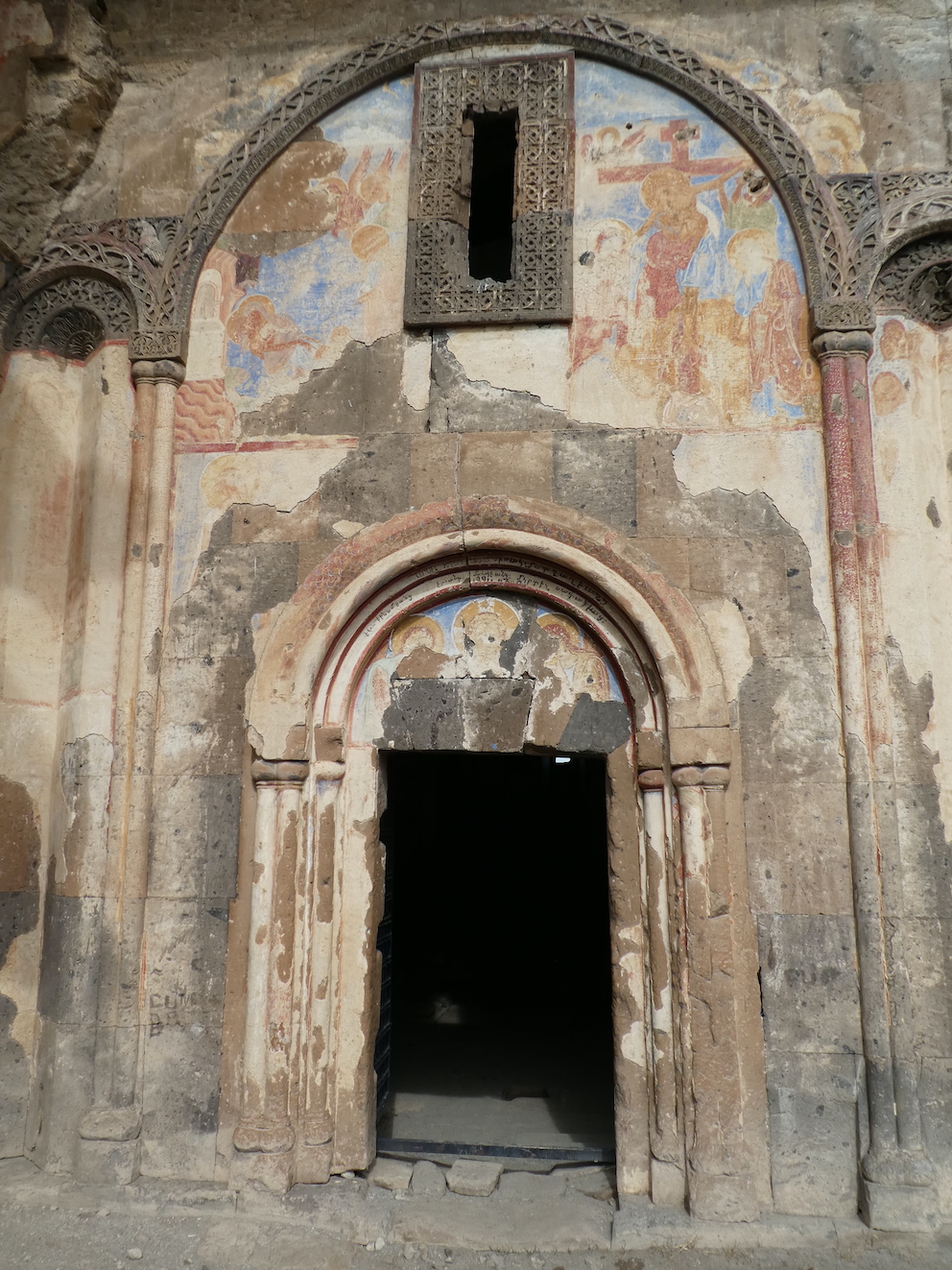
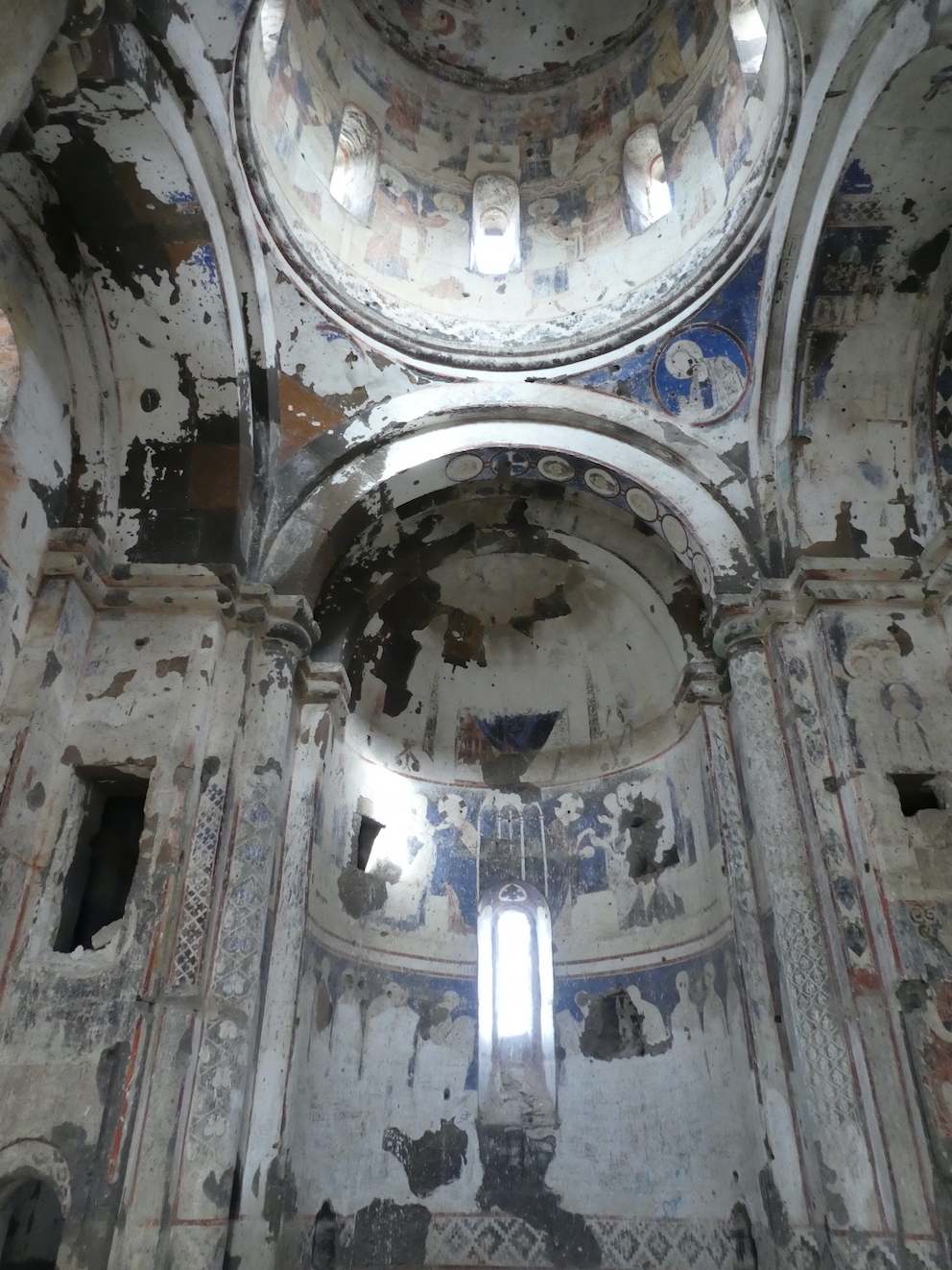
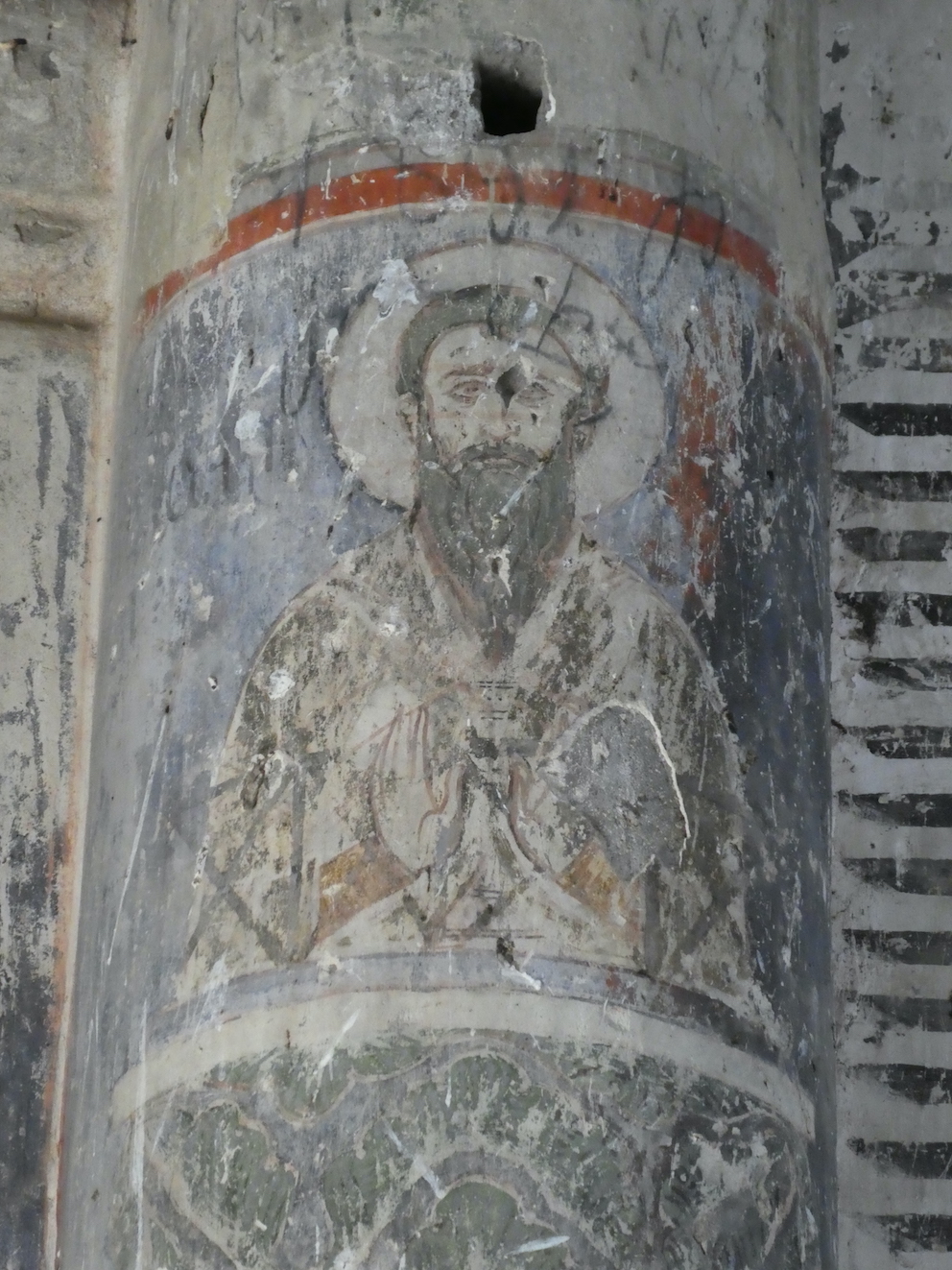
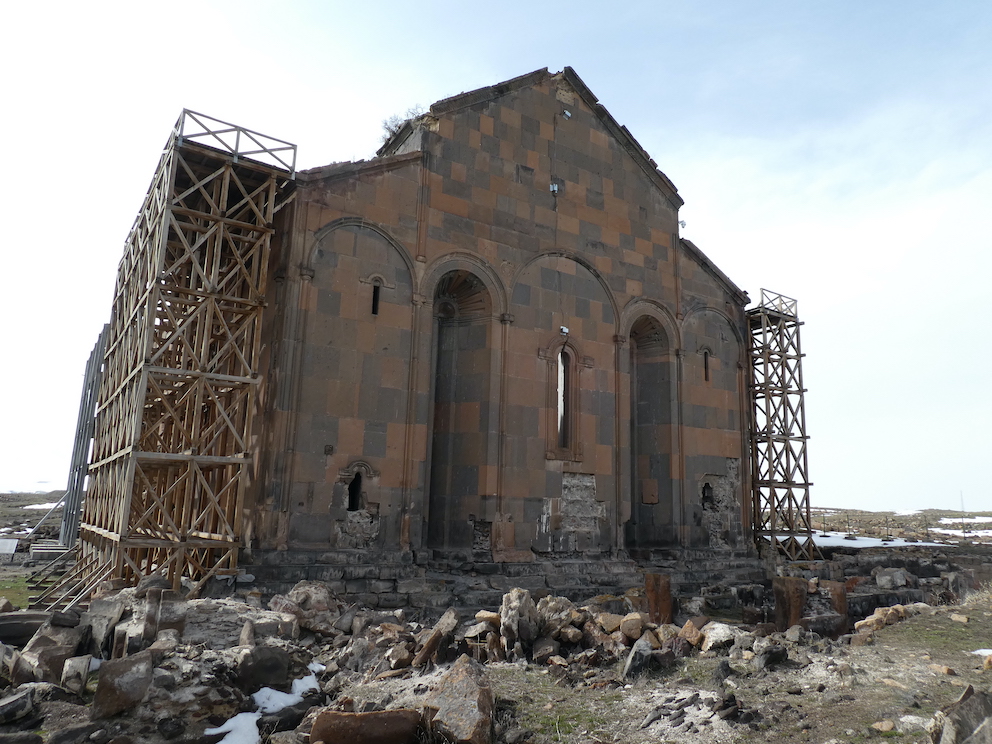
After returning the hire car in Kars we had 5 hours until we were due to depart on the tourist sleeper train at 10:30pm. We thought this was perfect as Adnan had told us of a restaurant in Kars that is famous for its goose. We planned on settling in there for a nice meal and hopefully a drink until it was time to take the train. We had a tour of Kars in a taxi finding the restaurant as they had moved to a new location, under the city castle! Upon arrival at 5pm we asked for a table and were told yes but you must leave by 6pm for we are booked out. We were disappointed but went with it as we had been looking forward to the goose all day. It is boiled and then finished by cooking in the high temperature tandoor oven, and our disappointment with only being able to stay an hour was soon forgotten as we were able to drink wine with our meal (only the second place all holiday that served alcohol). Then just before 6pm the waiter returned to invite us to stay (they must have had a cancellation), and informed us that they actually had a show coming in performing traditional Turkish dance and music, BUT we would have to pay 60 lira each to stay and watch ($6 Aussie Dollars) PERFECT, we gladly accepted, and ordered a second bottle of wine – which the waiter had to go off and ask permission for us to have. Two bottles with dinner – outrageous … but it was approved and we were most happy. The show was hugely entraining and a real performance of music, high energy dancing and almost gymnastics, with some blindfolded knife throwing thrown in as well as traditional guitar and folk songs as well. What a great end to our road trip.
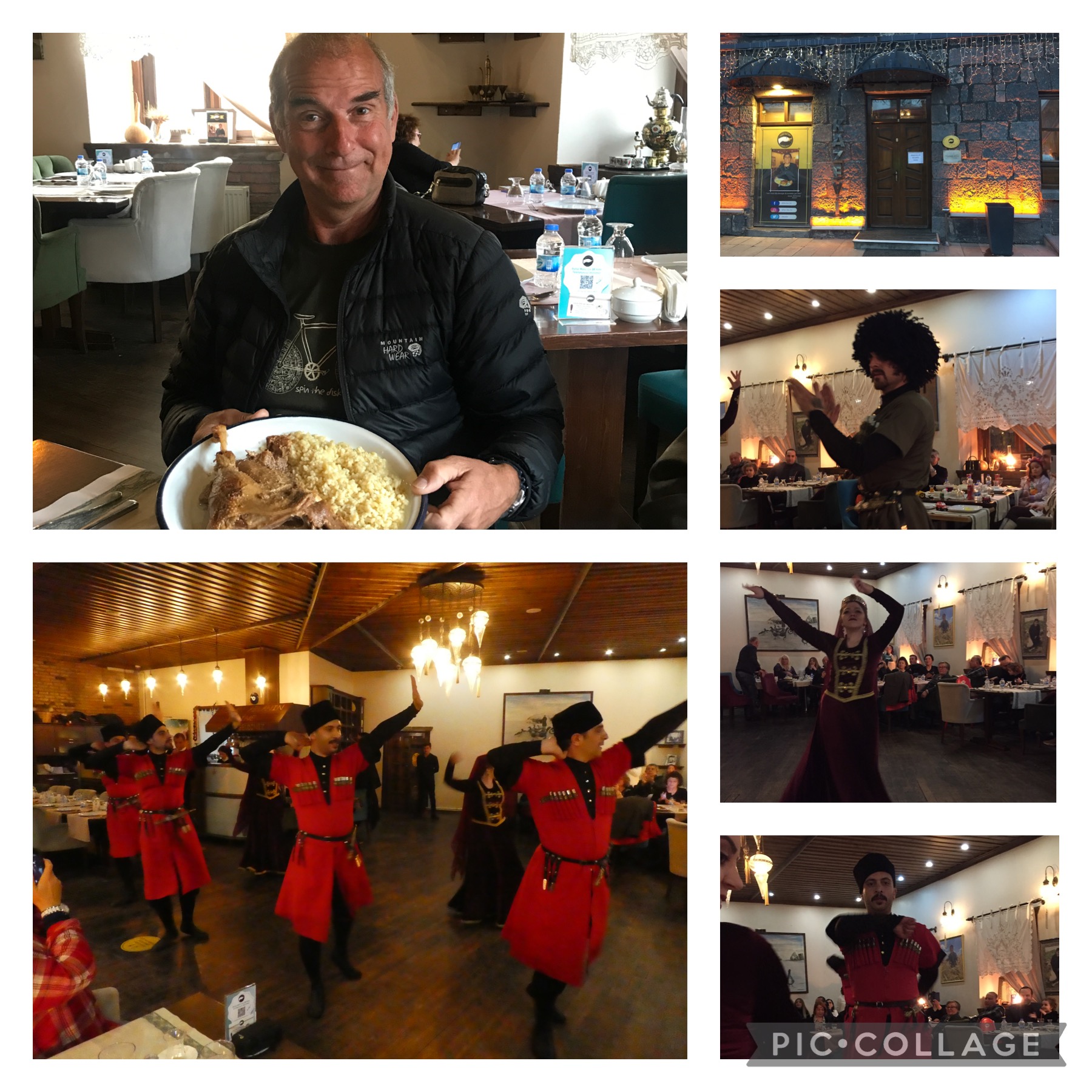
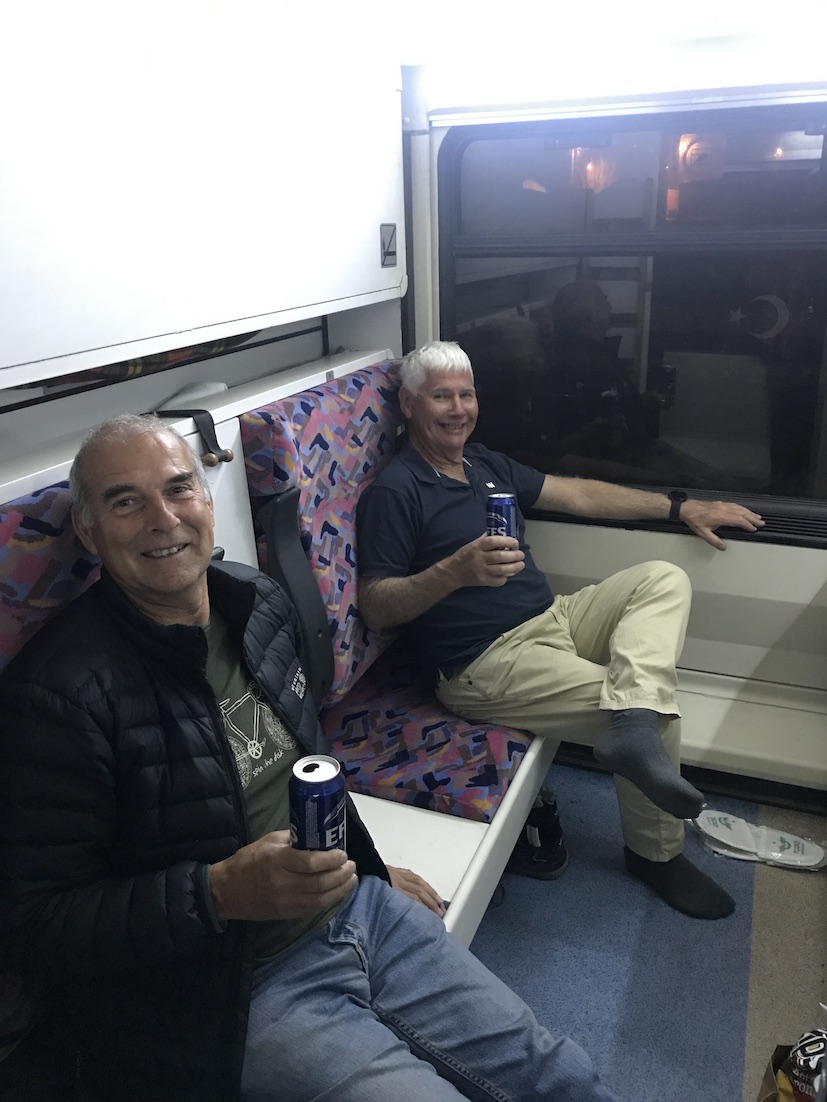
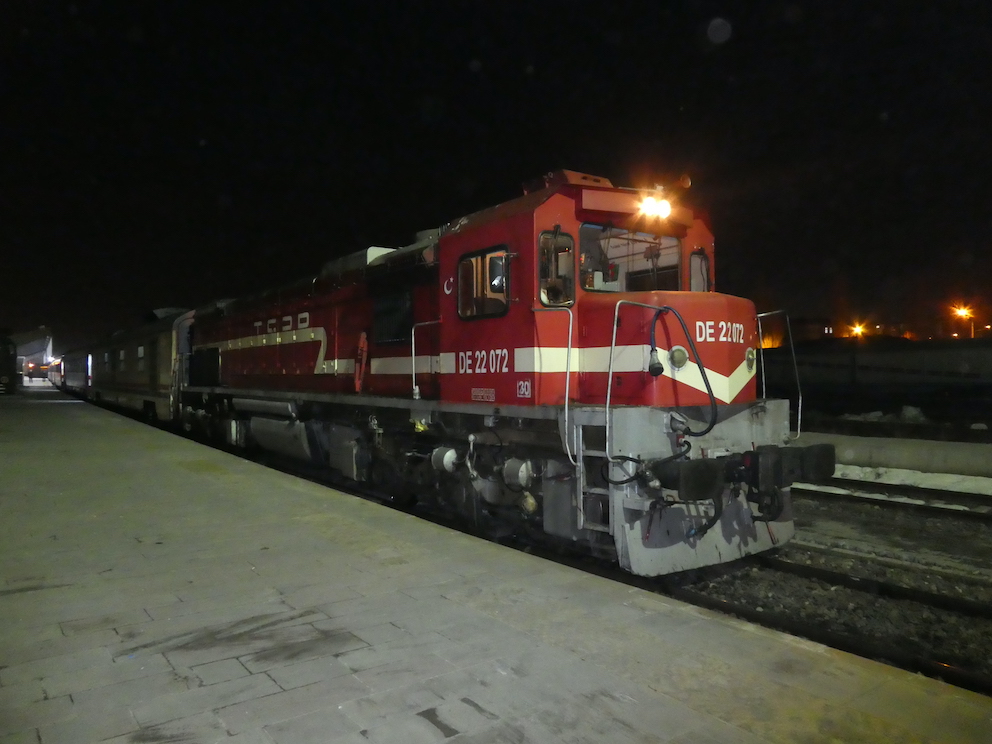

We made the train, and settled into our sleeper cabins, had a night cap (using the ice from the esky for a Raki) and were looking forward to waking up for the next part of our adventure – the tourist train from Kars to Ankara (the capital). Two nights and almost two days. We had two cabins which transformed from seats to beds, our own mini fridge and sink, and a shared toilet at the end of each carriage (one end was the squat toilet the other end a traditional western toilet seat). The train journey was really great. A diverse mix of landscape, following the Euphrates River, which starts in Turkey and the river mouth ending in Iraq 2,800km away . During the day the train stopped twice for three hours to allow us side excursions to view waterfalls, copper markets, the Divrigi UNESCO mosque and hospital. It was so nice to sit back and relax and just take it all in (with our BYO wine or beer in hand).
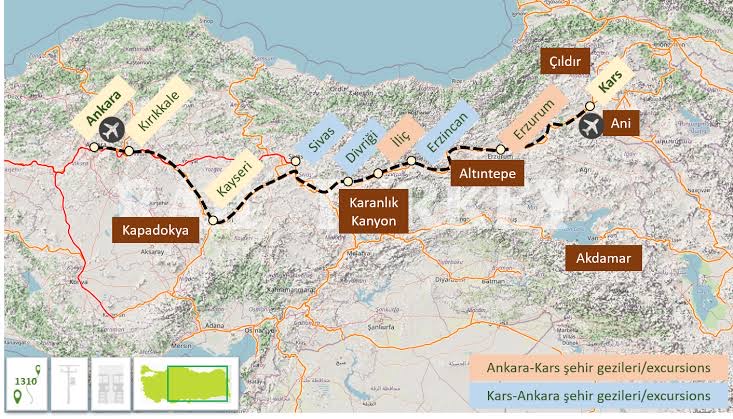

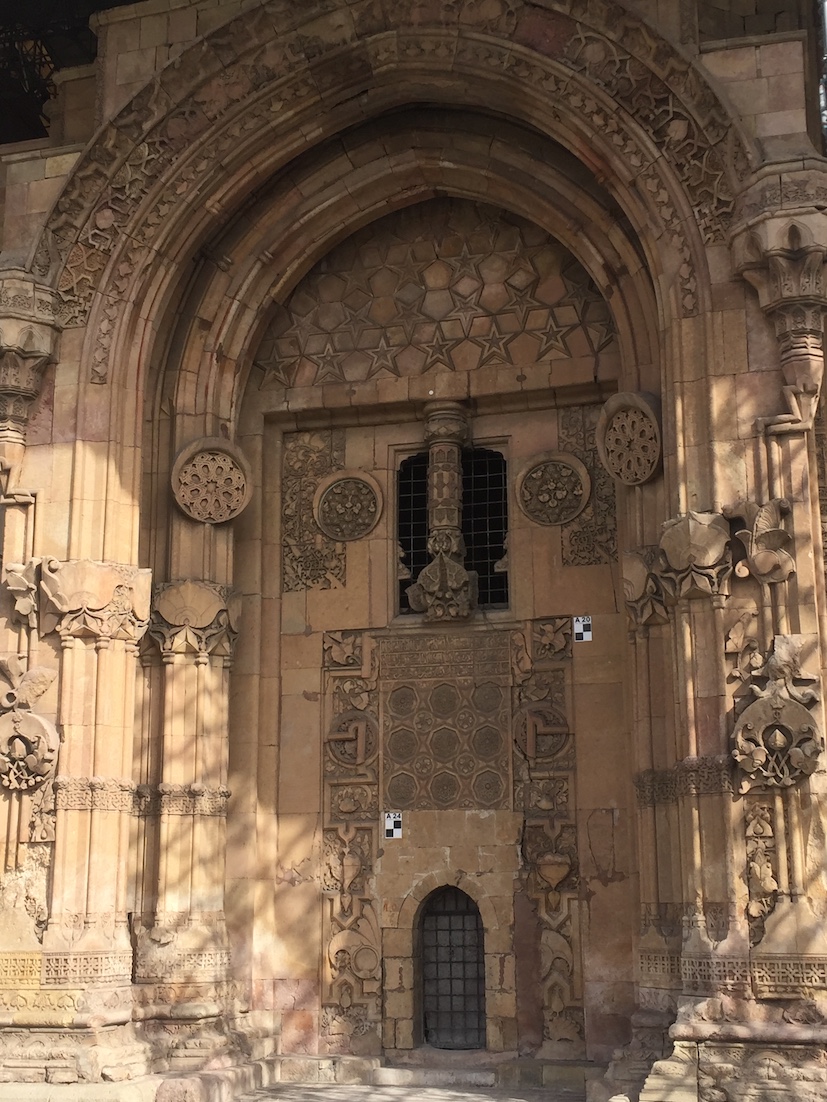


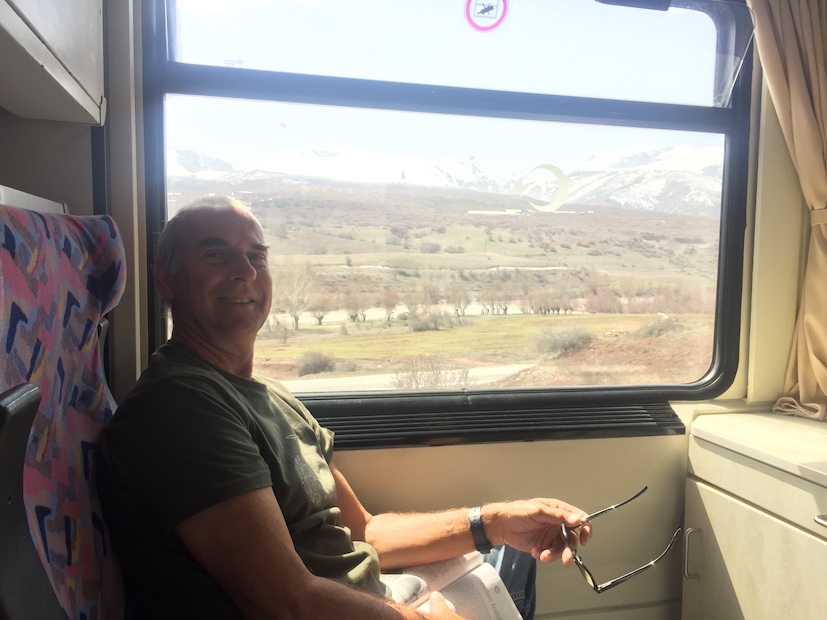
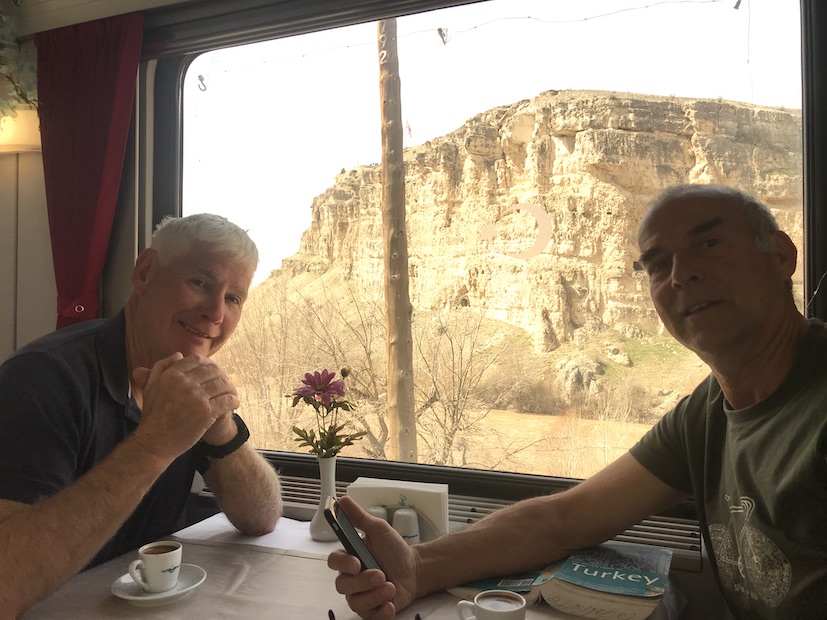
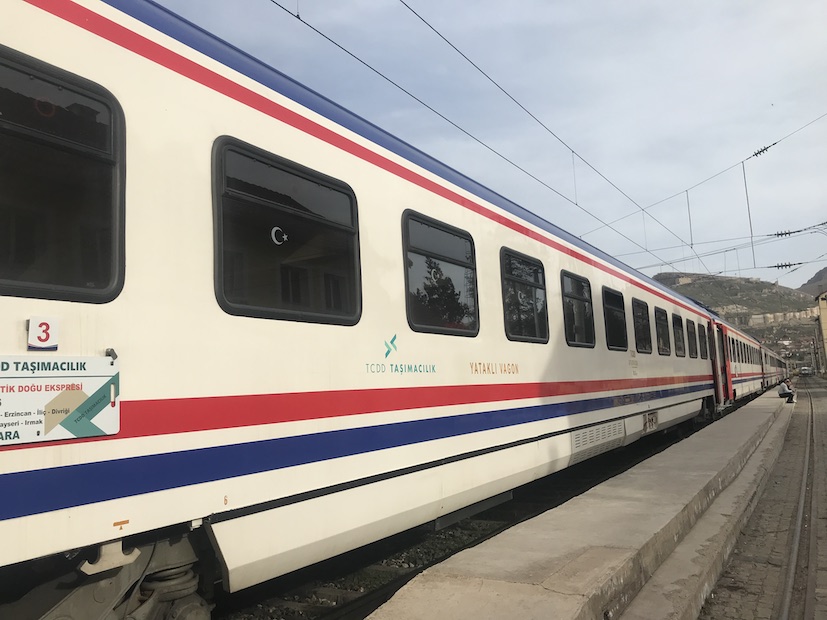
The train journey ended in Turkiye’s capital Ankara, which is where the Ataturk Mausoleum is. Since arriving in Turkiye it has been hard for us to understand the peoples absolute love and devotion (maybe obsession is an appropriate word also) for Ataturk. EVERY town has multiple statues dedicated to him, every house/business displays at least one large framed photograph of him if not a shrine, they even have his signature on their cars (stickers). We understand he was a wonderful leader and he made significant change for the citizens making Turkey more progressive and improving conditions, but it is also overwhelming to us, and once arriving at his memorial the magnitude of his legacy is undeniable, it is hard not to be impressed by its sheer size and grandeur – it is simple, yet powerful.
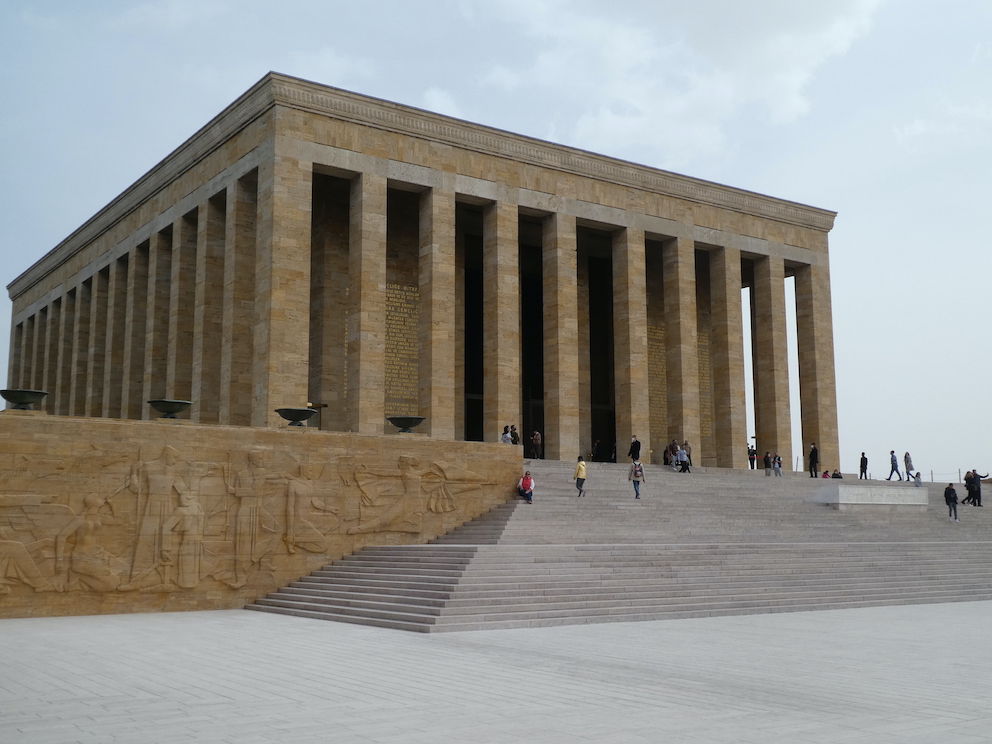
In very simple terms Ataturk led Turkey to become a country that could be sincere to their muslim faith yet embrace western cultures and modern ideas, technologies and ways of living. He no longer oppressed the population and encouraged Turkey to thrive.
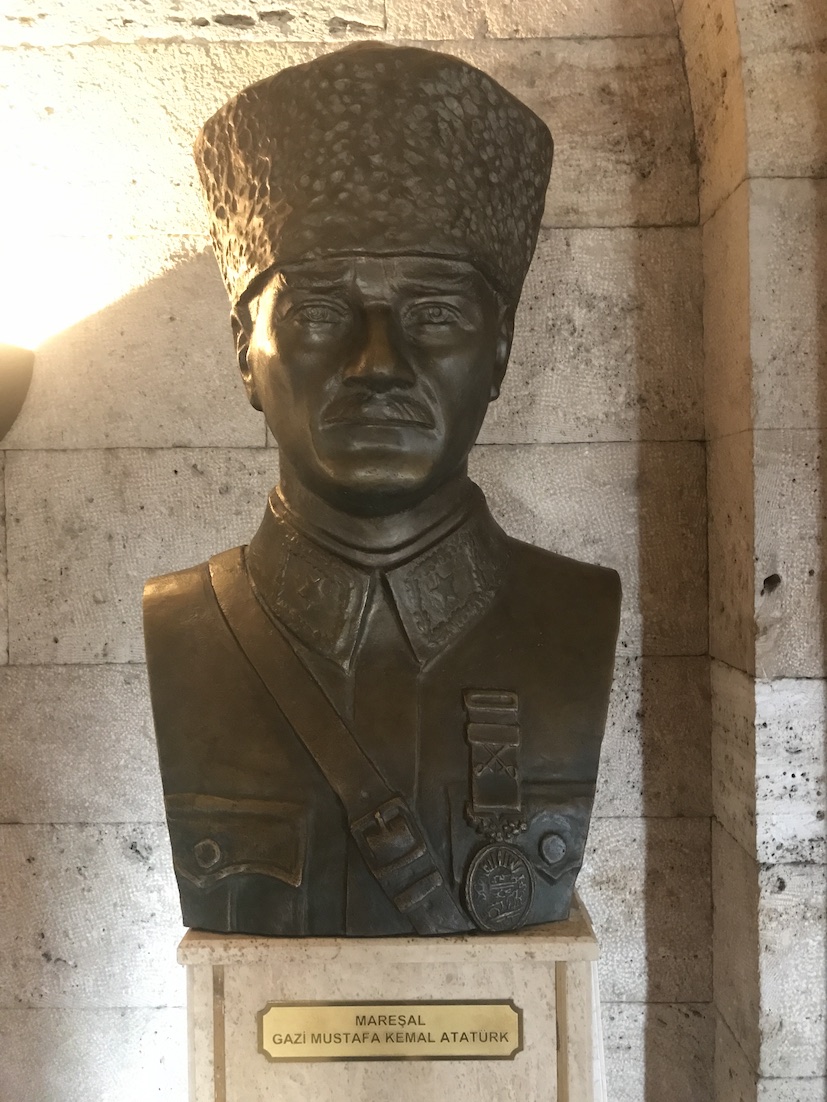


We visited the mausoleum then said farewell to Noel who was flying back to Marmaris and his boat. Maree and Phil were travelling onward to Istanbul (Noel having already visited recently). To be continued in our next post …
Red Roo Winter Makeover
Check out our 3 minute video below which condenses a month of work on Red Roo out of the water in Turkey this winter!
Details of the work (listed in previous blog post Talking Turkey)
It was a long 7 step process;
- Hand sand around pin stripes and detail.
- Machine Sand with 1000 grit sand paper to remove the majority of the oxidation.
- Machine Sand with 1500 grit sand paper to finish oxidation removal and remove 1000 grit scratches
- Machine Sand with 2000 grit sand paper to finish and remove 1500 grit scratches.
- Course polish
- Fine polish (two coats)
- Wax (two coats)
Talking Turkey
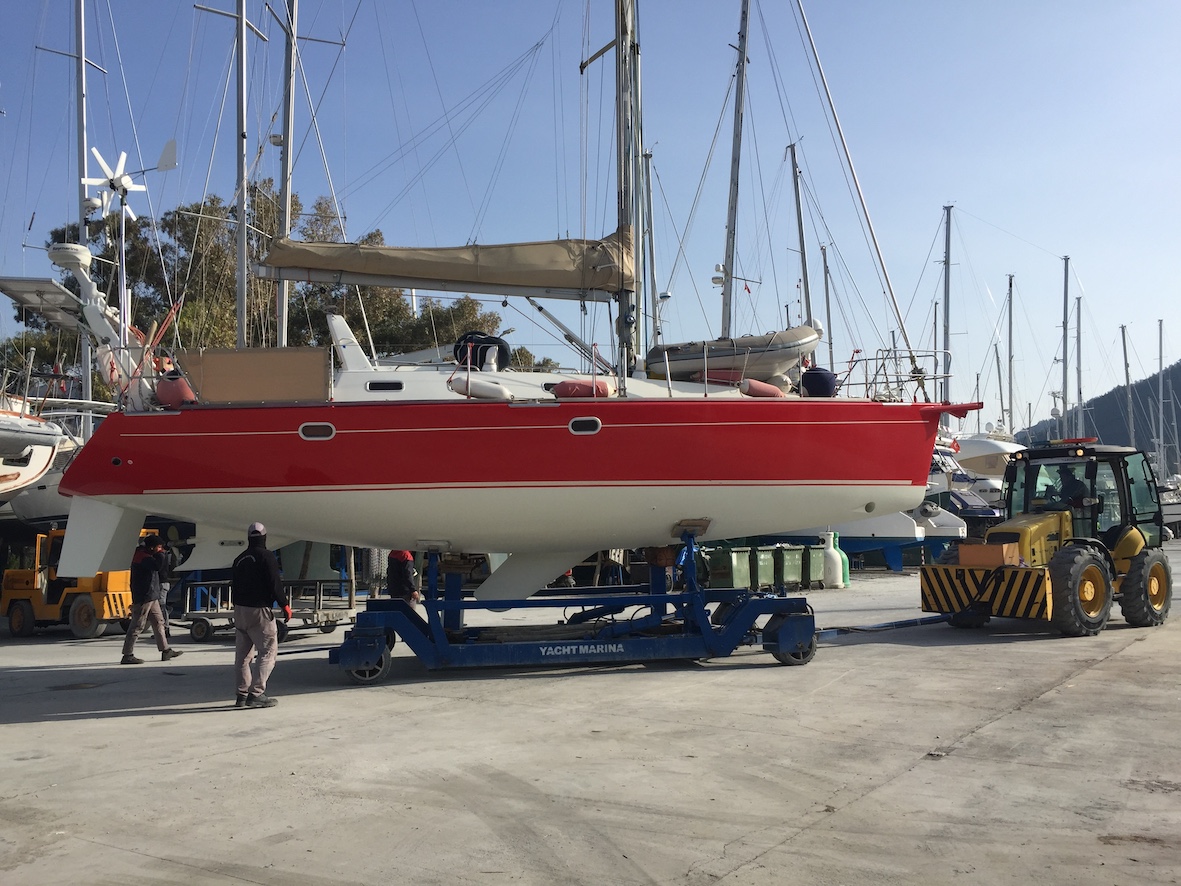
Winter has again flown by so quickly, we have been at the dock since mid November and upon arrival it felt like we had so much time to do all we wanted but time goes so quickly, and we are now planning our last few weeks at the marina before setting sail again (with still a bit to complete!).




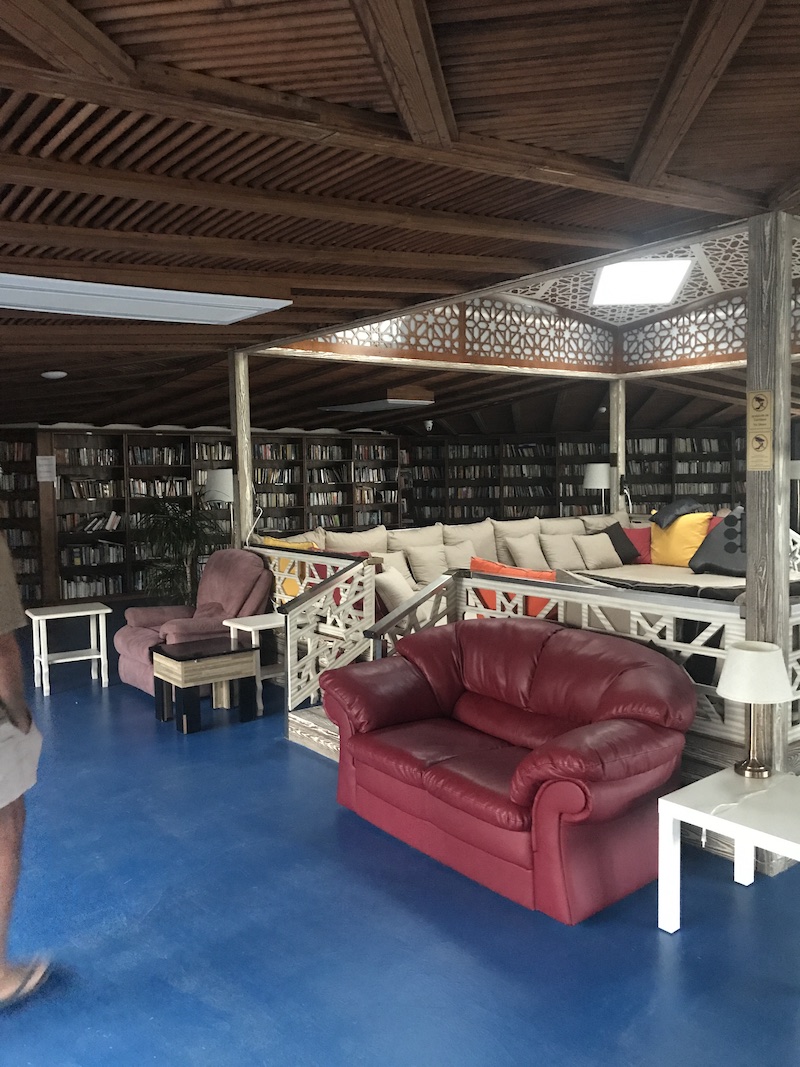
Our biggest project for the winter was to build a hard aluminium dodger (spray hood) over the companionway hatch (where we enter/exit the inside cabin of the boat). This provides shelter when sailing for whomever is in charge of the boat, and provides protection for a lot of our critical control instruments, lines and winches. This has been on Phil’s to do list as a major project since buying the boat, but always with the caveat to do it properly and look like it came with the boat rather than an add on. The canvas dodger was already a few years old (we think at least 5) when we brought the boat and had been repaired already (and a lot more since in our 7 years sailing). I have replaced two of canvas panels and reinforced seams again in 2018 and then replaced the ‘plastic clear windows’ with new plastic and then later sail cloth when a hail storm shattered them all in 2020. Realistically it has been on its last legs for 3 years now, we could no longer open any of the window panels it was all so very very fragile and held together by hand stitching, and haven’t been able to see out of the windows for the last two years. We had heard Turkey was the place to do this work, with great tradesmen for the job. Within a week of docking for winter, we had sourced some fluted plastic sheeting to begin ‘mocking’ up the shape and design we wanted before getting in the professionals to quote for the build. Phil spent two weeks building a frame and template and shaping and changing and refining the hard structure he wanted, then we made windows out of cardboard and placed them, changing sizes and shapes until we settled on what we wanted – we were really pleased.


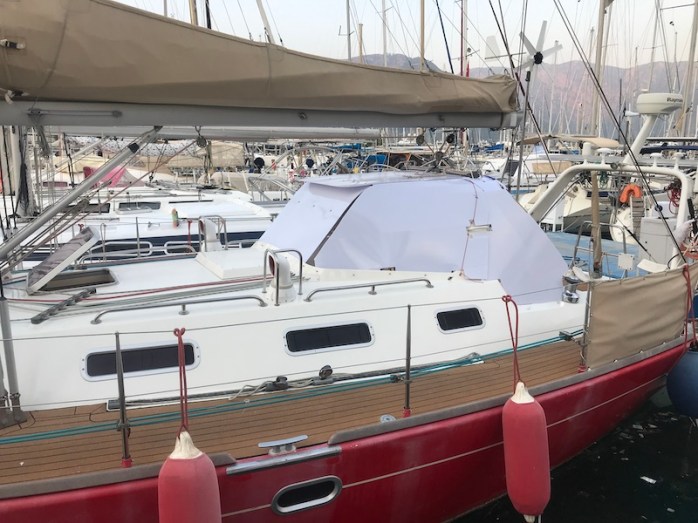

Then we went out to the recommended skilled tradesmen to get quotes for the work. This is where it didn’t go to plan. We had a few visit the boat and they all admitted they couldn’t do the job justice. They could build it in aluminium (like the boat) but the materials they can source isn’t the high quality marine grade aluminium. The existing aluminium arches and structure on the boat are all finished round and to the highest quality (can’t tell they are welded), and we are thankful to the specialists for being honest and telling us they couldn’t do the work to that standard. The reasons being it would have to be built off site which is a challenge and a risk of not not fitting well, and welding and work on the pontoons is not allowed due to fire risk. We can attest to that as there have already been 3 boat fires since we have been here. This was all a huge disappointment to us but on the bright side they were honest that they couldn’t produce what we wanted which is better than them taking on the job and us being really unhappy with the result. With our bubble burst it was back to the drawing board and we are looking to get a new canvas dodger built.
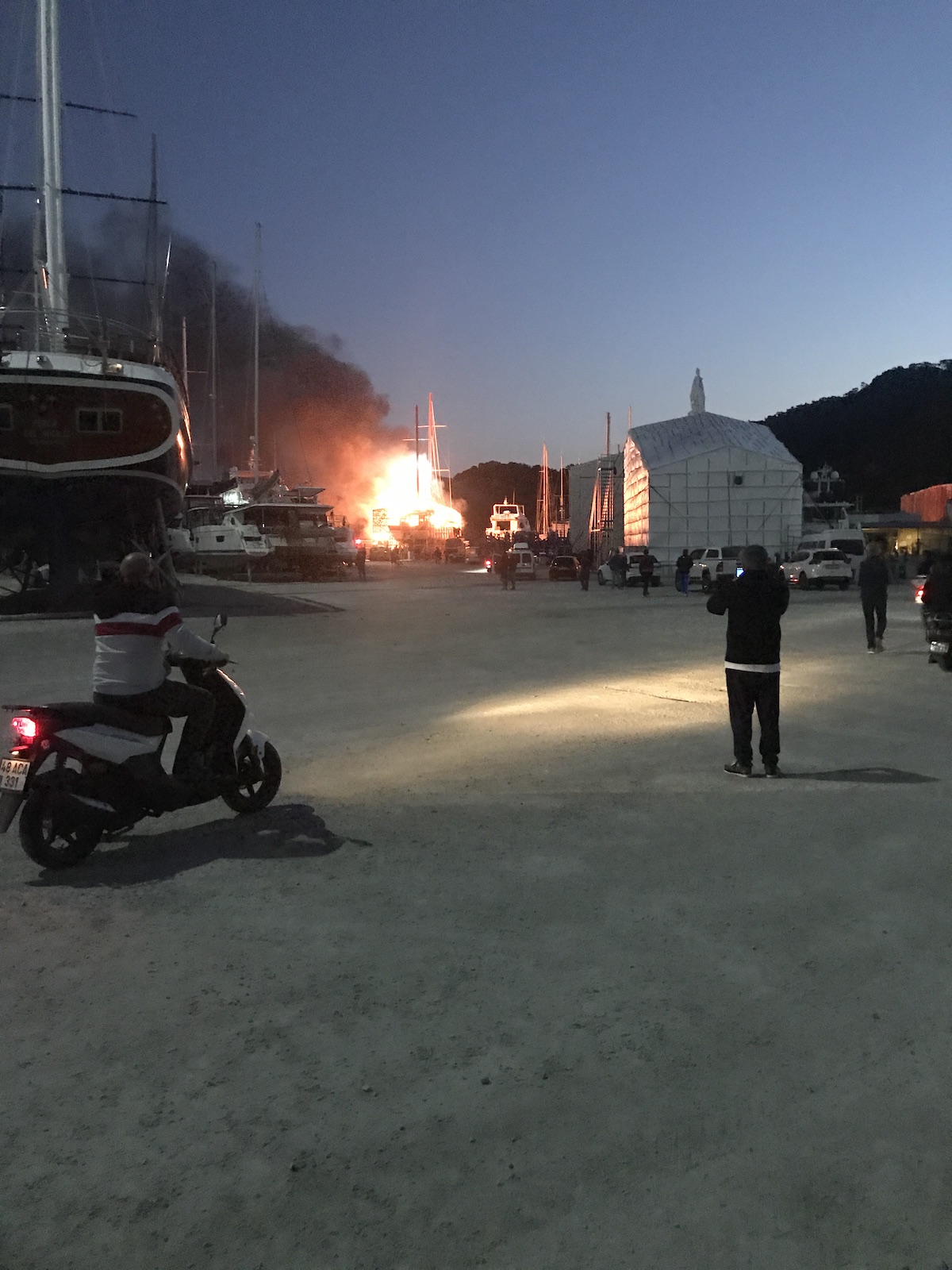


We also were on the hunt for a new dinghy after our much loved hard bottom Caribe dinghy had its last ride in Malta in June last year. We had brought (for a carton of beer) a second hand inflatable soft bottom replacement dinghy off our friends Andy and Karina on “Tartuga” in Malta, who had upgraded and wanted to offload it. It had been great through Malta, Greece and Turkey but we wanted a hard aluminium bottom dinghy and had been searching Malta, Italy, Greece and Turkey for one over the last 6 months without success. We knew the exact brand and model we wanted just couldn’t find it! We kept being told new shipments for dinghy’s don’t arrive until April, ready for next summer. So imagine our delight when walking in the industrial area of Marmaris we happened to spot a shop which had a Highfield dinghy flag flying out the front. We went inside and spotted a big Highfield (too big for our boat). We told the guy in the shop we were looking for a Highfield Ultralight UL260 (2.6 meters long), he replied “I think I have one in a box unopened out the back”, well did we get excited! The big one on display had sold and was being collected in a week and he said once it was taken out of the shop he would unbox the UL260 set it up, inflate it and give us a call, and furthermore he promised to hold it (not sell it until we had seen it). A week later we were the proud owners of a new Highfield (Australian company) dinghy.

We have had great company in the Marina all winter with a great live aboard community here. There are around 10 other boats with great people on board who we have enjoyed getting to know. We have a weekly get together each Friday night in the bar/restaurant, and often have a beer or hot drink together during the week to discuss boat works/problems or check in on each others projects. Six of them live past us in the marina and stop at our boat to sing us a song on their way home from the pub (drunk) of a weekend – it is quite amusing. They are known as the drunken sailors choir as the first song they sung us was “what shall we do with a drunken sailor”. A note went out the sailing group advertising the choir along the lines of “Drunken sailor choir, meets Friday nights around 11pm outside Red Roo, new members welcome, no previous singing experience necessary”.
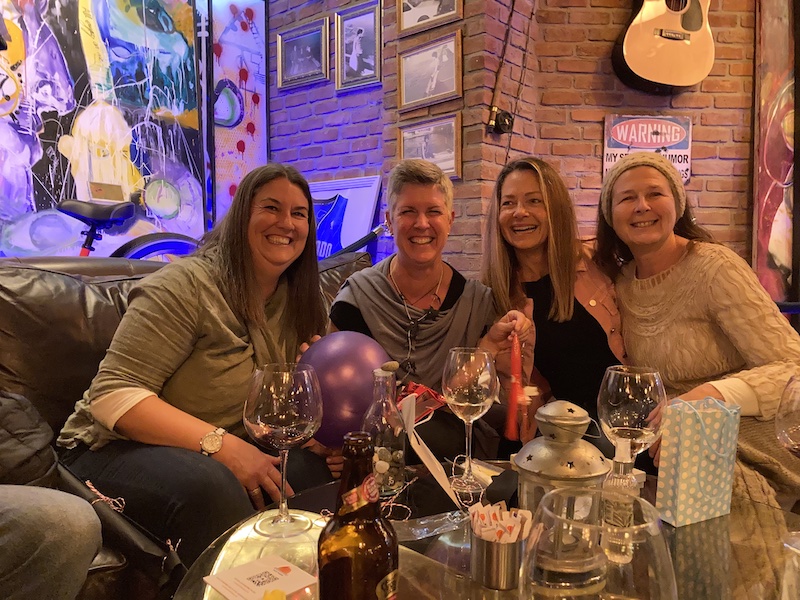


Many, many winter jobs were completed over the weeks in the marina, things such as preventative maintenance on major systems, some systems shut down for winter, sewing jobs including a new series drogue deck storage bag & gennaker sail deck storage bag, intensive cleaning inside the boat (every cupboard, locker and nook & cranny cleaned and inspected for mould or any water residue, water tanks cleaned and flushed, fuel tanks cleaned, sails washed, dried and folded and packed away for winter, engine service, oil change & impeller change, gearbox service, propellor maintenance, anode replacements, anchor chain regalvanized, all seacocks cleaned, galley sink drainage pipe replacement, bow locker clean, backstay sheaves inspected and replaced, inspected and maintenance where required, toilet service, rigging inspection, . The big shopping list gets taken to town each time we go, looking for specialist bits, or items to replace used things, or spares that need to be ordered, etc.


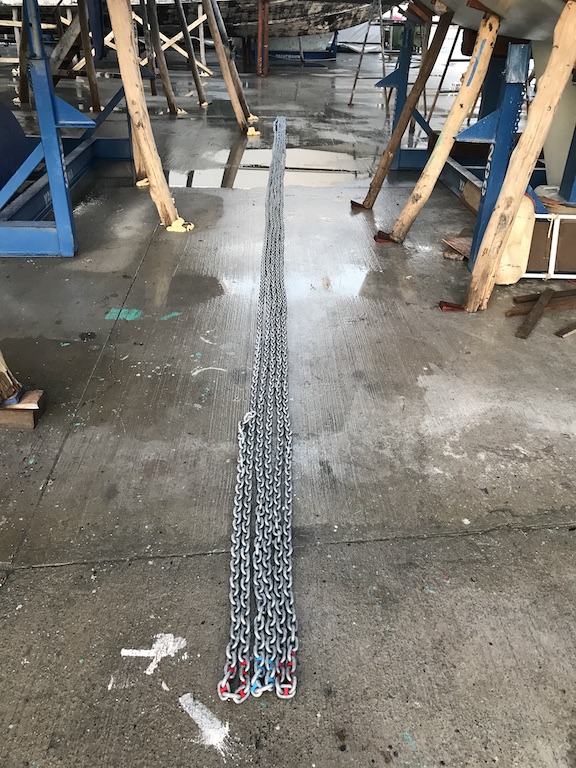
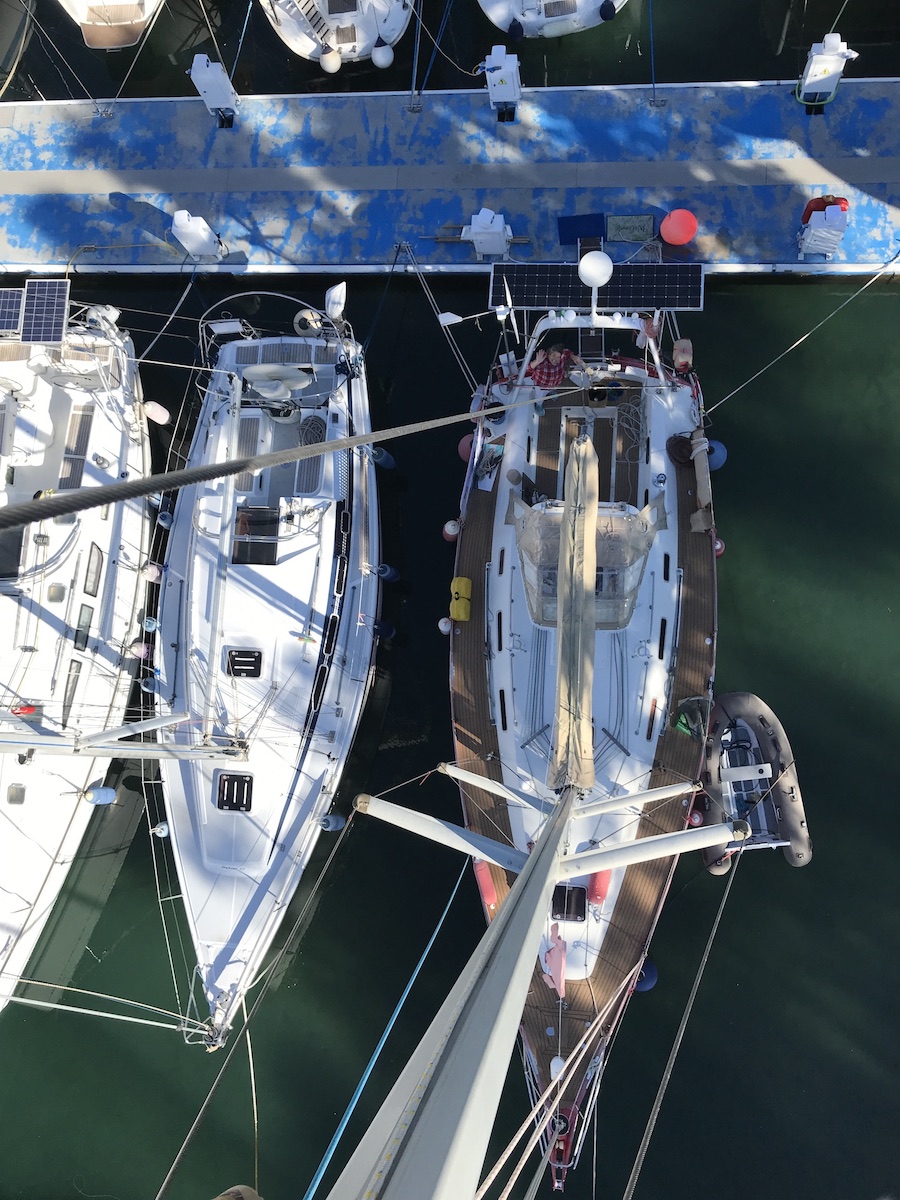

Just before Christmas we became offical residents of Turkey (temporary residents). We have offical residency documentation and identity cards. As a tourist we were only allowed to stay for 90 days, which wasn’t quite long enough over winter, but we were able to apply and pay for temporary residency and choose either a 6 or 12 month stay. We chose six months and are now able to stay until the end of May with all the benefits associated to natural citizens, including health insurance and tax numbers etc. This also allowed us to get our COVID Vaccine booster shots which we are both very thankful for.
We celebrated Christmas twice, our American friends on “Sweetie” whom we celebrated Christmas with in Morocco in 2018 hosted Christmas dinner on Christmas Eve (apparently that’s how they do it in the USA), it was a great evening as it was with the crews of Sweetie (USA), Caffe Latte (Canada), Tartuga (Canada) and Pharea (Brazil) whom we had spent last winter with in Tunisia. It was a reunion of sorts and just like being with family, and the typical Christmas feed – we all brought dishes to share and we of course had WAY TOO MUCH excellent food! Then on Christmas Day we had the Marina Christmas Party, here at the marina pub and restaurant. Complete with local musician to sing and DJ for us into the wee hours as we danced, drank and danced some more.

The New Year saw us both go to the private hospital for full thorough medical checks. Can you believe in one day we had blood taken and tested, urine sample tested, ECG heart monitor test, chest x-ray, abdominal ultra sounds, prostate check for Phil, mammogram and pap smear for Maree and then saw the following specialist Doctors with all our test results; General GP/Surgeon, Dentist, Optician, Urologist, Internal Organ Specialist, Neurosurgeon, Ear Nose & Throat Specialist, Orthopaedic Surgeon, Cardiac Specialist, Dermatologist (for skin cancer check) and for Maree the Gynaecologist. All this for $350 Australian Dollars. I am pleased to say we both passed all our tests (without studying!), although we got a few reminders about ageing and how we may not be doing it gracefully.
Time flew by and soon enough it was January 19 our winter haul out date. We took Red Roo around to the slip and the boat hoist wrapped slings under her belly and lifted her out. Always a nervous day but the professionals here know what they are doing. They lift boats all day every day, many of them HUGE. Our neighbour on the hard is “EXTREME” a 40 meter sailing super yacht, with 3 decks (three levels) 6 staterooms, and 4 crew cabins, it caters for 12 guests and 7 crew and is currently for sale for €7.9 million Euros. They have people doing their maintenance, Red Roo’s maintenance work is all done solely by us!!
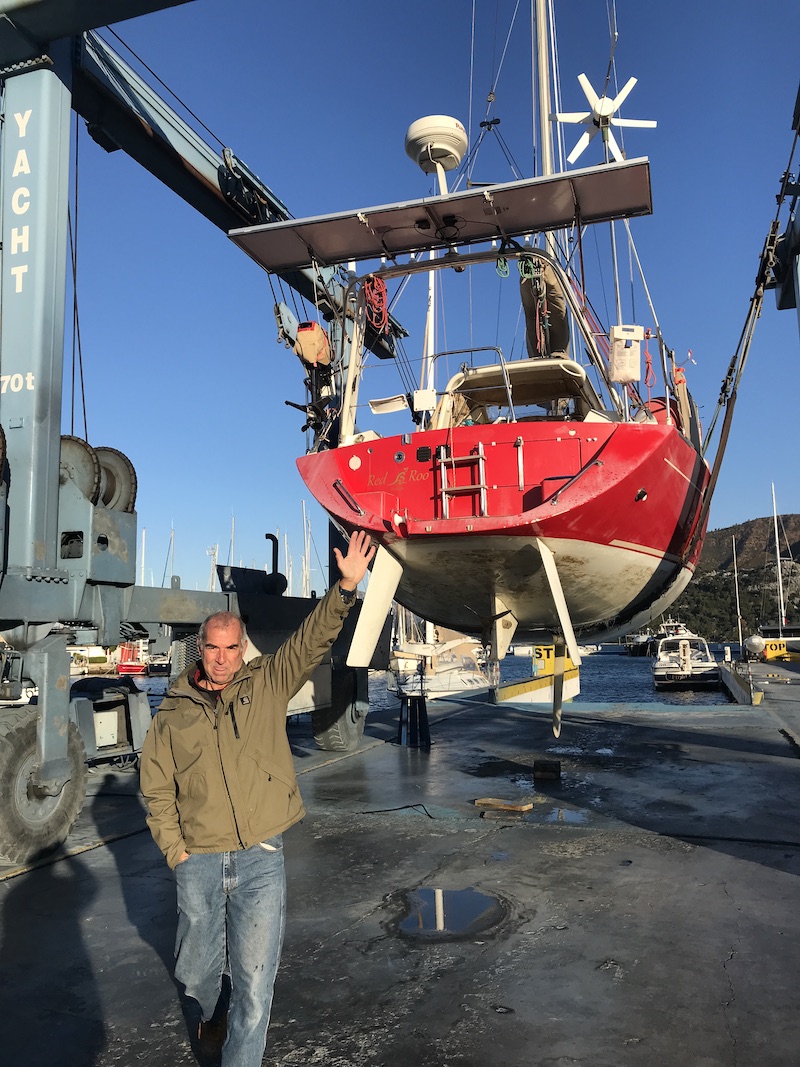

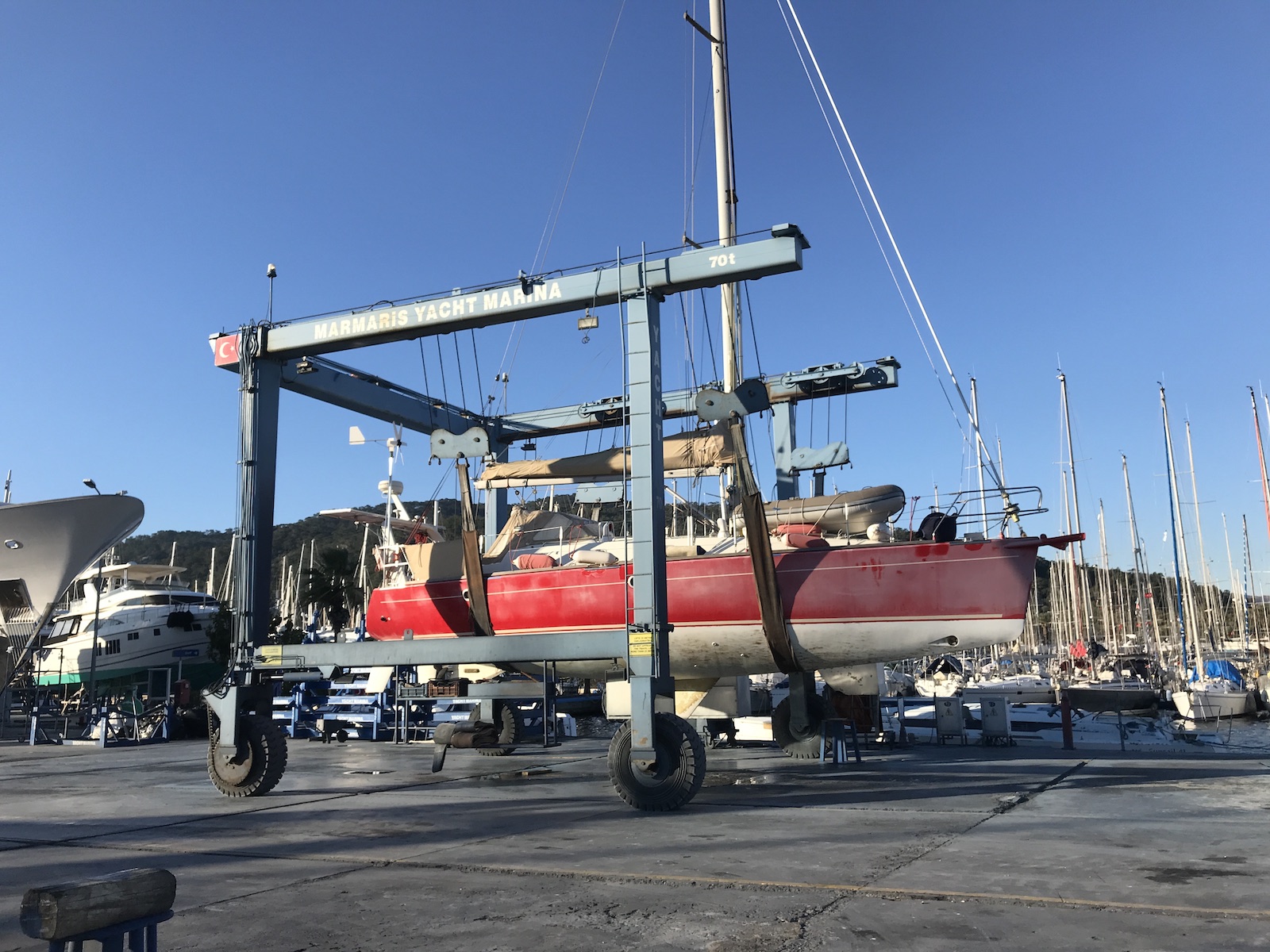


SO MUCH better than a ladder
just like camping, washing up outside in a bucket.
Once out of the water the weather turned foul again, and living on the boat out of the water is a little harder and a little bit less pleasant so we took the opportunity to go on another road trip with Yo & Jean.

We hired a car and took a week to drive east along the coast. Our hire car guys asked where we were going and were pleased to hear we were travelling along the coast as all the inland roads and highways were covered in snow and dangerous. We actually had to adjust our plans as one of the attractions off our coast road was inaccessible to due to snow, 6 days later on our return journey we were able to visit when the snow had almost but not quite cleared.
Kayaköy (Ghost Town). A Greek settlement in Turkey established around 1860 and abandoned due to the population exchange in 1923 (when the Greeks were sent back to Greece and the Turkish living in Greece were sent back to Turkey). There were 14 chapels, 2 churches, 2 schools & a customs house and 760 houses. The houses although close together do not cover each other in regards to daylight and shade, most houses are 50 m2. They were all built on the hillside on natural ground levels.
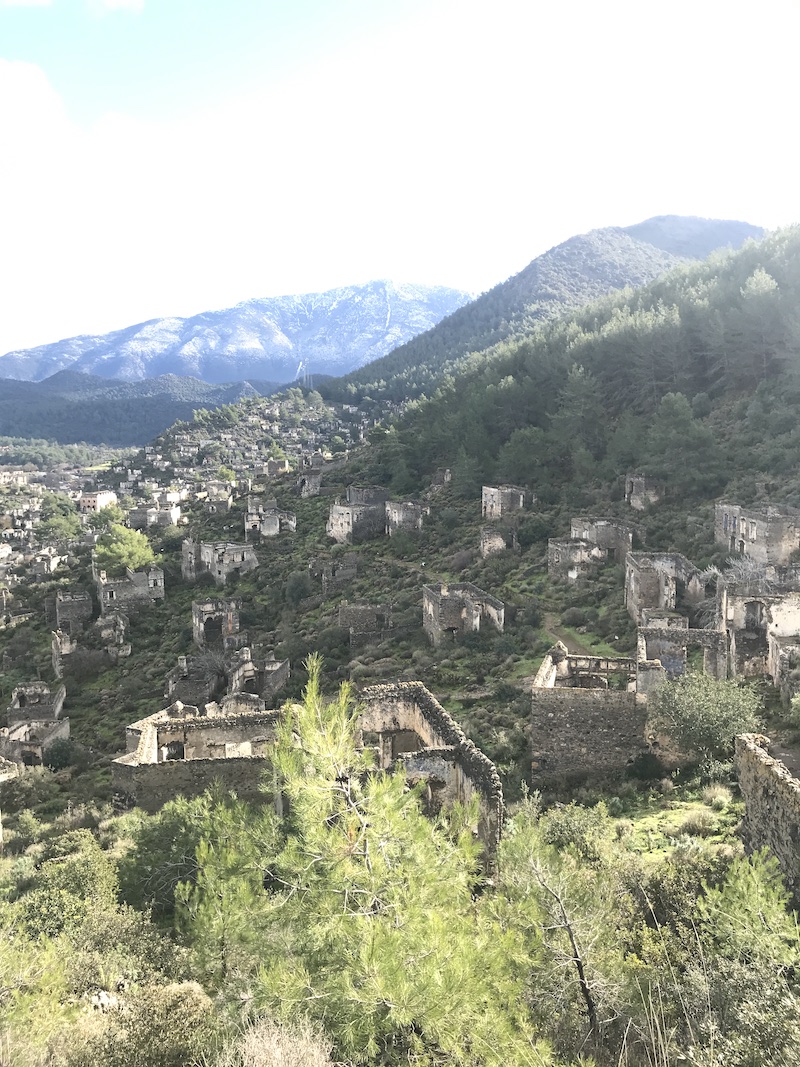

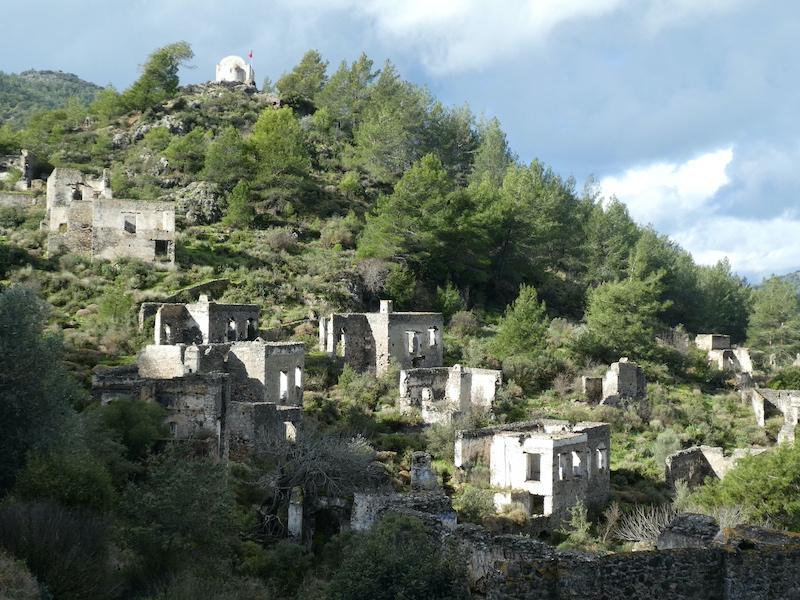
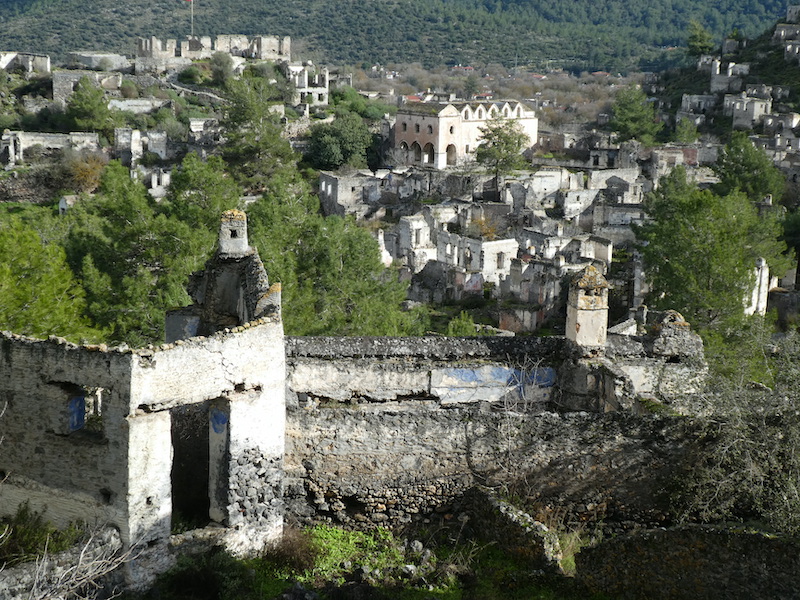
Fethiye Region, the sign at Fethiye, a coastal beach along the highway, Saklikent Canyon/Gorge, The Lycian Way Hike (outside of Antalya).
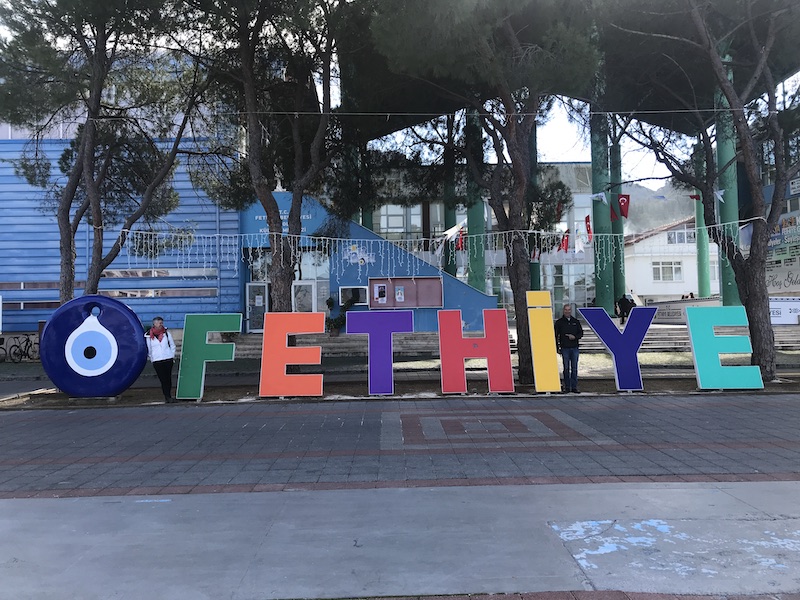


House Tombs (burial chambers) at Fethiye and Myra, dating from the 4th century BC.
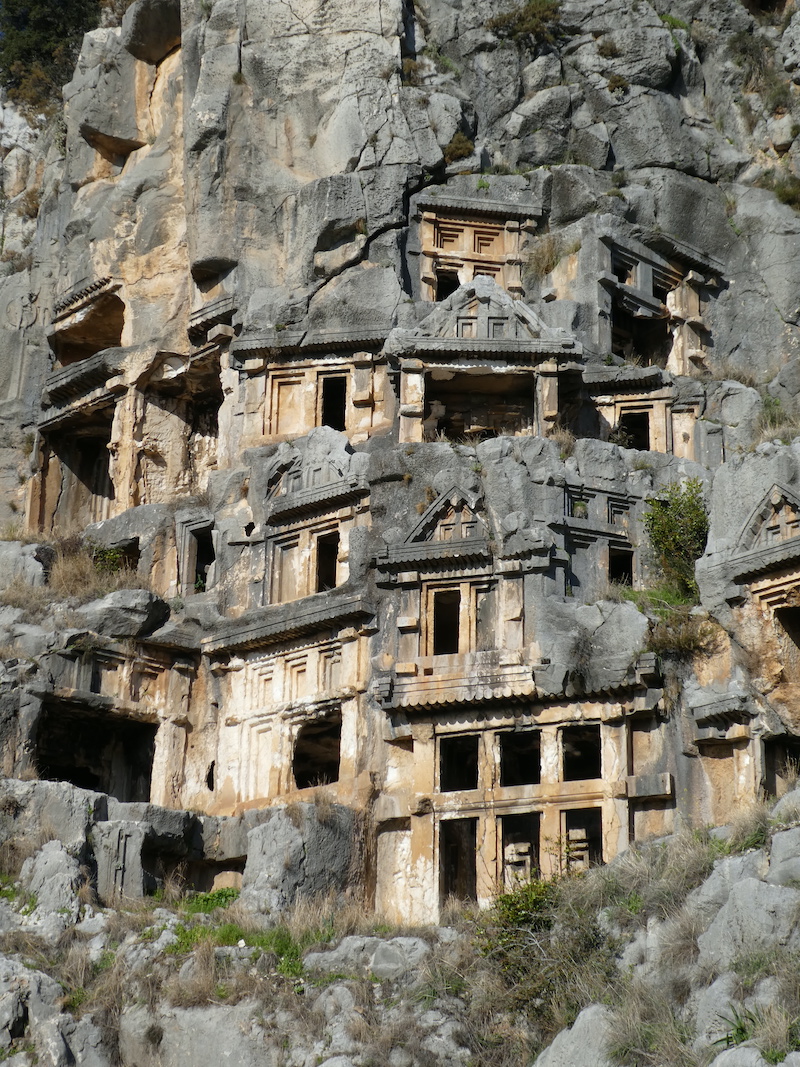
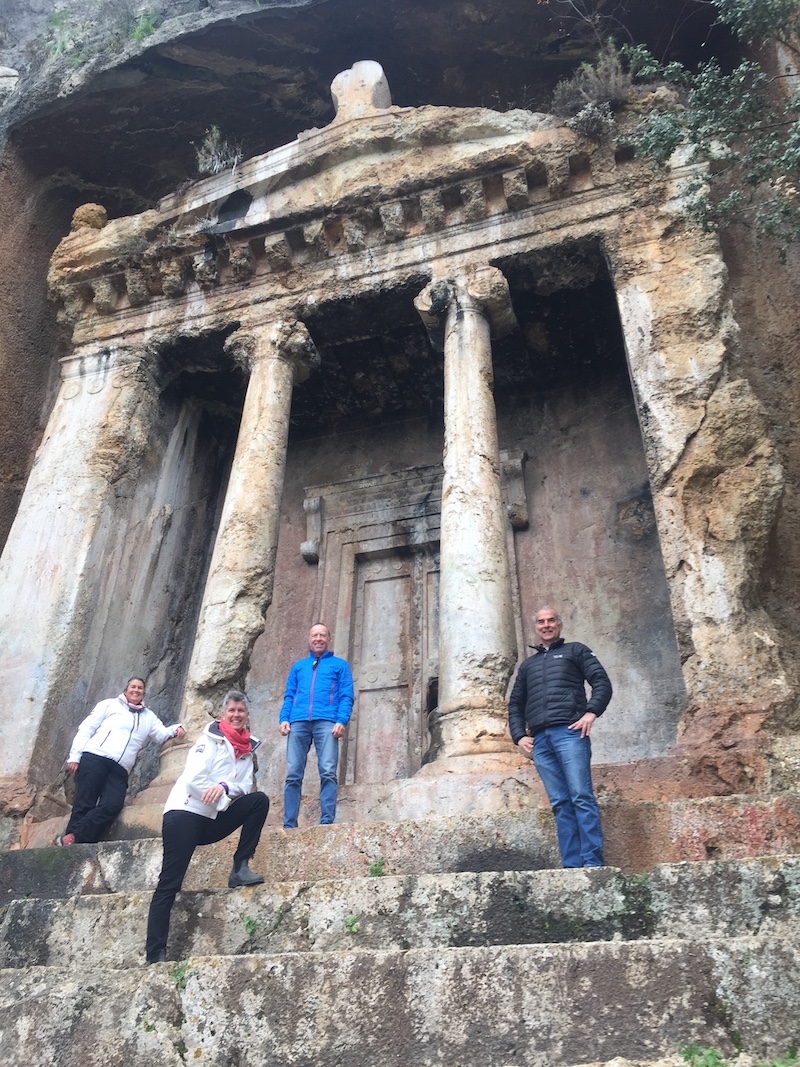
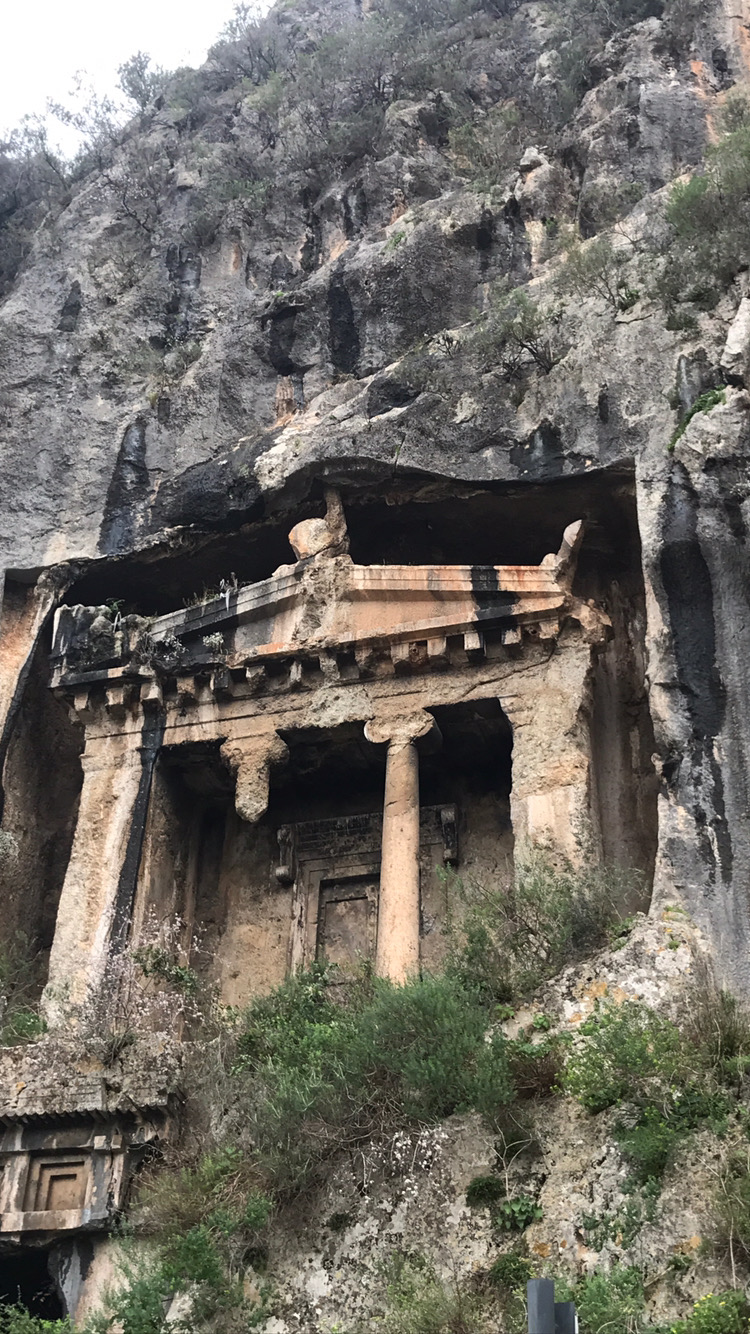
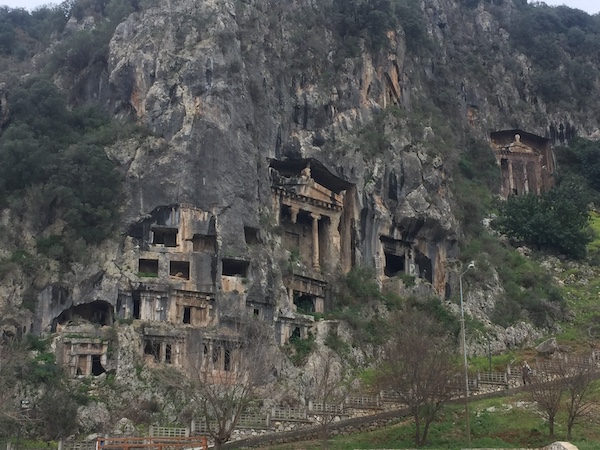
Lycian Ruins at Xanthos & Myra
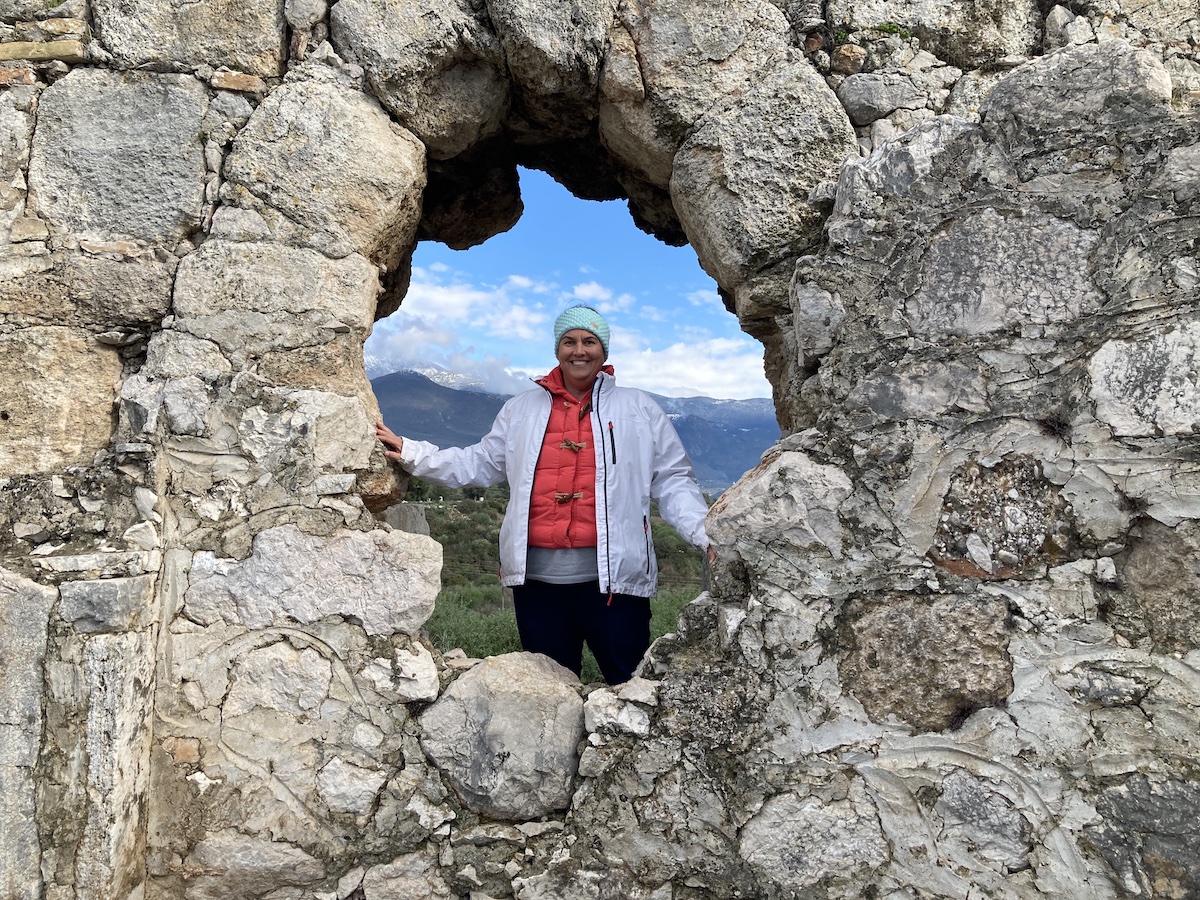

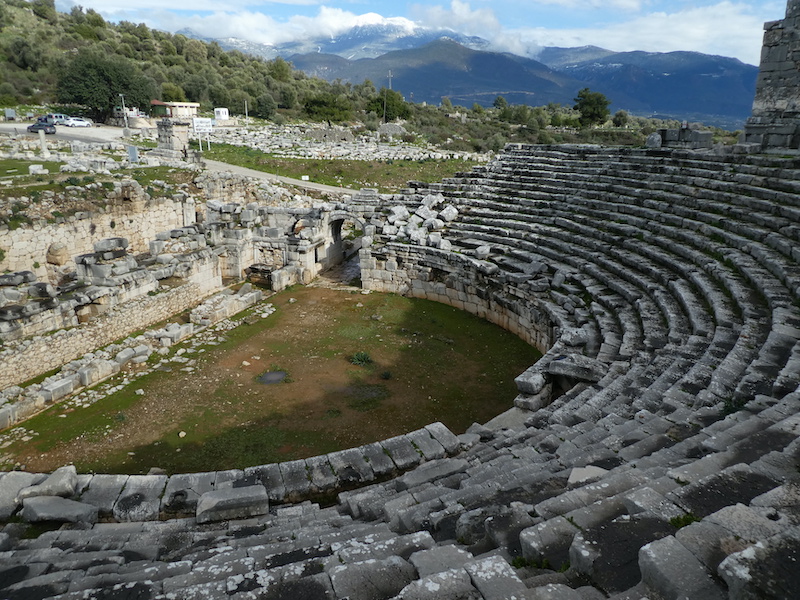
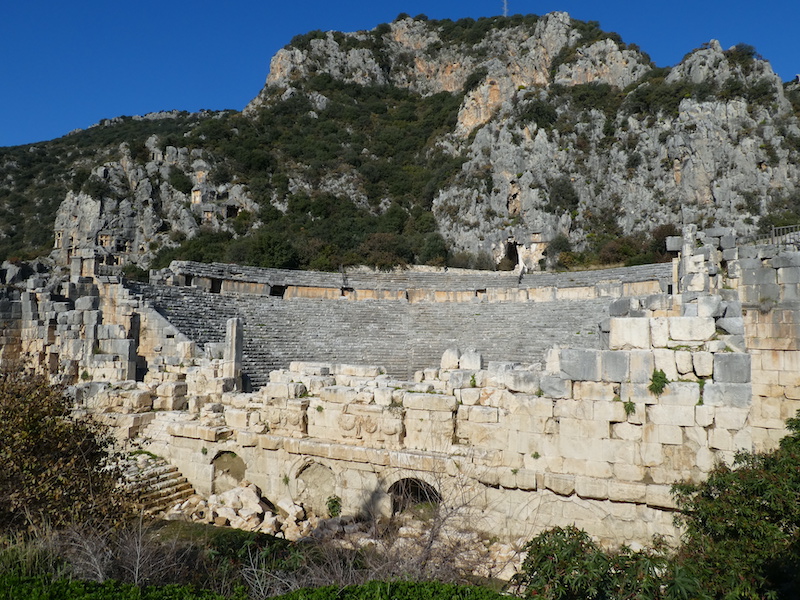
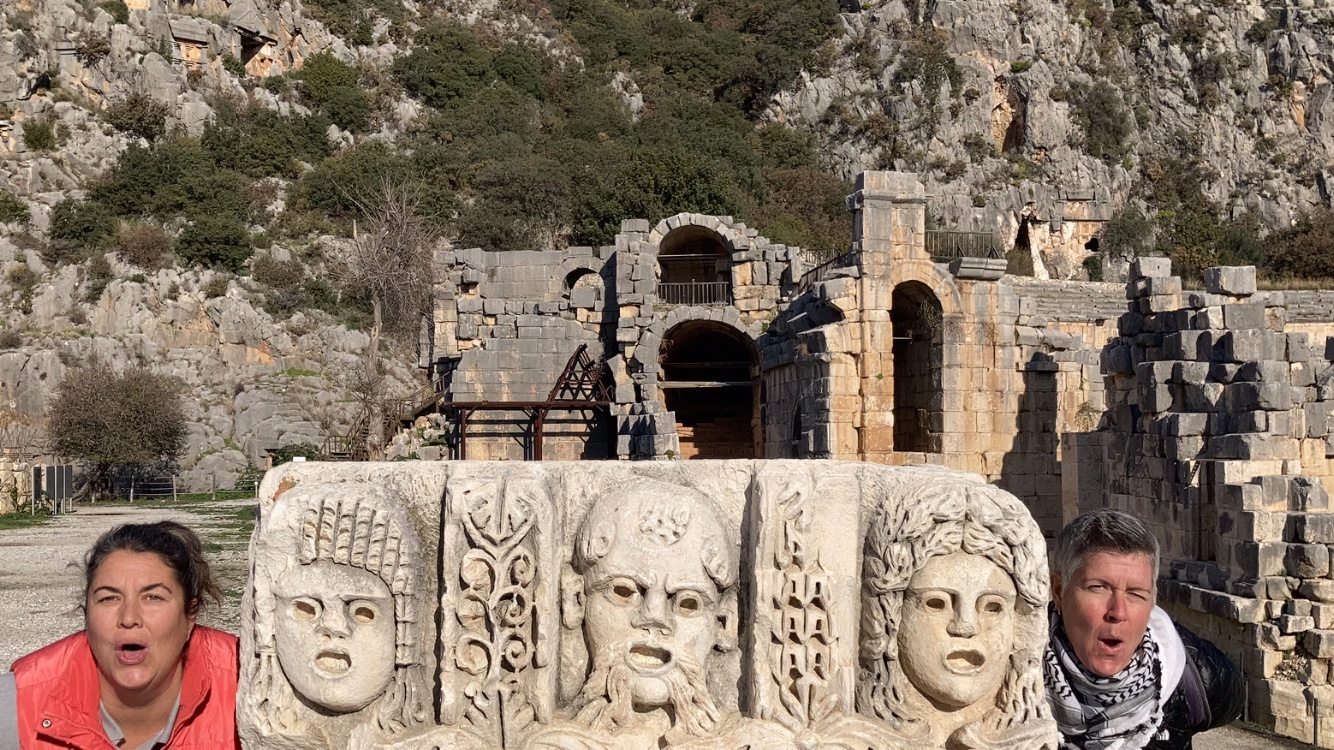
Antalya.
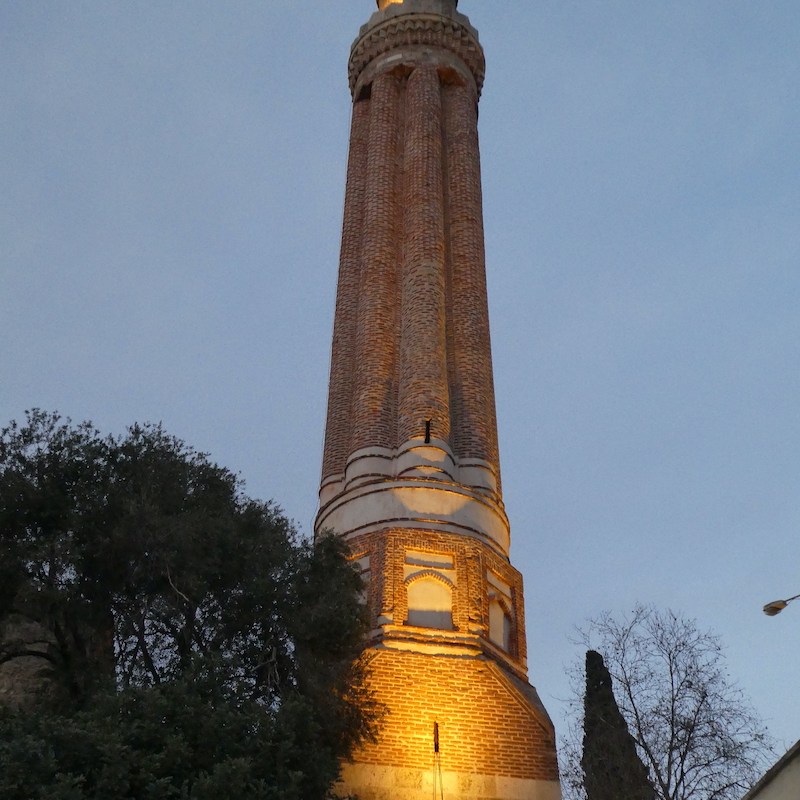

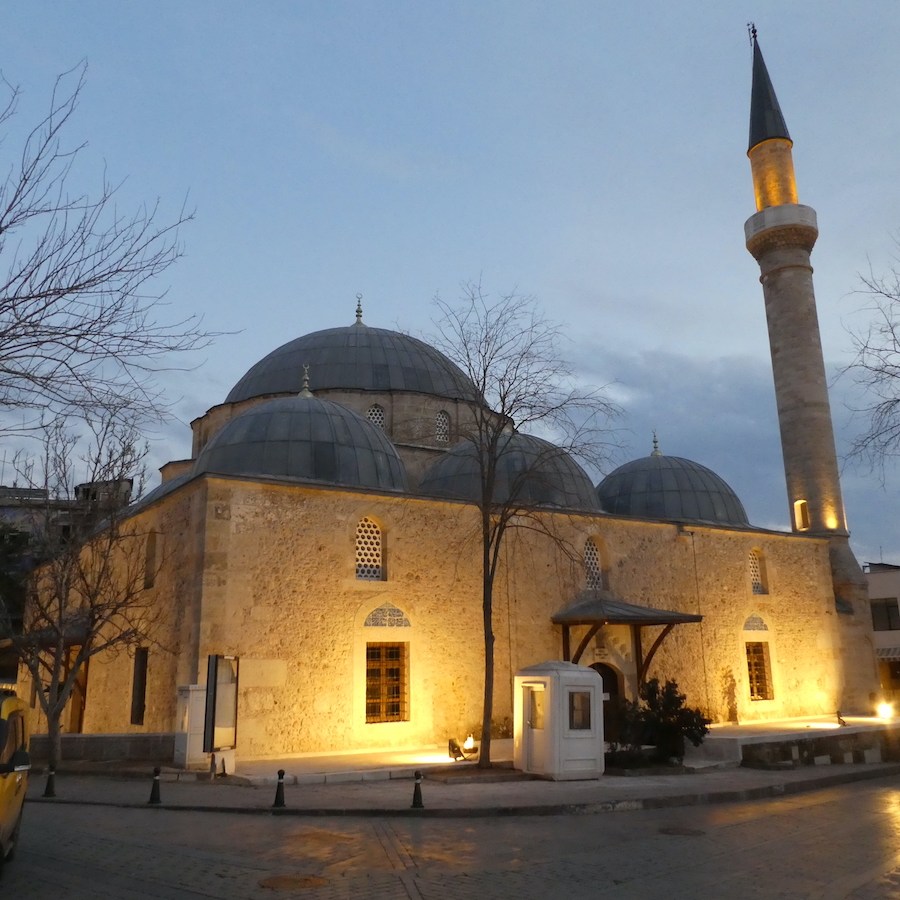
Chimera, it took us two attempts over two days to find the fire in the rocks, natural gas escaping from the rocks which keeps dozens of small fires burning constantly on the rocky hillside. We did test the theory by extinguishing one which sure enough reignited after a couple of minutes. We also toasted hotdogs and marshmallows.

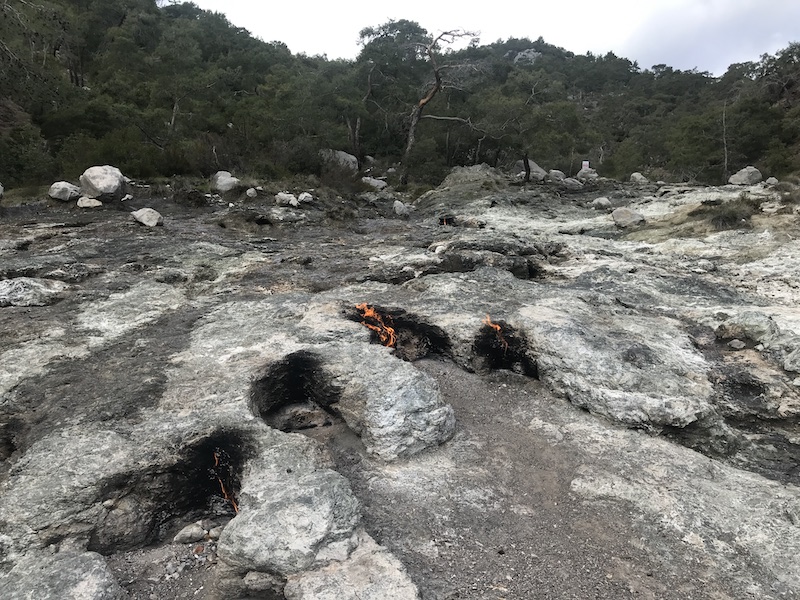
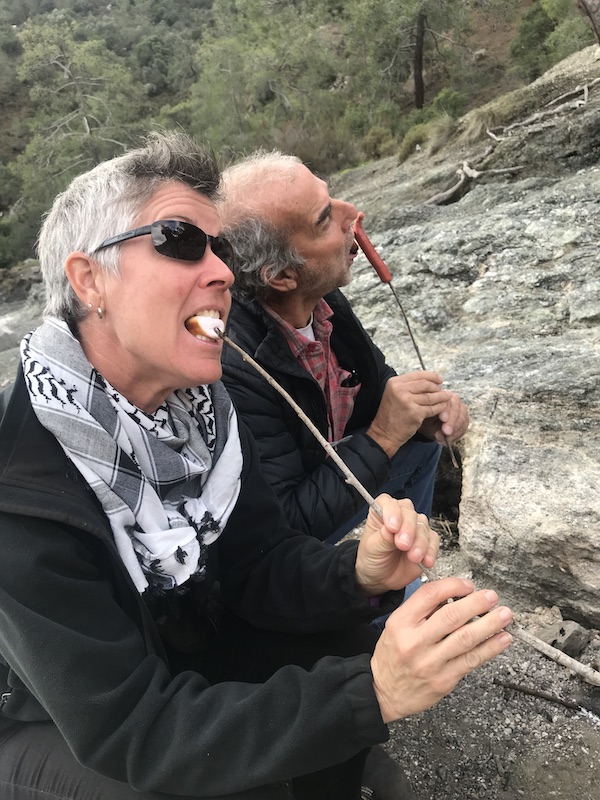
Kekova – The Sunken Village due to an earthquake now all underwater.


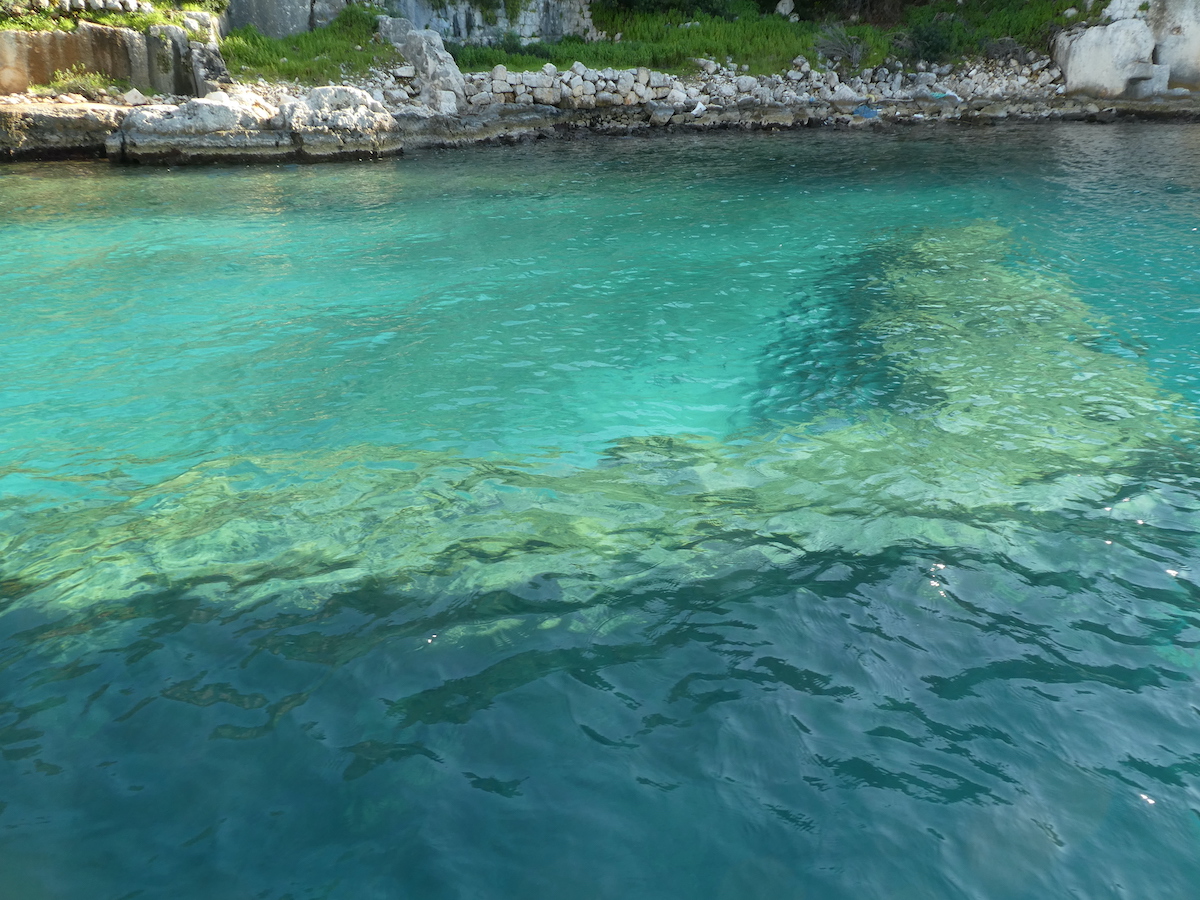
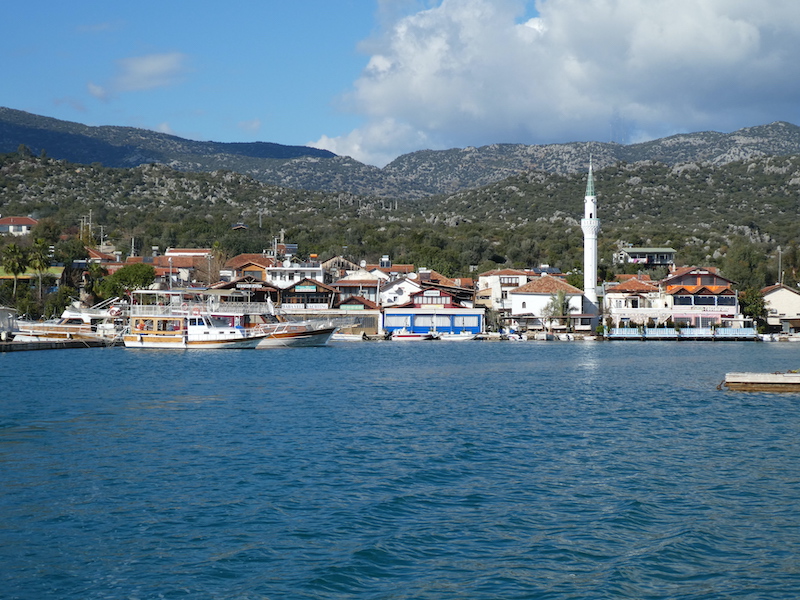
Once back at the marina in Marmaris it was time to roll up the sleeves and get to work. We had a BIG job in front of us. We were going to polish the boat and hopefully bring Red Roo back to Red! She was suffering severely with white oxidisation from sun exposure turning her red sides white. We had been approached by several contractors whilst in the water and whilst being hauled out to do this work for us. One came and looked and told us we couldn’t sand and polish it out, the whole boat would need to be stripped and repainted and they would do it for €15,000 Euro, the other group approached us telling us they use the best products and can do the work cheap and really good, they took us to look at a dark blue boat they were polishing. We told them we didn’t think their products would work and that it needed to be sanded, they disagreed and offered to do a test patch to show us how good they work. They did a small A4 size patch about 10am and by the end of the day you couldn’t even see where the patch was, it was back to faded red with white. These people then watched in amazement and visited us daily to see the transformation of ‘white roo’ back to ‘Red Roo’ then they asked how we did it.
It was a long 7 step process;
- Hand sand around pin stripes and detail.
- Machine Sand with 1000 grit sand paper to remove the majority of the oxidation.
- Machine Sand with 1500 grit sand paper to finish oxidation removal and remove 1000 grit scratches
- Machine Sand with 2000 grit sand paper to finish and remove 1500 grit scratches.
- Course polish
- Fine polish (two coats)
- Wax (two coats)

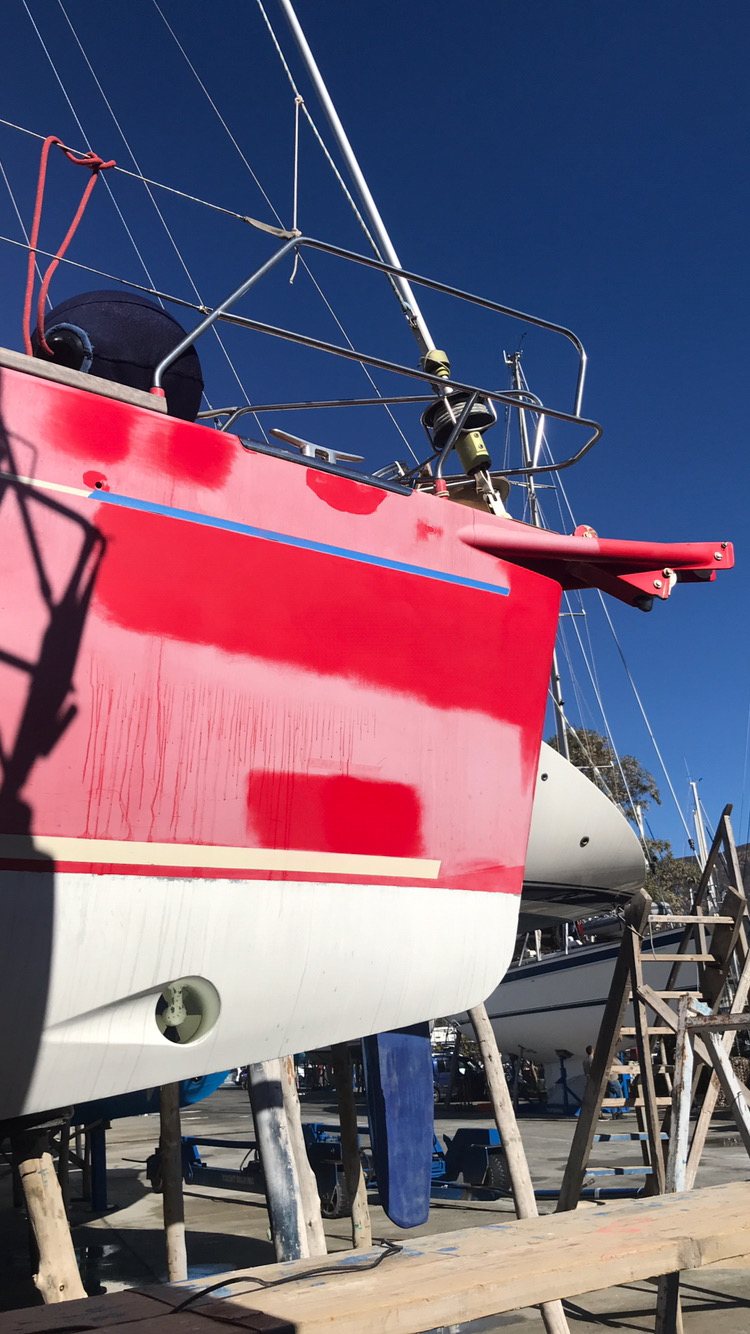


It took us two weeks, 14 days to do the boat, with a rest day every 4th day which was timed well as it usually rained every 4th day! It felt slow and hard as we were only completing 2 meters along the boat a day working from 9am – 5pm, but really looking at the process we were doing on that 2 meters which was 7 layers, we were actually completing 14 meters a day. I am sure you agree the hard work was worth it. We both worked the entire time, we had hired two scaffolds one set up on each side of the boat. Phil would sand one side while I polished the other, then we would swap as we worked our way down both sides. The stern took three days in itself to finish as so much of it was hand work around the corners and fittings and boat name decals. I congratulate Phil as he had nutted out our strategy and approach over the last few months of cruising last year by doing test patches of all sorts on the hull and seeing how they lasted. Regardless of the test patches it was a brave move to take the sander to the boat with the risk of taking all the paint off, but knowing we had to sand off the white to get the red back.
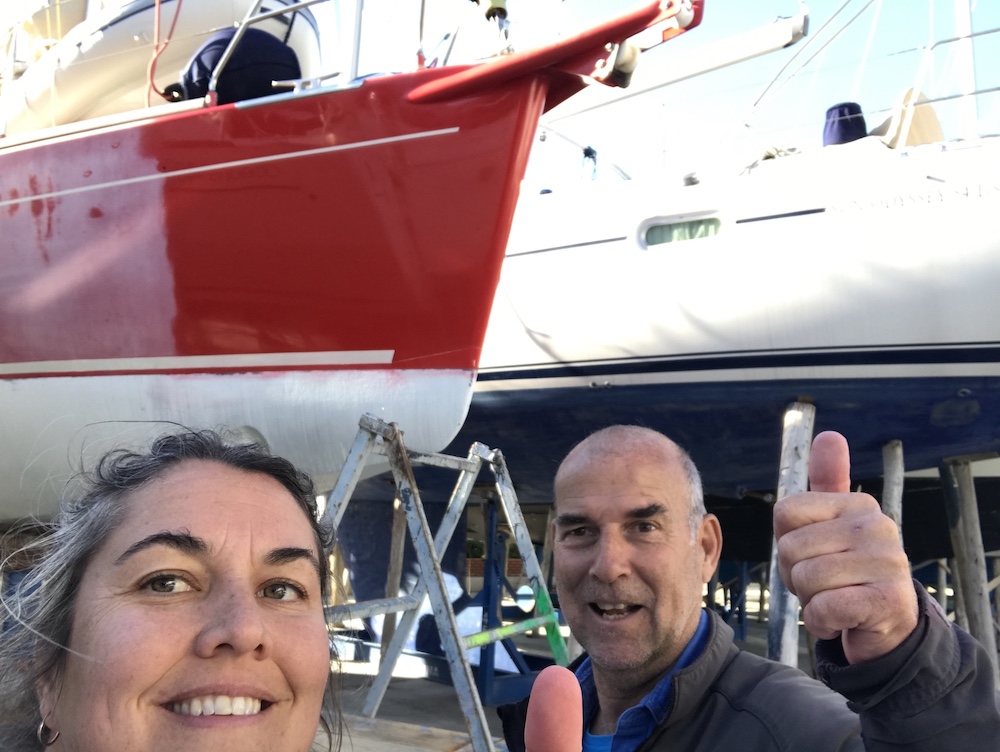

(it was Saturday)


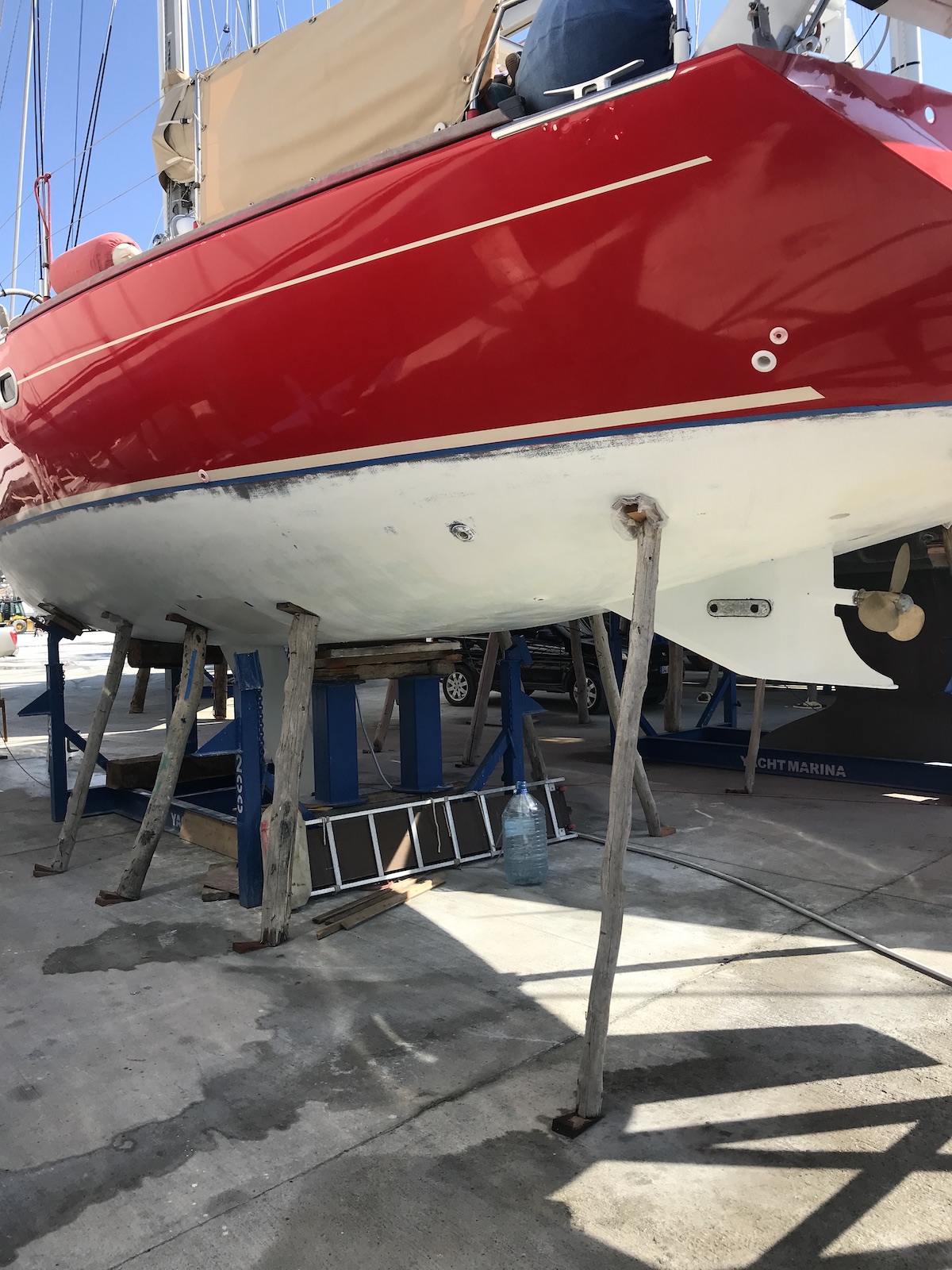
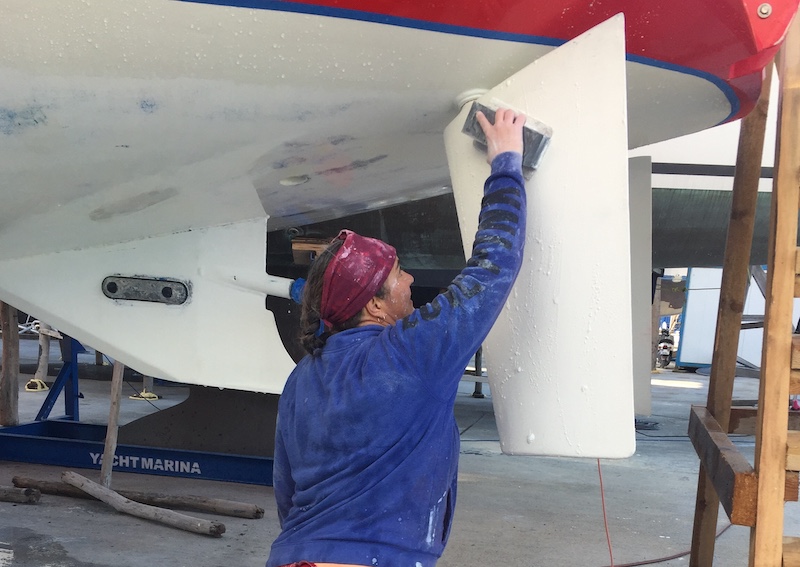
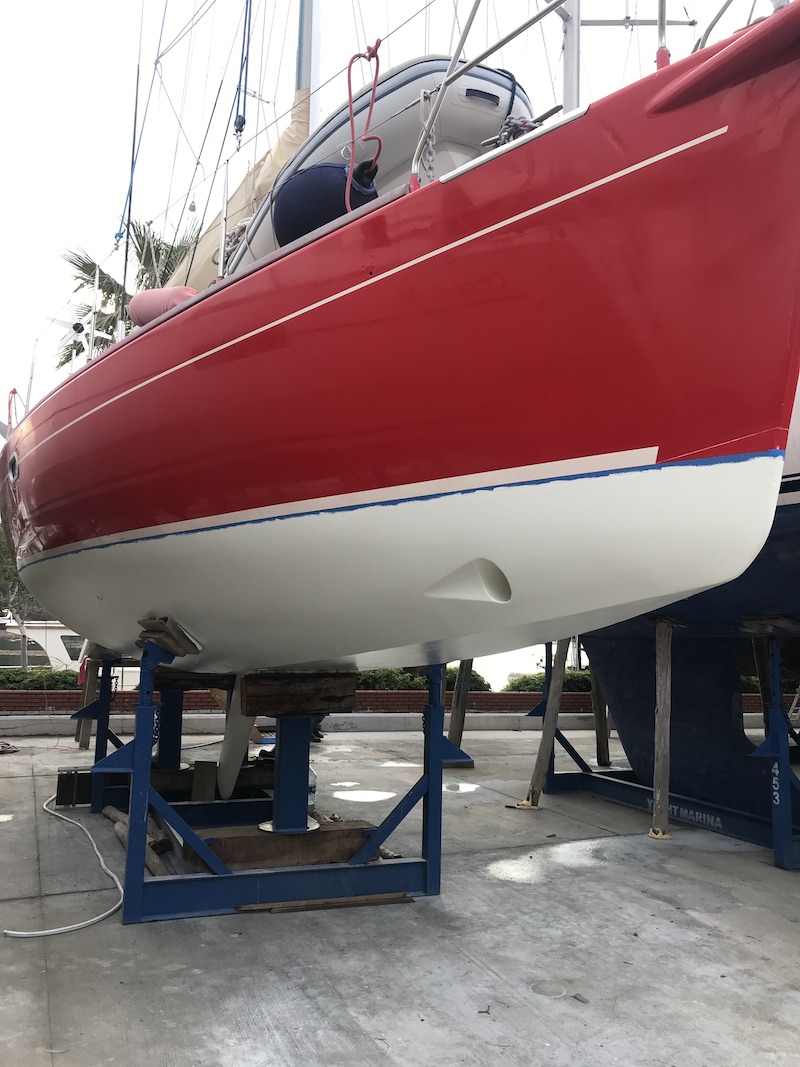


Our reward for finishing the top sides polish was a very timely one day trip with 5 others from the marina to go skiing for the day. A 2.5 hour drive from the Marina to the ski centre at Nikfer Bozdag Ski Field near Denizli saw us enjoy an incredible day on the slopes. Maree having only ever cross county skied once before in Alaska, spent the day on the learner slope and taught herself to ski, only falling twice! Phil and the others (all very proficient skiers) spent the day up in the hills, first taking the chair lift up to the top, but with limited visibility due to low clouds were skiing flag to flag (not enjoyable) so spent the morning on the t-bar slope before mid afternoon when the sun broke though to reveal the most amazing day! Phil, Jean and Yo were off and cutting up some fresh untracked powder down some cool slopes. They were the first to ski down two great hills, I must say it was amazing to watch them coming down so gracefully throwing up snow each time they turned. Again Turkey turned it on for us and we had an amazing day out, and talk about value for money, it was a great deal. We arranged it through Outback Travel which is run by a Turkish Man who worked in tourism in Australia for 30 years before coming back to Turkey to run his travel business, he was thrilled to arrange this outing for 5 Aussies and 2 Canadians. We had a driver, a tour guide, a Mercedes Van, were driven 3 hours to the snow (stopping for breakfast on the way, included in the deal), a day skiing and also included our evening meal on the return drive home all for equivalent of $65 Aussie dollars each. Phil carries his skis on the boat so didn’t need to worry but it cost Maree an extra $8 to hire ski’s, ski boots, a helmet & poles. The unlimited lift ticket for the day cost us $15.
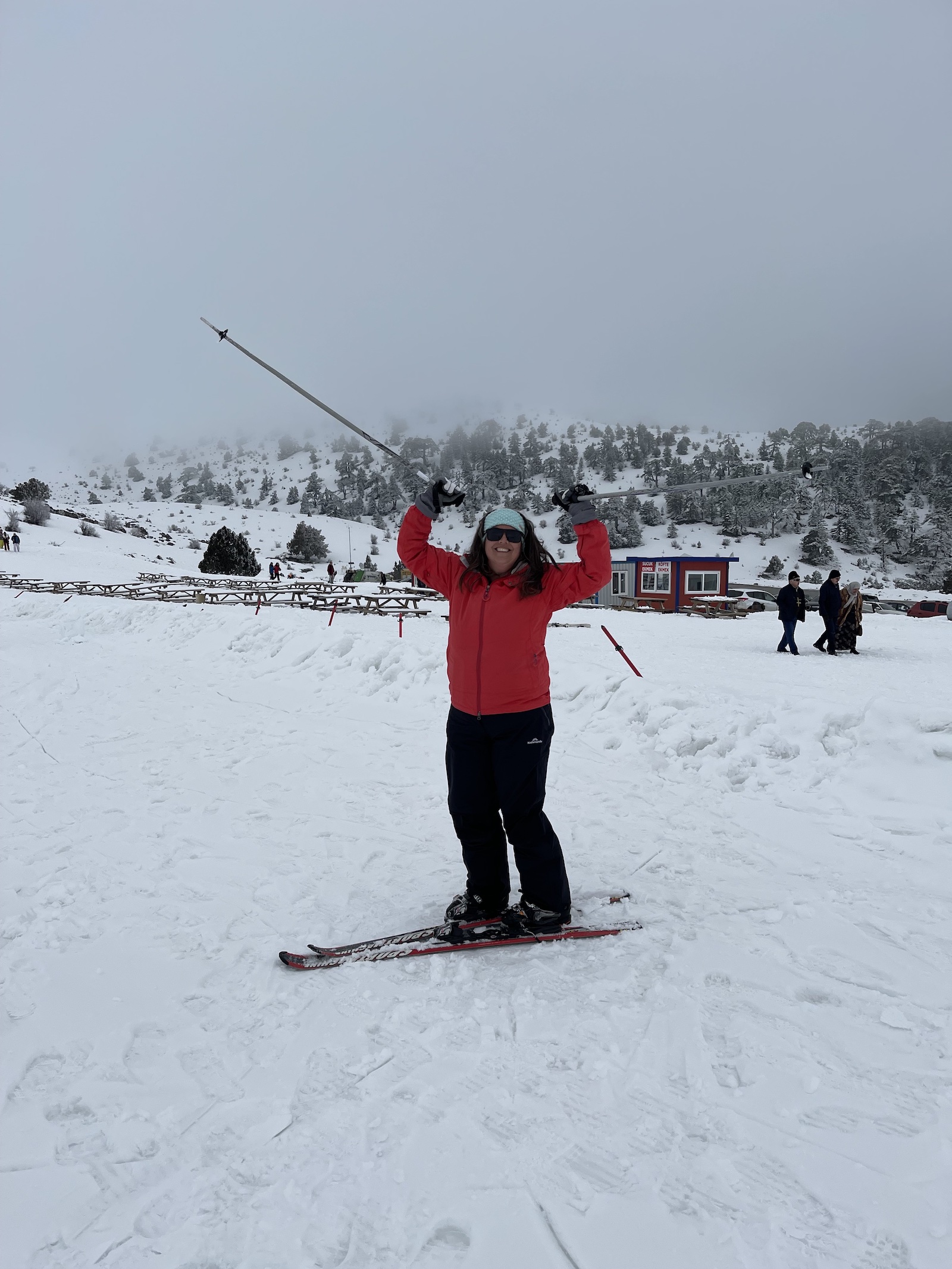

Talking dollars and how cheap our day out skiing was, it should be said it is all relative. It was a municipality run ski centre and therefore affordable to the average Turkish family. Still very cheap for us but not so much for most Turks who overall have a very low income. Whilst it is a relief for us to be able to live cheaply and enjoy fabulous cheap fresh food at the market, it is only because of the low incomes here for locals that it is all so cheap. I can buy two weeks worth of fresh fruit, vegetables and meat for under $40 Australian dollars (a bunch of coriander is 25 cents, a kilogram of chicken breasts $3.50, potatoes 60 cents a kilogram). Also their currency and dollar (the Turkish Lira) is very vulnerable, and since we arrived in November it has been up and down, in fact within 6 days it went from +21% to fall to -17%. When we arrived we would get 10 TL for every 1 Aussie dollar and in the few months since it has gone from 1 Aussie dollar buying you 7 TL to 12 TL. When we arrived a bus ride from the marina into the city was 4.5 TL (around $0.45 cents) and it is now 13.00 TL (around $1.30).
Whilst we have lived cheaply and therefore been able to afford to tour inland and see a lot of Turkey we have also done our bit to boost the local economy. We have dropped a lot of money in Turkey, buying a brand new dinghy, new canvas work on the sprayhood/dodger, a new custom made (custom shape) bed mattress for the master cabin, a considerable sum spent of the materials to sand, polish and paint Red Roo, full service and overhaul on the dinghy outboard motor, and the cost of a six month marina contract to allow us residency in Turkey.
In finishing this post and to explain the title, we have now been in Turkey 3 going on 4 months and the only words we are proficient in are “merhaba” (hello) and “teşekkür ederim” (thank you very much) – this is by far our worst performance yet in learning the local language. Luckily for us most Turkish folk are very good at English.
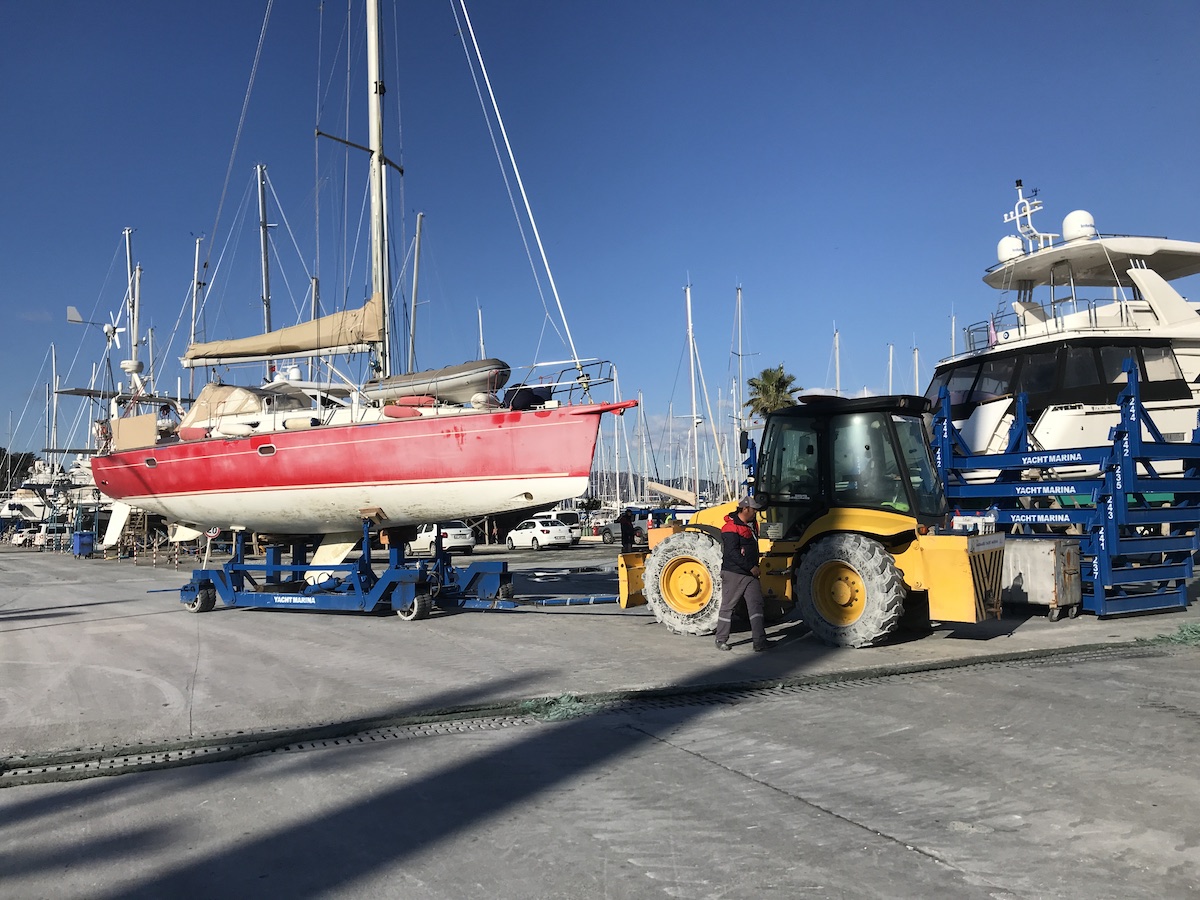
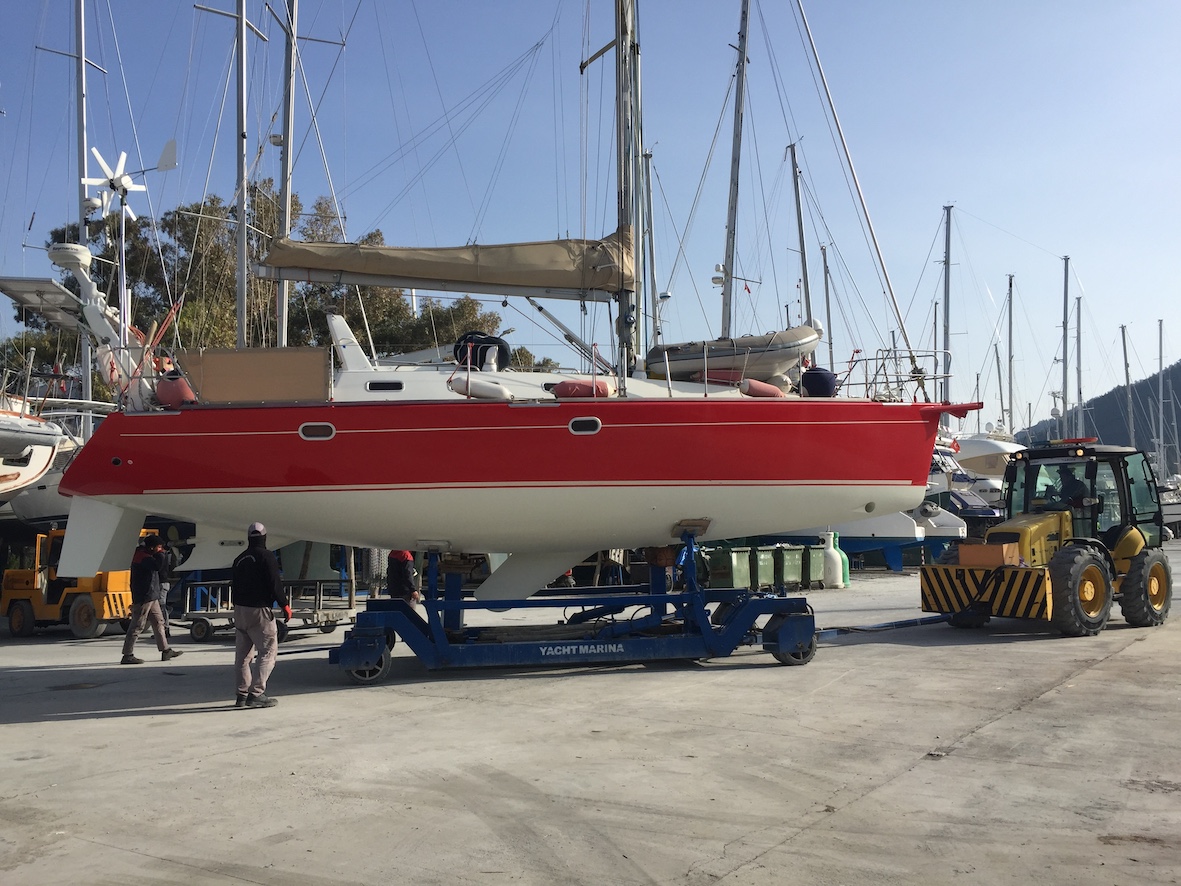
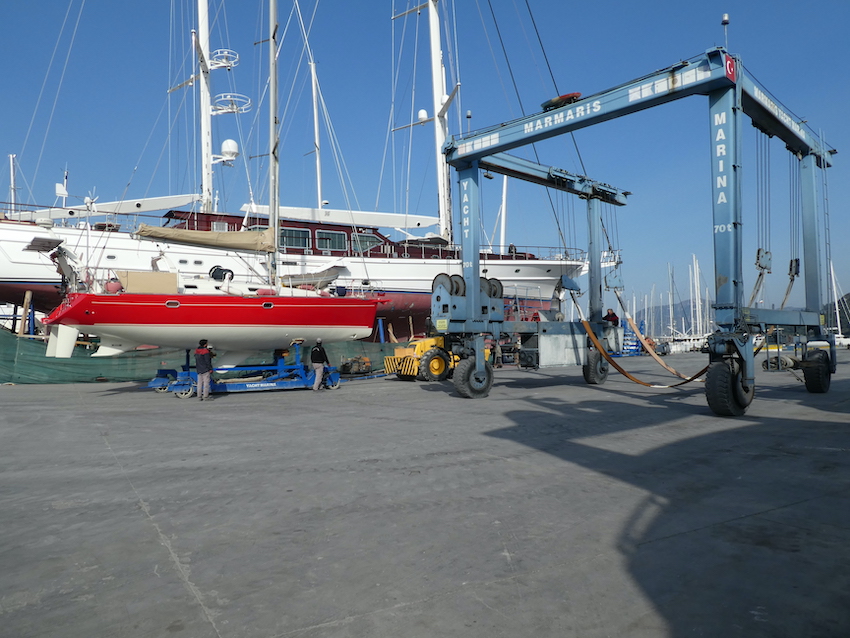

2021 The Year That Was …
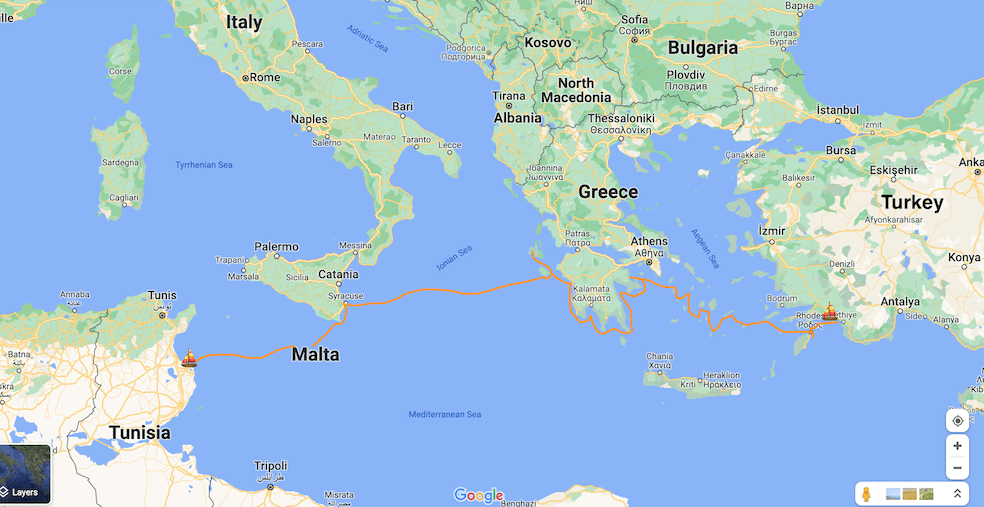
As another year draws to a close and we celebrate the next one making plans of all it may bring, it is also time to reflect and tally what we achieved over the last 12 months.
I find it hard to believe that time has passed so quickly and we have been living on the boat for 6.5 years since taking ownership in July 2015, that’s 2376 days.
We certainly underestimated time when we set off … originally we thought it would take us 5 years to sail home to Australia, (which if we had of headed straight home it may have done, but well, you know, we got distracted by all there is to see over here). We now know it’s going to take a while longer yet – there is a lot of the world to see on the way!

Red Roo 2021
168 days sailing (26/05/2021 – 09/11/2021)
1,788 Nautical Miles Travelled
79 Anchorages/Locations
5 Countries; Tunisia, Malta, Italy, Greece, Turkey
3 Continents; Africa, Europe & Asia

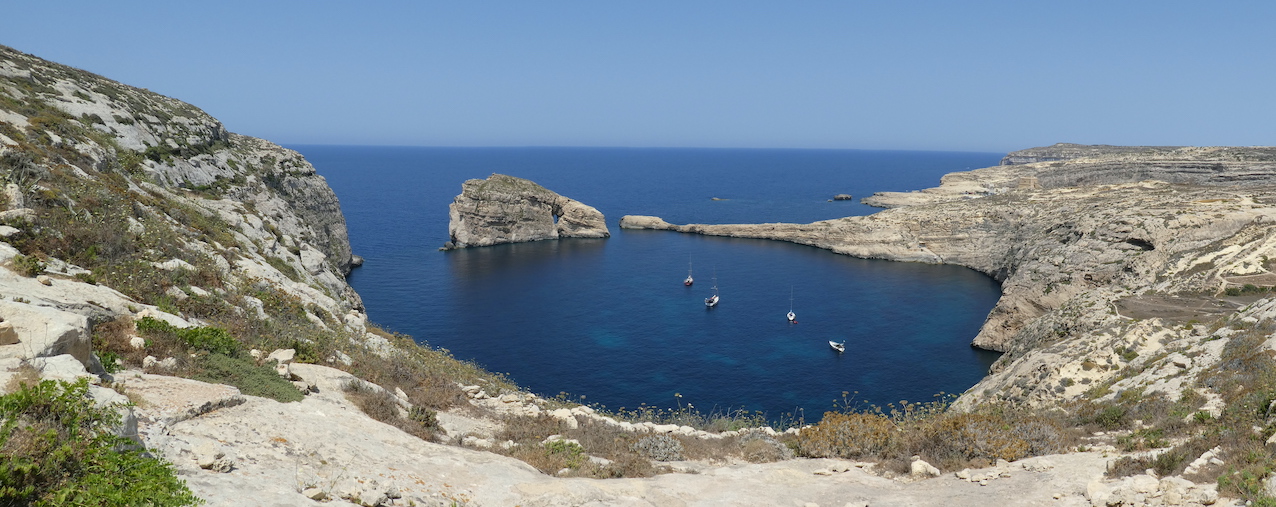
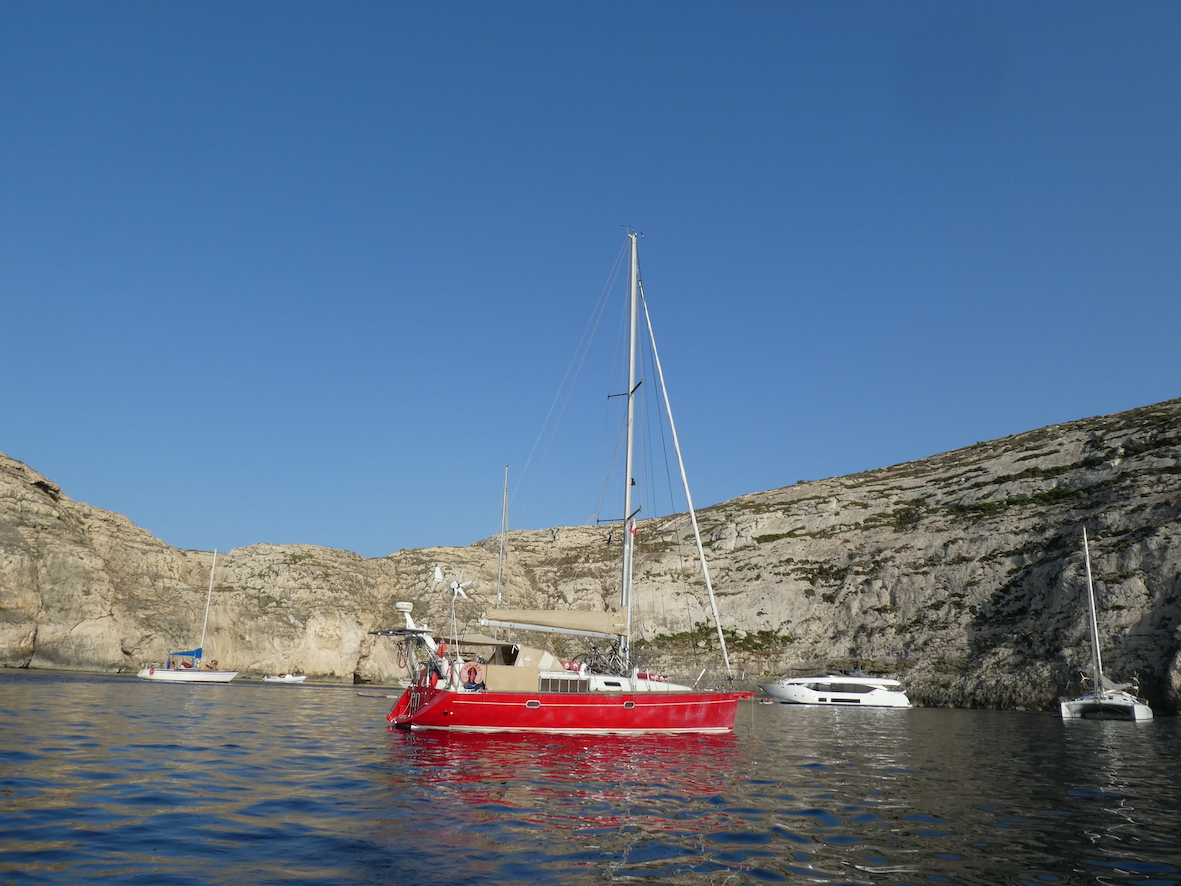
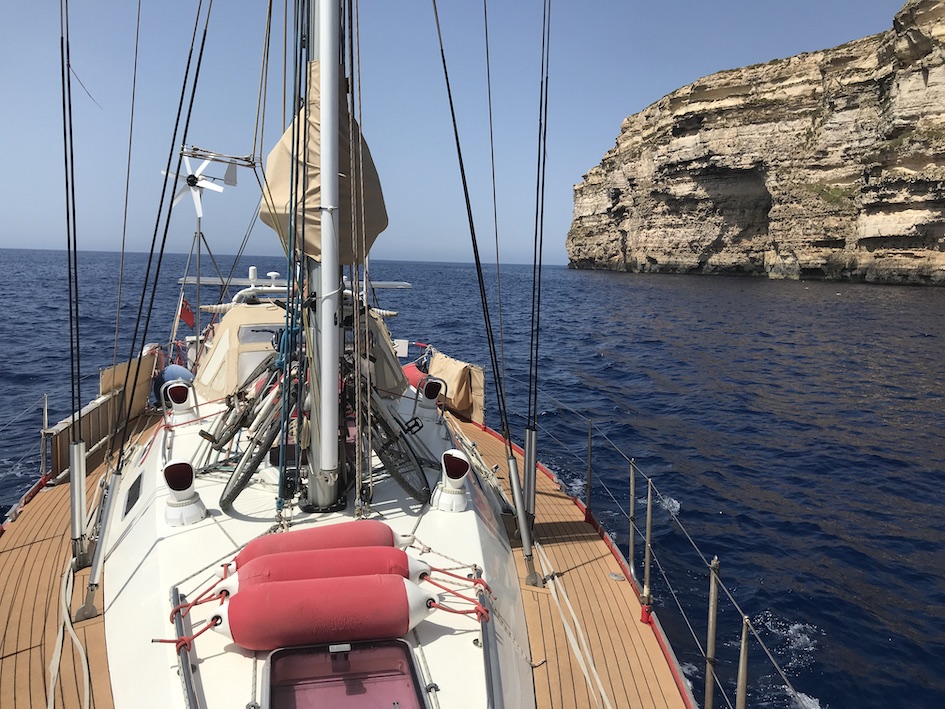

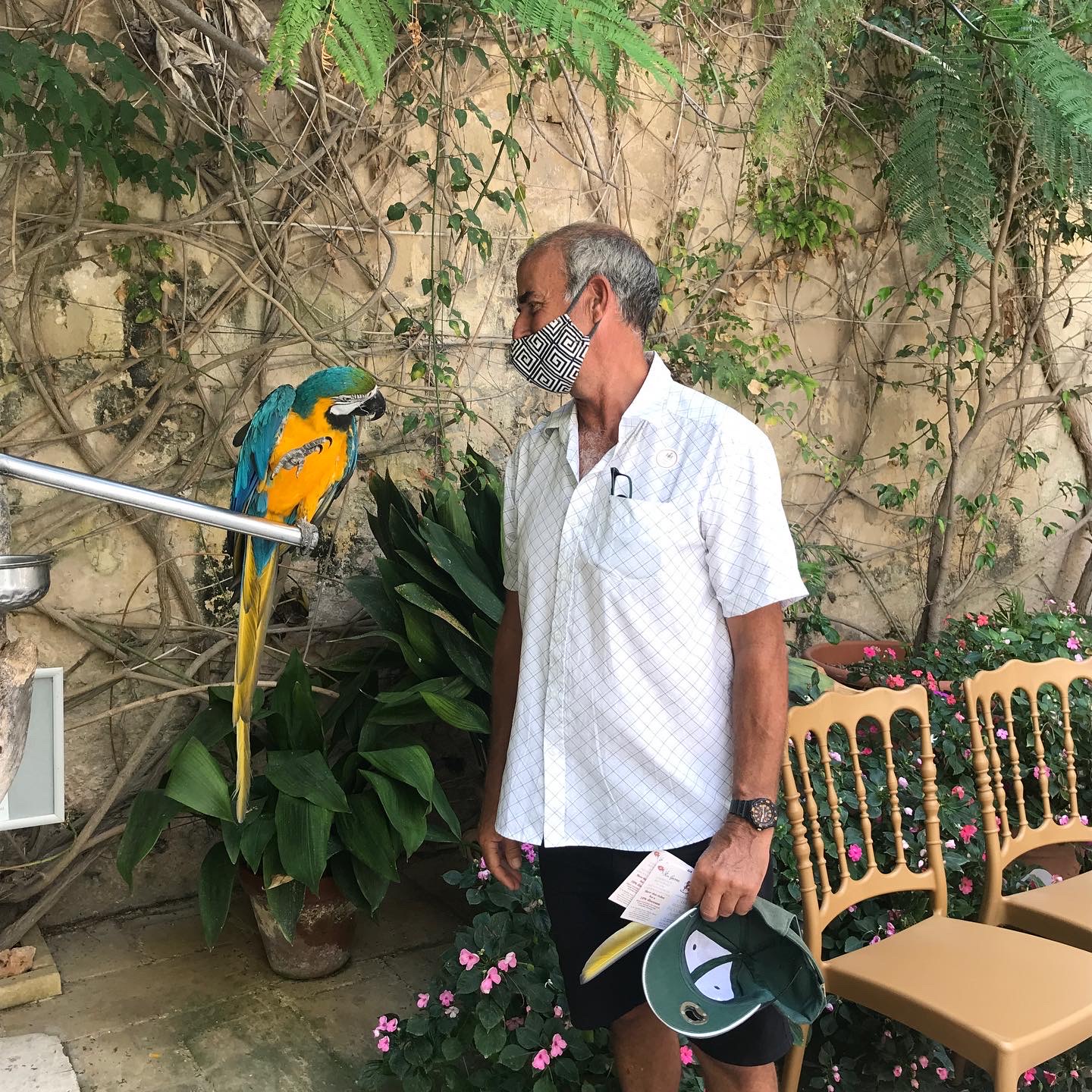
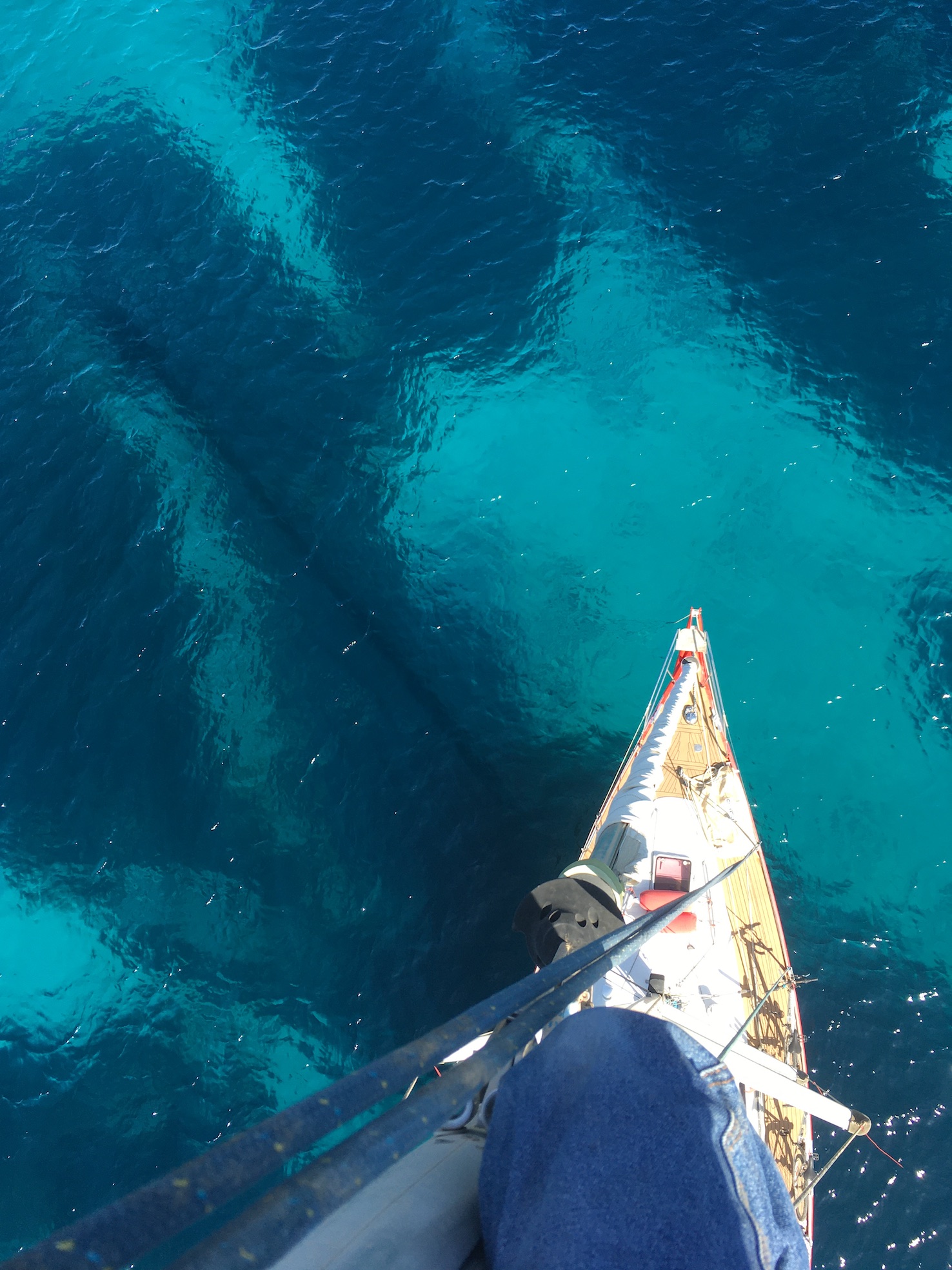

Lowlights
- Failure of wind instrument (replaced €)
- Sad farewell to our Caribe Dinghy, I miss it!
- Failure of reverse gear when anchoring (pin replaced)
- A lot more motoring than previously – it is true what they say about the Mediterranean Sea it’s either too much wind (dangerous) or not enough to sail
- Covid pandemic continues
Highlights
- Being safe and healthy at all times
- Our new dinghy (haven’t used it yet but it looks good)
- Red Roo continues to look after us

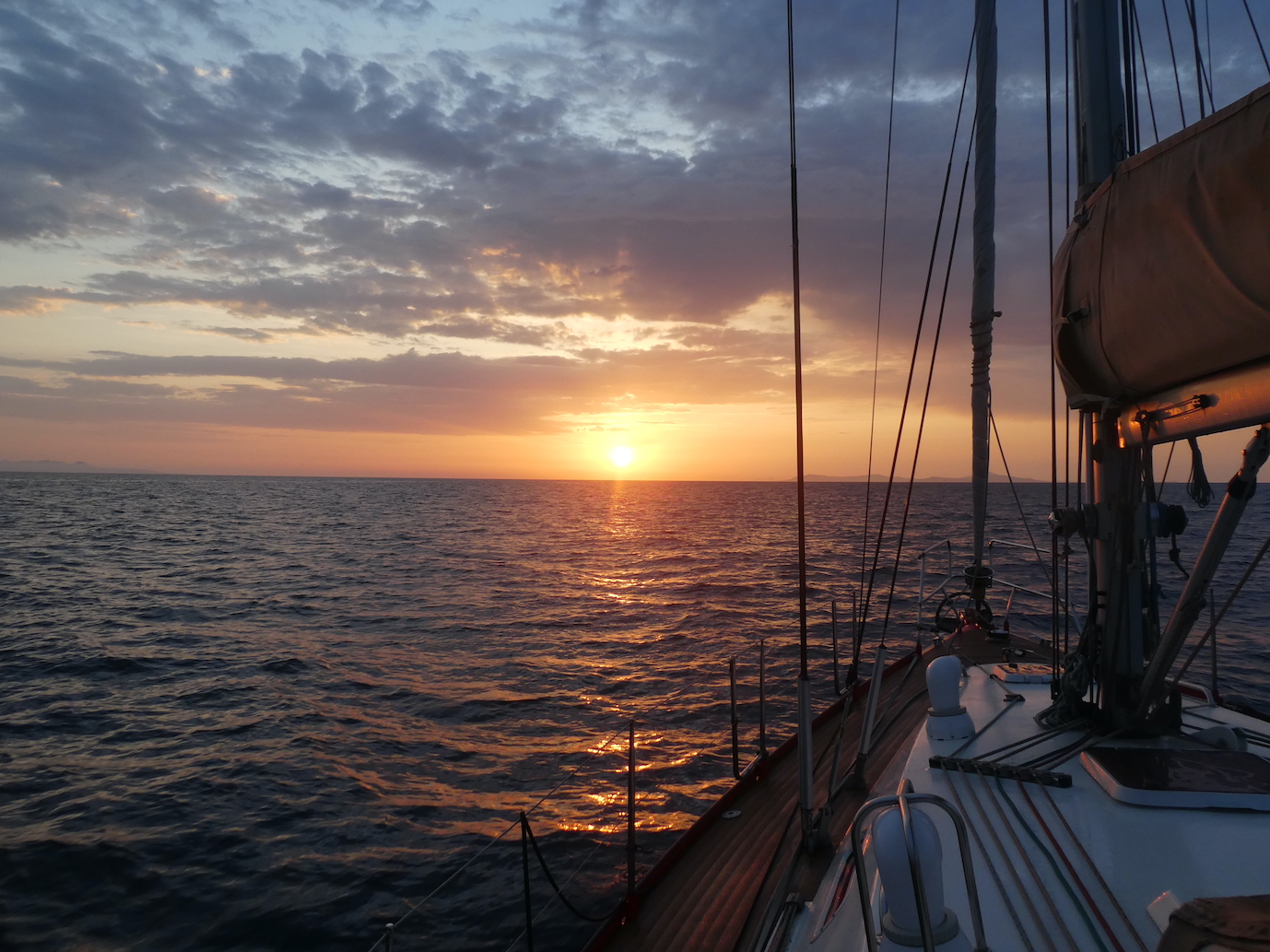

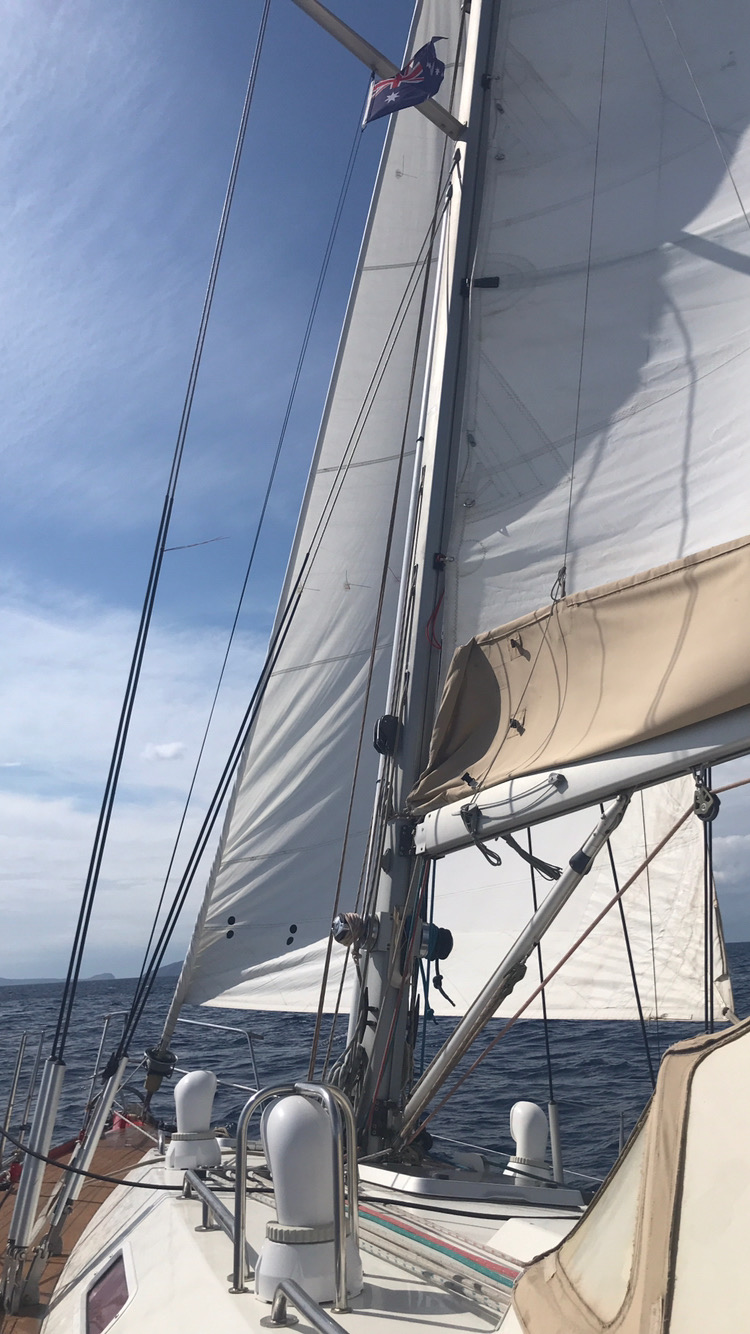
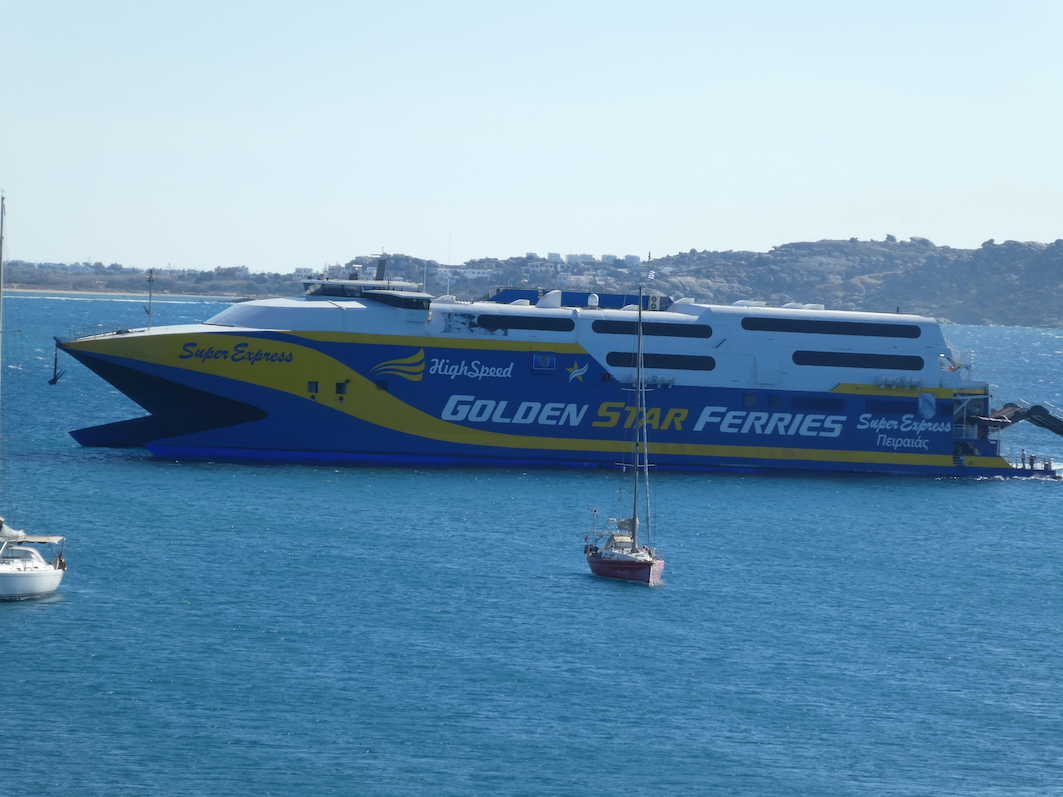
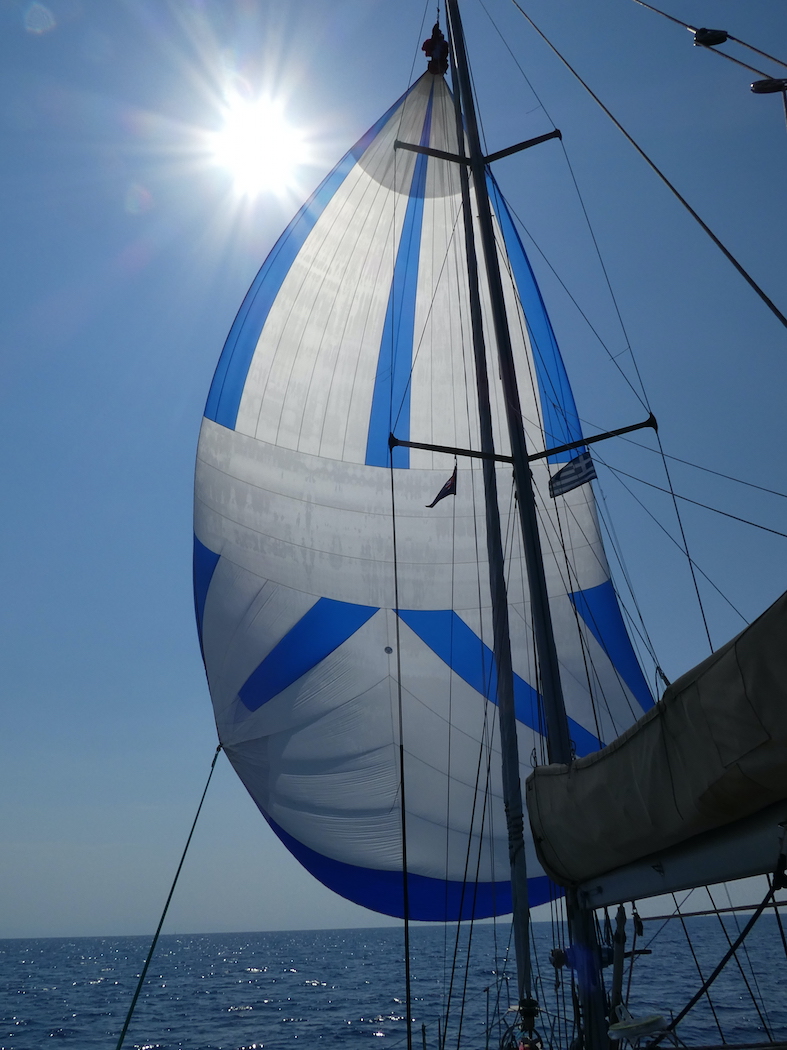
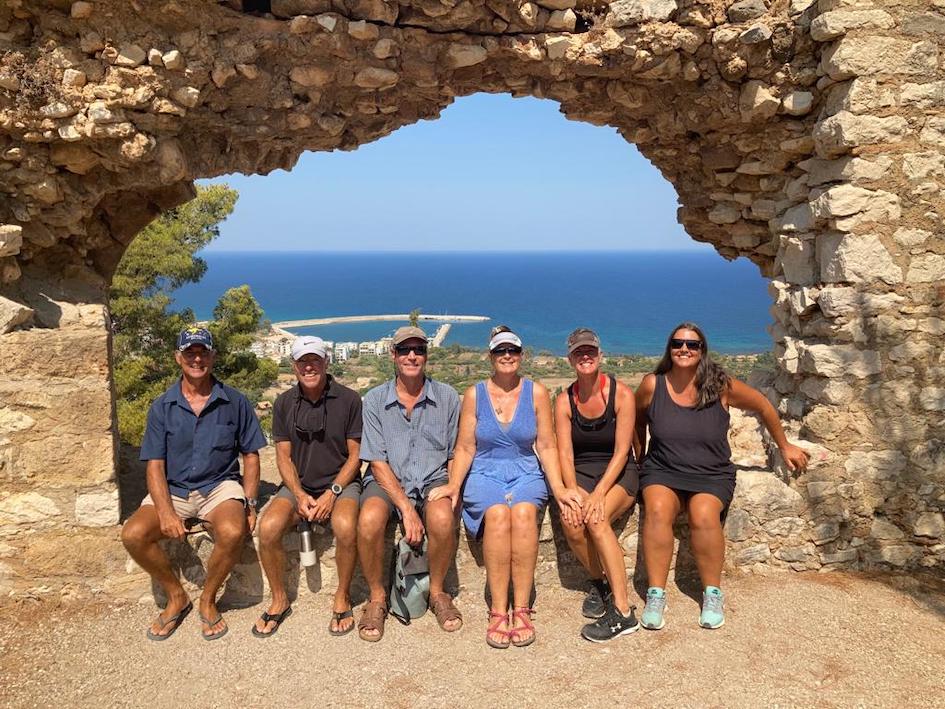
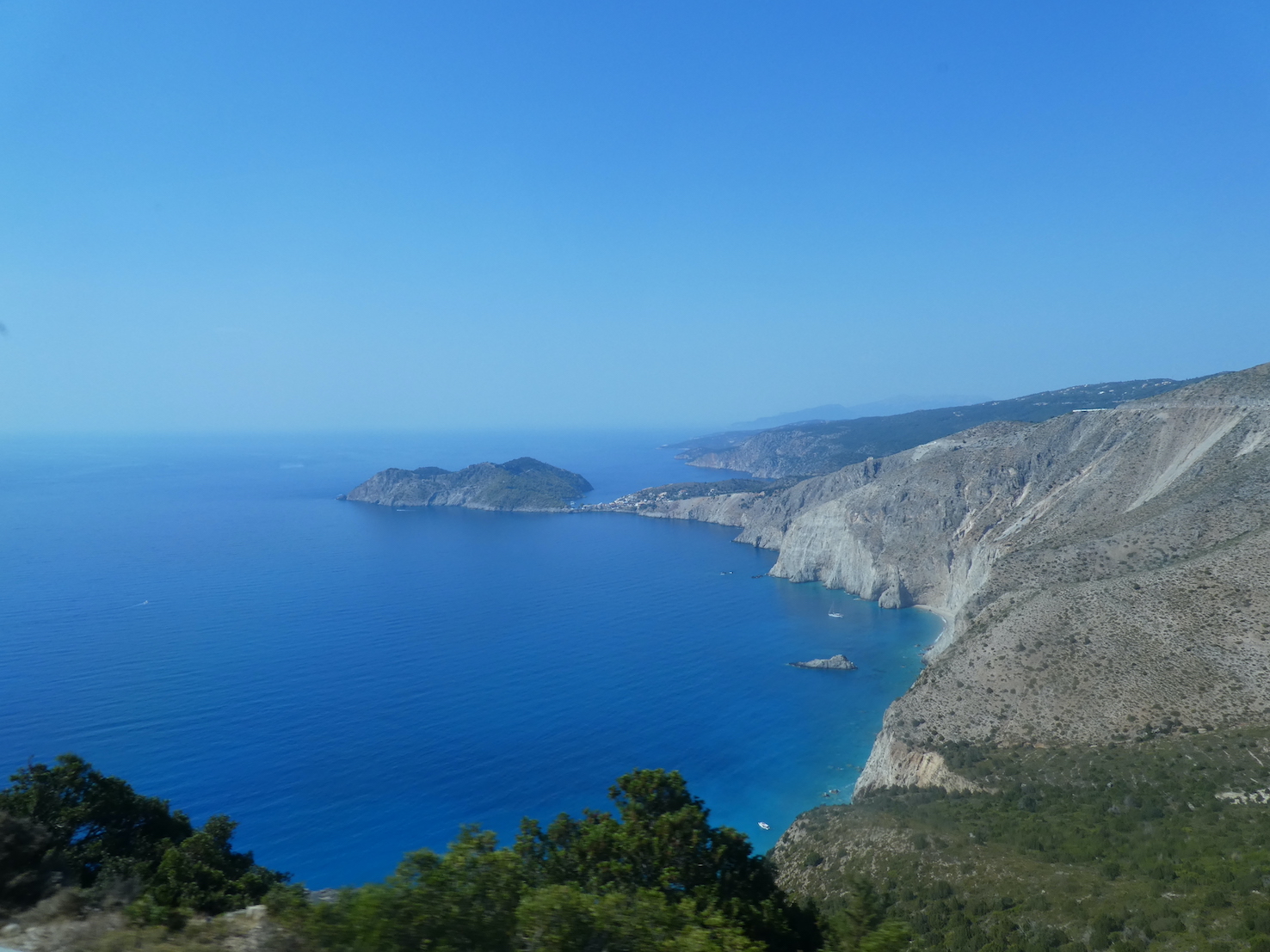
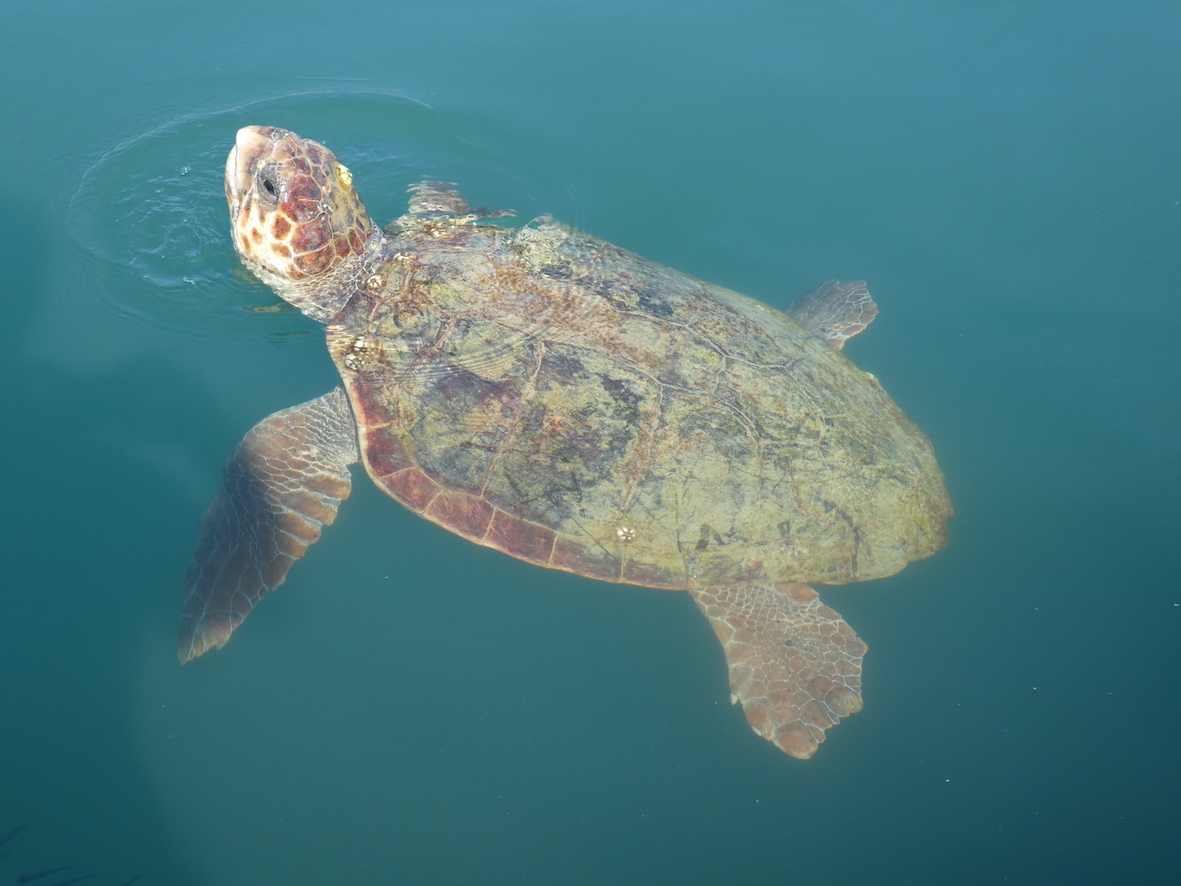
Whats Next for 2022
Our plans for 2022 at this stage include, hauling out the boat for polish and maintenance, more travel in Turkey (land travel). Then, set sail west back out of the Mediterranean.
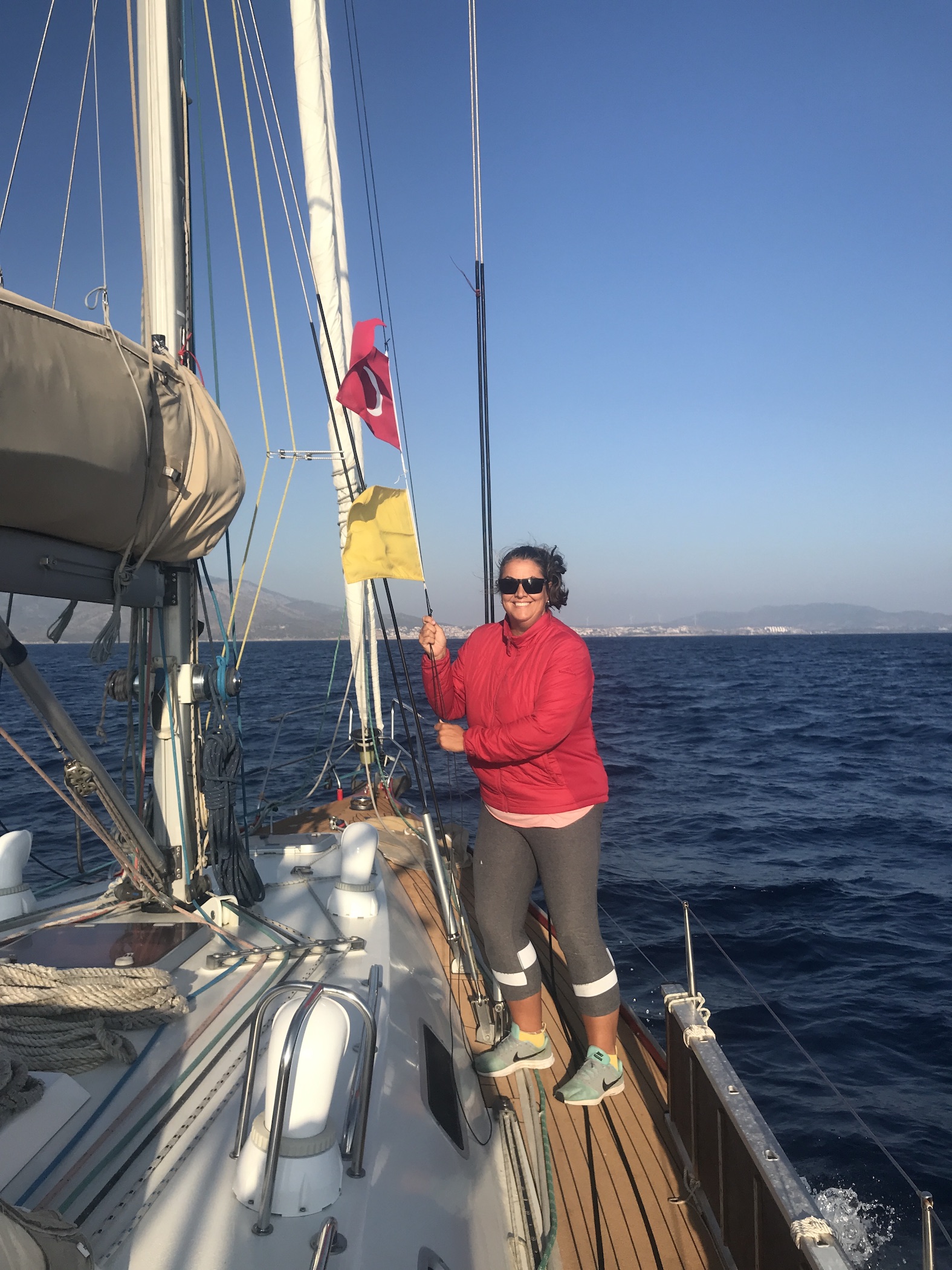
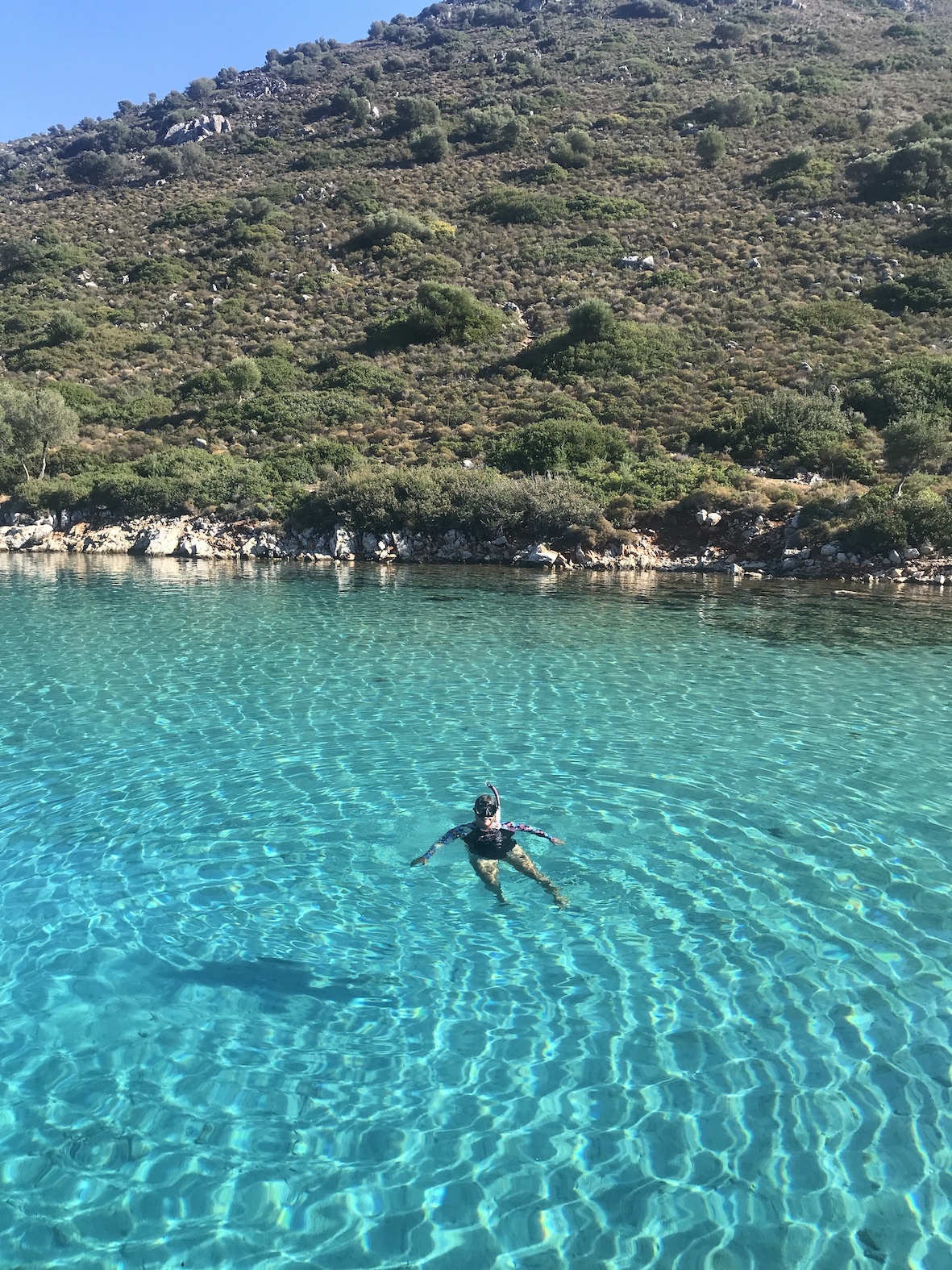

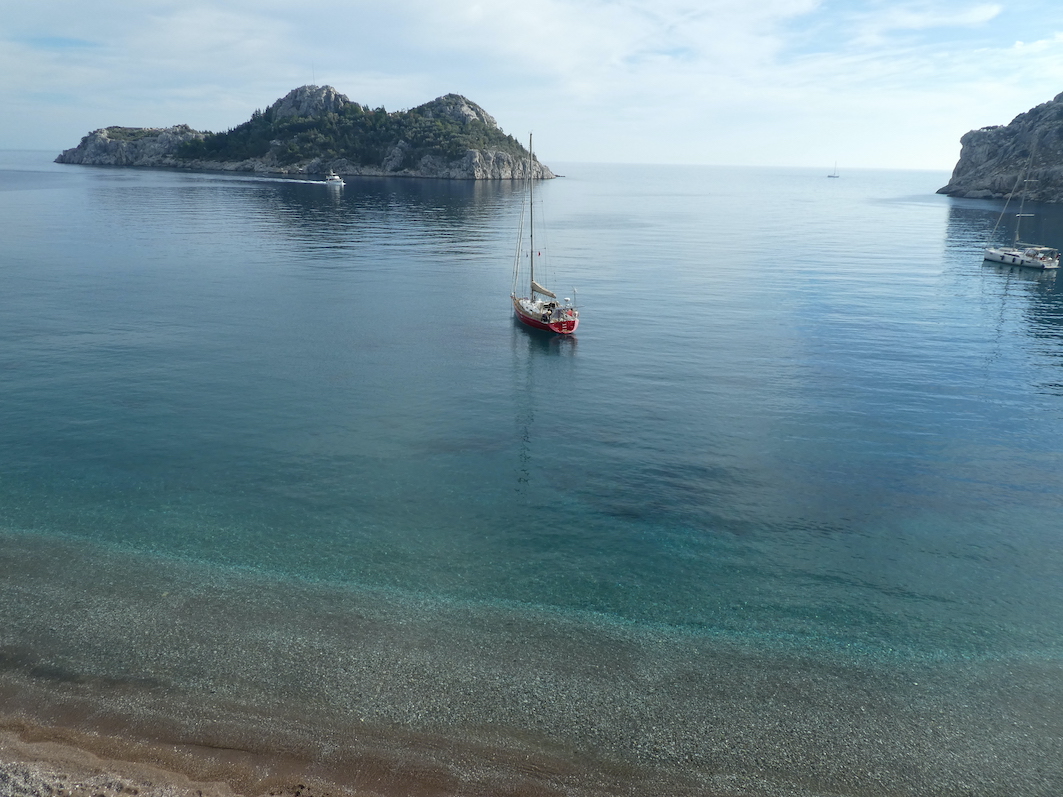

Accumulative Totals 2015 – 2021 Inclusive
11,027 nautical miles
208 night hours sailing
3 Continents; Europe, Africa, Asia
23 Countries; France, Channel Islands, England, Ireland, Northern Ireland, Scotland, The Netherlands, Germany, Poland, Lithuanian, Latvia, Estonia, Finland, Sweden, Denmark, Spain, Portugal, Morocco, Tunisia, Malta, Italy, Greece, Turkey

I have also recently updated the “our photos” page of our blog. This is where at the end of visiting each country or major destination I collate our favourite photos into a video journal to share. I have now added;
- Tunisia (Dec 2020 – May 2021)
- Turkey – Cappadocia (3-12 December 2021)
- Greece (August 2021 – October 2021)
- Malta (May 2021 – July 2021)
- Tunisia (Dec 2020 – May 2021)
- Gibraltar – La Linea (Spain) & The Southern Spanish Coast (March 2019 – Dec 2020)
To view click the link “our photos” or navigate to our website and the appropriate page www.redroo.net.
The Data
| YEAR | SAILING SEASON | DAYS | NAUTICAL MILES | COUNTRIES | NOTES |
| 2021 | 26/05/21 – 09/11/21 | 168 | 1788 | 5 Tunisia Malta Italy Greece Turkey | 79 locations. Late leaving Tunisia due to covid vaccinations. Winter in Turkey. |
| 2020 | 03/11/20 – 31/12/20 | 59 | 1100 | 2 Spain Tunisia | 22 locations. Repairs & covid made it a short year. Winter in Tunisia. |
| 2019 | 17/03/19 – 24/03/19 | 8 | 33 | 2 Morocco Spain | The year of the “water ingress incident” & then repairs (insurance). Winter in Spain. |
| 2018 | 05/05/18 – 04/11/18 | 184 | 2099 | 6 England Channel Islands France Spain Portugal Morocco | 59 locations. Snowing in England until April (late start to season). Haulout in Portugal (3 weeks). Winter in Morocco. |
| 2017 | 09/03/17 – 19/12/17 | 286 | 3283 | 10 England The Netherlands Germany Poland Lithuania Latvia Estonia Finland Sweden Denmark | 126 locations. The Netherlands included 31 locks &171 opening bridges. Winter in the England. |
| 2016 | 16/01/16 – 12/12/16 | 332 | 2,597 | 6 France Channel Islands England Ireland Northern Ireland Scotland | 82 locations. Winter in Channel Islands (Jan/Feb) & England (Dec). |
| 2015 | 16/11/15 – 19/12/15 | 34 | 127 | 1 France | 5 locations. Winter in France (Cherbourg). |
Exploring Cappadocia – Turkey
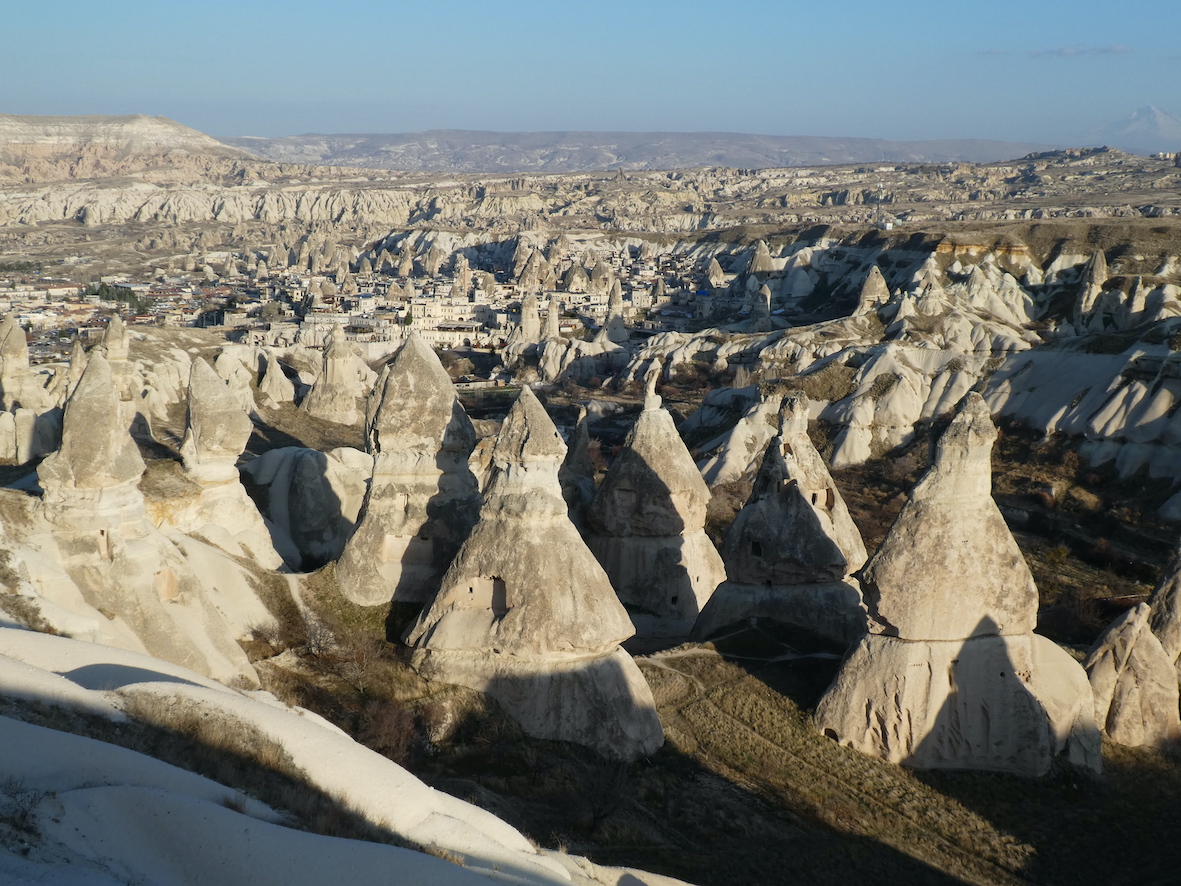
We had been in Turkey 3 weeks, Red Roo was safe and secure in the marina, our most pressing and immediate winter jobs underway (many more to go, but they could wait until the new year) and we were itching to get out and explore some more of this wonderful country, we wanted to go inland.
A trip was planned with our Canadian friends Jean & Yolene (Caffe Latte), we hired the car and we were off heading inland (north/east) to explore Cappadocia.
In 9 days we covered 2,500 km taking in some spectacular and hugely diverse scenery. The stars on the map below indicate our travels and the major stops/attractions.
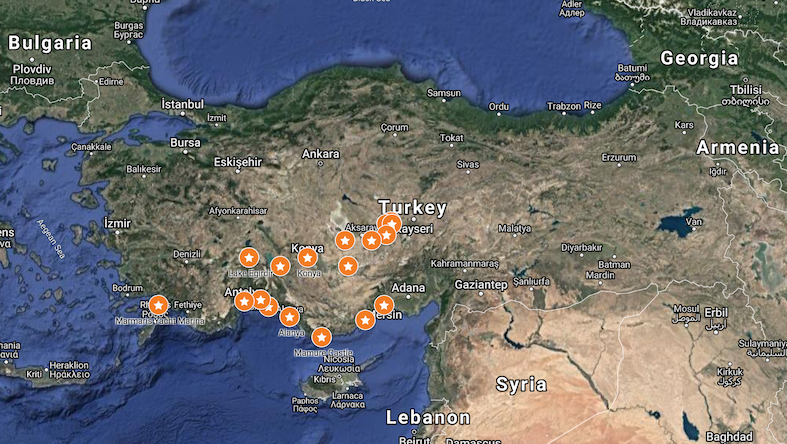
We went from lake country, to the fruit bowl and orchards, to cities with magnificent mosques and history, valleys full of prehistoric rocks, cave houses and cave churches to underground cities that housed more than 10,000 people, then past ski mountains and onto to Roman ruins and some more of the Turkish coast line.
We shall let the photos do the talking.
Day 1. Marmaris – Lake Eğirdir

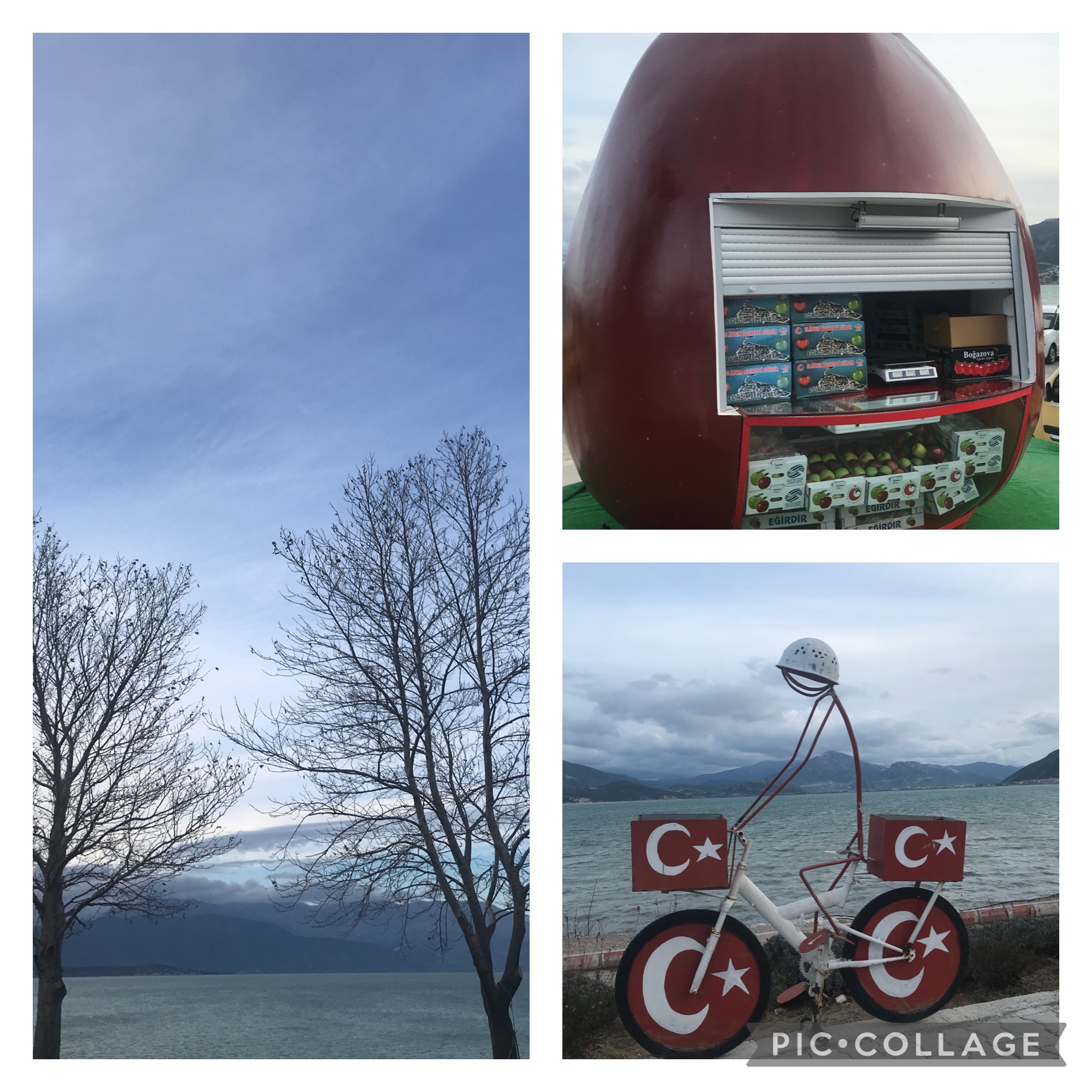
Lake Eğirdir is Turkey’s fourth largest lake and second largest freshwater body. The total size of the lake covers an area of 482 km squared, the lake lies 917 meters above sea level and has an average depth of 14 meters. This provinces lakes provide water for agriculture and recreation.
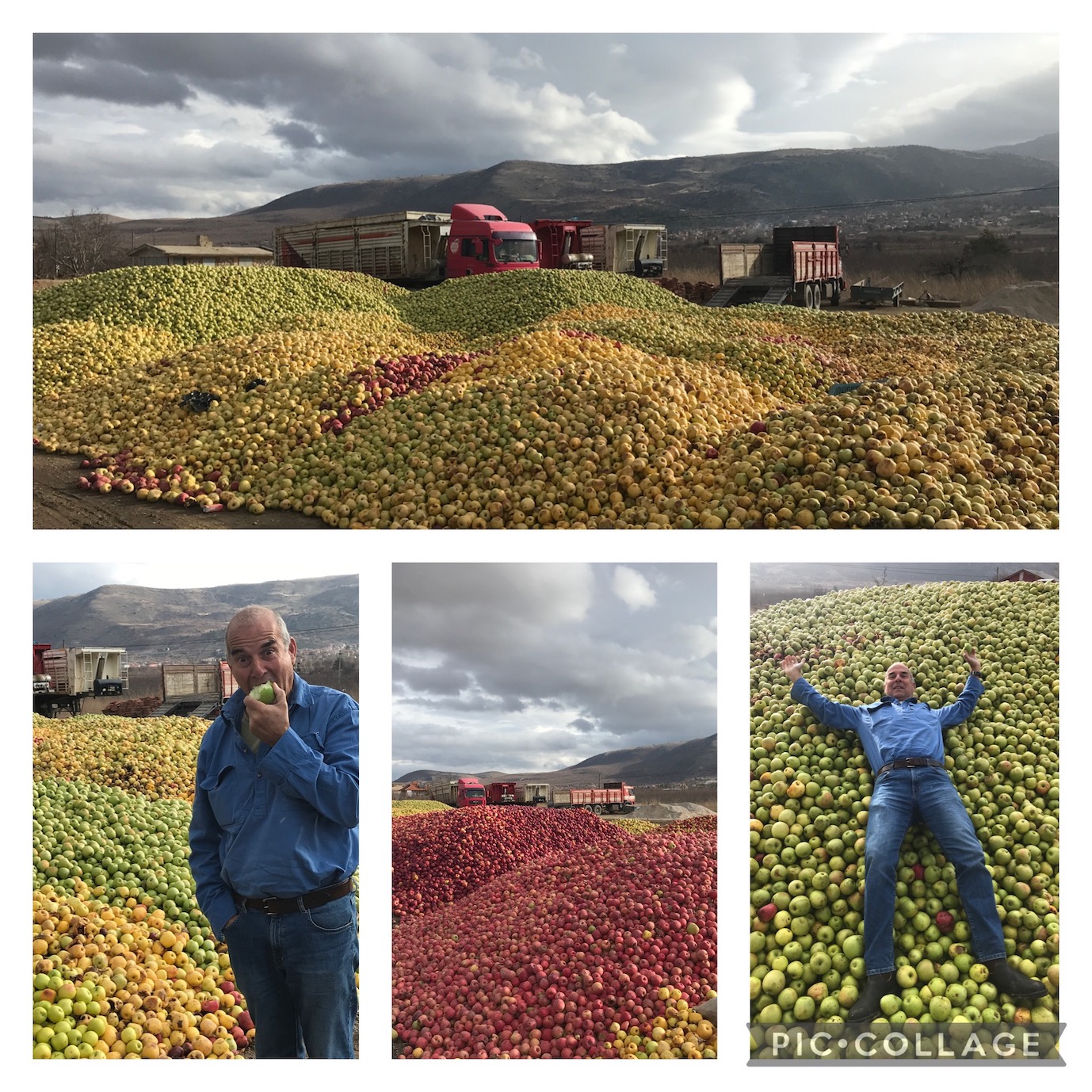
Apples are one of the main products of this areas broad open plains and lakes. The province grows 20% of the Turkeys total annual production of apples which is 500,000 tonnes. Turkey grows 5% of the worlds apple production and ranks 4th after China, USA & France.
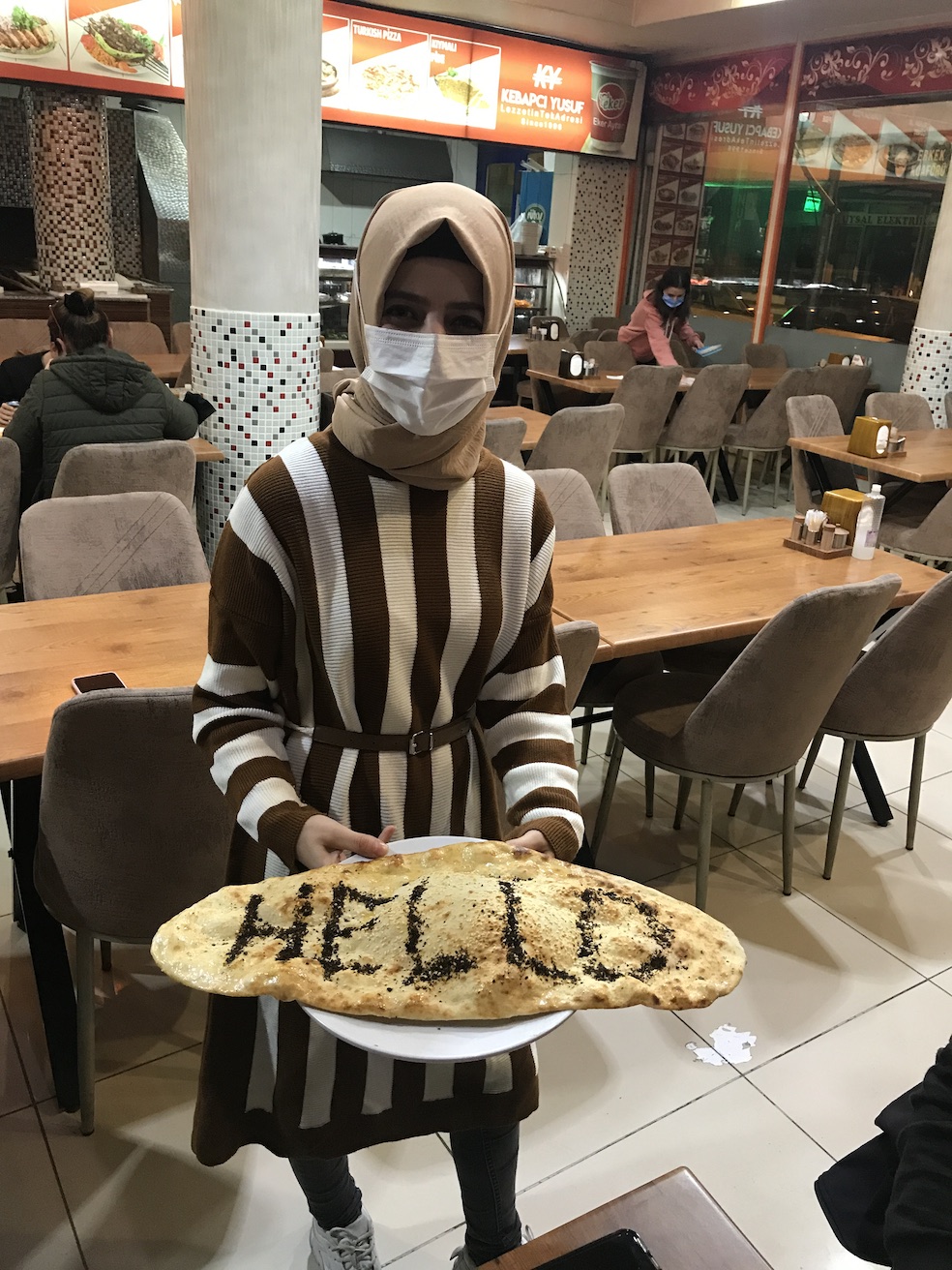

Day 2. Lake Eğirdir -Konya
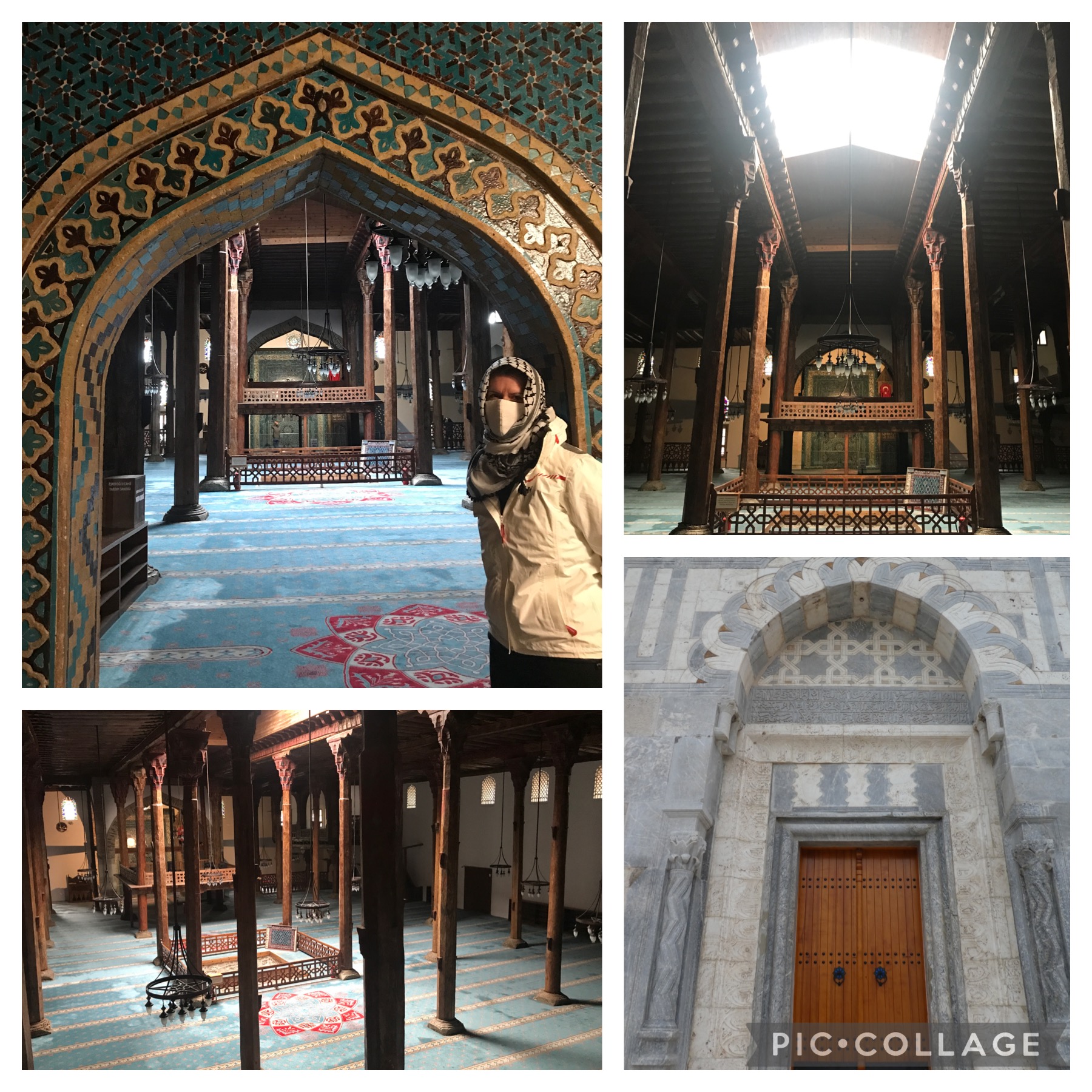
Mosque washrooms are built in order for Muslims to perform there “wudu”. Wudu is a washing ritual which takes place as part of prayer. It involves washing the hands, mouth, nostrils, arms, head & feet. This ensures they enter the Mosque to prayer pure. Some of these washrooms are just as enchanting to the eye as the Mosques themselves, and also very practical with the low stools and rails to rest/wash your feet on.
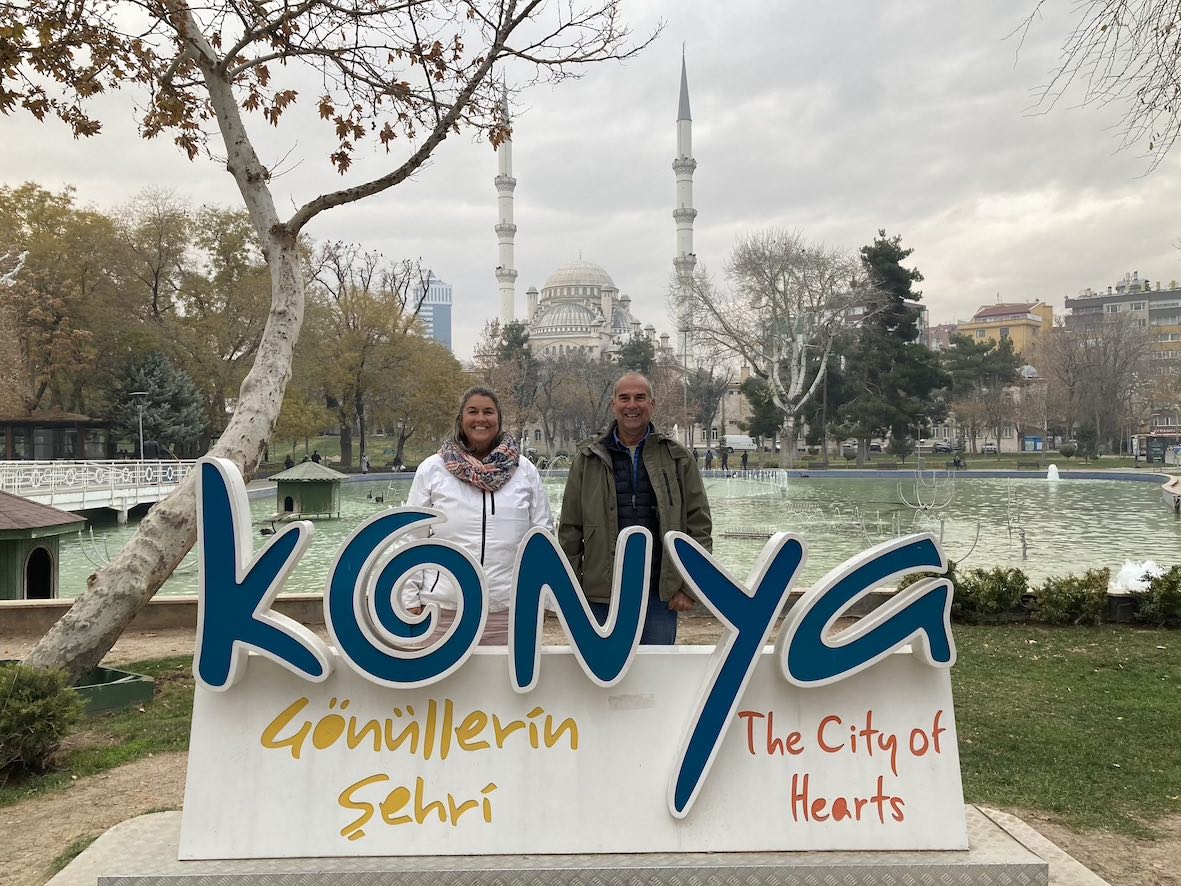
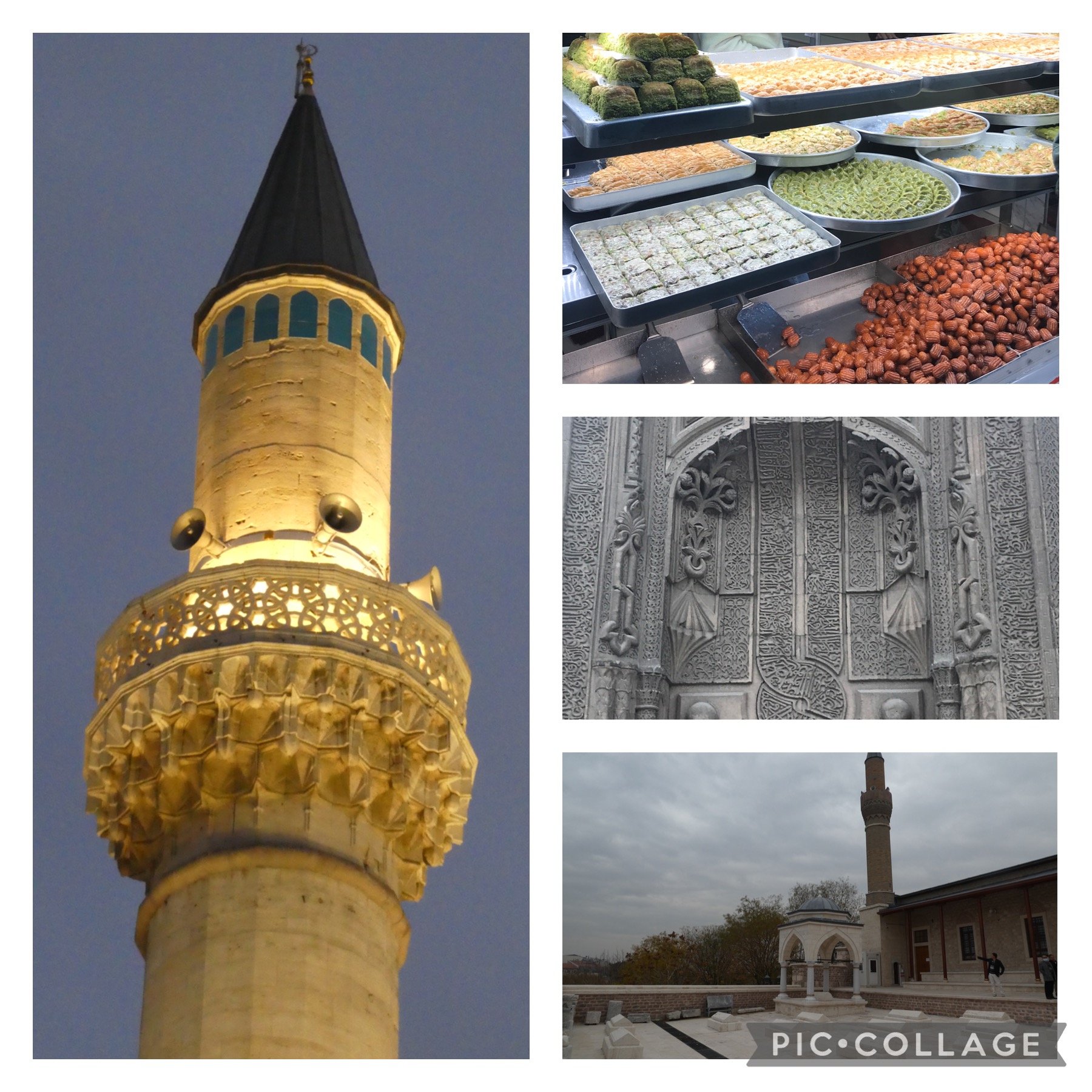
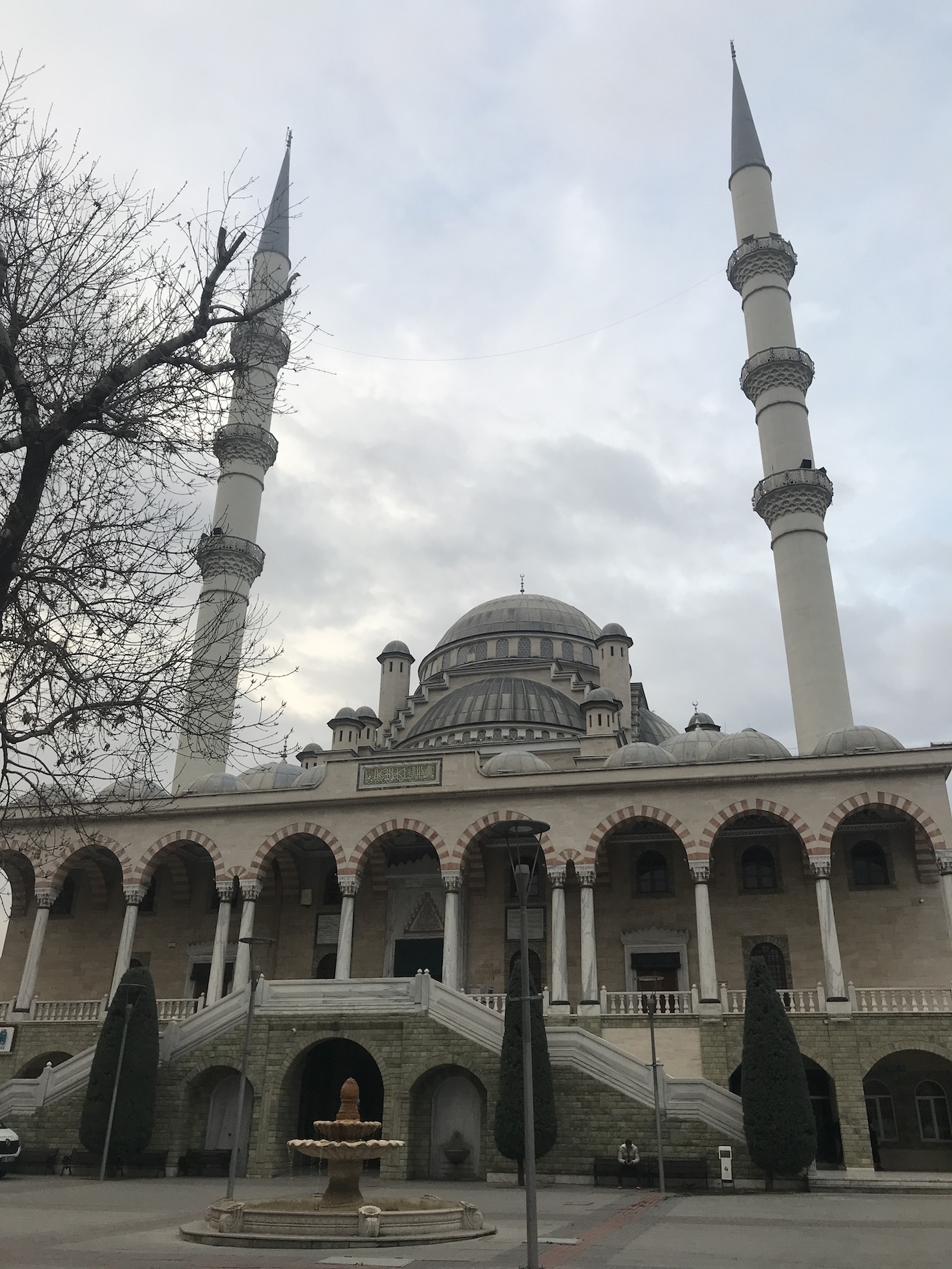
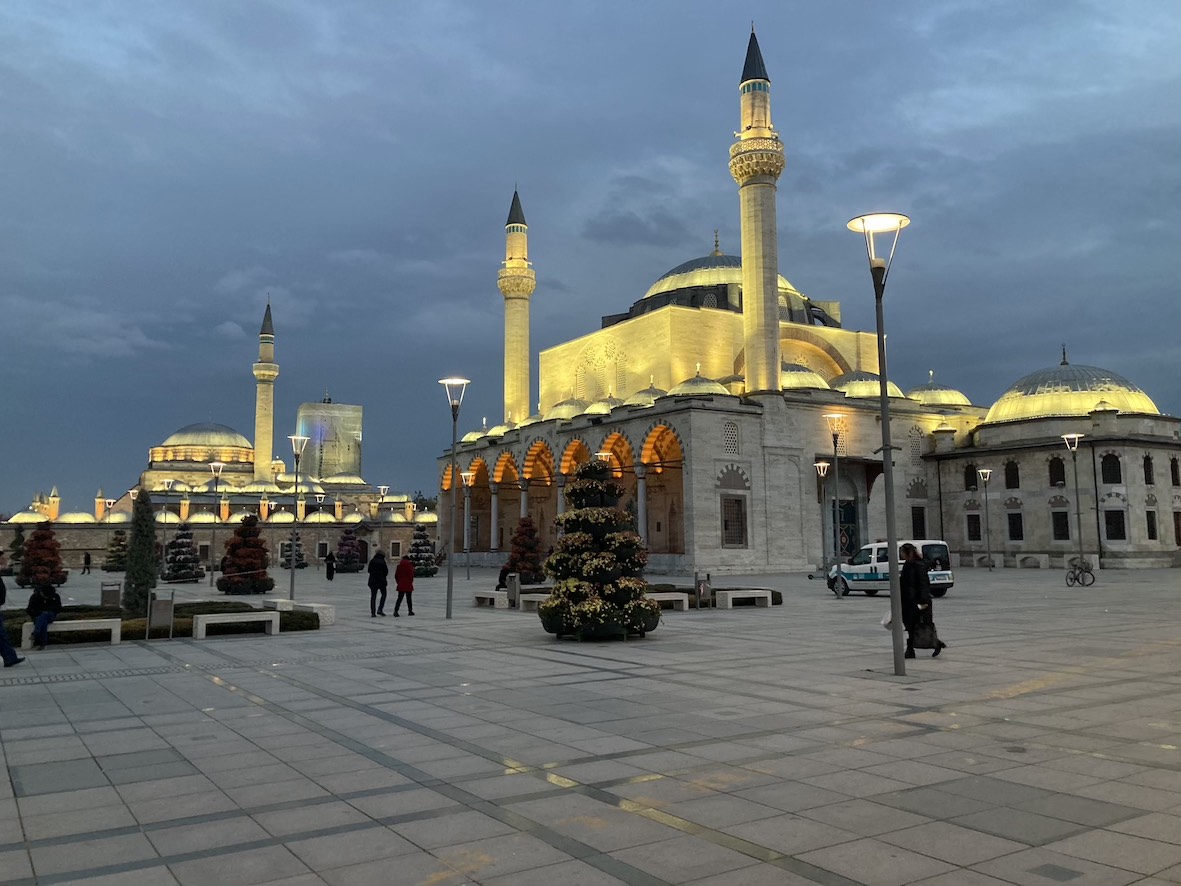
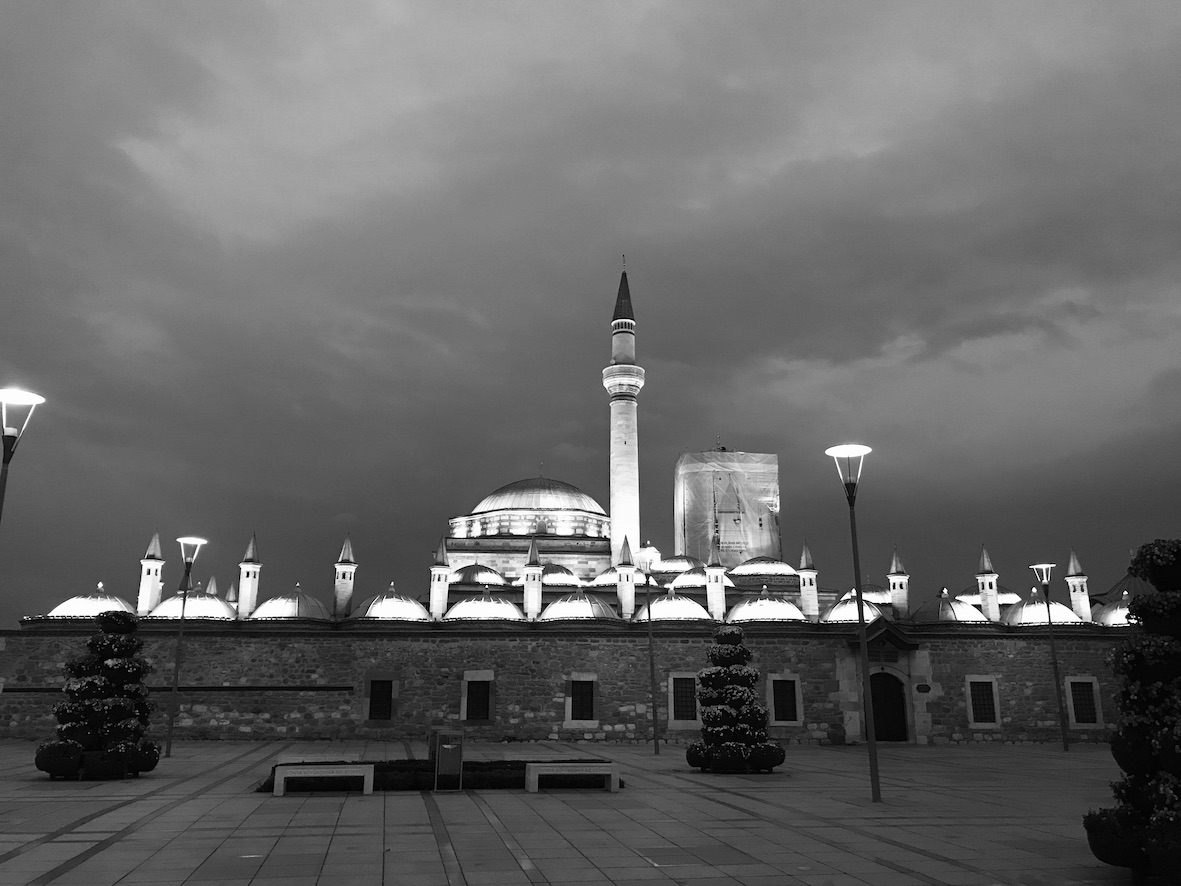
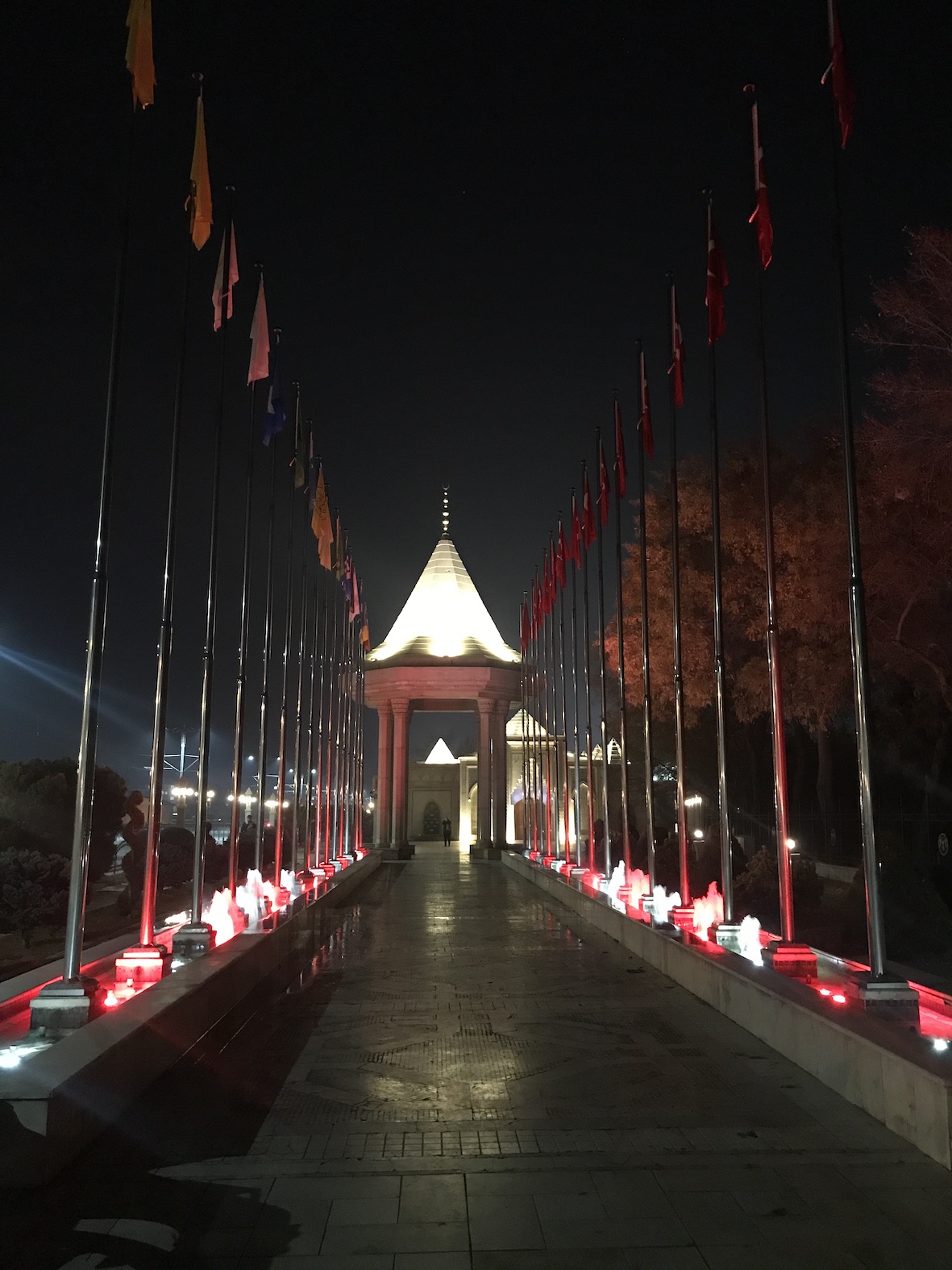
WHIRLING DERVISH ceremonies were started as a form of meditation by Jalaluddin Rumi, the famous Sufi Muslim mystic and poet, in the 13th century. The Persia-born Rumi — who was living in Konya, then the capital of the Turkish Seljuk Empire told his followers, “There are many roads which lead to God. I have chosen the one of dance and music.” He would fast, mediate and then dance to reach a state of unparalleled enlightenment. Inspired, other sects started to spread his dance, called the Sema, throughout the Ottoman Empire. By the 15th century, the order had established rules for the ritual to maintain its myriad traditions.
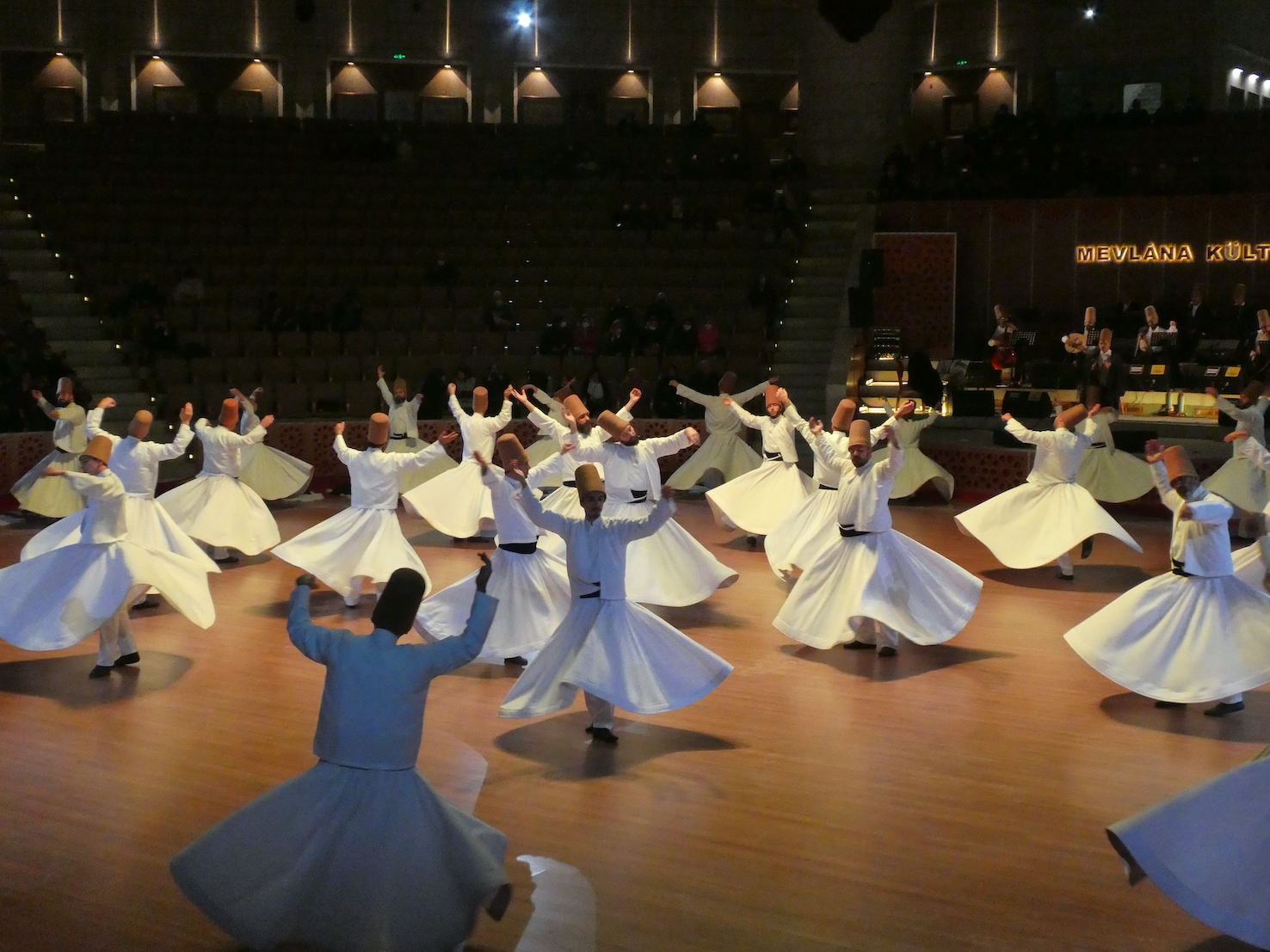
Dancers wear long white robes with full skirts, which symbolise the shrouds of their egos. On the dancers’ heads sit tall conical felt hats called sikke, ranging from brown to grey to black depending on their sect; these represent the tombstones of their egos. Over the robes, the dancers wear long dark cloaks, which embody the wearers’ worldly life and are cast off during the ceremony. When the dancer is finally wearing only his long white robe, he is assumed to be without fault and ready to start the mesmerising complex whirls that define the Sema.
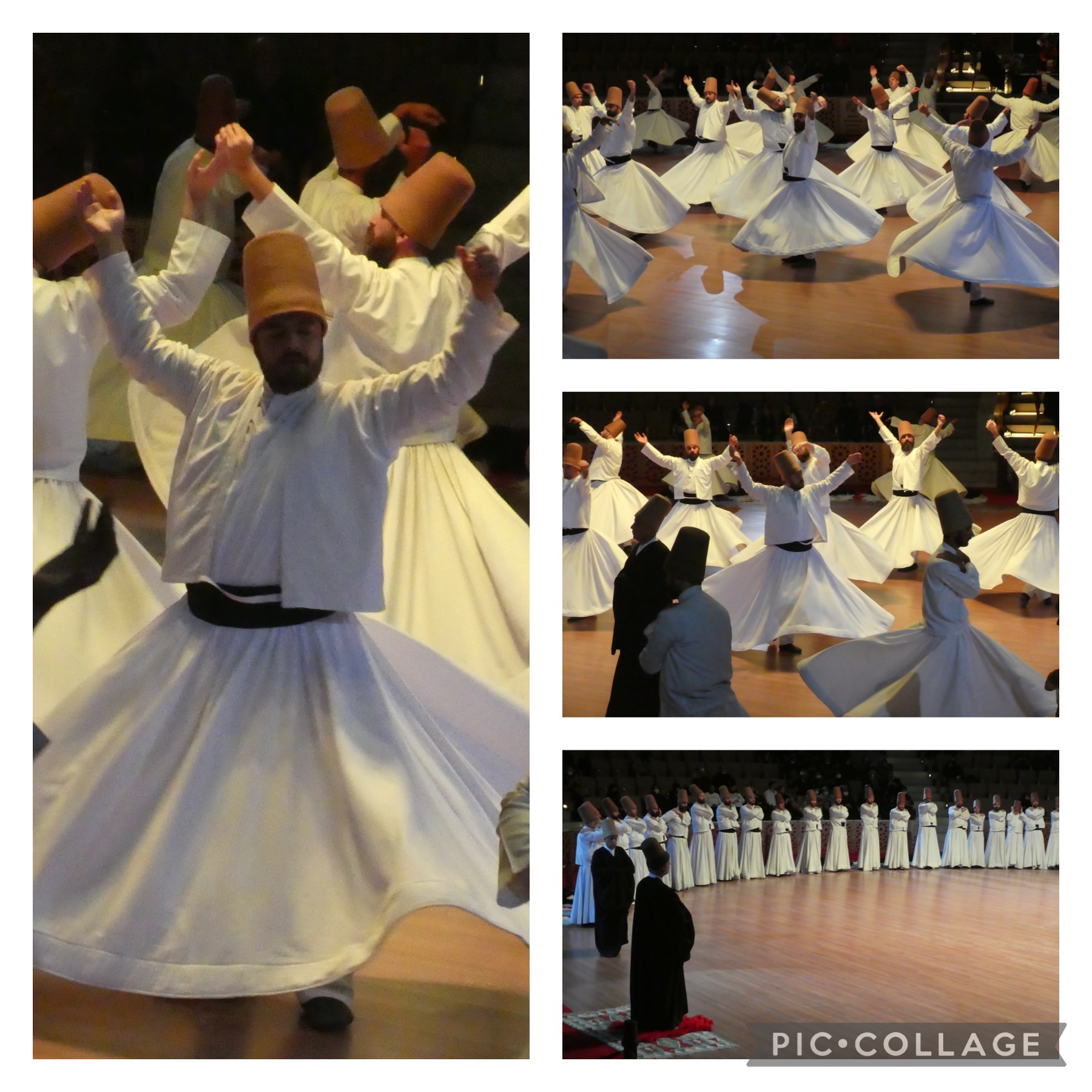

The dancers, who fast for many hours before the ceremony, start to turn in rhythmic patterns, using the left foot to propel their bodies around the right foot with their eyes closed. Their whirling is fuelled by accompanying music, which consists of a singer, a flute-player, a kettle-drummer and a cymbal player. As the dancers turn, the skirts of their robes rise, becoming circular cones, as if standing in the air on their own volition.
Day 3. Konya – Göreme (Cappadocia)
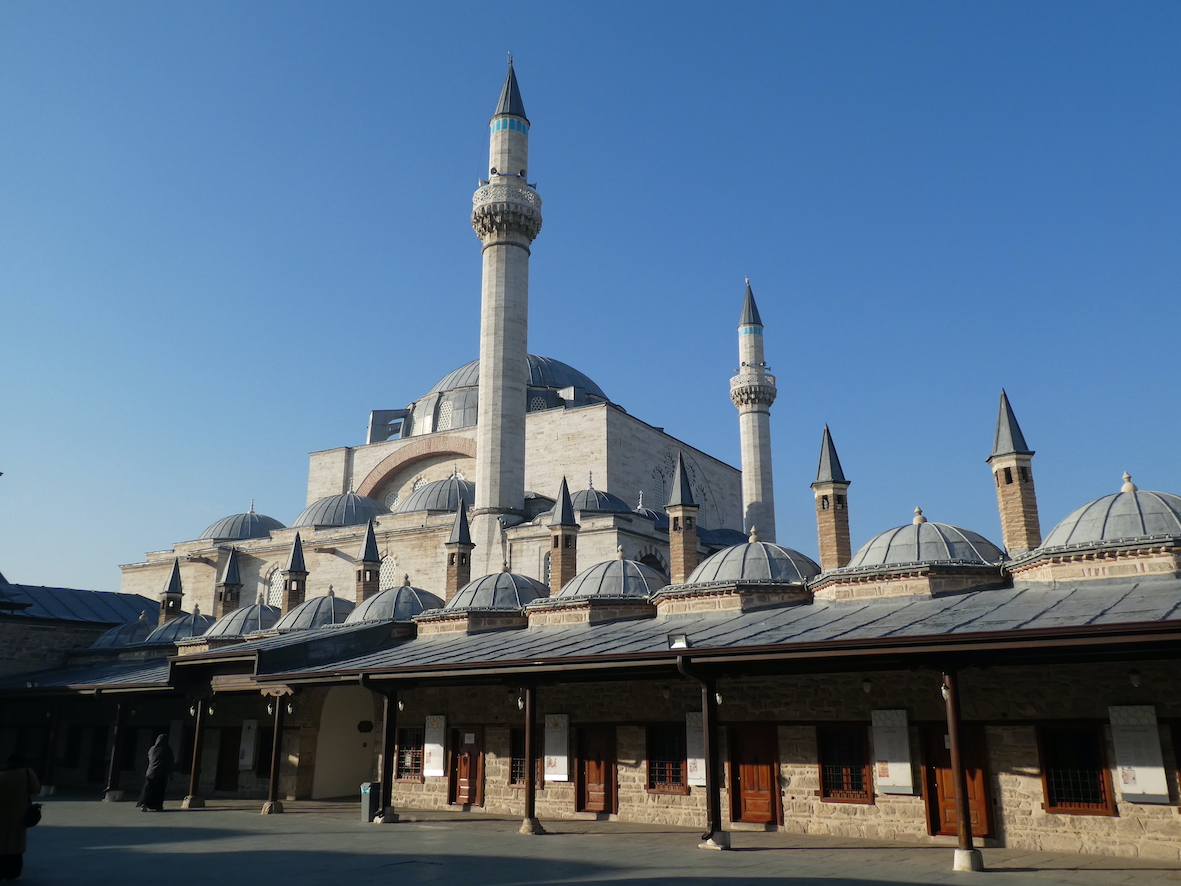
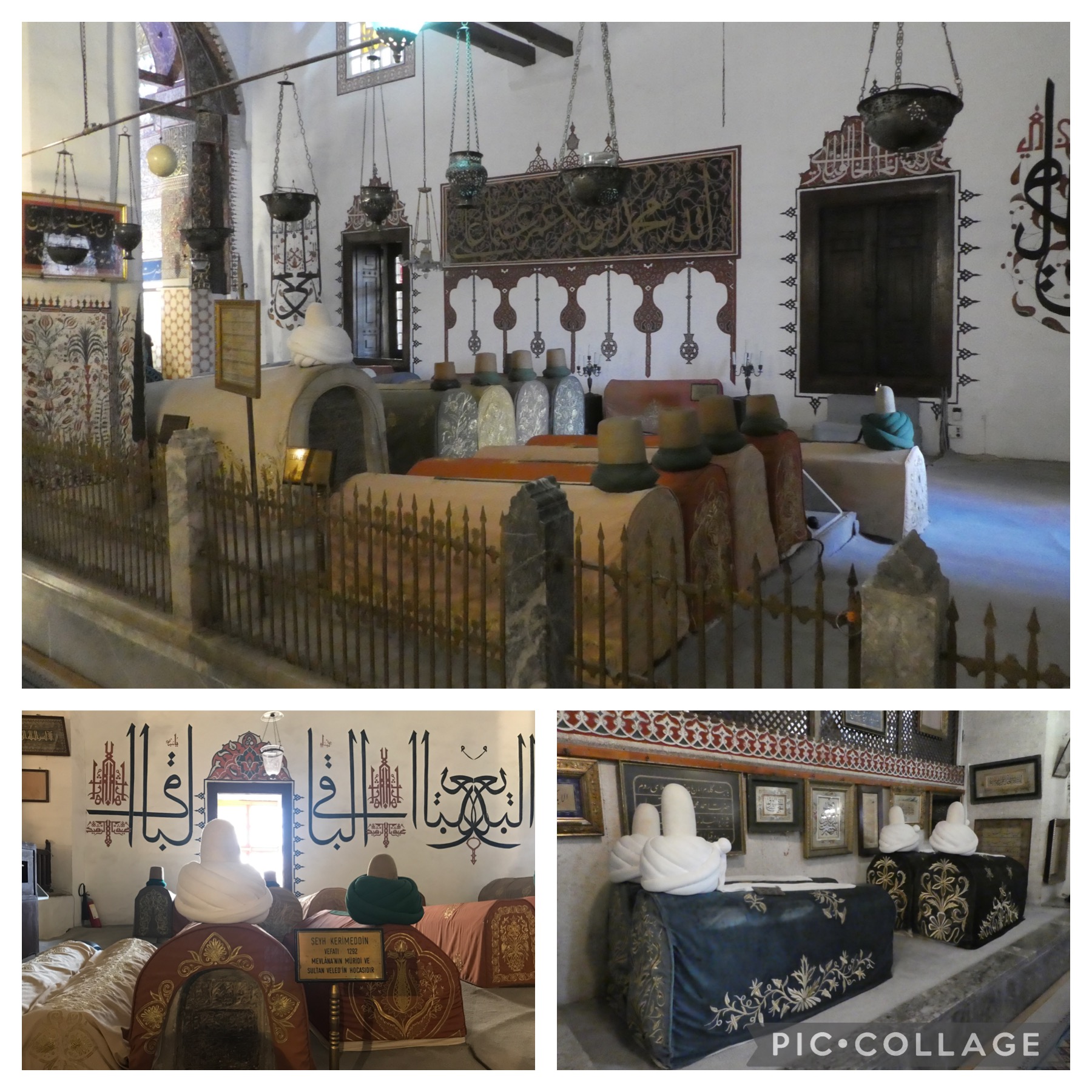
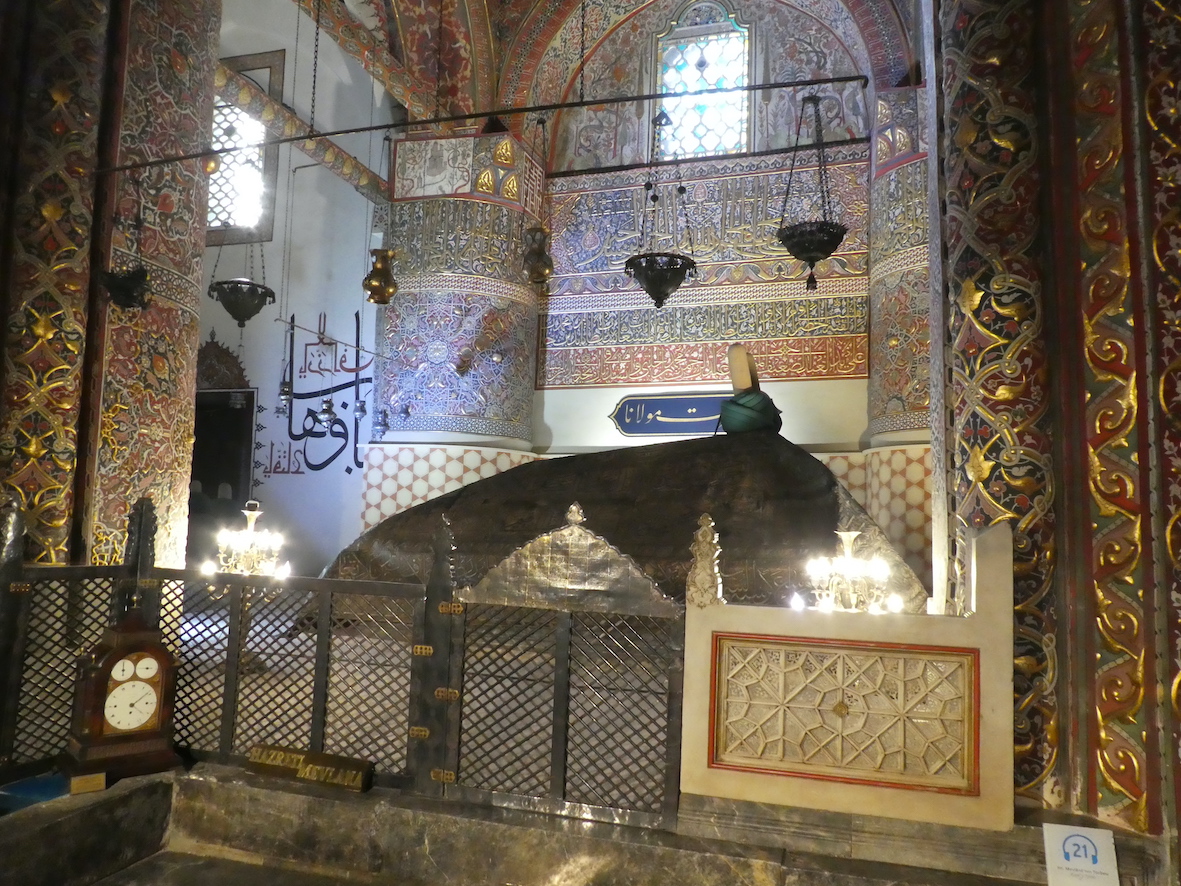
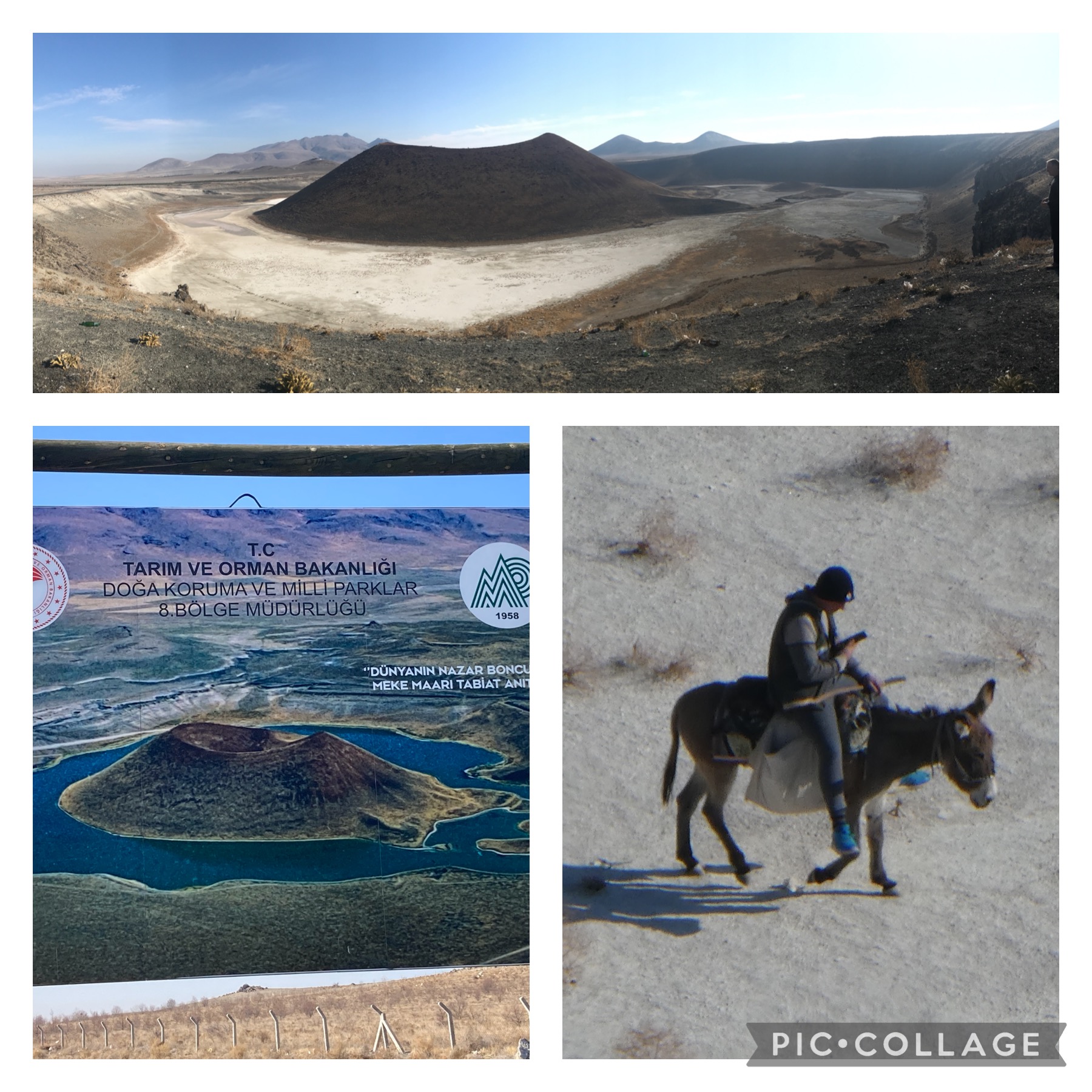
We saw a Shepherd with his flock of sheep at the lake – but he was modern day, on his donkey and watching youtube on his phone, but at least he still had his Shepherd stick!
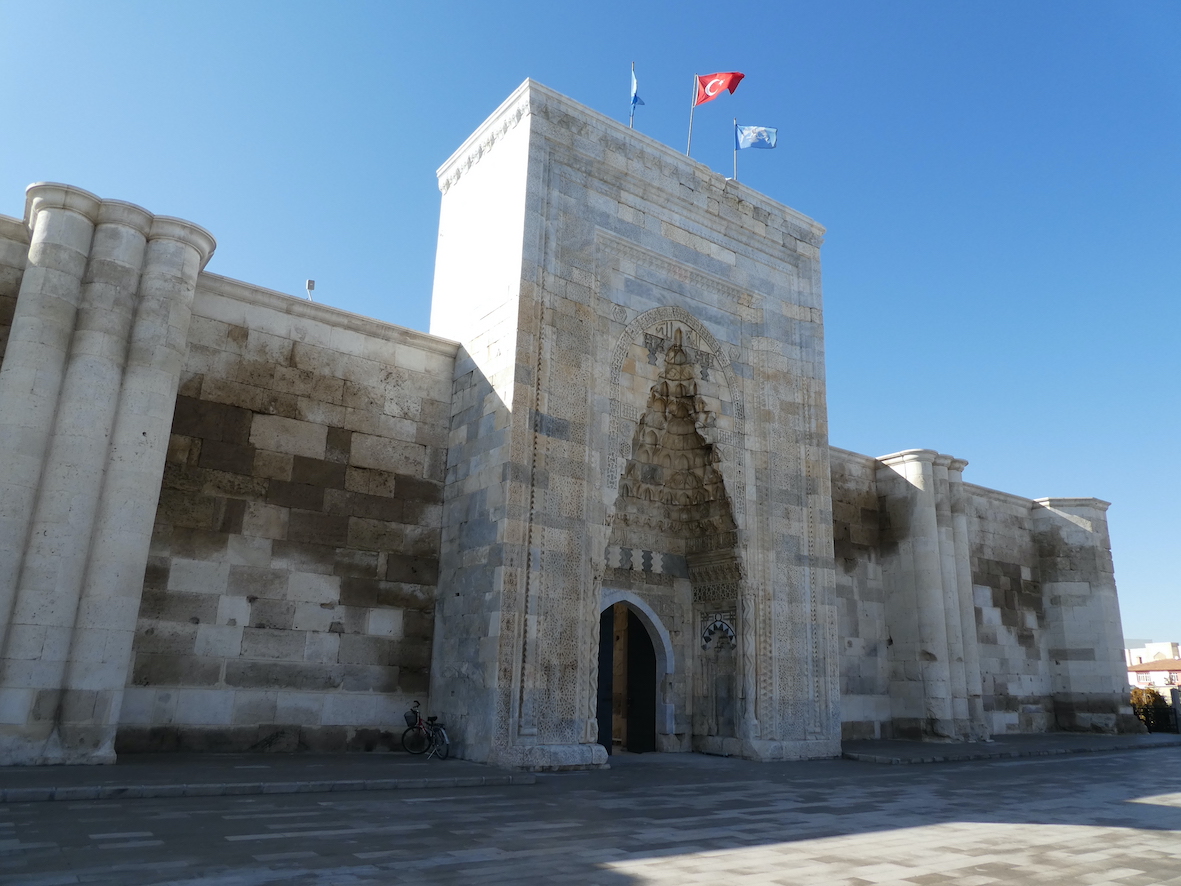
Caravanserai, is this where the “caravan” lifestyle was invented?
A caravanserai was a roadside inn where travellers could rest and recover from the day’s journey. Caravanserais supported the flow of commerce, information and people across the network of trade routes covering Asia, North Africa and Southeast Europe, most notably the Silk Road. The Sultanhani Caravanserai that we visited was built in 1229 and expanded in 1278 to make it the largest Caravansary in Turkey, it was used in both summer and winter with the summer quarters being 50 x 63 m and the winter quarters being fully enclosed and measuring 33 x 55 meters. To meet the accomodation and other needs of the travellers the caravanserais housed workshops for raffles, rope makers, horseshoes, iron smiths, kitchens, sleeping rooms, hamams (communal baths), coffee houses. Sultanhani caravanserais provided accommodation food and drink free of charge for up to three days for both local and foreigners of different ethnic groups and religions without prejudice.
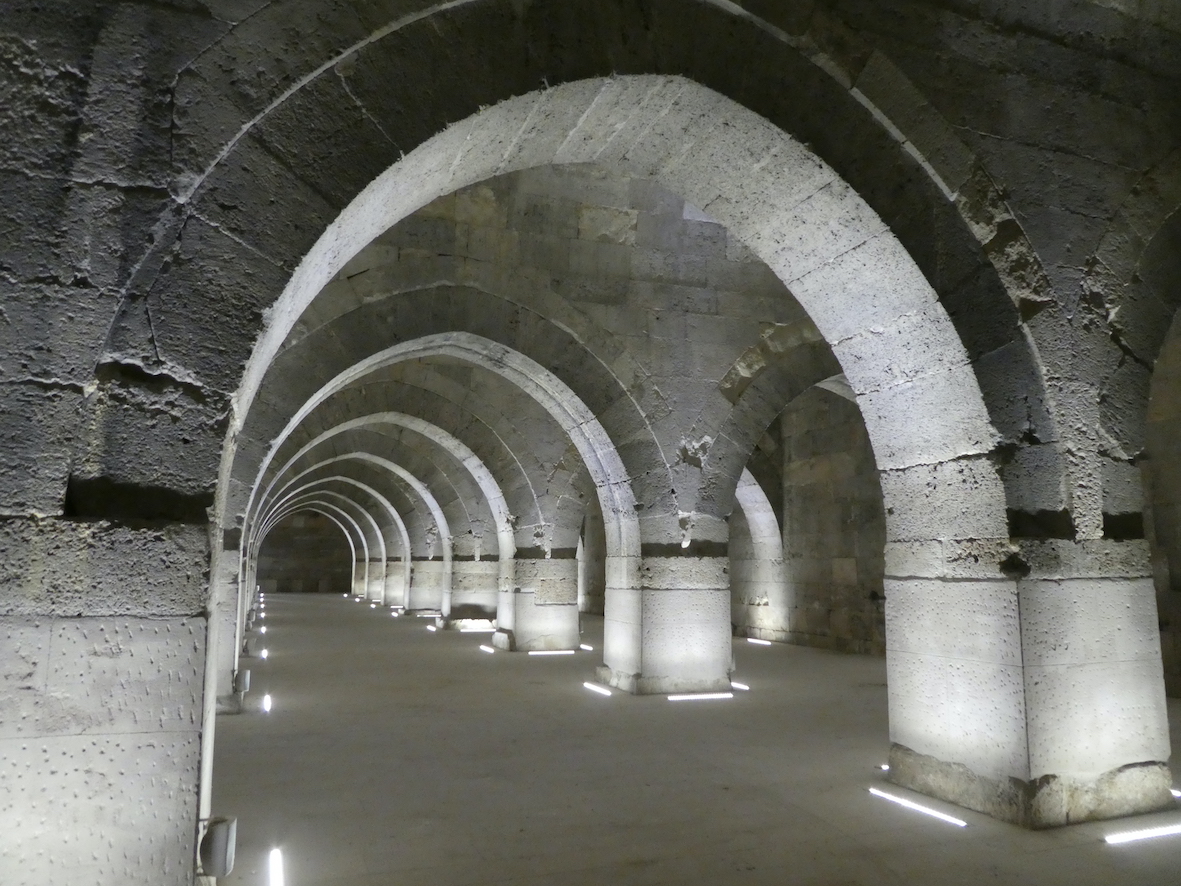
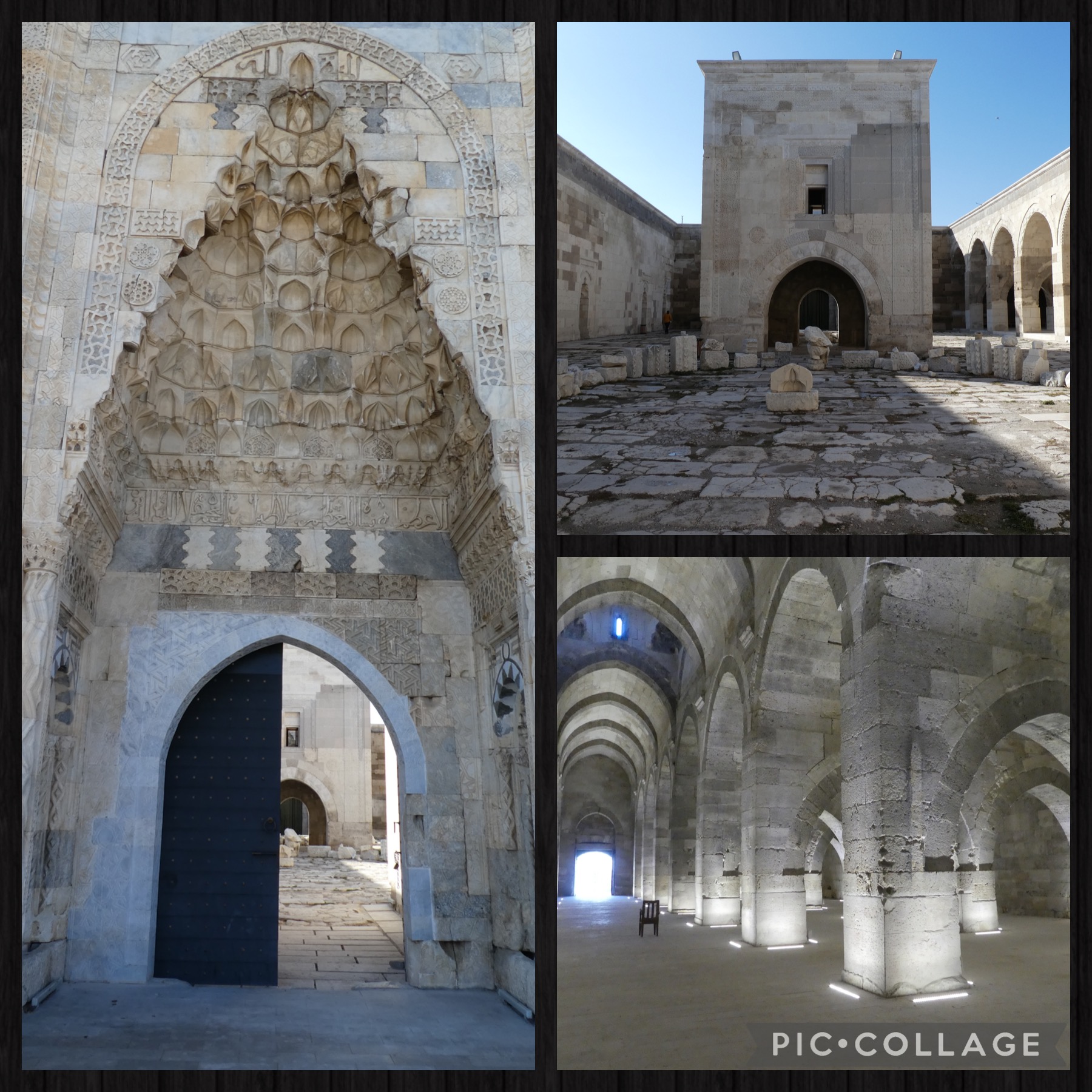
After more hours in the car and a couple of service station pit stops (and rave reviews over the cleanliness of the service station toilets, all no touch automatic and fantastically clean) we drove around a normal looking corner there were suddenly 4 audible gasps and a series of “wow – stop the car!” We had arrived in Cappadocia and our first taste of this fantastic landscape was the town of Uchisar.
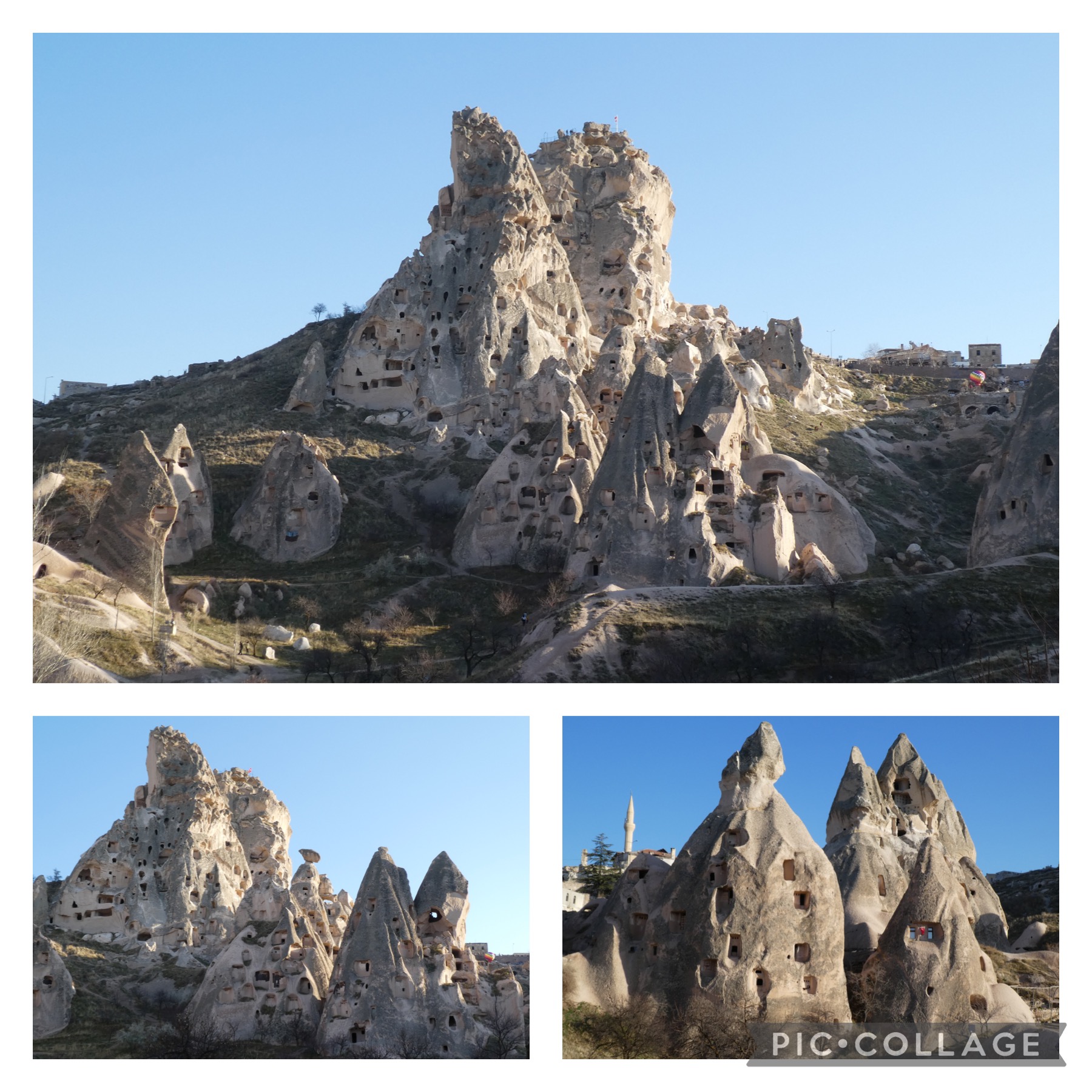
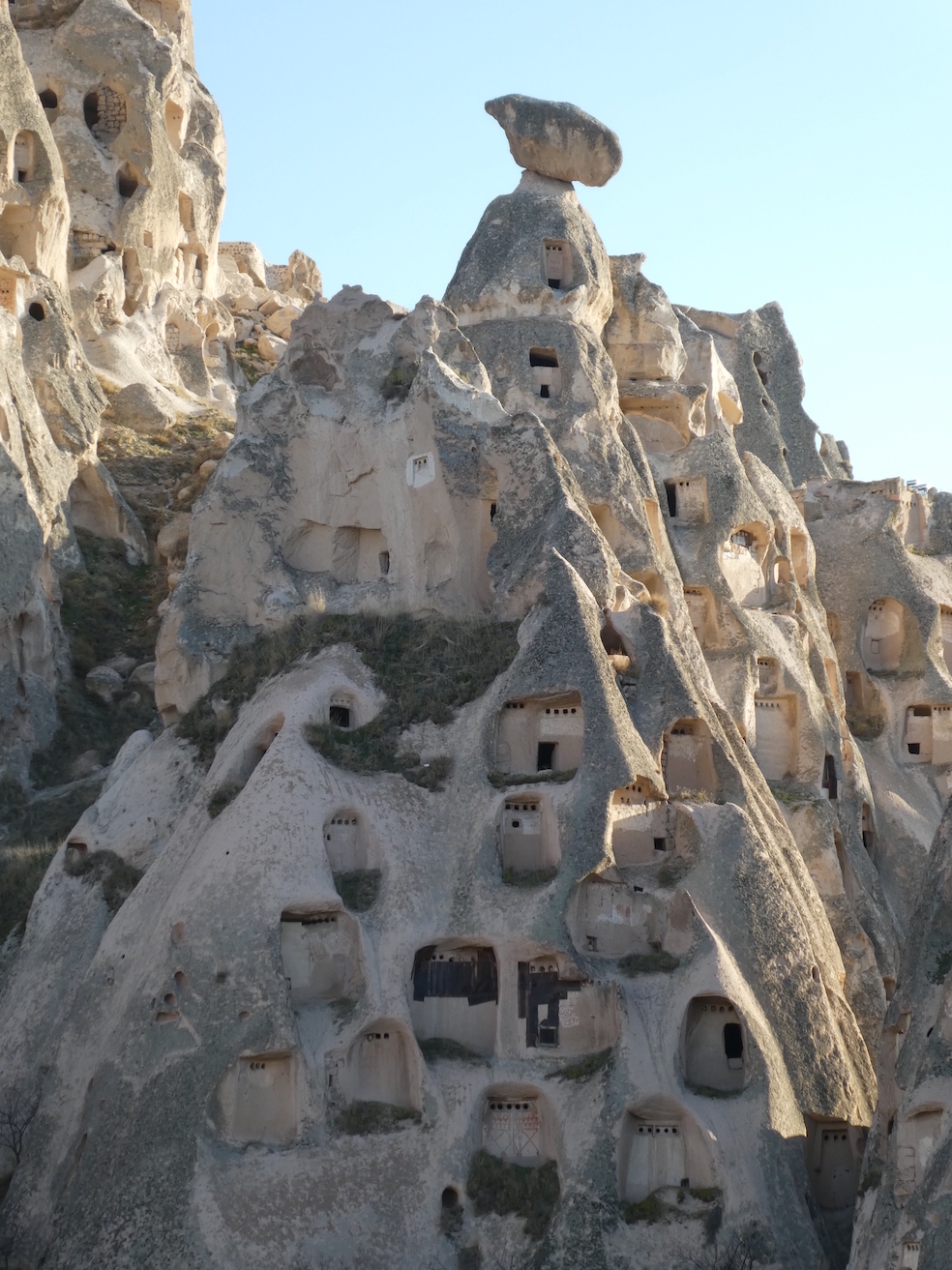
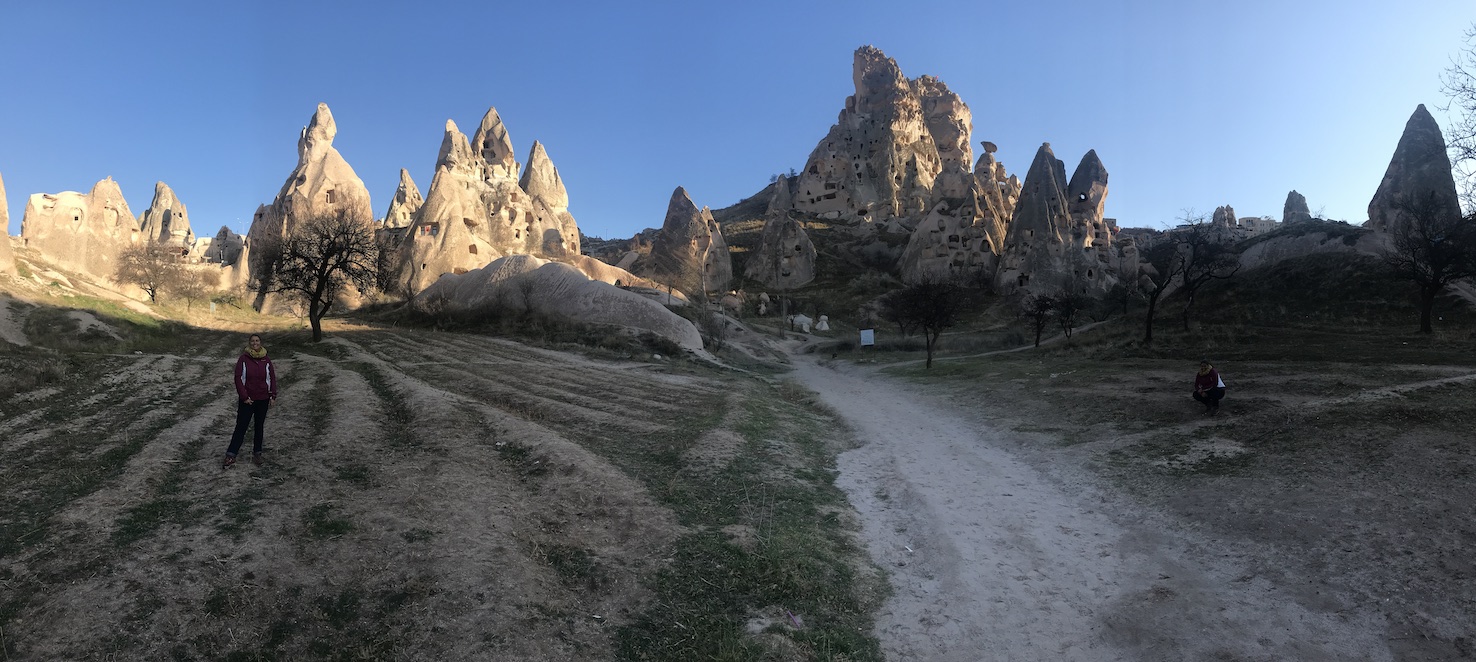
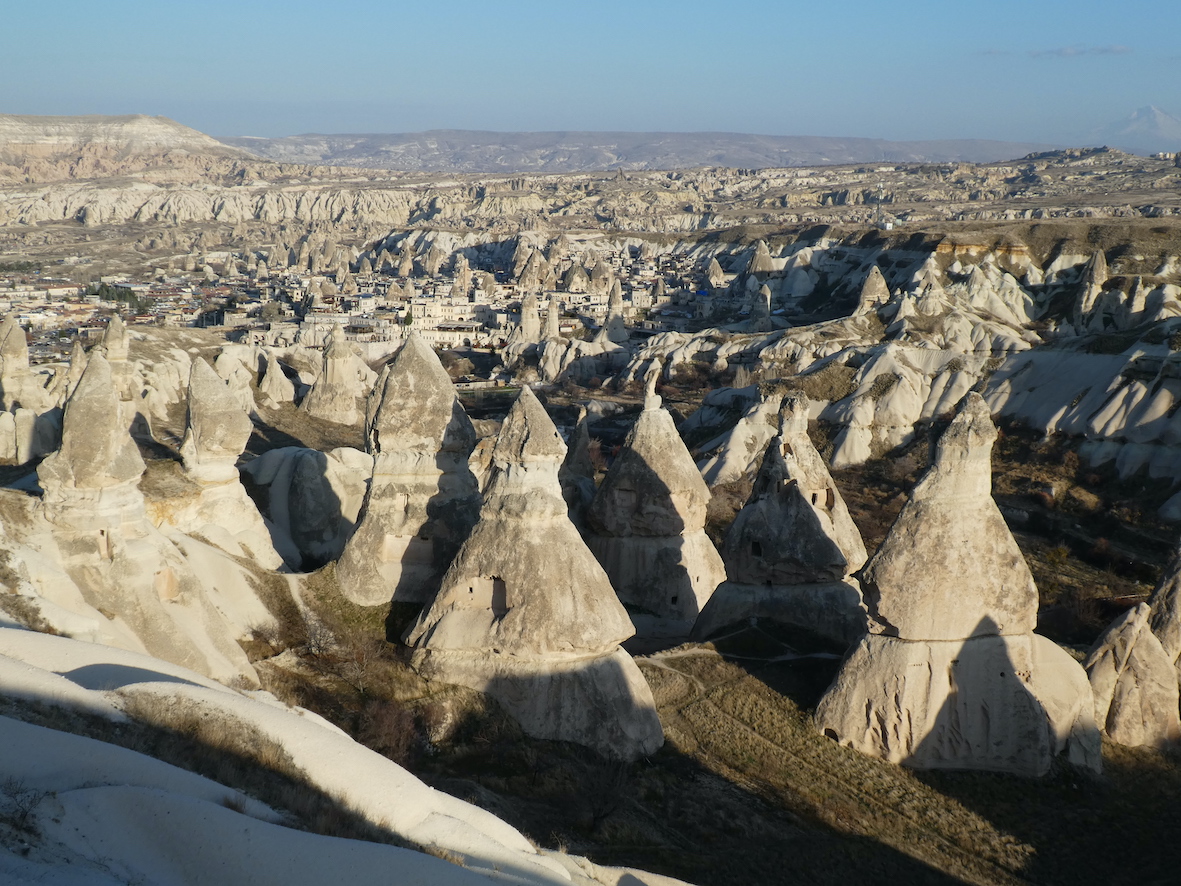
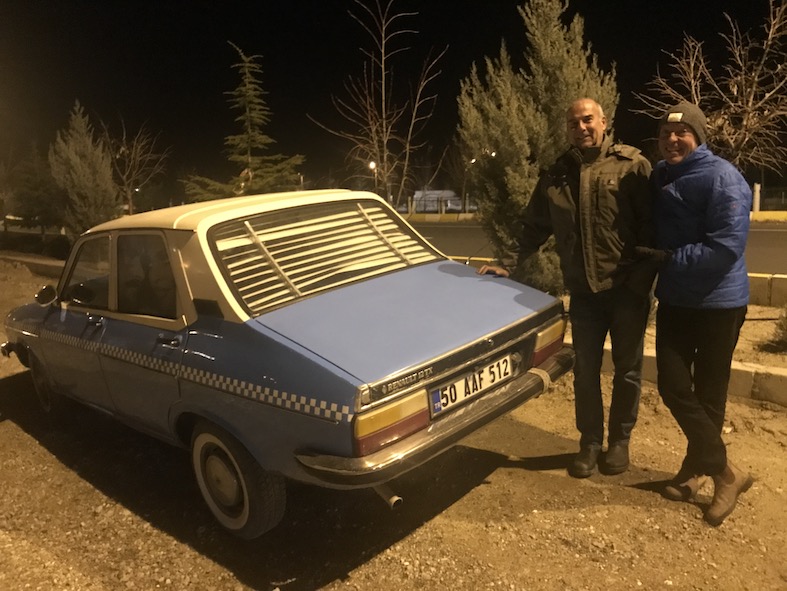
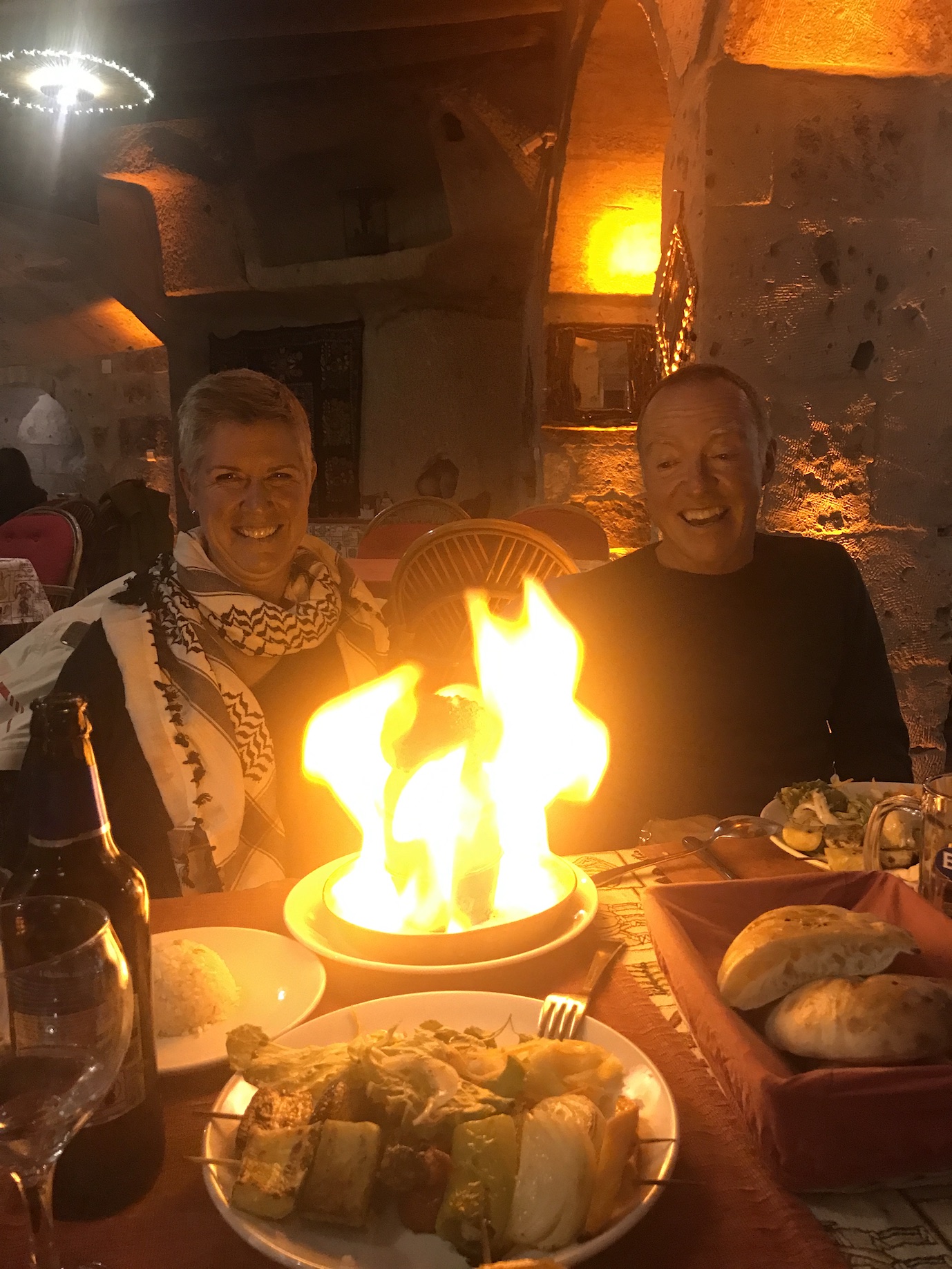
Phil and Jean were astounded by the number of Renault 12’s in Turkey, specifically in the inland Cappadocia region. They began keeping count, and soon ran out of finger and toes! There were thousands, many in great condition. Research informed us that they were actually built in Turkey from 1971 until 2000.
Day 4. Cappadocia
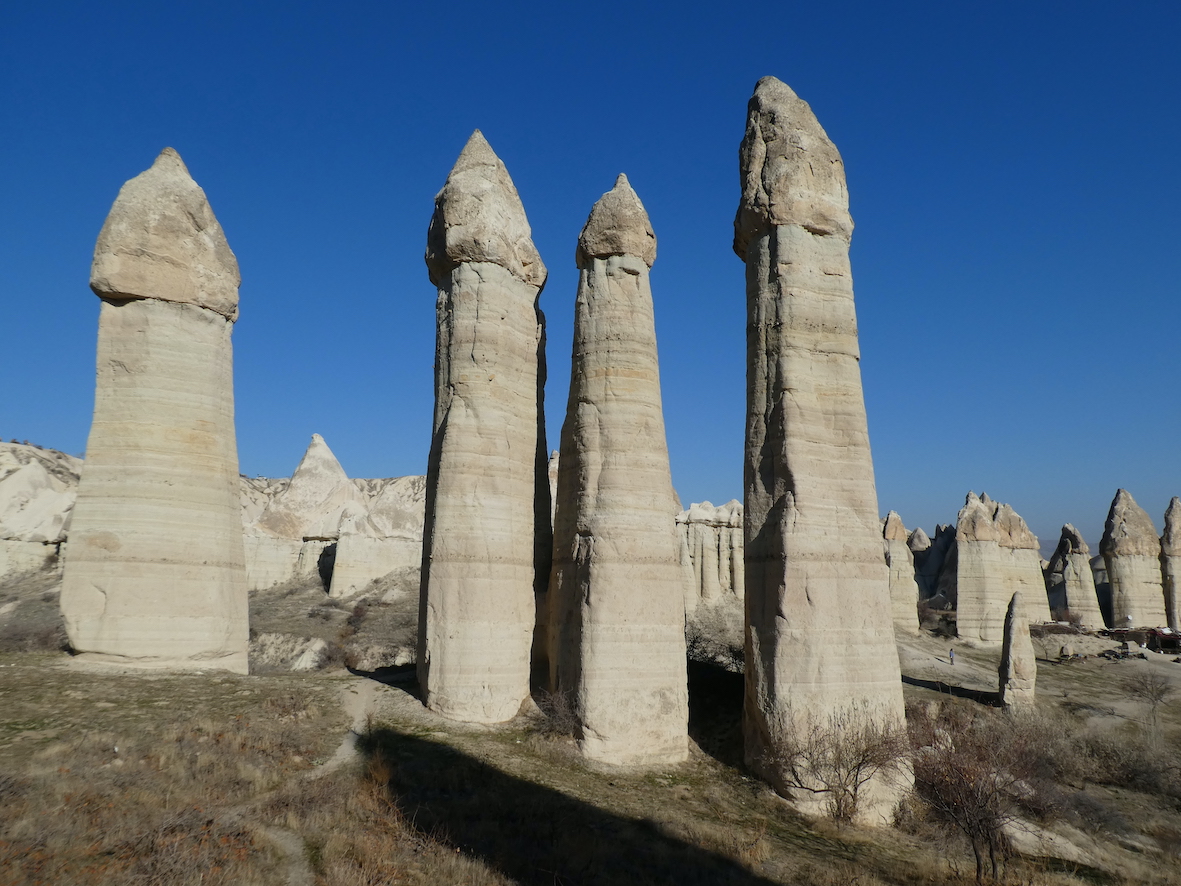
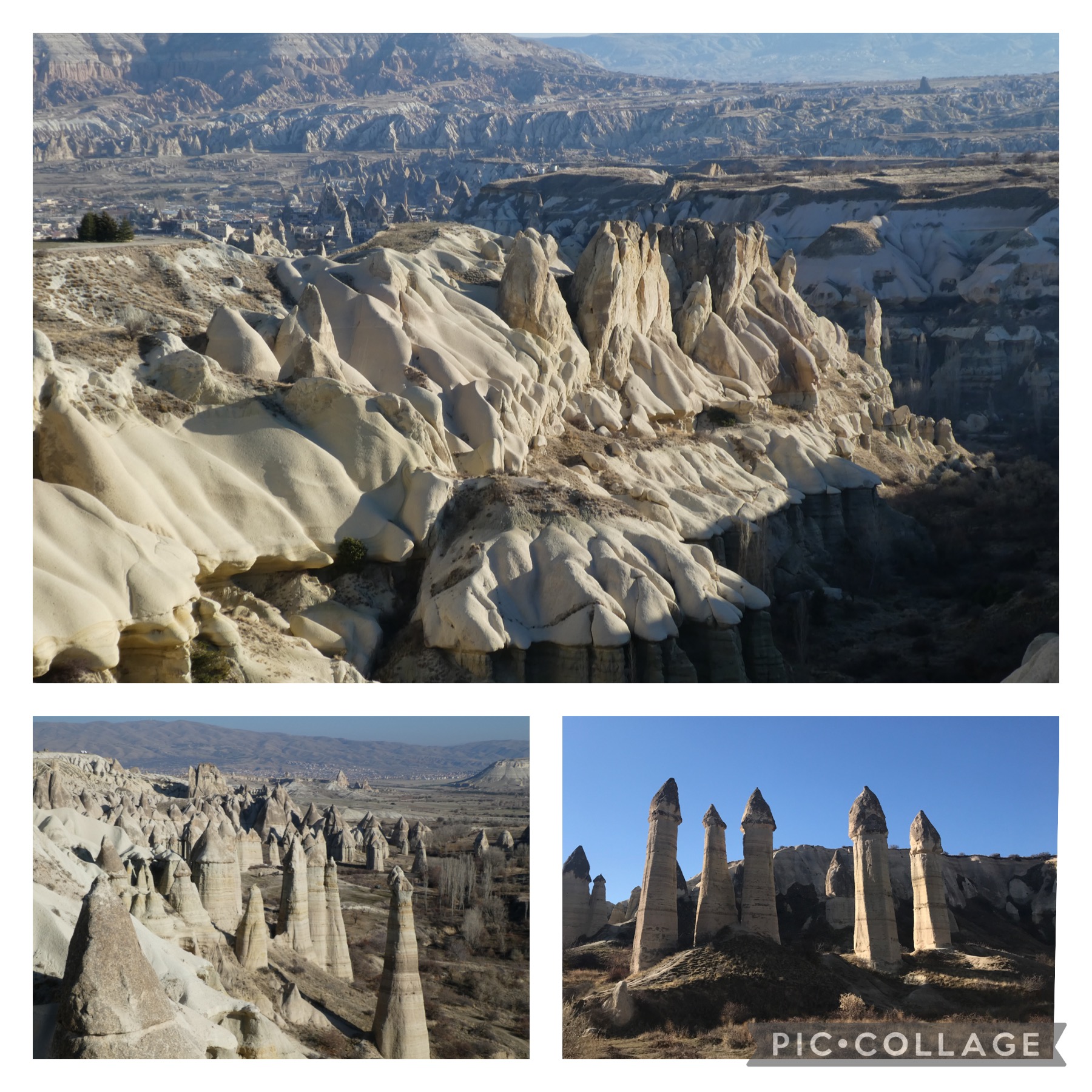

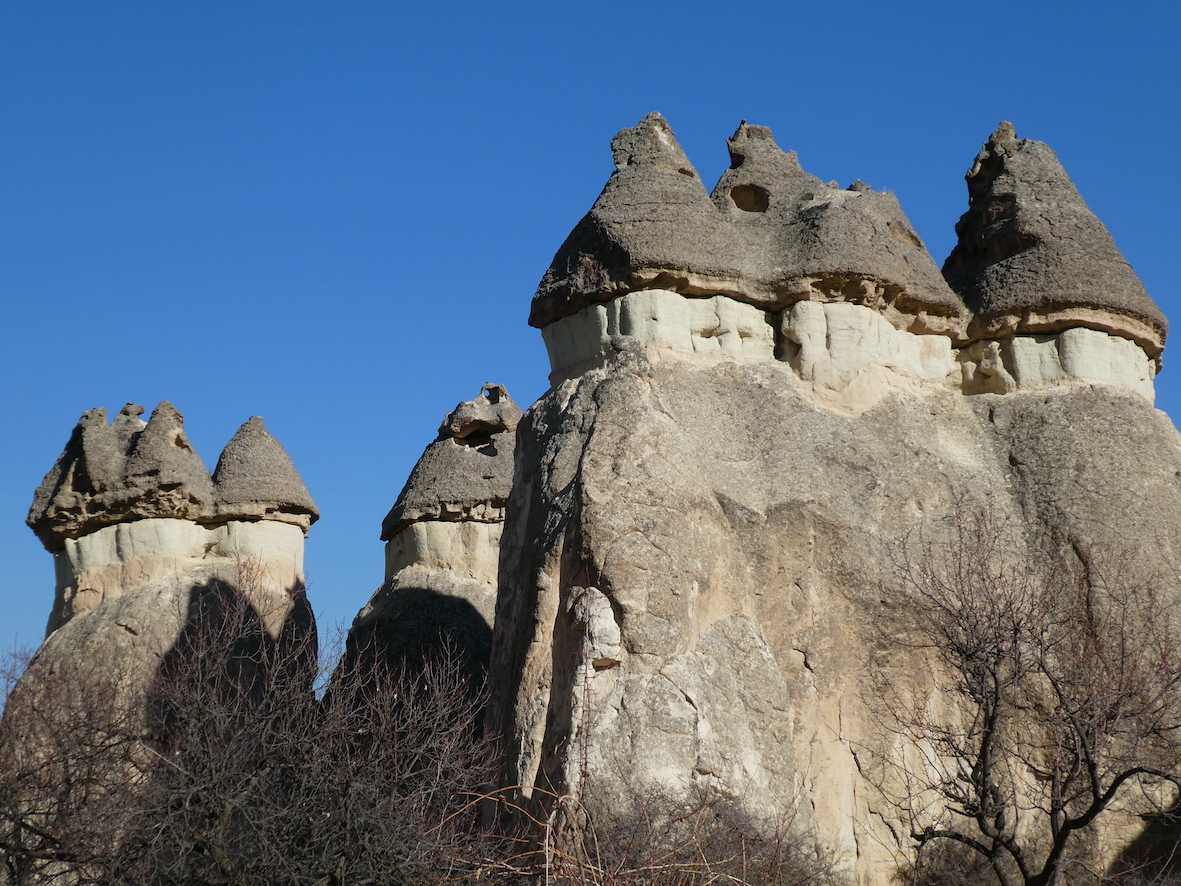
The fairy chimneys are a result of a geological process that began millions of years ago when volcanic eruptions rained ash across what would eventually become Turkey. That ash hardened into “tuff” a porous rock, which was covered by a layer of basalt. Finally, the long work of erosion began. As millennia passed, and rivers came and went the softer tuff wore down (creating valleys) and leaving pillars – some that stand over 40 meters high. The harder basalt erodes more slowly, forming a protective mushroom shaped cap on top, each one is shaped uniquely due to the erosion process (the softer rock closer to the bottom, and harder layers on top), the different colours are due to the minerals within the different rock types at each layer. Just like that a fairy chimney is born – no pixie dust required.
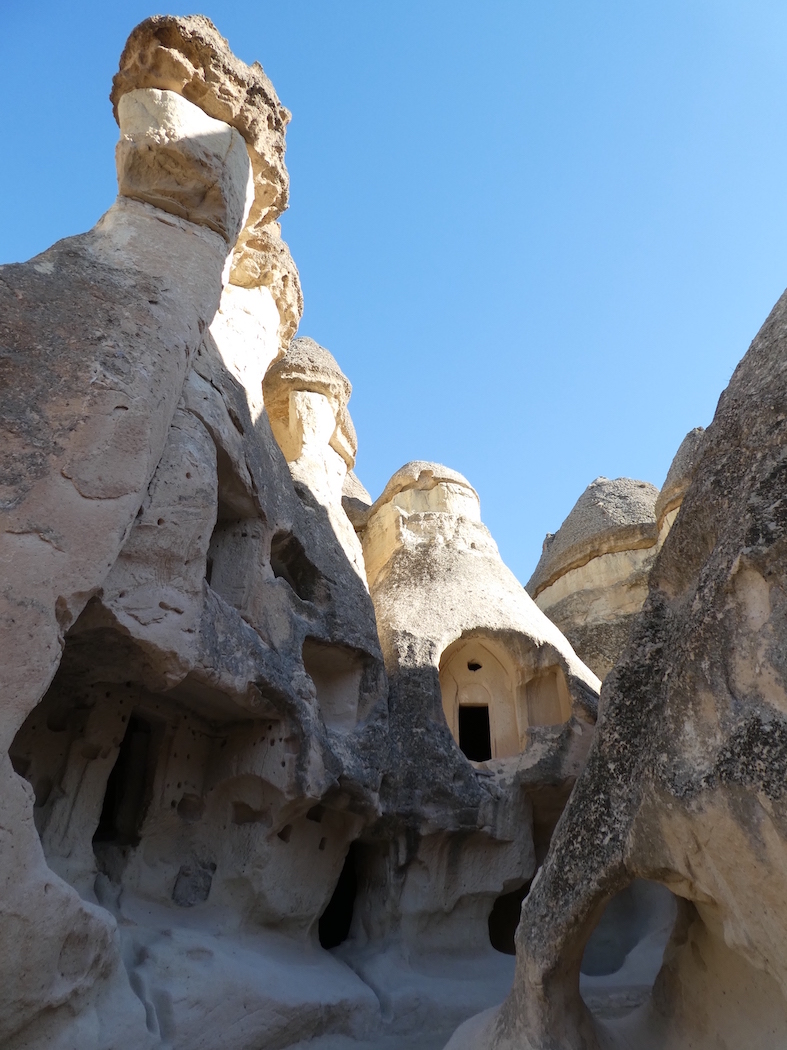
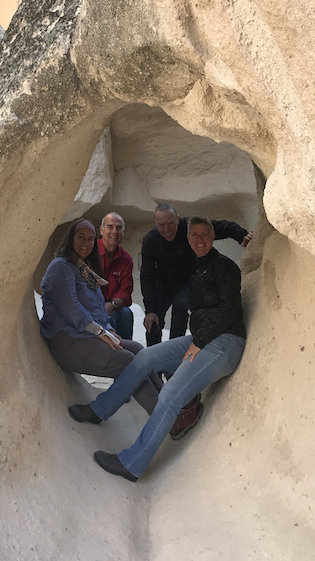
“On Tour in Turkey”
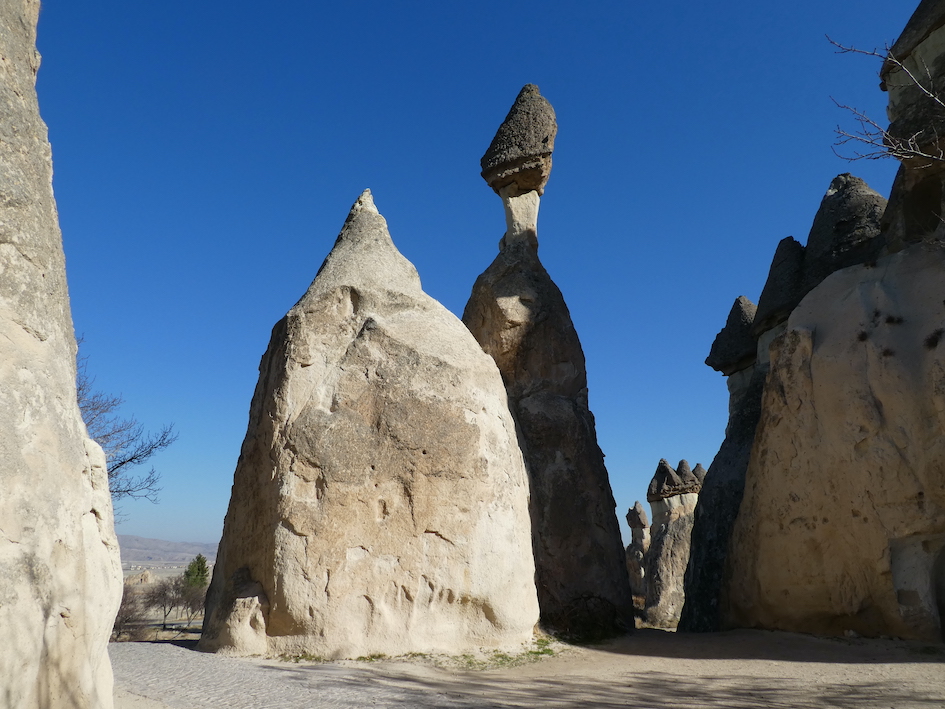
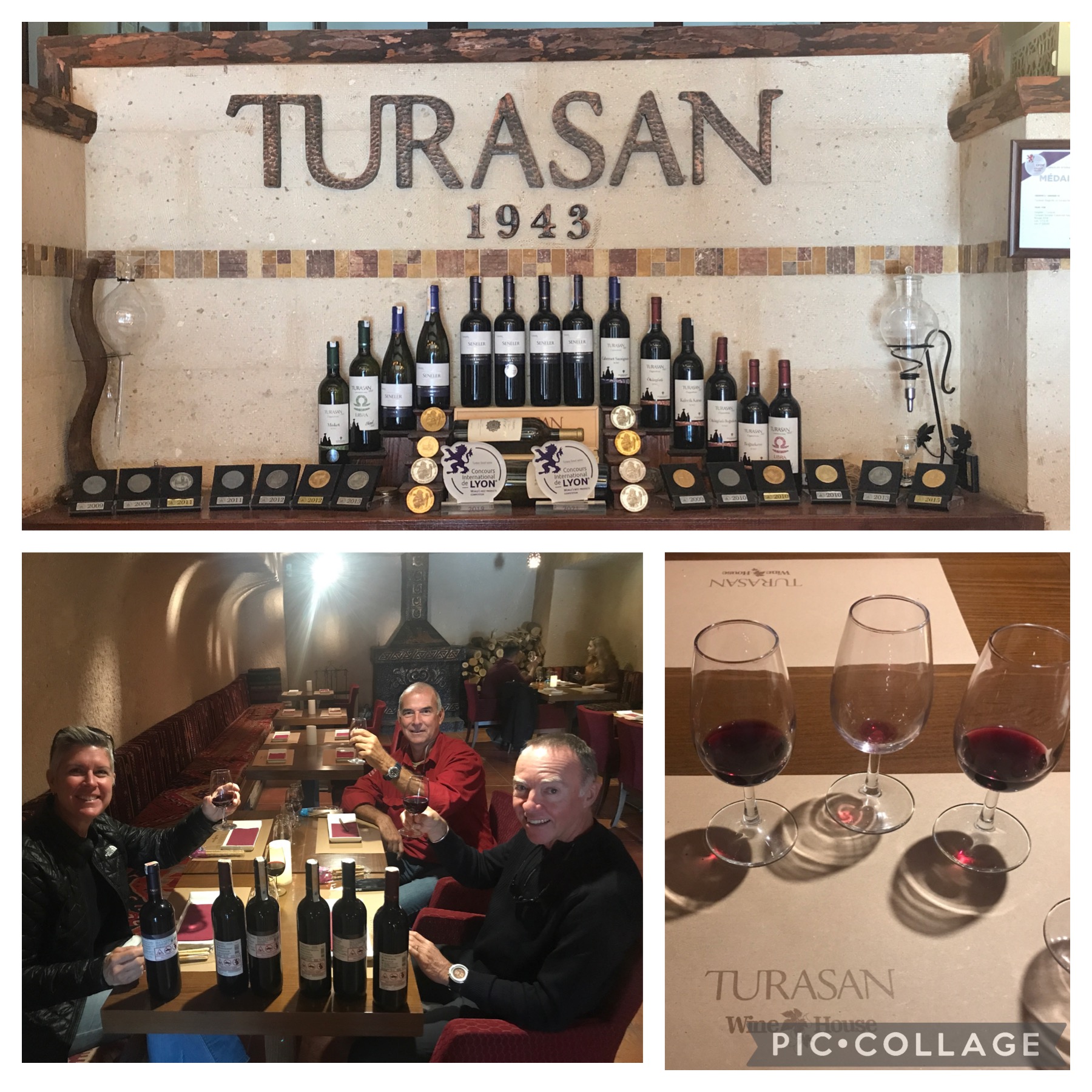
A lovely time was had by all, would we recommend the wine – truthfully no
(we have been too spoilt by good South Australian wine!)
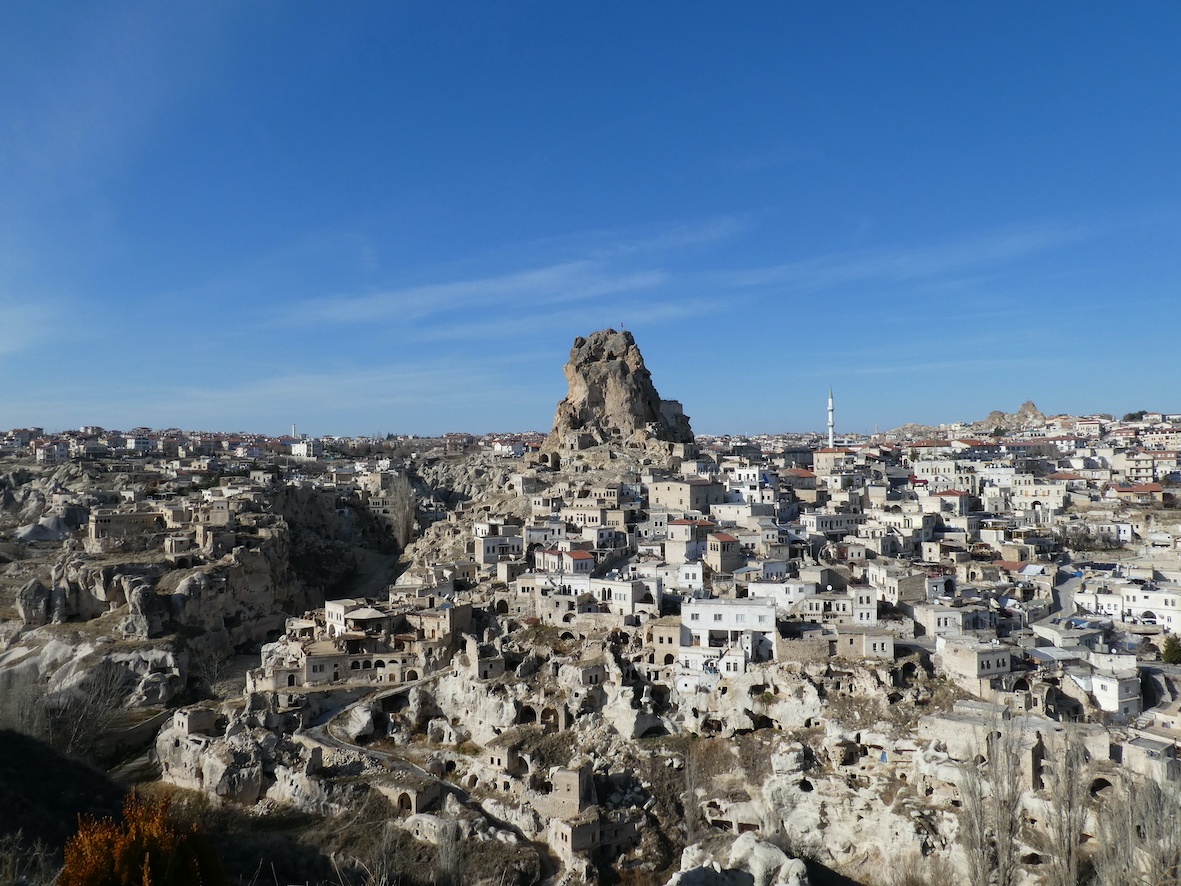
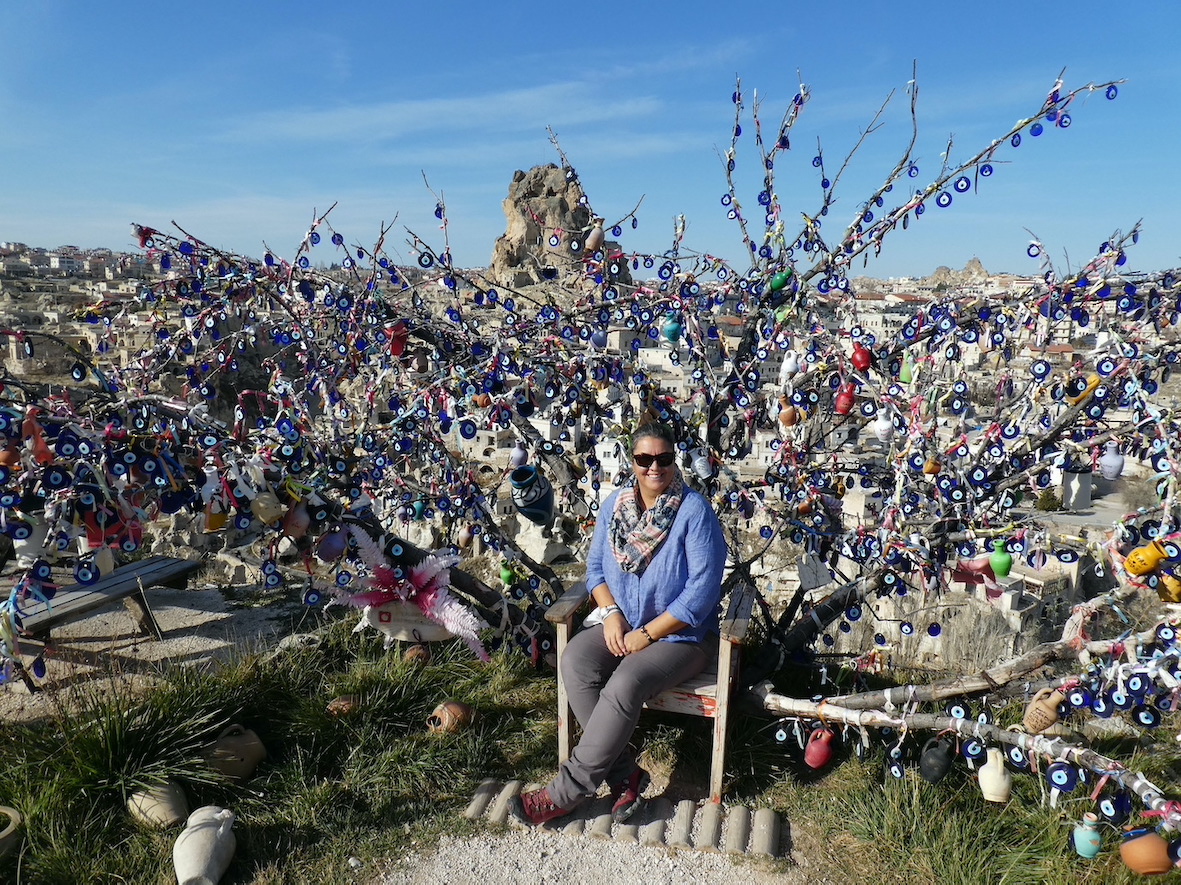
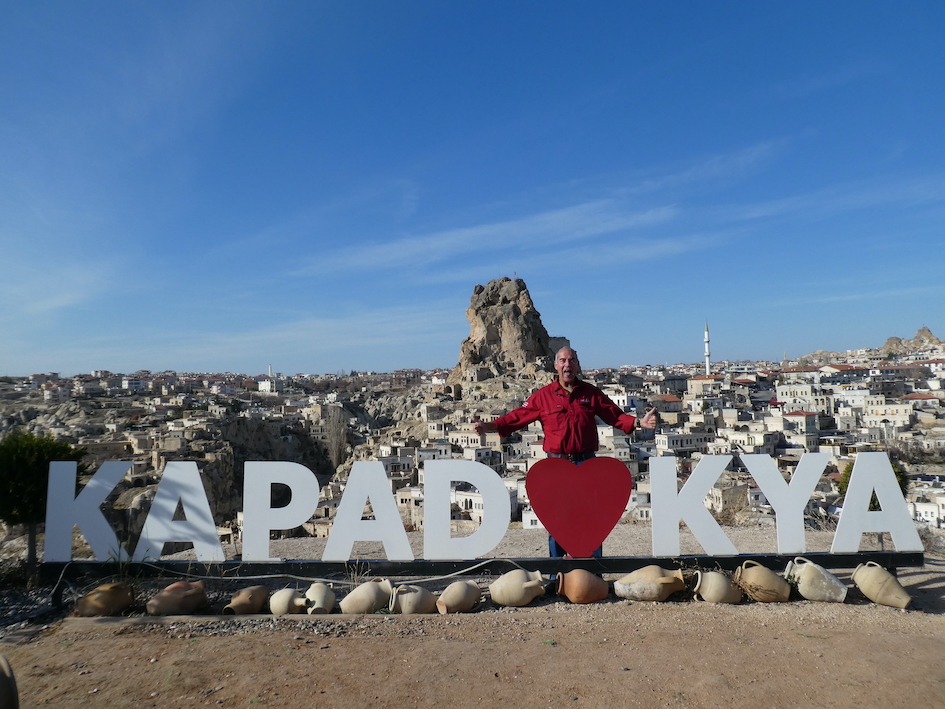
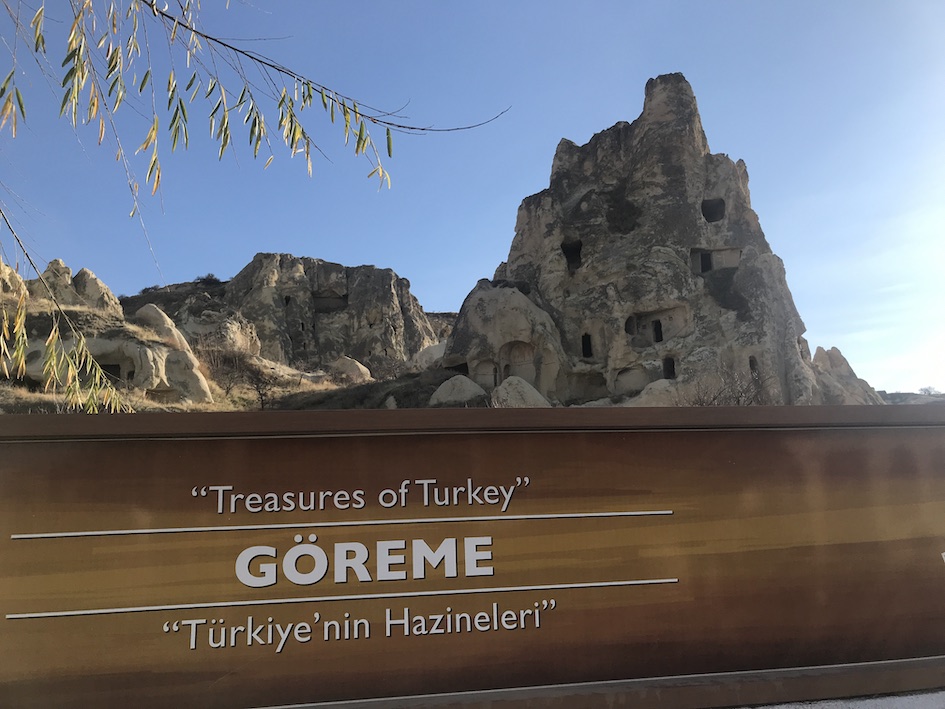
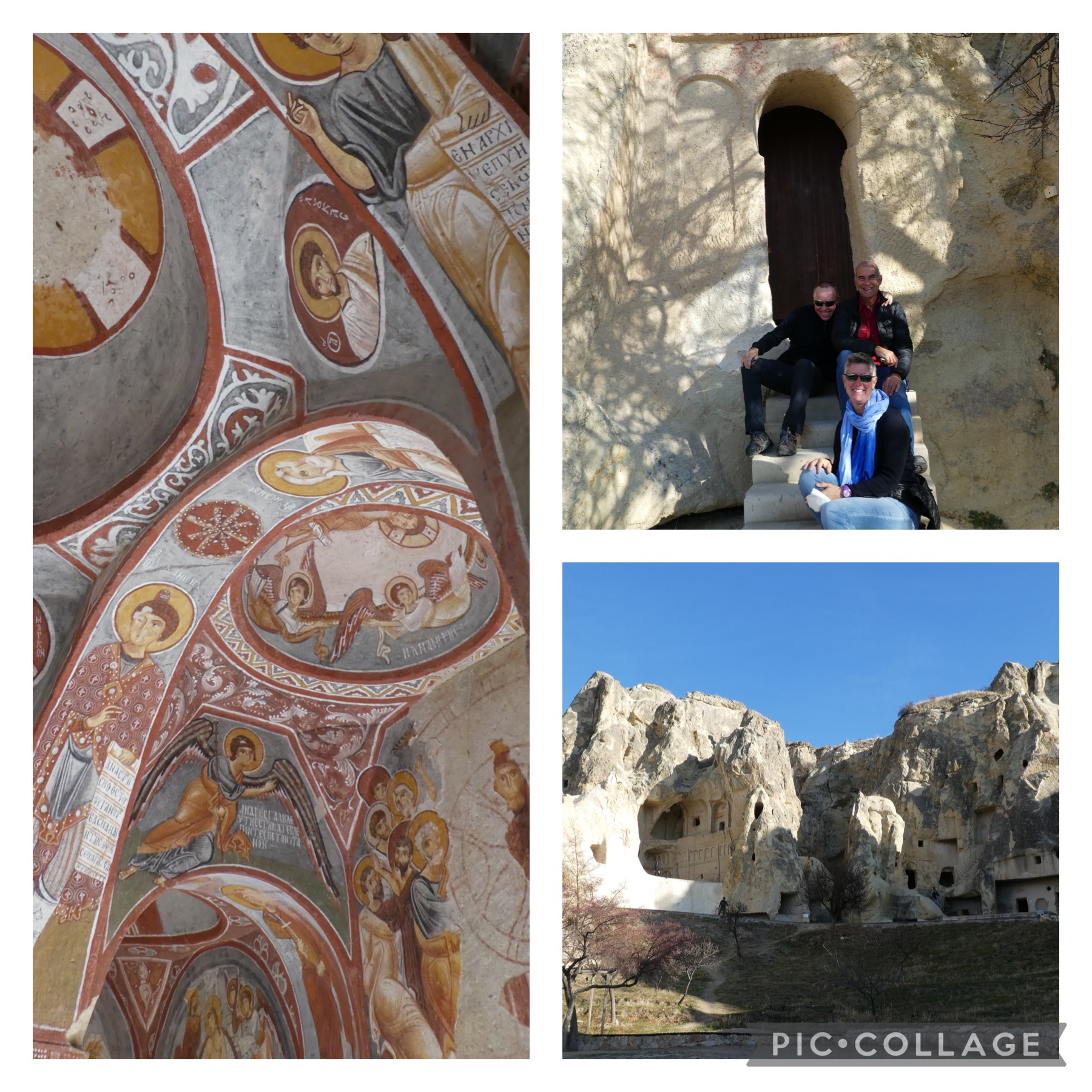

Day 5. Cappadocia
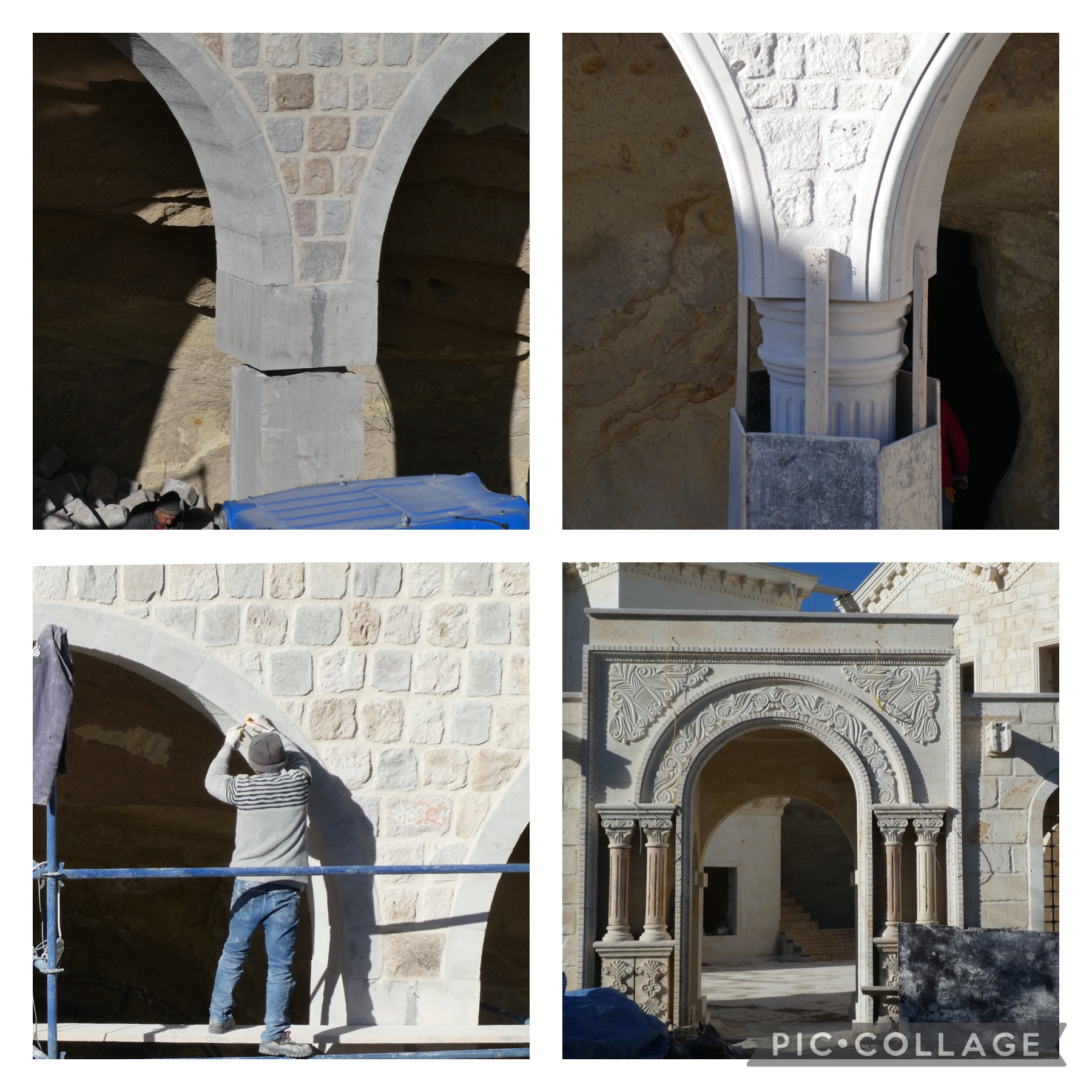
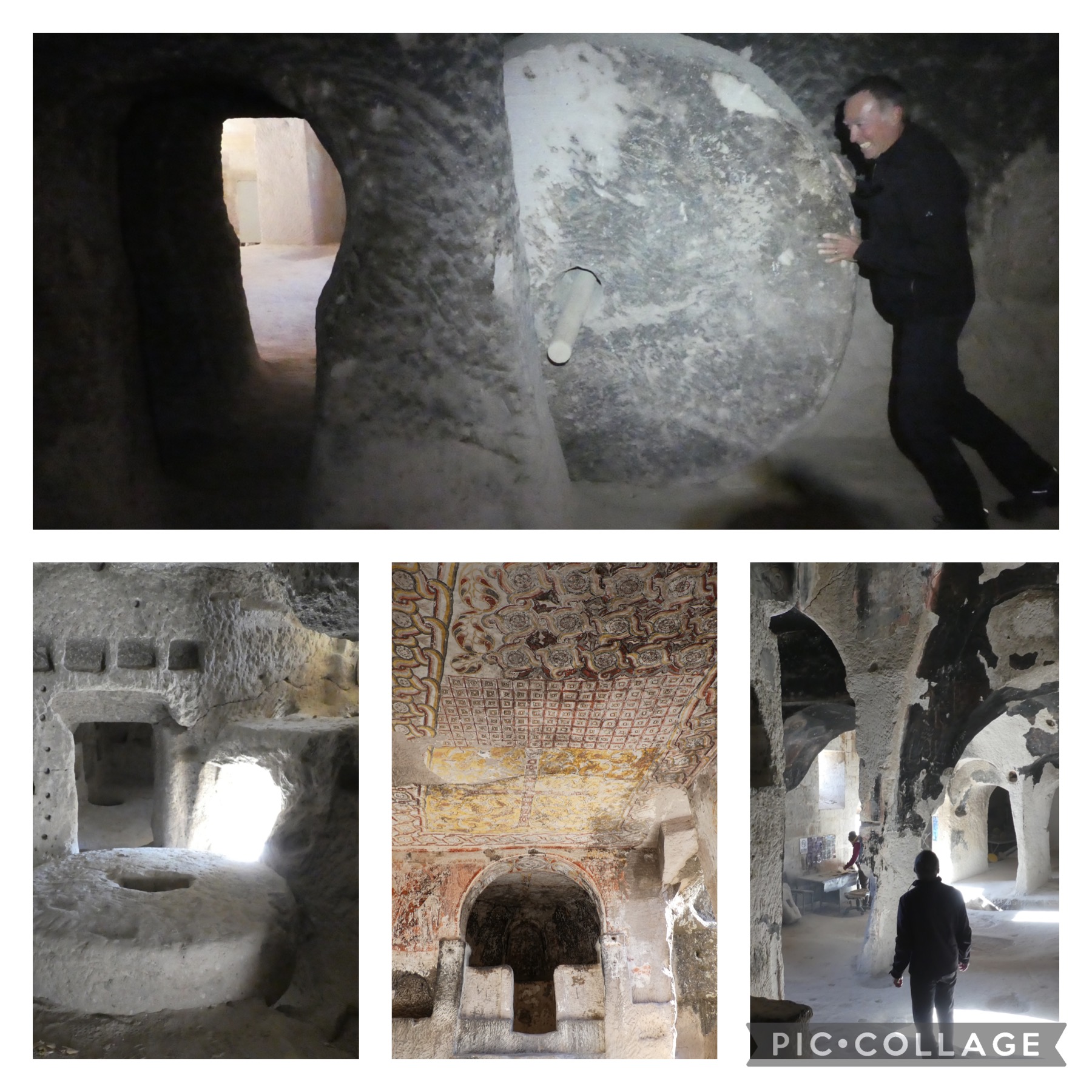
Jean trying to work the old stone circle door (hint to Jean, it is locked open with the stick in the middle)
Derinkuyu Underground City
The Derinkuyu underground city is an ancient multi-level underground city, extending to a depth of approximately 85 metres. It is large enough to have sheltered as many as 10,000 people together with their livestock and food stores. It is the largest excavated underground city in Turkey and is one of several underground complexes found throughout Cappadocia.
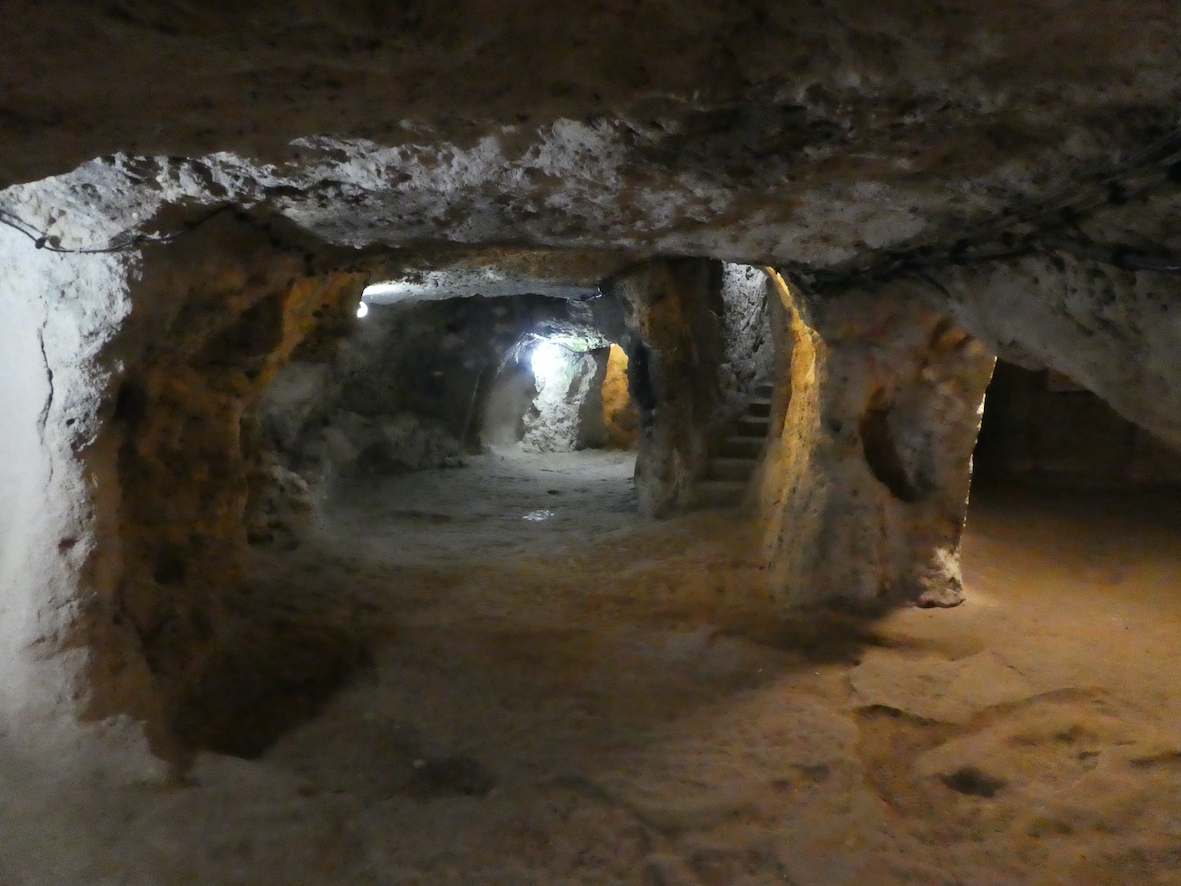

It could be closed from the inside with large stone doors. Each floor could be closed off separately, and had amenities such as wine and oil presses, stables, cellars, storage rooms, refectories and chapels.
The large 55-metre (180 ft) ventilation shaft appears to have been used as a well. The shaft provided water to both the villagers above and, if the outside world was not accessible, to those in hiding underground.
When were they built and WHY? The caves are believed to have initially built by the Phrygians in the 7th century BC, however in the Roman times (753 BC – 476 AD) the Christians expanded the caverns to deep multi level structures.

The city at Derinkuyu was fully formed in the Byzantine era, when they were used as protection from the Muslim Arabs during the Arab-Byzantine wars (780–1180 AD).
In short, they were built for survival. These were times when whole races/religions of people were being hunted and executed.
The city was connected with other underground cities through many kilometres of tunnels.
These cities continued to be used by the Christian natives as protection from the Mongolian incursions in the 14th century.
As late as the 20th century, the local population, Cappadocia Greeks, were still using the underground cities to escape periodic persecutions.
In 1923, the Christian inhabitants of the region were expelled from Turkey and moved to Greece in the population exchange between Greece and Turkey, whereupon the tunnels were abandoned.
In 1963, the tunnels were rediscovered after a resident of the area found a mysterious room behind a wall in his home. Further digging revealed access to the tunnel network.

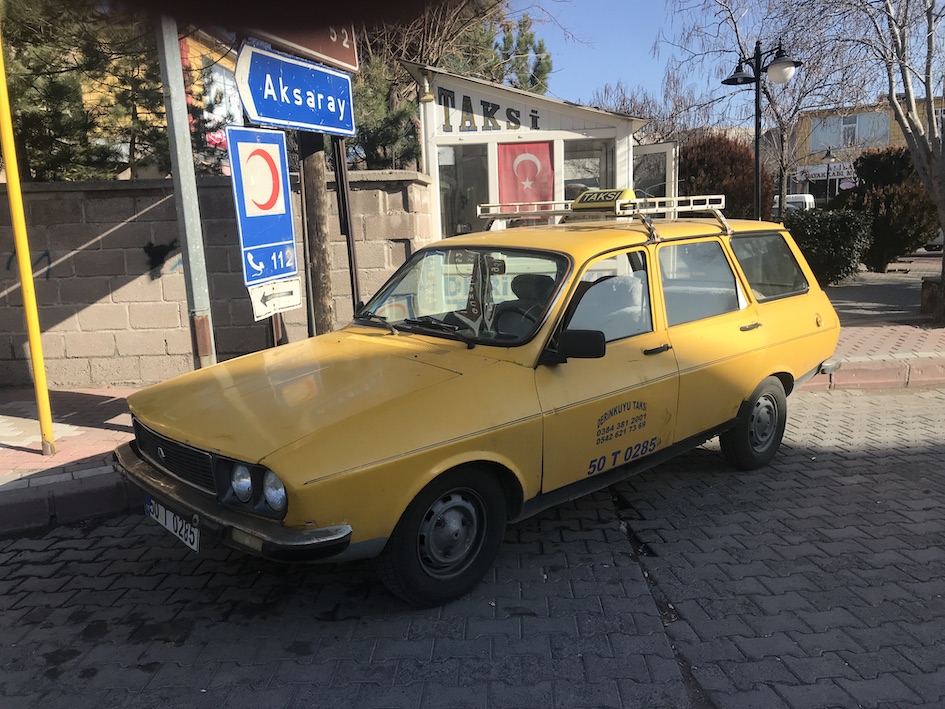
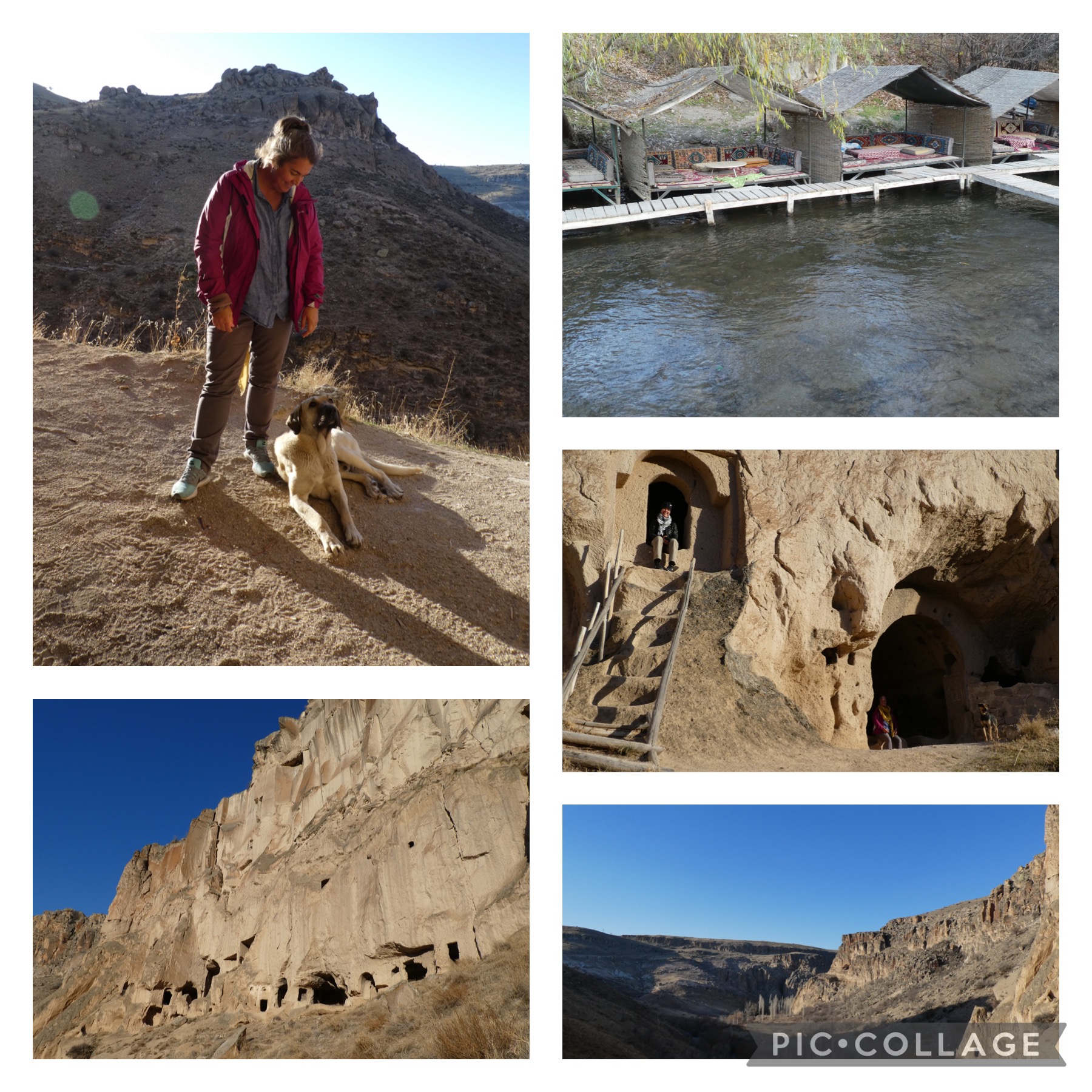
The street dog walked beside Maree the entire way (7km)
Day 6. Göreme – Silifke

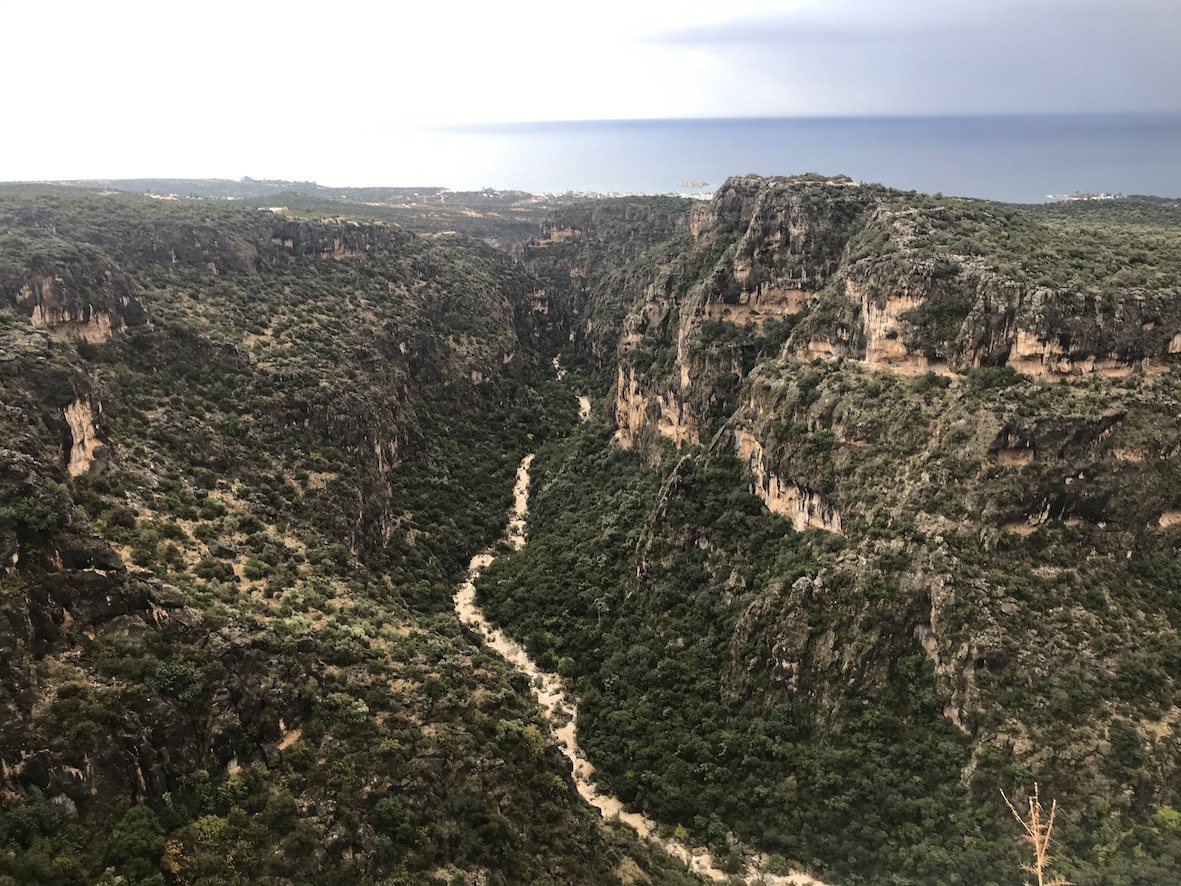
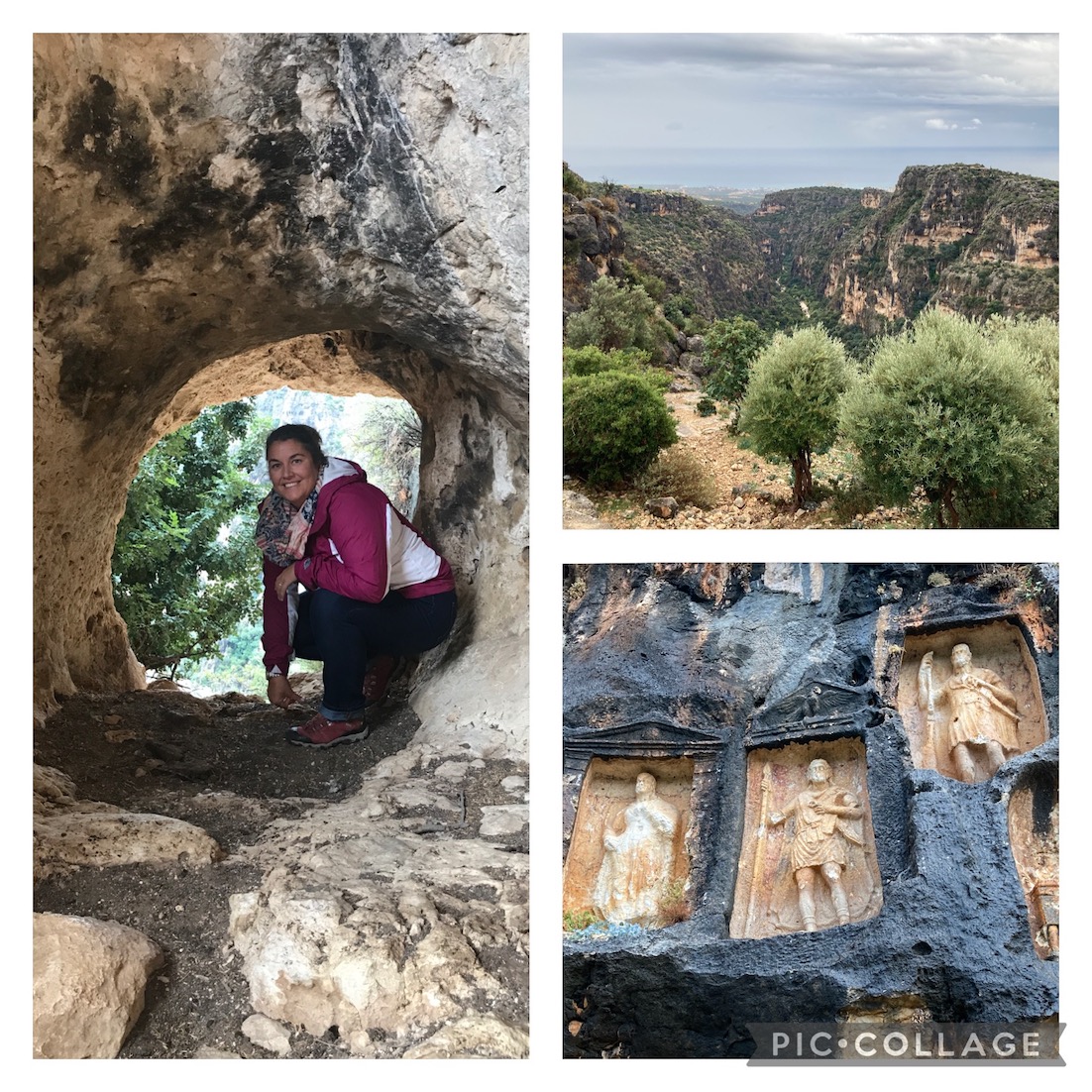

Day 7. Silifke – Side
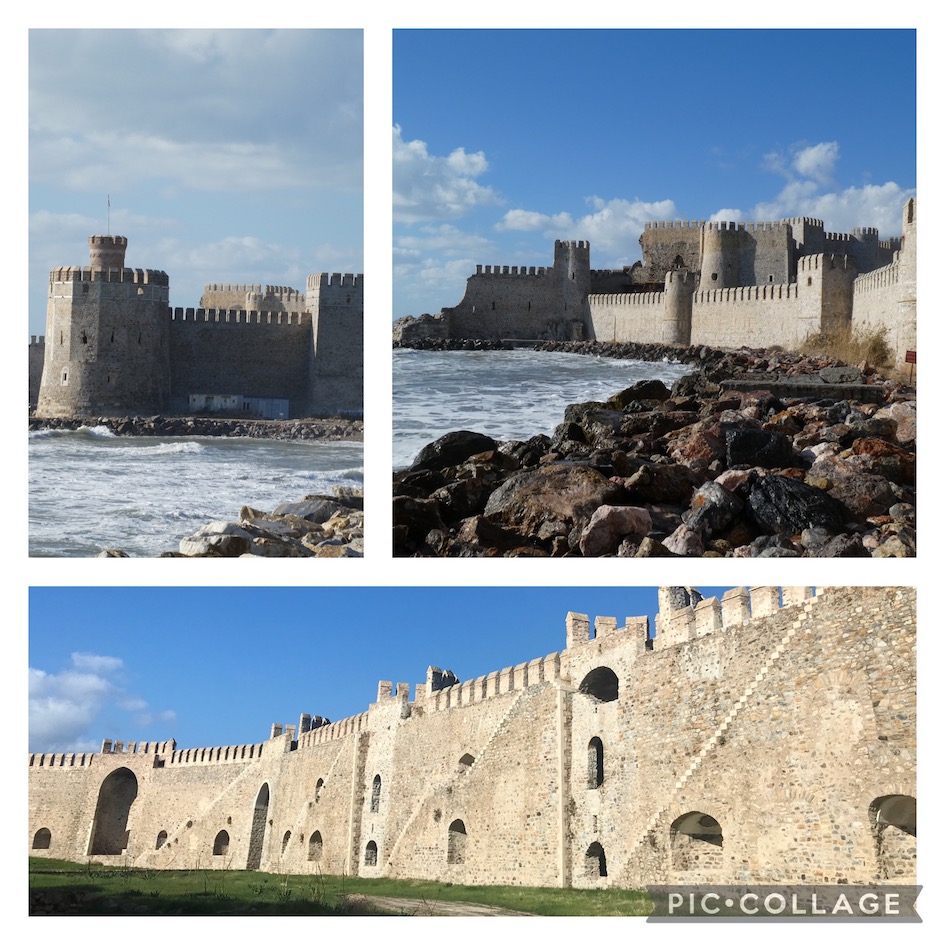

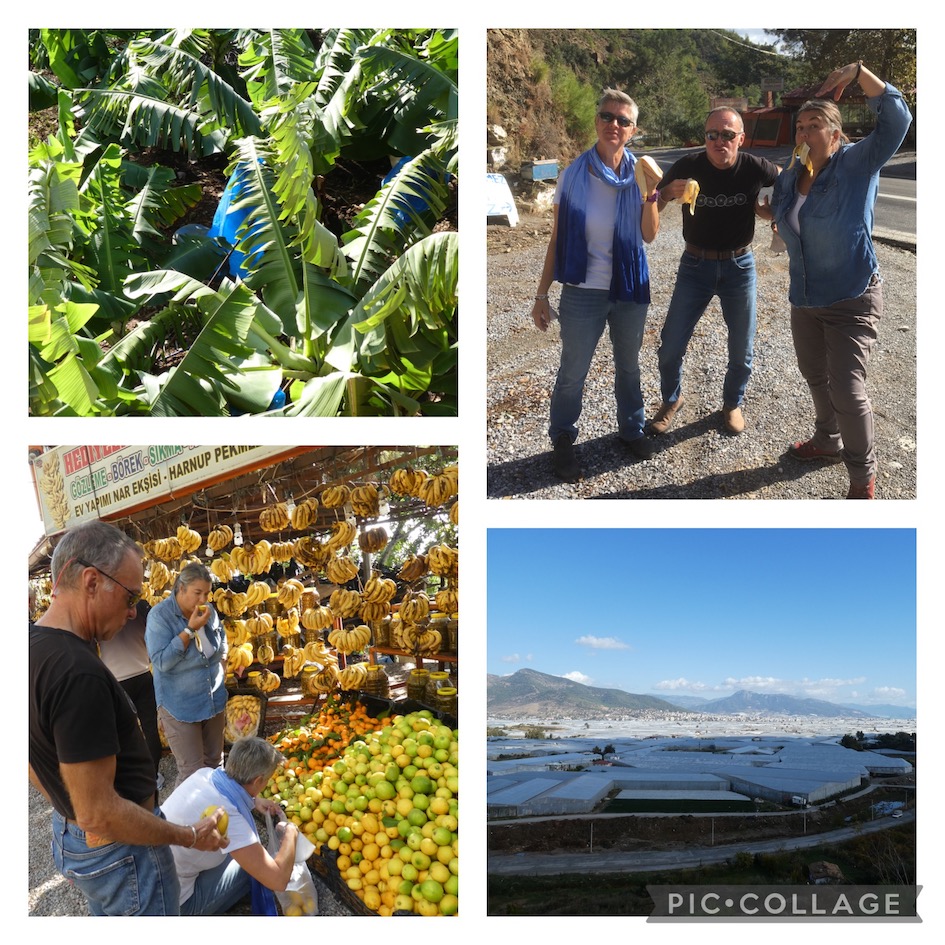
We taste tested and they are delicious!
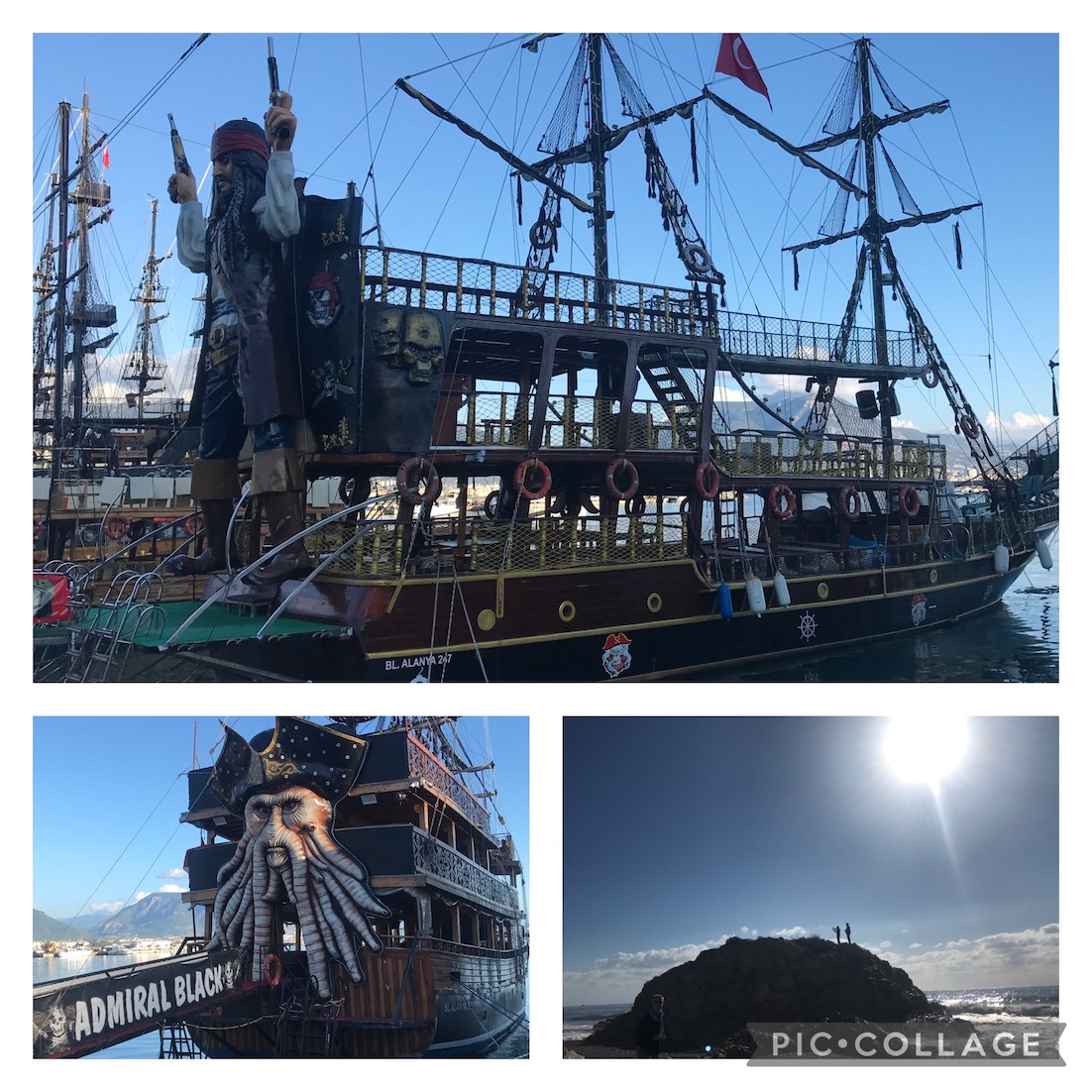
Day 8. Side – Antalya
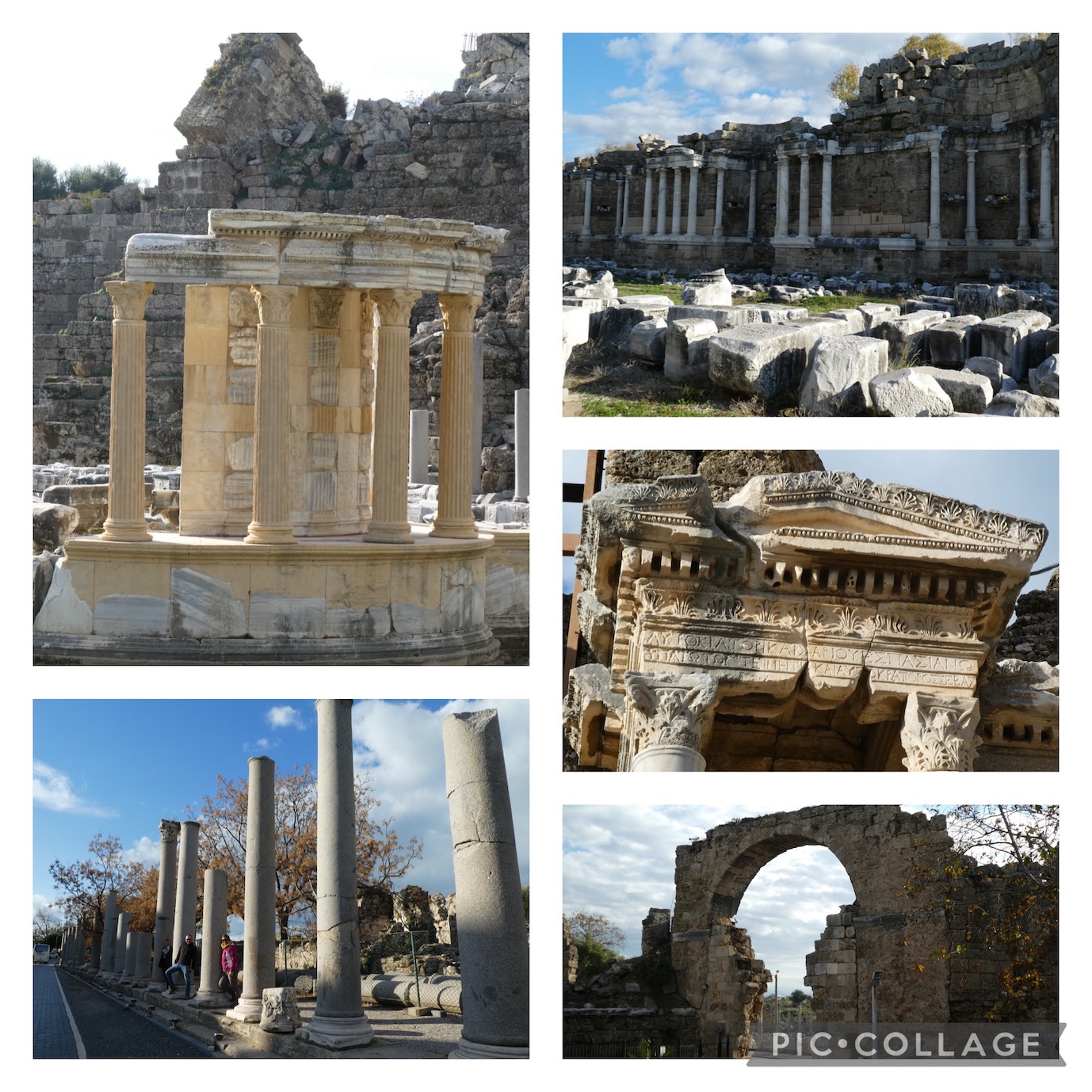
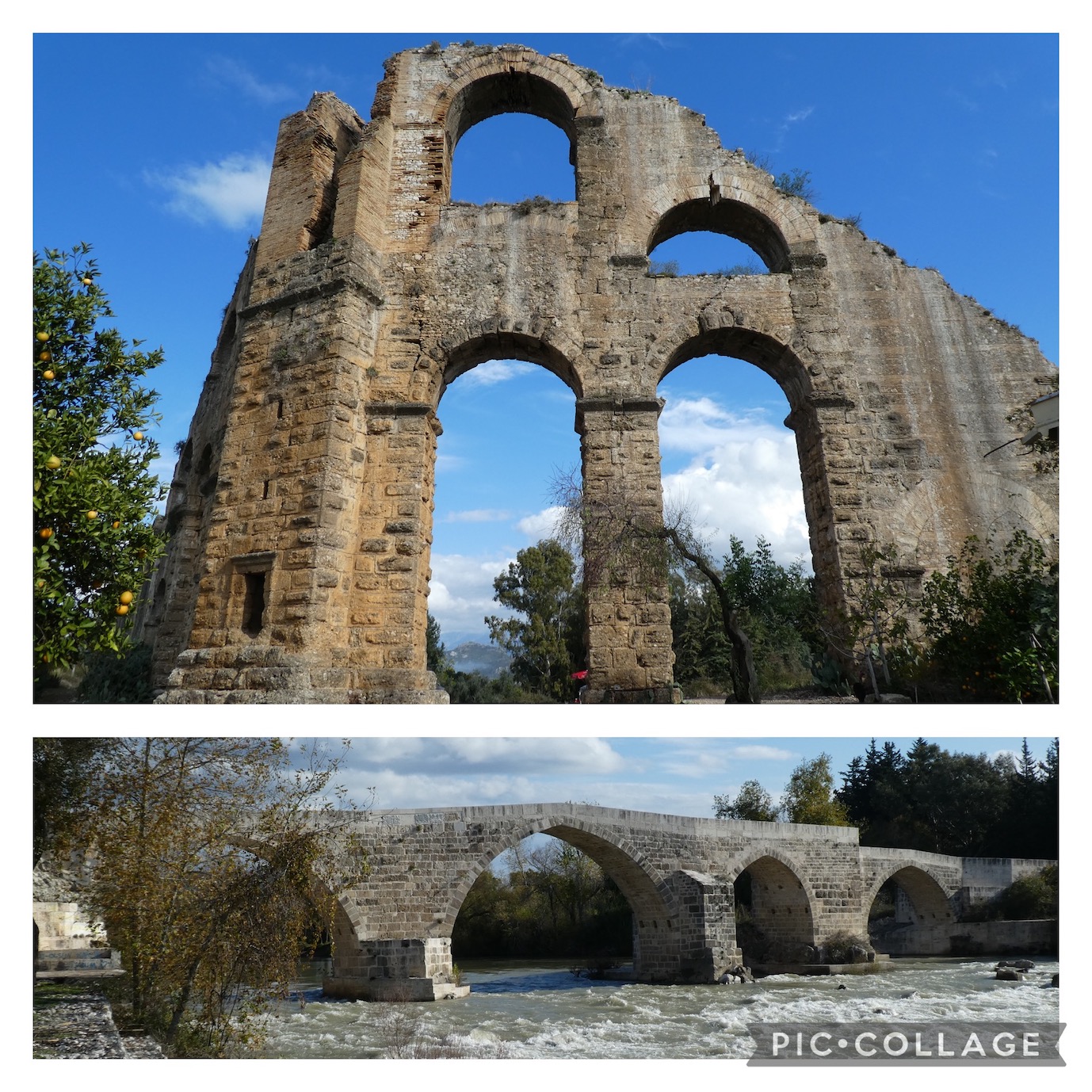

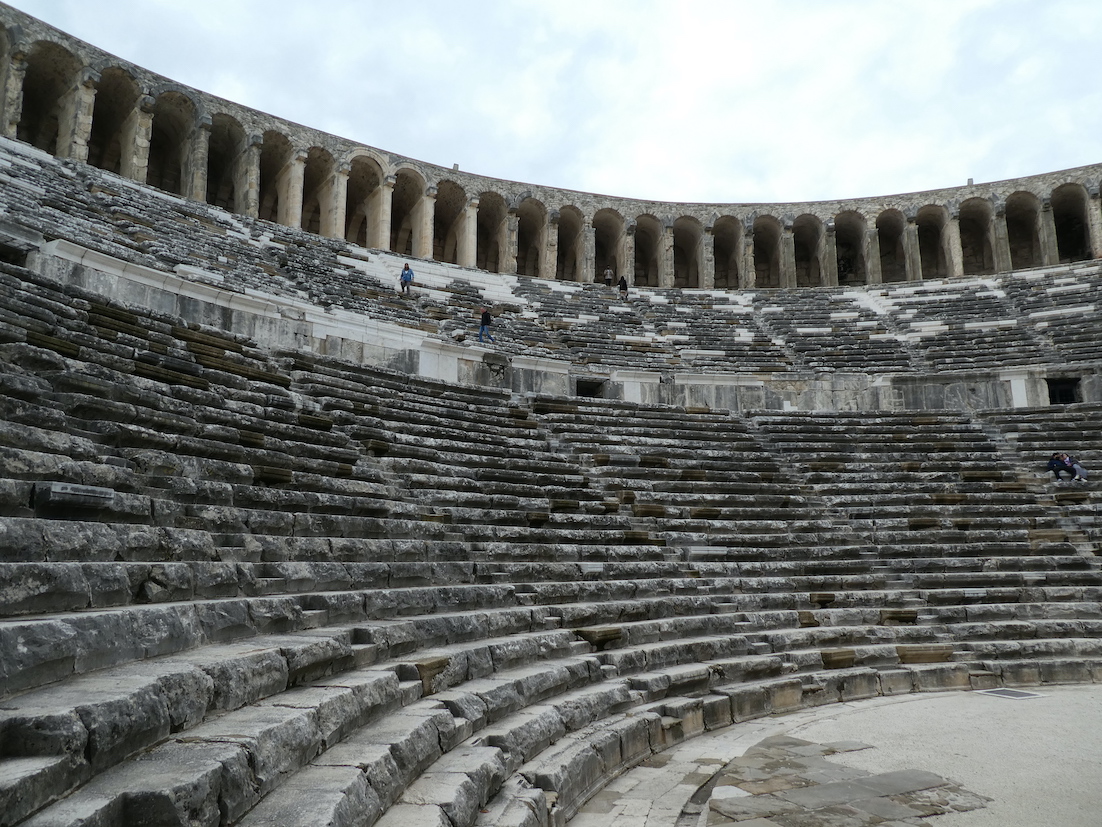

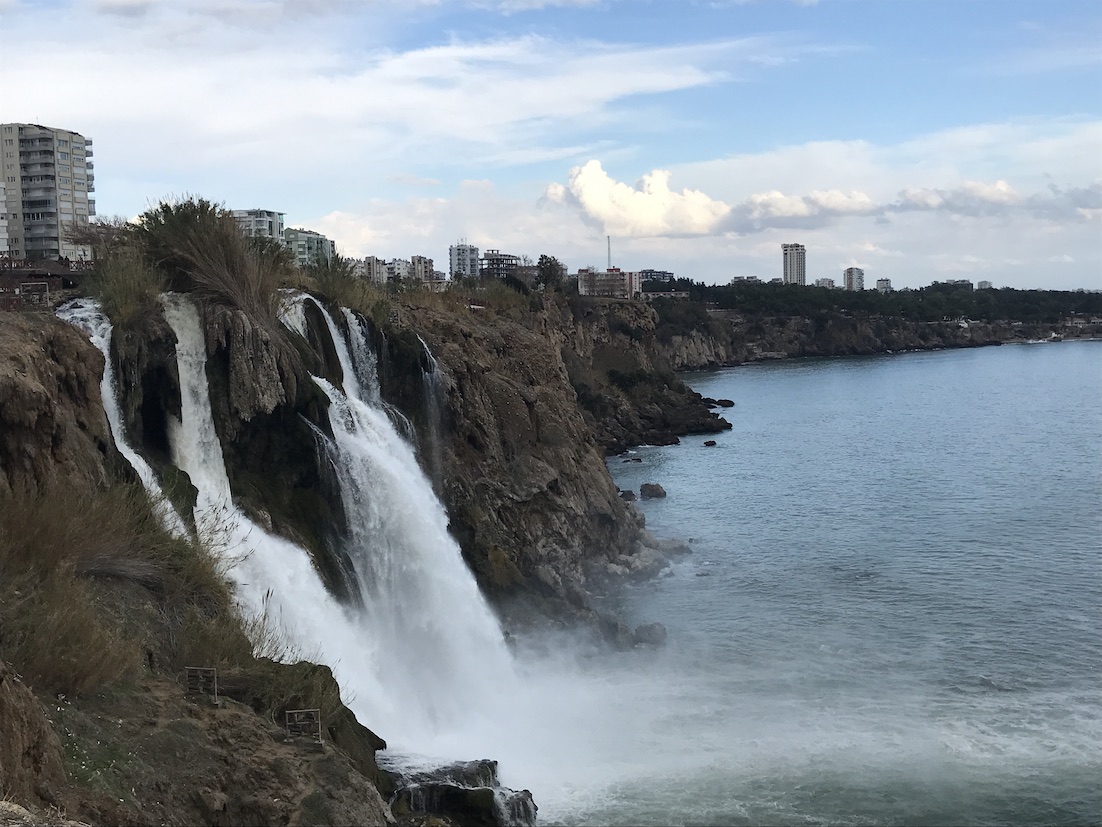
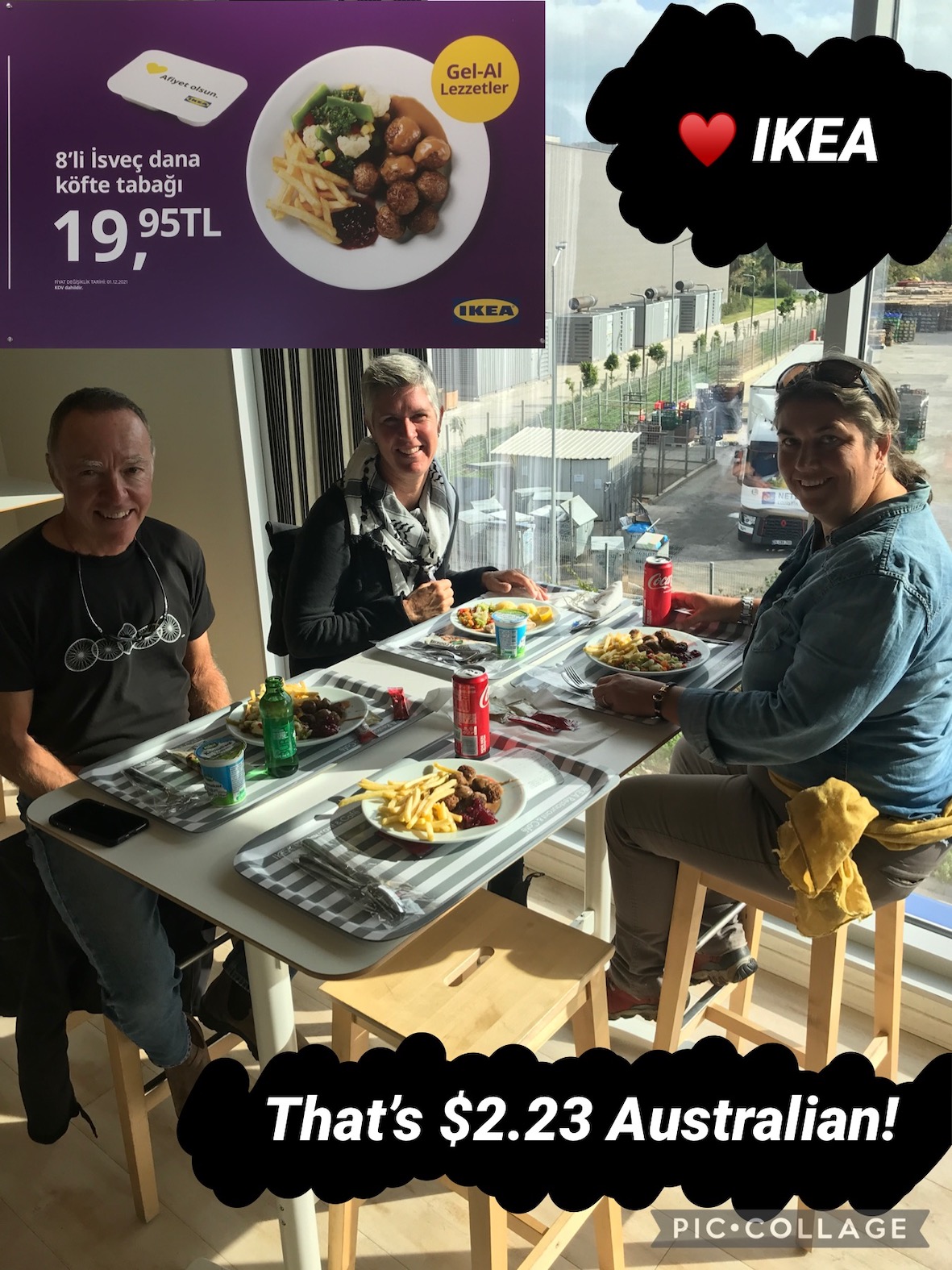

Enjoying Sweedish meatballs for lunch at the essential IKEA stop.
Old Town Antalya on dusk.
Day 9. Antalya – Marmais … Home
A fabulous trip enjoyed with friends. We certainly appreciate how lucky we are to be able to live and experience the culture here in Turkey and look forward to seeing more of the country.

 Red Roo
RECENT COMMENTS