2021 The Year That Was …
As another year draws to a close and we celebrate the next one making plans of all it may bring, it is also time to reflect and tally what we achieved over the last 12 months.
I find it hard to believe that time has passed so quickly and we have been living on the boat for 6.5 years since taking ownership in July 2015, that’s 2376 days.
We certainly underestimated time when we set off … originally we thought it would take us 5 years to sail home to Australia, (which if we had of headed straight home it may have done, but well, you know, we got distracted by all there is to see over here). We now know it’s going to take a while longer yet – there is a lot of the world to see on the way!

Red Roo 2021
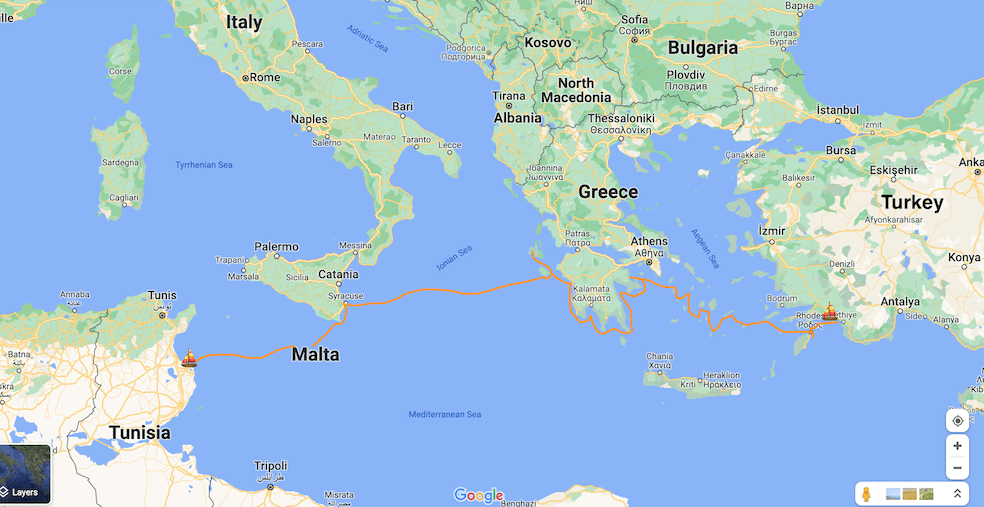
168 days sailing (26/05/2021 – 09/11/2021)
1,788 Nautical Miles Travelled
79 Anchorages/Locations
5 Countries; Tunisia, Malta, Italy, Greece, Turkey
3 Continents; Africa, Europe & Asia



Lowlights
- Failure of wind instrument (replaced €)
- Sad farewell to our Caribe Dinghy, I miss it!
- Failure of reverse gear when anchoring (pin replaced)
- A lot more motoring than previously – it is true what they say about the Mediterranean Sea it’s either too much wind (dangerous) or not enough to sail
- Covid pandemic continues
Highlights
- Being safe and healthy at all times
- Our new dinghy (haven’t used it yet but it looks good)
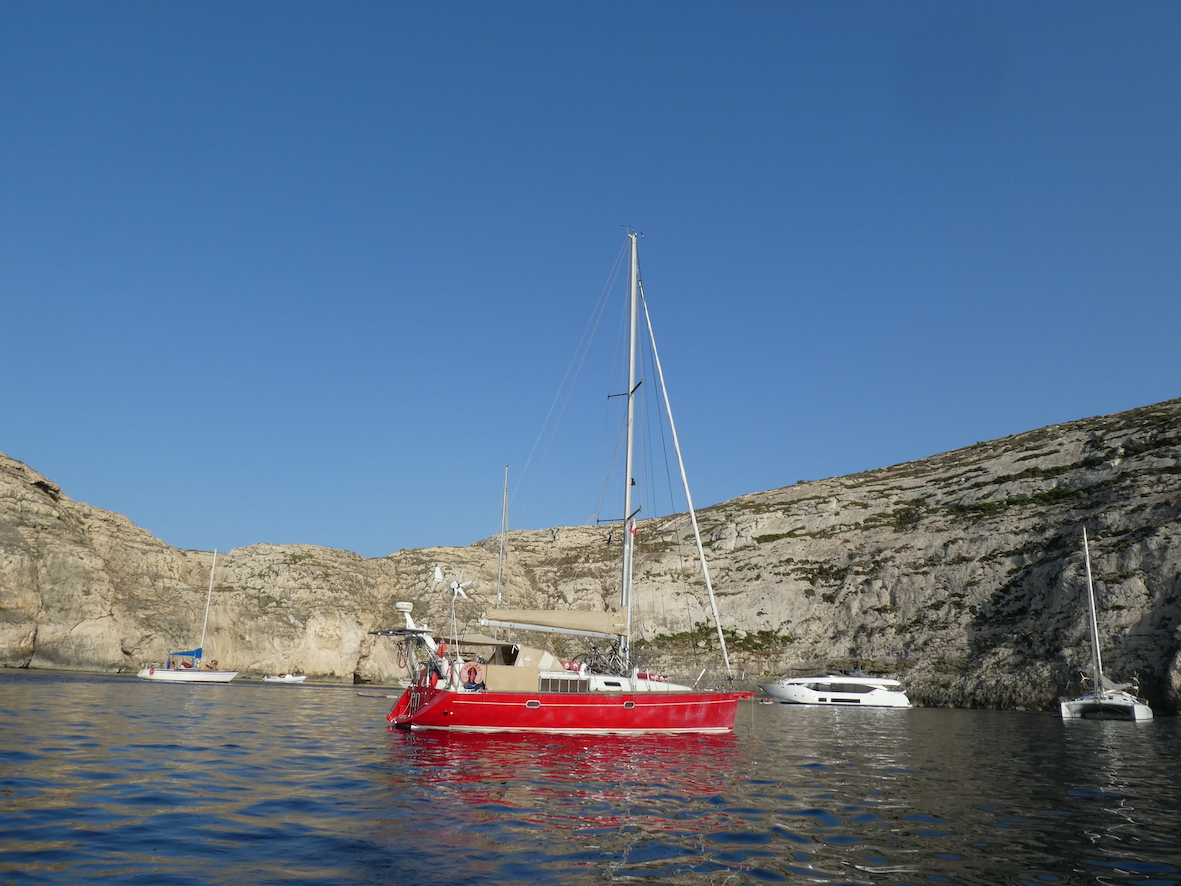
- Red Roo continues to look after us


Whats Next for 2022
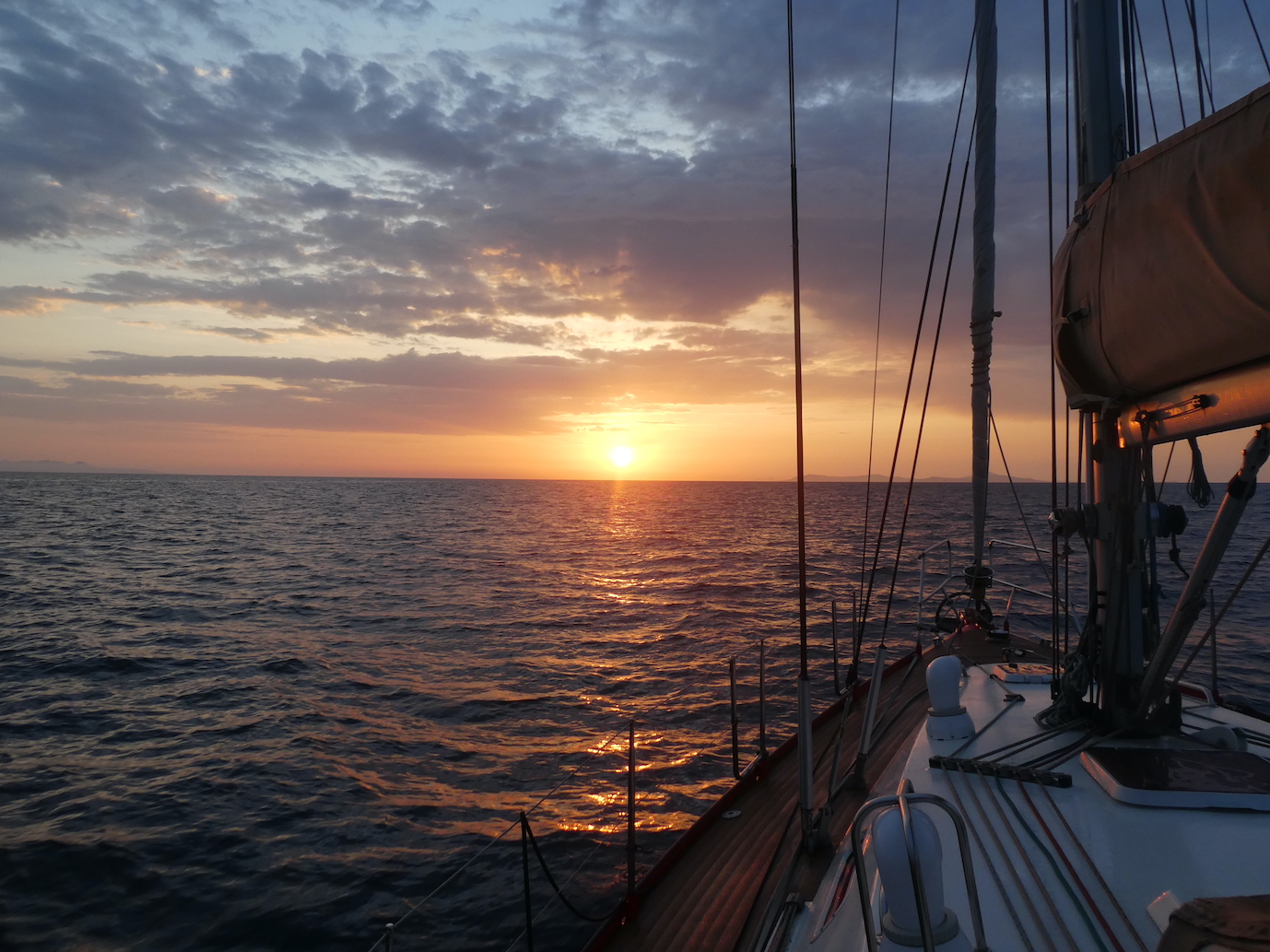
Our plans for 2022 at this stage include, hauling out the boat for polish and maintenance, more travel in Turkey (land travel). Then, set sail west back out of the Mediterranean.


Accumulative Totals 2015 – 2021 Inclusive
11,027 nautical miles
208 night hours sailing
3 Continents; Europe, Africa, Asia
23 Countries; France, Channel Islands, England, Ireland, Northern Ireland, Scotland, The Netherlands, Germany, Poland, Lithuanian, Latvia, Estonia, Finland, Sweden, Denmark, Spain, Portugal, Morocco, Tunisia, Malta, Italy, Greece, Turkey

I have also recently updated the “our photos” page of our blog. This is where at the end of visiting each country or major destination I collate our favourite photos into a video journal to share. I have now added;
- Tunisia (Dec 2020 – May 2021)
- Turkey – Cappadocia (3-12 December 2021)
- Greece (August 2021 – October 2021)
- Malta (May 2021 – July 2021)
- Tunisia (Dec 2020 – May 2021)
- Gibraltar – La Linea (Spain) & The Southern Spanish Coast (March 2019 – Dec 2020)
To view click the link “our photos” or navigate to our website and the appropriate page www.redroo.net.
The Data
| YEAR | SAILING SEASON | DAYS | NAUTICAL MILES | COUNTRIES | NOTES |
| 2021 | 26/05/21 – 09/11/21 | 168 | 1788 | 5 Tunisia Malta Italy Greece Turkey | 79 locations. Late leaving Tunisia due to covid vaccinations. Winter in Turkey. |
| 2020 | 03/11/20 – 31/12/20 | 59 | 1100 | 2 Spain Tunisia | 22 locations. Repairs & covid made it a short year. Winter in Tunisia. |
| 2019 | 17/03/19 – 24/03/19 | 8 | 33 | 2 Morocco Spain | The year of the “water ingress incident” & then repairs (insurance). Winter in Spain. |
| 2018 | 05/05/18 – 04/11/18 | 184 | 2099 | 6 England Channel Islands France Spain Portugal Morocco | 59 locations. Snowing in England until April (late start to season). Haulout in Portugal (3 weeks). Winter in Morocco. |
| 2017 | 09/03/17 – 19/12/17 | 286 | 3283 | 10 England The Netherlands Germany Poland Lithuania Latvia Estonia Finland Sweden Denmark | 126 locations. The Netherlands included 31 locks &171 opening bridges. Winter in the England. |
| 2016 | 16/01/16 – 12/12/16 | 332 | 2,597 | 6 France Channel Islands England Ireland Northern Ireland Scotland | 82 locations. Winter in Channel Islands (Jan/Feb) & England (Dec). |
| 2015 | 16/11/15 – 19/12/15 | 34 | 127 | 1 France | 5 locations. Winter in France (Cherbourg). |
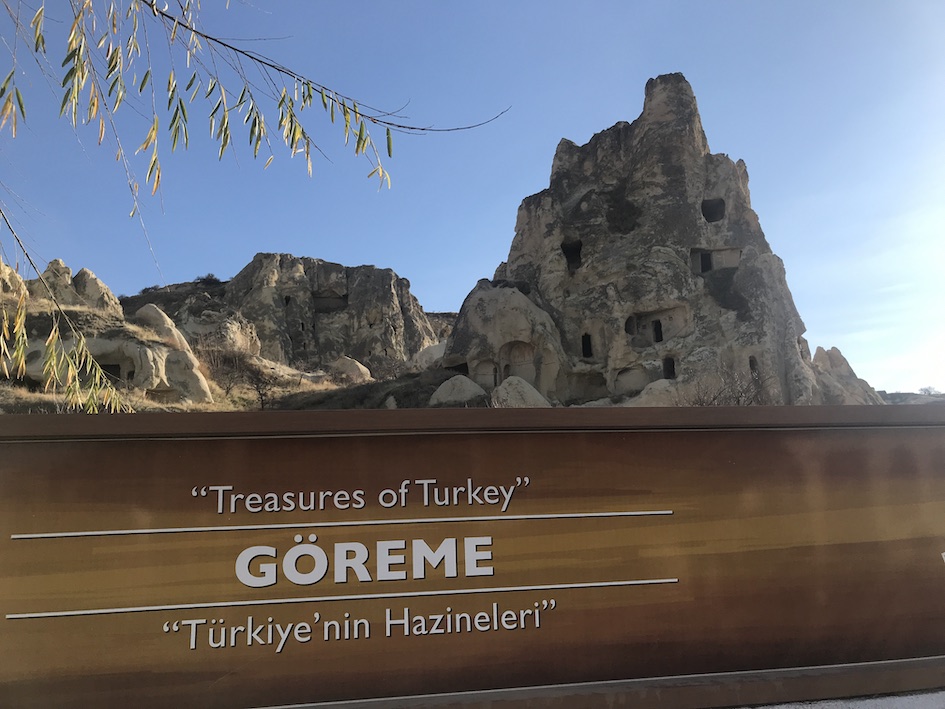
Exploring Cappadocia – Turkey
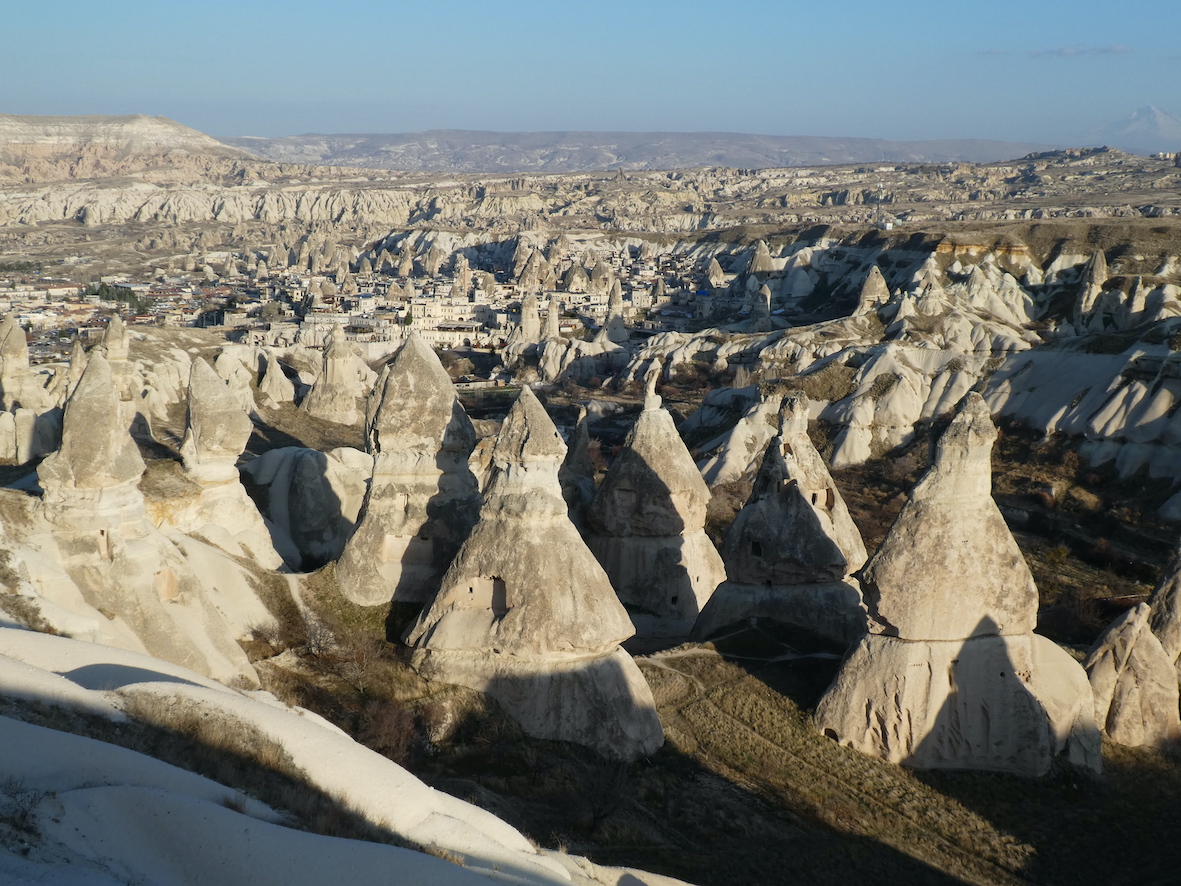
We had been in Turkey 3 weeks, Red Roo was safe and secure in the marina, our most pressing and immediate winter jobs underway (many more to go, but they could wait until the new year) and we were itching to get out and explore some more of this wonderful country, we wanted to go inland.
A trip was planned with our Canadian friends Jean & Yolene (Caffe Latte), we hired the car and we were off heading inland (north/east) to explore Cappadocia.
In 9 days we covered 2,500 km taking in some spectacular and hugely diverse scenery. The stars on the map below indicate our travels and the major stops/attractions.
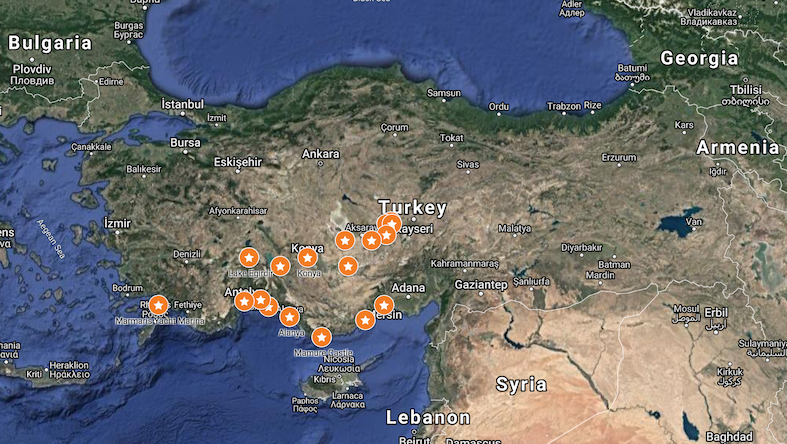
We went from lake country, to the fruit bowl and orchards, to cities with magnificent mosques and history, valleys full of prehistoric rocks, cave houses and cave churches to underground cities that housed more than 10,000 people, then past ski mountains and onto to Roman ruins and some more of the Turkish coast line.
We shall let the photos do the talking.
Day 1. Marmaris – Lake Eğirdir

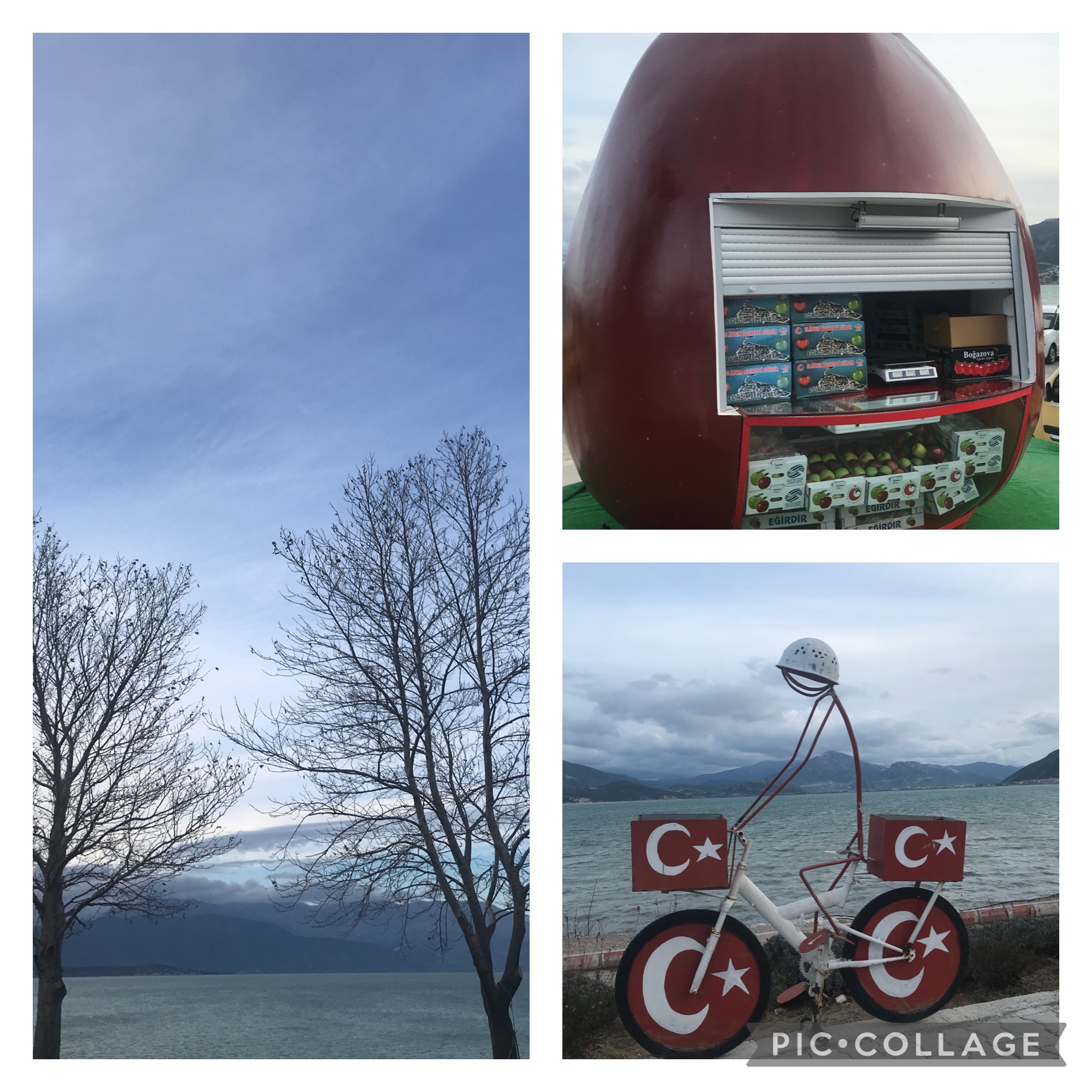
Lake Eğirdir is Turkey’s fourth largest lake and second largest freshwater body. The total size of the lake covers an area of 482 km squared, the lake lies 917 meters above sea level and has an average depth of 14 meters. This provinces lakes provide water for agriculture and recreation.
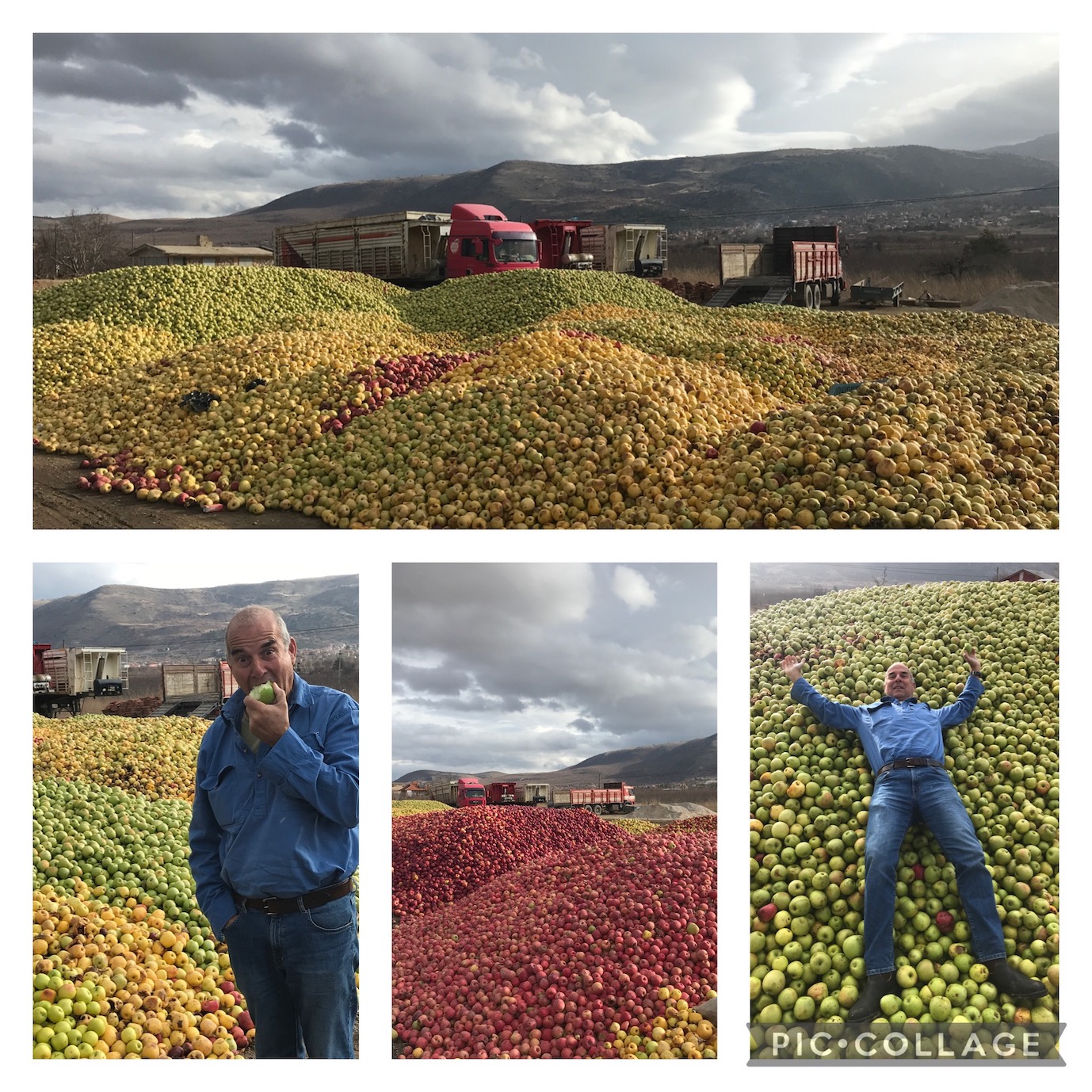
Apples are one of the main products of this areas broad open plains and lakes. The province grows 20% of the Turkeys total annual production of apples which is 500,000 tonnes. Turkey grows 5% of the worlds apple production and ranks 4th after China, USA & France.
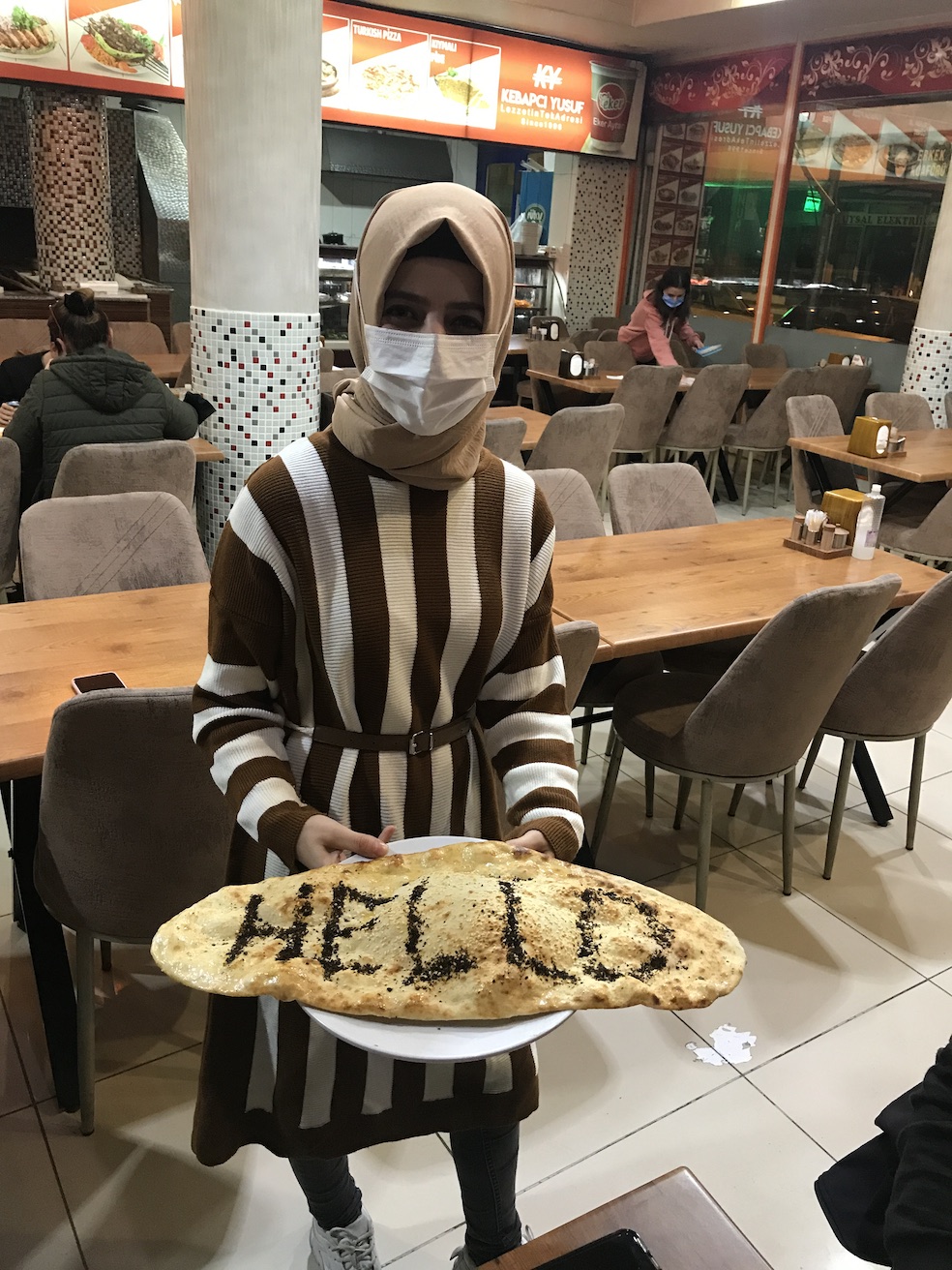

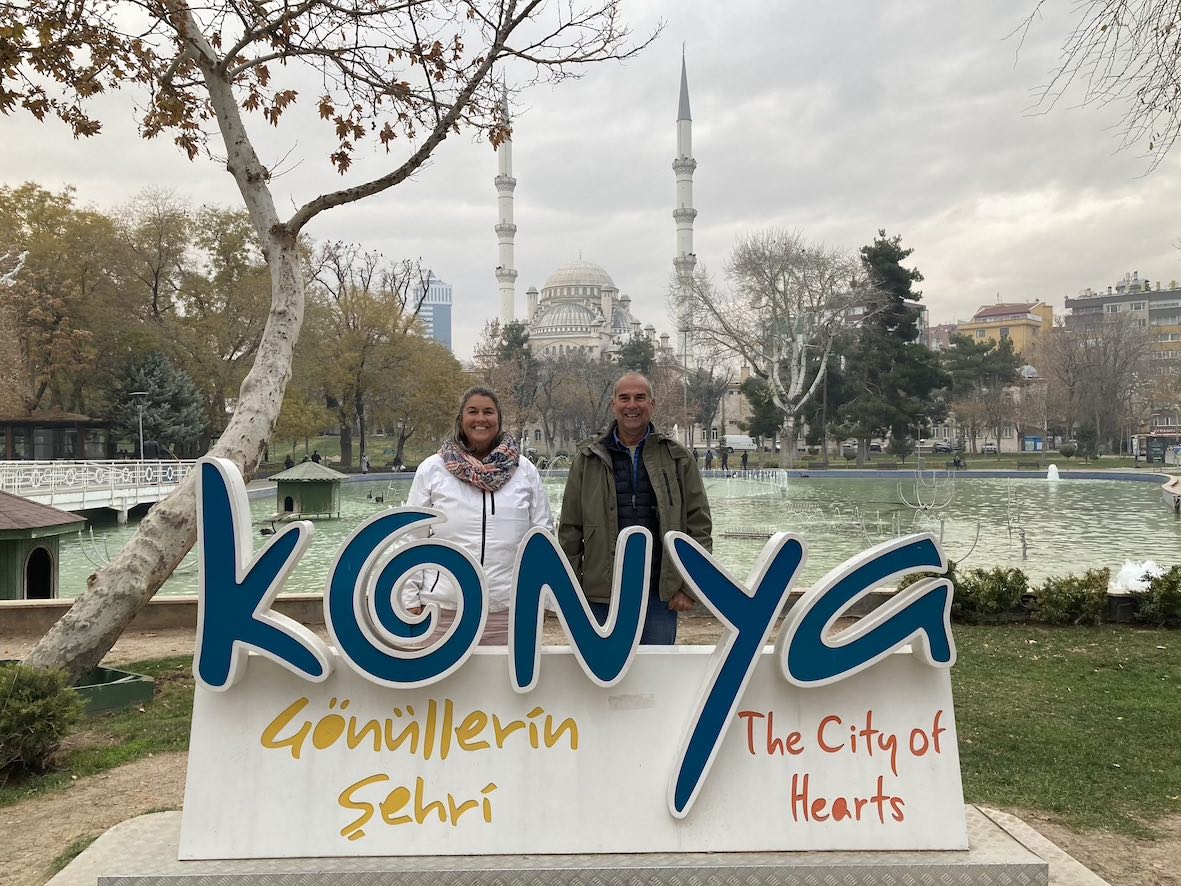
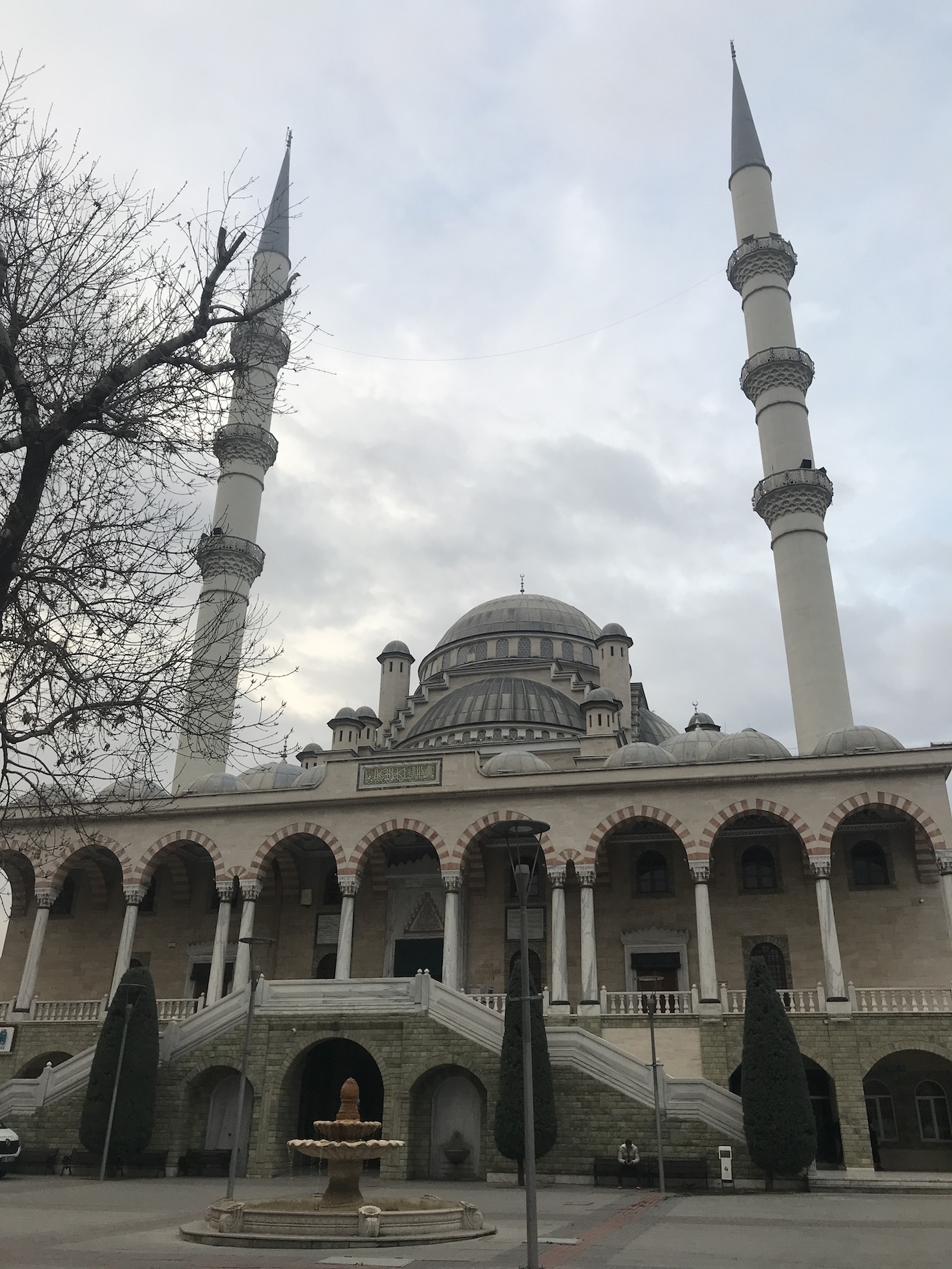
Day 2. Lake Eğirdir -Konya
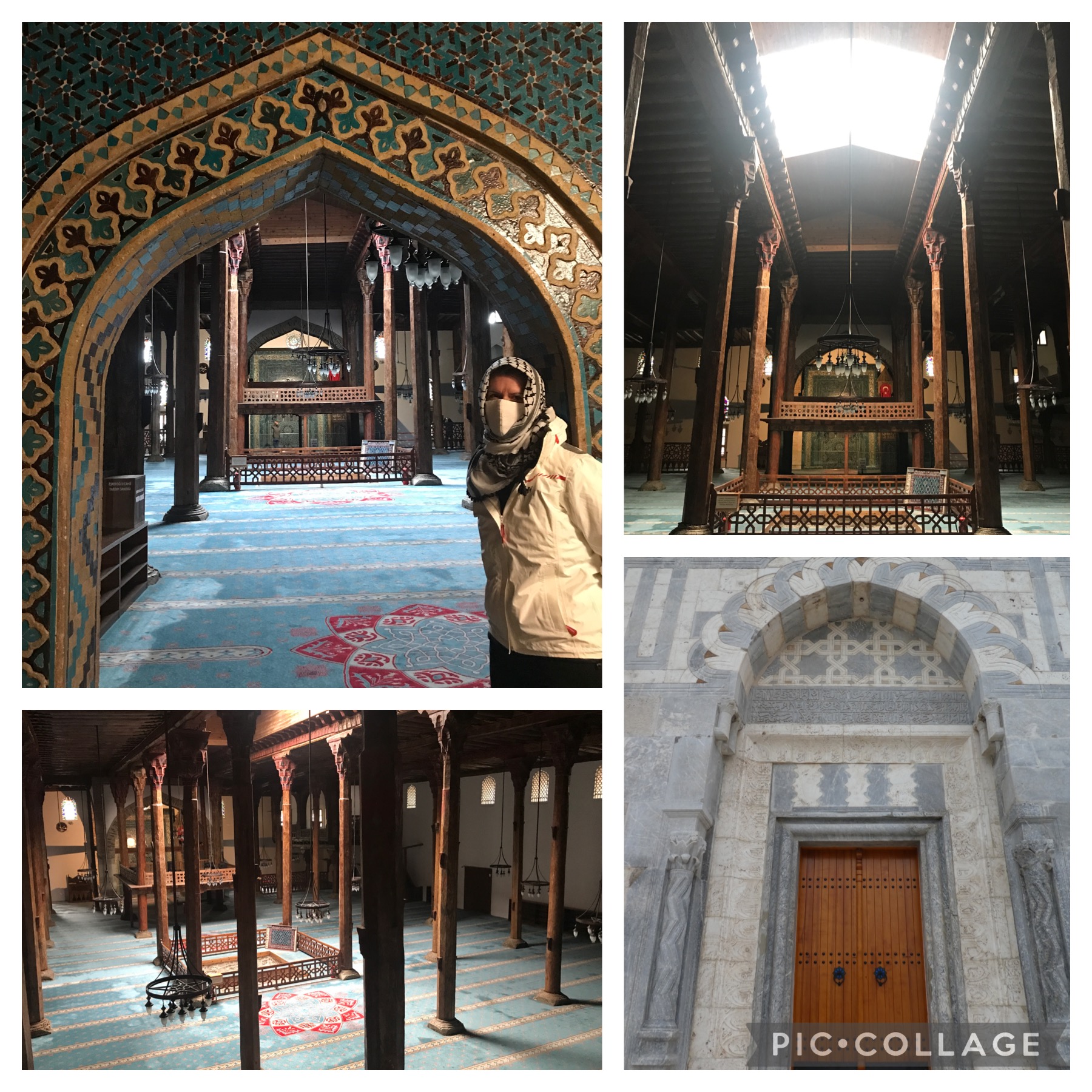
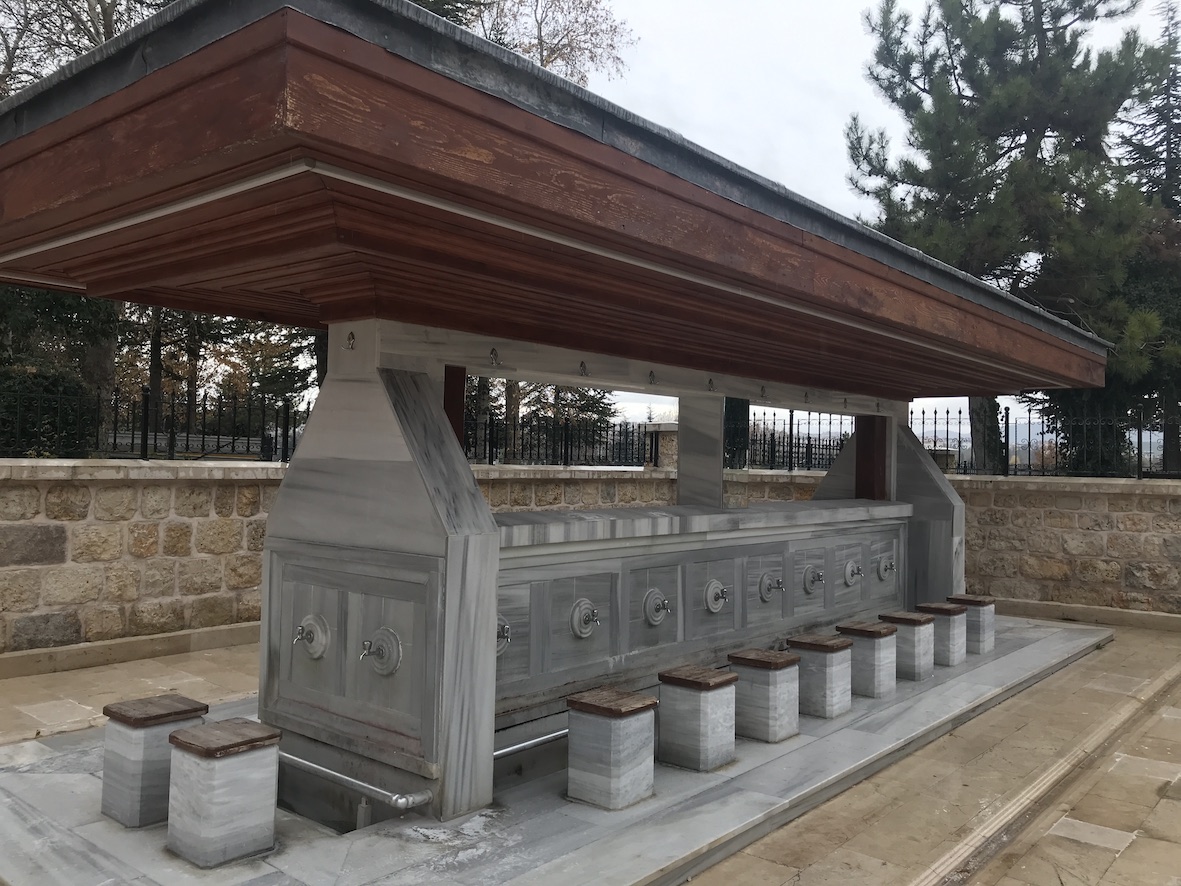
Mosque washrooms are built in order for Muslims to perform there “wudu”. Wudu is a washing ritual which takes place as part of prayer. It involves washing the hands, mouth, nostrils, arms, head & feet. This ensures they enter the Mosque to prayer pure. Some of these washrooms are just as enchanting to the eye as the Mosques themselves, and also very practical with the low stools and rails to rest/wash your feet on.
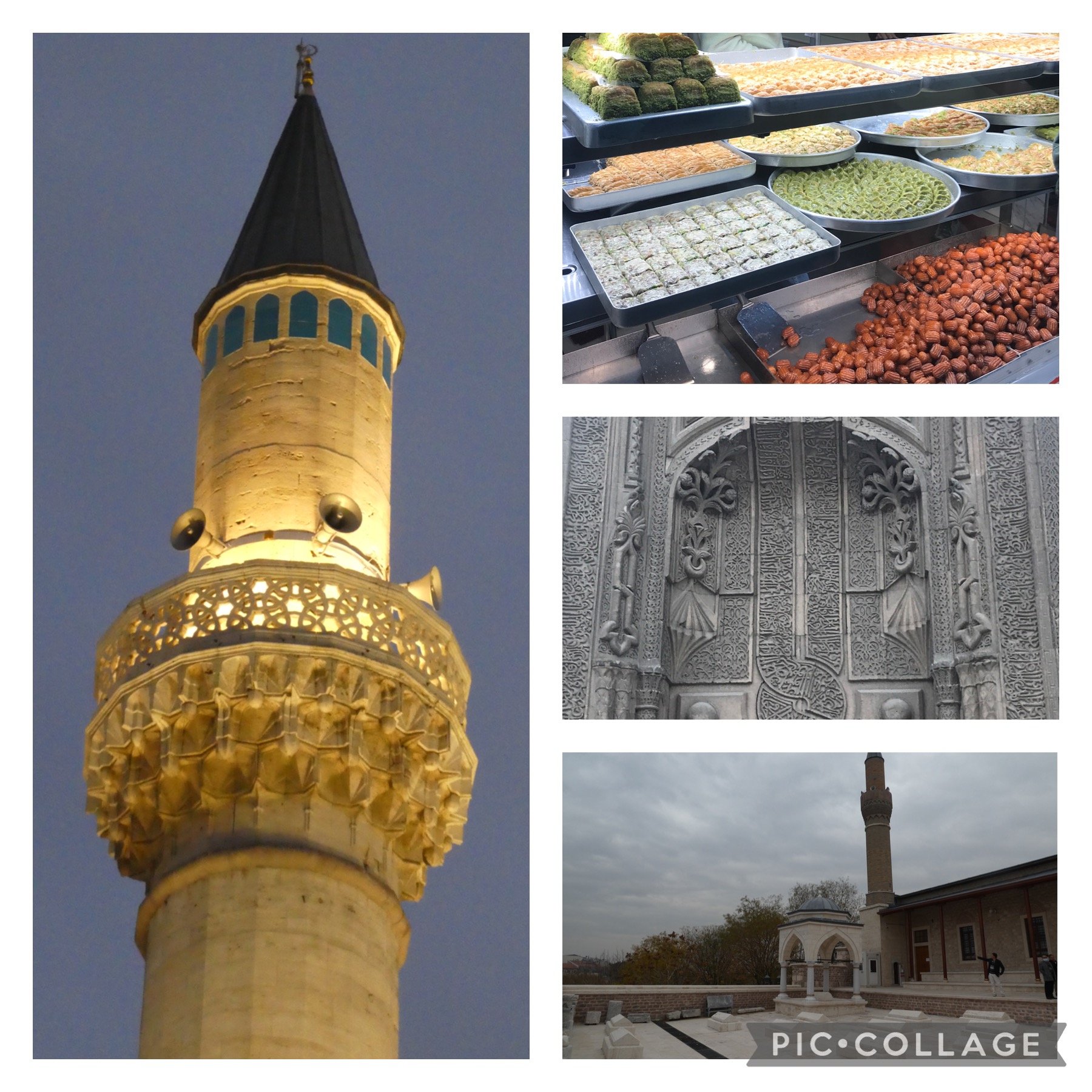
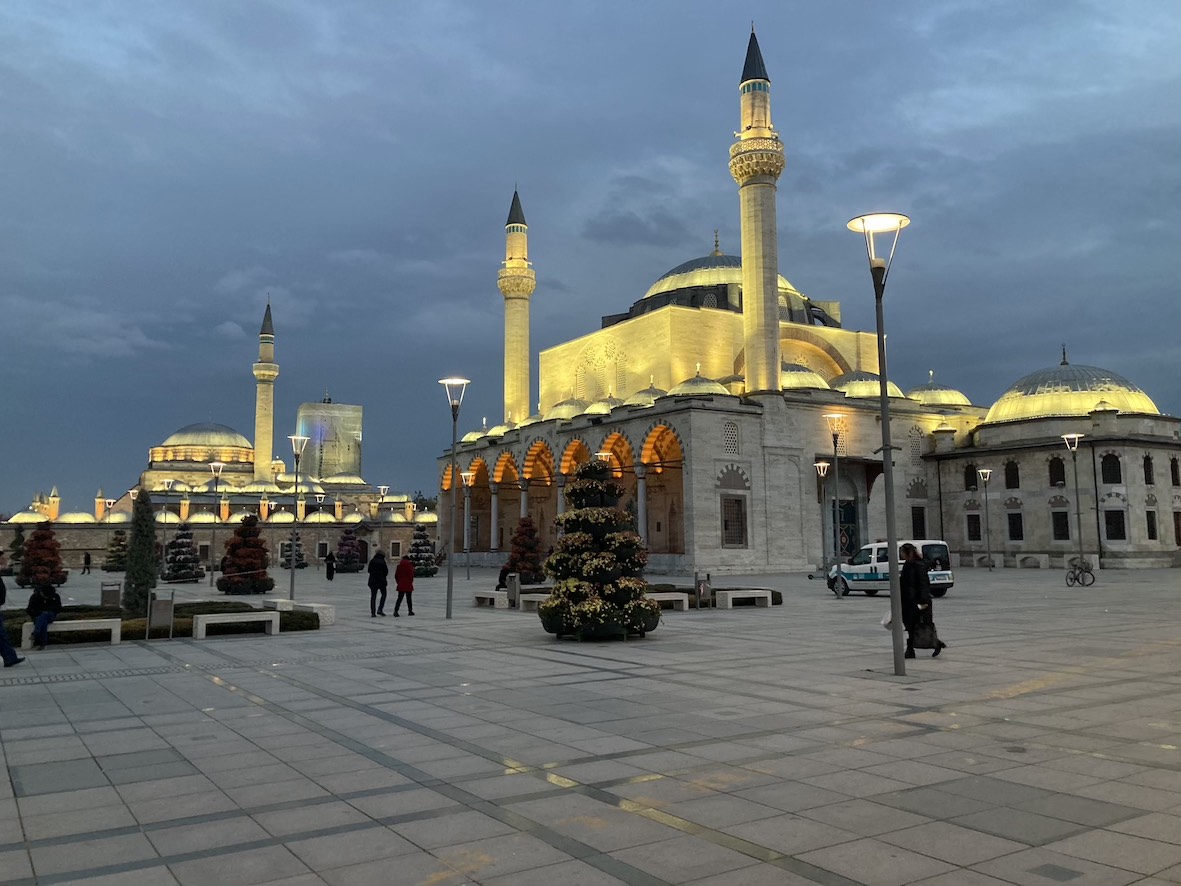
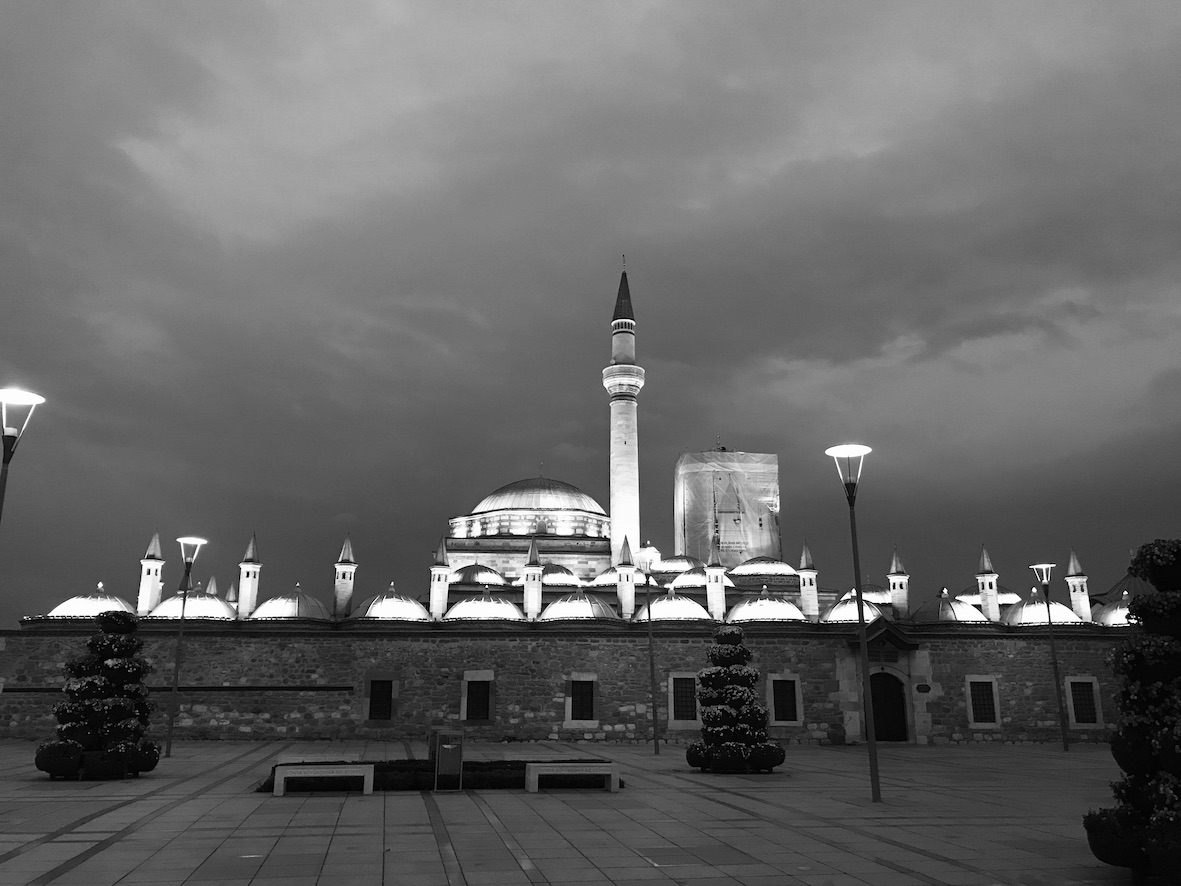
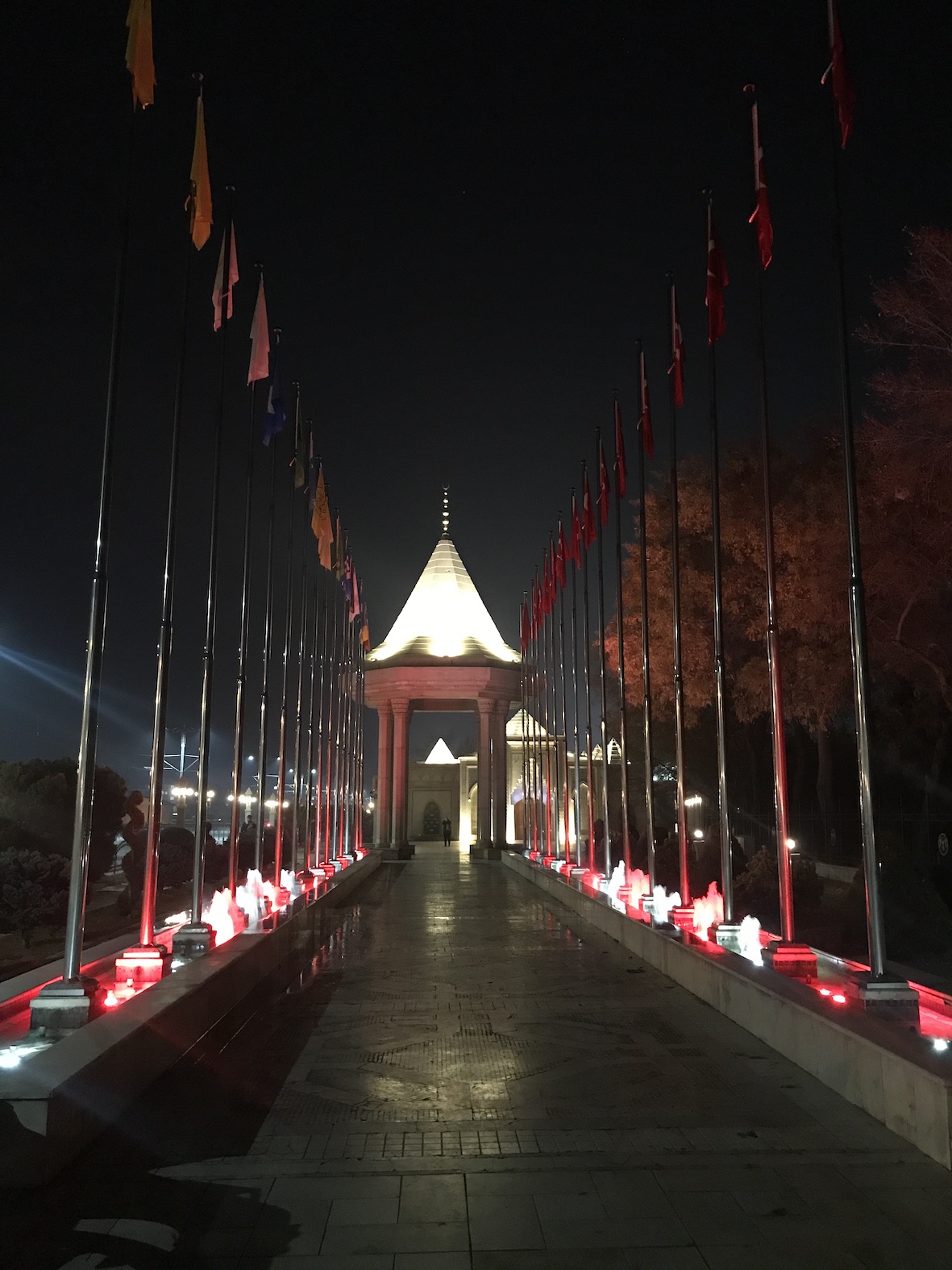
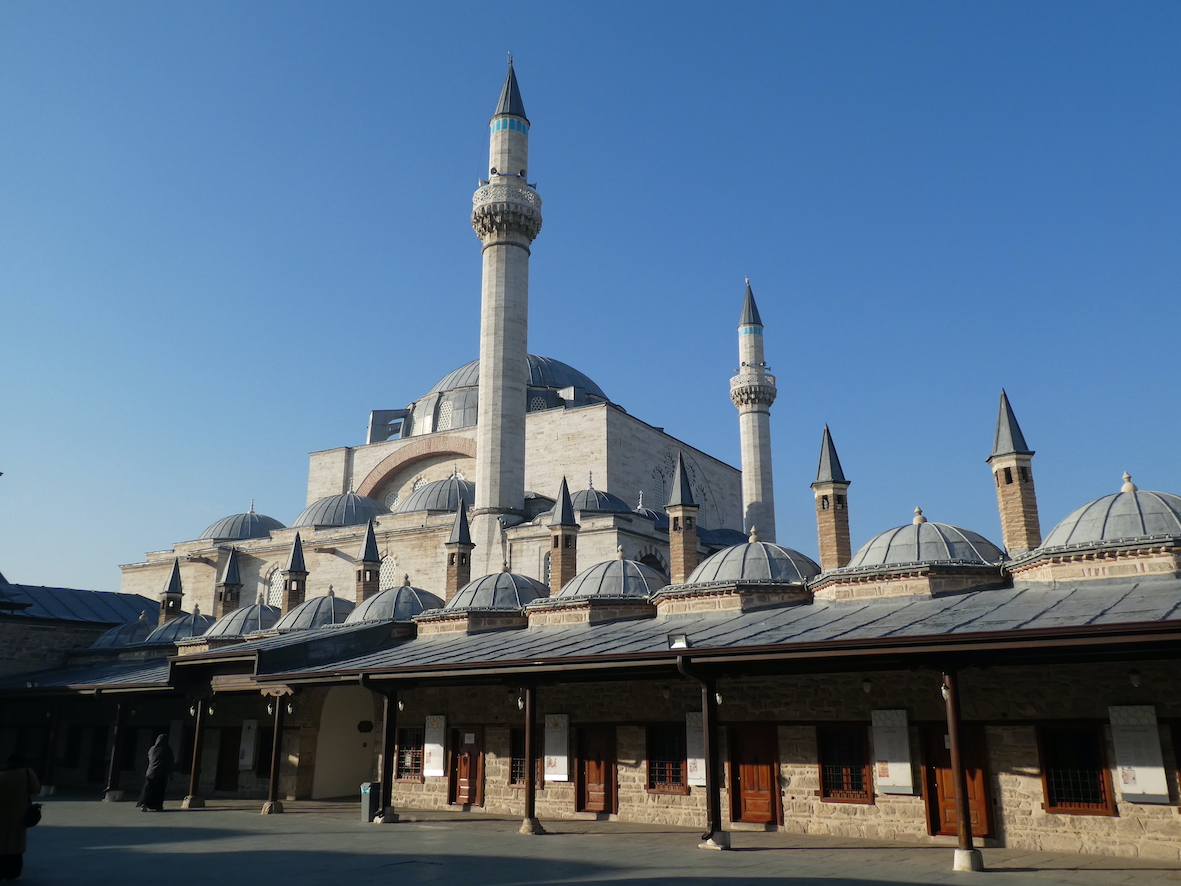
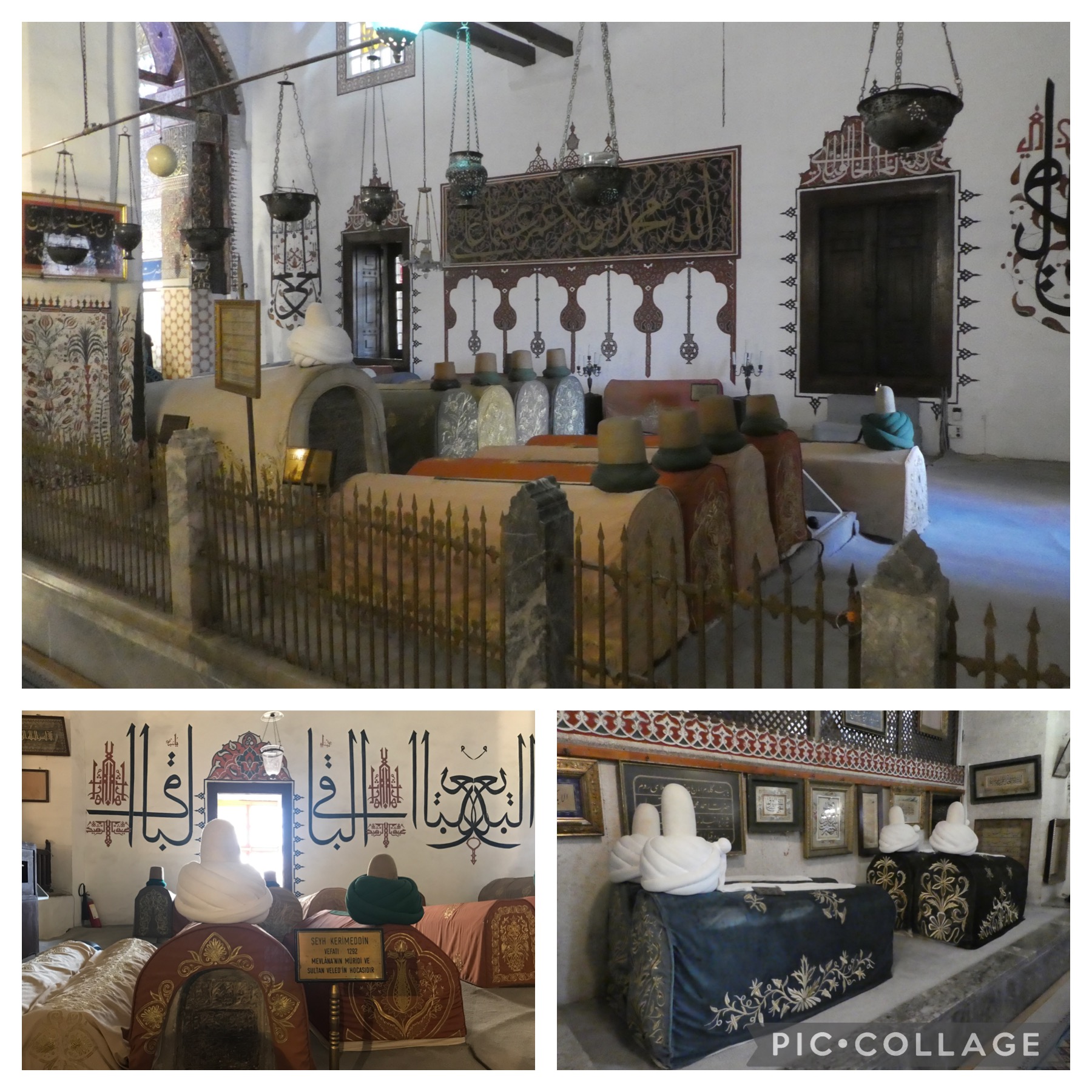
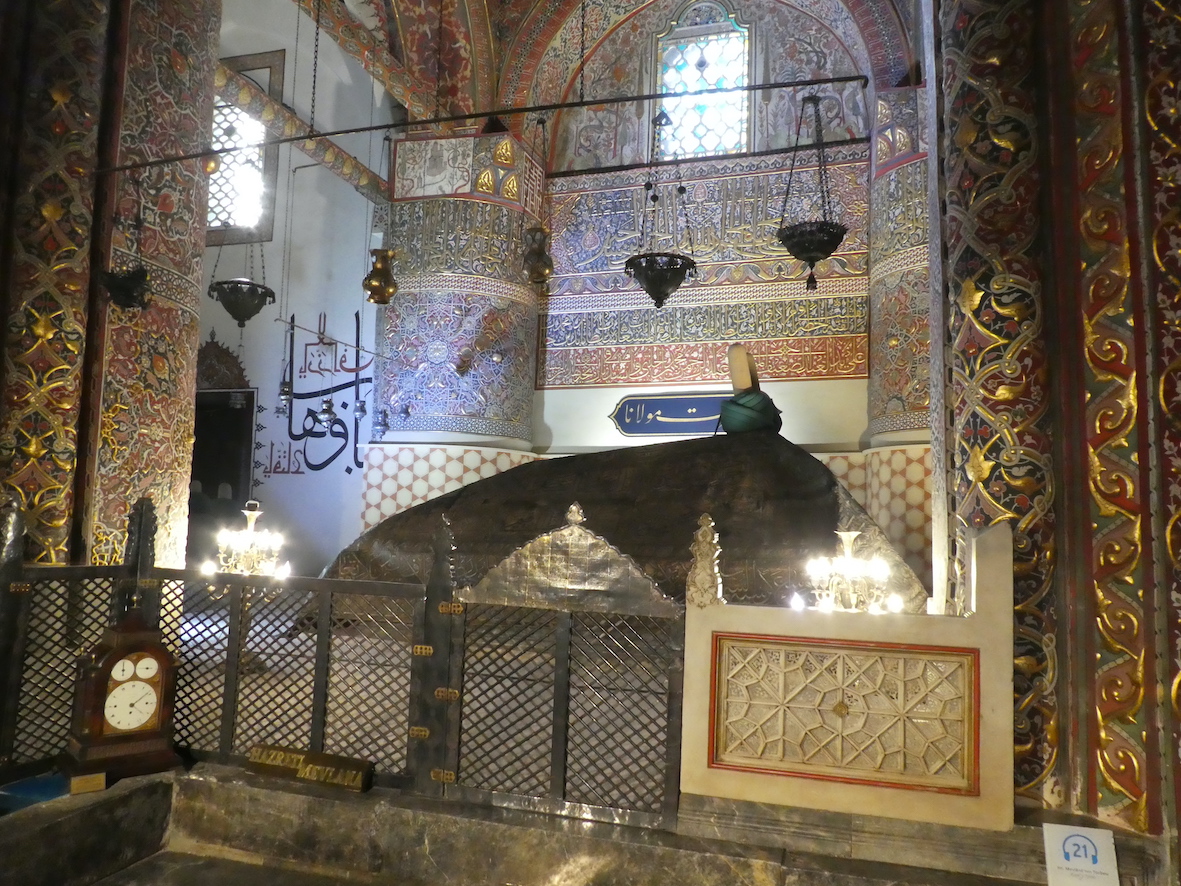
WHIRLING DERVISH ceremonies were started as a form of meditation by Jalaluddin Rumi, the famous Sufi Muslim mystic and poet, in the 13th century. The Persia-born Rumi — who was living in Konya, then the capital of the Turkish Seljuk Empire told his followers, “There are many roads which lead to God. I have chosen the one of dance and music.” He would fast, mediate and then dance to reach a state of unparalleled enlightenment. Inspired, other sects started to spread his dance, called the Sema, throughout the Ottoman Empire. By the 15th century, the order had established rules for the ritual to maintain its myriad traditions.
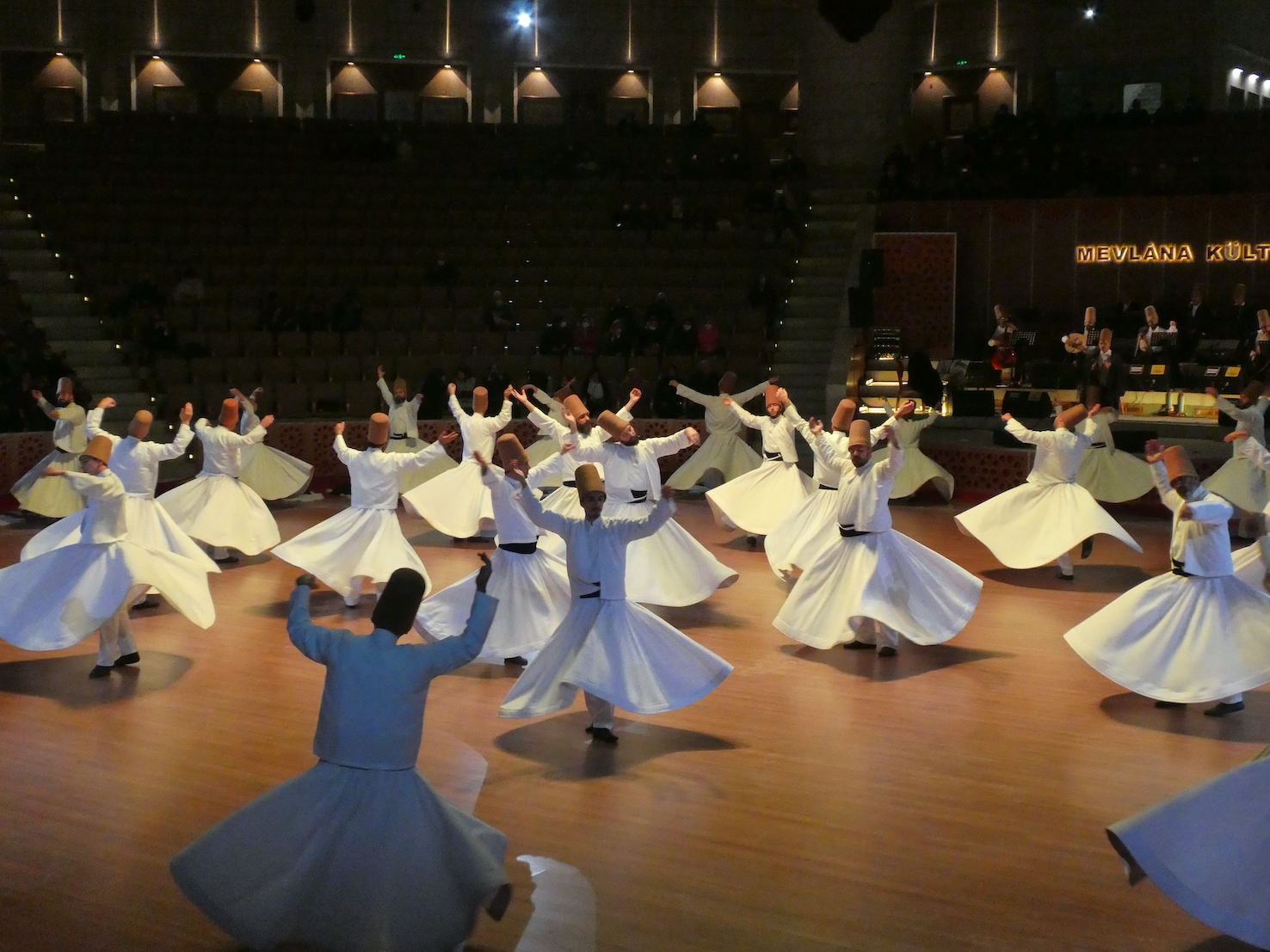
Dancers wear long white robes with full skirts, which symbolise the shrouds of their egos. On the dancers’ heads sit tall conical felt hats called sikke, ranging from brown to grey to black depending on their sect; these represent the tombstones of their egos. Over the robes, the dancers wear long dark cloaks, which embody the wearers’ worldly life and are cast off during the ceremony. When the dancer is finally wearing only his long white robe, he is assumed to be without fault and ready to start the mesmerising complex whirls that define the Sema.
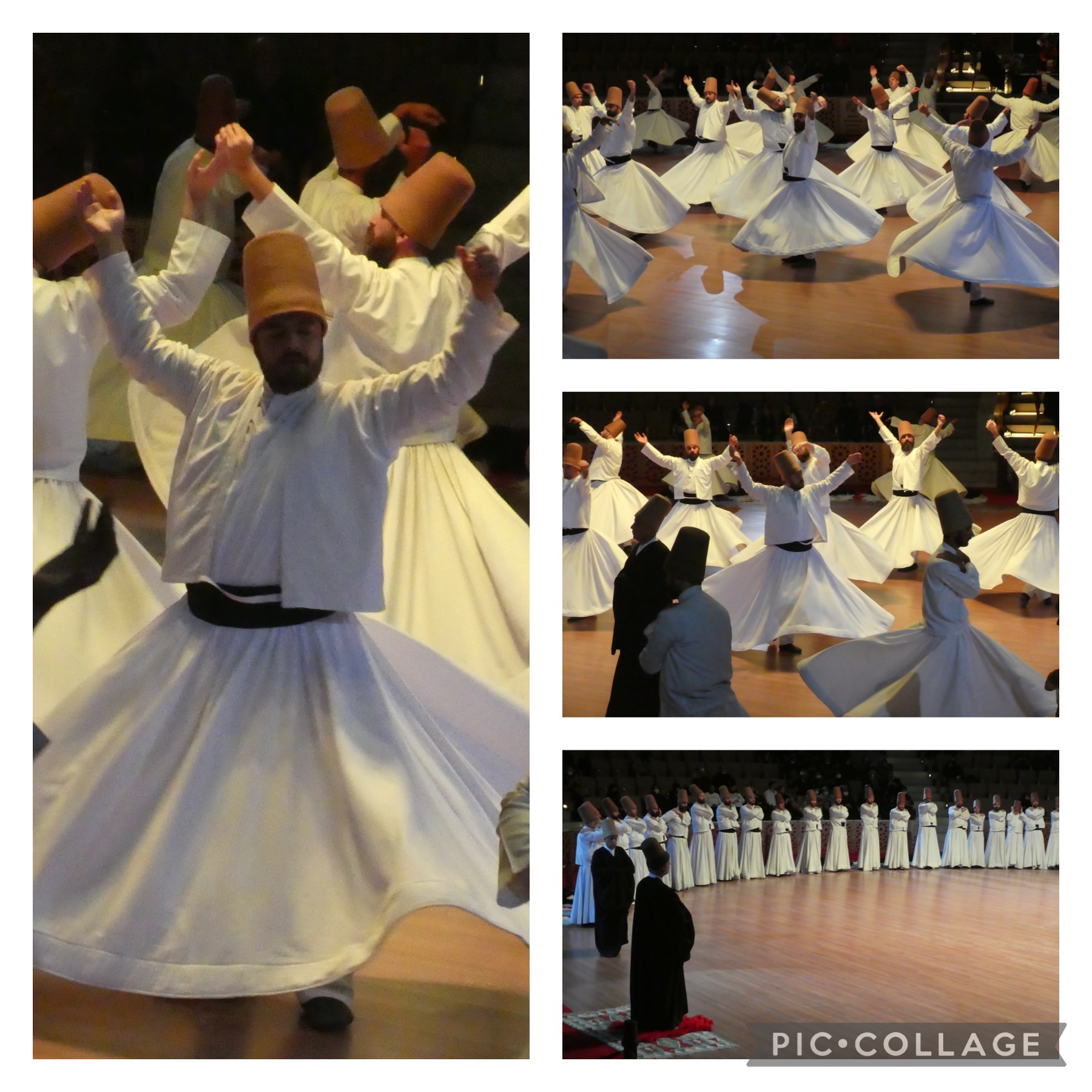

The dancers, who fast for many hours before the ceremony, start to turn in rhythmic patterns, using the left foot to propel their bodies around the right foot with their eyes closed. Their whirling is fuelled by accompanying music, which consists of a singer, a flute-player, a kettle-drummer and a cymbal player. As the dancers turn, the skirts of their robes rise, becoming circular cones, as if standing in the air on their own volition.
Day 3. Konya – Göreme (Cappadocia)
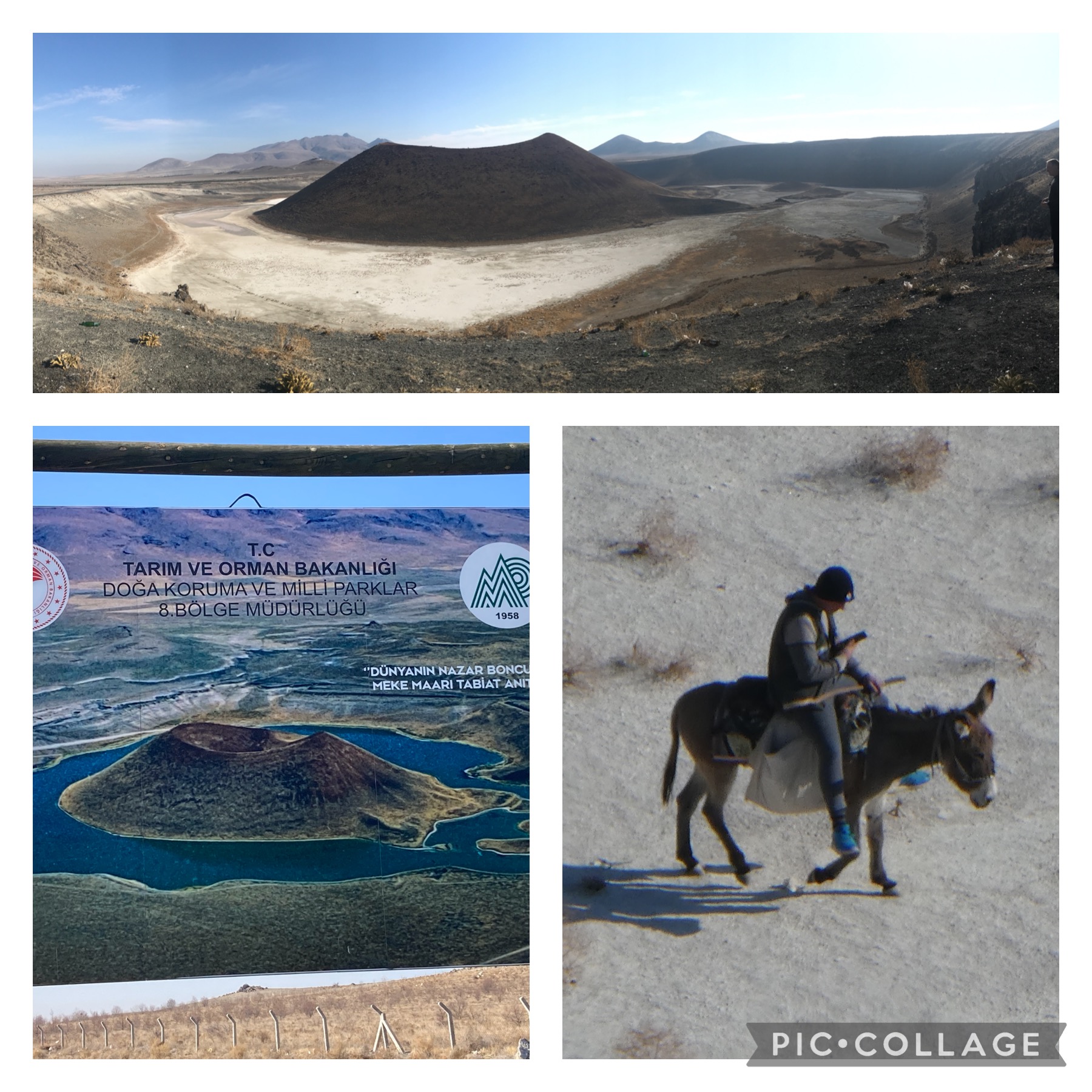
We saw a Shepherd with his flock of sheep at the lake – but he was modern day, on his donkey and watching youtube on his phone, but at least he still had his Shepherd stick!
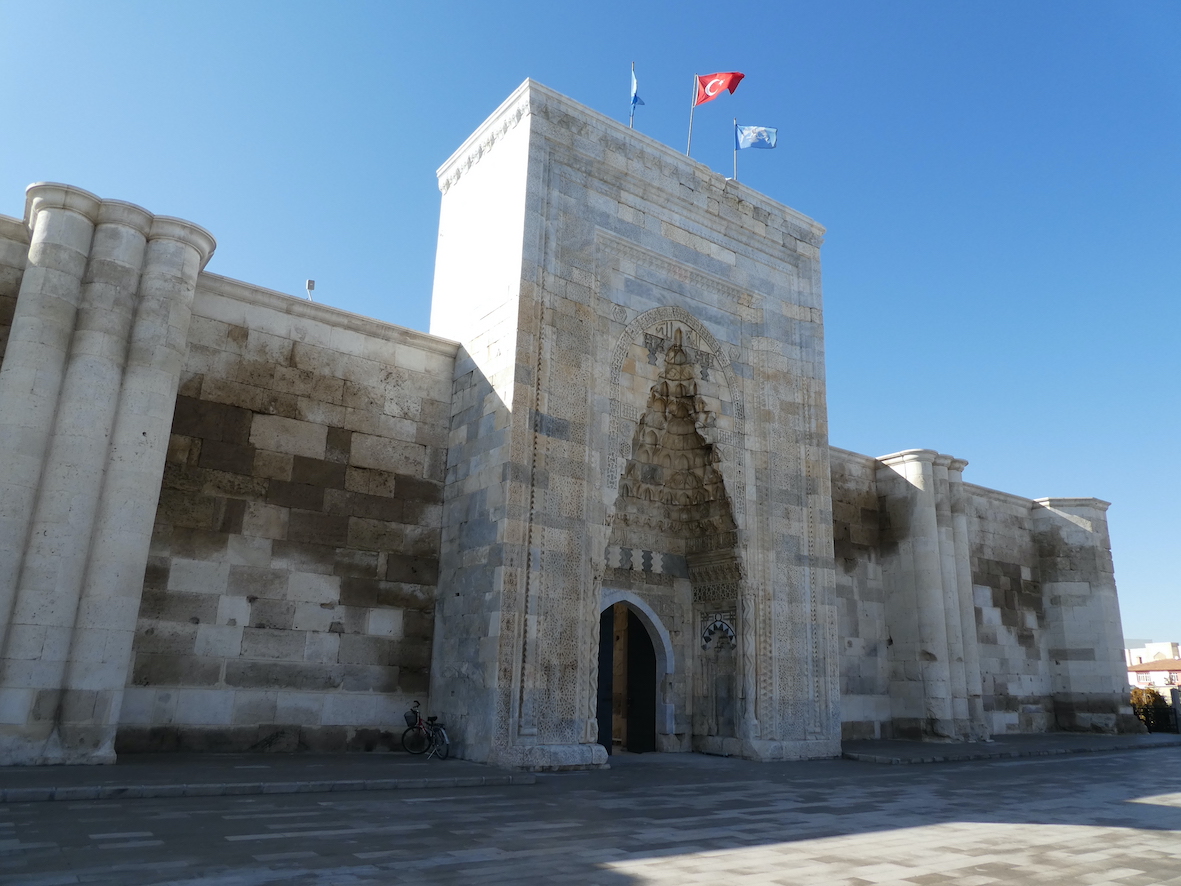
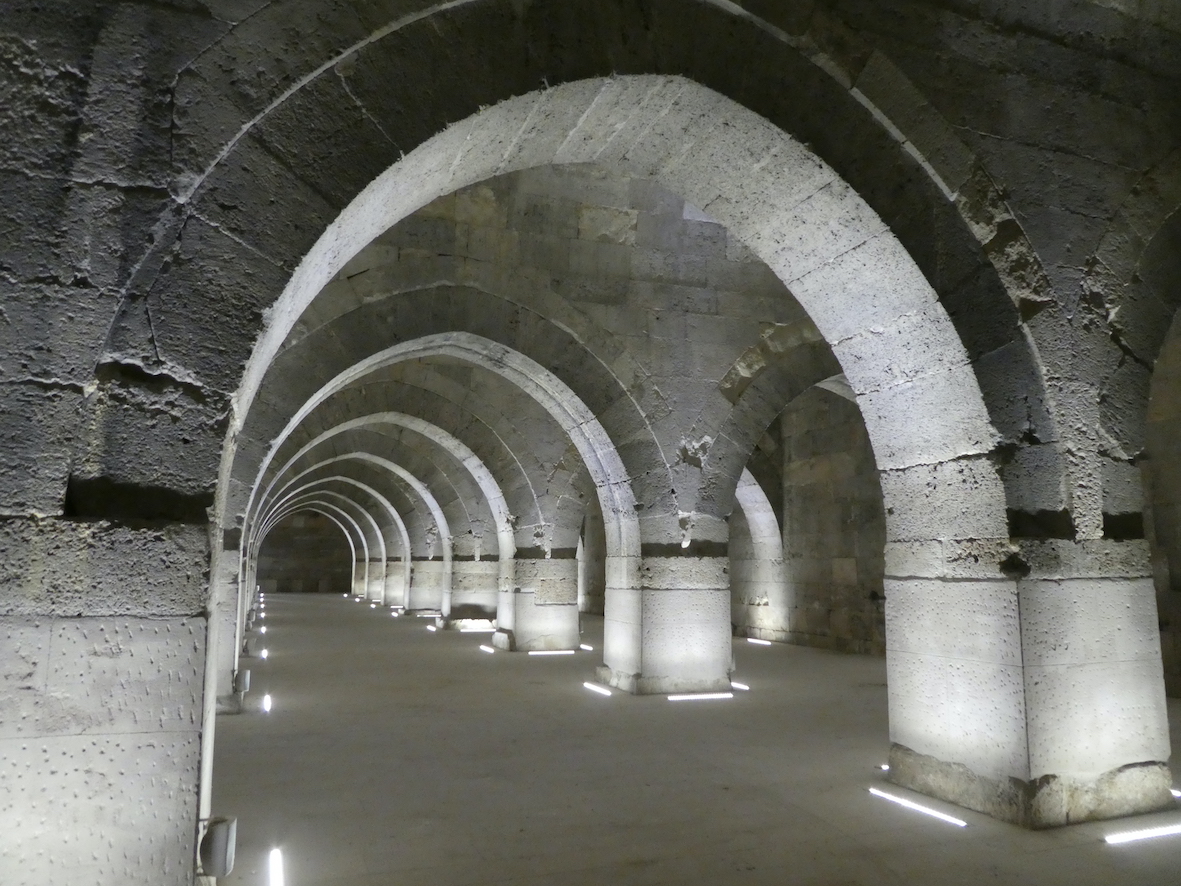
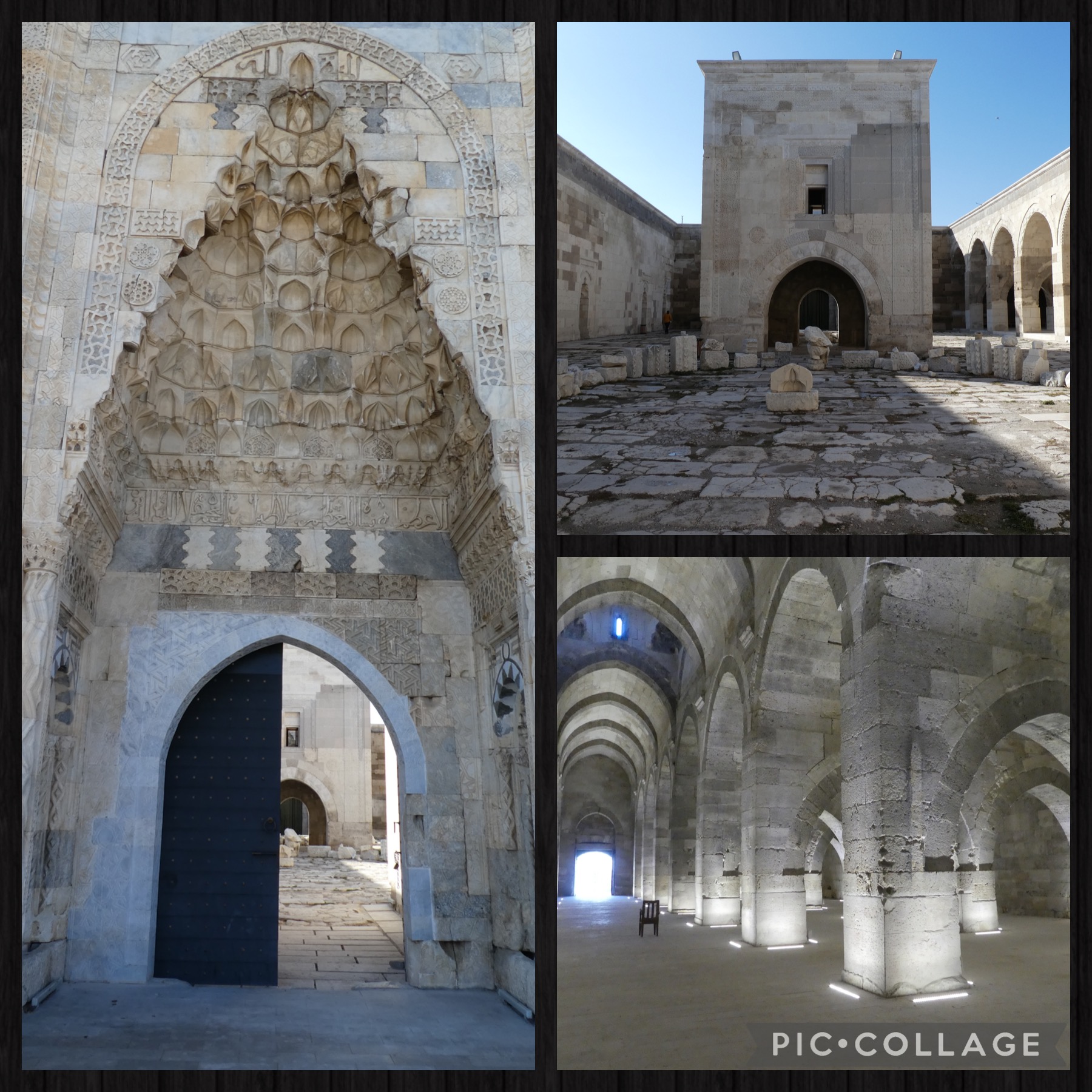
Caravanserai, is this where the “caravan” lifestyle was invented?
A caravanserai was a roadside inn where travellers could rest and recover from the day’s journey. Caravanserais supported the flow of commerce, information and people across the network of trade routes covering Asia, North Africa and Southeast Europe, most notably the Silk Road. The Sultanhani Caravanserai that we visited was built in 1229 and expanded in 1278 to make it the largest Caravansary in Turkey, it was used in both summer and winter with the summer quarters being 50 x 63 m and the winter quarters being fully enclosed and measuring 33 x 55 meters. To meet the accomodation and other needs of the travellers the caravanserais housed workshops for raffles, rope makers, horseshoes, iron smiths, kitchens, sleeping rooms, hamams (communal baths), coffee houses. Sultanhani caravanserais provided accommodation food and drink free of charge for up to three days for both local and foreigners of different ethnic groups and religions without prejudice.
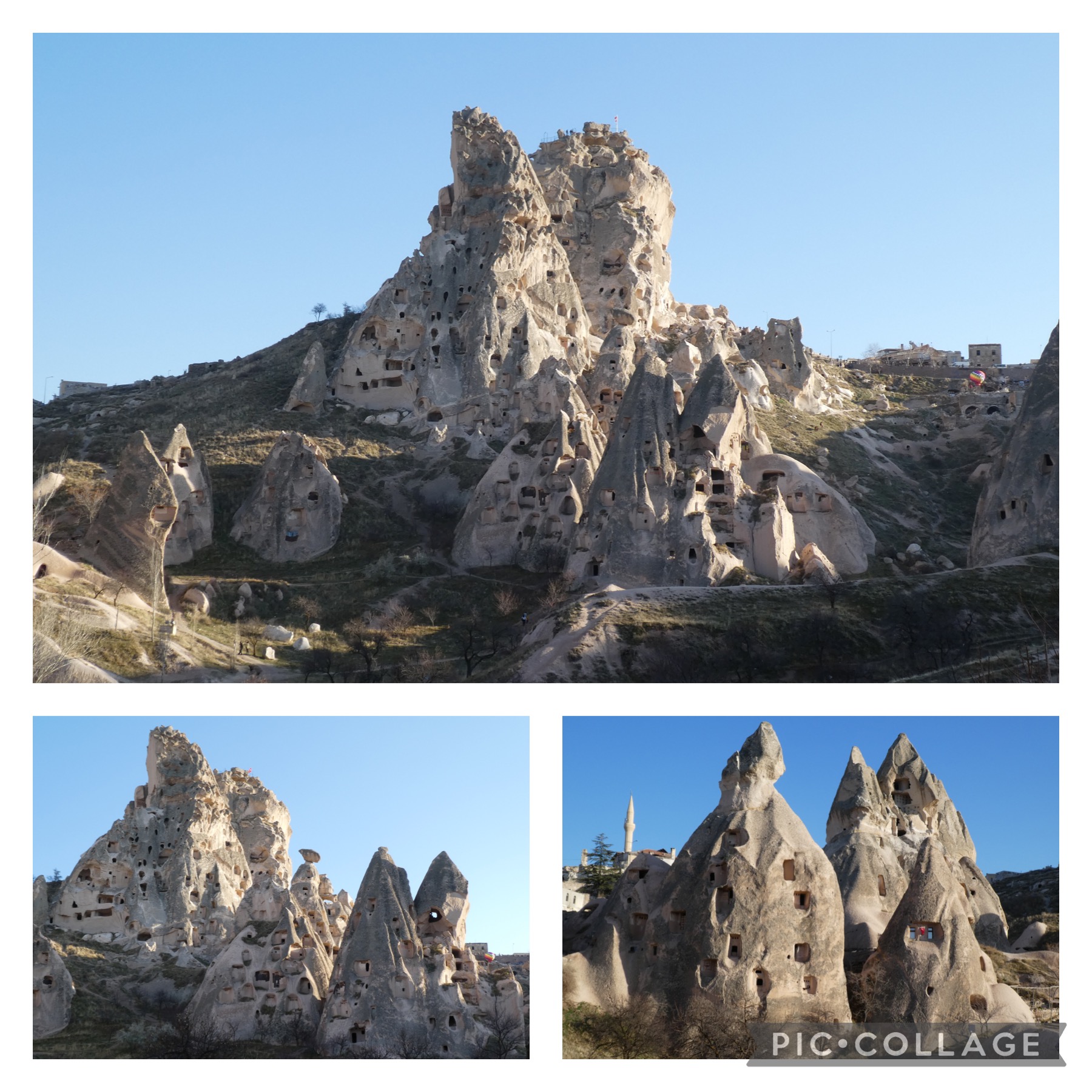
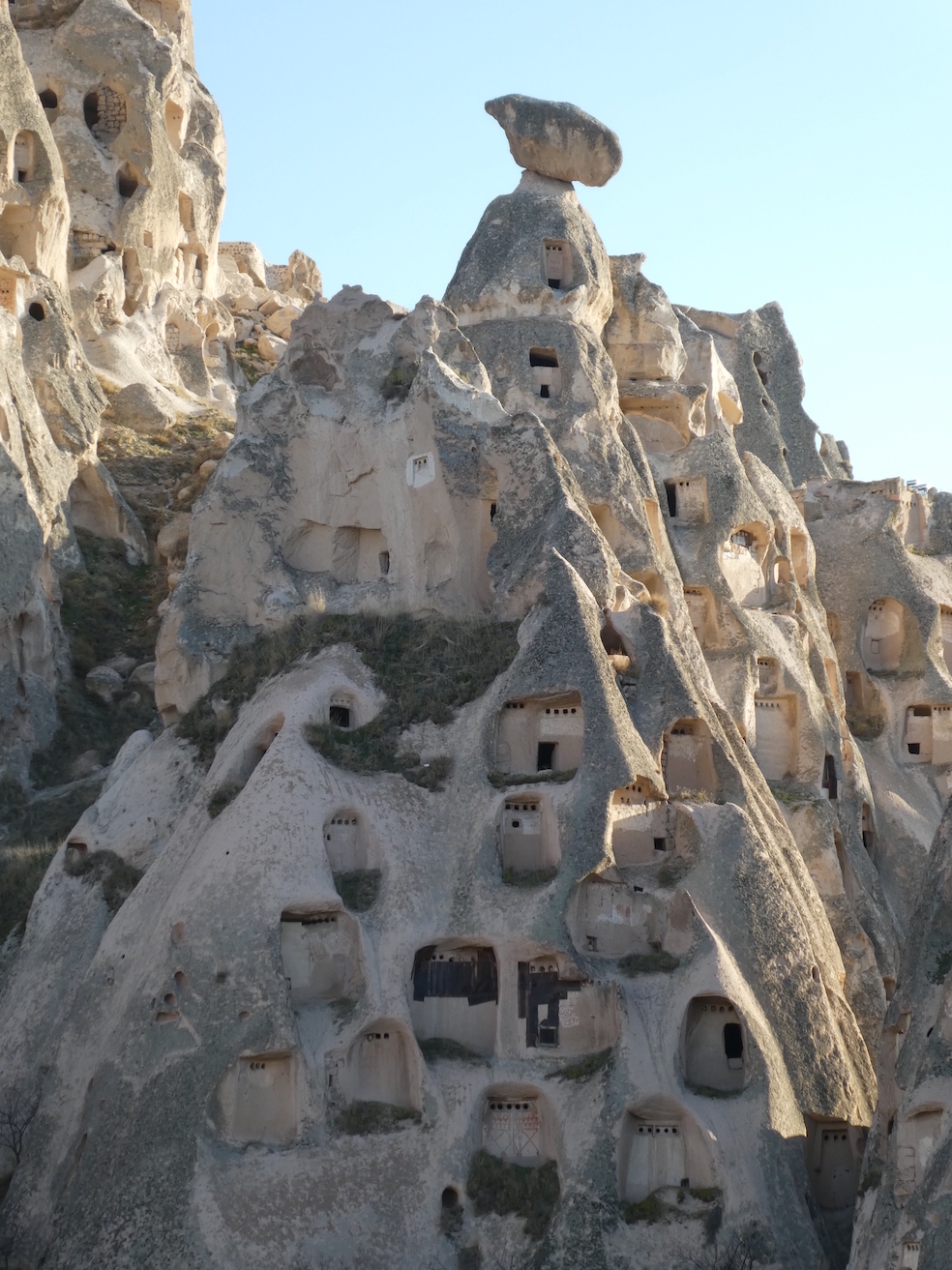
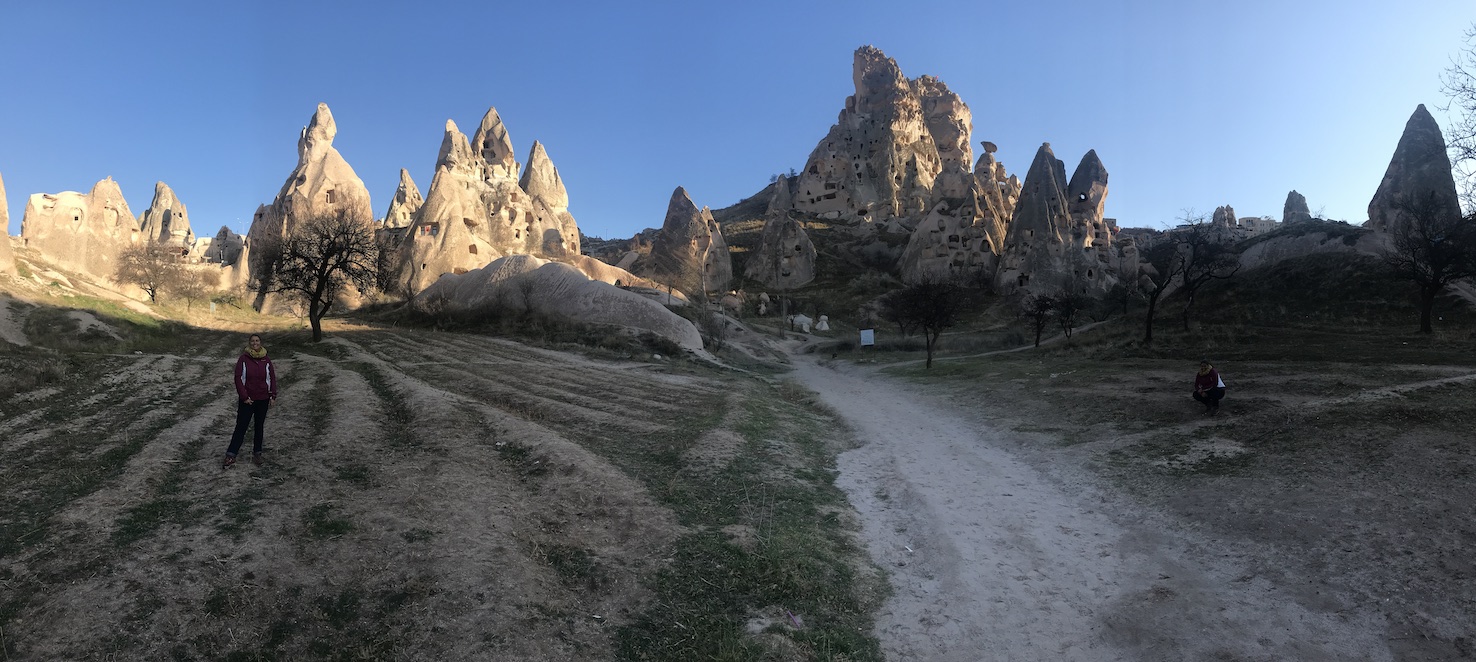
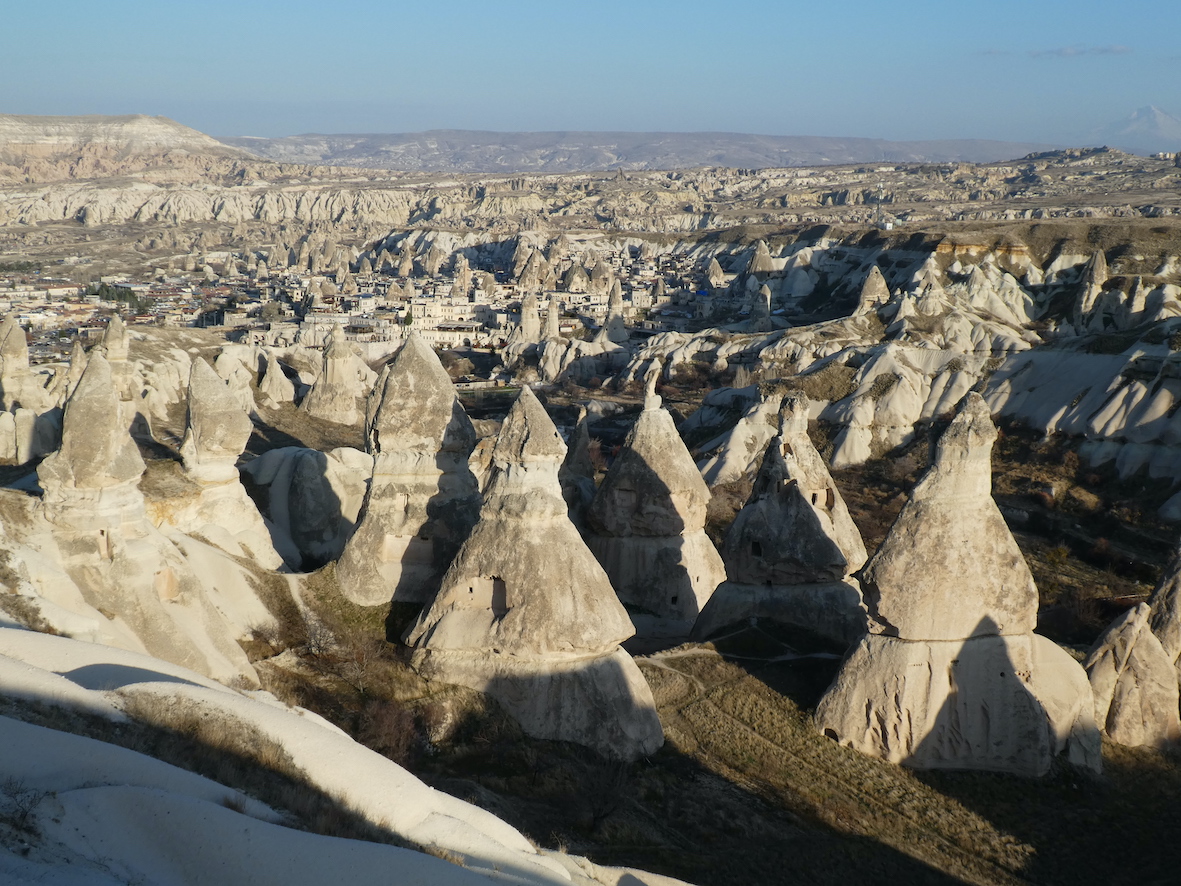
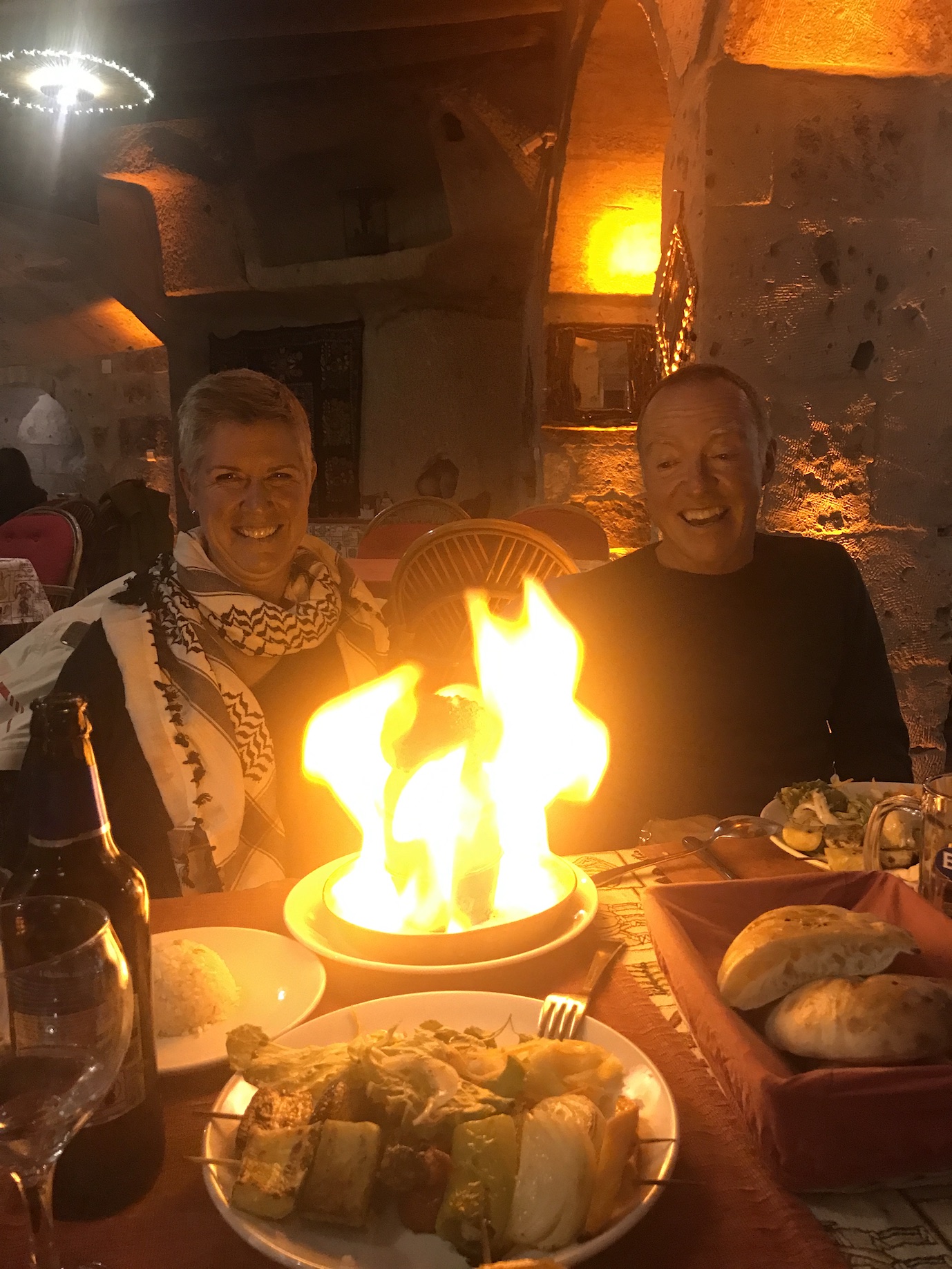
After more hours in the car and a couple of service station pit stops (and rave reviews over the cleanliness of the service station toilets, all no touch automatic and fantastically clean) we drove around a normal looking corner there were suddenly 4 audible gasps and a series of “wow – stop the car!” We had arrived in Cappadocia and our first taste of this fantastic landscape was the town of Uchisar.
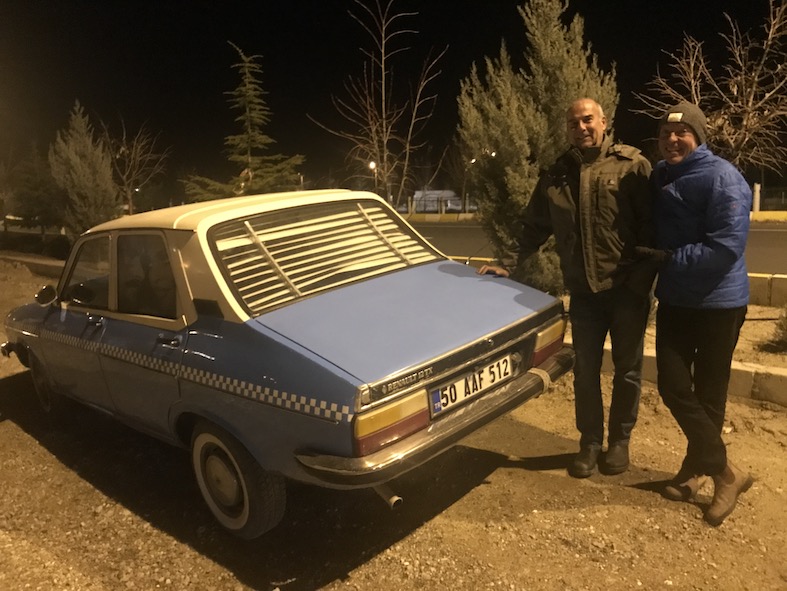
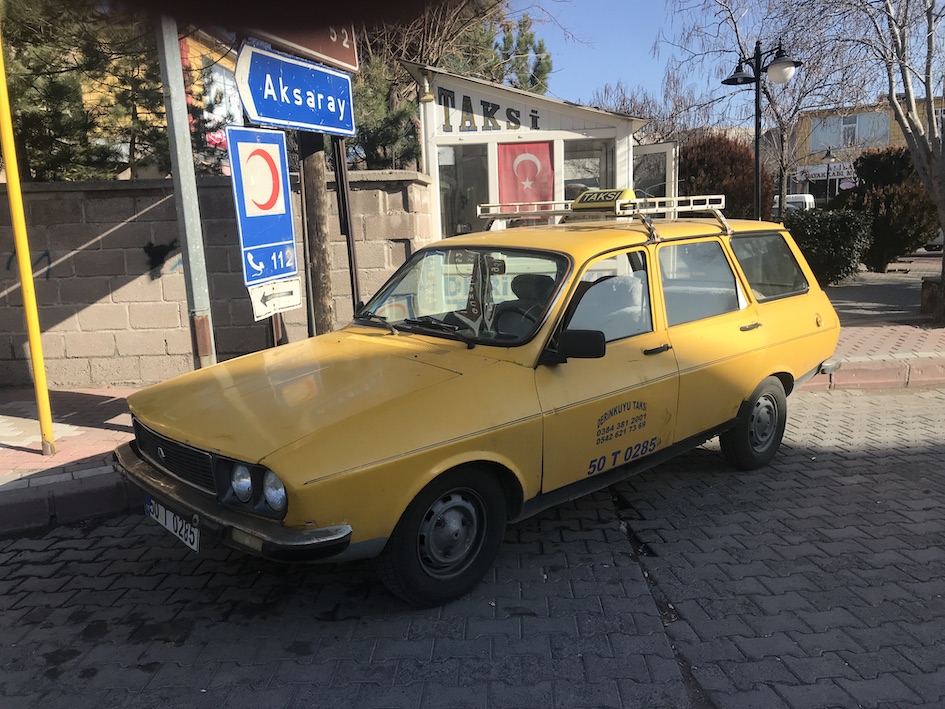
Phil and Jean were astounded by the number of Renault 12’s in Turkey, specifically in the inland Cappadocia region. They began keeping count, and soon ran out of finger and toes! There were thousands, many in great condition. Research informed us that they were actually built in Turkey from 1971 until 2000.
Day 4. Cappadocia
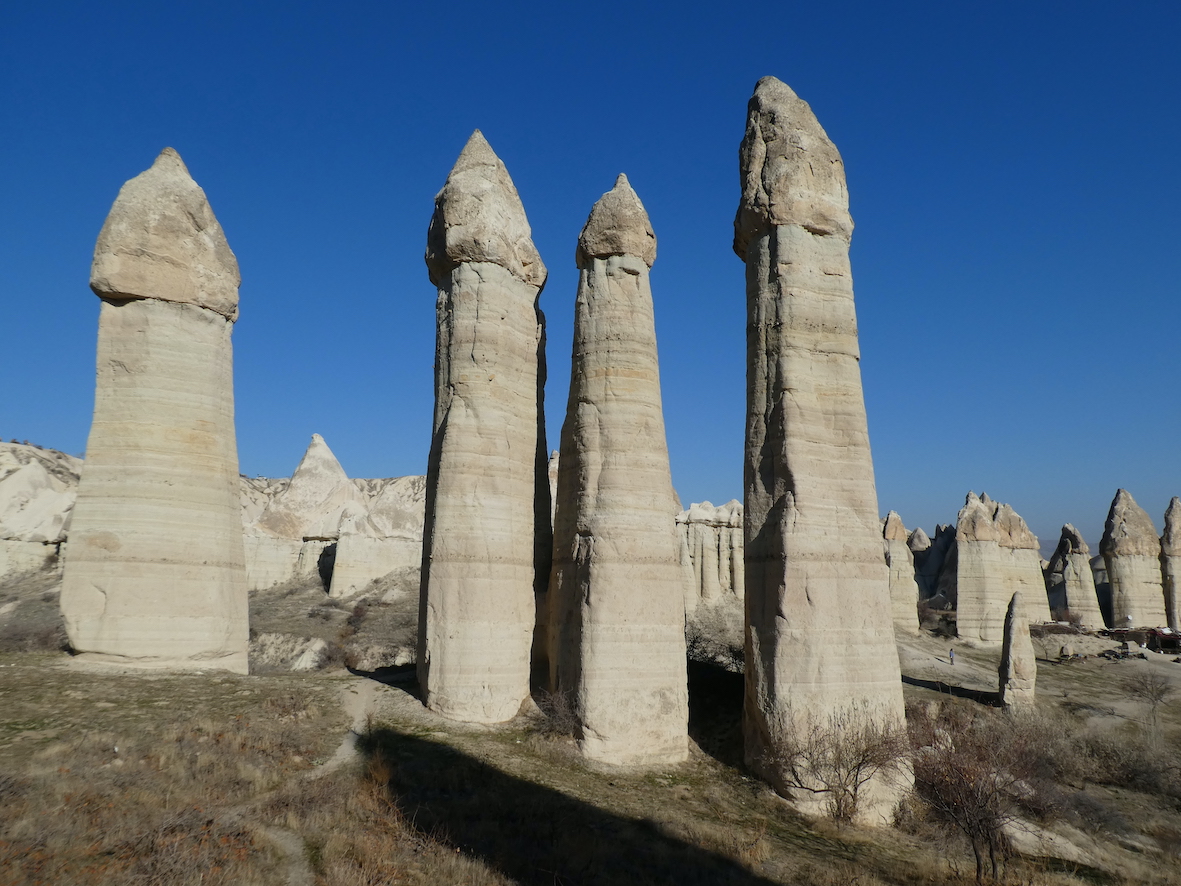
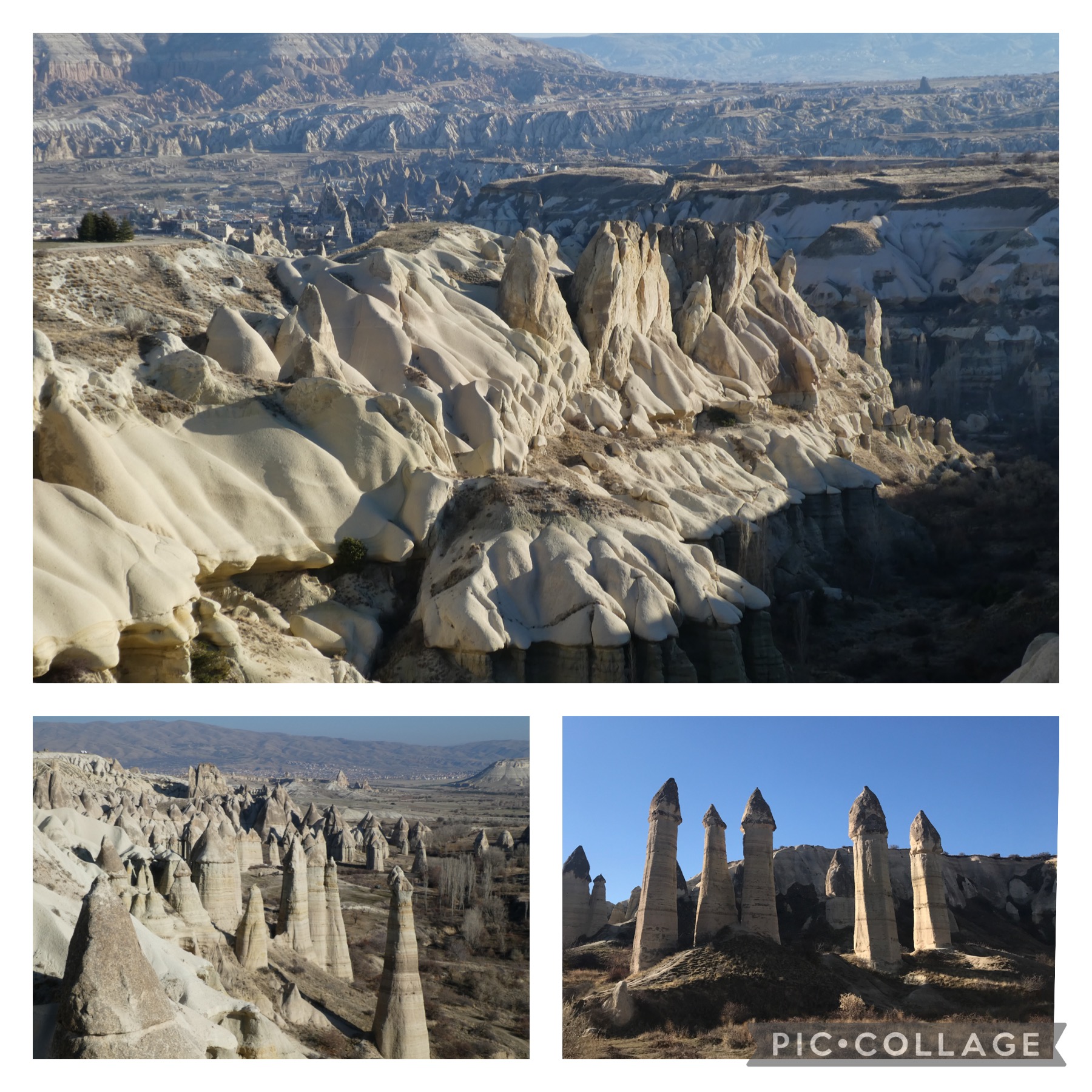

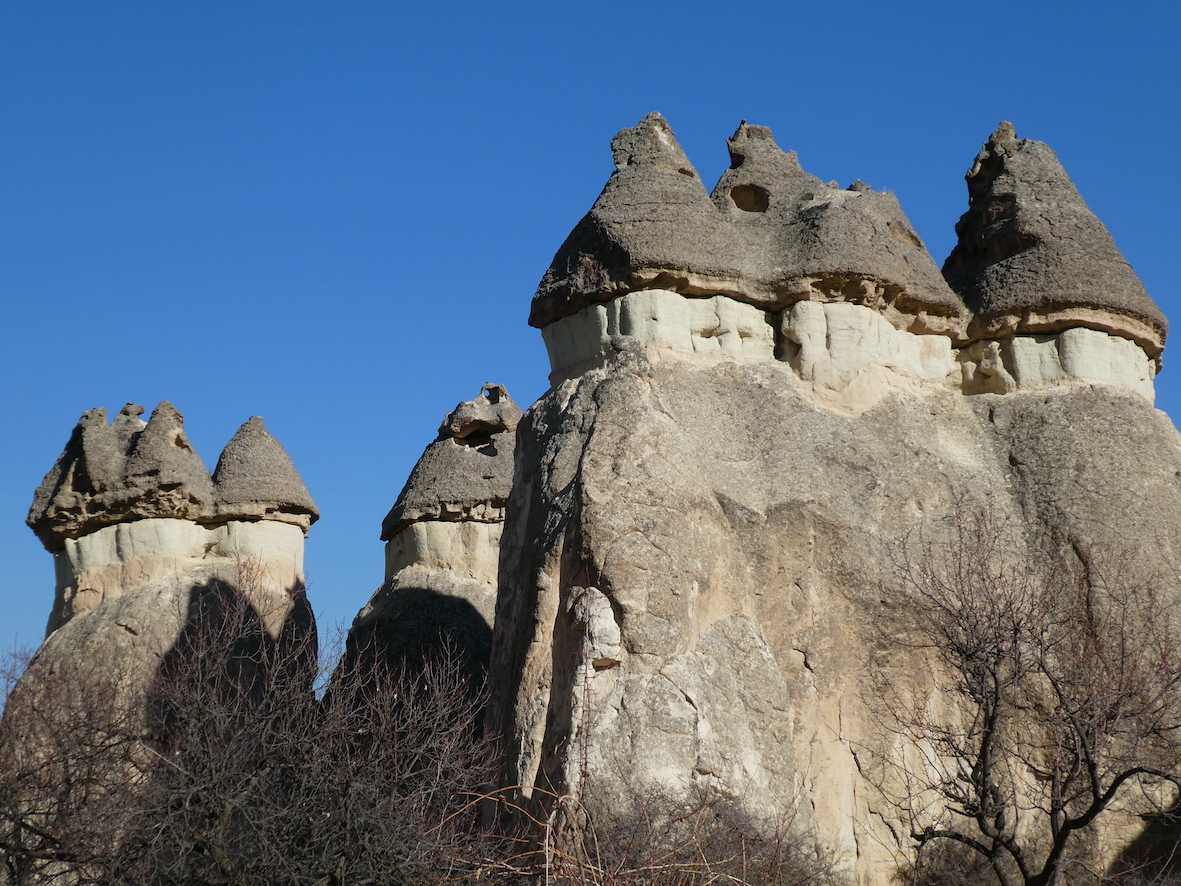
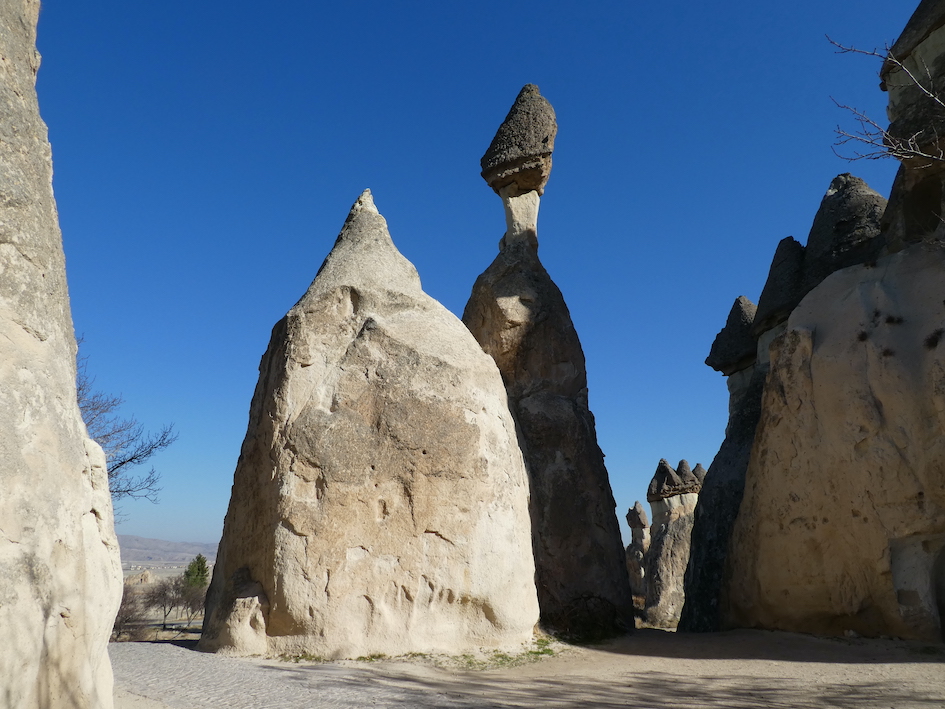
The fairy chimneys are a result of a geological process that began millions of years ago when volcanic eruptions rained ash across what would eventually become Turkey. That ash hardened into “tuff” a porous rock, which was covered by a layer of basalt. Finally, the long work of erosion began. As millennia passed, and rivers came and went the softer tuff wore down (creating valleys) and leaving pillars – some that stand over 40 meters high. The harder basalt erodes more slowly, forming a protective mushroom shaped cap on top, each one is shaped uniquely due to the erosion process (the softer rock closer to the bottom, and harder layers on top), the different colours are due to the minerals within the different rock types at each layer. Just like that a fairy chimney is born – no pixie dust required.
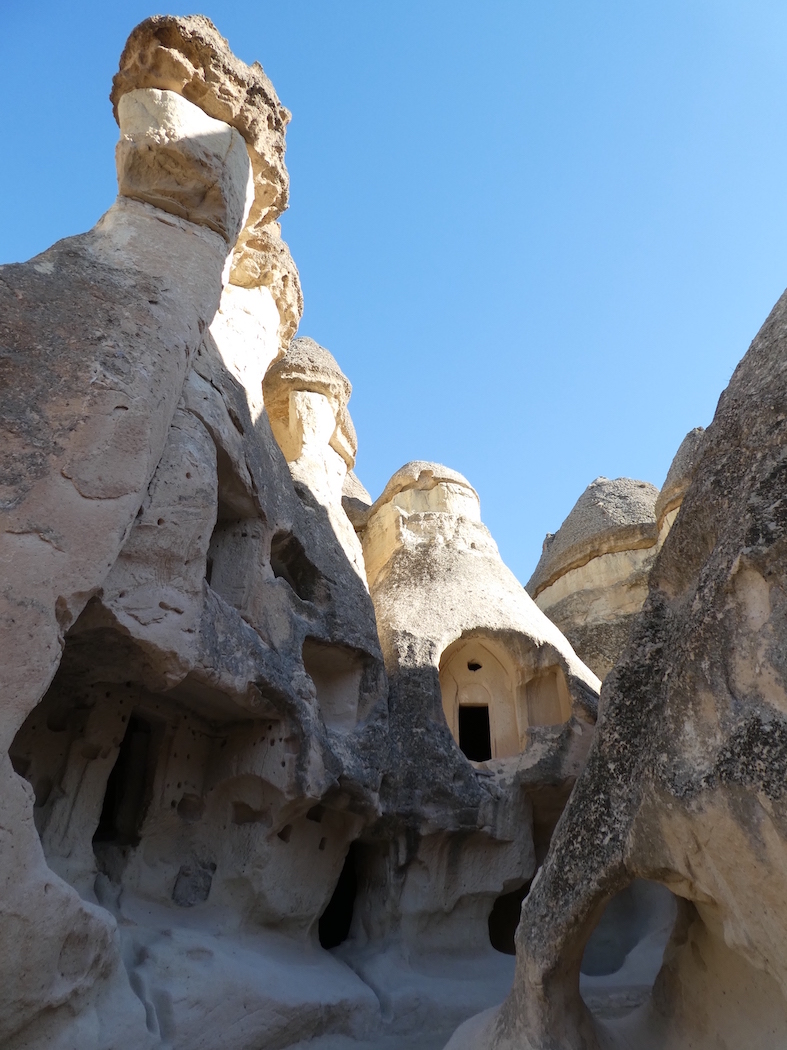
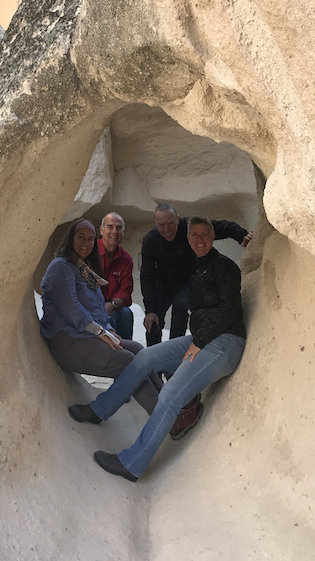
“On Tour in Turkey”
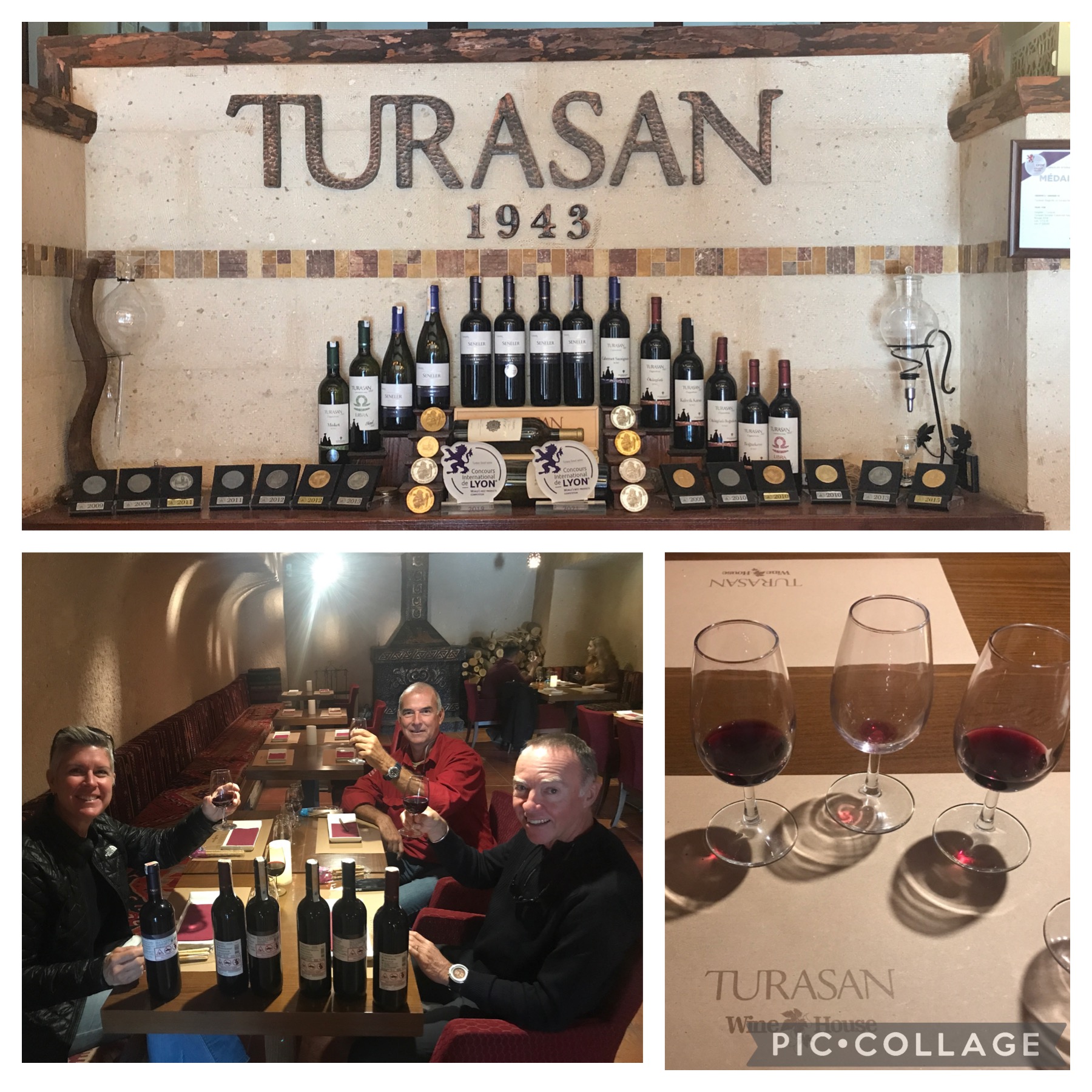
A lovely time was had by all, would we recommend the wine – truthfully no
(we have been too spoilt by good South Australian wine!)
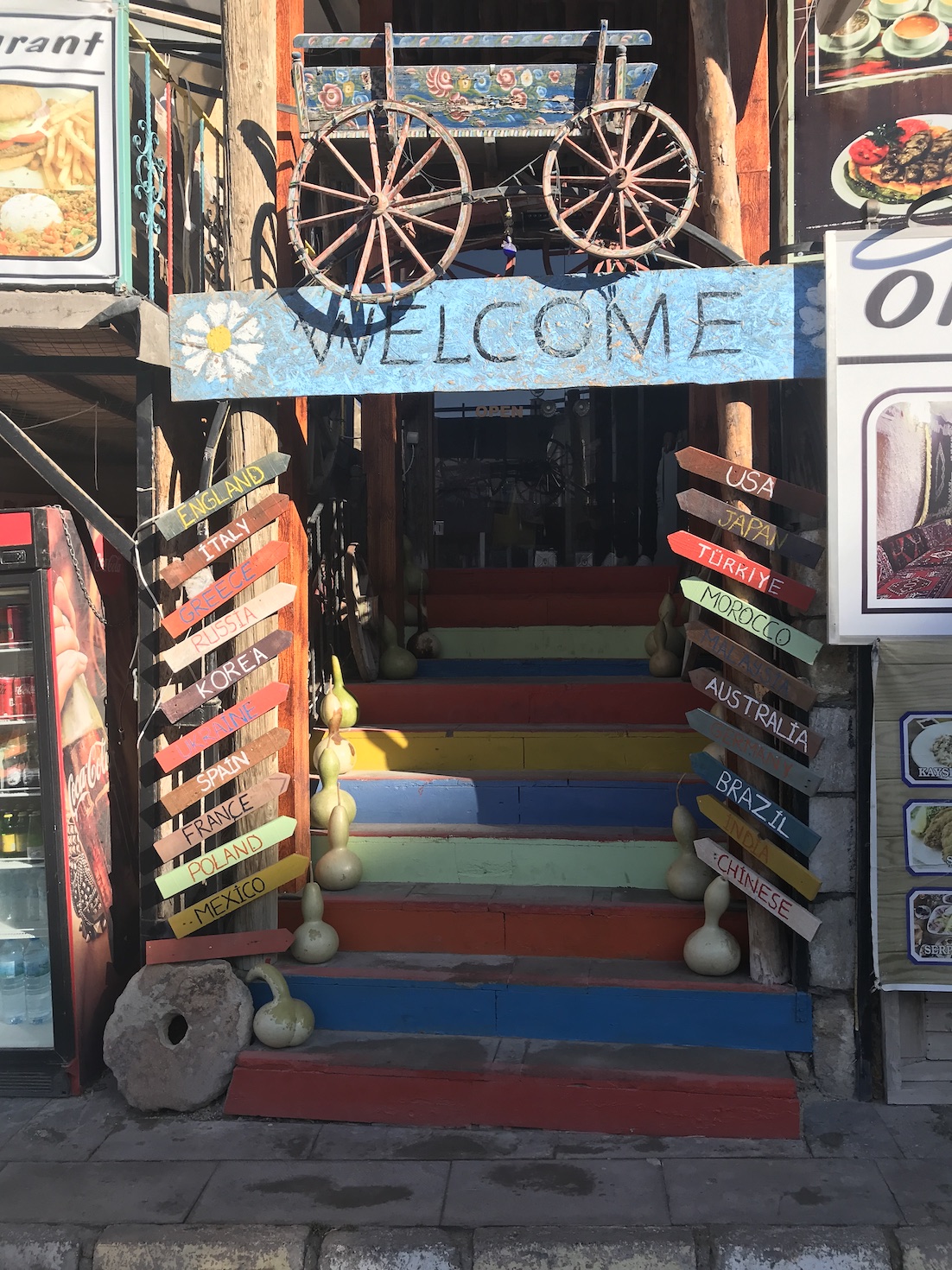
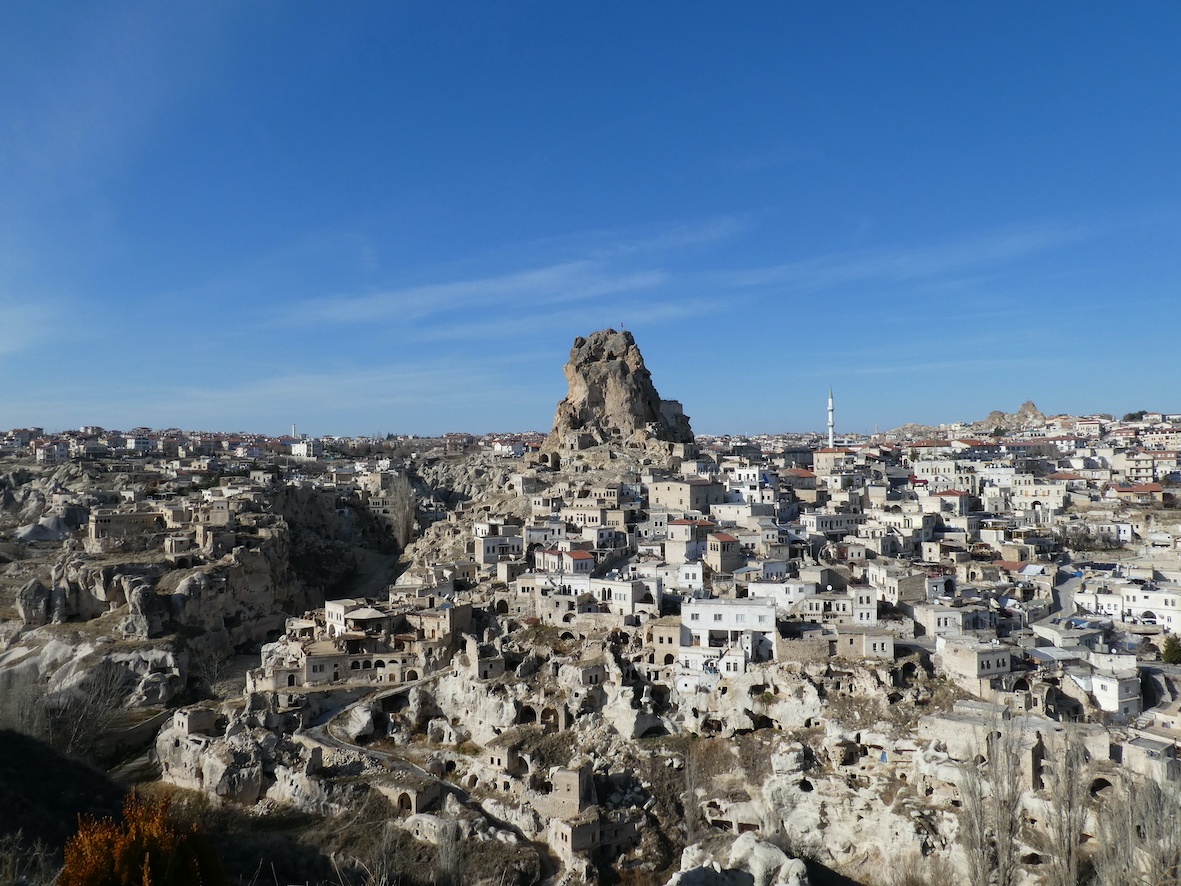
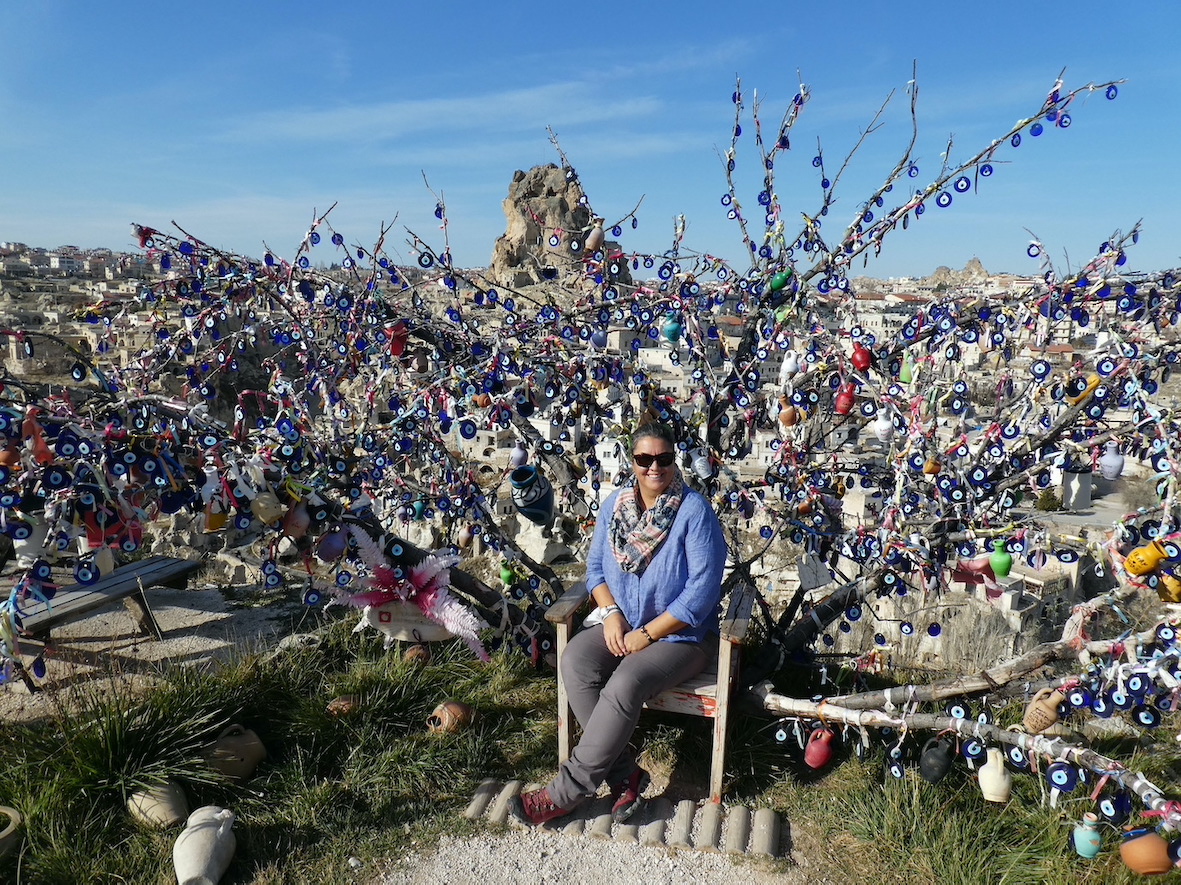
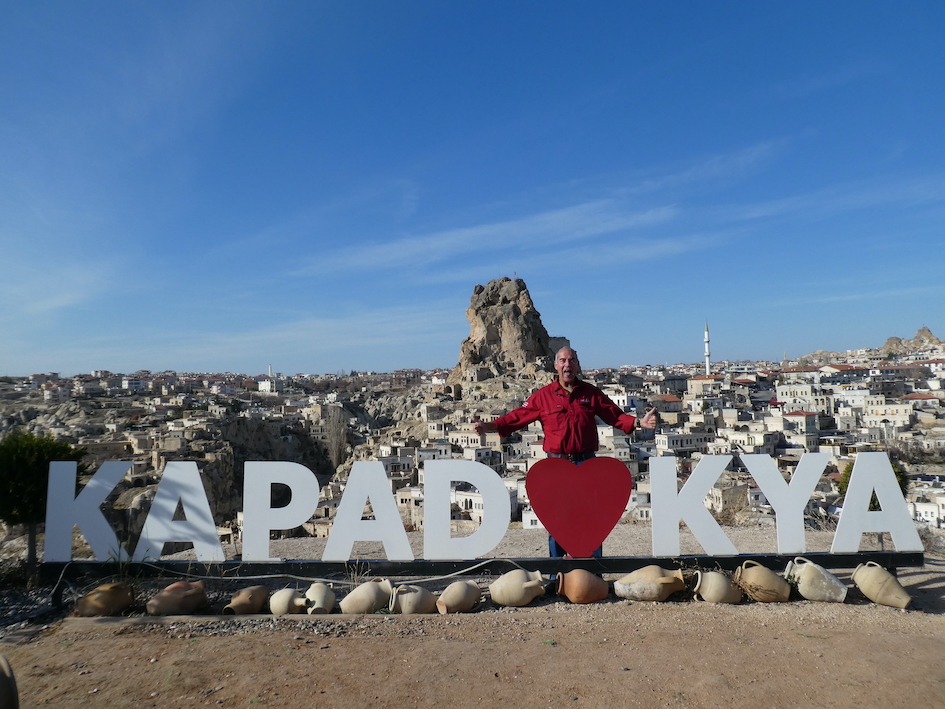
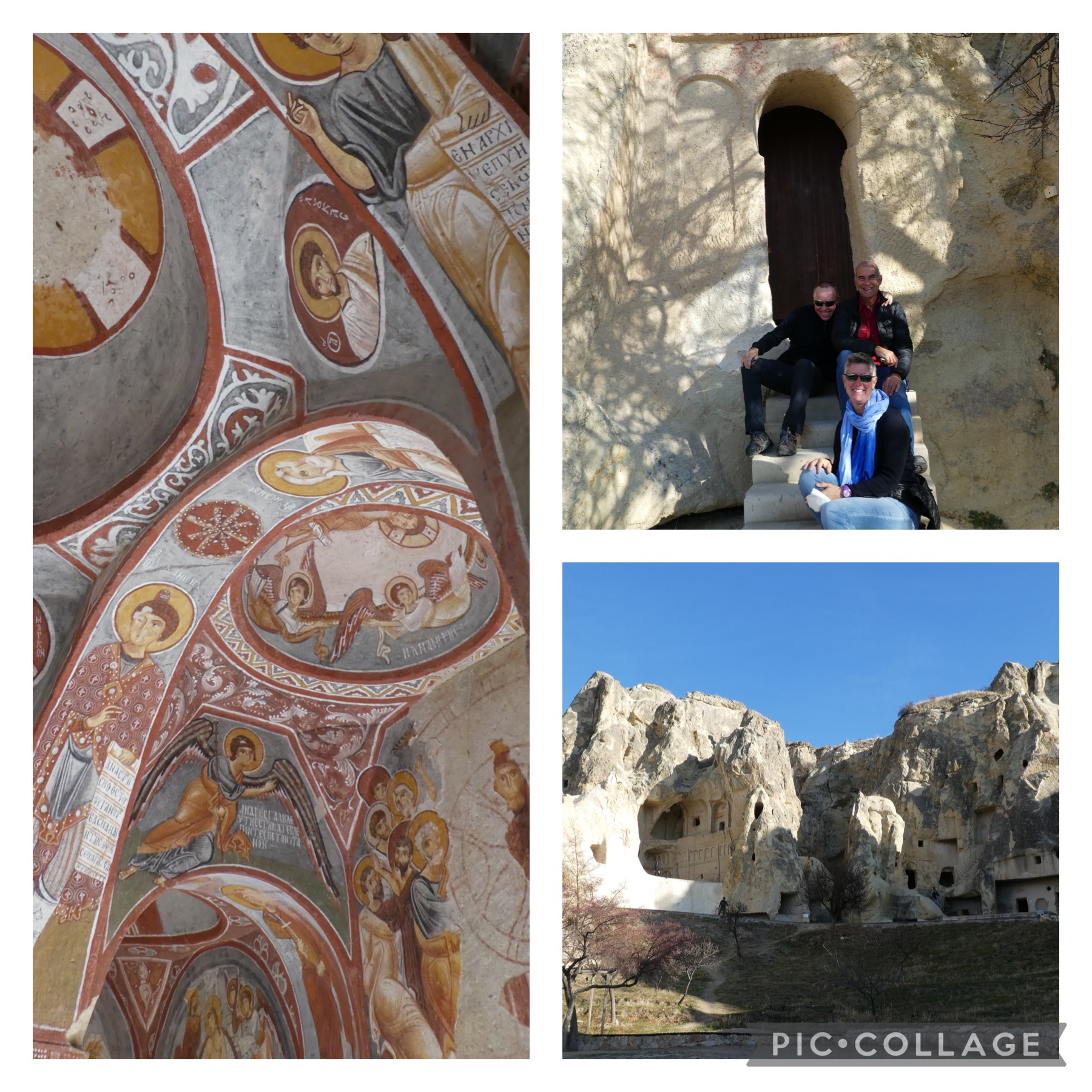

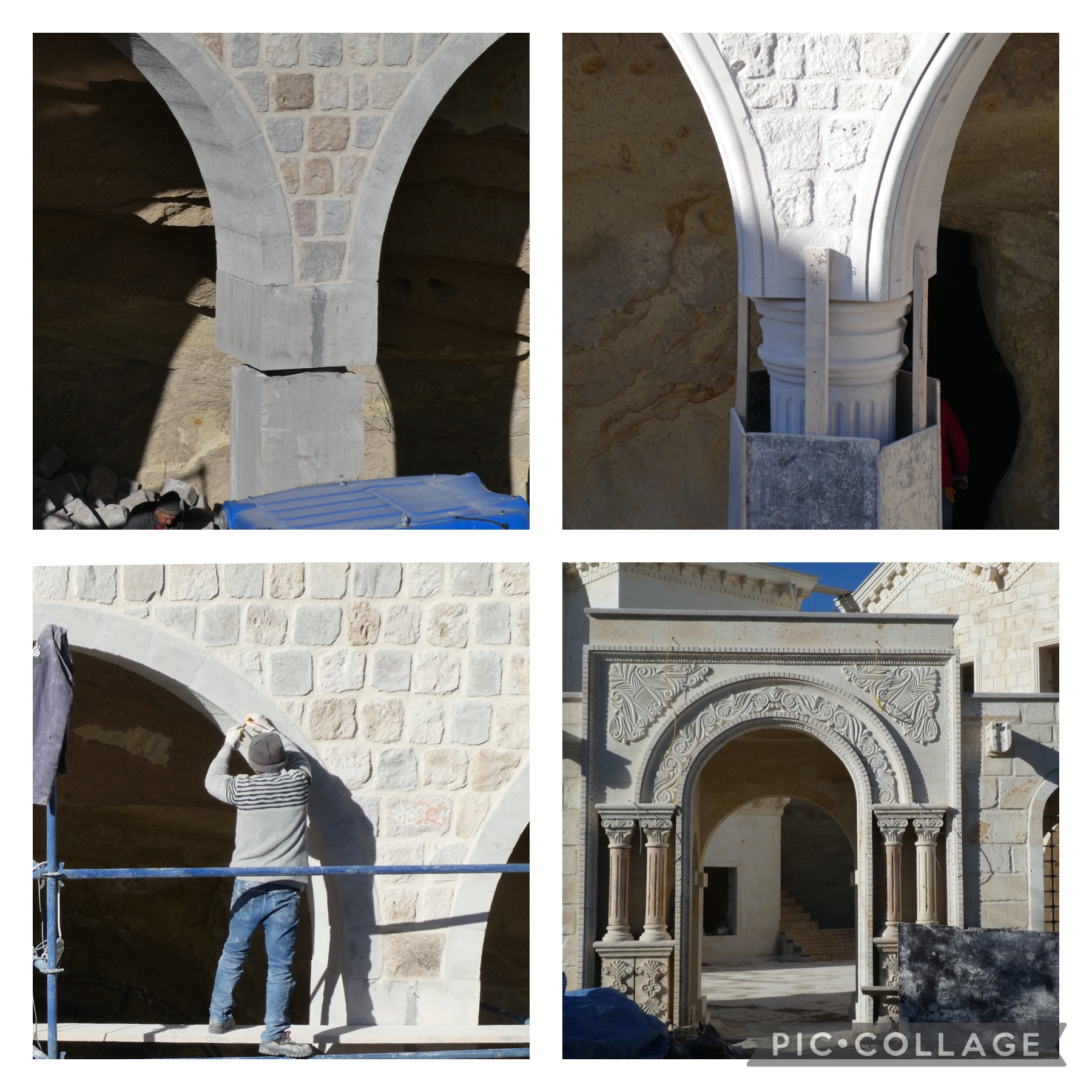
Day 5. Cappadocia
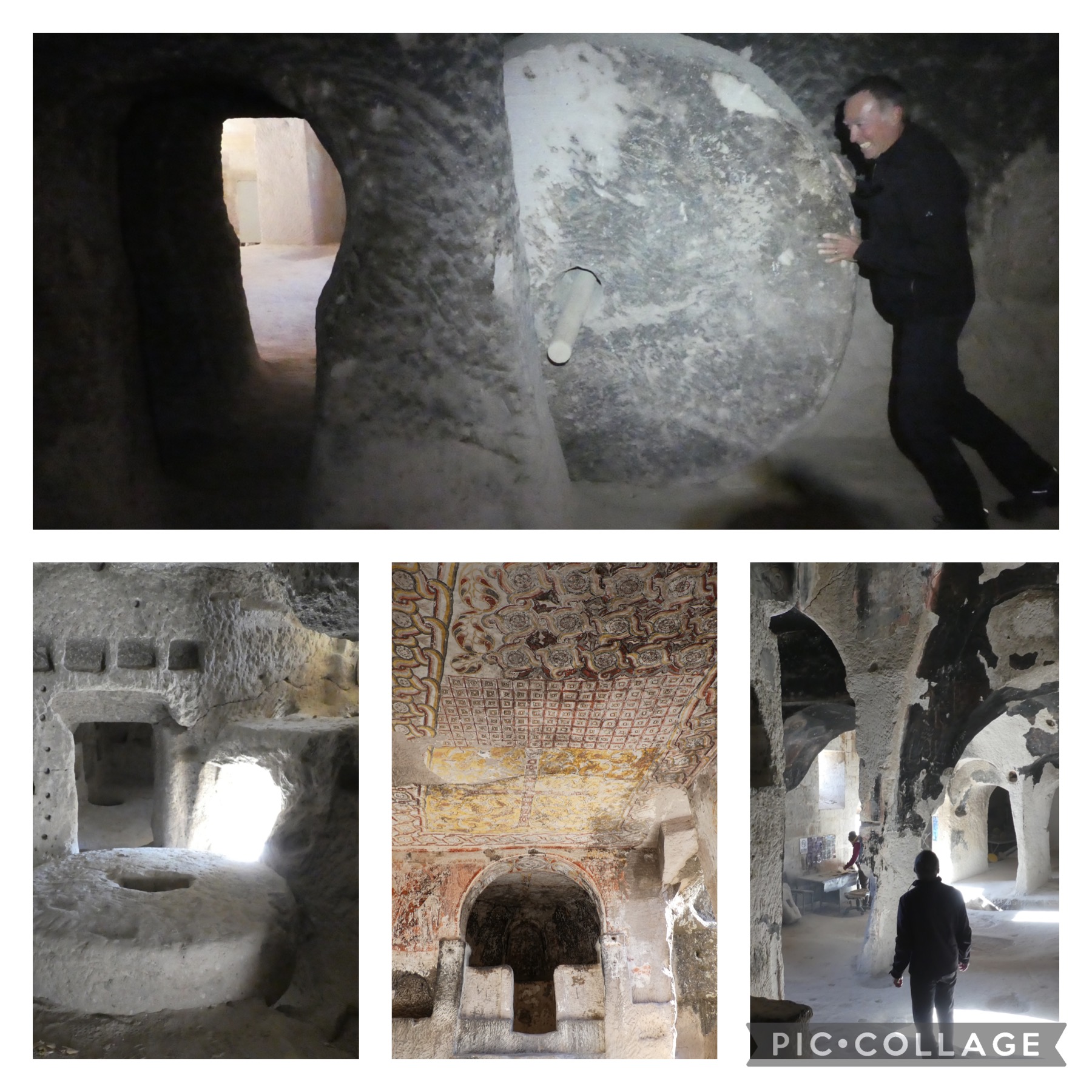
Jean trying to work the old stone circle door (hint to Jean, it is locked open with the stick in the middle)
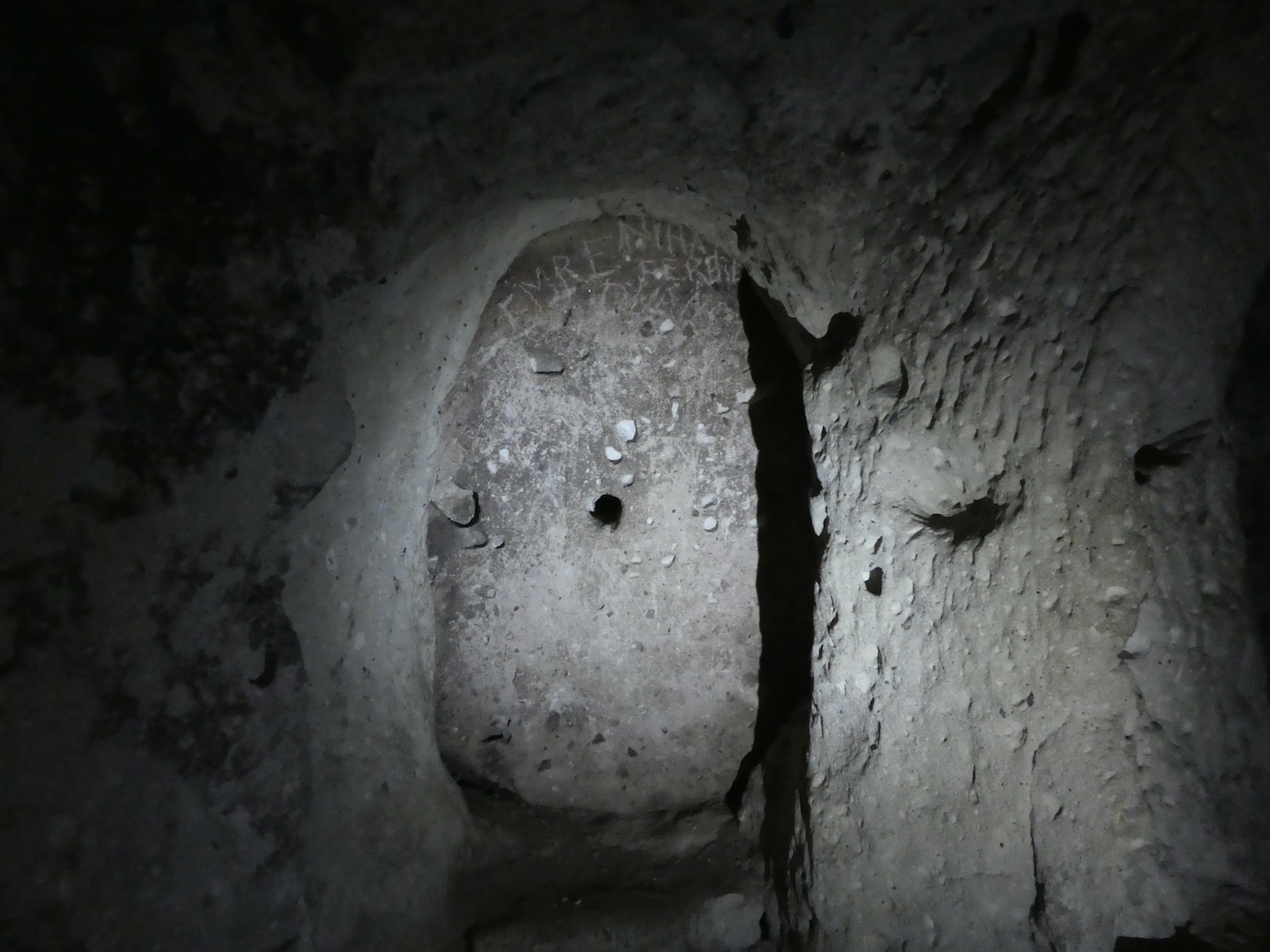
Derinkuyu Underground City
The Derinkuyu underground city is an ancient multi-level underground city, extending to a depth of approximately 85 metres. It is large enough to have sheltered as many as 10,000 people together with their livestock and food stores. It is the largest excavated underground city in Turkey and is one of several underground complexes found throughout Cappadocia.
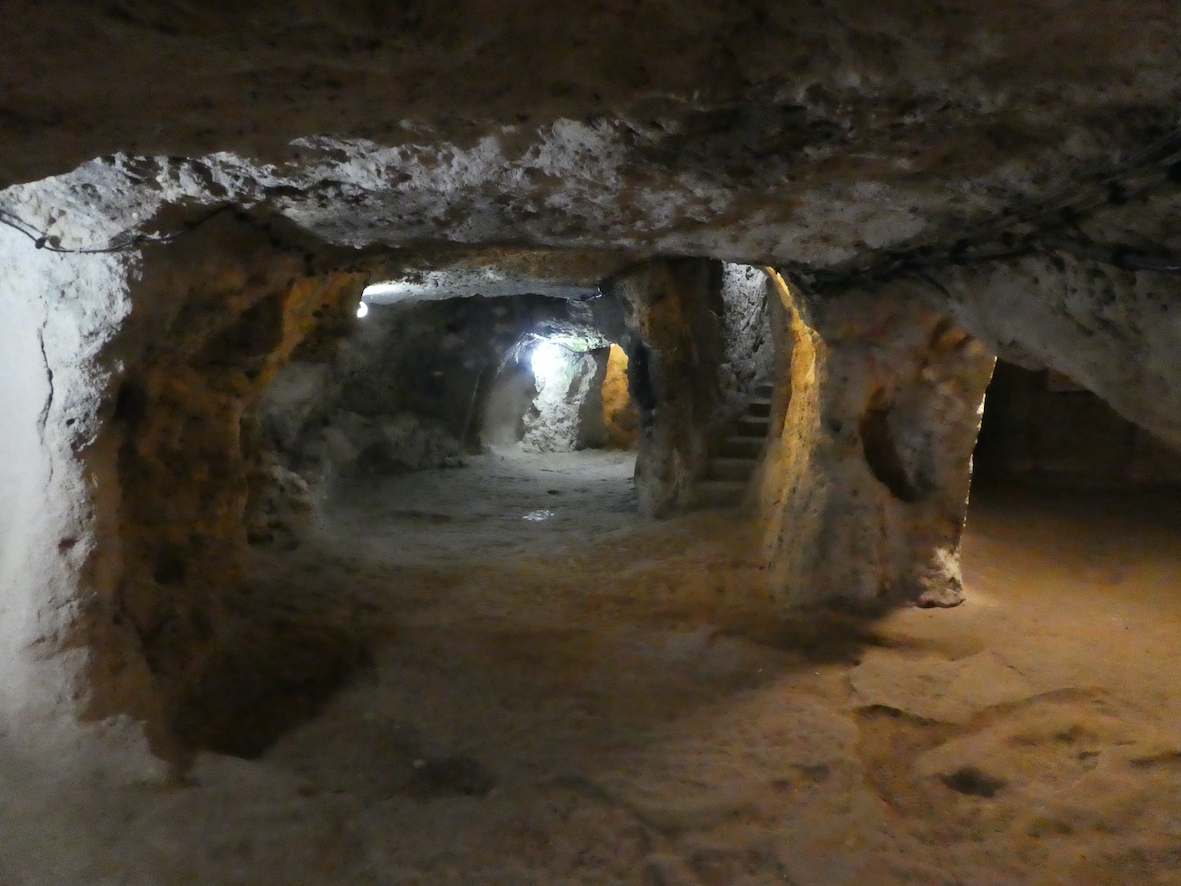

It could be closed from the inside with large stone doors. Each floor could be closed off separately, and had amenities such as wine and oil presses, stables, cellars, storage rooms, refectories and chapels.
The large 55-metre (180 ft) ventilation shaft appears to have been used as a well. The shaft provided water to both the villagers above and, if the outside world was not accessible, to those in hiding underground.
When were they built and WHY? The caves are believed to have initially built by the Phrygians in the 7th century BC, however in the Roman times (753 BC – 476 AD) the Christians expanded the caverns to deep multi level structures.

The city at Derinkuyu was fully formed in the Byzantine era, when they were used as protection from the Muslim Arabs during the Arab-Byzantine wars (780–1180 AD).
In short, they were built for survival. These were times when whole races/religions of people were being hunted and executed.
The city was connected with other underground cities through many kilometres of tunnels.
These cities continued to be used by the Christian natives as protection from the Mongolian incursions in the 14th century.
As late as the 20th century, the local population, Cappadocia Greeks, were still using the underground cities to escape periodic persecutions.
In 1923, the Christian inhabitants of the region were expelled from Turkey and moved to Greece in the population exchange between Greece and Turkey, whereupon the tunnels were abandoned.
In 1963, the tunnels were rediscovered after a resident of the area found a mysterious room behind a wall in his home. Further digging revealed access to the tunnel network.

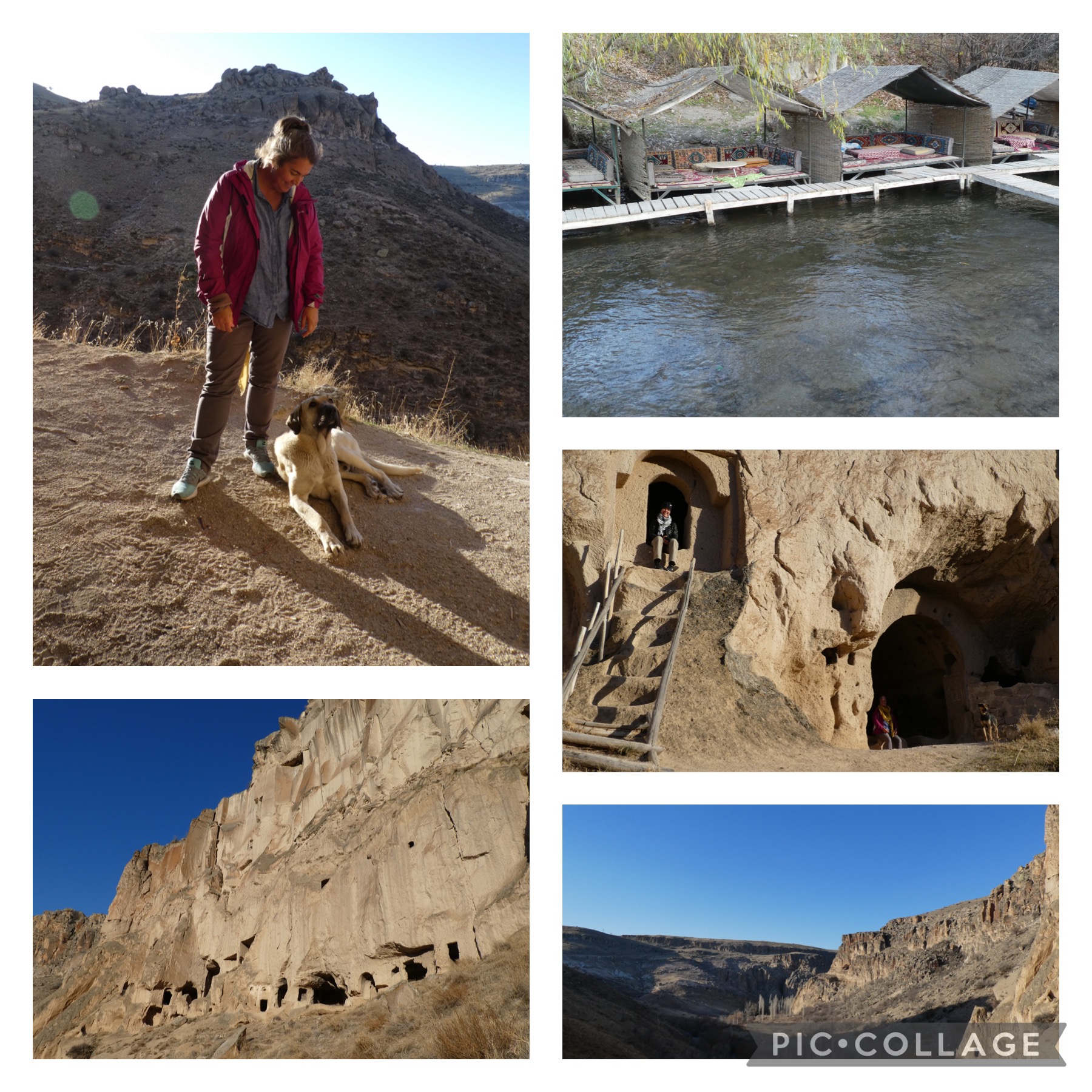
The street dog walked beside Maree the entire way (7km)
Day 6. Göreme – Silifke

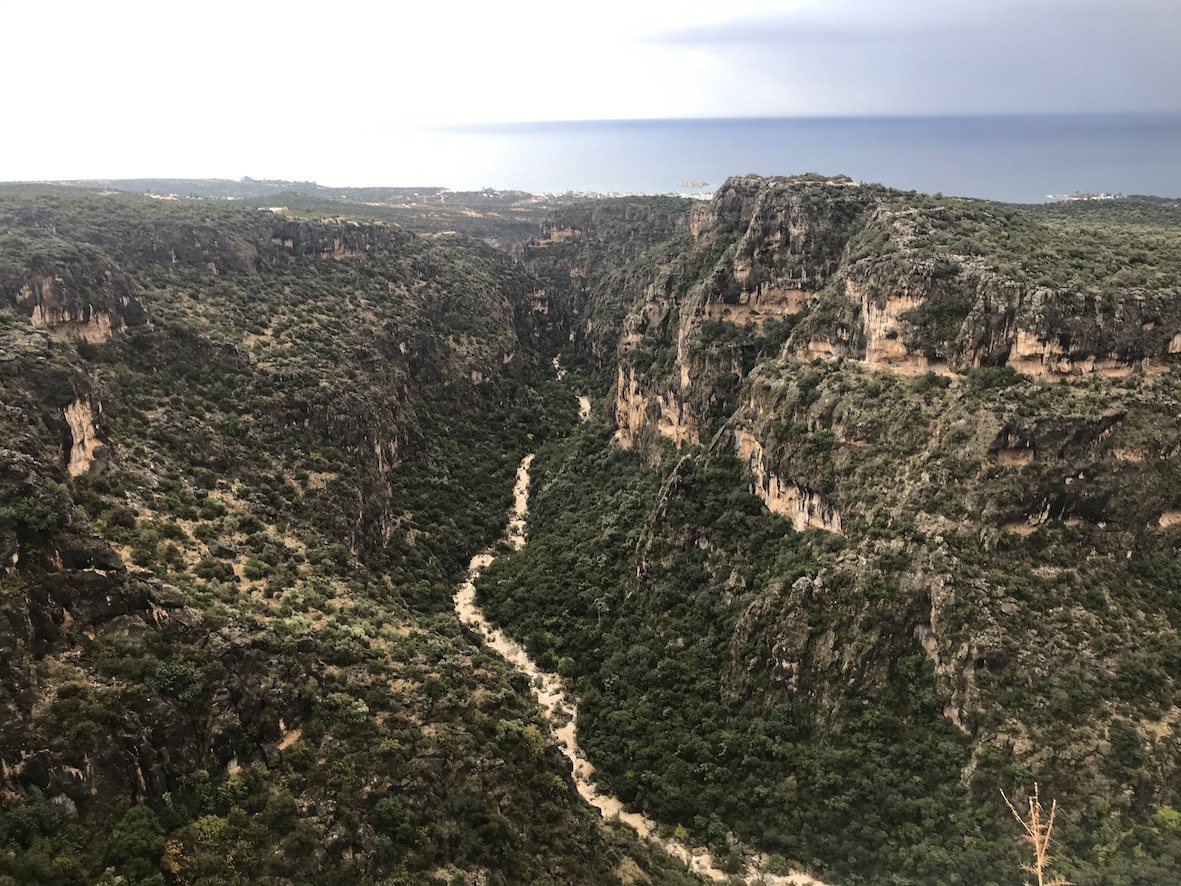
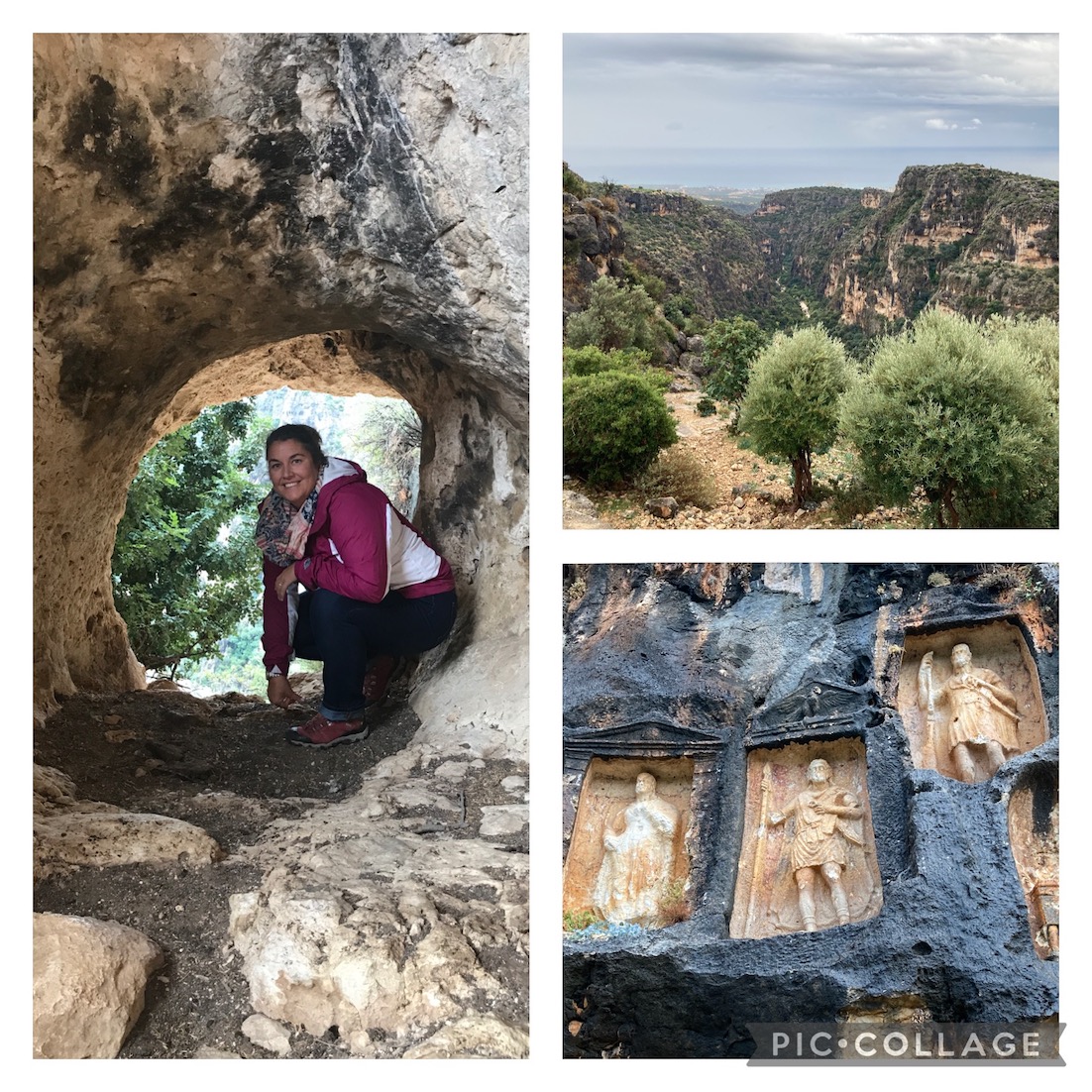

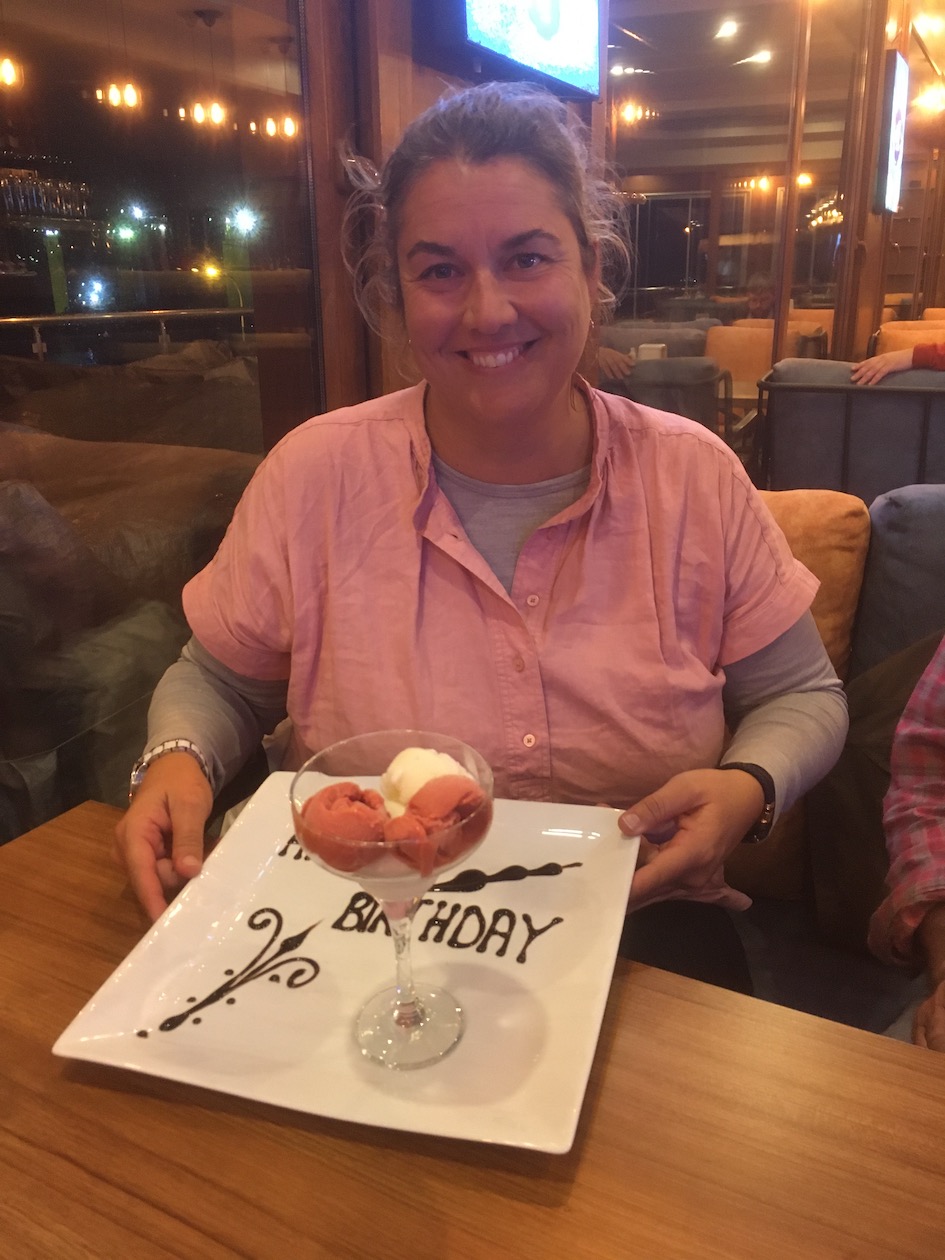
Day 7. Silifke – Side
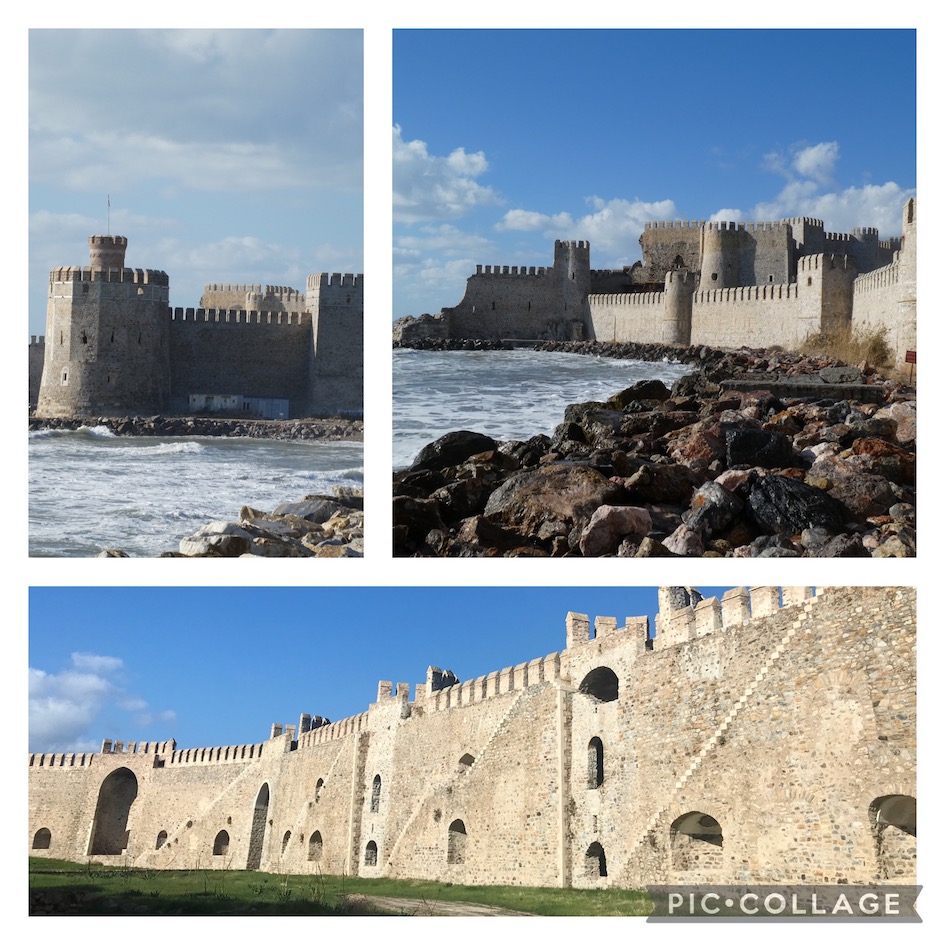

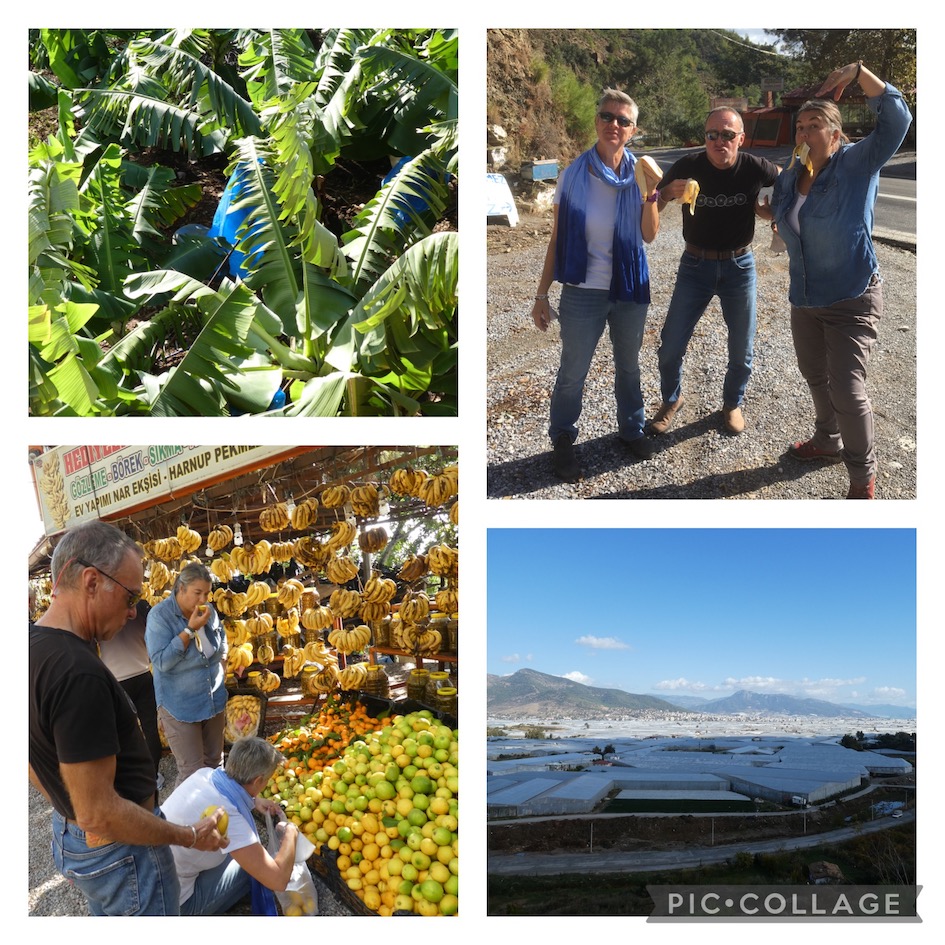
We taste tested and they are delicious!
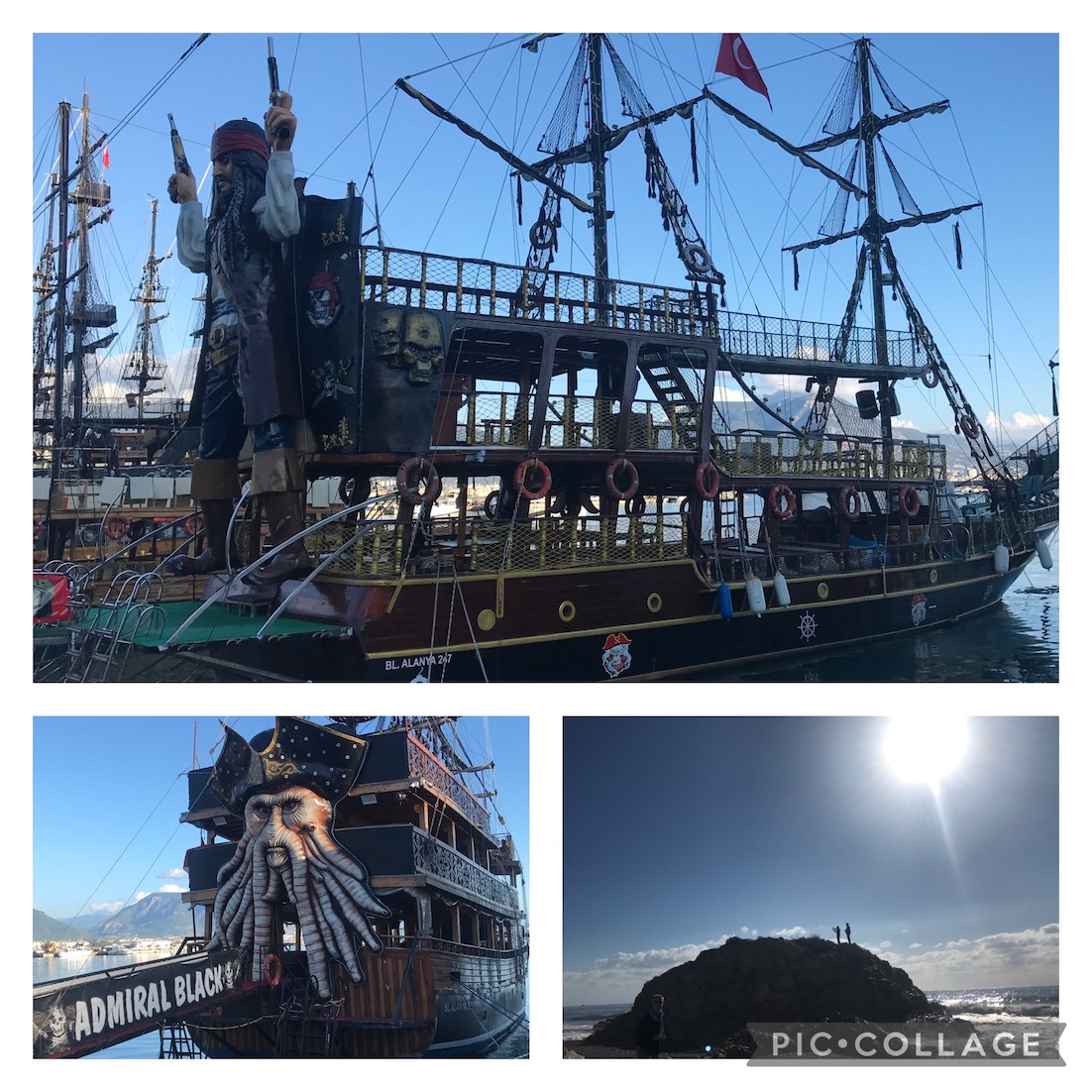
Day 8. Side – Antalya
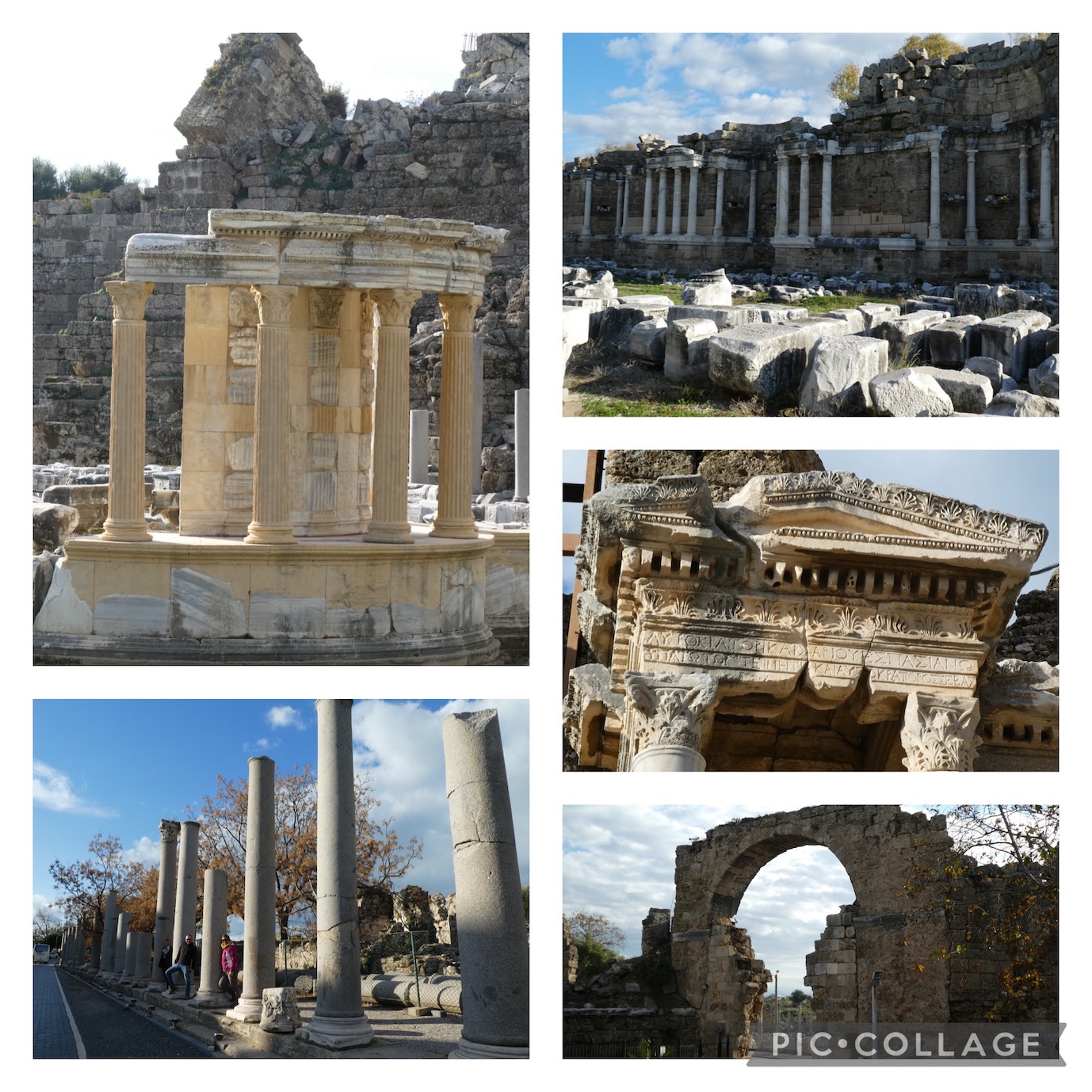
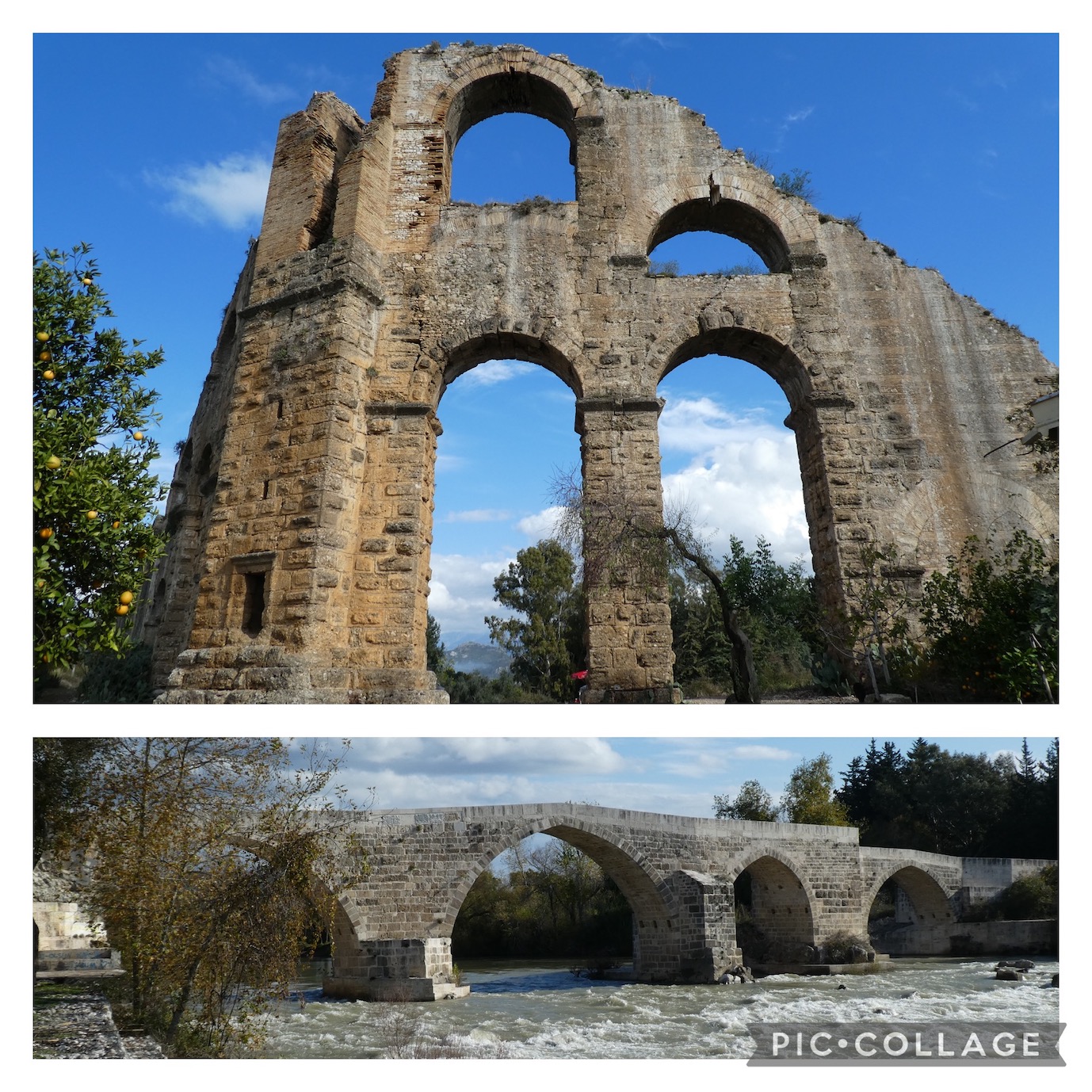

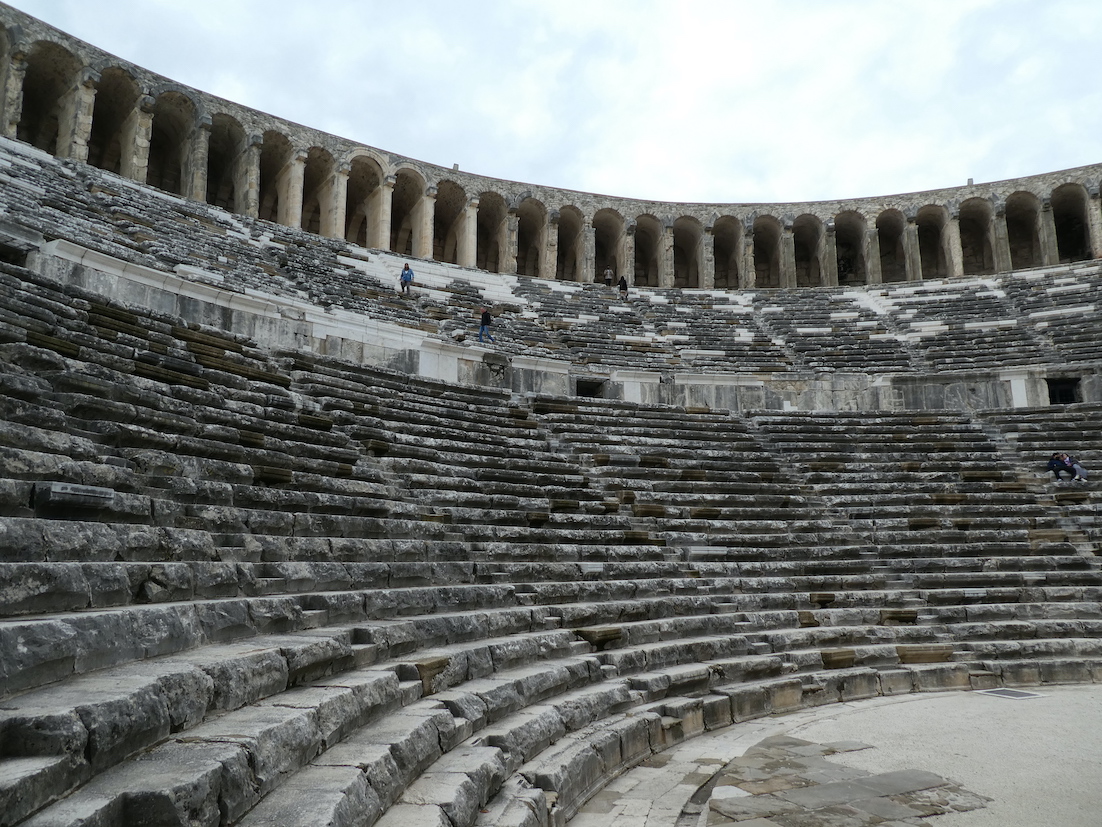

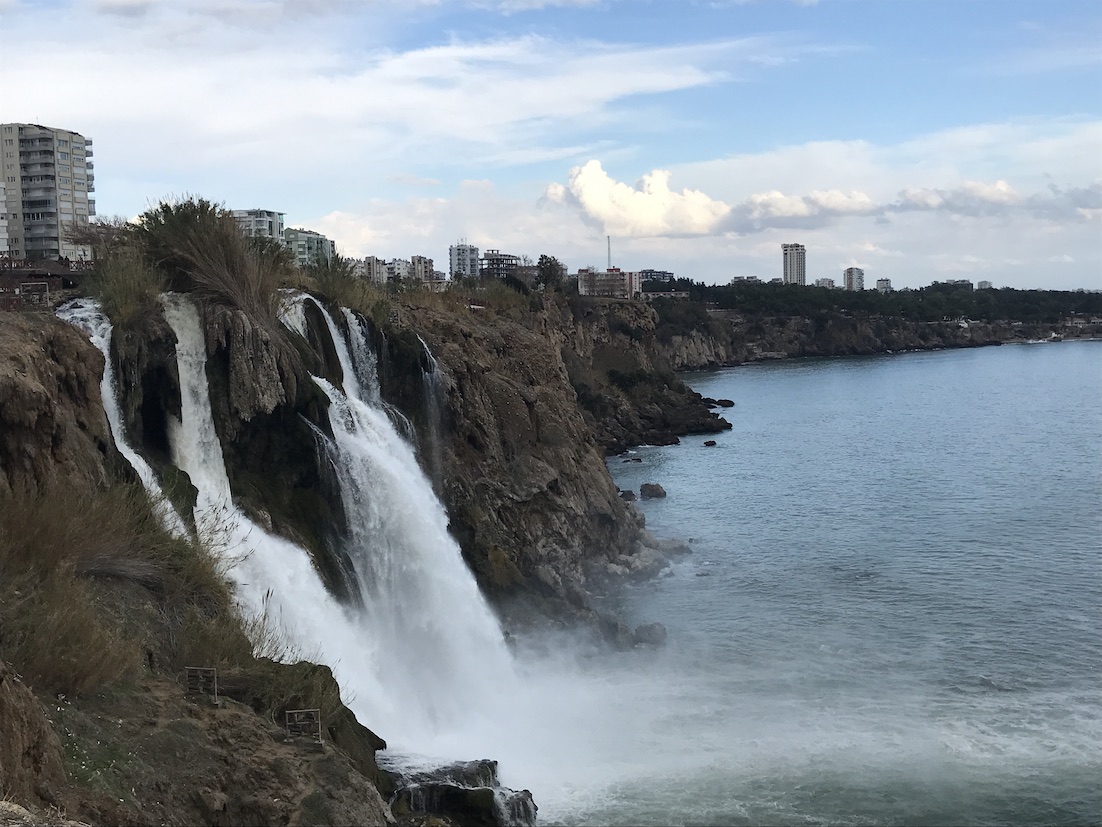
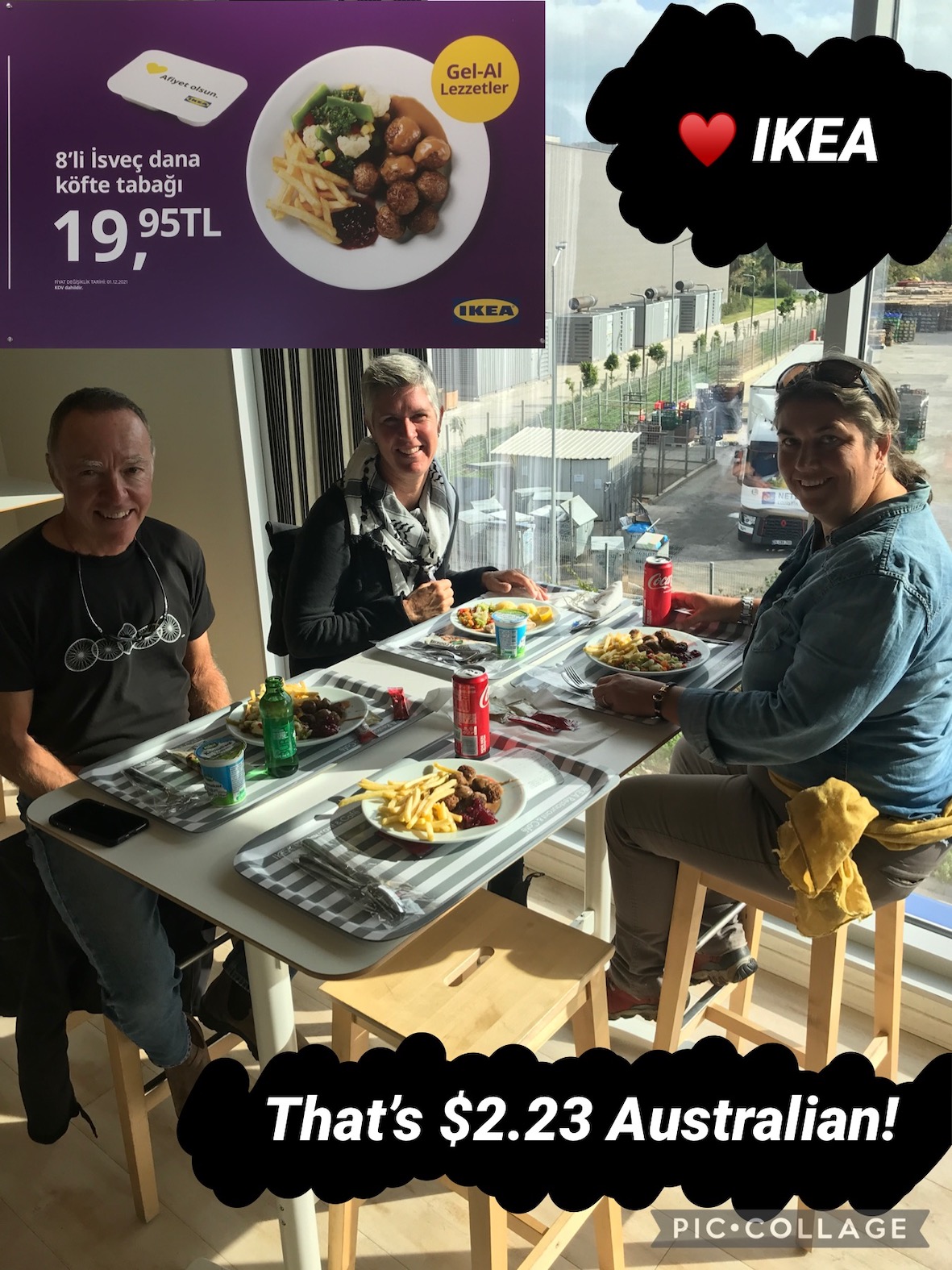

Enjoying Sweedish meatballs for lunch at the essential IKEA stop.
Old Town Antalya on dusk.
Day 9. Antalya – Marmais … Home
A fabulous trip enjoyed with friends. We certainly appreciate how lucky we are to be able to live and experience the culture here in Turkey and look forward to seeing more of the country.
To Turkey in Two Hours
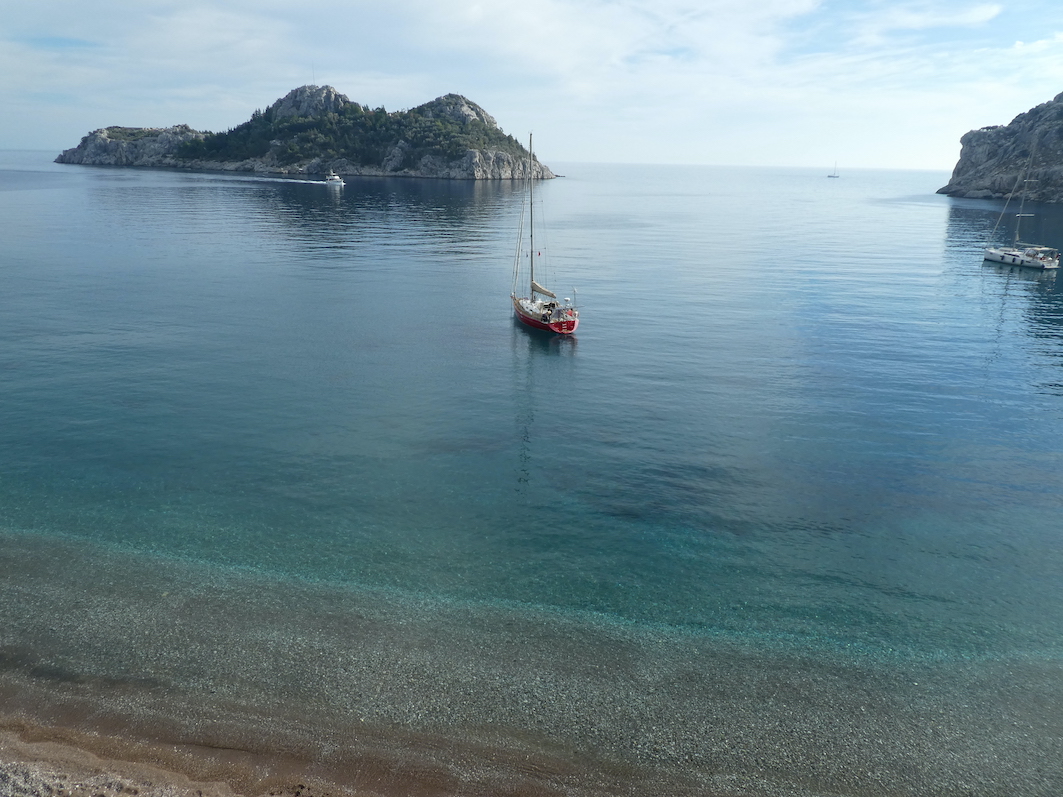
It was just 2 hours – 11 nautical miles to Turkey (Datça), it was within sight the whole time. In fact it had been insight for the last week as we finished the last few islands in Greece which are just off the Turkish coast.
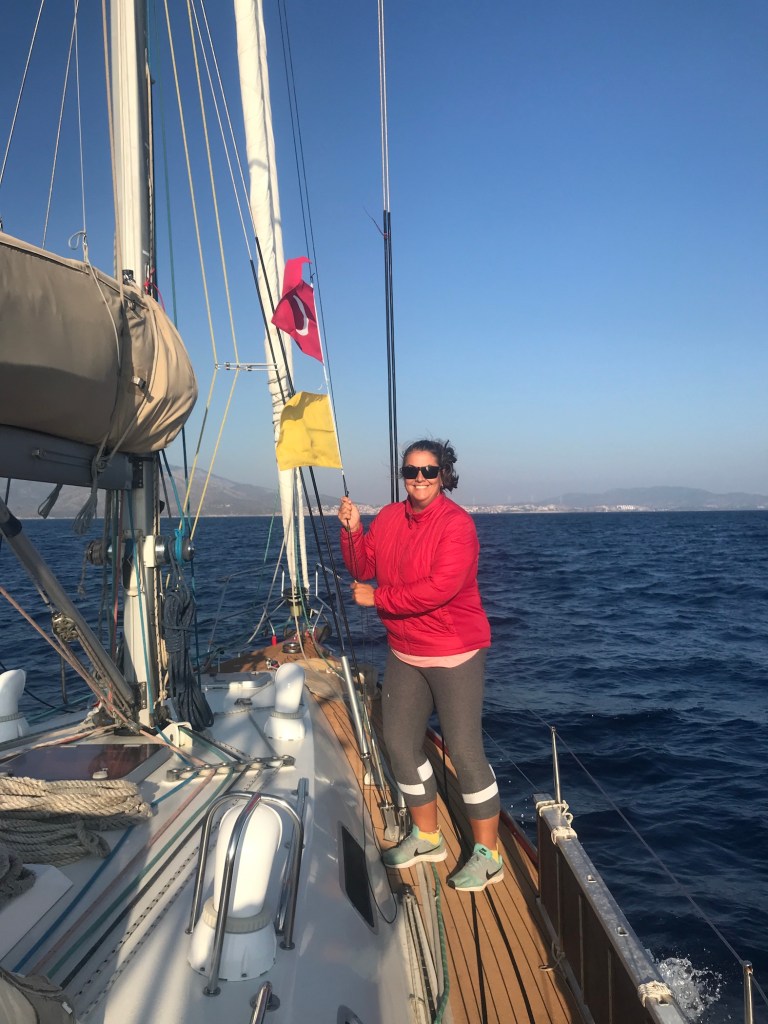
It was a clear and beautiful day but without wind, so we motored over to Turkey and anchored off the beach right in the town.

We are in a NEW CONTINENT – ASIA !!
That is our third for the year; Africa, Europe & Asia all in Red Roo.
Pretty amazing when you think of it like this.
Checking into the country was next, which in Turkey is a little different as you cannot complete the formalities yourself, you need to engage an agent to do this for you (which means money). We had been recommended an agent and after the traditional Turkish welcome of drinking tea with him and his wife he then went off to complete the formalities (and we went off to find an ATM and get some Turkish Lira to operate with) two hours later we had a stamp in our passport and a Turkish Cruising Permit for Red Roo.


The following morning a smaller yacht anchored beside us and says G’Day. Allan is Australian but married a Turkish lady (Hale) and although they are Australian they are currently living in Datça (where we were anchored). We later went to their home and enjoyed a drink and lovely chat gaining some great local information on operating a boat in Turkey and some land travel suggestions.

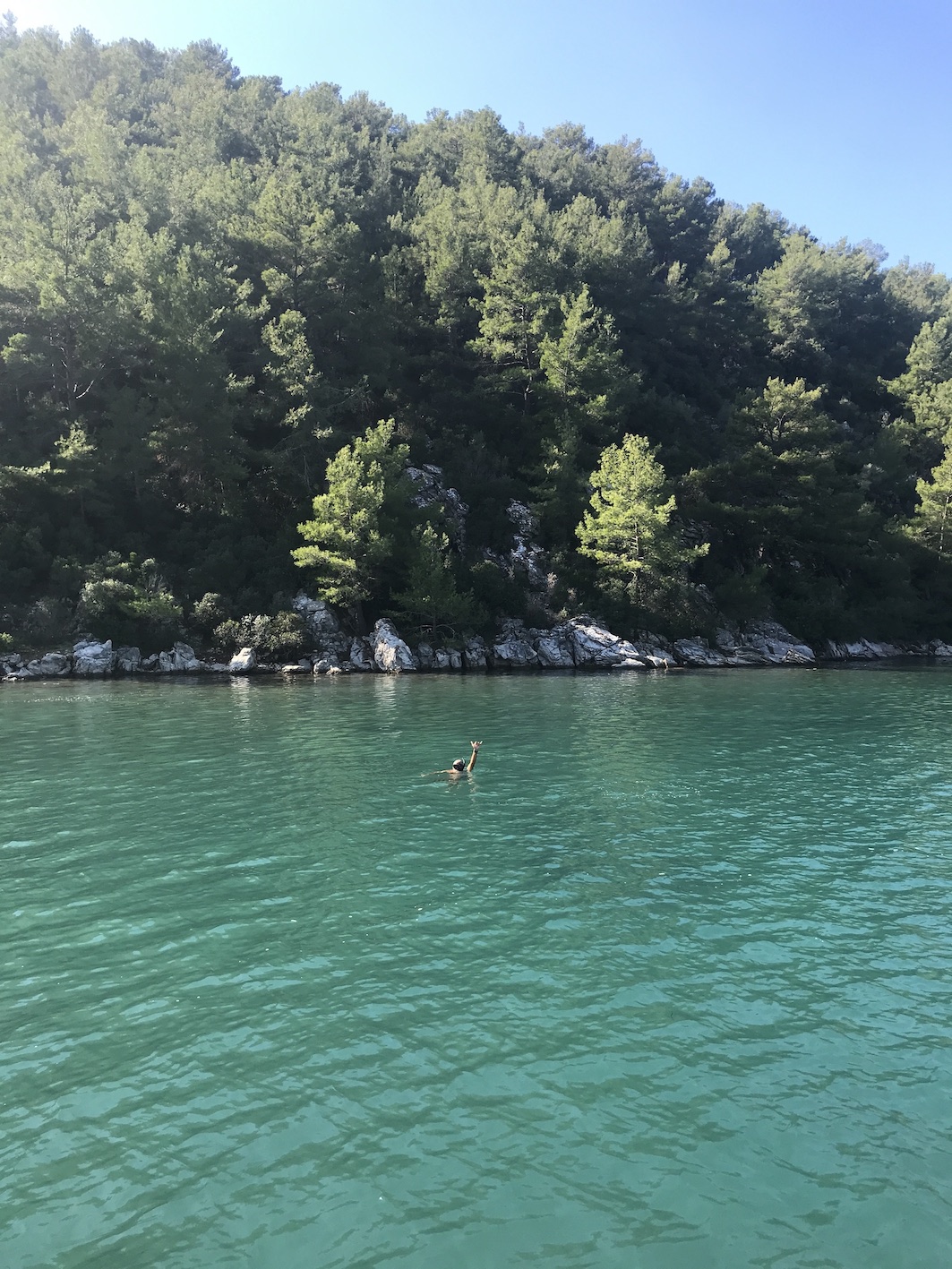
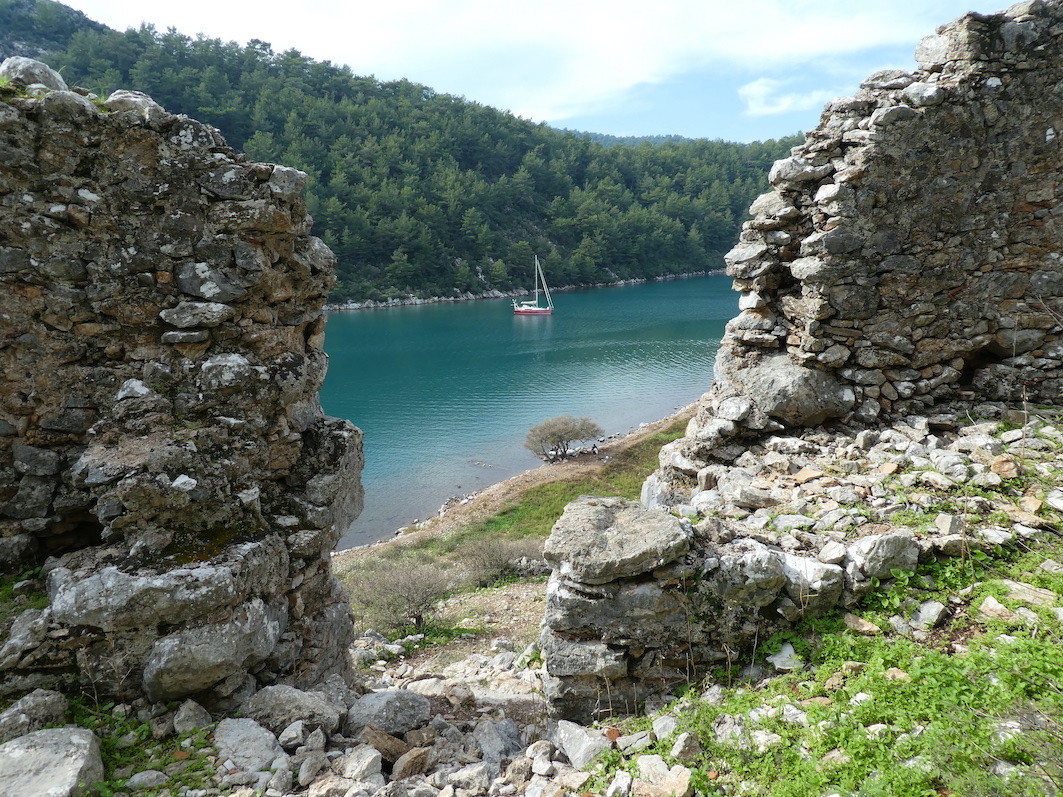
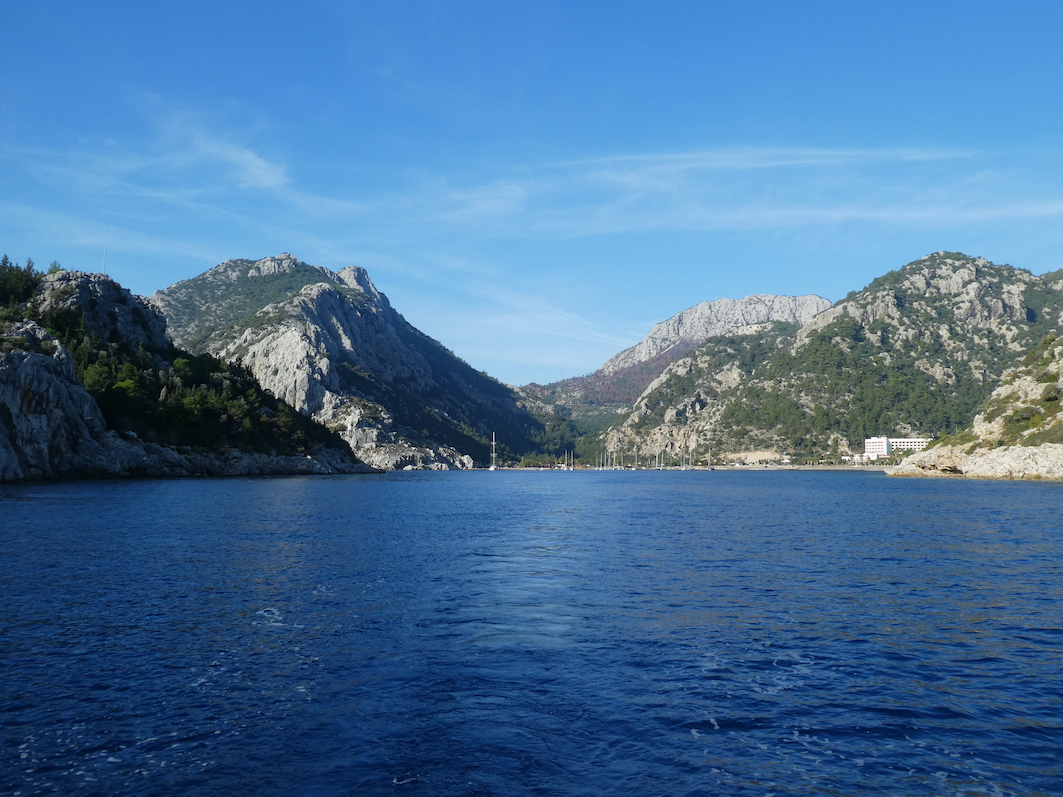
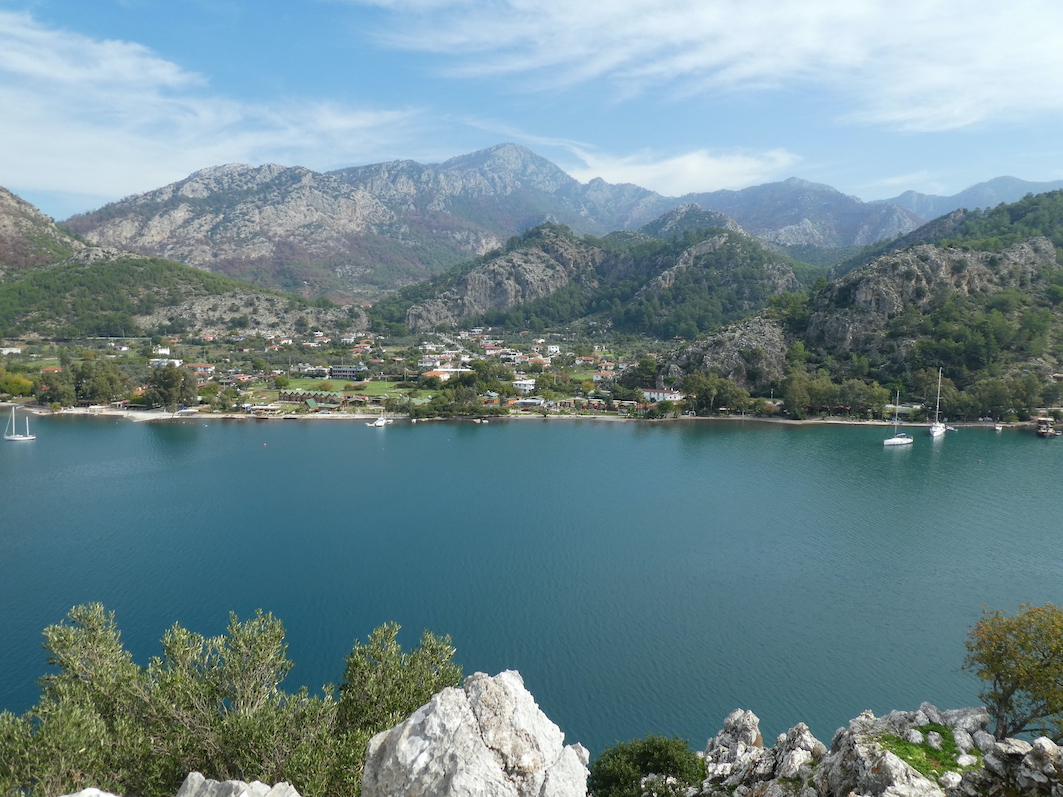
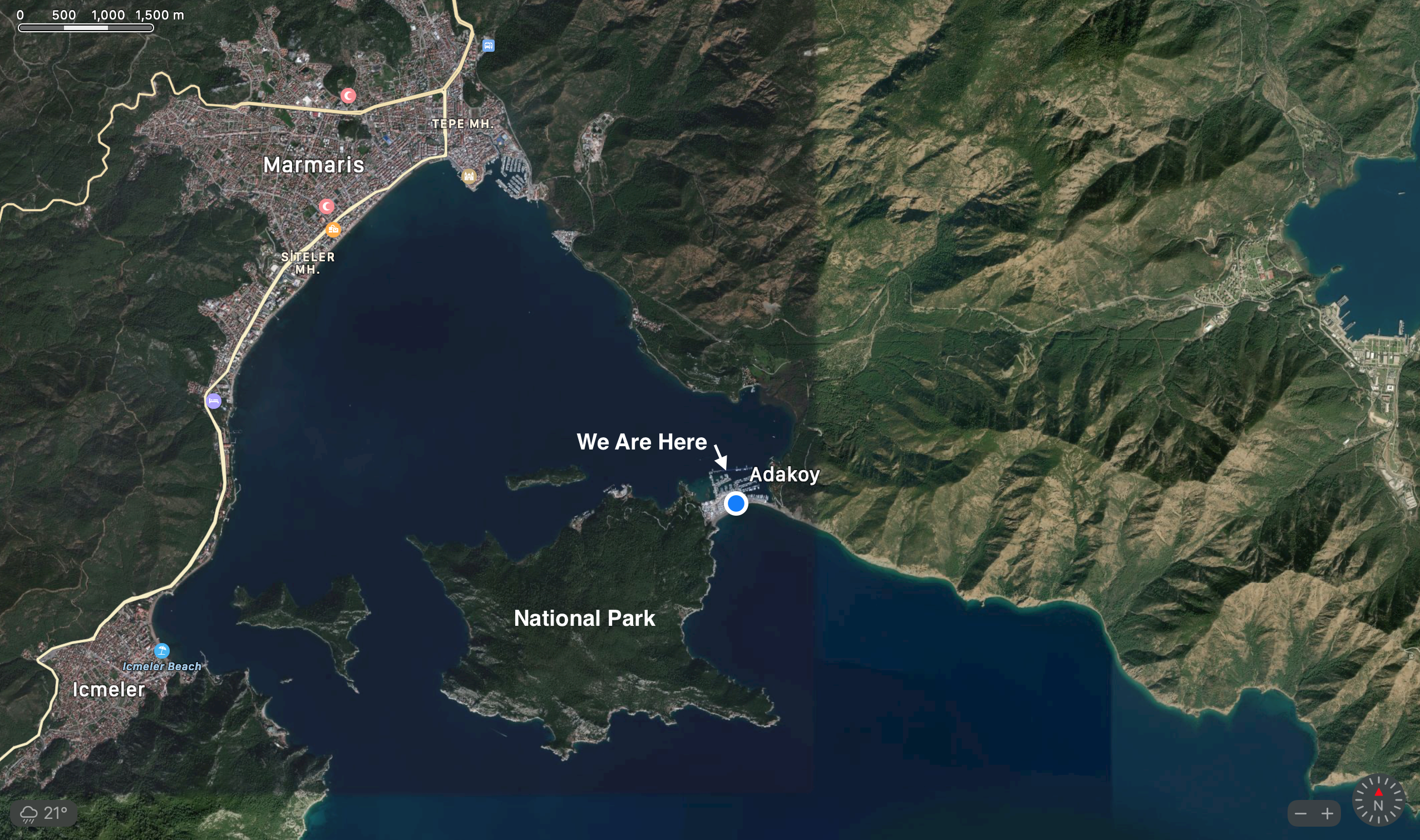
For the next 9 days there wasn’t any sailing winds forecasted and we were actually already very close to our marina where we have our winter reservation for 3 months. So we anchored in 7 nearby anchorages whilst making our way to the marina (averaging just a very short 12 nautical miles or around 2 hours under motor between each anchorage) very relaxed.
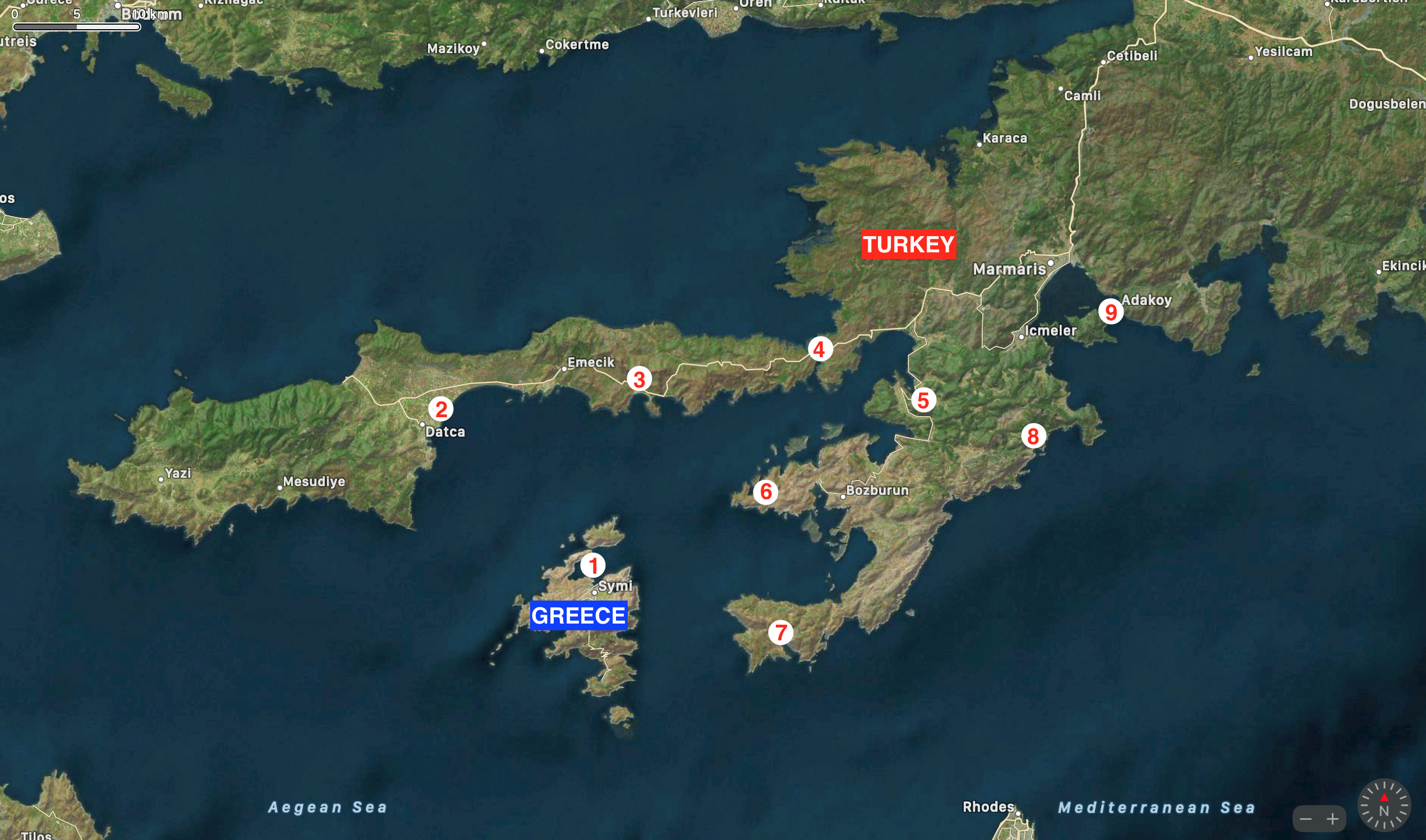
1 Symi (Greece) – 2 Datca – 3 Çiftlik Koyu – 4 Bencik – 5 Orhaniye – 6 Dirsek –
7 Bozukkale – 8 Ciftlik – 9 Marmaris Yacht Marina
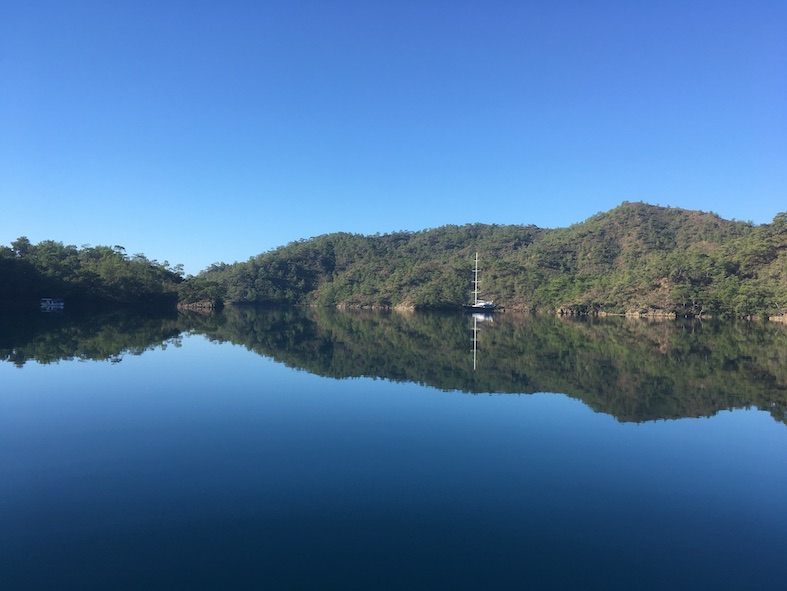
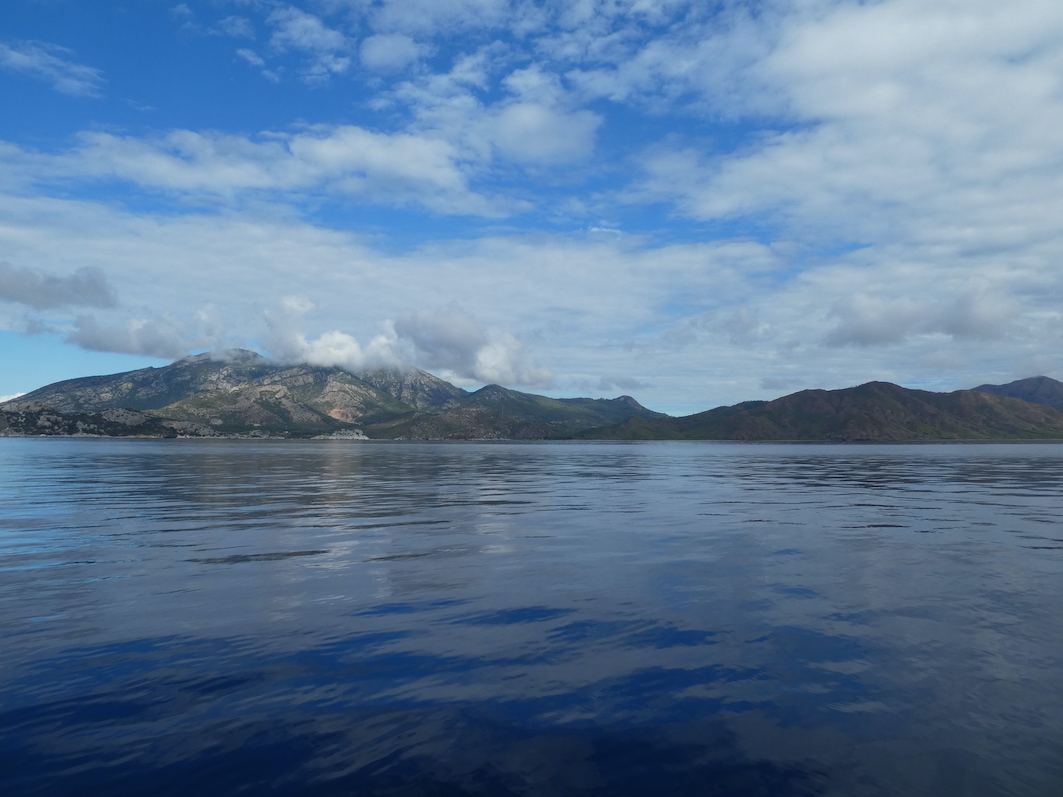

We are now secured in the Marina for our winters rest – otherwise called winter maintenance and jobs period (not a lot of rest to be had).
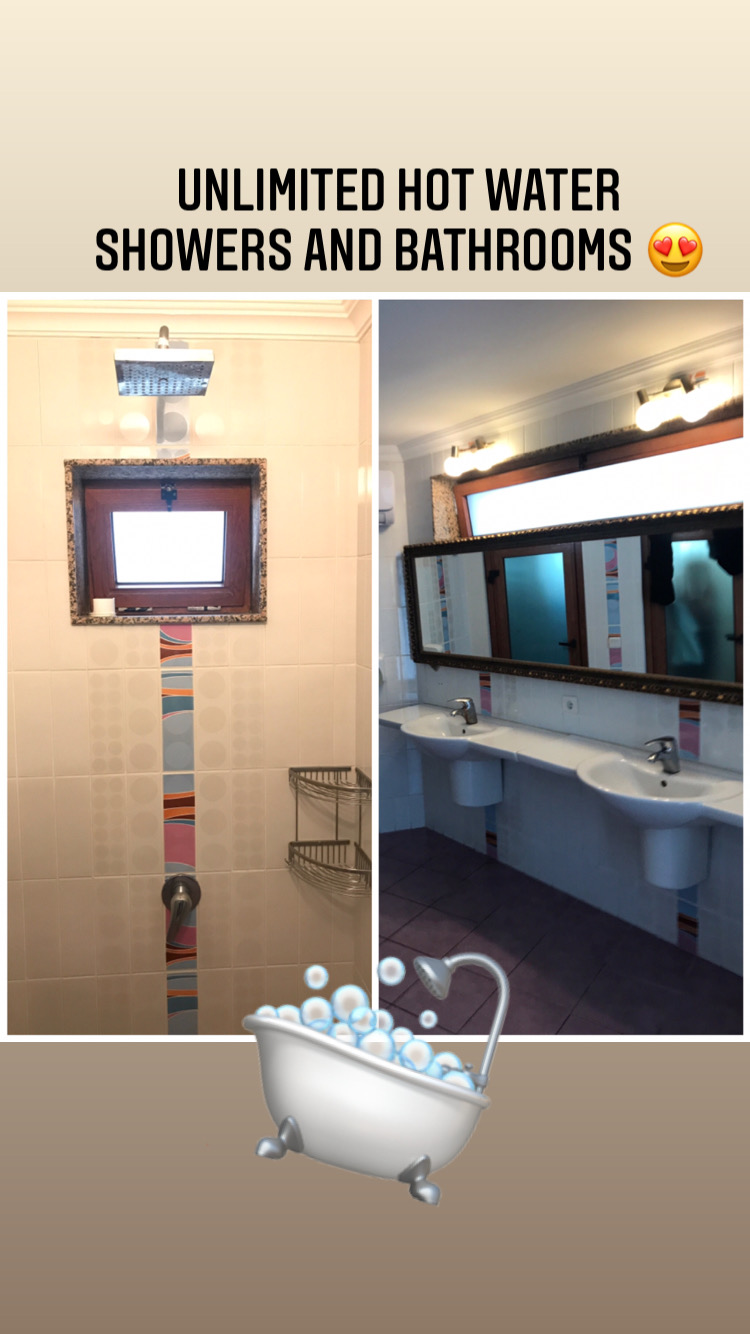
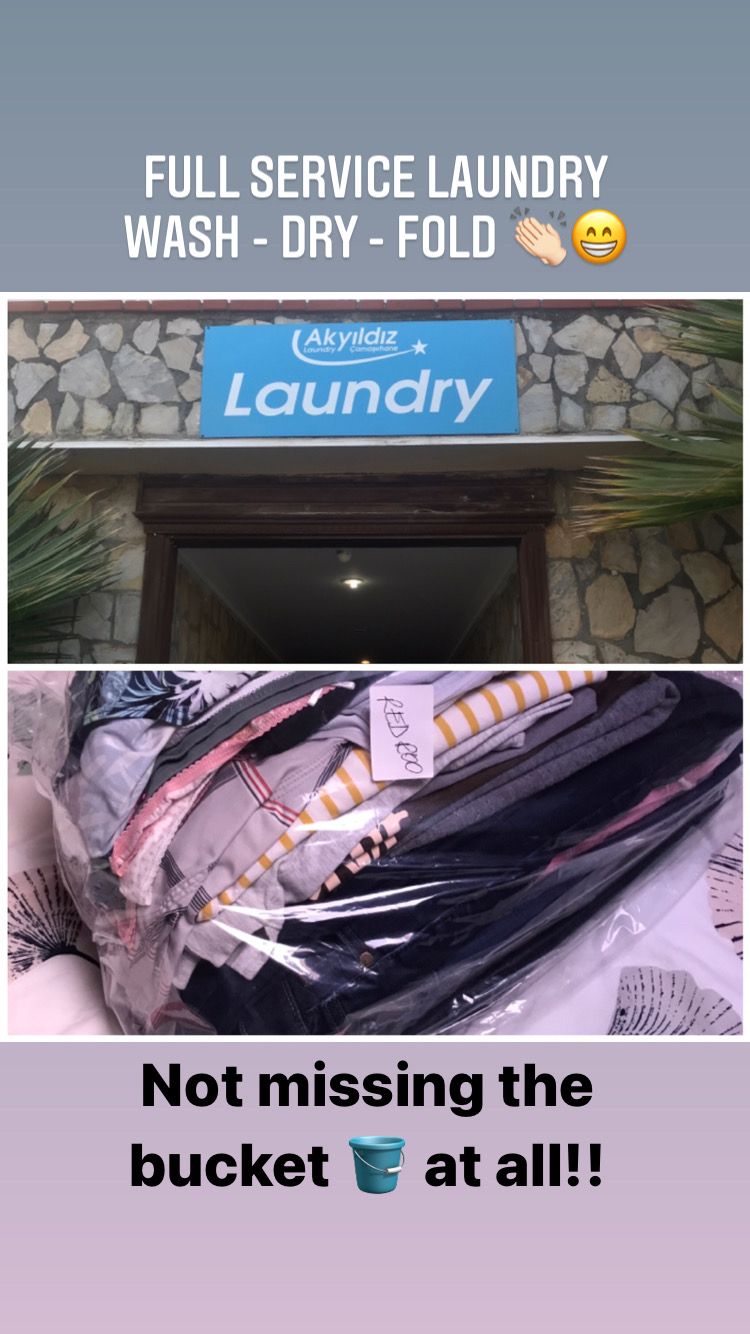
There are some perks to marina life such as shore facilities; toilets and showers (no limits on hot water, oh how I love a good long shower), we are plugged into shore power, no sleepless nights at anchor, we are next to a national park so can step off the boat anytime for a walk amongst the wonderful forest. There is a supermarket and laundry on site (can’t say that I am missing the bucket for laundry at all). As well as a bar (with pool tables), restaurant, library and a swimming pool (but its a little cold – that’s from first hand experience).
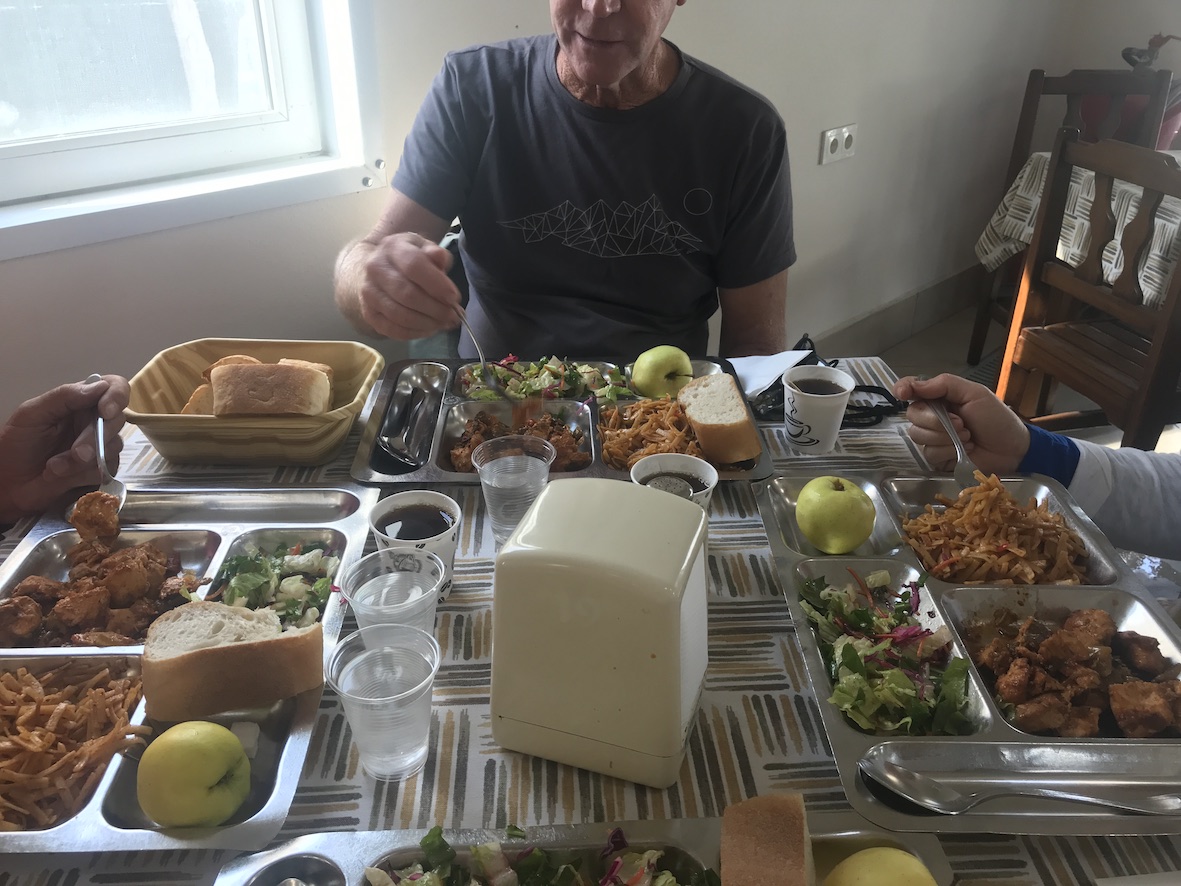
This is a big boat yard … I mean really big, with lots of boats in and out of the water being rebuilt and under maintenance, so big that there is also an actual staff workers cafeteria serving breakfast lunch and dinner. We went to investigate and for $20 turkish lira, that’s $2.15 Australian dollars you get 4 courses. The menu changes daily and is published each week, the day we went we enjoyed chicken casserole, pasta, salad & fruit as well as bread and tea and water. Many of the cruisers in the marina eat here daily saying you can’t cook for that price! My only concern is that this Saturday they are serving Engineers for main course! Turns out it is actually artichoke and potato.

The marina is located 12 kilometers out of the main town of Marmaris and their is a “Dolmus” which is a cross between a bus and a taxi (a minivan) that goes to town and back each hour for 5.50 local currency (59 cents Australian). We have familiarised ourselves with town and been to the weekly market where again we were very impressed by the local fresh fruit and vegetable produce as well as the prices.
We have gotten straight into the boat jobs ticking a few off the list already and are also planning to do some inland travel and adventures to see a lot more of Turkey.
There are some perks being in a Marina for a little while …


Goodbye Greece

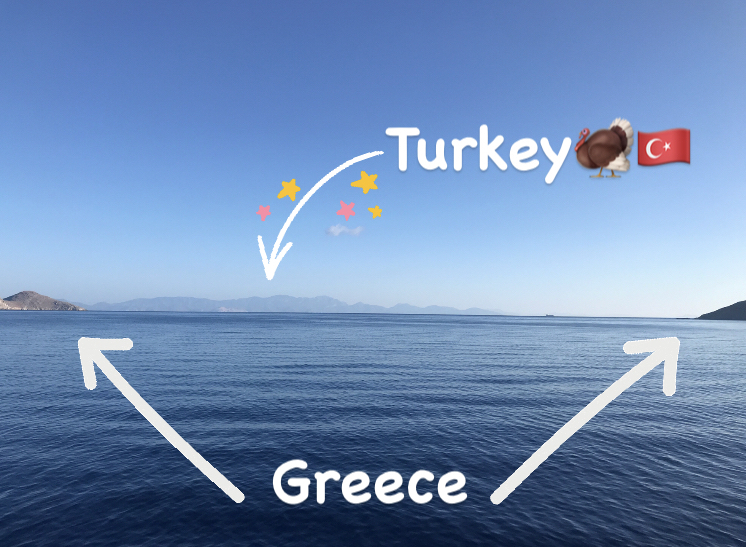
We were in our final 10 days in Greece, and can actually visually see Turkey, it appears easily within eyesight on the horizon as a prominent grey hill shape – we are so close. It makes me want to go now, but the Captain holds me back, just a few more stops in Greece then we go to Turkey.
From the island of Amorgos it is a 40 nautical mile sail to our next destination the island of Astypalaia (which turns out to be a little hard to get my younger around so I refer to it as butterfly island as it is shaped like a butterfly). That’s about 8 hours on the water and overall it was a pretty good passage, we did have to tick the engine over for 2.5 hours of the trip due to no wind but for the majority of the sail we were doing over 6 knots in in 10-12 knots of wind – most pleasant. We had another successful day on the water in terms of fishing with Phil winding in two lovely size bonito fish – that’s dinner for the next two days sorted.
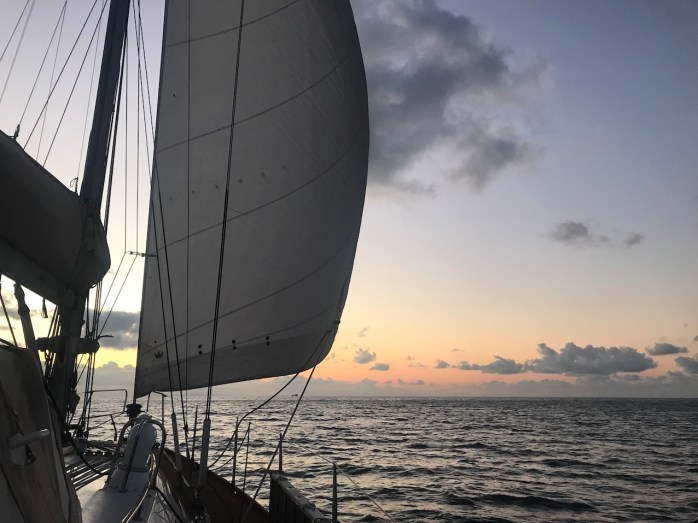
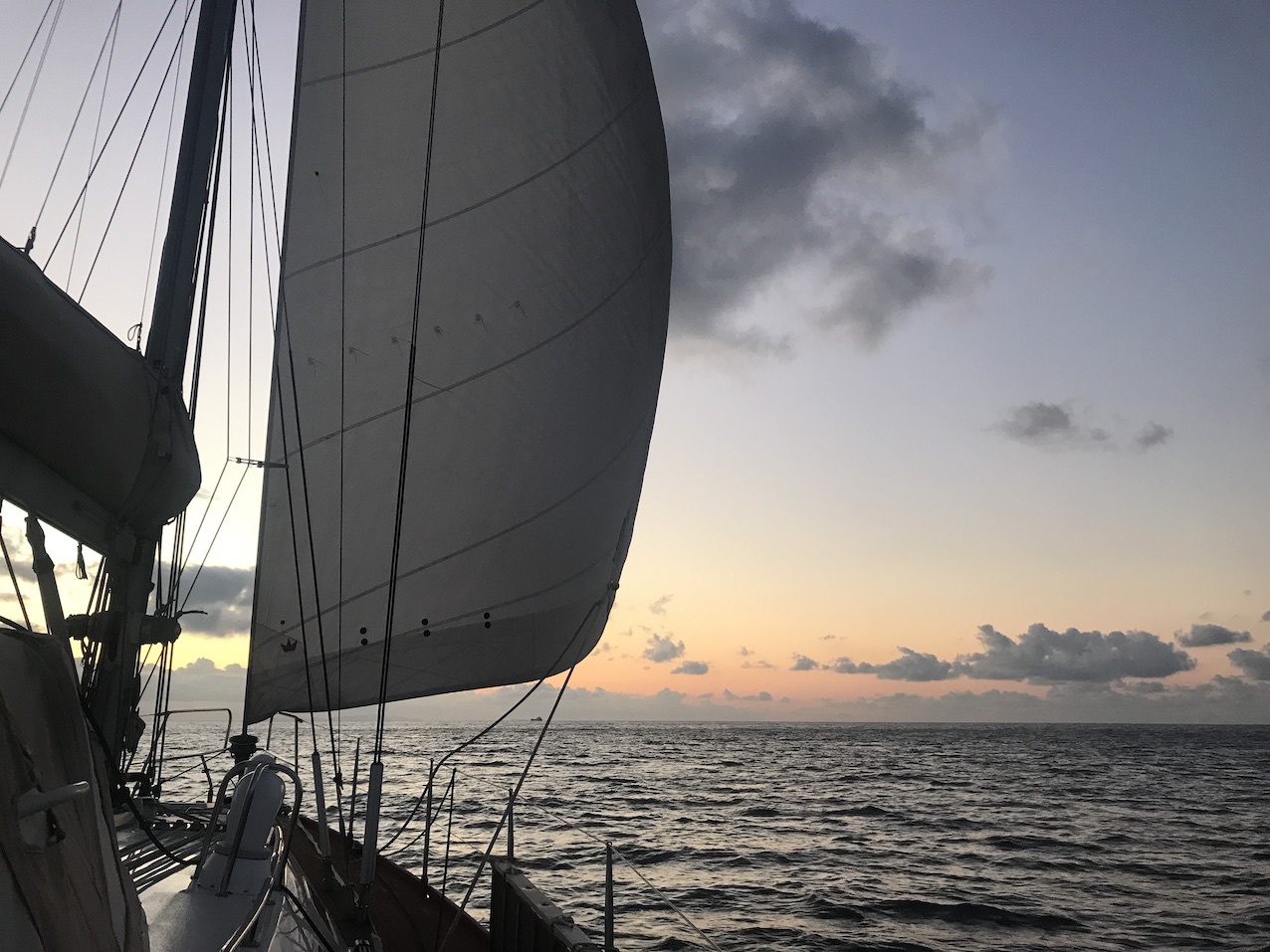
Sunrise Amorgos to Astypalaia

Upon arrival in Astypalaia we decided to secure the boat to the town quay as some more decent consistent winds were forecast for the next 3 days. This meant we had to use the “med mooring” method of docking which we hadn’t done before. Med mooring involves lining the boats stern up perpendicular to the dock as far out as possible (meaning a good 3 – 4 boat lengths away), dropping the anchor and reversing into the dock. Whilst reversing we are laying out anchor chain, and about half way there stopping the chain to ensure the anchor has “dug in” on the bottom (which means the boat will stop), then once satisfied the anchor has set, continue to feed out chain whilst simultaneously reversing. Once we get close to the dock we have to feed out enough chain to get close enough to throw a line to secure the stern to shore but not too much to allow the boat to hit the dock. It is a manoeuvre which is pretty easy to do with three people on the boat, but a little hectic with just the two. Ideally you would have one on the boat controls (steering and throttle), one on the anchor, and one to throw the lines to tie off as well as fend off any potential bumps with the boats you are pulling along side of. With just the two of us, Phil is at the helm, and I do the anchor, anchor chain, fending and lines.
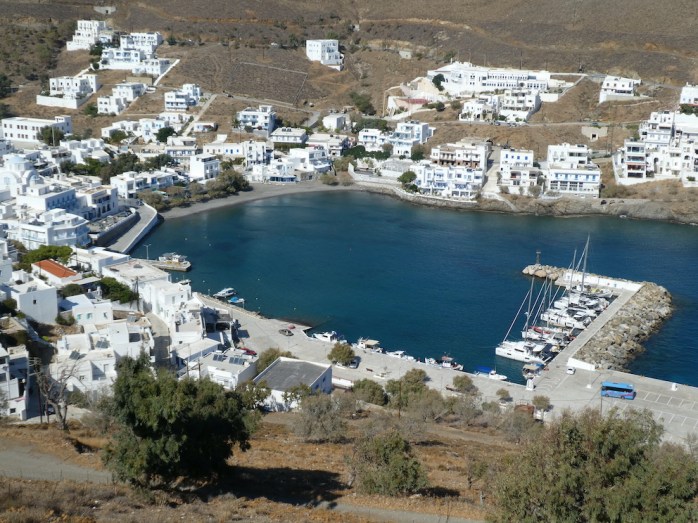
Red Roo Med Moored at Astypalaia

It all went to plan and we tied up without any trouble. Some of the risks around berthing like this is the possibility of tangling anchors with other boats. If we or another boat don’t line up correctly or get blown off a little by the wind when dropping anchor, it is easy to lay your anchor or chain over someone else’s which can be really quite bad depending if the boat leaves before you and pulls up your anchor and you are not on the boat and the boat is then able to pull back and smash into the concrete dock … living on a boat, there is always something to worry about. Anyway Phil dived on the anchor to triple check it was sunk well and lined up and not tangled with anything. We also stayed on the boat until other boats were either side of us and made sure they didn’t dislodge our anchor. Four (4) years ago when we were sailing in Scandinavia we used to dock the boat similar to this but almost in reverse. Instead of reversing in we would drop a stern anchor (off the back of the boat) and ensure it grabbed before taking the boat in nose first and securing it to rocks or the dock, so the same but different.

Looking at Red Roo between buildings down the steps 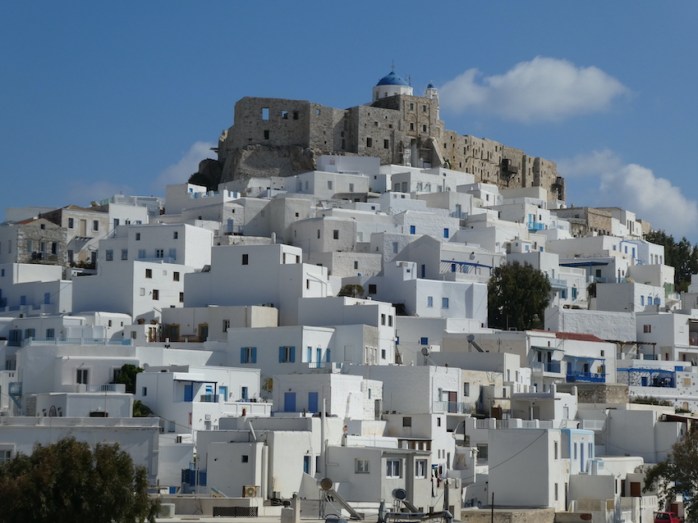
The castle and church at the summit of the hill
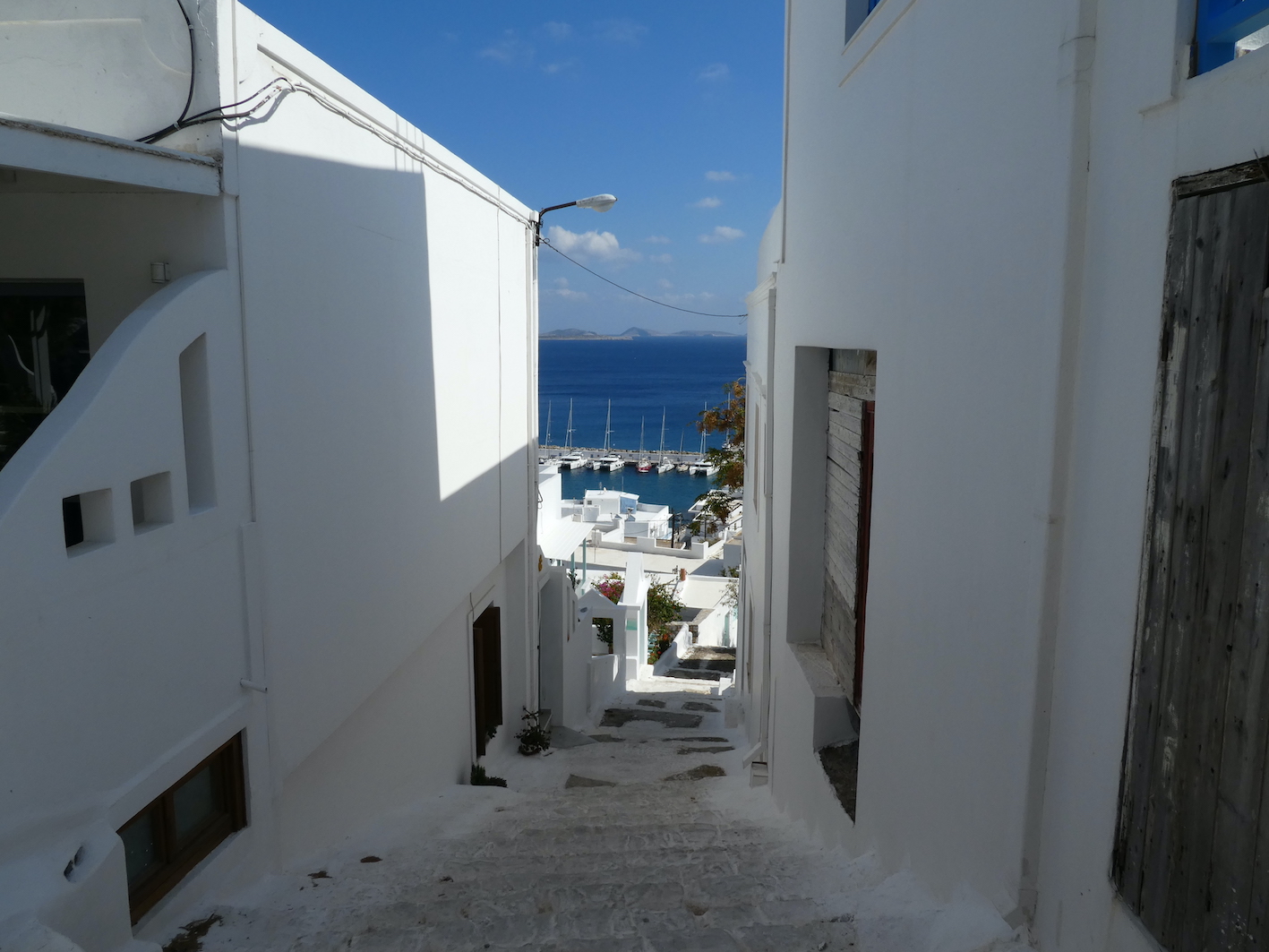
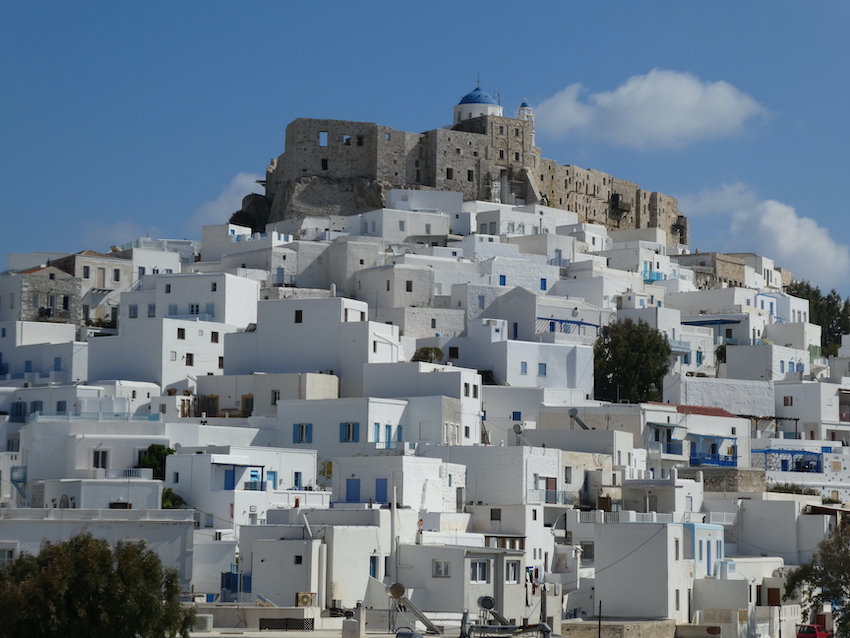
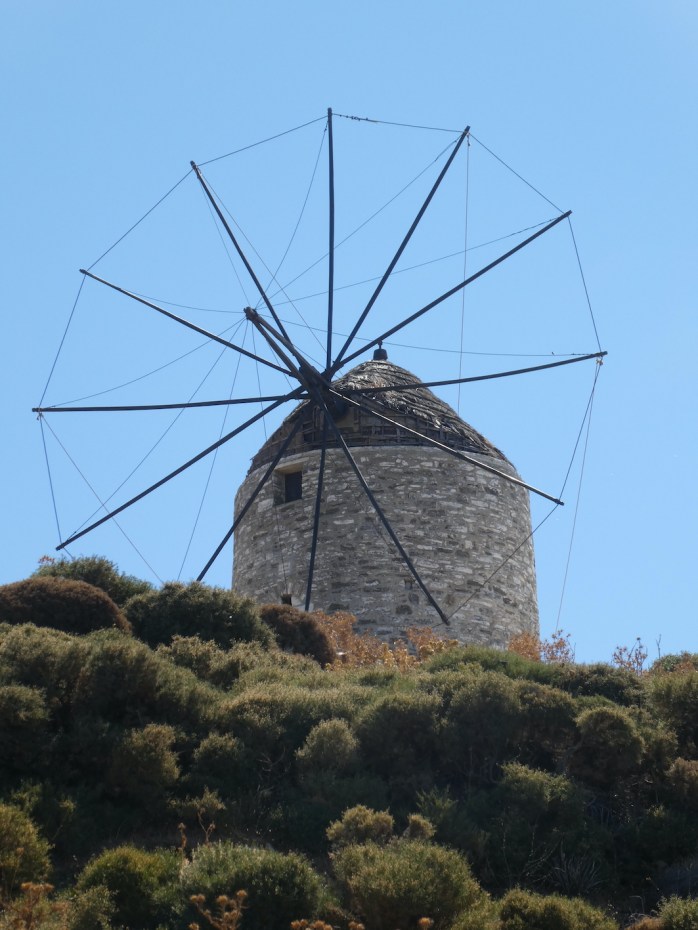
We spent three days on the island, and enjoyed the peacefulness of it. We of course walked up hills and lots and lots of steps to visit the sites, the windmills and the old castle, it was obviously that tourist season was well and truely over and things were a lot calmer than we had previously experienced in some of the Greek islands. It was also really great to be on the dock with a couple of Kiwis who we meet and immediately be-friended. Turns out they are taking a very similar journey to us to get to Turkey and will also be stoping for winter at the same place. Great to make new friends.

The Windmills at Astypalaia
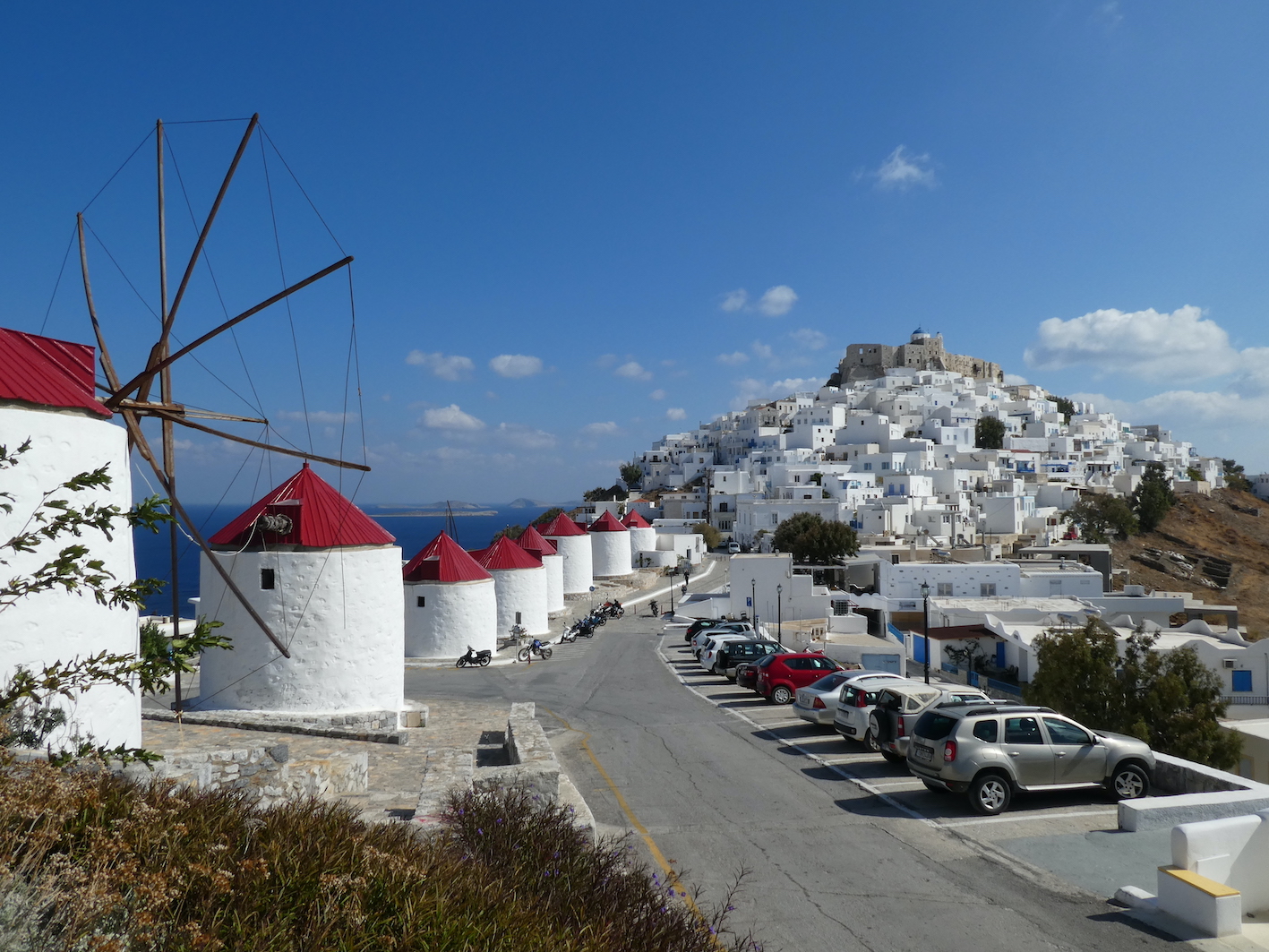
We departed Butterly Island early as soon as it was light enough to see what we were doing leaving the dock in order to sail the 54 nautical miles to Tilos. This took us all day 06:30 – 17:30 and it was a half / half kind of day, with 6 hours good sailing and 5 hours having to be done under engine. As we were approaching Tilos we noticed another boat nearby with an Australian flag and hailed them on the radio. It was Debbie and Paul (more new friends) and they were going to Tilos also and once confirming we were all vaccinated we arranged to meet up and have a drink with them later – great to hang out with people who speak our Aussie language.
The bay of Tilos was a lovely large bay with plenty of room to anchor and just the two boats. We had two very quiet days and nights here with no wind at all, so flat calm and tranquil.
From Tilos it was a short 24 nautical miles to the bottom (south) end of Symi where we would stop just the one night before sailing onto the island of Rhodes the next day. This bay of Symi called Panormitis is a Monastery and a very impressive large flash one at that! We had read you need to be dressed respectfully to visit so we both wore long pants and long sleeves for the first time this year since leaving our winter berth of Tunisia.
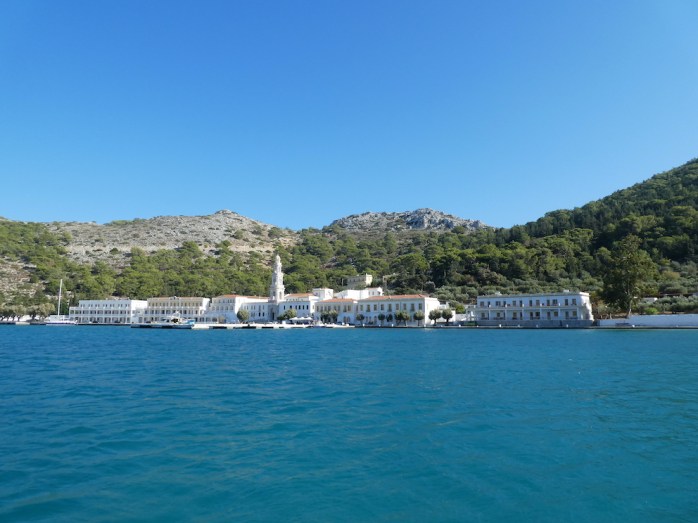
Panormitis Bay on Symi (south of the Island)
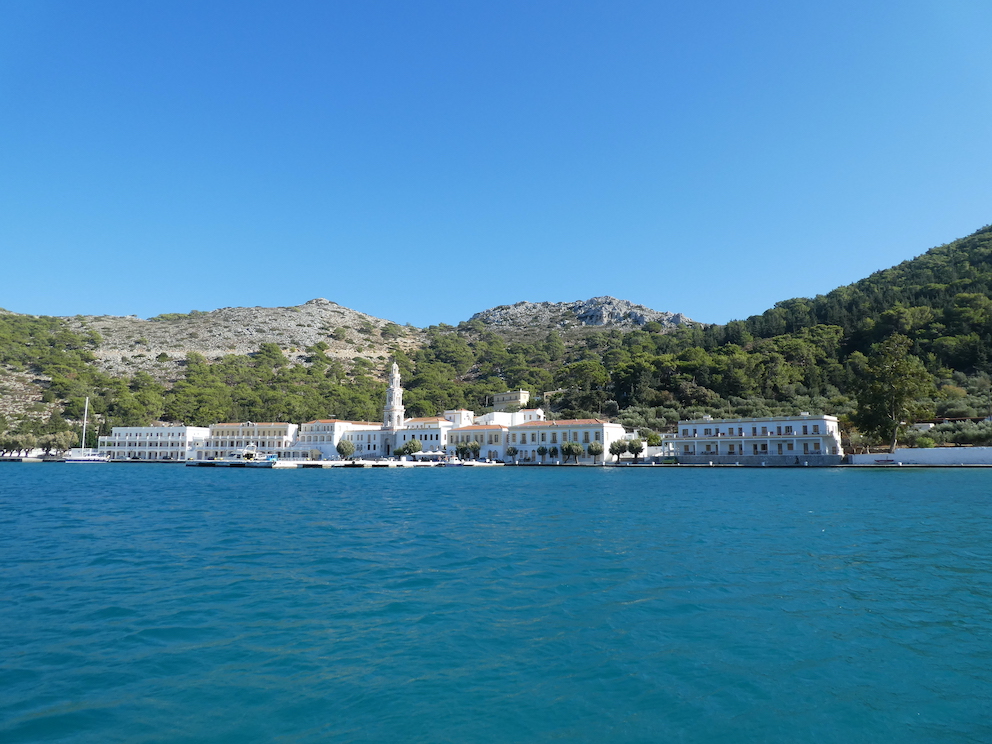
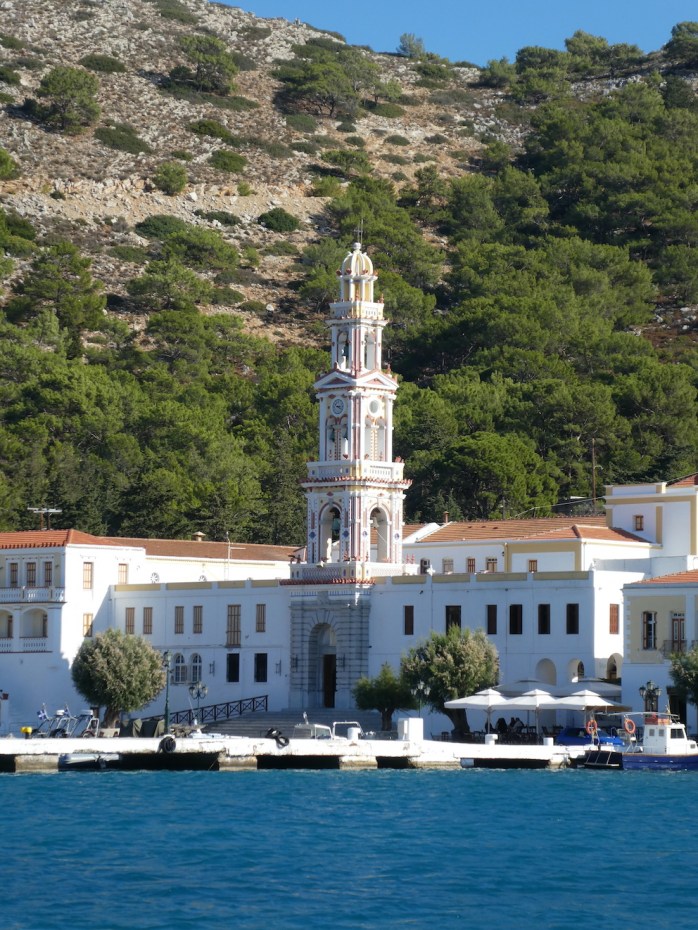
Panormitis Monastery 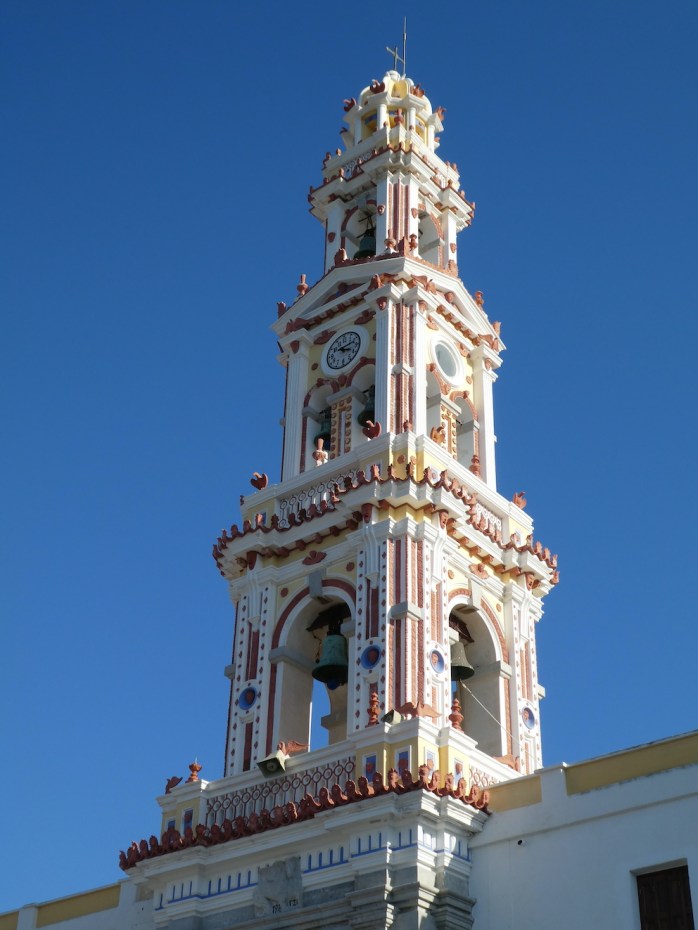
The Impressive Bell Tower
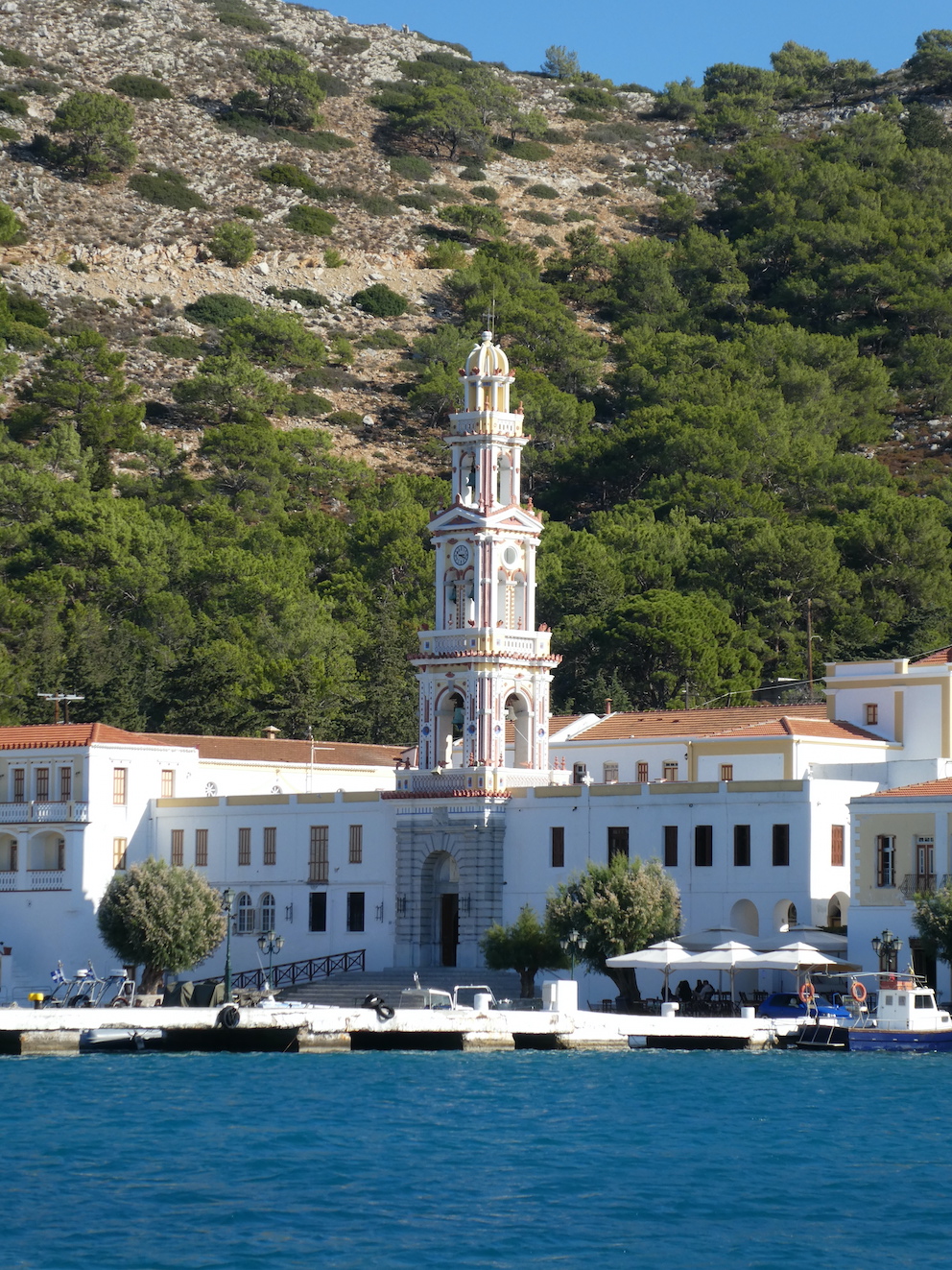

The next morning was another 24 nautical miles from Symi to Rhodes, one of the biggest islands in Greece. It took us 5 ½ hours and involved many many sail changes. Gennaker up as it was light winds directly downwind, tack the boat as the wind had just shifted a little to the other side, motor for half an hour as the wind dropped, wind came back, so back out with the Gennaker, wind increased so put away the Gennaker and put out the Genoa (smaller, but heavier sail for higher winds), wind dropped off so put away the Genoa and back out with the Gennaker! And on and on it goes. However the good news is, we sailed all but 30 minutes of the 5.5 hour trip.
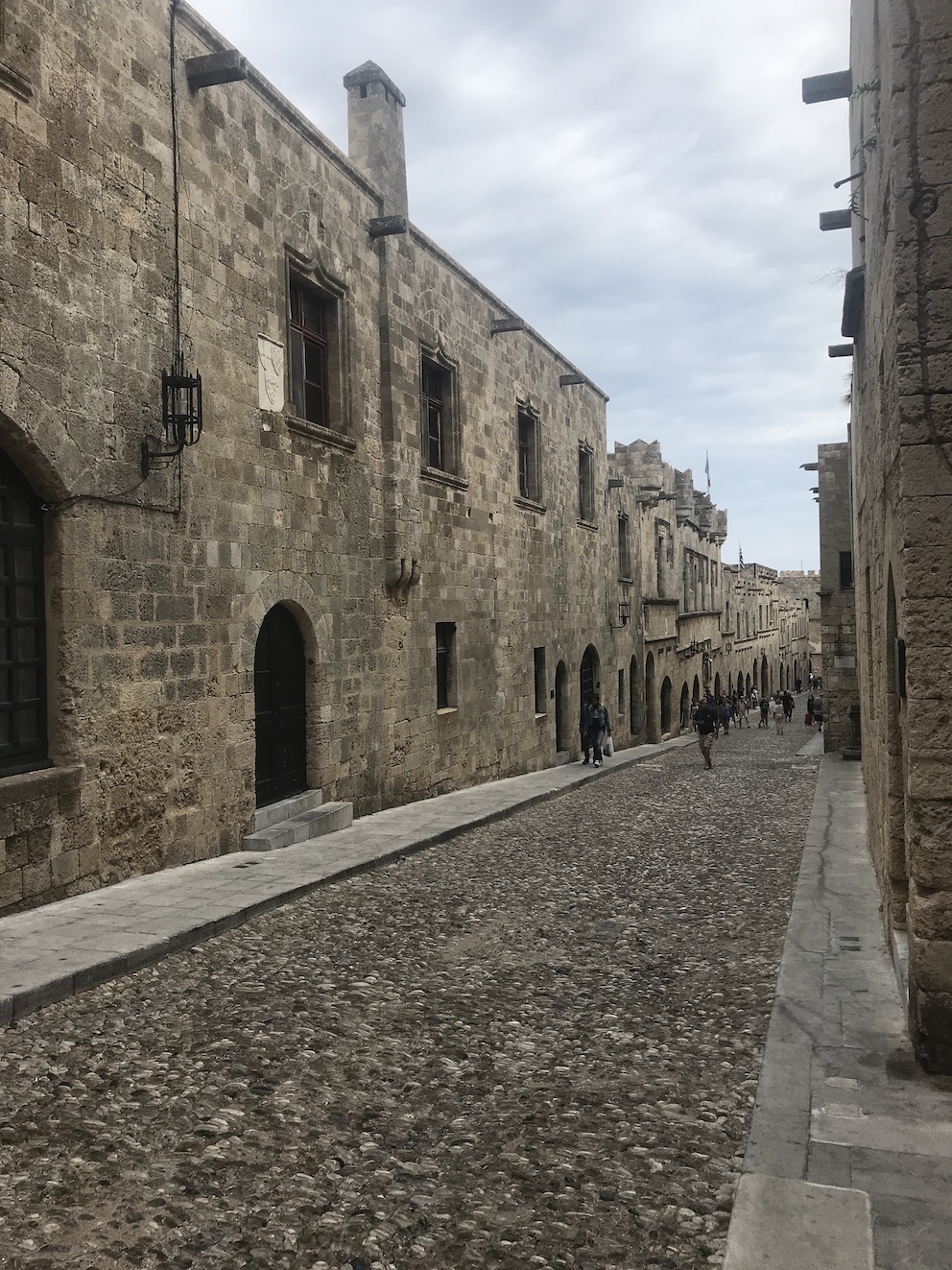
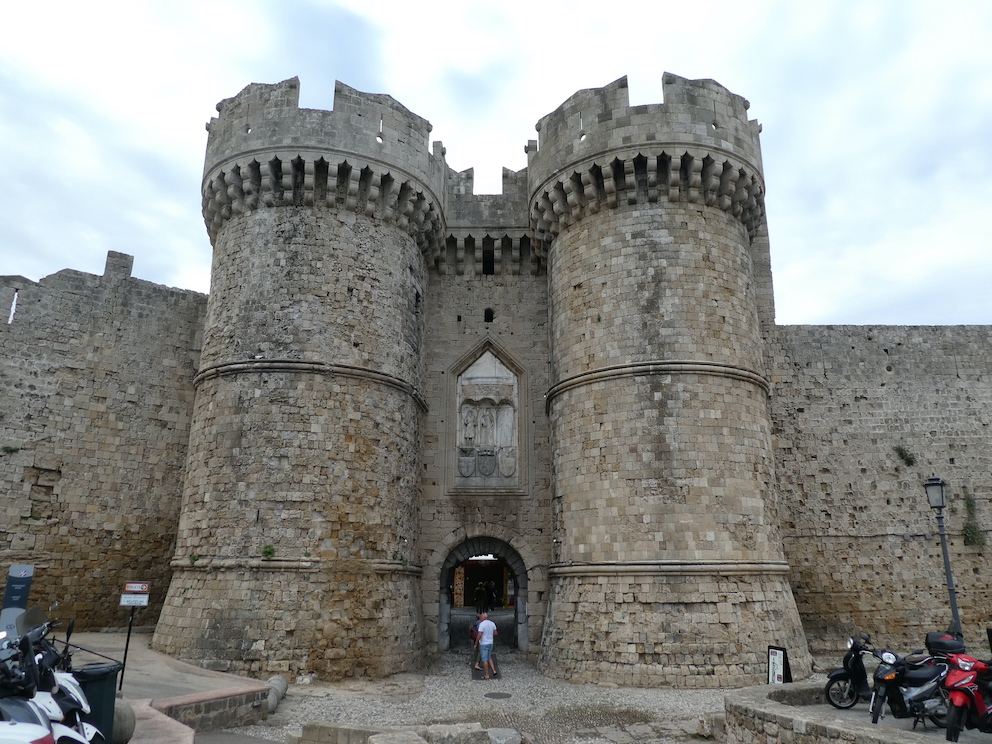
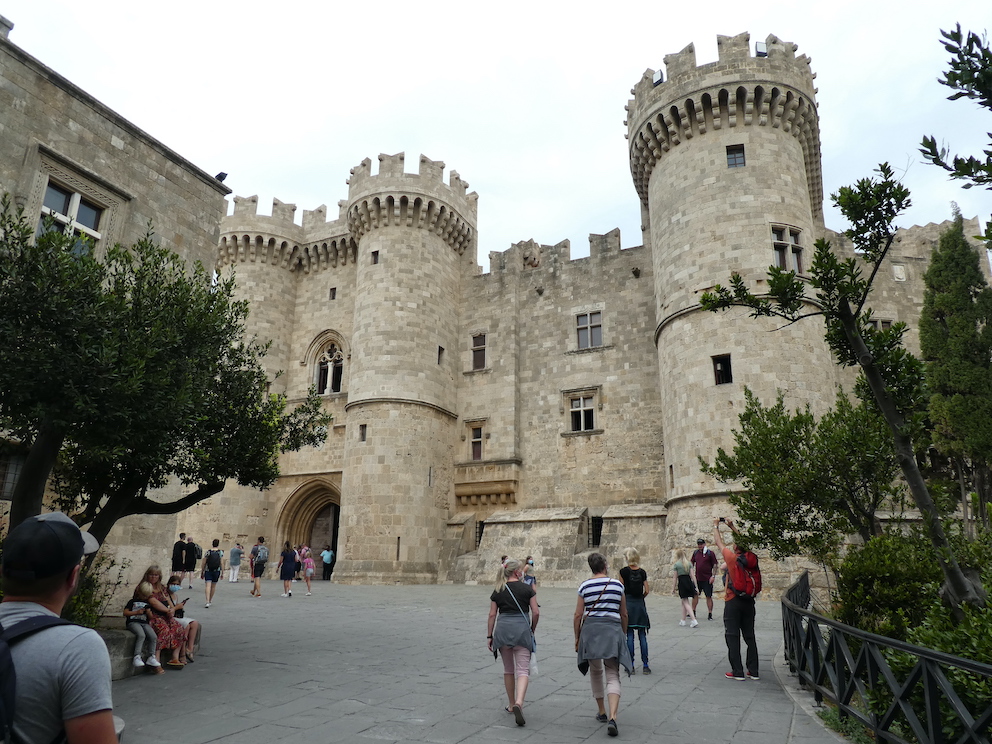
We anchored off the beach just a little behind the old and new towns of the island on the north east end. We spent the next day exploring the old town, which was impressive, and larger than we were expecting, and to top it off double moated!! We learnt that the Knights of St John (whom you may recall we talked of in Malta) used to be in Rhodes and were responsible for the construction of this place before leaving (being expelled following a siege by the Ottomans in 1522) and resettling in Malta. After the old town we hunted in the new town for a few items we had on our buy list without a lot of success. The following day was spent re provisioning at Lidl in preparation for Turkey. We were stocking up on beer & wine & pork products. Lidl was nearby and we did two trips and Red Roo is full of goodies to get us through the winter in a country that doesn’t eat pork and where alcohol is expensive.
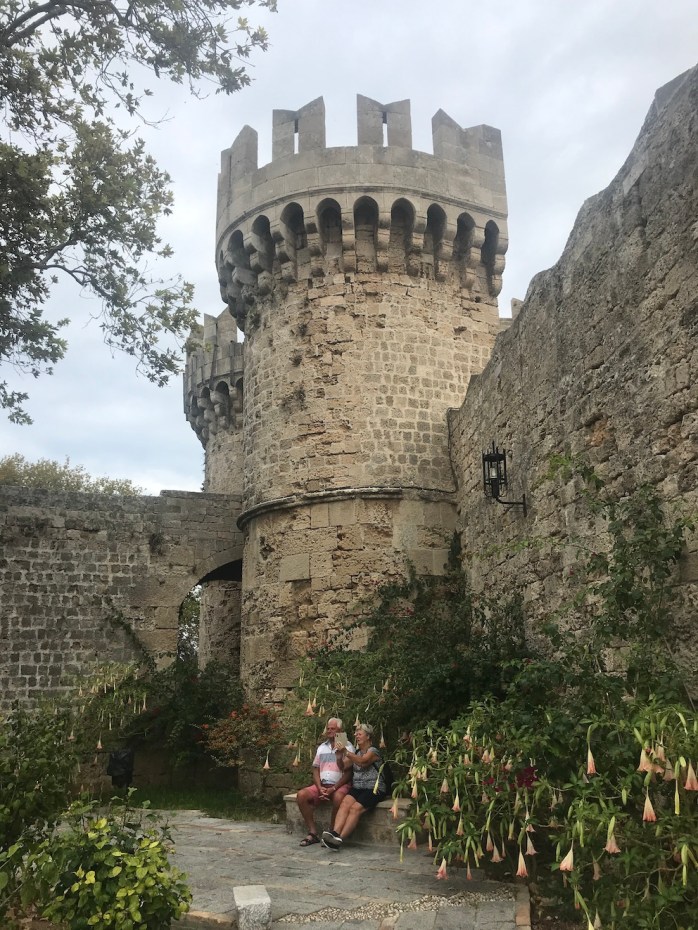
Rhodes Old Town 
Old Town Streets 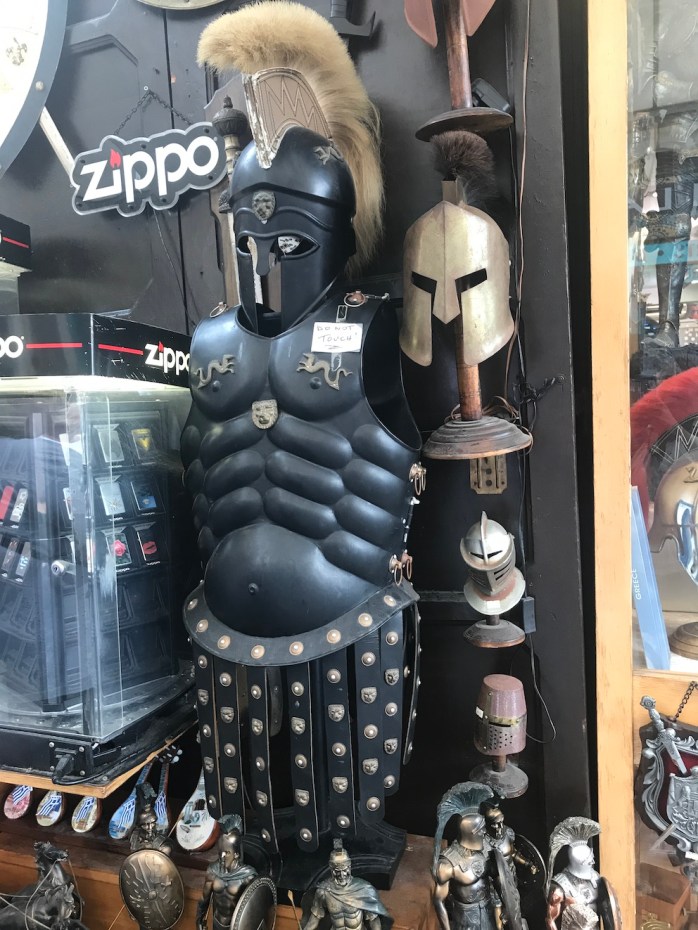
Finally a realistic suit of armour (for the fat guts) 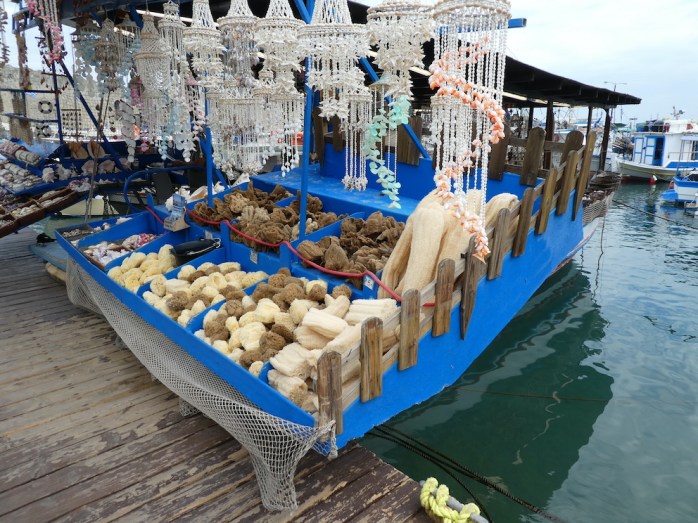
Selling sea sponges and shells at Rhodes Harbour 
Old Town Buildings 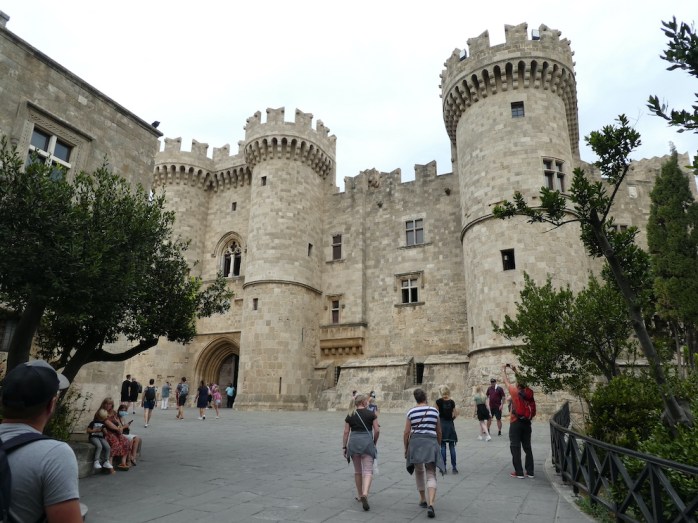
The Knights of St Johns old hang out 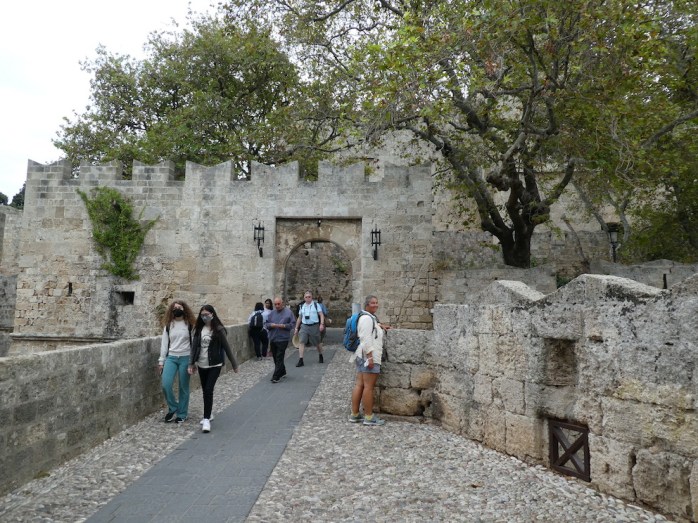
Maree entering Old Town Rhodes




Just one more stop before Turkey, it was back to Symi but this time to the north of the island to the main town in order to complete all the formalities of checking out of the country and the EU. It was 26 nautical miles (5 hours) without a breath of wind, so a motor all the way. We had been warned of the “unique” set up of berthing in Symi Harbour with what was described to us as the local Mafia running the mooring buoys. In the harbour there are mooring buoys to tie your bow to then you reverse to the dock and tie off your stern (the buoys are instead of having to drop your anchor – much better in our opinion). Anyway the “guys” come out and help you tie to the buoy and dock then charge you €25 euro for doing so (nearly $40 australian dollars). This cost is not in anyway associated to the fees involved in staying on the dock. Once you are docked the Harbour Master comes for the harbour fee of €13 euro’s so its cheaper to stay on the dock for 24 hours than it is for 4 minutes assistance to tie your boat up. We declined the “Mafias” help and picked up the buoy ourselves (and made ourselves very unpopular in the process – with words being directed at us along the lines of, “I need the money to feed my family”).
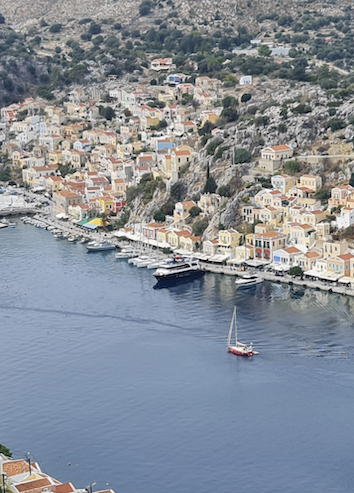
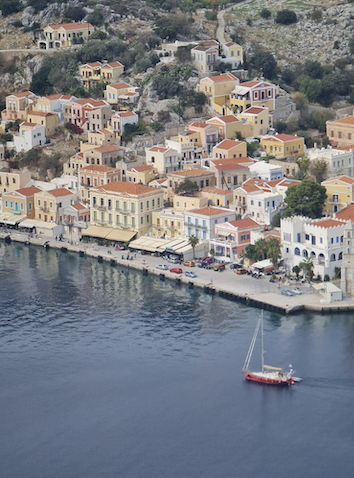
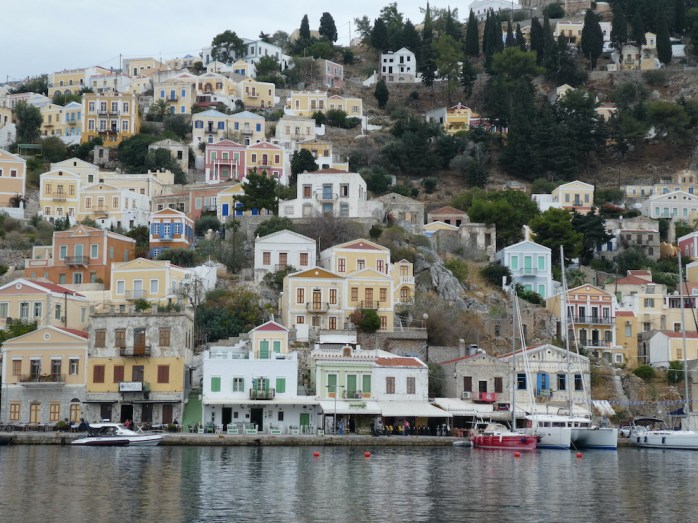


Greek Singing at Music at night near the boat – lovely
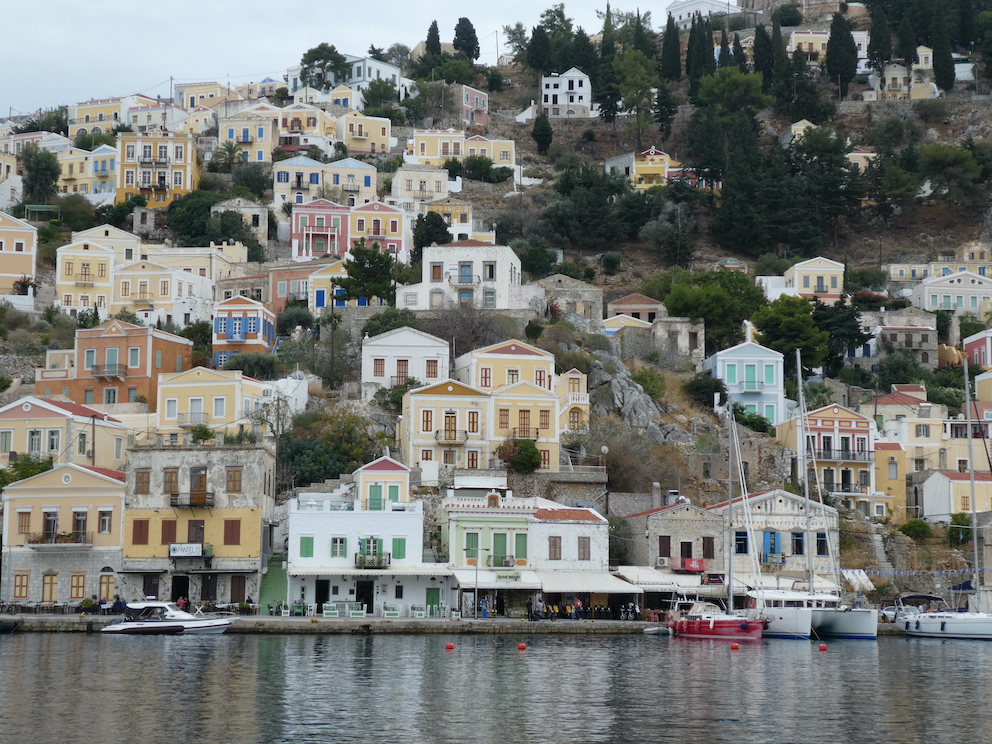

Anyway, Symi is lovely. A really sweet small inlet harbour with colourful village on the hillside, with evidence of its Italian heritage in the architecture. We enjoyed two days here and were there for the Greek national holiday “No Day” where back in 1940 the Greek Prime Minister said “No” to the Italian dictator Benito Mussolini who wanted to his forces to enter Greek territory and occupy strategic locations. We watched the ceremony and parade and then walked to the top of the village to get some pictures.
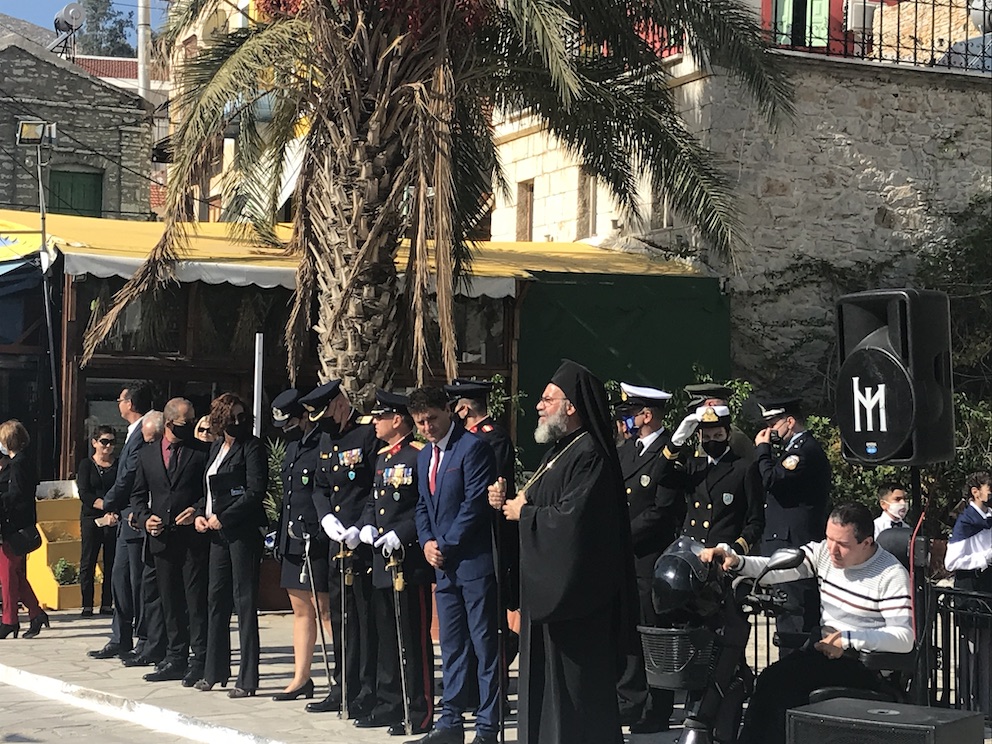
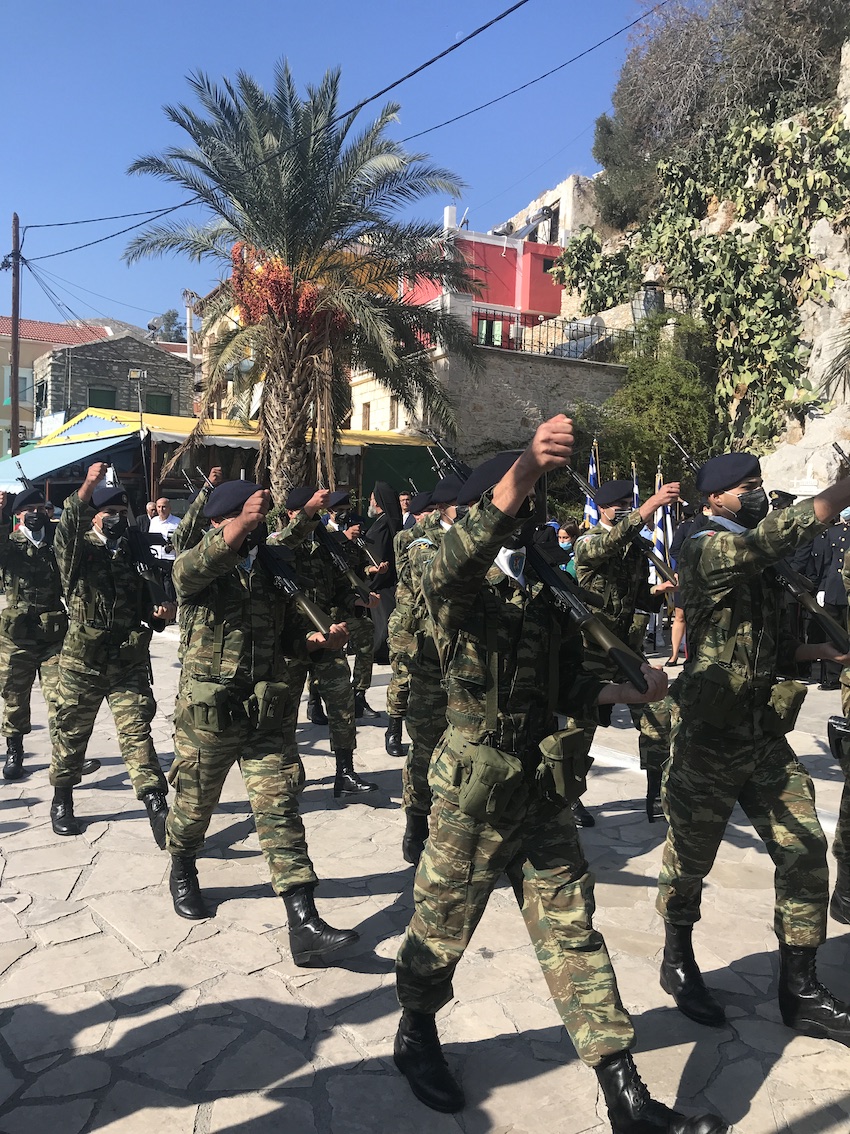

Symi Habour

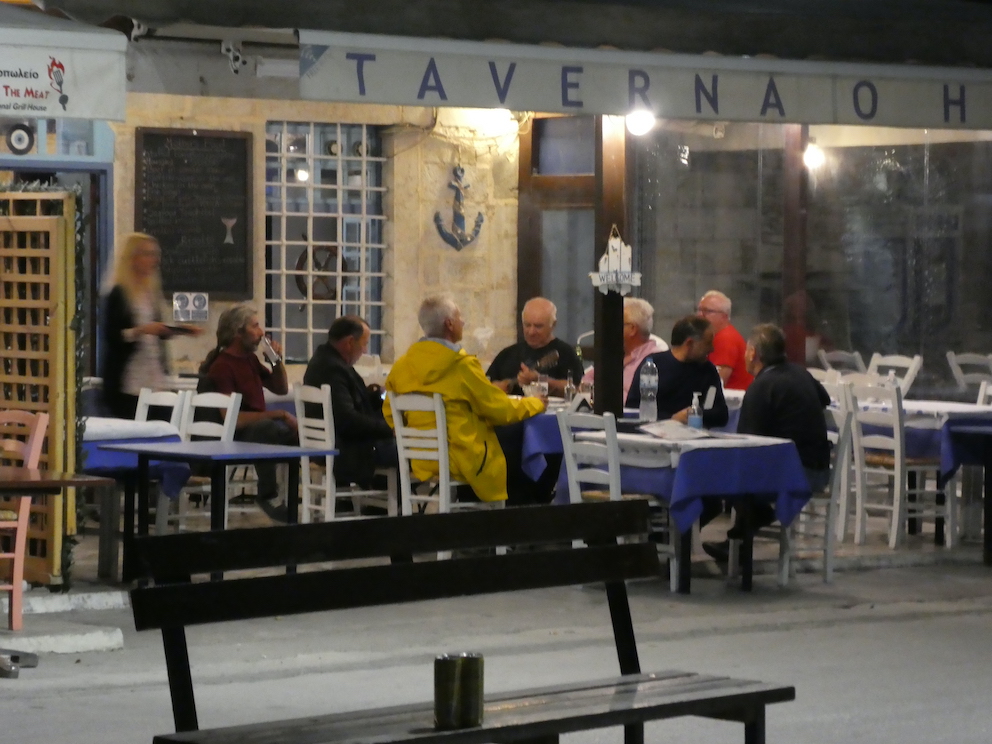
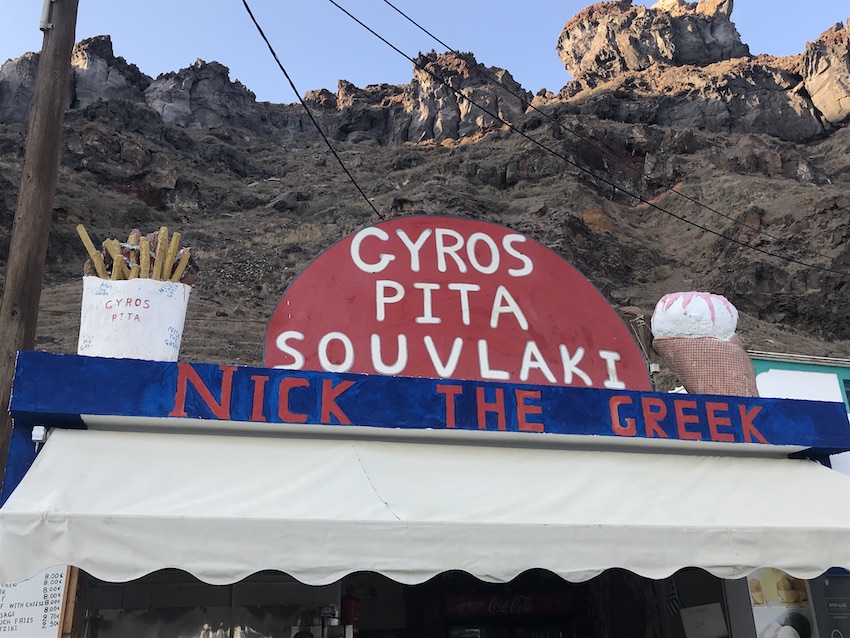
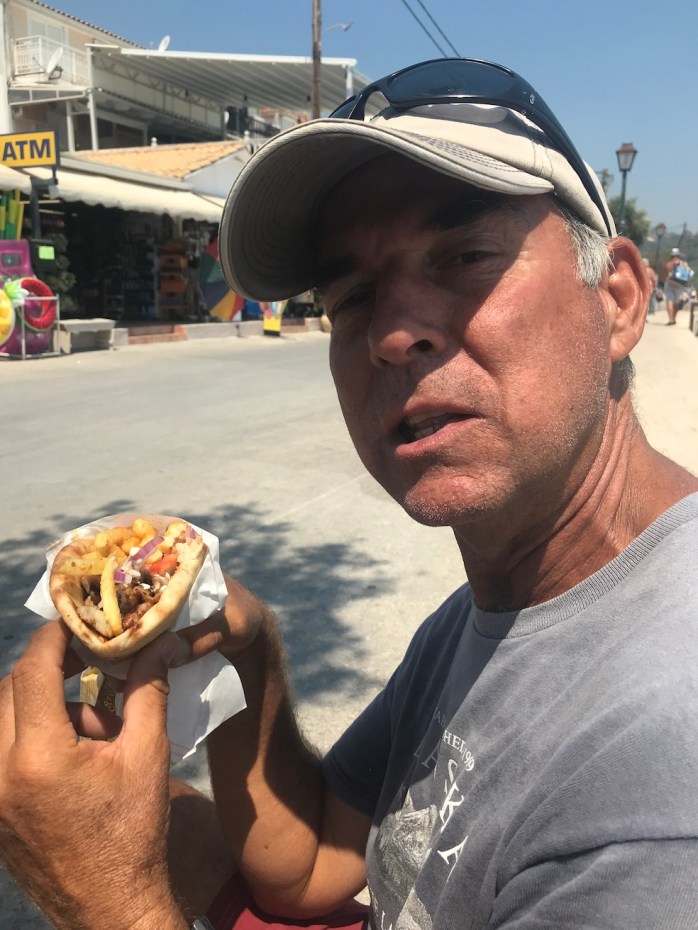
A highlight of Symi for Phil was the ability to order his dinner and have it delivered without leaving the boat. We were tied to the dock in front of a Taverna and the waiter would often talk to us. So come dinner time on our first evening Phil stood on the back of the boat and asked her for a gyros, 5 minutes later she brought it to the boat – at a cost of €2.50 he was one happy man.
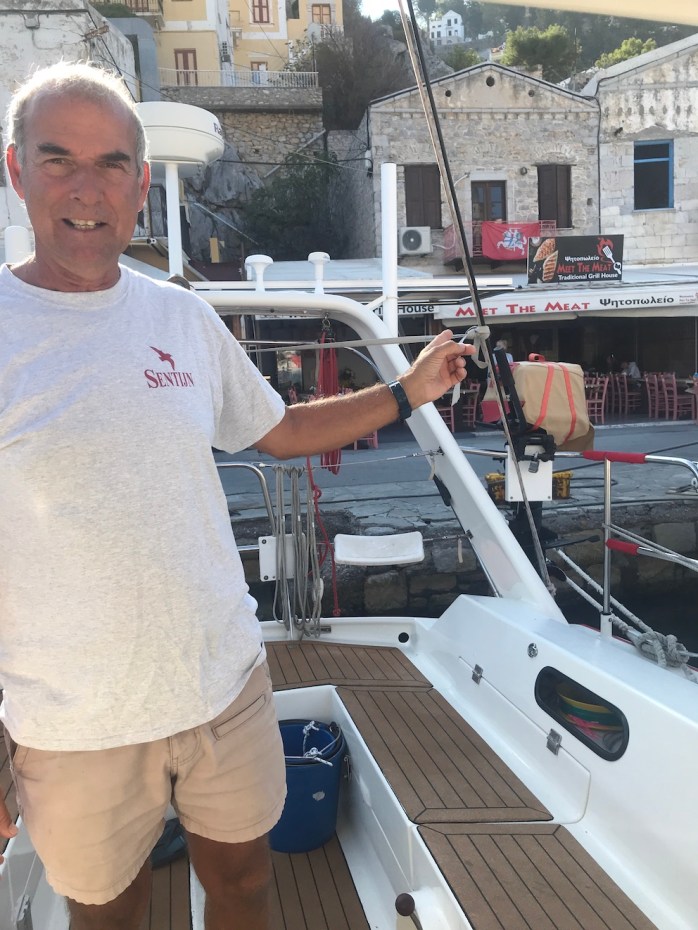
Phil’s personal meal delivery, order from and delivered to the boat from the Taverna behind us!
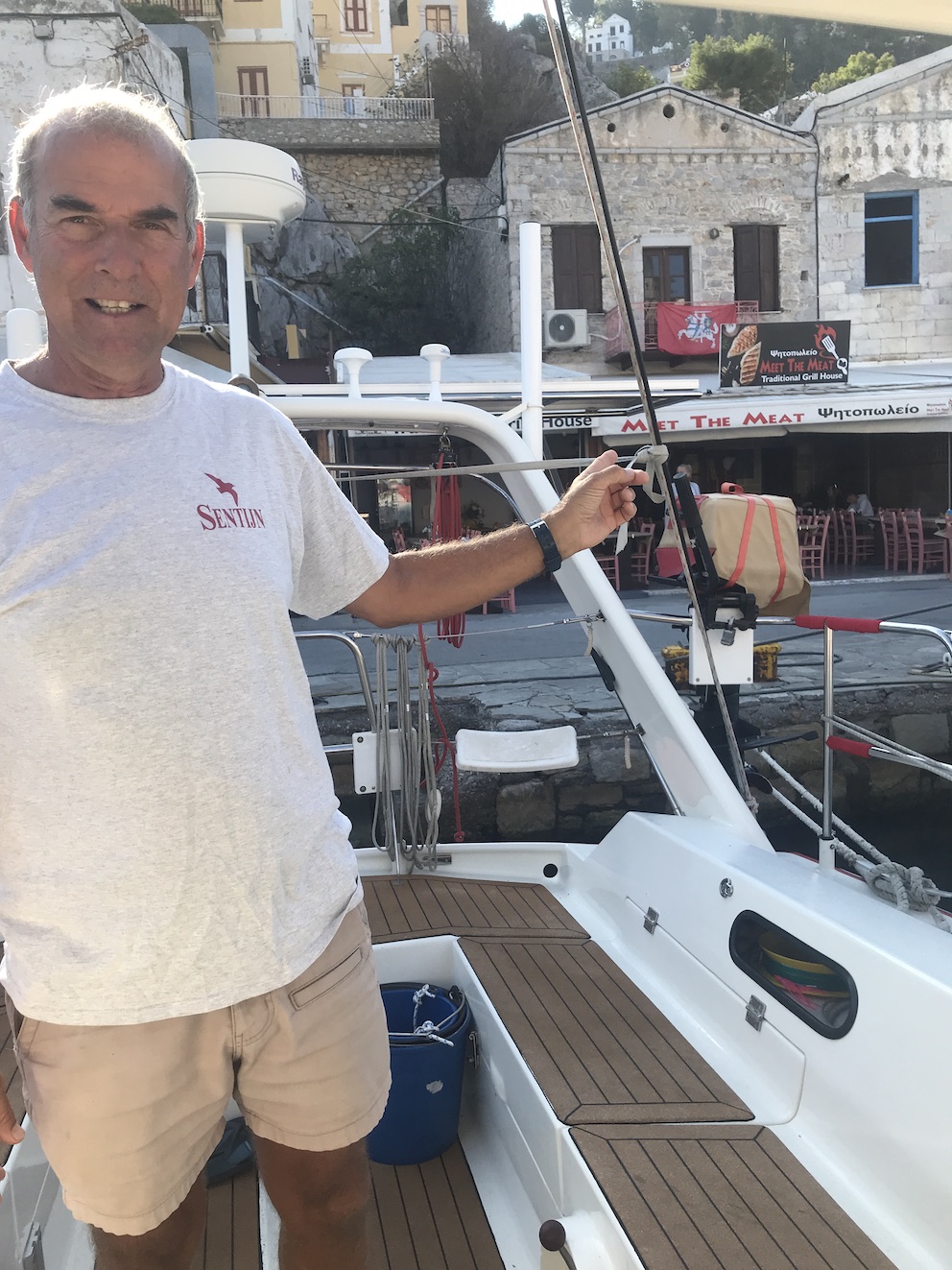
All that was left was to formally check out of Greece and the EU. We completed formalities at Symi with the Police who stamped our passports and handed in our Cruising Permit and Log Book to the Port Police, we were free to leave.
As the sun was coming up on Friday 29th October Red Roo left Symi for Datca Turkey, a short 2.5 hour trip (we could see Turkey the whole time).
As we wrap up 933 nautical miles, 45 stops and 3 months in Greece – we leave with wonderful memories.
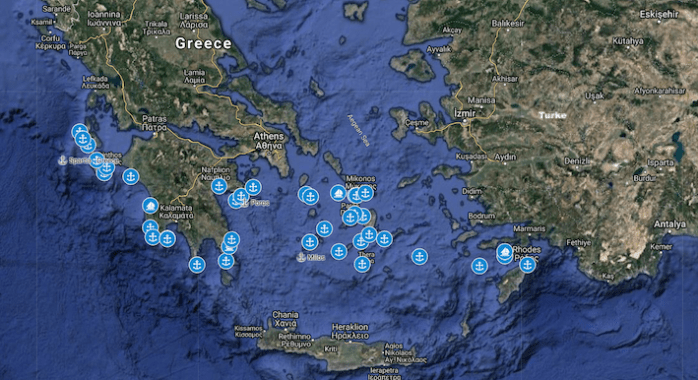
Red Roo’s Greek Adventures
3 months, 45 stops & 933 nautical miles
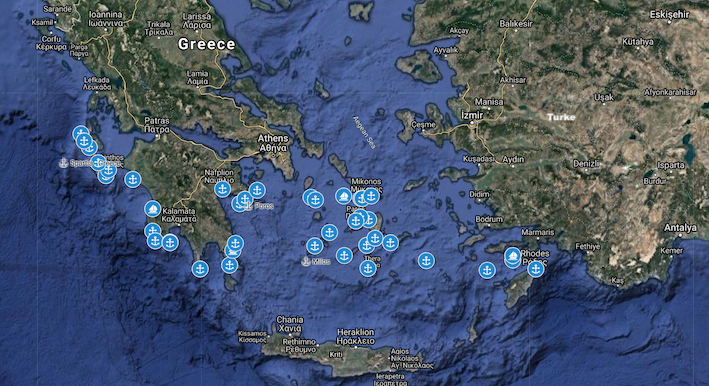
Boat Life – Fabulous or Frightening?

Our latest update from Greece includes sailing, a visit to some iconic destinations, as well as a couple of small hiccups – the reality of the cruising lifestyle.
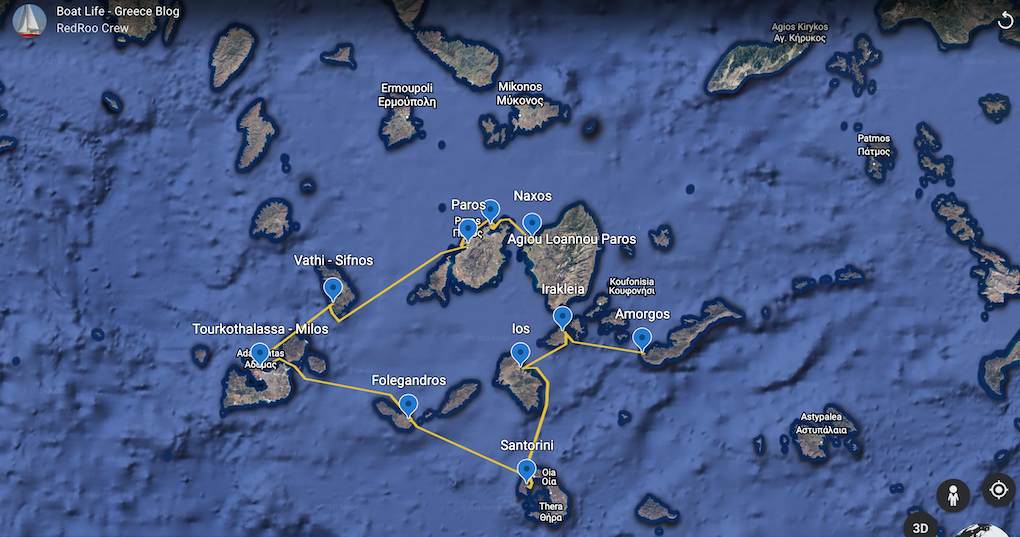
We left the island of Naxos looking for shelter from the next lot of Meltemi Winds, of which there were two fronts looming firstly a single day of winds in excess of 30 knots, then 3 days later a bigger blow of over 40 knots which was expected to last up to 5 days. Whilst 30 knots is not terrible to sail in under the right conditions, it can cause the sea state to be really messy and potentially rough enough to break things on the boat which we consider unnecessary to be out in. It is best to find a secure spot to anchor where we can be sheltered from the wind (behind a headland protecting us from the worst of it, meaning no waves on the water and less wind), and also ensuring the anchorage is secure, good holding so we don’t drag (float away in the wind).
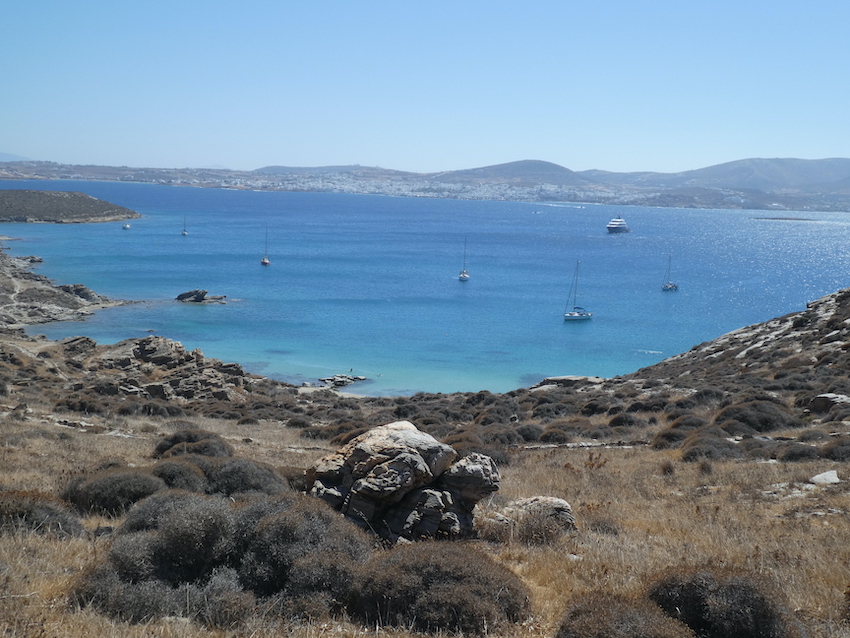
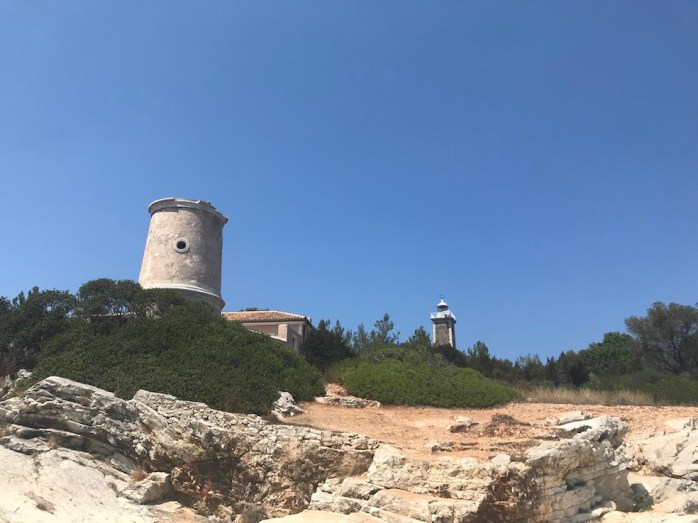
To shelter from the first one day event of wind we motored (due to the wind being on the nose, making it difficult to sail in without having to cover twice the distance tacking back and forth) it was only 10 nautical miles (19km) about 2 hours to the island of Paros. We tucked into a really nice bay which offered good protection from the northerly winds whilst also offering a beach view and walking tracks on land to the top of the hills, lighthouse and lookouts. We anchored in sand and motored back on the anchor to ensure it was set well (not going to be pulled out with the wind) and waited out the day. We had chosen well as we certainly didn’t get wind anywhere near the strength predicted. It was a peaceful day. The following day we went to shore and walked the tracks to the monastery, lighthouse and look out. We could see the leftover waves from the winds outside the bay.

The next day was another short journey 10 nautical miles to the West and into the main bay of the same island where the town was. As we came out of the protected bay we came head on into the waves and slop left over from the previous days wind. It was a very rough bumpy (holding on kind) of 5 miles taking the waves on the nose then the side before turning downwind again to reach our next anchorage.
This bigger blow that was expected had seen many other boats in the area have the same idea as us and the anchorage was quite crowded but we found a spot in the bay and anchored. The following morning the wind was starting to build a little and we decided before it got too strong to move closer to the beach which would offer more protection from the wind for the next 5 days, with less fetch on the water. We started the engine and motored forward to the new spot. We got right close to the beach in shallow water where we wanted to stop the boat and drop the anchor. I (Maree) was on the bow ready to drop the anchor when the boat stopped but the boat didn’t stop … it seemed to be going quicker as we had come into the shore out of the wind, and the beach was now only a matter of 20 meters away. I looked back and couldn’t see Phil at the controls ??? What was happening??? Were we about to run aground, was Phil ok – had he collapsed??? I ran back to the helm and he was crouched down desperately trying to get the boat into reverse without success – we had to turn hard and fast. Now out of immediate danger of running the boat onto the beach, it appeared the boat had lost its reverse gear. Not ideal when trying to anchor in a tight spot, in windy conditions. We had to go around again and try to manage the wind by motoring forward with a little engine – enough to move and steer but not too much as we needed the boat to stop in the right spot without hitting another boat or the beach. It was really hard with the wind but what choice did we have, we went around and unfortunately were still moving forward when it was time to drop the anchor, but drop it we did and although the boat went forward for a little bit over it, it did stop and eventually came back to sit in a reasonable spot. We were ok for the moment, but definitely not properly anchored, we had just brought ourselves maybe 15 minutes to try and fix the problem. Phil quickly had the quarter berth emptied and access to the engine controls and could immediately see that the pin holding the throttle cable in place on the gearbox had fallen out which made selecting reverse impossible. No time to dwell on why or how, just time to fix it and re-anchor safely. A temporary pin was installed and we set off again to anchor for the third time, this time in full control with both forward and reverse and successfully and safely anchored. We were now safe in 4 meters of water with over 40 meters of chain between us and the anchor, a scope of 10:1 – perfect for the big winds. Then with the engine almost at full revs in reverse checked to make sure it was anchored well dug in for the big winds coming. What had happened? It turns out the pin didn’t have a cir-clip at the end to hold it in place, and after 6 years of owning and operating the boat, going from forward to reverse gear thousands of times it had chosen that moment to fall out. As frightening as it was at least it didn’t happen at a worse time like when trying to manoeuvre in a marina where we would have hit something, at least we had just enough space to drop the anchor pull up and also had the smarts (Phil), parts and the tools to re fix it securely.
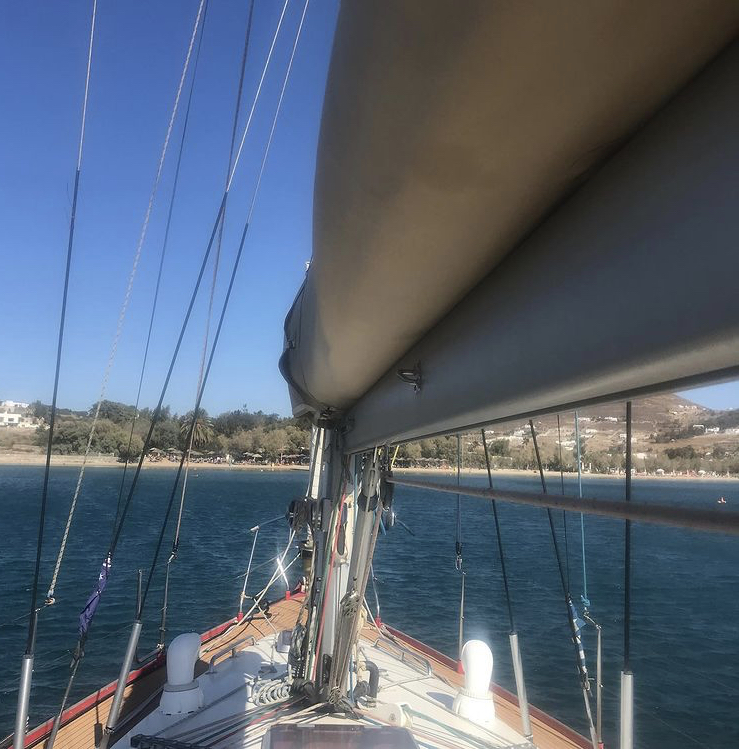
We ended up anchored here for 10 nights, waiting whilst the wind blew, blew and blew some more! Again due to good planning we certainly didn’t get the winds forecast but that was due to the shelter provided by the hillside and the bay we anchored in, as we were close to shore we were protected from swell and fetch and even enjoyed good nights sleep (rare when it is windy), we could certainly hear the wind but couldn’t feel it so much. Because we had so much protection we were able to get to shore in the dinghy safely (as well as feel that that the boat was safe without us on board). This helped the 10 days pass. A day in town to do the laundry at the self service laundromat, a day to explore the main town of Parikia, a day to catch the bus to the north east side of the island to explore the town of Naousa, we could also go to town for groceries as and when we needed (always a highlight for cruisers). We know the wind, waves and the weather wasn’t great outside of our protected bay, as the ferries to the island were cancelled for three days, and when we walked to other bays we could feel the force and see the sea state. One of the other boats in the anchorage a friend of ours on a magnificent boat “Grey Wind” a really strong and well set up boat, went out for a “look” after 5 days hoping to be able to sail on but he returned within the hour. His advice – wait.
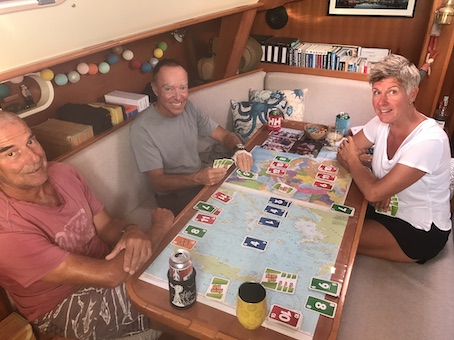
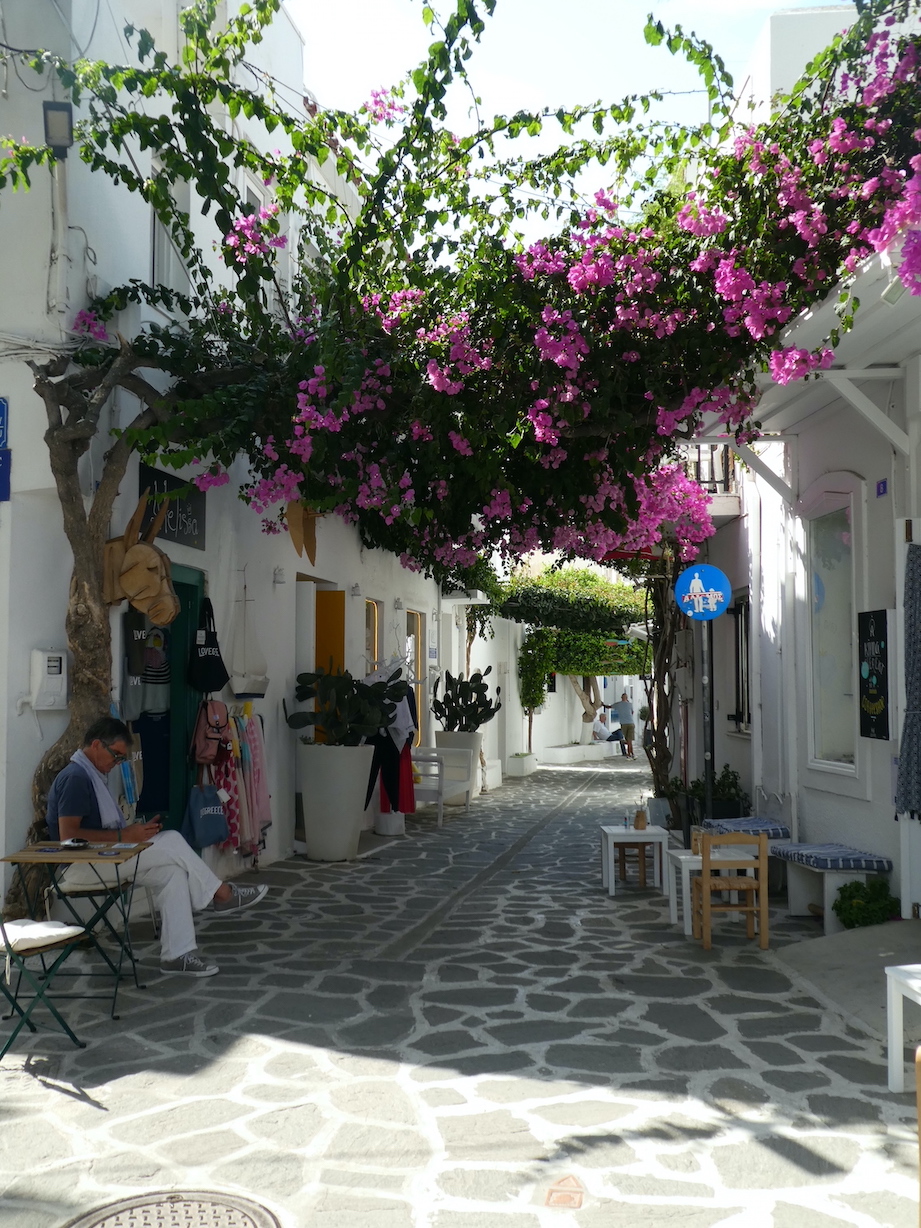
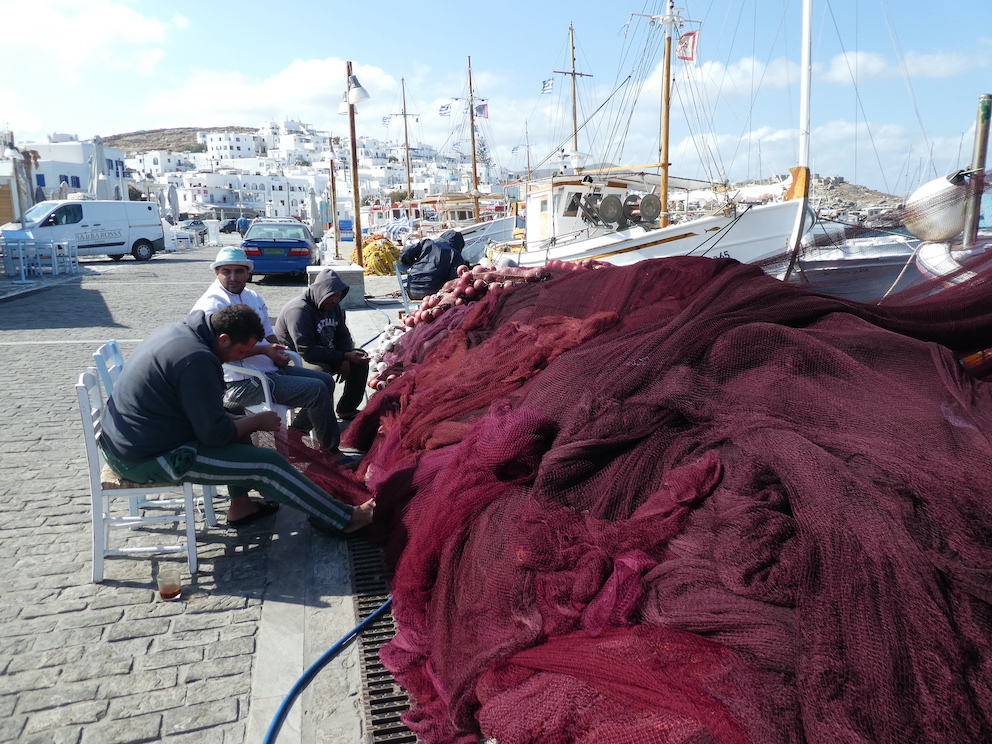
When the winds stopped blowing, they literally stopped. Meaning not enough wind to sail! Boat Life!!! We waited an extra day for the sea state and waves to die down then headed off for the 29 nautical miles west to the island of Sifnos. We were able to sail about half of it before having to motor due to no wind. We found the small beach village of Vathi on Sifnos really pretty. It is a very small village in a bay with everything built on the beach with big rocky hills behind the beach.
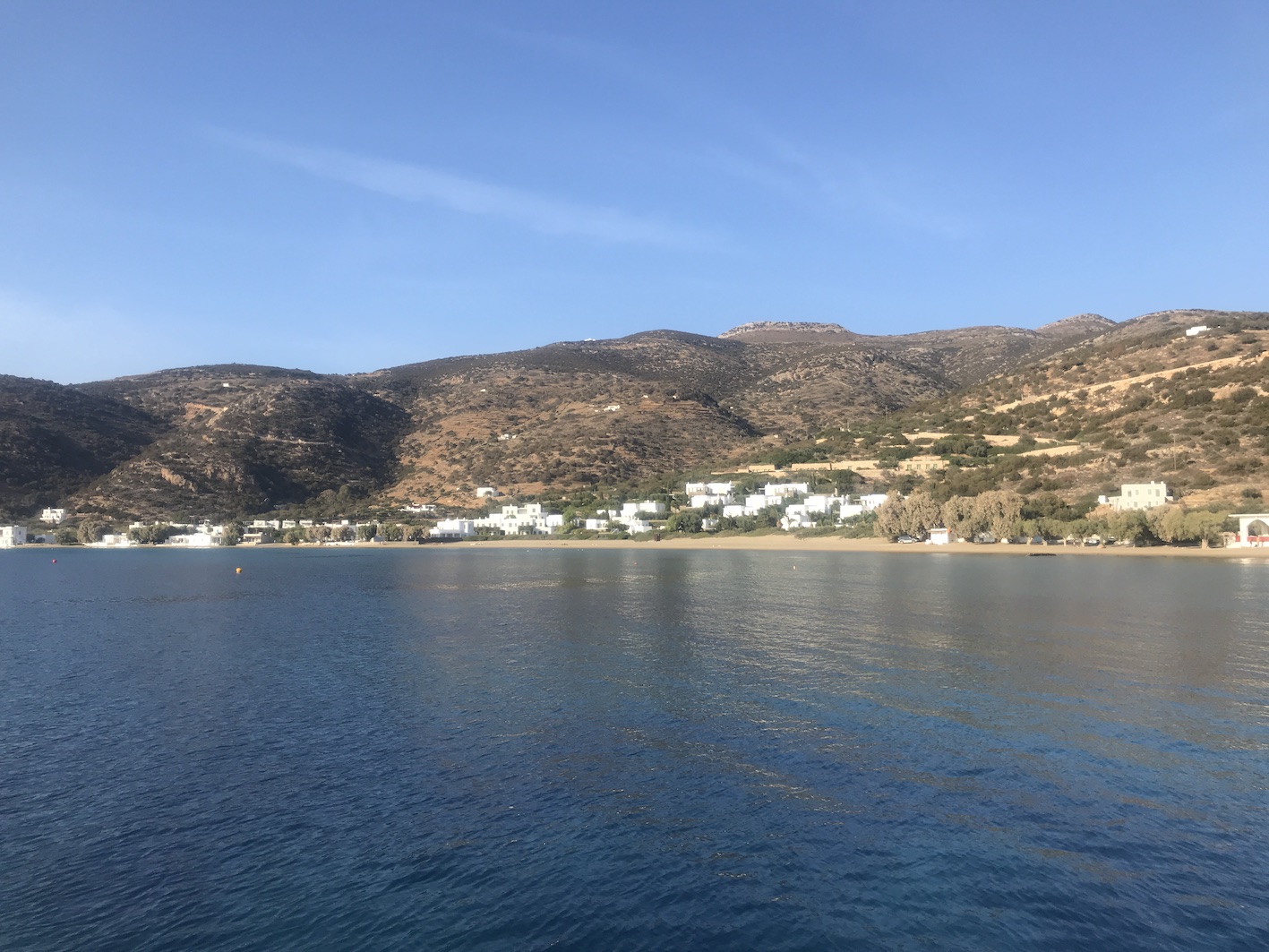
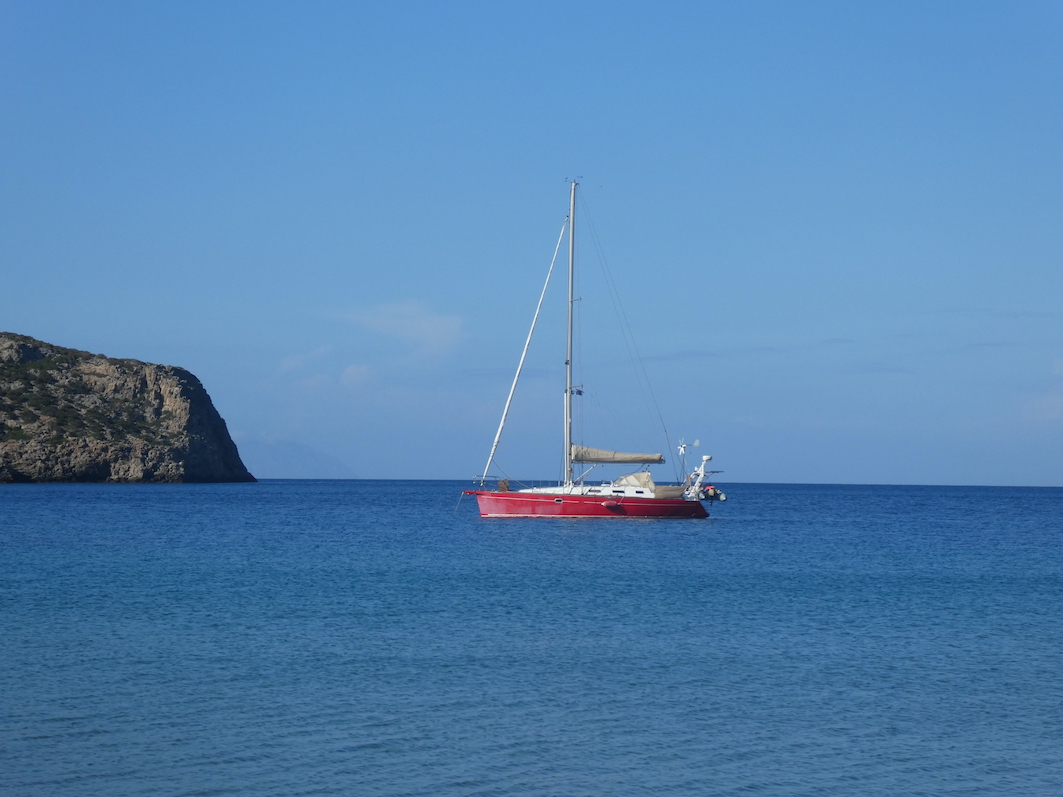
The next day we had a fast sail, the wind was back and we were off, 20 nautical miles west to the north of the island of Milos. We had some strong gusts during the sail, causing us to hang on and put some sail away to be cautious and safe. We anchored in another really cute small bay for the night but didn’t go to shore.
On a roll we set sail again in the morning for the 30 nautical miles to the island of Folegandros which was on the must visit list for Phil. We had a really great sail – finally. Safe consistent winds, flat seas, doing around 6.5 knots of speed in 8-12 knots of wind, with the sun shining. Perfect timing to remind us why we enjoy doing this, and as a real bonus Phil caught a really nice size Bonito fish for our dinner – delicious.

We spent the next day exploring Folegandros which we both really enjoyed for its authenticity. It seems we have also finished with the tourists for the season. A couple of the places we visited and spoke to locals said all the restaurants and the few tourist shops (they only had a couple) shut this week leaving only local essential shops open.

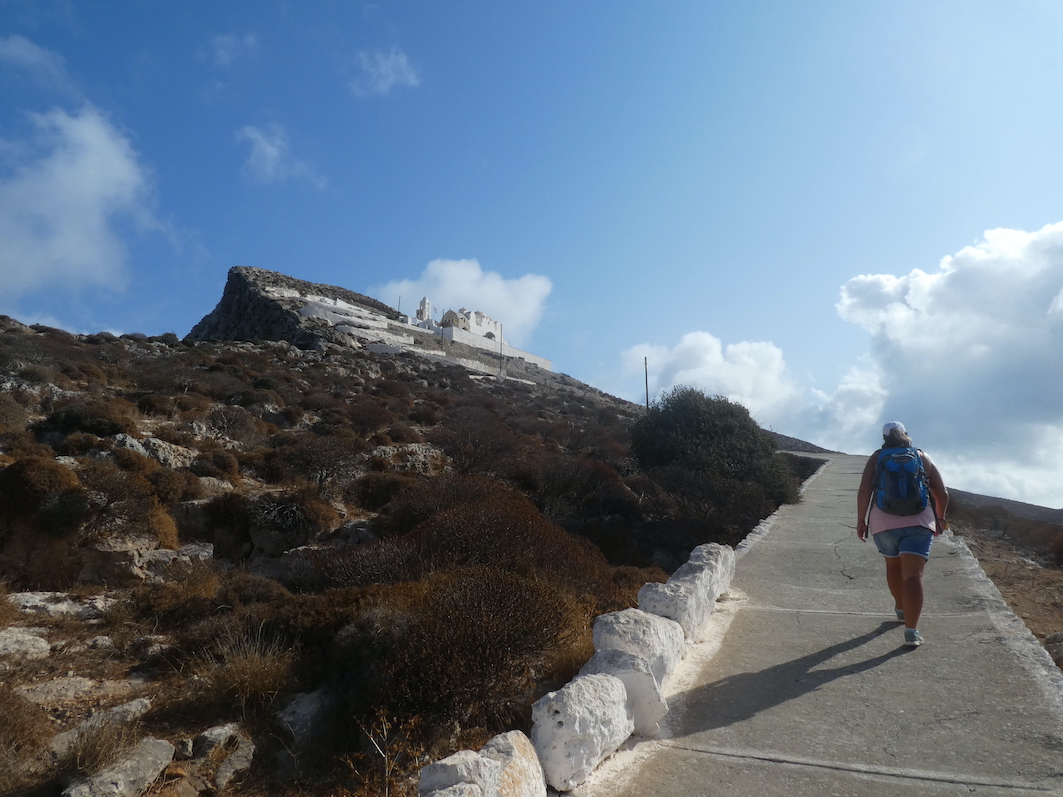


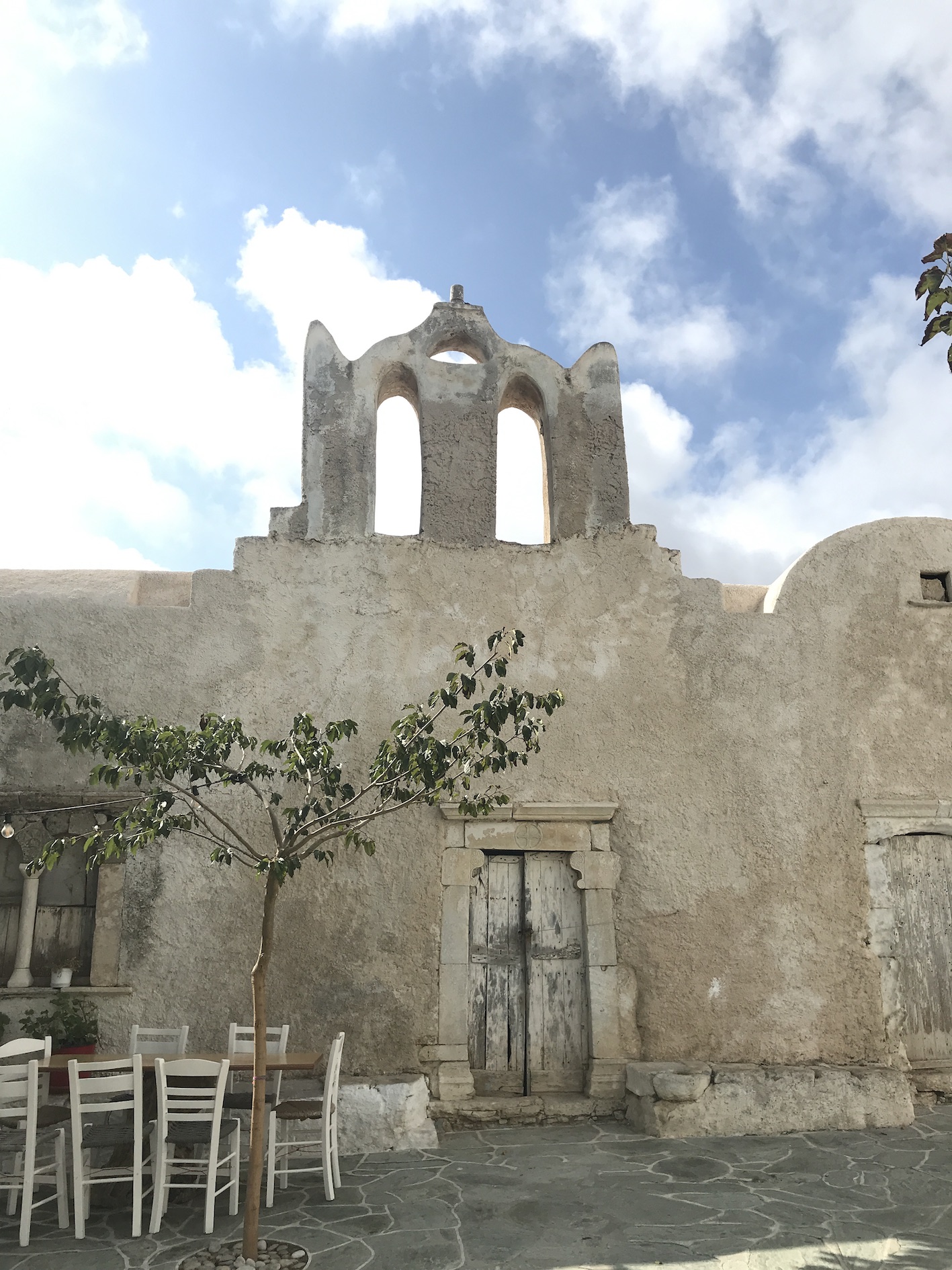
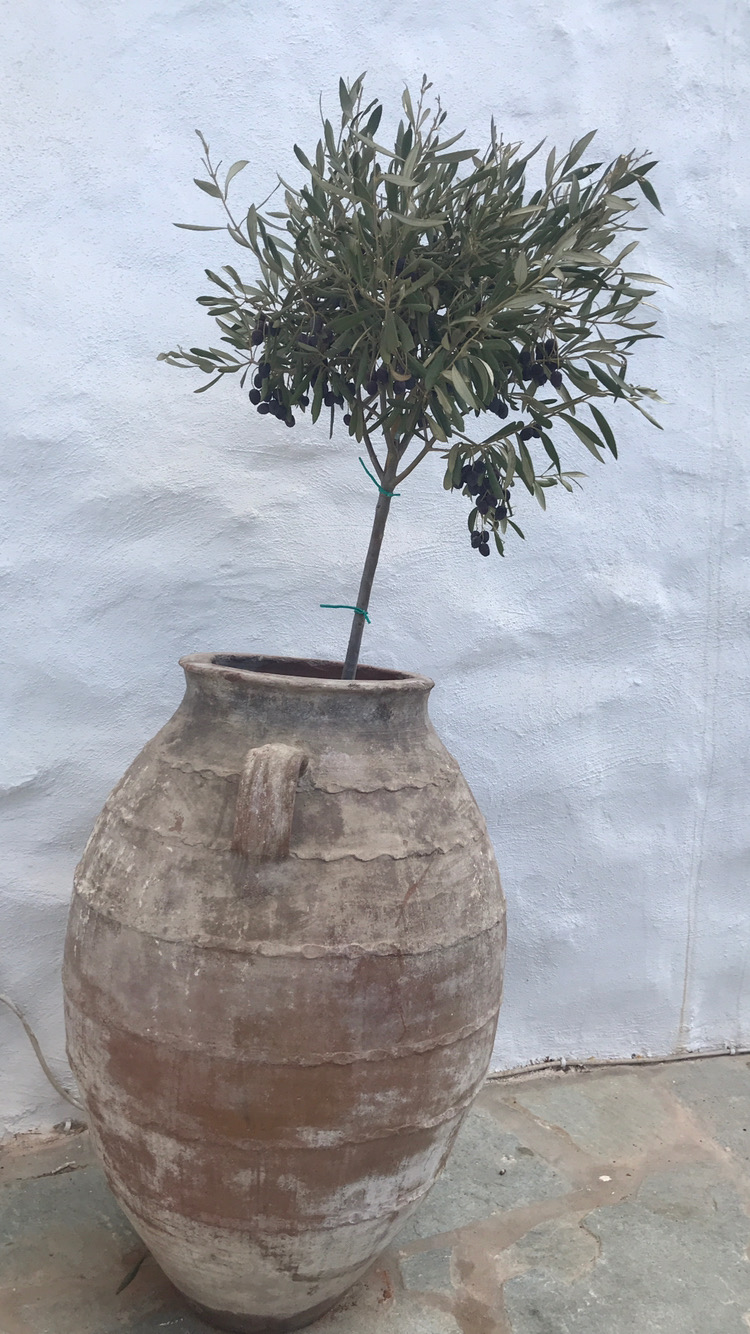
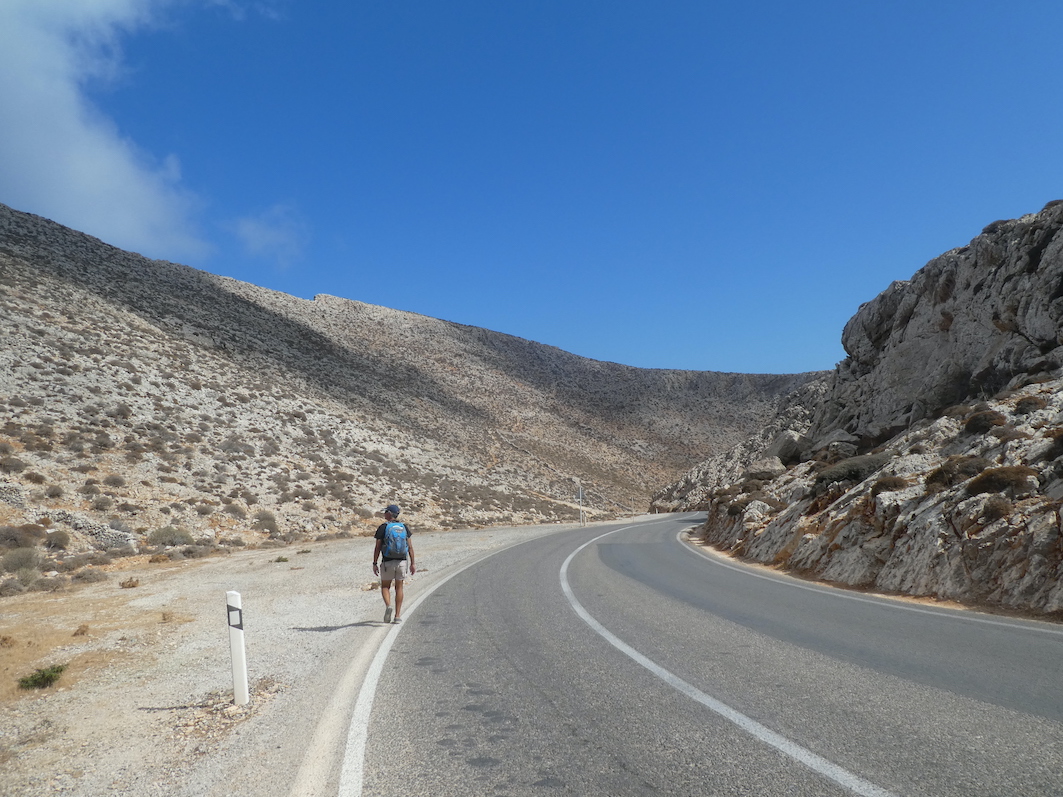
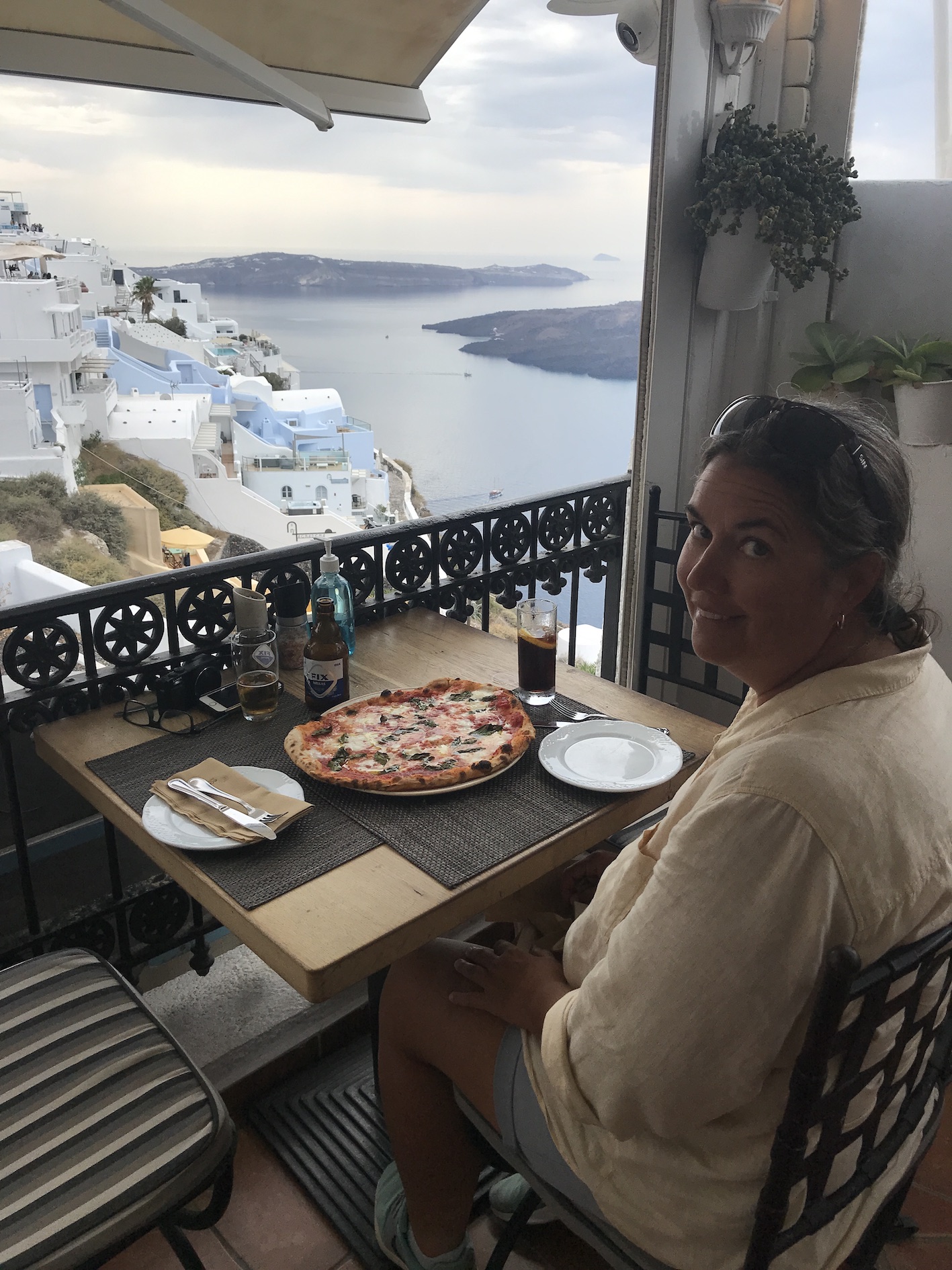
Our next destination was quite exciting but also took a fair bit of logistics to visit. We were planning two nights inside the very very deep waters of the dormant volcano that is the islands of Thira & Thirasia better known as Santorini – a tourist mecca of Greece.

However it is challenging to visit in your own boat. Anchoring inside is out due to the incredible depths of the water right up to the island, the one marina on the south of the main island is full of local day tour boats and doesn’t have room for visiting yachts, it is possible to anchor around here but only in very mild conditions which isn’t what was forecast. We did however find a good option in taking Red Roo to the smaller island of Thirasia where for €50 a night we could secure the boat to a morning buoy both stern and bow (front and back tied off). From Thirasia we could catch a local ferry for just €1 each across to the big island of Thira (Santorini) where we could visit the towns of Fira and Oia.

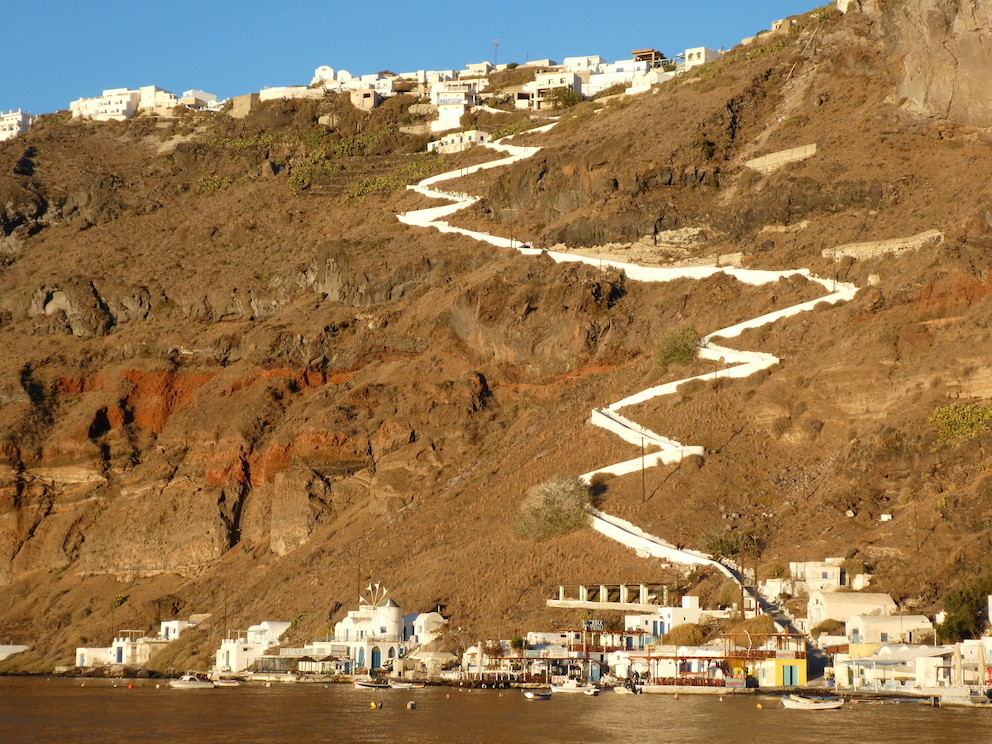
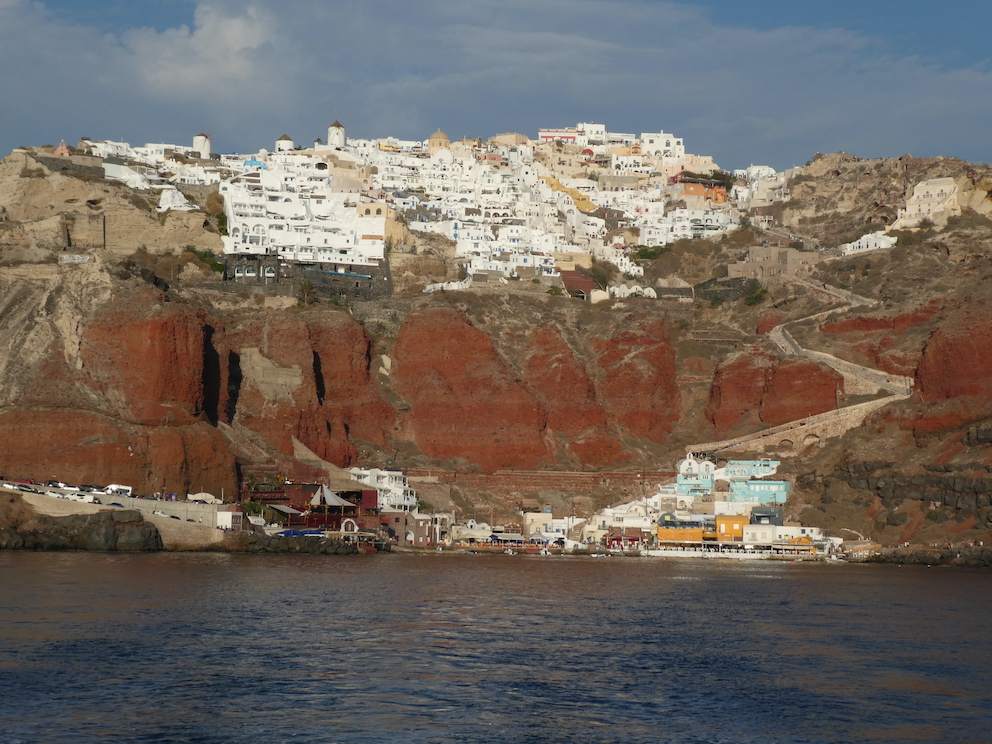
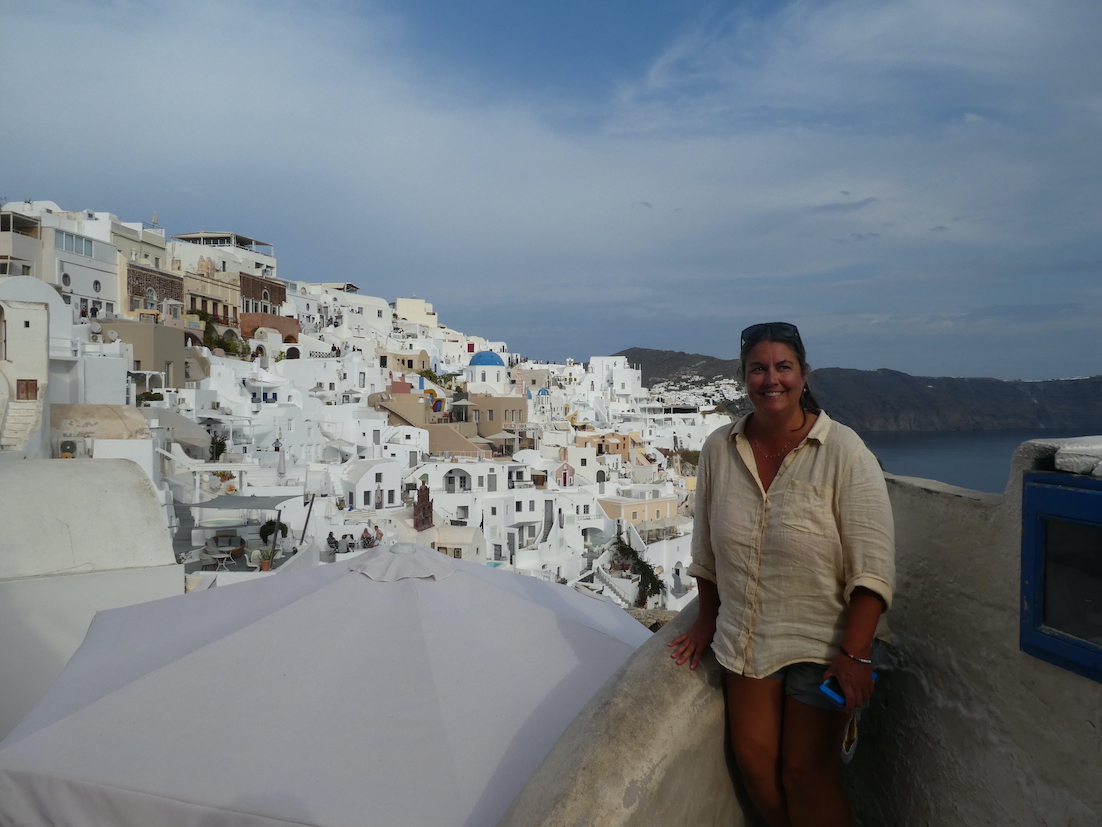
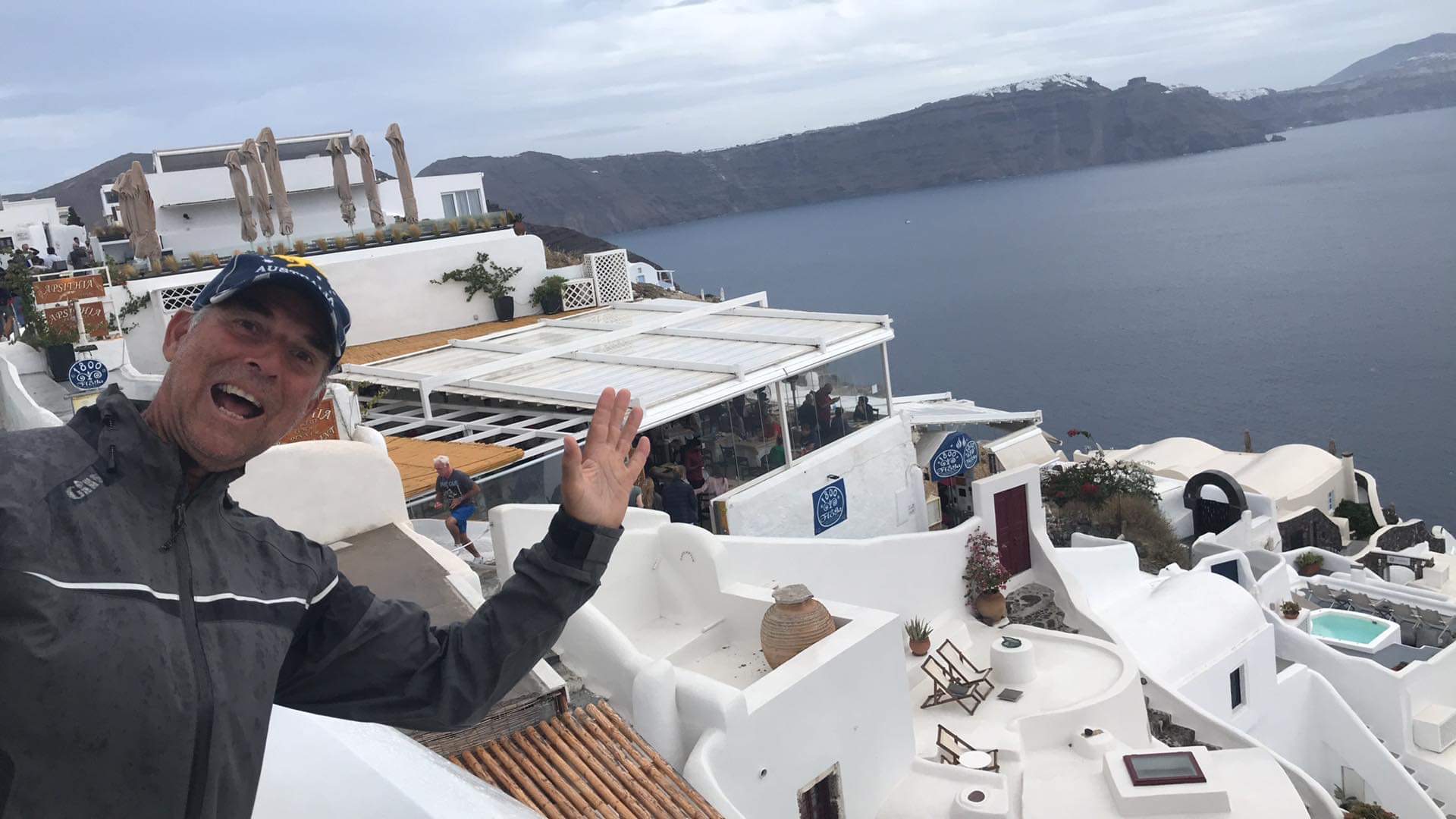
We explored both Oia and Fira on the main island as well as Manolas on the smaller island of Thirasia (where Red Roo was). Climbing many many many steps to access each of them. The colour of the volcanic rock in black, red and white, is truely unique as is the scenery and white and blue architecture that is so very easily identifiable on all the greek tourist items. This was a big tick off our Greece to do list.

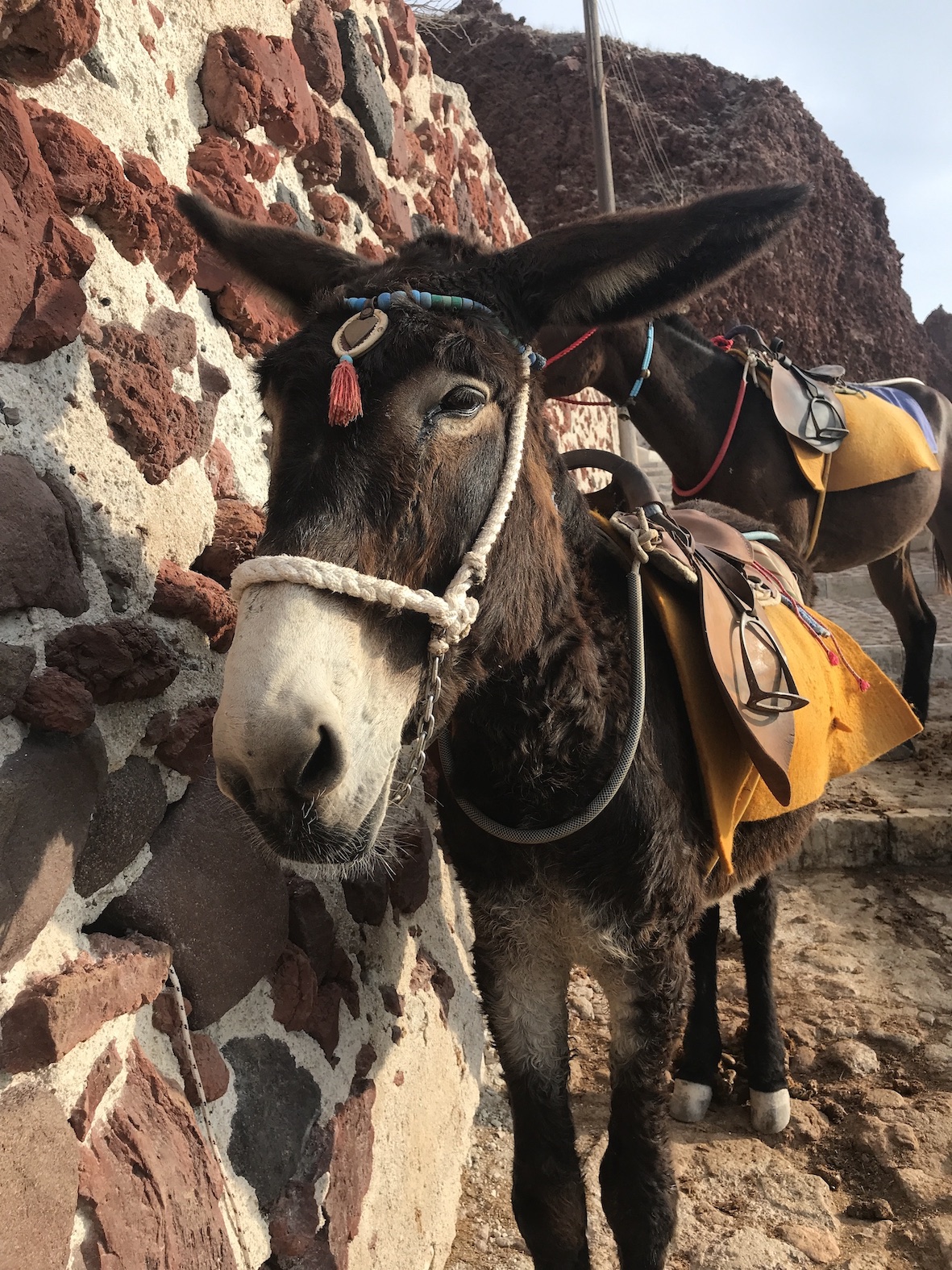

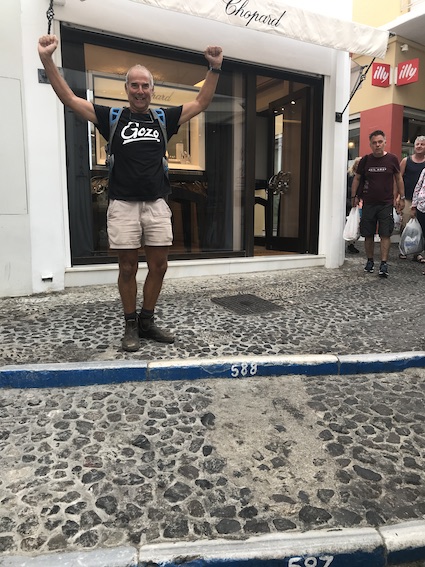
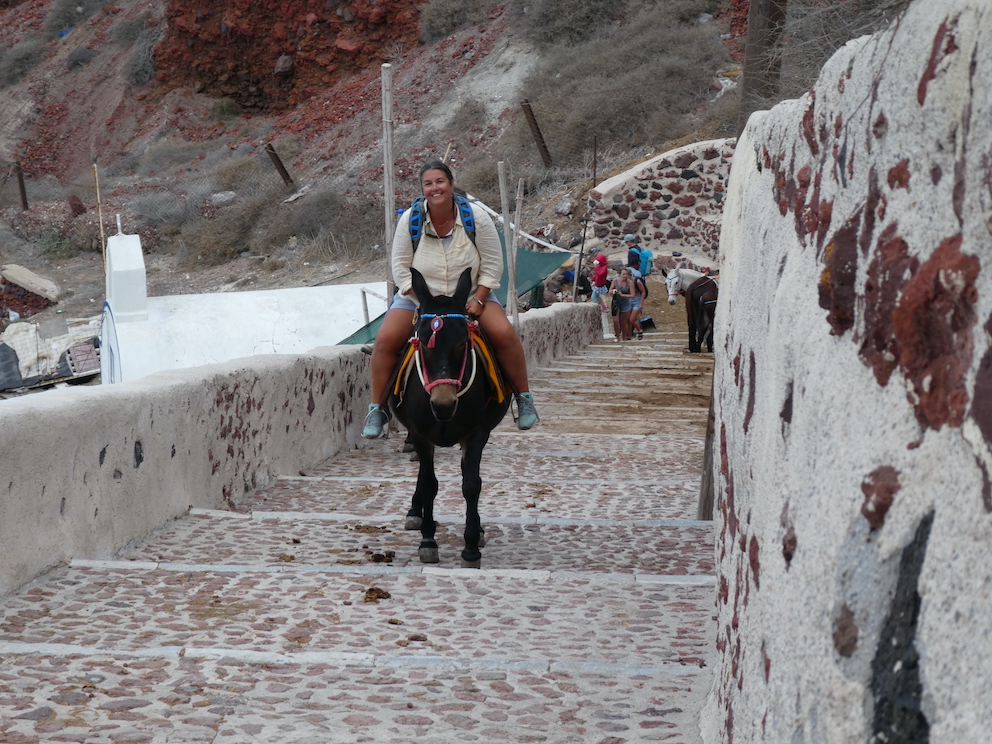
It wasn’t however all smooth sailing (as they say!). On our second day the weather and wind came in force. The small inter-island ferry took us across to the main island warned us it may not be able to collect us later if the weather got any worse. We took the risk, we wanted a second day exploring Oia, and luckily it was able to collect us later that afternoon. Hats off to the ferry captain he did a fantastic job of bringing in the boat in large swell and safely motoring/holding it there whilst we all timed the waves and jumped (literally) on board – it raised the heart beat a little let me tell you! That night, back on Red Roo the wind worsened and the boat next to us broke its stern (rear) mooring line. Of course it happened at 12:30 at night in the dark. Their boat swung around past Red Roo with only a couple of meters to spare. They were still attached at their bow (front) but swinging full circles in the wind. The people on the boat were very responsible and assured us they would remain on watch on deck until morning to ensure they didn’t swing and hit either us or the catamaran on the other side of them. We went back to bed to get what rest we could knowing they were swinging and feeling the wind pushing us all against the ropes. We got up several times during the night to check and it was a relief when morning came and the winds eased.
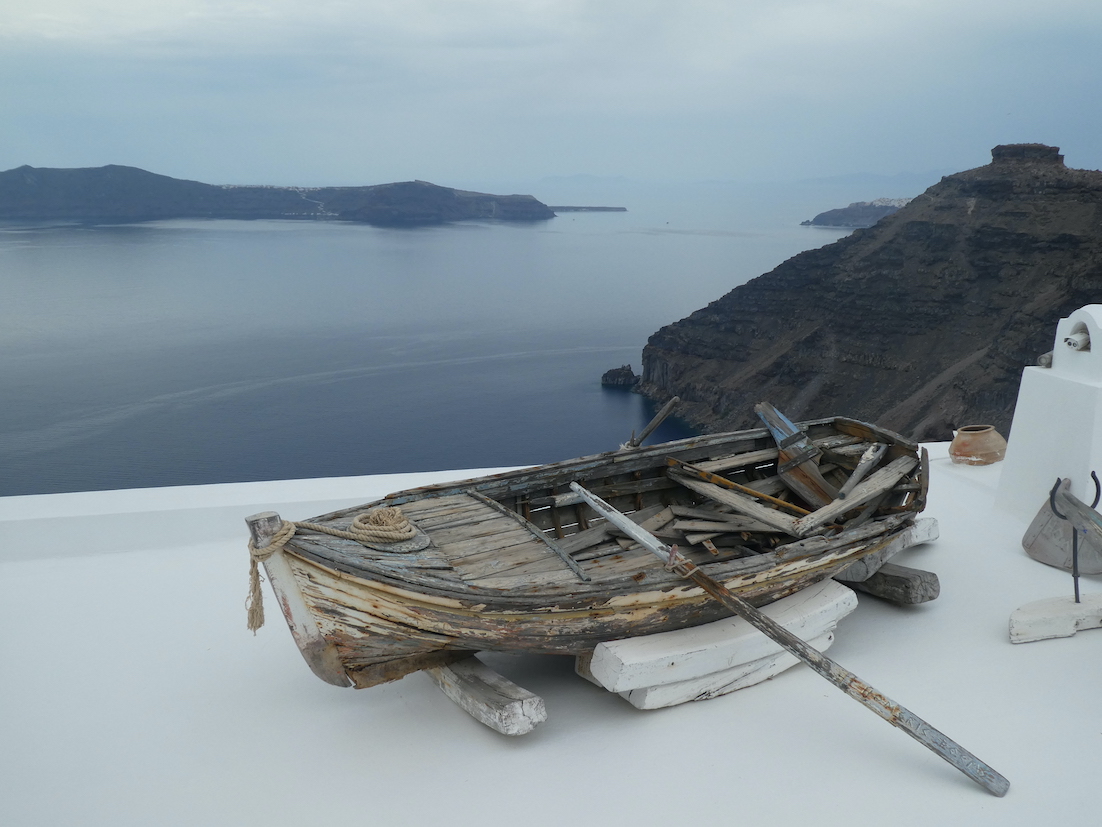
Red Roo is over on the island at the top of the picture near the white path just visible.
It was time to leave Santorini and we prepared to go, however when we went to start the engine we got nothing. No lights, nothing! Phil removed the start panel to take a look and immediately saw the problem, it was something which he had been warned of the year previously when the new engine was installed. The push button start switch relies on flimsy plastic tabs to hold it in place and enable it to contact the starter circuit and start the engine. Half of these tabs had broken so contact with the starter circuit couldn’t be made. Phil was able to use wire and cable ties to secure the switch and contacts as an interim fix until we can contact the engine supplier for warranty parts. One more thing to stress about. Again this could have been frightening if it had of happened at a time when we needed to start the engine immediately and got nothing.

It was a voyage under motor from Santorini to the island of Ios (23 nautical miles). After the day and night of strong winds, there was nothing but waves on the sea, no wind to sail the boat. We anchored off the eastern side of the island protected from the swell.
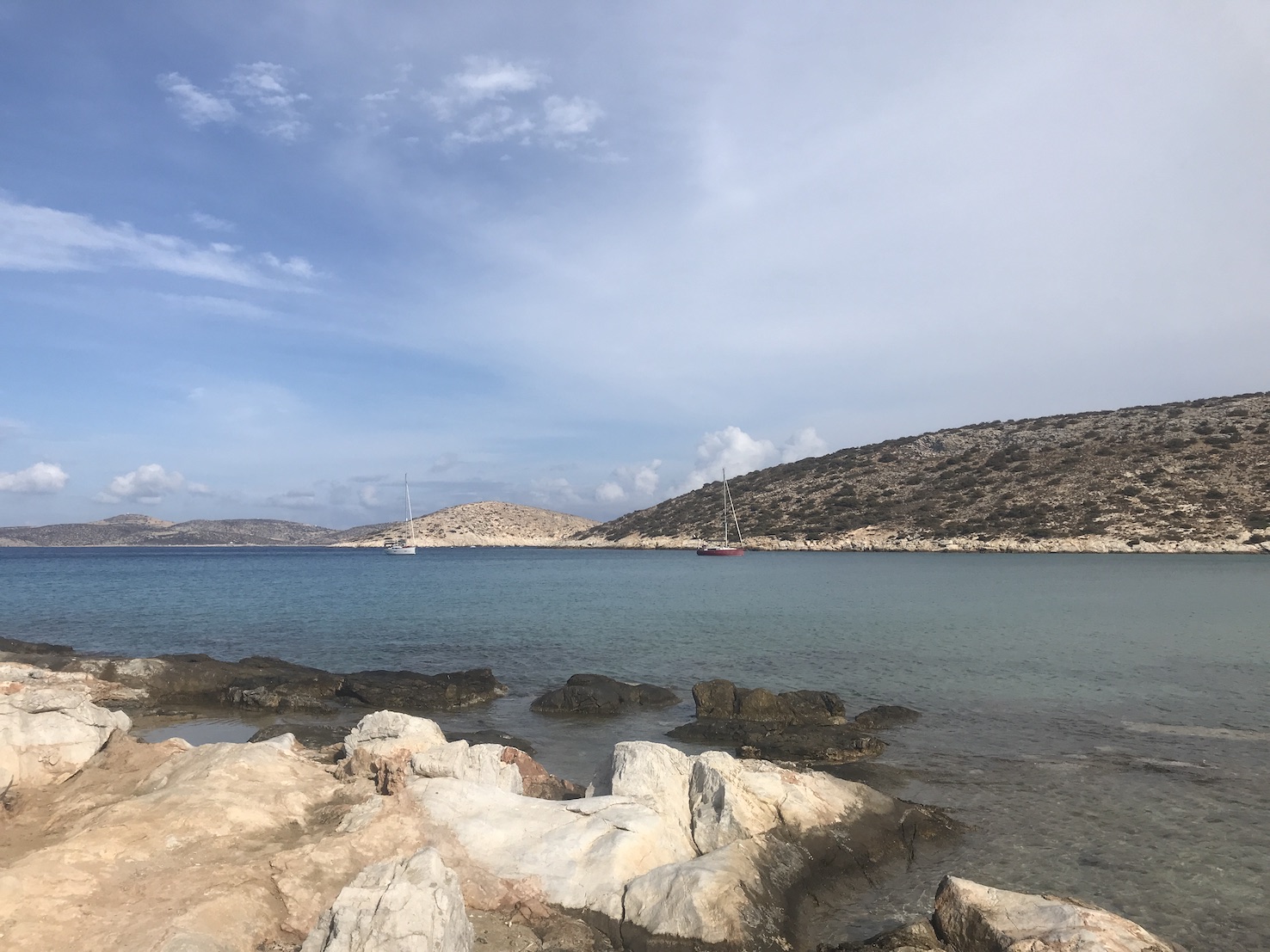
The following morning we set off for a short sail 9 nautical miles east to the island of Irakleia. A nice light wind helped us sail all the way without needing to motor. We anchored off a beach in a lovely bay and awaited the arrival of our good friends on the boat Caffe Latte whom we hadn’t seen for a week. Together with Jean and Yolene we explored the island, lovely views and a very small community. We found two small shops open, one the local store (very small but were able to get milk, eggs, bacon, cheese and a few vegetables to keep us going), and there was also one Taverna in which we enjoyed a great traditional greek meal of grilled squid and roasted eggplant with veal – delicious!!
We were at Irakleia for 3 nights hiding again from the wind, not a strong Meltemi this time but average winds from the south west with storms and rain forecasted. The rain we welcomed as we hadn’t had more than 3 drops since leaving Tunisia in March. The first night we saw lots of lightening around, still some distance from us but very regular. Lightening can be very frightening and dangerous to sailors and boats, especially as we have a great big metal stick up in the sky (mast) which can be very attractive to the lightening. We know of two other boats who have been hit and very badly damaged. Before turning in for the night, we turned off all our instruments, power, lights, etc and isolated our aerials, antennas, AIS and engine, so in the case we did get struck hopefully it would minimise damage. We were woken around 3am when the storm was directly over us. It was loud, very loud, windy, very windy, blowing us around, with lots thunder and lots of lightening. I admit to being a little frightened. The wind was a lot stronger than forecasted and if we had of known we would have put a lot more anchor chain out. It was too late now, we were in the middle of it and wouldn’t have been able to get the snubber off to let anymore chain out. Usually when we get big strong gusts of wind and are worried about the anchor dragging (us being blown off anchor) we know we can start the engine and be ready to – if we have to – motor against the wind (we have done this before and thankfully not had to use it). However we had isolated everything due to all the lightning, which was still going strong and right above us now. So if we did drag it would take a minute or two to start everything. That unsettled me, as well as the pure chaos that was outside, the rain, wind, thunder and lightening was quite overwhelming. I couldn’t even look at the instruments to check how strong the wind was due to them all being turned off as a precaution. The storm finally eased around 6am as daylight broke, and we went back to bed to get some rest.
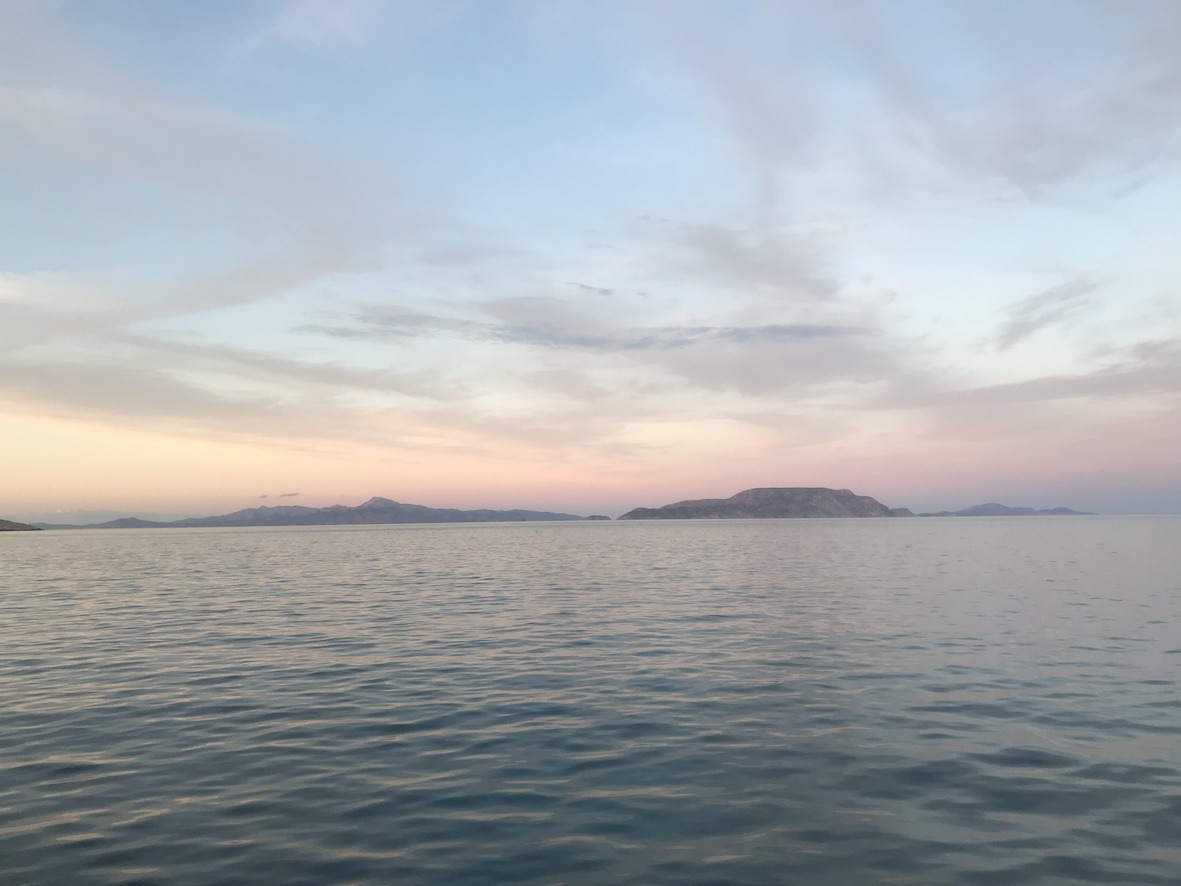
Our next stop just to ease the mind from all the events above was the island of Amorgos, a 14 nautical miles sail where we visited the shipwreck of Olympia. In February 1980 the captain tried unsuccessfully to anchor seeking shelter from a force 10 storm when he was blown onto the rocks. All the crew were rescued and the site today is a popular hike to visit and snorkel the wreck.
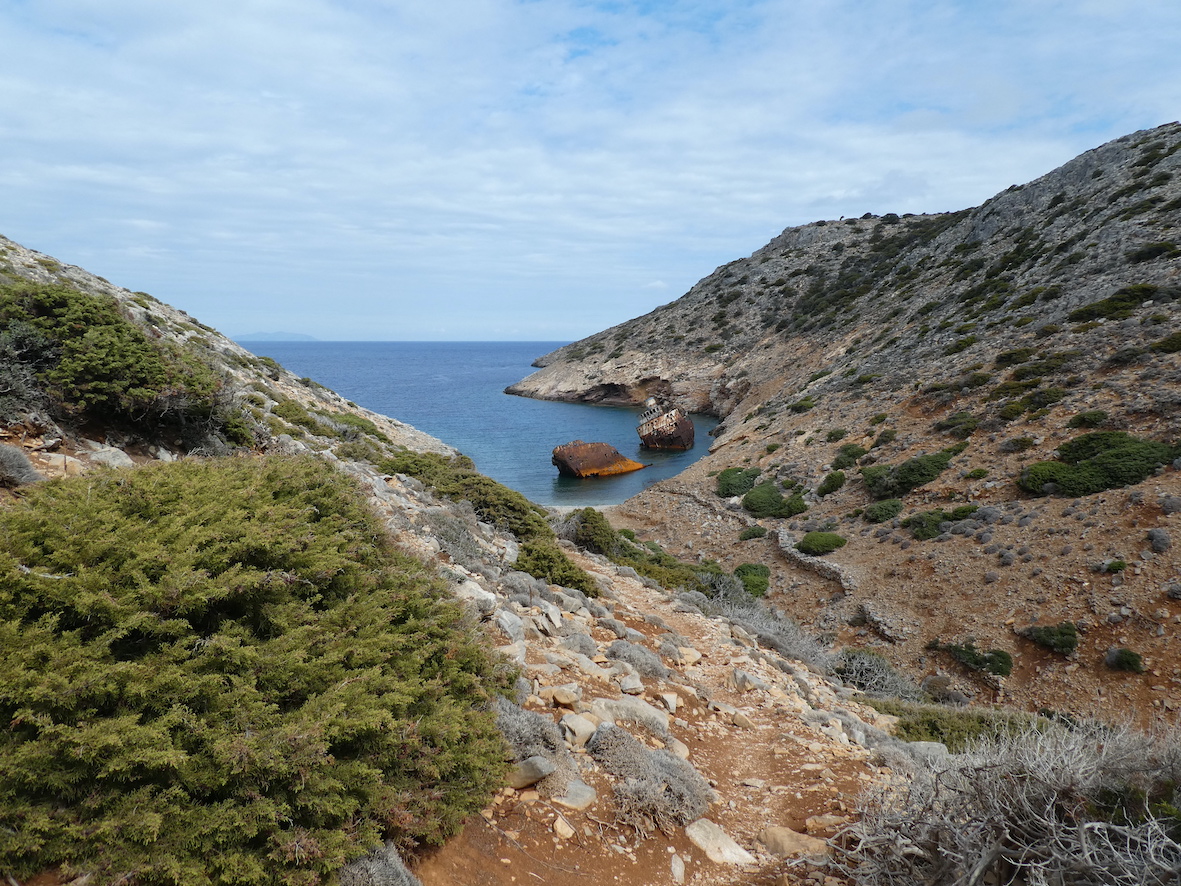
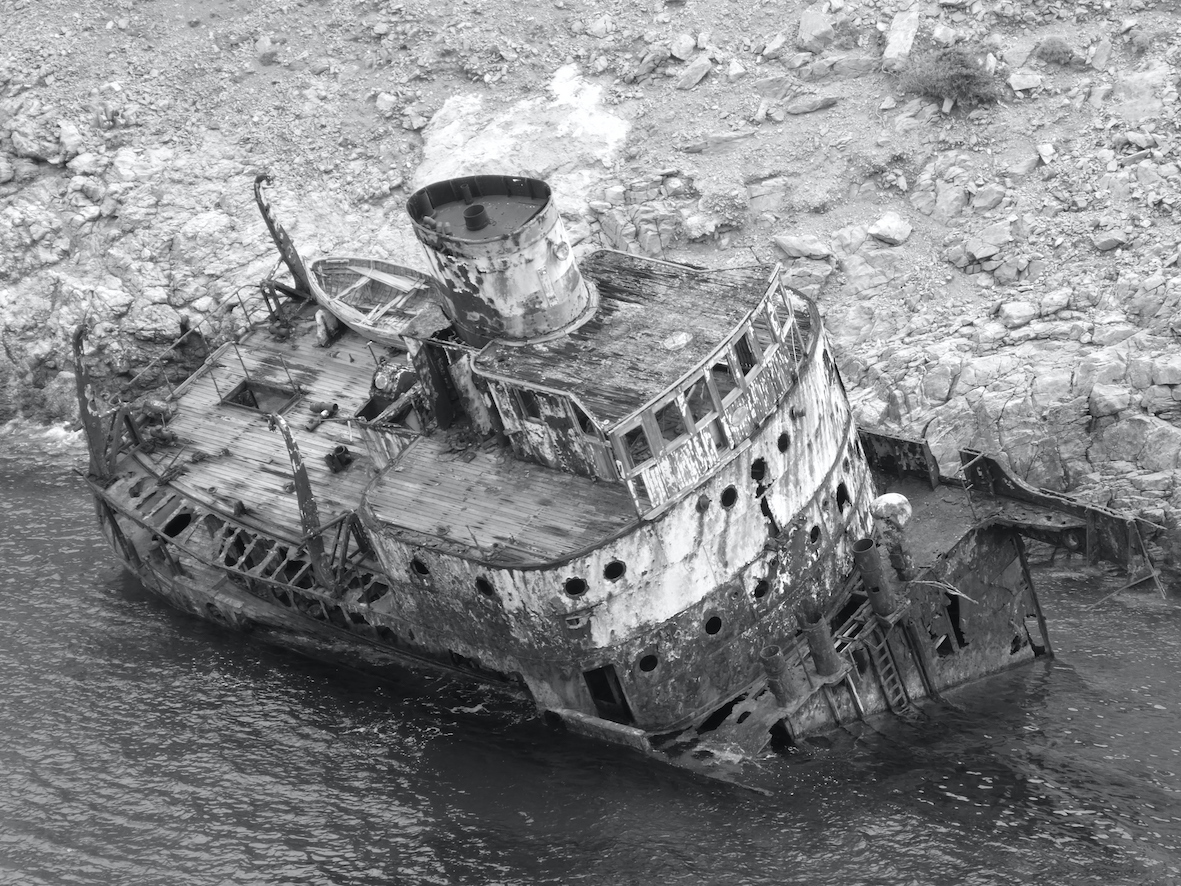
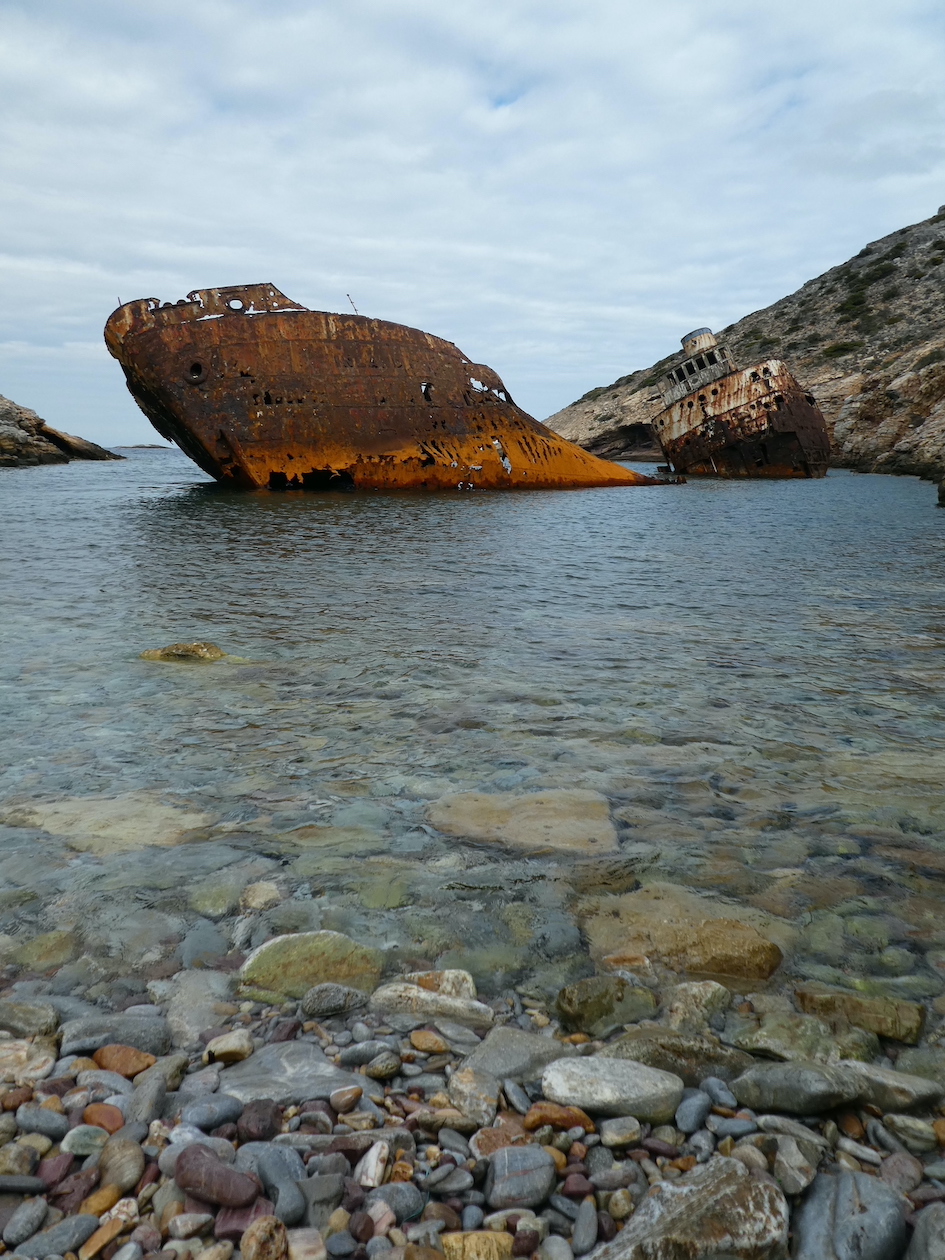
The small anchorage at Amorgos is a sweet little natural cove where the locals keep their fishing boats, Red Roo joined them for the night.
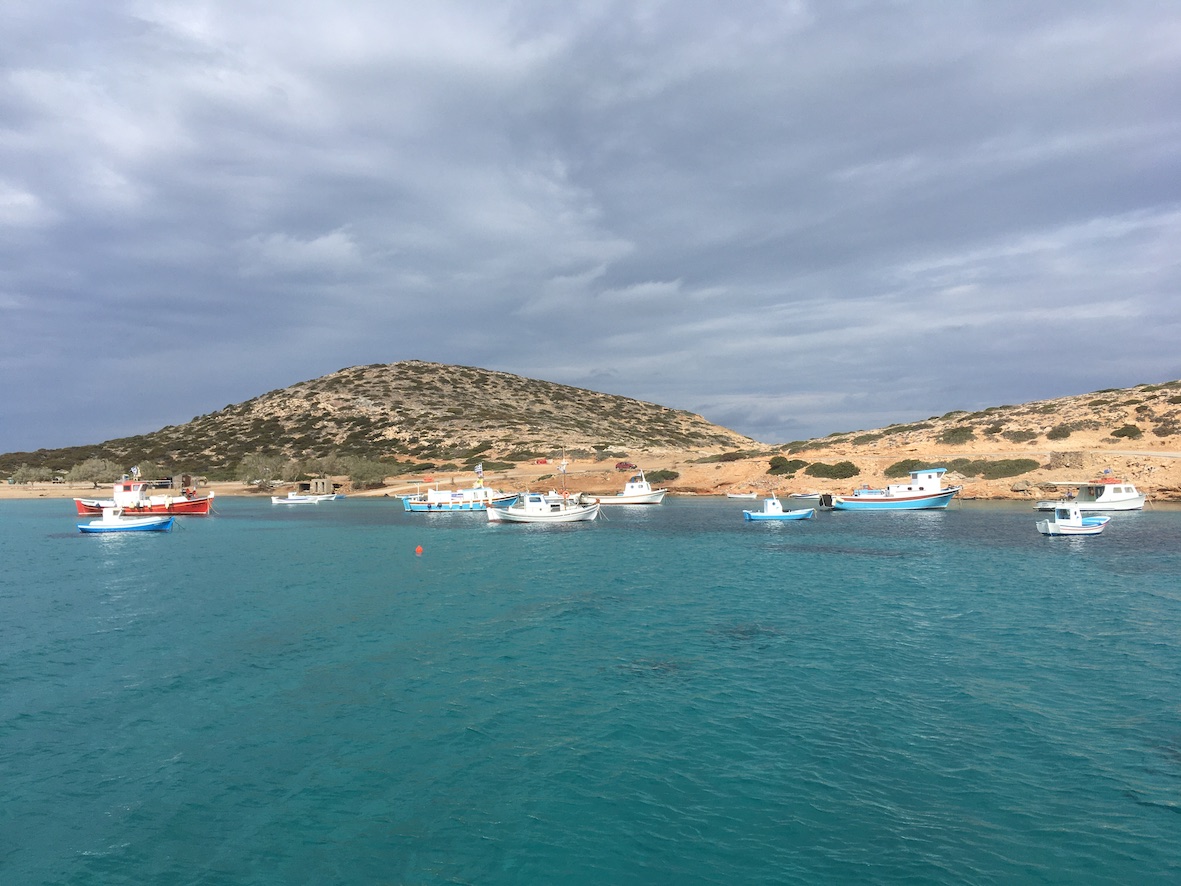
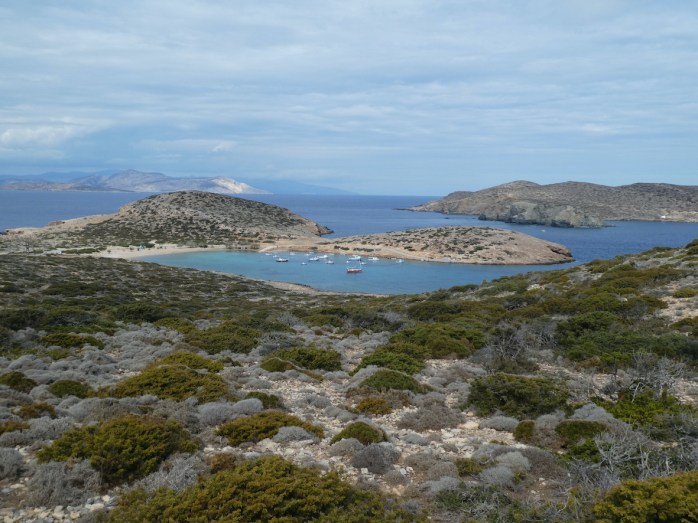
Red Roo with the small fishing boats at Amorgos
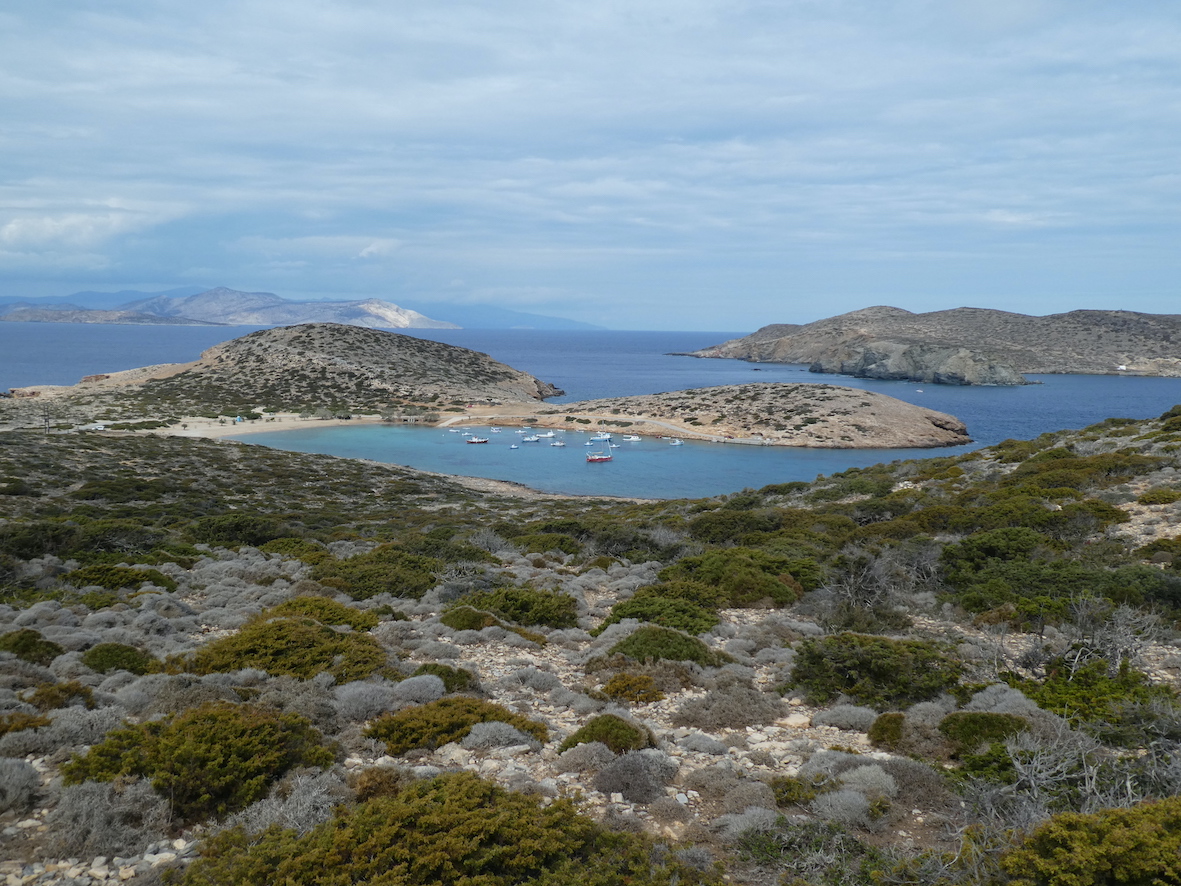
Is boat life fabulous or frightening … the answer is it can be both and change at any given time.
Getting Around Greece
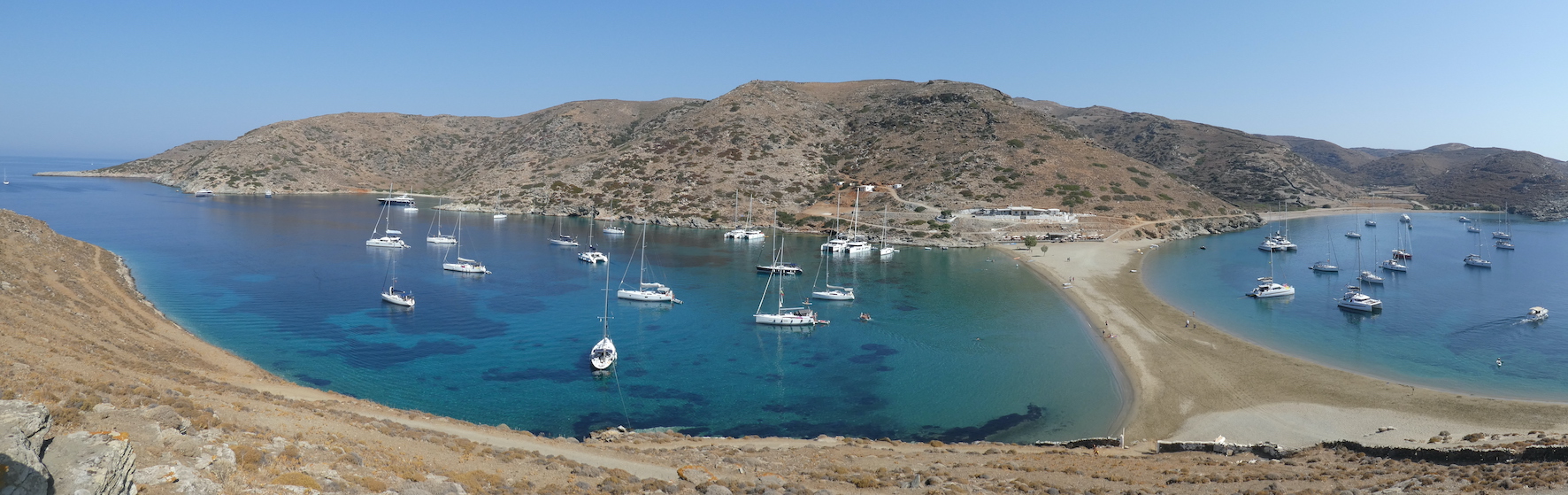
Still getting our ‘Greek On’ and enjoying the opportunity to sail and explore this lovely country. We had two more stops before leaving the Peloponesse Peninsular and both of these are worthy of a mention in our memoirs ie: the blog.
From Porto Cheli (or Kheli), every place is spelt at least three different ways depending on if you look at nautical charts, lonely planet books or google maps. As I was saying from Porto Cheli we attempted to sail north to the end of the bay about 20 nautical miles to visit Navplion (or Nafplion). I say attempted as the forecast was for 8 knots of wind a little off our nose enabling us to sail with a few tacks up the bay but we ended up motoring into what was eventually 20 knots of wind right on our nose. A real slog. Anyway we made it there and set about exploring what used to be the capital of Greece prior to Athens. It has three worthy attractions, firstly the town is really quaint and beautiful, secondly it has a castle on an island at the harbour entrance, and thirdly its has a massive fortress at the top of a rock.
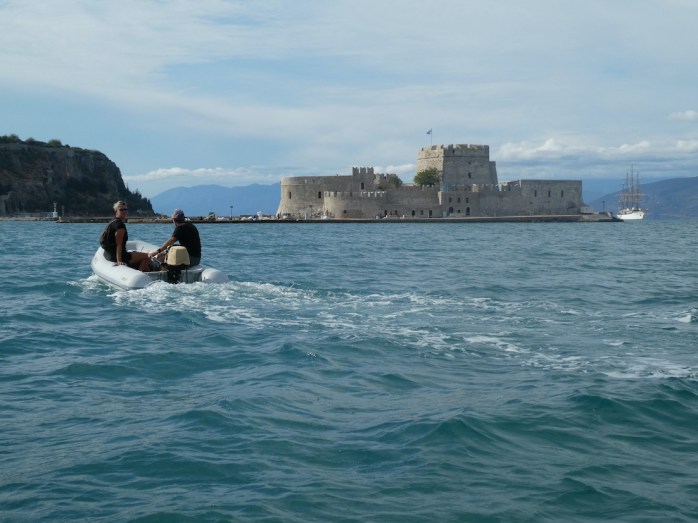
Yolene & Jean in the dinghy passing the Castle in the harbour waters 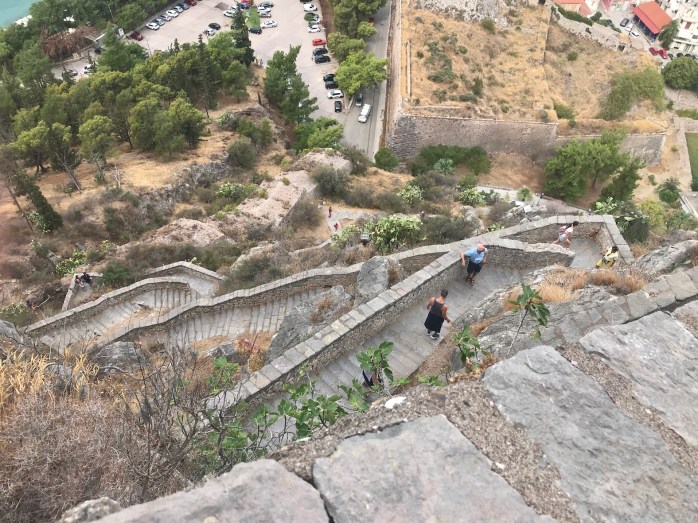
Looking down on some of the 999 steps leading up to the Fortress
The 999 steps up to the Fortress of Palamidi at a height of 216 meters was built at the end of the second period of Venetian role (1711-1715) however it was conquered by the Turks before completion, and came into the Greek possession in 1822 when 350 elite trips invaded the fortress forcing the Turkish garrison to surrender without a fight. It then was the capital of Greece between 1823 – 1834. Following the liberation of Greece it was used as a prison for those condemned to life sentences and death between 1840-1920. We can confirm walking up and then down the 999 steps makes your legs wobble like jelly afterwards. These days, the town is known as one of the most beautiful towns in the Peloponnese as well as one of the most romantic cities in all of Greece.
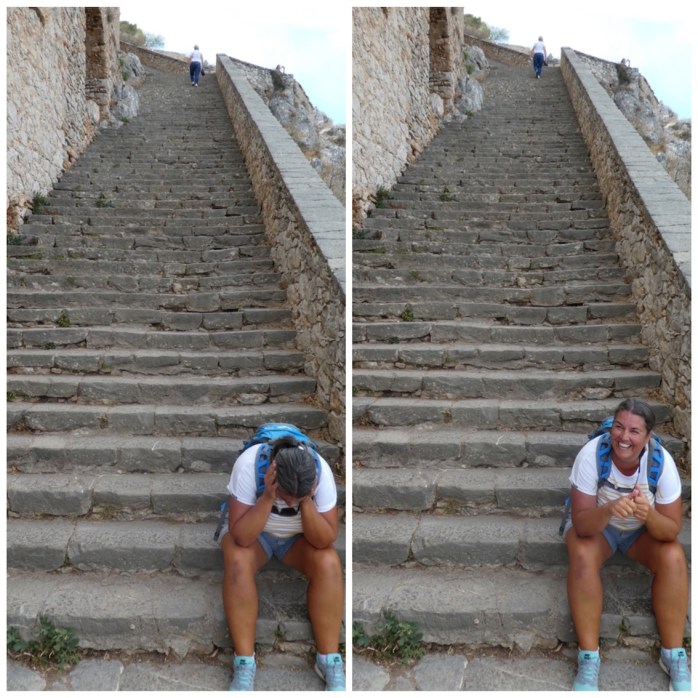
Maree ‘posing’ for the 999 steps picture 
Inside the Fortress 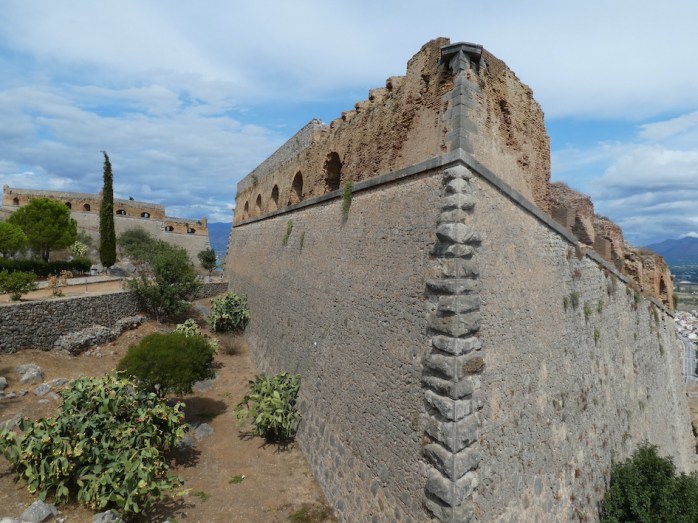
Thick Walls 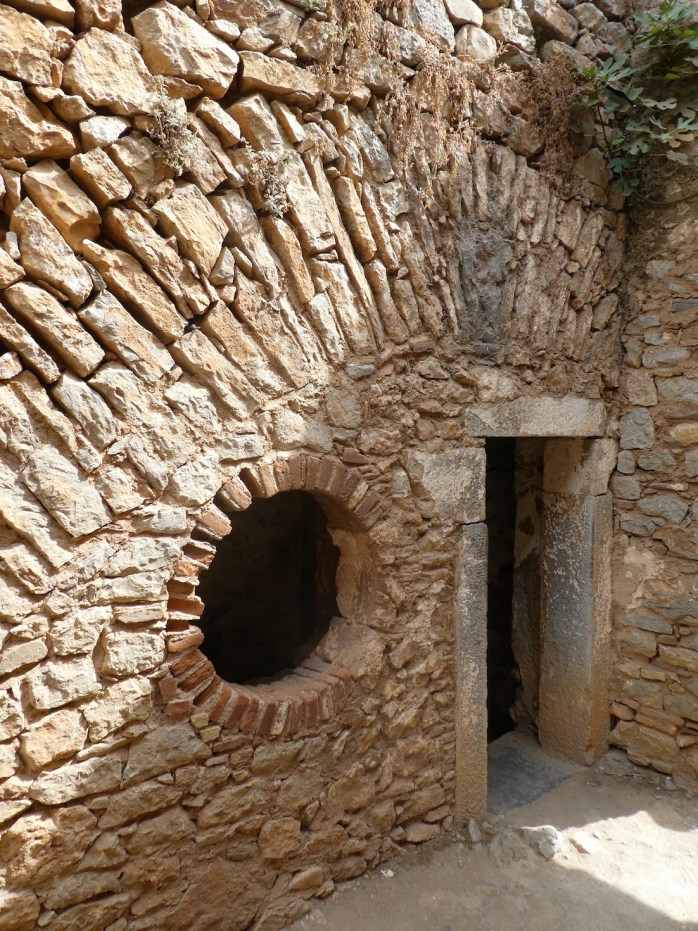
Construction Detail 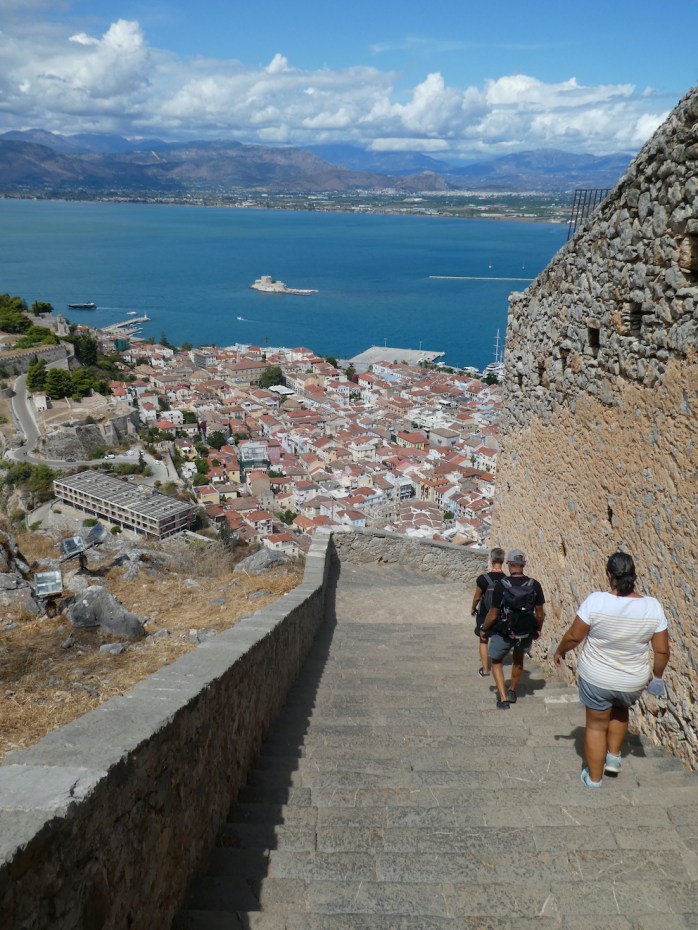
On our way back down. 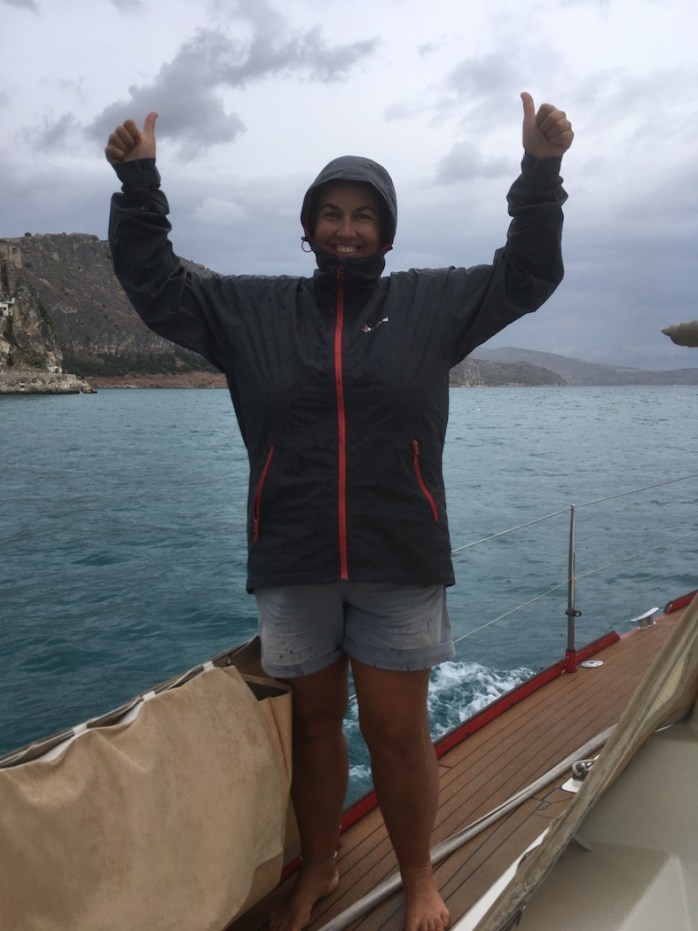
It rained (well we got a few spits) as we were leaving Navplion.
The first few drops of water from the sky since March back in Tunisia
Our next anchorage was Ermioni in order to visit the island of Hydra (or Idra). We had done our research which included warnings over taking your private vessel (our yacht and home) to the island, the words that stuck in our minds were “do not go there without up to date, full coverage boat insurance”. Hence our decision to anchor at Ermioni and catch the €6 ferry (30 minute trip) to the island.
We did this with our great mates from Caffe Latte making a day out of it. Hydra is a big draw card for tourists. There are no cars or vehicles on the island, access to all the houses, hotels and buildings is up steps (lots of steps) on your own two legs, via donkey, or in some unique cases the odd motorbike.

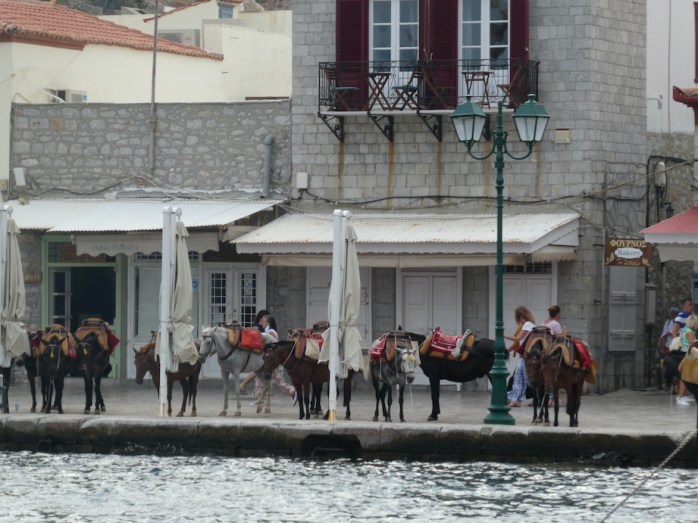
Transportation Hydra Style 

Hydra
There is a very small, very busy harbour which has way too many vessels, it houses a fishing fleet, local boats, water taxis, ferries, luxury motor boats and private yachts all trying to find a space to tie up, resulting in absolute chaos. Whilst it was at times entertaining to watch, it became a bit too stressful for myself. Boats trying to drop their anchor and tie their sterns to the wall with not enough room for either and with a 100% chance of dropping anchor over someone else’s, and boats moored 3-5 deep meaning they were tied off to the wall 3 boats out and still had to dinghy to shore!!!
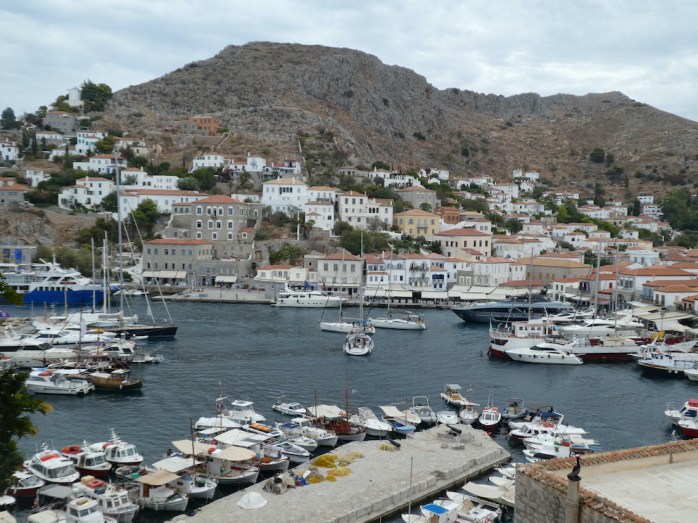
The harbour is surrounded by restaurants and tourist shops and lots and lots of people, we hadn’t seen that many people for what seemed liked years (definitely pre covid). We walked the back streets away from the craziness (up lots of steps) and even found Lenard Cohens old holiday home. We enjoyed a great meal at a little cafe (again a few streets back from the craziness), before again being mesmerised into watching the chaos in the harbour for another hour before catching the hydrofoil ferry back to Red Roo. Hydra was an experience that is for sure, but give me a nice quiet anchorage and nature any day!

Hydra Steps 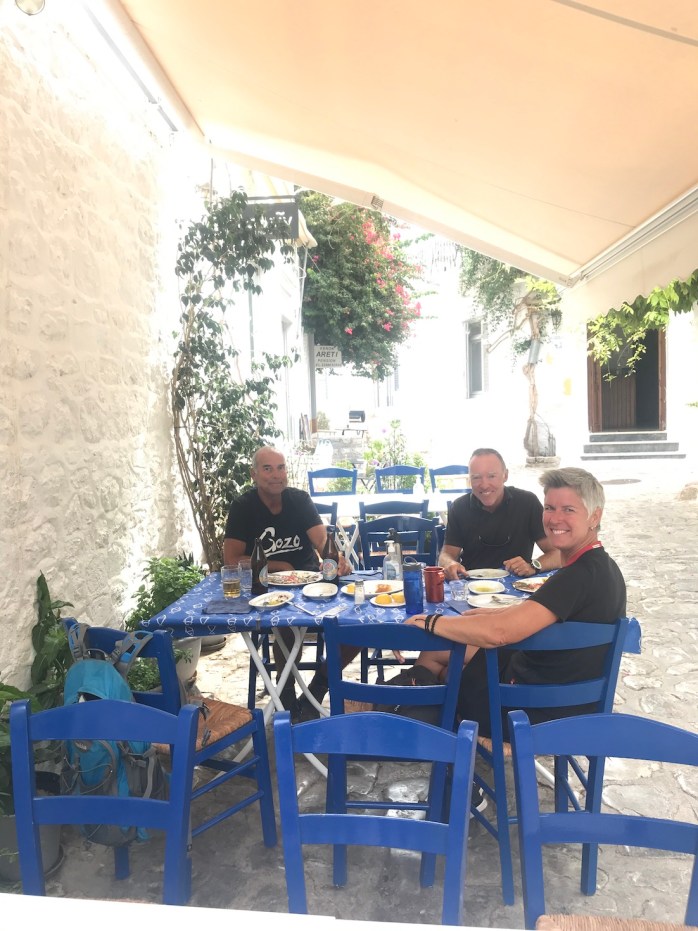
Lunch Stop 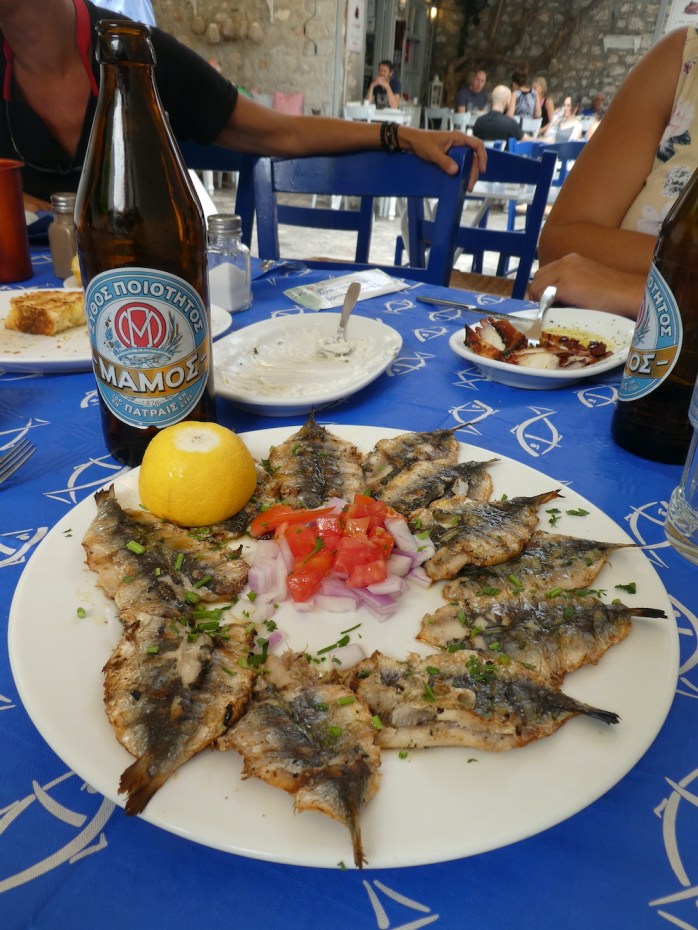
Delicious Sardines – no bones 🙂 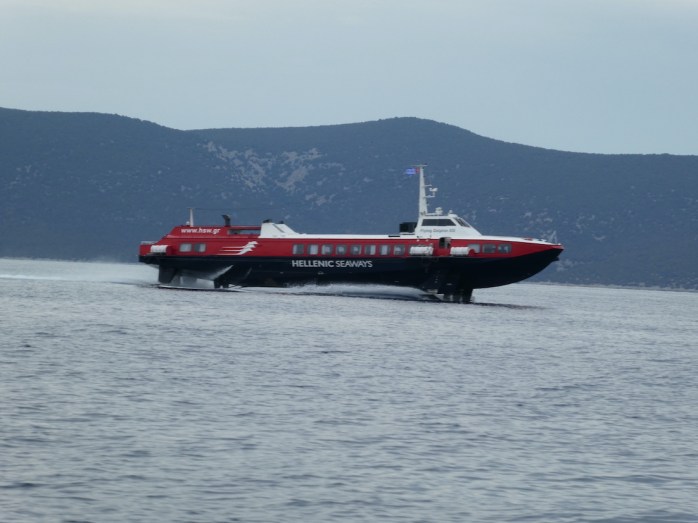
The Hydrofoil Ferry back to our anchorage
We were now leaving the Peloponnese (the southern island off the mainland) and venturing East to the Cyclades – the many small islands between Greece and Turkey in the Aegean Sea. We still have 6 weeks left on our Greek Cruising Permit which will allow us plenty of time to sail and explore the Cyclades and Crete before leaving for Turkey.
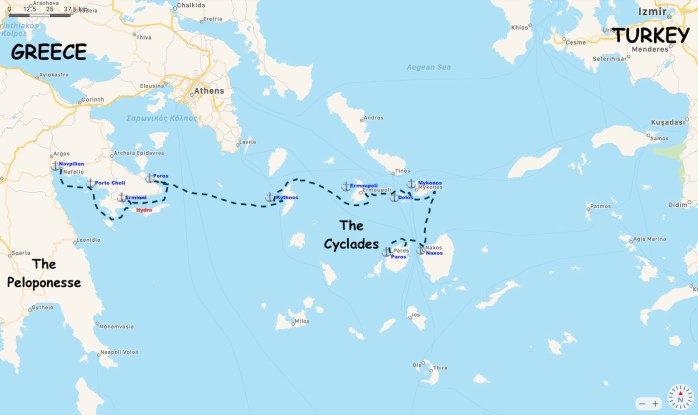
Sailing in the Cyclades – Greece
We had decided we wouldn’t travel any further north & east than we were, in order to save some islands for our return journey out of the Mediterranean when we hope to transit the Corinth Canal (currently closed due to land slides). Our plan was to start heading south through the islands. As soon as we made that decision the winds reminded us that Mother Nature is in charge, not us and we had a week of westerly winds, pushing us east, so we went east rather than south. Plans are made to be flexible right, and the upside of this was that Caffe Latte were going east so we would continue together (Sweetie had headed to Athens and will meet us again later in the year in Turkey).
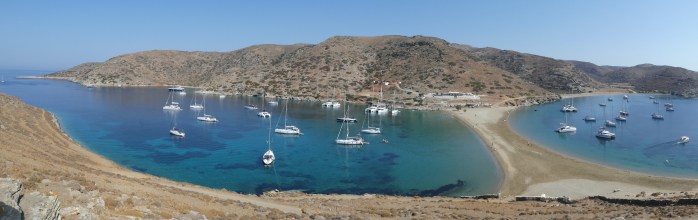
Kythnos our first Cyclades anchorage 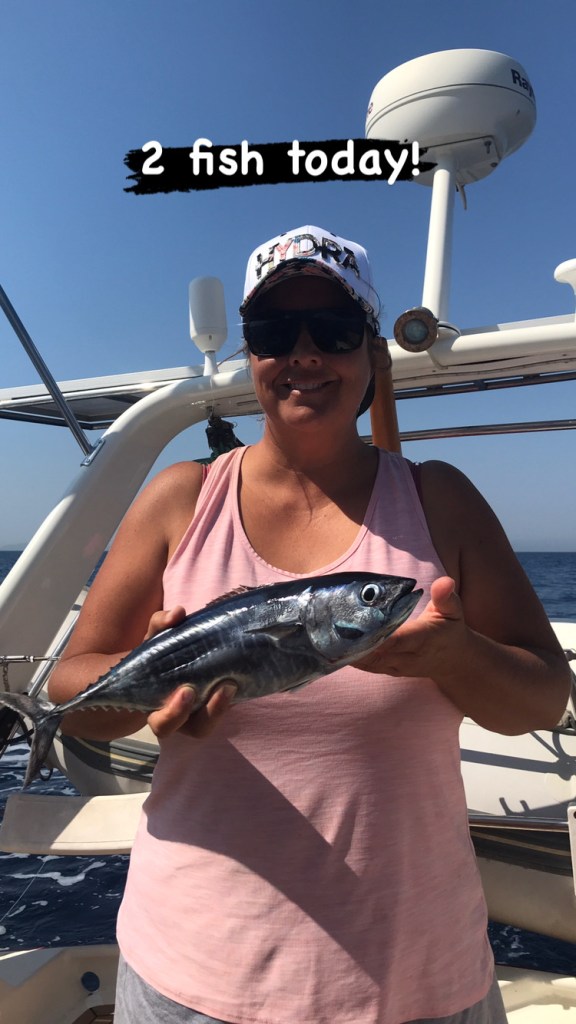

2 fish each a little over 40cm – perfect size for us!
Next was the island of Siros (or Syros) and the town of Ermoupoli which was a highlight for me as it had a self service laundry!! I know it is pretty lame to be excited but seriously doing laundry in a bucket with limited fresh water becomes old rather quickly and a laundromat is a real treat. Fresh sheets and clean clothes – almost human again!
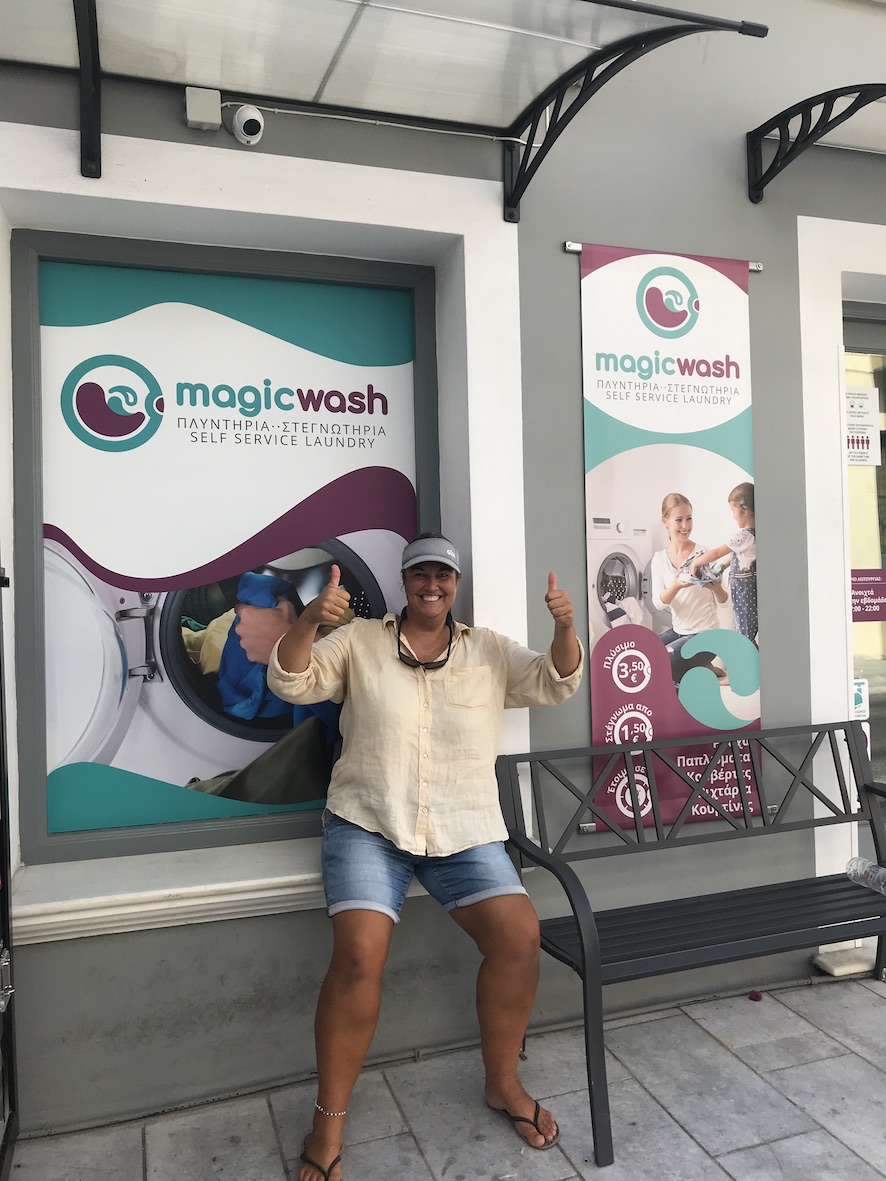
Besides the laundry it also had a Lidl (our favourite supermarket) allowing us to stock up for the island hopping we were setting off to do. Now the essentials were taken care of, we had time to explore the town and what a delight it was. Actually probably one of my favourites so far. It is a harbour with a hill behind it (yes, MORE STEPS), but we had a great time walking up and around the tiny walking streets admiring true Greek homes on our way to the summit to the church. The streets and architecture was beautiful – as is the absence of cars. One would certainly get fit living here. We racked up 16 km going up and down the hill, to the supermarket and then back to do the laundry. A great productive day!
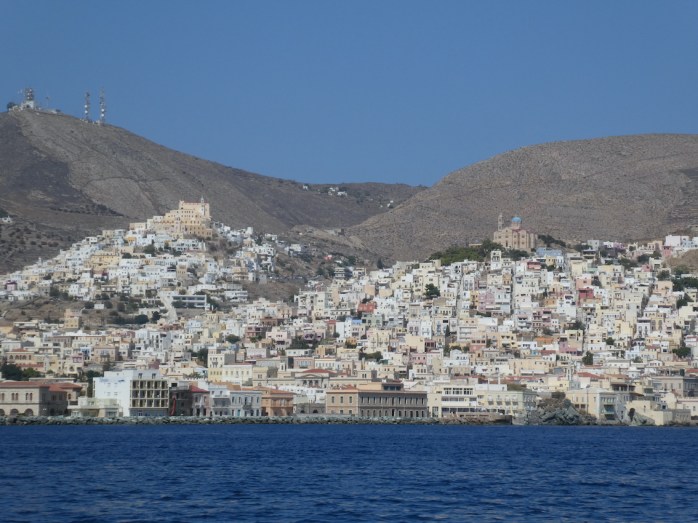
Arriving at Siros / Syros 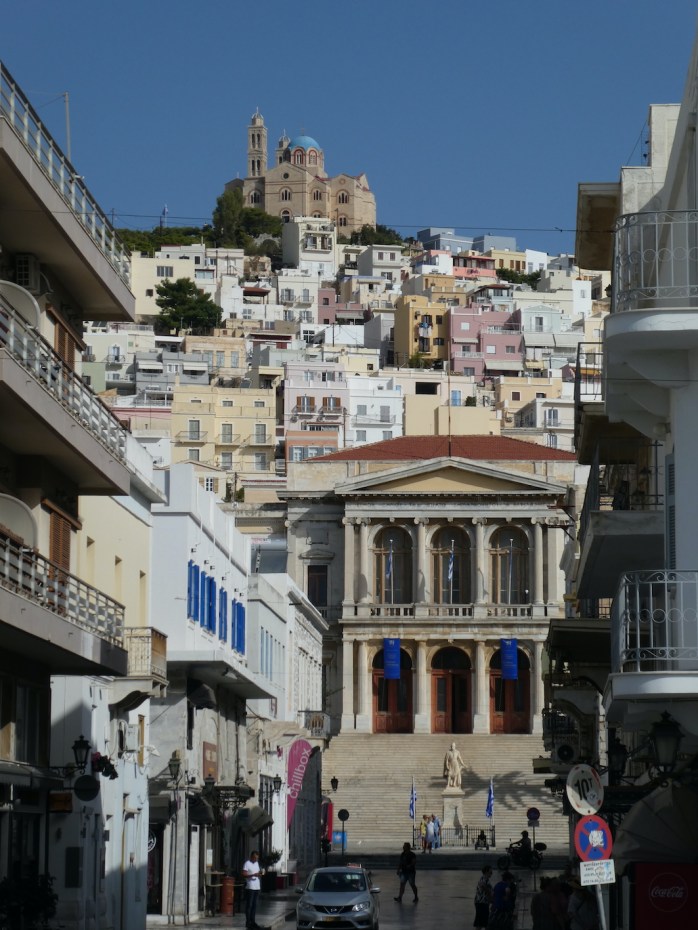
Looking up from the harbour past the government building to the church – yes we went up there 
Stairs to the church through the streets 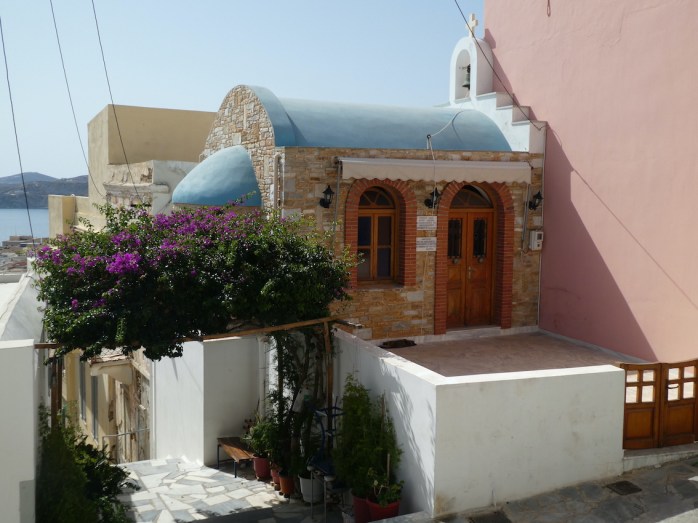
Tiny churches in the streets along the way 
More steps 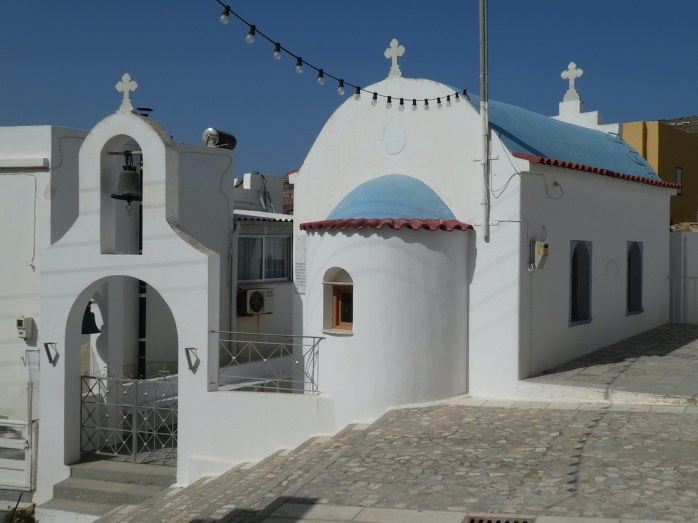
Another small local church
Our next adventure was the island and ruins of Delos. This took some logistics with the boat as there is only a very small anchorage and it is right beside the ferry route/channel and the wind was scheduled to increase in the late morning. So our plan was to anchor close by the night prior at a lovely sandy beach off Rinia and move early the next morning at 7am to arrive first at the anchorage to explore the Delos ruins, then get out before the wind and tourists turned up. We executed this well, we were first on the island and at the top of the hill when we saw the first ferry approach. Actually we heard him first, from a mile out he was honking his horn and cursing insistently as he passed Red Roo and Caffe Latte off the island. We asked the staff at Delos if we should leave and their reply was “he is a grumpy captain and always complains”. By 10am the tourists from the cruise ships in nearby Mykonos started rolling in on the ferries and to our distress another 3 boats were anchored close to us the anchorage which best fitted 2 – it was time to go (we didn’t want to be there when the grumpy ferry man returned with his second load). By the time we were back on the boat the wind was building and we had to get the other boats to move so we could pick up our anchor and we left. It was a good plan and we timed it all well. We got a good look at the island and the boats were safe.
Delos island is small and barren island 5km long and 1.3 km wide. The highest elevation is only 112 meters, and yes of course we climbed up to the top. The ruins of what was a famous religious sanctuary date back to 1400 BC (can you imagine that??). A large city of about 30,000 inhabitants grew on the island from 323 – 31 BC. The site was eventually destroyed by Mithridates King of Pontus. However due to the sheer size of the site, many relics remain and the Delos Museum has one of the most important collections for the history of ancient Greek sculpture, and unique collection of household items from the Hellenistic period, pottery, art pieces, mosaics and wall paintings.
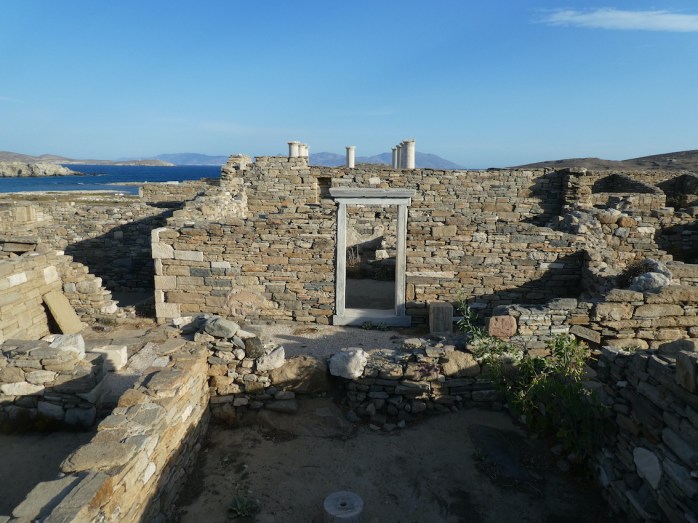
Ruins at Delos 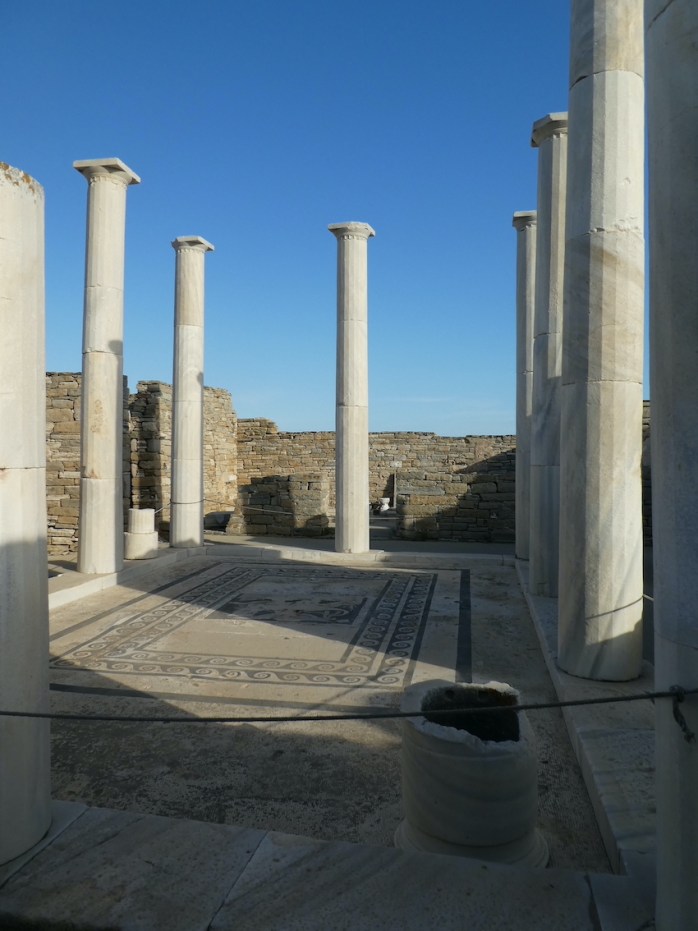
Surviving columns and mosaics 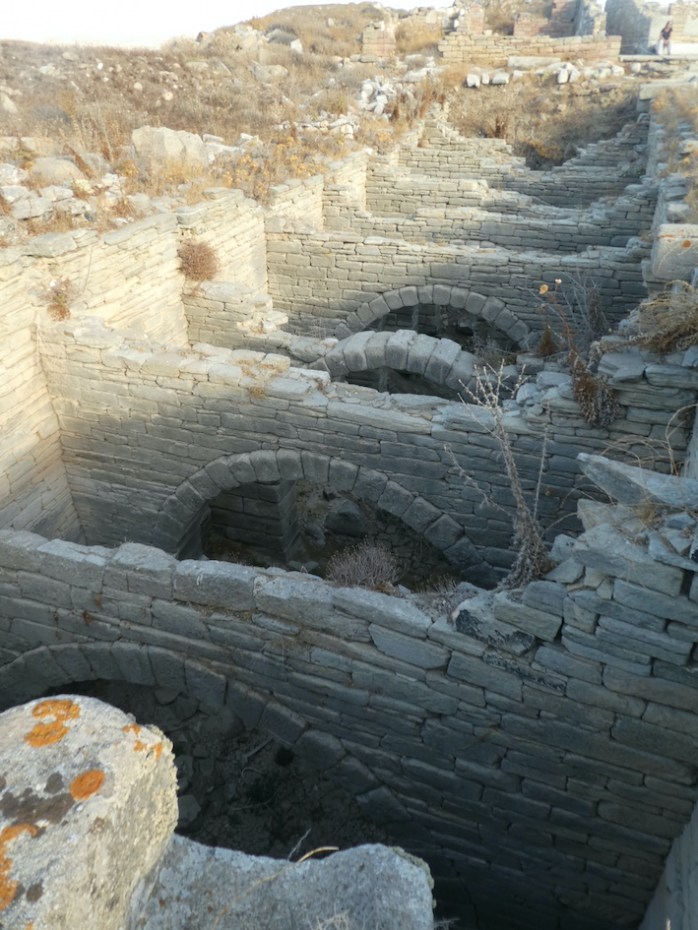
Underground storage 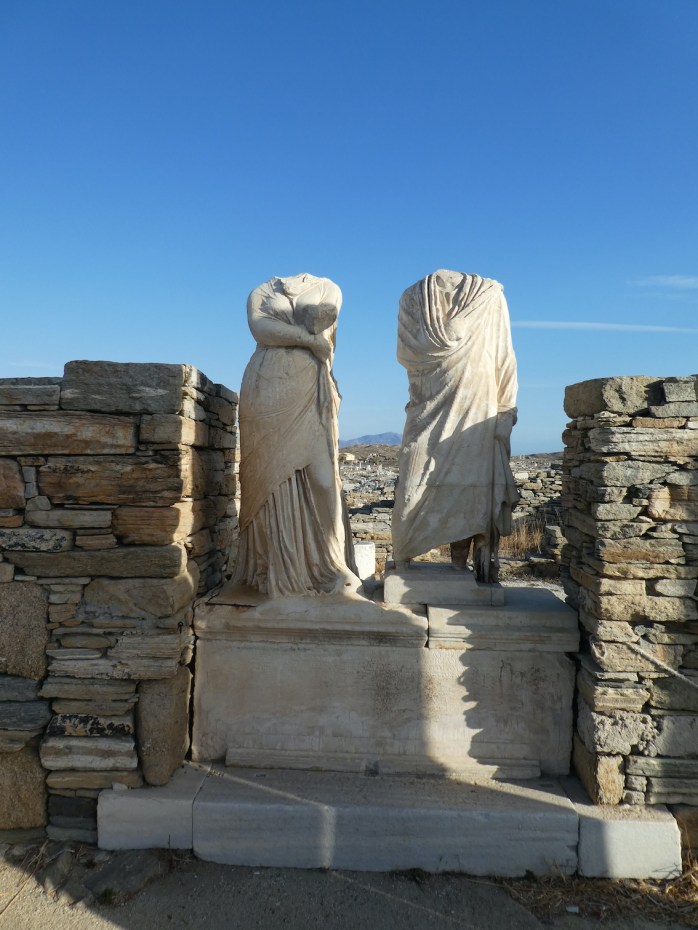

The extensive site and ruins of Delos 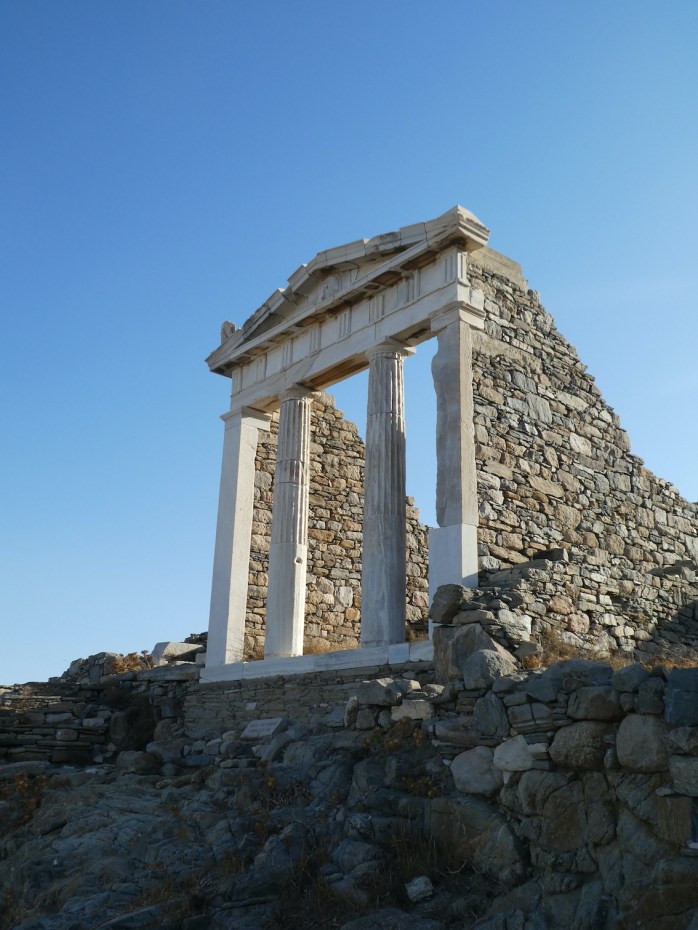
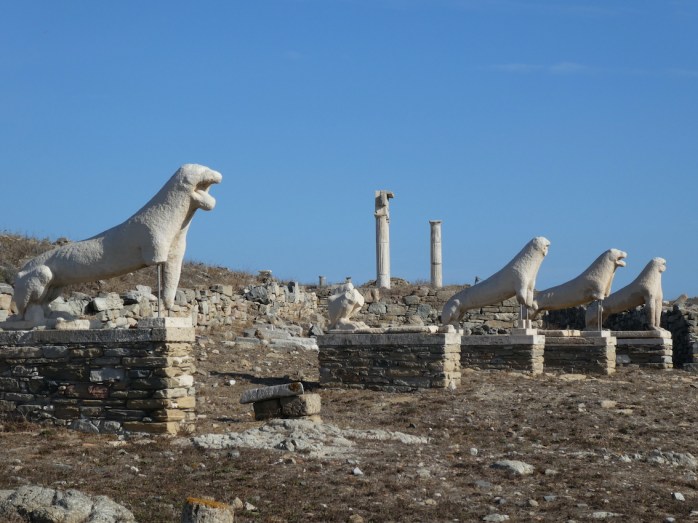

Maree, Jean & Yolene at Delos
Due to our early morning Delos visit (done with by 10:30) it meant we used the mid morning winds which had certainly built to sail the 10 nautical miles from Delos to the bottom of Mykonos Island. Our plan was to find a safe anchorage on the southern side of the island away from the mega yachts, jet ski’s and beach night clubs which are all close to Mykonos town, yet a place with a bus route which would take us to the town. We would be here a few days as the next Meltemi (high winds) were due in 2 days. This allowed us our day to explore the tourist capital which is Mykonos then hunker down on the boat when the winds came the next day/s.
We found the perfect bay at Kalo Livadi (south east of the island), where a 2 km walk would get us on the bus to town. Our day out in Mykonos was fantastic. Yes there were lots and lots of people, but the atmosphere was pleasant, the sun shining (always), the streets clean, buildings white and picture perfect – just like on the postcards and Greek tourism images, the bougainvillea’s flowering and there was ice-cream too!! We walked the waterfront known as Little Venice due to the buildings & balconies overlooking the water which splashes up onto the walkways at the restaurants, as well as the windmills on the hill overlooking the port. We explored the churches on the waterfront where there are 4 backing onto each other, basically sharing walls. Furthermore we read that there are over 1200 churches on the island, and the islands population is 12,500 – that’s 1 church for every 10 people!
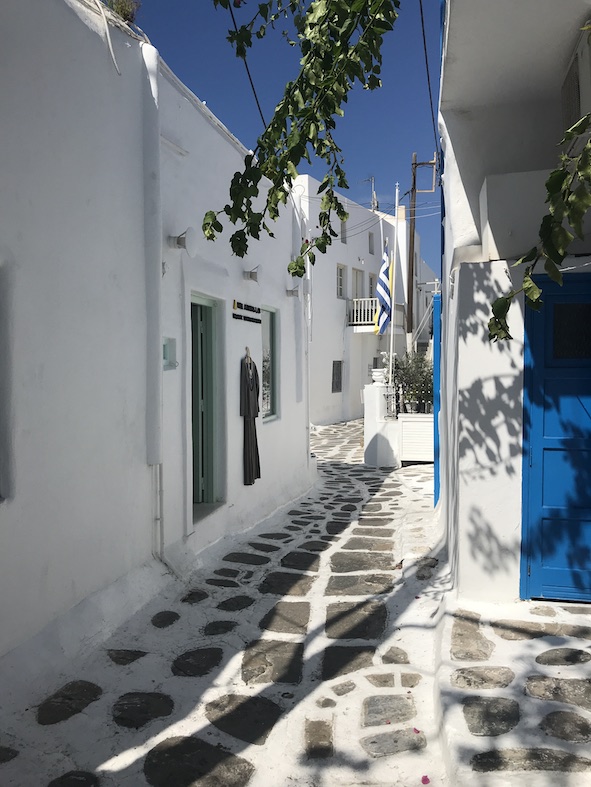
Back streets of Mykonos 
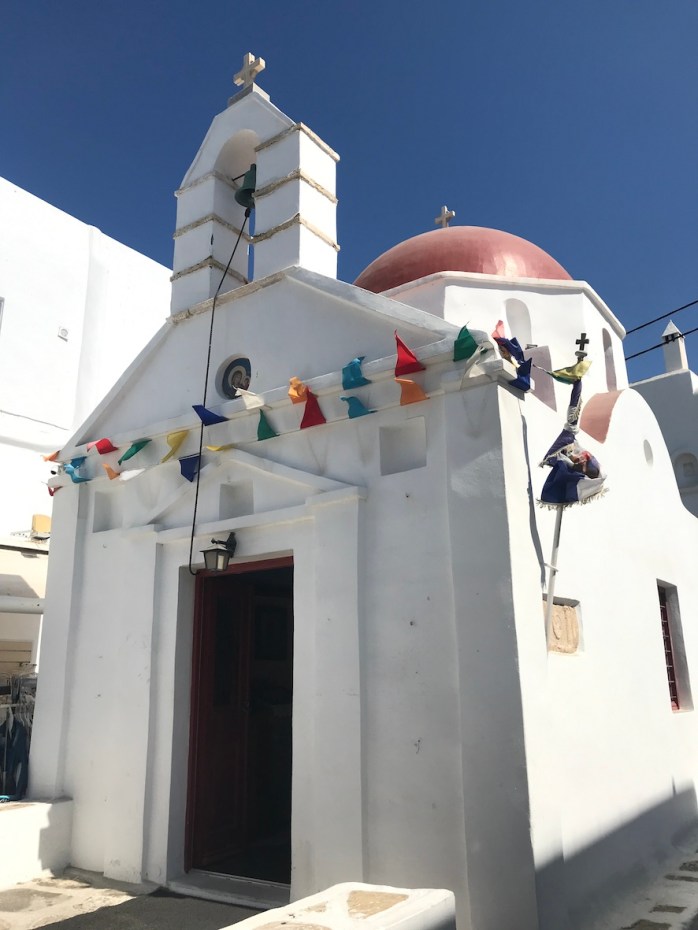
One of the famous churches on the shoreline 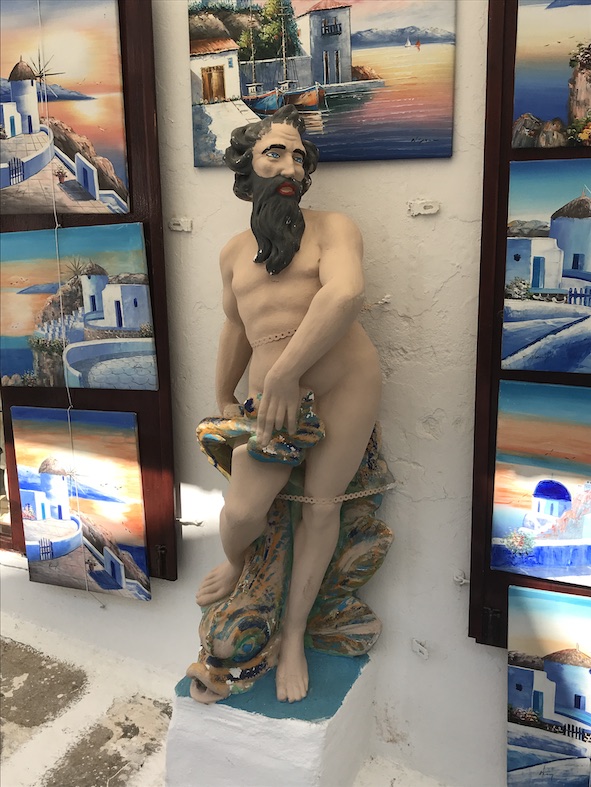

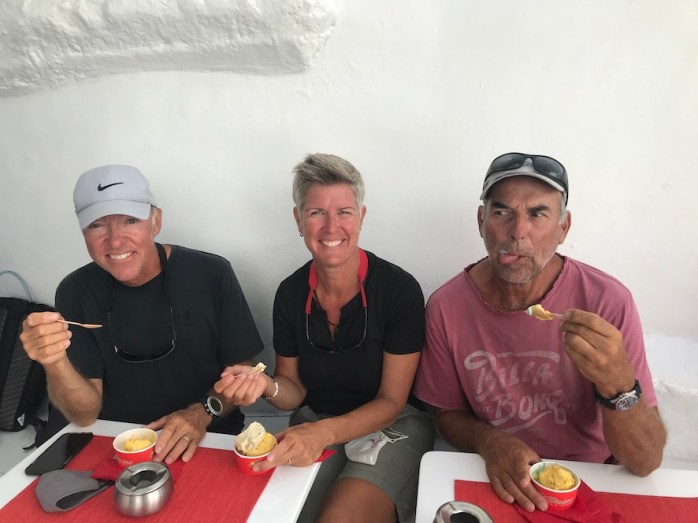
Jean, Yo & Phil enjoying the local ice-cream 
Mykonos’s famous windmills 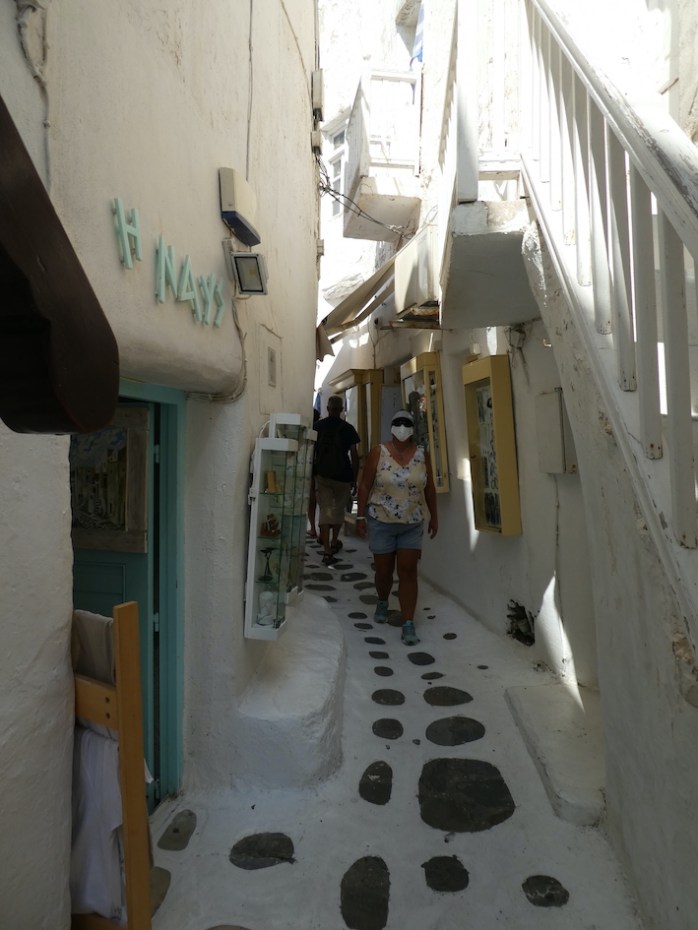
Maree in the streets of Mykonos 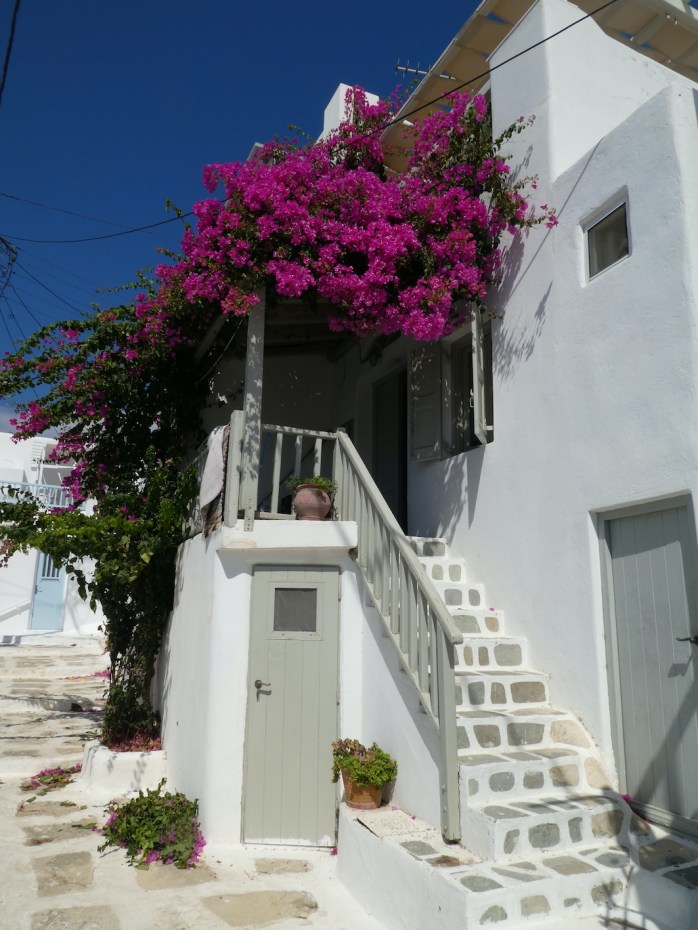
Beautiful Bougainvillea in flower everywhere 
As predicted the following day the wind arrived with force. It started late that night and continued all the following day. Which actually was a small win as we prefer the high winds during the day, when you can see everything rather than at night. We were in a good place to ride it out. We were 200 meters from the shore in about 6 meters of water so not a lot of opportunity for the waves to build up, enough roll to let us know were are on a boat in wind but nothing terrible, however the noise is always disturbing and of course there is little sleep to be had at all while it blows.
Once the wind stopped the swell rolled in meaning it was time for us to sail out. The northerly winds were welcome to take us 20 nautical miles south to the island of Naxos.
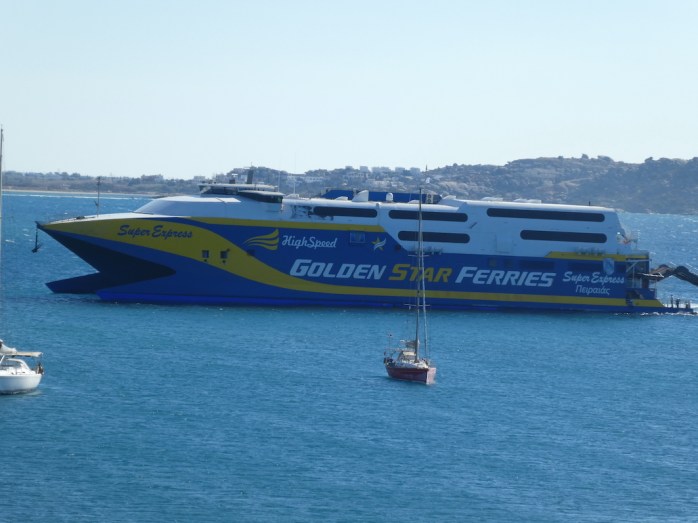
Red Roo on anchor at Naxos, with a local ferry coming into dock behind us
Naxos is the largest of the Cyclades islands (around 40km long and 30 km at its widest point) we therefore felt it was worthy of us taking a look deeper inside rather than just the harbour and surrounds. We arranged a hire car with Caffe Latte and set off the following day with a map and a long list of highlights to see. Some of our highlights were a little underwhelming and others truely magnificent. We soon learnt that Naxos island is the perfect island for anyone who enjoys hiking. Every place we stopped offered great trails from 30 mins to 5 hour hikes. Unfortunately our timing and schedule didn’t allow for us to do them, but hey, maybe next time.
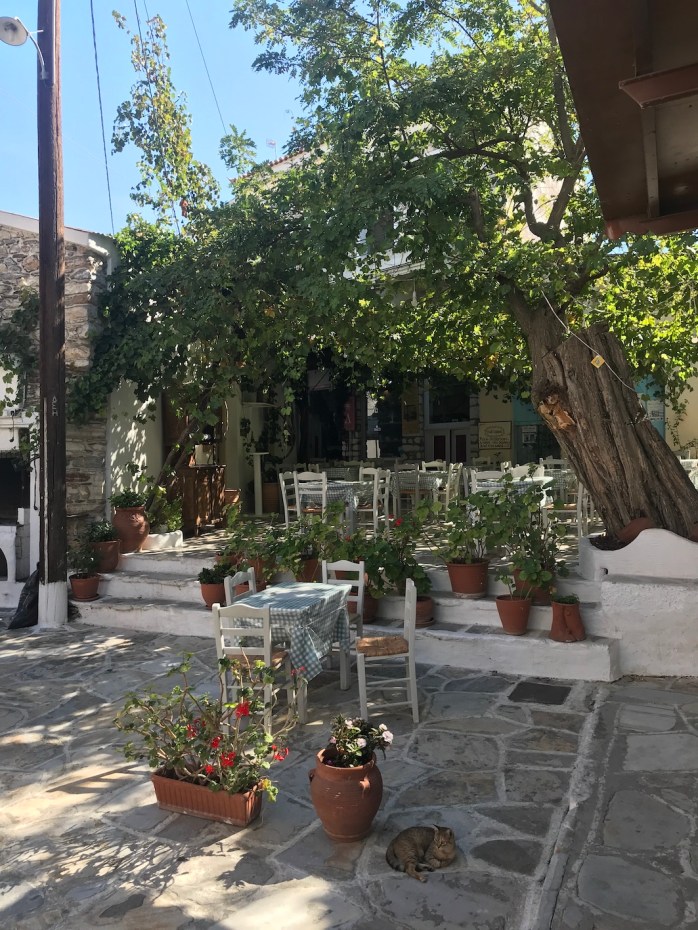
A street from one of the small villages we visited on Naxos 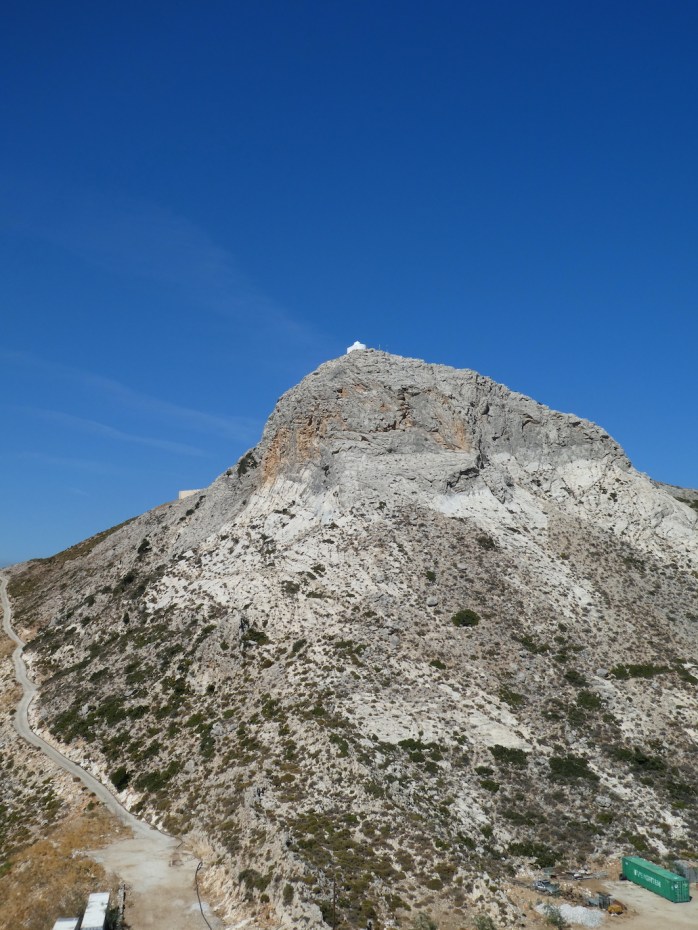
Yep, a church at the top 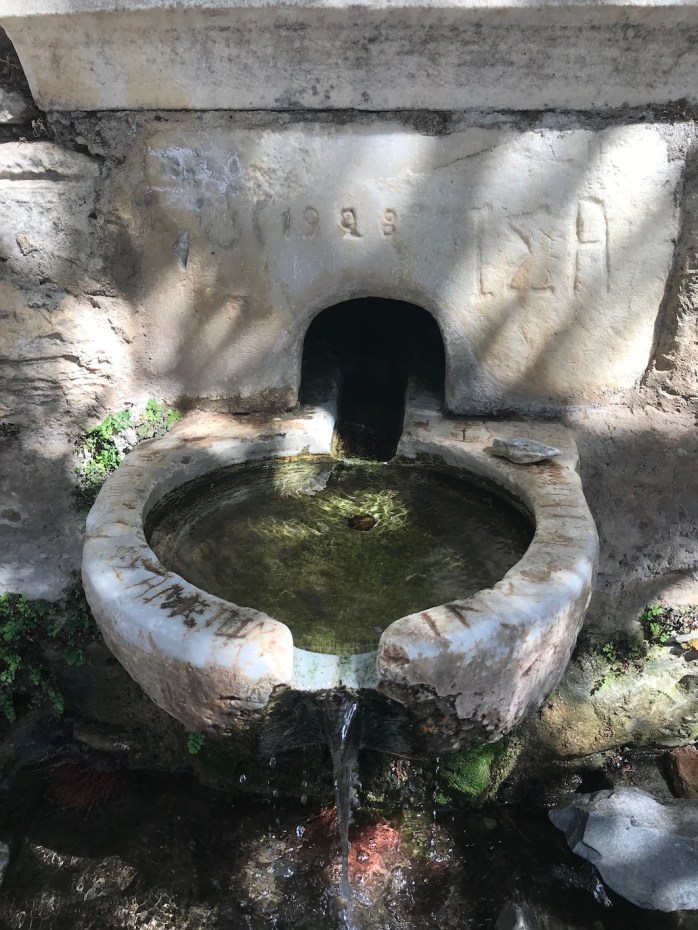
Fresh mountain spring water on one of our walks
The highlights included a visit to a Byzantine Church a 15 minute walk on the outskirts of a real authentic greek village. The church is absolutely beautiful, set amongst old olive trees, the walk to and from was also lovely, a carefully constructed stone path winding through the back streets, small farming lots was really pleasant.
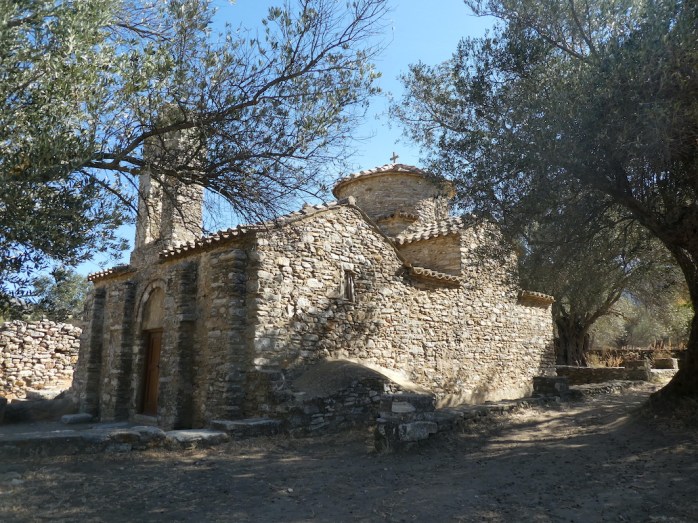
Byzantine Church
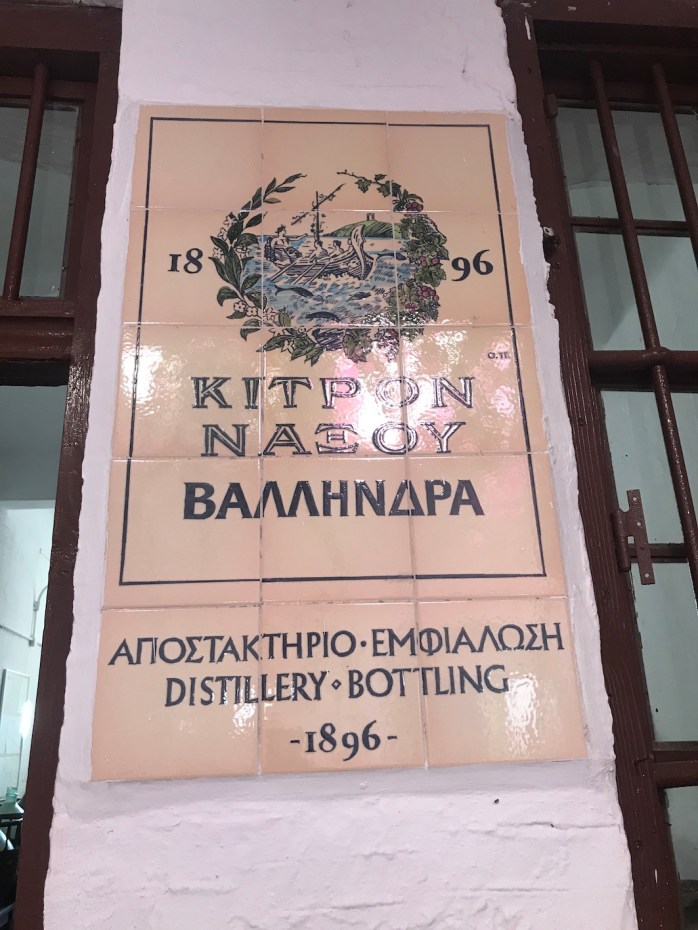
We tasted Kitron, a liquor at a unique local distillery made from the leaves of a type of almost wild lemon ‘citrus medica’. The fruit itself is barely edible in its raw state but the leaves are used to make the spirit and the result was pleasant, we enjoyed the tasting and brought ourselves a bottle.

The drive included steep mountain ranges, some with dense green vegetation and others just barren rocky landscape. We stopped for lunch on the Eastern Side of the island at Moutsouna. It was the most idyllic lunch spot ever, with a tantalising seafood menu that made it hard to decide what to order. Moutsouna used to have an Emery mines up in the hills with a cable bucket system operating to bring the minerals down to the port for export. Emery is used as an abrasive for industry and sandpapers and also for non skid surfaces.
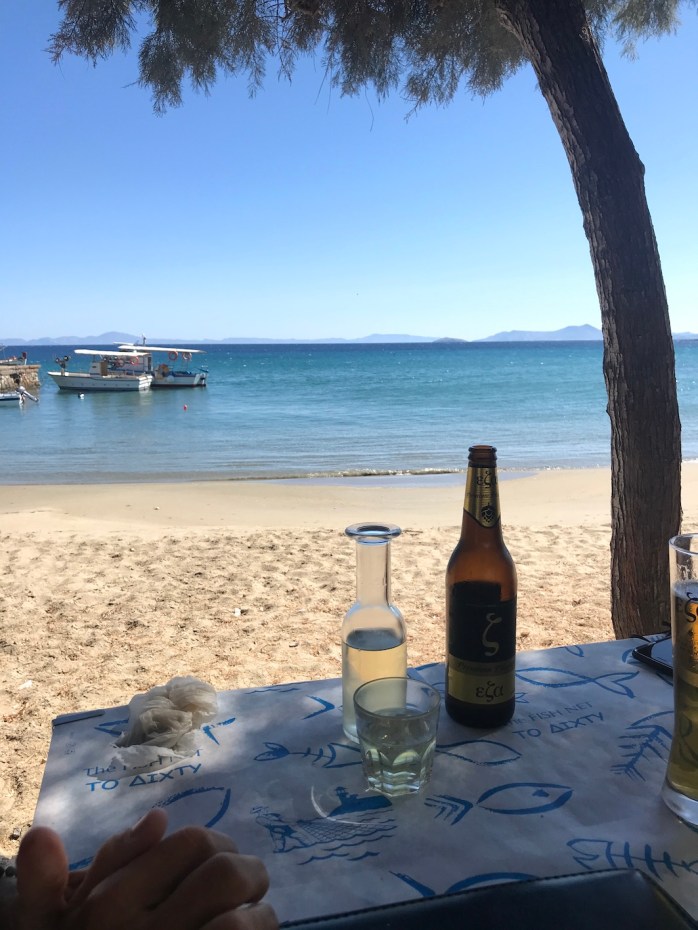
lunch stop – amazing view & food 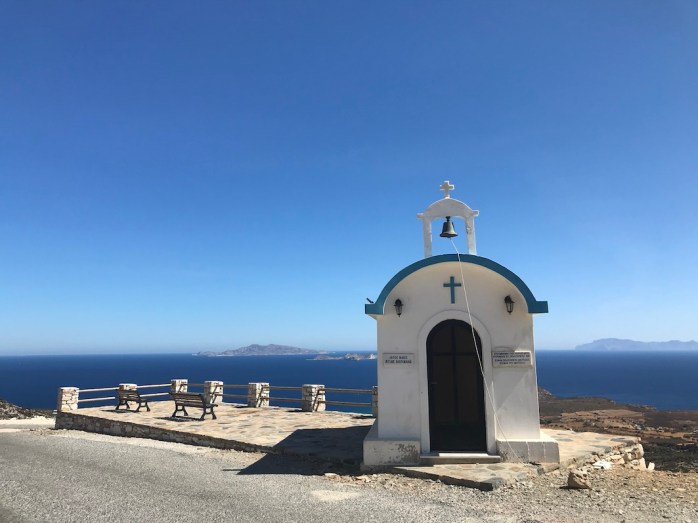

Marble is also found extensively on the island and many of the small town paths are paved in marble. Many of the towns are built on the steep hillsides and have a car park either at the top or bottom of town and access to the village and homes is purely by foot (or donkey). Have I mentioned all the steps in Greece??
We stopped at the statue of “Kouros of Apollonas” which is a 10.7 meters tall unfinished marble statue weighing 80 tonnes. This statue is laying down and it is believed to have been abandoned due to a fatal flaw (crack) which meant it would never stand without breaking.

Yolene next to the unfinished marble statue
Our observations have led us to believe that if there is a small steep island or an inaccessible rocky outlet then the Greeks have built a church on it. Not only that every town has multiple churches often at least one on every block, or if you stand on the steps of one church you are most certainly going to be able to see the cross of another one close by. They are all small (very small compared to the lavish churches in England and other European Countries), all very local, and very loved by their members. We have been more impressed by these small sincere places of worship, than by the bigger richer establishments previously seen elsewhere.
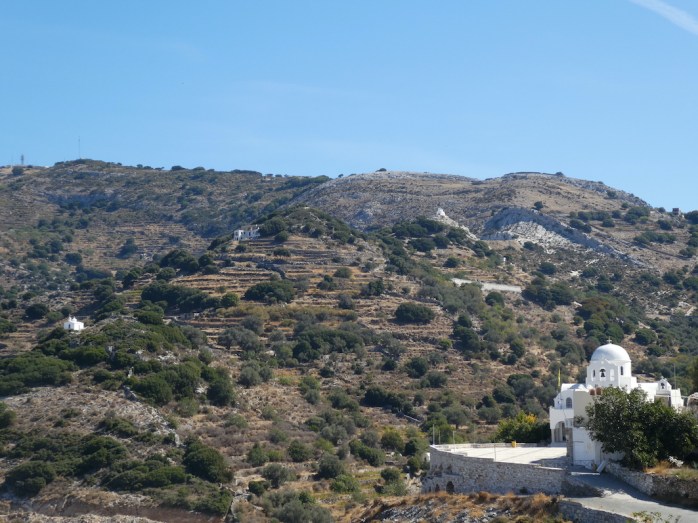
4 churches in this picture alone in the hills of Naxos
G’Day From Greece
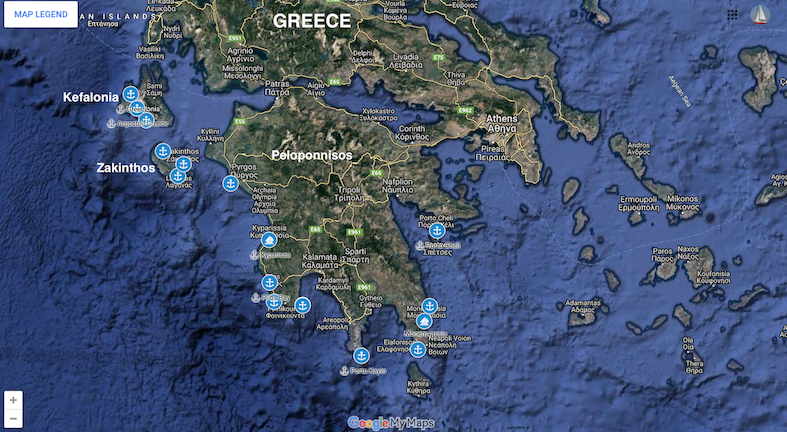
Zakinthos and Kefalonia Islands and the Pelopónnisos Peninsula – Greece
Arriving in Greece after a 49 hour sail from Sicily we anchored in the crystal clear waters off Kerri on the southern end of the island of Zakinthos. We packed up and tidied the boat after the sail, had a swim and a sleep and rested for what was left of the day. Our first item on the agenda the following day was to check into the country but it was now Saturday and the officials were closed for the weekend so this would have to wait until Monday. We spent the day relaxing in the lovely big bay and did a sneaky dinghy trip to shore at Kerri and enjoyed our first taste of Greece a gyros!!
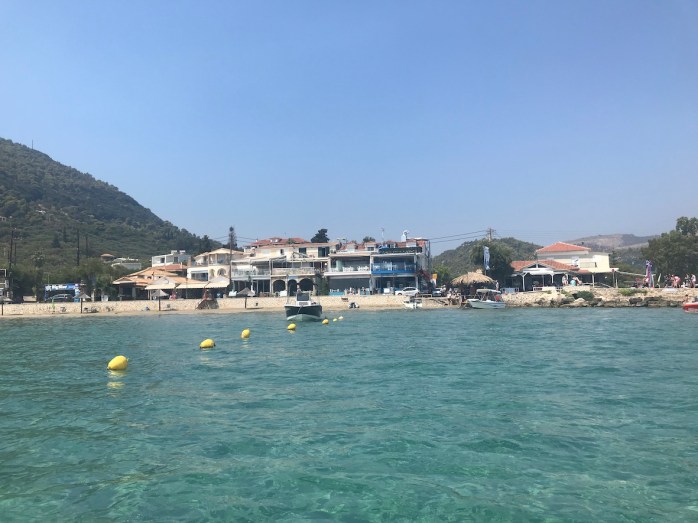
Going to shore at Kerri, first landfall in Greece

Sunday we raised anchor and made our way 16 nautical miles North to the town of Zante where we could check in the following morning. It took 3 hours to complete the required official visits and documentation having to visit both the Port Police and Customs then back to the Port Police again but alas it was done without issues. We had all our documentation in order, documents required for check in were; TEAPI payment receipt (Greek cruising tax), passports, covid vaccination certificates, Greek crew list, boat insurance (in Greek), boat registration, and now we also have a Greek transit log to carry with us and get stamped in each major port.

The Zakinthos Coast 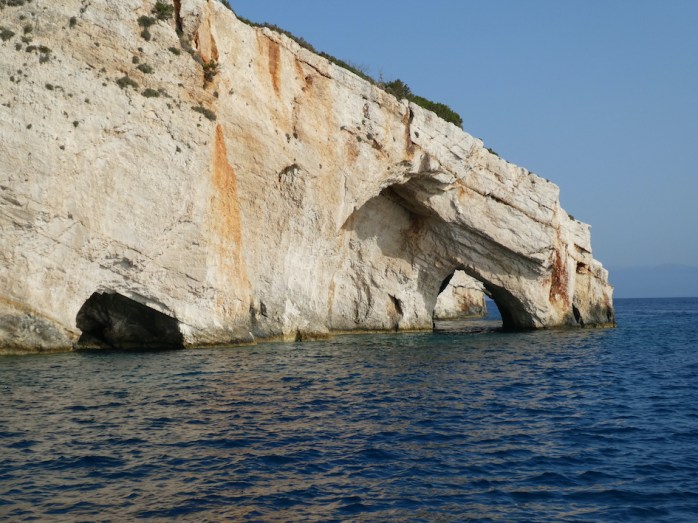
Caves 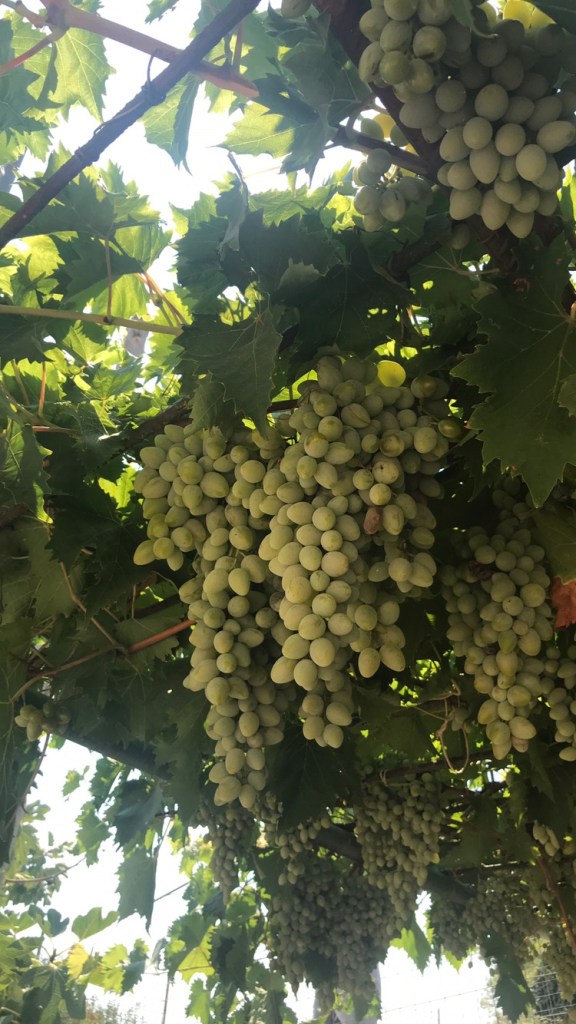
Greek Grapes 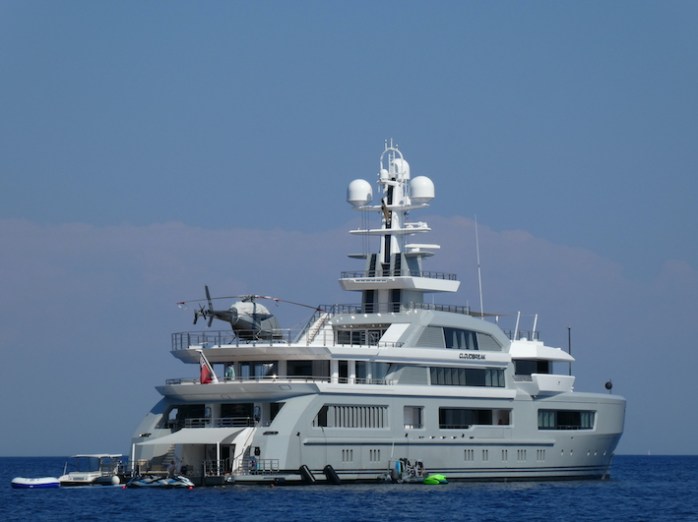
Sharing the anchorages with weekend boats –
complete with helicopter
We headed Red Roo north sailing to the island of Kefalonia and anchored at Argostoli. This is a very attractive little town, all set up for the summer season accomodating both international tourists, cruisers in yachts like us, and locals on summer vacation. We also shared the anchorage with many local turtles!
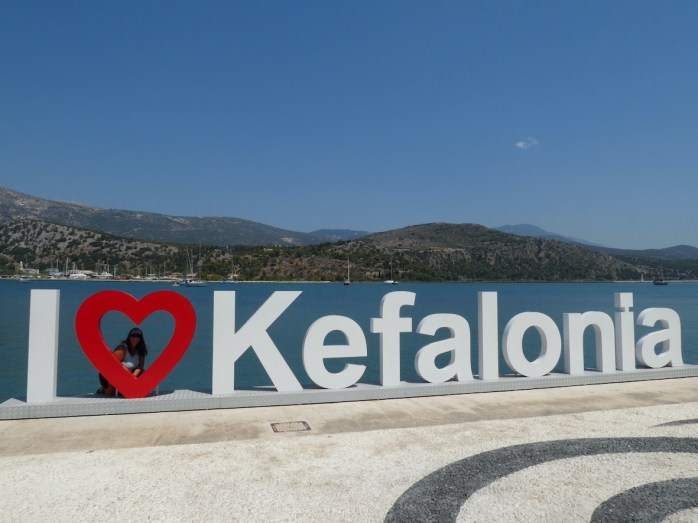
Red Roo on anchor above the ‘e’ 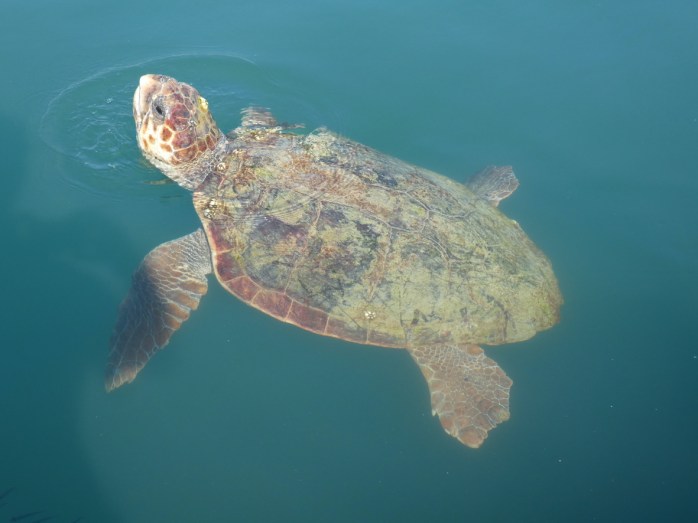
The locals in the water
We met up with the crews from Tartuga and Pharea (whom we met in Tunisia over the winter and saw again in Malta) as well as Caffe Latte and walked over the hill to a wonderful little beach bar on the other side and enjoyed a fantastic afternoon/evening together.
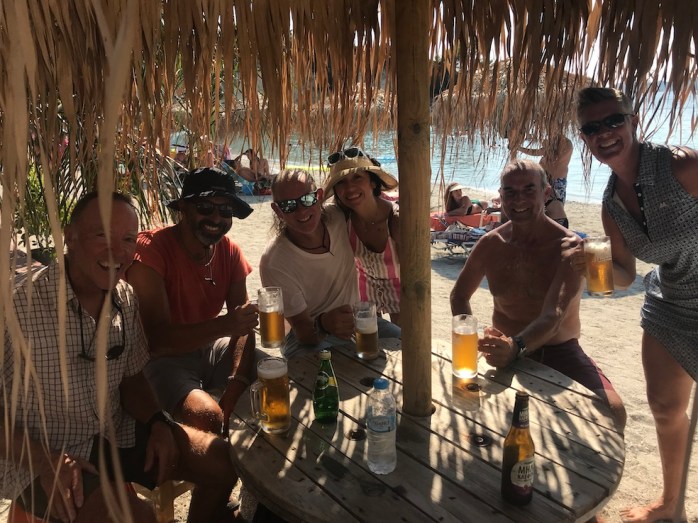
Left to Right: Jean, Renato, Andy, Karina, Phil & Yolene enjoying the beach bar and beers!
Having evaluated the weather forecast for the following few days it made sense to take a bus ride to the north of the island as it wouldn’t be suitable to sail and anchor. It was a great day out, travelling through the mountains to each of the major towns on the island and ending up at Fiskardo for 4 hours before returning on the bus back to Red Roo.
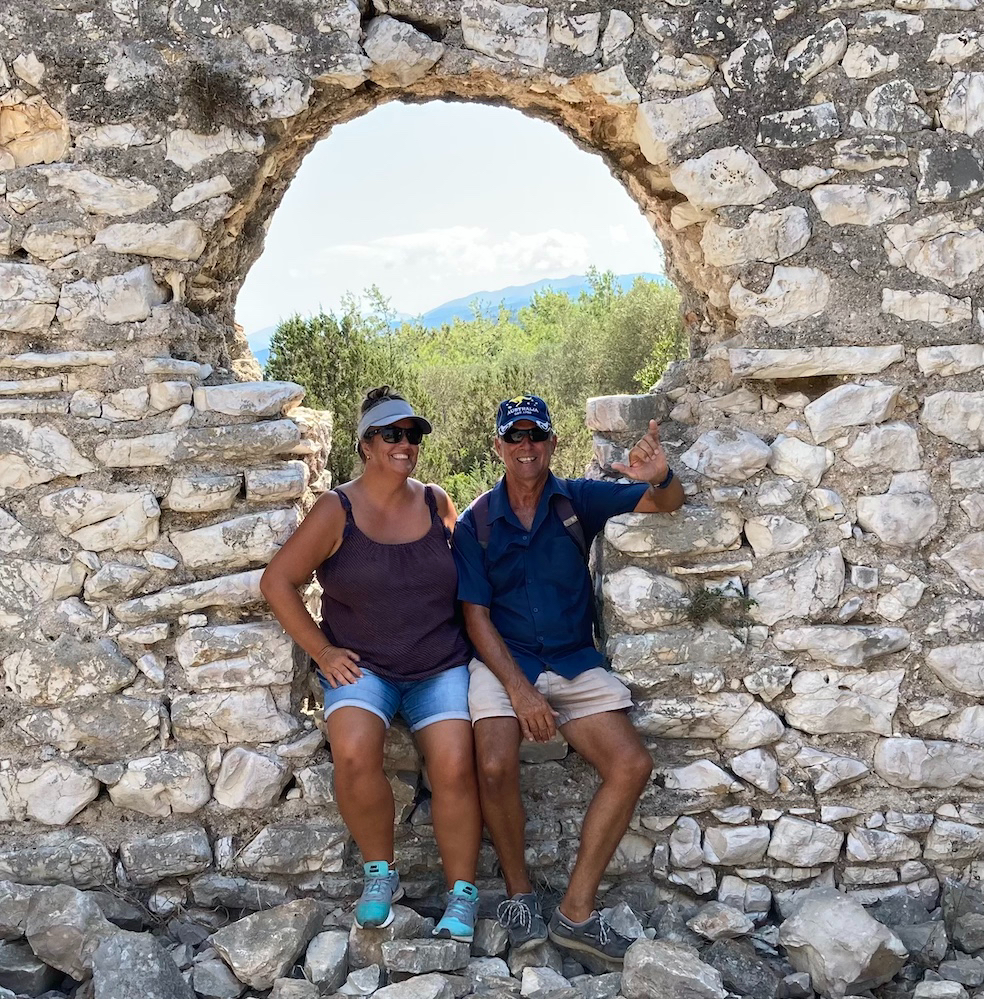

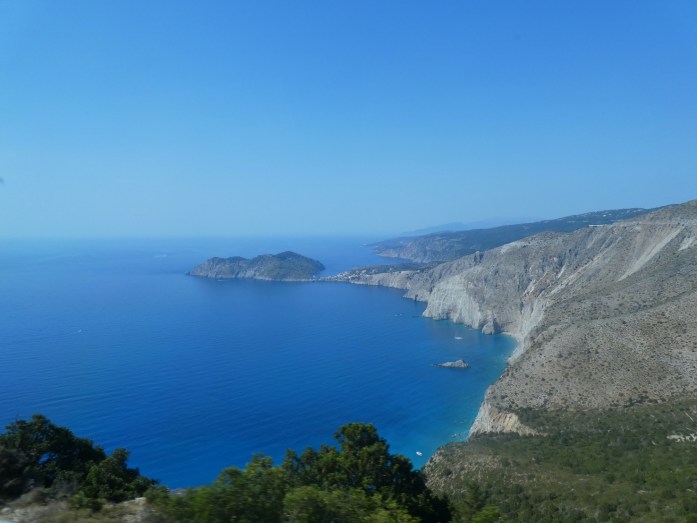
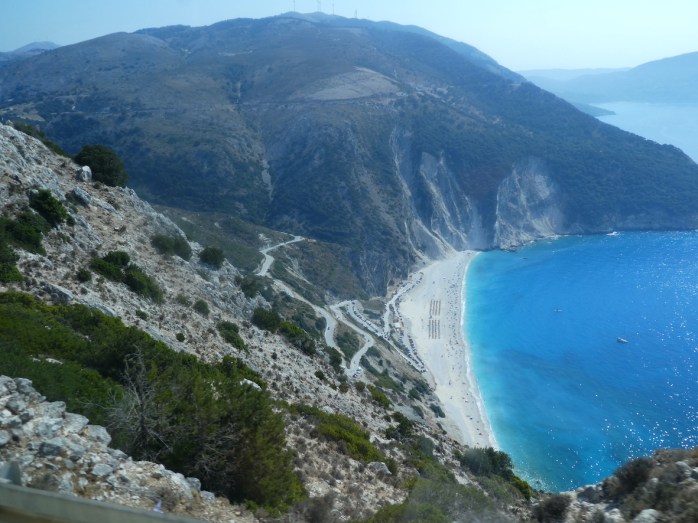
It was time to start making progress sailing in Greece and travelling south, we planned to sail around the coast of the Pelopónnisos Peninsula to the Aegean sea and then visit some of the many Greek Islands between there and Turkey.
Our first stop on the Pelopónnisos was to anchor at Katakolo about 30km from Olympia – the birthplace of the Olympic Games and we couldn’t wait to hire a car with the crews from Sweetie and Caffe Latte and head off to explore this very historic place.
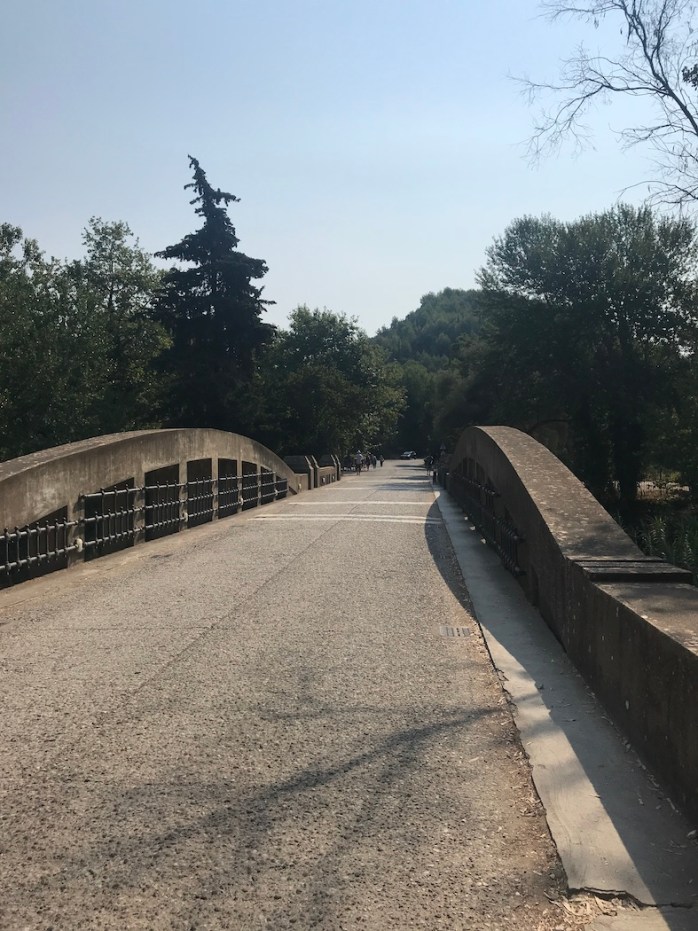
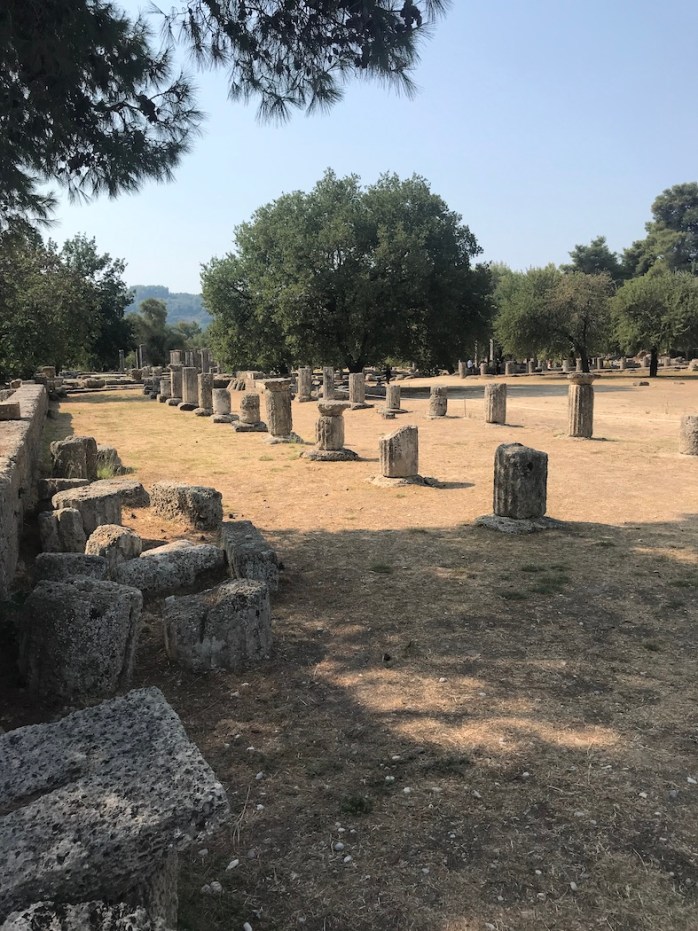
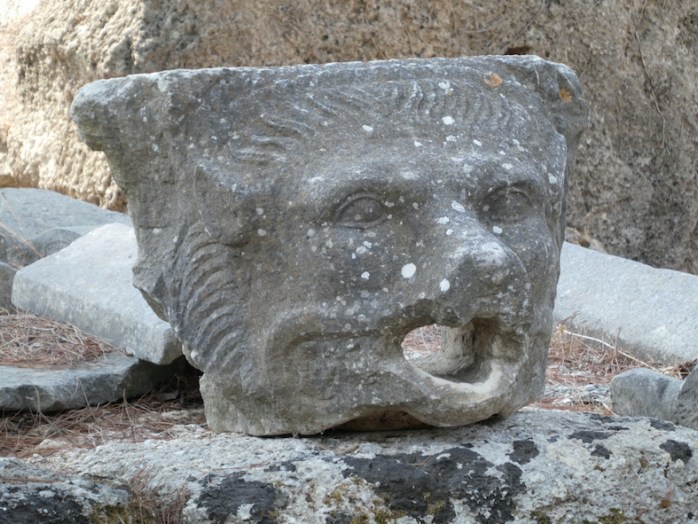
Olympia was originally a sanctuary dedicated to Zeus (a Greek God). The first games were conducted in his name as part of a religious festival and took place here in 776 BC (wow – just wow!) and the last games to be held on the site were in 392 AD.
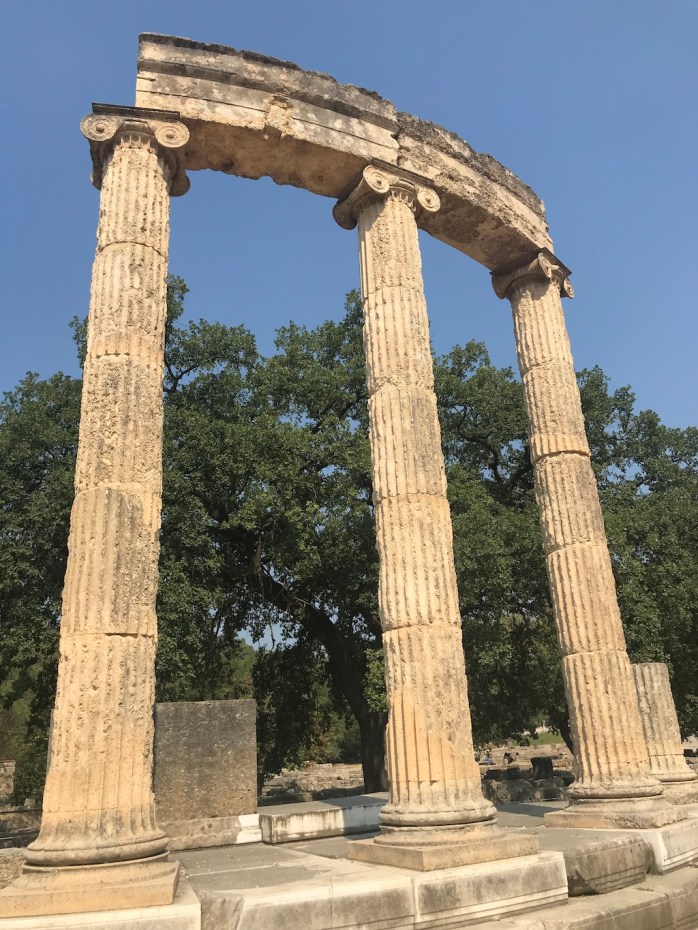
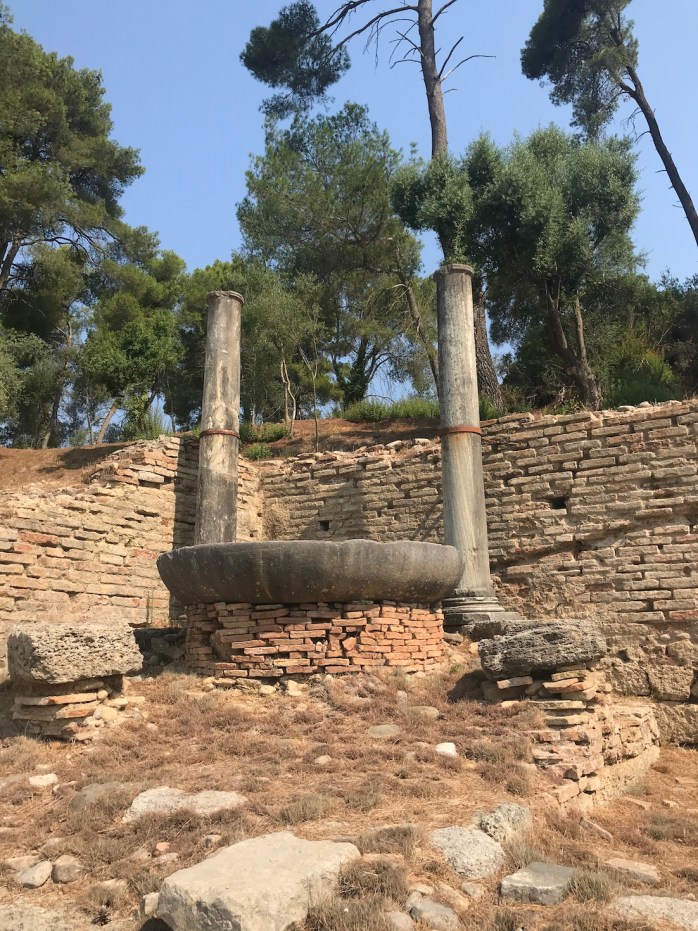
Where the flame was kept, and is still lit from for the Olympics today.
One month before each games and for two months after there was a holy truce that halted any wars in progress allowing for safe passage to and from the games and for many to participate.

The entry tunnel to the Olympic Arena 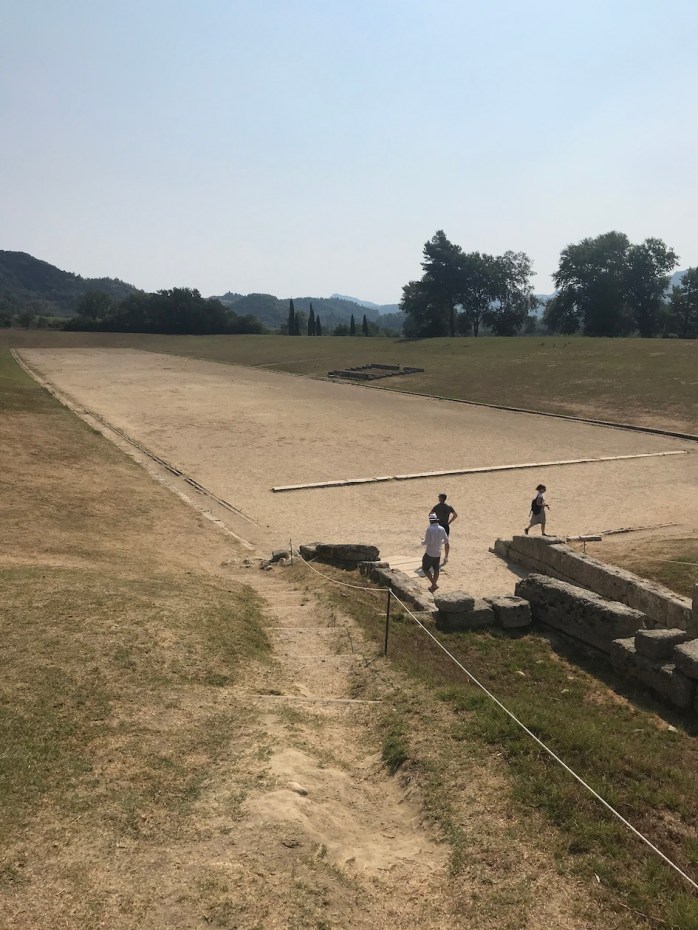
The original Olympic Arena
Participation in the games was only for men (and later boys) and all participants had to be Greek, free (not a slave) and be born of free parents.
Females were not allowed to participate and were also not even able to enter the site to watch.
The games began with just the one event the 200 m race and over the years increased to 15 events.

Of course we had to create our own Olympic event – Australia v’s USA & Canada 
AND OF COURSE, Australia won easily!
Some random interesting facts we learnt were that there were running races (nude), and also running races in full armour (tough!). The javelin was originally thrown using a leather rope sling from the middle of the pole. Participants in the long jump used to carry rocks and as they took their final step to launch into the jump, they would release the rocks (thrown them behind themselves) in an effort to propel them forwards.
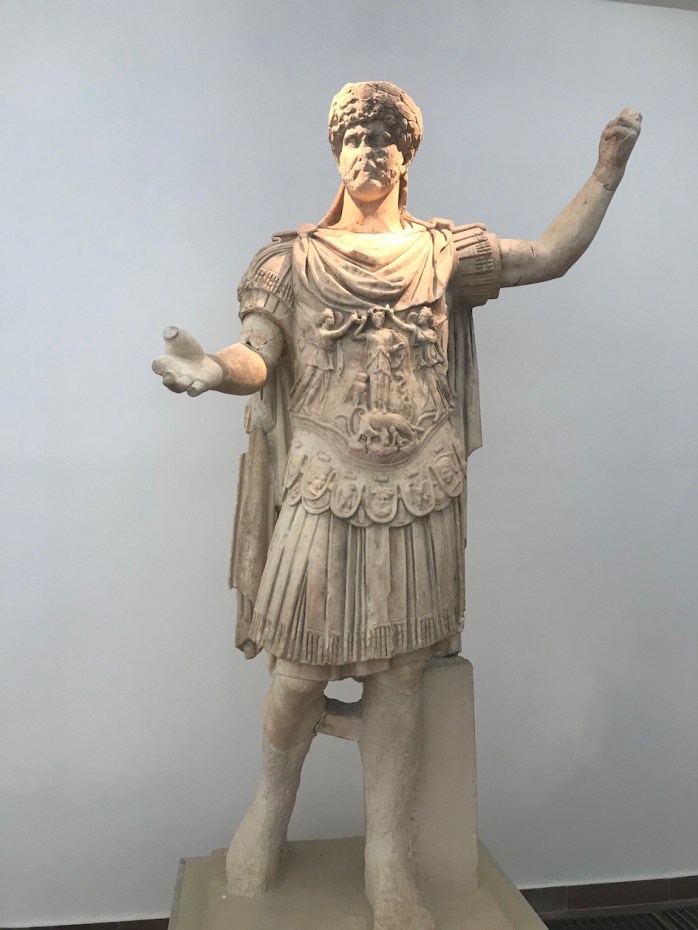
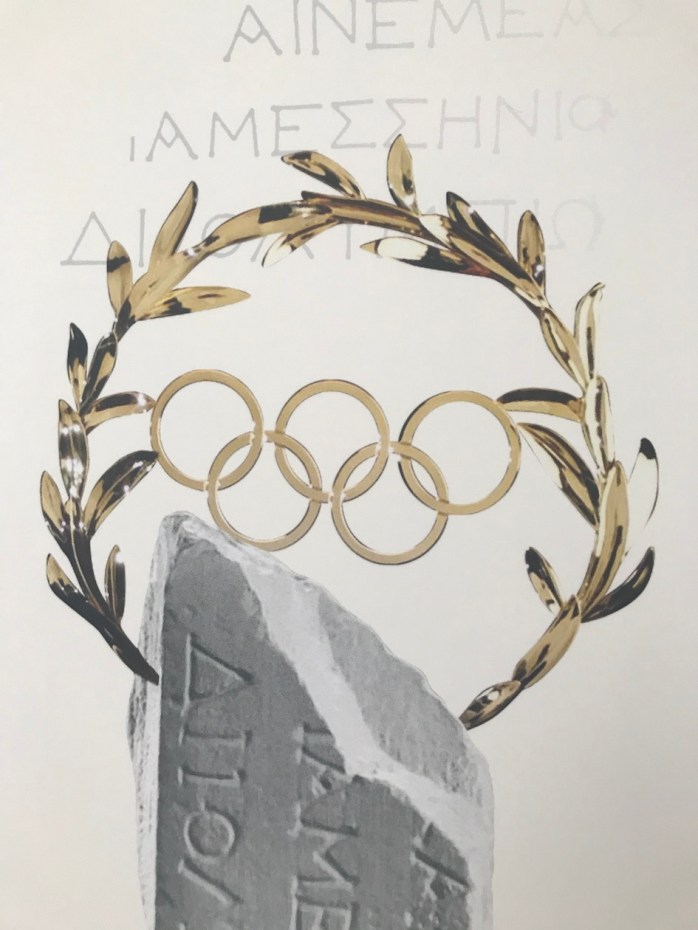
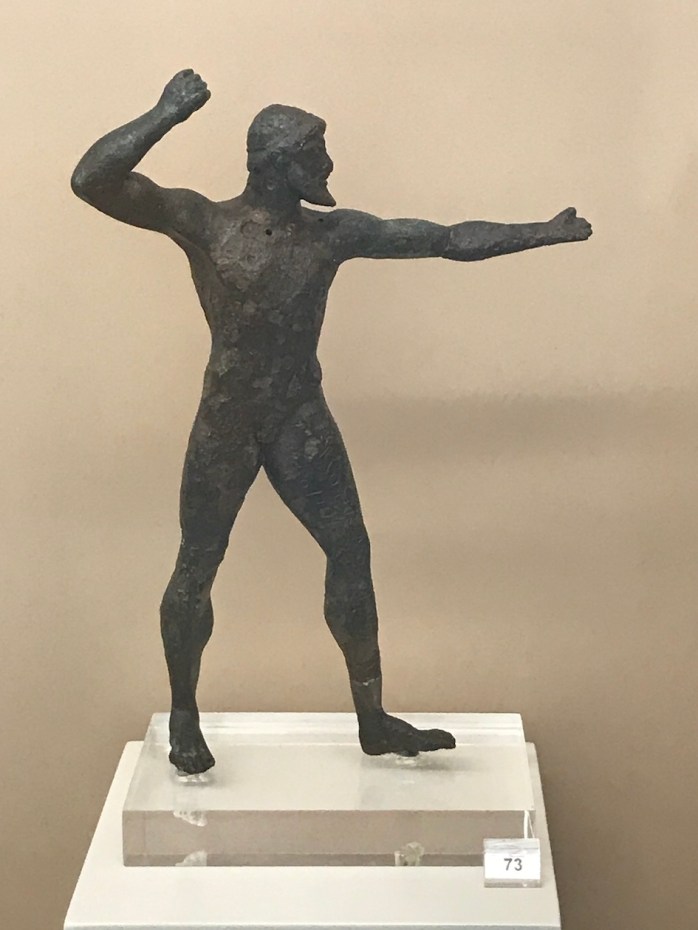
The site held over 70 significant buildings, and today although they are now ruins (and considering their age) yet are still easily recognisable for what they were. We had a fantastic day exploring the site and museums, it really is a wonderful place and a real privilege to be able to visit.
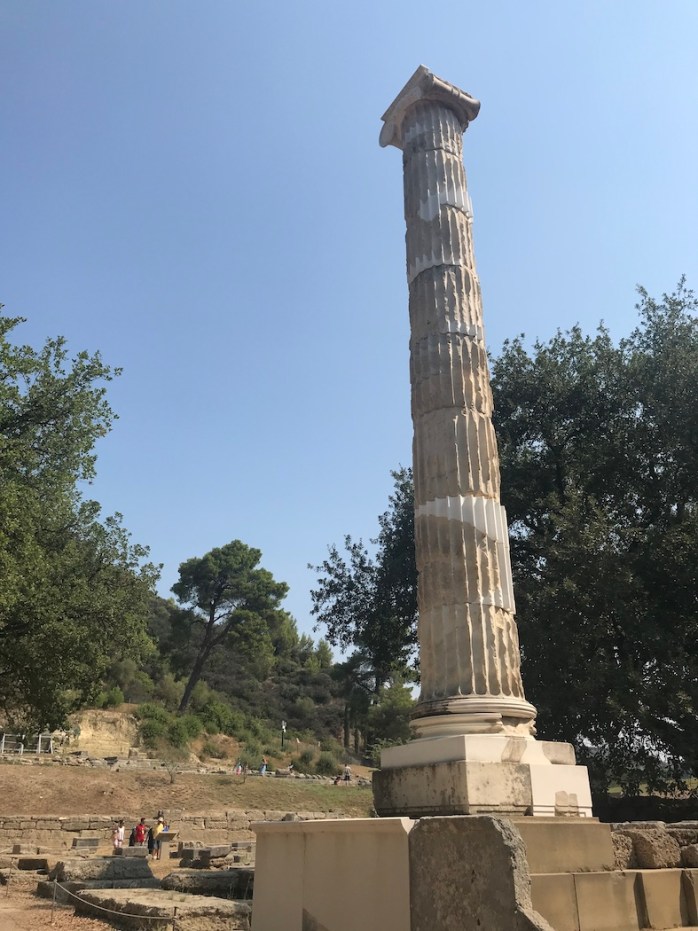


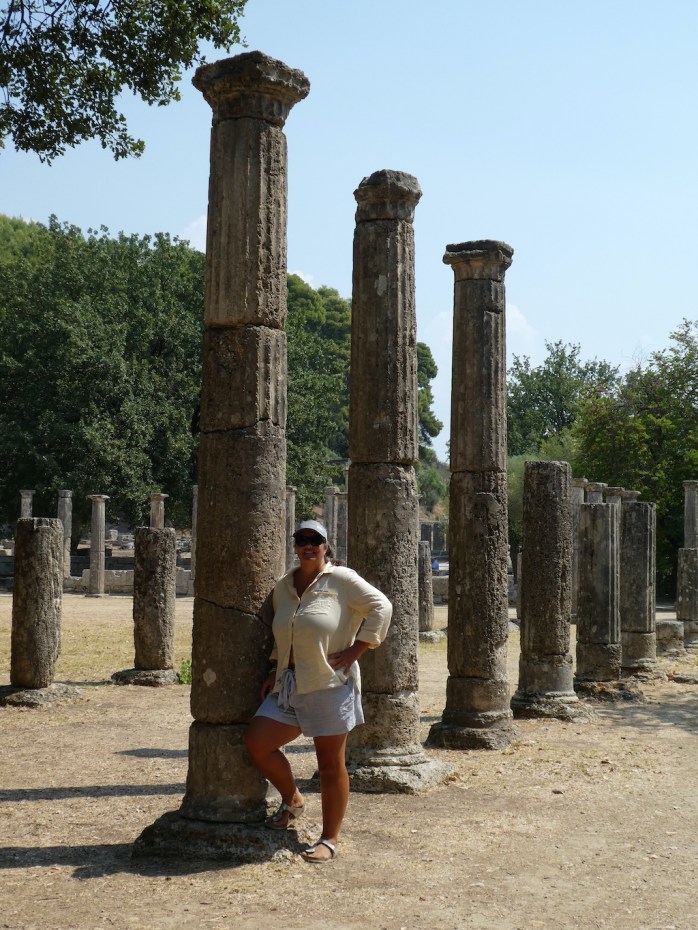
From there we sailed south and our next 4 stops; Kyparissia, Pilos, Methoni & Koroni all lovely small towns with castles to explore.
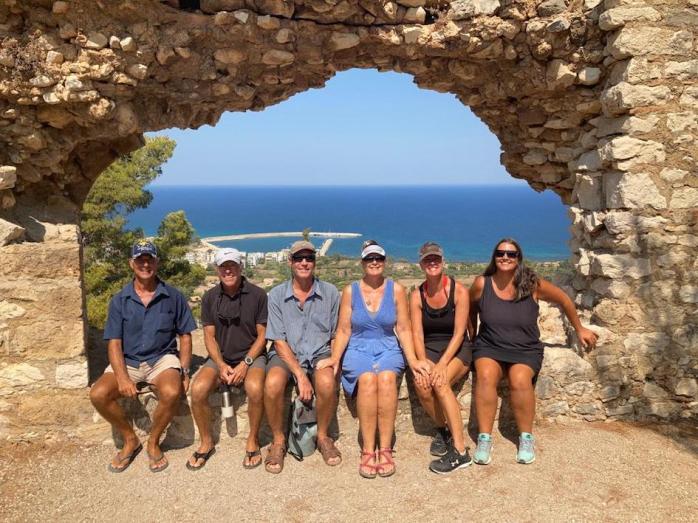
The Kyparissia Castle 
Jean, Maree & Yolene

Hair cut time, Yolene giving Maree a well needed trim and style 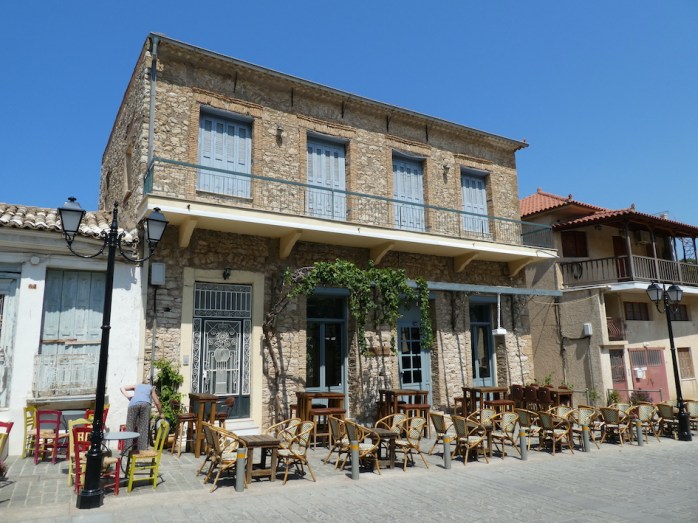
Greek Street Scene 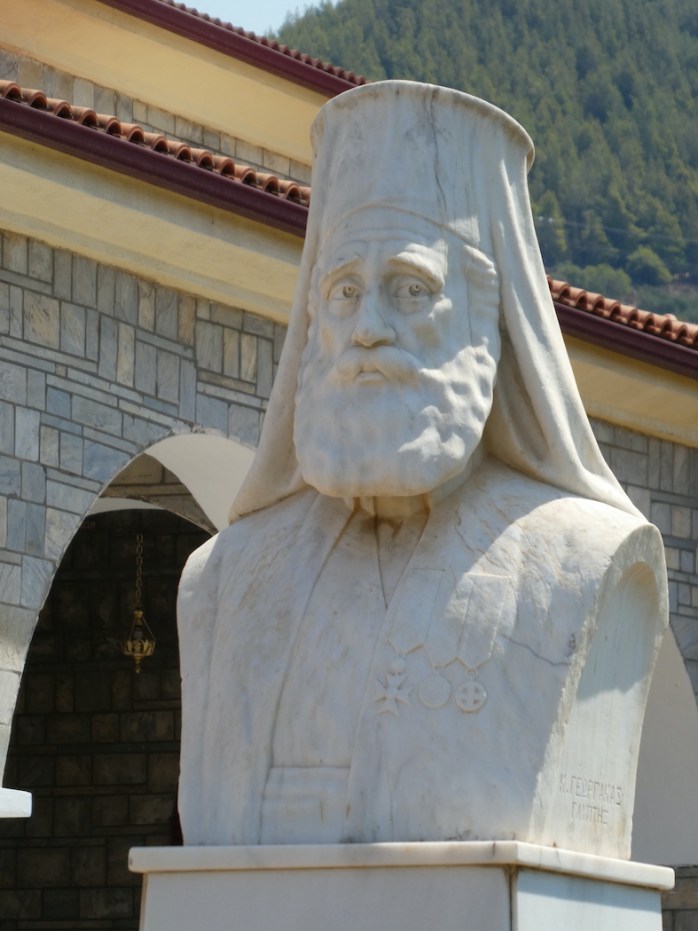
Statues outside the Church, many are similar (not sure if it is the same guy each time?)
On our walks we also take the opportunity to forage, so far in Greece we have enjoyed figs (lots of figs), grapes, lemons, mint and basil all either on the sides of the road, or from tree’s hanging over fences, we are looking forward to the pomegranate which we are seeing plenty off but isn’t quite ripe yet!
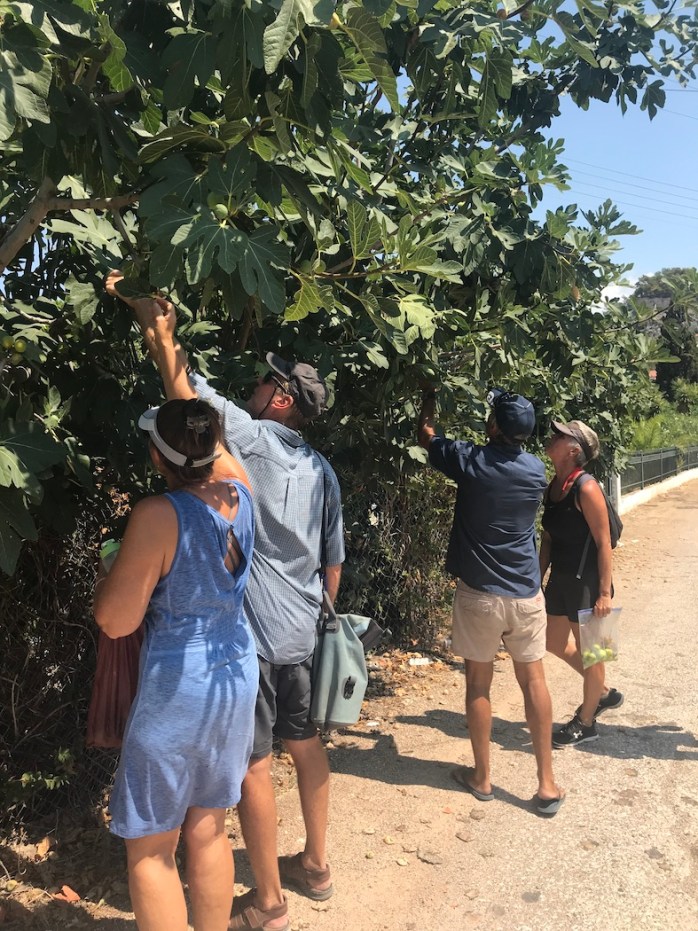
Foraging for Figs
We are really enjoying the smaller little villages which we have discovered that of an evening shut the streets to cars and bring the dining tables outside to eat in the street.
We are also boosting the Greek economy one ice cream at a time, eating a lot of them – its hot!
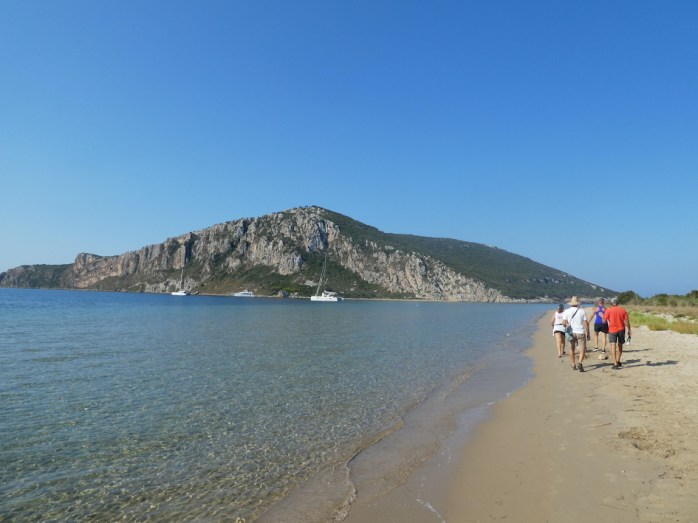
Pilos 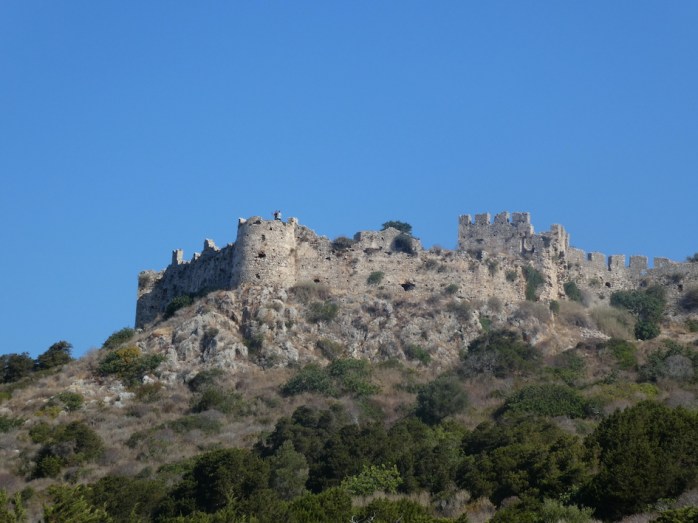
The hike to the Castle 
The view from the Castle
The sailing has been really enjoyable, with a bit of everything wind wise to date. We have found the weather pattern is currently little to no wind in the mornings then building to enough wind to sail in the afternoons. This suits our plans as it is very easy to enjoy a morning walk or do a few jobs before moving an easy 10-30 nautical miles in the afternoon to a new location without making it an all day affair.
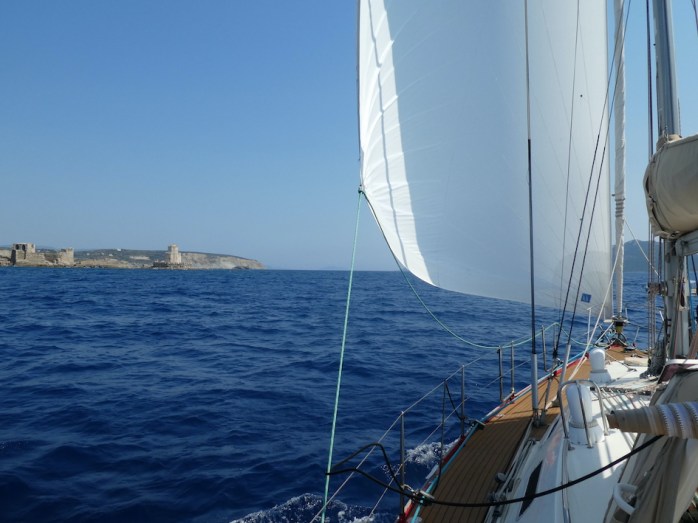
Sailing into Methoni 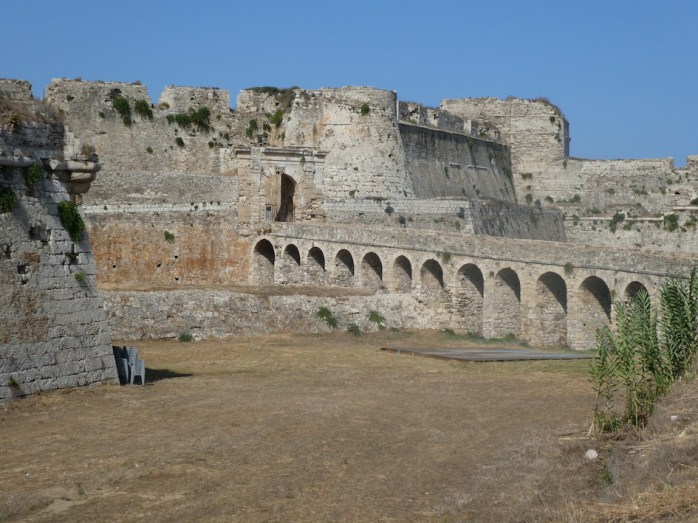
The Methoni Castle 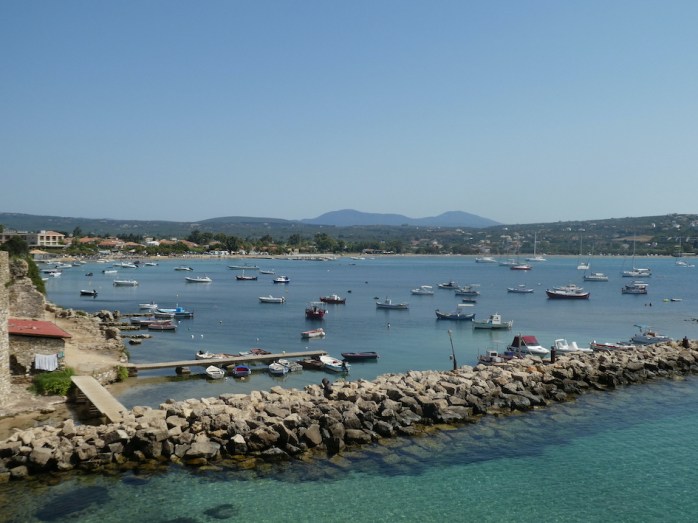
The Methoni Anchorage

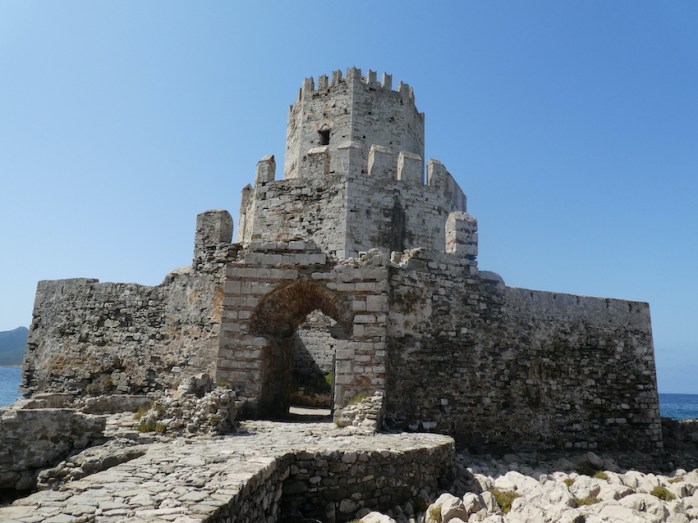
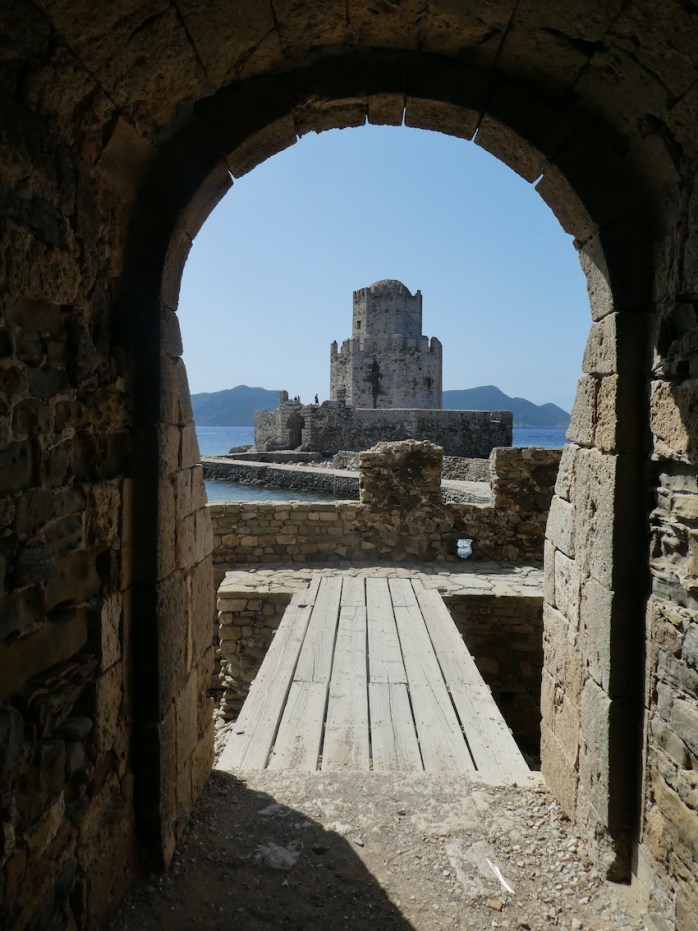
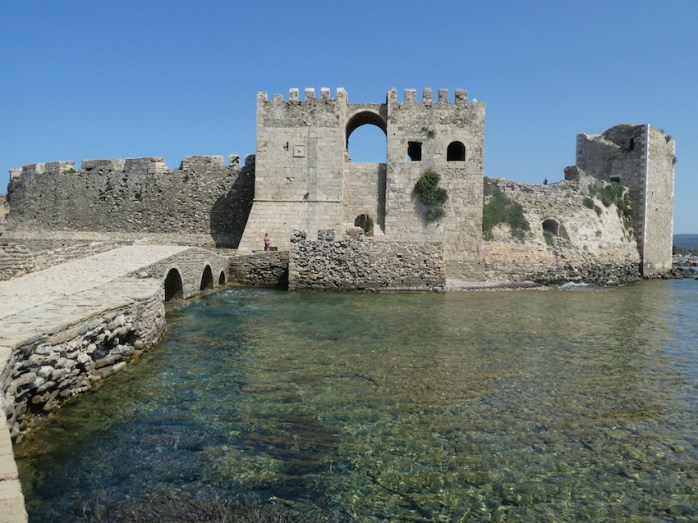
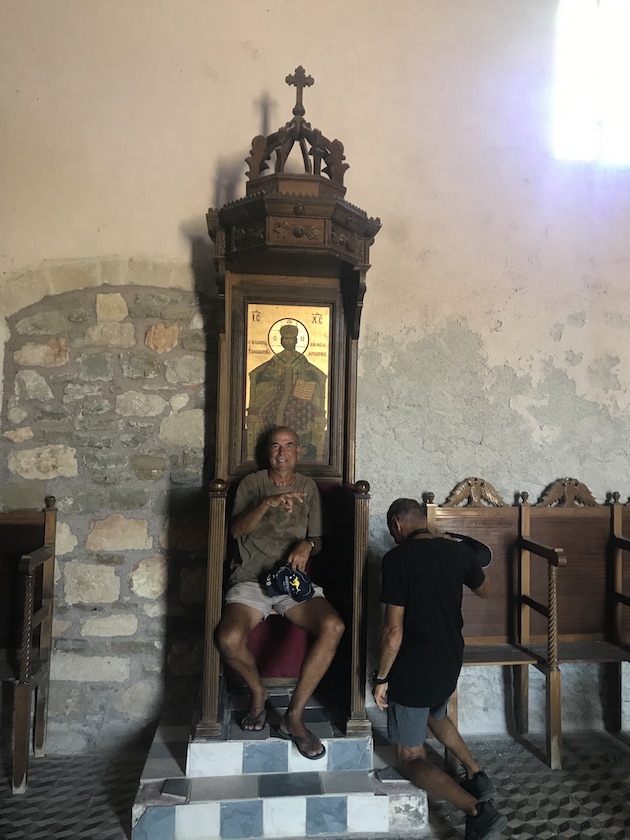
Jean taking confession to Phil at the castle church 
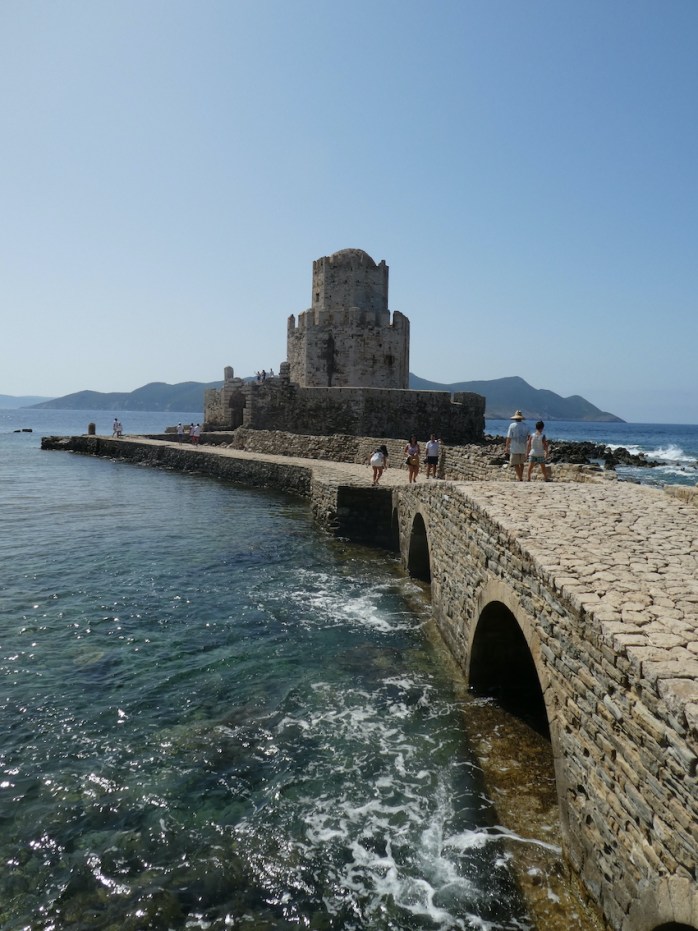
It is also really enjoyable travelling with two other boats (Caffe Latte – Canada and Sweetie – USA), it makes it a little exciting and competitive, as it is ALWAYS a race, even though we all have very different boats which makes the outcome different each time depending on the conditions.

Koroni Anchorage 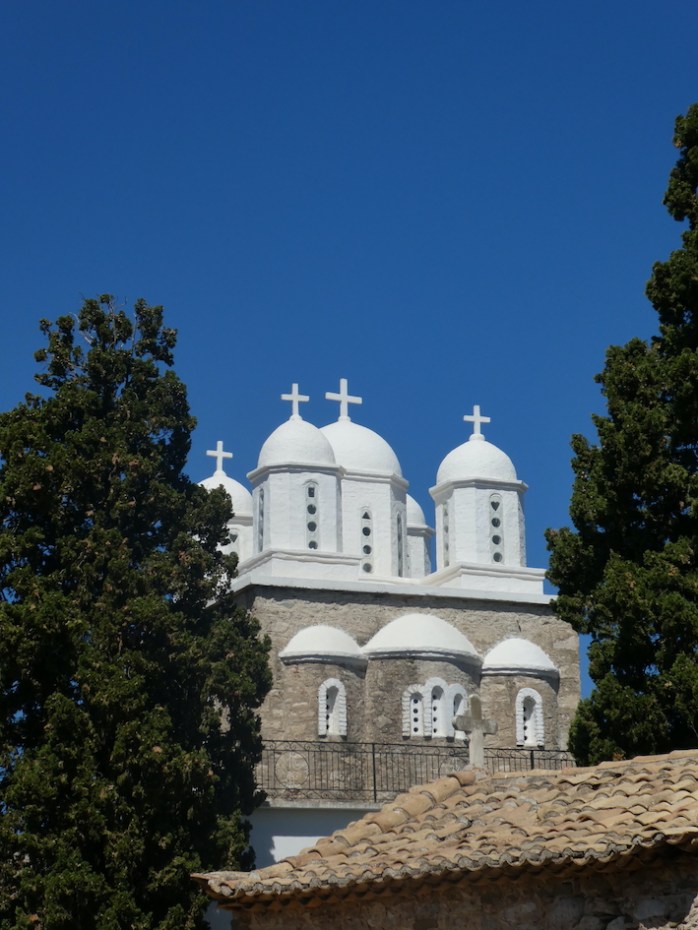
Church at the Koroni Castle 
The Bell 
Beautiful Gardens in the Castle Grounds 
More Churches at Koroni Castle
The light winds (and the friendly competition) has pushed us to use the spinnaker sail for the first time. A spinnaker sail is a very very big very very lightweight material sail that is flown on the bow (pointy end of the front of the boat) for sailing in light winds. It’s quite the effort to set up but it is really worth it. We had a great sail, with great speeds in light wind and look forward to using it more often now we finally have it out (from deep storage) and can remember how to rig it up to fly it.
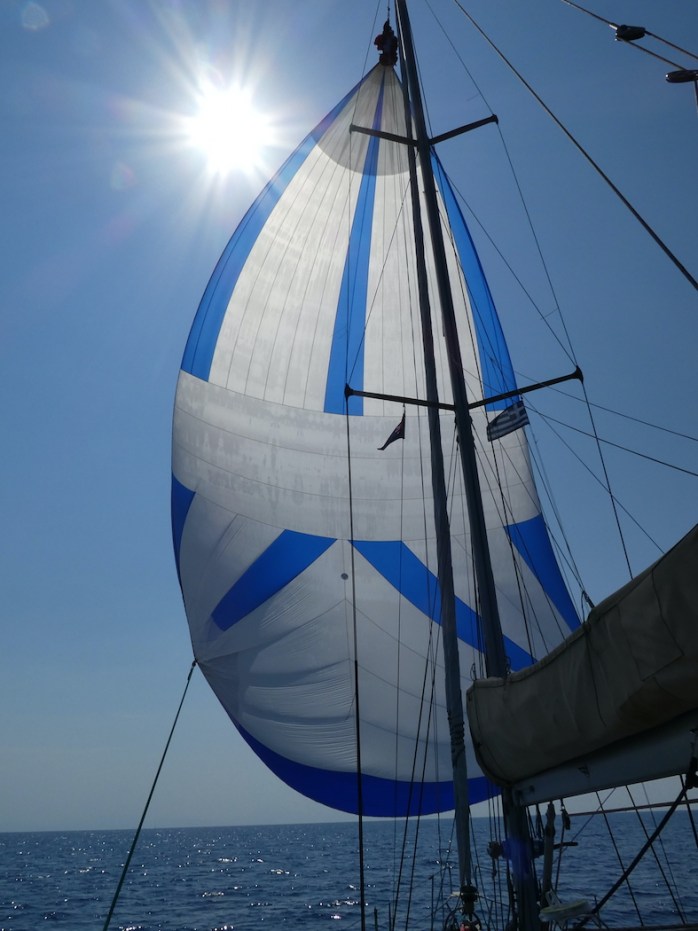
Flying the spinnaker for the first time on Red Roo 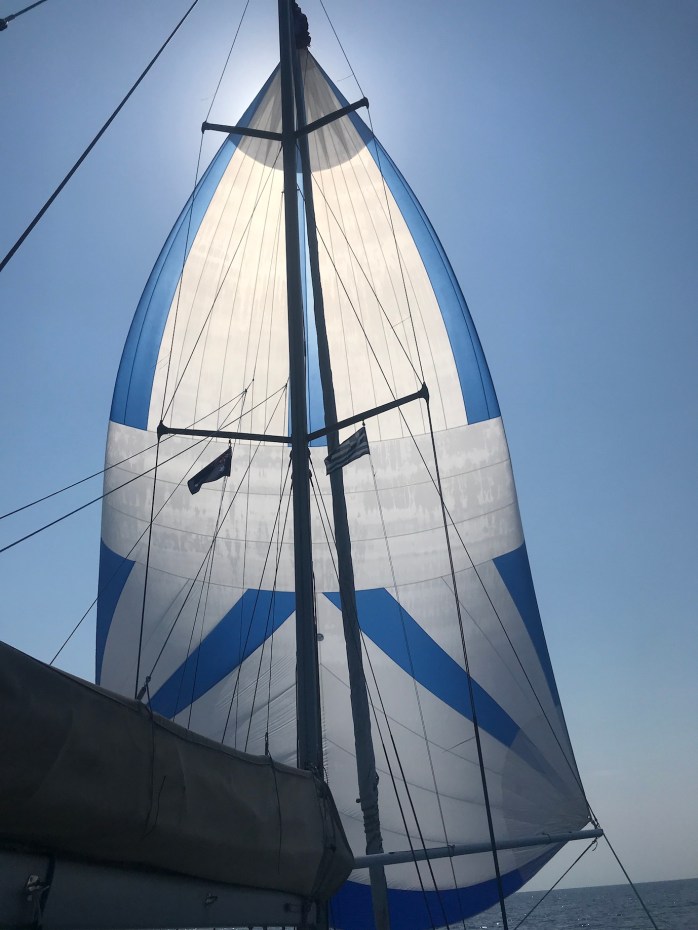
We have also had a couple of days of heavy downwind sailing in medium/heavy seas. We both enjoy downwind sailing, despite the big swell as Red Roo is very stable and sits well making good speed.
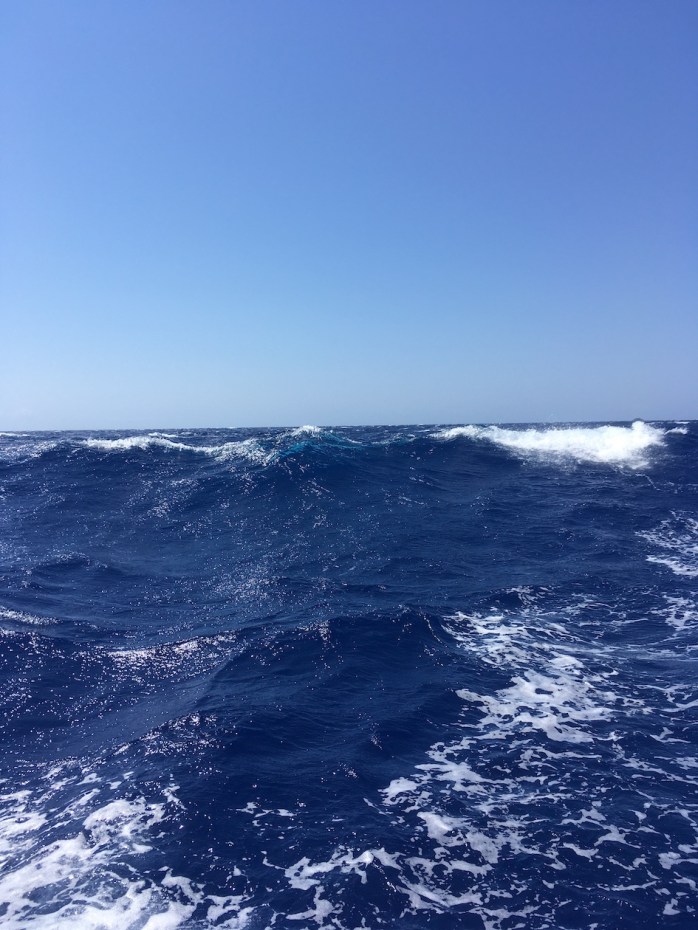
Down Wind Sailing with Big Swell 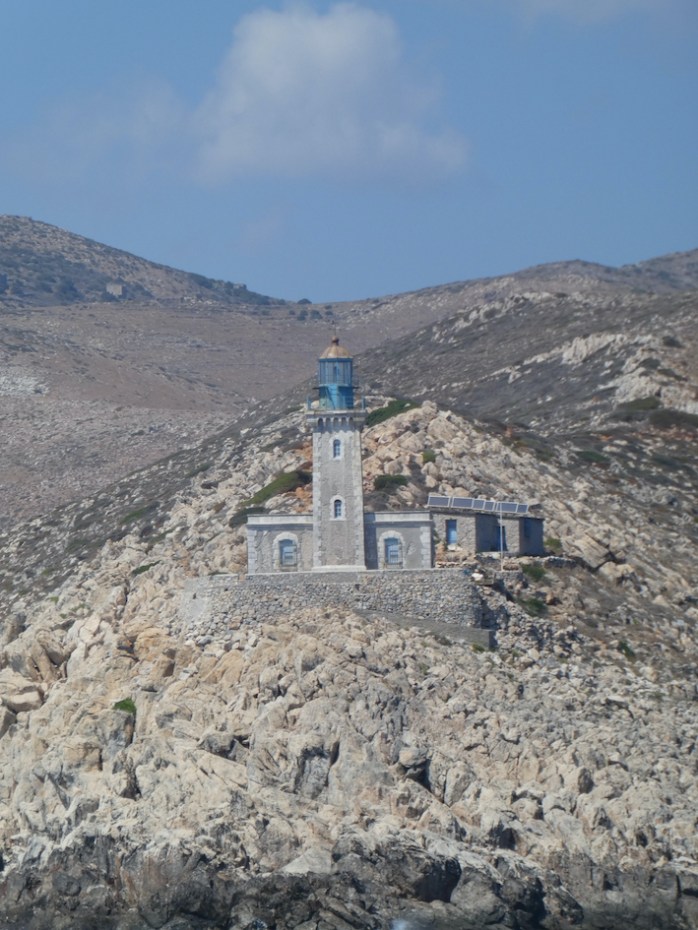
Light House Near Porto Kayio
We have also experienced strong winds in the anchorages both whilst anchoring and overnight. We always take great time and care each and every time we anchor to ensure we hold well and are safe.
Elafonisos Island 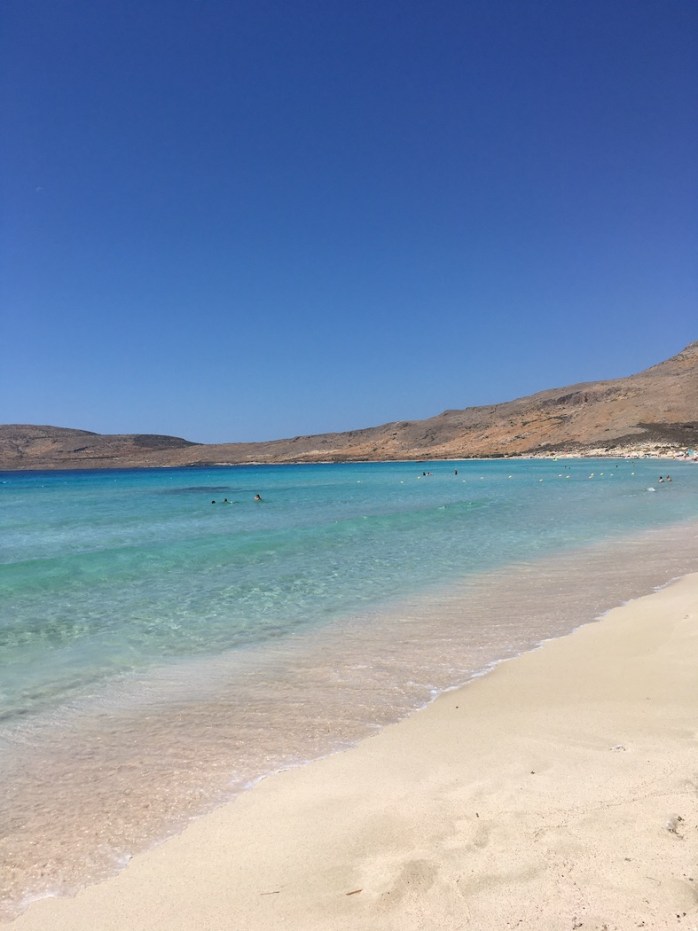
One of the two beaches 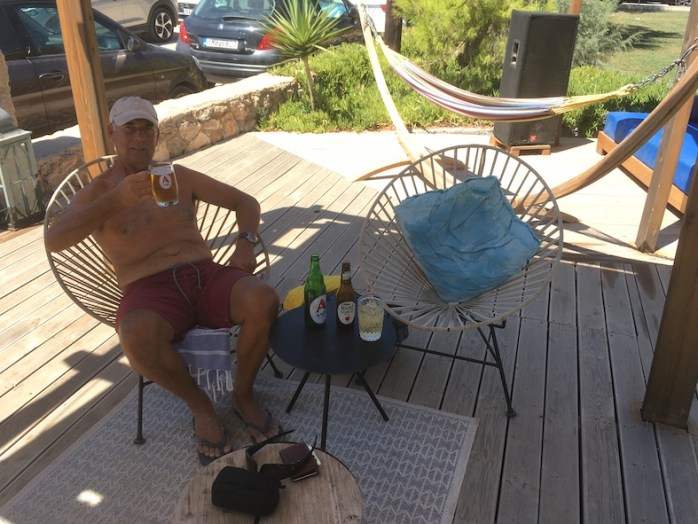
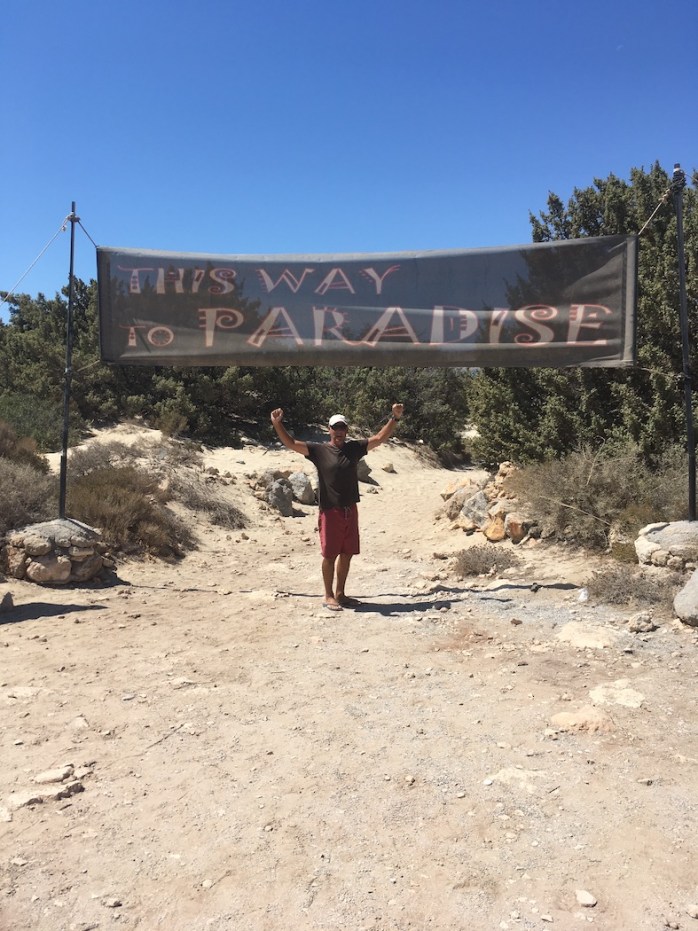
Happy Captain at Elafonisos

The two beaches at Elafonisos “paradise”
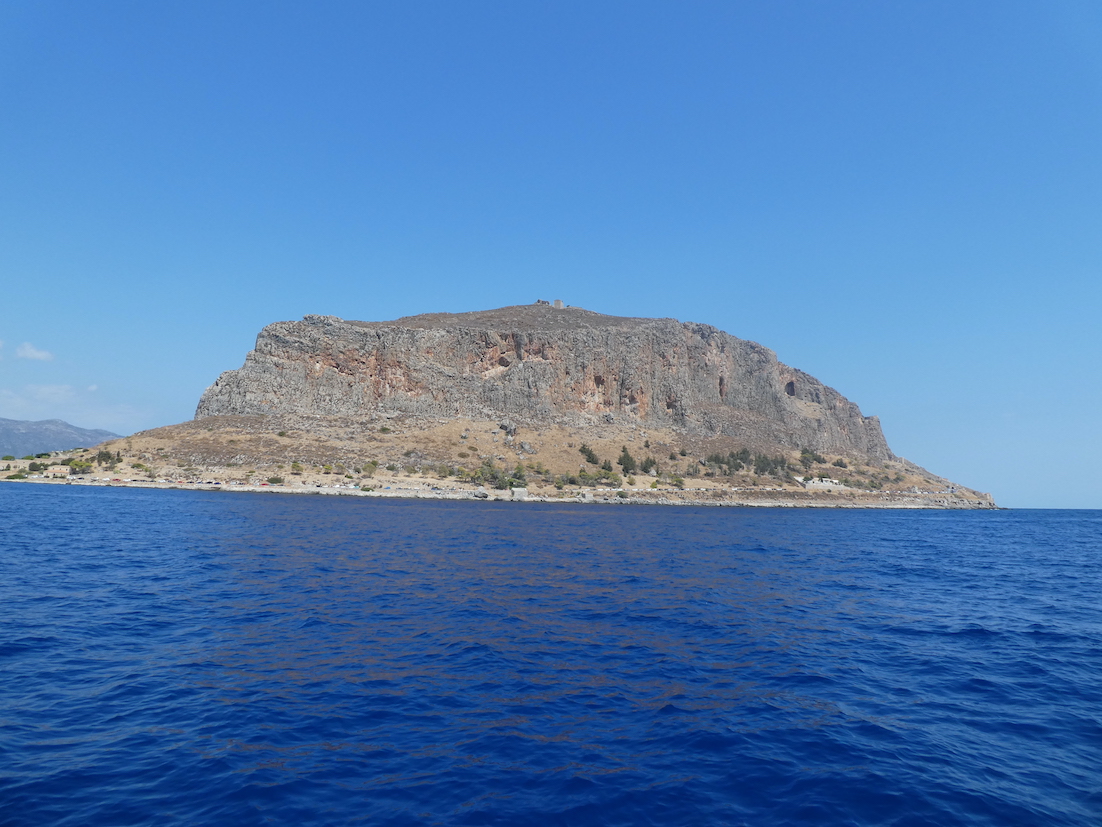
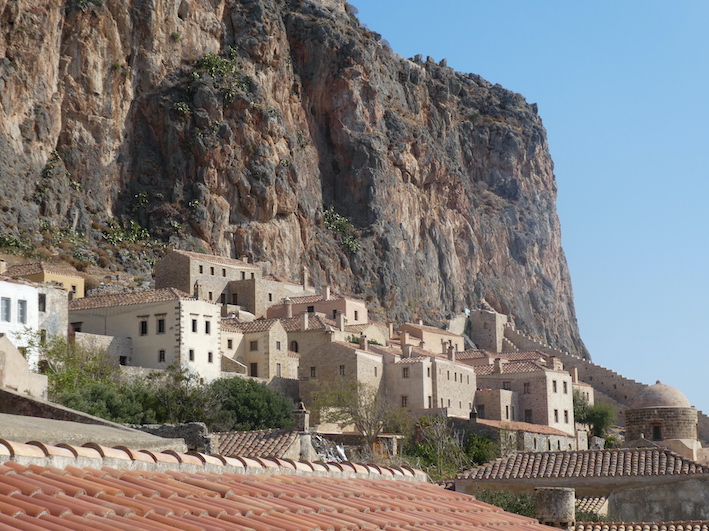
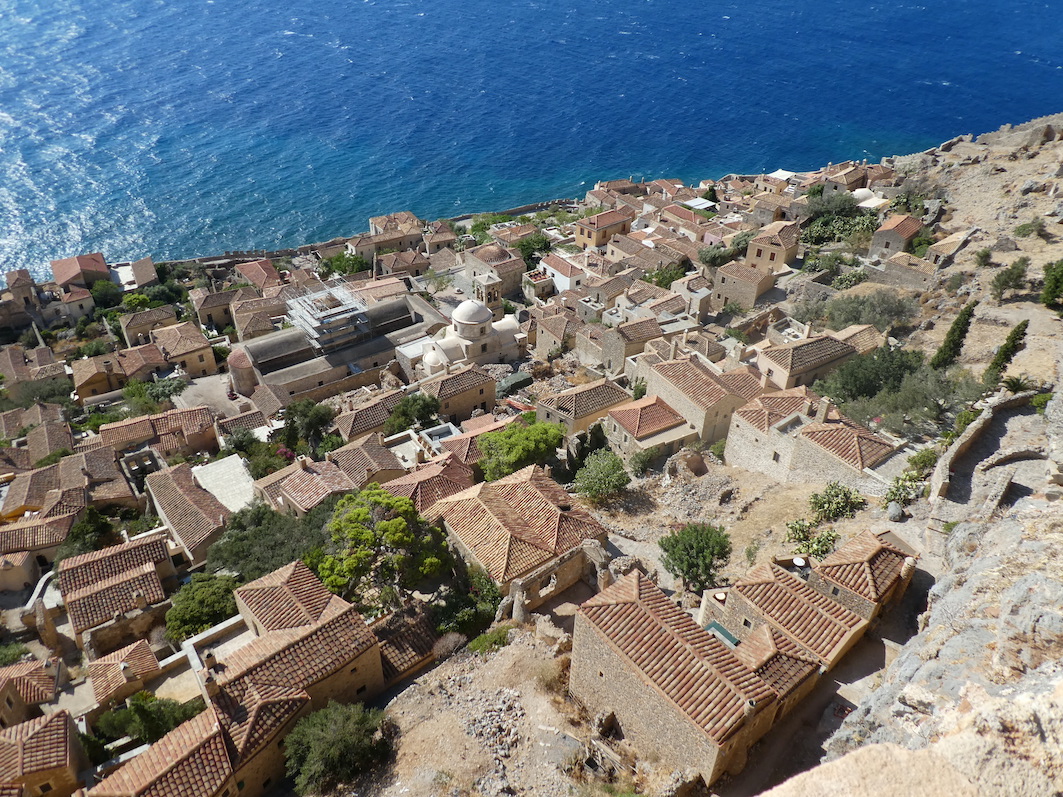
One of the highlights to date in Greece was Monemvasia where we were able to tie to the town quay wall during some windy weather.
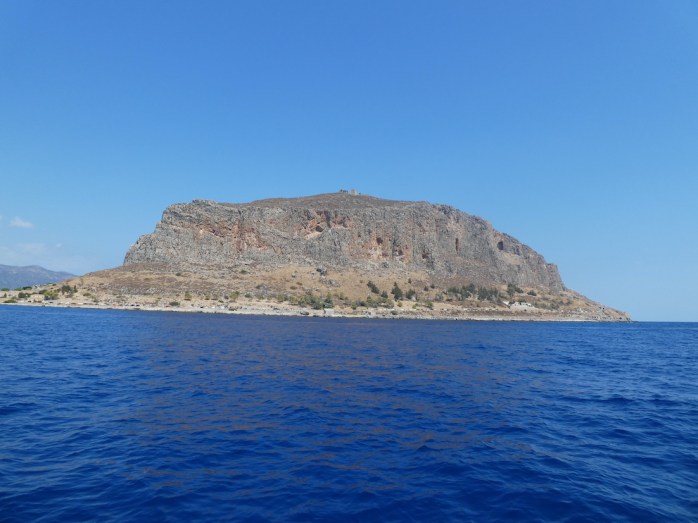
Monemvasia
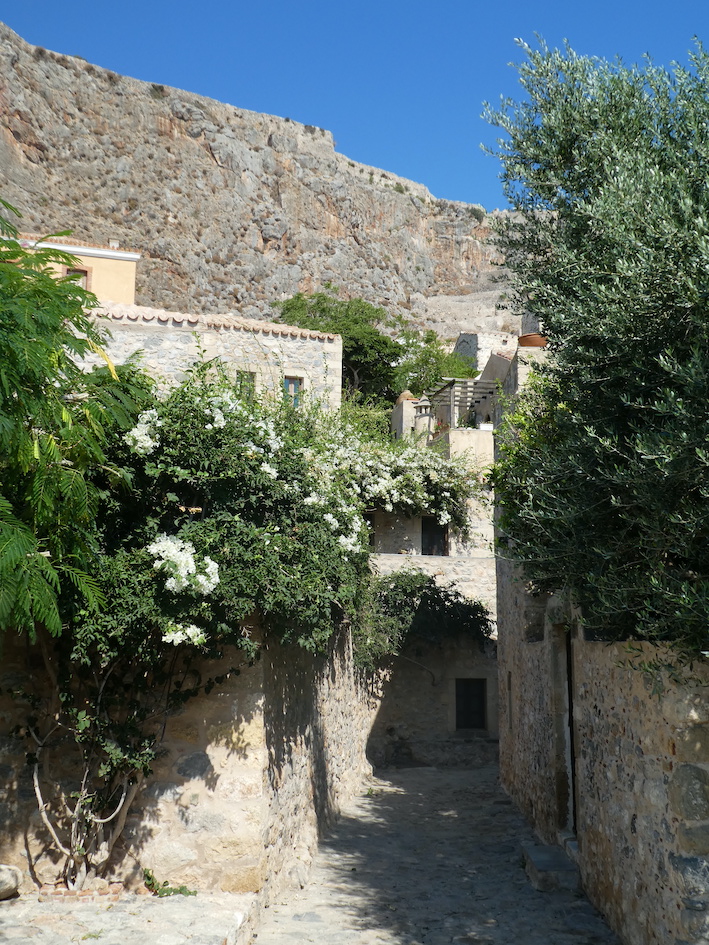
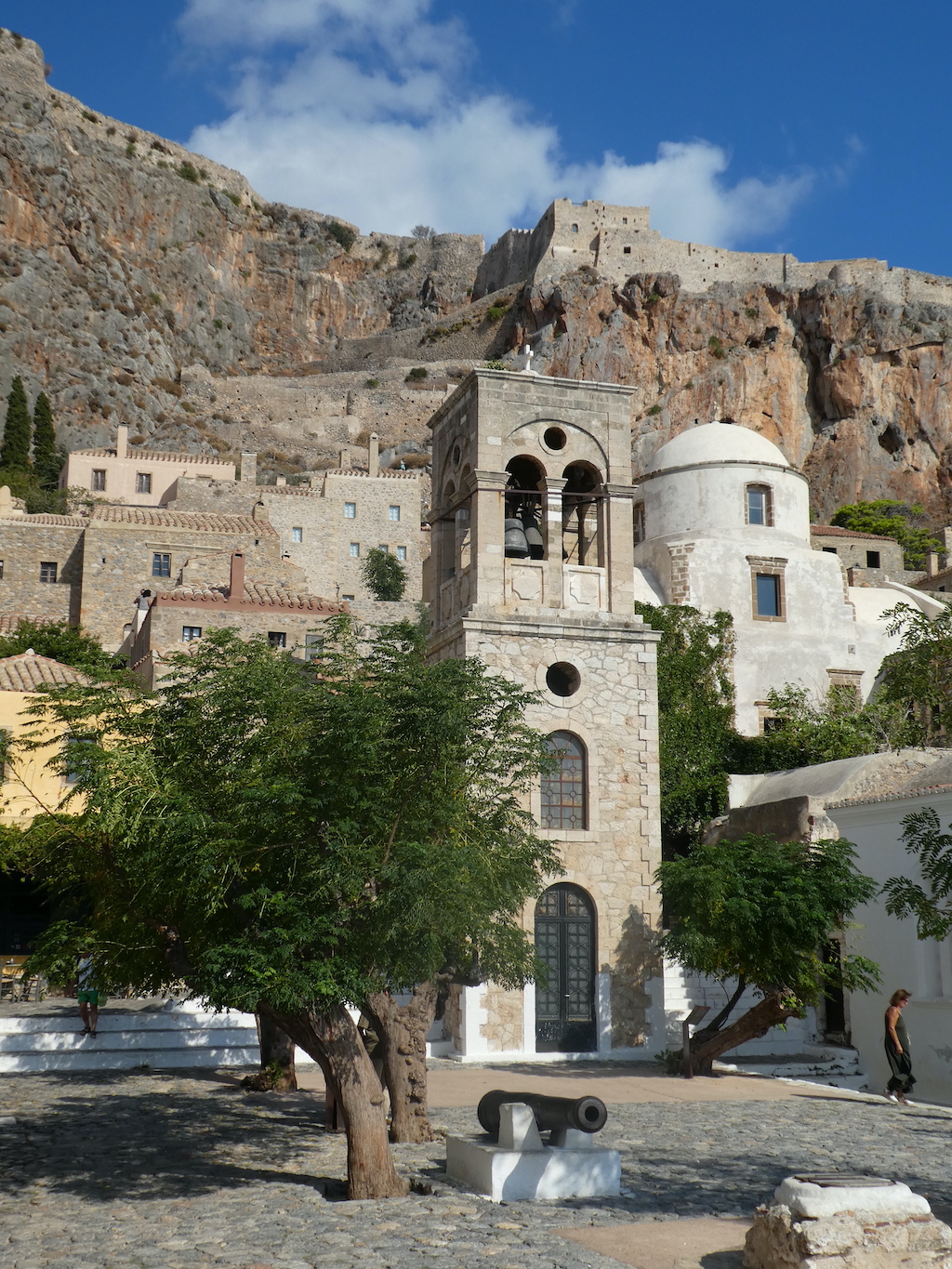
We enjoyed a couple of great days exploring the Old Town which is carved into the steep rock face.

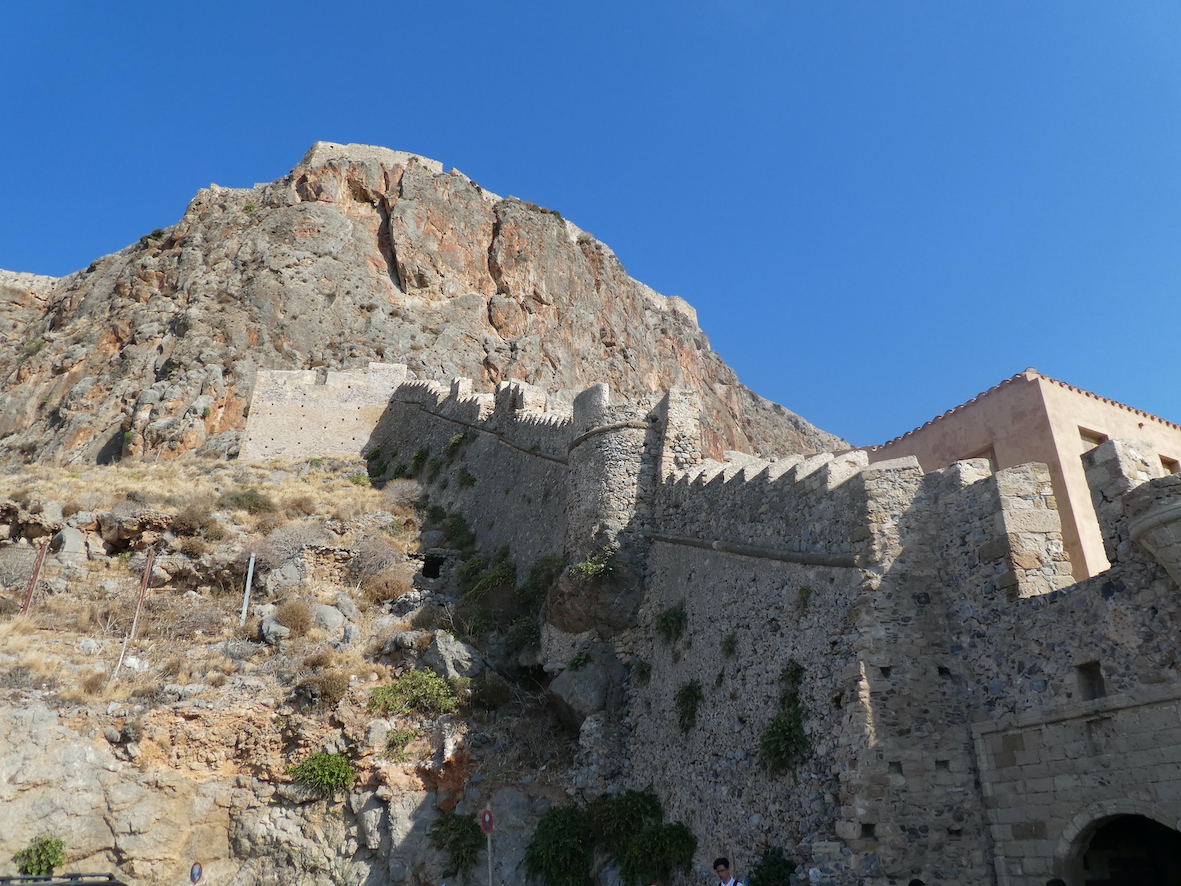
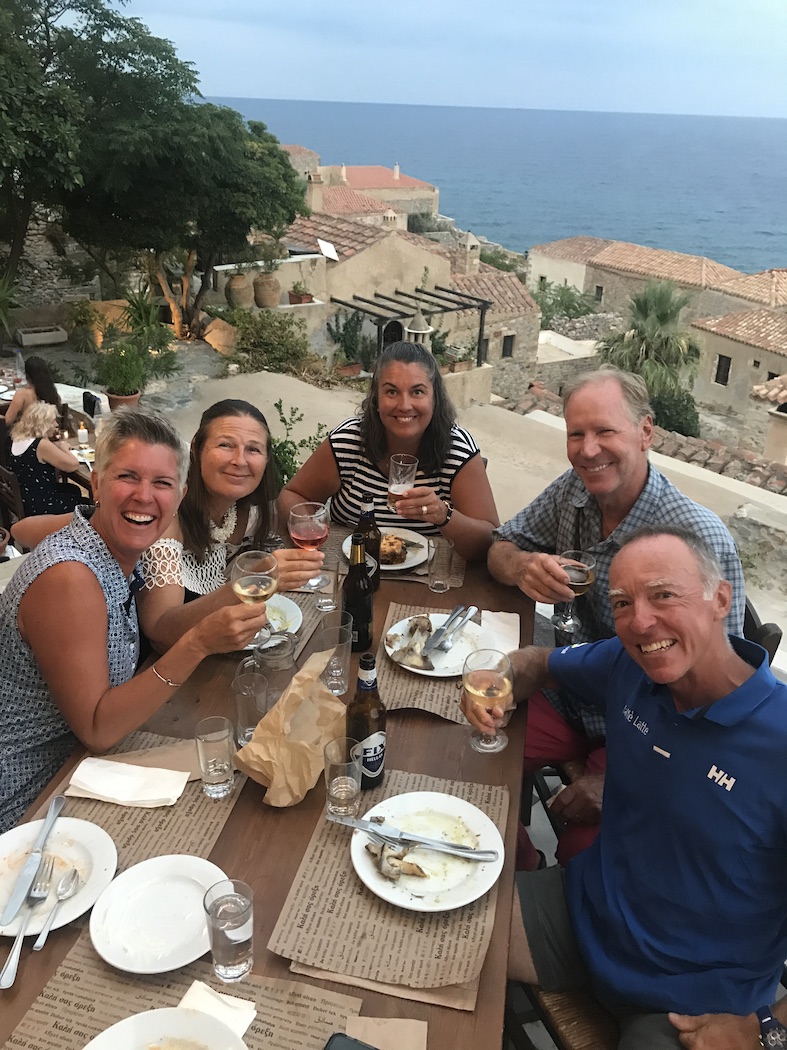
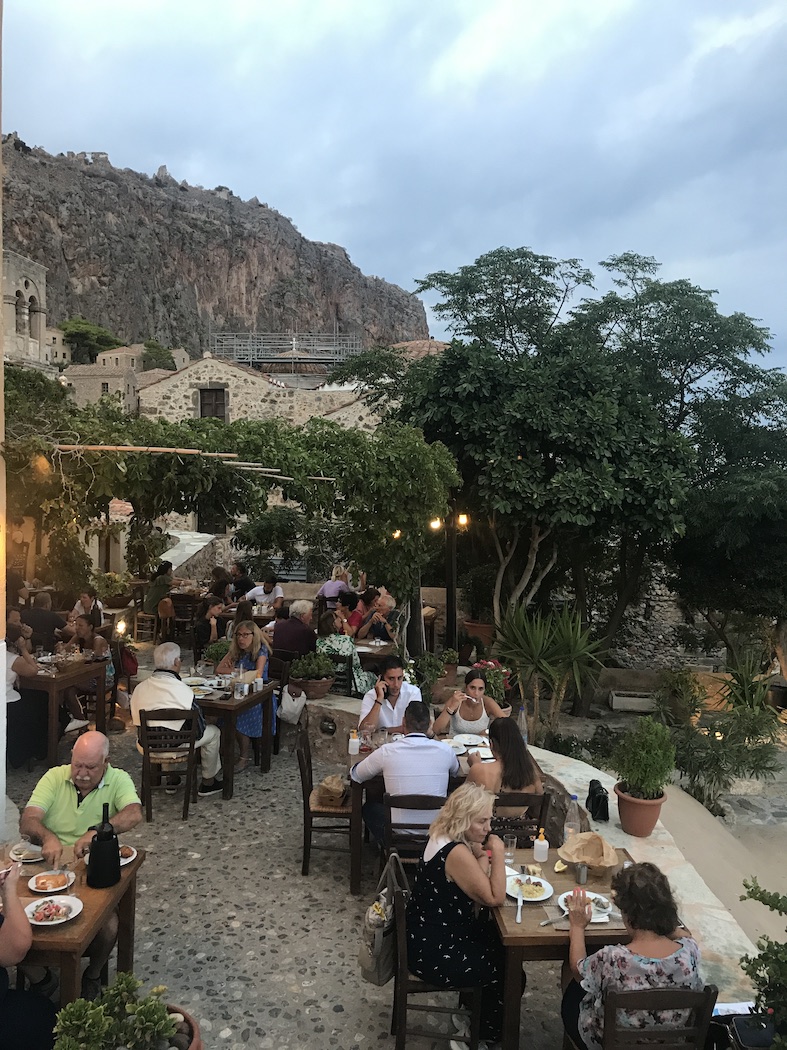
we celebrated Jean’s birthday with a fantastic greek meal out in the old town at the best table in the restaurant overlooking the town and sea below.
The following day we climbed to the top of the rock to see the church and ruins as well as completing the walking the track around the circumference of the rock/island.
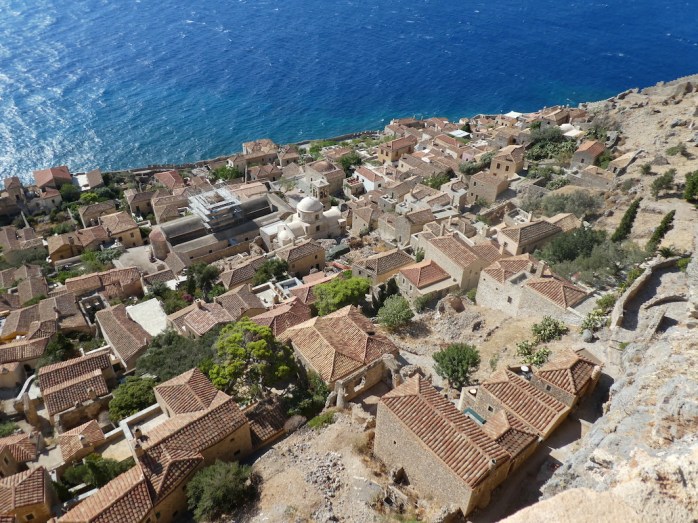
Looking back down on the old town 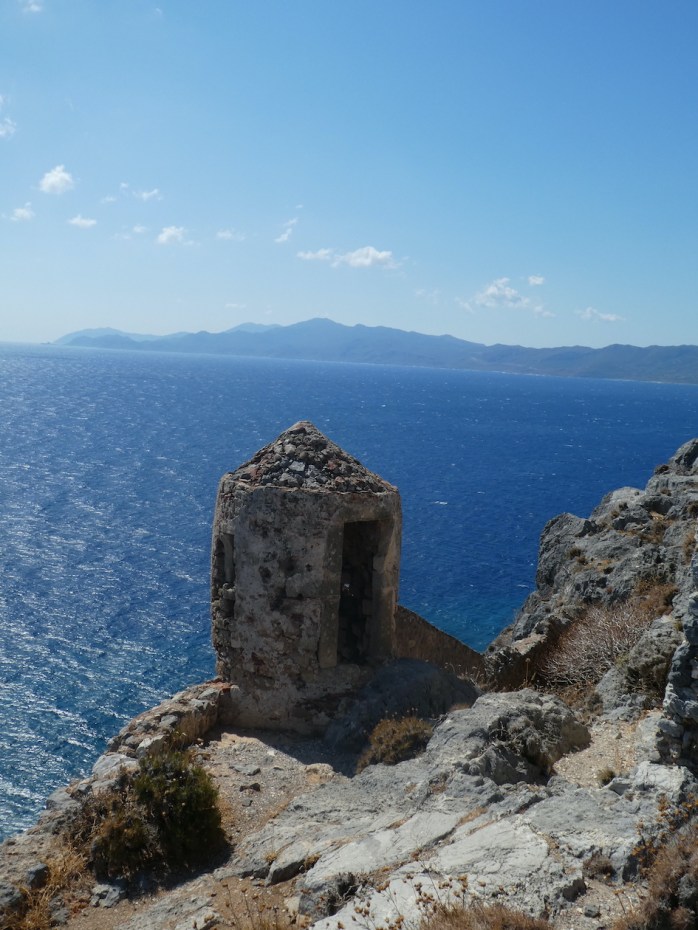
The ruins at the top of the rock

The food also is worthy of a mention. In the month we have been here we have eaten out twice which is highly unusual for us as this is a big money eater in the budget. But we have been delighted by the food. To date we have indulged in; Octopus (the best I have ever eaten and it is a favourite of mine so have had many), goat and potatoes, stuffed tomatoes, fried little fish (similar to white bait), eggplant (grilled and baked), dolmades, moussaka & greek lamb. I think food wise Greece may take the best food title from all the countries we have visited so far!! Phil is not convinced and still rates France above Greece – we will just have to keep on eating until we have clear winner!
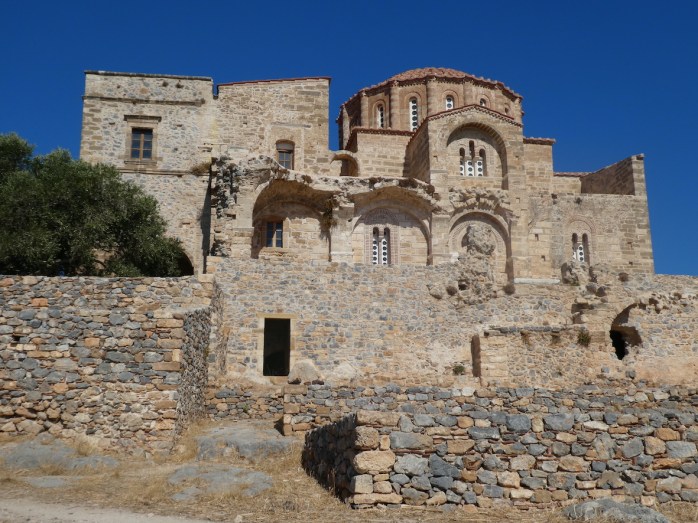
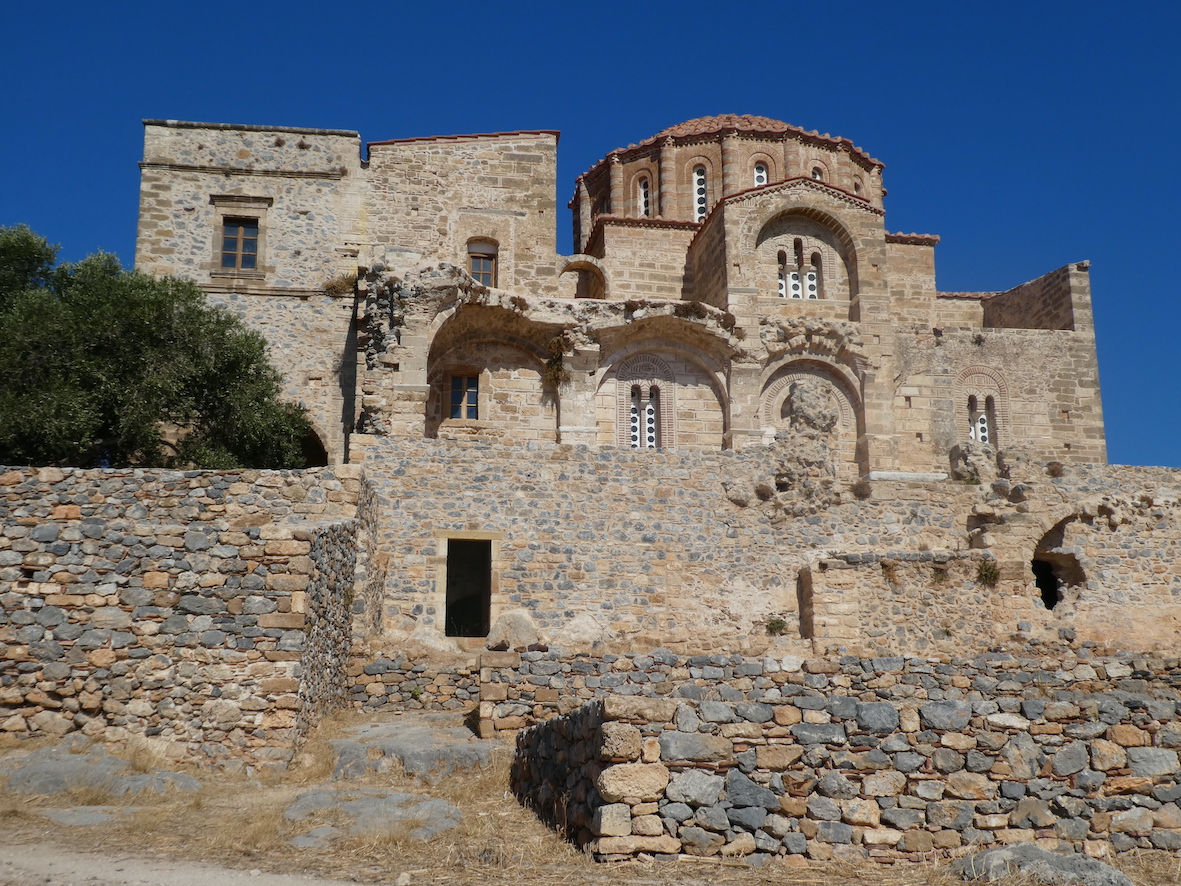
The Church at the top of Monemvasia 
It is built right on the cliff face

We are now anchored in one of our last stops on the east coast of the Pelopónnisos at Porto Kheli for a few days in a safe anchorage to wait out some forecast strong winds, a Greek Meltemi (our first one which can be potentially dangerous if you’re not prepared).
Malta to Greece (via Italy)
We were more than ready to leave Malta (as wonderful as it was) the last two weeks waiting for the Covid Vaccine Certificate had dragged and we were super keen to sail on. Patience is a virtue and finally on the Friday the certificate arrived, we topped up the water tanks, checked out of the country and departed early on Saturday.
It was a full day sail across to Italy, 58 nautical miles in light winds (no speed records were predicted to be broken) but according to the forecast we should be able to sail most of the way in light winds and arrive before dark. We were heading to Greece but going via Italy (the island of Sicily) due to the best wind for sailing (without motoring), and also it would break the sail up into smaller passages rather than one long 3-4 day/night crossing.
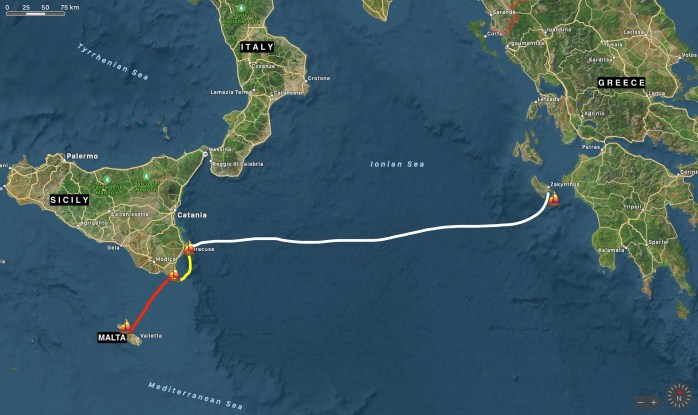
The three (3) sails to get us from Malta to Greece.
Red; Malta to Italy
Yellow; Italy (making way north)
White; Italy to Greece
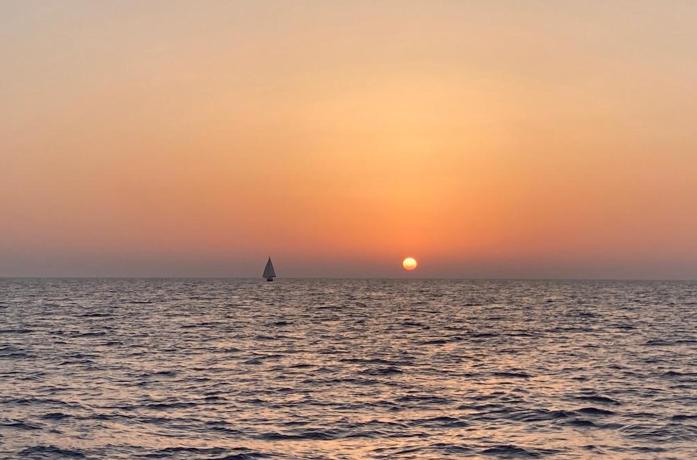
5am Saturday morning we raised the mainsail, then lifted anchor and were off (not quite sailing off anchor as we had the engine on to negotiate our way out between other boats and fish farms in the bay). But within a mile the engine was off and we had full sails wing on wing as we left Mellieha Bay doing a very respectable 5.5 knots in 10 knots of wind as the sun slowly started to rise.
Red Roo wing on wing sailing – leaving Malta
The sun rose, and our smiles grew bigger, we were off and sailing. However those predicted light winds became no wind and by 10:30am we were making way under engine power. The only up side being a very flat calm sea. The crossing constituted of 5 hours sailing and 6 hours under engine. But alas we did arrive well before dark and we arrived safely.
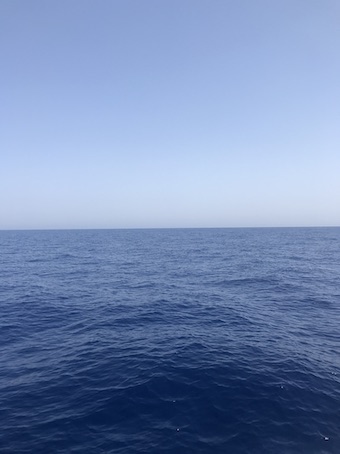
The border between Malta and Italy
This placed us at Portopalo on the southeast point of Sicily. Our plan was to keep sailing north as the wind would allow until a weather window (correct winds) opened to take us east across to Greece. By going north until this window appeared would shorten the crossing the Greece.
The following day the winds were predicted to come in after lunch making a good little afternoon sail 25 nautical miles north to the Bay of Syracuse. We were waiting watching the water, the flags, and the wind instruments and as predicted right on 1pm the wind started to pick up, so we raised anchor, raised the sails and set off … however the wind that teased us in the anchorage didn’t amount to anything. We had to motor all the way!!!

Red Roo on anchor in Syracuse waiting for wind to cross to Greece
We were a “yacht in transit” through Italy meaning we were not checking in with customs or officials and therefore not going ashore. So we have no reports on Sicily just our views from the boat as we waited for wind and the opportunity to either go further north or cross east to Greece. We didn’t have to wait long it looked like a good window to cross in two days time.
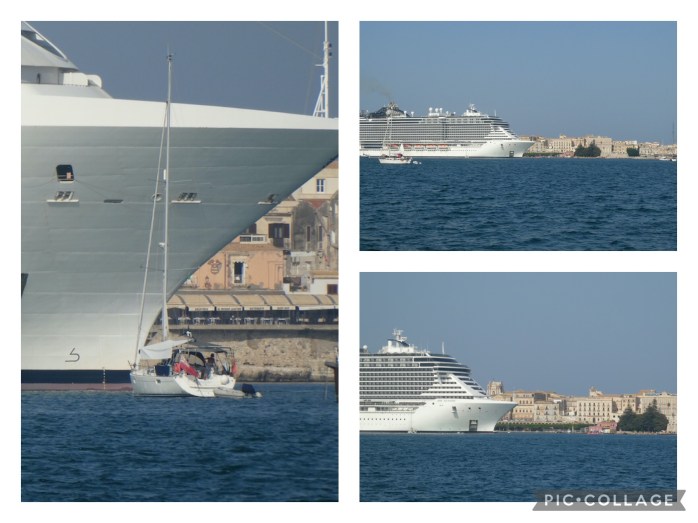
A Cruise Ship in Syracuse look how it dwarfs the buildings and yachts
Our buddy boat for the passage Caffe Latte (our favourite Canadians) had been doing the technical weather simulations and forecasting for the Sicily to Greece passage and all looked well, in fact for the first time in a long time the closer to departing we got the better the weather window looked.
Our destination was 300 nautical miles east from where we were anchored to Greece and with a prediction of a 48 hour passage, we were off. Departure was 10:00am and within 30 minutes of starting the engine to leave the bay we had the motor turned off and were making way, by sunset that first night we were doing great and cruising along at 7 knots. The day had been calm with steady winds and a settled sea state.

Red Roo under sail from Italy to Greece
The first night was also very comfortable with no other traffic. By 09:00 on day 2 (23 hours after leaving) the wind did come off and we slowed to below 3 knots. With this lull in the wind we ran the engine to assist the sails (motor sailing) for 3 hours until the wind strengthened and then we were back on track doing 5.5-6 knots again. At the 24 hour mark we had already done 132 nautical miles.

Raising the Greek Flag 
Things continued well and we made good speed especially when the wind was on the beam. Caffe Latte would get a few miles ahead when the wind was closer to the nose, but anytime it came around on the beam we would close the gap.
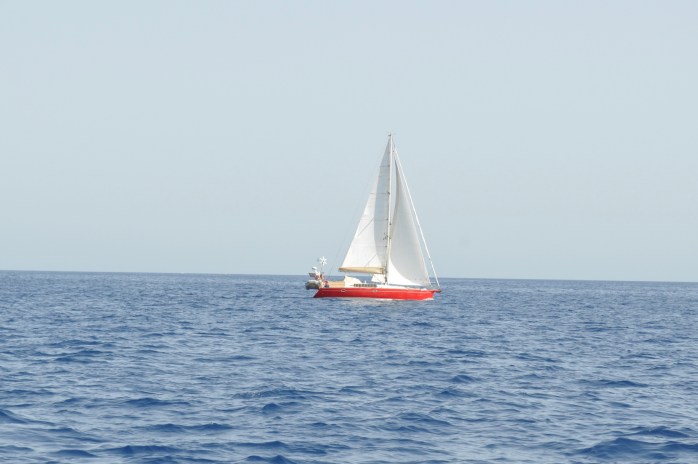
Sailing to Greece
The second night saw the sea state deteriorate a little (nothing terrible) but a little bit more twist and roll and it slowed us a little as its hard to trim sails and set a good course when your visibility of the sea is removed, come morning land was in sight and the wind had stiffened and risen to match the sea state but the angle was good and we were coming into Greece doing good speed.
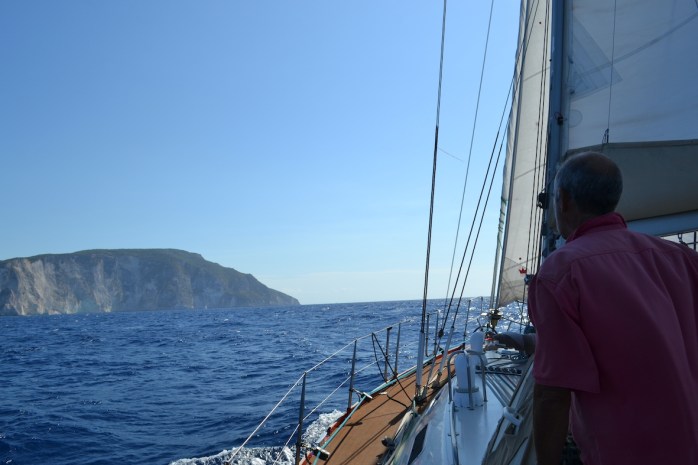
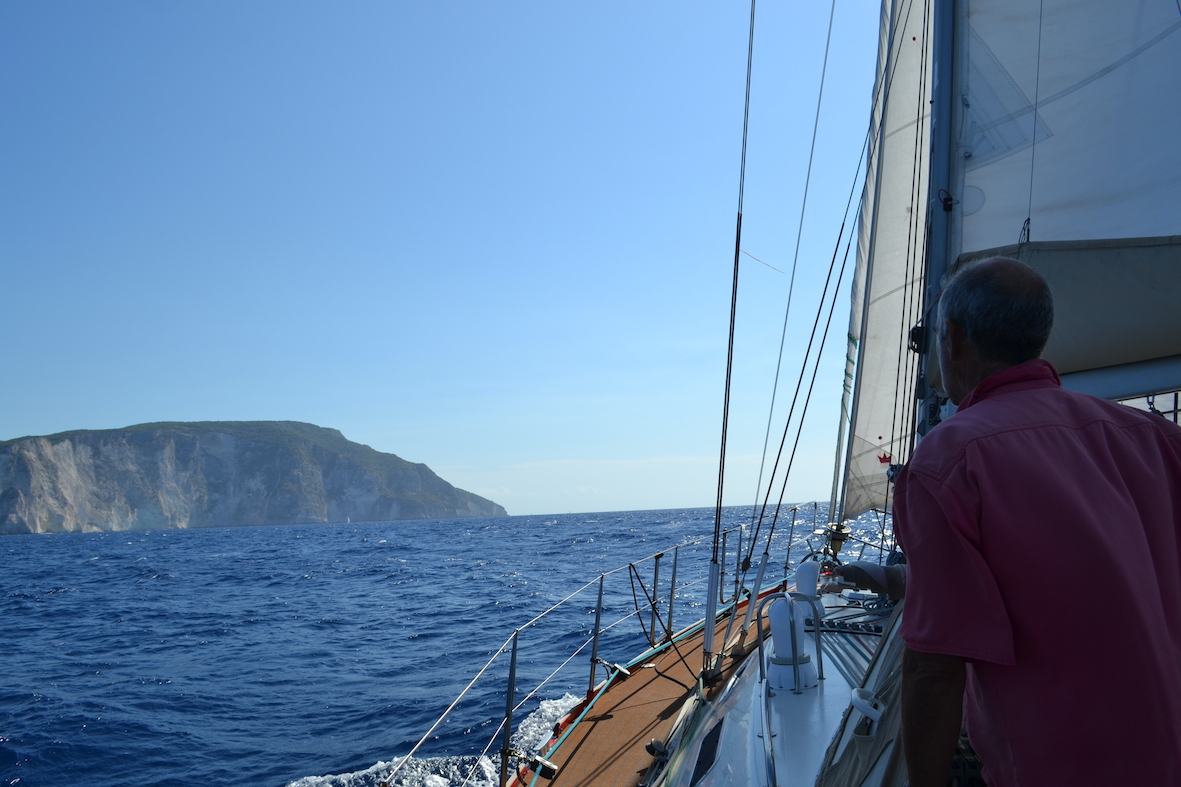
Approaching Greece, we made landfall at the island of Zakinthos
At the 48 hour mark (our predicted arrival time) we were 3 miles out from the anchorage and very very happy with our passage. As we rounded the bottom of the island of Zakinthos the cliffs blocked the wind and we dropped our sails and motored the last two miles before dropping anchor.
300 Nautical Miles
49 Hours
Average Speed 6.2 knots
Total Engine Time: 3.5 hours
Unfortunately no fish were harmed during this passage (fish count = 0)
We have arrived in Greece! We are looking forward to exploring the country, the islands, the culture, the food, spending time in water and sharing our adventures.

Going to shore for the first time in Greece 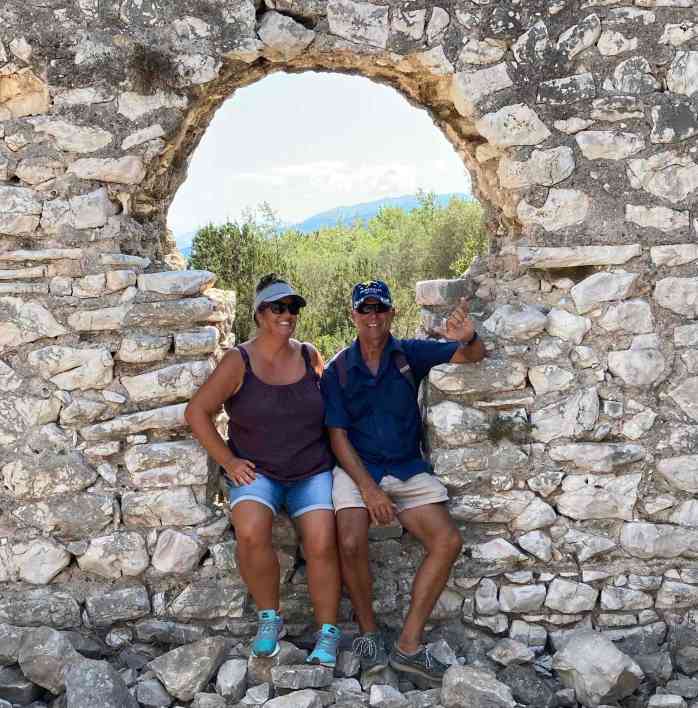
On land in Greece
Going to Gozo
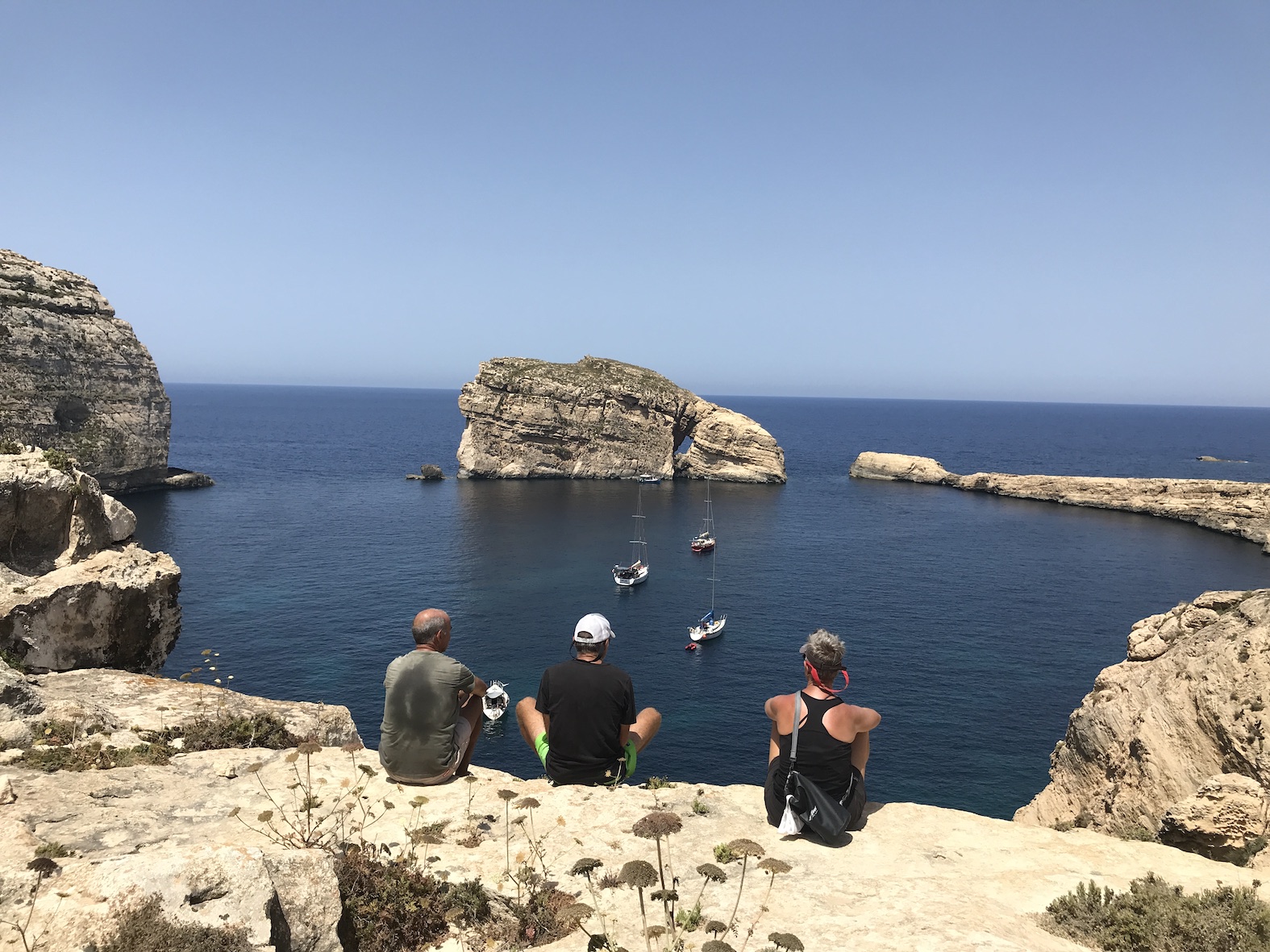
We had been in Malta a month and were yet to explore the northern island of Gozo. Although technically we had visited as we checked in here but in reality that was a 15 minute visit and a 25 meter walk from the boat to the customs office and no further.
To give you an idea of the geographical layout, Gozo’s size is 14km long by 4.5 kilometres wide and has a population of 33,000.

Sailing on the North West Coast of Gozo 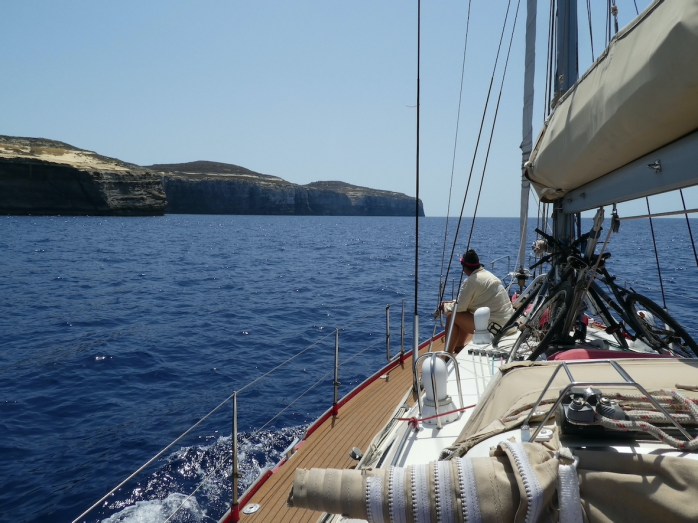
Maree enjoying the ride
Finally the wind conditions allowed us a good sailing passage and safe anchoring on the north eastern side of Gozo at Ramla Bay. We were really impressed with this beach and anchorage. For starters it had rich red sand, and real sand (many of the beaches we had seen were more rock than sand). Furthermore it was nestled into a crevasse in the hillside which had quite a bit of green shrubbery (again a rare find on Malta), and of course to really make us happy we were thrilled that anchorage was large with fantastic deep sand (great holding) for keeping Red Roo and us safe.
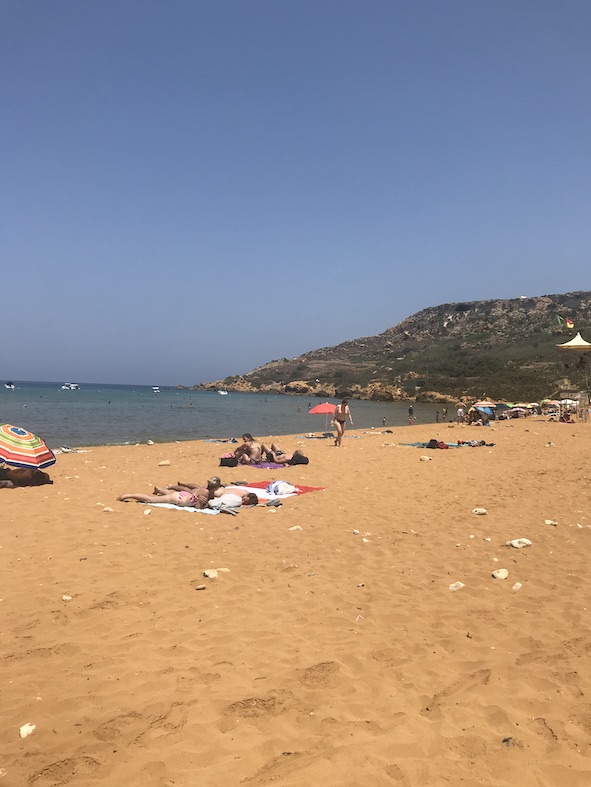
Golden Sand at Ramla Beach 
Our Lady of Hope Statue at Ramla Beach 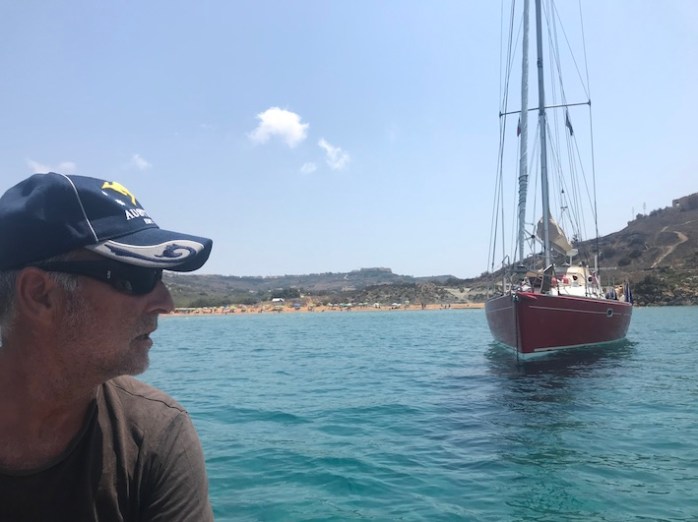
Red Roo anchored at Ramla Bay
The clear water made for excellent swimming, which we did a lot of as the temperate has been rising and holding high. We had already had three weeks of temperates between 30 – 40 degrees and whilst it is easy for us at anchor to jump in a cool off, it makes our inland adventures hot and sweaty.
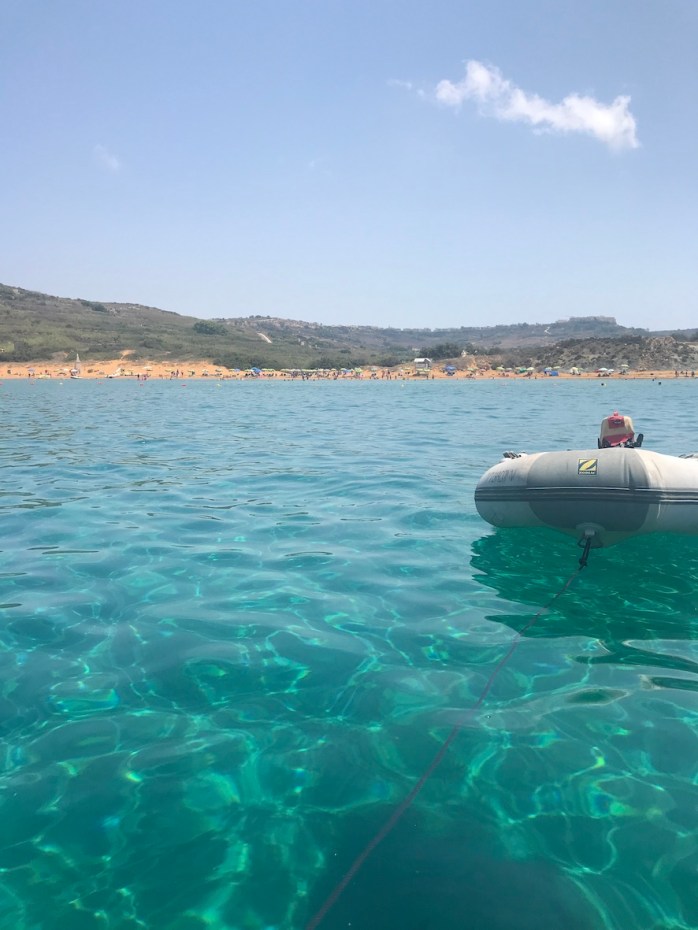

We left the dinghy on the beach and set off on a 10km return walk from Ramla Beach around to the next bay to the village of Marsalforn, this involved a couple of really steep hills which we slowly huffed and puffed our way up (and drank a lot of water and sweated just as much out).

Looking down on Red Roo from the top of the hill 
Our only catch in Malta at Ramla Bay
The walk however was a delight and the village very quaint. The highlight for Phil being that we ate Cornish Ice Cream here (all the way from the UK). We liked this little village so much we ended up going back here in Red Roo a week or so later for a night with the boat. On the return walk back to Ramla and the boat we took a different route back to the beach, through the scrub which we may not have appreciated fully at the time, as the day after we left a fire went through and burnt it all out. We had a boat tell us how the bay was covered in thick black smoke and they couldn’t see their boat from the beach and the ash and black soot was all through their boat. Glad we left when we did.
We stayed four nights at Ramla and experienced our first strange weather event. The first evening we were enjoying drinks in cockpit of Red Roo with Caffe Latte and all of a sudden a strong swirly wind came through the anchorage turning all the boats around doing circles. It was a strong wind and chopped up the water to white horses but only lasted about 10 minutes. The next two nights in a row when all was calm and quiet and we were tucked up resting in bed a sudden strong wind gust would come down off the hills and turn the boat 180 degrees on the anchor. This would happen 4 or 5 times each event only lasting 6 minutes or so. Both Red Roo and Caffe Latte were safe and anchored well and rode out the gusts but a few other boats dragged each night.
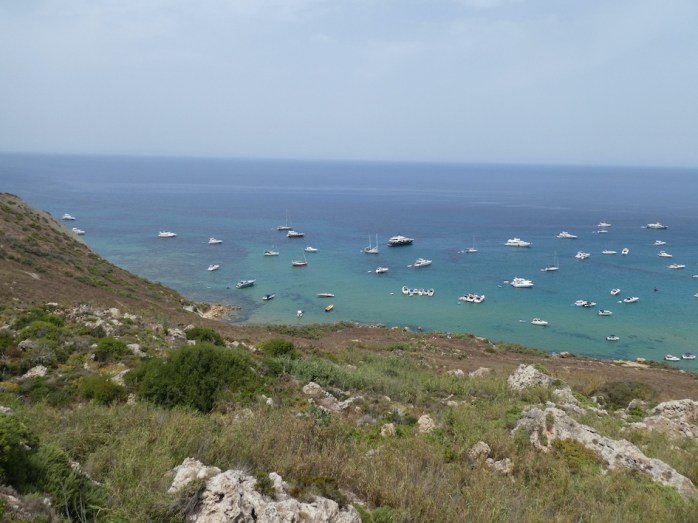
Weekend Boats at Ramla 
Busy with Boats near the beach
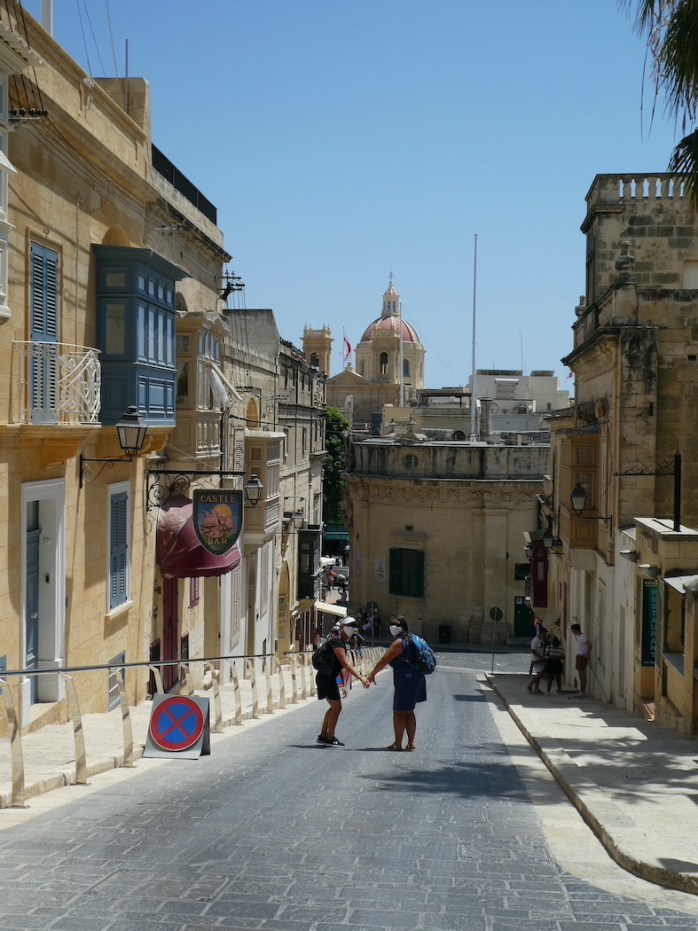
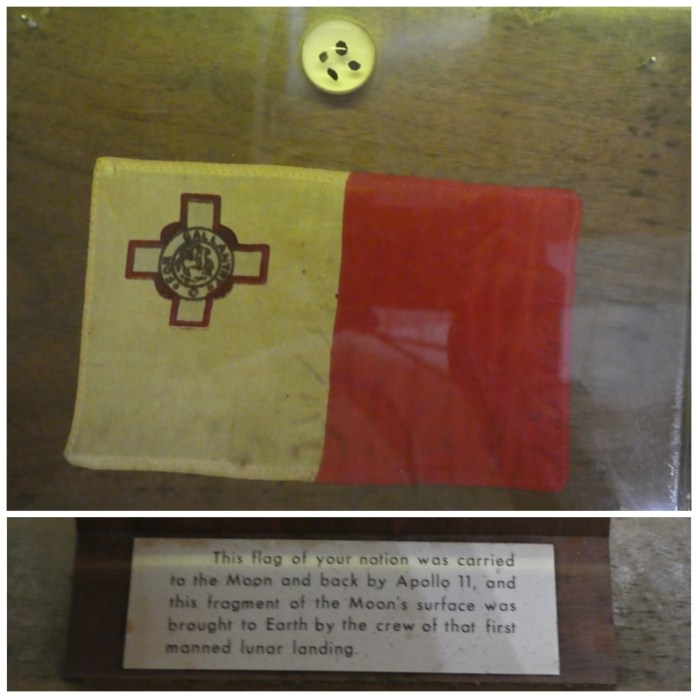
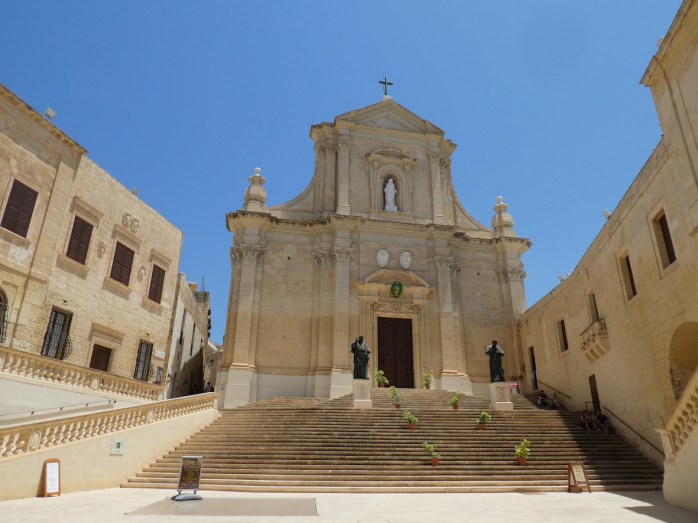
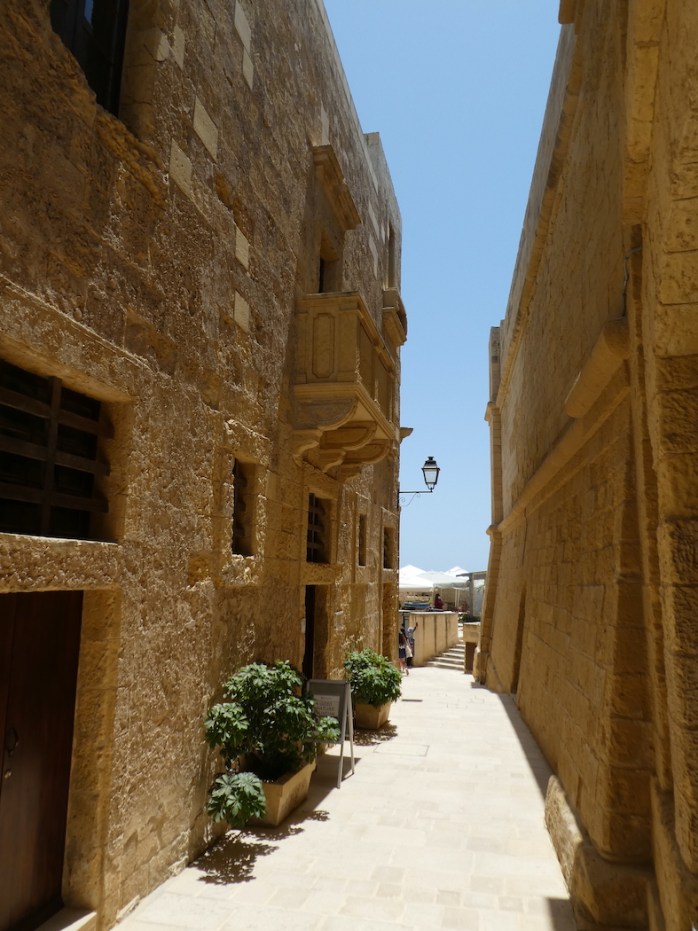
A few days later we returned to Gozo, this time by bus, ferry and bus (as due to winds the boat was anchored safely on the North East of Malta) to explore the islands city of Victoria and visit the Gozo Citadel. The Citadel dates from the 15th century although fortifications have been evident on this hilltop from the bronze age. It was at one time a Roman town and after some terrible raids on Gozo by the Turkish it became customary for all the islands families to stay within the walls overnight, a practice that lasted into the 17th century.

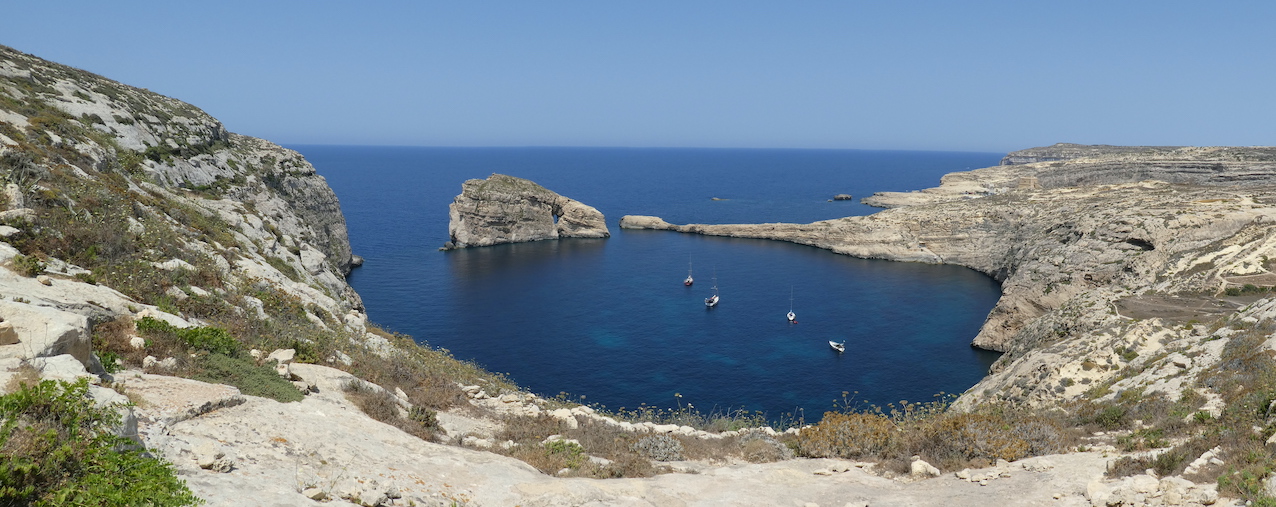
After waiting another week, which felt like a month the weather finally allowed us to take Red Roo to the West of Gozo something we had really been looking forward to. Geology and the sea have conspired to produce some of Gozo’s most spectacular scenery at Dwejra on the west coast. Two vast underground caverns in the limestone have collapsed to create two circular depressions now call Fungus Rock (Dwerja Bay) and the Inland Sea. We anchored Red Roo at Fungus Rock and took the dinghy through the cave to the inland sea. The cave is around 10 meters wide and 100 meters long (with water 25 meters deep) allowing access to the small inland sea, which has been a fisherman’s haven for centuries.

The Inland Sea 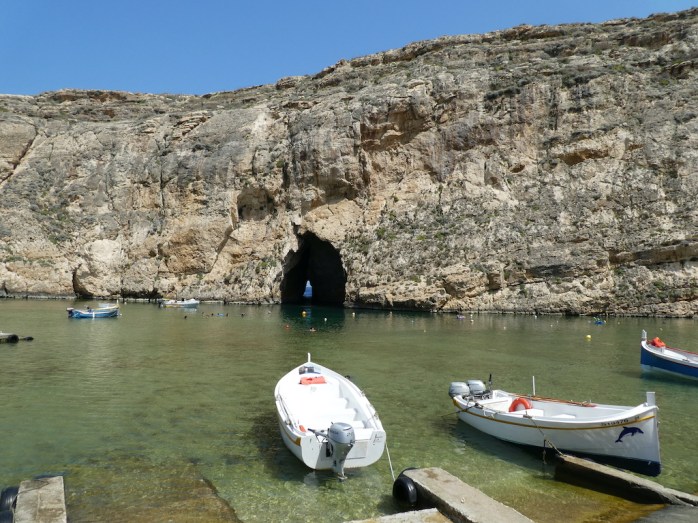
The Tunnel In & Out
The anchorage at Fungus Rock is protected well on three sides and the western side hosts the large rock also providing protection (however the west wind and swell comes in). The rock gets it name due the rare plant that grew at the summit, it was brown and club shaped and native to North Africa with Fungus Rock being the only place in Europe this plant was found. The plant was believed to have powerful pharmaceutical qualities to stem bleeding & prevent infection when used to dress wounds. Furthermore it was also said to cure dysentery and ulcers. It was highly treasured by the arabs and in 1637 the Knights build a fortress and watch towner to guard the precious resource, a rope was also strung between the mainland and the rock which was a one man cable car used to harvest the plant.

Red Roo at Fungus Rock 
Sunset at Fungus Rock 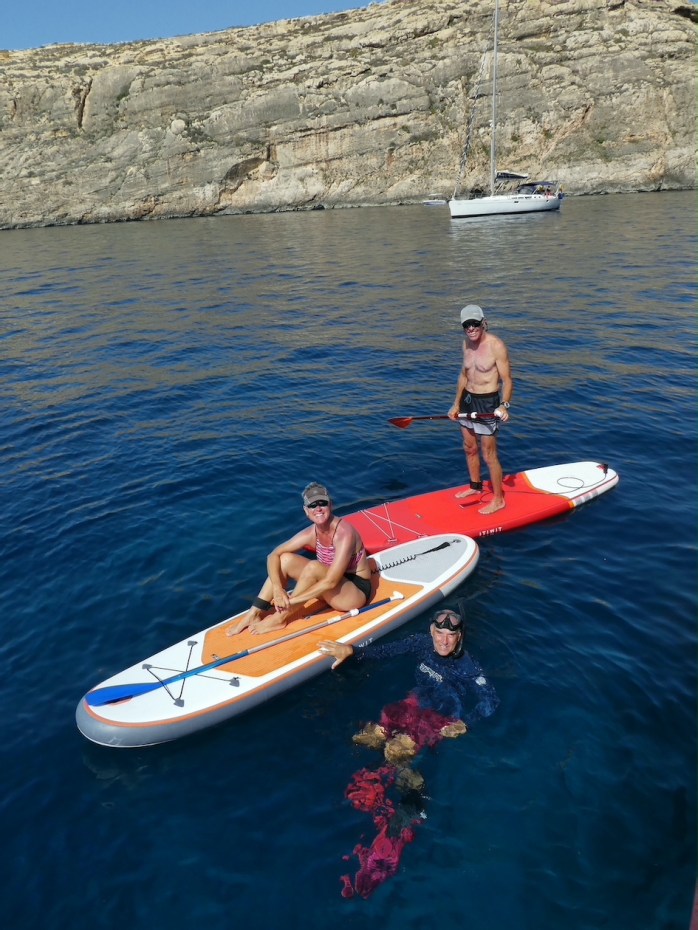
Enjoying the Water at Fungus with Caffe Latte 
Fungus Rock Anchorage
It was a real treat to enjoy this anchorage for two nights, it was deep and clear and a walk around the cliffs provided the opportunity to take many photo’s.
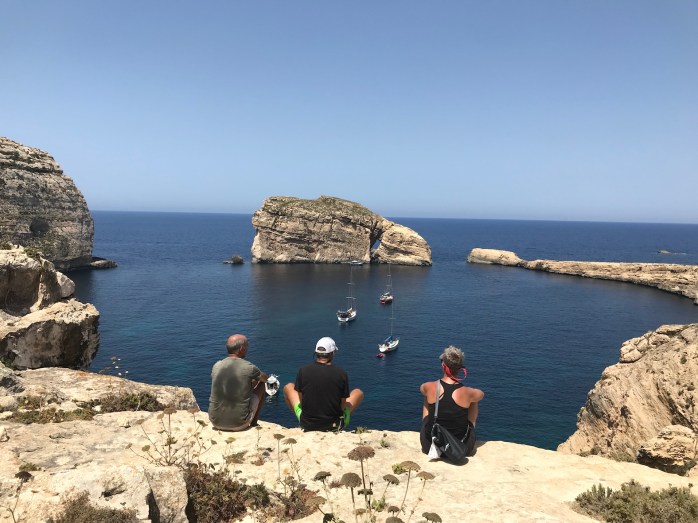
Phil, Jean & Yolene looking down at Red Roo and Caffe Latte anchored at Fungus Rock
Overall we found the water so much clearer around Gozo, and enjoyed the anchorages there a lot more than the two southern islands, they were less crowded, more beautiful with vegetation and rocks and life on Gozo overall a little less hectic.
We also enjoyed exploring some of the salt works on Gozo near Marsalforn, we had seen these down south near Marsaxlokk also. Many of the rock formations on the edge of the sea created natural rock pools for the salt to collect, which were then “enhanced” by man to create a formal rock salt business. The formations are beautifully carved into the rock and the salt, well that tastes salty!

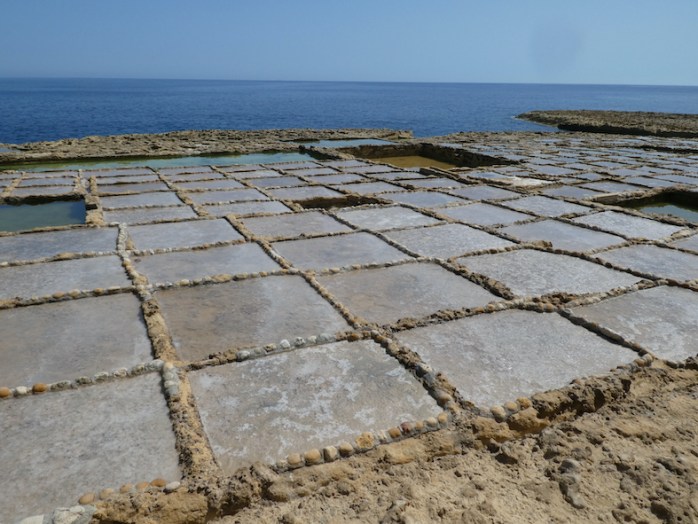

In our last week on Malta we said farewell to our dear old dinghy. Our Caribe had been with us since the start of our adventures back in 2015, and we estimate it was already 10 years old (at least) at that time. She has adventured with us through 17 countries over the last 6 years, taking us to some fantastic hard to reach spots – she was tough and able. Unfortunately in the last couple of months she had not been holding air and was requiring constant pumping up (sometimes after only 30 mins), we had tried to patch her but she was coming apart at the seams and beginning to show signs of the inflatable tubing coming away from the hard fibreglass hull. It was beyond time to deal with it. We took a few days to visit all of the retailers in Malta that sold dinghy’s and despite knowing exactly what we wanted there were none in stock at any shops. However we have been very lucky in the fact that Andy and Karina on Tartuga whom we met in Tunisia and were also in Malta just very recently updated their dinghy and was trying to get rid of their old one, bonus! This interim measure means we have their old one to tie us over until we can buy the new one we want. Thanks Tatuga and farewell old friend to our dinghy.
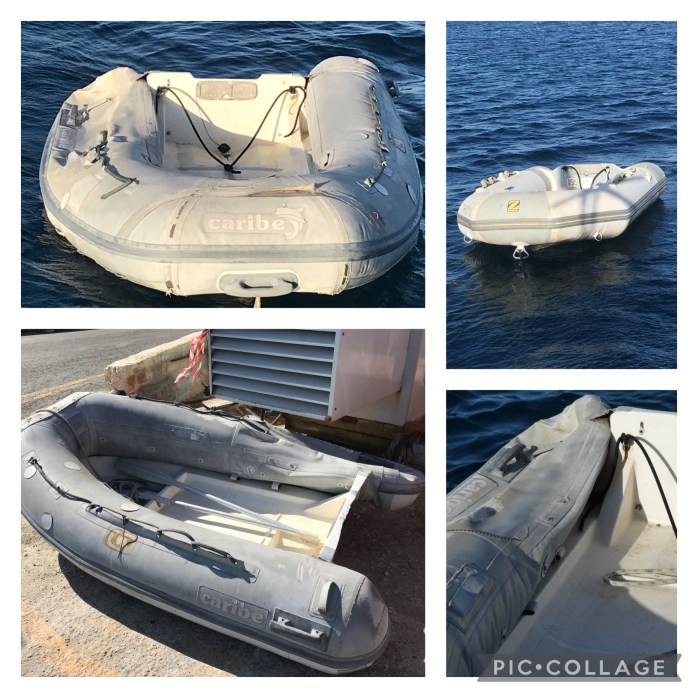
Our old faithful Caribe Dinghy. Top right our replacement Zodiac until we find a new one.
We have now visited the majority of all the anchorages in Malta – many of them more than once and also sailed a full lap of each of the three islands that make up Malta. It really is time to move on BUT before we did, Maree was able to secure a COVID 19 Vaccine on Gozo so we waited another week for the appointment and then two weeks until the certification came through and now after 2 months we are all set to leave and continue our Mediterranean adventure in another country.
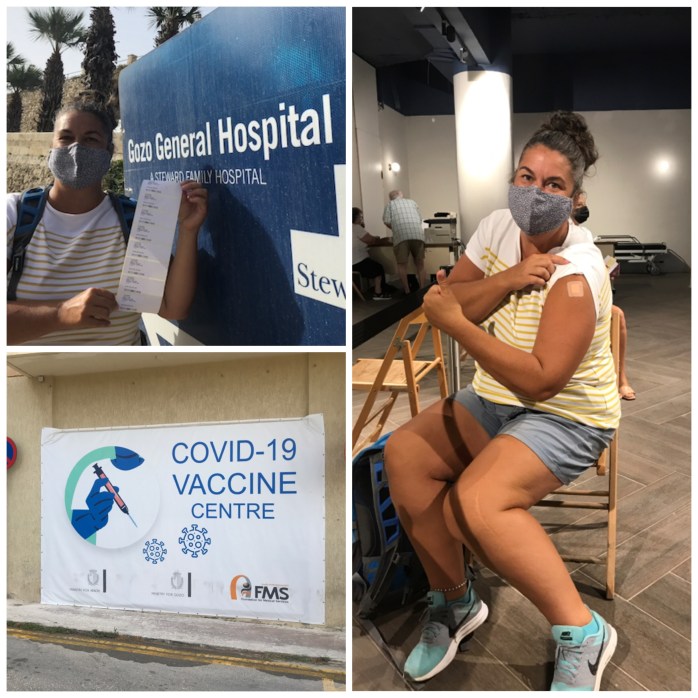
Fixing Stuff & Exploring Valletta

We booked two nights in a marina to deal with our “issues” and had the technicians booked in to visit. We docked at 07:30 and they were on the boat by 09:00 and even more thrilling was that by 11:00 our power issues had been resolved. The problem was a broken earth connection from the alternator and a failed heat sensor diode. They were also agents for Victron which is the make of our solar power controller which since new has intermittently emitted a buzzing sound. The technician took the details and contacted Victron who sent a replacement unit under warranty.

Solar Power Controller 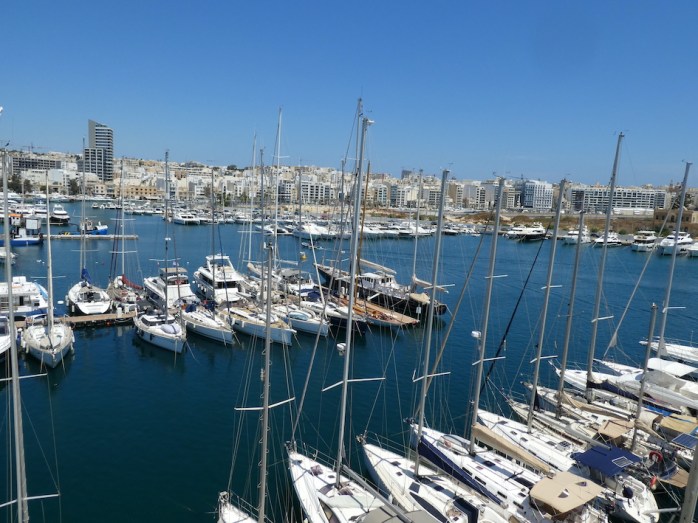
View from the top of the mast in the marina 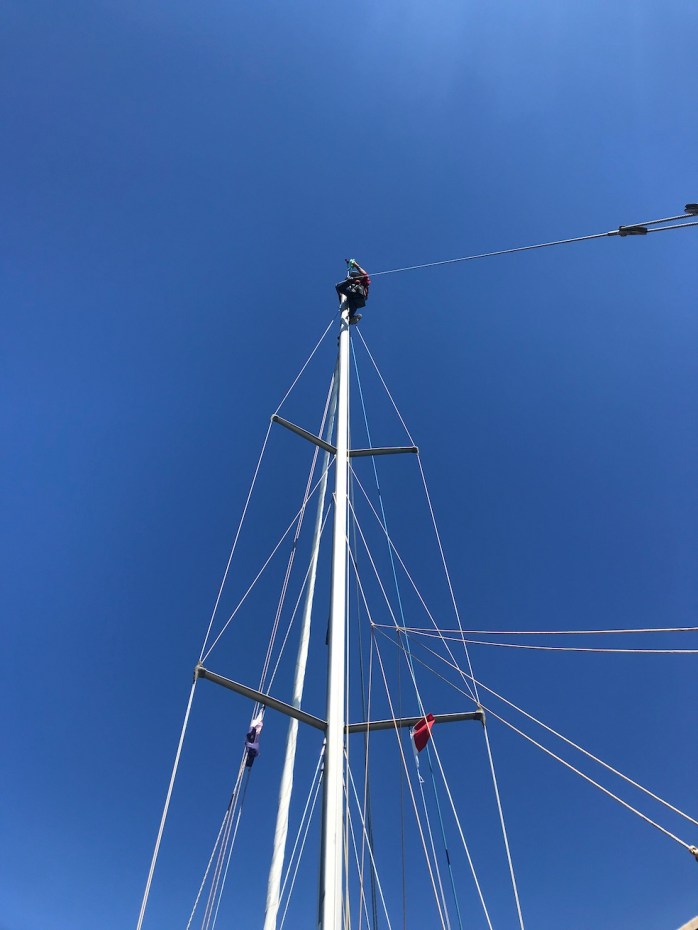
Phil up the mast again for the wind instrument 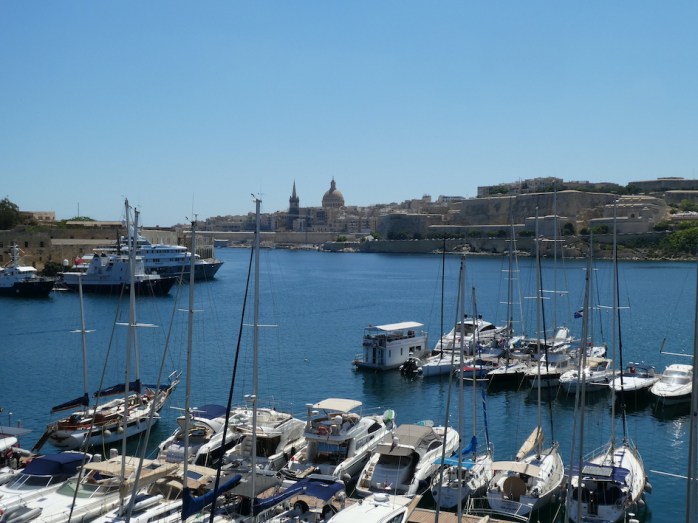
Valletta from the top of the mast at the marina
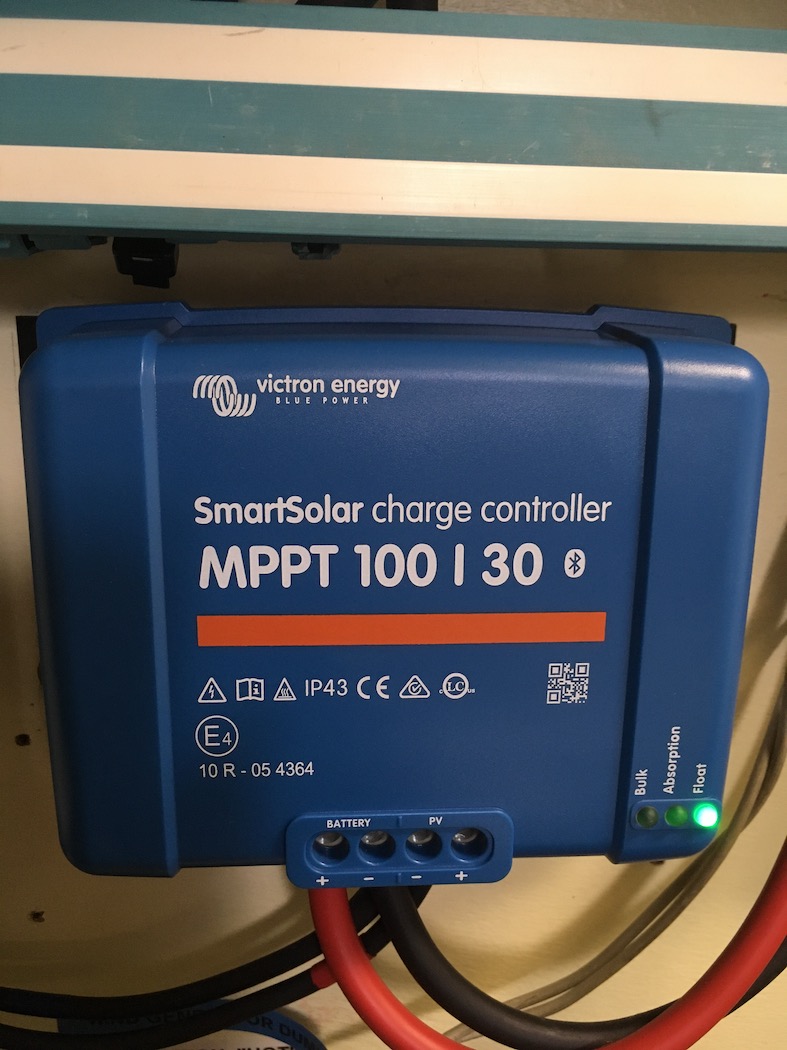
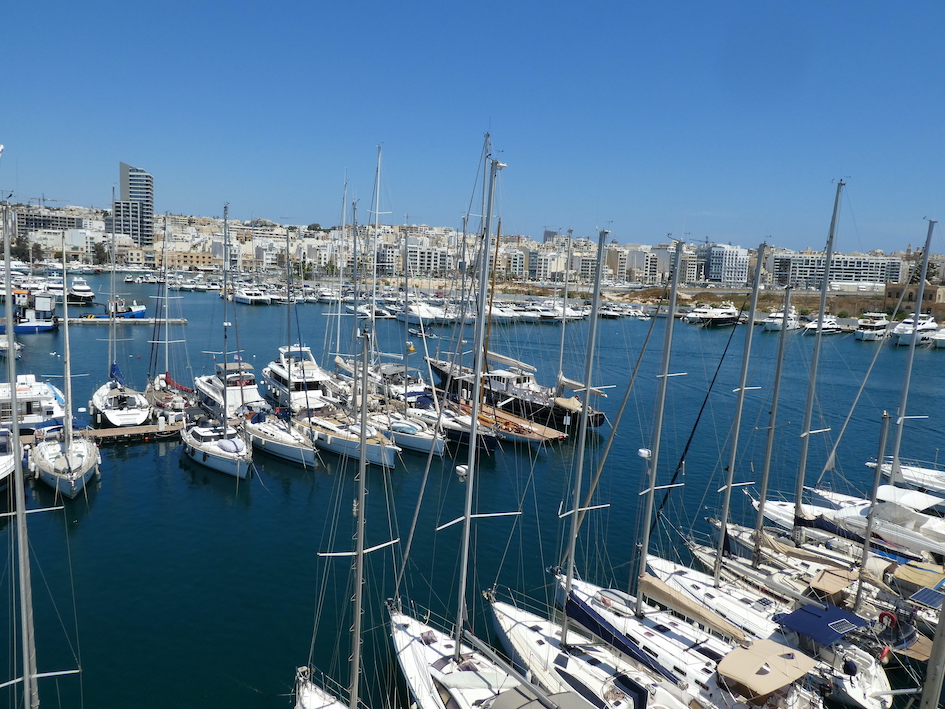


We didn’t have quite such a quick win with the wind instrument. The Raymarine technician was super busy even though we had previous contact with him and he was expecting us. He bench tested our wind wand (anemometer, the whirly gig at the top of the mast) on the second day and reported back that it tested fine. He then gave us instructions on how to self test the wiring between the wand at the top of the mast and the wind instrument display panel at the cockpit. They also tested ok and within parameters. His conclusion was that the instrument display unit was faulty and needed replacing. Of course they no longer make the model we have and he didn’t have the new model in stock but he told us where we could order it from – for a mere €500. Being the budget conscious cruisers that we are (without income) we managed to find out via the grapevine that a boat in the marina had recently upgraded his instruments and might, just might have a working spare the same model as the one we have. We followed this up as a priority and met Axel who was very generous in lending us both his old wind wand and display unit to see if they fixed our problems. Thanks Axel – we hope you and the family get to head off sailing on your own adventure soon. Whilst we didn’t need the wand, we replaced our display unit with his and initially upon install it seemed to have worked, however once calibrated it was displaying the same negative figures as our faulty unit – oh well it was worth a try.

Our new wind instrument display unit 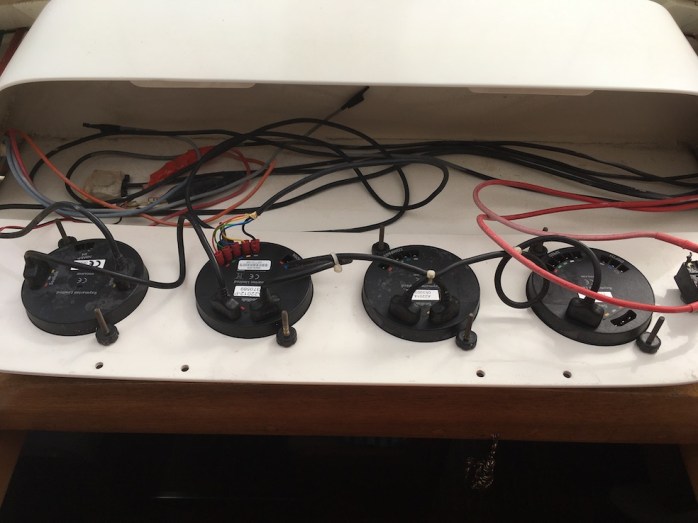
Behind the scenes
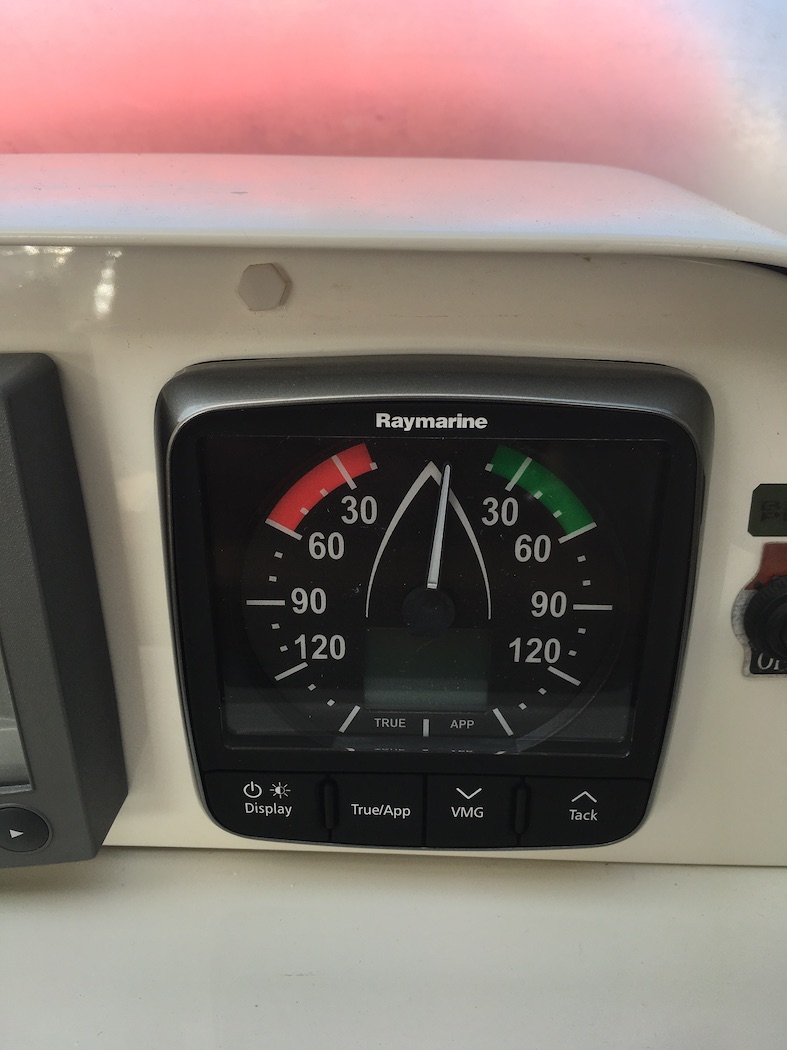

The end result was a week later we had to fork out the big bucks for the new updated model display unit, but of course that’s not all. It wasn’t as easy as plug and play, the cabling was different and required a €110 conversion cable set to make it work. It was luck that the local dealer had just received the model we required. We attempted to get the parts tax free (as we are not European citizens and would be exporting them) however it was too hard for the company and they came back with a no. However funnily enough when we handed over the cash they gave us a great discount of roughly the same amount as the tax we paid.
We left the marina and on advice from friends made in Tunisia ended up the following 5 nights on a vacant mooring inside Sliema Creek – thanks Blitz! – also a big thanks to whomever owned the mooring, we really appreciated it whilst we sorted our issues. It also allowed us to explore the nearby Valletta, the capital of Malta.
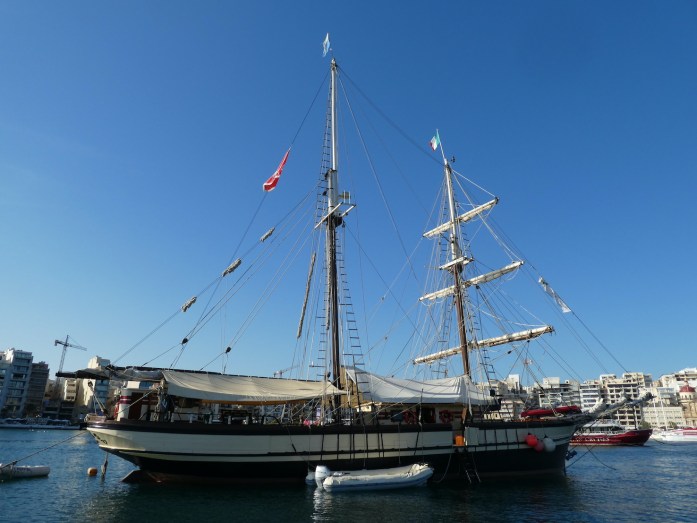
Tall Ship neighbour at Sliema Moorings 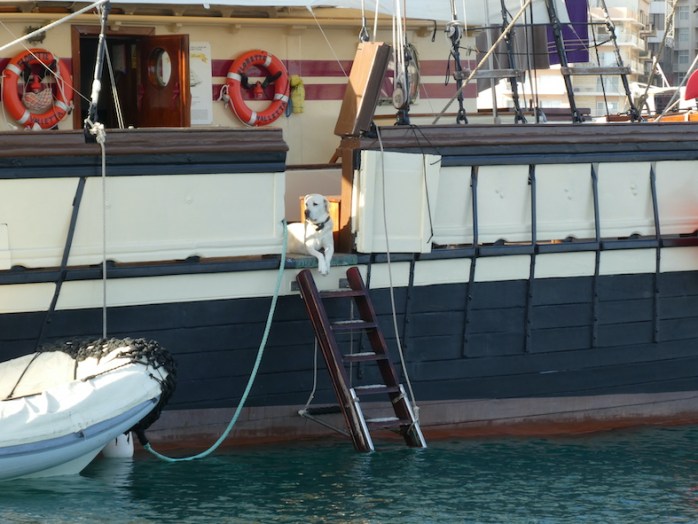
Bo (Bosun) the Tall Ships Dog


We had a super day with our Canadian friends Jean and Yolene (Caffe Latte) in Valletta. This is despite the two must see’s on our list St Johns Cathedral and the Theatre both being closed. Valetta is just 1 km x 630 metres in size, sits on a small peninsula with a population of 5,700 residents and was built as a fortress city by the Knights of St John in the 16th & 17th century making it a very small capital city and very very charming.

Entrance to Valletta 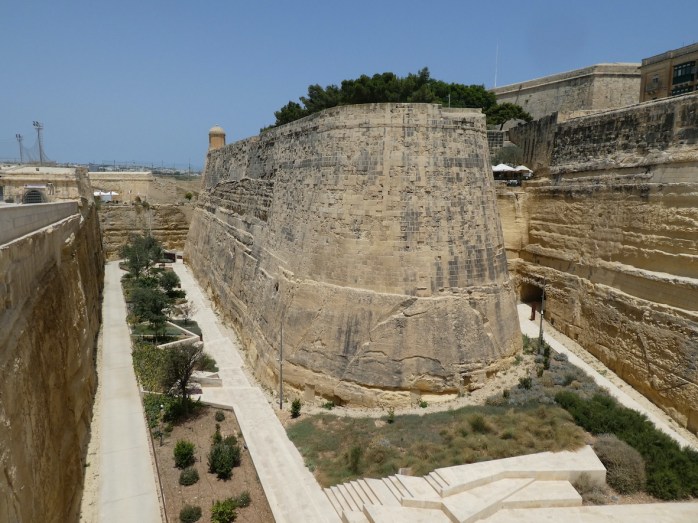
Valletta City Walls

The streets and most buildings are sandstone gold in colouring and the small hilly streets make for charming views down to the water on three sides of the city. We walked the coastline, the city streets, visited the two gardens which had magnificent views of Valetta’s Grand Harbour.




We also saw preparations for a wedding reception which was without doubt being held at the best location I have ever seen, at the gun battery overlooking Valetta Harbour, at night with the lights it would be spectacular. Almost makes one feel a little romantic – almost!!
Spectacular Wedding Reception Venue and Views

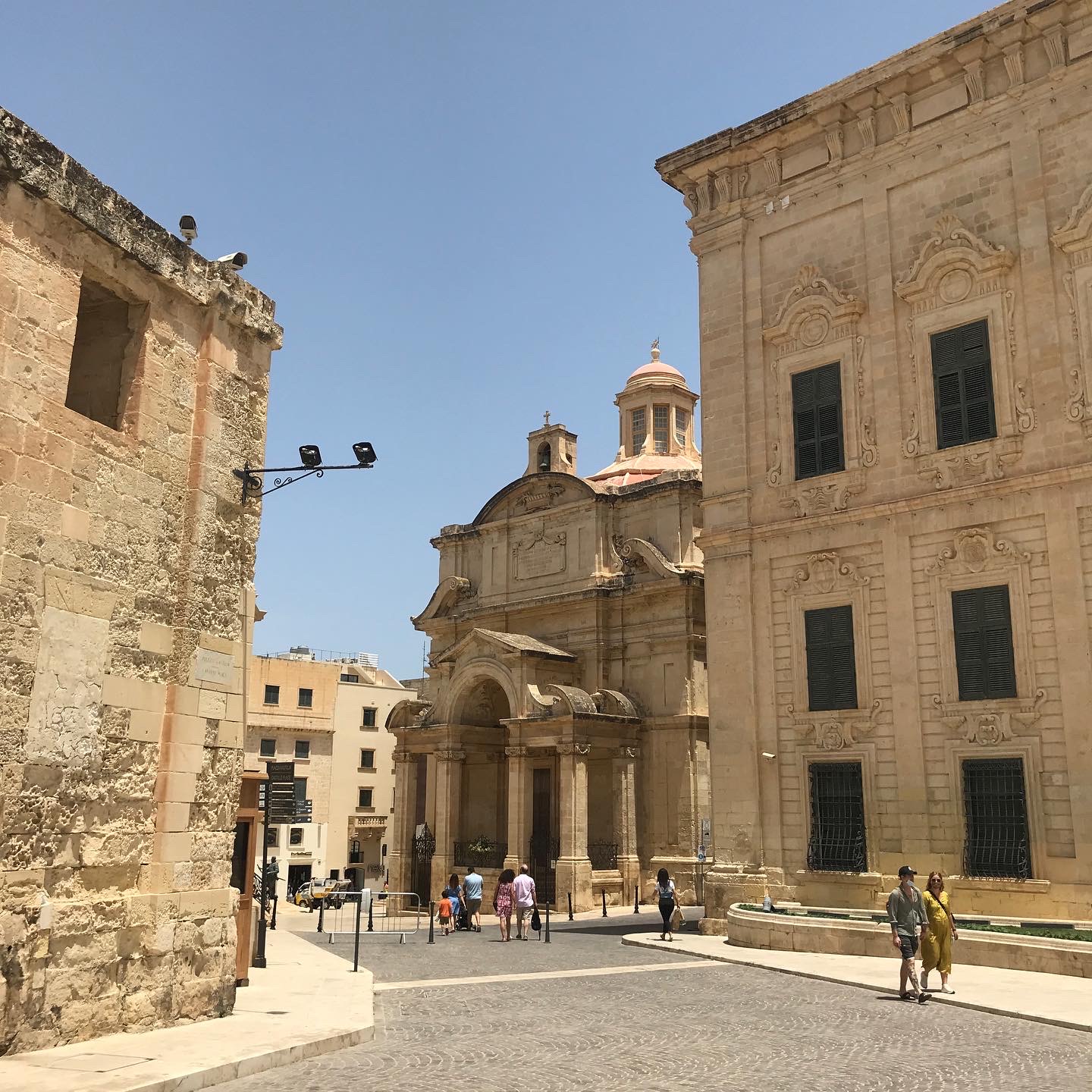
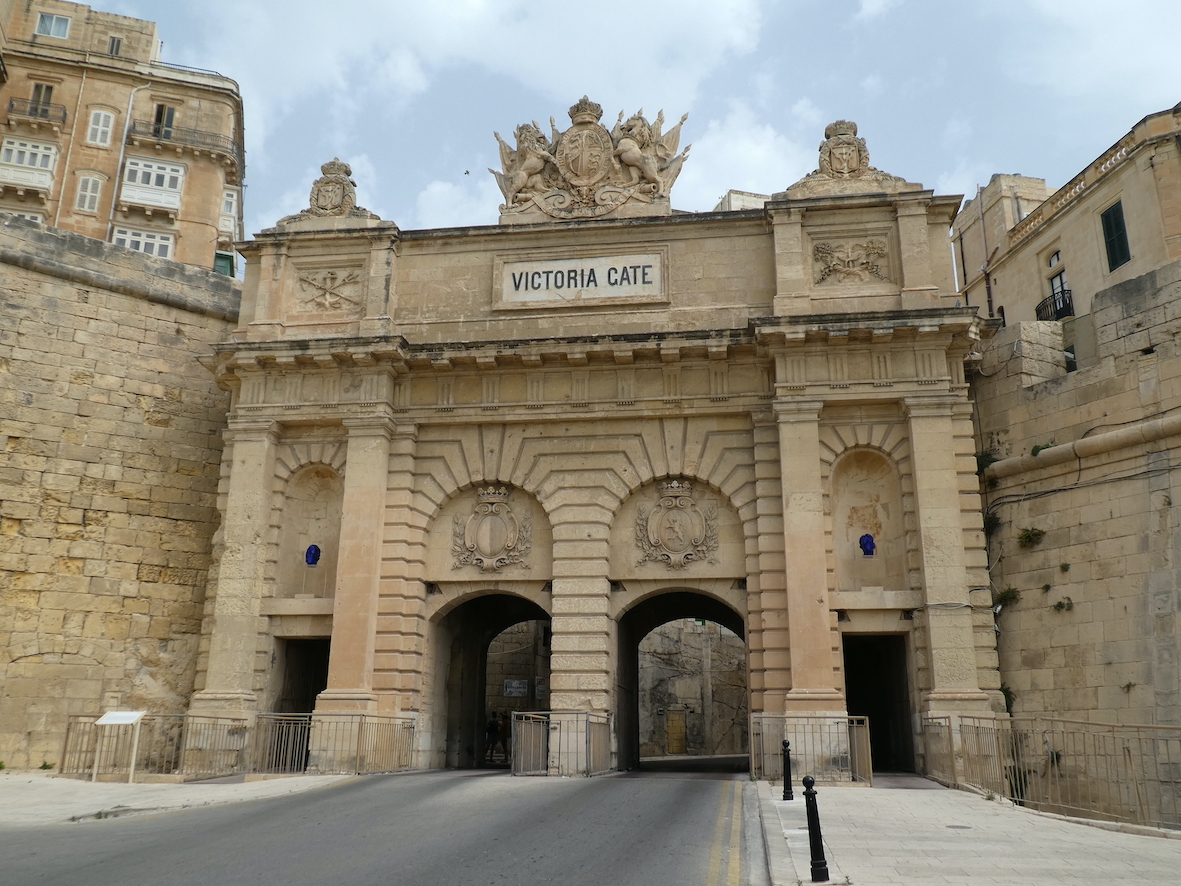

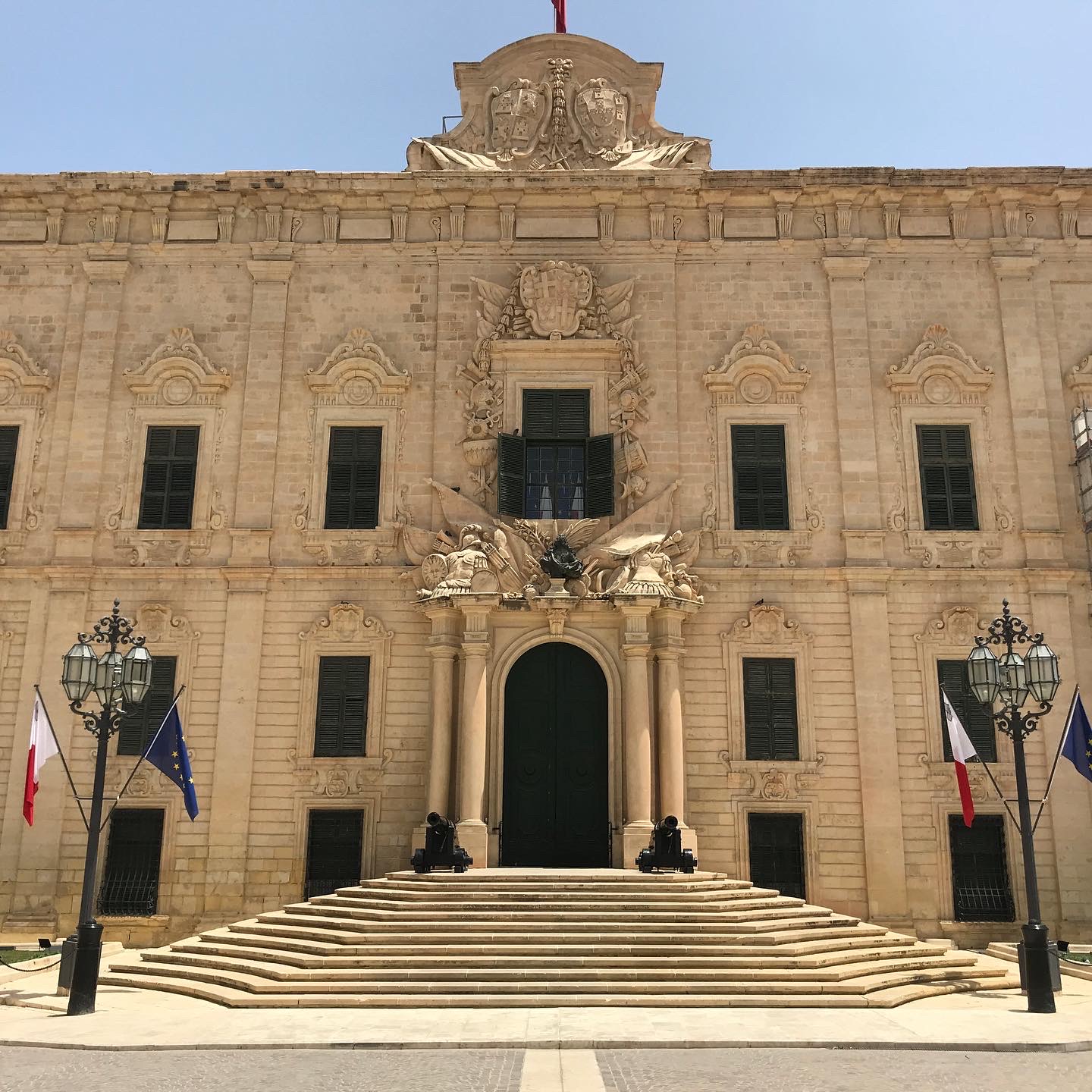

The following day we set out to explore the three cities on the other side of the
Grand Harbour from Valletta. The cities being Birgu (Vittoriosa), Senglea (Isla) and Cospicua (Bormla) but we only ended up seeing the one – Birgu, it was so lovely that time didn’t allow us to get around to the other two. I have always said I would’t live in a city and apartment style living wouldn’t suit me, but I stand corrected as these tiny streets with apartment style houses were so beautiful, I think it really helped that cars are not permitted in the streets.


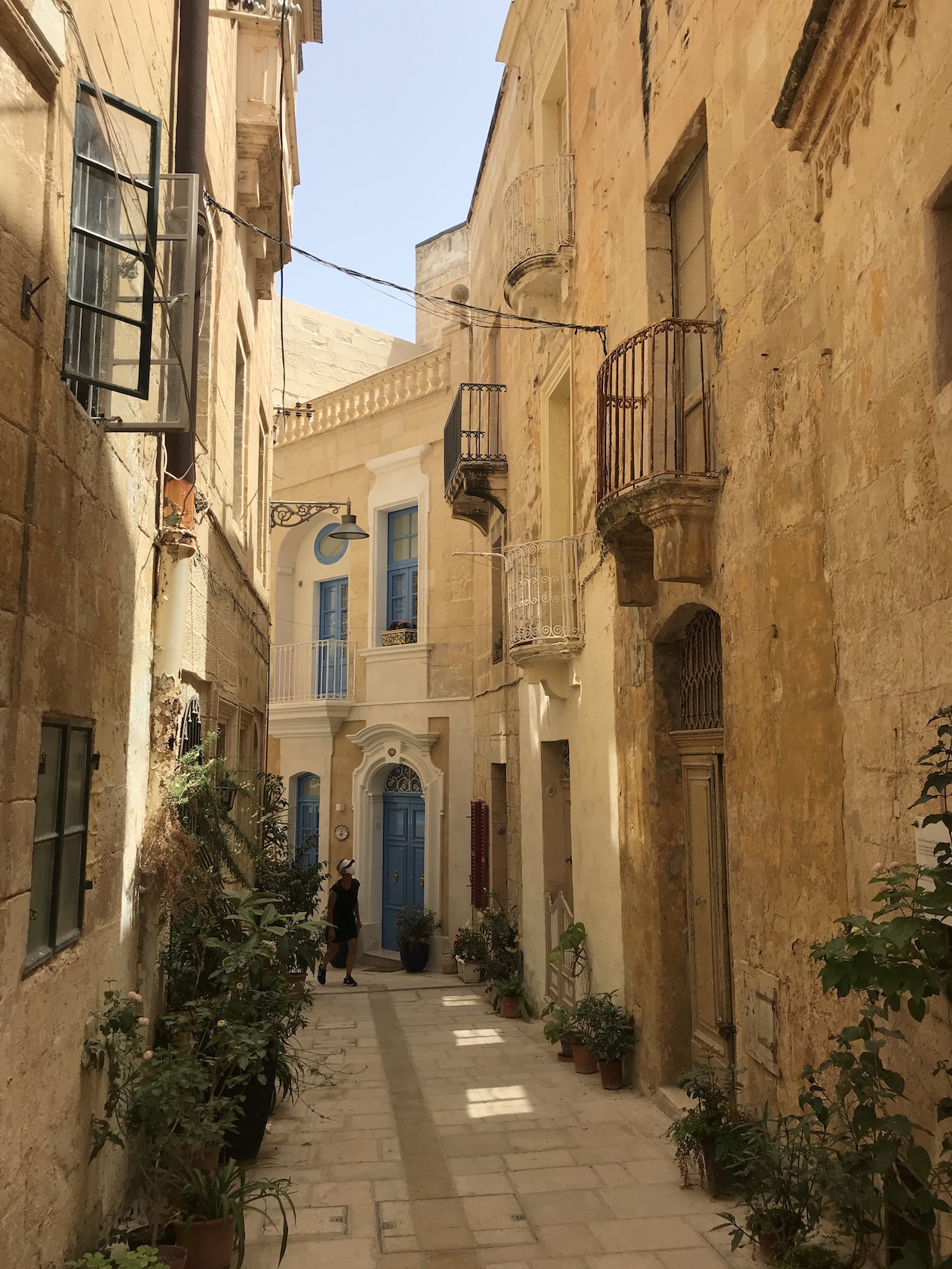
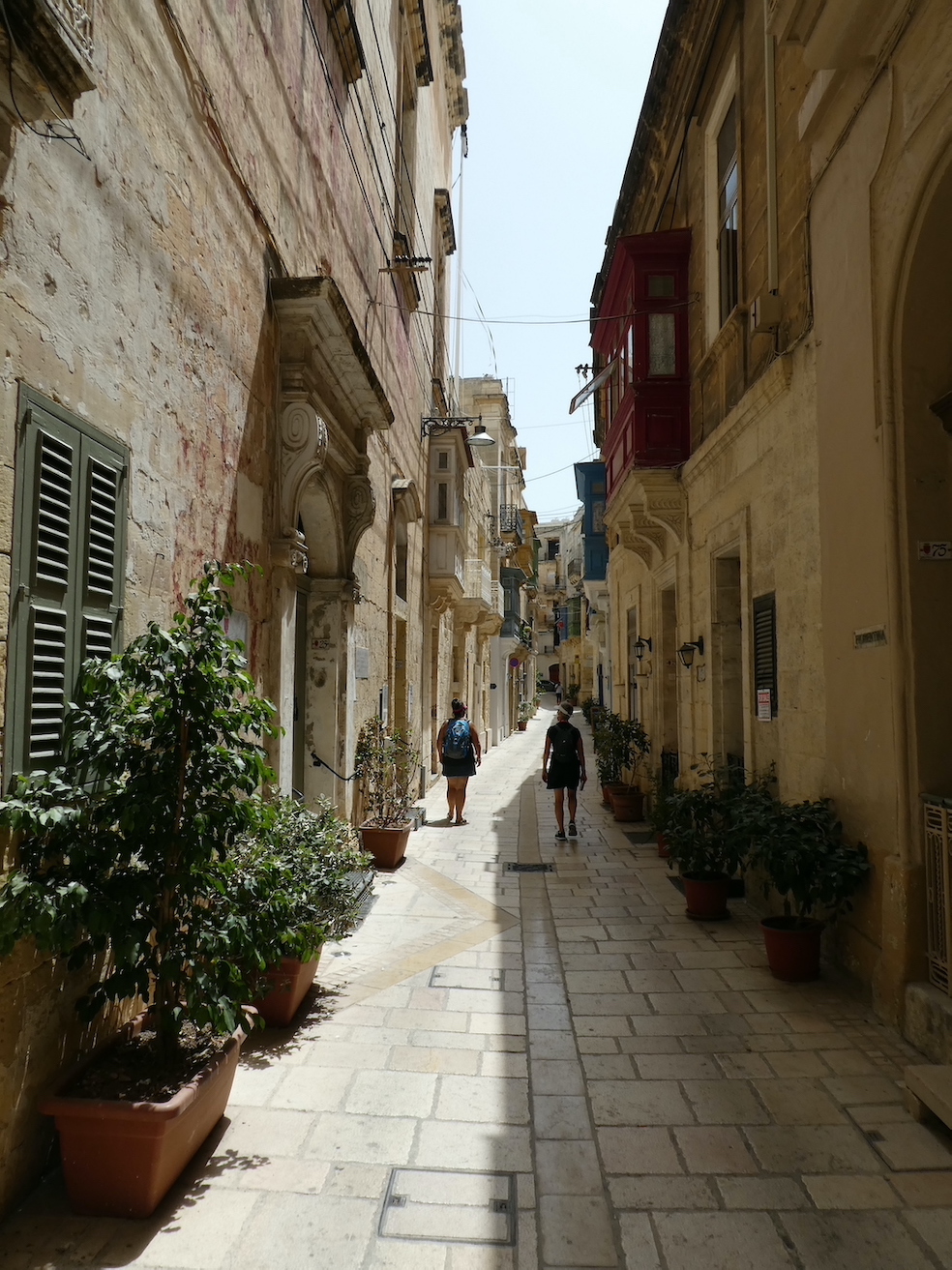
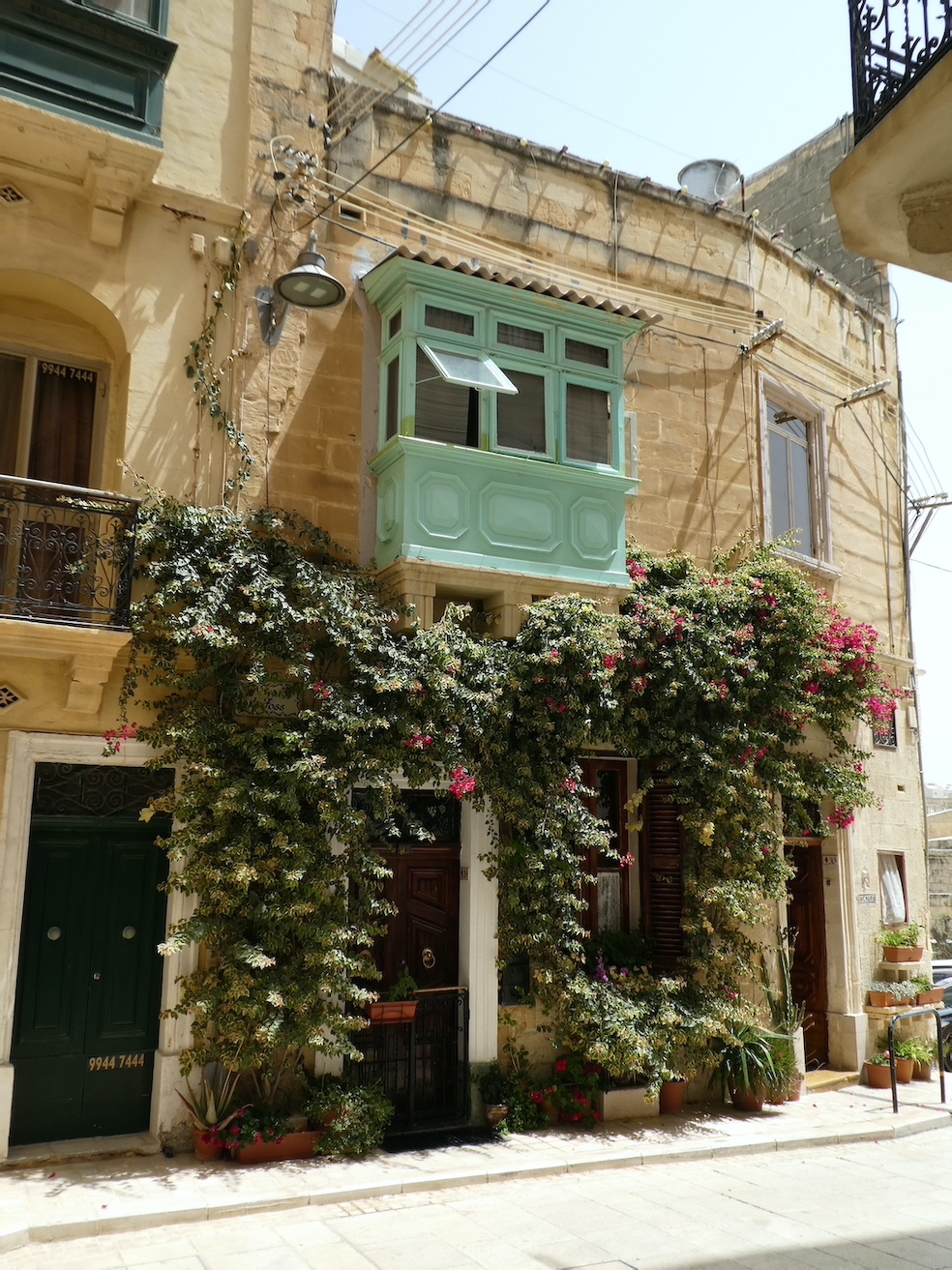
The other reason we only had time for one city as small (measuring only 800 metres long and 400 metres wide) is because we spent so long exploring Fort St Angelo at the point of the Birgu peninsula. We spent time learning about this 9th century stronghold for Valetta Grand Harbour, the invasion and war history of the city and islands. It originated as a medieval fort and in the year 1530 it was taken over by the Knights and rebuilt and strengthened. It was the home of the Grand Master for years and was the headquarters during the Great Siege in 1565. The British took over the fort in the 19th century from 1912 – 1979 during which time it was the headquarters of the Mediterranean Fleet.

The view back towards the 3 Cities from Fort St Angelo 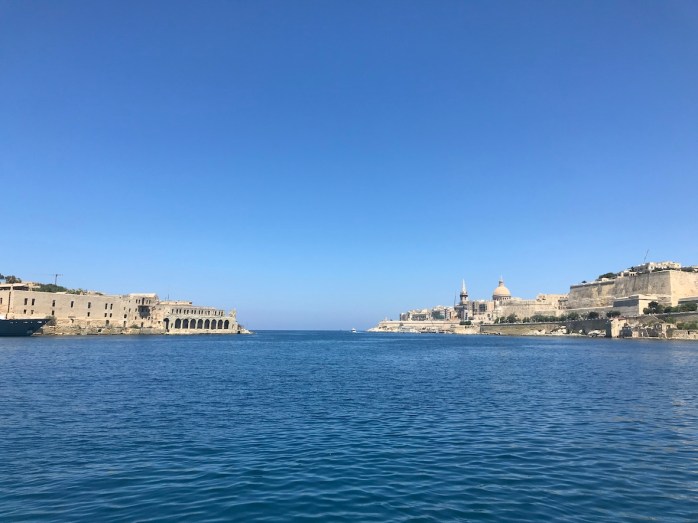
Our anchorage before the marina looking onto Valletta
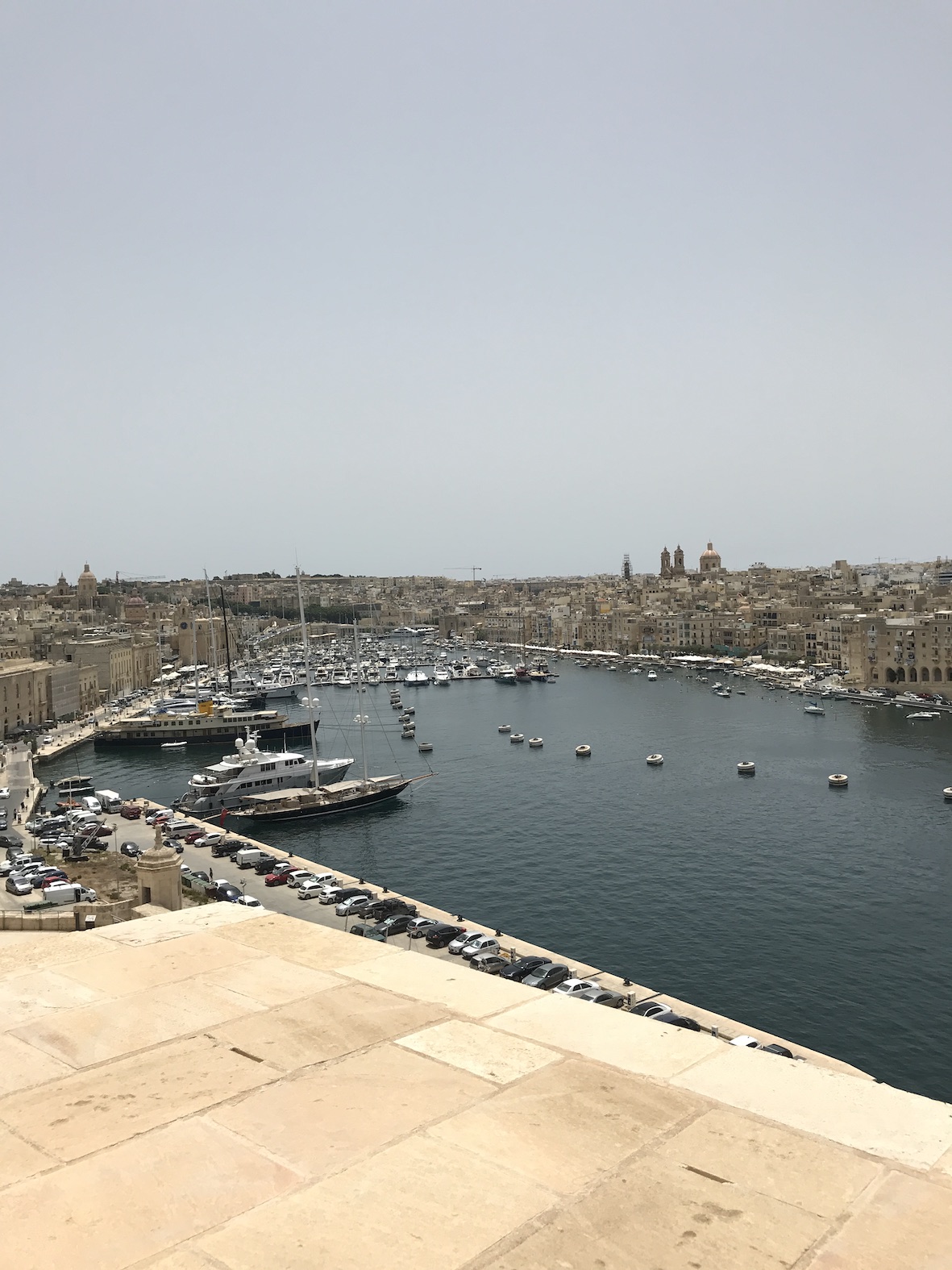
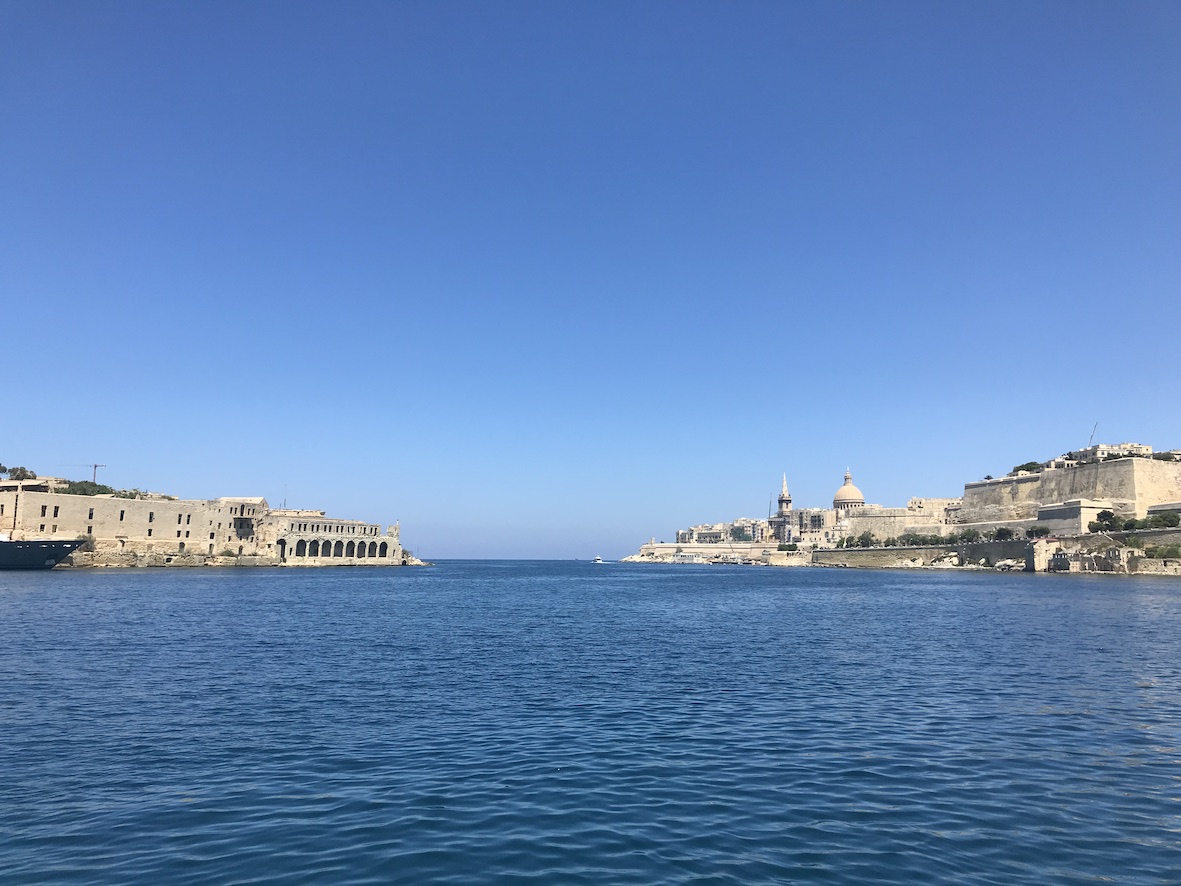
We then moved Red Roo from the mooring in Sliema around onto anchor in Rinella Creek (In Valletta Grand Harbour). This allowed us to take the dinghy across to Valletta especially to see St Johns Cathedral which was closed when we first attempted to visit.
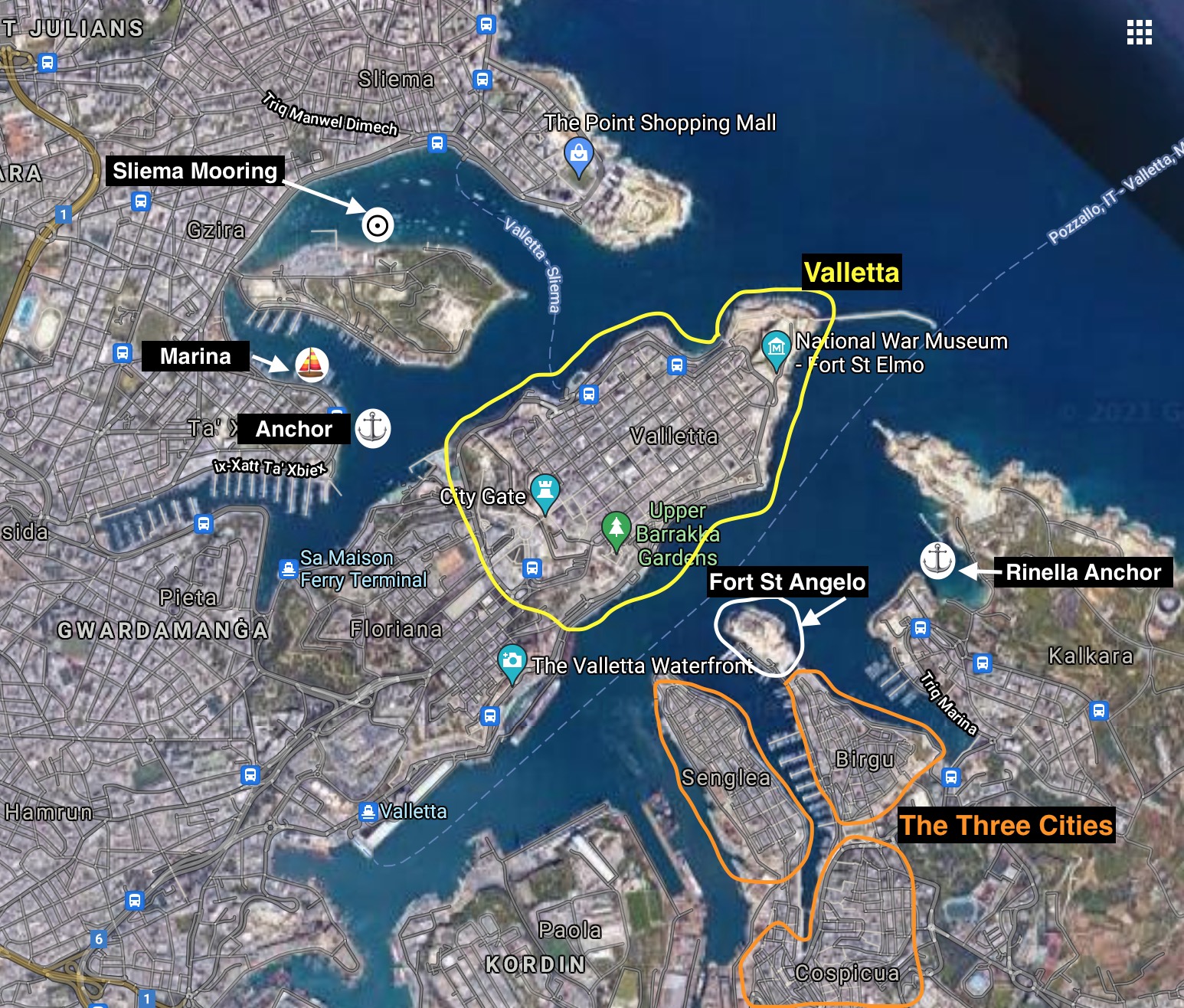
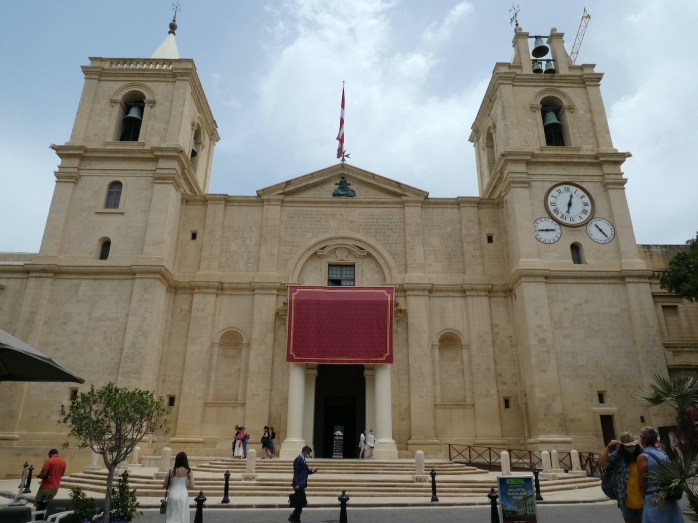
The unassuming facade of St Johns Cathedral Valletta
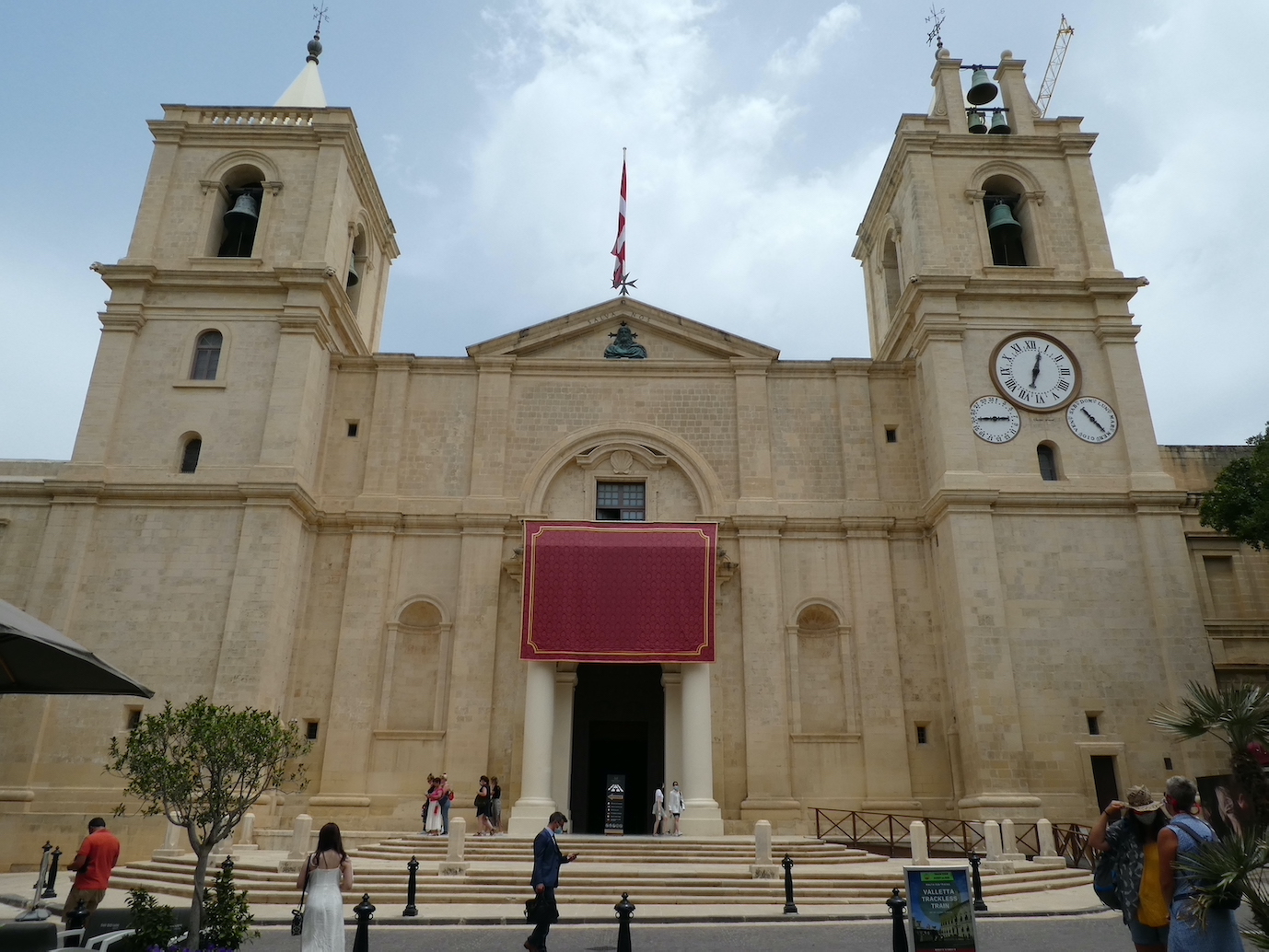
St Johns Cathedral has to be one of the most impressive churches I have ever had the privilege to visit. I have to admit at first I was a little put off by the entrance fee of €15 per person but now having visited I can first hand say it was well worth it. The plain facade on the outside of the cathedral renders the interior a real surprise. The nave (main hall) is surrounded by six bays on each side which are each dedicated to the various lunges (or Knights divisions based on nationality) of the orders of St John and dedicated to their patron saints. I will let the pictures tell the story of the beauty inside the walls. We completed the self guided audio tour which took around 90 minutes and learnt a lot about this magnificent building (built between 1573 & 1578) as well as the Grand Masters and Knights of St Johns, religion, martyrs, art, paintings, beheadings and history. Most impressive for myself is the floor which is entirely covered in intricate inlayed coloured marble tombs, which are the resting places of the knights who fell during the great siege, (high heels are banned from entering the building in order to protect the floor).
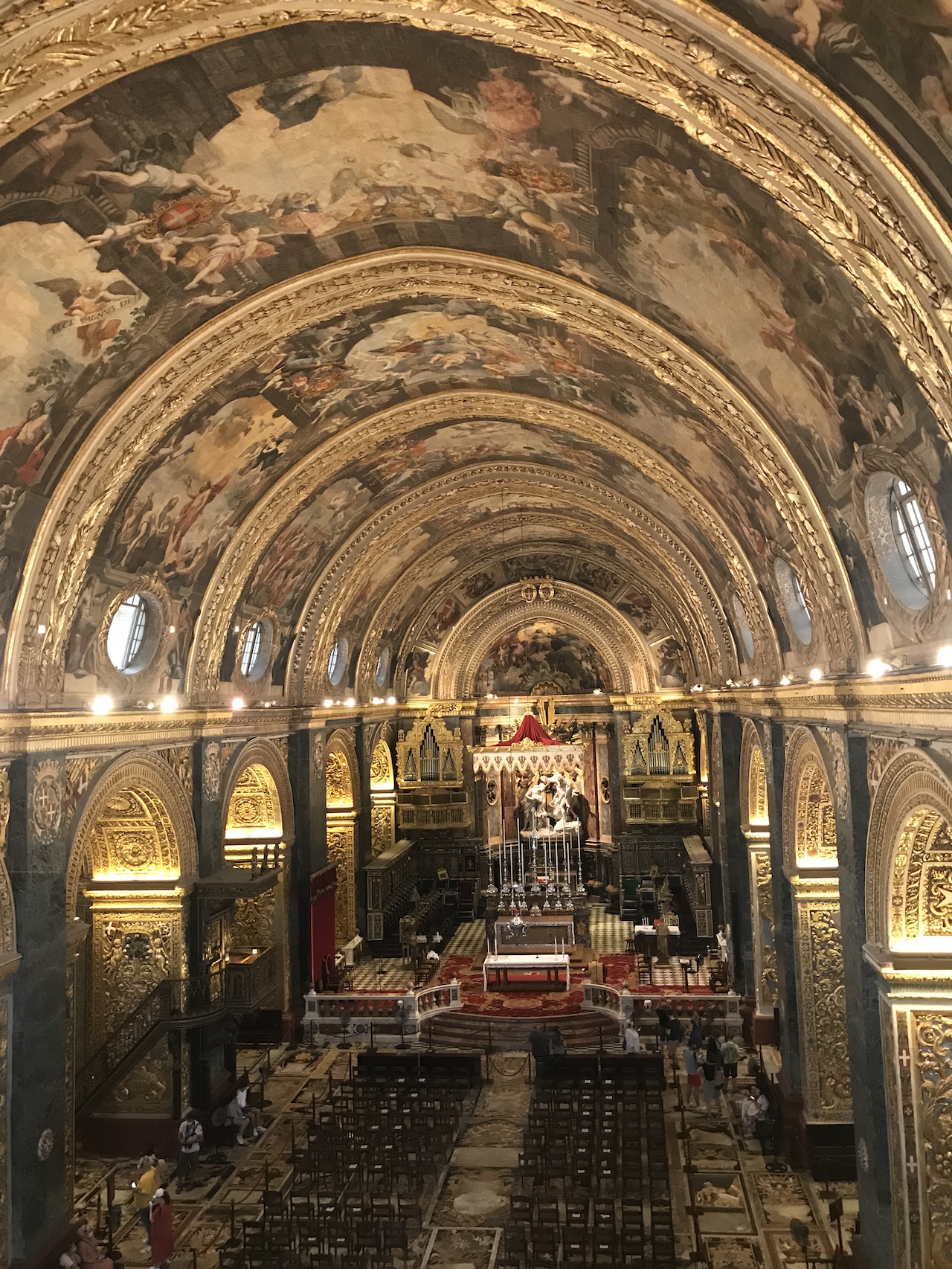
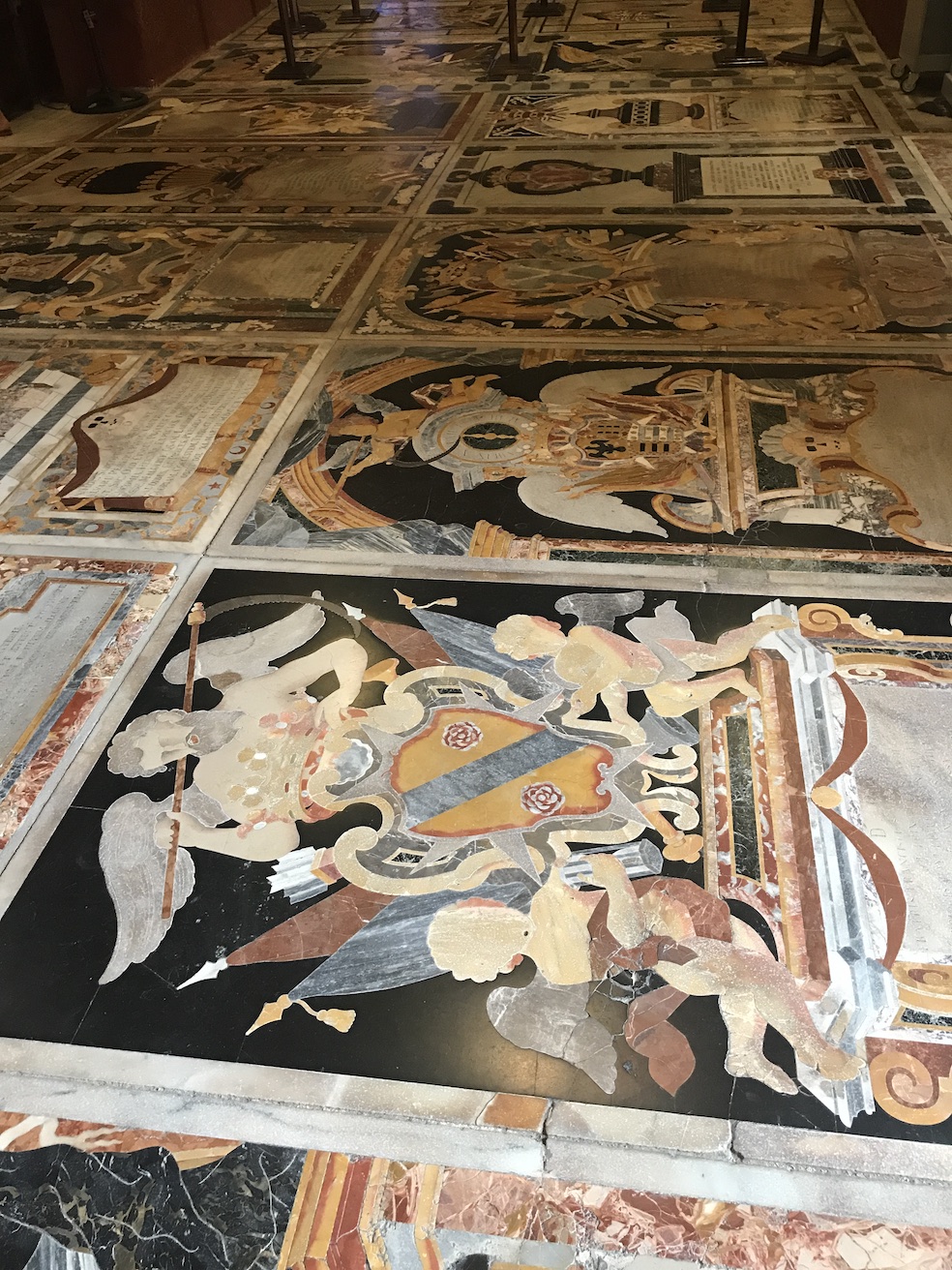
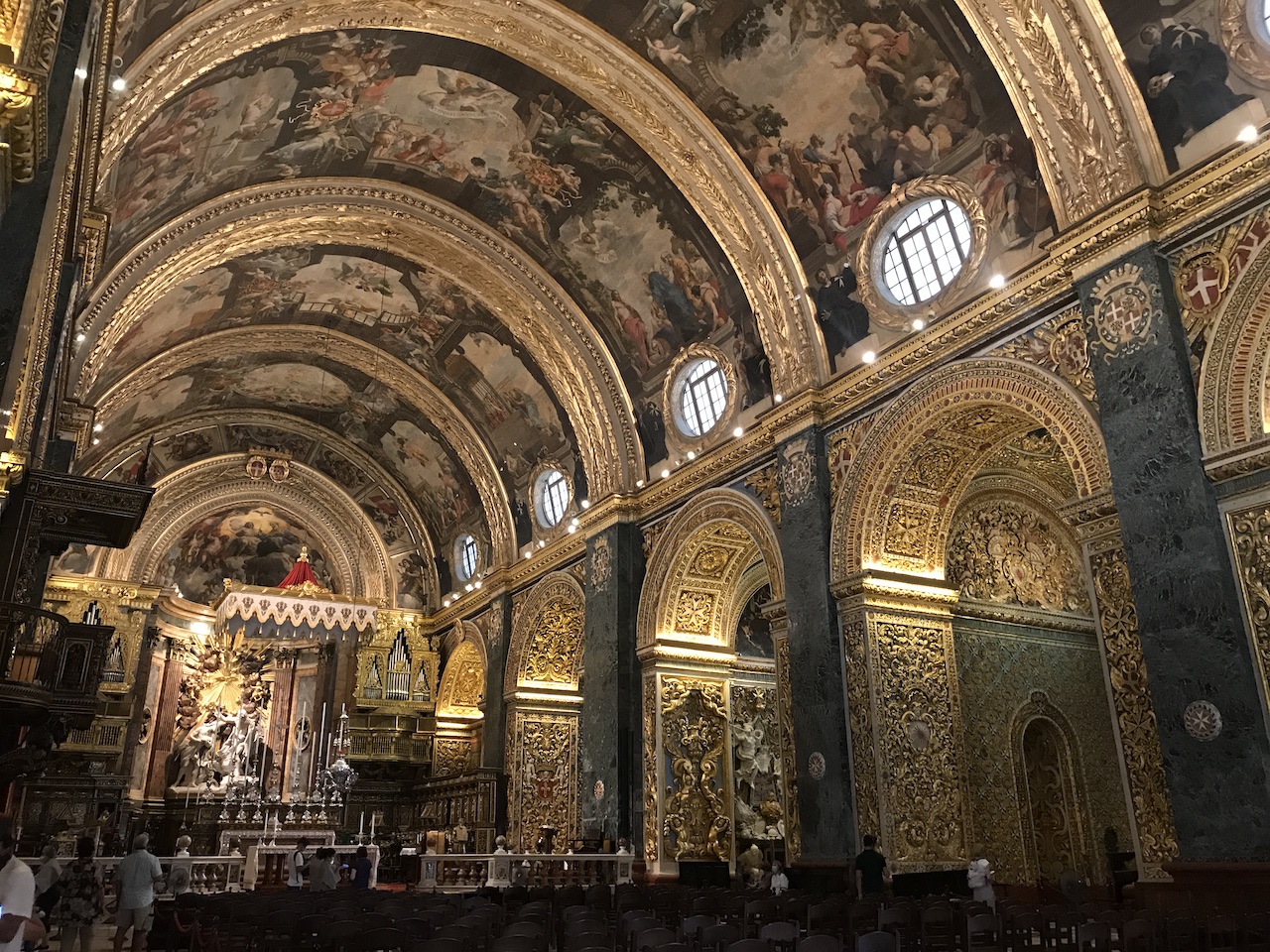

Malta just keeps on impressing us, it has many fantastic well protected good holding anchorages and each adventure on shore shows us so much more than we expected.

 Red Roo
RECENT COMMENTS