Chefchaouen & The Rif Mountains – Winter in Morocco
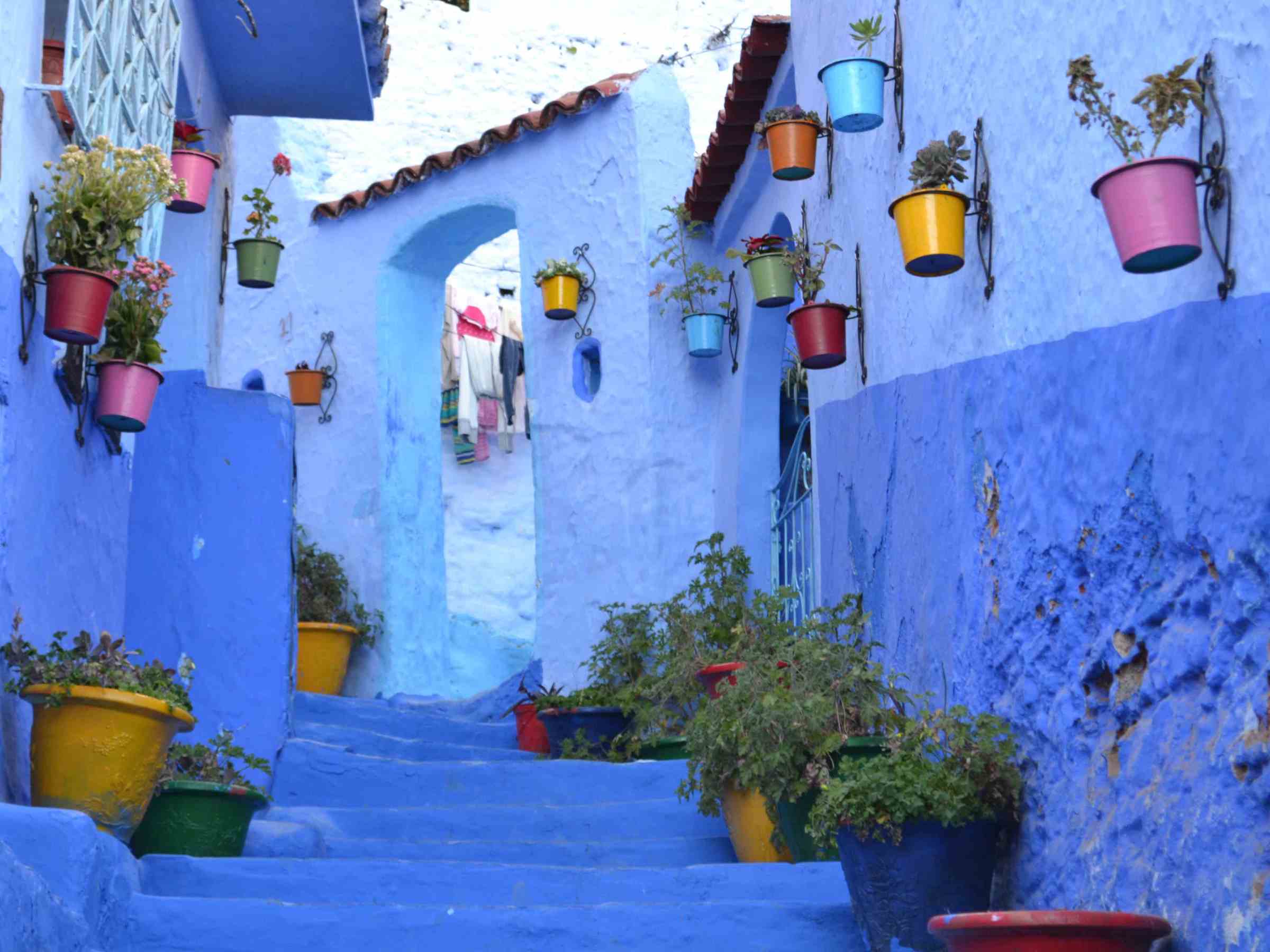
The new year arrived in Morocco and whilst the weather is mild for winter to say the least, the winds have been having a bit of a blow so we decided to stay for an extra couple of weeks before heading into the Mediterranean.
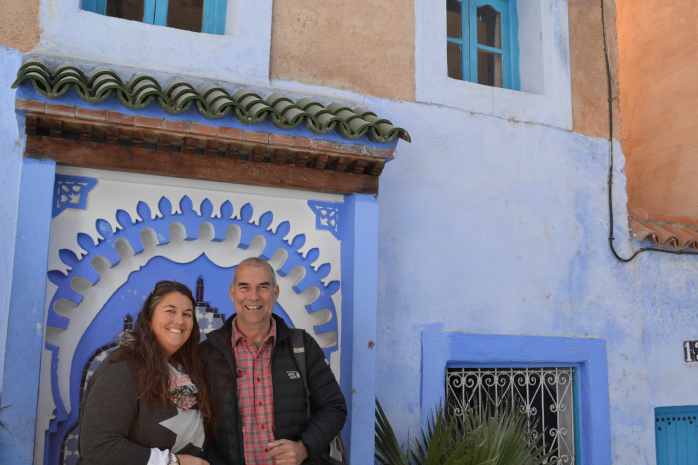
During an exceptionally social evening on board Red Roo (3 bottles of champagne before the multiple bottles of red were opened), celebrating a certain Captains birthday with an international contingent made up of Australians, Canadians, Americans and Dutch folk a plan was hatched to visit Chefchaouen a town nicknamed the “Blue Pearl”.
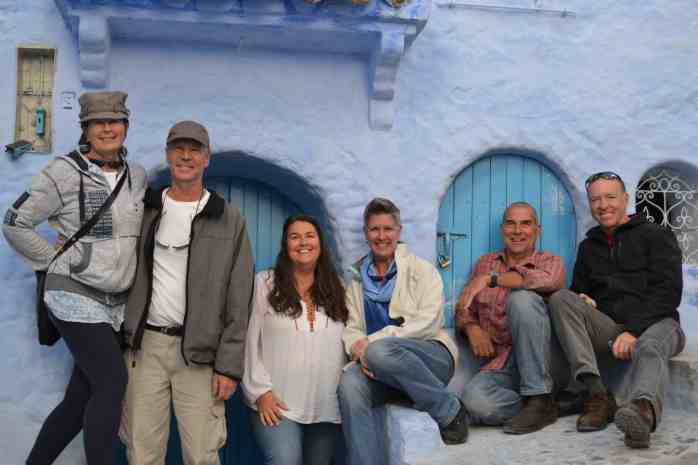
Chefchaouen is located 120 km away and a grand taxi costs just 70 dirham (€7) per person for a seat from Tangier to Chefchaouen (the taxi fills all seats before departing) but our group of 6 sailors filled the taxi – perfect. We had the pleasure of sharing this adventure with two other crews from boats in Tangier; Jean & Yolène of Caffe Latte and Tony & Shannon of Sweetie.
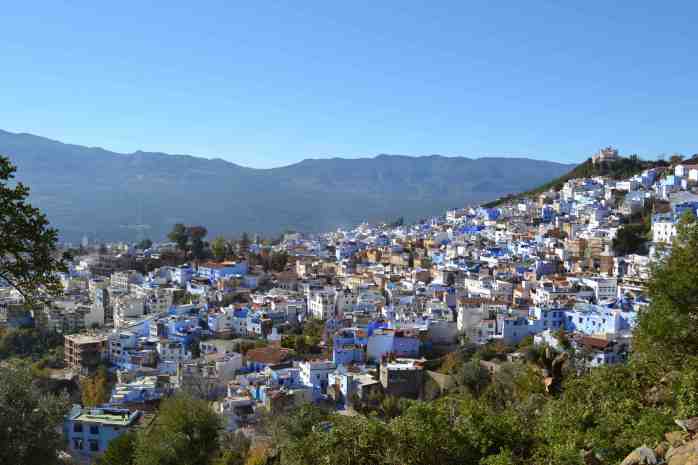
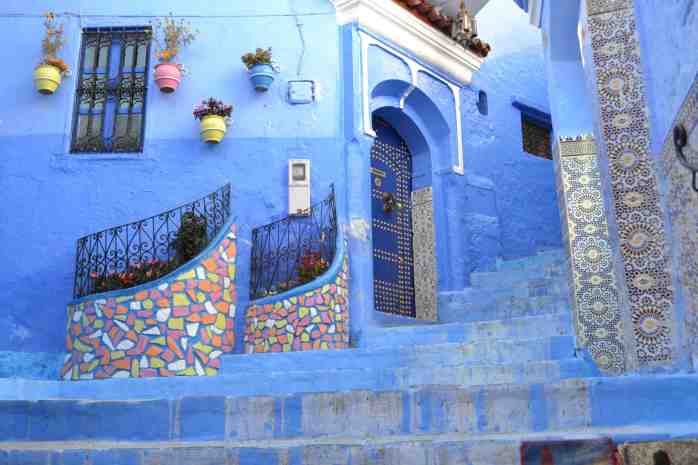
It was a two night adventure and the best of Morocco we have seen so far. Beautifully perched beneath the raw peaks of the Rif Mountains, Chefchaouen is one of the prettiest towns in Morocco, an artsy, blue-washed mountain village that feels like its own world. While tourism has definitely taken hold, the balance between ease and authenticity is just right.
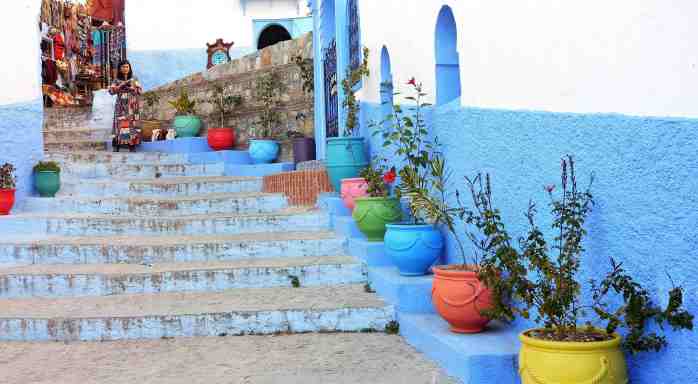
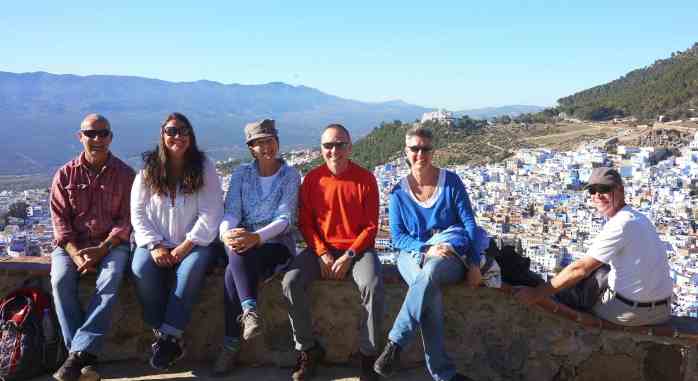
Chefchaouen is much quieter than any other Moroccan towns we have visited. Instead of vendors inviting you to their shops, you’ll find quiet men waiting for you to ask them about a price. Streets are be filled with locals enjoying their days and echoing laughter from the children playing ball.


No-one really talks about why is the Medina blue. What we do know is that Chefchaouen was established in 1471 by Mulay Alí Ben Rachid, however in 1492, during the Reconquista of Spain the Jews were expelled from Spain with many of them fleeing to Morocco and establishing their own enclave in Chefchaouen. Apparently the Sephardi Jewish community that settled in Chefchaouen brought along their tradition of painting buildings blue. They believed the blue is the colour of the sky and divinity, so it would remind them of the presence of God. The tradition is also actually present in other places, such as Safed in Israel.
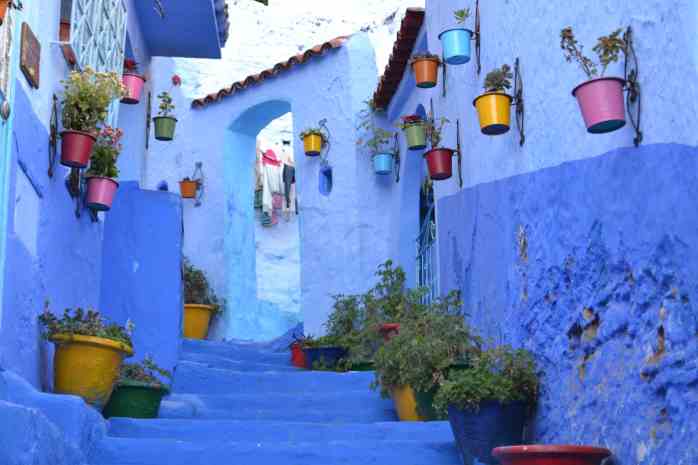
Others however believe that the colour repels flies and mosquitos well, so it was a practical solution as well. Whatever the origin the effect is very special.


The city was actually closed to all the foreigners especially Christians under the threat of death, until the beginning of the Spanish occupation in 1920. The town had remained so closed off from the rest of the world that when visitors actually got in they reportedly found its Jewish inhabitants were still speaking a 15th-century version of Spanish.
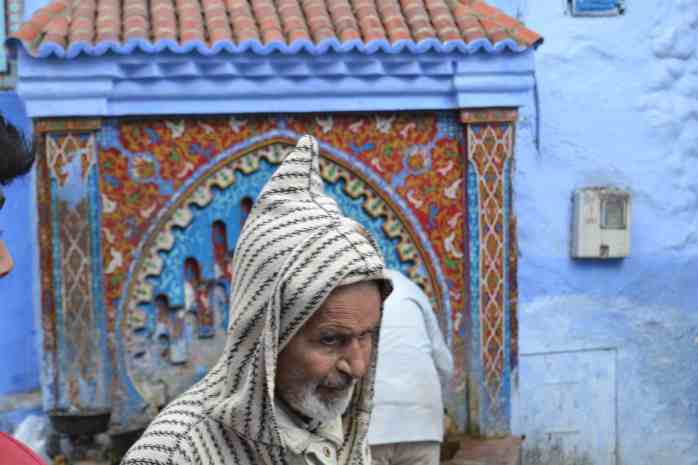
After the WWII, most of the Jewish families left for Israel, but Moroccan Berbers continue the blue tradition despite the blue washing off the walls quite easily. The local government supplies special paint brushes to assist in efforts to keep Chefchaouen’s history alive.

This all blue town is a photographer’s dream and you can wander here for hours and just be in awe the whole time. It’s a little out-of-the-way compared to the big draw cards of Morocco making it less touristy than other spots but it’s very much worth a visit.
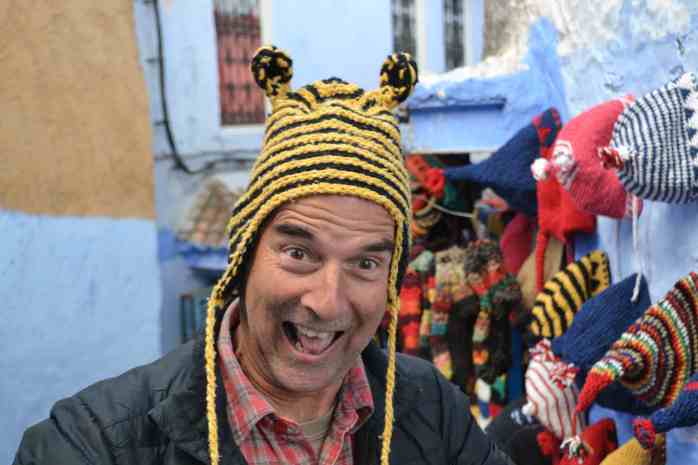


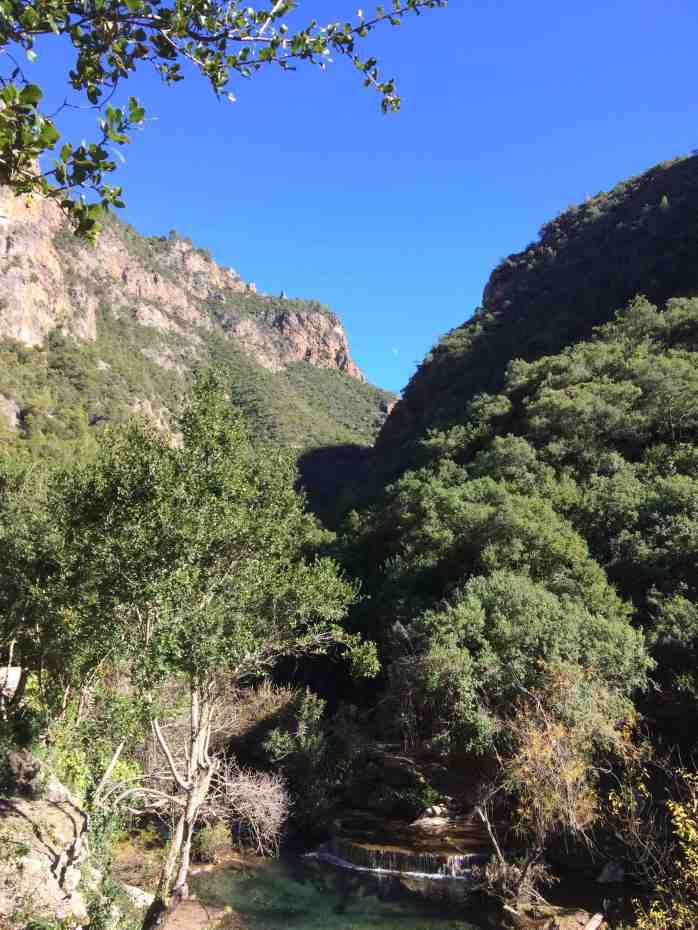
What we really liked about Chefchaouen was its location in the Rif Mountains. The air felt clean, and as soon as we arrived we felt relaxed.
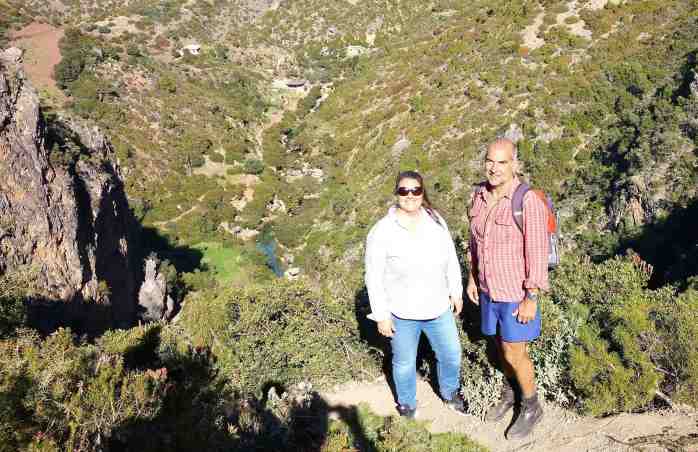
This tranquil, beautiful region also holds a surprising secret; it produces half the world’s hashish! There is more ‘kiff’ or marijuana here than you can poke a pipe at. Phil was offered a buying opportunity at least three times each day we were there.

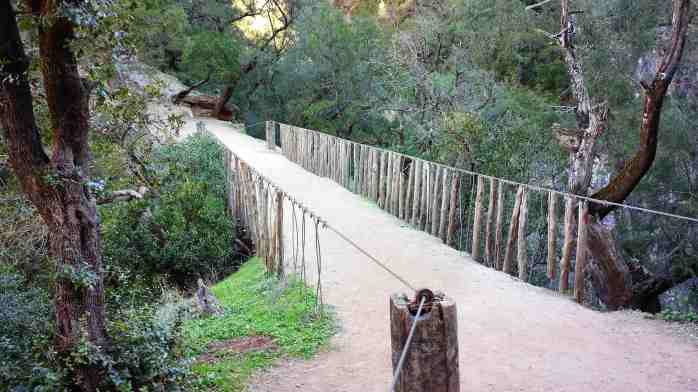
Being in the Rif Mountains meant that day 2 of our visit saw us huff and puff over two hiking tracks nearby at Akchour.

Being winter we had the place virtually to ourselves, but the temperate was perfect and a lovely bright clear day, we declined the offer of a local guide and set out alone enjoying spectacular scenery especially during the climb to God’s Bridge and the crystal clear water pools on our way to the Grand Cascades.


Morocco Part II Exploring Inland

Marrakech, Atlas Mountains, Sahara Desert & Fes
We were both very keen to explore more of Morocco than just the coast and Tangier so after learning the best and worst bits from fellow boaters who had recently done the same and advice from friend Mel Devlin back in Australia we put together a plan and left Red Roo for a week to explore inland.
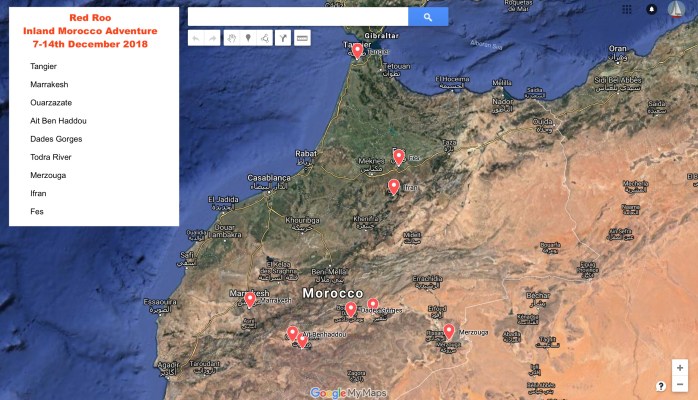
We flew 600 kilometres from Tangier inland to Marrakech the flight taking an 1 hour and costing just €30 a ticket.

We were dropped off at a gate outside the walled old city Medina and within 50 meters of being inside had stopped to observe and interact with a guy who was making small chess pieces from wood using his feet to hold a chisel while one hand turned the piece and the other controlled the lathe via a bow string. The intricate pieces were a credit to him. He gave us a “gift” which was an even smaller carving he had made. Then he asked for a “gift” in return – money. I was on red alert already and as much as I wanted to explain that a gift meant giving with out asking for anything in return, we sucked it up gave him a Dirham, to which he replied it wasn’t enough and asked for more and we learnt our lesson, it was only a few cents and he was nice enough and did entertain us with his craft. Funnily enough 20 meters further along there was another man doing the same thing (one of many), but this one stood out as being safety conscious as he was wearing socks!
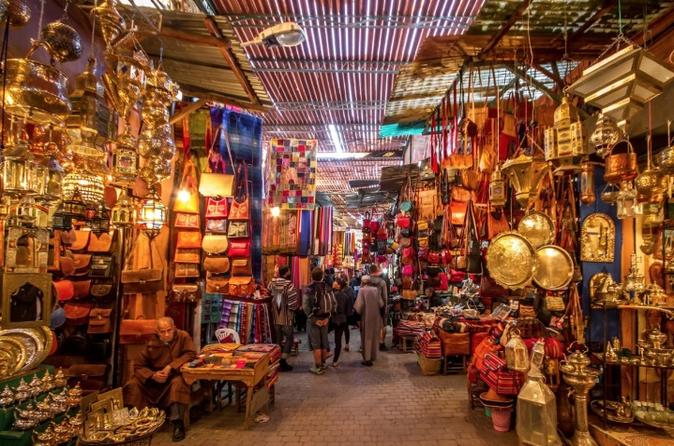
Marrakech also taught us how to haggle to buy goods, however we have found this really differs in each town and is really different back in Tangier and different again in Fes. The first item we brought was a piece of leather hide (roughly a meter square but of animal shape), we use this on rubbing points on the boat to protect the sails where they touch the rails and spreaders. The store holder said the price was 280 MAD (Moroccan Dollars – Dirham). We negotiated a bit but said it was too expensive and walked off. He chased us down the street and we eventually brought it for just 125 MAD (about €12) less than half his first asking price.
Our next experience was with a Herbalist, of which there are hundreds (no exaggeration) within the Medina. This one was in a courtyard and part of a cooperative which put all profits to a charity for disabled women. He spent a long time with us explaining what all the natural products were and we finally found out the the thick brown sticky like substance we had been seeing everywhere as actually soap!, the terracotta pots actually contain natural dye and when wetted is used as lipstick or blush, and the rough surface is used as pumice stone, the wheat like bulbs are natural toothpicks, and much much more. But what really sucked us in was his natural cure for snoring, oh could it be that easy???? It was natural snuff mix of nigella seed and a special ingredient …. crystallised eucalyptus oil!! We laughed and told him we were Australian and it was a native Australian tree. He poured us mint tea (delicious) as we decided we would purchase some of the special anti snoring and sinus clearing snuff. For this we didn’t need to haggle (a relief) as it priced per 100 grams, and he threw in a lipstick, pumice stone and toothpicks for free. We really enjoyed our time in his shop and didn’t feel pressured or hassled at all. He was located very close to our Riad (accomodation) and told us we were welcome to join him for tea (free) anytime, and he readily greeted us each day when he saw us walking to and from our Riad. A bonus of spending the time with him and learning about their natural treatments was that for the next 5 days every time we passed a herbalist shop and were hassled with “guess what this is” and “I have special medicine for you” we knew what the items were and could fend off the attempted sell and invitation into their shop without being rude. A real bonus! Pictured below; Phil taking the snoring snuff, tea with the Herbalist and Moroccan Soap.


Another shop that appears in the hundreds within the Medina are the intricate woodwork products shops. Their craftsmanship is truely wonderful and the “big sell” for them are the magic boxes. They are very cleverly made and are a real trick to open. After spending some time in a shop admiring the work and Phil buying a trick box (pull the box handle a snake comes out and nips you) I was told the secret in how to open the magic boxes. We used this to our amusement later in the day when for what seemed the hundredth time when a shopkeeper was trying to pressure us into his shop to see the magic box Phil replied to him that if I (Maree, who was looking at another shop nearby) could open the box could we have it for free? The guy readily agreed and Phil called me over and the shopkeeper gave me the box and said try to open, I opened it, and Phil said “It’s ours for free” to which the guy said “no, it was free to try to open” we all laughed and we left.
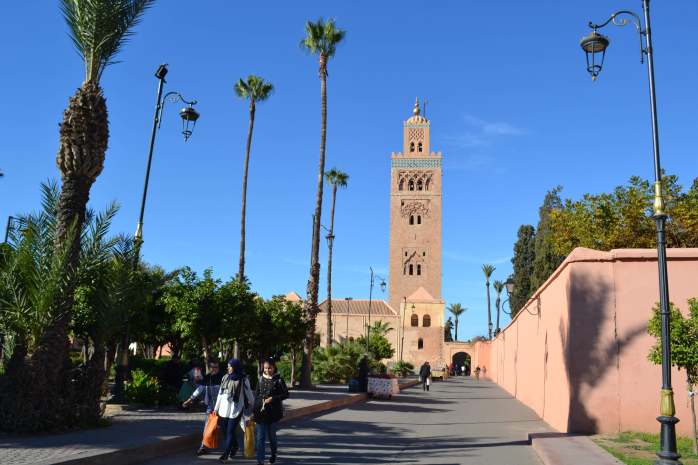
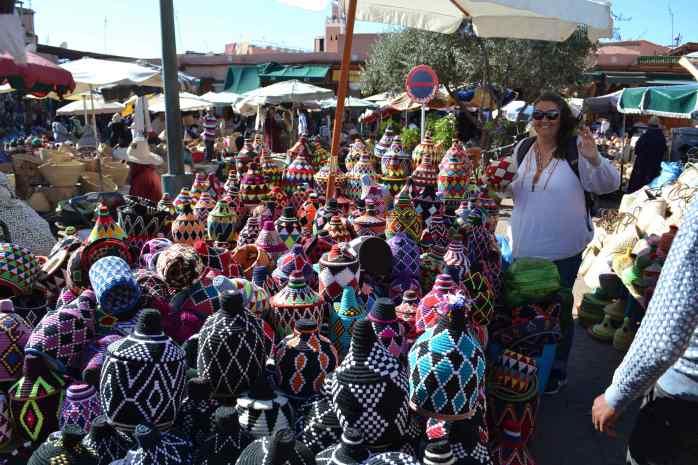
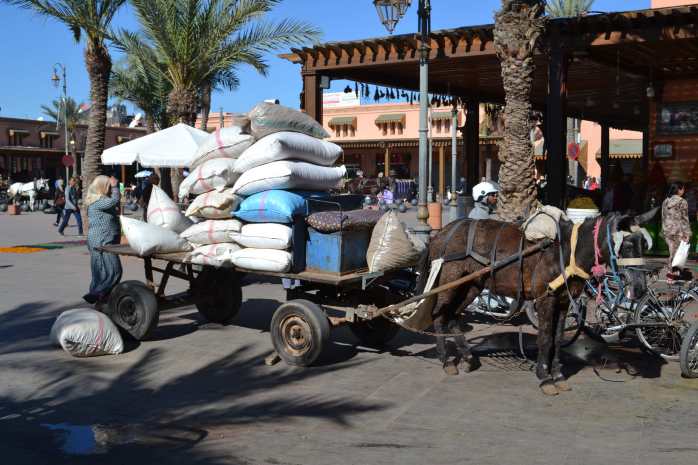
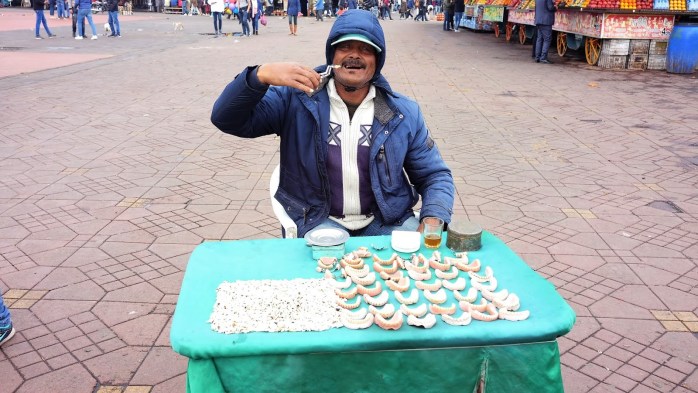
We visited the famous Jemaa el-Fnaa square both during the day and at night. It is one of the “must see” places in Marrakech. The square certainly contained atmosphere although others found it more alluring than we did. It is a chaotic mix of snake charmers, donkey carts loaded with goods delivering to the markets, monkeys, horse drawn carriages containing tourists, market stalls, henna tattoo ladies, juice stands, eateries and local tourists. We were put off (appalled) by the monkeys on chains being made to perform tricks and pose for photos for money as well as by the snakes held down by rocks over their tails and made to stand up by teasing. It is not our kind of thing. We were however amused by the couple of elderly gentlemen selling used sets of dentures – and decided it was the ultimate gift to bring someone back from Morocco!!
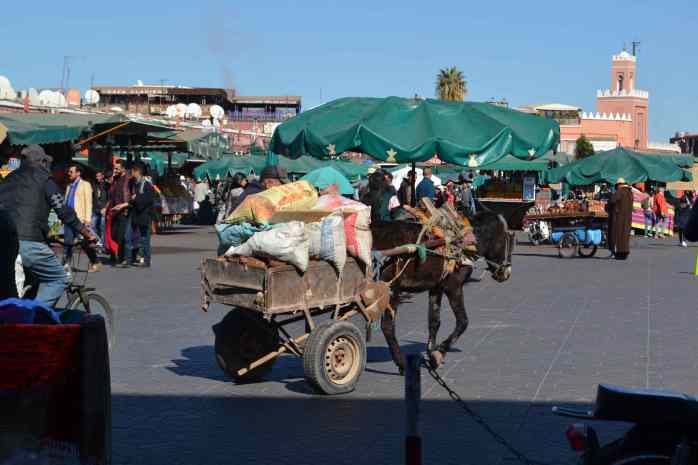
We sat at a cafe enjoying a mint tea and watched as the ladies harassed tourists to purchase henna tattoos from them. We had been warned of this and were astounded to actually watch them grab a lady’s hand and squirt the henna onto a hand with a syringe before the tourist knew what was happening then offering to just tidy it up into a pretty shape before demanding money for it, or going all the way up their arm and demanding more money, and if it was refused or not enough money given then they would smudge it all into a big mess.
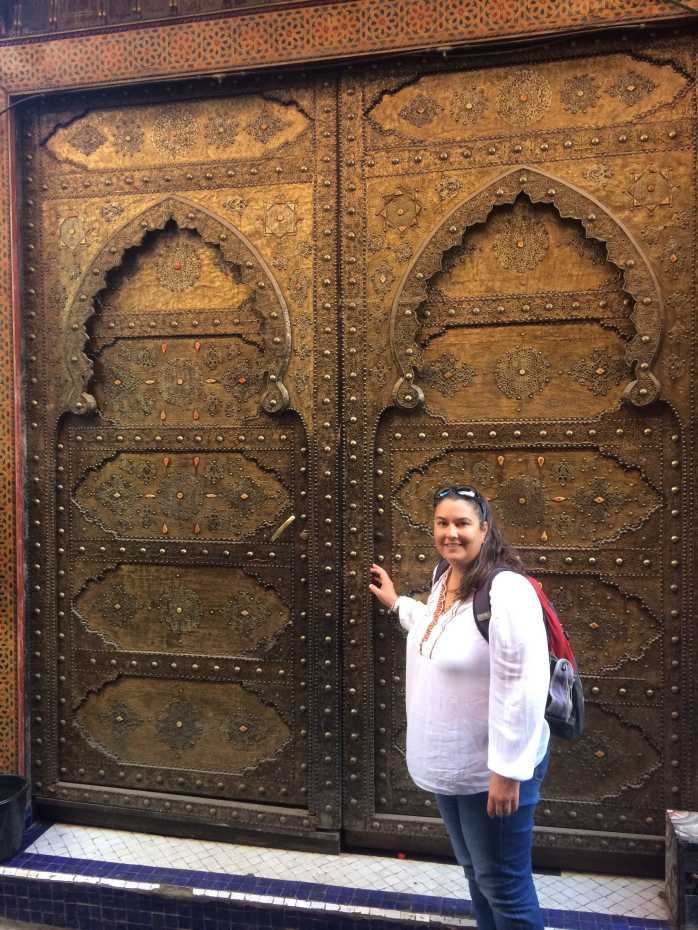
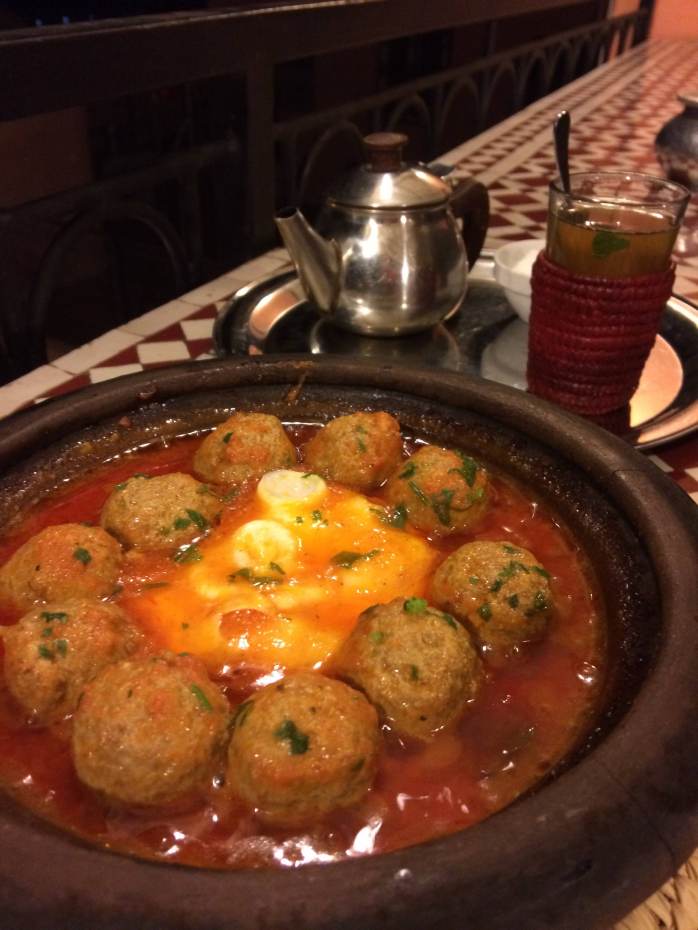
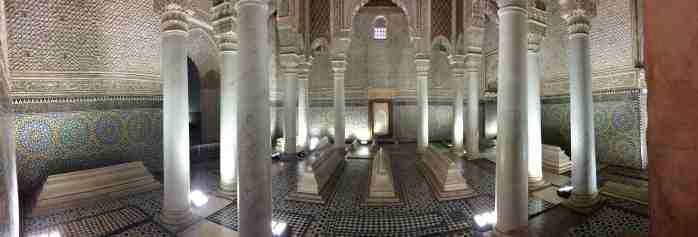
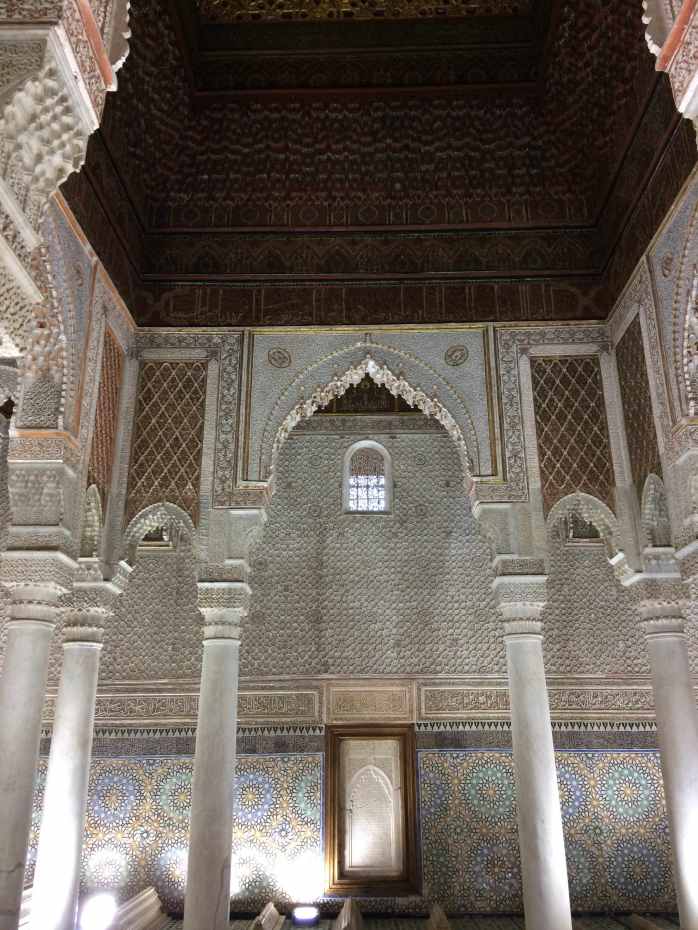
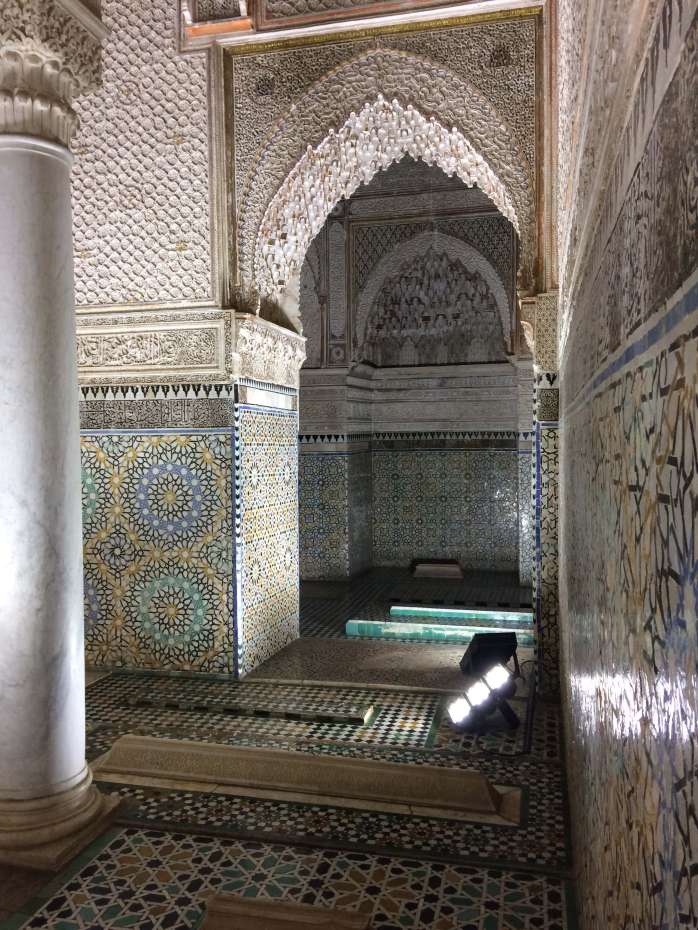
The next day we visited to the Tombeaux Saadiens which is a burial place dating back to the Saadian dynasty (1578 – 1603). The tombs were discovered in 1917 and are now a major tourist attraction in the city. The mausoleum comprises of the interments of about sixty members of the dynasty. The building is composed of three rooms the most famous being that which contains the the grave of the son of the sultan, Ahmad al-Mansur. And although there is a long line to wait in to view the room and then viewing is limited to around 30 seconds per person standing at the doorway it is absolutely breathtaking. It contains 12 grand columns made of Italian marble and the most amazing mosaic tiles along the floor and walls, then further up is intricate carved and painted plaster followed by carved and painted cedar wood ceiling.
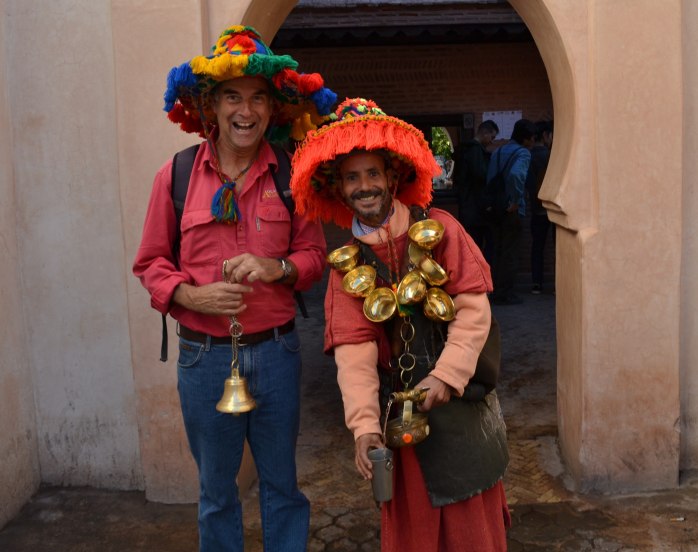
Afterwards we were taking a break on the seating outside the tombs when approached by a fully veiled Moroccan lady touting silver bracelets. I replied “la shukran” which is no thank you in Arabic and she was so impressed that we could speak Arabic that she absolutely insisted on giving me one of her brackets for free. I was initially concerned she would want a gift for her gift but after conversing with her further in English she was genuine with her gift for us being so polite and learning her language when visiting. I accepted the bracelet. Again this was extra beneficial as each time thereafter I was approached by a bracelet lady I could show them that I already had one, and furthermore Phil used this as my birthday present gift (yes, he had forgotten it was my birthday!) Apparently I was so lucky he had arranged all that especially for the day!


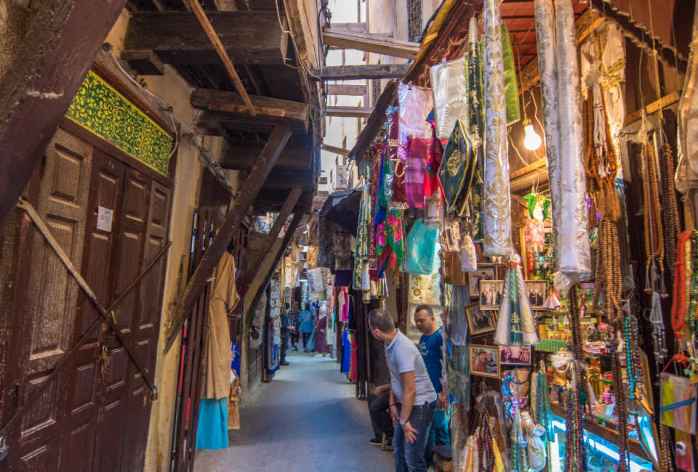
We immersed ourselves further into the medina and sought out the actual artisans at work making the goods which was way past the market stalls down many windy laneways. It was unbelievable, really amazing to see the actual craftsmen working in leather, wood and metal in rooms no bigger than the size of an average western toilet, literally a door width across and couple of meters deep, producing shoe after shoe after shoe from a stack of leather behind him, cutting the wooden sole from a template and sewing it on his antique sewing machine or even by hand.
Whilst we were in the actual making area we decided to look at buying a Fatima ’s hand door knocker (for the house we don’t have!) These had continually impressed us with the beautiful detail in the solid brass carving and the special beliefs behind it. We had seen one priced at 90 MAD (about €9) and decided for that price we would have ourselves one. We asked the artisan and he showed us his, I said I wanted a larger one and so he went a couple of doors down grabbed the best one and brought it back to sell to us, it was much nicer than the 90 MAD version with a lot more detail and larger in size, he told us it would cost 780 MAD we eventually brought it from him for 240 MAD, and he then took the money down the artist he got it from, this is common – if they don’t have what you want they will get it from someone else who they call “my brother” and sell it to you (taking a commission I am sure).
Considering that besides yacht parts and food we had hardly brought a souvenir in the last three and half years we were certainly making up for it in Morocco.
By day the square contains a lot of open space besides the chaos previously described but by late afternoon in come the hand drawn carts and the whole square is turned into an alfresco dining area and bbq stores for the evening meal. This is then packed up by midnight to start again the following day. The smell is certainly enticing and the colours and food displays very impressive but this is actually where our patience ran out. We felt really harassed as we walked around looking to choose a place to eat for the evening. Every single stall had 2 or more hustlers with their sole job being to stop anyone from walking past and insist on showing them the menu and pushing them into their tables. There are hundreds of stalls all adjoining and as you finally get away from one hustler you are the next stall and the next guy from that place sets to work on you. I really got fed up with it all, and we actually experienced our first real rude interactions here. After declining what seemed to be our 60th hustler he yelled in our faces “Why are you going to some other stall they are all just the same shit” (he is actually correct in saying that) and then another one a little further on actually grabbed Phil’s arm and was pushing him in, to which Phil took great offence and confronted the guy. The first we came across that didn’t actually hustle us (they were busy hustling others) we sat down and ate. We only did it the once, and there after enjoyed meals elsewhere for much a much cheaper price too. Here was also the first time we invoked our Arabic in real spirt, the polite no thank you “la shukran” in Arabic turned into myself (Maree) saying very loudly and very clearly to someone who wouldn’t leave me alone and followed me “La La La La La La La La La”. Phil later laughed about it, but he has since used it himself.
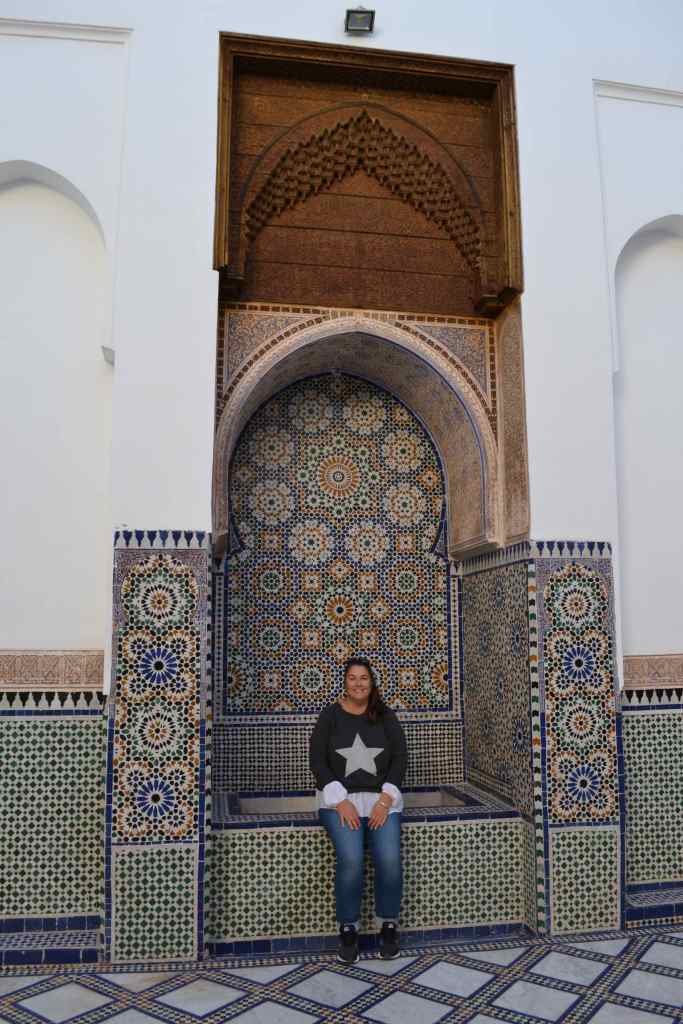
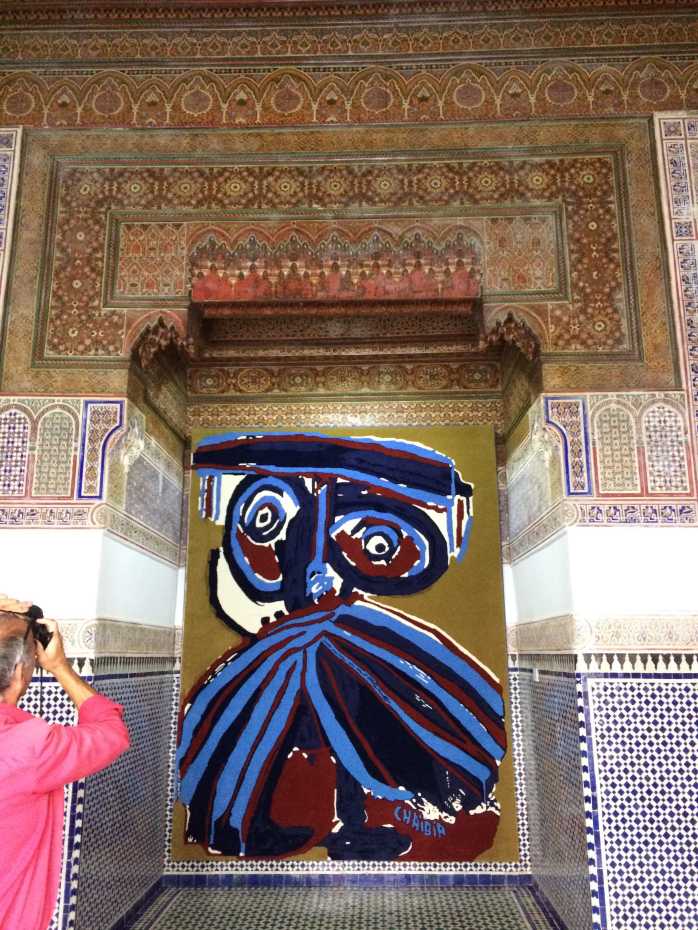
Besides the Medina a highlight of Marrakech was our visit the Dar Si Said museum, the building was simply amazing and that is without the exhibition displayed in it. Mosaics on the floor and up the walls, intricate painted plaster work and more carved and coloured wooden ceilings. This building was testimony to the local architectural art at the end of the 19th century in Morocco. It was originally the residence of one of Morocco’s Chief Executives. The building is now home to the Moroccan carpet and textile art museum which was very well blended into its surrounds and displayed just the right amount of carpets and artefacts with accompanying information boards. The temporary exhibition was also breathtaking. It displayed new (2012 made) carpets which were deigned as replicas of 1920’s paintings. They were stunning, it really showcased how amazing the artists are that make the carpets are and also very surprisingly were the patterns or the paintings chosen to turn into these display carpets, they must have been highly contemporary even controversial when they were first painted and displayed. They seemed very modern works even by todays standards. We wandered around the building through all the rooms, then even did a second lap back through it all again.


After three days in Marrakech we were ready to see further afield. On recommendations from others we had chosen an all inclusive (except lunches) package tour into the Atlas Mountains, Dades Valley, Sahara Desert and then a transfer all the way to Fez a total of 1027 km over three days two nights.
Day one we admit to wondering what we had gotten ourselves into with a disorganised start where after a lot of waiting around in a street with maybe 50 buses all going on slightly different tours or routes with people being asked to get on a specific bus then directed to get off and onto a different one (the Moroccan way of ensuring the right people are going to the right tour and destination) each seat in our bus was finally taken, the bus then proceeded to join the que and line up for petrol? Very backward way of doing things we thought but anyway after another a last minute change of two people off and a different two people on we left.
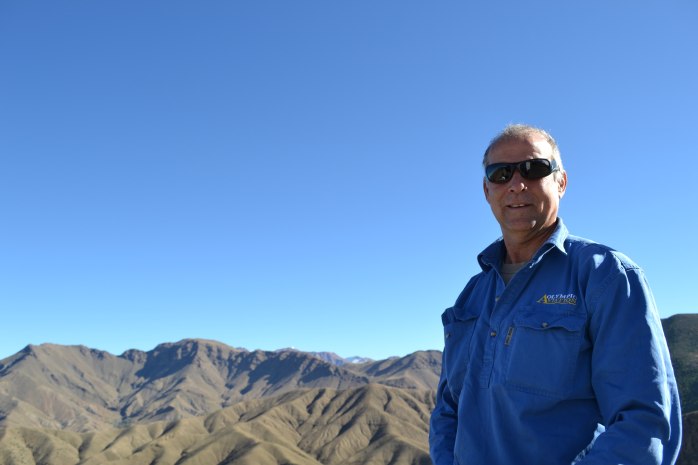
It was a long day on the bus but good viewing as it wasn’t far out of Marrakech that we started up into the Atlas Mountains, after Killiminjaro the Atlas Mountains are the second highest in Africa. We can attest to a drop in temperate up high near the snow capped mountain tops.
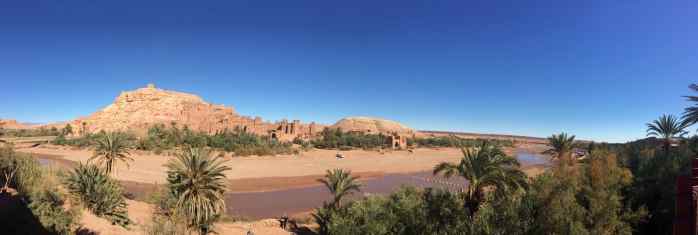
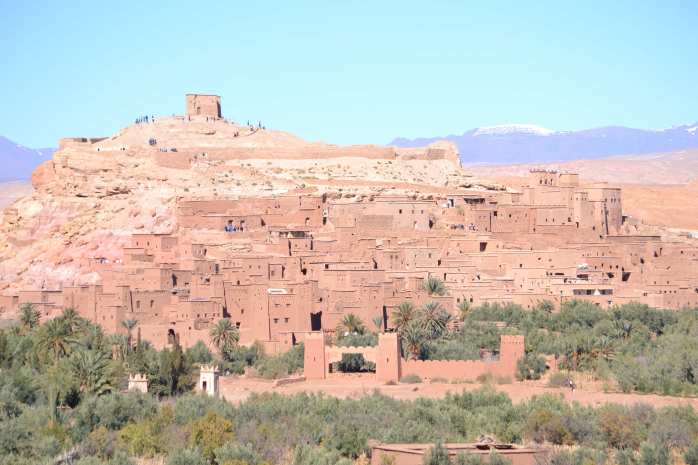
We stopped at Ben Ait Haddou for tour of the Kasbah. Ben Ait Hoult can almost appear as an illusion when first viewed. The Kasbah is built from local mud and straw and is such in camouflage with the hill behind it that you can hardly believe it is real. It is famous for being used to film movies such as; Lawrence of Arabia, The Jewell of the Nile, Gladiator, Kingdom of Heaven, Son of God, One Night with the King, as well as parts of the TV series Game of Thrones.
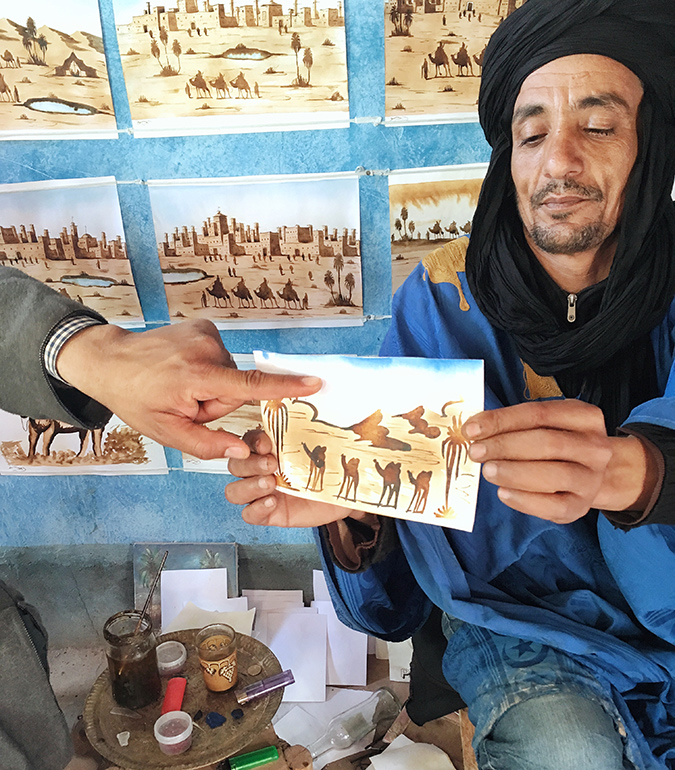
We enjoyed an artist at work at Ben Ait Haddou who was painting in what could be described as invisible ink. Painting with all natural ingredients in colours such as indigo blue from fossilised flowers in the rock to oranges and yellows which are made from safron & green tea. To our amazement the artist painted over small sections of a piece with what looked like water leaving nothing on the page, he then proceeded to work the paper back and forth over the heat of a very small flame from a propane tank. We watched in awe as the invisible brown details emerged in the area he had just painted as if by magic. They appeared in full glory of orange and browns to bring the picture to life.
The afternoon drive lead us into the Dades Valley, which was a most impressive landscape and actually quite densely populated. The group was split for the night amongst two hotels depending on who you booked your tour through and it was delightful to hear the following morning that Phil and I and two Lebanese ladies that were at one hotel seemed to get a lot better deal than the others on the bus. Although it meant we were last to picked up the next morning and last on the bus meaning we were left the back seat which wasn’t enjoyable at all. It was raised higher than the rest of the bus but didn’t have windows and you had to duck and stretch your head to look out the windows in front. I was quite disgruntled when the two girls in the front seat of the bus with the driver refused to swap and change with all of us in the back!
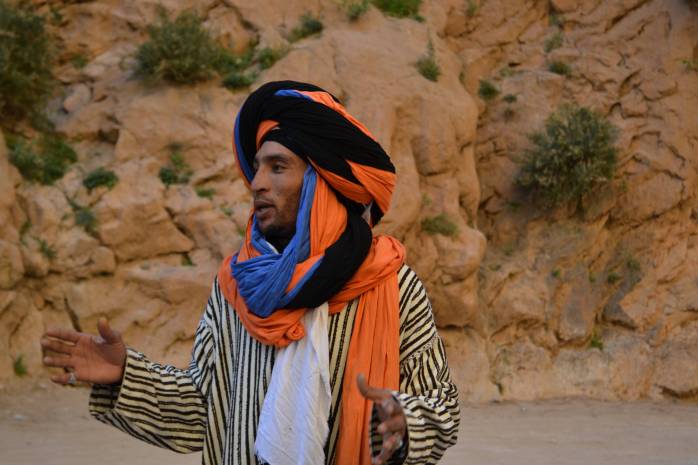
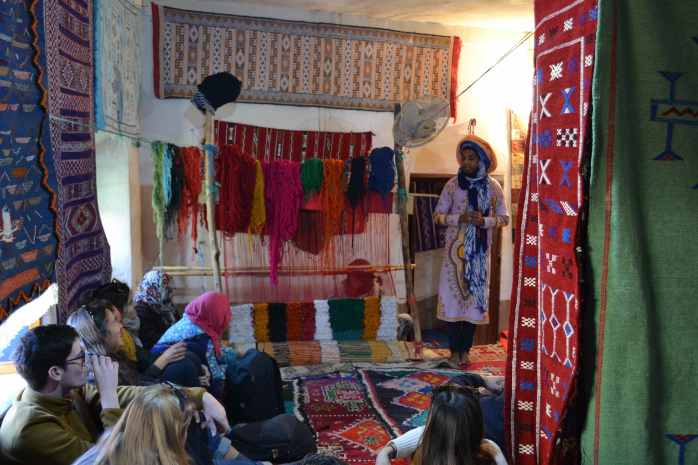
Luckily day two wasn’t a lot of driving as we stopped in the valley for a walk then soon after for a tour of local village including a womens cooperative, but guided through it by young men as the women are extremely shy, the carpets on display were impressive and a couple of people from our group got some wonderful pieces at great prices.
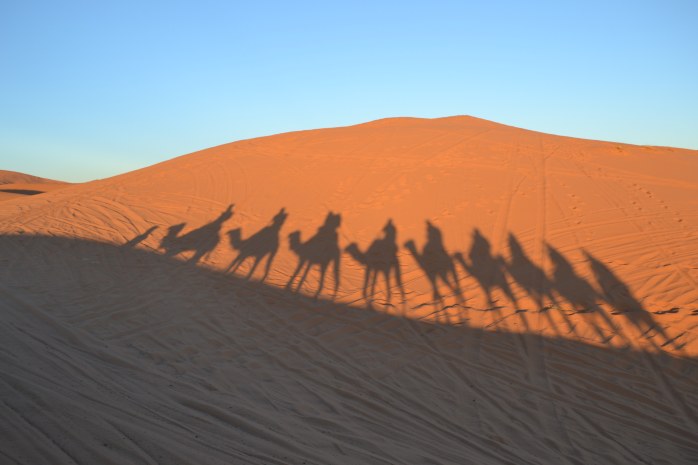
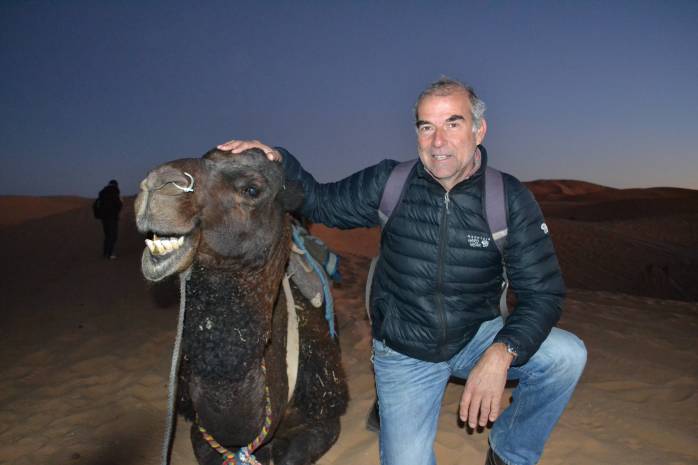
By mid afternoon we had arrived in the Sahara Desert where we were each allocated a camel and set off on a 1.5 hour ride into the heart of the sand dunes during sunset to a Moroccan Berber Camp for the night. The camels were very well behaved and we enjoyed the tranquility of the sun setting over the sand dunes, in fact it evoked a bit of home sickness for both of us for the red sand dunes of Roxby Downs which we lived in and loved for so long.


The Berber Camp was an enjoyable night and we were issued a tent with a beds at a much higher standard than we were expecting. A traditional tajine was served for our meal then the camel guides got out the drums and bells and put on a bit of a show for us and we clapped along and danced together by the fire. Before retiring for the night a group of us walked up to the top of a nearby dune and enjoyed the wonderful night sky and stars. So beautiful, clear and bright with a few shooting stars enjoyed also.


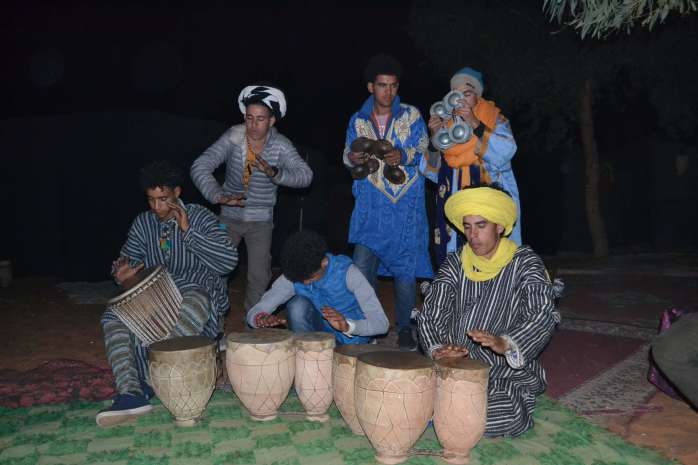
The next morning we were woken and organised early to set off for the camel ride back to the town, it was a bit harder than the night before, being both colder and the new muscles found the day before when ridging the camels complaining strongly about being used again so soon. We stopped after and hour to watch the sun rise over the desert then arrived back at the base hotel for a warm breakfast inside by the fire (it’s winter here – bright days but cold nights).
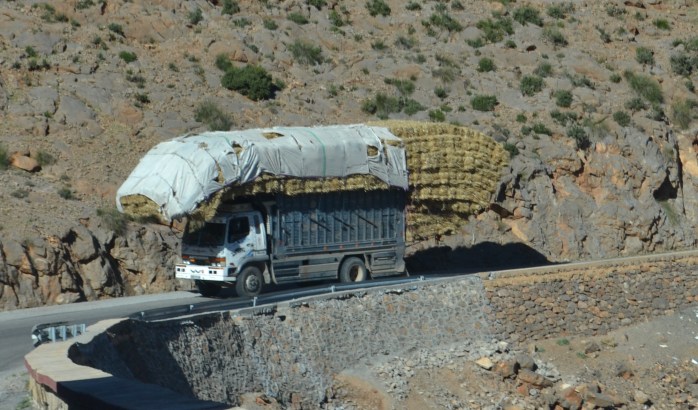
After breakfast Phil and I split from the group as rather than going back to Marrakech on the bus (an 11 hour drive) we were transferring to Fes about 500km kilometres away further North through the Atlas Mountains and it turns out this was done in the comfort of our own private taxi transfer. We couldn’t believe this was included in the price! Can you imagine the cost of a 500km taxi journey in Australia?? We struck pure gold with our driver Mohammed a lovely gentleman who was very kind, a great safe driver not taking any risks, and also spoke excellent English and was happy to tell us about his country and the land marks and areas we drove through as well as being happy to stop as often as we liked to see things. He was hired for the day by our tour company to take us to Fes, where he would then spend the night and drive back the following day (hoping to collect a few fares on the way back no doubt).


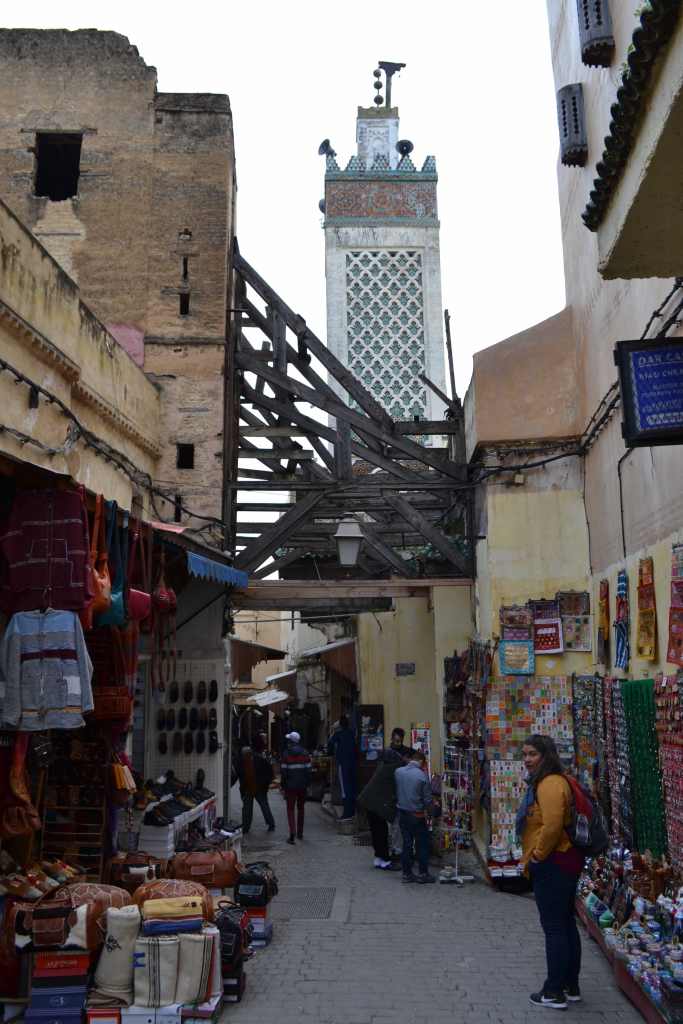
We arrived in Fes at dusk and were taken to our beautiful Riad (guesthouse) which was newly renovated in old style Moroccan with both mosaics and wood and white concrete walls. It was really lovely, and the breakfast the next morning even more amazing, we knew we wouldn’t be needing lunch each day we were there after breakfasts fit for royalty.
We headed off in search of the famous Fes leather tanneries. The tanneries process the hides of cows, sheep, goats and camels, in a completely manual (back breaking) process that has barely changed since medieval times, to this day the tanneries only employ Berber workers (indigenous Moroccans) and according to National Geographic is the 2nd hardest job in the world (second to underground mining by hand).
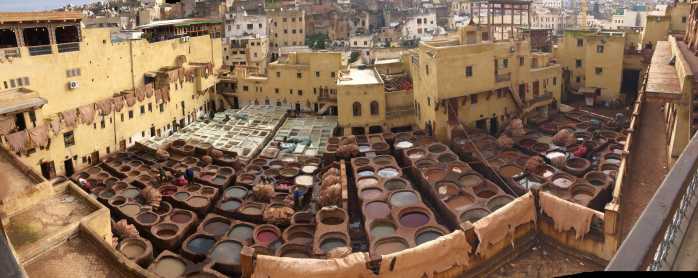
At the Chouara Tannery, more commonly known as the No.10 tannery (pictured) the hides are soaked for up to a week in a mixture of cow urine, pigeon shit, lime, water, and salt (ammonia). This caustic mixture helps to break down the tough leather, loosen excess fat, flesh, and any hair that remains on them. Those working in these ammonia vats are required to wear protection on their hands (long gloves) and legs (waders) when stomping and mixing the hides in the vats.
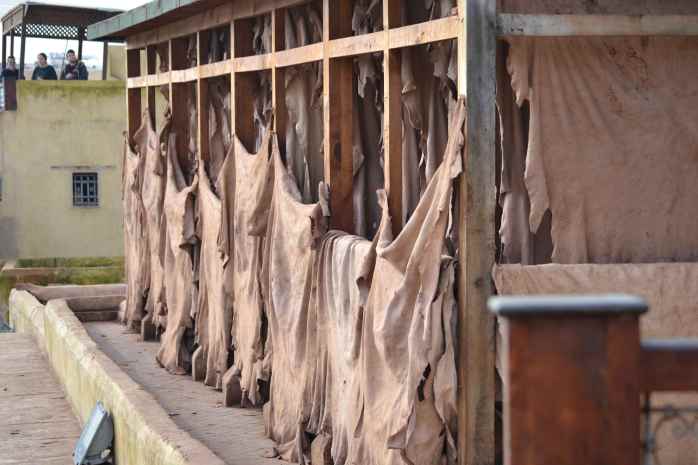
Tanners then scrape away excess hair fibres and fat in order to prepare the hides for dyeing.
The hides are next soaked in another set of vats containing another cocktail mixture of natural ingredients (more poop) that acts as a softening agent that causes the hides to become malleable so they can absorb the dye.
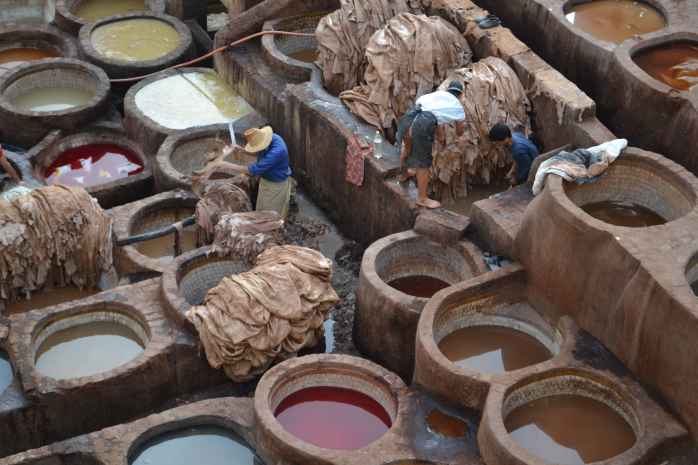
The tanner uses his bare feet to knead the hides for up to three hours to achieve the desired softness.
They are then soaked in the dyeing solutions, which use natural colorants such as poppy for red, indigo for blue, and henna for brown, saffron for orange and mint for green. After the dyeing, the hides are dried in the sun.
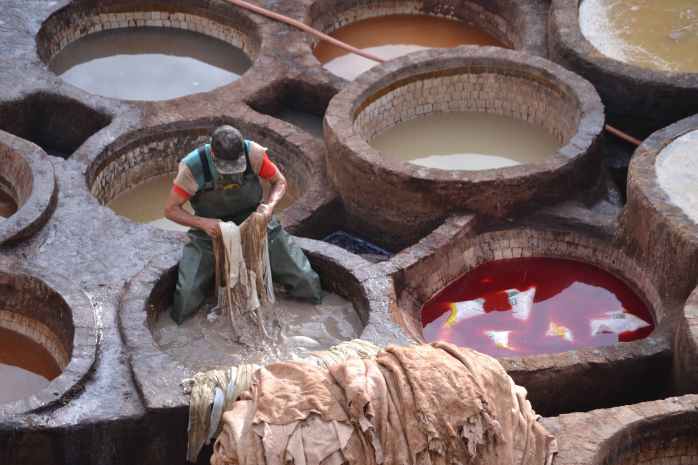
On the day of our visit the temperature was fairly cool, and the smell although unpleasant was bearable, but one can only imagine the stink in high summer. The shop owners often give mint to tourists as they enter to sniff and mask the smell.
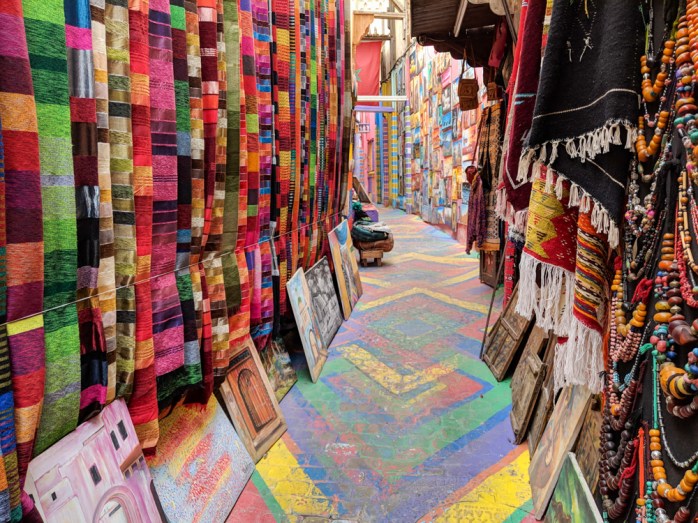

We continued to wander the medina (a UNESCO world heritage site) and eventually found our way back to the area of our Riad but had trouble actually finding it. With over 9,000 streets (more like alleyways) with 40,000 dead ends it was little wonder we needed help. It only cost us 2 euro to get help and the kind fellow escorted us all the way there (we were very close) and also gave us a few tricks to help us navigate back again next time.
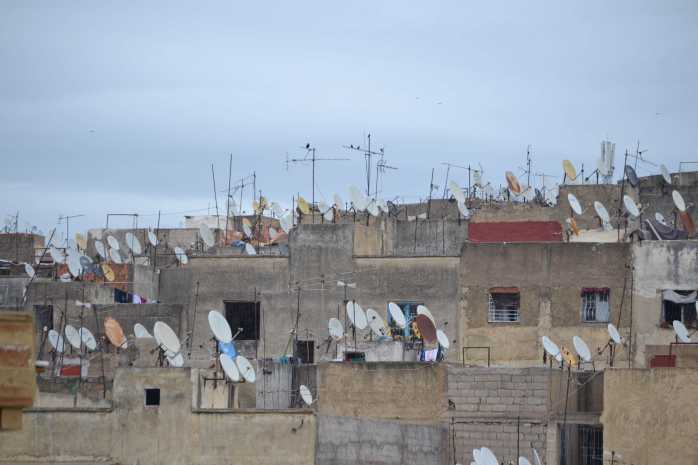
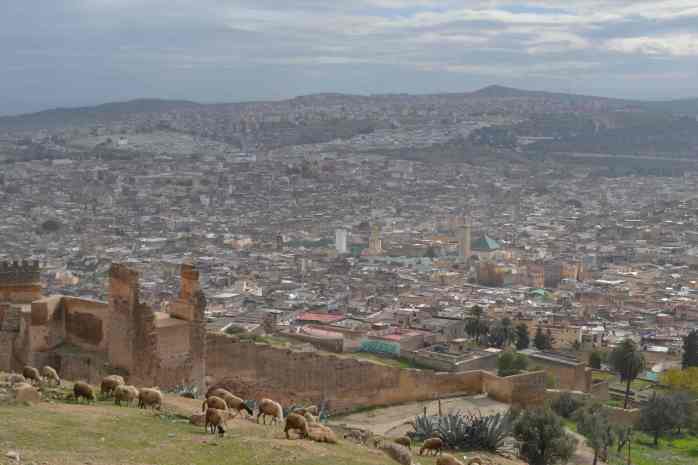
We walked outside the medina walls up to the Merenid Tombs which house the remains of Sultans and other royals of the Merenid Dynasty. Although the ruins are no longer intact, the climb up the hill is worth it for the authentic architecture and the view over the 1200 year-old Medina.
Very close to our Riad was the Madrasa Bou Inania was the former college for Muslim intellectuals, built in the 14th century, and since restored. It is the only madrasa (school) in Fez with a minaret, and one of the few religious places in Morocco that is accessible for non-Islamic visitors.


We made the journey from Fes back to the boat at Tangier via train, lashing out on 1st class fares for an extra few euros. Very glad we did, whilst it certainly wasn’t anything flash, we enjoyed a cabin to ourselves and both had a widow seat for the views on the way home, one of which was to myself at least a little surprising was the amount of women shepherds we saw with small flocks of sheep, or even 2 – 4 cows grazing the side of the train tracks and fields.
Since arriving back to Red Roo in Tangier we have celebrated Christmas with new friends made in the Marina also spending time in Tangier. On Christmas Eve we celebrated with a 11 pound roast turkey with all the trimmings on board SV Sweetie (USA) hosted by Tony & Shannon and along with ourselves were also joined by a couple from Canada, a lady from Sweden, along with a young couple one being French and the other German – a real international affair. We followed this up with a late Christmas Day lunch of fresh prawns, pavlova and left overs from the night before on board Red Roo again with Tony & Shannon as well as Gieslea and Robin from Canada.
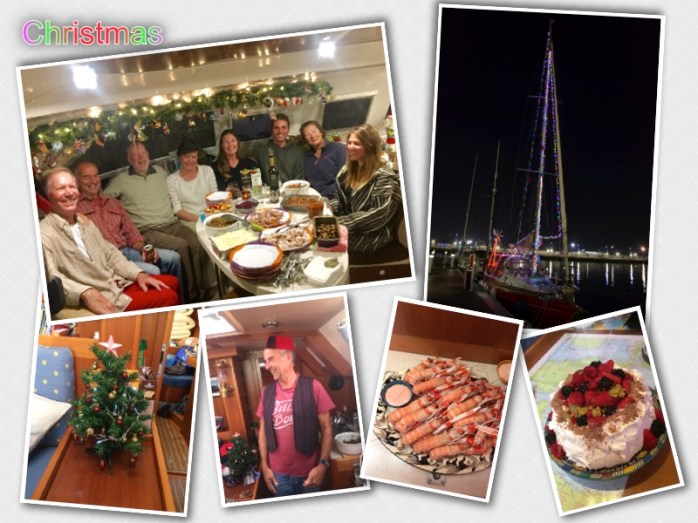
We have now seen the New Year in and are watching the weather and forecasts preparing ourselves to leave Morocco in the very near future to begin our 2019 adventures in the Mediterranean Sea.
Attached is a link to a video compilation of some of our favourite Morocco pictures:
We Made it to Morocco – Part I Tangier
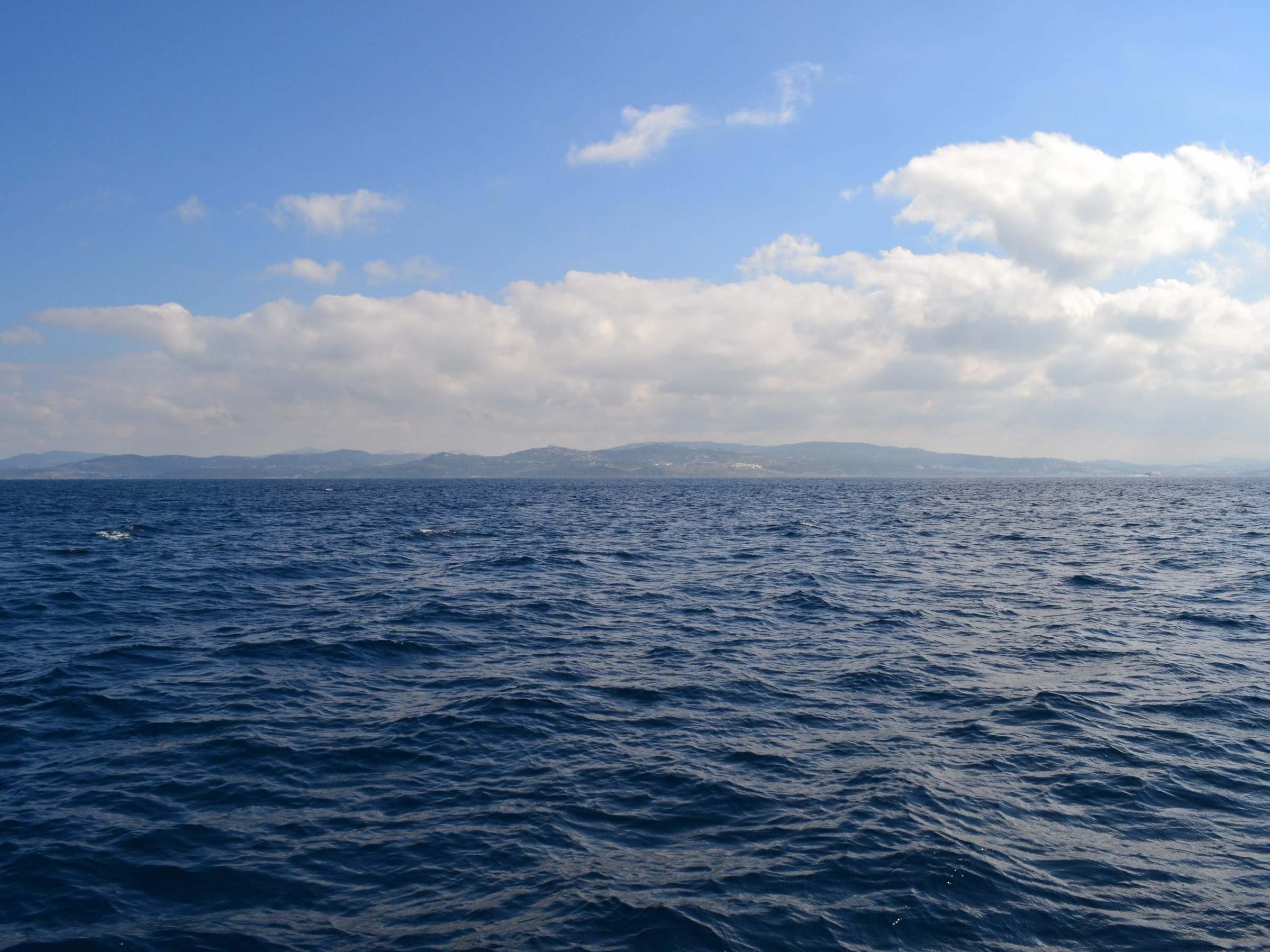
Our last sail of the year (2018) was a little jaunt across to Africa 😀 🌍 just a mere 25 nautical miles from Barbate, Spain to Tangier, Morocco. There was fog and no wind early but it cleared and by 9:30 we were on our way.
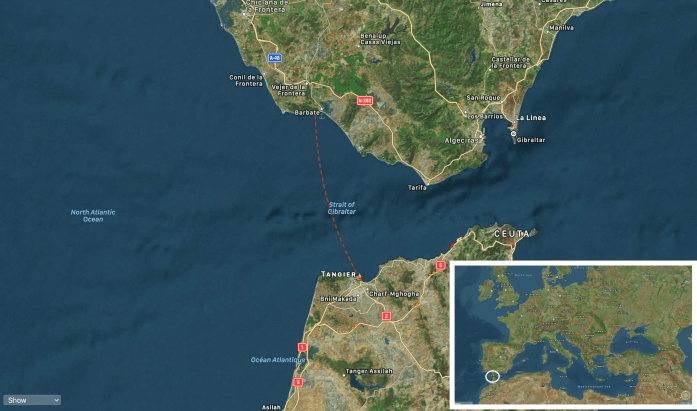
Despite it only being 25 nautical miles and being able to see the shores of Africa from our anchorage in Spain the crossing did require some attention to tides and shipping as we were crossing the western part of the Strait of Gibraltar, the narrow channel where water flows in and out of the huge Mediterranean Sea twice a day, a small area with a lot going on.
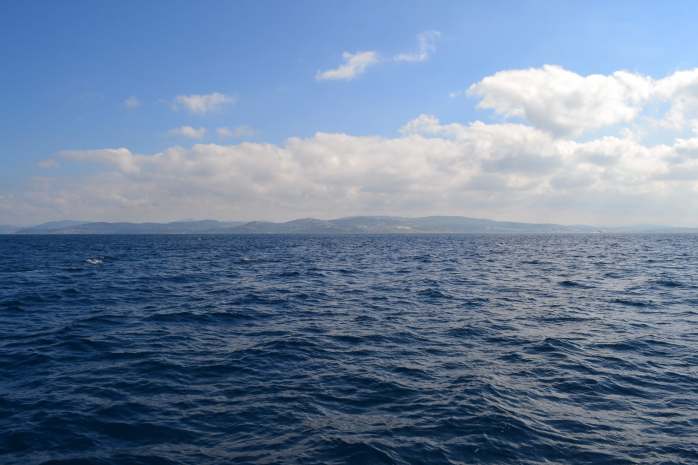
Anyway we had a good sail, uneventful and very slow to begin with but as the wind increased gradually through the day we picked up speed and at the end entered Tangier Bay at 7 knots, lovely. So good that we sailed right into the Bay and didn’t drop the sails until right outside the Marina fuel dock. We originally thought we were going to have to tack the sails to get into the bay, but the tidal current assisted us getting across on the one heading.
We had left Europe and the European Union and had arrived in Africa, a new Continent.
Approaching Marina reception dock we were greeted by 4 very friendly smiles from the Marina crew who took our lines and tied us in a spiders web of lines to the dock. – we weren’t going anywhere.
Check in was relatively easy, just a lot of paperwork the same 3 forms done 6 times, one set for immigration, the next for the customs, then the maritime police, then for tourism board (so they could collect tax $ for each night we stay), as well as a set for the marina office and then another just for good luck. The forms being a mixture of Arabic and French it was a blessing to have assistance from Amal, the lovely multi lingual marina administrator who escorted us and helped throughout the process.
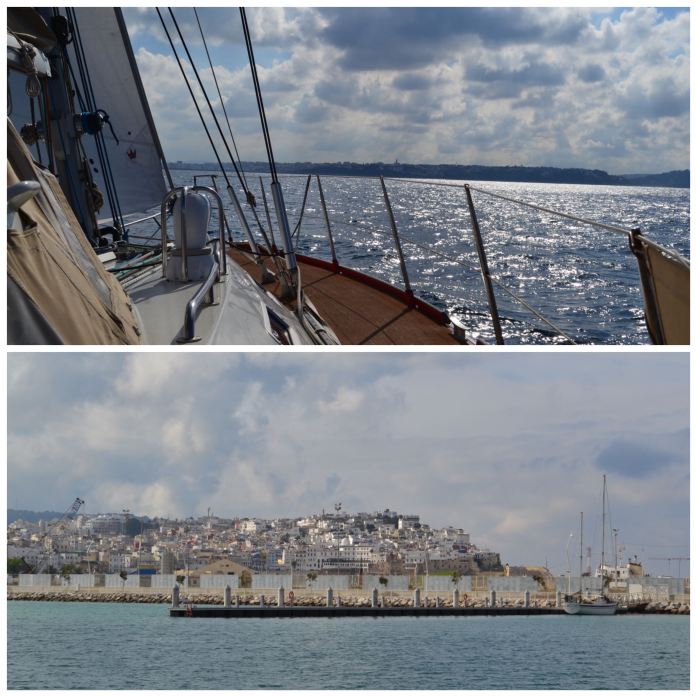
We were eventually assigned a berth and this triggered another flurry of activity as two guys helped us untie from the reception dock, two others escorted us in the marina dinghy to our berth where two others were ready to take our lines and tie us up – what service!
The marina is new, having only been opened three months prior and the many staff are very keen to help (and get good reviews). The facilities are new and whilst they certainly have a few teething issues and are lacking experience if enthusiasm is anything to go by give them another 6 months and they will be very good. For the first week it was a little off putting as you couldn’t walk down the dock without one of the men rushing to meet you and ask if everything was alright and could they do anything to help. The marina holds over 250 boats and the most that have been here at any one time would be around 15, and only about 6 with people living on them.
It is a strange set up with the pontoons coming off perpendicular to a road with the marina services on the other side of the road and a promenade with restaurants on the top of these service buildings. At the present time, no public are allowed to walk along the road or footpath beside the docks but public cars can drive along this road turn at the end (it is a dead end) and go back. The public are allowed to walk along the top promenade and look down but can’t take pictures. To police all this (the road is probably just under a kilometre long) there are security guards at the start of the road leading in and 3 more along the road and 4 up along the top promenade and they are all armed … with a whistle. Trust us when we say they are not scared to use them. It has become quite easy for us to recognise the the different whistles, there is the causal short half hearted blow to tell someone to get off the grass, the more sharp blow to tell someone they can’t enter the footpath to walk along the road, and then the short hard multiple frantic blows if a car stops or slows when driving along the road.
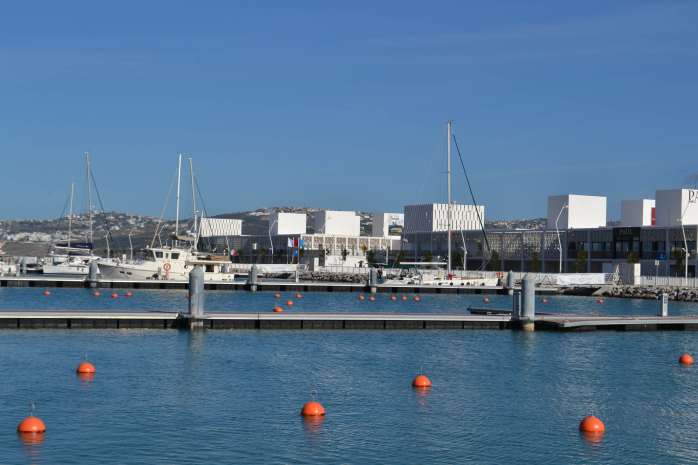
During our first week we were moved again due to dredging in the marina to the opposite side of the marina basin where there are 2 solitary pontoons. It is quite a long way away from everything which was ok, very private, very quiet with tight security at the long road entrance (no cars or persons admitted to that road at all – it is an isolated spit of land) and another full time security guard at the pontoon. We asked the reason for this and were told very secretly that we were on the Kings personal pontoon! Why thank you Mohammad VI. It doesn’t seem to matter that the King doesn’t have a boat, it is still important that he has his own pontoon. After another week we were moved back to the main area where we were amongst a couple of other live-aboards sitting out winter months counting Schengen Visa days before entering the Mediterranean Sea. It is nice to have others around to talk and socialise with. We have shared many drinks, meals and laughs with new friends from Australian, American and Canadian flagged boats.
My only real disappointment with the marina is that there is no laundry and furthermore in town they only offer dry cleaning services and charge per item of clothing for services, meaning its been two months of hand washing in a bucket – the joys of this cruising life!
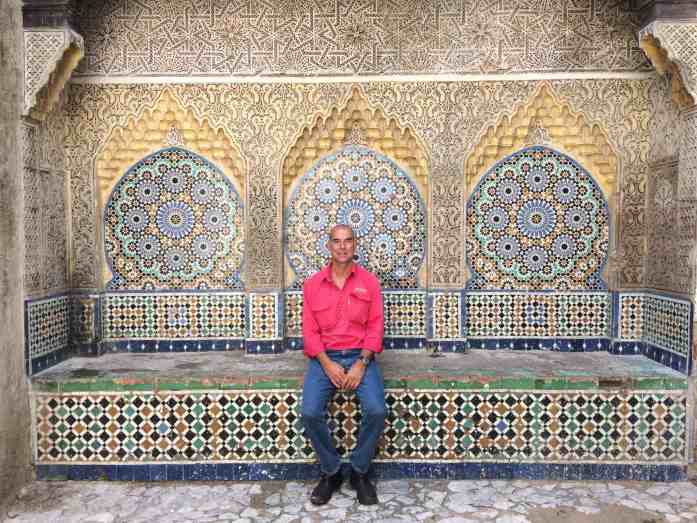
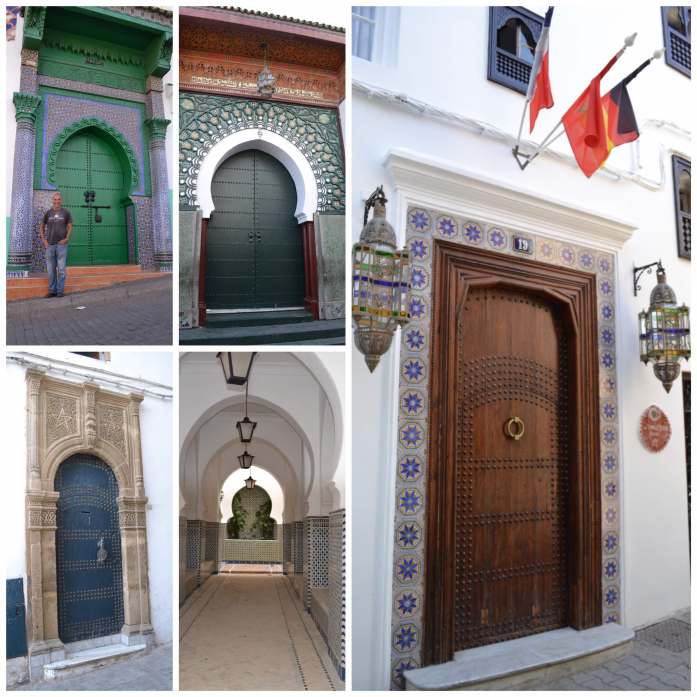
Tangier the city has been a delight to explore. We spent a few days exploring the old Kasbah and the Medina (market) with its many streets with vendors selling wares of all types like carpets, fabric, leather goods, shoes, clothes, souvenirs, natural remedies (herbalist) stores, spices, meat (feathers and fur on or off – as you please), fruit, vegetables, flowers, plastics, silverware, china, small groceries and much much more.
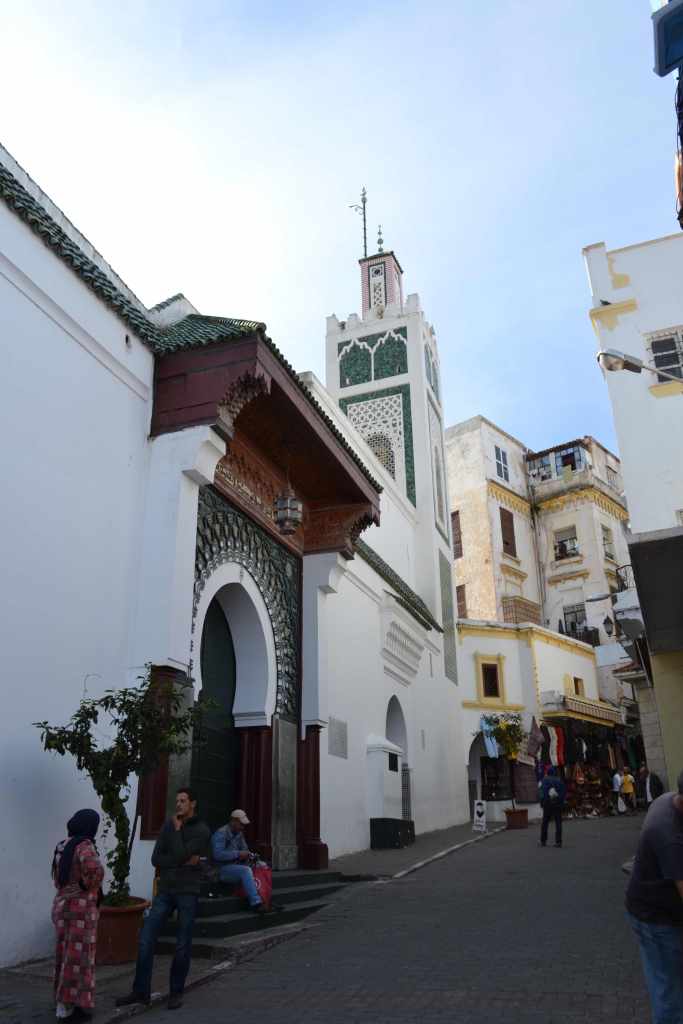
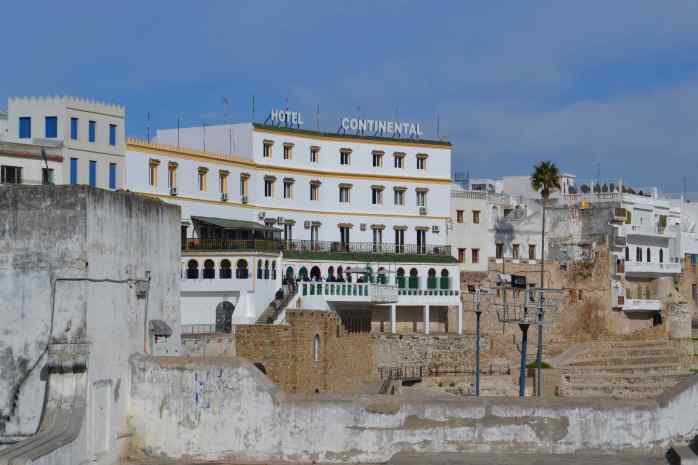


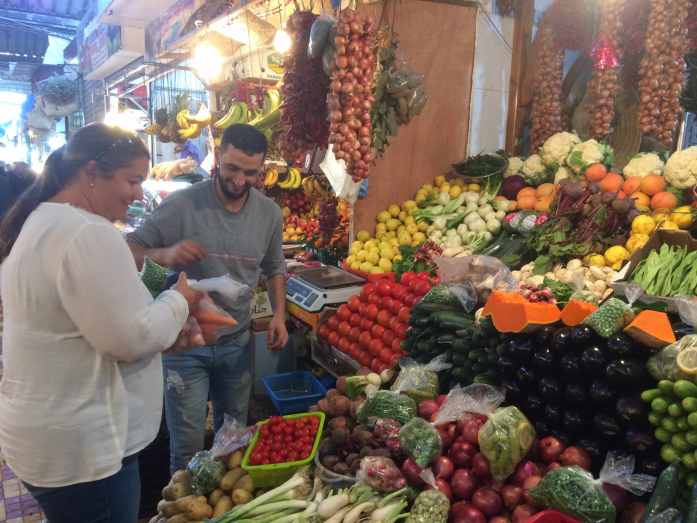
After a number of days we are almost shopping like locals and have our favourite fruit and vegetable man in the market who looks after us (each shop is getting cheaper as the friendship has developed and he has realised we are living here for a while). Without prices on anything I am sure we have been overcharged at various places but are now learning the tricks and people are recognising us.
Our fruit and veg man for example speaks Arabic and French and a little English and is loving learning the English fruit and veg names from us and in turn teaching us the Arabic names (you never know when you will need to know the Arabic word for artichoke which is pronounced kharshuf). We have been buying fish and meat at the markets too, and although we are ensuring we are paying less that the prices in the supermarkets I am sure we are paying a tourist tax and the store holders are taking a little extra profit home, overall however the prices are very cheap.

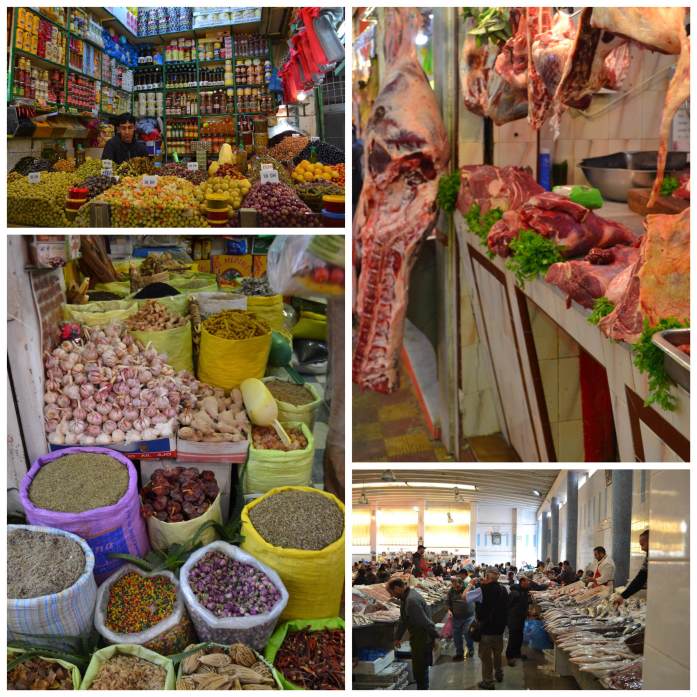
We are finding communications pretty easy as French is the second language here and we can get by with our French and there seems to be someone who will help with language at most times. We have also learnt the Arabic basics much to the delight of the marina staff, security staff and our regular shopkeepers – they are all very impressed. We thanked a local policeman in Arabic recently who waved us across the road with his white gloved hand signals and whistle, he was so delighted he kept all the cars stopped while he spoke to us about it for a couple of minutes in the middle of the road! Of course all the touts annoying tourists along the Medina streets can all speak english – thats when we pretend we can’t!

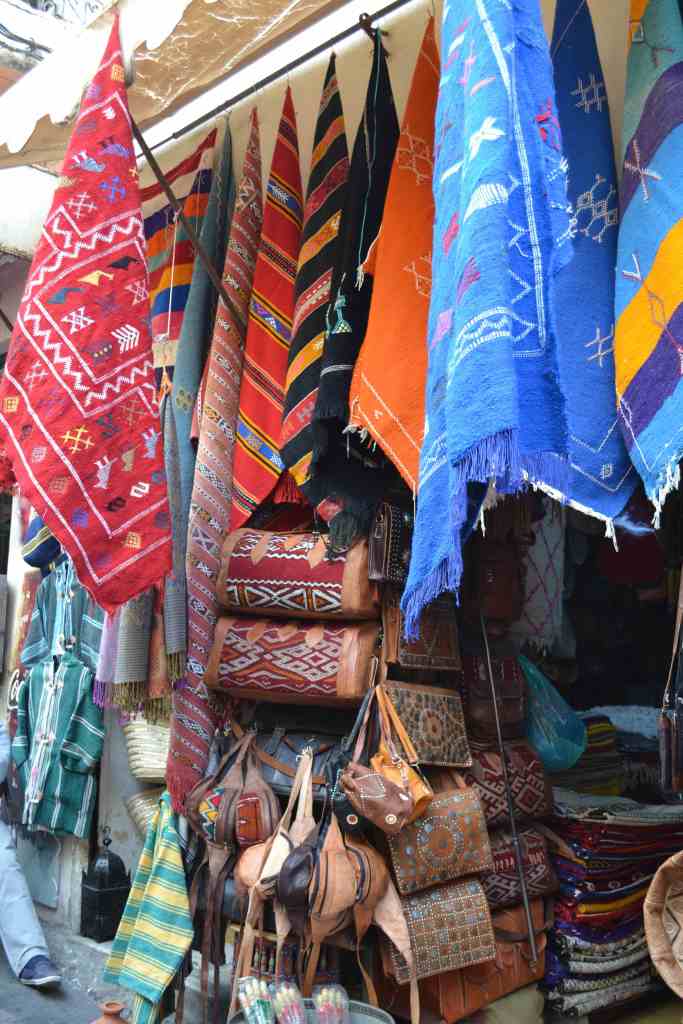
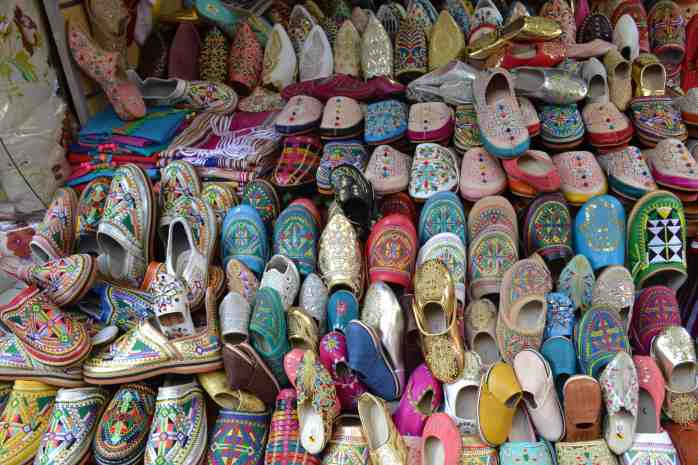

On one of our first excursions into the Medina we were lured into a carpet shop, this is a trap, unless you want to buy a carpet, and we have avoided it ever since. The very friendly person on the street was convinced we had to see his friends shop and Phil being as friendly as he is was happy to chat with him and we ended up at the shop. Whilst unlike many of his kind we have met since who ask for a gift (of money) for showing you the way to somewhere he didn’t ask but he waited outside for his commission from the shop owner after we purchased. Sorry mate, no purchase for us so no commission for you.

We told the first assistant in the carpet shop we just wanted to look and not buy and he of course was very happy to show us his carpets, and we wanted to be polite so we complimented him on his beautiful carpets which meant he invited to see the better carpets on the second level. We eventually made it to level 3 of this huge and very rich carpet shop where we met the “grandfather” who took over the sell. We were shown carpet after carpet after carpet with his assistant scurrying off to get them in different colours and styles all to be laid out in front of us. Eventually we finally made it clear we were ready to leave and the grandfather started to get quite insistent that we purchase a carpet, we explained we didn’t want one and lived on a small boat and then more carpets came out in the small sizes suitable for the boat. We still said no thanks and he then started saying “I give you crazy special price” but we didn’t enter into the negotiation much to his disgust.
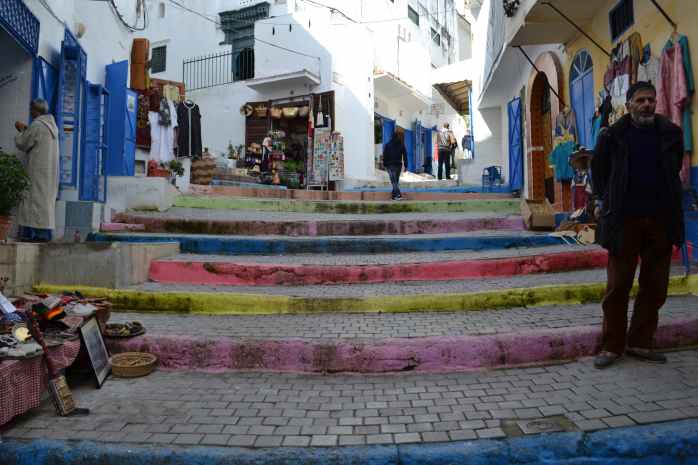
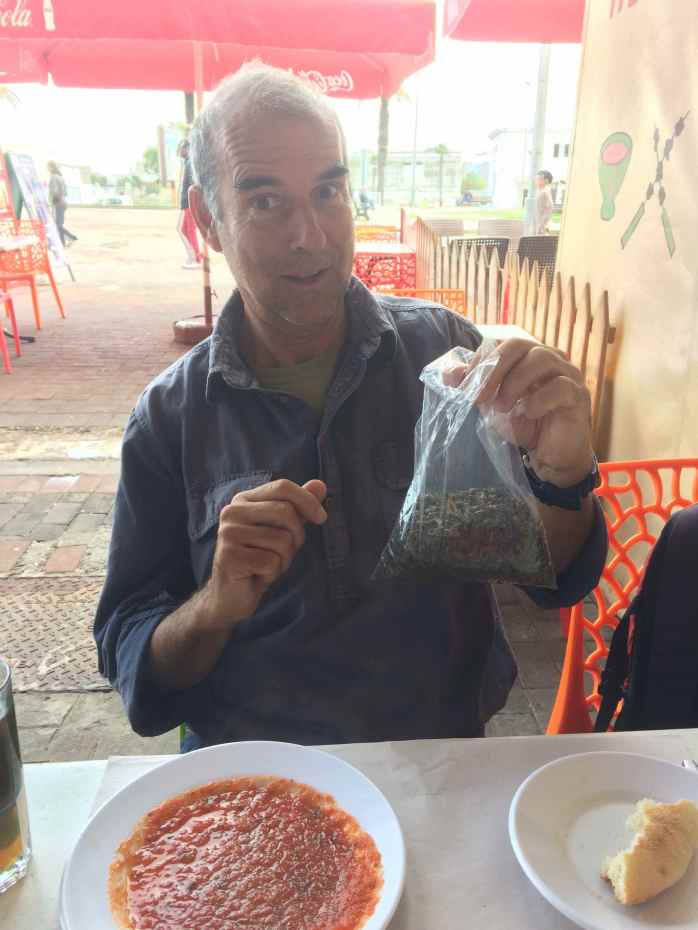
We have not been hassled too much here in Tangier, although we have had many offers from people to show us around the Medinas or how to get somewhere but we thank them and decline and if they still follow us we simply stop walking and wait them out, or go into a nearby shop in an attempt to loose them. We have also learnt how to say “no thank you” in Arabic which helps and surprises many.

It has been a little distressing however at the amount of young boys and men begging on the street for money for food whilst sniffing from a bag or tissue in the other hand, glue or paint. Many of them displaying brain damage from the affects. At times the filth on the streets can also be off putting, but you learn to become a little immune to the less desirable side of it all, in general it is a friendly place, people very willing to help (some request a small tip) and we feel safe.

From the boat we can hear the “call to prayer” ring out over of the city from the many Mosque minarets 5 times each day. The sound is very special and hard to describe. It almost sounds like a song and we originally thought maybe it was recorded and automatically played. We have since learnt from generous staff here in the marina who answer all our questions, that each mosque has a dedicated person (with the title of Muezzin) who does each and every call to prayer live which is projected through a microphone and speakers out of the tall minarets of their mosque. He recites the words from the Koran by memory (not reading it). He recites it for a good 3-5 minutes each time calling people to prayer, and where he ends he picks up again from that exact point at the next calling. Going from the start to end of the Koran over and over in order from memory – amazing!
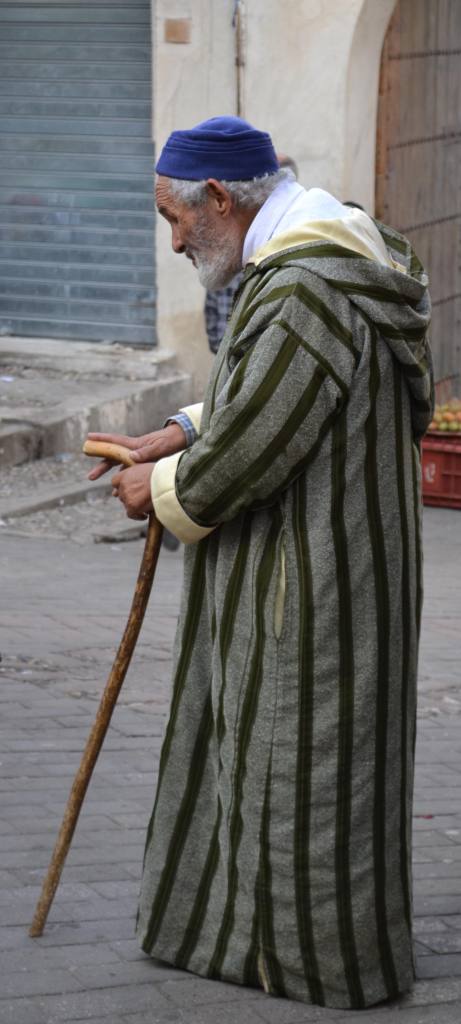
But it’s not all holidays in Morocco, it’s also winter maintenance time for Red Roo and beside immersing ourselves into local life we have a long list of boat maintenance and improvement jobs to complete whilst here. Just a few are listed below:-
- Service Engine.
- Repair wiring to 2 x mains power outlets.
- Install new 12 volt USB charge points hard wired into boat
- Cut sail stack pack battons to size.
- Empty and clean the two fresh water tanks.
- Dinghy hull leak repair
- Serviced toilet (twice)
- Descale hot water service
- Descale fridge cooling water circuit
- Descale engine sea water cooling circuit
- Replace silicone sealant around galley worktops
- Replace silicone sealant in fridge
- Replace hot water service heating element
- Sand back and re-varnish the tiller, flag pole & companion way hatch timber
- Make a mozzie net to cover companion way entrance
- Make new pull tabs for all snap shackles on deck (x20)
- Sew new tiller cover
- Clean and lubricate windows and hatches
- Sew a new bag for the storm sail
- Repair bilge pump lines in bow locker
- Reseal dingy drain outlet to prevent water entering floatation tank
- Service and repair windlass (mechanical anchor lift) which has only worked hauling the anchor up for the last couple of months
- Make (sew) dinghy chaps (covers to protect the dinghy from the sun and chaffing which will prolong the life of the hypalon/pvc inflatable sides to keep it airtight)
This post is long enough without going into the detail of the maintenance but it is fair to say that sometimes when doing one job you actually create more jobs or come across something else that needs attention, so the list continues to grow.

Phil did however have a hell of a time repairing the hot water service which has been out of service since May (it only works when plugged into shore power anyway so not that big a deal) but a nice to have when you know you can have it. We have had the new part, the heater element since leaving the UK last May but only now have had the time to get stuck into the repair. The first part of that being removing the old part. Easier said than done when you have to be a contortionist to reach the hot water cylinder behind the engine and around the corner. Phil has set up some softening pads around the gear he leans on to get it to in an attempt to reduce his ribs continually being bruised. The old element was stuck fast and not coming out. After trying every tool we had on board to get it out, we borrowed other tools from different boats without success. We then got some industrial de-scaler to run through the tank thinking the part was crusted up with limescale, hence not coming out. There was only millimetres of clearance on each side to get it out, and this helped get it out a little further but not enough. We descaled again, still couldn’t get it out.
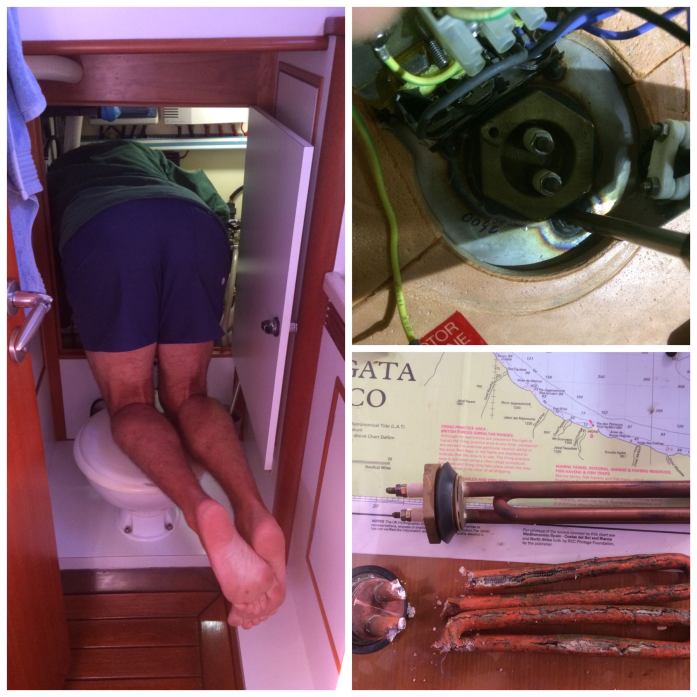
Eventually Phil managed to cut it up inside the tank whilst securing the pieces so they wouldn’t fall into the tank and be un-retrievable. When he eventually got it all out, it was obvious that when the element failed it burst open which in turn increased its size meaning he couldn’t get it out the hole. Many days frustration and a worthy celebration once complete. Please folks, never take hot water on tap for granted.

Tune in next week for Morocco Part II where we leave the boat for a week and explore inland Morocco including the amazing Sahara Desert.
Cruising to Cádiz
Splash 💦 after all our hard work redoing the waterline and new anti-foul we are back in the water and making great speed. Its amazing how quick Red Roo can go when she isn’t dragging barnacles and growth along with her!
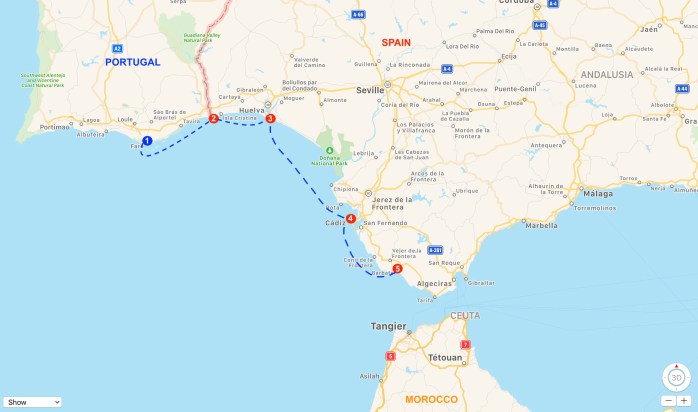
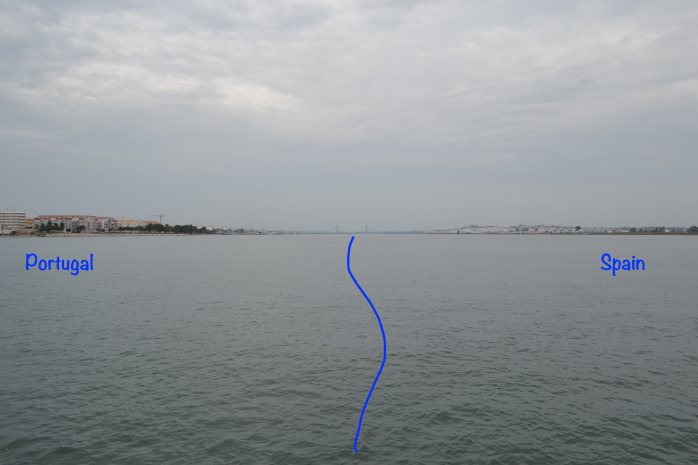
Our first mission was to get out of Portugal and back into Spain for visa reasons. This was achieved easily with a 30 nautical miles passage to the river Guadiana where one side of the river is Portugal and the other Spain. We anchored in the river for two nights just south of Ayamonte on the Spanish side. We took the dinghy (recently nicknamed “Patch” after Maree put 6 patches on it whilst we were out of the water in an attempt to get another 12 months out of the poor old thing) to shore in Ayamonte and were actually able to return some of the unused/unopened paint that Phil had brought from Spain for the haul out that wasn’t used. Bonus!
It was then 32 nautical miles onto Mazagón. With the highlight of the day being the lovely Bonita Maree caught on Phil’s controversial lure. We have taken off the Mackerel rig and put on a pink plastic squid over a three barb hook, aiming to catch something a bit bigger and it is a good choice, however we are of differing opinions on how the lure should be in the water. I believe it needs a sinker on the line to keep it a meter or so under the water where as Phil believes it should be dragging along the surface. Well, he won this round as the Bonita was caught without a sinker. A good size fish which fed us well with two very decent fillets. We waited out the following day at Mazagón which was a miserable wet and windy day without going to shore. We were well sheltered inside the river mouth from everything nasty except tugs. The wind didn’t get us, the huge commercial ships and pilot boats going in and out of Huelva further upriver didn’t bother us but when the tugs returned from guiding a big ship out they returned at such a speed that we rocked and rolled upsetting everything on the table and sink and getting Phil out of bed in a hurry to save things from smashing to the ground. Damn Tugs!
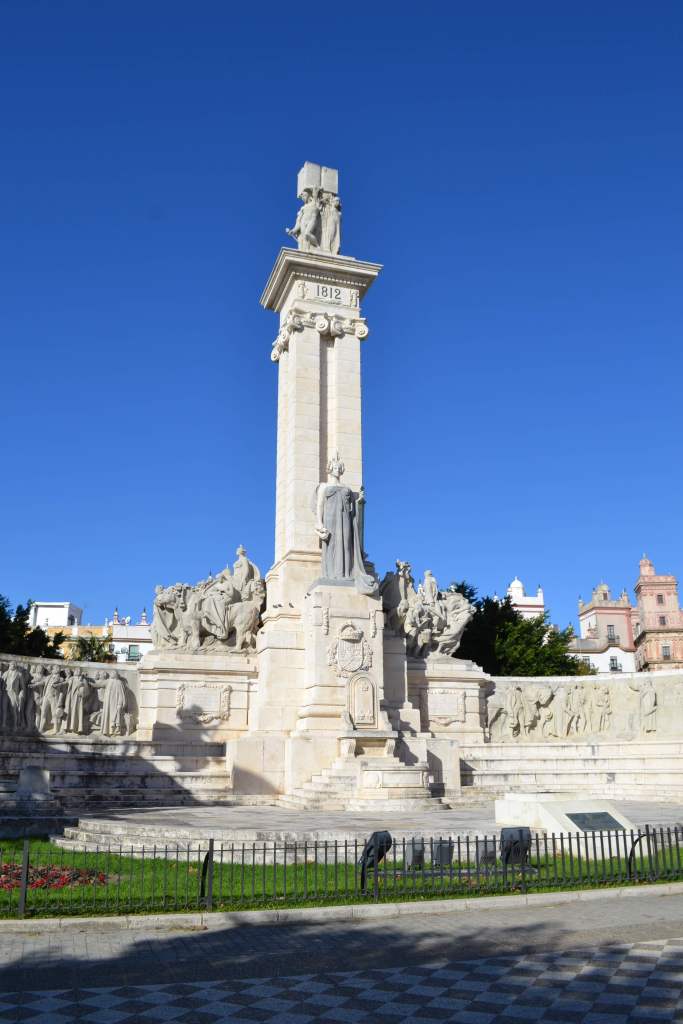
We set sail for Cádiz, 46 nautical miles away and had a great (quick) downwind sail on an ever building sea. The day started with very little wind but soon built to 15 knots of wind apparent. Down wind sailing with the main sail out to one side and the head sail poled out to the other we were making great speed (up to 9 knots at times) and not feeling the building swell as we were travelling with it. Towards the later part of the sail Phil was getting concerned with the black skies building behind us and decided we should put a reef in the main sail. We turned Red Roo around into the wind which went from 15 knots apparent (with the wind) to 29 knots true (when we were faced into it). Of course half an hour after we reefed the wind dropped off. It gathered itself up again as we entered the marina in Cádiz and was blowing 25 knots when we were trying to berth, once, twice, without success before third time lucky two guys got off a nearby boat to help take our lines, we approached the dock, I handed them both lines and they stood there holding them … didn’t secure them to a cleat (despite Phil YELLING at them to secure the lines, I don’t think they spoke English) meanwhile the wind got hold of us and we were drifting away from the dock with the bow swinging towards a pylon and the men couldn’t hold the lines and had to let them go …. Phil was still yelling …. this wasn’t going well at all. We aborted and headed back out to the entrance of the marina where there were large pontoons with only a couple of boats. Further away but much easier in the high winds. We got into one first attempt, only for the marina staff to show up and tell us we had to move as these were for 12 + meter boats and we are just a few cm’s under 12 meters. It didn’t matter that there were over 30 berths with only 6 boats in them…. sigh….marina’s why do we bother! We checked in, did the paperwork so the marina staff could go home (it was their knock off time) and promised we would move. We did move, but not until a few hours later when the wind had abated.
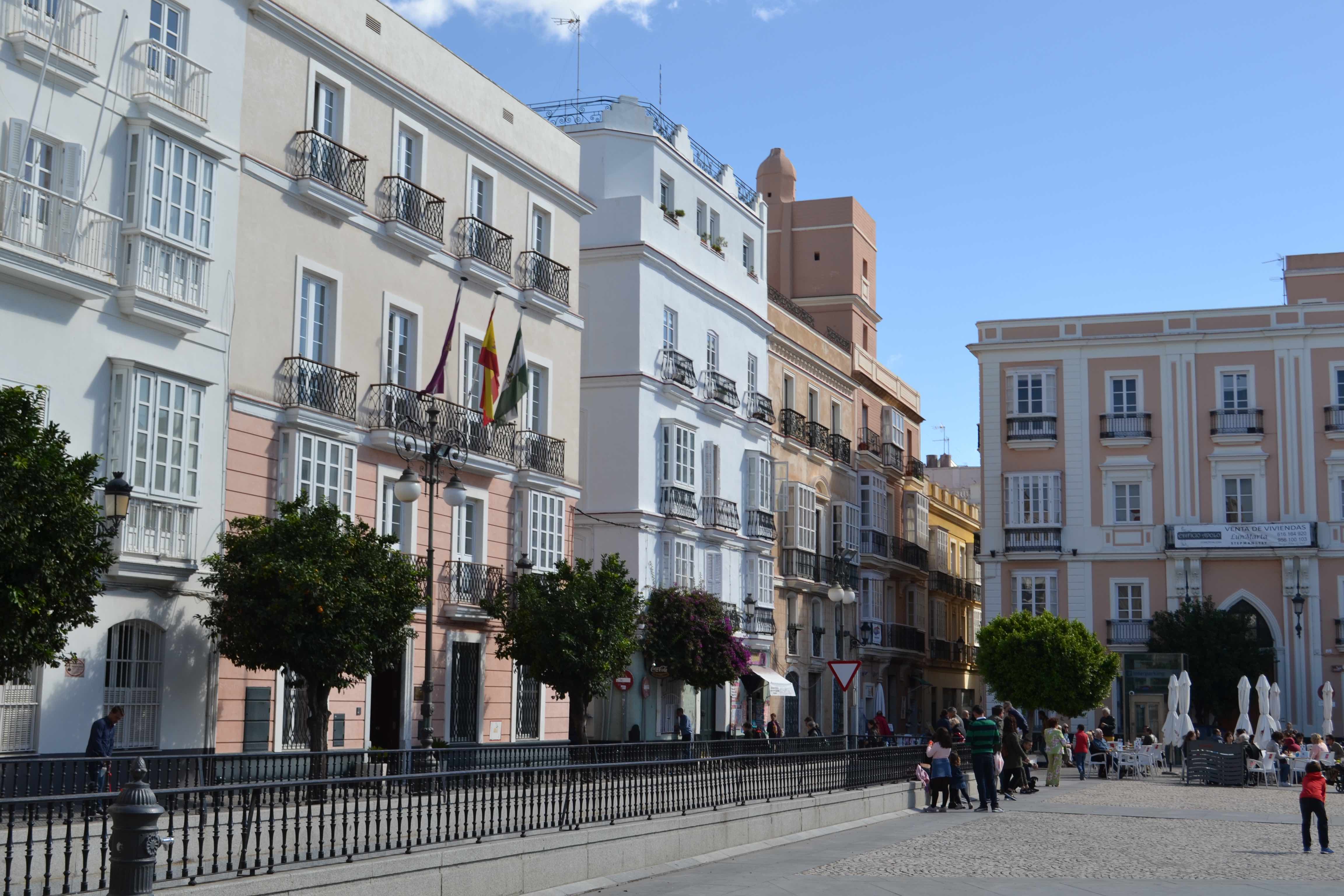
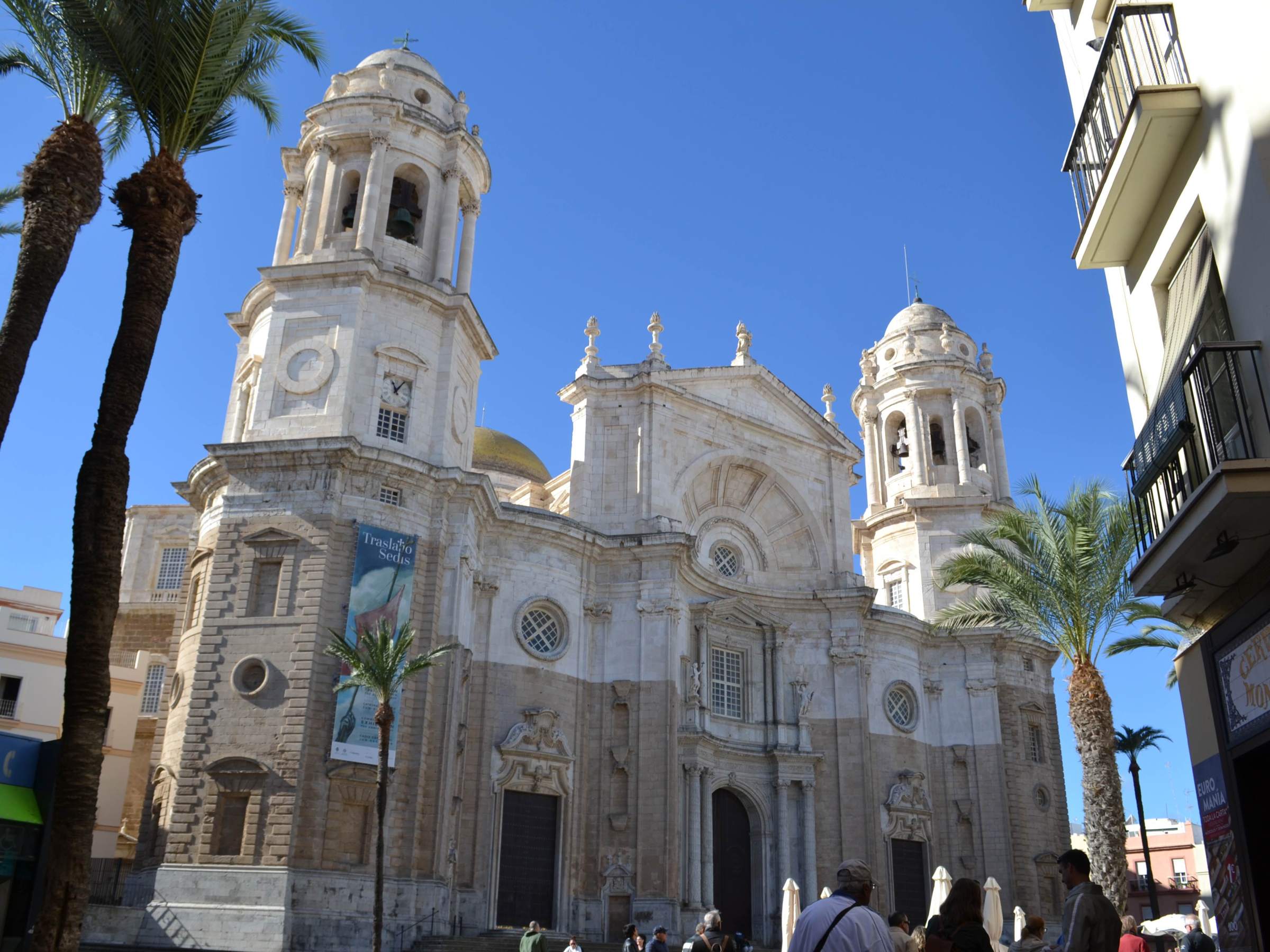
Cádiz is an ancient port city in southwestern Spain situated on a narrow slice of land surrounded by the sea. It is generally considered to be the oldest continuously inhabited settlement in Europe, founded as Gadir in about 1100 BC.
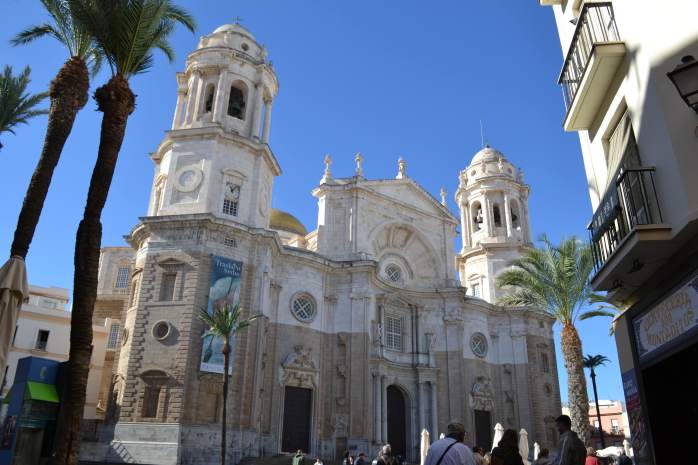
It has been home to the Spanish Navy since the 18th century, the port boomed in the 16th-century as a base for exploration and trade. It has more than 100 watchtowers, including the iconic Torre Tavira, which was traditionally used for spotting ships.
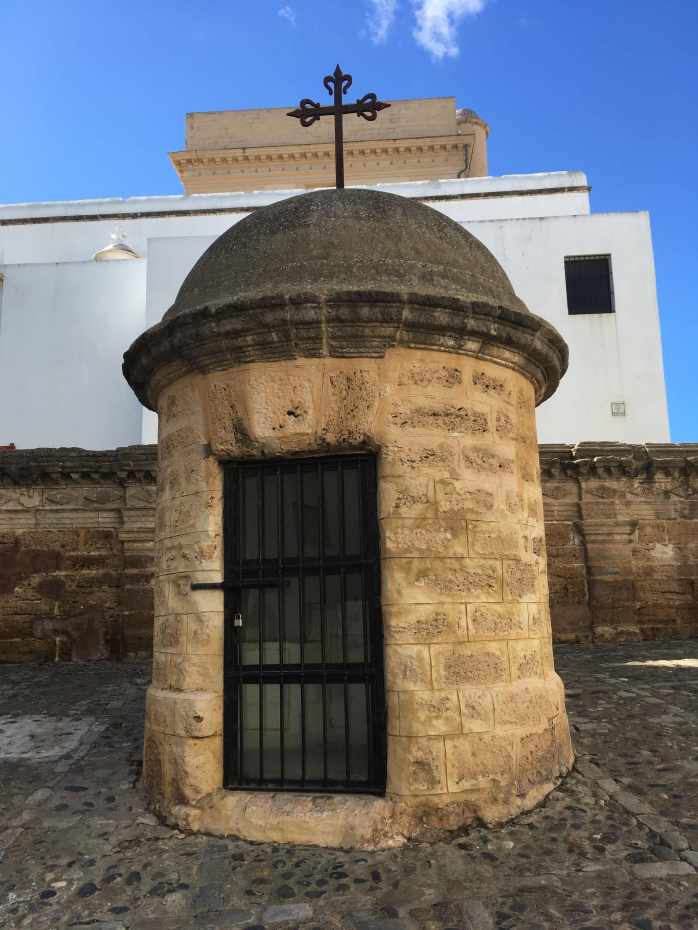
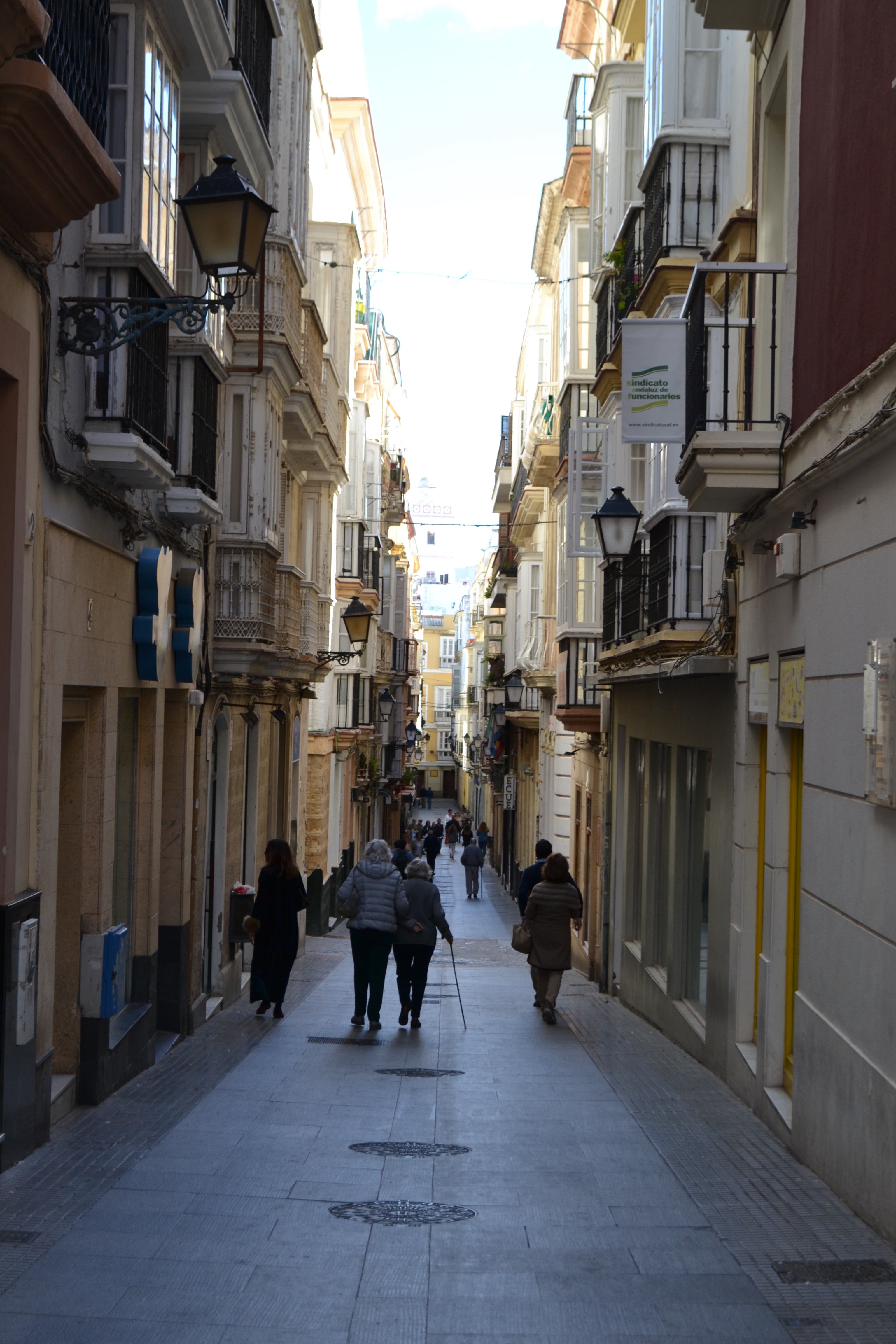
Now well into its fourth millennium, the ancient centre, surrounded almost entirely by water, is a romantic jumble of narrow winding alleys connecting large plazas inside the old city walls where the Atlantic waves crash against eroded sea walls. In addition, the city is dotted with numerous parks where exotic plants flourish, including giant trees supposedly brought to Spain by Columbus from the New World.
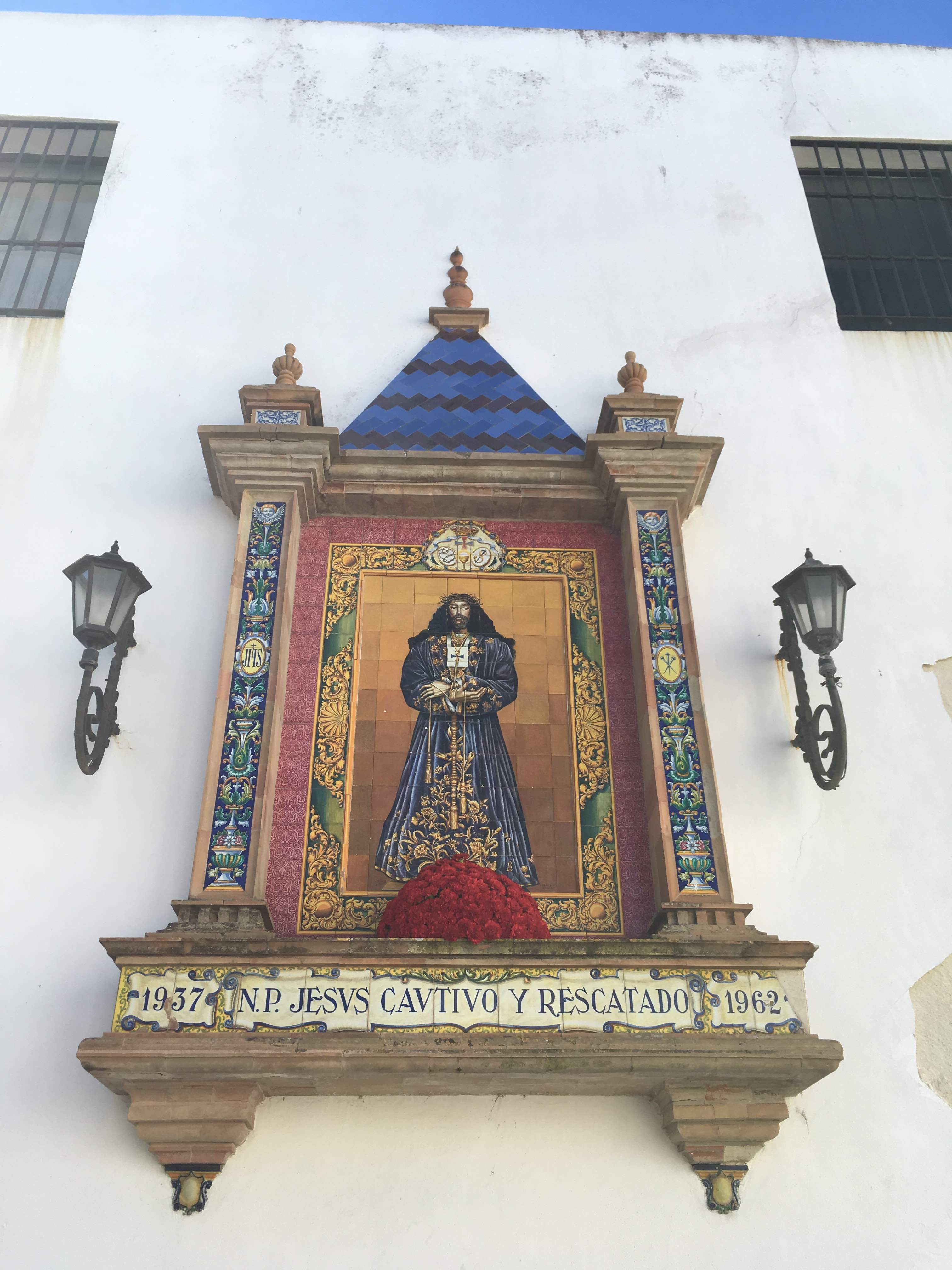
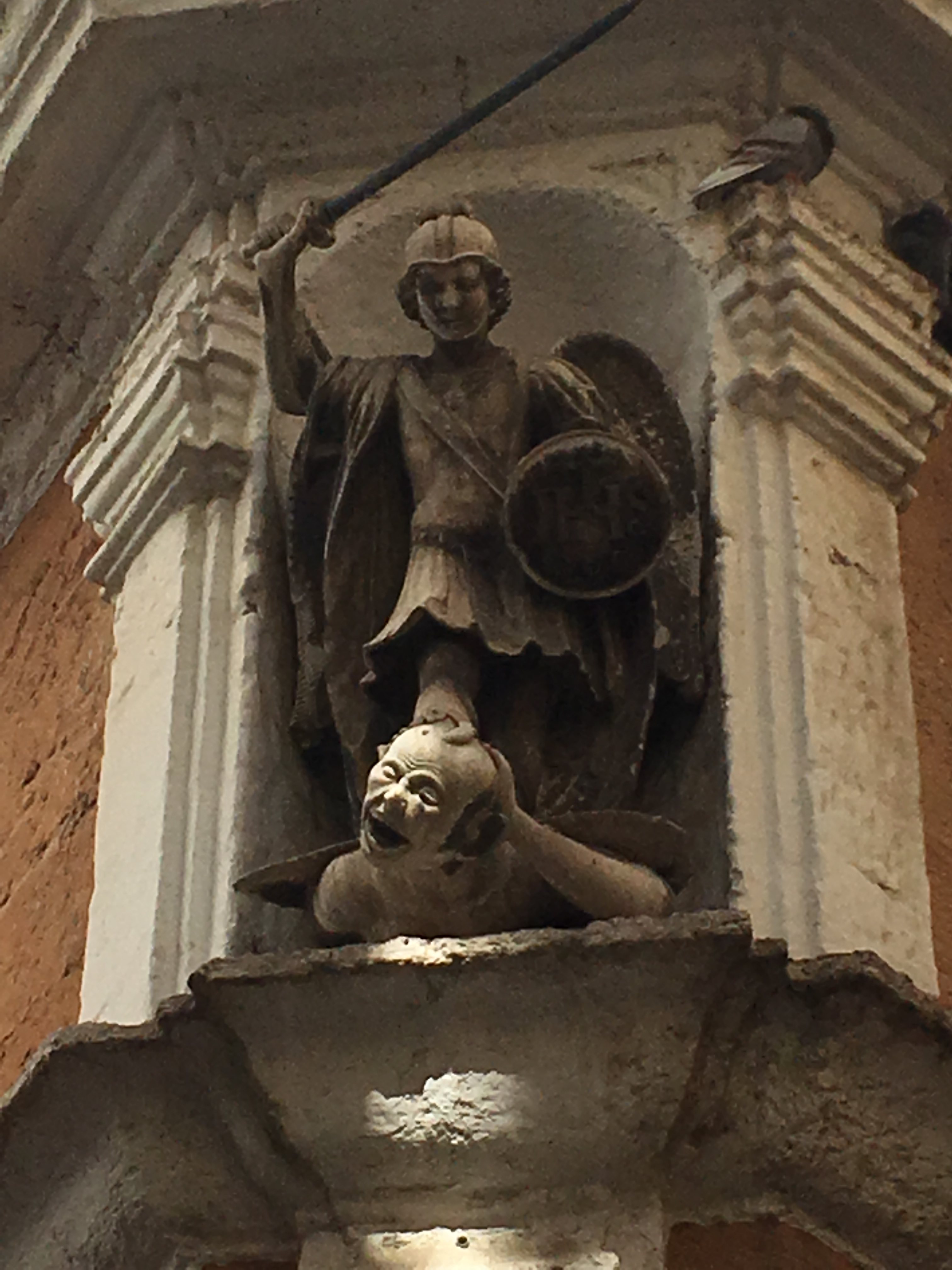
It was also in Cádiz that we spotted a magnificent large Australian flag on catamaran entering the marina. Phil quickly made his way to the pontoon to say a cheery G’Day and take their lines to help them tie up. David and Mary on Adventurous hail from Adelaide – South Australia (our capital city for the 15 years when we lived in outback SA, albeit 600km from where we lived). Here is where another lovely sailing friendship began to flourish – they, like us were heading south to Morocco.
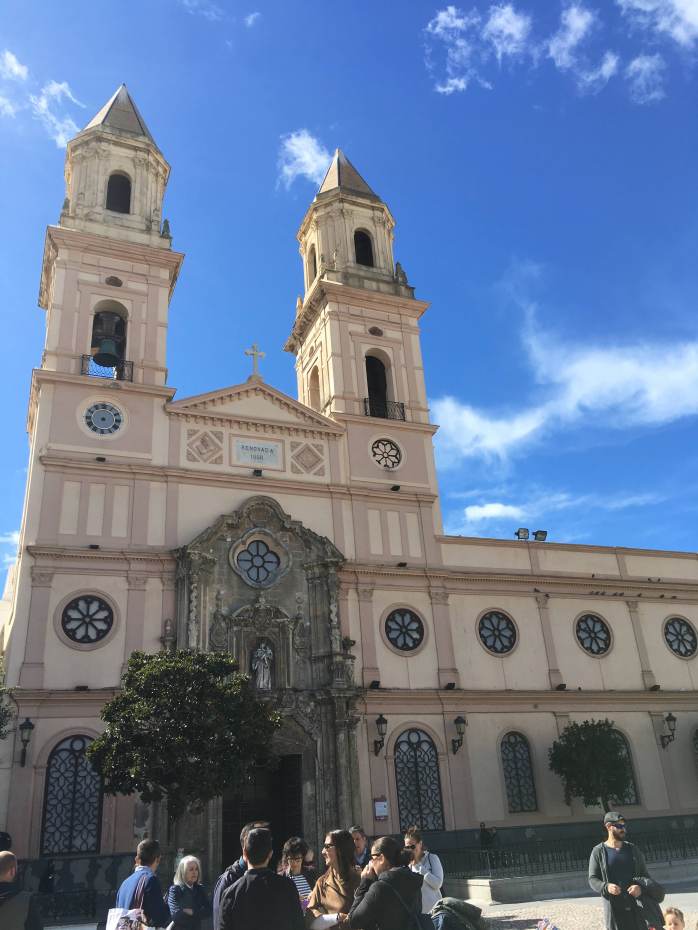
Before leaving Cádiz we had to get our passports stamped out of Spain/EU/Schengen, this is always an adventure and is never usually as straight forward as it should be but to our pleasant surprise we had a good run. We did have a decent wait for the official Maritime Police at their office, but were kept in good company with the crew from a cruise ship docked in Cádiz also waiting. We got into conversation with them and were talking about where we were all from, they hailed from India and when told I was from Tasmania they instantly smiled and said Ricky Ponting! We were called into the office first (despite the cruise ship crew having been there an hour longer than us) and with minimal questions were issued a nice big square stamp out of Schengen 🙂
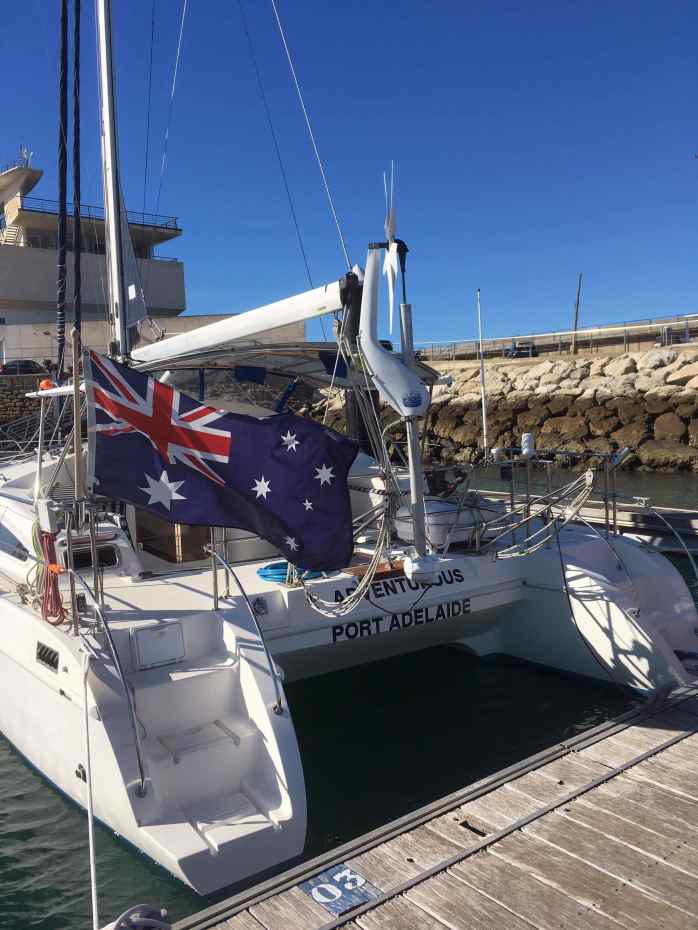
From Cádiz we originally intended to sail straight to Morocco (around 60 nautical miles) but after waiting for strong winds and large swell to die down we were left with minimal winds which would have made it tight to get there under sail within daylight hours (now being November the days are getting noticeably shorter). We therefore we decided to buddy with Adeventurous and divide it into two passages anchoring overnight in Barabate (37 nautical miles away), leaving then just a short 25 nautical mile hop over to Morocco.
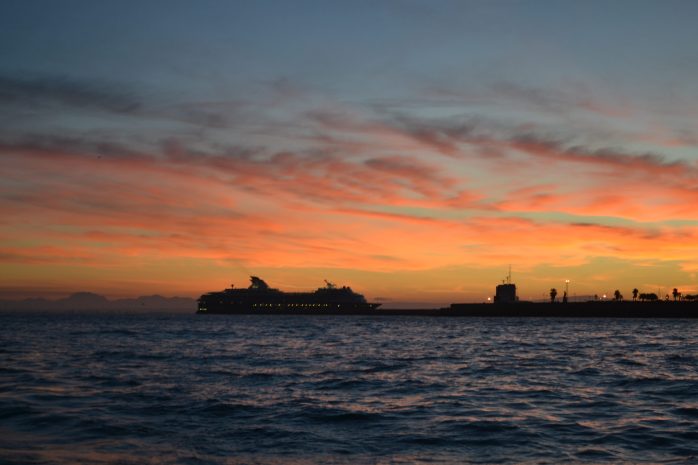
The passage to Barbate overall was good (even though we didn’t catch any fish) and if it hadn’t of been for two hours of next to no wind dropping our speed considerably we would have sailed on and easily made Morocco that day but we were in no hurry and a night on anchor is a free night so stuck with the plan.
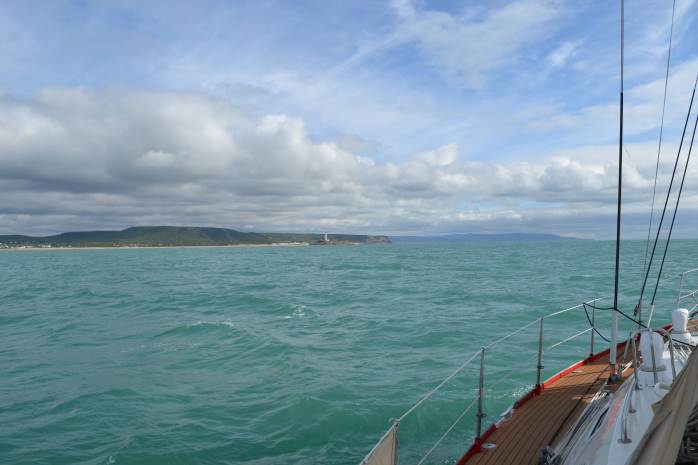
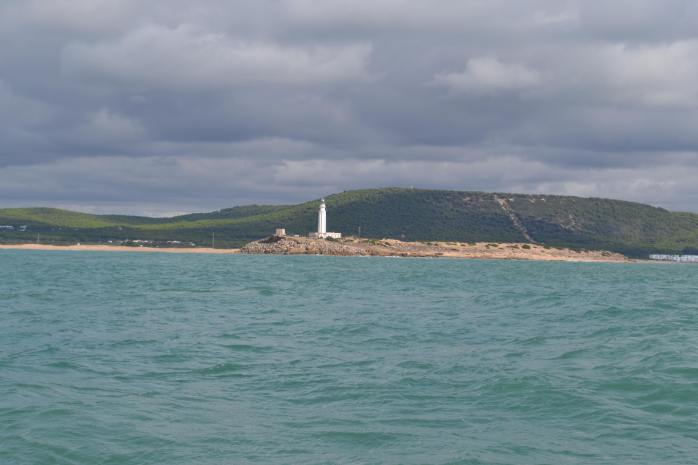
We also took advantage and sailed in nice and close crossing the reef to view Cape Trafalgar the site of the famous Battle of Trafalgar. The Battle of Trafalgar (21 October 1805) was a naval engagement fought by the British Royal Navy against the combined fleets of the French and Spanish Navies, during the Napoleonic Wars. Twenty-seven British ships led by Admiral Lord Nelson aboard HMS Victory defeated thirty-three French and Spanish ships under the command of French Admiral Villeneuve. The Franco-Spanish fleet lost twenty-two ships and the British lost none. During the battle, Nelson was shot by a French musketeer and he died shortly before the battle ended. We have visited the famous HMS Victory ship which is in Portsmouth Naval Dockyard and is still in commission in the British Navy, when we were in England two years ago.
We anchored off Barbate and awoke the next morning to thick fog, enough to put Red Roo off – we don’t like fog, give us large swell and high winds any day over fog. We got on the VHF radio to talk to Adventurous to advise them we were staying put until the fog cleared only to be picked up and heard by Jake and Lucie on Ragtime who were about 10 miles out from us sailing from Faro to Gibraltar. We had met Jake on the island of Alderney (Channel Islands) in January 2016 just a few short months after we set off on our adventure. We also caught up with him again in May of this year when we stopped in Alderney on our way from the UK to France where we learnt that he was also joining the cruiser lifestyle and with his lovely girlfriend Lucie, they were taking Jakes grandfathers boat Ragtime to sail to the Mediterranean. They confirmed they were nearby and that there was indeed thick fog out there and that since we were at Barbate they were going to use it as an excuse to stop and were coming in to join us. Fantastic. Meanwhile the fog cleared, but we stayed to catch up, we had a great night onboard Red Roo sharing a meal and a few drinks. Spirits were not even dampened when Phil took the dinghy to collect them and bring them over to Red Roo only to get the outboard engine on the dinghy caught in a fishing net marked only with small corks the size of a bottle top floating just below the surface. Phil and Jake eventually untangled it and got the motor going again … the motor Jake sold us in Alderney the first time we met! It’s a small world.
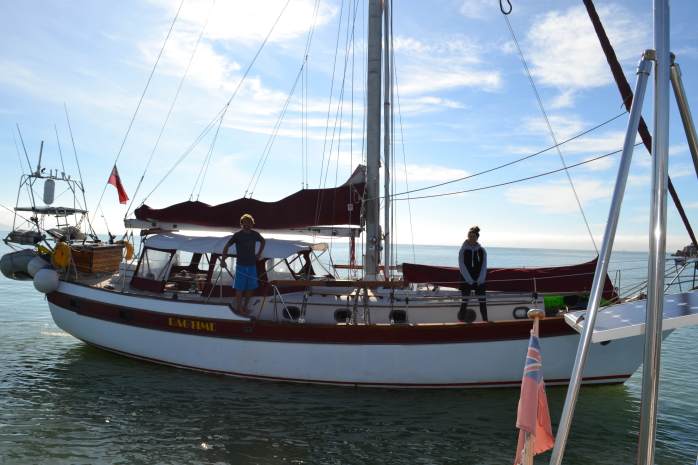
Next stop Morocco 🇲🇦 Northern Africa 🌍 a new continent 😀⛵️ So Exciting!
Our First Haul Out
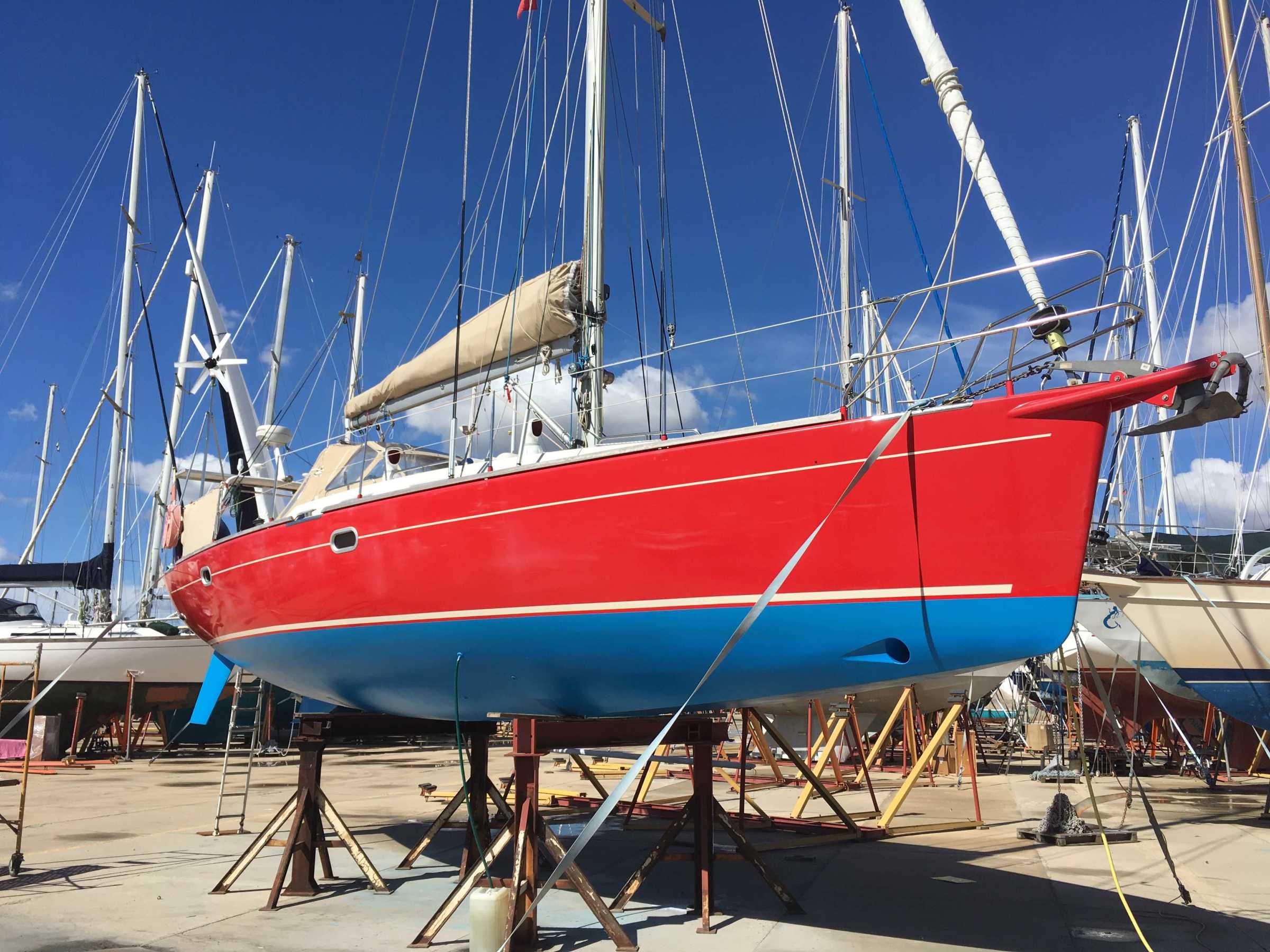
After three years we finally got around to hauling out Red Roo for some much needed care and maintenance on her hull.
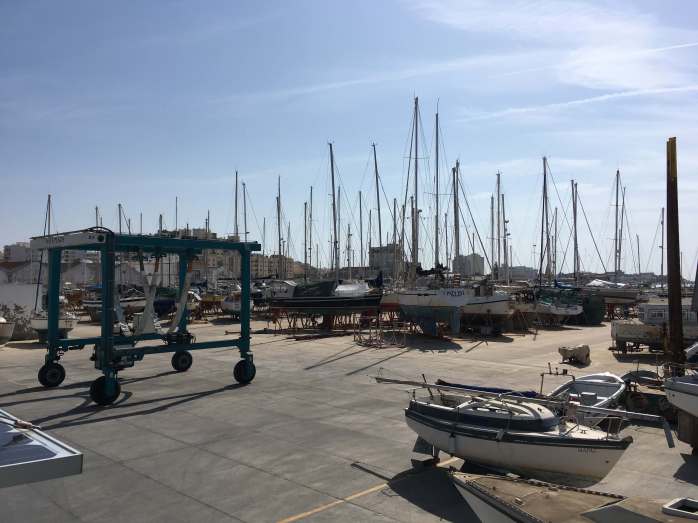
Phil had a weeks head start before Maree arrived back from the UK following her exile as part of the ongoing Schengen Shuffle.
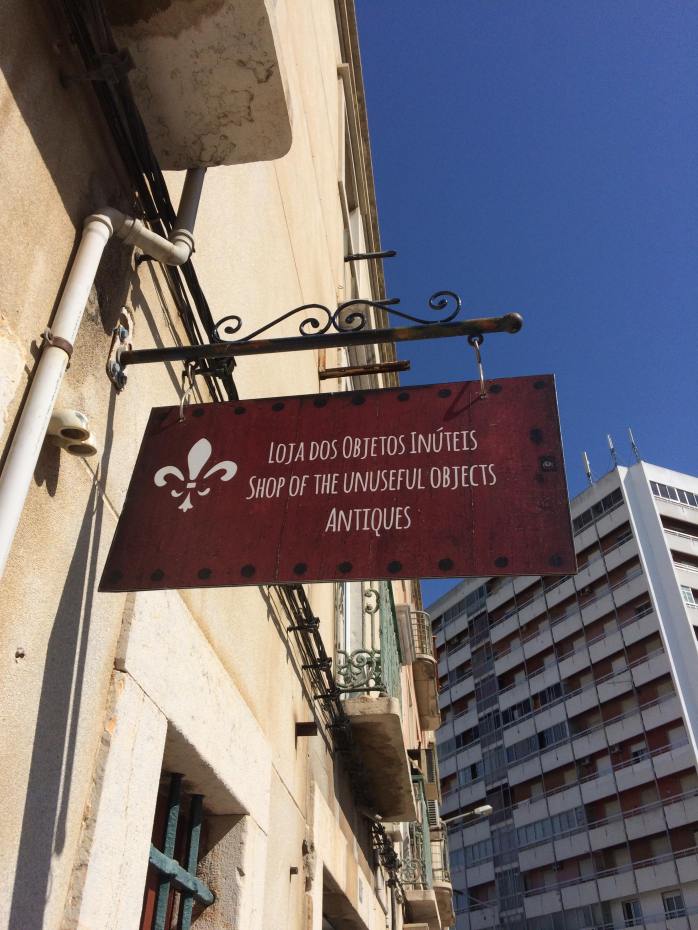
A few days were spent getting organised ready for the work, multiple trips to the hardware store, the paint shop and even a trip over the border to Spain for paint supplies. A HUGE thanks to our friend Reg who lives nearby for his assistance in driving Phil to Spain.
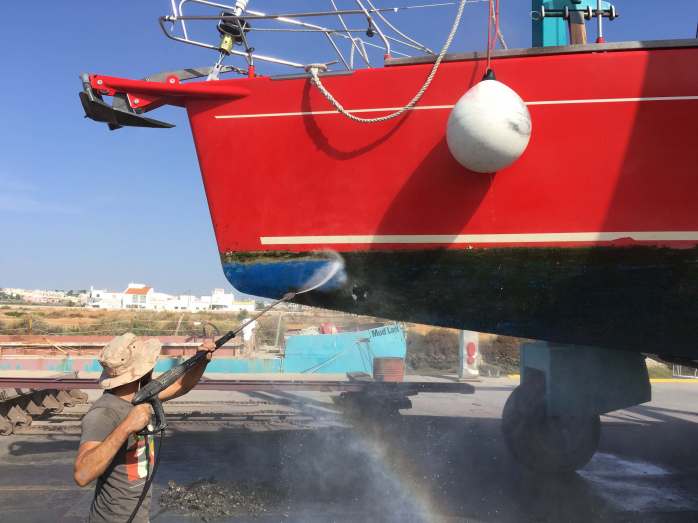
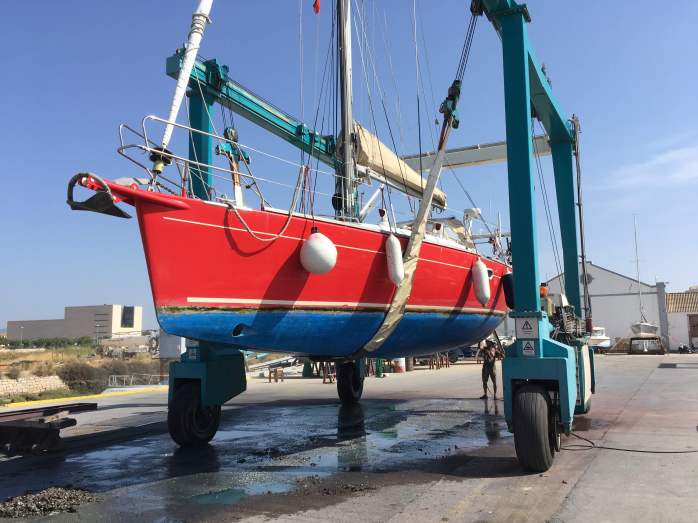
I must also compliment Phil in his set up of the boat ready for yard work. It doesn’t take much to get into a hell of a mess with paint, thinners, dirt, grease, gravel etc and before you know it you have it up on the deck and inside the boat. He set up a two door mat system, one at the bottom of the ladder on the ground, and a second door mat on the swim deck as you arrive on the boat off the ladder. Ladder I hear you ask, yes the boat was lifted high and dry it was a 3 meter climb up to get on board. It was also a strict shoes off policy once you hit the the second mat. He had dedicated himself a set of “dirty work clothes” and clean boat clothes to ensure he wasn’t contaminating the boat with his clothes, he even went as far as each night showering at the marina in his work clothes cleaning them before washing himself, and hanging them up over night to dry ready for the next day.
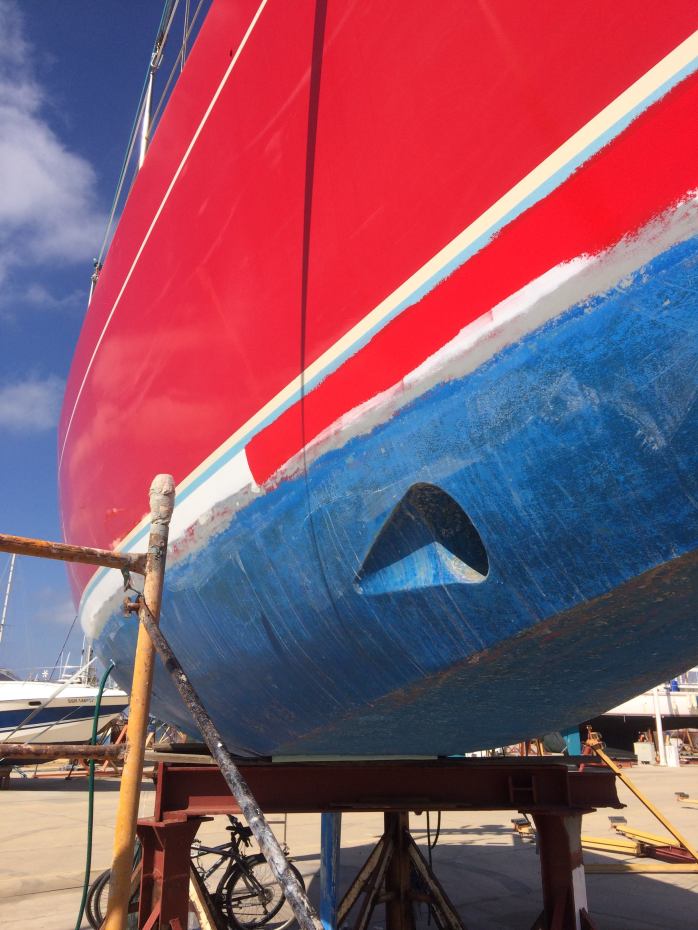
He covered the saloon seating with towels, he definitely scored points for that as the cushion covers are a pain to wash (well the actual washing is easy it is getting them off and on the foam cushions which is the difficult part – it’s like wrestling Elephants to get them off and then trying to fit an Elephant into pyjamas that are 3 sizes too small getting them back on).
He had also rigged up a hose and bucket system to keep the fridge working. Unlike a house fridge where the surrounding air is used to remove heat from the refrigerant our fridge uses seawater to remove the heat from the refrigerant. This works very well when the boat is in the water and not so much when out of the water so an alternate method for suppling cooling water is required.
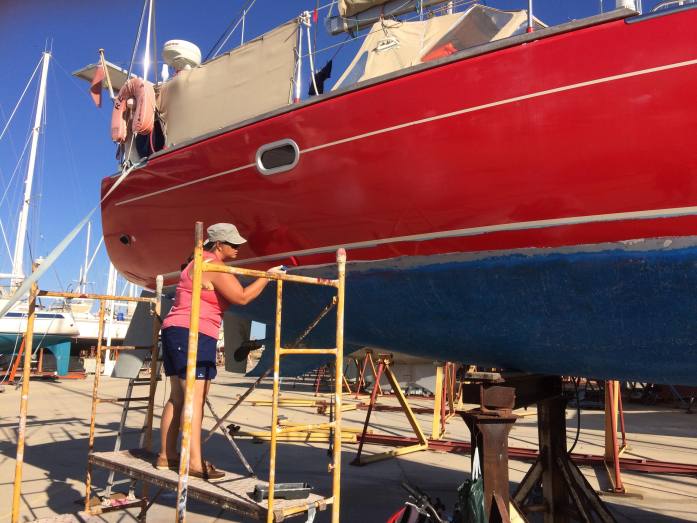
And after all that he got stuck into the preparation for the waterline paint. Some of the red paint near the waterline was peeling back and it was quite a job cutting it back and feathering by hand sanding in preparation for new the new red paint system.
I timed my return well as it was time to start layering on the new waterline paint system and Phil is the first to admit he isn’t a great painter. That’s where I come in, with a steady hand and even pressure on went the primer (grey), two coats of it followed by two coats of undercoat (white), and then finally I rolled and tipped on the top coat red, or to be exact “Rochelle Red” a suitable colour for a French boat. It came up well, and so it should have as we followed the instructions religiously ensuring we waited the correct temperature and dew point range and drying times for application of each coat. This included light sanding, washing and drying between coats.
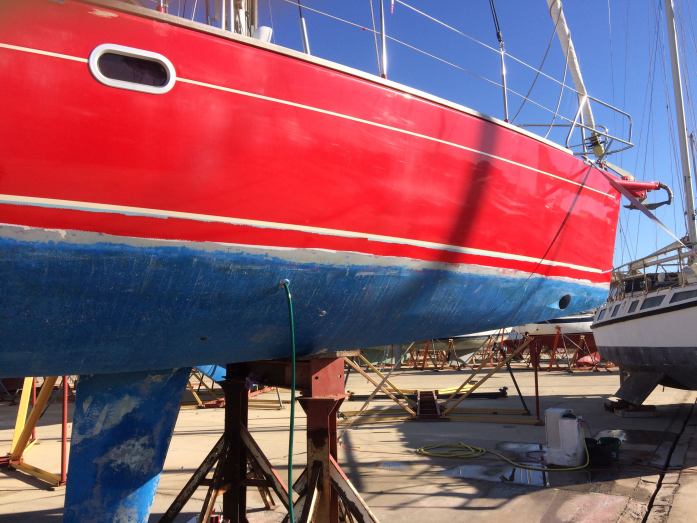
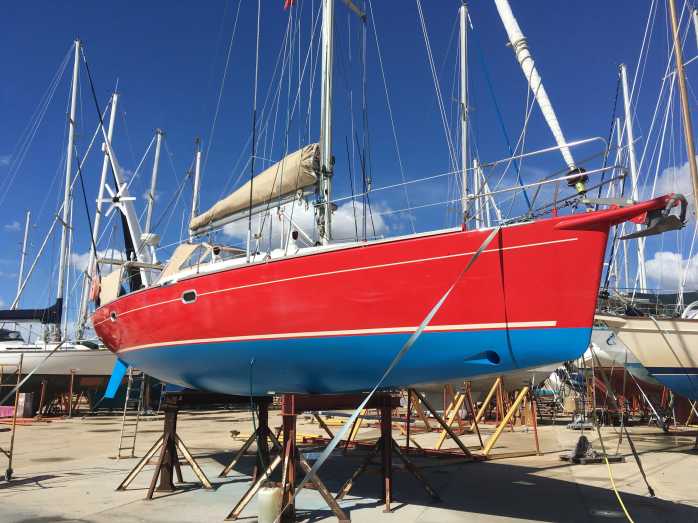
Then came the bottom job. As part of the crane lift out the boat yard crew high pressure washed the bottom of Red Roo, this removed the weed and growth and showed what was left of the blue anti foul on the bottom but that’s about it. First pass was Phil getting his muscles out and using a steel paint scraper to scrape the entire hull removing the many small calcium rings left from the barnacles. Second pass was using the new electric sander to cut back loose and flaking old antifoul and clean any residual grime from the hull. Then it was time to get painting again, we were also raising the waterline by 25mm which a lot of the preparation work for this was done with the waterline repaint. The hull painting was a lot easier all being done with a roller. Firstly Red Roo went spaceship silver with two layers of primer. Followed finally by antifoul, brilliant bright blue, we got 3 coats on all over, 4 on the waterline and 5 on the keel and rudders.
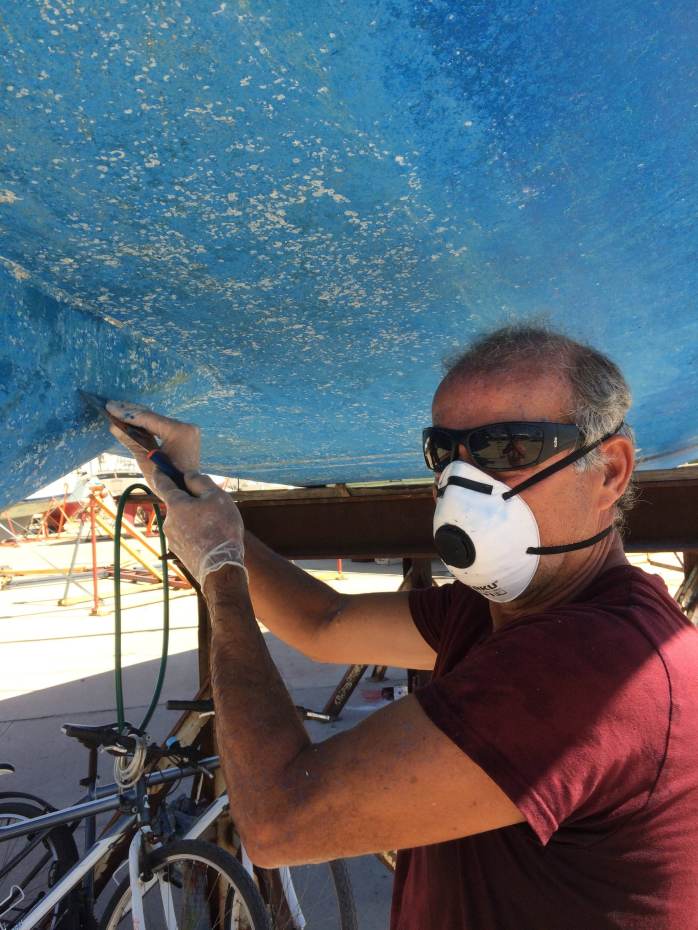
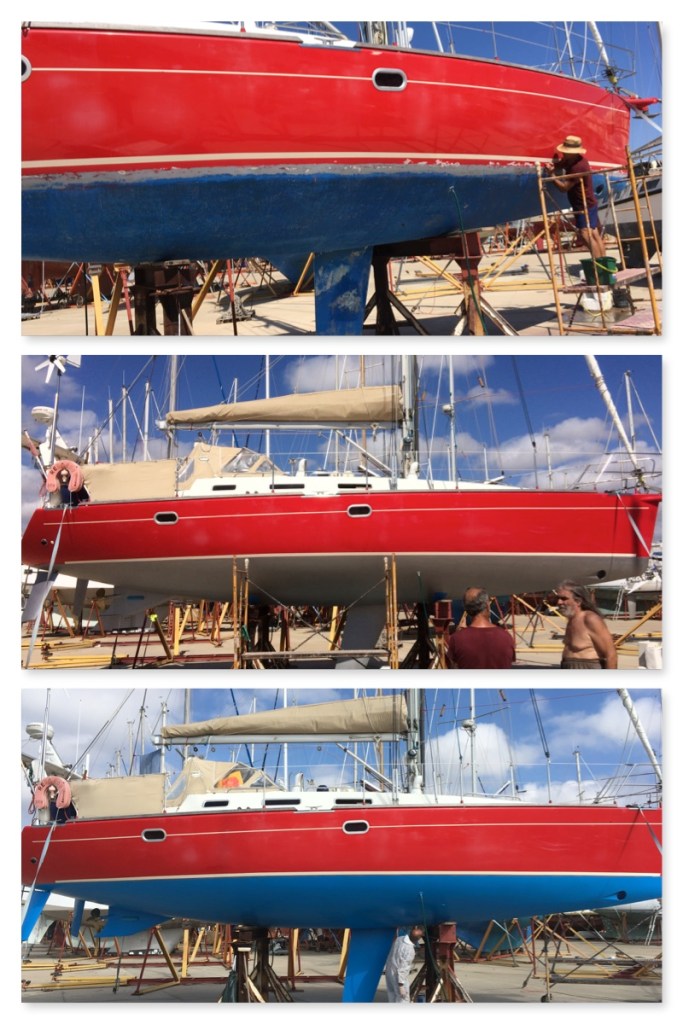
It was also fantastic to be able to visit our cruising family John, Kara & Dean who were anchored 130km away in Portimao, we got an early morning coat of paint on Red Roo then caught the lunch time train to Portimao. We had to collect new anodes for the boats centreboard from the local chandlers there, after which we went out the anchorage and spent the afternoon with the Sentijn team swimming and sinking a few cold beers. With heavy hearts we said our farewells knowing that they were off on a different course to us in the following weeks, and we left for the train station to return to Faro. Two hours later we were back on board Sentijn and staying the night! The trains had gone on strike and there were no more trains that day to Faro, further more by the time we had found this out the last bus had also left. Thanks Sentijn for having us for a sleep over. We made a few phone calls the next morning to make sure we could get back to Faro and were assured the trains were again running, only to make our way to the train station to find out that the next two scheduled for Faro had been cancelled again due to strike action. We were promised that the last scheduled train for the day would run … we were nervous but alas it did and eventually we got home well after dark 24 hours later than expected, but with the required anodes for Red Roo and with a lot more lovely memories made with J, K & D 🙂 worth it even with the hangover Phil had.
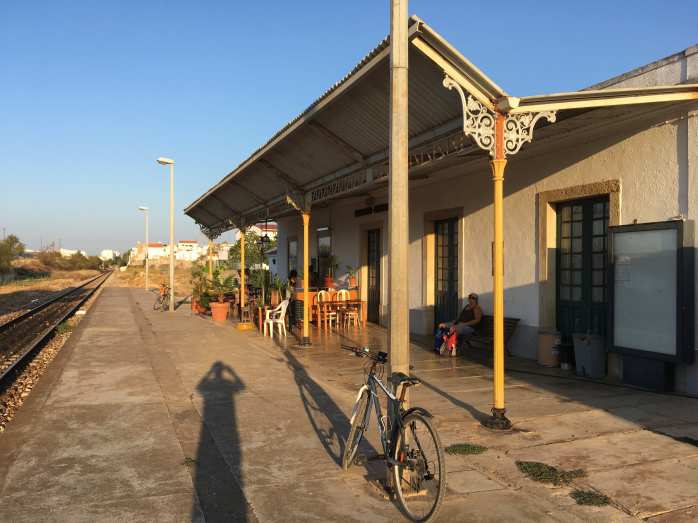
Despite the above journey and train frustrations we did venture out on the train again under similar circumstances. We put the days paint coat on then this time headed east from Faro to Olhão to say our thanks and farewells to Reg and Joan at their lovely home. They had helped enormously by allowing us to use their mailing address to received some important mail from back home in Australia, Reg also took the time to show us around his town and home. Again, we are so lucky with the friends we have met and made on our journey.
We ended up being out of the water for a whole extra week (7 days) due to missing one coat of paint on one day due to rain. The boat yard doesn’t work weekends, and our plan was to get hung back in the lift slings of the travel hoist on a Friday afternoon before knock off in order to be able to scrape, sand, prime and do 3 coats of antifoul on the parts that had been sitting on the 2 x hard beams under the boat over the weekend before being dropped back in the water on the Monday morning. Oh well not to worry, we hadn’t put in all that hard work to slap and dash at the very end, at least we did the whole job properly.
Red Roo finally went back in the water without any issues, mind you my heart was in my mouth a few times while she swung around in the travel hoist.
Finally a shout out to all in the boat yard at Faro who made our time their enjoyable. I had a great morning out in town doing the rounds with some of the ladies off other boats in the yard, we hit the laundromat, the hardware shop (with list and instructions for parts from the blokes), the market and then the sewing shop for supplies (I am making a mozzie net for the companion way hatch), not to worry despite having the morning off I did get back in time to put another coat of antifoul on the boat later that afternoon and had great delight in telling Phil that they had told me that their husbands had commented to them on how much work I was doing on the boat and the ladies suggested I eased off a bit as I was setting an unrealistic standard and their men were getting expectations that would not be met!
Lisbon to Faro
Having offloaded Maree back in Figueira da Foz to fly back to the UK for the “Shengen Shuffle” and dropped William in Lisbon it was solo time on Red Roo.
The plan being to get quickly down and around the Portuguese coast and back into Spain where Maree would rejoin as Aussies can have an additional 90 days in Spain over the 90 day Schengen limit. I was also on the lookout for but some surf to drag out my surf board. (Portugal being famous for it’s waves on the Atlantic Coast). Unfortunately there was a lack of swell on the passage south so the board stayed in its bag. John and Kara on Sentijn travelling a week behind and having a more leisurely cruise were able to get a few waves, and a few weeks later the 2018 Rip Curl Pro World Surf League competition was held at Peniche on the Portuguese coast (just above Lisbon), a place where Red Roo had anchored on the journey down.
Sailing solo on Red Roo is pretty straight forward as she has been set up for it by Didier, her previous owner who sailed her solo from Europe to the Caribbean and back – a fantastic accomplishment. With daylight only passages along the coast and anchoring in safe harbours or bays the solo sailing was enjoyable. (No fatigue issues like when night sailing or multi day sailing and no stress of having to enter and depart Marinas by ones self).
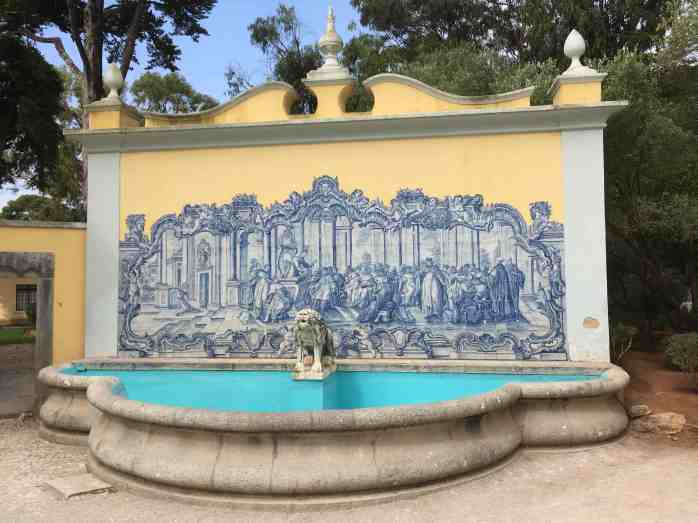
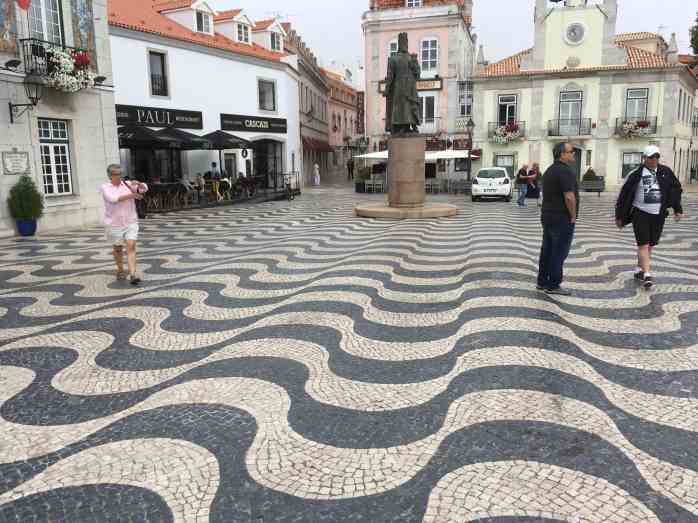
I spent two extra days in Lisbon, seeing more of the sights and waiting on westerly winds to abate. Once out of Lisbon I anchored again off the lovely town of Cascais waiting for some wind with a northerly component to head south. On one of the days in Cascais I had taken the dinghy to shore and while at the supermarket somebody stole my outboard fuel tank. Very disappointing, but a lot better than having had the outboard motor taken or indeed the whole dinghy stolen. I reported the theft to the maritime police but there little they could do. Fortunately I had bought a case of beer which I was able to use as a seat to row the dingy back to the boat.

While in Cascais I took a bus trip inland to the historical town of Sintra. Catching the early bus and pre purchasing entry tickets at the Sintra train station which meant beating the large tourist crowd queued at the Pena Palace. I then enjoyed a lovely walk up the big hill through the gardens and bush and was admitted straight into the palace before the days rush.

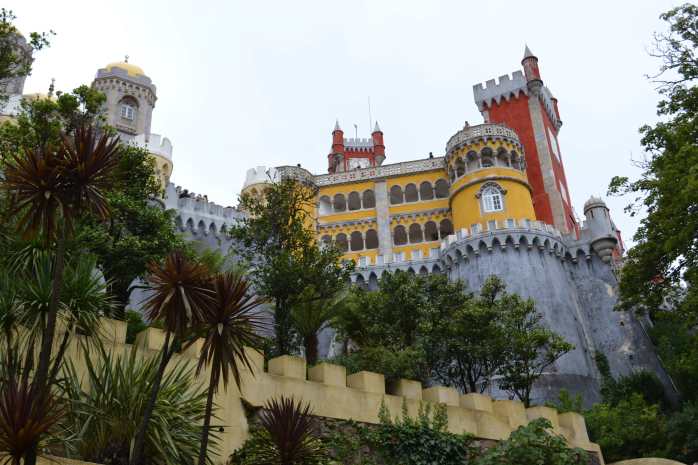
Sintra was a longtime royal sanctuary. Apart from the old town itself the forested terrain is studded with pastel coloured villas and palaces and lovely gardens. The main sights are the National Palace in town, the hilltop Castle of the Moors and the hilltop Pena National Palace and Gardens.
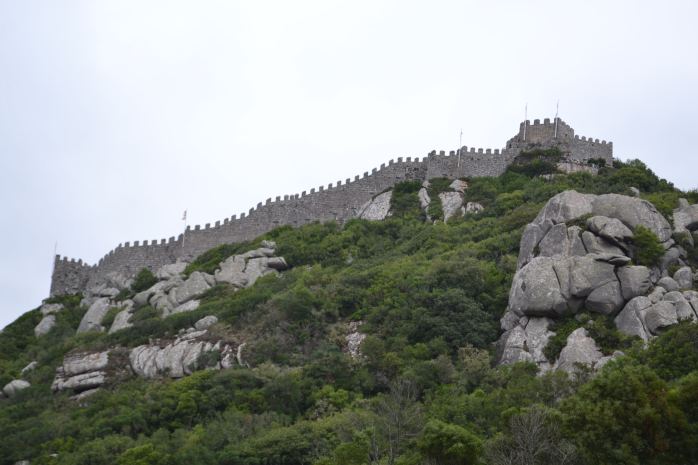

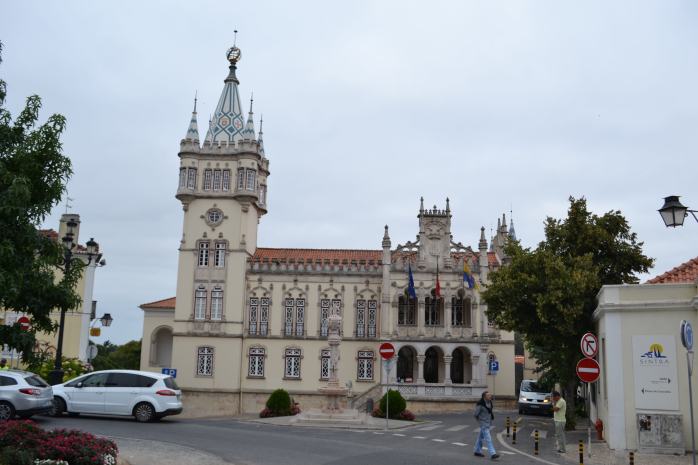
Also while in Cascais I took the opportunity in the warm water to scrape some of the barnacles off Red Roo’s undersides to help her move through the water better.
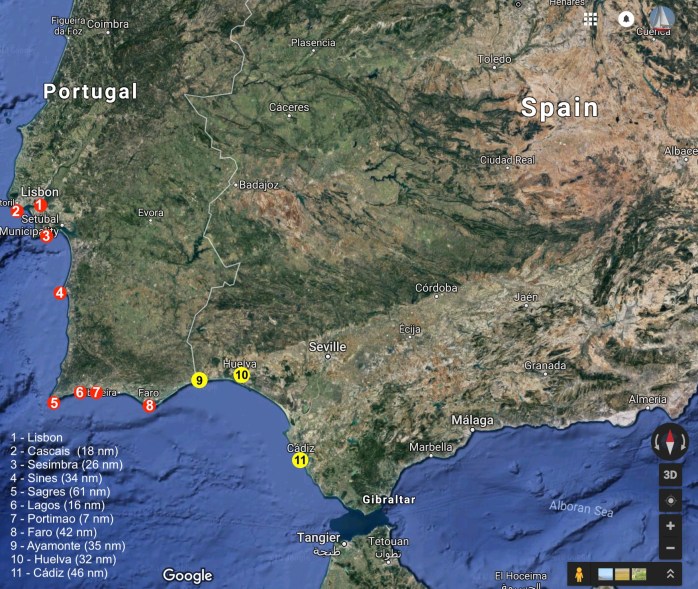
After four days in Cascais I sailed south the 26nm to Sesimbra and anchored off the lovely beach for the night then the following day sailed 34nm to Sines where I dropped anchor off the beach in the inner harbour. I spent 2 nights in Sines which has an outer industrial port and an inner port accomodating an active fishing fleet, small marina and sandy beachfront. Walking around the town I had the feel that its best days have passed. Sines one claim to fame is that it is the birthplace of the famous Portuguese explorer Vasco da Gama who in the year 1498 was the first European to reach India by sea. His discovery of the sea route around the south of Africa to India enabled Portugal unopposed access to the Indian Spice routes for several decades.

While I was rowing back from shore in Sines one of the row locks came unglued from the dinghy and sank to the bottom where in 5 metres of murky water it was lost. With a second person in the dingy it is easy to take an oar each and paddle like a canoe but with only the one person and only one row lock I was rowing around in circles! The dingy without a fuel tank and with only one rowlock became unusable.
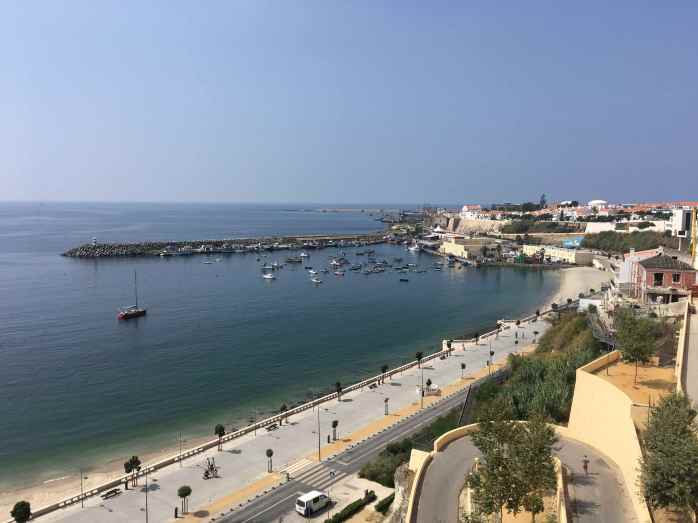
The next leg was 61nm south from Sines to Sagres. This passage was variable with light winds early, motor sailing then sailing in good winds from behind the beam which slowly built to a maximum of 25kts before dropping almost to zero which meant more motor sailing.
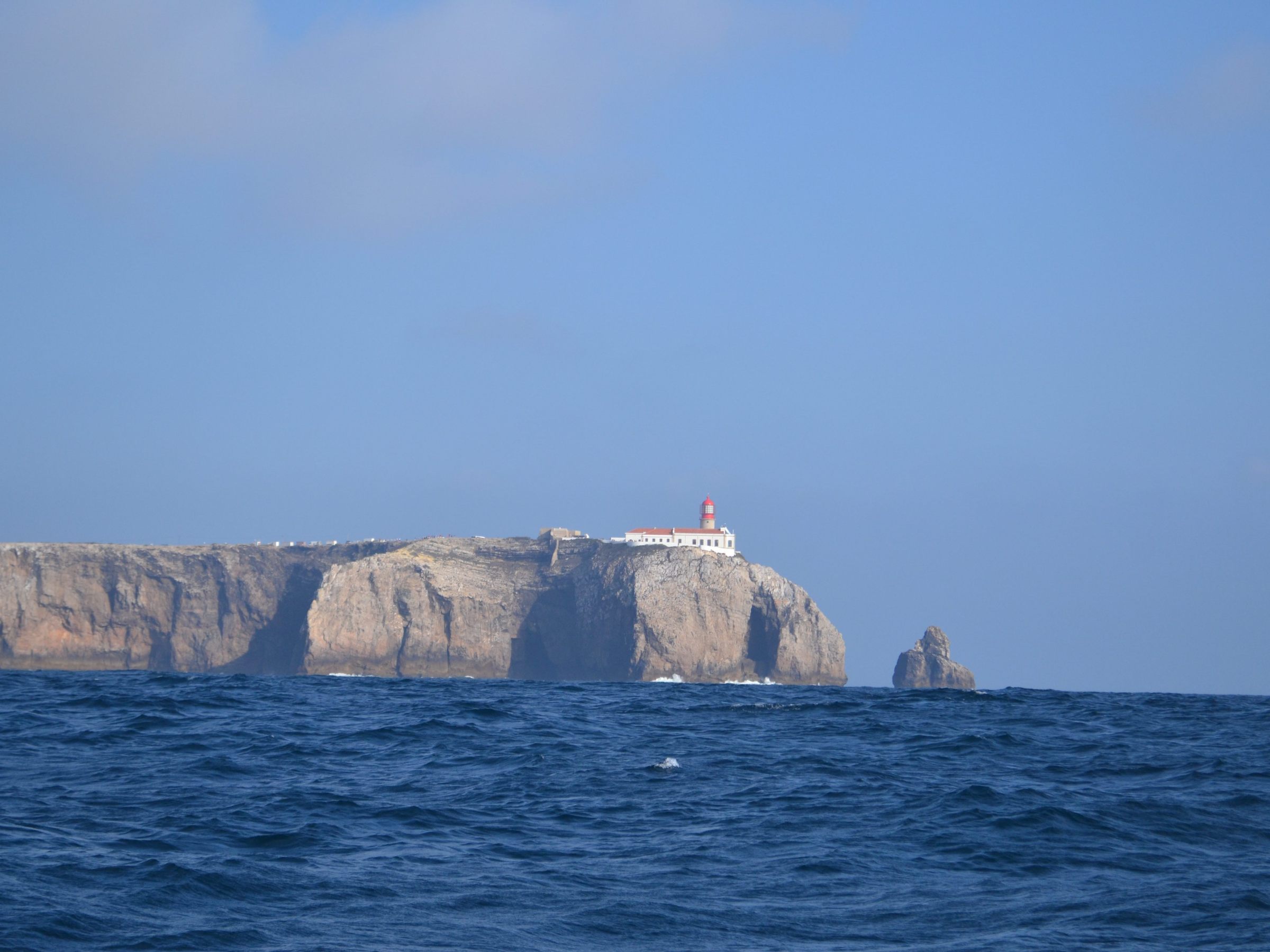
The last part of this passage took me around Cape St Vincent, the south western most point of Portugal and mainland Europe. I was now pointing eastward towards the Mediterranean!
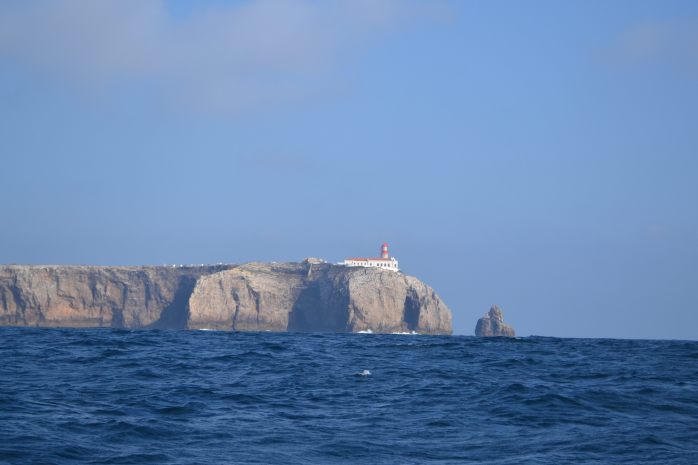
What was pleasant about rounding Cape St Vincent was the noticeable change in sea conditions. The rolly, sometimes uncomfortable northwest swell that is feature of the west coast of Portugal was replaced by the calmer seas of the south coast – The Algarve as they call it.
Just a few miles to the east of the Cape I anchored for the night in the Bay at Sagres, just off the lovely sandy beach. I moved 16nm the following day to anchor for one night off the beach at Lagos which is a large resort town and river port with boat yards, fishing harbour and marina. The following day I motored 7nm to Portimao another resort town with similar facilities to Lagos but having a nice safe anchorage inside the river breakwater that has a nice beach and is very popular with cruising boats.
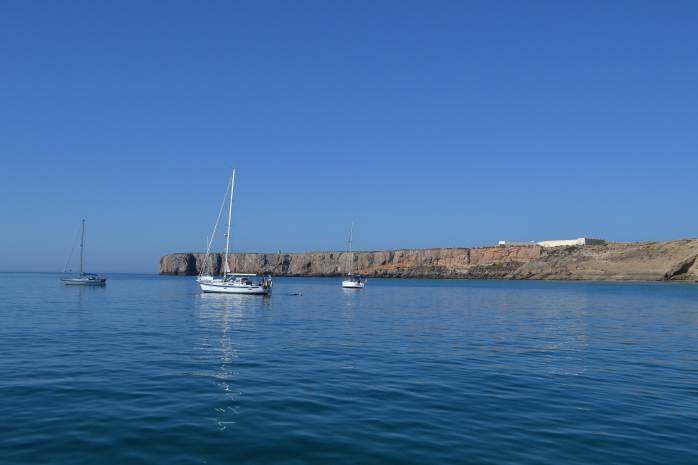
I spent 5 days on anchor in Portimao where without use of the dingy (no outboard fuel tank, no rowlock) I swam to shore each day towing my shoes, clothes, money etc in a waterproof drybag. I was glad the water was warm. During this time I was able to order a new fuel tank for the dingy and inspect the boat yard with view to hauling Red Roo out for a long overdue bottom scrub and antifoul. Four days later I had my new fuel tank and the seller was kind enough to give me couple of litres of fuel and even had his yardman ferry me back to Red Roo which saved me a 4km walk and a 250 metre swim.
After inspecting the boat yard here the idea of hauling out for some long awaited care and maintenance was now seriously coming into play. For the last two years this has been on our minds but due to the area’s we had been sailing we hadn’t stopped for any length of time until winter. The winters in Ipswich UK were great but cool and wet, at times snowy without any real chance of getting a couple of weeks of stable warm and dry conditions that we needed for bottom maintenance and antifouling of Red Roo.
Moving east 36nm I entered the large estuary of Ria Formosa and anchored amongst the many boats off the island of Culatra. Inside the estuary are the two towns of Faro and Olhao. One reason for stopping in this area was to catch up with friends Reg and Joan. We met Reg when visiting Padstow in Red Roo in 2016. Reg is a long time friend of my cousins Wendy and Michael. Reg and Joan have lived near Olhao for many years. I arranged to met Reg in Olhao and he showed me around the town and also the bus station where I took a short bus ride to Faro where I inspected the next boat yard which is known as Bruce’s.
After inspecting both the Portimao and Faro boatyards, getting prices, talking to other boat owners and getting a general ‘feel’ for the yard I decided to haul Red Roo out of the water in Faro.
After 204 nautical miles solo, split into 7 passages Red Roo motored into the slip at Faro boatyard where she was lifted out of the water with weed growing along her waterline and her bum covered with thousands of hitchhikers (little barnacles). There was certainly lots of work to be done.
Porto to Lisbon with William
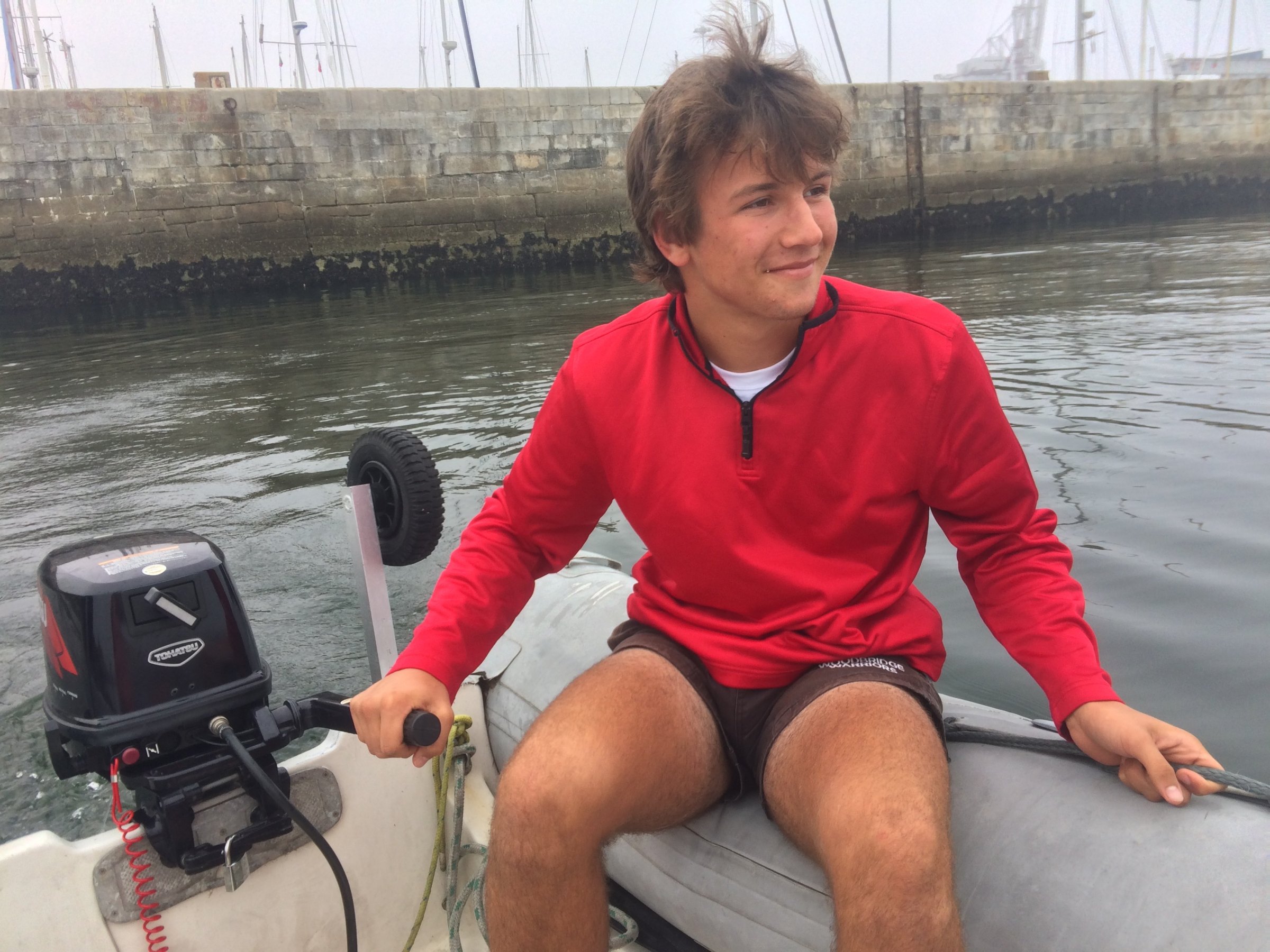
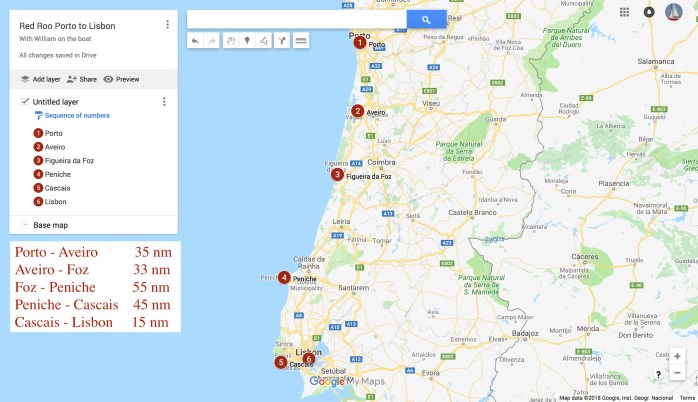
NEW CREW ON RED ROO, we were very excited to have William, a relative from the UK on board for 7 days to travel with us from Porto south down the coast about 190 nautical miles to Lisbon.

This was Williams first sailing experience, with the exception of joining us for the day cruise (jolly) in Porto. We straight away put him in the dinghy and he was off and cruising within minutes doing laps of the anchorage.

The following day we lifted anchor (as Phil and I had been in Porto for a week) and headed south in zero wind, flat seas and reduced visibility, eventually arriving at Averio.
William had a rope and knot lesson during the day with Phil and also landed his first (one of many) fish. We left the line out the back for the passage into the anchorage at Averio and had it ran over not once but twice by other small fishing motor boats in the estuary! Luckily we didn’t loose the rig or lure.
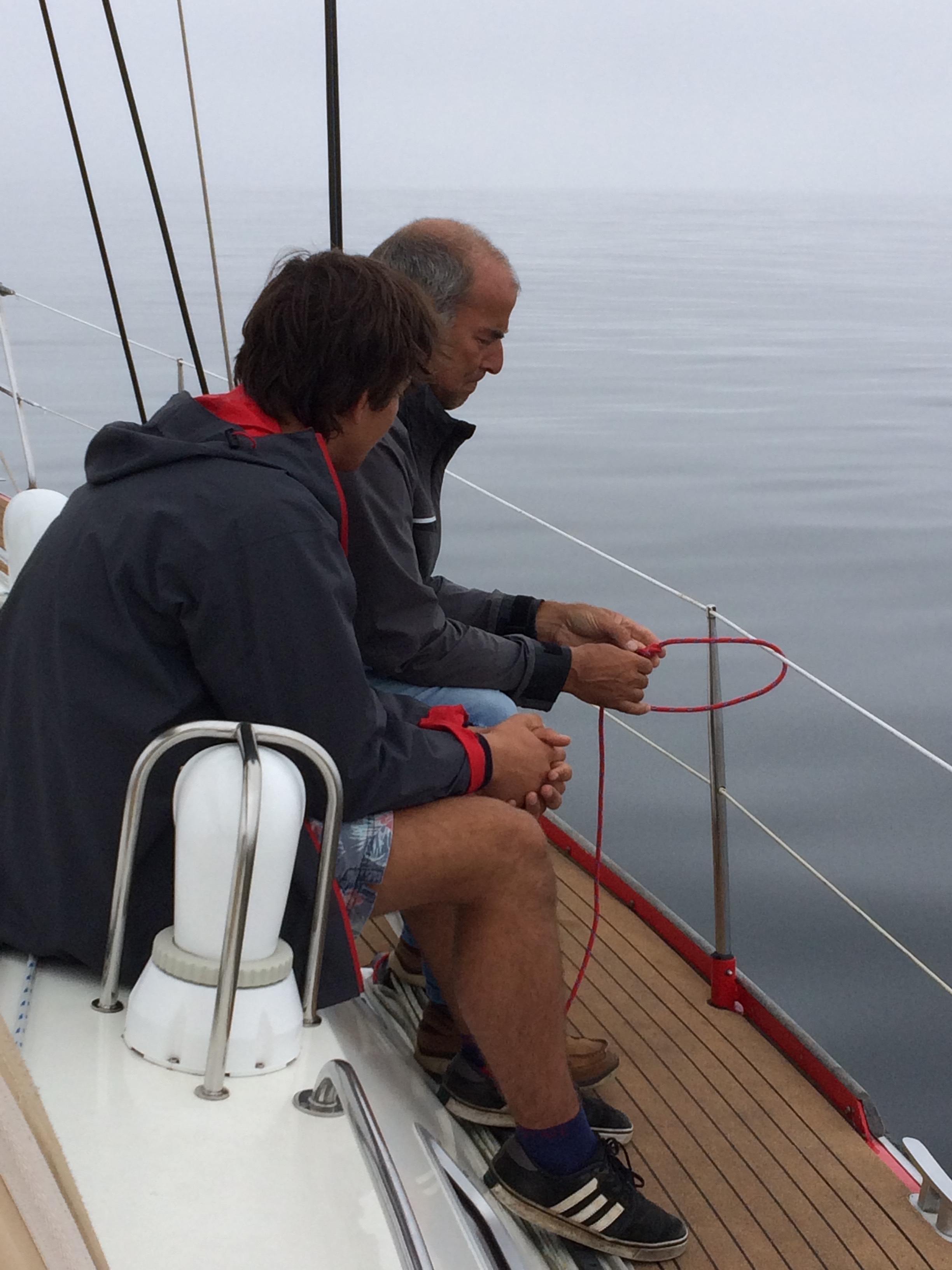
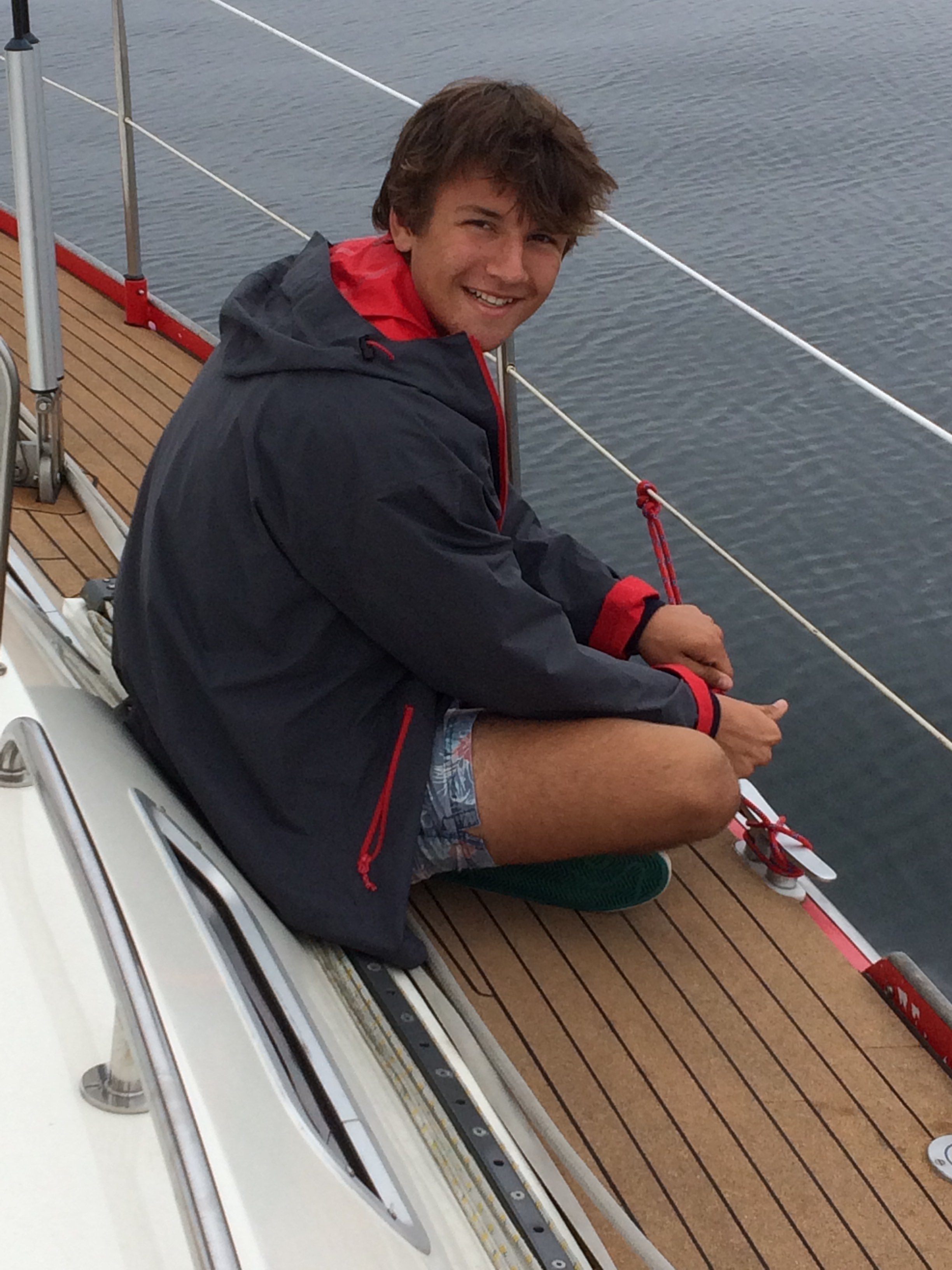
The next day surrounded by thick fog we departed for Foz, conditions had changed and we had swell on the beam creating a bit of roll on board which for first time sailors can take some getting used to. After a laydown & sleep William felt much better and by mid afternoon when he was back up on deck, the fog also lifted and the sun came out for our arrival into Foz.
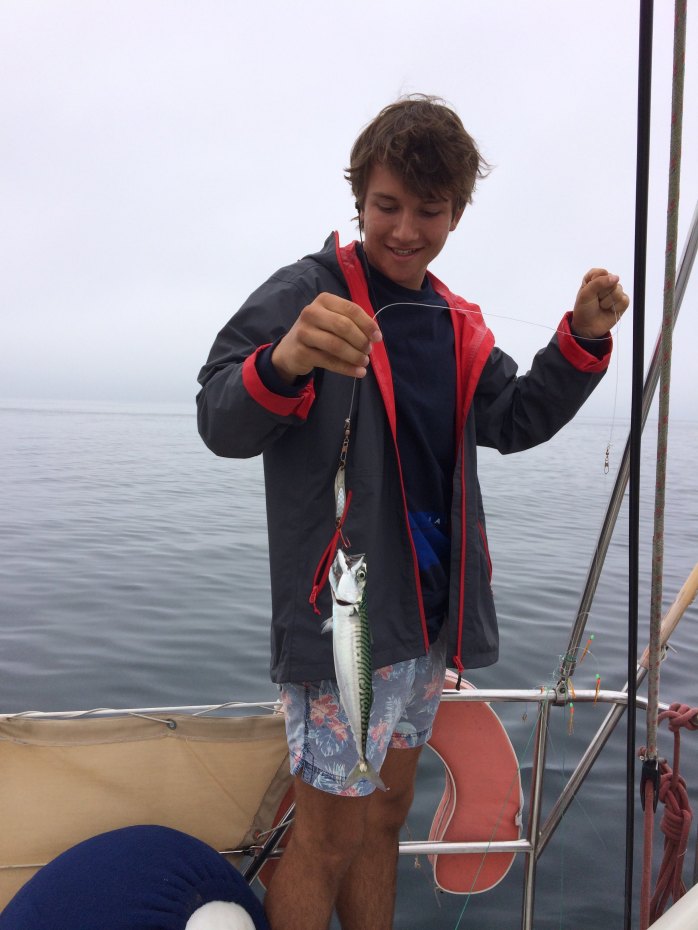
Maree abandoned ship the following morning in Foz to fly to the UK as part of the ongoing “Schengen Shuffle” with her visa (sigh…) leaving the lads to fend for themselves.
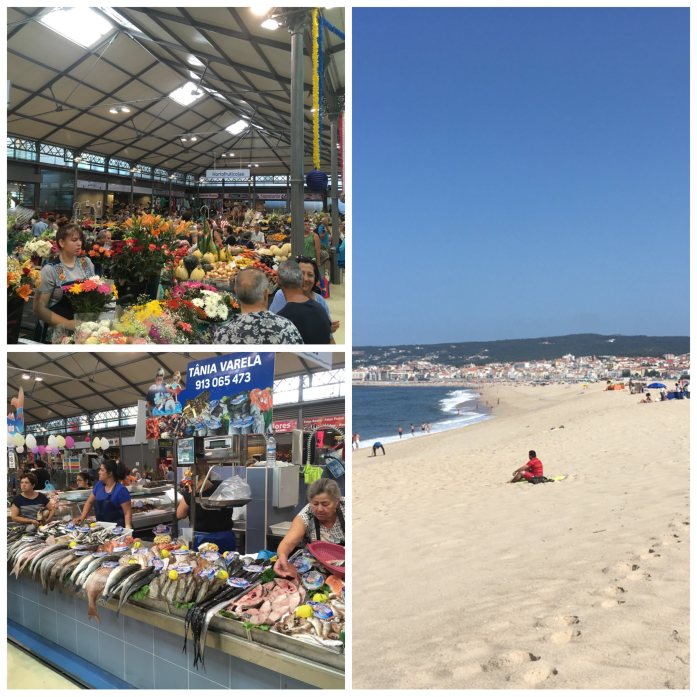
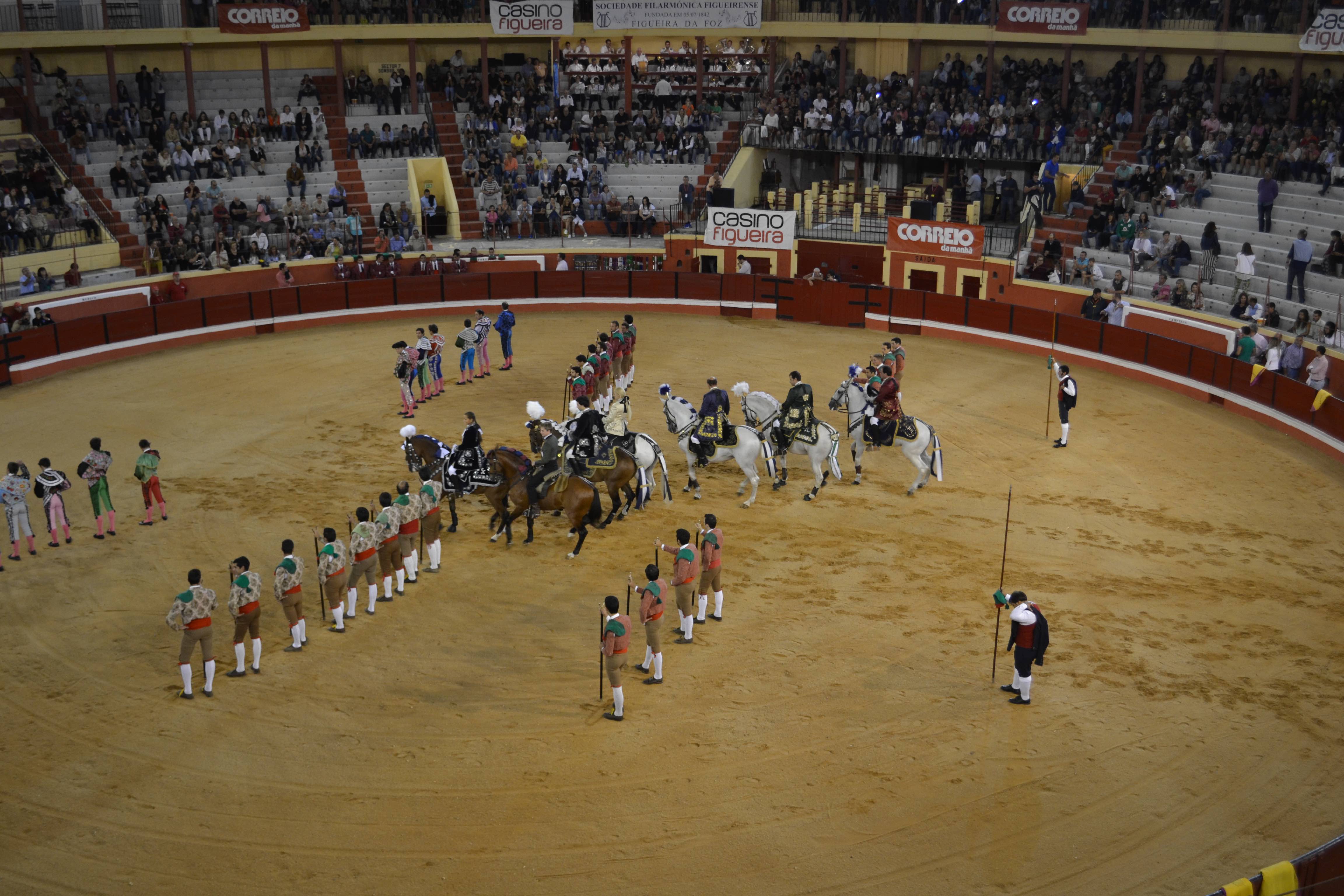
They did the full Portugal experience and went to a bull fight. It was a real cultural experience and whilst they were glad they went, it isn’t something they would repeat, it was at times hard to watch and overall they wouldn’t say they enjoy it as they both felt very sorry for the bull, a very cruel sport indeed.


Portuguese bull fights differ from the Spanish bull fight in that the bull is not killed in the arena but never the less the bull is in a no win situation by being continually tormented, speared 6-8 times in back of the neck, before leaving the ring bleeding, angry and well tired out. If the bull does get horns into a horse or matador he cannot do much damage as the points on his horns are either cut off or covered. It is not clear what happens to the bull once he leaves the ring! Back to the paddock or dispatched?
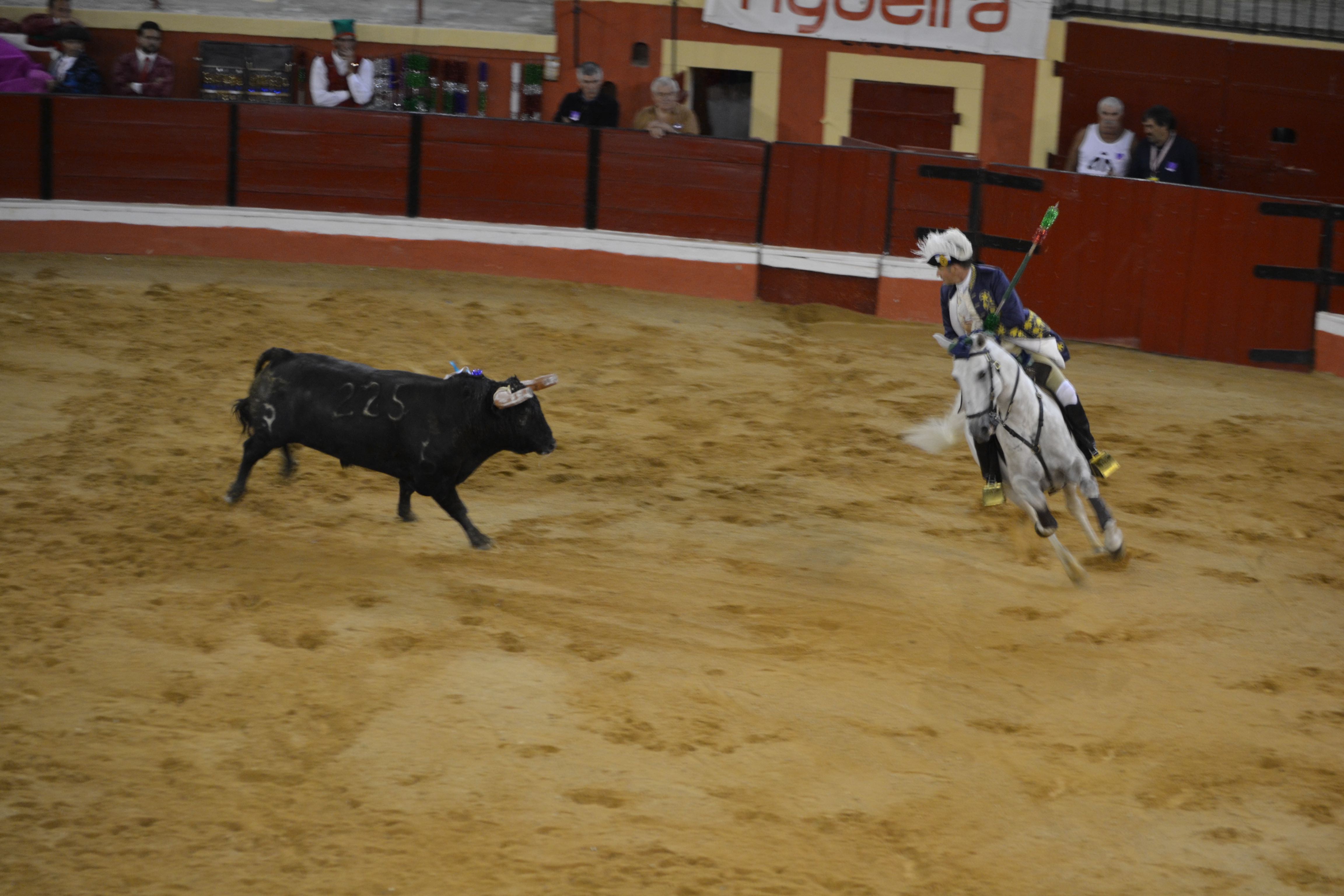

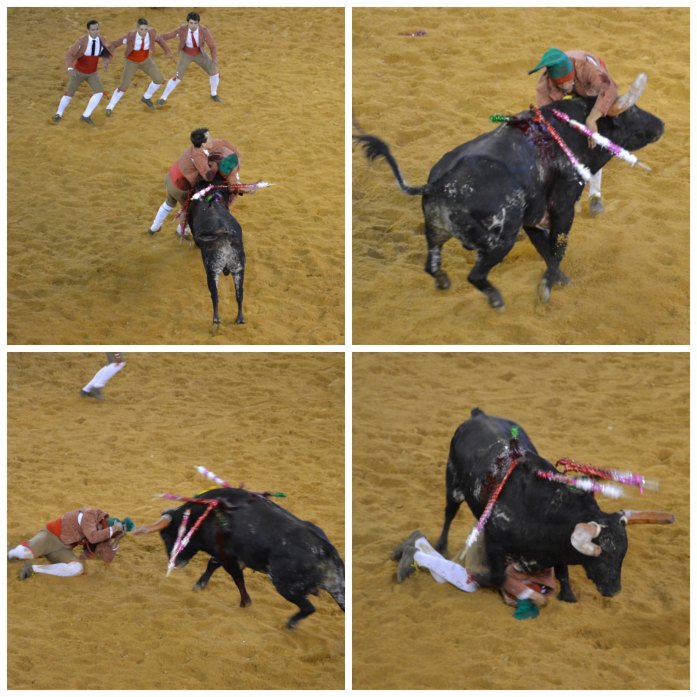

To play the attached video you may need to click here and view this blog on our website rather than in email version.
The next two days on the water were long legs with 55 nautical miles from Foz to Peniche and then 45 nautical miles onto Cascais. William learnt that its not all rainbows and sunshine and smooth seas, with one of those days again being quite rolly.
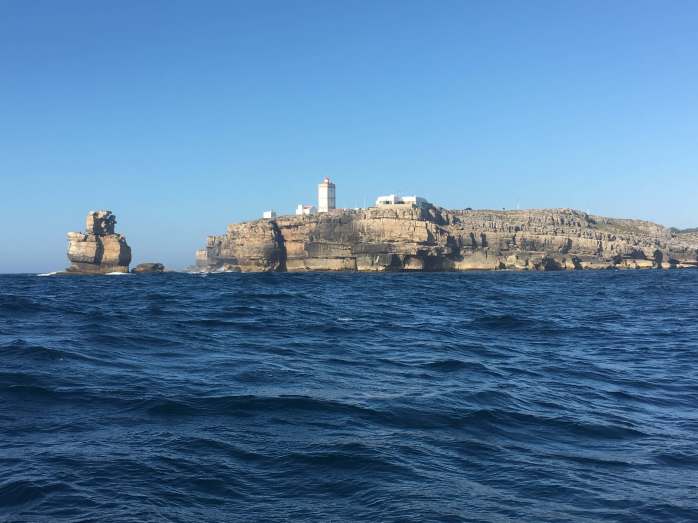
The leaving an anchorage part, navigating out of a river to the ocean, setting up sails is busy and enjoyable but between that and arriving at the next stop can at times be long and quite monotonous, tiring and maybe even boring. But the excitement does return when you make for the coast of your next landfall at someplace new and see the other boats anchored up (taking a sneaky look in the binoculars to check them all out, see what they are up to and watch their anchoring techniques) and of course a new town to explore.
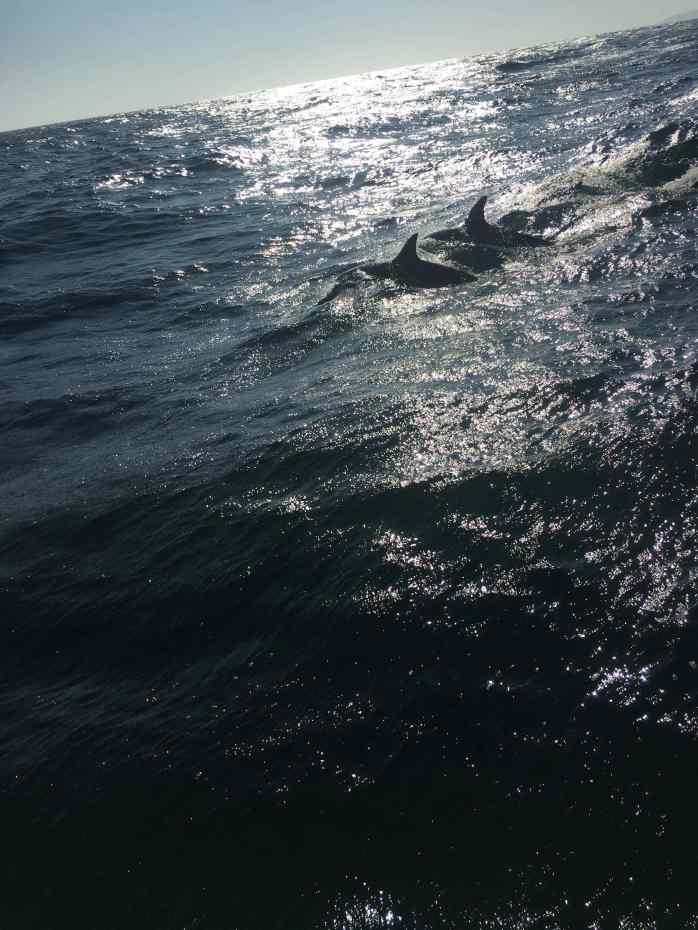
William did get the thrill and privilege of seeing dolphins along side the boat playing and jumping, which was something he said he really wanted to see when he first came on board. It’s amazing to witness no matter if it is the first time you see them or the hundredth time, it always makes you smile and your heart race.
Upon arrival at the lovely anchorage at Cascais the familiar shape of Yacht Taipan came into view. After catching up with each others news Phil, William and David went to shore for pizza.
The following day was just a very short jaunt from Cascais into the waterway of Rio Tejo to arrive in a marina in Lisbon.

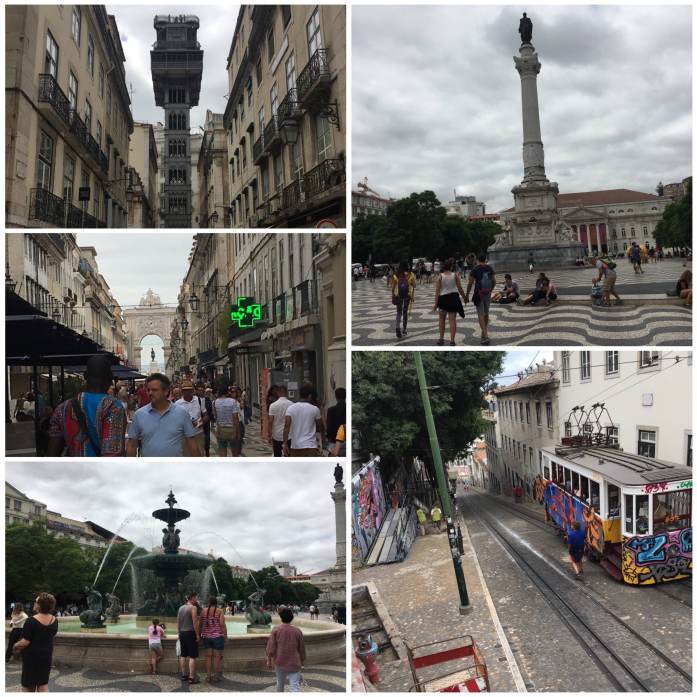
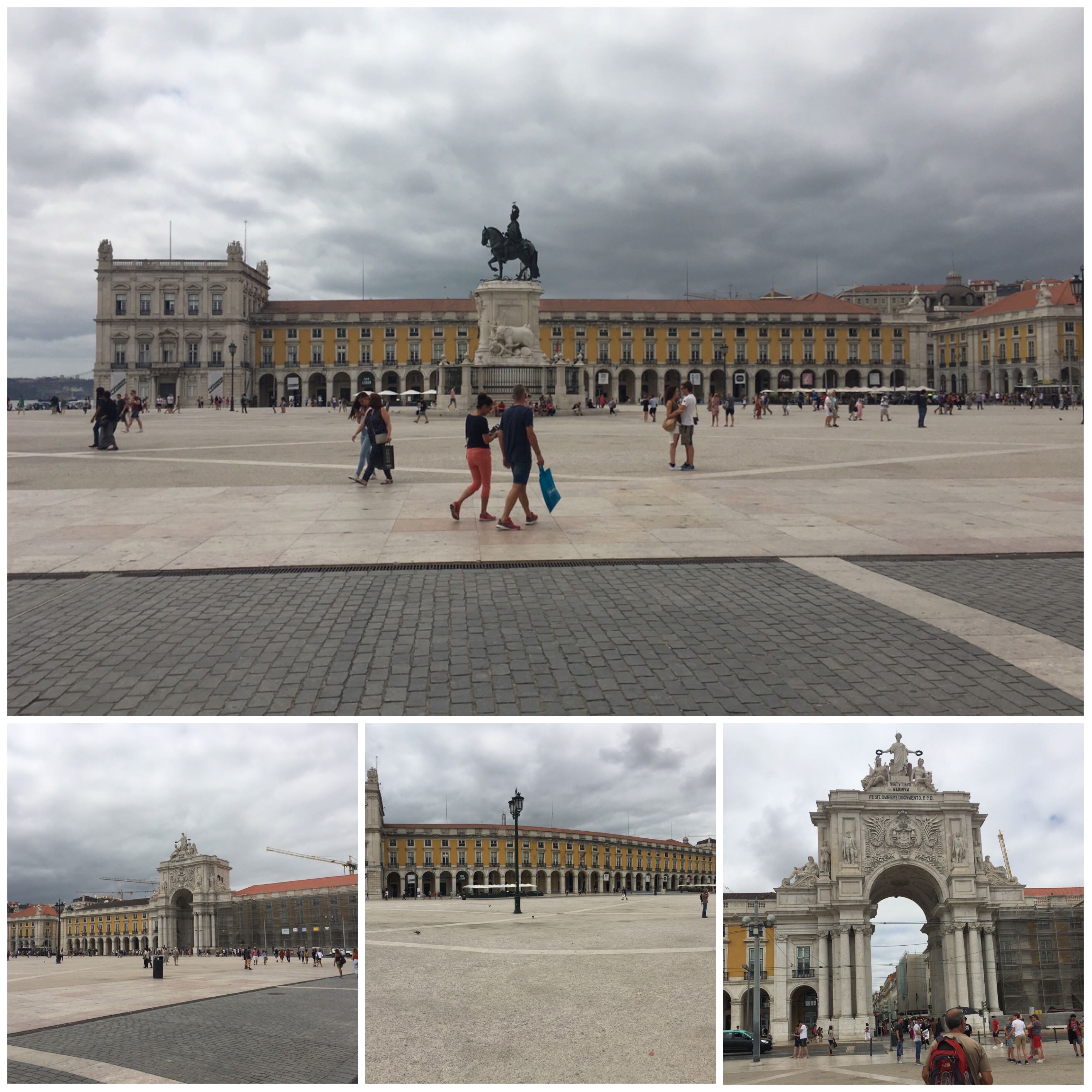
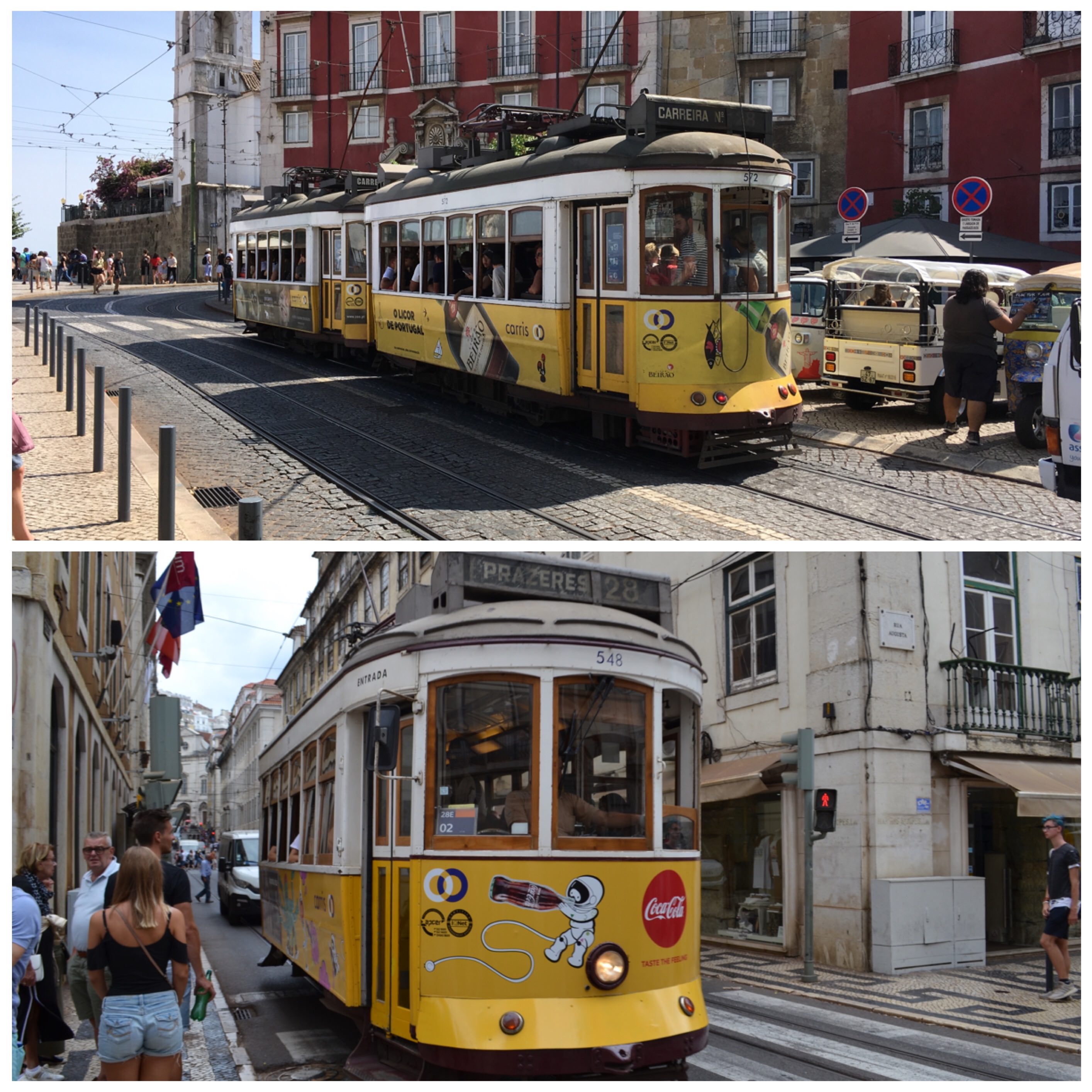
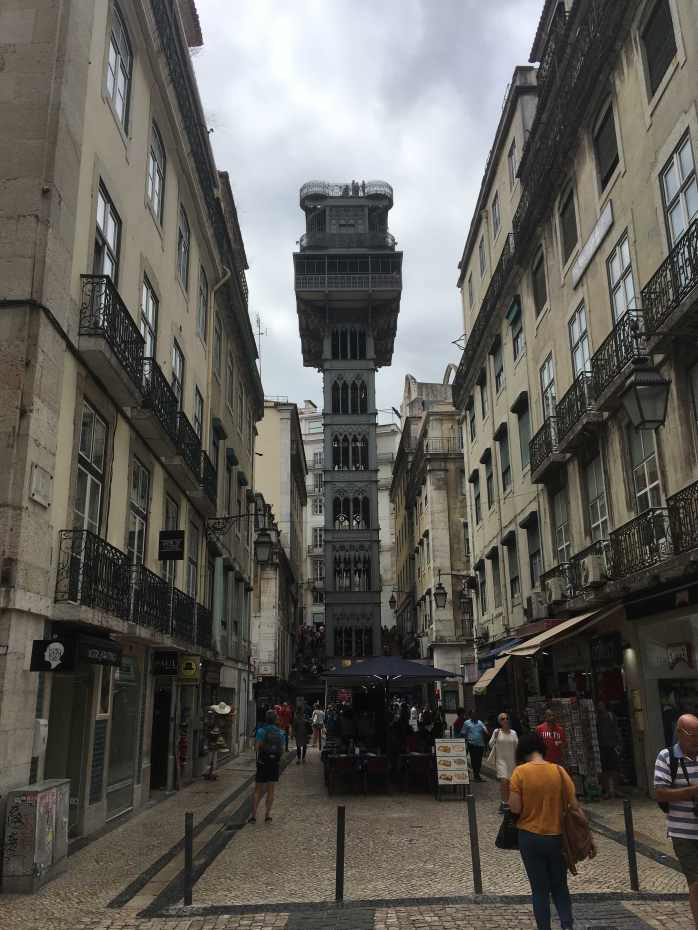
The afternoon was spent exploring the city, eating Portuguese tarts, seeing the sights and researching the best way to get William to the airport at 4am the following morning for his 6am flight! Turns out the metro doesn’t operate until 6am, so that wasn’t an option, they considered walking to the casino and get a Taxi but that was actually about half way to the airport, so in the end they rose very early and walked the 5km to the airport and spent the money saved on the taxi on breakfast together at the airport.
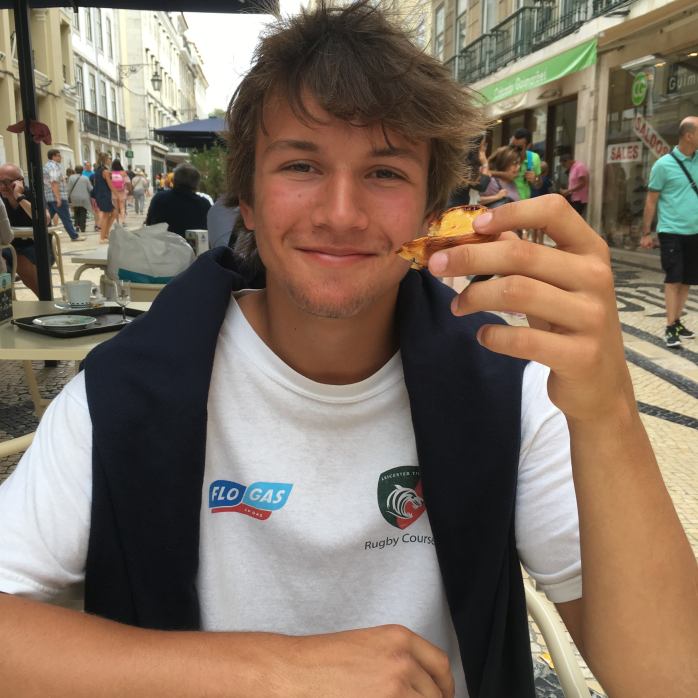
A huge thanks to William for joining the Red Roo team for the week, we loved having you on board and hope you enjoyed your experience also, you are welcome back anytime (hopefully next time we might be able to laze around on some sandy beaches, swimming and relaxing rather than days and days of sailing in the Atlantic swell) 🌊
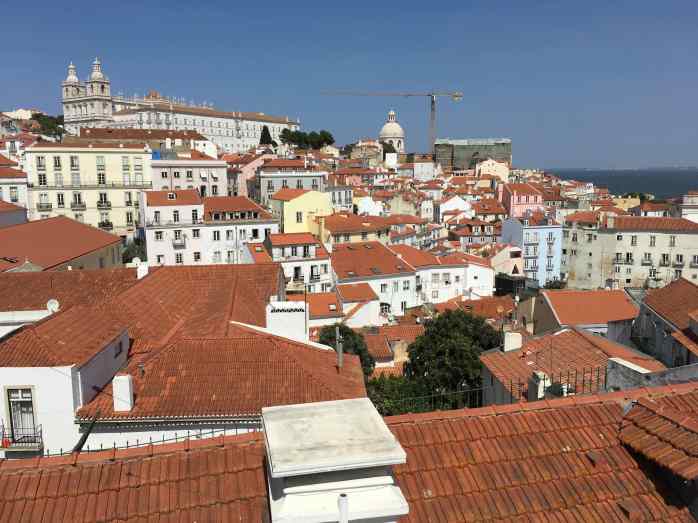
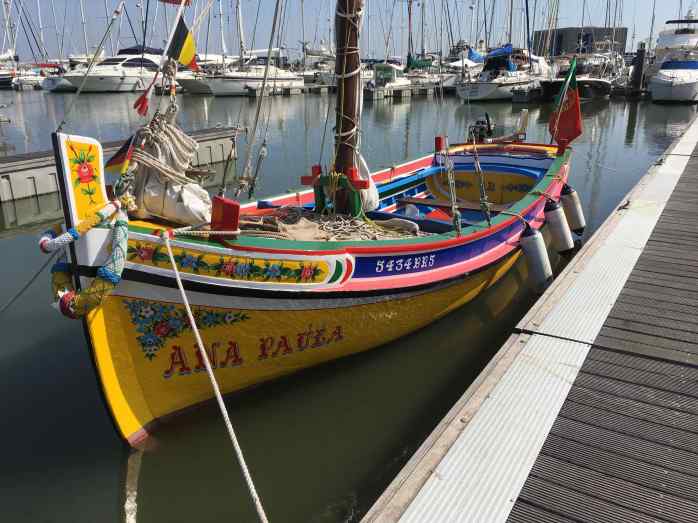
Porto – Portugal, a day cruise with family and friends
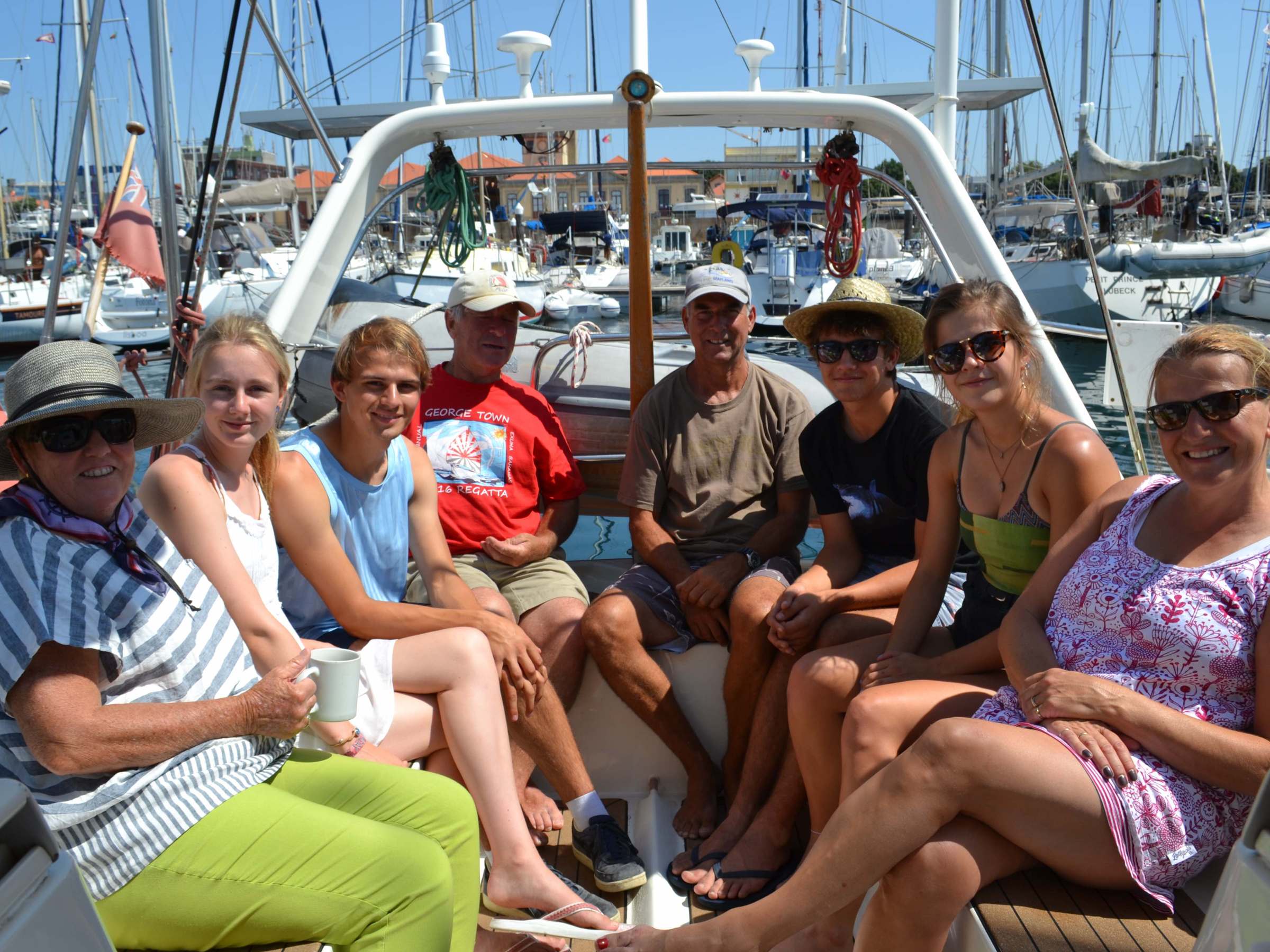
We were excited to be meeting Phil’s cousins the “Andersons” from the UK in Portugal for a few days but between us and Portugal there was 65 nautical miles of coast to cover from Baiona, Spain to Porto, Portugal.
There had been wind for the last few days which was only just starting to ease and a sizeable residual swell, but the wind was from the north, we were heading south (down wind) so off we went.
We motored out in quite ugly conditions, having to hand steer in the swell for the first 3 miles out of Baiona, where the wind and waves were on our beam before turning south for the downwind sail. We started with one reef in the main but the wind was still blowing around 25 knots so we put a second reef in (reduced our main sail size) just to be conservative. Once we were on the south heading to Porto is was quite a good journey averaging 6-7 knots speed with the swell following, so not as noticeable. And although as predicted the wind did drop during the day we left the second reef in as we were comfortable and our speed was fine.

We dropped the Spanish flag and raised the Portuguese along with the yellow quarantine flag. As we approached Leixões harbour (Porto) the wind started to pick up again. This is very common in these parts, most afternoon/evenings the wind picks up and gives a bit of a north/westerly blow for a few hours. It got up to 28 knots as we approached the harbour entrance and we were very cautious turning across the wind and swell to get into the harbour. We dropped the anchor inside the breakwater just outside the marina.
Leixões is a little north of Porto (about 15 km) and is commercial shipping and fishing port as well as an affordable marina (unlike the marina in the Douro River closer to Porto which was out of our price range), there is also an anchorage (which is free) at Leixões. We anchored the first night as we were not attempting to berth in a new marina with 30 knots of wind and we planned to move into the marina the next day for a couple of nights when we had our UK family come to visit. The marina was ok, but very run down with rope and snatch straps holding the pontoon fingers to the main pontoon, however we must compliment the young lady at reception whom was one of the most efficient marina staff members we have dealt with to date, she was so efficient at the paperwork and formalities for entering Portugal and answered all our questions about getting around and where to find what, and spoke almost perfect english. It was remarkable as she only worked weekends, and in the past we have found that the weekend marina staff can’t always answer all our questions and can be quite frustrating to deal with.
Porto, our first landfall in Portugal. We made our way into the city, armed ourselves with a map and set off on foot to explore. With swivelling heads we walked the streets, up and down the hills and ticked off a few of the recommended sites.
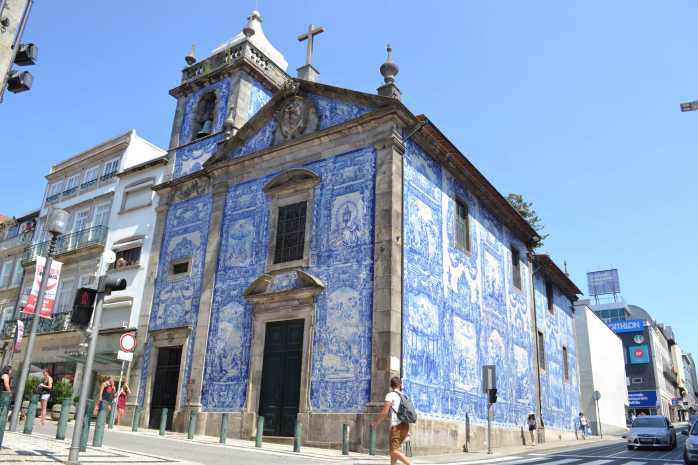
We were impressed by the buildings covered in traditional tiles, there was a noticeable mix of buildings and living standards, some grand and well kept right beside many which were obviously poor and living very simply, this certainly wasn’t a downfall it adds to the culture and the experience. Overall we got the impression it isn’t a rich country dollar wise but certainly an interesting place to visit and the people are wonderful.
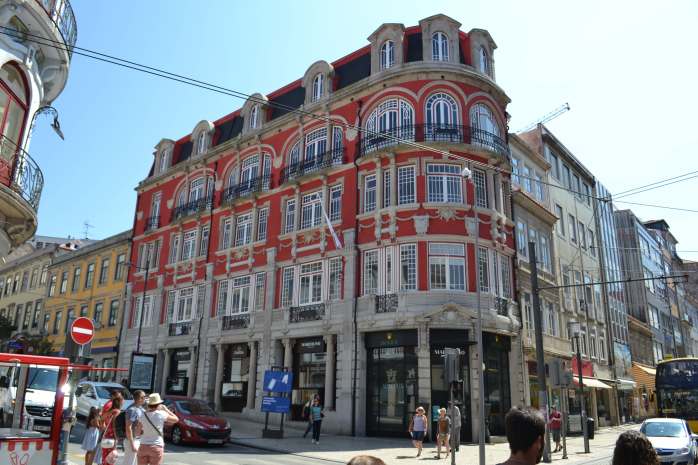
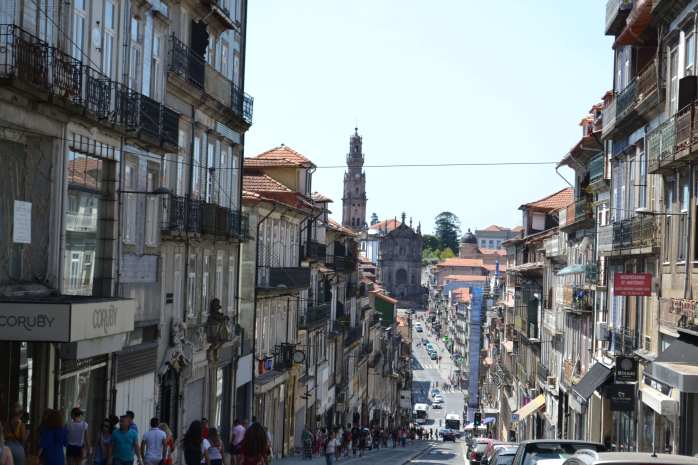
The main drawcard for the region for tourists is the port wine they produce, miles of beaches along the coast (although many are scattered with rocks at low tide), and a bustling old traditional city, largely untouched expect for the high street shops. Most people can be found down by the river Douro wandering the waterfront, eating alfresco, port tasting, shopping the markets for cork products (very Portuguese) or looking at the impressive Ponte Louis I Bridge.
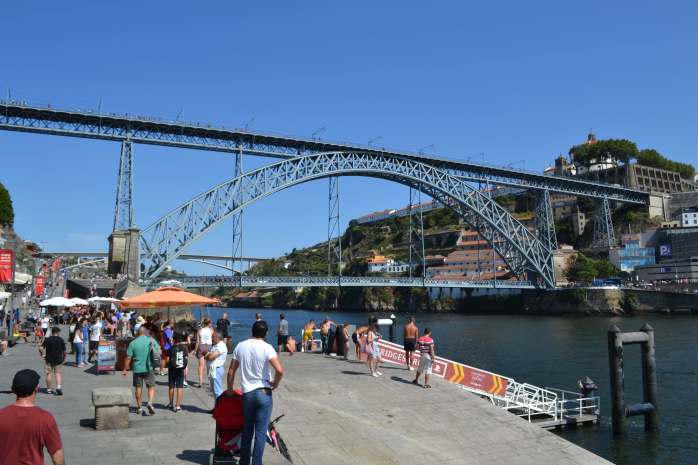
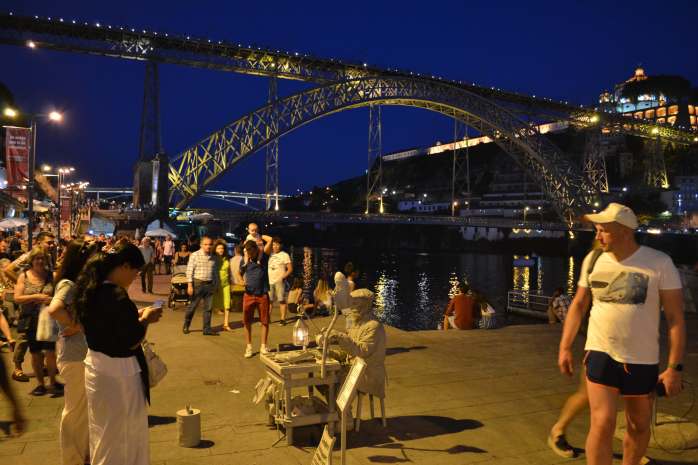
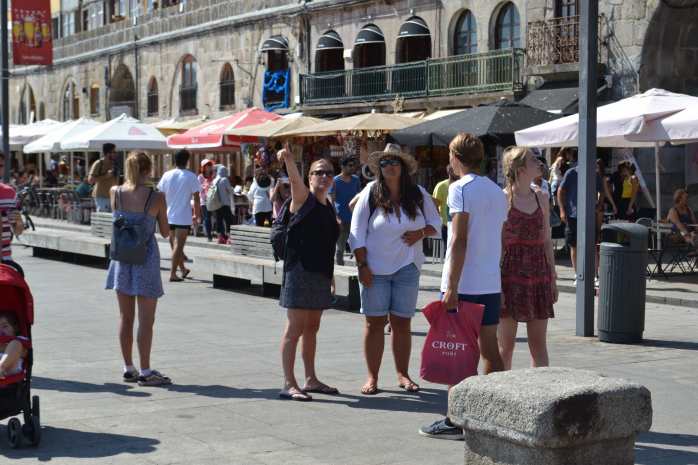
This is where we caught up with relatives visiting from the UK, Clare (Phil’s cousin) and her children (young adults) Oliver, Annabel & William along with Oliver’s girlfriend Molly.

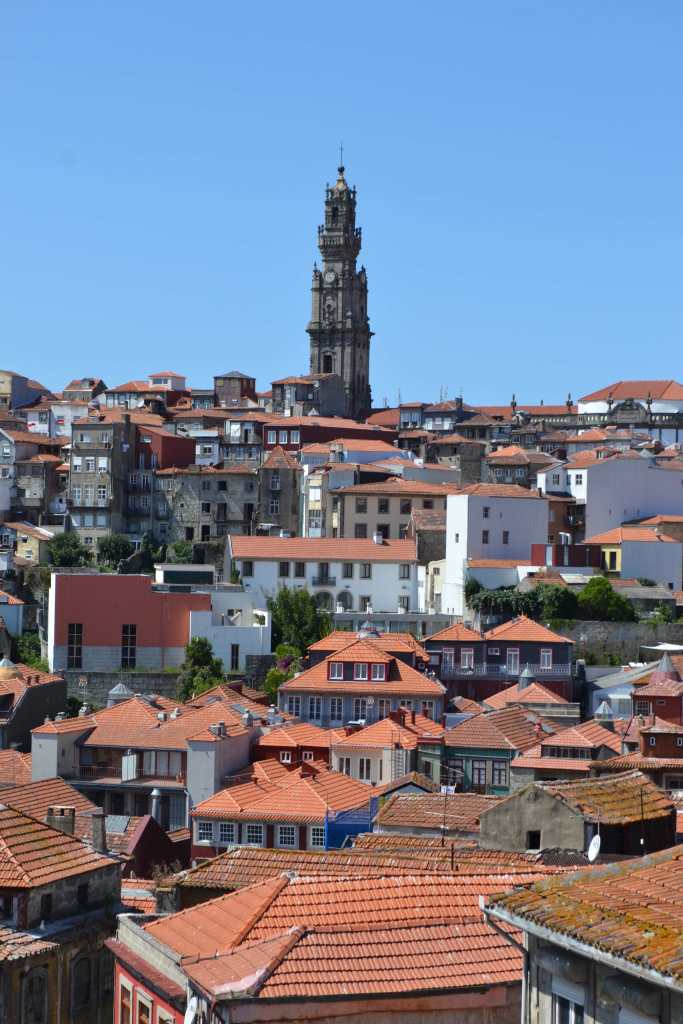

The next day was a real highlight, not just for Portugal but for our cruising to date, it was our opportunity to see Porto from the water with a day cruise on Red Roo. It was quite exciting as the weather and wind were in our favour so we fully stocked the fridge with cool drinks (including a bottle of pink Gin) and some Sangria, and prepared a feast of picnic food and awaited our passengers.
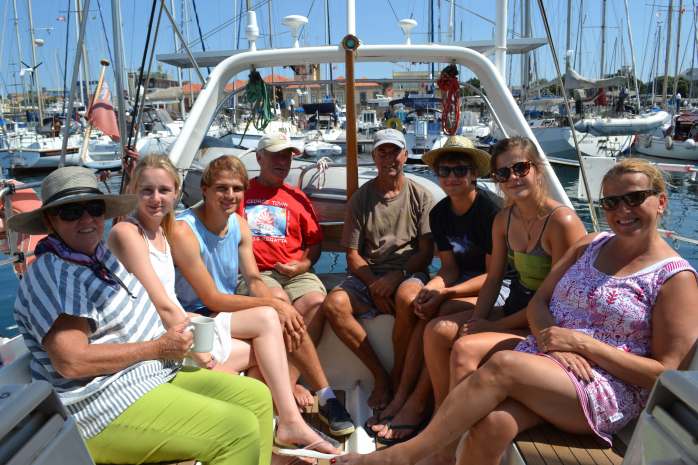
We had the Andersons on board along with Aussies David and Kris from yacht Taipan who had also just arrived from Spain. We set out in glorious sunshine for the 12 nautical mile round trip from Leixões down the coast along the beach and up into the Douro River to the centre of Porto turning around at the fabulous Pointe Louis I Bridge (as we are too tall to pass under it) and back to Leixões.

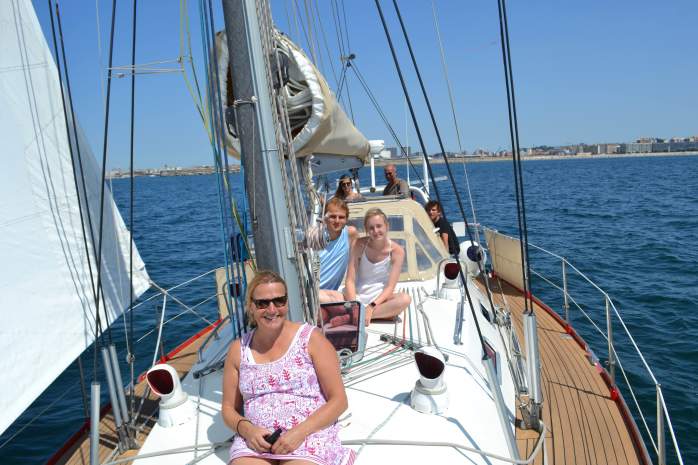
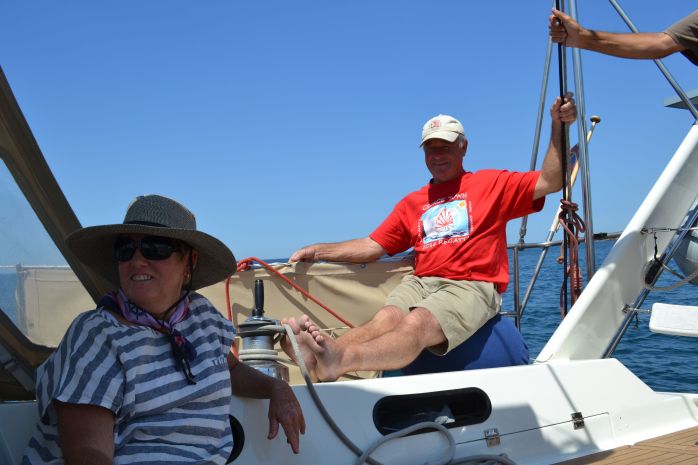
We had a great time, with the younger generation each taking a turn at the helm to steer Red Roo, the passengers relaxed along the way on the deck in the sunshine, keeping refreshed with a few gin and tonics and plenty of nice food.

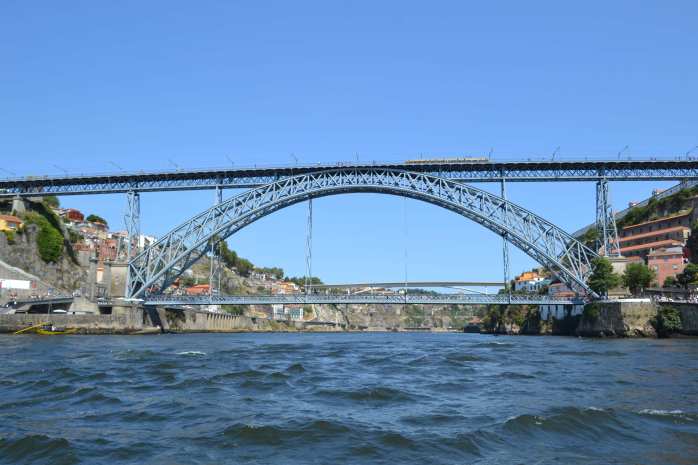
It was totally fabulous, an absolute treat to share the day and experience with family and friends, Red Roo was in her element, Phil and I had grin’s on our faces from ear to ear and it certainly made a refreshing change from using the boat to get from A to B. A real reminder how lucky we are to be able to travel this way and do these things. An a delight to be able to share it with family and friends, thanks to the Brits and Aussies for joining us for the day, we loved having you all on board ❤️⛵️


The Day the Engine Wouldn’t Start
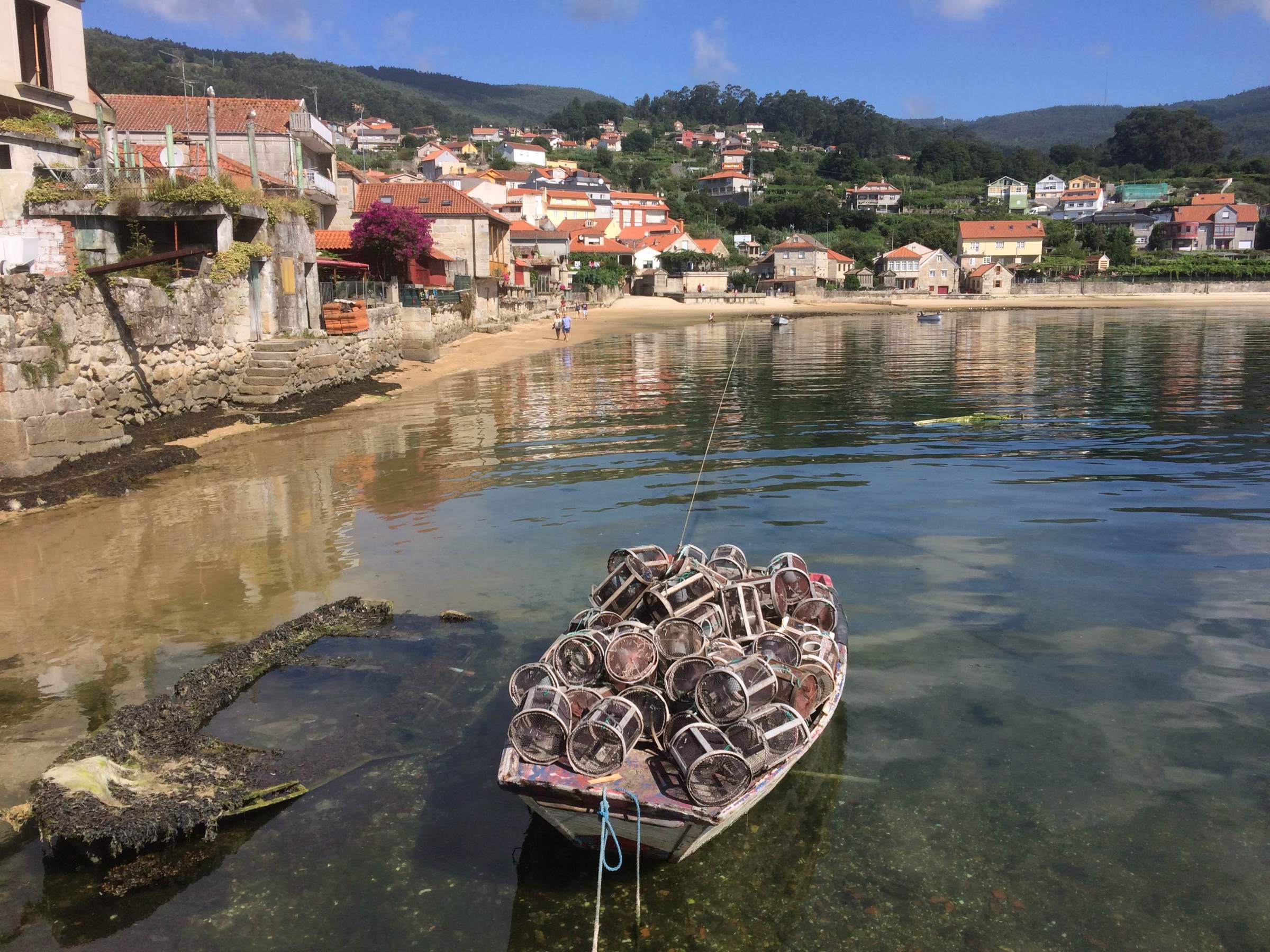
What was to be a short journey to the next Ria turned into a long day, our intermittent engine start issue raised its head and wouldn’t start full stop. We departed Ribeira and sailed nicely in moderate winds. We had sailed into the Ria de Pontevedra and were approaching the masses of large floating muscle rafts outside Combarro when we decided it was time to start the engine in preparation for getting through the mussel farms and to pick our spot in the anchorage.
It wasn’t to be, no matter what Phil did there was no response from the engine. We turned into the wind away from the mussel farms and dropped the main sail (to slow us down) and slowly drifted under head sail back out into the middle of the Ria. We continued in this fashion for the next three hours, Maree on the helm keeping us away from trouble in the main part of the Ria back and forth across the bay whilst Phil tried everything he could possibly think of to get the engine to start – without success.
There was nothing for it, we were going to have to sail into the anchorage, something we hadn’t done before. We usually sail in pretty close, but motor the last part as we are very vigilant at doing a few laps around the anchorage to check the bottom and depths before deciding on a final place to drop the anchor.
My mind cast back to the day before when we watched John and Kara on Sentijn (the professionals) sail onto anchor … they made it look easy … we will be fine … but ‘geez’ i wish it was something we had of practiced before having to actually do it!
We changed tack and headed around the bottom island in the Ria still under head sail only in flukey winds, anything from 10 knots to zero, making it a slow journey. We actually launched the dingy as we were going as a backup in case we lost all wind behind the island and needed a bit of help to encourage Red Roo into shallower water. Of course once we had the dingy in and tied off the wind increased again and we made 3 knots of speed towards the anchorage … comforting, progress, slow and controlled …. we can do this.
I have to admit I was pleased to see only two other boats in the anchorage leaving plenty of room for us to come in. We picked our spot, talked over the plan (again) and went for it. Once on our spot I turned Red Roo into the wind to stop her and Phil was at the bow to deploy the anchor. We didn’t quite have enough momentum in the light winds to make the turn all the way around into the wind but as we stopped I furled the head sail (so we didn’t start sailing sideways) and Phil dropped the anchor, it grabbed well. Relief.
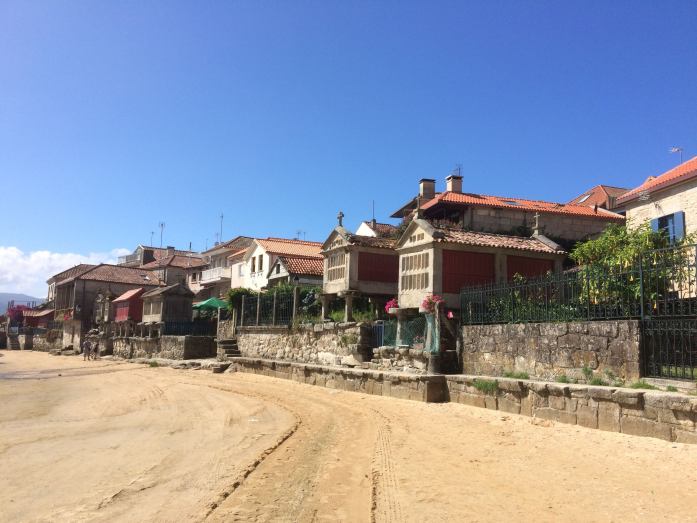
Well … kind of relief, we were anchored and secure, but we still couldn’t start the boat. Phil had tried every trick he knew and some more, redid all his tests and couldn’t figure it out. He took the battery out, and replaced it with the windlass battery (which worked on the windlass) without success, he tried the bow thruster battery (which worked for the thruster) but the engine still wouldn’t start. That was enough for the day, we slept on it and the following day load tested the battery, which indicated the battery life had ended. we took the dinghy ashore to the marina to seek assistance.
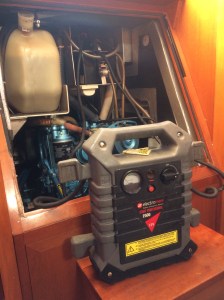
With our poor Spanish and the harbour masters decent English he arranged for someone to come and test the battery for us and confirmed that the battery life had ended. The harbour master was very helpful and also called the chandlers (boat shop) a couple of towns away and got prices for us on a new battery to be delivered. Phil was still not entirely convinced it was solely the batteries, he was worried there were other issues also as it still wouldn’t go with other batteries that were working in the boat, also the price of the new battery seemed excessive so he made the decision we were going to travel onto Vigo in the boat. Vigo being a bigger regional city with much more services to assist in what could potentially be a big job. The marina lent us a portable jump starter unit to allow us to get Red Roo started to make the journey to Vigo.
Despite the drama’s above we did explore Combarro, a small fishing village famous for its beach Hórreos which we had seen a lot of in Spain, so it was great to understand more about them.
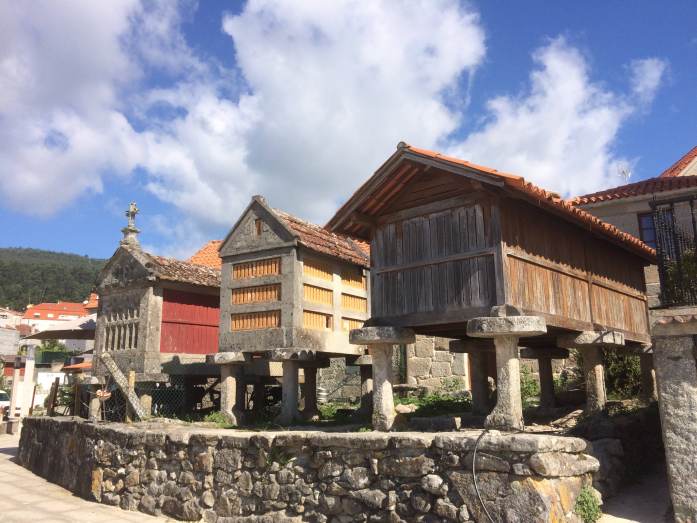
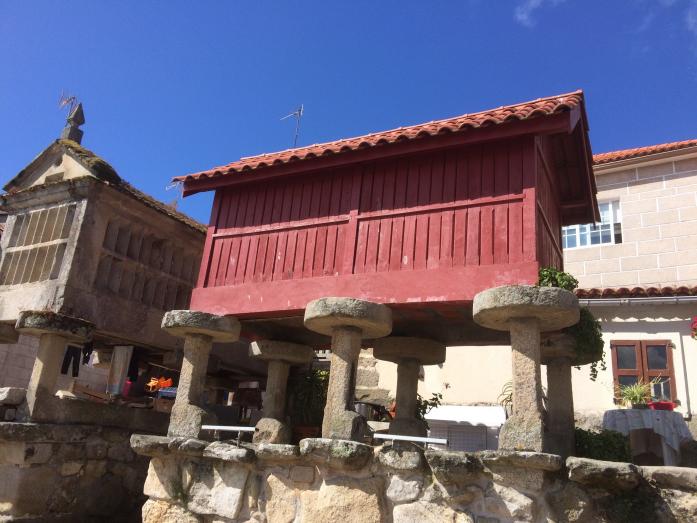
Hórreos are mainly used as a warehouse to dry, keep safe and preserve corn or potatoes and sometimes even ham and fish. They rest on pillars to keep them off the ground protecting them from damp and the large flat stones at the top of the pillars make them rodent proof. Although nowadays hórreos are usually made of wood and stone, their walls were originally built with plaited cane and had a thatched roof. The towns name of Combarro means “coast with hórreos”

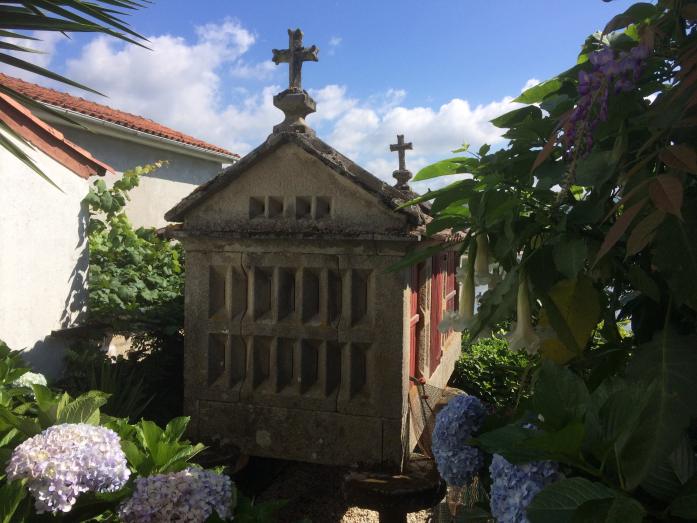
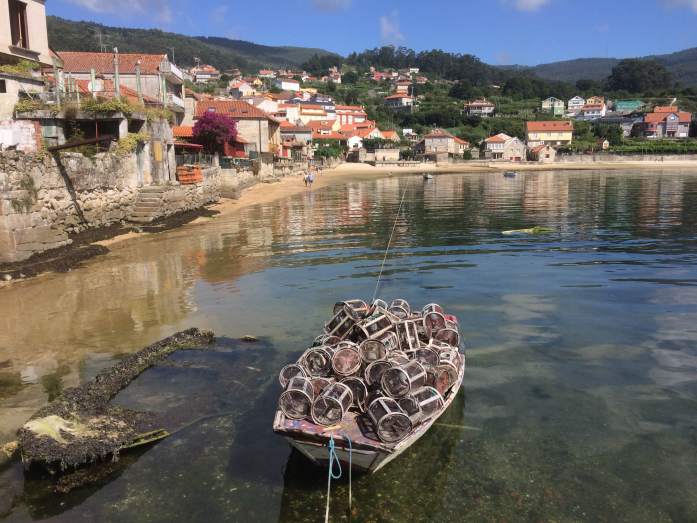
Arriving at the busy waterfront city of Vigo, was a hit to the senses. Ferries moving fast in the water and people everywhere, a real buzz in the air with a huge festival in progress around the marina and waterfront with massive stages, jumps and ramps set up for skateboarding, BMX and motorbike competitions, displays and bands. The big ferries also departed from the other side of the wall where Red Roo was tied up in the marina taking people out to the national park islands off Ria de Vigo and the lines were huge with a constant flow of people and ferries.
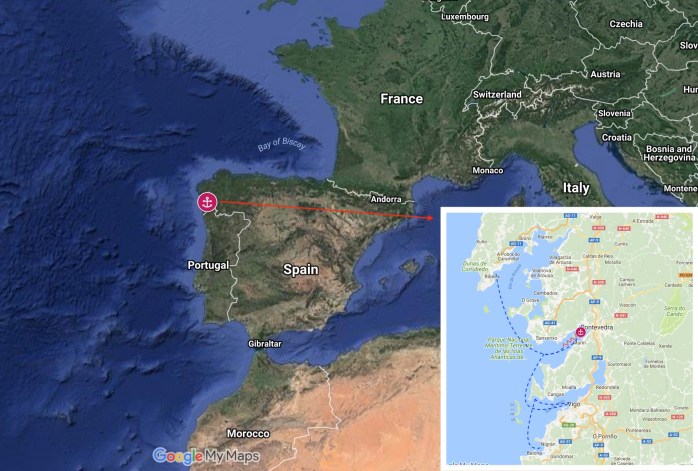
However we remained focussed on our objective to get a new start battery for the engine, and to resolve any other issues we can find with the system. After serious consultation with David and John (both seasoned sailors) over a few beers and also quite a few wines (it was a big discussion) and subsequently load testing all the batteries, it was decided we probably actually needed 3 new batteries, one for the engine, bow thruster and windlass (anchor winch). It was going to hurt the pocket, especially after replacing the four house batteries earlier in the year in the UK. But as John so sensibly put it, batteries although a big outlay to buy at the time, pay for themselves easily . . . if we were living in a house we would be paying power, water, utility bills which would add up over the year to a lot more than the cost of the batteries which we have already gotten 3 years good service out of.
Phil sourced the best place in town for batteries, struck a deal for buying three and arranged delivery. They arrived at 8pm and were installed within the hour. Red Roo started up immediately . . . but, there still is another underlying fault as since the battery replacement we have still had a intermittent start issue believed to be the start switch, so we are now also looking to order a new one of those.
So after two nights in the marina we were off again, just a short sail across the bay back out to the entrance to anchor in a sheltered bay with a lovely long white sandy beach … a nudist beach!

We stayed three nights, but can assure you it wasn’t the nudity that kept us there, it was the lovely beach, and the unfavourable wind direction for the next anchorage.
We did go to shore for an afternoon, keeping our kit on, and were entertained by all the shapes, sizes and colours. We have never seen so much walking on a beach, hundreds of people back and forth from one end to the other strutting their stuff!!!
We then kept our beach visits to the smaller beach that put some rocks between us and the exhibitionists.

We had been hoping to stop at the anchorages off the National Park Islands at the entrance to the Ria, which we had applied for and received permission to navigate through but the winds had been blowing into the anchorage and they limit the numbers of boats able to anchor each night, and it was fully booked for the two nights that would have been suitable, a shame as they looked lovely and some great nature hikes on the island too.
We motored around to the next Ria into Baiona (as the wind was on the nose against us), but as compensation we caught a couple of nice size mackerel along the way for dinner.
Baiona is a beach holiday town, with several beaches all very close to the town and all full of people each day. It has a population of just over 11,000 which rises to around 45,000 in the summer. It is also on the Portuguese Way path of the Camino de Santiago and around 30,000 hikers also visit each year as part of their pilgrimage.
The town has a fort “Castelo de Montereal” which looks down over the bay and marina.

The town is also famous as the sailing ship Pinta (one of the ships from Columbus voyage to the New World) returned to Europe and docked here in March 1493 making the town the first to receive news of the discovery of America.


We are looking forward to our next destination Porto, a new country and very excited to have some of Phil’s family from the UK meeting us there for a few days break and then William is staying on to sail with us for a week from Porto to Lisbon. New crew, very exciting.
Hola Spain

Having been in Spain for just over 3 weeks now its been a real mixed bag, we have had uncomfortable large sloppy swell, flat calm seas, amazing rocky steep hilly shorelines, flat white stunning sandy beaches, plenty of fresh fish caught from the boat, hot sunny days and damp dewy wet nights, as well as some wonderful food, Spanish tapas! But best of all we have been enjoying Spain and all it has to offer with great cruising companions, drinking buddies, and fellow beach bums onboard Taipan & Sentijn.

After our crossing of the Bay of Biscay there was no rest. Having arrived at 9am after two days and two nights crossing we spent the whole day exploring Gijón then left at 7am the following morning (mainly due to the very expensive price of the marina) and headed west on a 70 nautical mile passage in large uncomfortable swell … sigh … it was rather depressing and I admit to sending a message to fellow adventurers on Taipan who were also on the same passage expressing my “absolute ‘over-ness’ of the sloppy sea state and uncomfortable passage” to which I got a firm agreement in reply. But we all knew it was likely to be less than ideal swell for the next few passages until we reached the western point and were actually out of the bay of Biscay and on the Atlantic coast.

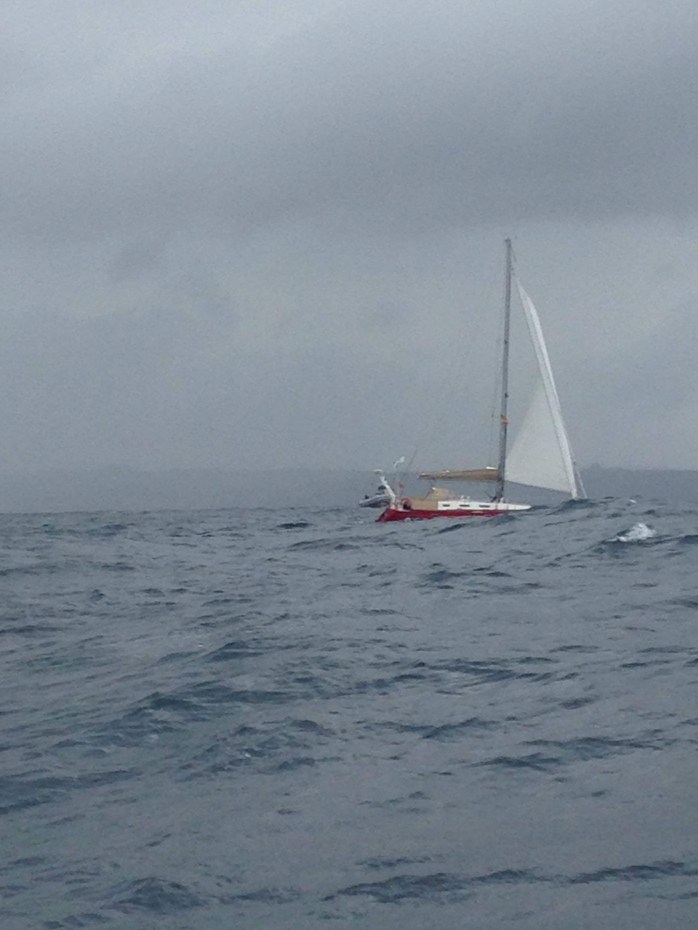
We did the miles and finally arrived in the calm waters of Ribadeo, where we anchored and spent two nights recovering (from both the Biscay crossing and that days journey) and exploring.
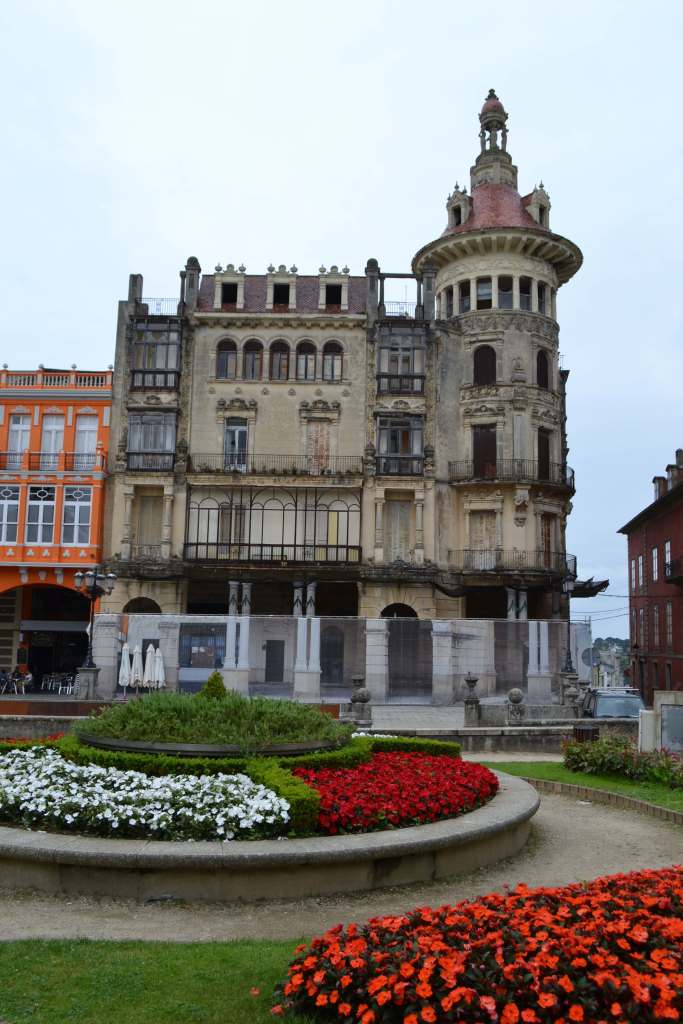
Next passage was a short 22 nautical miles along to the Puerto Alumina Española which was a lovely anchorage even with the aluminium smelter as a back drop, the water was crystal clear with fish constantly rising, as well as one whale (me) enjoying the refreshing waters.
A couple of shorter legs then to the bays of Cariño and Cedeira, then onto Ria de Ferrol where we anchored at the foot of the San Filepe Fortress, a lovely backdrop and a great place to explore.
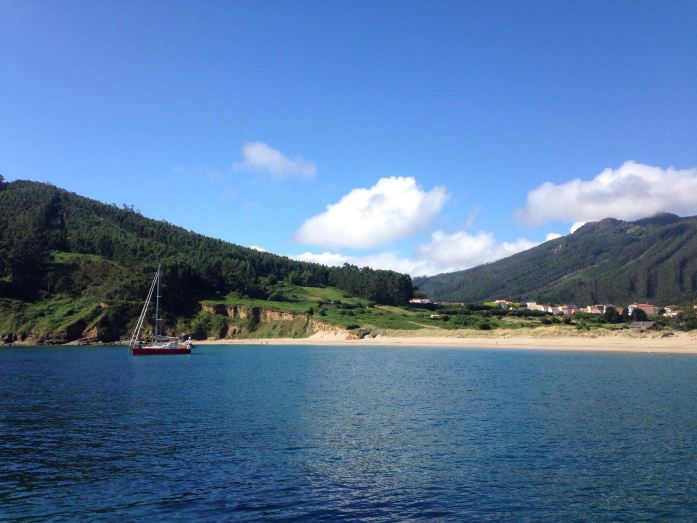
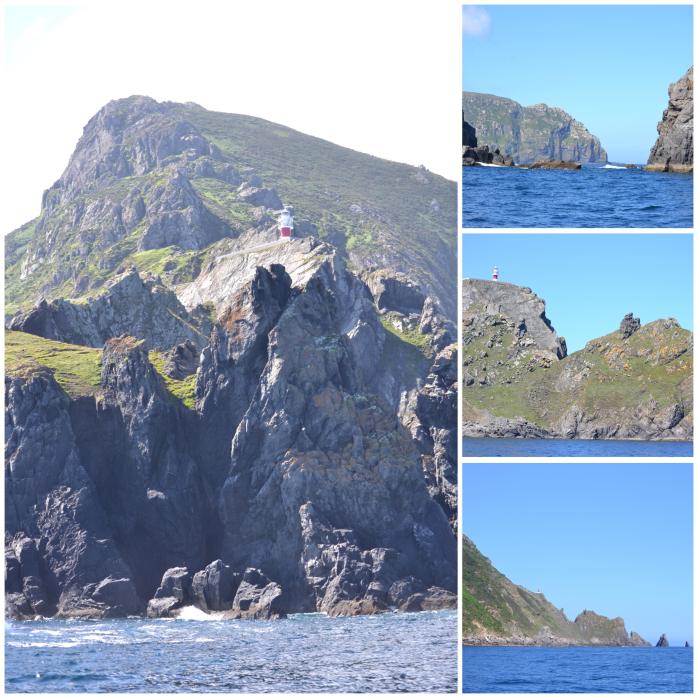


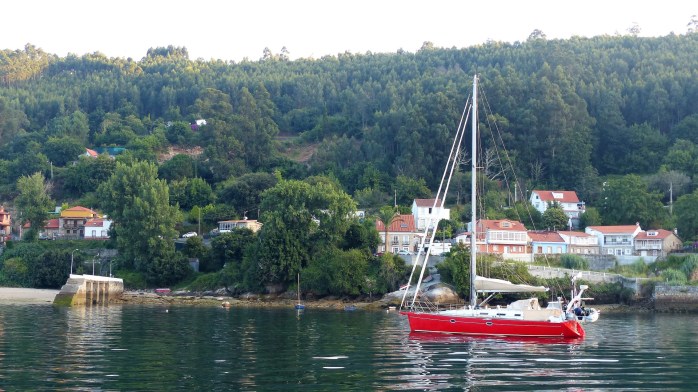
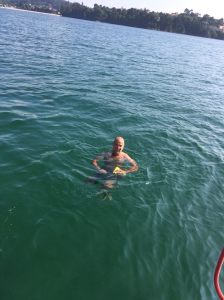 Arriving at Sada and the waters had finally warmed enough for the Captain to join me swimming!
We gave the waterline another clean (3 years since she had anti-foul applied and we are constantly scrubbing, attempting to get a bit longer and a bit further).
We also took a bus, which was driven by a want-a-be race car driver from Sada to visit Betanzos, a well preserved old town in Galicia with Kris & David (Taipan) as well as our new Dutch friends Jacob & Anneke (from SV Kim).


A Coruña was our next stop, where we spent two nights in the marina and then 2 more anchored off the beach. Our reason for stopping and going into a marina was to get the boat computer (used for navigation) repaired as it had recently stopped working. It was a huge relief to be able to get it repaired rather than have to get a new computer, and an additional bonus that we didn’t loose any data from it and got it turned around and back to us within a day. Once repaired it took a few more frustrating hours (pretty much my whole day) with crap internet connection (typical of most marinas) to get the navigation software reinstalled, back up and running and all was once again well in the world.

We spent the second day in A Coruña sightseeing with a trip out to see the Tower of Hercules the worlds oldest working Roman lighthouse built in the 2nd century and restored towards the end of the 18th century. It stands on the coast proudly 55 meters tall.


It was also the weekend of the Spanish Medieval Festival in the old town and we spent hours wandering the narrow cobblestone streets enjoying the atmosphere and looking at all the market and food stalls.

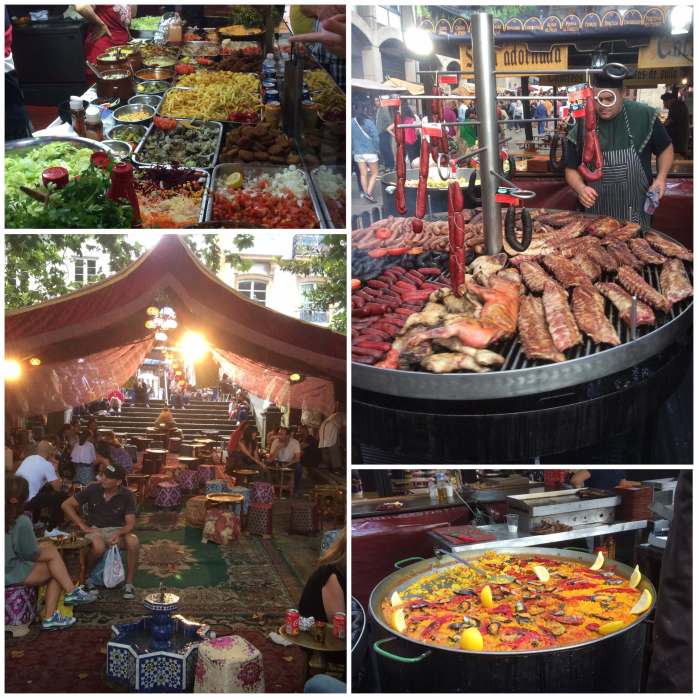
We rejoined Taipan in Muros along with John, Kara and Dean the crew of Sentijn our wonderful American friends we met in the UK over winter who had recently arrived in Spain from the Republic of Ireland.
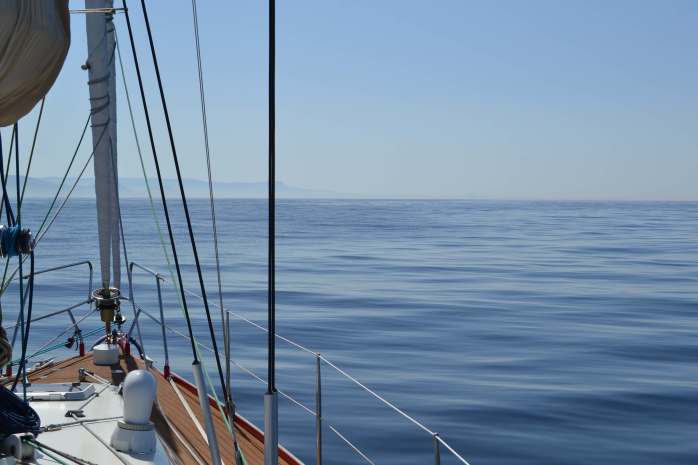
We took another inland journey, with a 2 hour bus ride from Muros to Santiago de Compostela to see the cathedral housing the tomb of St. James at the end of the famous camino pilgrim trail.
The Camino de Santiago (the Way of St. James) is a large network of ancient pilgrim routes stretching across Europe and coming together at the tomb of St. James (Santiago in Spanish) in Santiago de Compostela in north-west Spain. Yearly, hundreds of thousands of people of various backgrounds walk the Camino de Santiago either on their own or in organized groups.
During the middle ages, people walked out of their front doors and started off to Santiago. Some people set out on the Camino for spiritual reasons; many others find spiritual reasons along the Way as they meet other pilgrims, attend pilgrim masses in churches and monasteries and cathedrals, and see the large infrastructure of buildings provided for pilgrims over many centuries. We however just went for a look, being so close we felt we shouldn’t miss it. We didn’t find any divine inspiration but enjoyed the day out and witnessed many a sore feet finish their pilgrimage on an emotional high in the courtyard in front of the church. Those who walked the full trail had just completed a massive 780 km (nearly 500 miles) walk.

The Ria’s (the Spanish word for estuary) in this area are absolutely fantastic, heaps of bays and beaches to anchor in and enjoy the sunshine and the crystal clear water.


We anchored in two different locations in Ria de Muros e Noia and two others in the next Ria de Arousa at Ribeira and Illote Guidoiro Areoso, enjoying days on the beaches with Sentijn & Taipan as well as beach picnic dinners and evenings once the day trippers in the motor boats leave and we have the whole place to ourselves – magic. I hope the summer continues for a good while longer as we travel further south.

 Red Roo
RECENT COMMENTS