Seil Island – The Bridge Across the Atlantic

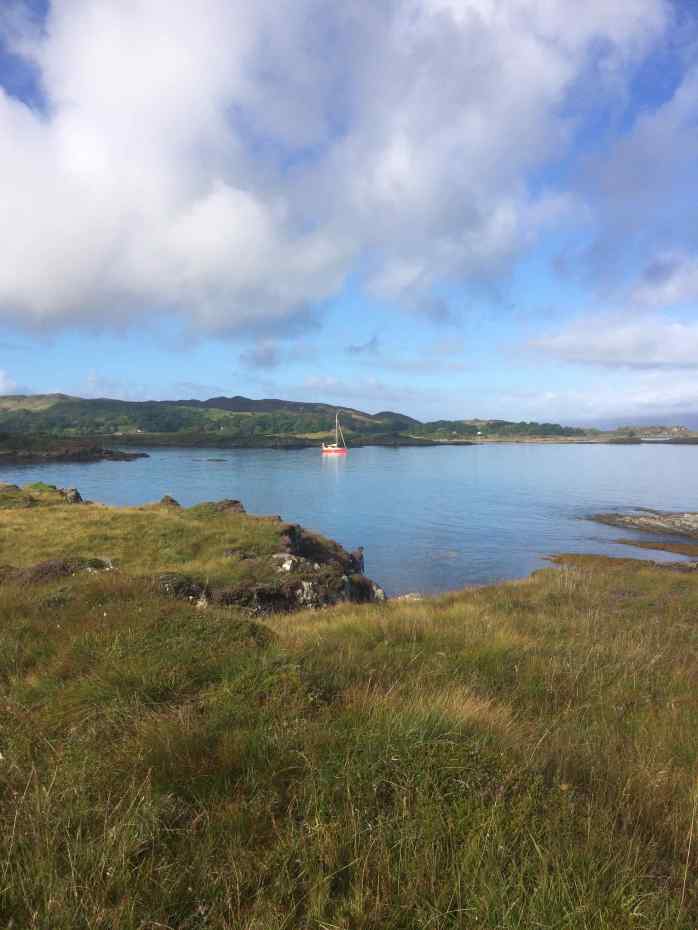
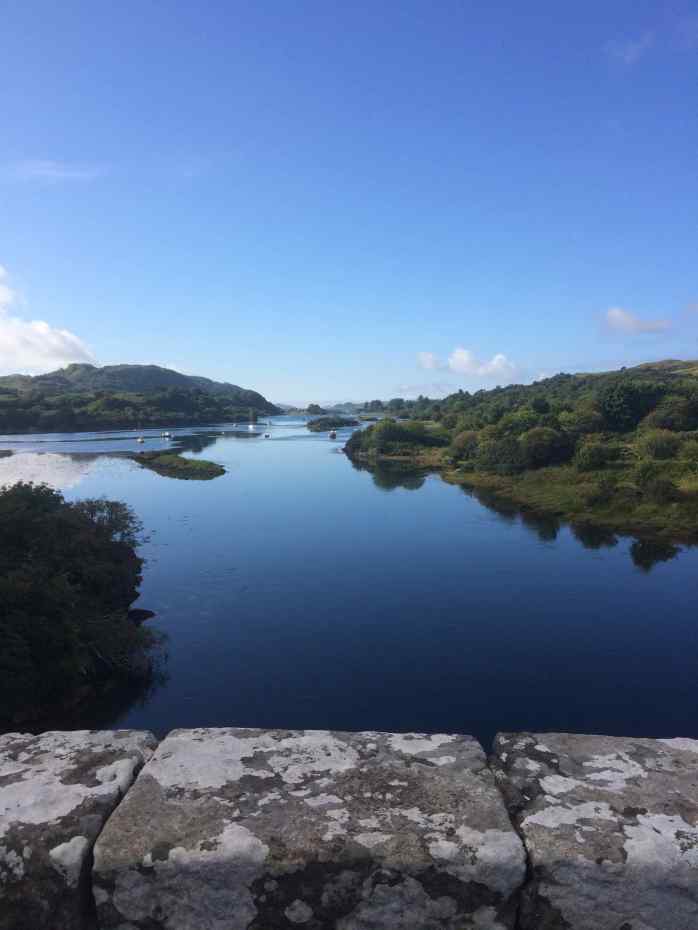
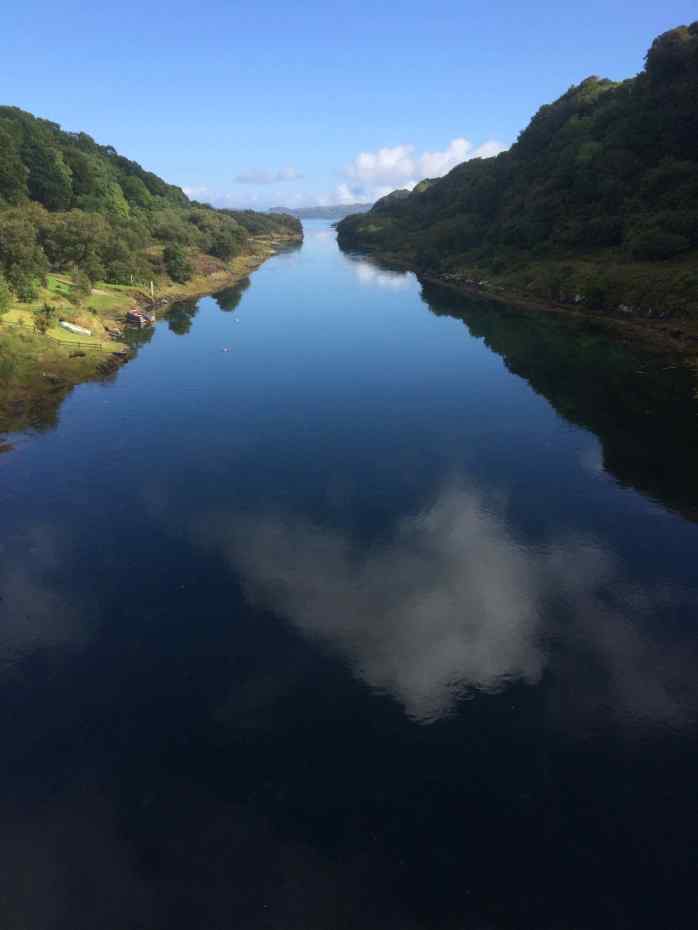
Famous for it’s bridge over the Atlantic and a nice bridge it is too. Totally different to what I was expecting (yes I had visions of a massive new metal structure tall and striking) however the 1972 built bridge connecting Seil Island to the Scottish mainland by crossing a rather small stream of Atlantic water is a gorgeous single arch (humped back) masonry brick bridge.


Crinan
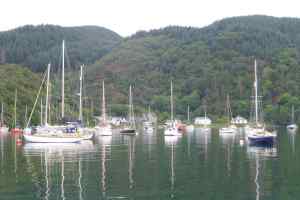
We anchored at Crinan in the bay just outside the hundreds of boats on morning buoys, looks like a very popular place for people to have boats (or keep boats and sail from).
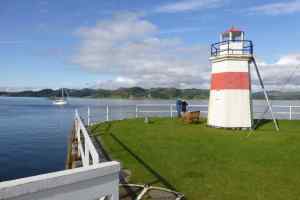
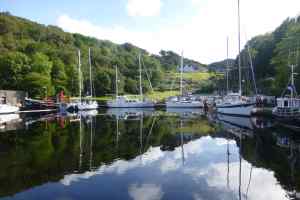

The name may be familiar to some as it also the start/end of the Crinan Canal which runs from Crinan to Ardrishaig making it a fantastic short cut from the Firth of Clyde out into the Hebrides (cuts of miles and miles at least a couple of days if you were coming from Glasgow out to the west). Constructed in 1793-1801 it is a fantastic piece of engineering still used by thousands, it is 9 miles (15 km) long and has 15 locks and 7 bridges en route.
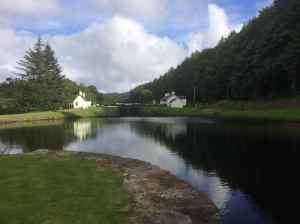
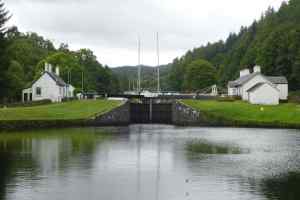
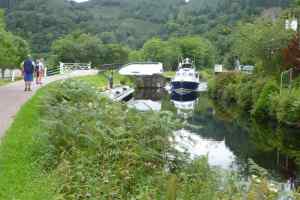
The canal is fresh water (meaning you boat sits a little lower in the water), the two sea locks and one other in the transit are operated by canal staff as well as all the bridges however the remaining 12 locks are operated by the boat crew transiting by hand (pushing lock gates and winding sluices). We however didn’t take the boat through the canal (would have been going in the wrong direction) but did spend a most enjoyable day on the bikes riding the tow path along the canal the 15 km to the other end and then return (total 30km) watching other yachts and motorboats transiting.

Gigha, Loch Sween & Tayvallich
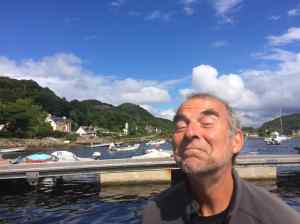
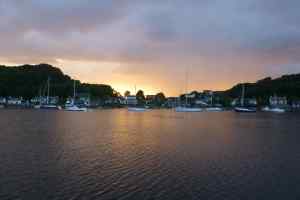
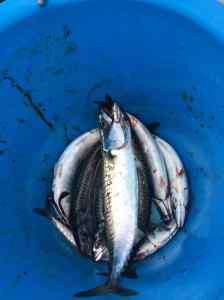
Just so very very peaceful. That is my impression of Scotland. Since departing Islay we have spent a few nights on anchor a making our way north at Gigha, Loch Sween and then on a mooring buoy in Tayvallich. Everywhere we have been is quiet, relaxed peaceful and the most serene views of rolling hills and water. Also worth a mention is that the mackerel are getting bigger in size now also – delicious!


Port Ellen, Islay – Scotland
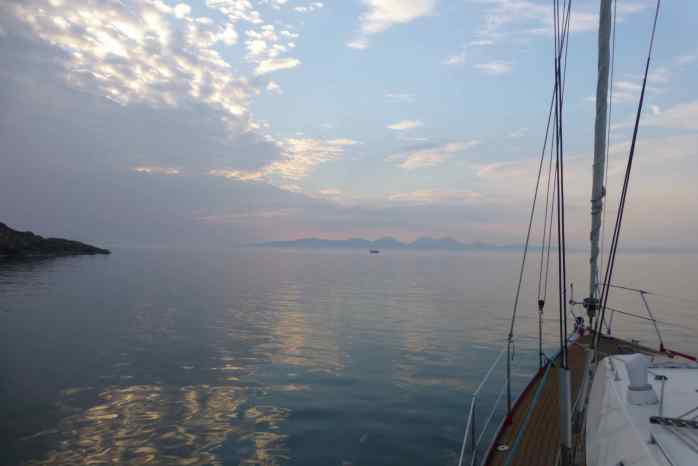
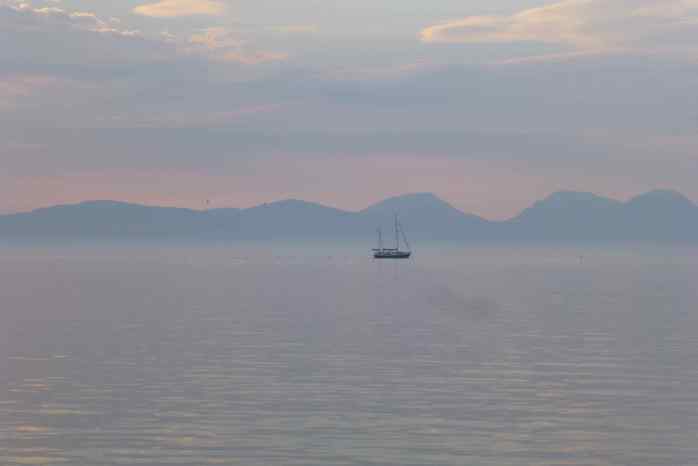
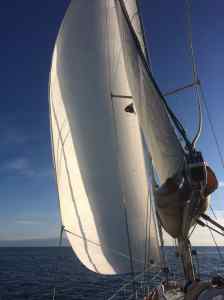
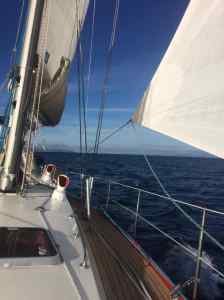
Magnificent sailing and stunning weather, bright skies, good wind and calm seas – what more could we wish for! It was actually a shame that it was only a 30 mile sail from the Irish Coast, would have been happy out there all day.
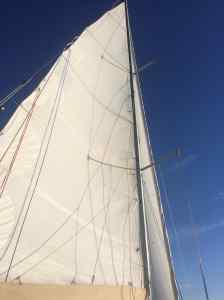
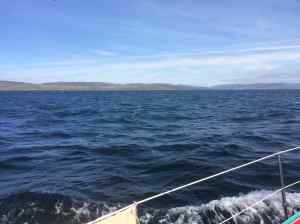
Both quite excited to be travelling to and exploring Scotland. A rough plan we have (as always subject to change) to sail to the Hebrides and then back down and transit the Caledonian Canal to the east coast.
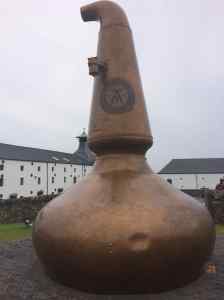
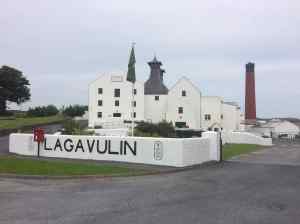
First stop in Scotland Port Ellen on the Isle of Islay famous for its many Whisky distilleries with characteristic peaty single malts. The island is 40 kilometres long and 24 kilometres wide and home to a population of around 3,000. With agriculture, whisky and Tourism being it’s main means of business.
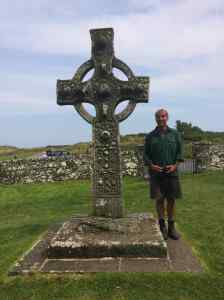
To ensure we did the famous produce its due we diligently cycled our way to visit 4 of the 11 whisky distilleries on the island, and Phil being ever so cultural ensured he had a good taste of all on offer at each of those…and still managed to stay up right on the bike going home. You may have heard of some of those we visited; Bruichladdich (whisky & gin), Laphroaig, Lagavulin & Ardbeg.

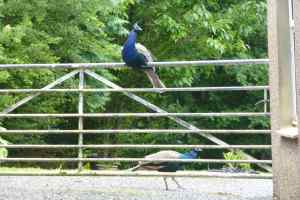
An absolute treat on our first night in the marina (by marina I mean pontoon jetty – no other facilities) was when a gentleman on a boat two berths away came out and stood on his bow and played the bagpipes – magic!! Video below.

Portrush
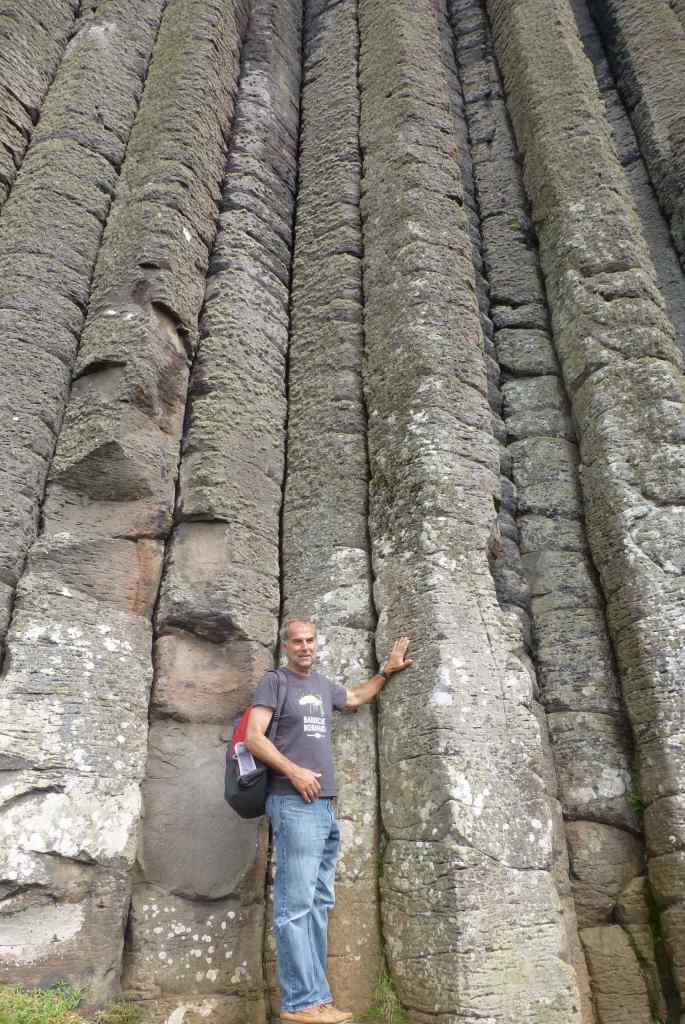
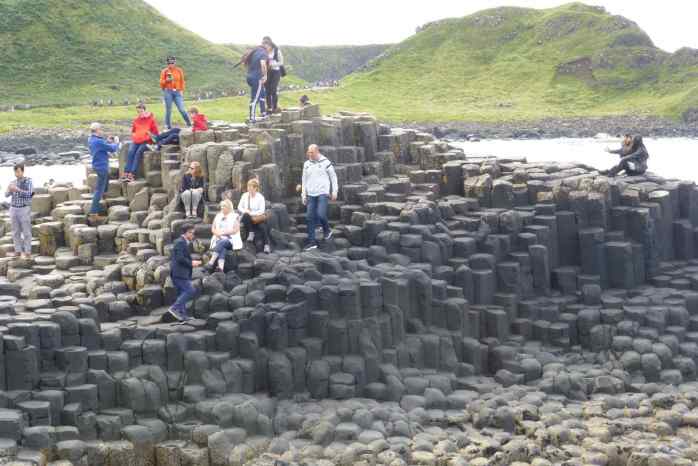
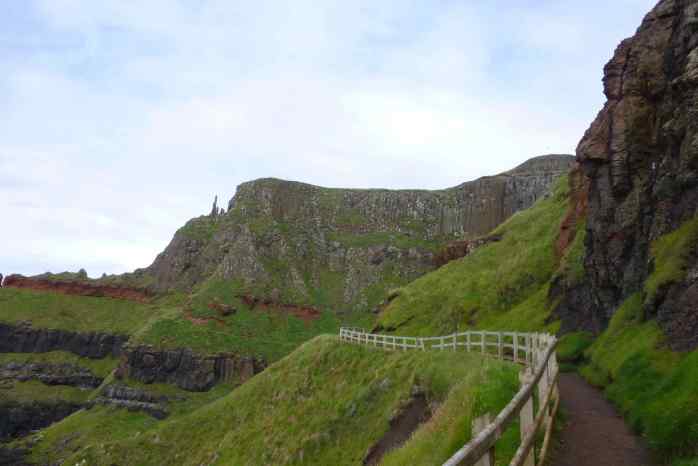
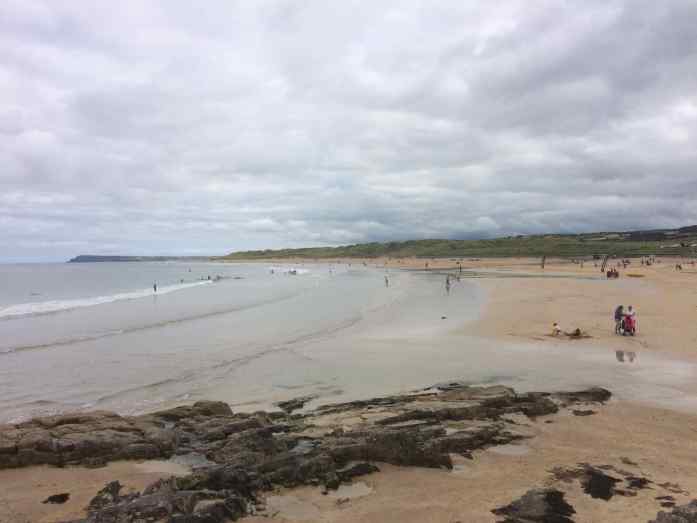
The weather has finally been kind and allowed us to leave for Scotland. A quick morning motor sail up the River Foyle and out to Portrush set us up nicely to cross over tomorrow morning, and also allows us to spend the afternoon visiting the Giants Causeway. The Giant’s Causeway is an area of about 40,000 interlocking basalt columns, the result of an ancient volcanic eruption and it is a truely spectacular site to see.


Derry (Londonderry)

Once again the weather has caught up with us and looks set on foiling our plans to cross to Scotland anytime soon. We shall hide up the river Foyle in Derry (or Londonderry) until we can make our passage – could be waiting for up to 10 days 😦
Derry or Londonderry is part of Northern Ireland – therefore the United Kingdom rather than the Republic of Ireland and what a history it has (unfortunately most of it pretty tragic and riddled with fighting and death).
Lets start with the two names; The name Derry originates from the old Irish name Daire meaning “oak grove”. However way back in 1613, the city was granted a Royal Charter by King James I and gained the “London” prefix to reflect the funding of its construction by the London guilds. While the city is more commonly known as Derry, Londonderry remains the legal name. So to me it seems you either call it one or the other, and fiercely defend your choice.
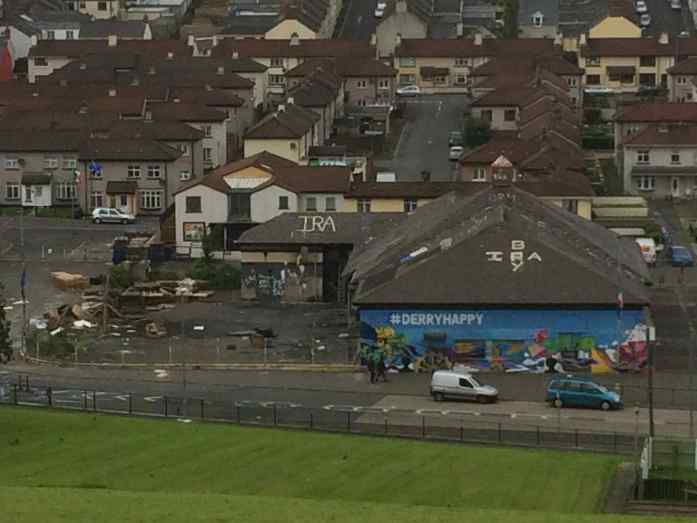
Derry is the only remaining completely intact walled city in Ireland and one of the finest examples of a walled city in Europe. The Walls were built in 1613–1619 as defences for early 17th century settlers from England and Scotland. The Walls, which are approximately 1.6 km in circumference and which vary in height and width between 3.7 and 10.7 metres, are completely intact and form a walkway around the inner city. A really beautiful walk around on top of the walls, the views however off the wall can be quite confronting as you at different sides of the outer city (who have fought for many many years).
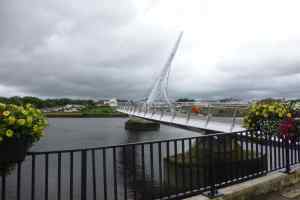
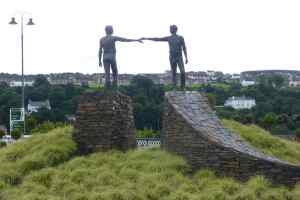
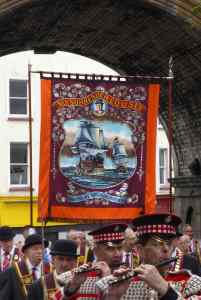
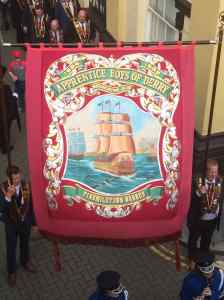
The ‘Siege of Derry‘ ran from 1688 – 1689 and was part of the wider Williamite War waged between the Protestant William of Orange and the Catholic King James II. The apprentice boys shutting the gates to the city to protect themselves. The siege lasted nearly three and a half months, ending on 30 July 1689 when relief ships bringing an English army sailed down Lough Foyle. The majority of those who perished during the siege (over 10,000) died due to disease and starvation (no supplies being able to be brought in) rather than from conflict.
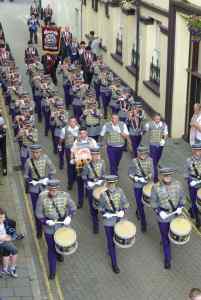
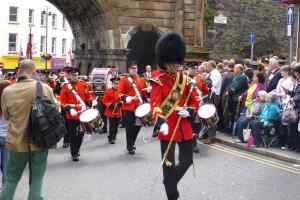
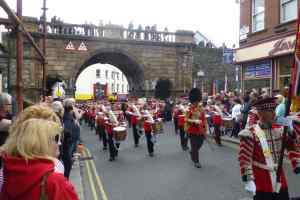
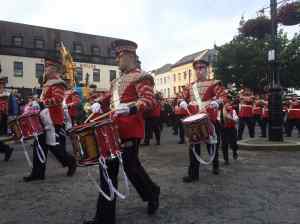
Each August the city holds a “Relief of Derry” celebration to comrade the end of the siege and the opening of the gates, we were lucky enough to be in town to watch these parades. And what a parade it was… Over 150 marching bands containing 12,000 people – it lasted all day, the sounds of drums, pipe whistles, piano accordions and more. Best views to be had were of course from on top of the city walls.


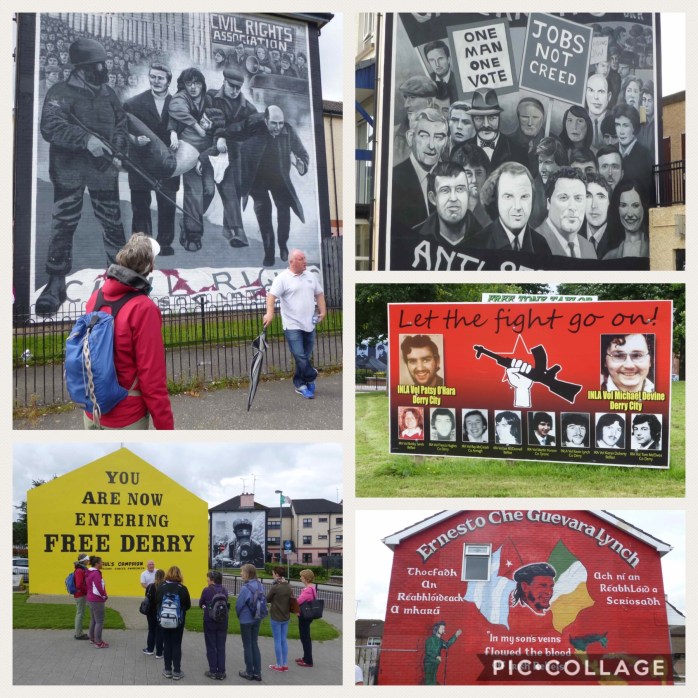
Unfortunately the hard times for this city didn’t end back in the 16th century with unrest as recent as the 1980’s this time due to the conflict between the IRA and the British, with the city segregated between catholics and protestants. One of the most notable of these events was the awful 1972 Bloody Sunday event where 26 civil rights protestors were shot dead by the British Battalion.
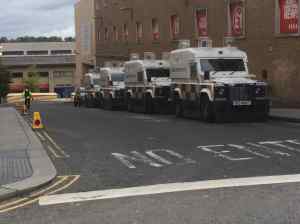
Whilst we were in Derry one of the most memorable persons from this day a priest named Edward Daly who was photographed waving a blood-stained white handkerchief as he escorts a group carrying a mortally-wounded boy after British troops opened fire on demonstrators died, we were still in town the day of his funeral and the city almost came to a stand still. All the streets were barricaded off with no car parking allowed anywhere (potential car bombs), and a heavy (extremely heavy) police presence including riot police and riot vehicles. Fortunately the funeral all went smoothly with no unrest or disorderly behaviour.
The scars from the constant fighting are still visible today along with the visible segregation of the different religious beliefs. We also joined a walking tour of the city taken by a son of one of those killed during the fighting and learnt of many more sad stories and tales of how people were forced to live.
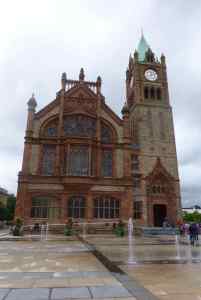
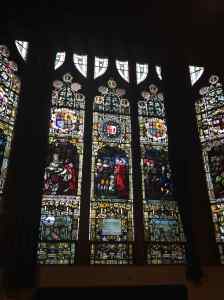
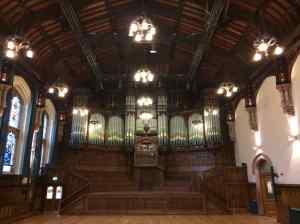
One of the highlights of Derry for Phil especially was the Guildhall. A magnificent building which we were lucky enough to have a tour of with a long serving staff member who told us all about its amazing life. Over its 120 year history the Guildhall has been destroyed twice – by fire in 1908 and through bomb attacks in 1972. It has 23 stained glass windows telling the story of the city, the Guildhall Clock was designed as a replica of ‘Big Ben’ in London and is the largest of its kind in Ireland. From 2000 to 2005 the Guildhall was the seat of the Bloody Sunday Inquiry headed by Lord Saville, which was published in June 2010. The original Guildhall organ was installed in the Main Hall in 1891. The organ is the second largest in county Ulster with the exception of the Mulholland Organ in the Ulster Hall, Belfast.
Greencastle
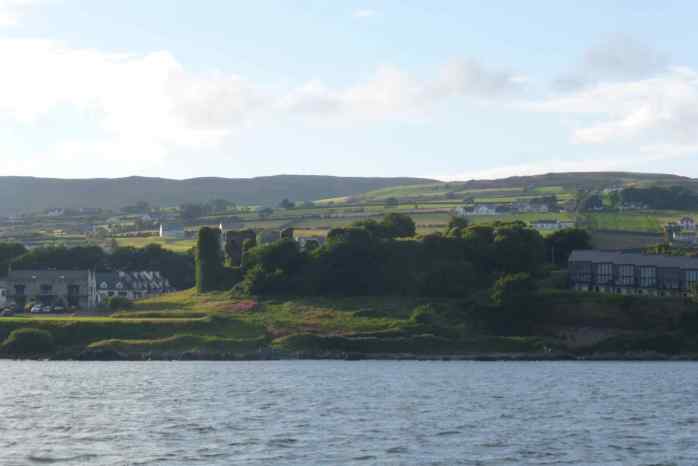
Yep there is a castle (well castle remains) and it is green (covered in green ivy!). Really only stopped here as we knew Derry (where we were heading) was expensive and we were going to be stuck there due to weather for a week, so we stopped at Greencastle to ease the expense. Moved on after a couple of days as the pontoons although cheap (free) were exposed to swell and very uncomfortable and jerky and could be easy to do damage. The other purpose of stopping here was to contact the officials to notify them Maree (the European alien) was leaving the country, after many calls it was decided that is was fine for me to leave – they didn’t really care and I didn’t need an exit stamp!
Tory Island
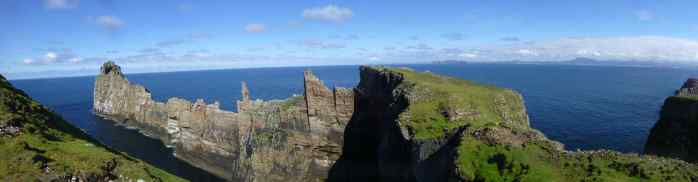
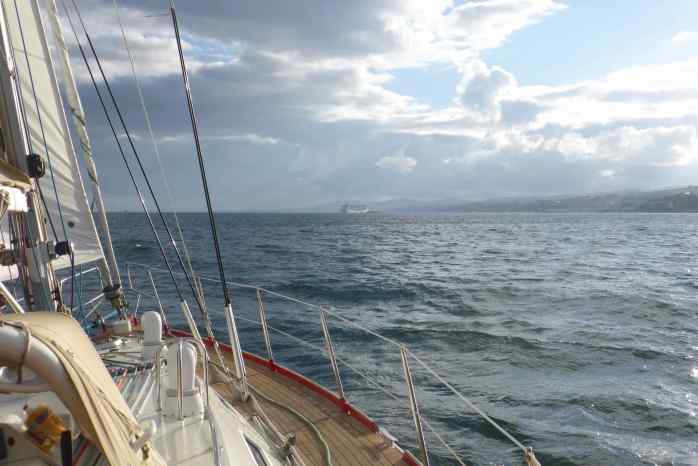
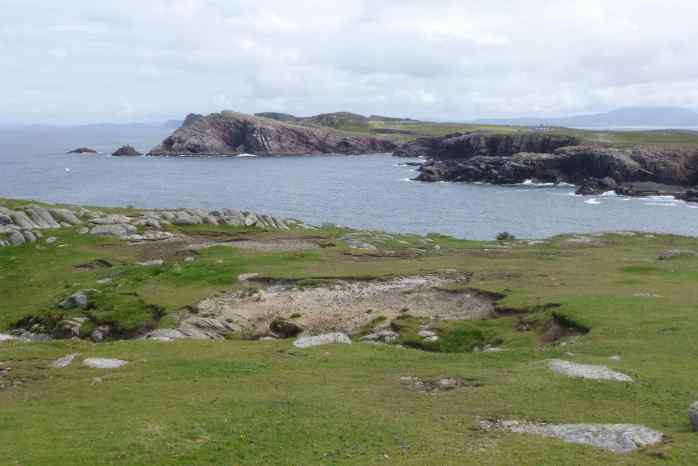
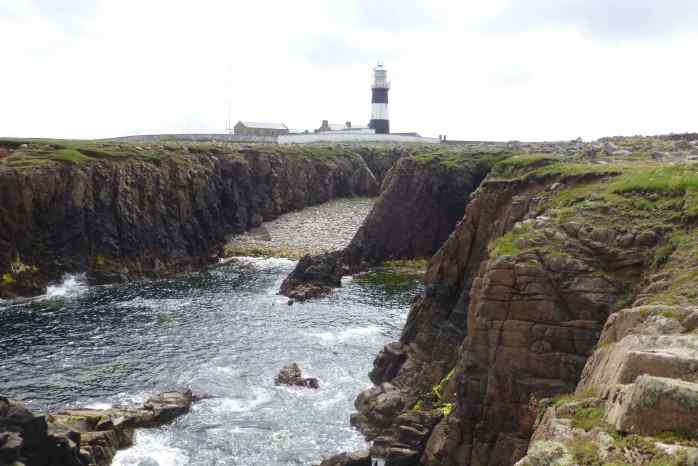
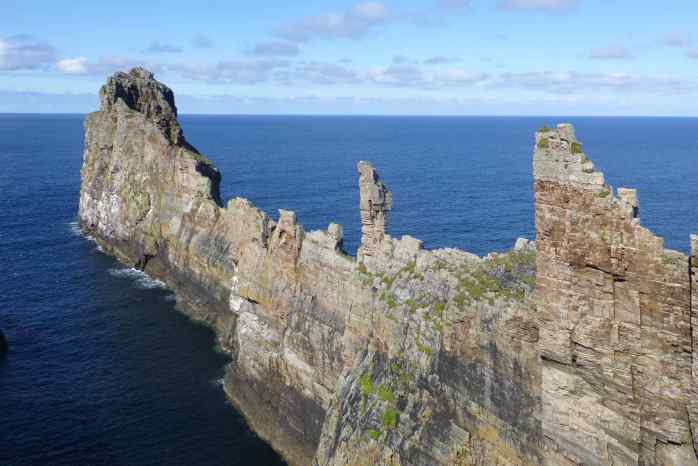
Delightful – the sun is back, and what a place for it to shine. This small island on the Northern coast. We arrived nice and early as it wasn’t a long sail and then took off on foot to explore the island (around 5 kilometres long by 1 km wide). Google tells us it has 144 inhabitants but we certainly didn’t see that many people but I guess there could have been up to 100 dwellings on the island (I wasn’t really counting).
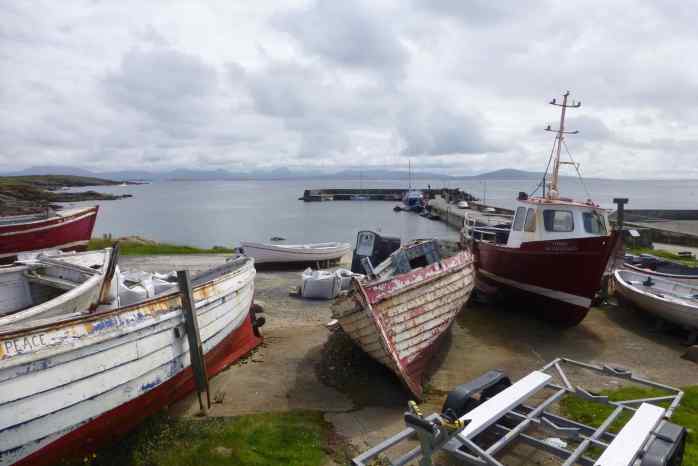
They are serviced by a ferry from the mainland and the islands power source is from generators – which oddly enough are situated right in the middle of the main street and next to the houses and is loud and annoying??? If you lived on a fairly remote island with little modern influence I sure as hell wouldn’t want a stinky loud generator to be the focus point and having to listen to it work 24/7. There is a pub and a store, a few sheep and a small fishing fleet. They get a fair bit of tourist trade during the summer months and have a few holiday cottages.
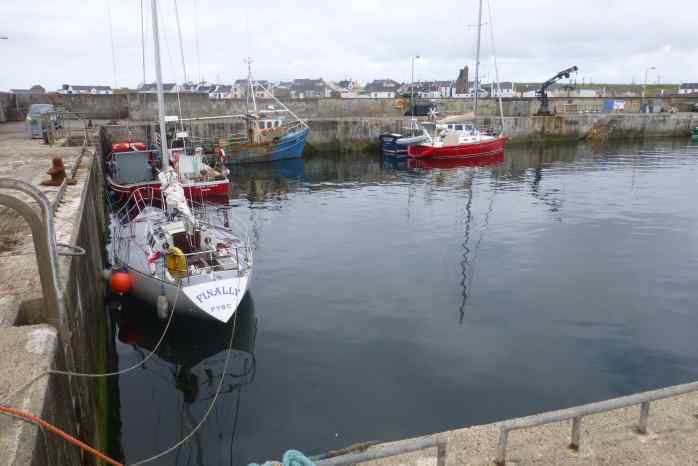
Some spectacular views were enjoyed on our walk and even decided to have a meal at the pub that night, the captain even surprised me by suggesting that we eat in the restaurant at the pub rather than at the bar…well, well, well who was I too argue. Sadly we were a little disappointed with the meal, the silver cutlery and white tablecloths were lovely and my salmon nice but phil roast lamb came with potato and salad (yes lettuce with his roast) but the disappointing element of that was the gravy all over the entire meal, lettuce and all. Guess it wasn’t that bad he was never going to eat the “green stuff” anyway as he so often reminds me – he is not a rabbit.


Achill Sound
You spin me right round baby right round, like a record baby right round !!
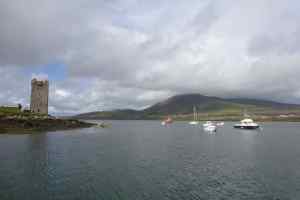
After setting off from Clew Bay we had two plans depending on the swell and wind we met once outside the shelter of the bay. We soon decided to divert to plan B just do a short 15 mile trip and seek shelter in Achill Sound for the night to let the sea settle down making a more comfortable journey the following day for the a larger 50+ mile journey up the coast.
Sounded good in theory (and did work out well in the end), however our plan B did give us a little excitement. We knew there were a couple of mooring buoys in near Achill Sound as well as a small pontoon that can be used a little way in the river, with a bit of swell in the bay we decided to head up the river but hadn’t calculated the tides for the sound (as we were originally were travelling much further on), well, actually that’s probably not entirely correct either as we had calculated the tide to take us out (which we had been using) but it hadn’t finished yet and as we motored into the sound we noticed the strong current against us and increased engine power, then increased it some more, then realised we were not going anywhere! A bonus was that we were not going backwards but with the engine on high revs working hard we were just managing to stay in the one spot in the water and not making progress forward.
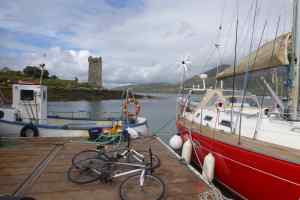
Well, plan C was called for, this being turn back to the large wooden jetty we had just passed. So the smallest hint of a turn on the tiller was all that was needed for the boat to be taken by the current and spun around (rather quickly!) and spat back out down towards the jetty at a very high speed all courtesy of the current (we had backed the engine right off), the jetty loomed large and close and thank goodness there was a work platform secured to it with large old tyres and fenders buffering the sides as we didn’t get a choice where we landed (read this as . . . we planned to tie up further along, but that didn’t work in the current) anyway by pure luck or as we like to think our good design (yeah right) we were pushed onto the cushioned work platform where upon I jumped onto it and tied us off very quickly before thinking to ourselves – oh shit that was lucky.
After 15 minutes or so and feeling a lot more composed (and looking up when the tide was due to go slack and change) we jokingly said to each other, all we need now is for the work boat to come back and make us move from their barge/resupply platform…luck of the Irish guess what turned up 10 minutes later telling us to move – yep you guessed it! Luckily he was also off loading some crew who were kind enough to help us. We were doubtful as to if we were going to be able to push off the platform in the current but it had eased enough and the guys from the boat then took our lines and helped us tie up around the other side of the jetty.
We worked out that we would be able to move to the river pontoon in about 2 hours once tide was fully slack, in the meantime I watch a couple of fishing boats come out of the sound and the moment they came around the corner it was obvious they hit (or just let the boat go) into the same stream we were in and they all came rushing down towards the jetty as great speed before getting turned around towards the mouth, then motoring off, they looked out of control and I can only imagine it how we looked too but at least they were locals and knew they wouldn’t hit the jetty where as we had the panic of not knowing.
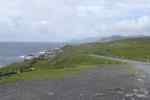
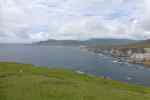

Now, Achill Island is no small island, in-fact it is large enough that there is a bridge across the sound further up to connect it to the mainland, furthermore we took the bikes out the following day and only managed to cycle around about a quarter of it. The reason I am going into detail about how big an island it is and how many residents is because whilst we were on Inishturk Island a few days prior Phil had been chatting to a lady Phil (Philiomena) whilst at the swimming hole where myself and Philomenas daughter were swimming, she told us she lived on Achill Island, nice enough we didn’t think much else of it. We did however visit the pub she recommended in Westport with the music as it was her pub, with her sister and her being the licences’s and running it. Anyway whilst sitting at the jetty waiting to move we saw someone walking down the jetty waving at us…our immediate thoughts were “oh no here we go, we have to move again” well glad to say we were wrong it was our mate Phil she lived in one of the two houses at the end of the jetty (the only houses in view). How’s that for a small world. Anyway we went up to the house for a very nice warm cup of tea whilst waiting for the time to move. She must have thought we were stalking her after Inishturk Island, Westport Pub and then stopping 100 m from her front door.
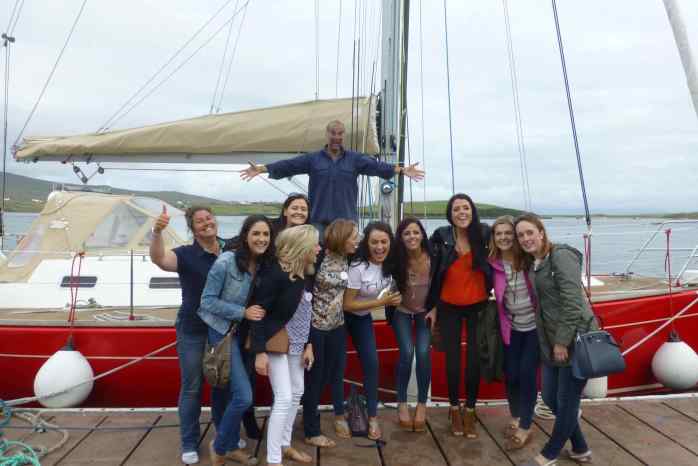
One further highlight from Achill Sound comes from when we finally made it up the river to the small pontoon. We were assured by the local fishermen that we were fine to stop there (it was the weekend and the ferry that runs to and fro from there doesn’t operate on weekends). So of course about about 5pm that Saturday night we see the ferry chugging towards us … it had been hired for a private charter to the island for the day! He was coming in to offload the passengers … no problem he said no need to move we will come along side and they can climb onto us then onto shore. Great, and to Phil’s delight the passengers were all very good looking 20-30 something year olds who were on a hens day/night!! All extremely wobbly after a day on the booze on the island and wearing the highest heels possible they were absolutely delighted that Phil was there to lend them a hand climbing onto our boat (but it has to be said not as delighted as Phil was to help them) they then trotted across the deck to where I helped them off onto the shore where there bus was due to pick them up. They of course wanted a picture with the yacht, again to Phil’s absolute delight (and huge smile). After they had merrily gone on their way we found a glass and an empty beer bottle on deck where they had came across. The picture says it all ☺ Phil now recalls it as the day he held “new crew interviews” unfortunately for Phil none of the girls were silly enough to actually want to stay!

 Red Roo
RECENT COMMENTS